Ali Berkan Ural* | Evren Koç
© 2025 The authors. This article is published by IIETA and is licensed under the CC BY 4.0 license (http://creativecommons.org/licenses/by/4.0/).
OPEN ACCESS
Diabetes mellitus constitutes a persistent condition that disrupts glucose regulation and produces significant consequences across multiple species. Among experimental animals, rats are frequently employed as indispensable models in biomedical research for elucidating disease mechanisms and evaluating therapeutic strategies. The ability to detect diabetes in these models at an early and precise stage is essential for supporting preclinical investigations and advancing therapeutic development. In this study, we suggest a framework that employs deep learning methodologies to strengthen and automate the recognition of diabetes in rat cohorts through the integration of multimodal clinical information. Specifically, numerical values derived from biochemical blood test results of 50 diabetic and 50 non-diabetic subjects were transformed into image representations. Using data augmentation, these arrays were expanded and subsequently processed with a convolutional neural network (CNN)–based architectures. Model evaluation was conducted through established indicators, including accuracy and the area under the receiver operating characteristic (ROC) curve. Three alternative approaches—Support Vector Machine (SVM), ResNet18, and MobileNetV2—were implemented. Among them, MobileNetV2 exhibited the best overall effectiveness, reaching 97.39% accuracy and outperforming conventional machine learning methods. The findings underscore the strong potential of deep learning as a rapid, non-invasive, and reliable diagnostic solution for rodent diabetes models. Furthermore, the proposed strategy not only provides opportunities for accelerating research into disease mechanisms and therapy screening but also offers a transferable foundation for developing computer-aided diagnostic systems for human diabetes and other small-animal disease studies.
diabetes prediction, deep learning, cnn, resnet18, MobileNetV2, numeric to ımage data conversion
Diabetes mellitus is widely acknowledged as a leading metabolic situation/disorder, manifesting through persistent elevation of blood glucose levels due to deficiencies in insulin secretion, impaired insulin activity, or a combination of both mechanisms [1]. Beyond its critical impact on human health, this disease has significant relevance for experimental studies, where rats are routinely employed as model organisms for examining diabetic physiology, validating pharmacological treatments, and investigating preventive strategies [2]. Both genetically modified strains and nutritionally induced models have made notable contributions to our understanding of the mechanisms underlying diabetes. Accordingly, the capacity to achieve rapid and reliable identification of diabetes in these models is a prerequisite for ensuring reproducibility in laboratory studies and supporting translational research.
Conventional approaches for diagnosing diabetes in rats typically involve invasive testing procedures, fasting plasma glucose determination, insulin assays, and histopathological assessments [3]. Although these methods yield essential diagnostic information, they are often resource-intensive, time-consuming, and may induce additional stress in the test subjects, thereby influencing physiological outcomes [4]. Moreover, early and subtle variations in behavior, morphology, or metabolic parameters are frequently overlooked during visual or manual inspections. These limitations highlight the urgent requirement for objective, automated, and non-invasive diagnostic solutions capable of continuously monitoring disease development and progression in rodent models [5].
Recent developments in the area of artificial intelligence (AI), particularly within deep learning (DL) research, have gained importance via medical data analysis. DL architectures have demonstrated human-level performance in a wide spectrum of diagnostic applications, including biomedical imaging and disease prediction [6, 7]. These models are especially powerful when dealing with high-dimensional information such as imaging data, temporal physiological signals, or integrated multimodal datasets, making them highly suitable for identifying diabetic characteristics in rat populations.
The present investigation addresses this need by implementing advanced deep learning algorithms to classify diabetic and non-diabetic rat groups using biochemical blood data converted into two-dimensional images. By employing robust neural architectures and multimodal data transformation, the objective is to design an automated diagnostic framework capable of recognizing diabetic phenotypes with high precision, tracking disease dynamics, and potentially identifying novel biomarker relationships [8]. Such an individual approach can enhance the efficiency and consistency of preclinical studies while also laying the groundwork for comparable applications in other animal models and human clinical investigations [9].
In this study, two groups of rats—diabetic and control—were analyzed based on an openly accessible dataset containing blood chemistry measurements. Eleven biochemical features, including AST, ALT, cholesterol, triglycerides, HDL, VLDL, LDL, glucose, body weight, Total Antioxidant Status (TAS), and Total Oxidant Status (TOS), were utilized. A statistically validated subset of 50 cases from each group was randomly selected for analysis. These numeric datasets were restructured into arrays and subsequently transformed into two-dimensional colored “.png” images, each representing diabetic or non-diabetic groups. The generated images were evaluated using three computational approaches: Support Vector Machine (SVM), ResNet18, and MobileNetV2. A comprehensive performance assessment was performed to compare classification accuracy across models.
Furthermore, this study emphasizes the importance of explainable artificial intelligence in biomedical applications. By integrating interpretability techniques, the analysis aims to provide a successful decision-making process of deep learning models, thereby improving trustworthiness and advancing scientific understanding. Ultimately, the framework bridges computational predictions with biological interpretation, supporting a more integrative strategy for diabetes research in experimental animal models. Moreover, below, the literature review is given.
In this research, deep learning methodologies are applied to forecast diabetes by utilizing an openly available dataset consisting of rat blood test results. Broadly, investigations into diabetes prediction have made use of both conventional machine learning strategies and advanced deep learning models. A number of studies have focused on applying machine learning techniques to publicly accessible datasets with encouraging results. For example, Madan et al. [10] developed an ensemble framework that integrated a Support Vector Machine (SVM) with a feedforward neural network. By combining the decisions of individual classifiers through a majority voting mechanism, the ensemble system delivered improved predictive capability, achieving an accuracy of 88.04%.
In a related effort, Sneha and Gangil [11] evaluated several machine learning algorithms—including Naïve Bayes (NB), SVM, and logistic regression—for diabetes classification tasks. Their analysis demonstrated that SVM provided the best outcome, with a recorded accuracy of 77.37%. They further enhanced the results by implementing feature selection techniques that removed attributes showing weak correlations within the PIMA dataset.
In another comparative investigation, Edeh et al. [12] assessed the performance of four classifiers—Bayes, decision tree (DT), SVM, and random forest (RF)—across two separate datasets for diabetes prediction. Their findings revealed that SVM once again achieved the highest accuracy on the PIMA dataset, reaching 83.1%, thereby confirming its effectiveness in this domain.
The present investigation was designed as a retrospective study that utilized blood chemistry data collected over five years from an openly accessible dataset of Wistar rats [13]. Because the dataset was publicly available, the use of ethical approval procedures was not required. Before analysis, the records were anonymized to safeguard confidentiality. Subsequently, several preprocessing operations were performed, including the elimination of noise, application of normalization procedures, and extraction of key diagnostic features. After these steps, the data were divided into separate subsets for model training and testing, with a conventional split ratio of 70% for training and 30% for evaluation.
2.1 Dataset used ın the study
A comprehensive overview of the dataset employed in this study is presented below. It consisted of blood test results from a total of 100 rats, evenly divided into 50 diabetic and 50 non-diabetic cases, which were used to train and evaluate the models. Each record included measurements across eleven biochemical and physiological indicators. These values were further compared with reference ranges obtained from non-obese healthy rats to establish baseline metrics [14]. The features incorporated into the analysis are described as follows:
Cholesterol: A lipid-based compound synthesized primarily in the liver and circulating in the bloodstream, often considered a major component in metabolic health.
Triglycerides: A class of lipids distinct from cholesterol, functioning as an essential energy storage form in the body.
LDL Cholesterol: Low-Density Lipoprotein (LDL) cholesterol, commonly termed ‘bad cholesterol,’ serves as the principal carrier of cholesterol molecules from hepatic tissues to peripheral cells, thereby facilitating cholesterol distribution throughout the systemic circulation.
HDL Cholesterol: High-Density Lipoprotein cholesterol, known as “good cholesterol,” which facilitates the clearance of excess cholesterol by carrying it back to the liver for elimination.
VLDL Cholesterol: Very-Low-Density Lipoproteins are responsible for distributing triglycerides synthesized in the liver to different tissues throughout the body.
Glucose: The primary source of energy for cellular metabolism, stored in the liver and muscles in the form of glycogen when present in excess.
Body Weight: A fundamental biological characteristic frequently measured in animal studies, serving as an indicator of metabolic health, growth, and overall physiological condition.
Total Antioxidant Status (TAS): A measure representing the cumulative capacity of an organism’s defense mechanisms to counterbalance oxidative stress and maintain cellular stability.
Total Oxidant Status (TOS): A parameter that reflects the overall oxidative load within biological systems, indicating the extent of free radical activity and potential cellular damage.
2.2 Methods of the study
2.2.1 Data pre-processing
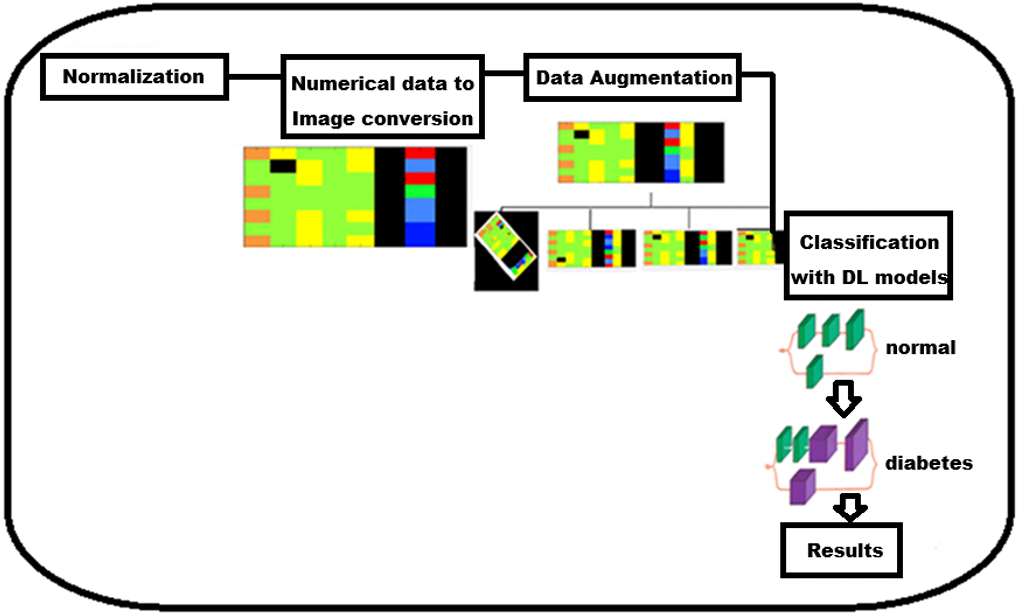
This part of the study outlines the methodological framework adopted to determine the diabetic status of the rat groups. The overall workflow of the proposed system is summarized in Figure 1. As an initial step, the numerical dataset was standardized, ensuring that the ranges of all features were adjusted to enable effective transformation of tabular values into image representations. To improve the accuracy of the deep learning models, several data augmentation strategies were subsequently applied. In the final phase, the processed datasets were subjected to classification using the three convolutional neural network (CNN)-based models selected for this research. Each component of the procedure is explained in detail in the following subsections.
In addition, the process of normalization was applied, as it represents a widely used and essential procedure in artificial intelligence–based studies involving multi-feature datasets [15]. Since individual attributes often differ considerably in their value ranges, rescaling them to a uniform or comparable scale is necessary to prevent disproportionate influence during model training. Standardizing features in this way significantly improves both the efficiency and accuracy of the learning algorithms. In the case of our dataset, the included variables demonstrated distinct minimum and maximum values, which are summarized in Table 1. This variability made the normalization step indispensable for ensuring balanced representation of all features during analysis.
Within the framework of the proposed approach, normalization is a fundamental step that enables the transformation of numerical attributes into image-based representations. In this process, the magnitude of each feature dictates the brightness level of its corresponding pixel, where higher values appear as lighter intensities in the constructed image [16]. For the visualization to remain consistent and comparable, all features must be adjusted to the same numerical range [17].
Figure 1. The steps involved in the proposed approach
Table 1. Minimum and maximum value ranges of dataset features (first eight correspond to the diabetes group; the remaining eight to the normal group)
|
AST |
ALT |
Cholesterol |
Triglycerides |
HDL |
VLDL |
LDL |
Weight |
Glucose |
TAS |
TOS |
|
190 |
64 |
53 |
48 |
49 |
9.6 |
15.6 |
216 |
282 |
0.3 |
8.64 |
|
165 |
62 |
48 |
52 |
48 |
10.4 |
10.4 |
134 |
265 |
0.21 |
9.77 |
|
191 |
38 |
94 |
41 |
83 |
8.2 |
12.8 |
258 |
306 |
0.58 |
4.32 |
|
159 |
67 |
51 |
33 |
46 |
6.6 |
16 |
213 |
325 |
0.32 |
5.23 |
|
140 |
99 |
45 |
48 |
41 |
9.6 |
15.6 |
286 |
136 |
0.53 |
6.25 |
|
190 |
91 |
56 |
60 |
55 |
12 |
11 |
130 |
141 |
0.33 |
4.55 |
|
185 |
79 |
32 |
54 |
38 |
10.8 |
16.8 |
290 |
N/A |
0.38 |
10.34 |
|
200 |
70 |
N/A |
50 |
N/A |
10 |
10 |
180 |
N/A |
0.28 |
N/A |
|
124 |
80 |
95 |
49 |
63 |
9.8 |
12.2 |
258 |
89 |
0.81 |
2.84 |
|
120 |
31 |
78 |
55 |
69 |
11 |
12 |
286 |
83 |
0.45 |
6.36 |
|
113 |
53 |
65 |
47 |
59 |
9.4 |
13.4 |
272 |
78 |
0.39 |
2.95 |
|
124 |
36 |
49 |
47 |
45 |
9.4 |
15.4 |
241 |
102 |
0.41 |
5.34 |
|
115 |
52 |
60 |
49 |
57 |
9.8 |
16.8 |
284 |
95 |
0.71 |
7.5 |
|
134 |
50 |
77 |
48 |
65 |
9.6 |
12.4 |
302 |
76 |
0.53 |
6.82 |
|
114 |
39 |
65 |
43 |
61 |
8.6 |
14.6 |
327 |
91 |
0.47 |
3.98 |
|
128 |
51 |
73 |
55 |
64 |
11 |
12 |
340 |
62 |
0.5 |
N/A |
In this study, normalization was performed using the feature scaling technique, specifically the min–max method [18]. This approach converts raw feature values into a standardized interval, typically ranging from 0 to 1. The normalized value of a given observation (xn) is obtained by applying the minimum (xmin) and maximum (xmax) limits of that feature. Through this procedure, every attribute is rescaled into the same interval, ensuring homogeneity across the dataset and enabling uniform pixel-based image construction. The mathematical expression of this process is provided in Eq. (1):
$x_n=\frac{\left(x-x_n\right)}{\left(x_{\max }-x_{\min }\right)}$ (1)
2.2.2 Numeric to ımage data conversion
Although the availability of medical imaging data has grown substantially in recent years, a considerable portion of clinical information is still recorded in purely numerical form [19]. Such data are relatively inexpensive and straightforward to obtain; however, their evaluation is most often performed with conventional machine learning methods [20]. More recently, certain deep learning frameworks have introduced one-dimensional convolutional neural networks (1D-CNNs) to address numerical datasets. Nevertheless, the CNN architectures that have led to breakthroughs in computer vision were specifically designed for two-dimensional image inputs, making them unsuitable for direct application to one-dimensional numerical records [21].
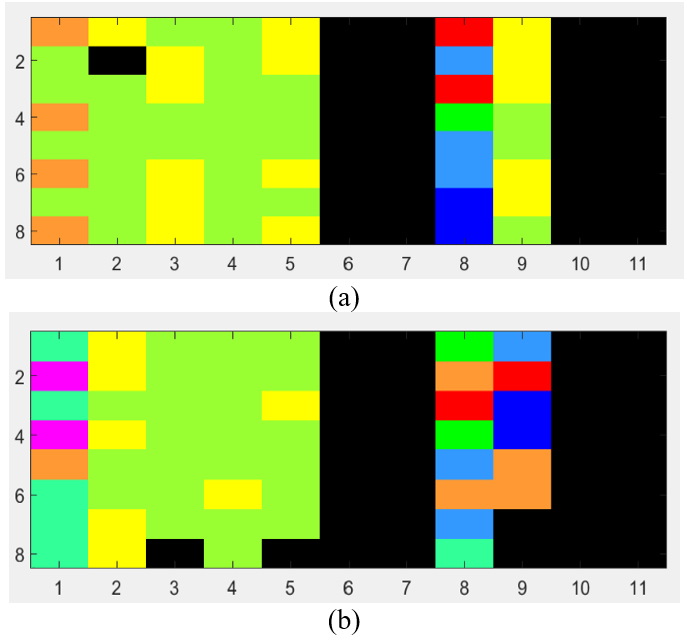
Figure 2. (a) Normal conversion color image (b) Diabetes conversion color image
To overcome this limitation, the present study applied a transformation strategy to its dataset, which consisted exclusively of numerical attributes, to render it compatible with image-based deep learning models. The conversion process was carried out within the MATLAB 2024a environment. Figure 2 presents representative examples of the resulting color images, showing samples from both the normal group (a) and the diabetic group (b).
The converted images, which embed all the selected features, were prepared in a format compatible with convolutional neural networks (CNNs) that operate on two-dimensional inputs. Beyond this transformation, conventional augmentation strategies commonly applied in image analysis can also be employed on these generated datasets. To ensure the effectiveness of augmentation, the image structure was deliberately arranged asymmetrically. This design choice guarantees that each augmented version preserves distinct characteristics, thereby maintaining diversity throughout the data enrichment process [22].
2.2.3 Data augmentation process
The evaluation metrics of deep learning algorithms is strongly influenced by the volume of training data available. Yet, assembling sufficiently large datasets is often challenging in practical research contexts. To compensate for this limitation, investigators typically enlarge their datasets by producing modified versions of existing images, a procedure referred to as data augmentation [23].
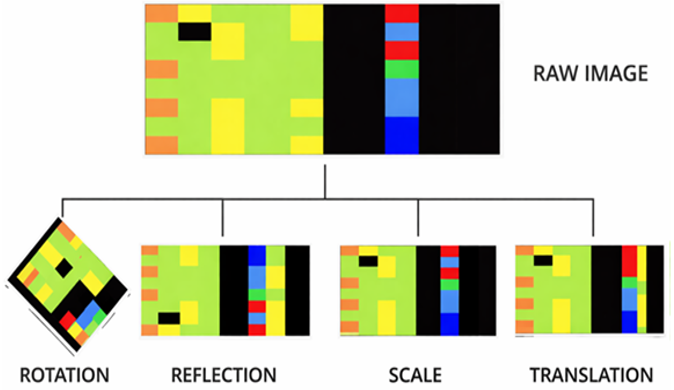
In the present work, the dataset contained 100 numerical samples (50 representing non-diabetic rats and 50 representing diabetic rats), which were converted into a total of 500 image files. Since this quantity remained relatively limited for training deep neural networks, augmentation techniques were introduced to artificially expand the dataset. To enhance variability and support more robust model training, four augmentation strategies—namely rotation, scaling, reflection, and translation—were systematically applied to each image. The parameter ranges for these operations are listed in Table 2, and representative augmented images from the diabetes group are illustrated in Figure 3.
Table 2. Data augmentation parameters used in this study
|
Parameter |
Lower Value |
Upper Value |
|
Rotation |
-45 |
45 |
|
Reflection |
- |
- |
|
Scale |
0.8 |
1.2 |
|
Translation |
-20 |
20 |
Figure 3. Data augmentation sample results
2.2.4 Diabetes prediction via DL models
After the augmentation procedures, the dataset was partitioned into two subsets, allocating 70% for training and 30% for testing. The generated images were subsequently introduced into the convolutional neural network (CNN)–based models. Instead of developing a completely new CNN design, this research relied on established architectures—Support Vector Machine (SVM), ResNet18, and MobileNetV2—for diabetes classification, with only minor modifications introduced through fine-tuning.
(1) SVM model
Support Vector Machine (SVM) is a widely recognized supervised learning approach that has been extensively used for classification tasks, including applications in medical image analysis [24]. In this study, the features derived from the pre-processed and augmented images were applied to train the SVM classifier, chosen for its reliability and its effectiveness in complex high-dimensional data [25]. The training set was composed of 500 augmented samples, designed to represent a broad range of case variations.
The classification relied on the radial basis function (RBF) kernel, which is among the most frequently employed variants of the Gaussian kernel in SVM studies [26]. In practice, this linear division corresponds to a non-linear decision boundary in the original data space. Such flexibility is particularly advantageous in medical image classification, where intricate and non-linear associations often exist between features. Minor variations in pixel intensity, texture, and spatial structures play a crucial role in differentiating disease-related classes, making the RBF kernel an appropriate choice for this task [27].
(2) ResNet-18 model
The ResNet-18 architecture, consisting of 18 layers, was applied in this study to automatically extract and learn discriminative image features. The design integrates convolutional layers, batch normalization operations, and fully connected layers [28].
Convolutional layers: These layers perform feature extraction from input images. The transformation can be expressed as Eq. (2):
$Y=f(X * W+b)$ (2)
where,
X: input image,
W: convolution filter,
B: bias term,
f: activation function,
∗: convolution operation.
Residual blocks: To facilitate training in deeper architectures, skip connections are introduced. This can be represented as Eq. (3):
$Y=f(X+F(X))$ (3)
where,
X: input image,
F(X): residual function,
f: activation function.
Fully connected layers: The final stage of classification is conducted by fully connected layers. The operation is given by Eq. (4):
$Z=\sigma(W \cdot Y+b)$ (4)
where,
Y: feature vector,
W: weight matrix,
b: bias,
σ: activation function. Indeed, the structural outline of ResNet-18 used in this study is illustrated in Figure 4.
(3) MobileNetV2 model
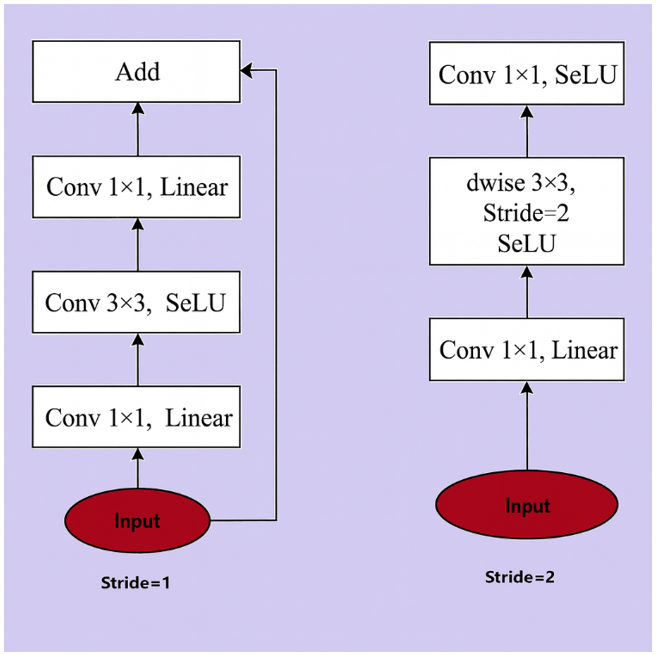
MobileNetV2 is recognized as a lightweight and computationally efficient deep learning framework, specifically designed for specific applications [29]. Its efficiency stems from the use of depthwise separable convolutions, in which the traditional convolutional process is decomposed into two operations: depthwise convolution and pointwise convolution. This decomposition dramatically decreases both parameter count and computational demand, while still preserving the model’s capacity [30].
Another important innovation within the MobileNetV2 design is the incorporation of inverted residual connections and linear bottlenecks. These structural components allow the network to effectively retain compact, low-dimensional information while simultaneously learning rich, high-level abstractions. The combination of these mechanisms ensures that the architecture remains highly expressive without sacrificing efficiency, making it particularly advantageous for medical image analysis, where computational resources and response time are critical considerations [31].
Figure 4. The ResNet18 network structure mentioned in the study
For this study, MobileNetV2 was adapted to the dataset through transfer learning. Pre-trained parameters originally optimized on the ImageNet dataset were fine-tuned for the classification of diabetic versus non-diabetic rat data. The uppermost layers of the network were replaced with a newly added fully connected layer, a softmax function, and a two-class output layer tailored to the specific requirements of this task. To further strengthen the model’s generalization ability, advanced augmentation methods—such as random rotations, rescaling, and brightness modification—were applied during training. An overview of the MobileNetV2 network structure utilized in this work is illustrated in Figure 5.
Figure 5. MobileNetV2 network structure
After the completion of the training stage, the performance of the models was thoroughly assessed using an independent test set composed of 20 randomly selected images that had not been included in the training process. The purpose of this evaluation was to determine the ability of the trained SVM classifier to extend its decision boundaries to unfamiliar samples.
In the experimental design, the dataset was partitioned into two subsets, with 70% allocated for training and 30% reserved for testing. Both the ResNet18 and MobileNetV2 architectures were fine-tuned using the training portion and subsequently evaluated on the test set. To strengthen generalization and improve predictive performance, data augmentation strategies were incorporated, thereby expanding the variability within the training data and allowing the models to adapt more effectively to unseen inputs.
During optimization, training was adapted to the specific characteristics of each model. For ResNet18, stochastic gradient descent (SGD) was applied, iteratively updating the network’s parameters to minimize loss. In contrast, MobileNetV2 employed the Adam optimizer, selected for its adaptive learning rate mechanism, which is particularly advantageous for lightweight neural architectures. Both optimization schemes were further regulated through learning rate scheduling to promote efficient convergence and stability.
The MobileNetV2 model was trained with an input resolution of 224×224 pixels. To improve robustness, augmentation operations such as random rotation, translation, and scaling were applied. These steps enabled the network to cope with variations likely to appear in real-world datasets, thereby improving its ability to generalize across different conditions.
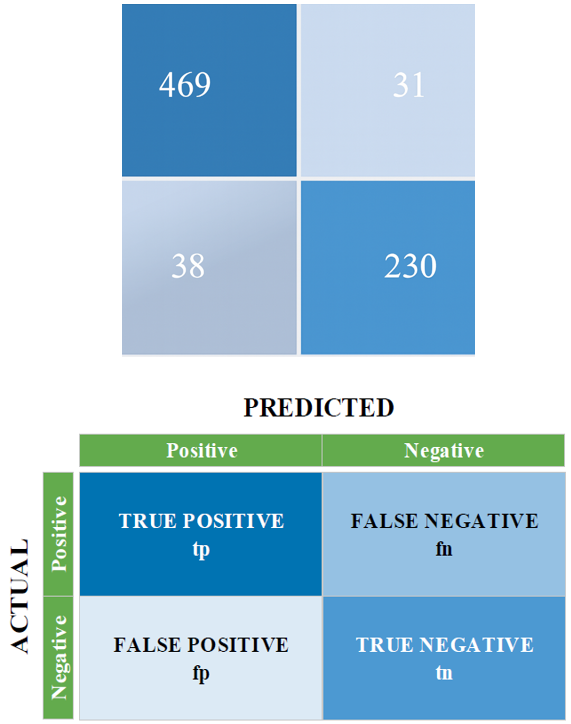
Upon analyzing performance metrics, the findings highlighted the crucial role of feature extraction quality and kernel selection in SVM classification. The radial basis function (RBF) kernel, in particular, allowed the model to accommodate the non-linear complexity inherent in medical image data, achieving high classification accuracy and demonstrating its applicability to practical clinical contexts. A visual summary of the SVM results is provided in the confusion matrix displayed in Figure 6.
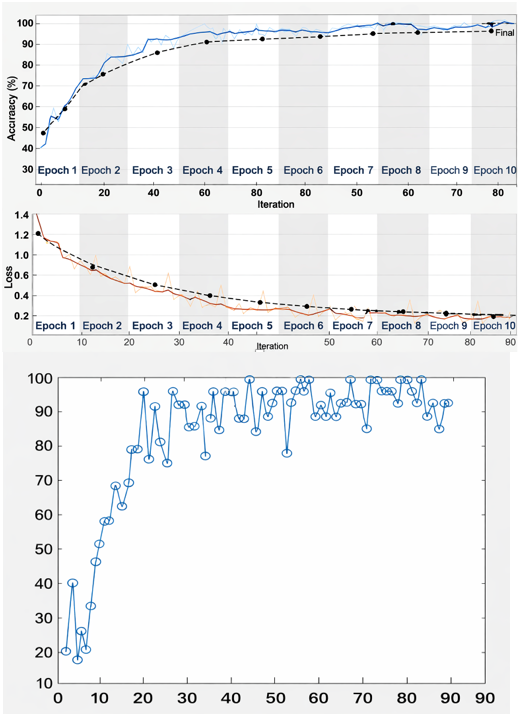
The ResNet18 model attained an accuracy of 96.88%, demonstrating its capacity to capture complex structures and intricate relationships within the dataset. In comparison, MobileNetV2, optimized for efficiency, reached a slightly higher accuracy of 97.39%. This marginal improvement underscores the capability of the lightweight architecture to deliver superior predictive performance while preserving computational efficiency. A graphical representation of accuracy and loss trends for ResNet18 is provided in Figure 7.
A notable strength of the MobileNetV2 architecture lies in its high computational efficiency. Owing to its streamlined design and the use of depthwise separable convolutions, the model completed training in nearly half the time required by ResNet18. This characteristic makes MobileNetV2 particularly well-suited for scenarios demanding real-time predictions or deployment in environments with constrained computational capacity. The corresponding accuracy and loss curves for MobileNetV2 are illustrated in Figure 8.
Figure 6. Confusion matrix of SVM classification
Figure 7. Performance results of DL model of ResNet18
Figure 8. Performance results of DL model of MobileNetV2
Prospective research could investigate the integration of ResNet18 and MobileNetV2 through ensemble strategies or hybridized network architectures, thereby leveraging the complementary strengths of both models. Furthermore, enlarging the dataset and testing additional lightweight frameworks—such as EfficientNet or ShuffleNet—may yield deeper insights into achieving an optimal balance between predictive accuracy and computational efficiency in medical image classification tasks.
In terms of performance comparison, the conventional approach produced an accuracy of 76.92% on the test set. By contrast, the ResNet18 network achieved 96.88%, and MobileNetV2 delivered an even higher score of 97.39%. This pronounced difference clearly illustrates the superiority of deep learning techniques over traditional methods for diagnostic purposes.
The enhanced performance of ResNet18 can be attributed to its deep-layered structure, which enables hierarchical feature extraction from raw images. Its convolutional layers successfully identify low- to high-level features, while residual connections support stable training in deeper networks, thereby capturing intricate dependencies in the dataset. MobileNetV2, in comparison, reached slightly better results while preserving computational efficiency by relying on lightweight mechanisms such as depthwise separable convolutions. This design allowed precise feature representation and robust generalization across unseen samples. Both models further benefited from the application of data augmentation, which increased diversity in the training set and strengthened their ability to generalize beyond the original dataset.
The findings of this research provide clear evidence of the performance of deep learning architectures—specifically ResNet18 and MobileNetV2—when compared with conventional segmentation techniques. MobileNetV2, in particular, achieved an accuracy of 97.39%, and its high computational efficiency further underscores its suitability for incorporation into clinical diagnostic pipelines. Unlike traditional approaches that depend heavily on predefined or manually engineered features, these deep learning frameworks are capable of extracting and learning discriminative features directly from raw input data. This inherent ability to automatically capture complex and subtle patterns enhances diagnostic precision and reduces reliance on human intervention. A summary of the performance outcomes is presented in Table 3.
Table 3. Comparative results of the three models used in this study
|
Model |
Accuracy |
|
SVM |
76,92% |
|
ResNet18 |
96,88% |
|
MobileNetV2 |
97,39% |
ResNet18 relies on convolutional layers to progressively capture features at multiple abstraction levels. This innovation helps mitigate the vanishing gradient problem—a phenomenon where gradients become too small to update weights effectively, hindering learning in very deep networks. By allowing gradients to propagate through alternative pathways, residual blocks ensure that deep networks can be trained efficiently and retain learning capacity.
In contrast, MobileNetV2 employs a streamlined design tailored for speed and efficiency. Furthermore, MobileNetV2 integrates inverted residual connections and linear bottlenecks. These components preserve the richness of feature representations while maintaining low model complexity. Linear bottlenecks, in particular, retain critical information by avoiding unnecessary non-linear transformations at block outputs, thereby reducing the risk of information loss.
To strengthen robustness, both models were trained with data augmentation strategies. Operations such as rotation, scaling, and flipping artificially increased the dataset size by creating alternative versions of the original images. This approach exposed the models to a wider variety of patterns, enabling them to generalize more effectively. For example, rotations simulated different perspectives, while flips accounted for natural orientation variations.
The integration of these architectures into clinical workflows offers considerable benefits. MobileNetV2, with an accuracy of 97.39% alongside superior efficiency, demonstrates particular promise as a scalable diagnostic tool. Early and precise detection of conditions such as strokes or brain tumors can facilitate timely interventions, reducing morbidity and mortality rates.
Findings from earlier studies further validate these results. For instance, Zhang et al. reported tumor segmentation accuracies exceeding 90% using CNN-based models, while Li et al. [31] gave significant improvements in stroke detection through deep learning methods.
Traditional approaches and SVM classifiers, while useful, show limitations in comparison. In this work, the SVM classifier achieved 76.92% accuracy using manually extracted features such as intensity distributions and area measurements. The performance depended heavily on feature engineering, which can miss important hidden patterns. In contrast, MobileNetV2’s automatic hierarchical feature learning allowed it to surpass SVM by capturing both simple and complex structures, thereby managing variability in the data more effectively.
The discussion underscores the ability of deep learning models to enhance diagnostic workflows and reduce reliance on manual analysis. In clinical practice, they could be incorporated into computer-aided diagnosis (CAD) systems, assisting radiologists by highlighting regions of interest, pre-processing images, and generating preliminary assessments. Such integration could accelerate diagnostic processes, reduce error rates, and ultimately improve patient outcomes.
Overall, ResNet18 and MobileNetV2 exhibit both efficiency and precision, making them well-suited for diagnostic imaging applications. Augmentation strategies further improved resilience, enabling them to perform reliably on novel datasets. With their high predictive performance, these models can support radiologists, ensure consistency, and enhance diagnostic quality. As deep learning technology continues to evolve, its adoption in clinical workflows is expected to revolutionize medical diagnostics.
4.1 Limitations and future directions
Despite strong results, several constraints of this study must be acknowledged. First, the dataset size, although sufficient for the scope of this research, is modest compared to the large-scale datasets typically employed in deep learning studies.
Second, this investigation focused on only two architectures: ResNet18 and MobileNetV2. While both have shown excellent results in tumor and stroke classification, other promising networks could provide further benefits. For example, EfficientNet offers scalable models that balance accuracy with efficiency; DenseNet strengthens feature propagation and reduces vanishing gradients; and transformer-based models like Vision Transformers (ViT) capture long-range dependencies that may enhance diagnostic tasks. Exploring these alternatives could extend the findings of this study and potentially yield superior results.
Finally, the study relied primarily on standard augmentation strategies, including flipping, scaling, and rotation. Although these methods are effective, more advanced techniques could further improve model generalization. Generative adversarial networks (GANs), for instance, can generate synthetic samples closely resembling real data, effectively enlarging the dataset and reducing the challenges associated with limited training material. GAN-based augmentation would not only increase diversity but also help prepare models for unexpected variations in real-world scenarios.
This research evaluated the performance of conventional segmentation techniques against modern deep learning frameworks, the models of ResNet18 and MobileNetV2, in the diagnosis of neurological conditions. MobileNetV2 achieved the highest accuracy at 97.39%, followed closely by ResNet18 with 96.88%, whereas the SVM baseline reached only 76.92%. These outcomes emphasize the disruptive potential of deep learning approaches in medical image analysis, particularly in tasks involving the detection of brain tumors and strokes.
The superior accuracy of these architectures demonstrates their capability to automatically extract hierarchical feature representations directly from raw data, offering a level of generalization and effectiveness that conventional, manually engineered methods cannot match. MobileNetV2, in particular, stands out due to its compact architecture and efficiency, making it especially well-suited for environments where computational resources are limited, such as real-time diagnostic systems or mobile healthcare platforms.
Looking ahead, future investigations should concentrate on enlarging the dataset, testing additional network families, and applying ensemble or hybrid strategies to further enhance predictive performance. With the rapid evolution of artificial intelligence technologies, such innovations hold the potential to transform diagnostic practices by improving accuracy, reducing workload, and ultimately advancing patient care outcomes.
[1] King, A.J. (2012). The use of animal models in diabetes research. British Journal of Pharmacology, 166(3): 877-894. https://doi.org/10.1111/j.1476-5381.2012.01911.x
[2] Poudineh, M., Maikawa, C.L., Ma, E.Y., Pan, J., Mamerow, D., Hang, Y., Baker, S.W., Beirami, A., Yoshikawa, A., Eisenstein, M., Kim, S., Vučković, J., Appel, E.A., Soh, H.T. (2021). A fluorescence sandwich immunoassay for the real-time continuous detection of glucose and insulin in live animals. Nature Biomedical Engineering, 5(1): 53-63. https://doi.org/10.1038/s41551-020-00661-1
[3] Pitale, P.M., Gorbatyuk, M.S. (2022). Diabetic retinopathy: From animal models to cellular signaling. International Journal of Molecular Sciences, 23(3): 1487. https://doi.org/10.3390/ijms23031487
[4] Mordes, J.P., Rossini, A.A. (1981). Animal models of diabetes. The American Journal of Medicine, 70(2): 353-360. https://doi.org/10.1016/0002-9343(81)90772-5
[5] Zhang, B., Chou, Y., Zhao, X., Yang, J., Chen, Y. (2021). Early detection of microvascular impairments with optical coherence tomography angiography in diabetic patients without clinical retinopathy: A meta-analysis. American Journal of Ophthalmology, 222: 226-237. https://doi.org/10.1016/j.ajo.2020.09.032
[6] Shokrekhodaei, M., Cistola, D.P., Roberts, R.C., Quinones, S. (2021). Non-invasive glucose monitoring using optical sensor and machine learning techniques for diabetes applications. IEEE Access, 9: 73029-73045. https://doi.org/10.1109/ACCESS.2021.3079182
[7] Fernández-Edreira, D., Liñares-Blanco, J., Fernandez-Lozano, C. (2021). Machine learning analysis of the human infant gut microbiome identifies influential species in type 1 diabetes. Expert Systems with Applications, 185: 115648. https://doi.org/10.1016/j.eswa.2021.115648
[8] Casey, R., Adelfio, A., Connolly, M., Wall, A., Holyer, I., Khaldi, N. (2021). Discovery through machine learning and preclinical validation of novel anti-diabetic peptides. Biomedicines, 9(3): 276. https://doi.org/10.3390/biomedicines9030276
[9] Agliata, A., Giordano, D., Bardozzo, F., Bottiglieri, S., Facchiano, A., Tagliaferri, R. (2023). Machine learning as a support for the diagnosis of type 2 diabetes. International Journal of Molecular Sciences, 24(7): 6775. https://doi.org/10.3390/ijms24076775
[10] Madan, P., Singh, V., Chaudhari, V., Albagory, Y. et al. (2022). An optimization-based diabetes prediction model using CNN and Bi-directional LSTM in real-time environment. Applied Sciences, 12(8): 3989. https://doi.org/10.3390/app12083989
[11] Sneha, N., Gangil, T. (2019). Analysis of diabetes mellitus for early prediction using optimal features selection. Journal of Big Data, 6(1): 1-19. https://doi.org/10.1186/s40537-019-0175-6
[12] Edeh, M.O., Khalaf, O.I., Tavera, C.A., Tayeb, S., Ghouali, S., Abdulsahib, G.M., Richard-Nnabu, N.E., Louni, A. (2022). A classification algorithm-based hybrid diabetes prediction model. Frontiers in Public Health, 10: 829519. https://doi.org/10.3389/fpubh.2022.829519
[13] Ali Berkan, U.R.A.L., Evren, K.O.Ç. (2025). Analysis of obesity statuses on rats using blood test parameters: A feasibility study. Edelweiss Applied Science and Technology, 9(3): 1665-1674.
[14] Al Azzam, K.M., Negim, E.S., Aboul-Enein, H.Y. (2022). ADME studies of TUG-770 (a GPR-40 inhibitor agonist) for the treatment of type 2 diabetes using SwissADME predictor: In silico study. Journal of Applied Pharmaceutical Science, 12(4): 159-169. https://doi.org/10.7324/JAPS.2022.120418
[15] Sujon, K.M., Hassan, R.B., Towshi, Z.T., Othman, M.A., Samad, M.A., Choi, K. (2024). When to use standardization and normalization: Empirical evidence from machine learning models and XAI. IEEE Access, 12: 135300-135314. https://doi.org/10.1109/ACCESS.2024.3462434
[16] Ahmed, H.A., Ali, P.J.M., Faeq, A.K., Abdullah, S.M. (2022). An investigation on disparity responds of machine learning algorithms to data normalization method. Aro-The Scientific Journal of Koya University, 10(2): 29-37. https://doi.org/10.14500/aro.10970
[17] Henderi, H., Wahyuningsih, T., Rahwanto, E. (2021). Comparison of min-max normalization and Z-score Normalization in the K-nearest neighbor (kNN) algorithm to test the accuracy of types of breast cancer. International Journal of Informatics and Information Systems, 4(1): 13-20. https://doi.org/10.47738/ijiis.v4i1.73
[18] Naga Chandrika, G., Vaishnavi, G., Shravani, K., Dharma Teja, M. (2024). AI method for converting images to speech based on long short-term memory. In International Conference on Information and Communication Technology for Intelligent Systems, pp. 105-114. https://doi.org/10.1007/978-981-97-6684-0_10
[19] Krishna, E.A., Sha, A., Anvesh, K., Reddy, N.A., Raj, B.S., Nisha, K.S. (2023). Generative AI-driven approach to converting numerical code into mathematical functions. In 2023 2nd International Conference on Automation, Computing and Renewable Systems (ICACRS), Pudukkottai, India, pp. 661-666. https://doi.org/10.1109/ICACRS58579.2023.10405148
[20] Aslan, M.F., Sabanci, K., Durdu, A. (2021). A CNN-based novel solution for determining the survival status of heart failure patients with clinical record data: Numeric to image. Biomedical Signal Processing and Control, 68: 102716. https://doi.org/10.1016/j.bspc.2021.102716
[21] Aslan, M.F., Sabanci, K. (2023). A novel proposal for deep learning-based diabetes prediction: Converting clinical data to image data. Diagnostics, 13(4): 796. https://doi.org/10.3390/diagnostics13040796
[22] Gulakala, R., Markert, B., Stoffel, M. (2022). Generative adversarial network based data augmentation for CNN based detection of Covid-19. Scientific Reports, 12(1): 19186. https://doi.org/10.1038/s41598-022-23692-x
[23] Valverde, J.M., Imani, V., Abdollahzadeh, A., De Feo, R., Prakash, M., Ciszek, R., Tohka, J. (2021). Transfer learning in magnetic resonance brain imaging: A systematic review. Journal of Imaging, 7(4): 66. https://doi.org/10.3390/jimaging7040066
[24] Abdullah, D.M., Abdulazeez, A.M. (2021). Machine learning applications based on SVM classification a review. Qubahan Academic Journal, 1(2): 81-90. https://doi.org/10.48161/qaj.v1n2a50
[25] Chandra, M.A., Bedi, S.S. (2021). Survey on SVM and their application in image classification. International Journal of Information Technology, 13(5): 1-11. https://doi.org/10.1007/s41870-017-0080-1
[26] Rao, C.S., Karunakara, K. (2022). Efficient detection and classification of brain tumor using kernel based SVM for MRI. Multimedia Tools and Applications, 81(5): 7393-7417. https://doi.org/10.1007/s11042-021-11821-z
[27] Liu, Y., She, G.R., Chen, S.X. (2021). Magnetic resonance image diagnosis of femoral head necrosis based on ResNet18 network. Computer Methods and Programs in Biomedicine, 208: 106254. https://doi.org/10.1016/j.cmpb.2021.106254
[28] Gurin, D., Yevsieiev, V., Maksymova, S., Abu-Jassar, A. (2024). Effect of frame processing frequency on object identification using MobileNetV2 neural network for a mobile robot. Multidisciplinary Journal of Science and Technology, 4(8): 36-44. https://www.mjstjournal.com/index.php/mjst/article/view/1794.
[29] Gao, Z., Tian, Y., Lin, S.C., Lin, J. (2025). A CT image classification network framework for lung tumors based on pre-trained MobileNetV2 model and transfer learning, and its application and market analysis in the medical field. arXiv Preprint arXiv: 2501.04996. https://doi.org/10.48550/arXiv.2501.04996
[30] Nair, B.B., Arjun, B., Abhishek, S., Abhinav, N.M., Madhavan, V. (2024). Classification of indian medicinal flowers using MobileNetv2. In 2024 11th International Conference on Computing for Sustainable Global Development (INDIACom), New Delhi, India, pp. 1512-1518. https://doi.org/10.23919/INDIACom61295.2024.10498274
[31] Li, L., Wei, M., Liu, B.O., Atchaneeyasakul, K., Zhou, F., Pan, Z., Kumar, S.A., Zhang, J.Y., Pu, Y., Liebeskind, D.S., Scalzo, F. (2020). Deep learning for hemorrhagic lesion detection and segmentation on brain CT images. IEEE Journal of Biomedical and Health Informatics, 25(5): 1646-1659. https://doi.org/10.1109/JBHI.2020.3028243