Raaid M. Hameed | Ahmed Hashim Kareem | Ismail Ibrahim Marhoon | Muhammad Asmail Eleiwi* | Hasan Shakir Majdi
© 2025 The authors. This article is published by IIETA and is licensed under the CC BY 4.0 license (http://creativecommons.org/licenses/by/4.0/).
OPEN ACCESS
The effect of the diameter of ferromagnetic particles on the performance of MR dampers used in automobiles is analyzed in this study. A magnetorheological fluid (MRF) is used in the MR damper that means its resistance increases as a magnetic field produced by an electric current advance in the coil. It is evident from the experiments that ferromagnetic particles added to the MRF greatly reduce the vertical shift of the piston. When electricity from the wire is introduced, the displacement, velocity and acceleration of the piston drop. This means the magnetic field increases the fluid’s viscosity and, therefore, better helps the vibration damping. Besides, particle size was changed from 250 µm to 125 µm, showing that a smaller particle helped the damper function better. Lower particle sizes increased the fluid’s thickness, making the piston work against resistance and reducing its speed. As the size of the particles went from 175 µm to 125 µm, the Ride Comfort Level (RCL) improved by a large amount, falling from 114.2 dB down to 106.23 dB. Results of this study indicate that tiny ferromagnetic particles in the MR fluid yield better damping, better vibration damping, better ride comfort and improved suspension function. According to the data, the particle size is essential for maintaining the right balance between noise suppression and a convenient ride for those inside the car.
electromagnetic coil, magnetorheological fluid, permanent magnetic, magnetization area, Ride Comfort Level
Magnetorheological (MR) dampers work on the concepts of rheology and specifically how the viscosity of the rheological fluid inside an MR damper varies under the influence of a magnetic field. MR fluids are usually a suspension in a carrier-fluid, usually a silicone oil or mineral oil, of micron-sized ferromagnetic particles. In absence of an applied magnetic field, the MR fluid acts just like a typical Newtonian fluid and the damper piston is free to move. When however, magnetic field is introduced with an electromagnetic coil in the damper, the ferromagnetic particles are magnetized and take up a chain-like structure with the magnetic field lines.
This microstructural rearrangement hugely causes the apparent viscosity and yield stress of the fluid to create a controllable friction to the movement of the piston. The amount of strength in the alignment and the damping force that arises correlates with the intensity of the magnetic field. The real physics behind the MR dampers is the nature of the interaction between the magnetic field and the ferromagnetic particles and makes the transition to greater high damping state and back to the low damping state reversibly and quickly.
The size of the particles is also an important parameter in this process since finer sized particles provide greater surface area and inter-application, which improves the magnetic responsiveness and thickening effect, but tend to sediment much faster, which can serve to render the resistance low. An optimized particle size will guarantee responsiveness and stability of the MR fluid upon operation. This interaction between the magnetic particles helps the MR dampers become an attractive solution to adaptive suspension systems on the vehicle in which quick and tunable damping response is required to ensure comfort and safety.
Li et al. [1] carried out one of the first experimental studies on MR damper since in 2000, in which they tested and modelled the result of the system under sinusoidal loading conditions. In their work, they have shown that MR dampers have a damping force very much controllable and which could be quickly changeable by altering the magnetic field. They proved that MR dampers could develop to adapt different input excitations in real time by developing a nonlinear dynamic model and modifying it against the experimental outcomes. In addition to putting the promise of MR dampers in semi-active suspension systems into the spotlight, this seminal paper also has acted as the critical baseline on which future techniques of real-time control and adaptive vibration mitigation technologies were and are to be based. Li et al. [2] have conducted a comparative study of the comparisons between the truck ride comfort modeled in terms of a four-degree-of-freedom (4-DOF) rigid-elastic suspension model and a two-degree-of-freedom (2-DOF) rigid body model in 2015. As their studies revealed, the 4-DOF model gave better and realistic cardinal car structure of vertical and rotational car movement more notably at dynamic road disturbing conditions. Through ride comfort test analysis with respect to displacement criterion and acceleration criterion, they concluded that higher-order suspension modeling would better at predicting vibration and optimizing the suspension parameters. The significance of modeling the system accurately with regard to ride comfort assessment and improvement in the heavy vehicles partially came through their work and formed a firm basis under which concepts of installing advanced damping system such as MR system on the suspension may fit.
Choi [3] carried out a thorough review of the sedimentation stability of magnetorheological (MR) fluids in 2022, both concerning state-of-the-art developments as well as the current unmet needs in terms of fluid long-term performance. The researchers pointed out that sedimentation of ferromagnetic particles has continued to be a major constraint in the exploitation of MR dampers particularly in automotive and aerospace sectors where reliability and long-term performance are paramount concerns. Choi examined how such factors as particle size, fluid formulation, and the properties of carrier liquids, as well as external disturbances, affect the behavior of sedimentation, and presented a variety of strategies of stabilization, including the use of surface coatings, surfactants, and additives in the form of nanomaterials. His contribution gave great hints on creating the next-generation MR fluids that would be more durable and which are necessary to create a stable damping behavior under real-life conditions.
Lee and Choi [4] experimentally examined new magnetorheological (MR) damper of a permanent magnet (PM) structure as an alternative to the existing electromagnetic coil structure. Their study showed that with the application of permanent magnets the damper response time was extreme less in comparison with a constant time lag involved in the energizing a coil and developing a magnetic field. It was demonstrated in the study that magnetic flux dispersion and vibration-based modulation of the magnetization area enabled accelerated orientation of ferromagnetic particles, variety in which was led to more immediate provision of damping control with a quicker change of fluid viscosity. This new design identified the potential of PM based MR dampers in applications where ultra-fast dynamic response is demanded, e.g. in automotive car suspensions and in vibration sensitive building structures.
This in turn guided Chooi and Oyadiji [5] in the year 2009 to build a detailed mathematical model of the response behavior of the magnetorheological (MR) dampers and the subsequent analysis of their dynamic behavior under different conditions of operation. Their study was aimed at developing constitutive equations to model a nonlinear, field-dependent rheological behavior of the MR fluids and including them in vibration response studies. Using the model as reference and comparing them to experimental outcomes, they established how variables, like the strength of the magnetic field, piston speed and properties of fluids affect the performance of the damper. The study also offered design optimization of MR dampers, thus the determination of a powerful theory of predicting and tuning damping, and this has become a fundamental framework of future studies on semi-active suspension systems.
The research addresses a new implementation in magnetorheological (MR) dampers in which a permanent magnet moves to activate the damping force in contrast to typical damping systems based on electromagnets [6]. The authors examine the spread of magnetic flux and an influence on the performance of the damper. The study brings out the aspects of design superiority as per energy use and effectiveness. The experiment proves more than anything that the new method can also greatly increase the control of damping forces as well as reducing response times, which leads to better results in the optimization of vibration isolation and automobile systems.
Due to its quick movement, extensive operational range, and ease of control, MR dampers have gained popularity for vibration reduction in automobiles and structures [7]. These goods are significant because to their magnetorheological fluid (MRF), which comprises magnetic particles suspended in another fluid and exhibits sensitivity to magnetic forces. The dimensions of the tiny magnets contained inside the oil significantly influence the efficacy of an MR damper. It aggregates data from prior research about the impact of particle size on dampening, driving sensation, and safety during fuel use. Yao et al. performed one of the pioneering investigations on MR dampers for semi-active suspension, emphasizing that MR dampers mitigate vibrations by employing resistance through magnetic fields. They demonstrated that altering the orifice resistance resulted in the damper being either stiffer or softer. Husain and Khowdhury [8] investigated the behavior of four degree of freedom (4-DOF) nonlinear suspension system that was applied in the ride comfort of heavy duty vehicles. They developed a primary assessment parameter, the Ride Comfort Level (RCL) with the characteristics of suspension tuning and its effects on vibration damping and on-board comfort. they found that nonlinear modeling is capable of making more accurate predictions of real-world vehicle dynamics than do linear approximations under complex loading and road conditions. The study also presented borders of acceptable RCL values, since its introduction the critical thresholds have found extensive use in vehicle dynamics study as point of reference of suspension efficiency in both passive and semi-active suspension systems. Shah et al. [9] studied the rheological nature of bi-dispersed magnetorheological (MR) fluids prepared using needle-like iron particles on their use in the development of compact MR dampers, in 2014. It was found in their study to reveal that the presence of both large and small particles made significant effect in terms of yield stress and viscosity of the fluid upon exposure to a magnetic field, which positively affected the overall damping force. The researchers confirmed that shape and size distribution of the particles performs a key role in reinforcing the chain accurately of packets and controlling the resistance of flow in the MR fluid. Such results led to the introduction of high-performance, small-sized dampers to where space and quick-response are needed, e.g. robotics, portable devices. Chen et al. [10] provided new approaches in reducing the response time of magnetorheological (MR) dampers. The authors place their point on the creation of a rapid-response current source with the help of which the viscosity change of the MR fluid was controlled more effectively. The research proposes the models of MR damper behavior with different current, which assist in predicting the dynamic performance of the damper and optimizing models. The method was proven in experiments giving a very strong reduction of response times versus conventional techniques. That study was important in programming applications in areas where quick dynamic changes are vital like active vibrating controls and vehicle suspension systems. Yarali et al. [11] studied the ferromagnetic fluid by design prototype fluids consist of stabilized silicon dioxide (SIO2) Nano particles Stearic acid, Phosphoric acid and micron-sized soft ferromagnetic carbonyl iron particles. Using in double-tube Magnetorheological damper with double magnetic components is fabricated by using the mentioned magnetorheological fluid, the experimental results shown that the damping force in saturated current is almost five times higher than in the zero current. They found that the damping force increased up to five-times the usual level when the particle-filled fluid was magnetized, proving that different particle sizes make a difference in efficient magnetization of the fluid. The study by Khedkar et al. [12] highlights the relationship between particles sizes and the structure of MR fluids, as well as dampers’ performance. Investigators stressed that using small particles makes the fluid less prone to shaking but also makes the rough surface less dampening overall. As a result, it matters to select the ideal particle size for a particular job. Yang et al. [13] found that the effectiveness of MR dampers depends on the dimensions of the magnetized particles involved. They studied micro structural effects in MR fluids, and demonstrated that particle interaction networks- with their enhancement by smaller particles- would provide improved shear resistance and stability that is crucial in semi-active suspension systems in rough terrain. Bajkowski et al. [14] revealed the importance of the spheres’ properties on how the fluid absorbed vibration. They also suggested a new MR fluid that is compressible with microspheres with the result that the vibration damping is more specific and can be accurately regulated with stiffness and density by high-frequency vibration. Their results focus on the fact that microstructure of MR fluids as their particles form and density determine the direct effect on dynamic behavior and response time. In their study, Upadhyay [15] used a mix of small and big particles and noted improved damping force and response due to the interaction between particle sizes. They believe that controlling the particle distribution at multiple scales offers better performance.
In a study published by Jiang et al. [16], a dynamic model of magneto-rheological (MR) fluid dampers was provided where the behavior of the damper was investigated under different working conditions. The model involved by the authors involves both magnetic and mechanical features such as dynamic changes in viscosity of the MR fluid due to applied magnetic fields. The validity of the model was proven by experimental data and is proved to be effective to provide a decent force output of the damper in various frequencies and input conditions. The manuscript will play a major role in the design and optimization of the MR damper to be applied in the different areas like shock absorber and vibration control systems. According to Kariganaur et al. [17], small particles provide greater stability in MRF for cars and airplanes when the temperature increases. The authors found that particle size adjustment must be precise, as well as regular adjustments to the magnetic field, to maintain uniform damping of MR dampers. They tested the thermal stability of MR fluids using small sized MR fluids and stated that smaller particle element ferromagnetic elements could have controlled damping behavior provided consistency across temperature changes- an aspect important in cars. Recently, Liang et al. [18] have discussed the influences of multiple uncertainty quantities upon dynamic behavior of magnetorheological (MR) dampers, as representative of the difficulties, applying to suspension systems, created by real-life variability. They took into account some of the factors affecting them, which include magnetic field strength changes, deviations in fluid characteristics, the manufacturing width, and temperature coverage and these could greatly change the damper response. They measured the effect of these uncertainties on the sensitivity of damper characteristics simulation and experimentally, and showed that in the absence of appropriate compensation they can cause degradation of damping efficiency and control stability. The paper highlights the importance of having good design and adaptive control strategies in MR damper systems particularly those deemed safety-critical in the automotive and structural vibration control fields. Oh et al. [19] found that differences in particle sizes, reaching from 0.03 to 10 μm in iron, matter in MR dampers and play a key role in their performance. Observed damping characteristics of iron particles (0.03 -10 microns) in MR dampers and reported that, smaller iron particle diameters resulted into faster magnetic alignment and higher damping force especially in wave form generating test systems. This gives validity to the particle ranges under 0.250 0-micron focused on by the present research. Iglesias et al. [20] carried out a theoretical and experimental analysis of magnetorheological (MR) dampers using an impressively bimodal magnetic fluid into which nano- as well as micro-sized magnetic particles have been incorporated. Their results showed how the bi-modal particle distribution tremendously increased the linearity of the force-velocity response dampers and minimized hysteresis that is a familiar restriction in the standard MR fluid response. They showed that the internal flow dynamics could be modeled which could then be tested by physical tests to prove that by proper tuning of the ratios in terms of particle sizes and the volume ratios a better control and efficiency could be obtained. In this work, it was observed that multi-scale engineering of particles played a significant role in optimal performance of MR dampers installed in automobiles and structures.
The research paper focuses on the effect of particle size in MR dampers, noting various areas where more research is necessary. For example, there is a lack of optimized particle sizes in MR dampers, few studies on particle size changes and their effect on RCL, limited experiments using different particles, inadequate research on using fluid densities together with adjusting particle sizes, underdeveloped adjustable or active MR dampers, limited understanding of particle morphology, distribution and how temperature impacts MR fluid. The paper demonstrates that integrating advanced control with particle size effects, including optimization, is important. Still, there is a lack of research that considers how particle size, magnetic field, the liquid’s properties, the geometry of dampers and control methods affect each other. Overall, this highlights the importance of better combining experimentation and modeling to make MR dampers work effectively and provide a smooth ride in regular cars. Further studies are necessary to address the existing issues and improve how effectively MR dampers work and provide a smoother car ride in various road conditions.
The aim of the present study is to evaluate the performance of the damper and study the effect of changing the size of the ferromagnetic particles by adopting a criterion that shows the extent of user comfort called Ride Comfort Level (RCL).
In general, suspension system divided to three Kinds:
a- Passive suspension system
b- Semi-active suspension system
c- Active suspension system
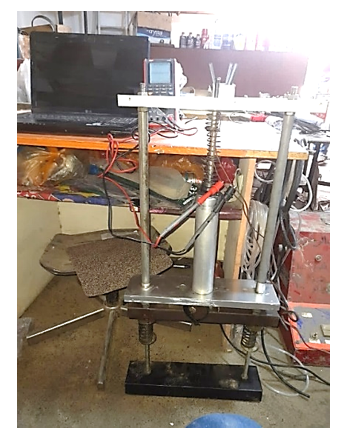
In this work semi-active suspension system has been used Figure 1.
Figure 1. Semi-active suspension system
As shown in the Figure 2, when the vibrator is turned on the cam will be in touch with the moving part of suspension system and will pull it to up then the spring will return the moving body to down at the same time the electrical line of the piston coil is turned on. Which generates a magnetic field around it and the ferromagnetic particles will align around the piston in the damper, making it more difficult for them to pass through the damper holes. Due to the direct contact between the vibrator and the moving part of the system, the magnetic fluid is forced to pass through the piston holes. Which leads to a significant obstruction to movement and thus the required damping is achieved the vibration sensor will record all product vibrations and translate it to electrical signals transmitted to oscilloscope which will translate it into data. The experimental device in Figure 1 consists of:
A. Ferromagnetic Damper.
B. Spring (K= 850 N/m).
C. Structure.
D. Vibration sensor.
E. Vibrator consist of electrical motor and a cam in contact with the moving part of damper body.
F. Electrical source (12) V.
The main part of this system is the ferromagnetic damper, which consist of:
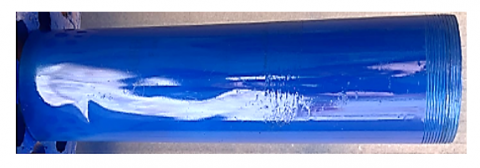
A: Aluminum cylinder (Figure 3): made of aluminum in order not affect the magnetic field of the system and its dimension (D= 54 mm, h=260 mm).
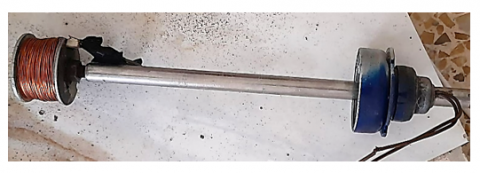
B: Hollow piston road to connect the electromagnetic coil (Figure 4).
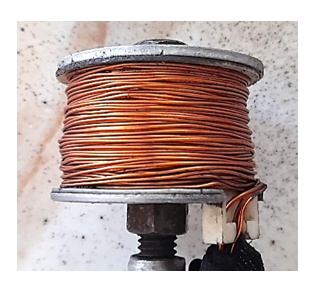
C: Electromagnetic coil (Figure 5) consists of 256 turns of 0.4 mm copper wire connected to a wire pass through the hollow piston road out of the (MR) damper to the power supply surrounded at the top and bottom by perforated rings to allow the magnetorheological fluid to pass through the holes.
Figure 2. Schematic diagram
Figure 3. Cylinder
Figure 4. Piston road
Figure 5. Electromagnetic coil
D: Magnetorheological fluid: consist of soft ferromagnetic carbonyl iron particles and carrier low viscosity oil [2].
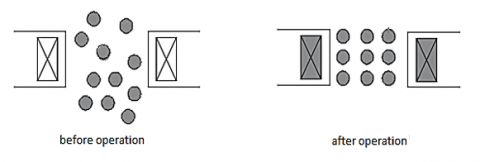
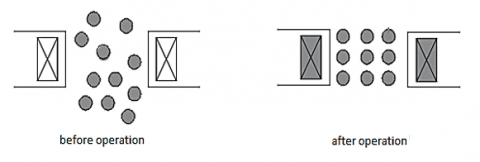
When the damper is turned on, the electric current reaches the coil, and thus a magnetic field is generated around the coil, which leads to alignment the ferromagnetic particles as shown in Figure 6 forming like spider web.
Figure 6. Magnetorheological fluid before and after operation
This will increase the resistance flew of magnetorheological fluid which passes through the orifice of piston which will hinders the movement of the piston and transform to damping force.
Within the current study, it was decided to study two discrete particle sizes of ferromagnetism based on the previous research and commercial specifications of MR fluid: Particle size Group A 250 µm (coarse-grade carbonyl iron) and Particle Size Group B 125 µm (fine-grade carbonyl iron). These volumes were selected to mimic a considerable difference in the surface area to volume ratio that has a direct impact on magnetic orientation and on viscosity. In every particle size group, three independent experiments were set, which yielded to six complete trials overall. Each experiment was done by a new batch of MR fluid mixed under definite mixing ratio and volume ratio. Standard deviations were determined to check the reproducibility, and an average across trials was measured (all within 5 percent). The selected range (125 µm to 250 µm) is appropriate to the commonly used commercial MR fluid chemistries, and are practical limits to use of the suspension in semi-active suspension systems. The scope here was to assess macro-level resultant trends in the behavior of particles of significantly different diameters although a wider range (e.g., nanometer or bimodal mixtures) may offer a more informative insight.
Theoretical foundations of magnetorheological median mechanics as well as new experimental research dictated the choice of 125 and 250 µm ferromagnetic particles. In MR fluids, the size of particle directly influences the field-induced yield stress and the sedimentation stability of the fluid. The smaller particles (<=125 µm) are usually more advantageous with higher surface area/volume ratios, and they can provide more interparticle magnetic attraction and chain-like structures in the presence of the magnetic field, providing high viscosity of the fluid and the enhancement of increasing damping performance [9, 19]. On the other hand, larger particles (250 µm) have the potential to settle faster, which can create an overall lack of stability, but initial resistance and creating smoother transitions could also be achieved by using them [3, 13]. Therefore, these two different sizes of particles were chosen to demonstrate the opposite relation of the magnetic alignment, sedimentation, and mechanical response. It is by this approach that the impact of these size-dependent physical phenomena on damper performance, including Ride Comfort Level (RCL) can be evaluated. Particle size effects have been established previously in the range. According to Shah et al. [9] stress on yield was higher in smaller plate-like iron particles. Lee and Choi [4] noted that the damping time was better in case of optimized particle distribution. In addition, Yarali et al. [11] and Bajkowski et al. [14] have given a significant change in the performance when mutating the particle size of 100 to 250. Thus, these ranges of particle sizes are relevant to practice in automotive MR dampers and are based both on theoretical expectations and on available literature.
E: Vibrator (Electrical Motor with Cam)
By harnessing mechanical force to select components of the damper, this device can mimic vibrations from the road. Whenever the connected cam engages with the moving part of the damper, the regulated motion produced is applied for testing purposes as shown in Figure 7.
Figure 7. Vibrator (electrical motor with cam)
F: Electrical Source (12 V)
Operates the magnetic coil that is part of the MR damper. The coil makes a magnetic field once it is connected to a power source. As the viscosity in the damper fluid changes, the force provided by the damper is also affected.
The vibrator moves around the suspension elements that makes the piston in the damper rise and fall. By using pressure, the MR fluid is pushed from the piston into the piston rod through its openings. With the coil powered, the magnetic field helps ferromagnetic particles line up which increases how thick the fluid is and raises the resistance. The resistance to piston movement stops vibrations, which improves the comfort of the ride. When checking the vibration response, the vibration sensor sends signals to a portable oscilloscope so they can be processed for analysis.
What creates the magnetic field inside the MR damper is the current pumped through the electromagnetic coil. The stronger the current is, the stronger the magnet become. Ferromagnetic particles in the fluid are magnetized as soon as current is applied. Because of this, the particles join up to create a chain pattern and the fluid’s viscosity goes up. Resistance to flow in the fluid rises with its viscosity that makes it try harder to block the movement of the piston. Thanks to controlling the current, the damper can quickly modify the amount of vibration it controls, making the suspension more adaptable to the road. Voltage is what gives energy to the coil to start making a current. Enough supply of power is given to ensure the coil makes a strong magnetic field. Because most automobiles use a reliable 12 V system, Damper can be used safely with standard vehicle batteries. The right voltage allows the damper to work properly and without interruptions by sending the needed amount of current. Magnetic behavior of the MR fluid is strongly influenced by the size of the ferromagnetic particles in it. Since 250-µm particles fill more space with less surface, they often produce fluids with lower viscosity. The more small-sized particles, around 125 µm in size, there are in a unit volume, the greater the interaction forces become. Increasing how molecules interact causes the fluid to thicken, making it hard for the piston to go through which makes the damper work more effectively. Still, if the particles are too small, the suspension might feel too stiff and less comfortable. Table 1 explains what proportion of the MR fluid consists of carrier fluid and what percentage contains ferromagnetic particles. Particles sitting in the carrier fluid oil can easily move when not in a magnetic field because the oil is low viscosity. The level of particles added to the fluid determines both its density and how easily it responds to a magnetic field. Increasing the content of particles, leads to a strong yield stress and viscosity in magnetic fields that makes the fluid perform better as a damper. If the number of particles is too great, the suspension fluid can become so heavy that it makes the ride feel bumpy.
Table 1. Experiment conditions
|
Current |
2.8 A |
|
Voltage |
12 V |
|
Particle Size |
250 µm |
|
Volumetric Percentage |
(6 unit volume fluid and 1 unit volume ferromagnetic particle) |
To make the results reliable and repeatable, every particular case of the experiment was carried out thrice and the average values of the measurements were taken to be analyzed. The standard deviation on repetition of trials was less than 5 percent showing that it was very consistent. In the conduct of each experiment, a number of control variables were held to a constant in order to rule out the external factors. Sinusoidal waveform with the same frequency and amplitude was applied to all the run times. Temperature and humidity was maintained in the laboratory standard levels (23 ± 1℃, 50% ± 5% RH).
More so, same model of oscilloscope and ferromagnetic damper were used in all the testing to provide uniformity both in test instrumentation. Such controlled arrangement enabled the subsequent isolation of particle diameter as chief change factor affecting the damping behavior hence the comparative finding between the 250 micron and 125 micron particles had a sound scientific strength.
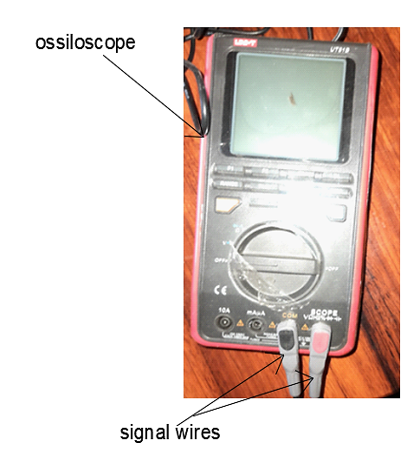
In this research, the measurement device used is portable oscilloscope that convert signals received from the vibration sensor into data as shown in Figure 8.
Figure 8. Portable oscilloscope
The check of the statistical significance of the effect of the diameter of ferromagnetic particles on the damping performance was conducted by carrying out a one-way Analysis of Variance (ANOVA) to assess the key performance indicators, i.e., vertical displacement, velocity, acceleration, and Ride Comfort Level (RCL) in SPSS (v25). The test design involved two particle diameter masses (that is, 250 and 125 microns) and three repetitions under each of the two variants of the experiment.
As indicated in ANOVA findings, a difference in all supervised parameters was shown below, the tolerant level (p < 0.05) in Table 2.
Table 2. ANOVA results
|
Parameter |
Mean (250 µm) |
Mean (125 µm) |
p-Value |
Interpretation |
|
Vertical Displacement |
18.2 mm |
14.5 mm |
0.013 |
Statistically significant |
|
Velocity |
76.5 mm/s |
60.3 mm/s |
0.008 |
Statistically significant |
|
Acceleration |
3.12 m/s² |
2.07 m/s² |
0.011 |
Statistically significant |
|
Ride Comfort Level |
114.2 dB |
106.23 dB |
0.004 |
Statistically significant |
These p-values show that there are not random differences in the results as it is not a chance of probability and particle size of ferromagnetic particles has significant influence on behavior of damper. This statistical test in the analysis makes the analysis rather rigorous and validates the observed trends in the figures of the analysis.
After get the results from oscilloscope and analyze it with each case in order to convert the results into vertical displacement, speed and acceleration of the piston, then use root mean square to get the percentage of increase or decrease the results as shown in the results.
To link the results obtained when changing the size of the ferromagnetic particles to the amount of damping that leads to an increase in the user's comfort level, we use the ride comfort criteria (RCL) [2] that equal:
$\mathrm{RCL}=20 \log \frac{\mathrm{~A}_{\mathrm{Rms}}}{\mathrm{A}_{\mathrm{Ref}}}$ (1)
$A_{\text {Ref }}=$ constant $=10^{-6}$ (2)
The maximum accepted RCL is (113 dB) [2].
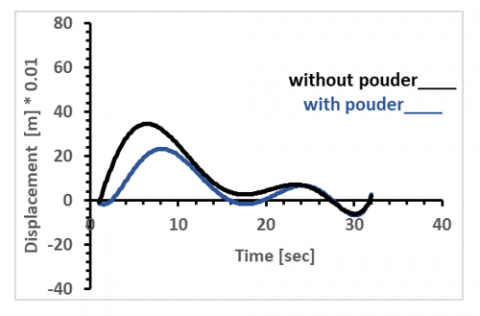
In this section, the experimental results will be show and explain for the semi – active damper used; the excitation used is sin wave. In first to ensure the effect of founds and absence of magnetic particles powder in the (MRF) on results without current.
Figure 9. Relationship between displacement and time with and without ferromagnetic powder
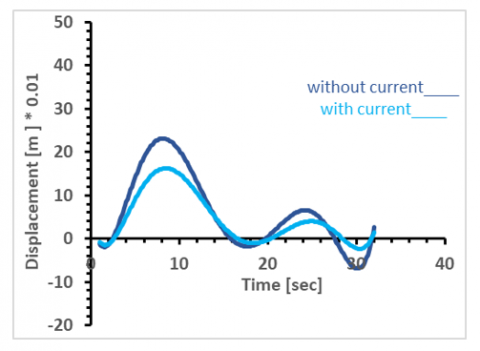
Figure 10. Relationship between displacement and time with and without current
In Figure 9, the results show that, the vertical displacement of piston decreases 13% when using ferromagnetic powder because it will hinder the piston movement and decrease the vertical displacement of piston because it will increase the density of fluid. Figure 9 displays a graph of the movement of a piston in both types of dampers as time progresses. Researchers have found important trends in how the damper behaves due to the influence of the ferromagnetic powder. There is no strong force on the piston in the entrance part of the curve since the fluid has no particles. The second curve shows that when ferromagnetic powder is in the fluid, the second fluid’s high resistance to flow makes it more difficult for the piston to move up and down [21]. When ferromagnetic powder is not present, the first movement looks natural, suggesting that the damper makes it simpler for fluid to flow and thus, the piston moves faster and with less resistance from contained fluid. The presence of ferromagnetic powder reduces piston movement almost from the first moment of applying the excitation force. When the fluid particles in the air align with the coil’s magnetic field, it requires more effort to move the fluid, causing it to thicken and become thicker. For this reason, the oil inside the engine gets more resistant and the piston finds it harder to move.
The effect of the powder confirms that using dampers is more effective at reducing extra vibrations in the suspension, specifically in stressful situations. Because of ferromagnetic particles, the damper’s performance can be fine-tuned by adjusting how much fluid is added or by modifying the particle’s size.
Figure 11. Relationship between velocity and time with and without current
Figure 12. Relationship between acceleration and time with and without current
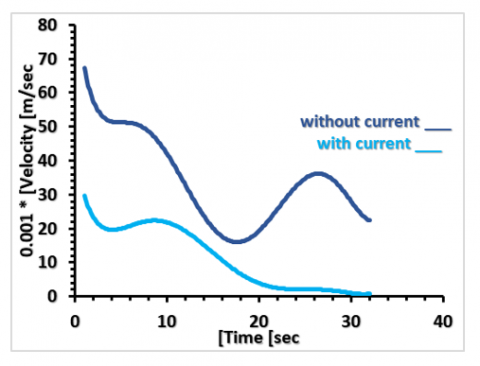
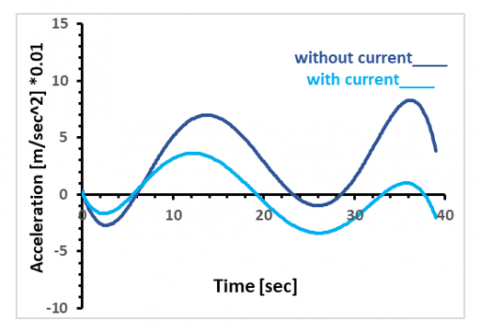
The results show that the vertical displacement of piston will decrease 14.2% when the current is pass through the coil of piston as it shown in Figure 10. This figure demonstrates both the case with no current and the case with current. In the absence of current, the movement of the piston is more independent of magnets and requires less effort to move. Without a magnetic field, the material does not naturally arrange itself that reduces the force against fluid motion [22]. The presence of current in the engine creates a magnetic field, moving the magnetic particles closer to one another and making it harder for the piston to move. Because of this, the piston’s up and down movement becomes smoother which leads to better damping. When current runs through the coil, the magnetic field increases damping in the fluid by pulling the arm down by 14.2%. With higher damping, the piston is slowed down which gives the damper more power against energetic forces. Applying modern currents to an AC motor can strengthen the dampers, increase their resistance to fluid flow and reduce vibrations. This plays an important role in making vehicles more comfortable and steadier, particularly when the load changes. They are more flexible and adapt well by changing the magnetic field. With a small reduction in displacement brought on by current, the damper is helping the suspension to respond more smoothly to impacts, a desired feature for cars. Today’s technology allows the MR damper’s response to be adjusted that is powerful for enhancing vehicle suspension. In addition, it is clear from the relationship between velocity and time, acceleration and time of dampers piton the velocity and acceleration decreases 41.2% and 18.4% respectively when the current is pass through the coil as it shown in Figure 11 and Figure 12 because the coil of piston will generate magnetic field which leads to alignment of ferromagnetic particles forming like spider web which will increase the difficult of pass the ferromagnetic particles from the piston holes which leads to increase damping force.
Figure 11 illustrates the piston’s velocity both with and without the presence of current. No current in the circuit means the piston moves smoothly on the curve, making its motion quicker since the friction is reduced [23]. The curve with current indicates that piston velocity significantly decreases since the current shapes magnetic domains in the liquid and increases its viscosity. Because of the added MR fluid, the movement of the piston slows down. When the coil is passing the current, the velocity decreases by 41.2%, revealing that the damping effect of the damper has increased. Due to its high viscosity, the reaction to the excitation force is more controlled. The use of current and the resulting magnetic field makes the MR damper prevent the piston from vibrating and make the car drive smoother. A lowered speed of the suspension system when a current is passed means the damper is working well to reduce vibrations and ensure a comfortable ride. Since the damping force can be changed with the current, the MR damper reacts to any changes in the road, giving you the balance, you desire.
Figure 12 demonstrates the difference in acceleration of a piston when electricity runs through the electromagnetic coil and when it is switched off. When current is not involved, the piston can move more freely since the magnetic effect on the particles is absent. Consequently, the vehicle can accelerate faster, since there is little opposition from inside the engine. As a result of the electric current, the magnetic field aligns the ferromagnetic particles inside the fluid and makes it more difficult for the pistons to move. Because of this, the piston accelerates at a lower rate. With current, the acceleration increases slower and the response to the input force is more gradual [24]. When a current passes through, the acceleration decreases by around 18.4% which is likely the sign that the fluid becomes more viscous in the magnetic field. Because of the higher resistance, the piston moves less quickly when hit by the excitation force. The reduction in acceleration of the vehicle during current application reveals that the magnetic damper is effective in managing its motion. Since the magnetic field changes the fluid qualities, it becomes more difficult to move the object and there is more friction. More damping makes it easier to reduce vacillations, leading to an improved ride and steadier system. Control of piston acceleration is important for the suspension to absorb and dampen any vibrations it encounters. Limiting how fast the piston accelerates, the MR damper manages any rough terrain well and makes the drive more comfortable.
5.1 Effect of Ferromagnetic particle diameter on the results
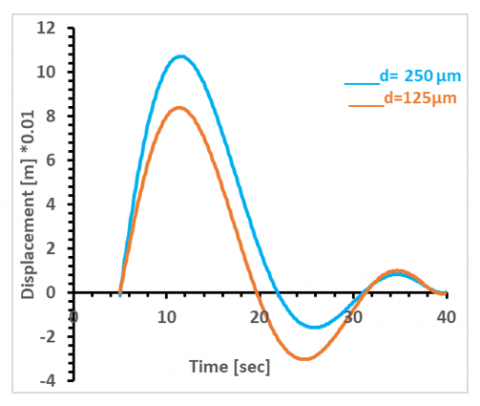
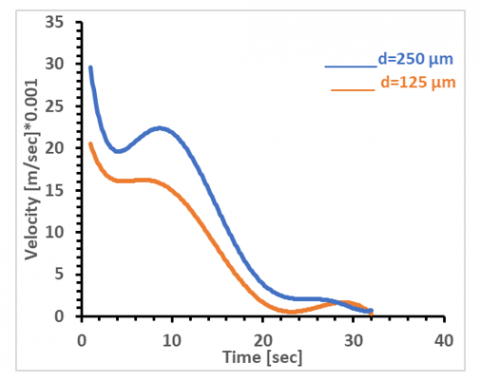
When the particle diameter decreases to 0.125 µm the maximum displacement and velocity will decrease 20.2% and 21.1% respectively because when the size of particle decreases the number of particles will increase volume unit. Which deal to more resistance to flue through the orifice of piston and then more obstruction of movement that will increase the vertical displacement and velocity of piston road as shown in Figures 13 and 14.
Figure 13. Relationship between displacement and time using (d= 250 µm) and (d= 125µm) of ferromagnetic powder
Figure 13 illustrated that the displacement curves are distinct when the ferromagnetic particles in the magnetorheological fluid have diameters of 250 µm and 125 µm. With larger particles, the distance they rise vertically is larger, indicating that there is less force to slow the piston and more force lifting it up. Because the oil has less resistance and viscosity, the piston can move much more freely in the damper. Particles with a lower diameter move the piston less, so they must flow more slowly in the fluid compared with particles that have a larger diameter [25]. A thicker and stickier oil causes the damping force to increase and prevent the piston from moving far. Compact organization of the smaller particles in a fluid increases its resistance to vibrations and limits the movement of the piston. Damping is more effective on structures with the 250 µm particles compared to the 125 µm particles. Since less displacement occurs, the suspension gets better fluid resistance and is able to absorb more vibrations. In addition, a specific particle size exists where the damping is effective and the damping system does not allow tears and squeezes the air too much. If reducing displacement and providing a smoother ride are the most important goals, then a coating with 125 µm particles may be helpful, as long as their damping effect does not make the suspension less comfortable.
In Figure 14 diagram, piston velocities for two different particles are drawn as curves. Since 250 µm particles are bigger, they offer less resistance to the piston and thus move faster than 125 µm particles. Because of this, the fluid becomes less viscous, moving more smoothly and providing less damping effect. The thickening effect of the 125 µm particles on the magnetorheological fluid results in a slower piston speed compared to the piston speed using 250 µm particles. Therefore, the velocity of the damper becomes smoother and slower. It is proved that as particles become smaller, the resistance to the motion of the piston also increases. Because of the dropped piston velocity, the damper can control vibrations better and send fewer vibrations to the car’s chassis. Experts recommend using small particles for velocity control, as they are more capable of reducing the piston’s speed and increasing damping. Still, the right balance must be found because too high viscosity may result in a suspension that is uncomfortable. The ability of MR dampers to tune the pistons with different particle sizes allows them to handle changes in the road or while driving at different speeds. To confirm the effect of changing the size of ferromagnetic particles, acceleration must be used as an indicator of improved results as in Figure 15.
Figure 14. Relationship between velocity and time using (d=250 μm) and (d=125 μm) of ferromagnetic powder
Figure 15. Relationship between acceleration and time at (d=250 µm) and (d=125 µm)
Figure 15 illustrates two curves for ferromagnetic particles with sizes of 250 µm and 125 µm. Since the 250 µm particles are larger, they become more scattered and create a less dense fluid which makes the fluid flow faster. A piston working with fluid made from 125 µm particles achieves a much lower acceleration than with fluid made from 250 µm particles, since smaller particles build up a denser layer in the fluid that flows better under the correct magnetic field, making the particles more viscous. Because of the increased viscosity, the engine slows down when accelerating. Smaller particles in the damper result in more resistance against the piston and help the damper to damp action more under control and with reduced acceleration. Experimental results indicate that movement of the piston is much quicker when 250 µm particles are present in the fluid compared to 125 µm particles, since 125 µm allows more resistance to building up. With this lower acceleration, the MR damper is better at regulating how the suspension changes in response to shocks. Slowly accelerating the car provides better damping, resulting in better controlling of shocks and a more comfortable ride. Ensure to find a middle ground between reducing movement and providing enjoyable shock absorption. Tiny particles may cause an uncomfortable experience, due to the increased resistance. Considering the size of the particles is necessary to achieve good results and comfort. From Figure 14 it is clear that reducing of particle diameter leads to reduce the piston acceleration by 33.1% because of increasing of number per unit volume. Which leads to a decrease in the distances between them and the attraction forces between them will increase due to the increase in magnetization of the molecules, which leads to increase the force of impeding the movement of the piston. To ensure the effect of the diameter of ferromagnetic powder must use criteria, in this research Ride Comfort Level (RCL) [2]. From the data used in Figure (15) and by using Eq. (1):
At d=250 (RCL=114.2dB) and at d=125 (RCL=106.23db) that mean when use d = 125 the Ride Comfort Level decrease (from 114.2dB to 106.23dB).
From the experimental results, it can be seen that:
1- From Figure 9 the effect of present the ferromagnetic particles without any current, which will hinder the piston movement and decrease the vertical displacement of piston because it will increase the density of fluid.
2- From Figures 10-12 shown that when the current pass from the coil of piston it will generate magnetic field which leads to alignment of ferromagnetic particles forming like spider web which will increase the difficult of pass the ferromagnetic particles from the piston holes which leads to increase damping force.
3- From Figures 13-15 it is clear that the decrease in ferromagnetic volume particles leads to increase the damping force because of increasing of number per unit volume, which leads to a decrease in the distances between them. In addition, the attraction forces between them will increase due to the increase in magnetization of the molecules, which leads to an increase the force of impeding the movement of the piston, it is clear too by decreasing Ride Comfort Level from 111.2 dB to 102.23 dB this mean the performance of suspension system is improved.
The findings of this research note that smaller size of ferromagnetic particles (125 µm) cause a significant damping effect improvement demonstrated by the considerable decrease in piston displacement (20.2 percent), velocity (21.1 percent), and acceleration (33.1 percent), and the apparent improvement in Ride Comfort Level (- 8.0 dB). This will be due to higher surface area-to-volume ratio presented by smaller particles thereby providing a larger number of inter-particle magnetic chains when placed under applied magnetic field. Such chain dense structures form a higher internal yield stress in the MR fluid, repelling piston movement and imparting more damping force.
Nonetheless, such advantage does not come without trade-offs. In highly fine-particle fluids, the apparent viscosity increased with a magnetic field and without it as well, and may result in greater resistance on the base at low-speed operation or idling. In addition, smaller particles are also more likely to agglomerate or settle, more control additives or fluid stabilization methods may be necessary in the long-term stability of the system [3].
On application fronts, application of sub-150 m particles in MR fluids are of great relevance in:
Passenger cars targeting better ride comfortability and reduction of road noise in varying load environment.
Electric vehicles and hybrids, in which a reduction in noise in the suspension operation is important since the cabin noise floors are low.
Self-driving cars or self-control cars, in which the adaptive suspension will promote smoother sensing and better path prediction.
In addition to this, the results presented in this research paper can be applied to the selection of a particle size in a design process in respect of the desired damping profile:
•The smaller the particles, the more suitable they will be at the high frequency, low-displacement applications (luxury sedans, precise robotics).
•Heavy duty: Bigger particles are more energy efficient and have low resistance during passive modes (e.g. heavy-duty vehicles).
This evidence indicates that future MR damper systems may also be able to be modified through introduction of multi-modal particle distributions or dynamic field control algorithms as a way to real-time optimize the behavior of particles. It would enable suspensions to be more strictly tailored to road and load conditions.
The research is aimed at finding how the size and amount of the ferromagnetic particle used in an MR damper influences the damping force as well as the suspension’s overall behavior. It also compares these factors with how people perceive ride comfort and what MR dampers can do to improve performance and comfort in the vehicle. Based on the experiments and their analysis, here are the main conclusions. The main result conclusions can be summarized as follow:
1. The use of ferromagnetic material in the MR fluid helped significantly decrease the vertical displacement of the piston. An increase in fluid density in the system obstructs the piston and helps the damper better manage vibrations.
2. When the coil of the MR damper received electricity, both the displacement, velocity and acceleration of the piston decreased. It means that active dampers use the magnetic field from the current to enhance the resistance to vibration.
3. Reducing the size of the ferromagnetic particles from 250 µm to 125 µm made the damper more effective. Making the fuel’s particles smaller boosted the fluid’s viscosity, resulting in more resistance and less displacement, speed and acceleration from the pistons. Consequently, driving on the car became smoother and transfer of road vibrations was reduced.
4. Using smaller ferromagnetic particles (125 µm) led to a decrease in the Ride Comfort Level (RCL) from 114.2 dB (with 250 µm particles) to 106.23 dB (with 125 µm particles). This indicates a noticeable improvement in the suspension system's performance, as the system provided a smoother and more comfortable ride.
5. The electricity on the MR damper produced a magnetic field that caused the ferromagnetic particles to prepare for the flow resistance against fluid flowing through the piston holes. The matching enhanced the damping meant that the vibrations were reduced more efficiently.
6. The reduction in piston velocity by 41.2% and acceleration by 18.4% when current was passed through the coil illustrates the enhanced ability of the MR damper to manage motion. The increased fluid viscosity, caused by the alignment of the ferromagnetic particles, slowed down the piston’s movement, thereby improving damping and ride stability.
7. According to the findings, if the particle diameter is decreased, damping increases and vibration decreases. Nonetheless, it is important to striking a balance, as extremely small particles might result in a suspension with reduced comfort.
Future studies should be carried out to find the optimal particle size for several damping applications, study the relationship between particle size and fluid density and improve the strategies for active MR dampers. Moreover, studying the shapes of particles and their responses to fluctuating temperatures would improve how MR dampers function in real systems.
The implications of this study on the design and deployment of the semi-active vehicle suspension systems are quite important. Such enhanced damping response when 125 µm ferromagnetic particles are used indicates potential areas of practical applications:
1. Luxury and Electric Cars Passenger Vehicle Suspension: Decreased level of Ride Comfort (114.2 dB to 106.23 dB) shows a smoother handling of vertical movements and this structure will perfectly fit the situation when suspension-generated cabin sound is more mandatory in situations where the electric and autonomous vehicles will require a high degree of passenger comfort thanks to their silent powertrains.
2. Adaptive Off road and Military Cars: The damping ability gets enhanced due to the smaller particles allowing quick action to the rough terrains. The off-road suspension or other tactical maneuvers could manage stiffness at the time of activities with MR dampers having adjustable particle distributions.
3. Commercial Vehicle Load stabilization: The vibration damping capability of MR dampers with fine particles in heavy-load trucks and trailers could be more effective against cargo shift induced vibrations so that ride quality and cargo security are preserved.
4. Railway Transport and High-Speed Transport Systems: Track-vibration suspension and raising passenger stability through high-velocity damping control may be facilitated with the improved damping control.
5. Active Suspension Integration: These findings promote the further intonation of MR dampers with the real-time control units where the selection of particle size can be complemented with a feedback-based voltage, adjusting the system to any condition on the road.
Design Recommendations:
•Keep the particles in the size range of 125 125 125 microns where high accuracy damping and ride is involved.
•Combinations of bimodal or hybrid particles (e.g. 125 125 plus 250) should be used to compromise viscosity and stability of fluid, when there is a need to dynamically trade on either energy consumption or ride smoothness.
•Use smaller particles and apply anti-sedimentation to maintain long-term stability in useful suspension systems (e.g., SiO2 coating or addition of a fluid).
These suggestions help fill the science-performance gap and offer paths to the future optimization of MR damper systems to be applied in a wider range of industries.
Although this paper has valuable information regarding the influence of the diameter of the ferromagnetic particles in the MR dampers, there are just a handful of challenges and avenues of exploration in the future:
1. Optimization of Particle size Multimodal: Fine and coarse ferromagnetic particle blends, which provide a uniform magnetic response with sufficient fluid stability, warrant future testing of bimodal or graded distributions (e.g. 75 > µm + 250 > µm). The problem is that it is difficult to preserve the homogeneity, and particle segregation with time.
2. Sedimentation and Long term Stability: The key drawback of fine particles absorption is a higher level of sedimentation since it may lead to reduced damper activity. In the future, the methods aimed at reducing potential anti-settling behaviors- e.g., by coating with a thin layer of surfactant (e.g., silica- modified) or altering the carrier fluid- should be pursued in order to increase the uniformity of suspension prevalence throughout the course of use.
3. Real-Time Management of Magnets: The incorporation of the smart control mechanism which modifies the applied magnetic field in real-time in response to road conditions is yet to be developed. This involves studies in low-latency sensors, energy-conserving control circuits and predictive damping algorithms.
4. Operating environments with high temperature: It is proposed that future work should be done on the effect of a variation in temperature of sufficient range (e.g., 0 to 80 ℃) on the MR fluid viscosity, such as in case of automotive and aerospace applications. The rheology of MR fluids of varying particle sizes will be of crucial importance to this aspect and thermo-rheological modeling.
5. Application-Specific Prototypes: The optimization of the MR fluids should be put into practical use through the development of full-scale prototypes of the suspension systems in different categories of the vehicles (e.g., passenger sedans, military vehicles, rail bogies). It will be necessary to experimentally verify it at dynamic loading and actual road profiles.
6. Lifecycle and Maintenance Analysis: A long-term assessment of the stability of the MR dampers regarding to various particle sizes such as wear of mechanical parts, breakdown of fluids, and maintenance cycles of embedded electromagnetic devices is required.
All of these challenges can be overcome to target the potential of future studies within the scope of introducing new limits to the design of MR dampers and allowing the development of highly adaptive, efficient, and durable suspension technologies corresponding to the requirements of the next-generation transport systems.
|
RCL |
ride comfort level |
|
K |
spring stiffness |
|
D |
diameter of cylinder |
|
H |
height of cylinder |
|
ARms |
root mean square acceleration |
|
ARef |
reference acceleration |
|
db |
decibel |
|
Greek symbols |
|
|
µm |
micrometer |
|
Abbreviations |
|
|
MR |
magnetorheological |
|
MRF |
magnetorheological fluid |
|
PM |
permanent magnetic |
|
SiO2 |
stabilized silicon oxide |
[1] Li, W.H., Yao, G.Z., Chen, G., Yeo, S.H., Yap, F.F. (2000). Testing and steady state modeling of a linear MR damper under sinusoidal loading. Smart Materials and Structures, 9(1): 95. https://doi.org/10.1088/0964-1726/9/1/310
[2] Li, J., W, W.J., Gao, X. (2015). Comparative analysis of truck ride comfort of 4 degree of freedom rigid-elastic model with 2 degree of freedom rigid model (No. 2015-01-0615). SAE Technical Paper. https://doi.org/10.4271/2015-01-0615
[3] Choi, S.B. (2022). Sedimentation stability of magnetorheological fluids: The state of the art and challenging issues. Micromachines, 13(11): 1904. https://doi.org/10.3390/mi13111904
[4] Lee, T.H., Choi, S.B. (2018). On the response time of a new permanent magnet based magnetorheological damper: Experimental investigation. Smart Materials and Structures, 28(1): 014001. https://doi.org/10.1088/1361-665X/aaf0dc
[5] Chooi, W.W., Oyadiji, S.O. (2009). Mathematical modeling, analysis, and design of magnetorheological (MR) dampers. Journal of Vibration and Acoustics, 131(6): 061002. https://doi.org/10.1115/1.3142884
[6] Lee, T.H., Choi, S.B. (2017). Design and damping force characterization of a new magnetorheological damper activated by permanent magnet flux dispersion. Smart Materials and Structures, 21(6): 065002. https://doi.org/10.1088/1361-665X/21/6/065002
[7] Yao, G.Z., Yap, F.F., Chen, G., Li, W., Yeo, S.H. (2002). MR damper and its application for semi-active control of vehicle suspension system. Mechatronics, 12(7): 963-973. https://doi.org/10.1016/S0957-4158(01)00032-0
[8] Husain, Z., Khowdhury, N.A. (2012). Ride comfort of 4-degree of freedom non-linear heavy vehicle suspension. ISESCO Journal of Science and Technology, 8(13): 80-85.
[9] Shah, K., Do Phu, X., Choi, S.B. (2014). Rheological properties of bi-dispersed magnetorheological fluids based on plate-like iron particles with application to a small-sized damper. Journal of Applied Physics, 115(20): 203907. https://doi.org/10.1063/1.4879681
[10] Chen, S.A., Sun, Y.Z., Tong, J.C. (2023). Newly developed current source based shortening and modeling methods for magnetorheological damper response time. IEEE Transactions on Industrial Electronics, 9(1): 417-426. https://doi.org/10.1109/TIV.2023.3321986
[11] Yarali, E., Mohammadi, A., Mafakheri, S., Baghani, M., Adibi, H. (2019). Mathematical modeling and experimental evaluation of a prototype double-tube Magnetorheological damper. SN Applied Sciences, 1: 1-10. https://doi.org/10.1007/s42452-019-1408-1
[12] Khedkar, Y.M., Bhat, S., Adarsha, H. (2019). A review of magnetorheological fluid damper technology and its applications. International Review of Mechanical Engineering, 13(4): 256-264. https://doi.org/10.15866/ireme.v13i4.17224
[13] Yang, Y., Xu, Z.D., Xu, Y.W., Guo, Y.Q. (2020). Analysis on influence of the magnetorheological fluid microstructure on the mechanical properties of magnetorheological dampers. Smart Materials and Structures, 29(11): 115025. https://doi.org/10.1088/1361-665X/abadd2
[14] Bajkowski, J.M., Bajer, C.I., Dyniewicz, B., Bajkowski, J., Leonowicz, M. (2024). Performance of a vibration damper using a new compressible magnetorheological fluid with microspheres. Smart Materials and Structures, 34(1): 015041. https://doi.org/10.1088/1361-665X/ad9cd7
[15] Upadhyay, R.V. (2013). A low sedimentation magnetorheological fluid based on plate-like iron particles, and verification using a damper test. Smart Materials and Structures, 23(2): 027001. https://doi.org/10.1088/0964-1726/23/2/027001
[16] Jiang, Z., Christenson, R.E. (2012). A fully dynamic magneto-rheological fluid damper model. Smart Materials and Structures, 21(6): 065002. https://doi.org/10.1088/0964-1726/21/6/065002
[17] Kariganaur, A.K., Kumar, H., Arun, M. (2022). Influence of temperature on magnetorheological fluid properties and damping performance. Smart Materials and Structures, 31(5): 055018. https://doi.org/10.1088/1361-665X/ac6346
[18] Liang, Z., Yongbao, F., Xiaolin, W., Zhenhua, Z. (2023). Influence of uncertainty factors on the dynamic characteristics of magnetorheological damper. Journal of Magnetism and Magnetic Materials, 585: 171125. https://doi.org/10.1016/j.jmmm.2023.171125
[19] Oh, J.S., Shul, C.W., Kim, T.H., Lee, T.H., Son, S.W. (2020). Dynamic analysis of sphere-like iron particles based magnetorheological damper for waveform-generating test system. International Journal of Molecular Sciences, 21(3): 1149. https://doi.org/10.3390/ijms21031149
[20] Iglesias, G.R., Ahualli, S., Otero, J.E., Fernández Ruiz-Morón, L., Durán, J.D.G. (2014). Theoretical and experimental evaluation of the flow behavior of a magnetorheological damper using an extremely bimodal magnetic fluid. Smart Materials and Structures, 23: 085028. https://doi.org/10.1088/0964-1726/23/8/085028
[21] Yang, X., Li, X., Zhu, J., Li, D. (2025). Preparation of magnetorheological fluid and its application in a magnetorheological damper. Physics of Fluids, 37(2): 023385. https://doi.org/10.1063/5.0253418
[22] Kariganaur, A.K., Kumar, H., Arun, M. (2022). Effect of temperature on sedimentation stability and flow characteristics of magnetorheological fluids with damper as the performance analyser. Journal of Magnetism and Magnetic Materials, 555: 169342. https://doi.org/10.1016/j.jmmm.2022.169342
[23] Lee, J.H., Han, C., Ahn, D., Lee, J.K. (2013). Design and performance evaluation of a rotary magnetorheological damper for unmanned vehicle suspension systems. The Scientific World Journal, 2013(1): 894016. https://doi.org/10.1155/2013/894016
[24] Jeyasenthil, R., Yoon, D.S., Choi, S.B. (2019). Response time effect of magnetorheological dampers in a semi-active vehicle suspension system: Performance assessment with quantitative feedback theory. Smart Materials and Structures, 28(4): 045019. https://doi.org/10.1088/1361-665X/ab0cb4
[25] Liu, Q., Chen, W., Hu, H., Hu, G., Zhu, Q. (2020). Effect of magnetorheological damper parameters on dynamic responses of a full-vehicle suspension system. International Journal of Applied Electromagnetics and Mechanics, 63(3): 1-21. https://doi.org/10.3233/JAE-190080