Nagarajan Stanley Julie Joan* | Dhandapani Rajinigirinath | Nagalingam Rajendran Shanker
© 2026 The authors. This article is published by IIETA and is licensed under the CC BY 4.0 license (http://creativecommons.org/licenses/by/4.0/).
OPEN ACCESS
In Cognitive Radio (CR), unused spectrum is used for secondary user communication. Efficient usage of the free spectrum is challenging in CR; dynamic sensing of free spectrum, inference management, energy efficiency, and security are critical problems. Moreover, the selection of channel and routing in Cognitive Radio Wireless Sensor Network (CRWSN) is a challenging problem during microclimatic fading conditions. In this paper, a joint interaction algorithm is proposed for channel selection and routing in CRWSN, using microclimatic data, and it avoids microclimatic fading. The proposed algorithm for channel selection are Rule-Based Bayesian Optimized Multiple Regression (RMR) and Rule-based grid-search-optimized Gaussian process Regression (RGR), which ensures a minimum number of channel switches and reduces the delay in sensing an idle channel. Rule based random search optimized Logistic Regression (RLR) method is proposed for routing, which includes microclimatic data. From simulations experimental analysis, proposed RMR Channel Selection method and RLR Routing algorithm (CSRLR) combination perform better than traditional channel selection algorithms and routing protocols. The CSRLR algorithm is implemented in a test bed and obtains high Quality of Service (QoS). The proposed CSRLR algorithm reduces average delay by 41.7% and 34.4% while improving throughput by 43.6% and 31.8% compared to EXGPCSA and GPCSA, respectively.
Cognitive Radio Wireless Sensor Network, routing, Logistic Regression, channel selection, microclimate
Wireless devices enable high transmission of information due to growth in embedded systems and internet technologies. The rapid development in wireless communications plays a vital role in various applications such as education, medicine, and the military. Wireless communication has challenges in the allocation of spectrum resources due to an increase in usage. Spectrum allocation in Cognitive Radio (CR) is a major problem. Wireless Sensor Networks (WSNs) are used widely in industry due to low power embedded systems. In WSN, nodes with sensors track environmental and atmospheric conditions such as temperature, humidity, pressure, wind speed, or rain. The nodes communicate with each other through wireless and form a network to collect, process, transmit, and receive data. The nodes in WSN have low computing power, limited onboard energy, and size. The nodes in WSN are powered using a battery. Energy saving increases the capability of the device’s operation [1]. The problems in WSN can be solved through energy efficient protocols, data compression, and cluster-based routing. In recent days, Cognitive techniques such as spectrum sensing and spectrum sharing are used in WSNs. CR technique is performed based on the WSN node parameters. CR techniques in WSN reduce the major problems in WSN such as energy saving, latency, and throughput. In CR, the idle spectrum is utilized based on requirement. In a CR network, the primary user (PU) uses the spectrum band at any time, and secondary users (SUs) use the spectrum when the PU is in an idle condition [2]. In any wireless transmission, the path between the transmitter and receiver channel has attenuation during transmission of signals. The signals from the transmitter arrive at the receiver’s end with scattered amplitudes and phases, which causes fluctuations [3]. The change in received signal power is due to Fading. Fading refers to changes in signal parameters such as amplitude and phase over time, space, geographical position, and radio frequency variations, which lead to poor performance. Apart from fading, other factors that affect the quality of transmission are noise and interference [4]. Urban environments are prone to multipath fading. Signals from multiple paths are called non-Line of Sight (non-LOS) due to the obstacles [5].
The CR techniques in WSN improve network stability, energy efficiency, and security. CR plays a vital role in recent days, which enables dynamic spectrum allocation and solves the spectrum scarcity problem. The maximum utilization of free spectrum is based on communication parameters. PU spectrum is allocated when PUs are free to the SUs; later, it automatically relinquishes the allotted spectrum [6]. CR has the capability of learning information from the operating environment and changes the transmission parameters depending upon the current status of the spectrum [7].
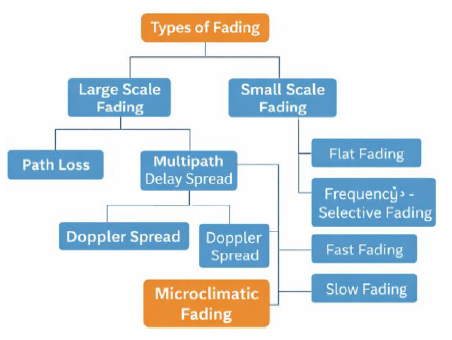
Figure 1 displays the types of fading in WSN. The fading is classified as large scale fading and small-scale fading. The path loss caused by the motion over a large area is called as large scale fading. Shadowing refers to the signal attenuation, where the signal penetrates through buildings and walls. The above phenomenon is referred to as slow fading, which has a duration of about a few seconds to minutes. Any spatial change between the receive and transmit station leads to rapid change in signal phase and amplitude and is termed as small scale fading.
Multipath delay measurement is based on the difference between the arrival time of the initial component and final component. Multipath delay spread leads to flat fading andfrequency-selective fading. When the channel’s coherence bandwidth is higher than the signal’s bandwidth, referred to as flat fading. If the channel’s coherence bandwidth is lower than the signal’s bandwidth, referred to as frequency-selective fading. Spectral broadening is due to time rate change in the radio channel and is called Doppler spread. Doppler spread causes fast or slow fading. Fast fading occurs due to the impulse response of the channel, which changes immediately within the symbol duration. Slow fading is caused due to impulse response of channel changes in slower rate than the transmitted signal. Multipath fading is due to the radio signal reaching the receiver in multiple paths, which leads to the superposition of multiple versions of the same signal with varying amplitudes. This phenomenon happens due to obstacles such as buildings or hills in the environment, which cause the signal to reflect or bounce. For mitigation of the multipath fading, fading diversity is used. In the fading diversity technique, the signal is simultaneously transmitted across more than one channel, where fading happens independently, as not all channels fade simultaneously. The next type of small-scale fading is the Rician fading. In Rician fading, the received signal is combined with an LOS component, or the received signal is combined with scattered components with no LOS component.
Figure 1. Types of fading in Wireless Sensor Network (WSN) and novel microclimatic fading
In WSN, fading of the signal is solved through repeated transmission of the data signal between nodes. Selection of the next node is done in an efficient way; fading can be avoided. Microclimate refers to the measurement of the climatic condition in a localized area that is closer to the earth’s surface. Factors that influence microclimate are the wind, temperature, rain, turbulence, atmospheric pressure, frost, precipitation, and heat balance. The above factors lead to slow fading in channels and are termed microclimatic fading. In this paper, the proposed methods are designed to overcome microclimatic fading in CRWN. The proposed method considers microclimatic data as a parameter for channel selection and routing.
1.1 Problem statement
The fading of the signal during transmission is the major problem in WSN. Microclimatic fading is not considered during the mitigation of fading. Mitigation of fading in CR networks / WSN considers atmospheric fading and never microclimatic fading. However, microclimate fading in WSN leads to a higher impact on QoS.
Microclimate refers to the measurement of the climatic condition in a localized area that is closer to the earth’s surface. Factors that influence microclimate are the wind, temperature, rain, turbulence, atmospheric pressure, frost, precipitation, and heat balance. In WSN, channel fading occurs due to microclimatic fading rather than atmospheric conditions. In WSN, channel fading occurs due to multipath propagation and reflection from obstacles. During deep fade, receivers do not have signal power and communication fails. In existing methods, the channel fading in WSN is avoided through shifting of node locations. Researchers analyse the effects of Rayleigh, Nakagami, Fast Rayleigh, and Rician fading in WSN. These fading affect the QoS parameters in WSN. The various methods adapted for mitigation of fading in WSN are power efficient clustering protocol, optimal transmission rate, optimal power hopping techniques, and opportunistic transmission. The above method performed based on atmospheric fading and never with microclimatic fading. WSN needs an efficient technique for mitigation of channel fading due to microclimatic fading, which varies from place to place.
Channel selection in Cognitive Radio Wireless Sensor Network (CRWSN) is crucial due to limited bandwidth, energy, security, and dynamic network conditions. To overcome the above issues, an efficient channel selection algorithm is required, which solves the interference due to microclimatic fading problem and improves. Once the channel is selected for transmitting data, the next step would be the selection of an effective routing algorithm. The unpredictable and dynamic nature of spectrum allocation in CR without considering microclimatic fading leads to frequent failures and the need for effective routing algorithms that can adapt to microclimatic fading, which occurs in the network during data transmission.
Existing methods such as GPCSA, EXGPCSA, Q-learning-based channel selection, multicast routing, and optimization-based routing protocols are developed based on channel parameters such as spectrum availability, interference, throughput, and energy consumption. The above methods do not consider microclimatic factors, such as solar shortwave radiation, land surface temperature, sealed surface temperature, building wall temperature, humidity, and wind conditions, which influence signals; CRWSN placed at the ground level signals are faded due to microclimatic conditions.
In the proposed Channel Selection and Routing using Logistic Regression (CSRLR), Bayesian optimization is used within the RMR channel selection and automatically identifies optimal parameter configurations, improves prediction accuracy, and reduces computational overhead. Microclimatic sensing data are integrated directly into both channel selection and routing decisions, enabling the network to mitigate microclimatic fading effects rather than reacting to channel degradation. CSRLR improves channel reliability, reduces retransmissions, minimizes energy consumption, and enhances overall network performance under varying microclimatic conditions through optimal channel selection.
1.2 Contributions
•To propose Rule based Machine Learning algorithms such as (i) RMR, (ii) RGR, (iii) RLR, and (iv) CSRLR to mitigate microclimatic fading due to surrounding wind, temperature, and rain parameters.
•To analyze the microclimatic data which is collected at each node through the sensors, and selection of the spectrum for transmission of data is performed in the CRWSN with microclimatic data and mitigates microclimatic fading in the channel.
•To analyze the proposed Rule base Machine Learning algorithm, this considers the selected microclimatic data for analysis in routing path selection. The selection of data for analysis from collected microclimatic data depends on the climatic season and is used in the proposed algorithm for routing the data in CRWSN.
Table 1 shows the research gap, novelty, and contributions of the proposed CSRLR method.
Table 1. Research gap, novelty, and contributions of the proposed Channel Selection and Routing using Logistic Regression (CSRLR) framework
|
Existing Research Gap |
Limitation in Existing Studies |
Proposed Novelty |
Contribution of CSRLR |
|
Most Cognitive Radio Wireless Sensor Network (CRWSN) studies consider conventional fading models such as Rayleigh, Rician, and Nakagami fading. |
Microclimatic fading effects are largely ignored despite their significant impact on sensor networks deployed near the ground. |
Incorporation of microclimatic parameters, including temperature, humidity, wind speed, and solar radiation, into channel and routing decisions. |
Improved channel reliability and reduced signal degradation under dynamic environmental conditions. |
|
Existing channel selection methods mainly rely on spectrum availability and QoS metrics. |
Environmental influences affecting channel quality are not considered during channel selection. |
Development of Rule-Based Bayesian Optimized Multiple Regression (RMR) and Rule-Based Grid Search Optimized Gaussian Process Regression (RGR) models. |
Accurate channel prediction and adaptive spectrum utilization in CRWSNs. |
|
Traditional routing protocols use shortest-path or energy-based routing strategies. |
Routing decisions may fail under sudden microclimatic changes and channel fading conditions. |
Introduction of Rule-Based Random Search Optimized Logistic Regression (RLR) for adaptive routing. |
Selection of reliable routing paths based on both QoS and microclimatic conditions. |
|
Existing studies treat channel selection and routing as separate optimization problems. |
Independent optimization may result in suboptimal network performance. |
Joint interaction framework integrating channel selection and routing into a unified CSRLR algorithm. |
Enhanced throughput, reduced delay, and improved packet delivery performance. |
|
Most machine learning approaches focus on single-scale network parameters. |
Lack of comprehensive feature representation limits prediction accuracy. |
Multi-scale feature extraction combining environmental sensing data and network QoS metrics. |
Improved decision-making accuracy for channel selection and route establishment. |
|
Existing CRWSN solutions offer limited adaptability to changing environmental conditions. |
Reduced robustness in heterogeneous deployment environments such as urban, semi-urban, and agricultural areas. |
Adaptive microclimate-aware channel and routing selection framework. |
Increased network robustness and reliability across diverse deployment scenarios. |
Many studies have been done for optimization of the channel selection and routing in CRWSN. This review mainly focuses on channel selection algorithms and improves QoS during multipath fading, shadowing, multi-hidden terminal issues, and receiver uncertainty. Wang et al. [8] develop a method of joint interaction among channel selection and route selection, which handles channel failure more effectively by analyzing the acquired data. The method of joint channel selection and route has routing stability and reduces route latency. Jang et al. [9] suggest a dynamic Q-learning based channel selection band to meet the system demands. The authors use a Q-table and a reward function, which consider parameters based on the channel. The Rewards for channel utilization are for selecting the band and channel, and effective frequency usage is implemented. Han et al. [10] analyzed the channel allocation methods and maximized the overall performance in a vehicular network system and used the submodular set function in the algorithm. Li et al. [11] analyzed channel allocation in vehicular ad-hoc networks and elevated the overall system’s reward based on semi-Markov decision process (SMDP). Chowdhury et al. [12] suggested a routing algorithm for a cognitive ad-hoc network, which selects the path and channel and minimizes the latency. The protocol in CR networks has less interference from PUs during transmission. Che-aron et al. [13] developed a protocol termed the Robustness-Aware Cognitive Ad Hoc Routing Protocol. The above protocol ensures transmission path based on the availability of PUs, performs the fast route, and recovers the strategy. The protocol reduces Path Delay. Jyothi and Subramanyam [14] energy efficient fuzzy clustering and congestion control algorithms, are applied and enhances the energy efficiency. The authors consider the availability of spectrum; queue length for the selection of cluster head increases the energy efficiency. To control congestion, the Queue Management Algorithm is implemented. Aghaei and Avokh [15] developed a joint multicast routing, scheduling, and channel selection problem in CR wireless mesh networks. The cross-layer algorithm is called “Multicast Routing, Channel Selection, Scheduling and Call admission control (MRCSC)”, which adopts a collision-free method and leads to multicast transmission. In the recent work done by Darabkh et al. [16], an adaptive FD-CR network protocol for routing, which implements a control channel. The adaptive FD communication is applied in the above protocol whenever secondary users adapt, based on PUs channel. A spectrum handover protocol is proposed by Sangi et al. [17]. The authors developed a packet buffering and forwarding mechanism; the end-to-end average throughput is enhanced. Channel route messages of these protocols are updated through spectrum handoff when backup channels in the PU are active, reducing packet drops. Alvi et al. [18] developed a multi-objective relay selection method, which considers throughput, battery power, buffer status, and delay performance simultaneously in the relay node and maintains signal-to-interference-plus-noise-ratio (SINR).
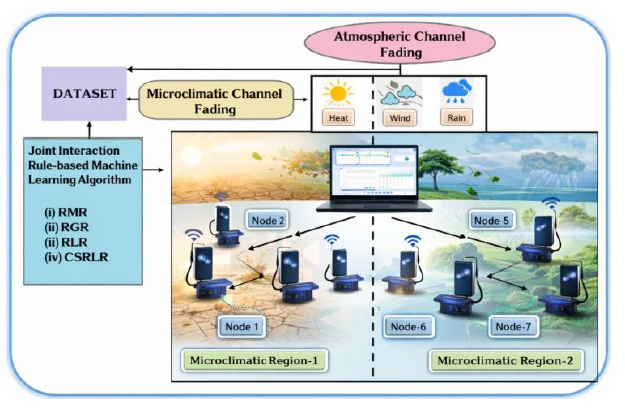
This paper proposes the CSRLR algorithm, which is a joint interaction algorithm for channel selection and routing combined with channel fading in CRWSN. CR technique is a type of Software-Defined Network (SDN), which selects the channel for data transmission. Each node in CRWSN consists of a finite number of channels. Due to microclimatic fading, a delay in the transmission of the signal. The node's signal loses its strength and power. In CRWSN, channel selection is performed using machine learning algorithms. Based on microclimatic sensor data of the channel during different microclimatic conditions, and QoS data such as delay, throughput, and energy efficiency are used for selection of the channel through the proposed algorithm. In the proposed CSRLR method, the machine learning technique Logistic Regression (LR) is applied to select the channel and optimum route-based node microclimatic data. The proposed CSRLR method is shown in Figure 2. Microclimatic environmental conditions cause microclimatic fading. The machine learning algorithm selects the channel. Once the channel is selected, the routing protocol is implemented using the Logistic Regression method. Channel selection in CR networks is achieved by implementing Multiple Regression (MR). MR is a statistical technique that can predict the result of an independent variable using more than one explanatory variable. The MR shows the linear relationship between independent and a dependent variable.
Figure 2. Methodology of the proposed Channel Selection and Routing using Logistic Regression (CSRLR) algorithm for channel selection and optimum route
3.1 Logistic Regression
LR is a supervised algorithm for classification. The major difference between LR and linear regression is the data points; LR is not lined in rows. The classification based on LR has a set of arbitrary inputs, and the output is generated by the classification of the input data. During classification, the function output is 0 or 1, which represents two classes. Therefore, the foregoing function argument values range from positive infinity to negative infinity. LR has two phases: (i) Training Phase: the system is trained using stochastic gradient descent and the cross-entropy loss. (ii) Testing Phase: For a given sample x, p (y|x) is computed, and the higher probability label, with the value of y = 0 or y = 1, is returned. The objective of LR is to train the classifier and make a decision about the new input group of observations, which is done by the sigmoid classifier.
3.1.1 The sigmoid function
A single input 'x' for an observation is represented as a feature vector $\left[x_1, x_2, \ldots, x_n\right]_v$. The output of the classifier 'y' has the value either 0 or 1 . To check whether the observation is a member, finds the probability $\mathrm{P}(\mathrm{y}=1 \mid \mathrm{x})$. This is performed by LR through learning from the training set, which consists of weights and bias. The weight $w_i$ is a number associated with a feature vector '$x_i$'. The weight represents the importance of the input feature in the decision of classification, and it can be positive or negative. In the proposed CSRLR, microclimatic features form the feature vector; it returns a negative weight if the Micro Climatic Decision (MCD) is not good for a particular channel transmission of data, and a positive weight. If the MCD is good, weights are learned in the training phase; the classifiers multiply each feature vector by its weight $x_i$ by its weight. $w_i$ and add all the weights of the features and then add the bias, indicated by '$b$'. The final number, indicated by '$z$', denotes the weighted sum of the class, as in Eq. (1),
$z=\left(\sum_{i=1}^n w_i, x_i\right)+b$ (1)
where,
wi represents the importance of the ith feature.
xi denotes the ith microclimatic or QoS parameter.
b is the bias term.
z is the combined decision score.
To generate the probability ‘z’ is passed through the sigmoid function σ(z). The equation of the sigmoid function is written as in Eq. (2):
$\sigma(z)=\frac{1}{1+e^{-z}}$ (2)
where,
σ(z) represents the probability of selecting a reliable channel or routing node.
Values closer to 1 indicate favourable transmission conditions.
LR predicts the probability of successful transmission of data in CRWSN. Routing through LR is modelled by determining the relationship between the unused spectrum, the characteristics of the channel, and the probability values. This model is trained using the previous historical data of successful and unsuccessful transmission of data through different nodes. After training with the previous data, the model predicts data transmission through a particular node depending upon the microclimatic condition of the localized area.
3.2 Rule based machine learning
3.2.1 Channel selection using Rule based Bayesian optimization in multiple regressions
Each node in the CRWSN consists of sixteen channels. Among these, half of the channels are reserved for transmission ($T_x$) of signals and the other half is for receiving ($R_x$) the signals. The RMR algorithms predict any one channel in the node using the Multiple Regression algorithm, which takes the decision depending upon the previous performance of the channels during different microclimatic conditions. The equation for multiple regression is of the form:
$Y=\beta_0+\beta_1 X_1+\beta_2 X_2+\cdots+\beta_k X_k$
Y represents the dependent variable, X1, X2, … Xk represent the independent variables, and β0, β1, β2, … βk represent the coefficients of the regression equation. These coefficients denote the relationship among the independent variables and the dependent variable [19]. In CRWSN, the dependent variable is the channel quality, and the independent variables consist of various parameters such as the strength of the received signal, occupancy rate of the channel, interference level, and microclimate data. MR algorithm uses the collected data and predicts the channel quality. The multiple regression equation predicts the channel quality from a set of independent variables. After predicting the channel quality, the WSN node in CRWSN, based on microclimatic data, transmits the data to the next node. In CRWSN, nodes dynamically select the best channel.
In WSNs, Bayesian optimization combined with rule-based multiple regressions offers a sophisticated methodology for optimizing parameters and harnessing the predictive power of multiple regression models. WSNs operate in dynamic and resource-constrained environments, necessitating efficient parameter tuning and accurate data modeling for optimal performance. Bayesian optimization provides a principled approach and iteratively selects the parameter configurations based on observed performance metrics, effectively navigating the complex parameter space minimizes resource consumption. This is particularly valuable in WSNs where experimentation is costly in terms of energy and time. Rule-based multiple regression, on the other hand, offers a flexible and interpretable framework for modeling complex relationships within WSN data. By combining expert-defined rules with multiple regression techniques, this approach can capture nonlinearities and interactions in the data and provides valuable insights into sensor behaviour and environmental dynamics. Integrating Bayesian optimization with rule-based multiple regression allows WSNs for effective tune of hyper parameters and select relevant features, ultimately enhancing predictive accuracy and adaptability to changing microclimatic conditions. This synergistic approach empowers WSNs and achieves optimal performance in different applications, such as environmental monitoring, industrial automation, and healthcare monitoring. By leveraging the strengths of Bayesian optimization and the interpretability of rule-based multiple regressions, channel selection in CRWSN is implemented.
3.2.2 Rule based grid search optimization Gaussian process regression for channel selection
Gaussian Process (GP) is a non-parametric Bayesian process. This technique focuses on the conditioning and marginalization of Gaussian distributed function for solving problems using regression. Gaussian Process regression (GPR) achieves channel selection based on microclimate data [1]. Han et al. [20] investigated Gaussian Process techniques for wireless communications and demonstrated their suitability for modelling uncertain communication environments. A GP is a cluster of random variables and consists of a finite number of joint Gaussian distributions and is characterized by the covariance $k\left(x, x^{\prime}\right)$ and mean function $m(x)$ which are defined as in Eq. (3).
$m(x)=E[f(x)]$ (3)
which indicates the average of all the functions in the distribution computed for input $x$. The mean function is set to $m(x)=0$, which avoids the complex posterior computations and infers through the covariance function. The covariance function $k\left(x, x^{\prime}\right)$ is the dependence between the values of the functions at various input points $x$ and $x^{\prime}$ as in Eq. (4).
$k\left(x, x^{\prime}\right)=E\left[(f(x)-m(x))\left(\left(f\left(x^{\prime}\right)-m\left(x^{\prime}\right)\right)\right]\right.$ (4)
The equation of the GP is as in Eq. (5).
$f(x) \sim g p\left(m(x), k\left(x, x^{\prime}\right)\right)$ (5)
In a Gaussian distribution, individual random variables of a vector are indexed based on the positions instead of time instants. The argument '$x$' in the function $f(x)$ takes the role of the index. Each input '$x$' has a random variable $f(x)$, which indicates the stochastic function ' $f$ ' in that position. For any GP , the attention is a finite subset of the function with value of '$f$' as $\left(f\left(x_1\right), f\left(x_2\right), \ldots f\left(x_n\right)\right)$, follows regular Gaussian distribution $f \sim N(\mu, \Sigma)$. Supervised learning methods learn the values based on each parameter of the function; the Bayesian method is based on a probability distribution with all combinations. Linear function $y=w_x+\epsilon$, Bayesian method defines prior distribution $p(w)$ for component '$w$', adjust probabilities based on empirical data as in the Bayes rule which is shown in Eq. (6).
$\begin{gathered}\text { posterior } \left.=\frac{\text { priorXLikelihood }}{\text { marginal likelihood }} \right\rvert\, p(w \mid y, X)=\frac{p(y \mid X, w) p(w)}{p(y \mid X)}\end{gathered}$ (6)
In channel selection, GPR models the relationship between the channels and the target variable as a GP. The algorithm captures the patterns and relationships in the data and makes predictions based on new data points. GPR is used for the evaluation of the importance of every channel in CRWSN estimation of the marginal likelihood of the data given in each channel. This process finds the posterior distribution over the parameters of the GP for each channel. The channel with the greatest posterior probability is considered an informative and relevant channel and is selected in CRWSN for data transfer. Grid search optimization combined with rule-based GPR presents a robust methodology for optimizing channel selection in WSNs. In WSNs, selecting the optimal communication channels is crucial for maximizing data transmission efficiency and minimizing interference. Grid search optimization offers a systematic approach for exploring the space of possible channel configurations by discretizing the parameter space into a grid and exhaustively evaluating each configuration. This method ensures thorough coverage of potential channel selections, although it may become computationally intensive for large parameter spaces. Rule-based GPR enhances the process by providing a flexible and interpretable framework for modeling complex relationships in the WSN data. By incorporating expert-defined rules into GPR, the model captures nonlinearities and interactions, allowing for more accurate channel selection decisions. Integrating grid search optimization with rule-based GPR enables WSNs to efficiently identify the optimal channel configuration, considering both the channel characteristics and the specific requirements of the application. This approach empowers WSNs, achieves enhanced communication performance, improves network reliability, and enables efficient resource utilization in diverse deployment conditions. Table 2 shows the sample rules for prediction of channel.
Prediction of Channel:
3.3 Routing
The network layer in each node sends the data packets from source to destination with minimal hops, delay, and packet loss with maximum throughput. Routing in CRWSN is challenging due to channels in each node, and therefore defining a universal communication protocol is not possible. Every channel is based on its own factors that affect microclimatic fading. The routing protocol in CRWSN differs from other WSN networks due to data centric in nature, and data flows from a single channel to a sink. The routing process encounters various challenges in selecting the route and considers the type of the network, performance metrics, and characteristics of the channel. The design challenges for routing in WSN are (i) Energy efficiency- as they are battery powered, (ii) Complexities- due to inadequate hardware capabilities, (iii) Scalability- as an n-number of sensors can be installed at any time in the network, (iv) Delay – quick response, and (v) Robustness- nodes get expired or leave the network. The routing protocol in CR never incorporates sensing of the spectrum and allocates spectrum. The challenge in a CR network is the lack of efficient coordination between the selection of the route and spectrum decision. The proposed CSRLR method considers previous microclimatic data for each node for evaluation of the authorization of the channel and reduces the interruption during the data transmission process. This leads to higher throughput and reduces delays in data delivery. Rodriguez-Colina addressed multiple-attribute dynamic spectrum decision-making in cognitive radio networks, highlighting the importance of considering several channel-related attributes when selecting an appropriate spectrum resource [21]. Routing remains another important issue in wireless sensor networks, as the selection of suitable forwarding paths directly affects network reliability and energy consumption [22].
3.3.1 Joint interaction algorithm for channel selection and routing in Cognitive Radio Wireless Sensor Network
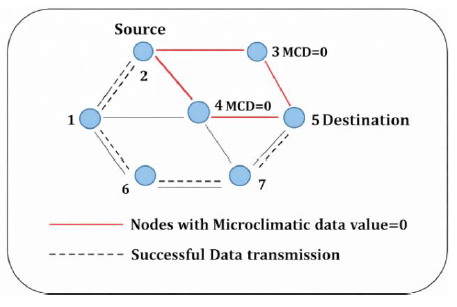
The process of routing is proposed using the RLR method. Microclimatic data in each node is stored and used as variables for channel selection and routing. The channel selection in each node is performed using RMR; the joint interaction algorithm is termed CSRLR. CSRLR is the combination of the RLR and RMR algorithms. In CRWSN, spectrum sensing is done for every node. The following data are collected such as: (i) Every node has neighboring own routing table, (ii) All nodes updates MCD value depending upon topography, (iii) Nodes in network has similar capacity to send and receive the data, (iv) Prior information about the location of each node is available to all other nodes, (v) All nodes chooses the shortest path first and if the MCD value of any node in the shortest path is 0 then an alternate route is found. In Figure 3, a simulation of the proposed CSRLR routing protocol is shown.
Figure 3. A simulation of the proposed Channel Selection and Routing using Logistic Regression (CSRLR) routing protocol
Table 2. Sample rules for prediction of channel
|
Wireless Sensor Network (WSN) Sensor Data |
||||
|
Temperature (T) |
Wind (W) |
Humidity (H) |
Land Surface Temperature (LST) |
Rules |
|
High |
Low |
Low |
High |
Consider T/W/LST data for channel selection |
|
Low |
High |
High |
Low |
Consider W/H/LST data for channel selection |
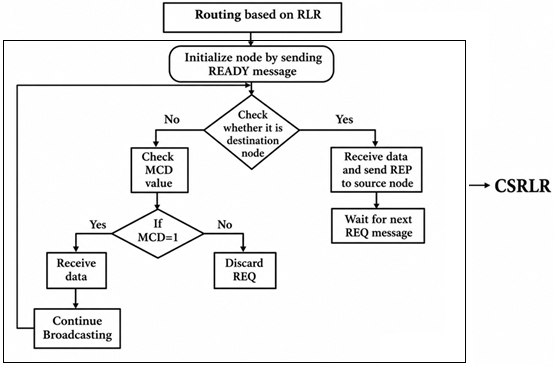
Figure 4. Flow chart of the proposed Rule based Random Search Optimized Logistic Regression (RLR) routing and Rule-Based Bayesian Optimized Multiple Regression (RMR) based channel selection combination in Channel Selection and Routing using Logistic Regression (CSRLR) algorithm
The scenario of the proposed CSRLR is explained in this Figure 4 section. Every time there is a request to transmit data from the next node in CRWSN, the source node has to check the microclimatic (MC) data of the neighboring nodes. Each node will maintain an MCD value, which is the combination of the microclimatic data and temperature of the microcontroller. If the microclimatic condition of the node is free from rain, heat, cloudiness, and other factors, then the MCD value is predicted as ‘0’ or’1’. If the MC of a particular node is not free from these factors, then the MC value is set to 0 based on RLR. Along with the microclimatic data, the temperature of the microcontroller has to be considered, because the microcontroller’s temperature increases; routing cannot be done through that particular node. Therefore, if the temperature of the microcontroller is higher than the threshold, then the MC value is 0, which is the prediction of RLR. The value of the MCD is set by analyzing the particular node data from previous transmissions. Every time a source node or an intermediate node selects the next hop based on this MCD value, which is obtained using RLR. In order to transmit data, the source node sends a READY message to all neighboring nodes. On receiving the READY message, all nodes should update their microclimatic flag value; i.e., as a CRWSN network is dynamic and the MC data may change at any time, the value should be updated every hour. If the microclimatic data of a node that has the shortest path is bad, then the MCD value of that node is set to 0, which is obtained from RLR, and the next possible node is selected. After this READY message, the REQ (Request) message with the data packet is sent by the source node. The data packet is passed from one node to another if the MCD value is 1, which is obtained from RLR. If the next neighboring node is the destination, the message is delivered, and the destination node sends a REP (Reply) message to the sender as an acknowledgement; otherwise, the next hop is selected for the shortest path based on the value of the MCD. The following flow chart depicts the routing process of the proposed CSRLR algorithm.
Hindia et al. [23] examined the integration of cognitive radio technology with 5G networks and discussed its potential for improving spectrum utilization and communication flexibility. Logistic regression has also been widely used as a statistical learning approach for classification and prediction problems [24], while Zou et al. [25] investigated optimization strategies for logistic regression and demonstrated their effectiveness through case-based analysis. In cognitive radio networks, Sengottuvelan et al. [26] proposed a channel selection approach considering heavy-tailed channel idle times, showing the importance of accurately characterizing channel availability for effective spectrum access. However, these approaches generally consider communication or network parameters independently and do not jointly account for microclimatic variations and node conditions. In contrast, CSRLR integrates microclimatic, spectrum, and node-level information for adaptive channel selection and routing, thereby providing a more comprehensive approach for maintaining communication reliability and QoS during varying environmental conditions.
This section discusses the performance of the proposed algorithms, such as RMR and RGR, and compared with other channel selection algorithms. A topographical area (800 × 800) is considered for simulation. Simulation parameters listed in Table 3.
Table 3. Parameters used in Channel Selection and Routing using Logistic Regression (CSRLR)
|
Simulation Parameters |
Parameter Values |
|
Packet rate (packets/s) |
20 |
|
Packet size (bytes) |
1500 |
|
Primary users |
5 |
|
Secondary users |
40 |
|
MAC protocol |
IEEE 802.11 |
|
Number of nodes |
60 |
|
Topography/Area (m2) |
800 × 800 |
|
Transmission range |
300 m |
|
Simulation time |
200 s |
|
Traffic model |
Constant bit rate (CBR) |
|
Routing protocol |
CSRLR |
|
MCD value |
0/1 |
(a)
(b)
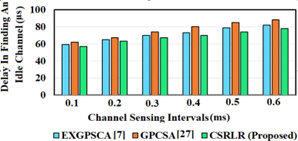
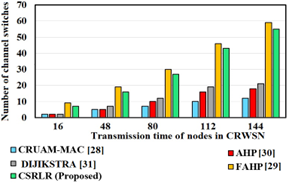
Figure 5. (a) Performance comparison of the proposed Channel Selection and Routing using Logistic Regression (CSRLR) method with EXCPSCA and GPCSA based on delay in finding an idle channel, (b) number of channel switches and transmission time of a node in Cognitive Radio Wireless Sensor Network (CRWSN)
The proposed RGR and RMR are compared with traditional channel selection algorithms based on the metrics for delay in finding an idle channel against the channel sensing interval time. The algorithms are Extended Generalized Predictive Channel Selection Algorithm (EXGPSA) and Generalized Predictive Channel Selection Algorithm (GPSCA). The proposed CSRLR method is better than traditional algorithms and finds idle channels and routing, as shown in Figure 5(a). The performance evaluation of the proposed CSRLR method is done by analyzing the hand off rate versus transmission time of secondary users. The hand off rate is measured as the number of channel switches done, while the source node demands a channel for nodes. The results of CR Autonomous Metropolitan University (CRUAM-MAC) [27], Fuzzy Analytical Hierarchical Process (FAHP) method [28], Analytical Hierarchical Process (AHP) [29], and Dijkstra algorithm [30] are compared with the simulation results of the proposed CSRLR method; the results are depicted in Figure 5(b).
Table 4 compares the channel switching performance of CSRLR with the existing EXGPCSA and GPCSA methods under different sensing intervals. The results show that CSRLR achieves more effective channel utilization and maintains stable channel selection performance, reducing the impact of microclimatic fading in CRWSNs.
Table 4. Comparison of channel switching rate of node in Cognitive Radio Wireless Sensor Network (CRWSN)
|
Inter-Sensing Interval |
EXGPCSA [7] |
GPCSA-1/2 [26] |
GPCSA-1 [26] |
CSRLR (Proposed) (RMR & RLR) |
|
0.2 |
540 |
550 |
1400 |
1480 |
|
0.4 |
600 |
675 |
1010 |
1050 |
|
0.6 |
500 |
550 |
980 |
1025 |
|
0.8 |
510 |
530 |
970 |
1000 |
|
1.0 |
500 |
520 |
960 |
980 |
(a)
(b)
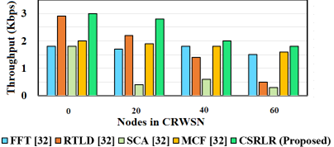
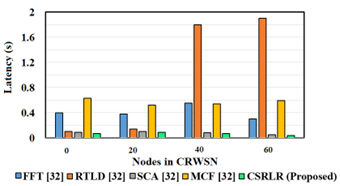
Figure 6. (a) Comparison of throughput and latency of four different routing protocols and the proposed system, (b) comparison of latency and nodes in Cognitive Radio Wireless Sensor Network (CRWSN) of four different routing protocols and the proposed system
A series of experiments were performed to evaluate the performance of the proposed CSRLR method. Figure 6(a) shows the throughput achieved by CRWSN. Generally, node activity increases, then the throughput decreases. The study conducted by Zubair et al. [31] evaluates the performance of routing strategies such as Flooded Piggybank ant routing (FFT), Real Time Load Distribution (RTLD) routing protocol, and Scan Ant (SCA) algorithms. The results of the above protocols are compared to the proposed CSRLR by comparing the metrics throughput and latency. Figure 6(b) displays the result of latency due to node PU activity. The proposed CSRLR algorithm performs better than other algorithms by maximizing the throughput and minimizing the latency.
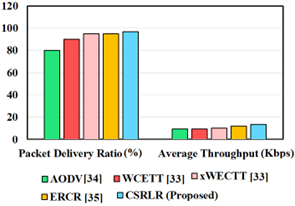
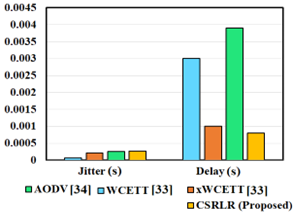
For the proposed CSRLR algorithm, packet delivery ratio and average throughput are analyzed. The extended Weighted Cumulative Expected Transmission Time (xWCETT) [32] routing protocol is compared with CSRLR. The results of the (WCETT) are compared with the proposed CSRLR method. CSRLR method outperforms two methods, such as AODV [33] and Efficient Routing Protocol for Cognitive Radio (ERCR) [34]. The results are compared with the proposed CSRLR system. The proposed CSRLR method is better than traditional methods with a high packet delivery ratio (PDR) and maximizes the throughput. The above listed algorithms are evaluated using the performance metrics jitter (the change in the amount of delay) and delay in delivering the packets from source to destination, and the results are depicted in Figures 7(a) and (b).
(a)
(b)
Figure 7. (a) Comparison of packet delivery ratio (PDR) and average throughput, (b) performance comparison of jitter and delay
Figure 7(a) shows the packet delivery ratio and average throughput achieved by CSRLR and existing routing protocols. The proposed CSRLR method delivers higher throughput and packet delivery performance due to adaptive channel selection and routing strategy based on microclimatic conditions. Figure 7(b) compares the jitter and end-to-end delay of CSRLR with conventional methods. The result shows that CSRLR effectively reduces transmission delay and jitter by avoiding routes affected by microclimatic conditions, leading to reliable communication.
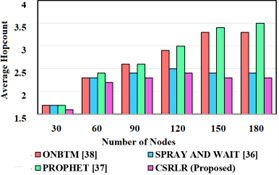
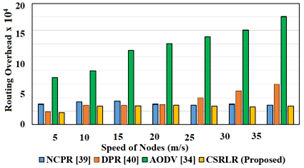
The average hop count for the methods ONBTM [35], spray and wait, and PROPHET [36] are analyzed and compared with the proposed CSRLR method. Comparison results are depicted in Figure 8(a). From the proposed RLR results, the proposed CSRLR method performs better with the minimum hop count. The routing algorithm efficiency is better than traditional algorithms [37]; routing overhead in the network is reduced. Routing protocols such as NCPR [38], DPR [39], and AODV are chosen for comparison, and the CSRLR method has lower routing overhead compared to other protocols, as shown in Figure 8(b).
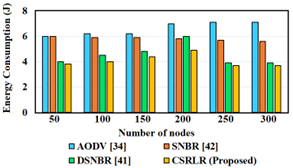
Energy consumed by the network is very crucial because WSN operates on batteries and resources need to be utilized carefully. The energy consumed by the protocols such as AODV, Scalable Neighbour-based Routing (SNBR) protocol [40], and Dynamic Scalable Neighbour-Based Routing (DSNBR) [41] protocol are compared with the proposed CSRLR method, and results are displayed in Figure 9(a). As the number of nodes increases, more energy is consumed. Energy consumption in the proposed CSRLR method is considerably reduced, and packets are transmitted based on the MCD value, and unwanted transmissions are avoided.
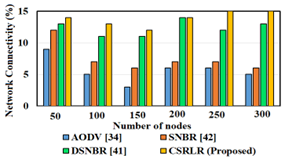
Figure 9(b) shows the network connectivity rate while transmitting the data. The proposed CSRLR method performs after considering the microclimate data of a particular area and the temperature of the microcontroller in the network. These validations enable the entire network to be more stable and reduce energy consumption compared to traditional protocols.
(a)
(b)
Figure 8. (a) Comparison of average hop-count, (b) comparison of routing overhead × 104 with speed of nodes
(a)
(b)
Figure 9. (a) Performance comparison of energy consumed by the network, (b) comparison of stable network connectivity
(a)
(b)
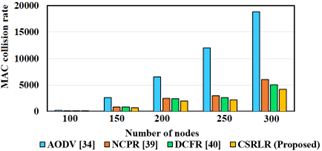
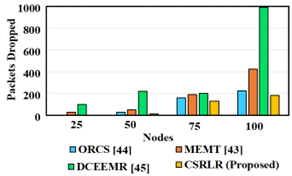
Figure 10. (a) Comparison of MAC collision rate, (b) Comparison of packets dropped
Figure 10(a) depicts the impact of the size of the network based on the MAC collision rate. IEEE 802.11 protocol shares control and data packets in the same channel. Redundancy causes collisions and leads to massive packet drops. The average number of packets dropped due to collisions in the MAC layer is called the MAC collision rate. The collision rate of the traditional AODV protocol is huge, and rebroadcasting occurs, and causes collision and interference. The traditional method, namely Neighbour Coverage-based Probabilistic Rebroadcast (NCPR) and Dynamic Probabilistic Route (DPR) [42] Discovery results are shown in Figure 10(b). From Figure 10(a), the proposed method CSRLR's performance is better than the other three protocols and reduces the MAC collision rate. As the collision rate is reduced, packet drops are reduced. A comparison result of the traditional algorithms such as Optimal Relay and Channel Selection (ORCS) [43], Delay-Constrained Energy-Efficient Multicast Routing (DCEEMR) [44], and Delay-Constrained Energy-Efficient Multicast Routing (MEMT) is depicted in Figure 10(b), which shows that the proposed CSRLR method reduces the number of packet drops because of the reduced collision rate.
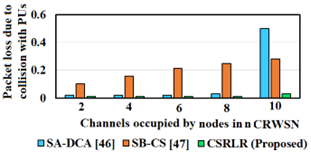
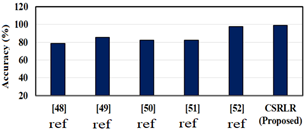
Figure 11(a) shows the packet loss rate because of collision among nodes in CRWSN, which is compared with other algorithms such as Spectrum Aware – Dynamic Channel Assignment (SA-DCA) [45] and Selective Broadcasting - Channel Selection (SB-CS) [46]. The proposed CSRLR algorithm considerably reduces the packet loss ratio when compared to other algorithms. The channel selection accuracy of the proposed CSRLR is compared with traditional algorithms, namely, Fixed GA-Optimization [47], Prob PSO optimization [48], Fixed IWO-Optimization [49], A-Change [50], Prob IWO optimization [51]. The results show that the proposed CSRLR method has higher accuracy in channel selection compared to other methods. Figure 11(b) shows Channel selection accuracy with the proposed CSRLR compared to existing methods.
(a)
(b)
Figure 11. (a) Packet loss rate due to collision with the Pus, (b) channel selection accuracy with proposed Channel Selection and Routing using Logistic Regression (CSRLR)
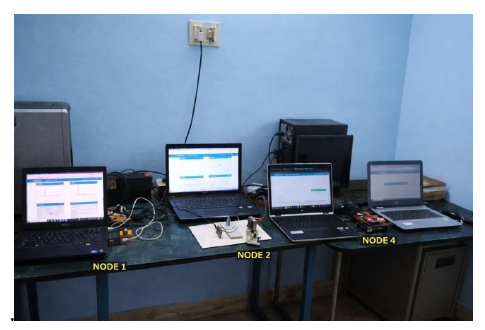
Figure 12 shows the test bed for CSRLR algorithm implementation.
Figure 12. Test bed for Channel Selection and Routing using Logistic Regression (CSRLR) algorithm implementation
Table 5 shows the qualitative comparison of CSRLR with existing algorithms in terms of performance, scalability, robustness, security, and spectrum management. The proposed CSRLR method demonstrates superior overall performance by incorporating microclimatic-aware channel selection and routing mechanisms.
Table 5. Comparison of proposed Channel Selection and Routing using Logistic Regression (CSRLR) with other algorithms
|
Features |
EXGPCSA |
GPCSA |
KNN |
SVM |
Proposed (CSRLR) |
|
Performance |
Low |
Low |
Medium |
Low |
High |
|
Scalability |
Low |
Low |
Low |
Medium |
High |
|
Robustness |
Low |
Low |
Low |
Medium |
High |
|
Handling Data |
Medium |
Low |
Low |
Low |
High |
|
Security |
Low |
Medium |
Medium |
Low |
High |
|
Efficiency |
Low |
Medium |
Medium |
Medium |
High |
|
Accuracy |
Low |
Low |
Medium |
Medium |
High |
|
Spectrum Management |
Medium |
Low |
Medium |
Low |
High |
Significant processing power and computational resources are needed for EXGPCA. Its performance is modest since it depends on how accurate the channel modeling is, although CSRLR. By examining the combined interactions between many aspects, it aids in the selection of the most pertinent traits, resulting in good performance. In GPCSA, as the CR network grows in size and complexity. In cognitive radio networks, where data may be noisy or deformed, CSRLR is robust to noise and can handle noisy data successfully, but the GPCSA algorithm may have scalability issues in maintaining its performance and efficiency. The computational cost of K-Nearest Neighbors (KNN) increases with dataset size and complexity. Its low efficiency when extrapolating to fresh, unknown data is limited by its prediction-making. In contrast, CSRLR can deal with dissimilar data, which is typical in cognitive radio networks where certain classes may have a disproportionately high number of instances compared to others. Support Vector Machine (SVM) performs worse when working with big datasets. The performance is influenced by the regularization term and kernel choice, and it fails to converge to the global minimum. On the other hand, non-linear connections—which are frequent in cognitive radio networks where there may be non-linear interactions between features—can be efficiently handled by CSRLR. Additionally, it can manage feature interactions well, which is typical in cognitive radio networks where complicated feature associations may exist. Furthermore, CSRLR can handle imbalanced, high-dimensional, missing values, non-linear relationships, interactions, flexibility, interpretability, robustness to noise, and energy efficiency.
Tables 6 and 7 show hyperparameter settings for proposed algorithms and training and initialization parameters.
Table 6. Hyperparameter settings for proposed algorithms
|
Algorithm |
Hyperparameter |
Value/Range |
Optimization Method |
|
RMR (Rule-based Bayesian Optimized Multiple Regression) |
Learning Rate |
0.001–0.1 |
Bayesian Optimization |
|
Number of Initial Points |
10 |
Bayesian Optimization |
|
|
Maximum Iterations |
50 |
Bayesian Optimization |
|
|
Acquisition Function |
Expected Improvement (EI) |
Bayesian Optimization |
|
|
Cross-Validation Folds |
5 |
Model Validation |
|
|
RGR (Rule-based Grid Search Optimized Gaussian Process Regression) |
Kernel Type |
RBF, Matern, Rational Quadratic |
Grid Search |
|
Length Scale |
0.1–10 |
Grid Search |
|
|
Noise Level (α) |
10⁻⁵–10⁻¹ |
Grid Search |
|
|
Grid Search Combinations |
100 |
Grid Search |
|
|
Cross-Validation Folds |
5 |
Model Validation |
|
|
RLR (Rule-based Random Search Optimized Logistic Regression) |
Regularization Parameter (C) |
0.01–100 |
Random Search |
|
Maximum Iterations |
1000 |
Random Search |
|
|
Solver |
Lbfgs |
Random Search |
|
|
Number of Random Trials |
50 |
Random Search |
|
|
Cross-Validation Folds |
5 |
Model Validation |
Table 7. Training and initialization parameters
|
Parameter |
Value |
|
Training Dataset Split |
80% |
|
Testing Dataset Split |
20% |
|
Random Seed |
42 |
|
Convergence Criterion |
Validation loss change < 10⁻⁴ |
|
Maximum Optimization Iterations |
50 |
|
Feature Inputs |
Temperature, Humidity, Wind Speed, Solar Radiation, QoS Metrics |
|
Output Variable |
Optimal Channel/Routing Decision |
Table 8. Statistical analysis of Channel Selection and Routing using Logistic Regression (CSRLR) performance (95% confidence level)
|
Metric |
GPCSA (Mean ± SD) |
EXGPCSA (Mean ± SD) |
CSRLR (Mean ± SD) |
95% Confidence Interval (CSRLR) |
t-Value |
p-Value |
|
Throughput (kbps) |
850 ± 24.5 |
780 ± 28.3 |
1120 ± 18.7 |
1110.8–1129.2 |
12.84 |
<0.001 |
|
Delay (ms) |
160 ± 8.2 |
180 ± 9.5 |
105 ± 5.6 |
102.2–107.8 |
10.67 |
<0.001 |
|
Packet Delivery Ratio (%) |
90.2 ± 1.8 |
88.5 ± 2.1 |
97.1 ± 1.2 |
96.5–97.7 |
8.91 |
<0.001 |
|
Energy Efficiency (%) |
80.1 ± 2.7 |
76.4 ± 3.2 |
92.3 ± 1.9 |
91.4–93.2 |
9.48 |
<0.001 |
|
Channel Selection Accuracy (%) |
89.4 ± 2.3 |
86.7 ± 2.9 |
98.2 ± 0.9 |
97.8–98.6 |
14.22 |
<0.001 |
Here, to improve reproducibility, detailed hyperparameter settings, optimization ranges, initialization points, and convergence criteria for the proposed RMR, RGR, and RLR algorithms have been added in Tables 6 and 7. These tables provide the parameter search spaces, iteration limits, validation strategy, and optimization settings used during model training and evaluation.
Table 8 shows the statistical analysis of CSRLR Performance (95% Confidence Level) with t-value and p-value.
In Table 8:
Mean ± SD: Average performance over multiple simulation runs with standard deviation.
95% Confidence Interval (CI): Range within which the true mean is expected to lie with 95% confidence.
t-value: Result of an independent two-sample t-test comparing CSRLR against baseline methods.
p-value < 0.05 indicates statistically significant improvement.
p-value < 0.001 indicates highly significant improvement.
To evaluate the statistical reliability of the results, additional experiments were conducted over multiple simulation runs. The mean, standard deviation, 95% confidence intervals, and independent t-test results are included. The obtained p-values (<0.001) confirm that the improvements of CSRLR than existing methods such as GPCSA and EXGPCSA.
Table 9 shows that, to assess the stability and statistical significance of the proposed CSRLR algorithm, additional statistical analyses were performed. Mean values, standard deviations, standard errors, 95% confidence intervals, and independent t-test results are presented. The low standard deviations indicate stable performance across multiple runs, while the obtained p-values (<0.001) confirm that the improvements achieved by CSRLR over GPCSA and EXGPCSA are statistically significant.
Table 9. Confidence interval and variability analysis of Channel Selection and Routing using Logistic Regression (CSRLR)
|
Metric |
Mean (%) |
Standard Deviation |
Standard Error |
95% Confidence Interval |
|
Throughput |
96.8 |
1.4 |
0.44 |
95.9–97.7 |
|
PDR |
98.1 |
0.9 |
0.28 |
97.5–98.7 |
|
Energy Efficiency |
93.5 |
1.6 |
0.51 |
92.5–94.5 |
|
Delay Reduction |
42.7 |
1.8 |
0.57 |
41.6–43.8 |
|
Accuracy |
97.9 |
0.8 |
0.25 |
97.4–98.4 |
•Bayesian optimization in RMR
Bayesian optimization is suited for problems with limited data, which explores the parameter space and avoids excessive model complexity. This reduces the risk of over fitting due to a small number of microclimatic datasets.
•Rule-based decision filtering
The rule-based components in both RMR and RLR provide an additional layer of robustness by incorporating domain knowledge.
•Microclimatic feature integration
Instead of relying solely on instantaneous signal quality measurements, CSRLR considers multiple microclimatic features such as temperature, wind, humidity, and surface conditions and improves resilience to fluctuations in single measurement.
•Adaptive routing through RLR
The RLR routing model evaluates the MCD value of neighboring nodes. If a node experiences unfavorable microclimatic conditions, the routing process can select an alternative path, maintain network connectivity, and reduce retransmissions.
Throughput optimization under Rician fading improved communication performance [52], while recursive distributed filtering enhanced estimation accuracy over Rayleigh fading channels [53]. Cooperative spectrum sensing and optimal threshold-based methods further increased spectrum sensing reliability in cognitive radio networks [54, 55]. Efficient resource allocation and power optimization techniques also improved network performance under fading conditions [56-58]. In addition, deep learning approaches achieved high accuracy in image restoration and signal classification tasks [59, 60]. However, these methods primarily address individual challenges and do not jointly consider microclimatic conditions, channel selection, and adaptive routing. The proposed CSRLR framework addresses these aspects simultaneously, resulting in improved communication reliability, spectrum utilization, and overall QoS in CR-WSNs.
In this paper, CSRLR, the joint interaction algorithm for channel selection and routing in CRWSN, is proposed for mitigation of microclimatic fading. CRWSN allocates the spectrum to nodes for data transmission. Effective channel selection is done by implementing the proposed RMR algorithm for channel selection in each node. Once the channel is selected, a dynamic and effective routing protocol using the proposed RLR algorithm is implemented and selects a reliable route from the source to the destination. The main factor to be considered while finding the route is the mitigation of microclimatic fading. As the microclimatic condition of a particular area changes frequently, the value of MCD is checked now and then to select a particular node. This validation avoids packet loss, interference, and delay caused by microclimatic fading in a particular area, results for reliable network that is obtained through CSRLR. The performance of the proposed CSRLR is evaluated using network metrics such as throughput, delay, latency, packet delivery ratio, collision rate, packets dropped, energy consumption, network connectivity, and number of channel switches in CRWSN. The results depict that the proposed CSRLR method outperforms traditional channel selection algorithms and routing protocols. The proposed CSRLR framework has improved the channel selection accuracy, throughput, delay, and energy efficiency under microclimatic fading conditions. The issues in the proposed method are limited availability of large-scale microclimatic datasets and rapidly changing environmental conditions that may require frequent model updates.
|
X |
input feature vector containing microclimatic and QoS parameters |
|
Y |
output class label (routing/channel decision), 0 or 1 |
|
P(y = 1 x) |
probability of successful channel selection/routing, 0–1 |
|
Wi |
weight associated with the ith feature, real value |
|
B |
bias term of Logistic Regression model, real value |
|
Z |
weighted sum of features before sigmoid activation, real value |
|
σ(z) |
sigmoid activation function output, 0–1 |
|
T |
temperature measured at a node, ℃ |
|
H |
relative humidity, % |
|
W |
wind speed, m/s |
|
SR |
solar shortwave radiation, W/m² |
|
LST |
land surface temperature, ℃ |
|
RSSI |
received Signal Strength Indicator, dBm |
|
D |
end-to-end delay, Ms |
|
TH |
throughput, Kbps |
|
EE |
energy efficiency, % |
|
MCD |
microclimatic Decision value, 0 or 1 |
|
β0 |
regression intercept coefficient, real value |
|
β1...βk |
regression coefficients of independent variables, real value |
|
Xi |
ith independent variable in regression model |
|
Y |
predicted channel quality value |
|
μ(x) |
mean function of Gaussian Process Regression, real value |
|
k(x,x') |
covariance (kernel) function in GPR, real value |
|
Α |
noise variance parameter in GPR, real value |
|
C |
regularization parameter of Logistic Regression, real value |
|
N |
number of sensor nodes in CRWSN, integer |
|
Ch |
available communication channel, integer |
|
PU |
primary user |
|
SU |
secondary user |
[1] Ali, O., Ishak, M.K., Ahmed, A.B., et al. (2022). On-line WSN SoC estimation using Gaussian Process Regression: An adaptive machine learning approach. Alexandria Engineering Journal, 61(12): 9831-9848. https://doi.org/10.1016/j.aej.2022.02.067
[2] Joshi, G.P., Nam, S.Y., Kim, S.W. (2013). Cognitive radio wireless sensor networks: Applications, challenges and research trends. Sensors, 13(9): 11196-11228. https://doi.org/10.3390/s130911196
[3] Mahender, K., Kumar, T.A., Ramesh, K.S. (2018). Analysis of multipath channel fading techniques in wireless communication systems. AIP Conference Proceedings, 1952: 020050. https://doi.org/10.1063/1.5032012
[4] Popa, S., Draghiciu, N., Reiz, R. (2008). Fading types in wireless communications systems. Journal of Electrical and Electronics Engineering, 1(1): 233-237.
[5] Lavanya, V., Rao, G.S., Bidikar, B. (2016). Fast fading mobile channel modeling for wireless communication. Procedia Computer Science, 85: 777-781. https://doi.org/10.1016/j.procs.2016.05.233
[6] Miah, M.S., Schukat, M., Barrett, E. (2021). A throughput analysis of an energy-efficient spectrum sensing scheme for the cognitive radio-based Internet of things. EURASIP Journal on Wireless Communications and Networking, 2021(1): 1-36. https://doi.org/10.1186/s13638-021-02075-2
[7] Tlouyamma, J., Velempini, M. (2021). Channel selection algorithm optimized for improved performance in cognitive radio networks. Wireless Personal Communications, 119(4): 3161-3178. https://doi.org/10.1007/s11277-021-08392-5
[8] Wang, Y., Zheng, G., Ma, H., Li, Y., Li, J. (2018). A joint channel selection and routing protocol for cognitive radio network. Wireless Communications and Mobile Computing, 2018(1): 6848641. https://doi.org/10.1155/2018/6848641
[9] Jang, S.J., Han, C.H., Lee, K.E., Yoo, S.J. (2019). Reinforcement learning-based dynamic band and channel selection in cognitive radio ad-hoc networks. EURASIP Journal on Wireless Communications and Networking, 2019(1): 131. https://doi.org/10.1186/s13638-019-1433-1
[10] Han, Y., Ekici, E., Kremo, H., Altintas, O. (2017). Throughput-efficient channel allocation algorithms in multi-channel cognitive vehicular networks. IEEE Transactions on Wireless Communications, 16(2): 757-770. https://doi.org/10.1109/TWC.2016.2629484
[11] Li, M., Zhao, L., Liang, H. (2017). An SMDP-based prioritized channel allocation scheme in cognitive enabled vehicular ad hoc networks. IEEE Transactions on Vehicular Technology, 66(9): 7925-7933. https://doi.org/10.1109/TVT.2017.2676462
[12] Chowdhury, K.R., Felice, M.D. (2009). SEARCH: A routing protocol for mobile cognitive radio ad-hoc networks. Computer Communications, 32(18): 1983-1997. https://doi.org/10.1109/SARNOF.2009.4850323
[13] Che-aron, Z., Abdalla, A.H., Abdullah, K., Hassan, W.H., Rahman, M.A. (2015). A robust on-demand routing protocol for cognitive radio ad hoc networks. In Mobile and Wireless Technology 2015, vol 310. Springer, Berlin, Heidelberg, pp. 33-43. https://doi.org/10.1007/978-3-662-47669-7_4
[14] Jyothi, V., Subramanyam, M.V. (2022). An energy efficient fuzzy clustering-based congestion control algorithm for cognitive radio sensor networks. Wireless Networks, 30: 4825-4840. https://doi.org/10.1007/s11276-022-03143-1
[15] Aghaei, F., Avokh, A. (2020). MRCSC: A cross-layer algorithm for joint multicast routing, channel selection, scheduling, and call admission control in multi-cell multi-channel multi-radio cognitive radio wireless networks. Pervasive and Mobile Computing, 64: 101150. https://doi.org/10.1016/j.pmcj.2020.101150
[16] Darabkh, K.A., Awawdeh, B.R., Saifan, R.R., Khalifeh, A.F., Alnabelsi, S.H., Bany Salameh, H. (2022). Routing in cognitive radio networks using adaptive full-duplex communications over IoT environment. Wireless Networks, 29: 1439-1463. https://doi.org/10.1007/s11276-022-03210-7
[17] Sangi, A.R., Alkatheiri, M.S., Anamalamudi, S., Alqarni, M.A., Memon, M.H., Yang, W. (2021). Spectrum handoff aware AODV routing protocol for cognitive radio vehicular ad hoc networks. Complexity, 2021: 851-857. https://dl.acm.org/doi/10.1155/2021/6981719
[18] Alvi, S.A., Hussain, R., Shakeel, A., et al. (2021). QoS-oriented optimal relay selection in cognitive radio networks. Wireless Communications and Mobile Computing, 2021(1): 5580963. https://doi.org/10.1155/2021/5580963
[19] Aldossari, S., Chen, K.C. (2019). Predicting the path loss of wireless channel models using machine learning techniques in MmWave urban communications. In 2019 22nd International Symposium on Wireless Personal Multimedia Communications (WPMC), Lisbon, Portugal, pp. 1-6. https://doi.org/10.1109/WPMC48795.2019.9096057
[20] Han, M., Nevat, D., Peters, D., Yuan, P. (2010). Gaussian process techniques for wireless communications. arXiv preprint arXiv:1011.0786. https://doi.org/10.48550/arXiv.1011.0786
[21] Rodriguez-Colina, E. (2011). Multiple attribute dynamic spectrum decision making for cognitive radio networks. In 2011 Eighth International Conference on Wireless and Optical Communications Networks, Paris, France, pp. 1-5. https://doi.org/10.1109/WOCN.2011.5872960
[22] Shabbir, N., Hassan, S.R. (2017). Routing protocols for wireless sensor networks (WSNs). In Wireless Sensor Networks-Insights and Innovations, pp. 36-40. https://doi.org/10.5772/intechopen.70208
[23] Hindia, M.N., Qamar, F., Ojukwu, H., Dimyati, K., Al-Samman, A.M., Amiri, I.S. (2020). On platform to enable the cognitive radio over 5G networks. Wireless Personal Communications, 113: 1241-1262. https://doi.org/10.1007/s11277-020-07277-3
[24] Jurafsky, D., Martin, J.H. (2019). Logistic regression. In Speech and Language Processing, pp. 75-92.
[25] Zou, X., Hu, Y., Tian, Z., Shen, K. (2019). Logistic regression model optimization and case analysis. In 2019 IEEE 7th International Conference on Computer Science and Network Technology (ICCSNT), Dalian, China, pp. 135-139. https://doi.org/10.1109/ICCSNT47585.2019.8962457
[26] Sengottuvelan, S., Ansari, J., Maehoenen, P., Venkatesh, T.G., Petrova, M. (2016). Channel selection algorithm for cognitive radio networks with heavy-tailed idle times. IEEE Transactions on Mobile Computing, 16(5): 1258-1271. https://doi.org/10.1109/TMC.2016.2592917
[27] Hernandez-Guillen, J., Rodriguez-Colina, E., Marcelin-Jimenez, R., Chalke, M.P. (2012). CRUAM-MAC: A novel cognitive radio MAC protocol for dynamic spectrum access. In 2012 IEEE Latin-America Conference on Communications, Cuenca, Ecuador, pp. 1-6. https://doi.org/10.1109/LATINCOM.2012.6505997
[28] Hernandez, C., Salgado, C., López, H., Rodríguez-Colina, E. (2015). Multivariable algorithm for dynamic channel selection in cognitive radio networks. EURASIP Journal on Wireless Communications and Networking, 2015: 216. https://doi.org/10.1186/s13638-015-0445-8
[29] Rodriguez, E., Ramirez, C., Carrillo, C. (2011). Multiple attribute dynamic spectrum decision making for cognitive radio networks. In the Eighth International Conference on Wireless and Optical Communications Networks (WOCN), Paris, France, pp. 1-5. https://doi.org/10.1109/WOCN.2011.5872960
[30] Madez Martinez, L., Rodriguez Colina, E., Medina Ramirez, C. (2013). Decision making based on the dijkstra's algorithm: A solution for cognitive radio. Redes de Ingeniería - Rompiendo las Barreras del Conocimiento, 4(2): 35-42.
[31] Zubair, S., Fisal, N., Baguda, Y.S., Saleem, K. (2013). Assessing routing strategies for cognitive radio sensor networks. Sensors, 13(10): 13005-13038. https://doi.org/10.3390/s131013005
[32] Kola, L.M., Velempini, M. (2018). The design and implementation of the XWCETT routing algorithm in cognitive radio based wireless mesh networks. Wireless Communications and Mobile Computing, 2018(1): 4173810. https://doi.org/10.1155/2018/4173810
[33] Cacciapuoti, A.S., Calcagno, C., Caleffi, M., Paura, L. (2010). CAODV: Routing in mobile ad-hoc cognitive radio networks. In 2010 IFIP Wireless Days, Venice, Italy, pp. 1-5. https://doi.org/10.1109/WD.2010.5684156
[34] Abu Diab, R.A., Abdrabou, A., Bastaki, N. (2020). An efficient routing protocol for cognitive radio networks of energy-limited devices. Telecommunication Systems, 73: 577-594. https://doi.org/10.1007/s11235-020-00654-2
[35] Spyropoulos, T., Psounis, K., Raghavendra, C.S. (2005). Spray and wait: An efficient routing scheme for intermittently connected mobile networks. In Proceedings of the 2005 ACM SIGCOMM Workshop on Delay-Tolerant Networking, pp. 252-259. https://doi.org/10.1145/1080139.1080143
[36] Huang, T.K., Lee, C.K., Chen, L.J. (2010). Prophet+: An Adaptive Prophet-Based Routing Protocol for Opportunistic Network. In 2010 24th IEEE International Conference on Advanced Information Networking and Applications, Perth, WA, Australia, pp. 112-119. https://doi.org/10.1109/AINA.2010.162
[37] Xu, G., Wang, X., Zhang, N., Wang, Z., Yu, L., He, L. (2021). A routing algorithm for the sparse opportunistic networks based on node intimacy. Wireless Communications and Mobile Computing, 2021(1): 6666211. https://doi.org/10.1155/2021/6666211
[38] Zhang, X.M., Wang, E.B., Xia, J.J., Sung, D.K. (2013). A neighbor coverage-based probabilistic rebroadcast for reducing routing overhead in mobile ad hoc networks. IEEE Transactions on Mobile Computing, 12(3): 424-433. https://doi.org/10.1109/TMC.2011.277
[39] Wang, N., Zhao, H., Hai, L. (2019). Distributed routing algorithm with dynamic connection partition for mobile ad hoc networks. IET Networks, 8(4): 239-245. https://doi.org/10.1049/iet-net.2018.5150
[40] Harum, N., Hamid, E., Bahaman, N., Ariff, N.A.M., Mas'ud, M.Z. (2021). Neighbor-based probabilistic rebroadcast routing protocol for reducing routing overhead in mobile ad hoc networks. International Journal of Computer Science and Network Security, 21(12): 1-8.
[41] Ejmaa, A.M.E., Subramaniam, S., Zukarnain, Z.A., Hanapi, Z.M. (2016). A scalable neighbor-based routing protocol for mobile ad hoc networks. International Journal of Distributed Sensor Networks, 12(9). https://doi.org/10.1177/1550147716665501
[42] Ren, W., Xiao, X., Zhao, Q. (2009). Minimum-energy multicast tree in cognitive radio networks. In 2009 Conference Record of the Forty-Third Asilomar Conference on Signals, Systems and Computers, Pacific Grove, CA, USA, pp. 312-316. https://doi.org/10.1109/ACSSC.2009.5470092
[43] Indumathi, G., Vaithianathan, V. (2021). Optimal relay and channel selection schemes for multiconstrained QoS multicast routing in cognitive radio ad hoc networks. International Journal of Communication Systems, 34(7): e4674. https://doi.org/10.1002/dac.4674
[44] Miao, X., Deng, M. (2014). DCEEMR: A delay-constrained energy efficient multicast routing algorithm in cognitive radio ad hoc networks. International Journal of Distributed Sensor Networks, 10(11): 584197. https://doi.org/10.1155/2014/584197
[45] Saleem, Y., Bashir, A., Ahmed, E., Qadir, J., Baig, A. (2012). Spectrum-aware dynamic channel assignment in cognitive radio networks. In 2012 International Conference on Emerging Technologies, Islamabad, Pakistan, pp. 1-6. https://doi.org/10.1109/ICET.2012.6375468
[46] Kondareddy, Y.R., Agrawal, P. (2008). Selective broadcasting in multi-hop cognitive radio networks. In 2008 IEEE Sarnoff Symposium, Princeton, NJ, USA, pp. 1-5. https://doi.org/10.1109/SARNOF.2008.4520042
[47] Tayel, A.F., Rabia, S.I., Abouelseoud, Y. (2016). An optimized hybrid approach for spectrum handoff in cognitive radio networks with non-identical channels. IEEE Transactions on Communications, 64(11): 4487-4496. https://doi.org/10.1109/TCOMM.2016.2607741
[48] Mishra, S., Sagnika, S., Singh, S.S., Mishra, B.S.P. (2019). Spectrum allocation in cognitive radio: A PSO-based approach. Periodica Polytechnica Electrical Engineering and Computer Science, 63(1): 23-29. https://doi.org/10.3311/PPee.13074
[49] Gupta, N., Dhurandher, S.K., Woungang, I., Obaidat, M.S. (2018). Proactive decision based handoff scheme for cognitive radio networks. In IEEE International Conference on Communications (ICC), Kansas City, MO, USA, pp. 1-6. https://doi.org/10.1109/ICC.2018.8422635
[50] Ding, G., Wang, J., Wu, Q., et al. (2015). On the limits of predictability in real-world radio spectrum state dynamics: From entropy theory to 5G spectrum sharing. IEEE Communications Magazine, 53(7): 178. https://doi.org/10.1109/MCOM.2015.7158283
[51] Sumathi, D., Manivannan, S.S. (2021). Stochastic approach for channel selection in cognitive radio networks using optimization techniques. Telecommunication Systems, 76: 167-186. https://doi.org/10.1007/s11235-020-00705-6
[52] Cao, H.N., Pham, D.H. (2023). Throughput optimization control strategy for mobile wireless sensor networks under Rician fading channels. In 2023 12th International Conference on Control, Automation and Information Sciences (ICCAIS), Hanoi, Vietnam, pp. 417-422. https://doi.org/10.1109/ICCAIS59597.2023.10382350
[53] Han, F., Wang, Z., Dong, H., Yi, X., Alsaadi, F.E. (2023). Recursive distributed filtering for time-varying systems over sensor network via Rayleigh fading channels: Tackling binary measurements. IEEE Transactions on Signal and Information Processing over Networks, 9: 110-122. https://doi.org/10.1109/TSIPN.2023.3244114
[54] Samala, S., Raj Reddy, N., Bhuvaneshwar, P., Krishpartha, K., Sai Varun, C., Rajendra Prasad, C. (2023). Cooperative spectrum sensing with improved energy detection over different fading channels: A performance analysis. In 2023 3rd International Conference on Intelligent Technologies (CONIT), Hubli, India, pp. 1-4. https://doi.org/10.1109/CONIT59222.2023.10205796
[55] Godugu, K.K., Vappangi, S. (2023). An optimal threshold/fusion rule based cooperative cognitive radio system over Rician fading channel. In 2023 3rd International Conference on Artificial Intelligence and Signal Processing (AISP), Vijayawada, India, pp. 1-5. https://doi.org/10.1109/AISP57993.2023.10135012
[56] Liu, T., Zhang, G., Cui, M., et al. (2023). Task completion time minimization for UAV-enabled data collection in Rician fading channels. IEEE Internet of Things Journal, 10(2): 1134-1148. https://doi.org/10.1109/JIOT.2022.3204658
[57] Hu, H., Xiong, K., Yang, H.-C., Fan, P., Ben Letaief, K. (2024). Age of Information Analysis of WPCN over Rician Fading Channel with Nonlinear Penalty. IEEE Internet of Things Journal, 11(4): 5854-5866. https://doi.org/10.1109/JIOT.2023.3309634
[58] Mei, M., Ye, D., Wei, J. (2023). Multi-sensor power allocation for remote estimation over semi-Markov fading channels. IEEE Transactions on Control of Network Systems, 11(3): 1300-1309. https://doi.org/10.1109/TCNS.2023.3337416
[59] Rodriguez-Colina, E., Krylov, V.A., Dahyot, R. (2018). Image deblurring and super-resolution using deep convolutional neural networks. In 2018 IEEE 28th International Workshop on Machine Learning for Signal Processing (MLSP), Aalborg, Denmark, pp. 1-6. https://doi.org/10.1109/MLSP.2018.8516983
[60] Snoap, J.A., Popescu, D.C., Latshaw, J.A., Spooner, C.M. (2023). Deep-learning-based classification of digitally modulated signals using capsule networks and cyclic cumulants. Sensors, 23(12): 5735. https://doi.org/10.3390/s23125735