Balaji Kavimani* | Arulmurugan Vellalapalayam Subramaniam
© 2025 The authors. This article is published by IIETA and is licensed under the CC BY 4.0 license (http://creativecommons.org/licenses/by/4.0/).
OPEN ACCESS
Plant disease is a significant component in deciding plant yield amount and quality. Early prediction of plant disease by Automation would benefit the farmers in achieving their estimated yield. The application of Emerging Deep learning techniques has made classification simple and easier. This research work has proposed an Ensemble Deep Neural Network (EDNN) model with the Salp Swarm Optimization (SSO) algorithm. The leaf images from the Kaggle dataset are converted into gray monochrome format to reduce the computational complexity. Then, the EDNN based on AlexNet, ResNet, and XceptionNet architecture is processed over these pre-processed images to identify the class labels of plant diseases. Here, the SSO algorithm is utilized to extract the suitable hyperparameters in an EDNN. The efficiency of the proposed plant disease prediction algorithm is determined using Accuracy, Precision, Recall, and F1-Score values and then compared with existing state-of-art plant disease classification methods.
rice leaf image, deep learning, plant pathology, AlexNet architecture, ResNet architecture, XceptionNet architecture
Plant diseases have always been a big problem in agriculture [1]. Early and precise prediction of plant disease would help implement preventive measures and save the plants and yields. Low production of crops will ultimately decrease the market conditions [2]. Weather conditions are also considered a factor for the low effective production of crops [3]. Sustainability and Food security is achieved if and only the crops produce healthy leaves. However, the plants are subjected to attacks of diseases that would lower the economy and other societal applications [4]. Earlier ways of diagnosing the leaf disease include manual inspection, which takes much time and might be inaccurate [5]. This led to a search for automated techniques that would deliver correct results in diagnosis and not be time-consuming. The major agents causing plant disease are fungi, bacteria, viruses, pathogens, and other microbes. This work focused on identifying four types of diseases in rice leaf images: Brown Spot leaf, Healthy leaf, Hispa leaf, and Leaf Blast. Due to advancements in technology, such as deep learning techniques, image classification is easy [6]. Deep Learning techniques address complex real-time problems and efficiently extract features. Classification and Detection of specific objects in images is interpreted using Convolution Neural Networks [7]. The accuracy in Classification remains a big obstacle due to the diversified nature of rice plants [8]. This hindrance has given rise to an ensemble learning of multiple models.
The growth of healthy plants and an increase in production is only because of the early detection of plant diseases [9]. Many Earlystage diagnostics of plant diseases were incorporated traditionally. Human visualization is one such traditional method of detecting plant diseases that is considered to be time time-consuming process and ineffective in the case of large areas. Researchers have utilized certain machine learning-based algorithms like Support Vector Machine (SVM), K-Nearest Neighbour Classification, Random Forest and Naïve bayes algorithms for rice plant leaf diagnosis [10]. These algorithms are surveyed to be a time-consuming process [11]. Plant diseases are not evident, healthy plant tissues suppress the decayed portion [12]. This confusion in differentiating healthy leaves from decayed ones has raised the necessity for effective automation methods [13].
Deep Neural networks have been implemented to diagnose plant diseases. Various Literature surveys have suggested that CNN is the best classification method [14]. Shoaib et al. [15] have concluded that CNN has outdated the Machine Learning Algorithms and Shelar et al. [16] incorporated deep learning-based CNN architecture for detecting leaf diseases [17]. The network was trained with 14 species information and 26 diseases were predicted with the CNN classification techniques. Borhani et al. [18] used a vision transformer with CNN architecture for real-time automated classification of leaf diseases, which produces higher prediction accuracy and speed than the machine learning based algorithms. CNN based stepwise disease detection model using diseased-healthy plant pair images were developed [19]. This proposed work has produced 95% accuracy in detecting the plant diseases in real time crop fields. CNN based pre-defined architectures, like DenseNet-121, ResNet, VGG-16 and Inception V4 networks for performing rice leaf disease identification are used [20].
Due to technological advancements ML and DL methods have gained popularity in Plant Leaf Disease Detection (PLDD) approaches.
Authors [21] incorporated a hybrid model that integrates ML and DL techniques for early PLDD detection with improved accuracy. Paymode and Malode [9] introduced a transfer learning approach for multiple PLDD classifications, leveraging the accuracy benefits of using pre-trained models with limited data. For example, Aggarwal et al. [13] applied a CNN to the latest 26 distinct cases for PLDD, achieving enhanced accuracy. Additionally, Fenu and Malloci [3] utilized an ensemble approach based on the CNN model to classify pear leaf diseases, resulting in noteworthy performance. Borhani et al. [18] discussed a DL-based vision transformer integrated with a conventional CNN model, which outperformed traditional ML and CNN algorithms in terms of speed and prediction accuracy.
•Gulame et al. [7] introduced a real-time PLD prediction system using advanced computational techniques, which showed significant enhancement in prediction accuracy.
•Delnevo et al. [2] combined DL techniques with a Social Internet of Things (SIoT) approach to enhance detection capabilities.
•Xie et al. [22] developed a robust feature extraction method using the SSO algorithm for PLDD, yielding significant results.
1.1 Limitations of existing approaches
The following section portrays the limitations of the existing approaches in a nut-shell:
•Many DL models based on VGG and Inception architecture suffers with computational complexity resulting in less suitable for resource constrained environments.
•Pre-trained models with small dataset suffers from underfitting, so that, their performance deteriorates for unseen data due to generalizability.
•Traditional ML approaches, such as SVM and KNN, still rely on pre-processing steps which is time-consuming and in turn results in increased computation complexity.
•Finally, as most of the ML models are evaluated in the controlled environment, their performance degrades with respect to real-time scenarios.
1.2 Addressing the challenges of the existing approaches
The proposed EDNN model optimized using SSO algorithm addresses the challenges of the existing approaches in the following ways:
•Optimized using SSO algorithm
•The computational complexity is significantly reduced due to the grayscale processing rather than the color images. Further, employing ensemble approaches leverage the strengths of DL models ensuring effective feature extraction and classification methods.
•Optimizing the performance of ensemble models through SSO to determine the hyperparameters, enhances the proposed EDNN model’s ability to generalize the performance for new and unseen data thereby diminishing the overfitting risks.
•As the proposed EDNN model automates the relevant feature extraction process for the input image, eliminates the need for manual intervention in the feature engineering process, in turn boosting the reliability of the proposed EDNN model.
•The proposed EDNN model resulted in 98% classification accuracy, outperforming the contemporary DL model’s ability in terms of accuracy. Further, the proposed EDNN model exhibited superior performance even with diverse and complex dataset images compiled from the Kaggle domain.
By addressing the aforementioned key limitations, the proposed EDNN model results in an efficient, precise, and robust PLDD approach.
1.3 Novelty and uniqueness of the proposed work
The below section portrays the novelty and uniqueness of the proposed EDNN model.
•The ensemble nature of diverse architecture in the proposed EDNN model namely, AlexNet, ResNet, and XceptionNet resulted in improved feature extraction and disease detection performance. That is, the AlexNet deals with efficient image classification, ResNet is robust in handling gradient issues and XceptionNet ensures efficient spatial feature extraction through depthwise separable convolutions.
•Optimizing the performance of ensemble model using SSO algorithm ensures the exploration and exploitation of search spaces for plausible optimal solutions. Thus, optimizing the hyperparameters namely, layer configurations, learning rate and dropout rate ensure the proposed EDNN model’s effectiveness followed by lowering the risk factors due to the overfitting process.
•The pre-processing steps in the proposed EDNN model reduce the computational complexity of processing color images by converting them into grayscale images so that three-dimensional images are converted into one-dimensional images. The pre-processing step makes the proposed approach more suitable for resource-constrained environments.
•The proposed EDNN model resulted in improved classification accuracy of 98%, outperforming the state -of -the-art existing approaches when evaluated with complex real-time dataset. This ensures the practicability and robustness of the proposed model.
•The distinct metrics namely accuracy, precision, recall, FPR and F1 score are used to evaluate the proposed model. These comprehensive evaluation metrics assure an exact assessment of model’s performance to differentiate the disease classes effectively.
By addressing the key limitations in the existing approaches, the proposed EDNN model optimized using SSO algorithm ensures a robust, efficient and precise solution for PLDD method.
Various Deep Neural networks like, VGG, Inception, ResNet were employed for plant leaf detection. The above said networks are trained earlier with the dataset and the classification of images is done in real-world scenarios. The Proposed EDNN algorithms have outdated the previously applied techniques. Thus, this research work proposed an EDNN-based algorithm with effective hyperparameter tuning using SSO algorithm. In this work, initially, the leaf images are converted into monochrome images and processed using an ensemble of AlexNet, ResNet, and XceptionNet architecture to find four rice class labels. While training, the SSO algorithm finds the best parameters for training this ensemble network. Further, the identified class labels are compared with the original class labels and their performance is evaluated using Accuracy, Precision, True Positive Rate (TPR), False Positive Rate (FPR), and F1-Score values.
The organization of this paper is as follows: The elucidation of available literature in leaf disease identification is detailed, the detailed methodology of the proposed EDNN, the results of the proposed method, and their comparison with existing literature and conclusions.
This research work proposed an EDNN-based algorithm with SSO-based parameter selection. The experiment is structured into three different categories: the rice leaf data source; Pre-processing of leaf images; and EDNN-based disease identification using three different architectures, namely AlexNet; ResNet; XceptionNet followed by SSO-based hyperparameter tuning. The execution of this proposed experimental methodology is explained in Figure 1. Plant Data Source: Initially images of all plant diseases are collected from the Kaggle dataset. There is a total of 3355 images constituting 7GB. It is classified into Training images and Validation images. Each category of image is composed of four symptoms of the diseased leaf images, namely Brown Spot leaf, Hispa leaf, Leaf Blast, and Healthy leaf. The number of disease images present in each category is listed in Table 1.
Figure 1. Proposed experimental methodology: From rice leaf image input to output
Table 1. Overview of rice leaf dataset images displaying diseases such as brown spot, Hispa, leaf blast, and healthy leaves
|
Disease Type |
Training Images |
Validation Images |
Total |
|
Brown Spot |
418 |
105 |
523 |
|
Hispa |
452 |
113 |
565 |
|
Leaf Blast |
623 |
156 |
779 |
|
Healthy leaf |
1191 |
297 |
1488 |
|
Total |
2684 |
671 |
3355 |
The training images consist of 418 images of Brown Spot leaf, 452 images of Hispa leaf, 623 images of Leaf Blast and 1191 images of Healthy leaf. The validation images consist of 105 images of Brown Spot leaf, 113 images of Hispa leaf, 156 images of Leaf Blast and 297 images of Healthy leaf.
2.1 Pre-processing
The images collected from the Kaggle dataset are in the form of RGB (Red, Green, and Blue) color images with 224 × 224-pixel dimensions. First, the color images are converted into monochrome images to reduce computational requirements. Gray scale conversion is used for extracting image descriptors instead of operating on color images directly. After color conversion, the 3 dimensional are transformed into one-dimensional images.
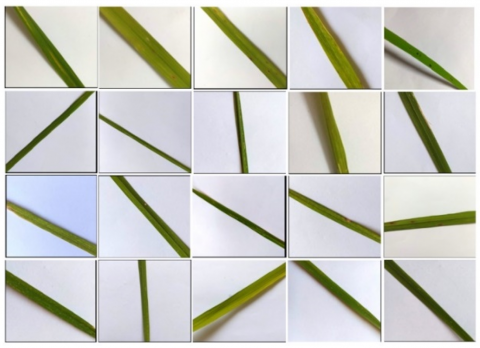
Followed by grayscale conversion, resizing of input images to 224 × 224 pixels takes place to ensure the consistency with input requirements of the CNN model in the proposed EDNN approach. To enhance the convergence rate and balance the training process the pixel values are normalized to the range [0,1]. Table 1 depicts the imbalanced images per class. To address the imbalance across the classes, data augmentation is emphasized to ensure the model’s learning process is effective for all classes. The data augmentation incurs distinct processes namely, random rotations, vertical and horizontal flips, zooming, and shifting. Examples of images from each class are illustrated in Figure 2 for a better understanding of the dataset’s content.
Figure 2. Example images from the rice leaf dataset categorized into four types: Brown spot, Hispa, leaf blast, and healthy leaves
2.2 Proposed EDNN approach
The pre-processed images are classified into training and testing data. Approximately 80% of the pre-processed leaf images are given for training and the remaining 20% are allocated for testing. EDNN architecture processes the training images. This ensemble model is the combination of three different models, namely AlexNet, ResNet and XceptionNet architecture. The above models are trained without freezing any intermediate layers. These models are trained to automatically fetch the features. The combined ensemble methods provide better results rather than single networks. The architecture of the EDNN is shown in Figure 3.
Figure 3. Architectures of AlexNet, ResNet, and XceptionNet in EDNN for predicting leaf diseases including brown spot, Hispa, leaf blast, and healthy leaves
2.3 AlexNet architecture
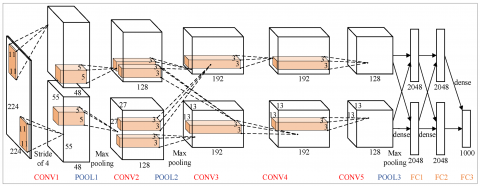
AlexNet is the CNN-based deep neural network architecture utilized for image classification and recognition. It is a basic network for current deep-learning models [23]. This AlexNet comprises five convolutional layers, two normalization layers, three max-pooling layers, two fully connected layers, and one softmax layer. Every convolutional layer contains a non-linear ReLU activation function and filters [24].
The dimensionality of images is reduced by Max pooling layers. Fully connected layers are assigned with fixed input sizes. The input size is fixed as 224 × 224 pixel dimension but due to some zero padding, the pixel dimension in the intermediate layer is increased to 227 × 227. For efficient training, the batch size is allocated as 128. Data modification is done by Colour normalization, cropping, jittering, and flipping yielding high reliable accuracy in the classification of images. The computational complexity of the whole system is lowered by fixing the dropout value as 0.5. Forward Propagation or Backward propagation does not take into account the dropped-out neurons. AlexNet architecture has around 60 million trained input rice leaf images and it is shown in Figure 4.
Figure 4. EDNN using AlexNet to extract features and identify diseases in rice leaf images (Courtesy: Source [25])
2.4 ResNet architecture
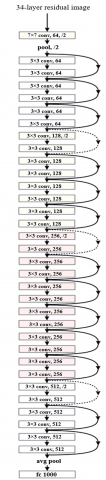
Residual Network abbreviated as ResNet, is a deep neural architecture specified for image recognition tasks. This work utilizes a 34 ResNet network for image recognition. The example architecture of 34-layered ResNet is depicted in Figure 5. There are many layers in this architecture that are specially designed to improve prediction accuracy and performance. Vanishing gradients or exploring gradient problems are solved by the residual blocks in this network. Few intermediate layers are skipped to connect each layer's activations into the upper layers by the skip connections in residual blocks. Marking of a few lingering blocks together in ResNet architecture [26].
Figure 5. EDNN Utilizing ResNet architecture for feature extraction and disease identification in rice leaf images (Courtesy: Source [27])
The Python packages TensorFlow and Keras play an important role in the creation of this 34-layer ResNet architecture. A convolution layer with a kernel size of 7 × 7 and 64 filters are used to process the input images first in this network, followed by a max pooling layer. Later, this pooling layer result is handled by a few stacked convolutional layers with channel size 3 × 3 and 64 channels. The remaining skip connections are made between each set of two layers. At last, the completely connected thick layers are associated at the last convolution layer that is utilized to remove ultimate result elements of ResNet design.
2.5 XceptionNet architecture
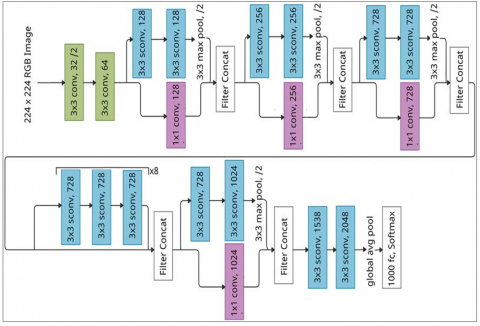
The Xception network is used to identify disease-like features in the pre-processed training images of rice leaves. It is a deep neural network based architecture that includes depthwise distinct convolutions. In a convolutional network, the few convolutional layers are stacked to remove critical elements from input information be that as it may, the Xception network is made out of five profundity wise detachable convolution layers to extricate profound spatial features [10]. The five separable convolutional layers are used to process the input leaf images first in a hierarchy of two convolutional layers with a filter size of 3 × 3.
The input is processed in one of two distinct ways in the first depth-wise separable convolution layer: convolution layer with channel size 1 × 1; also, progressive system of two convolution layers with channel size 3 × 3 followed by max-pooling layers. The result from these two ways are coordinated and handled in forthcoming four profundity-wise detachable convolution layers. Following a fully connected dense layer and a subsequent two convolution layer with a filter size of 3 × 3, the results of the fifth separable layer are processed. The functioning model architecture of XceptionNet is shown in Figure 6.
Figure 6. EDNN with XceptionNet architecture for accurate disease identification and feature extraction in rice leaf images (Courtesy: Source [28])
2.6 Ensemble network layer and hyperparameter selection using SSO
An ensemble network is created by combining the result feature maps from the AlexNet, ResNet, and XceptionNet architectures. This gathering layer involves sigmoid enactment capability for finding leaf disease. The proposed EDNN structures are made out of a few boundaries, similar to a proficient Worldwide Normal Pooling, max-pooling, L2 regularizers, Dropout instrument, ReLU activation function, and kernel weights. This architecture’s more dense layers and batch normalization make the proposed model more robust than all of the other models. It also manages underfitting and overfitting issues while maintaining high performance. The number of parameters was first set up during the proposed architecture's training process. The ideal boundary choice interaction begins by randomly instating the gathering of potential arrangements from an underlying population.
The SSO algorithm [22] is utilized to choose the best hyperparameters in the proposed EDNN initial population [29]. Later, the improvement cycle starts iteratively to acquire the ideal arrangement [30]. Furthermore, this proposed model trains the rice leaf images with the final optimal parameters.
2.7 Prediction of leaf diseases
The pre-processed images are first handled in an EDNN. The proposed model and the learned parameters are used to identify leaf disease testing images after training. The original results from the rice leaf dataset are contrasted with the identified results of leaf diseases, and their performance is evaluated using Accuracy, Precision, True Positive Rate (TPR) or Recall, False Positive Rate (FPR), and F1-Score. The formula for these measures has been defined in Eqs. (1)-(5):
$Accuracy =\left(t_p+t_n\right) /\left(t_p+f_p+f_n+t_n\right)$ (1)
$Precision =\left(t_p\right) /\left(t_p+f_p\right)$ (2)
$T P R~\text{or}~Recall =\frac{t_p}{t_p+f_n}$ (3)
$F P R=\left(f_p\right) /\left(f_p+t_n\right)$ (4)
$F 1-Score=\left(2 t_p\right) /\left(2 t_p+f_p+f_n\right)$ (5)
3.1 Performance of EDNN-based plant disease identification
The leaf disease dataset at first contains 2684 training images and 671 validation images. Monochrome conversion of the training and validation images is the first step. The 80% of changed over training images are utilized to prepare the proposed EDNN and the leftover 20% used to test the proposed model. 537 images are used for testing, while 2147 images are used for training.
In the proposed research work, the primary reason for converting RGB color images into monochrome images are listed in the following section.
•The foremost reason for converting color images to grayscale images is the reduction computational complexity. In general the RBG images contain three color channels and converting into grayscale, the image data is diminished to single channel; thereby, the amount of data being processed by the model is reduced. Thus, resulting in the reduced computational complexity. Thus, the time incurred for training and inference processes gets reduced.
•Pertaining to PLD symptoms, often manifest in the leaf-structural features, namely, spots, patterns, and lesions. These symptoms are efficiently captured in grayscale image features than color image features.
•Moreover, grayscale images necessitate less memory for storage and processing, when compared to color images, thus making model more appropriate for deployment in limited computational resource environment.
•Table 2 illustrates the performance comparison of results with and without grayscale conversion in pre-processing step.
Table 2. Performance comparison of RGB colour images and gray scale images
|
Metrics |
RGB Colour Images |
Grayscale Images |
|
Accuracy (%) |
96 |
98 |
|
Precision (%) |
95 |
97 |
|
Recall (%) |
96 |
98 |
|
F1-score (%) |
95 |
99 |
|
Training time |
150 minutes |
120 minutes |
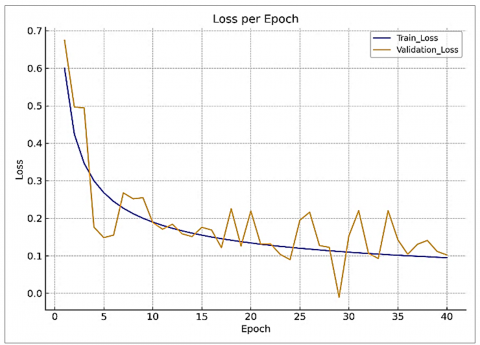
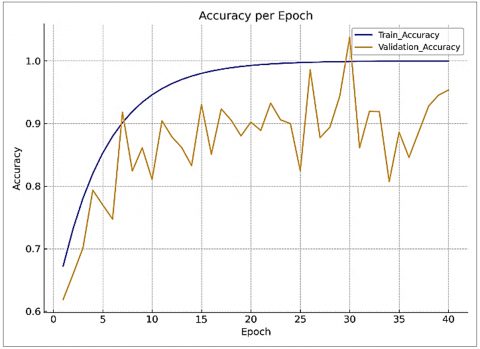
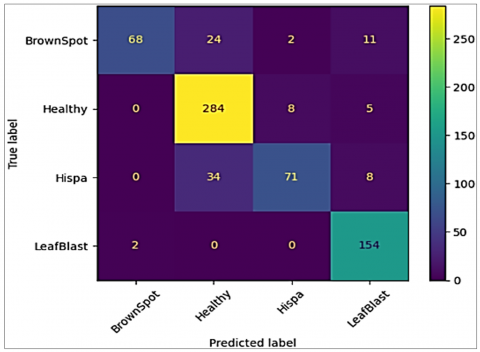
The results in Table 2 portray the significance of adopting the grayscale conversion process, thus demonstrating that the model trained on grayscale images not only resulted in higher accuracy, precision, recall, and F1-score also diminished the training time significantly. Henceforth, the results in Table 2 validate the grayscale process in pre-processing phase due to it reduced computational complexity and training time with enhanced performance. The SSO algorithm effectively selected the best hyperparameters in EDNN. The network is fully learned using the training data after training, and its learned parameters are stored as weights. Testing and validation images are used to process these weights and the proposed ensemble model in order to precisely identify the leaf diseases. Figure 7 depicts the proposed ensemble models' learning results from training and validation images, while Figure 8 depicts their prediction results using a confusion matrix.
Figure 7. Learning outcomes of the proposed ensemble model: Loss values vs. epochs using training and validation images
Figure 8. Confusion matrix for proposed EDNN: True labels vs. predicted labels for diseases including brown spot, hispa, leaf blast, and healthy leaf
The following terminologies are used to estimate the proposed EDNN model, namely, accuracy, precision, recall and F1-score. These metrics contribute to valuable insight in distinct aspects of the model’s performance, especially in PLDD.
The accuracy is termed as the effective estimation instances to the total instances, that is, the wellness of the model in efficiently identifying the healthy and diseased leaves.
•The term ‘precision’ is defined as the division of accurately predicted positive to the absolute predicted positive cases. This metric plays a vital role in minimizing the false positive, which lead to unnecessary treatment followed by resource wastage.
•The term ‘recall’ is defined as the ratio of predicted decisive observations to all the observations in the actual class. The high recall value ensures predicting the diseased leaves correctly at an early stage to minimize the spreading of disease to a larger extent.
The F1-score is useful in handling the imbalanced data, to balance the trade-offs between false positives and false negatives.
In this research work, the leaf diseases are first distinguished independently utilizing AlexNet, ResNet and XceptionNet models. Then, the ensemble model is handled utilizing rice leaf pictures to recognize its infections. Table 3 shows the performance of AlexNet, ResNet, XceptionNet and proposed EDNN. The AlexNet gained Accuracy of 87%, Precision of 86%, Recall or TPR of 86%, FPR of 21% and F1-Score value of 86%. ResNet architecture obtained Accuracy value of 84%, Precision of 81%, Recall or TPR of 87%, FPR value of 23% and F1-Score value of 84%. XceptionNet model achieved Accuracy value of 91%, Precision of 90%, Recall or TPR of 91%, FPR value of 17% and F1-Score value of 91%. Compared with these individual models, the proposed EDNN gained accuracy value of 98%, Precision of 97%, Recall or TPR of 98%, FPR value of 17% and F1-Score value of 97%.
Table 3. Performance comparison of individual and ensemble model with and without SSO algorithm
|
Method Name |
Accuracy (%) |
Precision (%) |
Recall or TPR (%) |
FPR (%) |
F1-Score (%) |
|
AlexNet architecture |
87 |
86 |
86 |
21 |
86 |
|
ResNet architecture |
84 |
81 |
87 |
23 |
84 |
|
XceptionNet architecture |
91 |
90 |
91 |
17 |
91 |
|
Proposed EDNN architecture without SSO algorithm |
95 |
94 |
95 |
14 |
94 |
|
Proposed EDNN architecture with SSO algorithm |
98 |
97 |
98 |
11 |
97 |
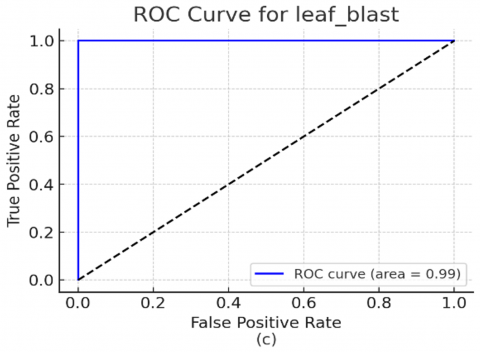
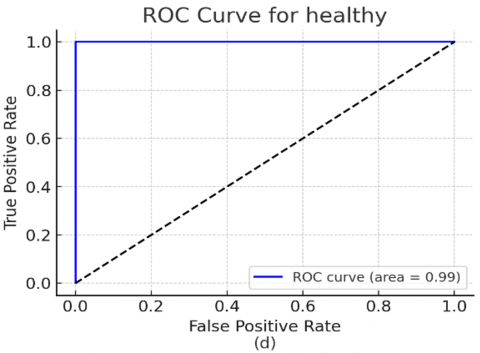
Figure 9 shows the ROC (Receiver Operating Characteristics) curve of distinguished four leaf pictures utilizing TPR and FPR. This bend is utilized to show the order execution of the proposed model utilizing TPR versus FPR at all arrangement edges, which tells how much the proposed model is equipped for recognizing classes. TPR is depicted in the Y-Axis, while FPR is depicted in the X-Axis. There are four classes accessible in the rice leaf dataset from Class 0 to Class 3. Higher ROC exactness shows that the proposed model actually distinguished the leaf sickness class marks.
Figure 9. ROC curve analysis of four leaf diseases using EDNN with SSO: True positive rate vs. false positive rate
4.1 Performance comparison of EDNN-based PLDD with existing methods
The proposed EDNN and its SSO algorithm, which is based on the rice leaf disease identification algorithm, are compared to the most recent classification algorithms. Table 4 shows the proposed disease identification algorithms with existing strategies, as VGG-16, R-CNN. A precision of 93% was achieved when VGG-16 based convolutional neural network architecture is utilized for plant disease detection.
Table 4. Performance comparison of the proposed rice leaf disease classification algorithm against existing state-of-the-art methods
|
S. No. |
Method Name |
Recognition Rate |
|
1 |
VGG 16 [9] |
93% |
|
2 |
R-CNN [4] |
90% |
|
3 |
SVM [24] |
86% |
|
4 |
Region Proposal network [17] |
83% |
|
6 |
Proposed EDNN Method |
98% |
Ushadevi [31] used a faster Region-based CNN (R-CNN) framework to identify rice leaf diseases in real time with 90% accuracy. An SVM-based machine learning algorithm that helped increase productivity and early detection of leaf disease. This algorithm accomplished a Precision of 86% proposed a region proposal network with an 83% recognition accuracy value for four distinct leaf diseases. Differentiating these four strategies, the proposed leaf disease distinguishing proof technique acquired 5.4% of higher outcomes.
4.2 Strengths and limitations of the proposed EDNN work
Strengths of the proposed EDNN method is discussed in the following section:
•The ensemble model integrates the strengths of AlexNet, ResNet, and XceptionNet architectures. These architectures performed well in image classification, the vanishing gradient problem, and effective feature extraction, respectively. Integrating these architectures leverages their strengths, resulting in enhanced performance.
•Integrating multiple models into an ensemble method contributes to unique features, leading to a rich and robust representation of input data.
•The SSO algorithm helps in determining the optimal values of dropout rate, learning rate, and layer configurations, in turn diminishing the overfitting risks and enhancing the model’s generalizability.
•The SSO ensures the comprehensive search for optimal hyperparameters by balancing the exploration and exploitation resulting in enhanced prediction performance.
•Incorporating grayscale conversion and data augmentation processes put forth the significant features, such as accelerated training rate without compromising accuracy and being more robust to variations in unseen data, respectively.
The limitations of the proposed EDNN model are as follows:
•Even though the data augmentation helps in alleviating the class imbalance issue to a greater extent, it still suffers from bias towards the majority class.
•Despite grayscale images, the computational complexity is reduced; the ensemble model still requires significant computational resources for training the proposed EDNN model.
•The proposed EDNN model is trained and evaluated on specific rice leaf disease dataset with four diseases; it does not guarantee the robust performance for other crops and diseases.
4.3 Ablation study pertaining to SSO Algorithm in the proposed EDNN model
The ablation study is performed to explore the properties and significance of each component in the proposed EDNN architecture. These studies systematically modify or remove individual component of the EDNN layer to evaluate their impact on overall performance.
Table 3 illustrates the performance of baseline models, ensemble model and ensemble model optimized using SSO for various performance metrics. The observations are as follows:
The ablation study distinctly exhibits the significance of individual models, ensemble model optimized using SSO resulted enhanced performance through effective hyperparameter tuning process. The integrated effect of ensemble model and SSO algorithm results in robust PLDD model.
•As an individual model, AlexNet, ResNet and XceptionNet resulted in 87%, 84% and 91% of accuracy respectively.
•Ensemble model without SSO and with SSO resulted in 95% and 98% of accuracy respectively.
•Each model contributes to their unique features, namely, efficient image classification through AlexNet, vanishing gradient issues through ResNet and robust spatial feature extraction using XceptionNet.
•SSO algorithm played a vital role in selection of optimal hyperparameters, led to higher accuracy and robust generalization; thereby enhancing the overall performance of the proposed EDNN model.
4.4 Generalizability of the proposed EDNN model
The subsequent section discusses the generalizability of the proposed EDNN model to other plant species and diseases.
•Applicability to other plant species: The proposed EDNN model is versatile and capable of extracting significant features from diverse datasets. This versatility allows the model to suit distinct plant species with minimal modifications.
•The key factors in generalizability include, (a) incorporating the temple learning process for the pre-trained model to learn about new plant species (b) the augmentation technique simulates data variations to learn new dataset features, and (c) finding the optimal hyperparameter using SSO algorithm ensures the model performance will across differently plant species.
•The pivotal factors to generalize the other plant diseases by proposed EDNN model are (a) the pre-trained models are proficient in extracting the significant features from plant diseases (b) the ensemble approach enhances the robustness of proposed model by handling diverse manifestations of distinct plant diseases.
•Training the ensemble model on a diverse dataset with distinct disease conditions namely, growth stages and disease severities ensures the model’s adaptability.
By leveraging techniques such as transfer learning, data augmentation and diverse dataset training the proposed EDNN model can be adopted for extensive agricultural applications.
The main contributions and findings of the proposed work are listed:
•The innovative ensemble model integrates the effectiveness of AlexNet, ResNet and XceptionNet for improved feature extraction and classification accuracy. The ensemble model outperformed individual models resulting in substantial improvement in the classification accuracy.
•The application of SSO algorithm for training hyperparameters of ensemble model namely, layer configurations, learning rate and dropout rate ensures the model operate at its best configuration. Thus, contributing to 98% of accuracy demonstrate the effectiveness of the proposed EDNN model optimized using SSO algorithm.
•Evaluating the proposed model on various metrics provided a thorough assessment of performance demonstrating its robust capabilities.
•Ablation study concluded the performance of individual models, ensemble model with and without SSO algorithm. The results underscored the significance of ensemble model and the optimization process.
•Future research will focus on validating the ensemble model’s performance on wider range of plant species and disease with other bio-inspired optimization algorithms to test for effectiveness. Further, effort towards optimizing the model architecture and efficient training technologies for reducing the computational complexity will have a greater input in real-time implementation.
•To conclude, the proposed EDNN model provided an efficient, robust, and precise solution for PLDD with noteworthy implications for the agricultural domain.
This research work proposed the EDNN with SSO based hyperparameter tuning calculation to successfully distinguish rice leaf pictures. In this work, the leaf images were first trained separately with AlexNet, ResNet and XceptionNet architecture. Later, the integrated ensemble model of these three networks is trained using rice leaf images to identify its diseases. The best hyperparameters for training an ensemble network have been selected by the SSO algorithm. As a result, the proposed algorithm outperformed current leaf disease identification methods by 98% in disease classification accuracy.
|
CNN |
Convolution Neural Network |
|
EDNN |
Ensemble Deep Neural Network |
|
FPR |
False positive rate |
|
PLDD |
Plant leaf disease detection |
|
R-CNN |
Region based Convolution Neural Network |
|
ROC |
Receiver operating characteristics |
|
SVM |
Support vector machine |
|
SSO |
Salp Swarm Optimization algorithm |
|
TPR |
True positive rate |
[1] Shinde, N., Singh, G. (2022). A review of plant disease prediction methods for agricultural applications. International Journal of Engineering and Advanced Technology, 12(1): 98-103. https://www.doi.org/10.35940/ijeat.A3856.1012122
[2] Delnevo, G., Girau, R., Ceccarini, C., Prandi, C. (2021). A deep learning and social IoT approach for plants disease prediction toward a sustainable agriculture. IEEE Internet of Things Journal, 9(10): 7243-7250. https://doi.org/10.1109/JIOT.2021.3097379
[3] Fenu, G., Malloci, F.M. (2023). Classification of pear leaf diseases based on ensemble convolutional neural networks. AgriEngineering, 5(1): 141-152. https://doi.org/10.3390/agriengineering5010009
[4] Kaur, S., Sharma, S. (2022). Plant disease detection using deep transfer learning. Journal of Positive School Psychology, 6(5): 193-201.
[5] Jackulin, C., Murugavalli, S. (2022). A comprehensive review on detection of plant disease using machine learning and deep learning approaches. Measurement: Sensors, 24: 100441. https://doi.org/10.1016/j.measen.2022.100441
[6] Tejaswini, P., Singh, P., Ramchandani, M., Rathore, Y.K., Janghel, R.R. (2022). Rice leaf disease classification using CNN. IOP Conference Series: Earth and Environmental Science, 1032(1): 012017. https://doi.org/10.1088/1755-1315/1032/1/012017
[7] Gulame, M.B., Thite, T.G., Patil, K.D. (2023). Plant disease prediction system using advance computational Technique. Journal of Physics: Conference Series, 2601(1): 012031. https://doi.org/10.1088/1742-6596/2601/1/012031
[8] Reddy, K.N., Polaiah, B., Madhu, N. (2017). A literature survey: Pant leaf diseases detection using image processing techniques IOSR Journal of Electronics and Communication Engineering (IOSR-JECE), 12(3): 13-15. https://doi.org/10.9790/2834-1203021315
[9] Paymode, A.S., Malode, V.B. (2022). Transfer learning for multi-crop leaf disease image classification using convolutional neural network VGG. Artificial Intelligence in Agriculture, 6: 23-33. https://doi.org/10.1016/j.aiia.2021.12.002
[10] Shovon, M.S.H., Mozumder, S.J., Pal, O.K., Mridha, M.F., Asai, N., Shin, J. (2023). Plantdet: A robust multi-model ensemble method based on deep learning for plant disease detection. IEEE Access, 11, 34846-34859. https://doi.org/10.1109/ACCESS.2023.3264835
[11] Udayananda, G.K.V.L., Shyalika, C., Kumara, P.P.N.V. (2022). Rice plant disease diagnosing using machine learning techniques: A omprehensive review. SN Applied Sciences, 4(11): 311. https://doi.org/10.1007/s42452-022-05194-7
[12] Kaushik, S., Srivastava, K., Kaushik, S., Sharma, I., Jindal, I., Deshwalf, V. (2022). Plant leaf disease detection using machine learning. Journal of Pharmaceutical Negative Results, 13(10): 3605-3616. https://doi.org/10.47750/pnr.2022.13.S10.435
[13] Aggarwal, S., Suchithra, M., Chandramouli, N., Sarada, M., et al. (2022). Rice disease detection using artificial intelligence and machine learning techniques to improvise agro-business. Scientific Programming, 2022(1): 1757888. https://doi.org/10.1155/2022/1757888
[14] ShobhaRani, P., Sivalakshmi, P., Akarsh, A., Bhanuhithesh, C.H., Aneesh, C. (2021). Characterization of plant disease prediction using convolutional neural network. Turkish Journal of Computer and Mathematics Education, 12(10): 1905-1912.
[15] Shoaib, M., Shah, B., Ei-Sappagh, S., Ali, A., et al. (2023). An advanced deep learning models-based plant disease detection: A review of recent research. Frontiers in Plant Science, 14: 1158933. https://doi.org/10.3389/fpls.2023.1158933
[16] Shelar, N., Shinde, S., Sawant, S., Dhumal, S., Fakir, K. (2022). Plant disease detection using CNN. ITM Web of Conferences, 44: 03049. https://doi.org/10.1051/itmconf/20224403049
[17] Mohanty, S.P., Hughes, D.P., Salathé, M. (2016). Using deep learning for image-based plant disease detection. Frontiers in Plant Science, 7: 1419. https://doi.org/10.3389/fpls.2016.01419
[18] Borhani, Y., Khoramdel, J., Najafi, E. (2022). A deep learning based approach for automated plant disease classification using vision transformer. Scientific Reports, 12(1): 11554. https://doi.org/10.1038/s41598-022-15163-0
[19] Jung, M., Song, J.S., Shin, A.Y., Choi, B., et al. (2023). Construction of deep learning-based disease detection model in plants. Scientific Rports, 13(1): 7331. https://doi.org/10.1038/s41598-023-34549-2
[20] Eunice, J., Popescu, D.E., Chowdary, M.K., Hemanth, J. (2022). Deep learning-based leaf disease detection in crops using images for agricultural applications. Agronomy, 12(10): 2395. https://doi.org/10.3390/agronomy12102395
[21] Gupta, A. K., Gupta, K., Jadhav, J., Deolekar, R. V., Nerurkar, A., & Deshpande, S. (2019). Plant disease prediction using deep learning and IoT. In 2019 6th International Conference on Computing for Sustainable Global Development (INDIACom), New Delhi, India, pp. 902-907.
[22] Xie, X., Xia, F., Wu, Y., Liu, S., Yan, K., Xu, H., Ji, Z. (2023). A novel feature selection strategy based on Salp swarm algorithm for plant disease detection. Plant Phenomics, 5: 0039. https://doi.org/10.34133/plantphenomics.0039
[23] Singh, I., Goyal, G., Chandel, A. (2022). AlexNet architecture based convolutional neural network for toxic comments classification. Journal of King Saud University-Computer and Information Sciences, 34(9): 7547-7558. https://doi.org/10.1016/j.jksuci.2022.06.007
[24] Sharma, S., Sharma, S., Athaiya, A. (2017). Activation functions in neural networks. International Journal of Engineering Applied Sciences and Technology, 6(12): 310-316. https://doi.org/10.33564/IJEAST.2020.v04i12.054
[25] Chaudhari, P., Achar, R., Singh, S. (2024). Enhancing lane recognition in autonomous vehicles using cross-layer refinement network. IEEE Access, 12, 117650-117664. https://doi.org/10.1109/ACCESS.2024.3447738
[26] Liang, J. (2020). Image classification based on RESNET. Journal of Physics: Conference Series, 1634(1): 012110. https://doi.org/10.1088/1742-6596/1634/1/012110
[27] Mammadli, R., Wolf, F., Jannesari, A. (2019). The art of getting deep neural networks in shape. ACM Transactions on Architecture and Code Optimization, 15(4), Article 62, 1-21. https://doi.org/10.1145/3291053
[28] Srinivasan, K., Garg, L., Datta, D., Alaboudi, A.A., Jhanjhi, N.Z., Agarwal, R., Thomas, A.G. (2021). Performance comparison of deep CNN models for detecting driver’s distraction. Computers, Materials & Continua, 68(3): 4109-4124. https://doi.org/10.32604/cmc.2021.016736
[29] Kassaymeh, S., Abdullah, S., Al-Betar, M.A., Alweshah, M. (2022). Salp swarm optimizer for modeling the software fault prediction problem. Journal of King Saud University-Computer and Information Sciences, 34(6): 3365-3378. https://doi.org/10.1016/j.jksuci.2021.01.015
[30] Chamchuen, S., Siritaratiwat, A., Fuangfoo, P., Suthisopapan, P., Khunkitti, P. (2021). Adaptive salp swarm algorithm as optimal feature selection for power quality disturbance classification. Applied Sciences, 11(12): 5670. https://doi.org/10.3390/app11125670
[31] Ushadevi, G. (2020). A survey on plant disease prediction using machine learning and deep learning techniques. Inteligencia Artificial, 23(65): 136-154. https://doi.org/10.4114/intartif.vol23iss65pp136-154