
Alejandro Valencia-Arias* | Rosa María Vélez Holguín | Yaliangélica Briceño Romero | Andrés Felipe Montoya Rivera | Maria Camila Bermeo-Giraldo
© 2026 The authors. This article is published by IIETA and is licensed under the CC BY 4.0 license (http://creativecommons.org/licenses/by/4.0/).
OPEN ACCESS
This study synthesizes empirical evidence on the factors associated with ChatGPT adoption among higher education students and examines how these factors have been investigated across theoretical and geographical contexts. A systematic literature review was conducted in accordance with the Preferred Reporting Items for Systematic Reviews and Meta-Analyses (PRISMA) 2020 reporting guidelines. Scopus and Web of Science were searched for peer-reviewed empirical journal articles, and 37 studies met the eligibility criteria. The included studies were examined in terms of their analytical dimensions, geographical settings, student populations, theoretical frameworks, and adoption-related constructs. The findings indicate that ChatGPT adoption is shaped by a combination of cognitive, psychological, motivational, ethical, institutional, and sociocultural factors. Perceived usefulness, trust, perceived risk, behavioral intention, digital literacy, awareness, self-efficacy, and contextual support recur across the reviewed studies. The evidence is concentrated in Gulf countries and parts of Asia, while university students constitute the most frequently studied population. The Technology Acceptance Model (TAM), the Unified Theory of Acceptance and Use of Technology (UTAUT), its extended form (UTAUT2), and hybrid models using structural equation modeling (SEM) are the main theoretical approaches. Drawing on these findings, the review develops an integrative conceptual framework that brings together technology-related perceptions and individual and contextual determinants. The synthesis indicates that student adoption cannot be adequately understood through technology-centered explanations alone. It also identifies gaps in geographical coverage, population diversity, and the empirical examination of institutional conditions. These findings provide a structured basis for further research and for considering the responsible integration of ChatGPT into higher education.
ChatGPT adoption, generative artificial intelligence, higher education, technology acceptance, systematic literature review
Generative artificial intelligence has precipitated a paradigm shift in higher education by transforming teaching and learning processes. The integration of tools capable of generating textual content, solving complex problems, and providing immediate feedback has accelerated this transformation. Among these technologies, ChatGPT has become one of the most widely used applications by university students because of its accessibility, ease of interaction, and versatility in supporting academic tasks, including writing, content comprehension, problem solving, and study planning. Its rapid adoption has been associated with the expansion of educational digitalization, the strengthening of self-directed learning, and the increasing demand for digital competencies. Consequently, growing attention has been directed toward identifying the factors that explain its adoption through technology acceptance models, particularly the Technology Acceptance Model (TAM) and its extensions [1, 2].
To ensure conceptual consistency, this review distinguishes between related but different concepts used in the literature. ChatGPT adoption is considered the central concept of this study and refers specifically to students’ acceptance, intention to use, and integration of ChatGPT into higher education activities. Technology adoption represents a broader theoretical concept associated with the process through which individuals accept and use technological systems, particularly within technology acceptance models such as the TAM and the Unified Theory of Acceptance and Use of Technology (UTAUT)/UTAUT2. Generative artificial intelligence adoption refers to the broader technological domain that includes ChatGPT and other artificial intelligence (AI)-based applications, whereas AI acceptance mainly describes users’ perceptions, attitudes, and willingness toward artificial intelligence technologies. Therefore, this study uses ChatGPT adoption as the primary terminology when referring to the specific phenomenon analyzed, while broader concepts are maintained only when discussing theoretical perspectives or the wider technological context.
ChatGPT has redefined student interaction with knowledge by functioning as a complementary cognitive support tool within higher education. Nevertheless, its incorporation into academic environments has generated concerns regarding academic integrity, learning assessment, technological dependence, the quality of academic work, and the development of digital and ethical competencies. Recent reviews have reported benefits related to academic performance, student well-being, and access to knowledge, while also identifying risks associated with inappropriate use that may affect critical thinking and learner autonomy [3].
Although research on ChatGPT adoption has grown rapidly, current evidence remains conceptually and methodologically fragmented [4]. Existing studies have examined the phenomenon from multiple perspectives, limiting the integration and comparability of findings. Recent reviews have highlighted this thematic dispersion and the absence of integrative explanatory frameworks capable of providing a comprehensive understanding of technology adoption in higher education [5].
This fragmentation reflects the diversity of analytical approaches used to explain ChatGPT adoption. Previous studies have examined technological factors such as perceived usefulness, ease of use, trust, and system quality. Others have focused on pedagogical aspects related to learning support, self-regulation, and academic productivity, whereas additional research has emphasized psychological factors, including attitudes, performance expectations, motivation, anxiety, and risk perception, together with ethical issues associated with academic integrity [6, 7]. Furthermore, empirical evidence has been generated across heterogeneous populations and geographical contexts, accompanied by the use of different theoretical models of technology adoption, which further limits cross-study comparability [5, 8].
Although previous systematic reviews have examined the broader role of ChatGPT in higher education, including its applications, educational implications, and general acceptance patterns, they have not specifically synthesized the determinants underlying students’ adoption from an integrated technology acceptance perspective. Existing reviews have primarily focused on describing research trends, thematic areas, or the educational impact of generative artificial intelligence, whereas the present study systematically analyzes the factors that explain adoption by integrating analytical dimensions, geographical contexts, target populations, theoretical models, and adoption-related constructs. Therefore, this review extends previous knowledge by providing an evidence-based framework that connects individual, technological, psychological, and contextual determinants of ChatGPT adoption among higher education students, identifying converging patterns and research gaps that remain insufficiently explored.
Given this context, the present study aims to systematize the available evidence through a systematic review. To achieve this objective, the following research questions were formulated:
What analytical dimensions have been addressed in the literature?
Which countries have the highest concentration of empirical studies?
What target populations have been analyzed?
What theoretical models of technology adoption have been used?
What variables or constructs have been most frequently examined?
This study identifies the principal analytical dimensions, theoretical frameworks, recurring constructs, and research gaps reported in the literature. In doing so, it provides an analytical basis for advancing theoretical consolidation and supporting evidence-based institutional decision-making.
The study is conducted using the Preferred Reporting Items for Systematic Reviews and Meta-Analyses (PRISMA) 2020 statement as the reporting standard for the identification, selection, and eligibility phases. Through a descriptive and analytical approach, the review synthesizes the empirical evidence [9].
2.1 Eligibility criteria
The eligibility criteria included peer-reviewed articles that examined the adoption, acceptance, or use of ChatGPT or equivalent generative artificial intelligence technologies in higher education through quantitative, qualitative, or mixed methods. Only studies published in English were considered. The review focused exclusively on undergraduate and graduate students enrolled in higher education institutions. Studies involving faculty members, academic staff, administrators, or other educational stakeholders were excluded because they represent different adoption perspectives and could introduce heterogeneity into the synthesis. This delimitation ensured consistency between the review scope, research objective, and the factors analyzed regarding ChatGPT adoption among higher education students.
The exclusion criteria were applied sequentially in three phases. The first phase eliminated duplicate records, indexing errors, and documents without empirical evidence. The second excluded articles without full-text access. The third phase removed studies that did not correspond to the analytical focus of the review, addressed artificial intelligence without specifically examining ChatGPT or equivalent generative artificial intelligence technologies, or lacked explicit empirical evidence.
2.2 Sources of information
The information sources were Scopus and Web of Science, selected for their multidisciplinary coverage and relevance to research in education and the social sciences. Their combined use provided access to peer-reviewed scientific literature with broad disciplinary representation.
Scopus offers extensive coverage and standardized metadata that facilitate the analysis of scientific production, whereas Web of Science applies more selective indexing criteria focused on journals with high editorial standards. The complementary characteristics of these databases increase the representativeness of the reviewed literature and reduce potential biases associated with reliance on a single source of information [10].
2.3 Search strategy
The search strategy was developed according to the eligibility criteria, with a specific search equation designed for each database. In Scopus, the search was performed using the TITLE-ABS-KEY field to combine terms related to ChatGPT, generative artificial intelligence, and artificial intelligence chatbots with concepts associated with technology adoption and higher education. In Web of Science, an equivalent search strategy was implemented using the TS field for topic searches and the AK field for author keywords, adapting the syntax to the database requirements. In both databases, Boolean operators were used to combine the search terms across the title, abstract, and keyword fields.
The search was conducted in 2026 and included all records available up to the date of the search. The coverage period extended from database inception to 2026, ensuring the inclusion of the most recent scientific evidence available at the time of the review.
In Scopus, the search was performed using the TITLE-ABS-KEY field with the following search equation:
TITLE-ABS-KEY (("ChatGPT" OR "Chat Generative Pre-trained Transformer" OR "generative artificial intelligence" OR "generative AI" OR "AI chatbot" OR "artificial intelligence chatbot") AND ("adoption" OR "acceptance" OR "intention to use" OR "technology acceptance" OR "use behavior" OR "usage behavior") AND ("higher education" OR universit* OR college* OR "higher education institution*" OR student* OR learner*))**.
The search was restricted to peer-reviewed journal articles published in English. Records classified as conference papers, book chapters, editorials, non-empirical studies, and documents without full-text availability were excluded according to the eligibility criteria.
In Web of Science, the search strategy was adapted to the database structure and applied using the TS field:
TS = (("ChatGPT" OR "Chat Generative Pre-trained Transformer" OR "generative artificial intelligence" OR "generative AI" OR "AI chatbot" OR "artificial intelligence chatbot") AND ("adoption" OR "acceptance" OR "intention to use" OR "technology acceptance" OR "use behavior" OR "usage behavior") AND ("higher education" OR universit* OR college* OR "higher education institution*" OR student* OR learner*))**.
The Web of Science search was limited to articles indexed in the Web of Science Core Collection, written in English, and related to higher education, education technology, social sciences, and information science areas. All retrieved records were exported for duplicate removal and subsequent screening following the PRISMA 2020 guidelines.
2.4 Selection process
The study selection process was conducted systematically in successive stages. After removing duplicate records and documents that did not meet the eligibility criteria, the titles and abstracts were screened to exclude studies unrelated to the scope of the review. The remaining articles then underwent full-text assessment to confirm their thematic relevance and methodological eligibility. The complete selection procedure is presented in Figure 1 through the PRISMA 2020 flow diagram.
The identification and selection process resulted in 459 records retrieved from Scopus (n = 277) and Web of Science (n = 182). After removing duplicate records (n = 154), 305 records were screened based on title and abstract. During this phase, 122 records were excluded because they were conference papers (n = 28) or were not related to the review objective (n = 94). Subsequently, 183 reports were sought for retrieval, of which 126 could not be retrieved. The remaining 57 reports were assessed for eligibility through full-text evaluation, resulting in the exclusion of 20 studies that did not address ChatGPT adoption or acceptance in higher education. Finally, 37 studies met the eligibility criteria and were included in the systematic review.
2.5 Data processing
The extracted data were processed using Microsoft Excel to record, organize, and systematize the information. After the full-text review, analysis matrices were developed to standardize the extraction of data on the analytical dimensions, technology adoption models, examined constructs, countries in which the studies were conducted, and target populations.
2.6 Risk of bias
The risk of bias was reduced through the application of predefined eligibility criteria. Nevertheless, potential biases associated with database selection, the definition of search terms, and publication bias, particularly the greater likelihood of publishing positive findings, are acknowledged. These factors may influence the representativeness of the reviewed evidence.
In addition to the procedures established to minimize selection and publication biases, the methodological quality of the included studies was formally assessed using the Mixed Methods Appraisal Tool (MMAT) version 2018. This instrument was selected because it enables the evaluation of empirical studies based on different methodological approaches, including qualitative, quantitative, and mixed-method designs. Each study was assessed according to the criteria corresponding to its methodological category, considering aspects related to research design appropriateness, data collection procedures, analytical strategies, and coherence between research objectives and reported findings. The individual results of the methodological quality assessment for the 37 included studies are presented in Appendix Table A1, providing transparency regarding the robustness of the evidence synthesized in this review.
The results are presented descriptively and organized according to the research questions. This structure facilitates the analysis of the principal analytical dimensions, the geographical distribution of the studies, the target populations, the theoretical models, and the constructs examined. Table 1 summarizes the characteristics of the included studies.
Table 1. Studies included in the research
|
Title |
Reference No. |
|
A longitudinal study on artificial intelligence adoption: Understanding the drivers of ChatGPT usage behavior change in higher education |
[11] |
|
An exploratory study of artificial intelligence adoption in higher education |
[12] |
|
ChatGPT awareness, acceptance, and adoption in higher education: The role of trust as a cornerstone |
[13] |
|
Factors influencing the acceptance of ChatGPT in higher education: An integrated model with PLS-SEM and fsQCA approach |
[14] |
|
Factors influencing the use of ChatGPT in student learning in Vietnam |
[15] |
|
Getting to know ChatGPT: How business students feel, what they think about personal morality, and how their academic outcomes affect Oman’s higher education |
[16] |
|
Impact of digital media literacy on attitude toward generative AI acceptance in higher education |
[17] |
|
Integrating AI in higher education: Factors influencing ChatGPT acceptance among Chinese university EFL students |
[18] |
|
Learners’ acceptance of ChatGPT in school |
[19] |
|
Leveraging AI in academia: University students’ adoption of ChatGPT for writing coursework (take-home) assignments through the lens of UTAUT2 |
[20] |
|
Rethinking the importance of social norms in generative AI adoption: investigating the acceptance and use of generative AI among higher education students |
[21] |
|
The predictors of behavioral intention to use ChatGPT for academic purposes: Evidence from higher education in Somalia |
[22] |
|
The sustainable integration of AI in higher education: Analyzing ChatGPT acceptance factors through an extended UTAUT2 framework in Peruvian universities |
[23] |
|
Understanding university students’ acceptance of ChatGPT: Insights from the UTAUT2 model |
[24] |
|
Acceptance and use of ChatGPT in the academic community |
[25] |
|
Adapting teaching and learning with existing generative AI by higher education students: Comparative study of Zayed University and King Abdulaziz University |
[26] |
|
AI adoption for collaboration: Factors influencing inclusive learning adoption in higher education |
[27] |
|
AI as a facilitator of creativity and wellbeing in business students: A multigroup approach between public and private universities |
[28] |
|
AI-assisted learning and research: An exploratory study among university students and scholars |
[29] |
|
ChatGPT acceptance and use through UTAUT and TPB: A big survey in five Indonesian universities |
[30] |
|
Prediction of the use of generative artificial intelligence through ChatGPT among Costa Rican University students: A PLS model based on UTAUT2 |
[31] |
|
Examining generative artificial intelligence adoption in academia: A UTAUT perspective |
[32] |
|
Exploring the role of ChatGPT in higher education institutions: Where does Latin America stand? |
[33] |
|
Factors influencing the acceptance and use of ChatGPT among English as a foreign language learners in Saudi Arabia |
[34] |
|
ChatGPT adoption and anxiety: A cross-country analysis utilising the unified theory of acceptance and use of technology (UTAUT) |
[35] |
|
Key factors influencing intention to use ChatGPT: An empirical study of U.S. students |
[36] |
|
Investigating undergraduate students’ perceptions and awareness of using ChatGPT as a regular assistance tool: A user acceptance perspective study |
[37] |
|
ChatGPT acceptance in higher education: Attitudes and perceptions of the UTAUT2 model; Aceptación de ChatGPT en Educación Superior: Actitudes y Percepciones del modelo UTAUT2 |
[38] |
|
Students’ mindset to adopt AI chatbots for effectiveness of online learning in higher education |
[39] |
|
The impact of sociocultural and demographic factors on Gen AI accessibility, usability, and applicability in the UAE |
[40] |
|
The influence of social support theory on AI acceptance: Examining educational support and perceived usefulness using SEM analysis |
[41] |
|
The role of adoption, ease of use and teachers’ experience of artificial intelligence on teaching effectiveness: Moderating role of student interest |
[42] |
|
Understanding ChatGPT adoption among higher education students in Punjab, India: An application of UTAUT2 model |
[43] |
|
Systematic review of ChatGPT in higher education: Navigating impact on learning, wellbeing, and collaboration |
[44] |
|
Understanding ChatGPT adoption in universities: The impact of faculty TPACK and UTAUT2 |
[45] |
Note: Prepared by the author using data from Scopus and Web of Science. AI = artificial intelligence; EFL = English as a foreign language; fsQCA = fuzzy-set qualitative comparative analysis; Gen AI = generative artificial intelligence; PLS-SEM = partial least squares structural equation modeling; SEM = structural equation modeling; TPB = theory of planned behavior; TPACK = technological pedagogical content knowledge; UTAUT = Unified Theory of Acceptance and Use of Technology; UTAUT2 = Unified Theory of Acceptance and Use of Technology 2.
As illustrated in Figure 2, the reviewed studies address multiple analytical dimensions. Psychological factors constitute the predominant area of analysis, followed by digital literacy. Additional studies examine trust and perceived risk, attitudes toward use, and perceived usefulness, whereas adoption outcomes and behavioral intention receive comparatively less attention.
As illustrated in Figure 3, the geographical distribution of the studies reflects broad regional coverage. Most empirical research has been conducted in the Gulf countries, followed by Southeast and East Asia. Additional contributions originate from multinational studies, the Middle East, Western Europe, and Eastern Europe.
As shown in Figure 4, most studies focus on university students. Smaller proportions of the literature examine higher education students, mixed student groups, business students, and undergraduate students. English as a foreign language (EFL) learners and college students are represented less frequently.
As shown in Figure 5, the reviewed literature exhibits a balanced use of integrated technology acceptance models, indicating the coexistence of established frameworks and emerging approaches. Extensions of the TAM, extensions of UTAUT2, and hybrid models based on structural equation modeling (SEM) are the most frequently applied approaches, with six studies in each category. In contrast, the original TAM, the UTAUT, and exploratory quantitative models are used less frequently, with two studies each.
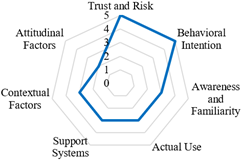
As illustrated in Figure 6, the reviewed studies examine a range of adoption constructs. Trust and perceived risk, together with behavioral intention, are the most frequently investigated constructs, with five studies each. Awareness and familiarity, actual use, and support systems with contextual factors each appear in three studies. Attitudinal factors are examined less frequently, with only two studies.
The findings provide an analytical basis for identifying research gaps and examining the relationship between established theoretical approaches and emerging perspectives on ChatGPT adoption in higher education.
Beyond their descriptive purpose, Figures 2–6 reveal relevant analytical patterns regarding the evolution of ChatGPT adoption research in higher education. The predominance of psychological dimensions suggests that current evidence is mainly focused on individual perceptions and cognitive evaluations rather than institutional implementation processes. Similarly, the frequent use of extended TAM, UTAUT2, and hybrid SEM-based models indicates a progressive transition from traditional technology acceptance explanations toward integrated frameworks incorporating contextual and psychological variables. The geographical concentration of studies in Gulf countries and Asian regions reflects the influence of digitally oriented higher education environments, while the limited representation of other regions highlights the need for broader contextual validation. Regarding populations, the predominance of university students indicates that current knowledge is largely centered on end-user perspectives, leaving opportunities to explore disciplinary differences, educational levels, and institutional contexts. Therefore, the figures should be interpreted not only as frequency distributions but also as evidence of research trends, theoretical preferences, and existing gaps in the field.
A conceptual framework is presented to examine the theoretical, institutional, and practical implications of the findings. The study limitations are also acknowledged, and directions for future research are proposed.
4.1 Results analysis
The reviewed literature emphasizes psychological and cognitive dimensions, particularly awareness, perception, and the subjective evaluation of ChatGPT. Perceived usefulness, ease of use, perceived intelligence, and trust consistently emerge as determinants of adoption intention, whereas behavioral intention is identified as the principal predictor of actual use, especially in studies based on UTAUT2 and the Theory of Planned Behavior [13, 30].
The geographical distribution of the evidence is concentrated in the Gulf countries and several regions of Asia, indicating a greater research focus in contexts characterized by strong investment in educational digital transformation. Studies conducted in the United Arab Emirates and Saudi Arabia have examined expected benefits, technological self-efficacy, and behavioral intention, while research in Southeast Asia has highlighted the contribution of artificial intelligence adoption and perceived ease of use to teaching effectiveness [26, 42].
Most empirical studies focus on university students, demonstrating that the adoption of generative artificial intelligence has been investigated primarily from the perspective of end users. Although some studies include faculty members, undergraduate students remain the predominant population. Within these groups, digital literacy and access to educational resources have been identified as relevant factors associated with technology acceptance [12, 17].
The influence of digital literacy and contextual support is supported by several empirical studies included in this review. Nagy et al. [12] identified that knowledge and familiarity with artificial intelligence are relevant conditions shaping students’ perceptions and willingness to adopt these technologies. Similarly, Sergeeva et al. [17] demonstrated that digital media literacy influences attitudes toward generative artificial intelligence acceptance among higher education students. Regarding institutional and pedagogical conditions, studies conducted in different educational contexts highlight the importance of support mechanisms, technological readiness, and learning environments in facilitating adoption processes [26, 41, 45]. These findings indicate that ChatGPT adoption is not determined exclusively by individual perceptions but also by the educational ecosystems where students interact with generative artificial intelligence tools.
Overall, the evidence indicates that the adoption of ChatGPT is explained through multidimensional theoretical frameworks that extend beyond traditional technology acceptance models. These approaches integrate psychological, ethical, and contextual factors while consistently emphasizing trust, perceived risk, behavioral intention, self-efficacy, and perceived usefulness as the principal explanatory constructs [14, 16, 18, 21].
A comparative analysis of the reviewed evidence reveals differences in how ChatGPT adoption has been conceptualized across theoretical models, geographical contexts, and student populations. Studies based on TAM and its extensions mainly emphasize individual cognitive evaluations, particularly perceived usefulness and perceived ease of use, whereas UTAUT and UTAUT2-based approaches incorporate social influence, facilitating conditions, and contextual factors to explain behavioral intention. Hybrid SEM-based models further expand these perspectives by integrating psychological variables such as trust, perceived risk, self-efficacy, and awareness, suggesting a progressive movement from technology-centered explanations toward multidimensional adoption frameworks.
Geographical differences also influence the interpretation of adoption determinants. Research conducted in Gulf countries, particularly the United Arab Emirates and Saudi Arabia, frequently emphasizes institutional support, technological readiness, self-efficacy, and expected benefits, reflecting contexts characterized by strong investment in digital transformation. In contrast, studies from Southeast and East Asia place greater emphasis on perceived usefulness, ease of use, pedagogical integration, and academic effectiveness. These differences suggest that adoption factors are not universal but interact with educational policies, technological infrastructure, and cultural conditions.
Regarding research populations, the evidence is predominantly focused on university students, while specific groups such as business students, undergraduate students, and language learners are less represented. This concentration limits understanding of how disciplinary characteristics and academic contexts may shape ChatGPT adoption. Therefore, future research should expand comparative analyses across student profiles, educational levels, and institutional settings to clarify whether identified determinants operate similarly across different populations.
4.2 Comparison of results with other studies
The comparison with recent literature reveals important similarities regarding the multidimensional nature of ChatGPT adoption in higher education. The reviewed evidence indicates that artificial intelligence adoption is influenced not only by technological perceptions but also by cognitive, motivational, pedagogical, and contextual factors.
A systematic review found that generative AI tools such as ChatGPT can support self-regulated learning by providing adaptive feedback and helping students monitor their own learning. It also identified concerns that overreliance on these tools could limit independent thinking [46].
Likewise, Chen et al. [47], based on Achievement Goal Theory and Self-Determination Theory, identify academic motivation and AI literacy as relevant factors influencing students’ academic outcomes associated with generative artificial intelligence. Similarly, Mahande et al. [48] demonstrate that self-efficacy and motivation influence academic performance in blended learning environments where ChatGPT is incorporated. These findings reinforce the relevance of psychological factors, particularly self-efficacy, perceived usefulness, and behavioral intention, identified as recurrent dimensions in the present review.
From a contextual and institutional perspective, Konstantinidou et al. [49] emphasize the importance of institutional support, technological infrastructure, and faculty training for effective AI implementation in higher education. Although their study focuses on university staff rather than students, it provides complementary evidence regarding the conditions required for sustainable artificial intelligence integration.
Additionally, Aljohani [50] reports that ChatGPT contributes to language interaction, personalized learning, and student motivation, while also identifying challenges related to trust, ethics, and reliability of generated content. These findings are consistent with the present review, where trust and perceived risk emerge as relevant dimensions influencing students’ adoption decisions.
4.3 Proposed conceptual model
Figure 7 presents an integrative theoretical model derived from the findings of the systematic review. The model synthesizes the most frequently reported and empirically supported constructs identified across the included studies. It incorporates cognitive and psychological factors, including perceived usefulness, perceived ease of use, trust, perceived risk, artificial intelligence self-efficacy, and support systems, as the principal determinants of attitudes toward ChatGPT adoption. This synthesis is consistent with the evidence presented in the results, which identified psychological factors as the predominant analytical dimension and highlights the central role of individual perceptions and cognitive evaluations in explaining technology adoption.
The model positions attitude toward using ChatGPT as the central mediating construct between technological perceptions and the intention to use ChatGPT. This structure integrates the explanatory logic of extended TAM frameworks with the empirical evidence derived from studies based on SEM and the UTAUT. The inclusion of intention to use reflects its consistent role as the principal predictor of technology adoption across the reviewed literature.
The comparison of theoretical approaches identified in the reviewed studies does not indicate the superiority of one model over another; rather, it reveals different explanatory emphases according to the research context. TAM-based approaches primarily explain adoption through individual cognitive evaluations, particularly perceived usefulness and perceived ease of use. In contrast, UTAUT and UTAUT2-based models extend this perspective by incorporating social influence, facilitating conditions, performance expectations, and behavioral factors. Hybrid models and extended frameworks identified in the literature further incorporate psychological and contextual variables, such as trust, perceived risk, self-efficacy, and awareness, to address specific characteristics of generative artificial intelligence adoption.
Therefore, the contribution of the proposed framework is not based on replacing traditional acceptance models or demonstrating greater explanatory power, since such comparisons require direct empirical testing across equivalent samples. Instead, the framework synthesizes recurrent constructs identified in previous studies and organizes them according to their theoretical contribution to understanding ChatGPT adoption among higher education students.
The model also incorporates awareness and familiarity as antecedent constructs that represent users' prior exposure to and knowledge of ChatGPT. Their inclusion reflects the evidence synthesized in this review, particularly in contexts where generative artificial intelligence technologies are at an early stage of adoption and illustrates the progression from initial perceptions to behavioral intention.
The model includes the core constructs of the extended UTAUT, namely performance expectancy, effort expectancy, social influence, and facilitating conditions, as direct determinants of intention to use. Demographic variables, including age and gender, are incorporated as moderating factors because of their recurrent application across the reviewed studies. This structure captures variations in technology adoption while preserving the explanatory coherence of the proposed framework.
Although the proposed framework is grounded in established technology acceptance theories, its contribution lies in adapting these perspectives to the specific characteristics of ChatGPT adoption in higher education. The model incorporates core TAM dimensions, particularly perceived usefulness and perceived ease of use, to explain students’ cognitive evaluations of ChatGPT. Additionally, it integrates UTAUT and UTAUT2 dimensions, including performance expectancy, social influence, facilitating conditions, and demographic factors, to capture contextual and behavioral influences on adoption.
Beyond these traditional acceptance dimensions, the framework incorporates trust, perceived risk, and AI self-efficacy to capture challenges specific to generative AI adoption, including the reliability of AI-generated information, uncertainty regarding technological outcomes, and users’ confidence in interacting effectively with AI systems.
4.4 Implications
Although the TAM and the UTAUT provide substantial explanatory value for understanding ChatGPT adoption, the reviewed evidence suggests that recent studies frequently complement these approaches with psychological and contextual variables, including trust, perceived risk, and self-efficacy. Therefore, future research may benefit from integrative frameworks that consider both established acceptance mechanisms and emerging factors associated with generative artificial intelligence.
From an institutional perspective, the evidence highlights the importance of policies that promote the responsible integration of generative artificial intelligence into higher education. The prominence of trust and perceived risk underscores the need to address ethical standards, academic integrity, algorithmic transparency, and data protection. The observed geographical variation also suggests that implementation strategies should be adapted to institutional and cultural contexts.
From a practical perspective, effective ChatGPT adoption requires educational environments that promote digital literacy, technical competencies, and appropriate pedagogical guidance. These conditions can support students in integrating generative artificial intelligence into academic activities responsibly. The intentional incorporation of generative artificial intelligence into curricula and assessment practices reinforces the role of educators in promoting its ethical and educational use.
4.5 Limitations
The review was limited to studies indexed in two databases, which ensured the inclusion of peer-reviewed literature but may have excluded relevant evidence from other sources. In addition, the heterogeneity of research designs, theoretical models, and measurement instruments, together with the predominance of cross-sectional studies based on self-reports, limits the comparability of findings. The geographical concentration of the evidence and the predominance of studies involving university students also reduce the generalizability of the results to other institutional contexts and stakeholder groups.
4.6 Lines of future research
Future research should prioritize longitudinal designs to examine the evolution of ChatGPT adoption over time, with particular attention to behavioral intention, actual use, habituation, and trust. Comparative studies across countries and educational systems with different levels of digital maturity and regulatory development are also needed to clarify the influence of institutional and cultural contexts on technology adoption.
Further studies should broaden the range of participants by incorporating multiple stakeholders within higher education, including faculty members, administrators, and institutional decision-makers, to provide a more comprehensive understanding of the conditions that facilitate adoption. Research should also advance integrative theoretical frameworks for generative artificial intelligence in higher education while increasing the use of mixed methods and experimental designs to strengthen evidence on its educational implications.
The adoption of ChatGPT in higher education is shaped by multiple interacting factors that extend beyond traditional technology acceptance models. The evidence consistently highlights the contribution of cognitive and psychological constructs, particularly perceived usefulness, perceived ease of use, trust, perceived risk, self-efficacy, and behavioral intention, while also demonstrating the influence of institutional and contextual conditions on adoption. The review also reveals a geographically concentrated and methodologically heterogeneous body of evidence, dominated by studies involving university students and based on established technology acceptance frameworks. These patterns identify important gaps in the current literature and support the need for broader theoretical perspectives capable of integrating individual and contextual determinants of ChatGPT adoption. Overall, the study provides a structured synthesis of the available evidence by identifying the principal analytical dimensions, theoretical models, and recurring constructs investigated in the literature. These findings offer an analytical foundation for future research and contribute to a better understanding of the determinants of ChatGPT adoption among higher education students.
Table A1. Methodological appraisal of included studies using Mixed Methods Appraisal Tool (MMAT) 2018
|
Study |
Year |
Methodological Design |
MMAT Category Applied |
Quality Criteria Assessed |
Summary of Methodological Appraisal |
|
[11] |
2023 |
Quantitative longitudinal study |
Quantitative non-randomized studies |
Research question appropriateness; sampling strategy; measurement validity; completeness of data; appropriateness of statistical analysis |
All MMAT criteria adequately addressed |
|
[12] |
2024 |
Quantitative exploratory study |
Quantitative descriptive studies |
Sampling strategy; representativeness of sample; adequacy of measurements; risk of non-response bias; appropriateness of analysis |
All MMAT criteria adequately addressed |
|
[13] |
2024 |
Quantitative survey study |
Quantitative non-randomized studies |
Study design appropriateness; participant selection; measurement procedures; confounding factors; statistical analysis |
All MMAT criteria adequately addressed |
|
[14] |
2024 |
Quantitative study using PLS-SEM and fsQCA |
Quantitative non-randomized studies |
Sampling procedure; construct measurement; data completeness; analytical strategy; interpretation of findings |
All MMAT criteria adequately addressed |
|
[15] |
2025 |
Quantitative empirical study |
Quantitative non-randomized studies |
Research objectives; sampling strategy; measurement reliability; statistical procedures; coherence between objectives and results |
All MMAT criteria adequately addressed |
|
[16] |
2024 |
Quantitative survey study |
Quantitative descriptive studies |
Sample adequacy; measurement procedures; data completeness; analytical approach; interpretation consistency |
All MMAT criteria adequately addressed |
|
[17] |
2025 |
Quantitative survey study |
Quantitative descriptive studies |
Sampling approach; variable measurement; response rate considerations; analysis strategy; reporting transparency |
All MMAT criteria adequately addressed |
|
[18] |
2025 |
Quantitative model-based study |
Quantitative non-randomized studies |
Theoretical framework; participant selection; construct measurement; statistical analysis; interpretation |
All MMAT criteria adequately addressed |
|
[19] |
2025 |
Quantitative acceptance study |
Quantitative descriptive studies |
Sampling strategy; measurement validity; completeness of responses; descriptive analysis; reporting quality |
All MMAT criteria adequately addressed |
|
[20] |
2025 |
Quantitative UTAUT2-based study |
Quantitative non-randomized studies |
Model specification; measurement assessment; sample adequacy; analytical procedures; interpretation of relationships |
All MMAT criteria adequately addressed |
|
[21] |
2025 |
Quantitative acceptance model |
Quantitative non-randomized studies |
Research design; measurement reliability; construct validity; statistical analysis; coherence of conclusions |
All MMAT criteria adequately addressed |
|
[22] |
2025 |
Quantitative SEM study |
Quantitative non-randomized studies |
Sampling procedure; measurement model; structural model analysis; statistical assumptions; interpretation |
All MMAT criteria adequately addressed |
|
[23] |
2024 |
Quantitative UTAUT2-based study |
Quantitative non-randomized studies |
Theoretical consistency; measurement procedures; sample characteristics; analytical approach; conclusions |
All MMAT criteria adequately addressed |
|
[24] |
2024 |
Quantitative survey study |
Quantitative descriptive studies |
Sampling strategy; measurement instruments; response completeness; descriptive analysis; reporting quality |
All MMAT criteria adequately addressed |
|
[25] |
2024 |
Quantitative acceptance study |
Quantitative descriptive studies |
Study population; measurement procedures; data analysis; transparency; interpretation |
All MMAT criteria adequately addressed |
|
[26] |
2025 |
Quantitative empirical study |
Quantitative descriptive studies |
Sample description; measurement validity; data collection; analysis procedures; reporting completeness |
All MMAT criteria adequately addressed |
|
[27] |
2025 |
Quantitative SEM study |
Quantitative non-randomized studies |
Research model; construct validity; sample adequacy; statistical analysis; interpretation |
All MMAT criteria adequately addressed |
|
[29] |
2025 |
Exploratory quantitative study |
Quantitative descriptive studies |
Study objective; participant selection; measurement; analysis; interpretation |
Most MMAT criteria adequately addressed |
|
[30] |
2024 |
Quantitative survey study |
Quantitative descriptive studies |
Sampling procedure; measurement; response completeness; analysis strategy; reporting |
All MMAT criteria adequately addressed |
|
[31] |
2026 |
Quantitative UTAUT2 study |
Quantitative non-randomized studies |
Theoretical model; measurement assessment; sample adequacy; statistical analysis; conclusions |
All MMAT criteria adequately addressed |
|
Patterson et al. [32] |
2024 |
Quantitative UTAUT study |
Quantitative non-randomized studies |
Research design; measurement; sampling; analysis; interpretation |
All MMAT criteria adequately addressed |
|
Rivadeneira et al. [33] |
2025 |
Quantitative empirical study |
Quantitative descriptive studies |
Participant characteristics; measurement; analysis; interpretation; transparency |
Most MMAT criteria adequately addressed |
|
Alotaibi et al. [34] |
2025 |
Quantitative survey study |
Quantitative descriptive studies |
Sampling strategy; measurement reliability; analysis; reporting; conclusions |
All MMAT criteria adequately addressed |
|
Budhathoki et al. [35] |
2024 |
Quantitative survey study |
Quantitative non-randomized studies |
Study design appropriateness; participant selection; measurement procedures; statistical analysis; interpretation |
All MMAT criteria adequately addressed |
|
Pham et al. [36] |
2025 |
Quantitative empirical study |
Quantitative descriptive studies |
Sample selection; measurement procedures; analysis; reporting; interpretation |
All MMAT criteria adequately addressed |
|
Albayati [37] |
2024 |
Quantitative empirical study |
Quantitative descriptive studies |
Sampling strategy; measurement; analysis; transparency; interpretation |
Most MMAT criteria adequately addressed |
|
Cabero-Almenara et al. [38] |
2025 |
Quantitative predictive study |
Quantitative non-randomized studies |
Model specification; measurement; statistical analysis; reporting; conclusions |
All MMAT criteria adequately addressed |
|
Rahman et al. [39] |
2025 |
Quantitative empirical study |
Quantitative descriptive studies |
Sample adequacy; measurement; analysis; reporting; interpretation |
All MMAT criteria adequately addressed |
|
Shomotova et al. [40] |
2024 |
Quantitative empirical study |
Quantitative descriptive studies |
Research objectives; participant selection; measurement; analysis; reporting |
Most MMAT criteria adequately addressed |
|
Aldraiweesh and Alturki [41] |
2025 |
Quantitative acceptance model |
Quantitative non-randomized studies |
Theoretical framework; measurement; sample adequacy; statistical analysis; interpretation |
All MMAT criteria adequately addressed |
|
Hang [42] |
2024 |
Quantitative empirical study |
Quantitative descriptive studies |
Sample selection; measurement procedures; analysis strategy; reporting |
Moderate methodological quality |
|
Singh et al. [43] |
2025 |
Quantitative empirical study |
Quantitative descriptive studies |
Sampling; measurement; data analysis; reporting; interpretation |
All MMAT criteria adequately addressed |
|
Abdalla et al. [44] |
2025 |
Quantitative UTAUT study |
Quantitative non-randomized studies |
Research design; measurement; sampling; statistical analysis; conclusions |
All MMAT criteria adequately addressed |
|
Alzahrani and Alzahrani [45] |
2025 |
Quantitative UTAUT2 study |
Quantitative non-randomized studies |
Theoretical consistency; measurement validity; sample adequacy; analysis; interpretation |
All MMAT criteria adequately addressed |
Note: The MMAT 2018 criteria were applied according to the methodological design of each included study. Following MMAT recommendations, no overall numerical score was calculated; instead, the appraisal focused on identifying methodological strengths and potential limitations within each study.
[1] Ma, T. (2025). Systematically visualizing ChatGPT used in higher education: Publication trend, disciplinary domains, research themes, adoption and acceptance. Computers and Education: Artificial Intelligence, 8: 100336. https://doi.org/10.1016/j.caeai.2024.100336
[2] Foroughi, B., Iranmanesh, M., Ghobakhloo, M., et al. (2025). Determinants of ChatGPT adoption among students in higher education: The moderating effect of trust. The Electronic Library, 43(1): 1-21. https://doi.org/10.1108/EL-12-2023-0293
[3] Abdalla, S.Z.S. (2025). Understanding ChatGPT adoption for data analytics learning: A UTAUT perspective among social science students in Oman. Social Sciences & Humanities Open, 11: 101310. https://doi.org/10.1016/j.ssaho.2025.101310
[4] Al-Mughairi, H., Bhaskar, P. (2025). Exploring the factors affecting the adoption of AI techniques in higher education: Insights from teachers' perspectives on ChatGPT. Journal of Research in Innovative Teaching & Learning, 18(2): 232-247. https://doi.org/10.1108/JRIT-09-2023-0129
[5] Dos, I. (2025). A systematic review of research on ChatGPT in higher education. European Educational Researcher, 8(2): 59-76. https://eric.ed.gov/?id=EJ1477199.
[6] Haq, M.Z.U., Cao, G.M., Abukhait, R.M.Y. (2025). Examining students' attitudes and intentions towards using ChatGPT in higher education. British Journal of Educational Technology, 56: 2428-2452. https://doi.org/10.1111/bjet.13582
[7] Shuhaiber, A., Kuhail, M.A., Salman, S. (2025). ChatGPT in higher education—A student's perspective. Computers in Human Behavior Reports, 17: 100565. https://doi.org/10.1016/j.chbr.2024.100565
[8] Wiangkham, A., Vongvit, R. (2025). Comparative analysis of multi-criteria decision making methods for prioritizing influential factors of ChatGPT adoption in higher education. Expert Systems with Applications, 287: 128188. https://doi.org/10.1016/j.eswa.2025.128188
[9] Page, M.J., McKenzie, J.E., Bossuyt, P.M., et al. (2021). The PRISMA 2020 statement: An updated guideline for reporting systematic reviews. BMJ, 372: n71. https://doi.org/10.1136/bmj.n71
[10] Asubiaro, T., Onaolapo, S., Mills, D. (2024). Regional disparities in Web of Science and Scopus journal coverage. Scientometrics, 129(3): 1469-1491. https://doi.org/10.1007/s11192-024-04948-x
[11] Polyportis, A. (2023). A longitudinal study on artificial intelligence adoption: Understanding the drivers of ChatGPT usage behavior change in higher education. Frontiers in Artificial Intelligence, 6: 1324398. https://doi.org/10.3389/frai.2023.1324398
[12] Nagy, A.S., Tumiwa, J.R., Arie, F.V., Erdey, L. (2024). An exploratory study of artificial intelligence adoption in higher education. Cogent Education, 11(1): 2386892. https://doi.org/10.1080/2331186X.2024.2386892
[13] Shahzad, M.F., Xu, S., Javed, I. (2024). ChatGPT awareness, acceptance, and adoption in higher education: The role of trust as a cornerstone. International Journal of Educational Technology in Higher Education, 21: 46. https://doi.org/10.1186/s41239-024-00478-x
[14] Zhao, Y.P., Li, Y., Xiao, Y.Y., Chang, H.D., Liu, B. (2024). Factors influencing the acceptance of ChatGPT in higher education: An integrated model with PLS-SEM and fsQCA approach. SAGE Open, 14(4): 21582440241289835. https://doi.org/10.1177/21582440241289835
[15] Kieu, L.T.T., Vinh, P.H., Mai, N.T., et al. (2025). ChatGPT usage for academic purposes and influencing factors among students at Hanoi Medical University, Vietnam. Health Dynamics, 2(5): 183-192. https://www.knowdyn.org/index.php/hd/article/view/287.
[16] Elbaz, A.M., Salem, I.E., Darwish, A., Alkathiri, N.A., Mathew, V., Al-Kaaf, H.A. (2025). Getting to know ChatGPT: How business students feel, what they think about personal morality, and how their academic outcomes affect Oman's higher education. Computers and Education: Artificial Intelligence, 7: 100324. https://doi.org/10.1016/j.caeai.2024.100324
[17] Sergeeva, O.V., Masalimova, A.R., Zheltukhina, M.R., Chikileva, L.S., Lutskovskai, L.Y., Luzin, A. (2025). Impact of digital media literacy on attitude toward generative AI acceptance in higher education. Frontiers in Education, 10: 1563148. https://doi.org/10.3389/feduc.2025.1563148
[18] Moradi, H. (2025). Integrating AI in higher education: Factors influencing ChatGPT acceptance among Chinese university EFL students. International Journal of Educational Technology in Higher Education, 22: 30. https://doi.org/10.1186/s41239-025-00530-4
[19] Conrad, M., Nuebel, H. (2025). Learners' acceptance of ChatGPT in school. Education Sciences, 15(7): 904. https://doi.org/10.3390/educsci15070904
[20] Namatovu, A., Kyambade, M. (2025). Leveraging AI in academia: University students' adoption of ChatGPT for writing coursework (take home) assignments through the lens of UTAUT2. Cogent Education, 12(1): 2485522. https://doi.org/10.1080/2331186X.2025.2485522
[21] Ursavaş, Ö.F., Yalçın, Y., İslamoğlu, H., Bakır-Yalçın, E., Cukurova, M. (2025). Rethinking the importance of social norms in generative AI adoption: Investigating the acceptance and use of generative AI among higher education students. International Journal of Educational Technology in Higher Education, 22: 38. https://doi.org/10.1186/s41239-025-00535-z
[22] Abdi, A.N.M., Omar, A.M., Ahmed, M.H., Ahmed, A.A. (2025). The predictors of behavioral intention to use ChatGPT for academic purposes: Evidence from higher education in Somalia. Cogent Education, 12(1): 2460250. https://doi.org/10.1080/2331186X.2025.2460250
[23] Ballesteros, M.A.A., Enríquez, B.G.A., Farroñán, E.V.R., et al. (2024). The sustainable integration of AI in higher education: Analyzing ChatGPT acceptance factors through an extended UTAUT2 framework in Peruvian universities. Sustainability, 16(23): 10707. https://doi.org/10.3390/su162310707
[24] Grassini, S., Aasen, M.L., Møgelvang, A. (2024). Understanding university students' acceptance of ChatGPT: Insights from the UTAUT2 model. Applied Artificial Intelligence, 38(1): 2371168. https://doi.org/10.1080/08839514.2024.2371168
[25] Strzelecki, A., Cicha, K., Rizun, M., Rutecka, P. (2024). Acceptance and use of ChatGPT in the academic community. Education and Information Technologies, 29(17): 22943-22968. https://doi.org/10.1007/s10639-024-12765-1
[26] Tbaishat, D., Amoudi, G., Elfadel, M. (2025). Adapting teaching and learning with existing generative AI by higher education students: Comparative study of Zayed University and King Abdulaziz University. Computers and Education: Artificial Intelligence, 8: 100421. https://doi.org/10.1016/j.caeai.2025.100421
[27] Alyoussef, I.Y., Drwish, A.M., Albakheet, F.A., Alhajhoj, R.H., Ahmed Al-Mousa, A. (2025). AI adoption for collaboration: Factors influencing inclusive learning adoption in higher education. IEEE Access, 13: 81690-81713. https://doi.org/10.1109/ACCESS.2025.3567656
[28] Salazar-Altamirano, M.A., Martínez-Arvizu, O.J., Galván-Vela, E., et al. (2025). AI as a facilitator of creativity and wellbeing in business students: A multigroup approach between public and private universities. Encontros Bibli: Revista Eletrônica de Biblioteconomia e Ciência da Informação, 30: 103485. https://doi.org/10.5007/1518-2924.2025.e103485
[29] Archana, S.N., Renjith, V.R., Padmakumar, P.K., Shajitha, C., Aboobaker, N. (2025). AI assisted learning and research: An exploratory study among university students and scholars. Discover Education, 4(1): 390. https://doi.org/10.1007/s44217-025-00814-x
[30] Habibi, A., Mukminin, A., Octavia, A., Wahyuni, S., Danibao, B.K., Wibowo, Y.G. (2024). ChatGPT acceptance and use through UTAUT and TPB: A big survey in five Indonesian universities. Social Sciences & Humanities Open, 10: 101136. https://doi.org/10.1016/j.ssaho.2024.101136
[31] Cabero-Almenara, J., Palacios-Rodríguez, A., Rojas Guzmán, H.D.L.Á., Fernández-Scagliusi, V. (2025). Prediction of the use of generative artificial intelligence through ChatGPT among Costa Rican university students: A PLS model based on UTAUT2. Applied Sciences, 15(6): 3363. https://doi.org/10.3390/app15063363
[32] Patterson, A., Frydenberg, M., Basma, L. (2024). Examining generative artificial intelligence adoption in academia: A UTAUT perspective. Issues in Information Systems, 25(3): 238-251. https://iacis.org/iis/2024/3_iis_2024_238-251.pdf.
[33] Rivadeneira, L., Bellido De Luna, D., Fernandez, C. (2025). Exploring the role of ChatGPT in higher education institutions: Where does Latin America stand? Digital Government: Research and Practice, 6(2): 9. https://doi.org/10.1145/3689370
[34] Alotaibi, H.M., Sonbul, S.S., El-Dakhs, D.A. (2025). Factors influencing the acceptance and use of ChatGPT among English as a foreign language learners in Saudi Arabia. Humanities and Social Sciences Communications, 12(1): 628. https://doi.org/10.1057/s41599-025-04945-2
[35] Budhathoki, T., Zirar, A., Tchouamou Njoya, E., Timsina, A. (2024). ChatGPT adoption and anxiety: A cross-country analysis utilising the unified theory of acceptance and use of technology (UTAUT). Studies in Higher Education, 49(5): 831-846. https://doi.org/10.1080/03075079.2024.2333937
[36] Pham, L., Klaus, T., Bateh, J. (2025). Key factors influencing intention to use ChatGPT: An empirical study of US students. Acta Psychologica, 260: 105516. https://doi.org/10.1016/j.actpsy.2025.105516
[37] Albayati, H. (2024). Investigating undergraduate students' perceptions and awareness of using ChatGPT as a regular assistance tool: A user acceptance perspective study. Computers and Education: Artificial Intelligence, 6: 100203. https://doi.org/10.1016/j.caeai.2024.100203
[38] Cabero-Almenara, J., Palacios Rodríguez, A., Llorente-Cejudo, C., Barroso-Osuna, J. (2026). Aceptación de ChatGPT en educación superior: Actitudes y percepciones del modelo UTAUT2. Campus Virtuales, 24(1). https://doi.org/10.15366/reice2026.24.1.001
[39] Rahman, M.K., Ismail, N.A., Hossain, M.A., Hossen, M.S. (2025). Students' mindset to adopt AI chatbots for effectiveness of online learning in higher education. Future Business Journal, 11: 30. https://doi.org/10.1186/s43093-025-00459-0
[40] Shomotova, A., Husain, S., Elsayary, A., Das, A., Muschert, G. (2024). The impact of socio-cultural and demographic factors on Gen AI accessibility, usability, and applicability in the UAE. Sociological Review, 23(4): 140-172. https://doi.org/10.17323/1728-192x-2024-4-140-172
[41] Aldraiweesh, A.A., Alturki, U. (2025). The influence of social support theory on AI acceptance: Examining educational support and perceived usefulness using SEM analysis. IEEE Access, 13: 18366-18385. https://doi.org/10.1109/ACCESS.2025.3534099
[42] Hang, N.T. (2024). The role of adoption, ease of use and teachers' experience of artificial intelligence on teaching effectiveness: Moderating role of student interest. Journal of Pedagogical Research, 8(4): 16-29. https://doi.org/10.33902/JPR.202428342
[43] Singh, S., Singh, P., Kaur, V. (2025). Understanding ChatGPT adoption among higher education students in Punjab, India: An application of UTAUT2 model. Innoeduca: International Journal of Technology and Educational Innovation, 11(1): 5-28. https://doi.org/10.24310/ijtei.111.2025.20219
[44] Abdallah, N., Katmah, R., Khalaf, K., Jelinek, H.F. (2025). Systematic review of ChatGPT in higher education: Navigating impact on learning, wellbeing, and collaboration. Social Sciences & Humanities Open, 12: 101866. https://doi.org/10.1016/j.ssaho.2025.101866
[45] Alzahrani, A., Alzahrani, A. (2025). Understanding ChatGPT adoption in universities: The impact of faculty TPACK and UTAUT2. RIED-Revista Iberoamericana de Educación a Distancia, 28(1): 37-58. https://doi.org/10.5944/ried.28.1.41498
[46] Sardi, J., Darmansyah, Candra, O., et al. (2025). How generative AI influences students’ self-regulated learning and critical thinking skills? A systematic review. International Journal of Engineering Pedagogy, 15(1): 94-108. https://doi.org/10.3991/ijep.v15i1.53379
[47] Chen, Q., Yang, Y.P., Chen, N. (2026). AIGC literacy and academic motivation: The motivational dynamics in higher education. Current Psychology, 45: 405. https://doi.org/10.1007/s12144-025-08525-0
[48] Mahande, R.D., Fakhri, M.M., Suwahyu, I., Sulaiman, D.R.A. (2026). Unveiling the impact of ChatGPT: Investigating self-efficacy, anxiety and motivation on student performance in blended learning environments. Journal of Applied Research in Higher Education, 18(1): 282-297. https://doi.org/10.1108/JARHE-07-2024-0372
[49] Konstantinidou, A., Nisiforou, E.A., Vrasidas, C. (2026). Enhancing personalized learning with artificial intelligence and analytics: University staff's insights. Interactive Learning Environments, 1-21. https://doi.org/10.1080/10494820.2026.2619907
[50] Aljohani, N.J. (2026). ChatGPT in language learning: A systematic review of applications and challenges. Social Sciences & Humanities Open, 13: 102357. https://doi.org/10.1016/j.ssaho.2025.102357