
Kabul Haifid | Adithya Sudiarno*
© 2026 The authors. This article is published by IIETA and is licensed under the CC BY 4.0 license (http://creativecommons.org/licenses/by/4.0/).
OPEN ACCESS
Coal-fired power plant overhaul projects are high-risk activities involving complex work processes, time constraints, and many contractor workers. Although the Contractor Safety Management System (CSMS) has been implemented as a full-cycle system since 2022, a gap remains between administrative completeness and workers’ actual compliance behavior in the field. This study examines contractor worker compliance with CSMS by integrating the Theory of Planned Behavior (TPB) and hindrance demands, and interprets the importance and performance of hindrance demand dimensions using Importance-Performance Map Analysis (IPMA). An explanatory quantitative approach was employed through a survey of 249 contractor workers involved in coal-fired power plant overhaul projects. Data were analyzed using Partial Least Squares-Structural Equation Modeling (PLS-SEM) and IPMA, supported by field observations and Occupational Safety and Health (OSH) nonconformity records. The results indicate that hindrance demands were negatively and significantly associated with attitude (β = −0.379), subjective norm (β = −0.348), and perceived behavioral control (β = −0.293). Attitude, subjective norm, and perceived behavioral control were positively and significantly associated with intention (β = 0.399; 0.189; 0.342), while intention was positively and significantly associated with behavior (β = 0.509). IPMA showed modest negative importance values, with physical demands having the most negative importance, followed by shift work/long hours and time pressure. Taken together with field evidence, these findings indicate that CSMS compliance is associated with both individual psychological factors and actual working conditions encountered during overhaul activities that may constrain workers’ ability to consistently follow safety procedures.
coal-fired power plant overhaul, Contractor Safety Management System, hindrance demands, PLS-SEM, Theory of Planned Behavior, worker compliance
Occupational Safety and Health (OSH) is an essential effort to protect workers from occupational accidents, work-related diseases, and other workplace-related risks. The International Labour Organization reported that nearly three million workers die every year due to occupational accidents and work-related diseases [1]. In addition to preventing accidents and diseases, effective health, safety, and environment (HSE) implementation also requires workers’ compliance and organizational support through commitment, responsibility, engagement, leadership, competence, information and communication, and organizational learning [2]. In the power generation sector, the effectiveness of safety and security management systems is related not only to procedures, but also to human factors, safety-related behavior, workload, and management commitment [3]. These findings indicate that safety management in power plants should consider the interaction between safety systems, worker behavior, and actual working conditions.
Coal-fired power plant overhaul projects are major high-risk maintenance activities characterized by work complexity, time constraints, parallel work activities, and the involvement of many contractors. During overhaul work, contractor workers are required to comply with safety procedures such as permit-to-work, toolbox meetings, the use of personal protective equipment, energy control, and unsafe-condition reporting in a dynamic work environment. Therefore, overhaul work requires not only technical readiness, but also consistent worker compliance with applicable safety systems and procedures in the field.
Within the organization, the Contractor Safety Management System (CSMS) has been implemented as a full-cycle system since 2022, covering prequalification, risk assessment, work control, implementation monitoring, and contractor safety performance evaluation. However, a gap remains between CSMS administrative completeness and the actual compliance behavior of contractor workers in the field. Records of OSH nonconformities in coal-fired power plant overhaul projects during 2022–2025 identified 72 nonconformities related to contractor activities, indicating that document completeness and CSMS requirements at the contractor level do not fully guarantee worker compliance with safety procedures.
This gap indicates that CSMS effectiveness should be examined not only through administrative completeness or organizational procedures, but also through the actual safety behavior of workers performing the work. Therefore, identifying factors associated with safety behavior is important to explain why workers may comply with, or deviate from, safety procedures in the field. Previous studies have examined safety behavior from several perspectives, including work pressure, safety culture, safety leadership, system safety, and subcontractor safety management. From a system safety perspective, safety can be understood as emerging from interactions among human activities, coordination, operational variability, and organizational conditions within everyday work processes [4]. Previous evidence has linked work pressure to safety compliance behavior, while safety culture has been associated with safety attitude, safety motivation, safety compliance, safety participation, and other safety-related behaviors [5-7]. From a broader human-performance perspective, task performance in a military training context was related to physical and operational conditions, including shock, vibration, weapon explosion, and repeated task execution [8]. Although situated outside the OSH domain, their findings support the view that individual performance should be interpreted in relation to task demands, environmental conditions, and adaptation during work execution.
In high-risk project settings, organizational factors have also been associated with safety behavior. Previous research in Indonesian oil and gas construction projects has shown that safety leadership, safety climate, safety knowledge, and safety motivation are associated with safety behavior [9]. Similarly, subcontractor safety performance has been linked to leadership, competence, construction methods, and safety management [10]. However, these studies have not specifically examined contractor worker compliance with CSMS in coal-fired power plant overhaul projects by integrating psychological determinants of behavior with actual hindrance demands.
Based on this gap, worker compliance with CSMS can be understood as a planned behavior influenced by workers’ psychological factors. The Theory of Planned Behavior (TPB) provides a relevant framework for explaining this behavior by establishing how psychological factors shape behavioral intention and subsequent behavior [11]. Within TPB, intention is positioned as the immediate motivational antecedent of behavior, reflecting an individual’s readiness to perform a specific action under certain conditions and being shaped by attitude (AT), subjective norm (SN), and perceived behavioral control (PBC). In the context of occupational safety, AT reflects workers’ evaluation of the importance of complying with safety procedures, SN reflects social encouragement from supervisors and co-workers, and perceived behavioral control reflects workers’ perception of the ease or difficulty of carrying out safety procedures. Therefore, TPB provides a basis for explaining how workers’ attitudes, social norms, and perceived control shape their intention and subsequent compliance with CSMS requirements.
However, TPB does not fully explain how actual working conditions may hinder workers from complying with safety procedures. In coal-fired power plant overhaul projects, workers’ compliance is not only associated with attitudes, social norms, and perceived control, but also with job demands that may constrain their ability to act safely. Within the Job Demands-Resources (JD-R) framework, hindrance demands refer to job demands that can drain workers’ energy and reduce their ability to maintain safe work behavior [12, 13]. In this study, these hindrance demands are represented by time pressure, physical demands, and shift work/long hours. Time pressure may be associated with the neglect of safety procedures [5], physical demands may be related to fatigue, particularly under strenuous physical workloads and awkward working conditions [14], and shift work/long hours may be associated with increased occupational accident risk [15]. Therefore, this study integrates TPB and hindrance demands to analyze contractor worker compliance with CSMS and uses Importance-Performance Map Analysis (IPMA) to interpret the relative importance and performance of hindrance demand dimensions in coal-fired power plant overhaul projects.
2.1 Coal-fired power plant overhaul and Contractor Safety Management System
Overhaul is a comprehensive major maintenance activity conducted to maintain the reliability, efficiency, and operational safety of power plants. In coal-fired power plants, overhaul is part of a scheduled planned outage. Based on the company's technical maintenance documents, coal-fired power plant overhaul is generally divided into Mean Inspection and Serious Inspection, which differ in operating-hour intervals and work duration, as shown in Table 1.
The CSMS is a management system designed to ensure that contractors comply with applicable OSH standards. CSMS functions as a framework for identifying, evaluating, controlling, and monitoring OSH risks arising from contractor activities. In subcontractor work settings, safety culture has been associated with leadership, competence, construction methods, and safety management, including compliance with safety standards [10]. These findings reinforce the view that CSMS should not be understood merely as an administrative requirement, but also as an instrument for risk control and the formation of safe work behavior in the field.
Table 1. Operating-hour intervals and durations of coal-fired power plant overhauls
|
Scope |
Operating-Hour Interval |
Duration (Days) |
|
ME—Mean Inspection |
≥14,000 |
35–45 |
|
SE—Serious Inspection |
≥28,000 |
50–60 |
2.2 Theory of Planned Behavior and hindrance demands
The TPB, developed as an extension of the Theory of Reasoned Action (TRA), positions intention as a proximal predictor of actual behavior [11]. Intention is explained by attitude, subjective norm, and perceived behavioral control, which refer respectively to an individual’s evaluation of a behavior, social encouragement from supervisors, co-workers, or the work environment, and perceived ease or difficulty in performing the behavior. In the safety context, TPB is relevant because these factors can help explain worker compliance with safety procedures [6, 16, 17]. This framework provides a useful basis for examining how individual perceptions and social influences contribute to safety-related decisions.
Hindrance demands are job demands perceived as barriers to achieving work goals and as factors that may produce negative consequences for workers, as explained in the JD-R framework [12, 13]. Three dimensions of hindrance demands that are relevant to coal-fired power plant overhaul work are time pressure, physical demands, and shift work/long hours. Time pressure reflects time constraints and targets that may place pressure on the implementation of safety procedures; physical demands reflect physical work requirements such as heavy work, heat exposure, confined spaces, noise, and non-ergonomic postures; whereas shift work/long hours reflect exposure to night shifts or long working durations that may be related to fatigue. These dimensions are supported by previous research linking work pressure with safety compliance, physical job demands with fatigue, and working-hour characteristics with occupational accident risk [5, 14, 15]. More broadly, research using the JD-R framework has also linked job demands with risky work-related behavior [18]. Therefore, considering hindrance demands together with psychological determinants may provide a more comprehensive understanding of worker compliance behavior.
2.3 Partial Least Squares-Structural Equation Modeling and Importance-Performance Map Analysis
Partial Least Squares-Structural Equation Modeling (PLS-SEM) is a variance-based multivariate analysis method used to test relationships among latent constructs, with the capability to handle complex models including second-order constructs [19]. IPMA is an advanced analysis in PLS-SEM that contrasts the importance and performance of constructs or indicators related to a specific target construct. In IPMA, importance is represented by the total effect of a predictor construct on the target construct, whereas performance represents the mean of the rescaled latent variable scores. Therefore, IPMA provides additional managerial insight by illustrating the relative position of constructs or indicators in relation to the target construct [20, 21]. In occupational safety research, the PLS-SEM approach has been used to analyze the relationships among safety culture, safety leadership, safety procedures, and safety performance in high-risk projects [22, 23].
3.1 Research design, population, and sampling
This study used an explanatory quantitative design with a cross-sectional survey approach. The study was conducted on contractor workers involved in three coal-fired power plant overhaul projects during January–June 2026. The cross-sectional survey design was considered appropriate because this study aimed to examine the relationships among hindrance demands, TPB determinants, intention, and CSMS compliance behavior during a specific period of overhaul implementation.
The study population consisted of contractor workers involved in the three overhaul projects. Based on project manpower records, the total project workforce was 617 workers, consisting of 233 workers from East Java Power Plant 1, 237 workers from East Java Power Plant 2, and 147 workers from South Sulawesi Power Plant 1. However, not all project personnel were considered eligible for this study because the survey specifically targeted contractor workers who were directly involved in field activities and exposed to overhaul-related occupational risks. Personnel assigned to administrative, logistics, driving, or other non-field support roles were excluded from the eligible population. Therefore, the total eligible population was 524 field contractor workers, consisting of 198 workers from East Java Power Plant 1, 201 workers from East Java Power Plant 2, and 125 workers from South Sulawesi Power Plant 1. The distribution of eligible workers and survey responses across the three study locations is presented in Table 2.
Table 2. Distribution of eligible workers and survey responses
|
Project |
Total Workers |
Eligible Workers |
Returned Questionnaires |
Valid Responses |
|
East Java Power Plant 1 |
233 |
198 |
126 |
110 |
|
East Java Power Plant 2 |
237 |
201 |
89 |
83 |
|
South Sulawesi Power Plant 1 |
147 |
125 |
58 |
56 |
|
Total |
617 |
524 |
273 |
249 |
A purposive sampling method was used because this study required respondents who had direct experience with field work activities and CSMS implementation during coal-fired power plant overhaul projects. Participation in the survey was voluntary. Of the 524 eligible workers, 273 questionnaires were returned, resulting in a survey participation rate of 52.10%. After data screening, 249 responses were retained for analysis, representing 47.52% of the eligible population and 91.21% of the returned questionnaires. The final sample size was considered adequate for PLS-SEM because it exceeded the minimum requirement based on the 10-times rule, a commonly used rule of thumb in PLS-SEM for determining the minimum sample size. In the proposed model, the largest number of structural paths directed at one endogenous construct was three, namely the paths from attitude, subjective norm, and perceived behavioral control to intention. In addition, the second-order formative hindrance demands construct comprised three dimensions: time pressure, physical demands, and shift work/long hours. Therefore, the minimum sample size based on the 10-times rule was 30 respondents, and the final sample of 249 valid responses was considered sufficient for estimating the proposed PLS-SEM model [19].
The survey was conducted after permission had been obtained from the relevant project management. Before completing the questionnaire, prospective respondents were informed that the survey was conducted solely for academic research purposes and was not related to any evaluation of individual workers or contractor companies during the project. They were also informed that participation was voluntary and that those willing to participate could complete the online questionnaire. Accordingly, the voluntary completion and submission of the questionnaire after receiving this explanation served as the respondents’ declaration of willingness to participate in the study. The questionnaire did not collect personally identifiable information, including names, employee identification numbers, phone numbers, or contractor company names. All responses were kept confidential, analyzed only in aggregate form, and used solely for academic purposes.
3.2 Variables and instruments
The hindrance demands (HD) construct was specified as a second-order formative construct comprising time pressure (TP), physical demands (PD), and shift work/long hours (SWLH). The attitude (AT), subjective norm (SN), perceived behavioral control (PBC), intention (INT), and behavior (BEH) constructs were specified as reflective constructs. TP, PD, SWLH, AT, SN, PBC, and INT were measured using a 1-5 Likert scale, whereas BEH was measured using a 1-5 frequency scale. The instrument was developed from TPB, JD-R, and empirical studies on occupational safety, and was then adapted to the context of CSMS compliance in coal-fired power plant overhaul projects [11-18, 24]. The initial questionnaire consisted of 48 items covering TP, PD, SWLH, AT, SN, PBC, INT, and BEH. Previous research on safety behavior was also considered in operationalizing the BEH construct [25]. The measurement constructs and indicator codes used in the survey are presented in Table 3, while the complete questionnaire items are provided in the Appendix.
Table 3. Measurement constructs and questionnaire indicator codes
|
Construct |
Model |
Indicator Codes |
References |
|
Time Pressure (TP) |
Reflective |
TP1–TP6 |
[5, 13, 24] |
|
Physical Demands (PD) |
Reflective |
PD1–PD6 |
[12-14] |
|
Shift Work/Long Hours (SWLH) |
Reflective |
SWLH1–SWLH6 |
[5, 12, 15] |
|
Attitude (AT) |
Reflective |
AT1–AT6 |
[6, 11] |
|
Subjective Norm (SN) |
Reflective |
SN1–SN6 |
[11, 17, 23] |
|
Perceived Behavioral Control (PBC) |
Reflective |
PBC1–PBC6 |
[9, 11, 16] |
|
Intention (INT) |
Reflective |
INT1–INT6 |
[11, 16] |
|
Behavior (BEH) |
Reflective |
BEH1–BEH6 |
[7, 9, 25] |
Before the main survey, the questionnaire was evaluated through expert judgement and cognitive debriefing to improve content relevance, contextual suitability, and item clarity [26]. The expert judgement involved six OSH professionals in coal-fired power plant overhaul projects, each having more than five years of experience and serving as a team coordinator in overhaul-related safety activities. The experts reviewed the relevance of each item to its construct definition, the suitability of the wording for the overhaul context, and the clarity of the statements for field workers. Cognitive debriefing was then conducted with 46 contractor workers during safety induction for a coal-fired power plant overhaul project in December 2025. During this process, the workers were asked to review the questionnaire items and provide feedback on terms or statements that were difficult to understand. The revisions mainly involved clarifying technical terms, such as CSMS, adjusting item wording to be more understandable for field workers, and reducing ambiguous expressions. No new construct was added after this process; the revisions were limited to improving wording clarity and contextual relevance.
3.3 Conceptual model and hypotheses
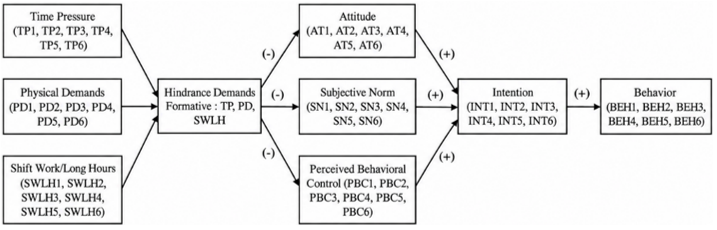
This study developed an SEM model that integrates hindrance demands as external factors and the TPB framework as internal factors to explain worker compliance with CSMS, as illustrated in Figure 1.
The hypothesized direction and sign of the path coefficients were specified as negative from HD to AT, SN, and PBC (H1–H3), positive from AT, SN, and PBC to INT (H4–H6), and positive from INT to BEH (H7). Based on this conceptual model, seven hypotheses were formulated as presented in Table 4.
Figure 1. Conceptual model of Theory of Planned Behavior (TPB) and hindrance demands (HD) in Structural Equation Modeling (PLS-SEM)
Table 4. Research hypotheses
|
Code |
Hypothesis |
Expected Sign |
|
H1 |
Hindrance demands are negatively associated with attitude |
(−) |
|
H2 |
Hindrance demands are negatively associated with subjective norm |
(−) |
|
H3 |
Hindrance demands are negatively associated with perceived behavioral control |
(−) |
|
H4 |
Attitude is positively associated with intention |
(+) |
|
H5 |
Subjective norm is positively associated with intention |
(+) |
|
H6 |
Perceived behavioral control is positively associated with intention |
(+) |
|
H7 |
Intention is positively associated with behavior |
(+) |
3.4 Data analysis technique
Data were analyzed using PLS-SEM with SmartPLS. The analysis stages included: (1) data screening; (2) first-stage outer model evaluation of first-order reflective constructs using indicator reliability (outer loading ≥ 0.70), internal consistency reliability (composite reliability (CR) ≥ 0.70), convergent validity (average variance extracted (AVE) ≥ 0.50), and discriminant validity (heterotrait-monotrait ratio (HTMT) < 0.90); (3) specification and estimation of the second-order HD construct using the two-stage approach; (4) formative outer model evaluation using variance inflation factor (VIF) and outer weight; (5) inner model evaluation using VIF, R², f², Q² predict, and bootstrapping; and (6) IPMA with behavior as the target construct [19, 20, 27, 28].
Bootstrapping was performed using 5,000 subsamples with a two-tailed test at a 5% significance level. The significance of the direct path coefficients was evaluated using t-statistics, p-values, and 95% percentile bootstrap confidence intervals. Specific indirect effects and total indirect effects were also evaluated through bootstrapping to examine whether hindrance demands were associated with intention through attitude, subjective norm, and perceived behavioral control, and with compliance behavior through these TPB determinants and intention.
Following the structural model evaluation, IPMA was applied with CSMS compliance behavior as the target construct to examine the relative importance and performance of the hindrance demand dimensions. In the IPMA procedure, importance represents the total effect of a predictor construct on the target construct, whereas performance represents the mean of the rescaled latent variable scores on a 0–100 scale [20, 21]. Importance was therefore interpreted based on the direction and relative magnitude of the total effect within the estimated model, while performance was interpreted as the perceived level of each hindrance demand dimension. Since time pressure, physical demands, and shift work/long hours were conceptualized as hindrance demands, higher performance values were interpreted as indicating higher perceived levels of these hindrance demands. The importance values were retained in their original direction to preserve the meaning of the estimated total effects. Accordingly, negative importance values indicate that higher perceived hindrance demand dimensions were associated with lower CSMS compliance behavior. The joint interpretation of importance and performance was used to provide directional insight into the relative role of each hindrance demand dimension. Field observations and OSH nonconformity records were then used to complement the IPMA results and provide contextual support for the managerial interpretation.
4.1 Overview and respondent characteristics
The study was conducted at three coal-fired power plant overhaul projects in East Java and South Sulawesi during January–June 2026. The study locations and implementation periods are presented in Table 5.
Based on Table 5, of the 273 collected questionnaires, 249 responses were declared valid (91.21%) after data screening, which included incomplete responses (8 responses), straight-lining (9 responses), and outliers (7 responses) [29]. Most respondents came from the all-area category (78 workers, 31.33%), followed by boiler (69 workers, 27.71%), turbine (57 workers, 22.89%), and coal and ash handling (45 workers, 18.07%). Based on shift pattern, most respondents worked on the day shift (203 workers, 81.53%), whereas 46 respondents (18.47%) worked on the night shift.
Table 5. Study locations and overhaul periods
|
No. |
Study Location |
Overhaul Period |
|
1 |
East Java Power Plant 1 |
January 27–March 15, 2026 |
|
2 |
East Java Power Plant 2 |
March 30–May 12, 2026 |
|
3 |
South Sulawesi Power Plant 1 |
April 15–May 15, 2026 |
4.2 Research results
4.2.1 Outer model evaluation
The first-stage outer model evaluation was conducted on the first-order reflective constructs (TP, PD, SWLH, AT, SN, PBC, INT, and BEH). The initial results showed that three indicators were below the required threshold (TP6 = 0.578; SWLH5 = 0.471; SN5 = 0.537), and therefore they were removed from the model. After modification, all retained indicators met the specified loading, reliability, and convergent validity criteria [19]. The detailed results are presented in Table 6.
Following the assessment of indicator reliability and convergent validity, discriminant validity was subsequently evaluated using the HTMT. Based on Table 7, all construct pairs had HTMT values below 0.90, ranging from 0.056 to 0.611. These results indicate that each construct in the integrated TPB-hindrance demands model had adequate discriminant validity [27].
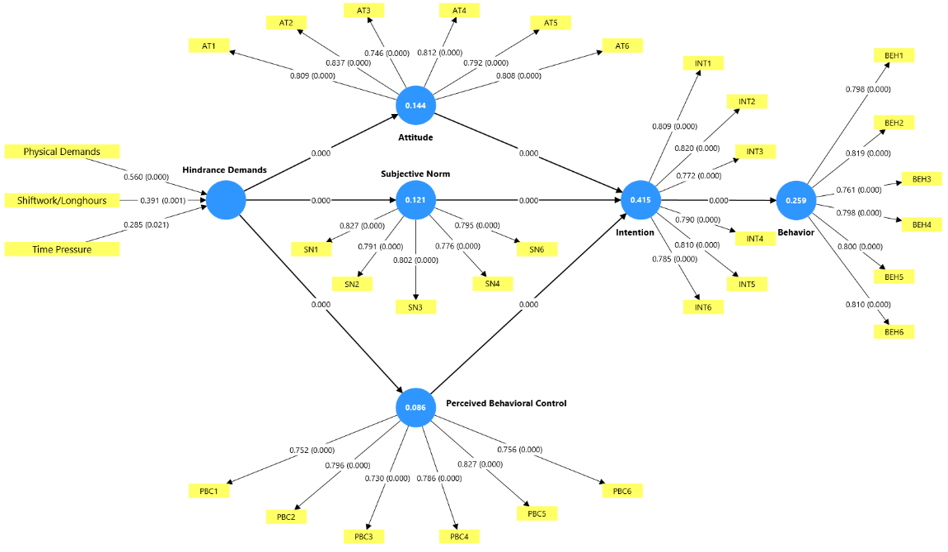
In Figure 2, HD was specified as a second-order formative construct comprising three first-order dimensions: TP, PD, and SWLH. These dimensions were treated as formative components because they jointly represent the hindrance demands experienced by contractor workers in coal-fired power plant overhaul projects. The evaluation included collinearity assessment using the VIF and the significance of outer weights.
Figure 2. Second-stage outer model evaluation in SmartPLS
The second-stage outer model evaluation of the second-order formative hindrance demands construct showed that all formative dimensions had VIF values below 3.3 (1.303–1.552) and significant outer weights. Physical demands had the largest outer weight (0.560; p < 0.001), followed by shift work/long hours (0.391; p = 0.001) and time pressure (0.285; p = 0.021). These results indicate that all dimensions made unique contributions to forming HD [19, 30].
Based on Table 8, all formative dimensions of HD had VIF values below 3.3, ranging from 1.303 to 1.552. These results indicate that there was no multicollinearity problem among the formative dimensions of HD. Physical demands had the largest outer weight (0.560), indicating that this dimension made the largest formative contribution to the hindrance demands construct. This finding is relevant to studies on physical demands and fatigue among workers in high-risk settings [14].
Table 6. Outer loading, CR, and AVE results after modification
|
Construct |
Indicator |
Outer Loading |
CR |
AVE |
|
TP (5 items) |
TP1–TP5* |
0.717–0.803 |
0.885 |
0.606 |
|
PD (6 items) |
PD1–PD6 |
0.765–0.810 |
0.909 |
0.624 |
|
SWLH (5 items) |
SWLH1–SWLH4, SWLH6* |
0.756–0.821 |
0.894 |
0.628 |
|
AT (6 items) |
AT1–AT6 |
0.746–0.837 |
0.915 |
0.642 |
|
SN (5 items) |
SN1–SN4, SN6* |
0.777–0.826 |
0.898 |
0.637 |
|
PBC (6 items) |
PBC1–PBC6 |
0.728–0.828 |
0.900 |
0.601 |
|
INT (6 items) |
INT1–INT6 |
0.772–0.820 |
0.913 |
0.637 |
|
BEH (6 items) |
BEH1–BEH6 |
0.761–0.819 |
0.913 |
0.637 |
Table 7. Discriminant validity test results (heterotrait-monotrait ratio (HTMT))
|
Construct |
TP |
PD |
SWLH |
AT |
SN |
PBC |
INT |
BEH |
|
TP |
– |
0.611 |
0.442 |
0.356 |
0.314 |
0.161 |
0.280 |
0.160 |
|
PD |
– |
0.528 |
0.383 |
0.339 |
0.301 |
0.409 |
0.205 |
|
|
SWLH |
– |
0.291 |
0.303 |
0.291 |
0.250 |
0.056 |
||
|
AT |
– |
0.235 |
0.210 |
0.565 |
0.311 |
|||
|
SN |
– |
0.177 |
0.372 |
0.184 |
||||
|
PBC |
– |
0.500 |
0.248 |
|||||
|
INT |
– |
0.568 |
||||||
|
BEH |
– |
Table 8. Second-stage outer model evaluation of the hindrance demands construct
|
Formative Dimensions of Hindrance Demands |
VIF |
Outer Weight |
t-Statistic |
p-Value |
Result |
|
TP |
1.426 |
0.285 |
2.310 |
0.021 |
Significant |
|
PD |
1.552 |
0.560 |
5.035 |
<0.001 |
Significant |
|
SWLH |
1.303 |
0.391 |
3.234 |
0.001 |
Significant |
4.2.2 Inner model evaluation and hypothesis testing
After both reflective and formative outer model evaluations met the required criteria, the next step was to evaluate the structural model (inner model) to test the relationships among constructs according to the research hypotheses.
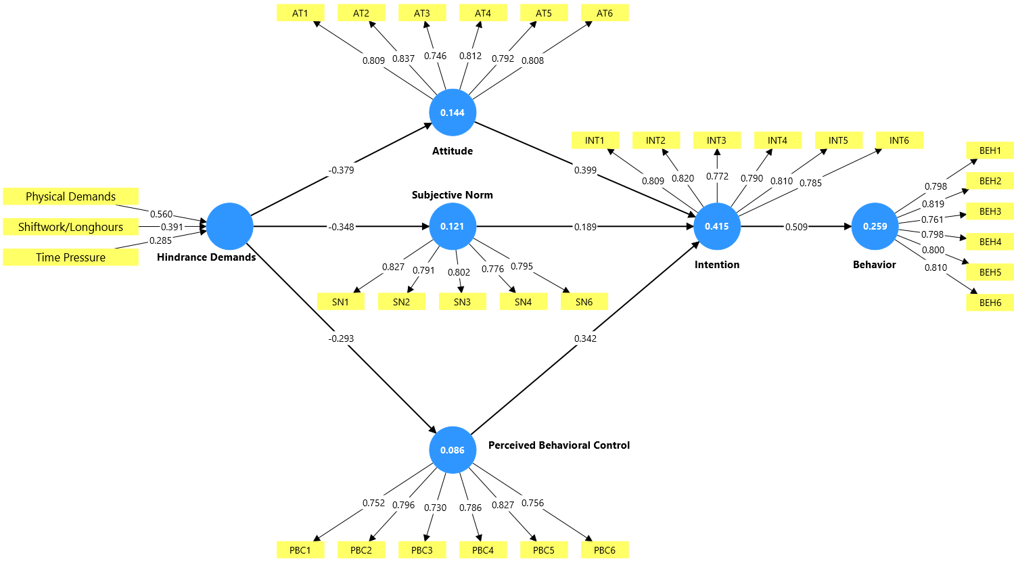
In Figure 3, the inner model evaluation results show no multicollinearity problem (VIF = 1.000–1.072). Meanwhile, Table 9 shows that the coefficient of determination (R²) had varying explanatory power: very weak for attitude (0.144), subjective norm (0.121), and perceived behavioral control (0.086); moderate for intention (0.415); and weak for behavior (0.259). The explanatory power of the model can be assessed based on established criteria for interpreting R² values in PLS-SEM [31]. Low R² values can still be interpreted proportionally in social and behavioral research because human behavior is related to many individual and contextual factors [32].
Figure 3. Inner model evaluation in SmartPLS
Table 9. R² values of the integrated Theory of Planned Behavior (TPB)-hindrance demands model
|
Endogenous Construct |
R² |
Category |
|
AT |
0.144 |
Very Weak |
|
SN |
0.121 |
Very Weak |
|
PBC |
0.086 |
Very Weak |
|
INT |
0.415 |
Moderate |
|
BEH |
0.259 |
Weak |
Based on Table 10, the f² evaluation showed varying contribution magnitudes among the structural paths. The path from hindrance demands to attitude showed a medium f² value (0.168), whereas the paths from hindrance demands to subjective norm and perceived behavioral control showed small f² values (0.138 and 0.094, respectively). The paths from attitude to intention and perceived behavioral control to intention showed medium f² values (0.254 and 0.190, respectively), whereas the path from subjective norm to intention showed a small f² value (0.058). The path from intention to behavior had the largest f² value (0.349), indicating that intention made the strongest contribution to behavior in the proposed model [28].
As shown in Table 11, all endogenous constructs had Q² predict values greater than zero, ranging from 0.020 to 0.131. These results indicate that the integrated TPB-hindrance demands model showed predictive relevance for all endogenous constructs, although the predictive relevance for behavior was relatively low compared with the other constructs. The hypothesis testing results based on bootstrapping are presented in Table 12.
Table 10. f² values of the integrated Theory of Planned Behavior (TPB)-hindrance demands model
|
Structural Path |
f² |
Category |
|
HD → AT |
0.168 |
Medium |
|
HD → SN |
0.138 |
Small |
|
HD → PBC |
0.094 |
Small |
|
AT → INT |
0.254 |
Medium |
|
SN → INT |
0.058 |
Small |
|
PBC → INT |
0.190 |
Medium |
|
INT → BEH |
0.349 |
Medium |
Table 11. Q² predicted values of the integrated Theory of Planned Behavior (TPB)-hindrance demands model
|
Endogenous Construct |
Q² Predict |
Interpretation |
|
AT |
0.131 |
Predictive relevance |
|
SN |
0.103 |
Predictive relevance |
|
PBC |
0.071 |
Predictive relevance |
|
INT |
0.116 |
Predictive relevance |
|
BEH |
0.020 |
Predictive relevance |
Table 12. Hypothesis testing results of the integrated Theory of Planned Behavior (TPB)-hindrance demands model
|
Code |
Hypothesized Path |
Path Coefficient (β) |
t-Statistic |
p-Value |
CI |
Result |
|
H1 |
HD → AT |
−0.379 |
7.004 |
<0.001 |
[−0.485, −0.272] |
Supported |
|
H2 |
HD → SN |
−0.348 |
5.775 |
<0.001 |
[−0.469, −0.232] |
Supported |
|
H3 |
HD → PBC |
−0.293 |
4.327 |
<0.001 |
[−0.425, −0.157] |
Supported |
|
H4 |
AT → INT |
0.399 |
7.711 |
<0.001 |
[0.296, 0.497] |
Supported |
|
H5 |
SN → INT |
0.189 |
3.486 |
<0.001 |
[0.084, 0.297] |
Supported |
|
H6 |
PBC → INT |
0.342 |
6.850 |
<0.001 |
[0.242, 0.437] |
Supported |
|
H7 |
INT → BEH |
0.509 |
9.981 |
<0.001 |
[0.409, 0.606] |
Supported |
Table 13. Indirect effects of hindrance demand on intention and behavior
|
Indirect Path |
Indirect Effect (β) |
t-Statistic |
p-Value |
CI |
Result |
|
Specific Indirect Effects |
|||||
|
HD → AT → INT |
−0.151 |
5.600 |
<0.001 |
[−0.209, −0.102] |
Significant |
|
HD → SN → INT |
−0.066 |
2.899 |
0.004 |
[−0.116, −0.028] |
Significant |
|
HD → PBC → INT |
−0.100 |
3.546 |
<0.001 |
[−0.161, −0.049] |
Significant |
|
HD → AT → INT → BEH |
−0.077 |
4.723 |
<0.001 |
[−0.112, −0.049] |
Significant |
|
HD → SN → INT → BEH |
−0.033 |
2.703 |
0.007 |
[−0.062, −0.013] |
Significant |
|
HD → PBC → INT → BEH |
−0.051 |
3.167 |
0.002 |
[−0.087, −0.024] |
Significant |
|
Total Indirect Effects |
|||||
|
HD → INT |
−0.317 |
7.510 |
<0.001 |
[−0.409, −0.240] |
Significant |
|
HD → BEH |
−0.161 |
5.495 |
<0.001 |
[−0.226, −0.112] |
Significant |
As shown in Table 12, all seven hypotheses were supported. The 95% confidence intervals did not include zero, indicating that all hypothesized paths were statistically significant. H1–H3 show that hindrance demands were negatively and significantly associated with attitude (β = −0.379), subjective norm (β = −0.348), and perceived behavioral control (β = −0.293). This finding is consistent with the JD-R framework, which explains that job demands can deplete workers' energy and shape psychological responses [12], and is also in line with findings on work pressure and safety compliance [5]. H4–H6 show that the TPB determinants were positively and significantly associated with intention, with attitude showing the strongest association (β = 0.399), followed by PBC (β = 0.342) and SN (β = 0.189). These findings support the central proposition of TPB that intention is shaped by attitude, subjective norm, and perceived behavioral control [33]. H7 shows that intention was positively and significantly associated with behavior (β = 0.509), consistent with TPB and safety behavior studies [11, 25].
Indirect effect analysis was conducted to examine the pathways through which hindrance demands were associated with intention and compliance behavior. As presented in Table 13, hindrance demands showed significant indirect associations with intention through attitude (β = −0.151, p < 0.001), subjective norm (β = −0.066, p = 0.004), and perceived behavioral control (β = −0.100, p < 0.001). The sequential indirect associations with behavior through attitude, subjective norm, perceived behavioral control, and intention were also significant, with coefficients of −0.077, −0.033, and −0.051, respectively. In addition, the total indirect effects of hindrance demands on intention (β = −0.317, p < 0.001) and behavior (β = −0.161, p < 0.001) were significant. All 95% confidence intervals excluded zero, indicating that the indirect relationships were statistically significant. These results suggest that higher hindrance demands were associated with lower compliance behavior through lower TPB determinant scores and intention within the proposed model.
4.2.3 Importance-Performance Map Analysis
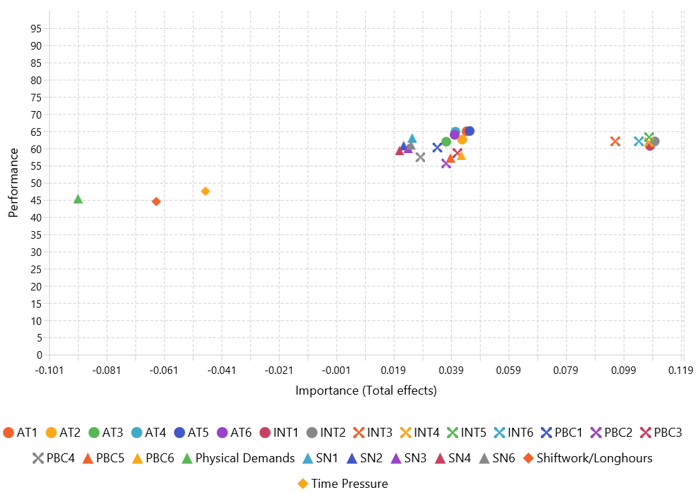
Figure 4 presents the IPMA results with CSMS compliance behavior as the target construct. The analysis was conducted to examine the relative position of each hindrance demand dimension based on its importance and performance values. Since the analyzed dimensions represent hindrance demands, higher performance values indicate stronger perceived levels of these work-related conditions. Accordingly, importance values were interpreted based on their direction and relative magnitude, while performance values reflected the perceived level of each hindrance demand dimension among workers.
Figure 4. Importance-Performance Map Analysis (IPMA) results with behavior as the target construct in SmartPLS
Based on Table 14, all hindrance demand dimensions showed negative importance values, indicating that higher perceived hindrance demands were associated with lower CSMS compliance behavior. Among the three dimensions, physical demands had the most negative importance value (−0.090), followed by shift work/long hours (−0.063) and time pressure (−0.046). Although the magnitudes of these total effects were modest, the relative pattern provides useful directional insight into which hindrance demand dimensions were more strongly associated with compliance behavior in the proposed model.
The performance values further describe the perceived level of each hindrance demand dimension. Time pressure had the highest performance value (47.534), indicating that time-related constraints were perceived at the highest level among the three hindrance demand dimensions. However, its importance value was the smallest among the three dimensions. In contrast, physical demands combined the most negative importance value with a performance value of 45.395, indicating a comparatively stronger association with CSMS compliance behavior despite having a lower performance value than time pressure. Shift work/long hours showed an intermediate pattern, with an importance value of −0.063 and a performance value of 44.536.
Taken together, the IPMA results indicate that physical demands showed the most prominent association with CSMS compliance behavior among the hindrance demand dimensions, while time pressure remained an important contextual work condition because of its relatively high perceived level. Therefore, the interpretation of the IPMA results should consider both the direction and magnitude of the total effects as well as the perceived level of each hindrance demand dimension. To provide a more contextual interpretation, the following section relates these IPMA findings to OSH nonconformity records and field observations from the overhaul projects.
Table 14. Importance-Performance Map Analysis (IPMA) results
|
Hindrance Demands Dimension |
Importance |
Performance |
|
Physical Demands (PD) |
−0.090 |
45.395 |
|
Shift Work/Long Hours (SWLH) |
−0.063 |
44.536 |
|
Time Pressure (TP) |
−0.046 |
47.534 |
4.2.4 Field-based support for the Importance-Performance Map Analysis results
To provide additional field context for the IPMA results, this study also considered contractor-related OSH nonconformity records and field observations of 34 contractor work activities. These data were used to examine whether the pattern shown in the IPMA results was reflected in actual working conditions during coal-fired power plant overhaul projects. Of the 72 contractor-related OSH nonconformities recorded during 2022–2025, 46 findings were categorized as related to hindrance demands. These historical findings were combined with seven hindrance-demand-related findings from the 2026 overhaul records, resulting in 53 findings mapped into time pressure, physical demands, and shift work/long hours.
Based on Table 15, the 2022–2026 data show that physical demands accounted for the highest proportion of OSH nonconformity findings related to hindrance demands, with 21 findings (39.62%). Time pressure and shift work/long hours each recorded 16 findings (30.19%). This distribution indicates that physical demands were frequently reflected in contractor-related OSH nonconformities, particularly in work activities involving physically demanding conditions, difficult access, and exposure to challenging field environments.
Table 15. Summary of Occupational Safety and Health (OSH) nonconformities by hindrance demands dimension
|
Dimension |
Historical Records (2022–2025) |
2026 Overhaul Records |
Total |
Percentage |
|
Time Pressure |
14 |
2 |
16 |
30.19% |
|
Physical Demands |
18 |
3 |
21 |
39.62% |
|
Shift Work/Long Hours |
14 |
2 |
16 |
30.19% |
|
Total |
46 |
7 |
53 |
100.00% |
Table 16. Field observation results by hindrance demands dimension
|
Hindrance Demands Dimension |
Number of Observations (n = 34) |
Percentage |
|
Time Pressure |
13 |
38.24% |
|
Physical Demands |
14 |
41.18% |
|
Shift Work/Long Hours |
7 |
20.58% |
Based on Table 16, field observations of 34 contractor work activities showed a similar pattern. Physical demands were the most frequently observed hindrance dimension, appearing in 14 observations (41.18%), followed by time pressure in 13 observations (38.24%) and shift work/long hours in seven observations (20.58%). These observations were reflected in field working conditions such as hot and dusty areas, confined spaces, work at height, and physically demanding access to equipment or work locations.
Overall, the field-based findings provide contextual support for the IPMA interpretation. Although the IPMA importance values were modest, the pattern was consistent with the OSH nonconformity records and field observations, which both indicated that physical demands were the most frequently reflected hindrance demand dimension in actual overhaul work conditions. Therefore, physical demands can be considered a salient hindrance demand in the context of CSMS compliance, while time pressure and shift work/long hours remain relevant contextual factors that also need to be managed in coal-fired power plant overhaul projects.
4.3 Discussion
4.3.1 Associations among hindrance demands, Theory of Planned Behavior determinants, and Contractor Safety Management System compliance
The results indicate that CSMS compliance was associated with both psychological factors and operational pressures. Hindrance demands, including time pressure, physical demands, and shift work/long hours, were negatively associated with attitude, subjective norm, and perceived behavioral control. This finding complements previous studies reporting associations between safety behavior and human factors, workload, work pressure, safety culture, safety leadership, safety motivation, and safety resources in various high-risk sectors [4-10, 22, 23]. In coal-fired power plant settings, hazard control and prevention have also been linked to safety knowledge, safety motivation, safety compliance, safety participation, and safety outcomes within a PLS-SEM framework [34]. Building on these studies, this study positions hindrance demands as working-condition factors that may help explain variations in TPB determinants and CSMS compliance in coal-fired power plant overhaul projects.
The indirect effect analysis provides a more detailed explanation of these pathways. Hindrance demands were negatively associated with intention through attitude, subjective norm, and perceived behavioral control, and were also negatively associated with compliance behavior through these TPB determinants and intention. This pattern suggests that higher hindrance demands were related to lower compliance within the TPB mechanism through lower scores of favorable evaluation of compliance, perceived social support, perceived control, and intention to comply with CSMS.
More specifically, physical strain, completion targets, and long working hours may be associated with the perception that safety procedures represent an additional demand in coal-fired power plant overhaul projects. Among these working conditions, physical demands emerged most consistently across the formative measurement results, IPMA, and field-based evidence. This convergence suggests that physical demands represent a recurring work condition associated with CSMS compliance in overhaul environments and that compliance improvement should therefore be supported by improvements in actual working conditions, rather than relying primarily on documentation and safety communication. This interpretation is consistent with studies reporting that safety resources, safety procedures, supervision, management commitment, and owner or management involvement are associated with safety performance [10, 22, 23, 34].
4.3.2 Managerial implications for improving Contractor Safety Management System compliance
The findings suggest that improving contractor worker compliance with CSMS should not rely solely on documents, safety induction, permit-to-work, and formal supervision. These elements remain important, but they need to be supported by working conditions that enable workers to implement safety procedures consistently. Therefore, CSMS compliance improvement should be directed toward two complementary aspects: controlling hindrance demands and strengthening the psychological determinants of compliance. This direction requires organizational support, because workers’ ability and willingness to comply with safety procedures may be related to how safety is planned, communicated, supervised, and reinforced in the workplace. This interpretation is consistent with previous HSE research, which emphasized that safety improvement should be supported by commitment, responsibility, engagement and involvement, leadership, competence, information and communication, and organizational learning [2].
At the operational level, these priorities can be addressed through measures that reduce physical demands, manage shift work/long hours, and control time pressure. At the same time, the organization should strengthen the conditions that support positive attitudes, subjective norms, and perceived behavioral control through leadership role modeling, adequate provision of personal protective equipment and work tools, clear procedures, and explicit authority for workers to stop unsafe work. This combined approach is also aligned with evidence that a supportive safety climate and individual resilience are associated with better safety performance and lower psychological stress among workers in high-risk project settings [35]. Therefore, controlling hindrance demands while strengthening psychological and organizational supports may help improve the effectiveness of CSMS implementation in coal-fired power plant overhaul projects.
Among the hindrance demand dimensions, physical demands warrant particular managerial attention because their prominence was consistently reflected across the formative measurement results, IPMA findings, and field-based evidence. The convergence of these findings suggests that physical demands represent a recurring work condition that may hinder workers’ ability to maintain consistent CSMS compliance, particularly when safety procedures must be implemented under physically demanding circumstances. This suggests that improving compliance requires not only reinforcing workers’ awareness and behavioral intentions, but also creating working conditions that enable safety procedures to be carried out consistently. Such an interpretation is consistent with the IPMA framework, in which the direction and magnitude of importance values should be considered together with performance when identifying areas for managerial attention. In the context of overhaul activities, this can be addressed through practical measures such as providing appropriate work aids, improving access to confined or difficult work areas, rotating workers engaged in physically demanding tasks, allocating additional manpower for high-risk activities, controlling exposure to hazardous conditions, and strengthening fatigue management. These measures are further supported by ergonomic risk assessment research, which emphasizes the importance of evaluating physical workload as a basis for reducing work-related physical strain [36].
In addition, shift work/long hours should be managed through more systematic fatigue control, including adequate rest periods, limitation of excessive overtime, closer supervision during night work, and careful assignment of workers to critical tasks. Time pressure should also be controlled by preparing more realistic work schedules, providing sufficient time for permit-to-work and toolbox meetings, and ensuring that urgent or additional work is supported by proper risk reassessment. Overall, these managerial implications indicate that CSMS compliance may be improved more effectively when behavioral interventions are combined with improvements in actual working conditions.
Several conclusions can be drawn from the study results. First, hindrance demands were negatively and significantly associated with attitude (β = −0.379), subjective norm (β = −0.348), and perceived behavioral control (β = −0.293) among contractor workers in coal-fired power plant overhaul projects. Second, attitude, subjective norm, and perceived behavioral control were positively and significantly associated with intention (β = 0.399; 0.189; 0.342), whereas intention was positively and significantly associated with compliance behavior (β = 0.509). The indirect effect analysis further indicated that hindrance demands were negatively associated with intention through attitude, subjective norm, and perceived behavioral control. Hindrance demands were also negatively associated with compliance behavior through these TPB determinants and intention, as shown by the significant total indirect effects on intention (β = −0.317) and compliance behavior (β = −0.161). Third, the IPMA results showed modest negative importance values for the hindrance demand dimensions, indicating that higher perceived hindrance demands were associated with lower CSMS compliance behavior. Physical demands showed the largest negative importance value, followed by shift work/long hours and time pressure. This pattern was consistent with the largest formative contribution of physical demands to the hindrance demands construct, as well as with OSH nonconformity records and field observations. These findings suggest that CSMS compliance is associated not only with workers’ psychological determinants but also with actual working conditions that may weaken their ability to comply.
Based on these findings, CSMS implementation may be strengthened by controlling physical demands, managing shift work/long hours and time pressure, and improving workers’ attitude, subjective norm, and perceived behavioral control. In addition, hindrance demands should be considered in every CSMS cycle, from prequalification and work planning to field control and contractor performance evaluation. This study is limited by its cross-sectional design and self-reported compliance behavior. Therefore, future research may combine survey data with longitudinal safety records or direct behavioral observations, and may also extend the model by adding other variables, such as safety climate, safety resources, ergonomic risk, or organizational safety support, to explain variations in compliance behavior that are not fully explained by the current model.
The authors would like to thank all contractor worker respondents and OSH personnel who supported and participated in the data collection process for this study.
|
AT |
Attitude toward compliance with the Contractor Safety Management System (dimensionless) |
|
BEH |
Safety compliance behavior (dimensionless) |
|
CSMS |
Contractor Safety Management System |
|
HD |
Hindrance demands (dimensionless) |
|
INT |
Behavioral intention to comply with CSMS (dimensionless) |
|
IPMA |
Importance–Performance Map Analysis |
|
PBC |
Perceived Behavioral Control (dimensionless) |
|
PD |
Physical Demands (dimensionless) |
|
PLS-SEM |
Partial Least Squares Structural Equation Modeling |
|
SN |
Subjective Norm (dimensionless) |
|
SWLH |
Shift Work/Long Hours (dimensionless) |
|
TP |
Time Pressure (dimensionless) |
|
TPB |
Theory of Planned Behavior |
Questionnaire Items
The questionnaire used two types of five-point scales. For TP, PD, SWLH, AT, SN, PBC, and INT, the response scale was: 1 = Strongly Disagree; 2 = Disagree; 3 = Neutral; 4 = Agree; and 5 = Strongly Agree. For BEH, the response scale was: 1 = Never; 2 = Rarely; 3 = Sometimes; 4 = Often; and 5 = Always.
Time Pressure (TP)
TP1. I often lack sufficient time to complete my work according to procedures.
TP2. My work time targets are too tight.
TP3. Due to the fast work pace, I do not have enough time to follow all OSH steps.
TP4. I have too much work for the available time.
TP5. Sudden additional work often makes my working time very limited.
TP6. I am often asked to complete work very quickly.
Physical Demands (PD)
PD1. My work often requires heavy physical effort.
PD2. My working posture often makes my body uncomfortable.
PD3. Exposure to heat, noise, or vibration at work makes it difficult for me to follow SOPs consistently.
PD4. I often lift or move heavy loads.
PD5. I often work in narrow or difficult-to-access areas.
PD6. My body quickly feels physically fatigued while working.
Shift Work/Long Hours (SWLH)
SWLH1. I often work night shifts that disrupt my sleep pattern.
SWLH2. My working hours often exceed 8 hours.
SWLH3. I often feel tired or sleepy when working under a shift system.
SWLH4. Rest time between shift changes is often insufficient.
SWLH5. I often continue working even after normal working hours have ended.
SWLH6. Shift work or overtime makes me lack sufficient rest.
Attitude (AT)
AT1. Working according to OSH procedures is important to prevent accidents.
AT2. Complying with OSH procedures is beneficial for team safety.
AT3. Following SOPs improves work quality.
AT4. Avoiding OSH violations is the right choice.
AT5. OSH procedures must still be implemented even when the work is under time pressure.
AT6. There is no reason to violate OSH rules.
Subjective Norm (SN)
SN1. My supervisor always encourages me to follow procedures.
SN2. My co-workers consider OSH compliance important.
SN3. My team does not tolerate violations of OSH rules.
SN4. Violations of SOPs will receive warnings from supervisors or co-workers.
SN5. My supervisor emphasizes that there is no compromise regarding OSH compliance.
SN6. Management in this unit sets a good example in complying with OSH rules.
Perceived Behavioral Control (PBC)
PBC1. I am able to comply with procedures even under stressful conditions.
PBC2. I have the authority to stop unsafe work.
PBC3. The tools, Personal Protective Equipment (PPE), or time available to me are sufficient to follow SOPs.
PBC4. I am confident that I can refuse requests to violate rules.
PBC5. I can find a safe way to work when conditions change.
PBC6. When procedures are difficult to follow, I can seek assistance to keep carrying them out properly.
Intention (INT)
INT1. I intend to always follow procedures.
INT2. I am determined to reject any violation of OSH rules.
INT3. I intend to ensure that the work permit is complete before starting work.
INT4. I intend to comply with all SOPs even under urgent conditions.
INT5. I am determined not to ignore any safety steps.
INT6. Even when there is pressure to speed up the work, I still intend to follow all OSH requirements.
Behavior (BEH)
BEH1. I ensure that all work permit steps have been completed.
BEH2. I always wear PPE according to applicable procedures.
BEH3. I follow the work sequence according to the SOP without skipping any steps.
BEH4. I report any unsafe condition that I observe.
BEH5. I routinely attend OSH briefings before starting work.
BEH6. I remind co-workers who do not comply with procedures or PPE requirements.
[1] International Labour Organization. (2023). Nearly 3 million people die of work-related accidents and diseases. International Labour Organization. https://www.ilo.org/es/resource/news/casi-3-millones-de-personas-mueren-por-accidentes-y-enfermedades.
[2] Sudiarno, A., Diartiwi, S.I., Dewi, R.S., et al. (2021). Health and safety implementation in Indonesia and risk of COVID-19. International Journal of Public Health Science, 10(1): 68-76. https://doi.org/10.11591/ijphs.v10i1.20634
[3] El Bouti, M.Y., Allouch, M. (2020). Analysis of human factors for enhancing safety and security management system in fossil and renewable power plants. International Journal of Safety and Security Engineering, 10(4): 491-500. https://doi.org/10.18280/ijsse.100408
[4] Sudiarno, A., Dzaky Ma’arij, A.M. (2023). System safety assessment of the warehouse operation using Functional Resonance Analysis Method and Resilience Analysis Grid. Kesmas: Jurnal Kesehatan Masyarakat Nasional, 18(4): 271-278. https://doi.org/10.21109/kesmas.v18i4.7396
[5] Hiep, H.Y., Hien, N.N. (2023). Safety leadership, COVID-19 risk perception, and safety behavior: The moderator role of work pressure. International Journal of Safety and Security Engineering, 13(2): 255-266. https://doi.org/10.18280/ijsse.130208
[6] Hien, N.N., Kiet, N.T., Nguyen, A.T. (2024). The influence of safety culture on safety attitude, personnel error behavior, and safety citizenship behavior: Research in the Vietnam oil and gas industry. International Journal of Safety and Security Engineering, 14(2): 399-409. https://doi.org/10.18280/ijsse.140208
[7] Thai, N.T.M., Hien, N.N. (2025). The impact of safety culture on workers' safety motivation and behavior in Vietnam's construction industry. International Journal of Safety and Security Engineering, 15(2): 209-218. https://doi.org/10.18280/ijsse.150202
[8] Sudiarno, A., Dewi, R.S., Widyaningrum, R., et al. (2024). Analysis of human performance and potential application of virtual reality (VR) shooting games as a shooting training simulator for military personnel. International Journal of Technology, 15(1): 87-98. https://doi.org/10.14716/ijtech.v15i1.5303
[9] Rizky, N., Mansur, A., Purnomo, H., Sudiarno, A., Wangsa, I.D. (2025). Influence of safety leadership styles on safety behaviour: The mediating role of safety climate, knowledge, and motivation in Indonesia's oil and gas construction project. International Journal of Safety and Security Engineering, 15(1): 31-42. https://doi.org/10.18280/ijsse.150104
[10] Siregar, W.R., Machfudiyanto, R.A., Prasetyo, B., Suraji, A. (2024). Enhancing safety culture among subcontractors to improve safety performance in the Indonesian construction industry. International Journal of Safety and Security Engineering, 14(6): 1913-1919. https://doi.org/10.18280/ijsse.140625
[11] Ajzen, I. (1991). The theory of planned behavior. Organizational Behavior and Human Decision Processes, 50(2): 179-211. https://doi.org/10.1016/0749-5978(91)90020-T
[12] Bakker, A.B., Demerouti, E. (2017). Job demands-resources theory: Taking stock and looking forward. Journal of Occupational Health Psychology, 22(3): 273-285. https://doi.org/10.1037/ocp0000056
[13] Karasek, R.A. (1979). Job demands, job decision latitude, and mental strain: Implications for job redesign. Administrative Science Quarterly, 24(2): 285-308. https://doi.org/10.2307/2392498
[14] Bazazan, A., Noman, Y., Norouzi, H., Maleki-Ghahfarokhi, A., Sarbakhsh, P., Dianat, I. (2023). Physical and psychological job demands and fatigue experience among offshore workers. Heliyon, 9(6): e16441. https://doi.org/10.1016/j.heliyon.2023.e16441
[15] Ropponen, A., Hirvonen, M., Poutanen, J., Säynäjäkangas, P., Haukka, E. (2026). Working hour characteristics and risk of occupational accidents: A case-crossover study of the retail sector. Safety and Health at Work, 17(1): 64-69. https://doi.org/10.1016/j.shaw.2025.11.002
[16] Gh, M.M., Kandi, Z.R.K., Rostamzadeh, S., Farshad, A. (2021). Application of the theory of planned behavior in the design and implementation of a behavior-based safety plan in the workplace. Journal of Education and Health Promotion, 10: 459. https://doi.org/10.4103/jehp.jehp_1254_20
[17] Man, S.S., Alabdulkarim, S., Chan, A.H.S., Zhang, T. (2021). The acceptance of personal protective equipment among Hong Kong construction workers: An integration of technology acceptance model and theory of planned behavior with risk perception and safety climate. Journal of Safety Research, 79: 329-340. https://doi.org/10.1016/j.jsr.2021.09.014
[18] Nguyen, T.C., Nguyen-Phuoc, D.Q., De Gruyter, C., Su, D.N. (2025). Exploring risky driving behaviours among bus drivers in Hanoi, Vietnam. Journal of Transport & Health, 44: 102100. https://doi.org/10.1016/j.jth.2025.102100
[19] Hair, J.F., Hult, G.T.M., Ringle, C.M., Sarstedt, M. (2022). A Primer on Partial Least Squares Structural Equation Modeling (PLS-SEM). SAGE Publications, Thousand Oaks.
[20] Ringle, C.M., Sarstedt, M. (2016). Gain more insight from PLS-SEM results: The Importance-Performance map analysis. Industrial Management & Data Systems, 116(9): 1865-1886. https://doi.org/10.1108/IMDS-10-2015-0449
[21] Hauff, S., Richter, N.F., Sarstedt, M., Ringle, C.M. (2024). Importance and performance in PLS-SEM and NCA: Introducing the combined importance-performance map analysis (cIPMA). Journal of Retailing and Consumer Services, 78: 103723. https://doi.org/10.1016/j.jretconser.2024.103723
[22] Kurniawan, K.L., Machfudiyanto, R.A. (2023). A resilience approach to improving safety performance in construction. International Journal of Safety and Security Engineering, 13(3): 445-455. https://doi.org/10.18280/ijsse.130307
[23] Indrayana, D.V., Pribadi, K.S., Marzuki, P.F., Iridiastadi, H. (2023). Safety leadership and performance in Indonesia's construction sector: The role of project owners' maturity. International Journal of Safety and Security Engineering, 13(4): 635-646. https://doi.org/10.18280/ijsse.130405
[24] Cavanaugh, M.A., Boswell, W.R., Roehling, M.V., Boudreau, J.W. (2000). An empirical examination of self-reported work stress among U.S. managers. Journal of Applied Psychology, 85(1): 65-74. https://doi.org/10.1037/0021-9010.85.1.65
[25] Neal, A., Griffin, M.A. (2006). A study of the lagged relationships among safety climate, safety motivation, safety behavior, and accidents. Journal of Applied Psychology, 91(4): 946-953. https://doi.org/10.1037/0021-9010.91.4.946
[26] Ashcroft, M., Austin, R., Barnes, K., et al. (2016). Expert judgement. British Actuarial Journal, 21(2): 314-363. https://doi.org/10.1017/S1357321715000239
[27] Henseler, J., Ringle, C.M., Sarstedt, M. (2015). A new criterion for assessing discriminant validity in variance-based structural equation modeling. Journal of the Academy of Marketing Science, 43(1): 115-135. https://doi.org/10.1007/s11747-014-0403-8
[28] Cohen, J. (1988). Statistical Power Analysis for the Behavioral Sciences. Lawrence Erlbaum Associates, Hillsdale.
[29] Ward, M.K., Meade, A.W. (2023). Dealing with careless responding in survey data. Annual Review of Psychology, 74: 577-596. https://doi.org/10.1146/annurev-psych-040422-045007
[30] Kock, N. (2015). Common method bias in PLS-SEM: A full collinearity assessment approach. International Journal of e-Collaboration, 11(4): 1-10. https://doi.org/10.4018/IJEC.2015100101
[31] Chin, W.W. (1998). The partial least squares approach to structural equation modeling. In: Marcoulides, G.A. (ed.) Modern Methods for Business Research. Lawrence Erlbaum Associates, Mahwah, pp. 295-336.
[32] Ozili, P.K. (2023). The acceptable R-square in empirical modelling. In Social Research Methodology and Publishing Results: A Guide to Non-Native English Speakers. IGI Global, pp. 134-143. https://doi.org/10.4018/978-1-6684-6859-3.ch009
[33] Armitage, C.J., Conner, M. (2001). Efficacy of the theory of planned behaviour: A meta-analytic review. British Journal of Social Psychology, 40(4): 471-499. https://doi.org/10.1348/014466601164939
[34] Arifin, K., Ali, M.X.M., Abas, A., Ahmad, M.A., Ahamad, M.A., Sahimi, A.S. (2023). The influence of hazard control and prevention toward safety behaviors and safety outcomes in coal-fired power plants using PLS-SEM. Journal of Safety Research, 86: 376-389. https://doi.org/10.1016/j.jsr.2023.07.017
[35] Chen, Y., McCabe, B., Hyatt, D. (2017). Impact of individual resilience and safety climate on safety performance and psychological stress of construction workers: A case study of the Ontario construction industry. Journal of Safety Research, 61: 167-176. https://doi.org/10.1016/j.jsr.2017.02.014
[36] Li, X., Gül, M., Al-Hussein, M. (2019). An improved physical demand analysis framework based on ergonomic risk assessment tools for the manufacturing industry. International Journal of Industrial Ergonomics, 70: 58-69. https://doi.org/10.1016/j.ergon.2019.01.004