Ni Made Ayu Gemuh Rasa Astiti* | I Gusti Ayu Dewi Seri Rejeki | Ahmad Fudholi
© 2026 The authors. This article is published by IIETA and is licensed under the CC BY 4.0 license (http://creativecommons.org/licenses/by/4.0/).
OPEN ACCESS
Cattle fattening enterprises are increasingly vital for sustainable beef production but operate within complex biological, economic, and environmental systems. This study evaluated their sustainability by integrating global scientific insights with a strategic assessment of Balinese fattening practices, emphasizing production efficiency, nutrition, climate challenges, and meat quality. A combined bibliometric and case study approach was used. The bibliometric analysis mapped global cattle fattening research from 2020 to 2025 through publication trends and network visualization, while the case study examined internal and external strategic factors using surveys, interviews, and a Strengths, Weaknesses, Opportunities, and Threats (SWOT) framework. Results indicate that global research is shifting toward sustainability, feed efficiency, climate impacts, animal welfare, and carcass quality. Strong thematic linkages emerged among nutrition, greenhouse gas emissions, finishing systems, and production management. In Bali, strengths such as ease of management, accessible feeding systems, high selling prices, and short production cycles were more dominant than weaknesses, including limited capital, small herd sizes, and an aging workforce. The Internal Factor Evaluation (IFE) analysis confirms this position, with internal strengths scoring 4.176 and weaknesses 3.685, resulting in a positive internal value of 0.491. Similarly, external opportunities related to improved infrastructure, government support, optimal feed resources, and castration practices outweighed threats such as land‑use change and labor shortages. The External Factor Evaluation (EFE) analysis yielded opportunity and threat scores of 4.196 and 2.400, respectively, producing a favorable external strategic value of 1.79. Overall, the strategic position suggests strong growth potential supported by interventions in training, reproductive efficiency, feeding improvements, and market access.
cattle, fattening, enterprises, bibliometric, sustainable
Beef production systems increasingly rely on management decisions that balance biological performance, economic viability, and environmental stewardship. Across developed industries in the Netherlands, Japan, and the United States, the routine use of male dairy calves and early castration is widely recognized as a pathway to producing consistent, high‑quality beef by improving carcass traits and facilitating finishing management. Although castration can accelerate fattening by shifting nutrient partitioning away from reproductive functions and toward adipose accretion through endocrine and gene‑expression pathways, performance trade‑offs have been reported, with castrates often exhibiting lower average daily gain (ADG) and lighter final weights than intact bulls. These mixed outcomes underscore the need to consider castration not as a single lever but as one component within a broader system that includes feeding strategies, animal health, marketing logistics, and environmental impacts. In Indonesia, some livestock groups, including farmers in Lombok, have adopted castration, yet uptake remains constrained by limited knowledge of reproductive management and sanitation practices, illustrating capacity gaps common to smallholder settings where advisory services and biosecurity infrastructures are unevenly distributed [1, 2].
Finishing efficiency is shaped by multiple, interacting determinants, including residual feed intake (RFI), calving interval, basal diet and concentrate inclusion, and nutrient balance, with effects mediated in part through rumen function and the microbiome. High‑concentrate rations can elevate ruminal propionate, a glucogenic volatile fatty acid that supports tissue accretion and carcass deposition, thereby shortening the finishing period when managed correctly and without compromising animal health [3, 4]. At the same time, feeding decisions must align with local feed resources and cost structures, particularly in mixed crop livestock systems where seasonal forage availability and by‑product feeds influence ration formulation and economic margins [1, 5]. The biological response to feeding is further conditioned by health and microbial ecology: perturbations of the bovine respiratory microbiota, for instance, can predispose animals to disease, undermining growth performance and feed efficiency; conversely, targeted microbial modulation (e.g., probiotics) may improve resilience during feedlot adaptation [6, 7].
Bali cattle (Bos javanicus) represent a locally adapted genetic resource valued for hardiness, feed efficiency under low‑input conditions, and suitability to integrated farming systems. In regions such as Badung Regency, policy priorities emphasize fattening strategies and the integration of cattle within crop rotations to intensify resource use while retaining labor flexibility for smallholders. Nonetheless, adoption of castration remains limited because bulls are often retained as natural service sires despite the availability of artificial insemination, reflecting both cultural preference and perceived market advantages for intact males. In such contexts, empirical evidence comparing growth responses and carcass outcomes for castrated versus intact Bali cattle remains sparse, constraining evidence‑based guidance for farmers and extension officers who must weigh short‑run revenue against long‑term productivity and welfare objectives [1, 8]. International experience suggests these choices are nontrivial: management in the stocker or backgrounding phases affects subsequent feedlot health and performance, including morbidity risk and the costs of treatment, which feed back into optimal finishing length and slaughter endpoints [2, 5].
Market and supply chain realities add further complexity. Disruptions in slaughter and packing capacity, as highlighted during recent shocks, propagate through feeder and fattening segments, altering price signals, placement weights, and optimal marketing windows; these dynamics can be particularly destabilizing for smallholders with limited liquidity buffers [1, 9]. Meanwhile, climate accountability intensifies pressure for systems that lower greenhouse gas intensity while preserving profitability. Enteric methane mitigation opportunities through diet formulation, lipid supplementation, and management innovations are increasingly documented, offering prospects to decouple emissions from output; complementary frameworks outline pathways toward climate‑neutral red meat, emphasizing gains in feed efficiency, animal health, and supply chain integration [10, 11]. Strategy choice at the farm level, therefore, intersects with environmental and policy goals, linking private decision‑making with public sustainability targets.
Against this backdrop, a strategic assessment that integrates internal capabilities and constraints with external opportunities and risks is essential for Bali cattle fattening enterprises. Internal factors commonly cited by Indonesian feedlot and smallholder operations include the ease of maintenance for locally adapted breeds, the practicality of ration preparation using locally available forages and crop residues, and the potential for favorable selling prices when animals meet market specifications. Conversely, constraints include limited working capital, small herd sizes that restrict economies of scale, and part‑time management that can dilute attention to health and feeding detail. External conditions such as infrastructure quality, availability of extension services, government animal health programs, land‑use competition, and evolving retail standards jointly shape the feasibility of intensification and modernization [1, 8]. Systematic tools like the Internal Factor Evaluation (IFE), External Factor Evaluation (EFE), and Strengths, Weaknesses, Opportunities, and Threats (SWOT) matrix can help structure these multidimensional considerations into actionable strategy sets, enabling farmers and local authorities to prioritize interventions that yield the greatest aggregate benefit.
This study addresses critical gaps in existing research on cattle fattening systems, where prior work remains fragmented, often focusing narrowly on biological performance, feeding practices, or market conditions without providing an integrative analysis that links technological, managerial, economic, and environmental dimensions into a coherent strategic framework. Empirical evidence comparing management interventions, especially castration practices, feeding strategies, and system‑level constraints in smallholder contexts such as Bali cattle production, is notably scarce, and existing studies seldom connect global scientific trends with local decision‑making needs. To fill these gaps, this research combines a comprehensive bibliometric analysis of global cattle‑fattening literature from 2020 to 2025 with an in‑depth empirical case study, synthesizing insights on internal enterprise capabilities, external pressures, and sustainability‑oriented management practices. Through the development of an integrated SWOT‑based strategic framework, the study provides a systematic, evidence‑driven basis for improving decision‑making in Bali cattle fattening enterprises, ultimately generating actionable recommendations that enhance resilience, productivity, and long‑term sustainability.
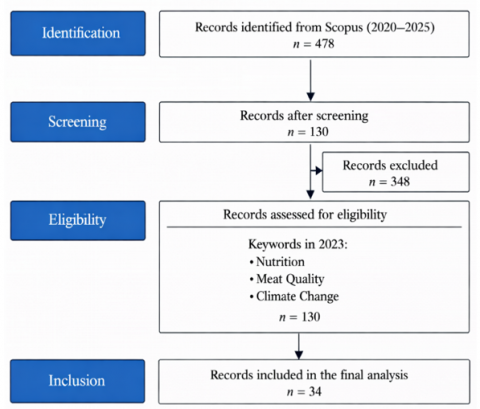
Data were collected from Scopus on February 2, 2026, resulting in a total of 478 records published between 2020 and 2025. After applying the initial screening procedures to remove irrelevant and duplicate entries, 130 records were retained for further assessment. The subsequent inclusion process focused on identifying studies containing key terms that emerged prominently in 2023, specifically nutrition, meat quality, and climate change. From this targeted evaluation, 34 records were ultimately deemed relevant and included in the final dataset, providing a more refined foundation for analysis within the context of contemporary research themes as shown in Figure 1.
Figure 1. PRISMA diagram
The Boolean search strategy for the topic “Cattle Fattening Enterprises” can be structured as: TITLE-ABS-KEY (("cattle fattening" OR "beef fattening" OR "feedlot system*" OR "feedlot operation*" OR "beef finishing" OR "cattle finishing" OR "beef cattle enterprise*") AND ("enterprise*" OR "business" OR "farm management" OR "production efficiency" OR "economic analysis" OR "profitability" OR "technical efficiency" OR "income" OR "value chain")). This logic ensures comprehensive retrieval of studies addressing cattle fattening or feedlot systems while narrowing the focus to enterprise-level, managerial, and economic dimensions. Filters may be applied for publication years (e.g., 2010–2026), document type (articles and reviews), subject areas (agricultural sciences, veterinary, environmental science, economics), and English language to improve relevance and quality.
Inclusion criteria should cover peer-reviewed empirical or modeling studies that explicitly examine cattle fattening, beef finishing, or feedlot production systems from an enterprise, economic, management, efficiency, or sustainability perspective. Exclusion criteria should remove studies focused solely on dairy systems without fattening components, general cattle growth physiology without business context, post-farm meat processing or consumer behavior topics, non-peer-reviewed documents (conference abstracts, editorials, book chapters), inaccessible full texts, and research centered on other livestock species such as sheep, goats, poultry, or swine.
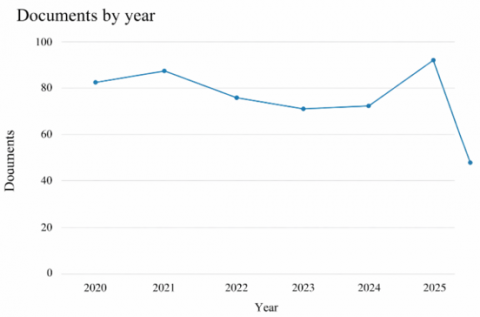
Figure 2 illustrates the distribution of documents by year in Scopus. Based on Scopus records for the keyword “Cattle Fattening Business” during 2020–2025, annual publications initially increased from 82 documents in 2020 to 87 in 2021. This was followed by a gradual decline through 2022 (75) and 2023 (70), with a slight stabilization in 2024 (71). In 2025, however, the volume of publications rose sharply to 93. Overall, the trend reflects sustained scholarly interest, marked by a mid-period slowdown and a strong recovery in 2025.
Figure 2. Documents by year in Scopus
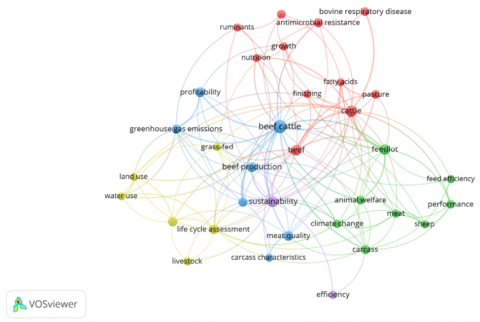
Figure 3 shows the Network visualization in VOSviewer. The VOSviewer network for the keyword “Cattle Fattening Enterprises” reveals a tightly connected landscape anchored by central terms such as beef cattle, beef production, sustainability, and feedlot, indicating that research on fattening systems sits at the intersection of production management and broader sustainability concerns. Node proximity and dense linkages around these hubs show that studies routinely co‑mention operational factors (feedlot management, finishing) together with outcome variables (carcass traits, meat quality) and system-level themes (climate change, greenhouse gas emissions). The overall structure suggests an integrative literature in which production efficiency, product quality, animal health, and environmental impacts are discussed together rather than in isolation.
Figure 3. Network visualization in VOSviewer
Distinct color-coded clusters highlight thematic emphases. A red cluster centers on cattle, finishing, pasture, fatty acids, nutrition, growth, and bovine respiratory disease/antimicrobial resistance, reflecting a strand that links feeding strategies and health management to product attributes. A green cluster groups feedlot, feed efficiency, performance, animal welfare, carcass, and even sheep, pointing to comparative and management-focused studies on efficiency and welfare outcomes in intensive systems. The blue cluster connects sustainability with meat quality, carcass characteristics, and climate change, indicating that product quality is increasingly framed within sustainability discussions. Finally, a yellow cluster joins life cycle assessment, greenhouse gas emissions, land use, water use, grass‑fed, livestock, and profitability, mapping a literature that quantifies environmental footprints and economic trade-offs across alternative fattening pathways.
Cross-cluster links are numerous, e.g., feedlot (green) ties to sustainability (blue) and life cycle assessment (yellow), while nutrition/finishing (red) connects to meat quality (blue), underscoring the field’s multidimensional nature. The prominence of AMR/respiratory disease threads into sustainability and welfare, signaling rising concern over responsible health management in fattening enterprises. Likewise, connections among grass‑fed, profitability, and GHG emissions suggest growing attention to the economic–environment nexus of alternative production systems. Overall, the network depicts a mature but evolving research domain where efficiency, health, quality, welfare, and environmental performance are converging, with opportunities for integrated work that combines LCA metrics with on‑farm efficiency and welfare interventions to guide evidence-based improvements in cattle fattening operations.
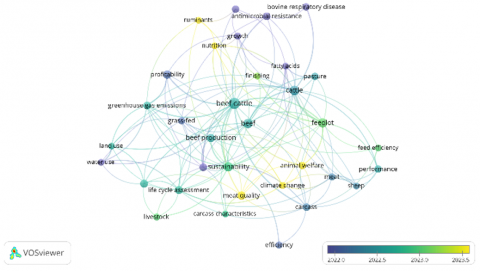
The first keyword that emerged and is interesting to research in 2023 is climate change, as shown in Figure 4. Climate change poses a pressing threat to global agriculture, including cattle fattening enterprises. These enterprises are likely to experience significant impacts from changing climatic conditions, which can affect cattle health, growth rates, feed quality, and ultimately profitability. Increased temperatures can lead to heat stress in cattle, resulting in lower feed efficiency and reduced weight gain [12, 13]. Studies have shown that as temperatures rise, cattle productivity decreases, manifesting in alterations in growth parameters and metabolic functions as they cope with thermal stress [14]. Furthermore, the interplay between climate dynamics and feed resource availability becomes crucial; erratic weather patterns can exacerbate drought and reduce forage quality, impacting the nutritional intake necessary for optimal cattle growth [15, 16].
Figure 4. Overlay visualization in VOSviewer
Water scarcity represents another significant challenge in the context of climate change that directly affects cattle fattening. With increased evaporation rates and changing precipitation patterns, the availability of water resources for cattle and crop irrigation becomes limited [17, 18]. Research has revealed that cattle fattening enterprises may face increased costs as they seek to secure reliable water sources, thereby impacting overall operational viability [19, 20]. Additionally, access to quality feed remains a critical factor. As climates become more extreme, forage yields may suffer, leading to fluctuations in feed prices and quality. An integrated approach that considers both adaptation and mitigation strategies may be necessary for farmers to navigate these challenges effectively [21].
The role of policy in addressing climate change implications is vital for the sustainability of cattle fattening enterprises. Effective policies should integrate both adaptation and mitigation strategies to enhance resilience against climate extremes. Public engagement and citizen participation in decision-making processes can bolster climate actions at local levels, facilitating smoother transitions to sustainable practices [22, 23]. Additionally, investing in innovative agricultural practices and technologies such as improved water management systems, alternative feed sources, and advanced breeding strategies can help enhance the adaptability of cattle operations [13]. Strengthening policy frameworks to incorporate these elements can ensure that cattle fattening not only survives the challenges posed by climate change but also thrives in a more sustainable manner, leading to improved economic outcomes and environmental stewardship [24]. To thrive amid these challenges, stakeholders must prioritize integrated approaches that address both immediate operational issues and long-term sustainability goals. Continuous adaptation to changing climate conditions, supported by sound policy frameworks and community engagement, will be essential to ensure the viability of cattle fattening enterprises in a climate-constrained future.
The second keyword that emerged and is interesting to research in 2023 is nutrition, as shown in Figure 4. Cattle fattening enterprises aim to enhance the growth rate and improve the overall efficiency of beef cattle production. A range of nutritional strategies is evolving in this domain, focusing on optimizing feed efficiency, addressing nutritional imbalances, and adapting to climate change. This synthesis reviews recent literature to provide insights into the nutritional management practices, challenges, and innovations in cattle fattening during this period. The nutritional strategies implemented in cattle fattening operations are pivotal for enhancing feed efficiency and animal performance. Recent studies have highlighted the effectiveness of different feed components, such as whole cottonseed, that offer a unique blend of fiber, energy, and protein. This feed shows promise for improving weight gain and feed efficiency in beef cattle, though care must be taken to balance fat intake to prevent adverse effects on rumen microbial activity and nutrient availability [25, 26]. The optimization of feed formulations is essential, as excess dietary fat can hinder fiber digestion, thus requiring precise ration balancing [26].
Research by Liu et al. [27] emphasizes the role of small peptide supplementation in improving rumen function and nutrient metabolism. By incorporating such supplements, there is potential to enhance feed conversion ratios, which is critical for achieving desired growth rates, especially during the finishing phase when high-energy diets are standard [26, 27]. The feedlot sector's dynamics are evolving with a focus on carcass-based marketing and longer feeding periods, impacting economic returns. Samuelson et al. [28] discuss how phase feeding, wherein rations are adjusted to meet the changing nutritional needs of cattle throughout their growth phases, can enhance profitability. Such strategies are particularly relevant given the rising demand for quality beef and the quest for higher ADGs.
Phase feeding is complemented by effective management of nitrogen (N) utilization. Studies indicate that improved nitrogen use efficiency is crucial for reducing environmental impacts while ensuring that dietary protein meets the needs of growing cattle without excessive excretion into the environment, which can occur with high crude protein diets [29, 30]. Both climate and environmental factors have significantly influenced cattle nutrition strategies. Drought conditions, which have periodically affected production, have necessitated adaptive measures in feed sourcing and dietary composition [31]. For instance, the integration of high-quality forages and alternative feeds, such as grain by-products and novel protein sources, has been recommended to sustain productivity even under harsh conditions [32].
In light of climate challenges, innovations in feed resources, including the use of phytogenic additives and alternative feed ingredients, have gained attention. These supplements can modify microbial populations in the rumen to improve feed efficiency and decrease nitrogen emissions, aligning with sustainability goals [30, 33]. Additionally, strategic supplementation with protein-rich forages like Gliricidia can assist cattle in tropical regions by enhancing nutrient availability during critical growth periods [34, 35]. The nutritional management of cattle fattening enterprises is aimed at improving feed efficiency, ensuring animal health, and adapting to environmental challenges. As feed composition and animal needs continue to evolve, the integration of research-driven nutritional practices will remain key to the success of beef production systems.
The third keyword that emerged and is interesting to research in 2023 is meat quality, as shown in Figure 4. The meat quality of cattle fattening enterprises is predicated on numerous factors, including genetic selection, feeding practices, pre-slaughter management, and the increasing consumer demand for higher quality beef. The role of genetic selection in enhancing meat quality has gained considerable attention in the beef industry. Advances in genomic selection allow for the identification of genetic markers associated with desirable traits such as intramuscular fat (IMF), tenderness, and overall carcass quality. Research has identified key transcription factors that regulate lipogenesis and adipogenesis, critical processes for improving IMF deposition in beef cattle, which is essential for ensuring premium meat quality [36, 37]. Similarly, genome-wide association studies (GWAS) have revealed various genetic loci affecting carcass weight and quality traits in beef populations, highlighting the potential for these technologies to improve meat attributes in cattle [38, 39].
The nutritional regimen of fattened cattle significantly affects meat quality. Studies show that the energy content of rations not only influences growth performance but also carcass characteristics and meat quality metrics. For instance, Honghe Yellow cattle exhibited changes in meat quality attributes based on the energy level of their diets, with higher energy diets leading to improved tenderness and marbling scores [40]. In addition, incorporating specific feed ingredients, such as linseed oil, has been suggested to enhance the nutritional composition of beef, impacting fatty acid profiles positively and consequently improving consumer acceptability [41]. Furthermore, recent findings suggest that cold chain management, particularly the chilling rates and methods used post-slaughter, plays a crucial role in preserving meat quality.
The pre-slaughter phase is pivotal in determining meat quality, influencing both animal welfare and economic viability. Factors such as transportation stress, lairage conditions, and environmental settings have demonstrably affected the meat quality outcomes. Studies have shown that effective management during this phase can mitigate stress and enhance meat tenderness and overall quality [42, 43]. For example, different lairage handling practices and transportation durations were correlated with variances in meat quality metrics, indicating the necessity for improved practices in this critical operational segment [44, 45].
Consumer demands are shifting towards higher-quality, sustainably produced beef. Within this context, more consumers are willing to pay a premium for beef that meets specific quality indicators, including marbling and flavor [40]. The increasing focus on health-conscious eating has pushed for beef that is not only high in quality but also nutritionally beneficial, propelling research into the gut microbiome's influence on meat quality outcomes. Emerging studies identify the gut microbiota as a critical factor in regulating meat characteristics, suggesting that interventions targeting gut health could enhance meat quality [44].
The meat quality of cattle fattening enterprises has evolved through the integration of advanced genetic tools, optimized feeding strategies, and better pre-slaughter management practices. These factors collectively respond to consumer expectations for high-quality beef, shaping the future of the cattle industry. As the market continues to demand meat that meets high standards of quality and nutrition, further research and practical implementations will be necessary to meet these challenges.
3.1 Research design, study area, and population
This study employed a survey‑based research design complemented by semi‑structured interviews to examine the strategic factors influencing the Balinese cattle fattening business in Mengwi District, Badung Regency. Survey methods are widely used in livestock systems research to capture management practices, production characteristics, and environmental challenges directly from farmers [46, 47]. Interviews were used to deepen the understanding of context‑specific issues related to cattle fattening, including feeding systems, animal health conditions, market practices, and farmer decision‑making processes. Similar combined approaches have been applied successfully in cattle production studies to capture complex biological, economic, and environmental interactions [6, 48].
The research was conducted in Mengwi District, an area characterized by mixed crop–livestock systems and smallholder‑dominated beef cattle enterprises. The study population comprised all farmers engaged in Balinese cattle fattening activities within the district. A sample of 80 breeders was selected as respondents. Livestock populations in comparable studies are typically sampled at similar scales to ensure representation while maintaining feasibility in data collection [49].
3.2 Sampling technique and data collection instruments
A purposive sampling technique was applied to identify respondents who met the predetermined criteria, namely: (1) active involvement in cattle fattening, (2) experience of at least one fattening cycle, and (3) willingness to provide accurate information. Purposive sampling is commonly used in livestock research where specific expertise or operational experience is required from respondents [7]. This method ensured that the data collected were relevant and aligned with the study objectives.
Data were collected using two primary instruments: a structured questionnaire and personal interviews. The questionnaire captured information related to internal and external factors influencing cattle fattening, including feed management, animal health, production performance, financial considerations, and marketing channels. Questionnaire‑based assessments are a standard approach in cattle fattening studies, enabling the quantification of management practices and environmental influences [50, 51]. Interviews allowed researchers to obtain qualitative insights into farmer behavior, risk perceptions, and management decisions, which are critical for comprehensive SWOT‑based analyses. Interview techniques are especially valuable in settings where literacy levels may limit the effectiveness of written surveys [51]. Data collection was conducted directly in farmer households and cattle barns to ensure accuracy and facilitate validation of responses.
3.3 Data types and analytical procedures
This study used both qualitative and quantitative elements, with emphasis on qualitative interpretation of strategic factors. The analytical procedures consisted of two stages, the first being IFE and EFE. IFE and EFE matrices were constructed to identify and score internal strengths and weaknesses, as well as external opportunities and threats affecting cattle fattening enterprises. These matrices quantify the relative influence of each factor based on weighting and rating systems, allowing comparison across diverse production and environmental conditions. IFE/EFE methodologies are widely used in livestock enterprise assessments to determine organizational competitiveness and environmental sensitivity [6, 7].
Internal factors examined included feed accessibility, maintenance ease, labor characteristics, capital requirements, and market engagement variables that have been shown to significantly influence fattening performance and profitability [52]. External factors assessed included infrastructure, government support, disease risk, land‑use change, and market competition, reflecting challenges documented in feedlot and cattle health management studies [48].
The second is SWOT analysis, following IFE and EFE evaluation. A SWOT analysis was conducted to formulate alternative development strategies for the Balinese cattle fattening business. SWOT analysis provides a structured framework for integrating internal and external factor assessments to derive strategic options. This approach has been extensively applied in livestock system planning to enhance productivity, improve feed management, and mitigate disease and environmental risks [51]. The SWOT matrix facilitated the development of four strategic categories: S–O strategies: leveraging internal strengths to capitalize on external opportunities, W–O strategies: using external opportunities to offset internal weaknesses, S–T strategies: deploying internal strengths to mitigate external threats, W–T strategies: defensive actions to minimize the combined impact of weaknesses and threats. These strategic outputs serve as the foundation for designing actionable policy recommendations and intervention programs tailored to smallholder fattening systems.
The IFE and EFE factors were derived directly from the original questionnaire by compiling farmers’ responses to a series of internal and external variables assessed using a Likert‑scale format. Each factor’s importance was first quantified by calculating the mean score across all respondents, after which these mean values were standardized to produce weights that collectively sum to 1.00 within each category of SWOT. Ratings were also based on mean responses, reflecting how effectively each internal factor is managed or how each external factor affects the business environment. Final scores were obtained by multiplying the weight of each factor by its rating, allowing the aggregated IFE and EFE values to represent the overall strategic position of the cattle‑fattening enterprise.
3.4 Ethical considerations
All interviews and surveys were conducted with informed consent from the participating farmers. Written informed consent forms were provided to cattle farmers, and only those who agreed had their data collected. Respondents were assured that their information would be used exclusively for research purposes and handled with strict confidentiality. This methodological approach adheres to established ethical standards for human‑subject research within agricultural and rural development contexts.
4.1 Internal Factor Evaluation
The IFE analysis identified six strengths and six weaknesses associated with Balinese cattle fattening enterprises in Mengwi District. These factors were derived from interviews with farmers and local stakeholders, encompassing aspects of cattle management, feeding practices, weight gain performance, reproductive characteristics, health management, and marketing channels. The calculated weighted scores, as shown in Table 1, indicate that the cumulative strength score (4.176) exceeds the cumulative weakness score (3.685), resulting in a positive internal strategic value of 0.491. This suggests that internal advantages currently outweigh constraints in the operational environment of the fattening business.
In Table 1, the factors “Ease of maintenance” and “Convenience in the preparation of feed” each carry a weight of 0.20, meaning that together they account for 0.40, or 40% of the total weighted importance among all identified strengths. This dominant proportion reflects the actual perceptions expressed by farmers during interviews, who consistently emphasized that simple management routines and readily available feed resources are the most influential determinants of successful cattle‑fattening operations. The reasons behind this weighting distribution are elaborated in the discussion, where farmers’ prioritization of practical, time‑efficient husbandry practices is shown to significantly shape the strategic strength profile of the enterprise.
Among the identified strengths, the ease of maintenance and convenience of feed preparation received the highest weighted scores. These findings are consistent with previous studies showing that simplified management practices and feed accessibility significantly enhance cattle production efficiency [53]. Similarly, relatively high selling prices and rapid capital turnover further reinforce the economic attractiveness of Balinese cattle fattening systems, aligning with profitability analyses reported by Mayulu et al. [54]. The short maintenance period characteristic of Balinese cattle also provides a biological advantage, as efficient growth rates contribute to improved production cycles, an aspect widely recognized in studies of feedlot performance and slaughter optimization.
Table 1. Internal Factor Evaluation (IFE) matrix for Bali cattle fattening business
|
No. |
Strengths (S) |
Weight |
Rating |
Score |
|
1 |
Ease of maintenance |
0.20 |
5 |
1.00 |
|
2 |
Convenience in the preparation of feed |
0.20 |
5 |
1.00 |
|
3 |
Ease of selling |
0.167 |
4 |
0.668 |
|
4 |
The selling price is relatively high |
0.161 |
4 |
0.668 |
|
5 |
Speed in return on capital |
0.161 |
3 |
0.483 |
|
6 |
The maintenance is relatively short |
0.119 |
3 |
0.357 |
|
|
Total Strengths |
1.00 |
|
4.176 |
|
No. |
Weakness (W) |
Weight |
Rating |
Score |
|
1 |
The high price of feeder cattle |
0.20 |
3 |
0.6 |
|
2 |
The amount of capital in the cattle-fattening business |
0.20 |
3 |
0.6 |
|
3 |
A low number of cows are raised |
0.16 |
5 |
0.8 |
|
4 |
Raising cattle only as a part-time |
0.16 |
5 |
0.8 |
|
5 |
Lack of interest of youth in fattening efforts |
0.167 |
3 |
0.501 |
|
6 |
The age of the breeder is quite old |
0.128 |
3 |
0.384 |
|
|
Total Weakness |
1.00 |
|
3.685 |
|
|
X = Stregnhts – Weakness = 4.176-3.685 =0.491 |
|
|
|
Conversely, several weaknesses highlight systemic and structural challenges. The high price of feeder stock and substantial initial capital requirements impose financial barriers, particularly for small-scale farmers. These findings echo earlier observations that capital intensity remains a major constraint in beef cattle enterprises across developing regions [54]. Additionally, the low number of cattle raised per household and the predominance of part‑time cattle raising reflect labor and resource limitations. The advanced age of farmers and declining youth participation pose further threats to long‑term sustainability, a trend also reported in livestock sectors elsewhere in Indonesia [55]. Collectively, these weaknesses indicate potential vulnerabilities in human resources and enterprise scaling, consistent with broader findings on technical efficiency constraints in mixed smallholder systems [53].
4.2 External Factor Evaluation
The EFE matrix reveals six opportunities and three threats influencing the cattle fattening sector, as shown in Table 2. The total opportunity score (4.196) far exceeds the threat score (2.400), producing a positive value of 1.79. This dominant opportunity profile indicates that the external environment is broadly favorable for enterprise growth. Among the most significant opportunities are castration practices, optimal feeding, and the predominance of male cattle in fattening herds. Castration and diet optimization are widely associated with higher weight gain efficiency and improved carcass characteristics [56, 57]. Increased feeding precision, particularly when matched with breed‑specific nutritional requirements, has been shown to significantly enhance feed conversion and growth outcomes [58, 59]. The availability of government‑provided medicines and vaccines further strengthens disease prevention efforts, reducing morbidity risks and supporting consistent production an important factor given the strong link between health management and productivity [6, 60].
Table 2. External Factor Evaluation (EFE) matrix Bali cattle fattening business
|
No. |
Opportunities (O) |
Weight |
Rating |
Score |
|
1 |
Animal husbandry counselling |
0.166 |
3 |
0.498 |
|
2 |
Adequate infrastructure |
0.166 |
3 |
0.498 |
|
3 |
Castration |
0.200 |
5 |
1 |
|
4 |
Optimal feeding |
0.200 |
5 |
1 |
|
5 |
Male sex |
0.200 |
5 |
1 |
|
6 |
Providing free medicines and vaccines from the government |
0.068 |
3 |
0.20 |
|
|
Total Opportunities |
1.00 |
|
4.196 |
|
No. |
Threats (T) |
Weight |
Rating |
Score |
|
1 |
Age limitations of the workforce |
0.40 |
3 |
1.2 |
|
2 |
Competition with other businesses |
0.32 |
2 |
0.64 |
|
3 |
There is a land-use change |
0.28 |
2 |
0.56 |
|
|
Total Threats |
1.00 |
|
2.4 |
|
|
Y = Opportunities – Treaths = 4.196-2.4 = 1.79 |
|
|
|
Infrastructure adequacy and the presence of livestock extension programs also contribute positively to opportunities. Extension services play a crucial role in bridging knowledge gaps in animal management and nutrition, which is essential for improving technical competencies among breeders [55]. Adequate physical infrastructure similarly enhances market access, feed distribution, and overall enterprise efficiency. Despite these positive factors, several threats must be acknowledged. Labor age constraints constitute a major external challenge, particularly in rural areas where livestock farming is heavily reliant on aging farmers. Competition from alternative economic sectors and land‑use change primarily for residential and commercial development further threatens the availability of land resources essential for cattle operations. Land‑use dynamics have previously been identified as key structural constraints affecting cattle production systems in various countries [61, 62]. If not mitigated, these threats may hinder the long‑term resilience of Balinese cattle fattening enterprises.
4.3 SWOT quadrant positioning and strategic implications
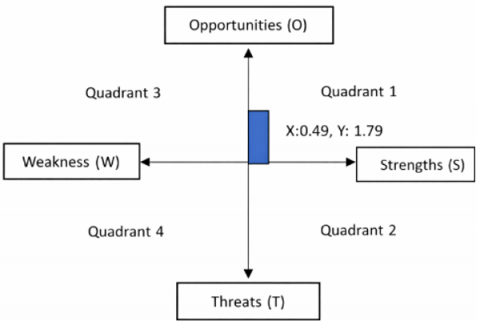
The combined IFE (X = 0.491) and EFE (Y = 1.79) scores place the Balinese cattle fattening business in Quadrant I of the SWOT strategic matrix (Figure 5). Quadrant I indicates a “growth and build” strategy, where strong internal capacities coincide with favorable external opportunities. This strategic position implies that enterprises in Mengwi District are well‑situated to pursue aggressive development through market expansion, productivity enhancement, and investment in technical improvements.
Figure 5. SWOT analysis quadrant
The strength‑opportunity alignment suggests that improving feed quality, adopting more effective fattening technologies, and optimizing herd management could substantially enhance fattening performance. Previous research supports the idea that combining strong internal management with external incentives such as improved health services and feed resources leads to significant productivity gains [6, 59]. Additionally, leveraging high market prices and efficient capital turnover can increase profitability, reinforcing findings from profitability analyses in similar production systems [54].
Nevertheless, the presence of weaknesses and threats indicates the need for integrated mitigation strategies. Addressing capital limitations through cooperative financing models, encouraging youth participation, and promoting land‑use protections could help stabilize the sector. These measures align with broader recommendations for strengthening cattle production in smallholder-dominated regions [53, 55].
4.4 Integrated SWOT strategy formulation
The SWOT analysis combined internal and external factors to generate four strategic alternatives for developing the Balinese cattle fattening business in Mengwi District (Table 3). Each strategic quadrant, S–O, W–O, S–T, and W–T, provides a framework for enhancing productivity, mitigating constraints, and positioning the enterprise for sustainable development. The Strengths–Opportunities (S–O) strategy focuses on maximizing existing strengths to exploit favorable external conditions. Key strategies include optimizing land potential for productive feeding systems, enhancing market information, and expanding castration services for male cattle. These findings align with the argument that effective utilization of natural resources and managerial strengths significantly contributes to enterprise growth [63]. Furthermore, castration of bulls is widely recognized to improve fattening performance and carcass quality, thereby increasing economic returns for farmers [64].
Table 3. Analysis of the SWOT matrix of the Balinese cattle fattening business in Mengwi District, Badung
|
Factor – Internal |
Strengths (S) |
Weaknesses (W) |
|
|
|
|
|
Opportunities (O) |
Strategy S–O |
Strategy W–O |
|
|
|
|
Strategy S–T |
Strategy S–T |
|
|
|
Land use efficiency, especially within crop‑livestock integrated systems, remains central in sustainable fattening operations. Evidence from mixed farming systems shows that efficient land allocation for grazing and forage production supports cattle growth while maintaining ecological balance [65]. The S–O strategy also highlights the importance of establishing reliable marketing networks to meet market demand and stabilize income. This supports earlier findings that market access, selling price transparency, and buyer connectivity are essential components of a profitable fattening enterprise [64, 66]. Overall, the S–O strategies underscore the importance of capitalizing on farmers’ strengths, such as ease of cattle maintenance, feeding convenience, and favorable selling prices, to utilize structural opportunities in infrastructure, extension services, and animal health support.
The Weakness–Opportunities (W–O) strategies are aimed at minimizing internal limitations through the utilization of external support. These include providing training on cattle fattening management, increasing calf availability through improved reproductive technologies such as artificial insemination (AI), and conducting targeted counselling on disease prevention, such as foot‑and‑mouth disease (FMD). The profile of respondents dominated by elementary‑school‑educated farmers suggests limited technical capacity, consistent with observations in other smallholder cattle systems [63, 65]. Consequently, frequent extension programs and digital literacy training are essential to enhance managerial and technical skills, particularly as digital transformation becomes increasingly relevant for improving technical and allocative efficiency [67]. Government‑supported capacity‑building programs serve as an additional opportunity to address weaknesses such as limited herd size, high capital demands, and part‑time cattle raising. Strengthening farmer competencies in feed formulation, disease management, and business planning has been shown to significantly enhance productivity and income stability [68].
The Strengths–Threat (S–T) strategies emphasize deploying internal strengths to overcome external risks, such as aging labor, competition from other sectors, and land‑use changes. Primary S–T strategies include optimizing land use for fattening activities and collaborating with local government institutions to enhance cattle productivity. Livestock productivity, particularly growth rate and body weight gain, is shaped predominantly by environmental factors (70%), with feed quality contributing approximately 60–70% of this influence [66, 69]. This indicates that even with favorable genetic potential, productivity will not be maximized unless feed quality and availability are ensured. Hence, the use of farmers’ strengths such as efficient feeding practices and short cattle maintenance periods provides an effective mechanism to counteract external challenges such as limited land availability or labor shortages. The S–T strategy also includes transforming marketing systems from traditional to modern retail chains, which can enhance market stability and competitiveness. Modern supply chains improve price transparency, traceability, and quality assurance factors that are increasingly important as market standards evolve [65].
The Weakness–Threats (W–T) strategy represents a defensive approach aimed at preventing the simultaneous impact of internal weaknesses and external threats. Recommended actions include strengthening livestock institutions such as farmer groups, encouraging policy reforms that support beef cattle development, and maximizing the function of regional animal health facilities. Strong institutional support has been shown to facilitate knowledge transfer, collective action, and information sharing among farmers [70]. Farmer groups also serve as a platform for disseminating innovations, improving negotiation power, and strengthening resilience against environmental and economic shocks. Ensuring the optimal use of animal health posts and maintaining coordination with the 24 regional livestock and animal health agencies are essential for improving disease surveillance, prevention, and response capacities. This is particularly critical in the context of increasing climate‑related health stresses [71], as well as rising biosecurity risks associated with intensified production systems.
Global research trends such as the growing emphasis on climate change, sustainable livestock systems, and nutrition optimization closely intersect with local challenges faced by Balinese cattle fattening enterprises. Worldwide, studies highlight how rising temperatures, shifting rainfall patterns, and emerging disease pressures affect cattle health and productivity—issues that are increasingly evident in Bali’s mixed crop–livestock landscapes, where limited land access and climate‑related stressors reduce feed availability and increase disease risk. Likewise, the global focus on “nutrition optimization,” which involves precision feeding, improved ration balancing, and the use of locally available feed resources, provides a scientific foundation for local “optimal feeding” strategies. These global insights guide farmers in Mengwi District to formulate more efficient feed combinations, improve feed conversion, and enhance weight‑gain performance despite resource constraints. By aligning global research priorities with local conditions, Bali’s cattle fattening systems can better adapt to environmental pressures while improving productivity and long‑term sustainability.
This study provides a comprehensive assessment of the sustainability and strategic positioning of cattle fattening enterprises by integrating global bibliometric trends with an in‑depth case study of Balinese fattening systems. The bibliometric analysis demonstrates that scientific interest in cattle fattening has intensified over the last decade, with growing emphasis on sustainability, nutrition, climate change, animal welfare, and production efficiency. Network visualization results reinforce this pattern, highlighting increasingly interconnected research domains involving feed efficiency, meat quality, life‑cycle assessment, and environmental performance. These insights reveal that global research is shifting toward multidimensional frameworks that simultaneously address productivity, environmental stewardship, and animal health an evolution that directly aligns with the challenges faced by smallholder systems such as those in Mengwi District.
At the local level, the IFEs and EFEs show that Balinese cattle fattening enterprises possess substantial operational strengths, including ease of maintenance, accessible feed resources, attractive selling prices, and rapid capital turnover. External conditions such as government veterinary support, infrastructure improvements, and the predominance of male cattle further enhance development potential. However, weaknesses involving limited herd sizes, aging farmers, high feeder prices, and youth disengagement, combined with threats such as land‑use change and competition from other economic sectors, pose real challenges. The SWOT analysis positions the enterprise within a “growth and build” quadrant, indicating that the alignment between internal capacity and external opportunity is strong, yet strategic interventions remain necessary. Recommended strategies include strengthening extension services, improving reproductive technologies, enhancing land-use efficiency, modernizing marketing systems, and reinforcing institutional collaboration all of which can help the sector transition toward greater resilience and competitiveness.
Overall, this study advances existing knowledge by offering the first integrated approach that combines bibliometric mapping with a strategic case analysis to evaluate the sustainability of cattle fattening enterprises. This dual-method framework not only situates local challenges within global research trajectories but also provides a holistic basis for policy formulation and enterprise development. The findings underscore the need for continued innovation in feed management, climate adaptation, genetic improvement, and farmer capacity-building.
[1] Agustiar, R., Triatmojo, A., Guntoro, B., Baliarti, E. (2023). Industrial analysis of cattle feedlot companies in Indonesia. IOP Conference Series: Earth and Environmental Science, 1241: 012041. https://doi.org/10.1088/1755-1315/1241/1/012041
[2] Beck, P.A., Horn, G., Kegley, E.B., Powell, J.G., Rivera, D. (2019). 74 Stocker management and impacts on health and subsequent feedlot performance. Journal of Animal Science, 97(Supplement_1): 23-24. https://doi.org/10.1093/jas/skz053.052
[3] Bernardes, T., Castro, T., Da Luz, M. (2022). PSVIII-B-11 grain processing methods and fiber sources in the Brazilian beef feedlots. Journal of Animal Science, 100(Suppl 3): 315. https://doi.org/10.1093/jas/skac247.575
[4] Cappellozza, B.I., Cooke, R.F., Harvey, K.M. (2021). Omega-6 fatty acids: A sustainable alternative to improve beef production efficiency. Animals, 11(6): 1764. https://doi.org/10.3390/ani11061764
[5] Griebenow, R.L., Martz, F.A., Morrow, R.E. (1997). Forage‐based beef finishing systems: A review. Journal of Production Agriculture, 10(1): 84-91. https://doi.org/10.2134/jpa1997.0084
[6] Delabouglise, A., James, A., Valarcher, J.F., Hagglünd, S., Raboisson, D., Rushton, J. (2017). Linking disease epidemiology and livestock productivity: The case of bovine respiratory disease in France. PLoS One, 12(12): e0189090. https://doi.org/10.1371/journal.pone.0189090
[7] Alexander, T.W., Timsit, E., Amat, S. (2020). The role of the bovine respiratory bacterial microbiota in health and disease. Animal Health Research Reviews, 21(2): 168-171. https://doi.org/10.1017/s1466252320000316
[8] Senturklu, S., Landblom, D., Stokka, G., Cihacek, L. (2022). Perspective chapter: Alternative intensive animal farming tactics that minimize negative animal impact and improve profitability. In Intensive Animal Farming-A Cost-Effective Tactic. IntechOpen. https://doi.org/10.5772/intechopen.108339
[9] Holland, B.P., Wesley, K.R., Word, A.B., Maxwell, C. (2021). 76 Cattle production’s response to packing capacity disruption. Journal of Animal Science, 99(Supplement_3): 41-42. https://doi.org/10.1093/jas/skab235.072
[10] Place, S.E. (2024). 8 Opportunities in enteric methane emissions mitigation in beef cattle. Journal of Animal Science, 102(Suppl 1): 41. https://doi.org/10.1093/jas/skae019.047
[11] Ridoutt, B. (2024). Pathways toward climate-neutral red meat production. Methane, 3(3): 397-409. https://doi.org/10.3390/methane3030022
[12] Hoppe, T., van den Berg, M.M., Coenen, F.H. (2014). Reflections on the uptake of climate change policies by local governments: Facing the challenges of mitigation and adaptation. Energy, Sustainability and Society, 4(1): 8. https://doi.org/10.1186/2192-0567-4-8
[13] Pramova, E., Locatelli, B., Di Gregorio, M., Brockhaus, M. (2020). Usual and unusual suspects: What network analysis can tell us about climate policy integration. CIFOR. https://doi.org/10.17528/cifor/007592
[14] Ayers, J.M., Huq, S. (2009). The value of linking mitigation and adaptation: A case study of Bangladesh. Environmental Management, 43(5): 753-764. https://doi.org/10.1007/s00267-008-9223-2
[15] Antwi-Agyei, P., Dougill, A.J., Stringer, L.C. (2017). Assessing coherence between sector policies and climate compatible development: Opportunities for triple wins. Sustainability, 9(11): 2130. https://doi.org/10.3390/su9112130
[16] Huang-Lachmann, J.T., Guenther, E. (2020). From dichotomy to an integrated approach: Cities’ benefits of integrating climate change adaptation and mitigation. Sustainability, 12(18): 7591. https://doi.org/10.3390/su12187591
[17] Kooffreh, B.E., Anyatang, B.F., Aminone, V.T. (2023). The inaction in climate change adaptation and mitigation in Sub-saharan Africa: Some policy and legal issues. Environmental Policy and Law, 53(2-3): 197-204. https://doi.org/10.3233/epl-230079
[18] Eitan, A. (2021). Promoting renewable energy to cope with climate change—Policy discourse in Israel. Sustainability, 13(6): 3170. https://doi.org/10.3390/su13063170
[19] Locatelli, B., Evans, V., Wardell, A., Andrade, A., Vignola, R. (2011). Forests and climate change in Latin America: Linking adaptation and mitigation. Forests, 2(1): 431-450. https://doi.org/10.3390/f2010431
[20] Olaru, B.G., Bănacu, C.S. (2018). Climate change policies in the European Union. The Annals of “Dunarea de Jos” University of Galati. Fascicle IX, Metallurgy and Materials Science, 41(4): 35-40. https://doi.org/10.35219/mms.2018.4.05
[21] Chitsa, M., Sivapalan, S., Singh, B.S.M., Lee, K.E. (2022). Citizen participation and climate change within an urban community context: Insights for policy development for bottom-up climate action engagement. Sustainability, 14(6): 3701. https://doi.org/10.3390/su14063701
[22] Locatelli, B., Pavageau, C., Pramova, E., Gregorio, M.D. (2015). Integrating climate change mitigation and adaptation in agriculture and forestry: Opportunities and trade‐offs. WIREs Climate Change, 6(6): 585-598. https://doi.org/10.1002/wcc.357
[23] Kalafatis, S.E. (2017). Identifying the potential for climate compatible development efforts and the missing links. Sustainability, 9(9): 1642. https://doi.org/10.3390/su9091642
[24] De Cian, E., Hof, A.F., Marangoni, G., Tavoni, M., Van Vuuren, D.P. (2016). Alleviating inequality in climate policy costs: An integrated perspective on mitigation, damage and adaptation. Environmental Research Letters, 11(7): 074015. https://doi.org/10.1088/1748-9326/11/7/074015
[25] Rigney, D.N., Patel, S.J., Koebernick, J.C., Mullenix, K.K., Smith, B.B. (2025). 19 In vitro true digestibility and fat composition of whole cottonseed. Journal of Animal Science, 103(Supplement_2): 110-110. https://doi.org/10.1093/jas/skaf170.127
[26] Costa-Roura, S., Villalba, D., Blanco, M., Casasús, I., Balcells, J., Seradj, A.R. (2021). Ruminal microbiota is associated with feed-efficiency phenotype of fattening bulls fed high-concentrate diets. Animal Production Science, 62(14): 1344-1352. https://doi.org/10.1071/an20344
[27] Liu, E., Sun, S., Deng, Y., Liu, J., Xue, J., Li, M., Xue, F. (2025). Reciprocal regulation of rumen microbiota and epithelial genes in response to small peptide supplementation for feed efficiency in beef cattle. Frontiers in Veterinary Science, 12: 1714827. https://doi.org/10.3389/fvets.2025.1714827
[28] Samuelson, K.L., Turner, H.R., Velasquez, T.A. (2025). 284 Nutrient density on arrival and phase-feeding effects on economic returns of feedlot cattle. Journal of Animal Science, 103(Supplement_3): 82-83. https://doi.org/10.1093/jas/skaf300.103
[29] Arias, R.A., Velásquez, A., Toneatti, M. (2013). Simulation of the nitrogen use efficiency in pasture-finished steers in southern Chile. Archivos de Medicina Veterinaria, 45(2): 125-134. https://doi.org/10.4067/s0301-732x2013000200003
[30] Siniscalchi, D., Camargo, K.D.V, Fonseca, N.V.B., Castro, M.A.O., Dornellas, I.A., Souza, W.A.D., Vecchio, L.S.D., Vicente, C.E., Prados, L.F., Paulino, P.V.R., Granja-Salcedo, Y.T., Reis, R.A. (2023). Effects of different supplementations during the rainy season on nitrogen metabolism of beef cattle steers on tropical pasture. Journal of Animal Science, 101. https://doi.org/10.1093/jas/skad281.600
[31] Beck, P.A., Beck, M.R., Gunter, S.A., Lalman, D.L., Prather, R. (2024). 406 Impacts of drought on long term cow-calf productivity and potential management strategies for producers to overcome these challenges. Journal of Animal Science, 102(Supplement_3): 96-97. https://doi.org/10.1093/jas/skae234.111
[32] Tedeschi, L.O. (2020). 351 Awardee talk: How retained energy and protein affects the determination of energy and protein requirements for growth. Journal of Animal Science, 98(Supplement_4): 84-85. https://doi.org/10.1093/jas/skaa278.154
[33] Jiao, C., Cui, C., Qi, Y., Zhang, M., Zhao, P., Chen, S., Wang, X., Hu, J., Shi, B., Liu, T., et al. (2025). Effects of partial silage replacement with corn stover pellets on the rumen microbiota and serum metabolome of breeding cows. Frontiers in Microbiology, 16: 1533851. https://doi.org/10.3389/fmicb.2025.1533851
[34] Hidayat, Z., Nuraini, N., Rubiyo, Mariyono, M. (2021). Response of young Bali bulls given Gliricidia and Cassava leaves in rations as a substitute for grass in Bangka Belitung. In E3S Web of Conferences, 306: 05009. https://doi.org/10.1051/e3sconf/202130605009
[35] Park, B.K., Chu, G.M. (2023). Effect of supplementation of rumen-protected choline with soluble vitamins on hepatic function and carcass characteristics in Hanwoo steers. Journal of Animal and Feed Sciences, 32(3): 297-305. https://doi.org/10.22358/jafs/159389/2023
[36] Rezende, F.M., Rodriguez, E., Leal-Gutiérrez, J.D., Elzo, M.A., Johnson, D.D., Carr, C., Mateescu, R.G. (2021). Genomic approaches reveal pleiotropic effects in crossbred beef cattle. Frontiers in Genetics, 12: 627055. https://doi.org/10.3389/fgene.2021.627055
[37] Abebe, B.K., Wang, H., Li, A., Zan, L. (2024). A review of the role of transcription factors in regulating adipogenesis and lipogenesis in beef cattle. Journal of Animal Breeding and Genetics, 141(3): 235-256. https://doi.org/10.1111/jbg.12841
[38] Amorim, S.T., Stafuzza, N.B., Kluska, S., Peripolli, E., Pereira, A.S.C., Silveira, L.F.M., Albuquerque, L.G., Baldi, F. (2022). Genome‐wide interaction study reveals epistatic interactions for beef lipid‐related traits in Nellore cattle. Animal Genetics, 53(1): 35-48. https://doi.org/10.1111/age.13124
[39] Adhikari, M., Kantar, M.B., Longman, R.J., Lee, C.N., Oshiro, M., Caires, K., He, Y. (2023). Genome-wide association study for carcass weight in pasture-finished beef cattle in Hawai’i. Frontiers in Genetics, 14: 1168150. https://doi.org/10.3389/fgene.2023.1168150
[40] Han, L., Ye, Y., Fu, R., Fu, B., Gao, H., Li, Z., Liu, D., Leng, J. (2024). Impact of various ration energy levels on the slaughtering performance, carcass characteristics, and meat qualities of Honghe yellow cattle. Foods, 13(9): 1316. https://doi.org/10.3390/foods13091316
[41] Rosa, B.L., de Oliveira, E.A., Henrique, W., Pivaro, T.M., Mota, D.A., Messias, C.T., de Marchi, P.G.F., Silva, L.A., de Souza Araújo, D.S. (2021). Carcass and beef quality of crossbred cattle fed increasing linseed oil levels. Semina: Ciências Agrárias, 42(6SUPL2): 3901-3918. https://doi.org/10.5433/1679-0359.2021v42n6supl2p3901
[42] Sullivan, P., Davis, M., Bretón, J., Edwards-Callaway, L. (2022). Investigating the impact of pre-slaughter management factors on meat quality outcomes in cattle raised for beef: A scoping review. Frontiers in Animal Science, 3: 1065002. https://doi.org/10.3389/fanim.2022.1065002
[43] Davis, M.K., Sullivan, P.A., Hess, A.M., Nair, M.N., Mooney, D.F., Edwards-Callaway, L.N. (2024). An analysis of the influence of preslaughter management factors on welfare and meat quality outcomes in fed beef cattle in the United States. Translational Animal Science, 8: txae108. https://doi.org/10.1093/tas/txae108
[44] Wen, C., Wang, Q., Gu, S., Jin, J., Yang, N. (2024). Emerging perspectives in the gut–muscle axis: The gut microbiota and its metabolites as important modulators of meat quality. Microbial Biotechnology, 17(1): e14361. https://doi.org/10.1111/1751-7915.14361
[45] Wicks, J.C., Wivell, A.L., Beline, M., Zumbaugh, M.D., Bodmer, J., Yen, C., Johnson-Schuster, C., Wilson, T.B., Greiner, S.P., Johnson, S., Shi, T.H., Silva, S.L., Gerrard, D.E (2024). Determining muscle plasticity and meat quality development of low-input extended fed market-ready steers. Translational Animal Science, 8: txae064. https://doi.org/10.1093/tas/txae064
[46] Kučević, D., Papović, T., Tomović, V., Plavšić, M., Jajić, I., Krstović, S., Stanojević, D. (2019). Influence of farm management for calves on growth performance and meat quality traits duration fattening of Simmental bulls and heifers. Animals, 9(11): 941. https://doi.org/10.3390/ani9110941
[47] Ostojić-Andrić, D., Aleksić, S., Petrovic, М.M., Pantelić, V., Stanišić, N., Caro-Petrović, V., Nikšić, D., Petričević, M. (2015). Beef cattle welfare: Risks and assurance. Biotechnology in Animal Husbandry, 31(3): 313-326. https://doi.org/10.2298/bah1503313o
[48] Mansilla, F.I., Ficoseco, C.A., Miranda, M.H., Puglisi, E., Nader-Macías, M.E.F., Vignolo, G.M., Fontana, C.A. (2022). Administration of probiotic lactic acid bacteria to modulate fecal microbiome in feedlot cattle. Scientific Reports, 12(1): 12957. https://doi.org/10.1038/s41598-022-16786-z
[49] Habib, M.R., Baticados, E.J.N., Capareda, S.C. (2022). Particulate matter emission factors for dairy facilities and cattle feedlots during summertime in Texas. International Journal of Environmental Research and Public Health, 19(21): 14090. https://doi.org/10.3390/ijerph192114090
[50] LeJeune, J.T., Besser, T.E., Rice, D.H., Berg, J.L., Stilborn, R.P., Hancock, D.D. (2004). Longitudinal study of fecal shedding of Escherichia coli O157: H7 in feedlot cattle: Predominance and persistence of specific clonal types despite massive cattle population turnover. Applied and Environmental Microbiology, 70(1): 377-384. https://doi.org/10.1128/aem.70.1.377-384.2004
[51] Arnett, A.M., Daniel, M.J., Dikeman, M.E. (2008). Restricting Vitamin A in cattle diets improves beef carcass marbling and USDA quality and yield grades. Kansas Agricultural Experiment Station Research Reports, (1): 24-27. https://doi.org/10.4148/2378-5977.1508
[52] Basalan, M., Ekinci, O.A. (2020). 209 Appropriation of feedlot rations’ nutrient levels of imported cattle in central region of Turkey. Journal of Animal Science, 98(Supplement_4): 149-149. https://doi.org/10.1093/jas/skaa278.272
[53] Sudrajat, G., Mulatsih, S., Asmara, A. (2019). Technical efficiency of beef cattle production in West Nusa Tenggara. IJSRSET, 6: 498-510. https://doi.org/10.32628/ijsrset196196
[54] Mayulu, H., Puteri, S.S.A., Anindyasari, D., Daru, T.P., Tricahyadinata, I., Christiyanto, M., Rorimpandey, B. (2024). Profitability analysis of beef cattle fattening businesses. Technium Business and Management, 8: 25-33. https://doi.org/10.47577/business.v8i.11295
[55] Widyanti, O.N., Sukmawati, A., Dirdjosuparto, S. (2019). Strategies for the fulfillment of animal nutritionist competency needs at feedloters in Indonesia. Buletin Peternakan, 43(1): 79-85. https://doi.org/10.21059/buletinpeternak.v43i1.35969
[56] Ertürk, Y.E. (2018). Description of factors influencing final fattening weight in domestic beef cattle breeds through MARS Algorithm. Pakistan Journal of Zoology, 50(5): 1731-1737. https://doi.org/10.17582/journal.pjz/2018.50.5.1731.1737
[57] Nisar, A.B., Pasha, T.N., Rashid, M.A., Bilal, M., Malik, M.I., Naqvi, Z.B. (2024). Evaluation of soybean hulls as replacement of energy concentrates: Effects on intake, growth performance and selected blood metabolites of male Sahiwal calves. Insights in Animal Science, 1(2): 1-8. https://doi.org/10.69917/ias.01.02-02
[58] Nusri-Un, J., Kabsuk, J., Binsulong, B., Sommart, K. (2024). Effects of cattle breeds and dietary energy density on intake, growth, carcass, and meat quality under Thai feedlot management system. Animals, 14(8): 1186. https://doi.org/10.3390/ani14081186
[59] Xu, H., Wang, G., Gao, Q., Liu, Z., Jia, J., Xu, Y., Chen, Z., Li, B., Li, C. (2025). Microbial insights into ruminal fiber degradation and feed efficiency of Hu sheep. Frontiers in Microbiology, 16: 1561336. https://doi.org/10.3389/fmicb.2025.1561336
[60] Zhao, Y., Xia, Z., Pi, Z., Tian, Z., Zhou, Y., Liu, R., Shi, Q., Xiang, Z., Guo, A., Chen, Y. (2025). Seroprevalence and risk factors for bovine tuberculosis and brucellosis in beef and dairy cattle in Hubei Province, China. One Health Advances, 3(1): 26. https://doi.org/10.1186/s44280-025-00093-z
[61] Tozer, P., Marsh, T.L. (2012). Domestic and trade impacts of foot‐and‐mouth disease on the Australian beef industry. Australian Journal of Agricultural and Resource Economics, 56(3): 385-404. https://doi.org/10.1111/j.1467-8489.2012.00586.x
[62] Netthisinghe, A.M.P., Cook, K.L., Gilfillen, R.A., Woosley, P.B., Kingery, T., Sistani, K.R. (2018). Managing beef backgrounding residual soil contaminants by alum and biochar amendments. Journal of Environmental Quality, 47(5): 1275-1283. https://doi.org/10.2134/jeq2018.02.0088
[63] Rahman, M.M. (2021). Socio economic status of beef fattened farmers of Kaunia upazila at Rangpur district of Bangladesh. Journal of Agriculture, Food and Environment, 2(3): 38-44. https://doi.org/10.47440/jafe.2021.2307
[64] Indrawirawan, Suwignyo, B., Kusumastuti, T.A. (2022). Smallholder planning for Bali cattle fattening in Barru Regency, South Sulawesi, Indonesia. IOP Conference Series: Earth and Environmental Science, 951(1): 012020. https://doi.org/10.1088/1755-1315/951/1/012020
[65] Islam, M.S., Hossain, M.M., Akhter, S., Al Noman, M.A., Goswami, P.K., Hashem, M.A. (2022). Indigenous beef cattle production scenario in Bangladesh. Meat Research, 2(4). https://doi.org/10.55002/mr.2.4.29
[66] Mekuriaw, A., Taye, M., Tegegne, F. (2023). Characteristics of the cattle fattening system and body conformation of beef cattle in Bahir dar special zone, Amhara regional state, Ethiopia. Journal of Agriculture and Environmental Sciences, 8(2): 55-69. https://doi.org/10.4314/jaes.v8i2.4
[67] Xue, Y., Qi, Z., Yan, J., Li, D., Zhao, H., Zheng, H. (2024). Technical efficiency and allocative efficiency of beef cattle fattening in the content of digital economy: An empirical study based on survey in China. Agriculture, 14(7): 1007. https://doi.org/10.3390/agriculture14071007
[68] Kusmartono, K., Mashudi, M., Ndaru, P.H. (2023). Toward sustainable feeding systems of Madura cattle: A case study in Bangkalan regency. In 3rd International Conference on Environmentally Sustainable Animal Industry 2022 (ICESAI 2022), Atlantis Press, pp. 8-17. https://doi.org/10.2991/978-94-6463-116-6_3
[69] Livesay, E.A. (1940). Finishing two-year-old steers with grass and grain. Agricultural Experiment Station, College of Agriculture, Forestry and Home Economics, West Virginia University. https://doi.org/10.33915/agnic.296
[70] Skoupá, K., Šťastný, K., Sládek, Z. (2022). Anabolic steroids in fattening food-producing animals—A review. Animals, 12(16): 2115. https://doi.org/10.3390/ani12162115
[71] Rahman, M.M., Ahmad, S., Mahmud, A.S., Hassanuzzaman, M., Nahian, M.A., Ahmed, A., Nahar, Q., Streatfield, P.K. (2019). Health consequences of climate change in Bangladesh: An overview of the evidence, knowledge gaps and challenges. Wiley Interdisciplinary Reviews: Climate Change, 10(5): e601. https://doi.org/10.1002/wcc.601