Johonathan Salazar-Campos* | Orlando Salazar-Campos | Julissa Salazar
© 2024 The authors. This article is published by IIETA and is licensed under the CC BY 4.0 license (http://creativecommons.org/licenses/by/4.0/).
OPEN ACCESS
Countries around the world are seeking to diversify their energy sources by using renewable energy. This study adopts a sustainability approach to analyze the environmental impacts of used vegetable oils, from their disposal, through their conversion into biodiesel, to their emissions analysis. This study also examines its implications for the 2030 Agenda and global planetary boundaries, and finally explores the Peruvian energy sector as a case study. The selected literature prioritizes the reuse of used vegetable oils to mitigate urban sanitation problems. It highlights that the quality of biodiesel is closely linked to the degree of denaturation of the used oil and the processing technology and that emissions vary depending on the blend with diesel, but a 100% biodiesel combustion reduces greenhouse gases by more than 80%. These characteristics align with SDG 7 and address four of the six transgressed Global Limits. In the Peruvian context, biodiesel production is insufficient, generating environmental and public health problems due to inefficient waste management. It is concluded that efficient management of used vegetable oils is necessary and feasible to promote the use of biodiesel, as well as environmental development policies that facilitate sustainable energy transitions, especially in non-industrialized countries.
energy change, socio-environmental development, Sustainable Development Goals, biofuels, used cooking oils, Peruvian energy sector, Agenda 2030, global planetary limits
The global energy crisis, which has been exacerbated since 2022 by geopolitical tensions between Russia and Ukraine, has led to a rise in energy prices. This rise has had significant inflationary impacts on sectors that are heavily dependent on fossil fuels and has triggered an economic slowdown in several governments [1]. According to the International Energy Agency [2], this crisis is the single most important factor in driving the cost of electricity around the world. The energy crisis presents different needs for sustainability, particularly in countries dependent on oil imports [3]. It is therefore crucial to develop appropriate strategies in each country and to work together to achieve common goals. Energy distribution is inequitable, and the use of fossil fuels such as diesel and petrol has led to unyielding dependence on less environmentally friendly fuels. Fossil fuels have been a major cause of environmental damage and health problems due to their emissions and spills [4]. While they remain useful for societal development, it is important to recognize our over-dependence on them and their negative impact on ecosystems. This problem persists today, and it is crucial to find alternative solutions for sustainable development [5, 6].
Diversification of energy sources strengthens a country's energy security by reducing dependence on a single source and a few international actors that control the remaining fossil fuels [7, 8]. Therefore, it is important to continue promoting the increase in the production and consumption of non-traditional fuels [9]. Second-generation biofuels comprise biodiesel, which can be produced from both new and used plant-based feedstocks. It is biodegradable, minimally flammable, a lubricant, non-toxic, renewable, and causes insignificant pollution compared to similar amounts of fossil fuels when combusted and/or spilled [10, 11]. Furthermore, due to its ease of conversion, biodiesel can be used as a substitute or blend with petroleum diesel, which offers several advantages including biodegradability, sulphur-free properties and minimal harmful emissions when used in any mode of transport [12].
Biodiesel has been employed as a biofuel substitute for petroleum diesel for many years and in different proportions depending on the production capacity of each country [13]. It can be sustainably produced from virgin or disposable organic materials without food safety concerns, such as waste vegetable oils from the cooking and food industry or animal fats [14]. Used cooking oils have been established as a competent feedstock for biodiesel production due to their low cost and sustainable treatment of the waste vegetable oil produced by various industries such as restaurants, hotels, food processing plants, among others [15]. The use of vegetable oils in unfavorable contexts has resulted in large quantities of these wastes being discharged directly into sewers, creating active and silent pollution hotspots in cities, deteriorating pipes, and causing environmental damage and imminent health risks [16, 17]. Furthermore, some waste management experts claim that one liter of waste oil can contaminate up to 40,000 liters of water [18].
However, the use of biodiesel from waste oils faces significant challenges related to the necessary processing technology, the feedstock supply chain, and the lack of good practices in recycling or waste separation to promote more sustainable consumption. There are also political barriers to the promotion of this industry in several developing countries.
Therefore, in this paper, we will first deal with some relevant cases regarding the impact of waste vegetable oils, objecting to unfavorable scenarios from the point of view of food safety, urban sanitation, treatment management, and the economic costs associated with its management, to minimize the damage, it is accused of causing. Next, the more technical concept corresponding to its transformation is presented, for which a concise production flow is analyzed to improve contextualization, as well as the small-scale technology useful for this process, to then provide regulations that impute the quality of biodiesel, with the aim of standardizing parameters at a commercial level for its consumption. Continuing the analysis, we will discuss some studies in different periods to observe the advances that have allowed us to improve its performance at a productive level, for example by combining with diesel and pure fuel, clearly identifying the impact on the greenhouse gas footprint that it generates. We will then analyze how this biofuel relates to the 2030 Agenda and its Sustainable Development Goals (SDGs) of the United Nations, as well as to the global planetary boundaries, which promote human development in harmony with the planet, and we will identify its contribution to these limits, which were exceeded by the year 2023. Finally, we land on a practical case study of Perú with relevant biodiversity and rich ecosystems, which allows us to face with greater awareness the relevance of addressing the theory studied, mitigating damage attributed to the lack of corrective environmental policies, but also to clarify key factors that drive the development of the issues in question.
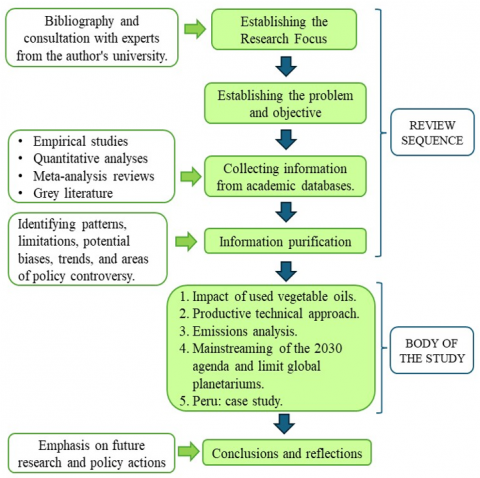
The methodology employed was based on a comprehensive and systematic literature review. We aimed to collect and analyze empirical data, quantitative analyses, and conclusions based on sound scientific evidence relevant to the socio-environmental impacts of the transition to clean energy. Specifically, our study focused on biodiesel derived from used vegetable oils and its contribution to sustainable development. We conducted a careful search in reputable academic databases, including PubMed, Web of Science, and Scopus. Our study encompassed empirical studies and meta-analysis reviews, both with and without analysis treatments, that were highly relevant to the scope of our research.
To enrich this work, we also conducted rigorous searches of grey literature, such as technical reports, government documents, and publications from relevant international organizations in the field of energy and environment. Additionally, we consulted experts from affiliated universities for recommendations of relevant studies and to review the structure followed.
To refine the information, we conducted a critical analysis of the collected studies. Our analysis involved identifying patterns, trends, and areas of controversy while paying particular attention to the limitations and potential biases of the reviewed studies and, we considered the practical and policy implications of the findings. Enabling us to synthesize and structure the information in a coherent and organized. Finally, this study confidently draws conclusions based on the reviewed evidence and identifies key reflections for future research and policy action. Please refer to Figure 1 for the resulting flow of the technical structure.
Figure 1. Study process flow
The review sequence and the technical body of the study employed ensure a solid foundation for understanding the effective management of used vegetable oils, the socio-environmental impact of biodiesel waste, and how the theory is contextualized the theory approached as an integral part of a global strategy for sustainable development.
3.1 Impacts of used vegetable oils
Vegetable oils are triglyceride fats commonly used for frying in households and the food industry, such as factories, restaurants, and hotels. They aid in digestibility and reduce microbial load during the frying process. When foods are immersed in oils and heated to a certain temperature, their tissues soften, eliminating pathogenic microorganisms and improving taste [19, 20].
3.1.1 Impact on nutrition
Continuously repeating the frying process with different foods at temperatures above 190℃ causes the oils to darken, oxidize, hydrolyze, and polymerize. If the temperature reaches the smoking point, the oil is completely decomposed, generating harmful compounds such as acrolein, acrylamide, benzopyrene, and benzanthracene. These compounds can be highly detrimental to our health if ingested with food [21]. Repeatedly using oil with an acidity level higher than 5% to fry food can increase the risk of cancer, especially in women, and is linked to a significant increase in heart disease [22-24]. Once oils are no longer suitable for frying food due to inadequate sanitary conditions, they become a by-product or waste, depending on their intended use.
3.1.2 Impact on sanitation
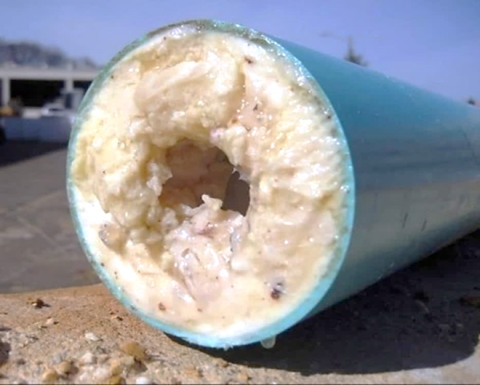
Analyzing the disposal of unusable frying oils involves determining their final destination at the end of their life cycle. These oils are often disposed of by pouring them down sinks, toilets or directly into sewage systems. However, this practice can worsen the wastewater treatment process and generate additional costs for local sanitation due to problems such as clogged and deteriorated pipes. When oils are mixed with other waste products, such as detergents and potashes, they can undergo a chemical reaction and form solid or semi-solid soap balls. These can then clog pipes in households and cities, as shown in Figure 2 [25].
Figure 2. Sewer pipe clogged by excess solidified vegetable fats (supply canter Mexico City, Mexico) [26]
3.1.3 Impact on your treatment
Addressing the impact of these oils from their contact with reused water is relevant. The companies responsible for their treatment initially measure chemical parameters, such as chemical oxygen demand (COD). A study on this issue reported that homogeneous and representative samples of waste oils in urban areas can reach up to 3,400,000 mgO2/l COD, which is up to 5,000 times the polluting power of ordinary wastewater (with an average COD of 700 mgO2/l). The treatment process is aggravated by the use of more than 27,000 liters of water to reduce its impact on this particular indicator alone. To minimize values for other indicators, such as total solids and oil and grease concentration, up to 40,000 liters of water may be required [18].
3.1.4 Economic impacts
Regarding the economic aspects, studies conducted by urban wastewater treatment companies estimate that the cost of treating waste oil from water is approximately €0.46 per liter. In Spain, for instance, this adds to the average tariff reported by the Wastewater Treatment Plant for general waste treatment, which is €0.67 per cubic meter. Therefore, treating water with waste oils is about 700 times more expensive than treating water without waste oils [18]. These data could be crucial in promoting responsible consumption and disposal policies. It is important to approach this issue with an awareness of the damage caused by unsustainable practices. Neglecting this issue could have a significant impact on our aquatic environment, which may absorb harmful effluents this compromising already fragile ecosystems. It is essential to consider the economic resources involved and act accordingly.
3.2 Productive technical approach
3.2.1 Chemical transformation
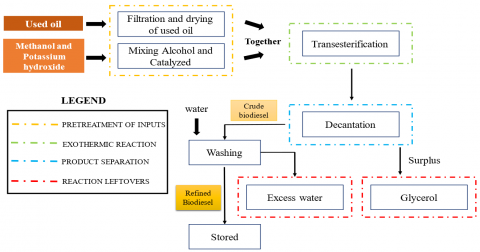
Biodiesel production is achieved through a chemical reaction known as transesterification. This reaction involves the reaction of triglycerides of fatty acids (pure or used vegetable oil or animal fat) with an alcohol (methanol or ethanol) in the presence of a catalyst (sodium or potassium hydroxide) to form fatty acid alkyl esters, which are commonly known as biodiesel, and a smaller amount of glycerol residue [27]. The molecular structure is nearly identical to diesel made from petroleum.
3.2.2 Production methodology
In order to guarantee the success of the transformation process, it is essential to consider a number of factors. These include the quality of the reagents, the type and quantity of catalyst, the molar ratio between alcohol and oil, the rate of agitation, the temperature and the reaction time. These aspects will be parameterised in accordance with the quality analysis of the feedstock to be employed [28, 29]. Despite the apparent simplicity of the process, errors can and do occur. It is therefore important to pay attention to the following factors in order to ensure success: the biodiesel conversion yields, which range from 80% to 90% of the oil-biodiesel ratio, depend on the technology used, in particular the machine in which the transesterification takes place and all the steps of the process. The machine can be manufactured with either homemade or purchased materials, depending on the user's skill level. Medium low-capacity prototypes are suitable for personal or domestic use, whereas modules or industrial plants that process large quantities are suitable for commercial or community use. Figure 3 illustrates the production process of any technological equipment, from the input of inputs to the transesterification reaction, the separation of the reacted products, and the waste obtained.
Figure 3. Production flow to transform used cooking oil into biodiesel
Source: Own elaboration
3.2.3 Production technology
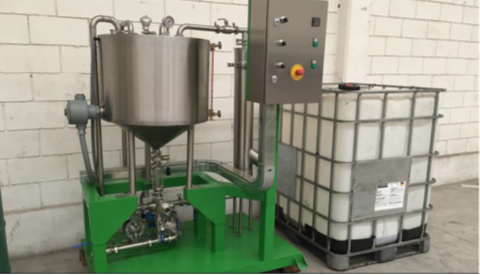
Although the process is not complex, there are few companies in developing countries, such as Latin America, that manufacture and sell prototypes or semi-automatic plants for producing biodiesel from used vegetable oils. Some of the companies mentioned include Industrias Biocom S.A. in Argentina, Ecobiodiesel S.A.S. in Colombia, Bioprocesses SRL in Uruguay, and Solben in Mexico. Solben is known for its diverse range of machine models and personalized business approach. They collaborate with clients to develop strategies for collecting used oils in the city where their technology is installed, ensuring a constant supply of raw materials and biodiesel outputs. They also have institutional partnerships with universities and local governments. Figure 4 displays one of their prototypes.
Figure 4. Biodiesel Plant MB-400, which yields up to 400 l/day of biodiesel
Source: Solben Biodiesel Plant MB-400 in web
3.2.4 Quality standards
Biofuel production does not necessarily imply having all the desirable characteristics to be marketed and used in vehicles without some control, due to variables already addressed. Without the necessary quality after production, biodiesel could cause damage to the vehicle or the environment. For this reason, there are regulations that establish quality standards for biodiesel derived from used oils. These are the two most relevant regulations:
1. ASTM D6751: A standard established by the American Society for Testing and Materials (ASTM) that defines the specifications and methods necessary to safely develop the production and use of blended biodiesel or as B100 (pure). Known as the American Standard.
2. EN 14214: This is the standard established by the European Committee for Standardization (CEN) that reports the requirements and specifications for biodiesel used as fuel in diesel engines and heating equipment, either in different blend concentrations or in pure form. Known as the European standard.
Both evaluate almost 95% of the same characteristics, although with different levels, among the most important of which are: flash point, viscosity, sulphur content and methyl ester content.
3.3 Emissions analysis
Table 1 shows a table of the impacts on the percentage use of vegetable oil biodiesel with respect to the emissions caused by petroleum-based diesel in a study conducted in Argentina and evaluated using U.S. methods at the beginning of the 20th century.
Table 1. Percentage emissions footprint of pure biodiesel (B 100) and 20% biodiesel blended with petroleum diesel (B 20), with respect to pure petroleum diesel emissions [30]
|
Type of Issue |
B 100 (%) |
B 20 (%) |
|
Total unburned hydrocarbons |
-93 |
-30 |
|
Carbon monoxide |
-30 |
-22 |
|
Suspended particles |
-30 |
-22 |
|
Sulphates |
-100 |
-20 |
|
Polycyclic aromatic hydrocarbons (PAH) |
-80 |
-13 |
|
Nitrogenated polycyclic aromatic hydrocarbons (nPAH) |
-90 |
-50 |
|
Potential for ozone layer depletion |
-50 |
-10 |
|
Nitrogen oxides |
+13 |
+2 |
As shown, the potential impact is notably lower in combustion and improves if B100 is used, the emissions of sulphates and sulfuric oxides, which are the main components of acid rain, are eliminated. Similarly, critical pollutants are significantly lower, such as carbon monoxide, of which 50% less is emitted, or suspended particulates, which are less than 30%, or total unburned hydrocarbons (involved in the formation of smog), whose presence is almost negligible, less than 93%. Similarly, the levels of PAHs and nPAHs, which are known to be linked to cancer, are minimized [31, 32].
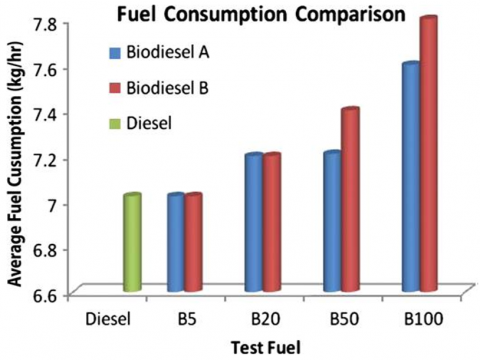
By the next decade, significant findings on the performance of biodiesel and its blends for diesel vehicles were revealed, mainly due to its lower performance compared to petroleum diesel, caused by its lower calorific value. This factor means that more biodiesels must be used, about 11% more, to match the energy performance of conventional diesel [33]. Figure 5 shows that biodiesel B is consumed in greater quantities than biodiesel A in each of the blends with diesel for the same performance test. However, despite other minor drawbacks in its performance, it can still be considered sustainable because its use is compensated by the environmental benefits already shown.
Figure 5. Biodiesel performance variation
Biodiesel A: based on animal fat and virgin canola oil
Biodiesel B: based on animal fat and used oils
Diesel: based on petroleum [33]
In recent studies, it has been concluded that both pure biodiesel and biodiesel from used oils, as well as their combinations, help reduce the key particles that generate smog, in addition to having a lower carbon footprint, even in older engines, although they still have deficiencies in nitrogen oxide (NOx) emissions, as detailed in Table 1 [34]. This confirms what the US Department of Energy says: despite all its limitations, it is the ideal substitute for petroleum diesel because of the vital role plays in decarbonizing cities, despite its identified drawbacks.
3.4 Mainstreaming with the 2030 Agenda and limit global planetariums
The 2030 Agenda, specifically SDG 7, prioritizes the shift towards renewable energy sources to provide energy access to disadvantaged communities. This is accomplished by promoting sustainable energy efficiency practices and aiming to decarbonize the economy. It recognizes the key role that energy plays in today's climate change, especially due to the impact and scarcity of fossil fuels. The contribution to the 2030 Agenda goes further: by finding a new use for waste oils from the food industry, it also contributes to food security through SDG 3, which addresses health and well-being. It also prevents waste oils from reaching the marine environment, which is crucial for marine life, according to SDG 14. It promotes good environmental practices in urban areas, in line with SDG 11 on sustainable cities. Additionally, by promoting a low-emission biofuels industry, it contributes to SDG 13 on climate action [35].
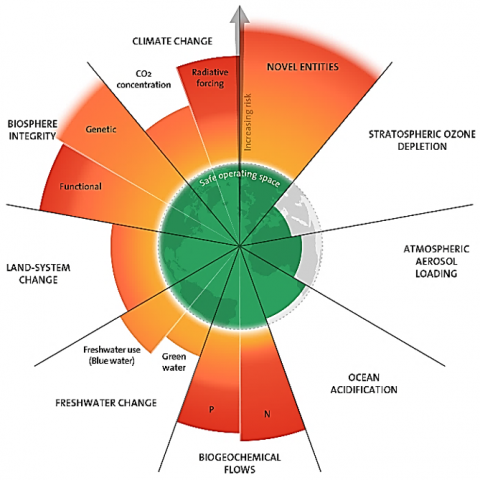
In a similar vein, Figure 6 illustrates the Global Limits. The green zone represents the safe operating space below the limits allowed for not disturbing human livelihoods, while the darkening trends in orange are interpreted as a zone of increasing risk, where clearly climate change, ranking fourth of the six limits that have been exceeded by 2023, needs to be addressed as a priority [36].
The analysis highlights the urgent need to strategically address the threats to our permanence on this planet and to ensure harmonious coexistence with the ecosystems that sustain human life. In this context, countries need to adopt a hierarchy of priorities in order to address these challenges effectively. The first priority is the management of new chemical and toxic substances released into the environment, including plastics, metals, and dioxins. The second priority is to combat the loss of biodiversity by tackling the destruction of ecosystems that are vital to our survival. The third priority addresses biogeochemical cycles and the reproductive capacity of plants, linked to phenomena such as the eutrophication of rivers, oceans, and land. Finally, the fourth priority is climate change, linked to emissions of harmful gases [37]. This is important to disclose because it provides a fundamental perspective on the importance of not simply limiting the conversion from one biodiesel to another, but of addressing the entire lifecycle of waste oils. This integrated approach is essential for the preservation of our ecosystems, as failure to manage waste oils responsibly could result in further negative impacts on the environment.
Figure 6. Global environmental limits, updated to 2023 [37]
From the point of view of the production of biodiesel from used oils, this product creates a virtuous circle for these 4 global environmental limits and the prioritization of SDG 7, since by avoiding the disposal of oils in wastewater, we contribute to the prevention of dioxins from burned oils, which complicate traditional waste treatment and end up in lakes, rivers, seas or land, as well as the generation of leachate if it does not reach treatment plants, preserving the biodiversity of our local ecosystems. Moreover, as has already been demonstrated, the combustion of biodiesel produces emissions around 80% lower than those produced by the combustion of petroleum diesel, there are contributing to the decarbonization of our activities in the pursuit of a sustainable cycle.
The implementation of such projects could be called "green projects". According to the latest World Economic Forum report on the future of employability and professionalization in the sector, an upward trend is expected by 2027. This is a clear policy alternative that can mitigate and seriously address the current environmental problems caused by untreated waste oils.
3.5 Peru: Case study
3.5.1 Problem of used oils
Peru has approximately 50,000 formal restaurants in its capital, according to data from the National Institute of Statistics and Informatics (INEI). This number could double if informal establishments are included. On average, a restaurant produces between 35 and 55 liters of used oil per month, according to estimates by Reborn Peru, a local company that converts used cooking oil into biodiesel. Between 60,500 and 188,000 liters of used oil are estimated to be produced daily by all formal and informal restaurant kitchens in Lima. This amount could increase to over 200,500 to 635,500 liters per day if the entire country is taken into account, as Lima is home to approximately 29.7% of the national population, according to INEI data.
According to the National Superintendence of Sanitation Services, approximately 80% of waste oil is improperly disposed of in the sewerage system. This has a detrimental effect on Lima's 21 stabilization lagoons, which are designed to reduce contamination of wastewater before it is discharged into rivers and the sea [38]. When cooking oil is deposited into these lagoons, it can leach into the water and cause damage to the purification equipment. Additionally, the oil remains on the surface of the water, preventing the passage of oxygen. In the country, waste treatment lagoons cost an average of USD 1.15 per person per year [38]. This problem is difficult to deal with because it has not been addressed and is exacerbated by the fact that used oil is 5,000 times more polluting than regular waste and 700 times more expensive to mitigate its impact on the environment. Finding a solution to this problem is crucial because Peru is one of the most biodiverse countries in the world, and there is a need to reduce the costs of forming large quantities of effluent.
In the same vein, it is estimated that the 20% that is not disposed of through the drainage and sewage systems in urban areas is purchased by at least 200-300 families in the eastern part of the capital, specifically in the town of Huachipa. There, waste vegetable oils are sold for two purposes; to feed pigs in unsanitary conditions to accelerate their growth and increase their weight before selling them. This practice can create a critical food safety control point, as those who consume meat from these animals may be at risk of exposure to harmful compounds and bacteria inherent in mutation with the animal's organism and are also used by informal operators who mix the oil with chemical cleaners, such as sodium bicarbonate (NaHCO3), to give it the appearance of clean oil. This is done with the aim of reintroducing it as white label oil usable in informal restaurants and/or wholesale markets for domestic consumption [39]. This is a critical problem that is not addressed by regional or national policies and is a silent attack on Peru's health.
3.5.2 Biodiesel context
To analyze the biodiesel industry and consumption in Peru, it is necessary to look at the consumption of and dependence on liquid fuels. Reports from the Energy and Mining Investment Supervisory Agency (OSIGERMIN) indicate that Peru is a major consumer of petroleum diesel, more than of any other fuel such as gasoline or gas, reaching a dependence of more than 40% of the country's total consumption [40]. This is a complex scenario to manage, knowing that Peru depends on imports of both petroleum diesel and biodiesel, as it does not have its own supply of either from its own resources and/or production capacity, which makes it subject to fluctuations in international prices due to conflicts that hinder trade, as has happened in recent years in countries that are major oil producers, both in extraction and refining. This leads to increased costs and therefore makes the productive activities of the domestic economy (that depend on this same resource for the production of goods and services) more expensive.
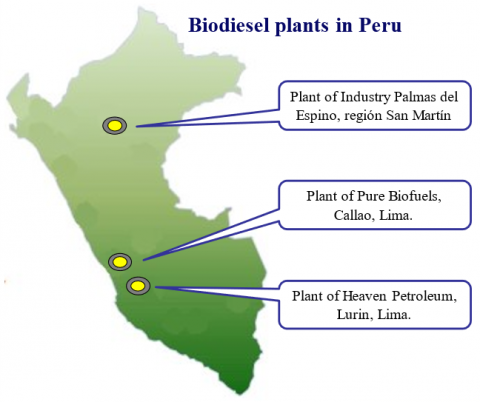
Nevertheless, there are currently three substructures producing biodiesel for blending with domestic consumption. Where legislation only allows 5%, i.e. a blend of 95% petroleum diesel and 5% biodiesel. This is a factor of little relevance if the objective is to initiate a significant decarbonization process, and whose operators are Industrias Palmas del Espino S.A., Heaven Petroleum Operator S.A., and Pure Biofuels del Perú S.A.C., with strategic locations in Peru (Figure 7), Heaven Petroleum Operator S.A. and Pure Biofuels del Perú S.A.C., with strategic locations in Peru (see Figure 7). Their main feedstocks are oil palm and jatropha, grown in the Peruvian Amazon [41]. And they rely heavily on imports of biodiesel made from soybean oil from Argentina or the United States.
Figure 7. Geographical location of the 3 plants operating in Peru to produce biodiesel from oilseeds
Source: Own elaboration
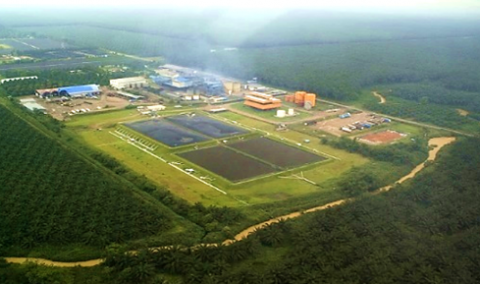
However, domestic agricultural production of the oils used as feedstock is not sufficient to meet the 5% biodiesel requirement to be blended with petroleum diesel for domestic consumption. This means that a blend of 95% petrodiesel and 5% biodiesel will have to be marketed, known as B5 diesel, the main fuel for Peruvian transport. This scenario translates into a shortfall of -3% compared to the target set by Law No. 28054: Law for the Promotion of the Biofuels Market in Peru. Currently, Industrias del Espino S.A. (see Figure 8) is the only integrated producer that produces, markets and has the capacity to import biodiesel to meet the country's needs.
Figure 8. Industries Palmas del Espino biodiesel plant, San Martin region [41]
3.5.3 Biodiesel from waste oils
Reborn Perú is currently the only company dedicated exclusively to recycling discarded frying oil for the production of biodiesel. The company has established a robust used oil collection system in collaboration with over 100 restaurants across 5 regions of the country: Lima, Arequipa, Cusco, Tacna, and Puno. By 2024, the production capacity is expected to reach 10,000 gallons of biodiesel per month, sold at a price of 2.00 soles per gallon (equivalent to 0.25€).
The production and consumption of biodiesel in public transportation can bring significant economic and environmental benefits. However, its market share remains minimal compared to the total volume of vegetable oils discarded daily and the national consumption of B5 diesel. An example of good practices in this area at the government level is the district of San Borja in Lima. This district has shown a strong dedication to environmental sustainability by implementing a recycling program for used oils from both homes and local restaurants. The objective is to use these recycled oils to produce biodiesel, which will fuel the fleet of municipal vehicles responsible for collecting solid waste in urban areas. Three collection points have been established for residents and agreements have been signed with 34 restaurants within the district's jurisdiction as part of this initiative.
3.5.4 Production technology
Currently, there is no Peruvian technology dedicated to the transformation of these oils. However, the biodiesel production industry is experiencing minimal technological adjustments, thanks in part to academia's contribution. Some patents and relevant research have been generated [42]. Nonetheless, the scope remains limited.
Biodiesel produced from used oils is a biofuel that contributes to energy diversification and reduces harmful emissions. Its production generates a beneficial cycle that positively impacts society, the environment, the economy, and health. Waste oil biodiesel has the potential to drive organizational and cultural changes that will benefit our ecosystem, although it does not compete directly with diesel, whether pure (B100) or blended. The production of biodiesel from recycled oils is considered a sustainable method for self-consumption of biofuels. This creates virtuous circles in waste management and promotes green transportation in urban environments due to its minimal emissions.
Biodiesel from used oils can contribute to achieving SDGs 7, 3, 14 and 11 of the 2030 Agenda, as well as four of the six priority global environmental limits for 2023.
In Peru, the treatment of used oils is not effectively addressed by either the public or private sectors. The national transportation demand exceeds the capacity to consume biodiesel, resulting in dependence on imports. Furthermore, there is a significant technology gap that hinders the transition to more sustainable practices, particularly in the areas of energy and environmental policy.
Informing the community and local authorities about the harmful effects of used oils and fats is crucial. It is also important to enlist the support of local stakeholders to educate the public on reducing their impact on the environment and health.
When searching for suitable feedstocks for biodiesel, priority should be given to those that do not compete with food crops, do not contribute to land clearing or deforestation, and result in a reduction in greenhouse gases.
Addressing the problem by focusing on specific municipalities based on the amount of oil waste they emit can be a significant alternative to promoting responsibility in consumption and waste management. This practice can be objectively replicated by local governments.
The authors would like to thank Professor Miguel Angel Egido Aguilera, lecturer at the Master in Strategies and Technologies for Development of the Complutense University of Madrid and the Universidad Polytechnical de Madrid, for his initial guidance on the study. And to Professor Víctor Javier Vásquez Villalobos of the Universidad Nacional de Trujillo, for his subsequent general corrections to the structure of the work.
[1] Kuzemko, C., Blondeel, M., Dupont, C., Brisbois, M. (2022). Russia's war on Ukraine, European energy policy responses & implications for sustainable transformations. Energy Research & Social Science, 93: 102842. https://doi.org/10.1016/j.erss.2022.102842
[2] International Energy Agency (IEA). (2023). Crisis energética mundial. https://www.iea.org/energy-system/renewables/bioenergy#tracking.
[3] Asif, M., Muneer, T. (2007). Energy supply, its demand and security issues for developed and emerging economies. Renewable and Sustainable Energy Reviews, 11(7): 1388-1413. https://doi.org/10.1016/j.rser.2005.12.004
[4] O'Rourke, D., Connolly, S. (2003). Just oil? The distribution of environmental and social impacts of oil production and consumption. Annual Review of Environment and Resources, 28(1): 587-617. https://doi.org/10.1146/annurev.energy.28.050302.105617
[5] Sachs, J. (2015). The Age of Sustainable Development. New York Chichester, West Sussex: Columbia University Press.
[6] Johnsson, F., Kjärstad, J., Rootzén, J. (2019). The threat to climate change mitigation posed by the abundance of fossil fuels. Climate Policy, 19(2): 258-274.
[7] Chen, B., Xiong, R., Li, H., Sun, Q., Yang, J. (2019). Pathways for sustainable energy transition. Journal of Cleaner Production, 228: 1564-1571. https://doi.org/10.1016/j.jclepro.2019.04.372
[8] Mahapatra, S., Kumar, D., Singh, B., Sachan, P.K. (2021). Biofuels and their sources of production: A review on cleaner sustainable alternative against conventional fuel, in the framework of the food and energy nexus. Energy Nexus, 4: 100036. https://doi.org/10.1016/j.nexus.2021.100036
[9] Demirbas, A. (2008). Biodiesel. Springer London. https://doi.org/10.1007/978-1-84628-995-8_4
[10] Hussain, A., Arif, S., Aslam, M. (2017). Emerging renewable and sustainable energy technologies: State of the art. Renewable and Sustainable Energy Reviews, 71: 12-28. https://doi.org/10.1016/j.rser.2016.12.033
[11] Atabani, A., Silitonga, A., Badruddin, I., Mahlia, T., Masjuki, H., Mekhilef, S. (2012). A comprehensive review on biodiesel as an alternative energy resource and its characteristics. Renewable and Sustainable Energy Reviews, 16(4): 2070-2093. https://doi.org/10.1016/j.rser.2012.01.003
[12] Tamilselvan, P., Nallusamy, N., Rajkumar, S. (2017). A comprehensive review on performance, combustion and emission characteristics of biodiesel fuelled diesel engines. Renewable and Sustainable Energy Reviews, 79: 1134-1159. https://doi.org/10.1016/j.rser.2017.05.176
[13] Helwani, Z., Othman, M.R., Aziz, N., Fernando, W.J., Kim, J. (2009). Technologies for production of biodiesel focusing on green catalytic techniques: A review. Fuel Processing Technology, 90(12): 1502-1514. https://doi.org/10.1016/j.fuproc.2009.07.016
[14] Jiaqiang, E., Pham, M., Zhao, D., Deng, Y., Le, D., Zuo, W., Zhang, Z. (2017). Effect of different technologies on combustion and emissions of the diesel engine fueled with biodiesel: A review. Renewable and Sustainable Energy Reviews, 80: 620-647. https://doi.org/10.1016/j.rser.2017.05.250
[15] Yaakob, Z., Mohammad, M., Alherbawi, M., Alam, Z., Sopian, K. (2013). Overview of the production of biodiesel from waste cooking oil. Renewable and Sustainable Energy Review, 18: 184-193. https://doi.org/10.1016/j.rser.2012.10.016
[16] Abomohra, A., Elsayed, M., Esakkimuthu, S., El-Sheekh, M., Hanelt, D. (2020). Potential of fat, oil and grease (FOG) for biodiesel production: A critical review on the recent progress and future perspectives. Progress in Energy and Combustion Science, 81: 100868. https://doi.org/10.1016/j.pecs.2020.100868
[17] Chen, C., Chitose, A., Kusadokoro, M., Nie, H., Xu, W., Yang, F., Yang, S. (2021). Sustainability and challenges in biodiesel production from waste cooking oil: An advanced bibliometric analysis. Energy Reports, 7: 4022-4034. https://doi.org/10.1016/j.egyr.2021.06.084
[18] González, I., González, J. (2015). Aceites usados de cocina. Problemática ambiental, incidencias en redes de saneamiento y coste del tratamiento en depuradoras. Aguasresiduales. Info, 1-8. https://www.residusmunicipals.cat/uploads/activitats/docs/20170427092548.pdf.
[19] FAO. (1997). Grasas y aceites en la nutrición humana: Consulta FAO/OMS de expertos, Roma, 19-26 de octubre de 1993. In Grasas y aceites en la nutrición humana: consulta FAO/OMS de expertos, Roma, 19-26 de octubre de 1993. https://www.fao.org/3/V4700S/V4700S00.htm.
[20] Organización Mundial de la Salud (OMS). (2020). REPLACE trans-fat: conjunto de medidas para eliminar los ácidos grasos trans de producción industrial: Módulo 2: promote (promover): guía práctica para determinar los mejores aceites alternativos e intervenciones para promover su uso. https://iris.who.int/handle/10665/336193.
[21] Nayak, P., Dash, U., Rayaguru, K. Krishnan, K. (2016). Physio‐chemical changes during repeated frying of cooked oil: A review. Journal of Food Biochemistry, 40(3): 371-390. https://doi.org/10.1111/jfbc.12215
[22] Dodoo, D., Adjei, F., Tulashie, S., Adukpoh, K., Agbolegbe, R, Gawou, K., Manu, G. (2022). Quality evaluation of different repeatedly heated vegetable oils for deep-frying of yam fries. Measurement: Food, 7: 100035. https://doi.org/10.1016/j.meafoo.2022.100035
[23] Rajendran, P., Alzahrani, A., Rengarajan, T., Veeraraghavan, V., Krishna S. (2022). Consumption of reused vegetable oil intensifies BRCA1 mutations. Critical Reviews in Food Science and Nutrition, 62(5): 1222-1229. https://doi.org/10.1080/10408398.2020.1837725
[24] Reynolds, N., Hodson, L., De Souza, R., Tran D., Huyen, V., Lara, E. (2022). Saturated fat and trans-fat intakes and their replacement with other macronutrients: a systematic review and meta-analysis of prospective observational studies. World Health Organization. https://iris.who.int/handle/10665/366301.
[25] Wallace, T., Gibbons, D., O'Dwyer, M., Curran, T. (2017). International evolution of fat, oil and grease (FOG) waste management–A review. Journal of Environmental Management, 187: 424-435. https://doi.org/10.1016/j.jenvman.2016.11.003
[26] Central de Abastos de CDMX. (2021). Sigues pensando qué un poco de aceite vertido al desagüe no tiene repercusiones? https://twitter.com/CdeAbastoCDMX/status/1379102936333160450/photo/1.
[27] Talebian-Kiakalaieh, A., Amin, N., Mazaheri, H. (2013). A review on novel processes of biodiesel production from waste cooking oil. Applied Energy, 104: 683-710. https://doi.org/10.1016/j.apenergy.2012.11.061
[28] Naik, S., Goud, V., Rout, P., Dalai, A. (2010). Production of first- and second-generation biofuels: A comprehensive review. Renewable and Sustainable Energy Reviews, 14(2): 578-597. https://doi.org/10.1016/j.rser.2009.10.003
[29] Hajjari, M., Tabatabaei, M., Aghbashlo, M., Ghanavati, H. (2017). A review on the prospects of sustainable biodiesel production: A global scenario with an emphasis on waste-oil biodiesel utilization. Renewable and Sustainable Energy Reviews, 72: 445-464. https://doi.org/10.1016/j.rser.2017.01.034
[30] Stratta, J. (2000). Biocombustibles: Los aceites vegetales como constituyentes principales del biodiesel. Rosario, Argentina, 1-15. https://www.bcr.com.ar/sites/default/files/2018-10/biocombustibles.pdf
[31] Agencia para Sustancias Toxicas del Registro de Enfermedades (ATSDR). (2016). Hidrocarburos aromáticos policíclicos (HAPs). Departamento de Salud y Servicios Humanos de EE. UU. https://www.atsdr.cdc.gov/es/toxfaqs/es_tfacts69.html#print.
[32] Agencia Española de Seguridad Alimentaria y Nutrición (AESAN). (2023). Hidrocarburos Aromáticos Policíclicos (HAPs). Seguridad alimentaria. Ministerio del Consumo. Gobierno de España. https://www.aesan.gob.es/AECOSAN/web/seguridad_alimentaria/subdetalle/haps.htm.
[33] McCarthy, P., Rasul, M., Moazzem, S. (2011). Analysis and comparison of performance and emissions of an internal combustion engine fuelled with petroleum diesel and different biodiesels. Fuel, 90(6): 2147-2157. https://doi.org/10.1016/j.fuel.2011.02.010
[34] Ogunkunle, O., Ahmed, N. (2019). A review of global current scenario of biodiesel adoption and combustion in vehicular diesel engines. Energy Reports, 5: 1560-1579. https://doi.org/10.1016/j.egyr.2019.10.028
[35] Organización de Naciones Unidas. (2023). Informe de los Objetivos de Desarrollo Sostenible 2023. Edición Especial. Por un plan de rescate para las personas y el planeta. https://peru.un.org/es/245789-informe-de-los-objetivos-de-desarrollo-sostenible.
[36] Turiel, A. (2023). Claves de una transición energética sostenible. Cómo vivir en equilibrio con el planeta. VIII Curso de Verano Agenda 2030 'ODS 7: modelo energético 2030 ¿Será sostenible o no será? Universidad de la Rioja. [Vídeo]. YouTube. https://www.youtube.com/watch?v=jxMh6c0rfms.
[37] Richardson, K., Steffen, W., Lucht, W., et al. (2023). Earth beyond six of nine planetary boundaries. Science Advances, 9(37): eadh2458. https://doi.org/10.1126/sciadv.adh2458
[38] Loose, D., Vergara, A., Jugo, M., Miyashiro, M., Guzmán, W.B., Palacio, M., del Sector Agua, F. (2015). Diagnóstico de las plantas de tratamiento de aguas residuales en el ámbito de operación de las entidades prestadoras de servicios de saneamiento. Superintendencia Nacional de Servicios de Saneamiento (SUNASS), pp. 60. https://www.sunass.gob.pe/doc/Publicaciones/ptar.pdf.
[39] El Comercio. (2019). Solicitan a Municipalidad de Lima acciones sobre desecho de aceite quemado. El Comercio Perú. Lima City Hall requested to take action on waste oil disposal. https://elcomercio.pe/lima/sucesos/ministerio-publico-solicita-municipalidad-lima-acciones-desecho-aceite-quemado-restaurantes-noticia-643620-noticia/.
[40] Global Energy Monitor. (2022). Perfil energético: Perú - global energy monitor. https://www.gem.wiki/Perfil_energ%C3%A9tico:_Per%C3%BA#Matriz_energ%C3%A9tica.
[41] Vásquez, A., de la Cruz, R., Coello, F. (2016). Los biocombustibles: Desarrollos recientes y tendencias internacionales. Documento de Trabajo No 36, Gerencia de Políticas y Análisis Económico – Osinergmin, Perú. https://cdn.www.gob.pe/uploads/document/file/1396133/Documento%20de%20Trabajo%2036.pdf?v=1603327107.
[42] Municipalidad de San Borja. (2018). San Borja recicla el Aceite de Cocina Usado. [Video reportaje] [Publicación del estado]. Facebook. https://www.facebook.com/watch/?v=714235398927499.