Dania Fadhil Abbas* | Jawad Kadhim Oleiwi | Qahtan Adnan Hamad
© 2026 The authors. This article is published by IIETA and is licensed under the CC BY 4.0 license (http://creativecommons.org/licenses/by/4.0/).
OPEN ACCESS
The objective of this study is to evaluate the mechanical performance of natural fiber-reinforced epoxy laminates for potential application in athletic prosthetic foot structures. Laminated composites based on hemp, bamboo, and sisal fibers were fabricated. In addition, selected hybrid laminates incorporating three carbon fiber layers at the outer surfaces and laminate core were produced to improve structural performance. The specimens were evaluated experimentally using tensile, flexural, impact, compression, and maximum shear stress tests to determine strength, stiffness, and energy absorption behavior under different loading conditions. The results showed that both fiber type and laminate architecture strongly influenced the mechanical performance. Hybridization with carbon fiber significantly enhanced all measured properties compared with the corresponding non-hybrid laminates. Among all investigated configurations, the hemp/carbon hybrid laminate (12H+3C) exhibited the highest overall mechanical performance, achieving a tensile strength of 127.7 MPa, tensile modulus of 5.06 GPa, flexural strength of 315 MPa, impact strength of 57.19 kJ/m², interlaminar shear strength of 26 MPa, and compressive strength of 121 MPa. In contrast, the bamboo/carbon hybrid laminate (12B+3C) provided the highest specific strength (91.52 MPa·cm³/g) and specific flexural strength (200.31 MPa·cm³/g), indicating superior weight efficiency. Based on the multi-metric assessment, the hemp/carbon hybrid laminate offered the most favorable combination of strength, stiffness, impact resistance, and structural durability required for athletic prosthetic foot applications, while bamboo/carbon hybrids showed advantages in lightweight design. These findings demonstrate the potential of tailored natural fiber/carbon hybrid composites as sustainable and mechanically reliable alternatives for high-performance sports prosthetic feet.
hybrid composites, athletic prosthetic foot, interlaminar shear strength, specific stiffness, carbon fiber reinforcement, natural fiber composite, vacuum bagging, Izod impact strength
In activities like springing, running, and jumping, the prosthesis used by athletes and highly active users is subjected to repetitive and complex mechanical loading, including bending, tension, impact, and shear. High mechanical reliability, energy absorption capacity, fatigue life, and low weight are essential requirements that are needed for these service requirements to ensure both safety and efficiency. That is why material choice plays a critical role in determining the functional durability and biomechanical response of sports prosthetic feet [1-3].
With the recent development of fiber-reinforced polymer composites, interest in natural fiber-reinforced polymer composites has increased as an attractive alternative for making structural and biomechanical demands: Their low density, renewability and favorable mechanical properties are equally important reasons why it has attracted considerable attention to this new kind of material [4-7]. Natural fiber composites also have additional advantages from ecological and social perspectives compared with traditional synthetic composites, which play such a prominent role in modern materials technology today [8, 9]. These materials aim to reduce structural weight while maintaining sufficient strength and rigidity under dynamic load. Therefore, they are well suited for the development of prosthetic feet.
Due to their availability, mechanical capability, and compatibility with polymer matrices, sisal, hemp and bamboo fibers have been extensively examined amongst the various plant-based reinforcements [10-12]. The resultant composites' mechanical behavior can be significantly influenced by differences in cellulose content, fibrous structure, microstructural organization, and interfacial bonding performance [13, 14], particularly when talking about tensile strength, elastic modulus, impact resistance, and interlaminar shear strength [10, 12]. These fibers may show evident load transfer mechanisms and damage evolution patterns when combined with epoxy matrices, depending on laminate configuration and thickness [15, 16].
Hybridization strategies incorporating high-performance synthetic fibers such as carbon have been investigated to further improve mechanical performance [17-19]. Enhanced stress distribution, delayed crack propagation and improved resistance to impact and shear-induced damage can be obtained by the inclusion of carbon fiber layers within natural fiber laminates. A promising balance between mechanical robustness and material effectiveness can be obtained in such hybrid composite systems, which is especially appropriate for sports prosthetic feet that operate under severe and cyclic mechanical requirements [20-28]. Laminate configuration and fiber choice significantly influence structural performance according to recent studies, which have also inspected the mechanical behavior of hybrid and natural fiber composites under tensile, compression, and flexural loading conditions [22-24]. When considering natural fiber/carbon hybrid composites for biomechanical uses, the studies support the need for systematic mechanical evaluation [25-27].
A comprehensive evaluation of natural-fiber-reinforced polymer composites was carried out by Castro-Franco et al. [2], who pointed out that the mechanical properties of such materials depend heavily on fiber type, method of processing and the interface properties of the fiber and matrix [4]. For prosthetic applications, this research focused on how the selection of reinforcement affects tensile, bending and shock forces, taking into account the basic considerations.
Alvy et al. [29] experimentally investigated woven jute–carbon hybrid composites with different stacking sequences. The study demonstrated that the arrangement of carbon and natural fiber layers significantly influences tensile, flexural, and durability performance. The authors concluded that optimized carbon layer placement can improve load transfer efficiency and overall mechanical behavior of hybrid laminates.
Shah et al. [13] highlighted that the mechanical behavior of plant fiber composites is strongly influenced by cellulose content, microfibril angle, and fiber morphology, as these factors govern load transfer efficiency and the elastic response of composite systems. Therefore, direct comparisons among hemp, sisal, and bamboo fibers are essential for application-oriented material selection.
An experimental study by Del Bianco et al. [30] evaluated carbon, flax, and carbon/flax hybrid laminates under low-velocity impact loading. The results showed that hybridization improved impact performance while maintaining a favorable balance between structural efficiency and weight. Furthermore, the stacking sequence played a critical role in damage tolerance and energy absorption capability.
Mylsamy et al. [17] researched the designs for hybrid composites that unite natural fibers with synthetic fibers in order to improve performance qualities. The inclusion of high-performance reinforcements, such as carbon fibers, enhances stiffness and energy absorption while keeping the lightweight; this is particularly beneficial in dynamic loading situations.
In a recent experimental investigation by Liu et al. [31], researchers demonstrated that the impact performance of natural fiber-reinforced laminates can be significantly enhanced through hybridization and appropriate layup design. The study reported that placing synthetic reinforcement layers near the outer laminate surfaces improved impact resistance and structural integrity. These findings highlighted the importance of laminate architecture in achieving superior hybrid composite performance.
Another study by Fan et al. [3] explored how to meet the material demands in sports prosthetic devices. They pointed out that materials for stiffness, elasticity and impact resistance should be chosen more carefully, while simultaneously reducing structural weight. Their findings emphasized the importance of combining natural and synthetic reinforcements in a hybrid mode to achieve optimization in performance functions.
Shelly et al. [11] reported that the mechanical properties of bio-based fiber-reinforced polymer composites depend mainly on fiber characteristics and fiber-matrix adhesion. The review showed that natural fibers offer lightweight and sustainable reinforcement with promising tensile and flexural performance. The authors also concluded that hybridization and surface modification are effective approaches for enhancing composite durability and strength.
Although several studies have investigated natural fiber composites or carbon fiber composites individually for biomedical and structural applications, limited research has comparatively evaluated hemp, bamboo, and sisal fiber laminates hybridized with carbon fiber under multiple loading conditions relevant to athletic prosthetic foot applications. Furthermore, the influence of hybrid stacking on tensile, flexural, compressive, impact, and interlaminar shear behavior remains insufficiently understood. Therefore, this study presents a comparative multi-loading characterization of natural and carbon-hybrid laminates fabricated using vacuum bagging for lightweight prosthetic foot structures. The effect of fiber type, laminate thickness, and hybrid reinforcement on key mechanical properties is systematically tested to evaluate the suitability of these composite systems for athletic prosthetic foot purposes.
To further enhance structural performance, selected hybrid laminates incorporating three carbon fiber layers at the outer surfaces and laminate core were fabricated. The hybrid stacking sequence was designed by placing two carbon fiber layers at the outer surfaces and one carbon fiber layer at the laminate mid-plane. The outer carbon layers were intended to resist the maximum tensile and compressive stresses generated during bending, while the central carbon layer was introduced to improve load transfer through the laminate thickness and enhance structural integrity. This arrangement was selected to achieve a balance between flexural performance and interlaminar stability while maintaining a high proportion of natural fiber reinforcement.
An epoxy resin system (MOVACRYL Rigid Lamination Resin, IB-ER, Turkey, 4.6 kg) was used as the polymer matrix. The epoxy resin was mixed with a hardener powder (Ottobock 617P37, 150 g, Germany) at a ratio of 3% by weight, following the manufacturer's instructions to ensure proper polymerization and optimal mechanical performance. The mixture was manually mixed to a homogeneous consistency before the lamination process. No separate degassing stage was performed; air removal was achieved using the vacuum-assisted hand lay-up technique and no post-curing treatment was performed.
According to the laboratory requirements, the composite laminates were manufactured using the vacuum lay-up technique. The first step in the manufacturing process was the preparation of a solid gypsum mold with dimensions of 280 × 200 × 50 mm; then, a metal tube was fixed to the base of the mold and aligned with the vacuum line to ensure efficient air removal. The mold surface was carefully leveled and polished to ensure uniform thickness and minimize any surface defects. The mold was then wrapped in a polyvinyl alcohol (PVA) bag as a barrier to prevent the laminate from sticking to the gypsum mold surface. The bag was tightly sealed to avoid air leakage and maintain stable vacuum conditions during curing.
As shown in Table 1, all natural and carbon fiber reinforcements were supplied in woven fabric form and were stacked without angular rotation between layers; therefore, all laminates possessed a 0°/90° fiber orientation. No chemical surface treatment was applied to the fibers prior to composite fabrication. The fibers were used in their as‑received condition to evaluate the intrinsic reinforcement potential of the natural fibers and to enable a direct comparison between untreated natural fiber laminates and their carbon‑hybrid counterparts. To minimize moisture absorption, the fabrics were stored in a dry environment prior to lamination.
Table 1. Specifications of the reinforcement materials used in the fabrication of composite laminates
|
Reinforcement Material |
Fiber Form |
Orientation |
Areal Weight (gsm) |
Supplier |
Condition |
|
Hemp Fiber |
Woven Fabric |
0°/90° |
180 |
Zhejiang Jiahe Textile Co., Ltd, China |
As-received, no chemical treatment |
|
Bamboo Fiber |
Woven Fabric |
0°/90° |
160 |
Zhejiang Jiahe Textile Co., Ltd, China |
As-received, no chemical treatment |
|
Sisal Fiber |
Woven Fabric |
0°/90° |
90 |
Zhejiang Jiahe Textile Co., Ltd, China |
As-received, no chemical treatment |
|
Carbon Fiber |
Woven Fabric |
0°/90° |
300 |
Otto Bock SE & Co. KGaA Company, Germany |
As-received, no chemical treatment |
Table 2. Explanations of the fabricated composite laminates
|
Laminations |
Total No. of Layers |
Layers’ Symbol |
Lamination Layup Procedures |
Density (g/cm³) |
Volume Fraction (%) |
|
Laminate (1) |
Epoxy + Bamboo Fiber (3B) |
3B |
- |
1.04 |
29 |
|
Laminate (2) |
Epoxy + Bamboo Fiber (6B) |
6B |
- |
1.065 |
33 |
|
Laminate (3) |
Epoxy + Bamboo Fiber (9B) |
9B |
- |
1.108 |
37 |
|
Laminate (4) |
Epoxy + Bamboo Fiber (12B) |
12B |
- |
1.171 |
41 |
|
Laminate (5) |
Epoxy + Bamboo Fiber (12B) + Carbon Fiber (3C) |
12B+3C |
1C+6B+1C+6B+1C |
1.274 |
45 |
|
Laminate (6) |
Epoxy + Hemp Fiber (3H) |
3H |
- |
1.13 |
31 |
|
Laminate (7) |
Epoxy + Hemp Fiber (6H) |
6H |
- |
1.203 |
35 |
|
Laminate (8) |
Epoxy + Hemp Fiber (9H) |
9H |
- |
1.262 |
39 |
|
Laminate (9) |
Epoxy + Hemp Fiber (12B) |
12H |
- |
1.412 |
43 |
|
Laminate (10) |
Epoxy + Hemp Fiber (12B) + Carbon Fiber (3C) |
12H+3C |
1C+6H+1C+6H+1C |
1.624 |
48 |
|
Laminate (11) |
Epoxy + Sisal Fiber (3S) |
3S |
- |
1.129 |
30 |
|
Laminate (12) |
Epoxy + Sisal Fiber (6S) |
6S |
- |
1.199 |
34 |
|
Laminate (13) |
Epoxy + Sisal Fiber (9S) |
9S |
- |
1.24 |
38 |
|
Laminate (14) |
Epoxy + Sisal Fiber (12S) |
12S |
- |
1.398 |
42 |
|
Laminate (15) |
Epoxy + Sisal Fiber (12S) + Carbon Fiber (3C) |
12S+3C |
1C+6S+1C+6S+1C |
1.554 |
46 |
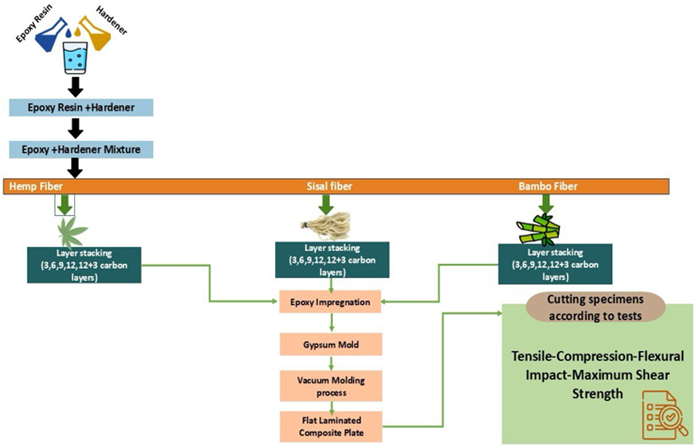
Reinforcement layers were arranged according to the selected stacking sequence as mentioned in Table 2. The laminates were fabricated using a vacuum-assisted hand lay-up process rather than resin infusion. After manual resin impregnation of the reinforcement fabrics, the laminates were enclosed in a vacuum bag and maintained under vacuum pressure during consolidation and curing. The layers were positioned carefully to ensure proper alignment and full surface coverage while preventing wrinkles or gaps. After completing the lay-up, a second PVA sheet was positioned on top and sealed to form a closed system. Two openings were prepared: one for resin inlet and the other connected to the vacuum line. The mold was placed vertically, and vacuum was applied continuously during lamination to improve fiber impregnation, eliminate trapped air, and improve laminate consolidation. Excess resin was removed through the vacuum bagging process, which helped improve laminate consolidation and reduce resin-rich regions.
The system was left under ambient laboratory conditions until complete curing was achieved, after which the laminate was demolded and the specimens were cut according to the required tests. Figure 1 illustrates the fabrication process.
Figure 1. Fabrication process of bio-composite materials for sport prosthetic feet
2.1 Mechanical properties
Athletic prosthetic feet are subjected to complex loading conditions during walking and running, including cyclic bending, compression, impact, and interlaminar shear stresses. Therefore, a series of mechanical tests were performed to evaluate the performance of the hybrid laminated composites developed for the prosthetic foot. All specimens were prepared and tested under standardized conditions. A total of 45 specimens were tested for each mechanical property, including 15 hemp-, 15 bamboo-, and 15 sisal-based specimens distributed among the investigated laminate configurations. Three specimens were tested for each configuration (n = 3). The reported values represent the average of the three specimens.
2.1.1 Tensile testing
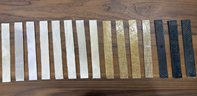
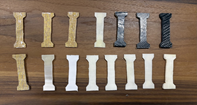
Tensile testing was conducted to evaluate the load-carrying capability of the laminates under tensile stresses developed on the outer surfaces of prosthetic foot structures during bending. The test was conducted according to ASTM D3039 [32] using specimens with nominal dimensions of 250 mm × 25 mm × t, where t represents the laminate thickness. The gauge length was maintained at 150 mm, and the test was performed at a crosshead speed of 5 mm/min until failure. Stress–strain curves were generated to determine ultimate tensile strength (UTS), elongation at break and elastic modulus (E) [33]. Figure 2 shows the test specimens.
Figure 2. Tensile test specimens
2.1.2 Flexural testing
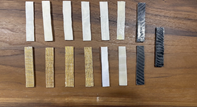
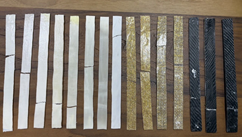
Flexural testing was performed because athletic prosthetic feet function primarily as energy-storage-and-return devices, where repeated bending loads are experienced during walking and running. Three-point bending tests were carried out following ASTM D790 [34] on a Lybold Harris testing machine. A vertical load was applied at the specimen midpoint at 5 mm/min until deformation, providing load–displacement curves from which flexural strength and modulus were calculated. The specimens used in this test are shown in Figure 3 [35].
Figure 3. Flexural test specimens
2.1.3 Maximum shear testing
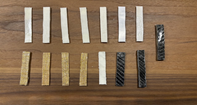
Interlaminar shear testing was performed to assess the resistance of the athletic prosthetic foot to delamination under repeated service loading. Short-beam three-point bending tests were conducted according to ASTM D2344 using specimens measuring 20 mm × 6 mm × t. To assess maximum interlaminar shear strength. The load was applied gradually until failure, and shear strength was calculated from the maximum recorded load. Specimens used in this test are shown in Figure 4 [36].
Figure 4. Maximum shear test specimens
2.1.4 Impact testing
Impact testing was conducted to evaluate the ability of the laminates to absorb sudden loads encountered during foot-ground contact and athletic activities. Izod impact tests were conducted at room temperature by a pendulum apparatus according to ISO 180 [37]. Specimens shown in Figure 5 were rigidly clamped at one end and impacted on the free end. The energy absorbed until fracture initiation and propagation was measured, giving insight into resistance to sudden dynamic loading.
Figure 5. Impact test specimens
2.1.5 Compression testing
Compression testing was conducted to simulate body-weight loading. Compressive tests were conducted according to ASTM D695 using a universal testing machine. Specimens shown in Figure 6 were loaded at 5 mm/min up to a maximum of 25 kN until failure occurred. The compressive strength of the materials was obtained from the compressive stress–strain curves [38].
Figure 6. Compression test specimens
3.1 Tensile properties
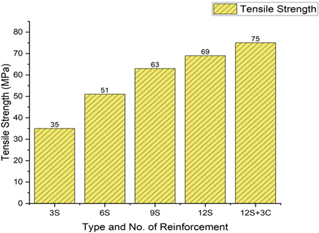
The tensile properties of the composite laminates showed a strong dependence on laminate thickness, fiber type, and carbon fiber hybridization. Figures 7-9 show the UTS results. Tensile strength increased progressively with increasing laminate thickness for all natural fiber systems. Hemp composites exhibited the highest tensile performance among the natural fiber laminates due to their excellent load-carrying capability and efficient stress transfer from the epoxy matrix to the fibers, increasing from 81 MPa for 3H to 120 MPa for 12H. Hybridization with carbon fiber further improved the tensile strength to 127.7 MPa for the 12H+3C laminate, representing an increase of approximately 6.4% compared with the non-hybrid 12H laminate. Bamboo composites showed intermediate behaviour, while sisal laminates recorded the lowest tensile strength values; this behaviour can be attributed to the less effective fiber-matrix interaction, reaching 75 MPa for the hybrid configuration.
Figure 7. Tensile strength values of laminated composite materials reinforced with hemp fibers
Figure 8. Tensile strength of the laminated composite materials reinforced with sisal fibers
Figure 9. Tensile strength of the laminated composite materials reinforced with bamboo fibers
Figure 10 presents representative tensile fracture specimens after testing. The natural fiber laminates exhibited transverse fracture accompanied by localized matrix cracking and partial interfacial debonding between the fibers and epoxy matrix. In some specimens, signs of interlaminar separation were observed, indicating the initiation of delamination during loading. In contrast, the carbon-hybrid laminates showed more consolidated fracture surfaces and retained structural integrity after failure, suggesting improved stress transfer and crack-arrest capability provided by the carbon fiber layers. The observed failure modes are consistent with the higher tensile strength and stiffness obtained for the hybrid laminates.
Figure 10. Tensile test specimens after failure
The interpretation of failure modes was based mainly on visual fracture observations. Further microscopic characterization is recommended to confirm the proposed failure mechanisms and provide additional insight into the fracture behavior of the developed laminates.
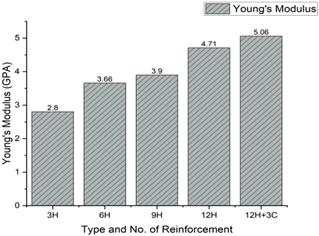
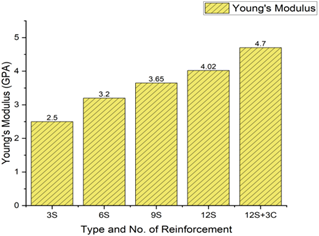
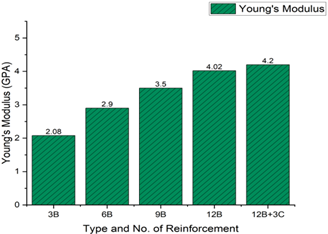
Young’s modulus signifies the stiffness of the composite laminate and characterizes its resistance to elastic deformation under tensile load. Higher modulus values indicate that the material undergoes less strain for a given stress, which gives consideration to a stiffer structural response. In fiber-reinforced composites, the elastic modulus is highly affected by fiber type, alignment and fiber-matrix interaction. Natural fibers such as hemp and bamboo contribute to the stiffness of the laminate through their cellulose-rich structure, whereas the epoxy matrix manages the load transmission at low strain levels.
The addition of more reinforcement layers usually led to higher modulus values due to enhanced stress distribution and reduced matrix-dominated deformation. The addition of carbon fiber layers further enhanced stiffness because carbon fibers had a significantly higher elastic modulus than natural fibers, allowing them to carry a larger portion of the applied load in the elastic region. Higher modulus values were revealed in hemp and carbon hybrid laminates, showing increased resistance to elastic deformation. Bamboo and sisal composites exhibited lower modulus values, indicating greater flexibility. The addition of carbon fiber increased the modulus, which is consistent with the inherently high stiffness of carbon fibers [7]. Figures 11-13 present the modulus results.
Figure 11. Young’s modulus of the laminated composite materials reinforced with hemp fibers
Figure 12. Young’s modulus values of laminated composite materials reinforced with sisal fibers
Figure 13. Young’s modulus of the laminated composite materials reinforced with bamboo fibers
One of the important mechanical parameters for sports prosthetic feet is elongation because it represents the ability of the material to undergo deformation before failure under dynamic loading.
Adequate elongation improves safety, shock absorption, and resistance to catastrophic fracture during high-impact activities such as running and jumping.
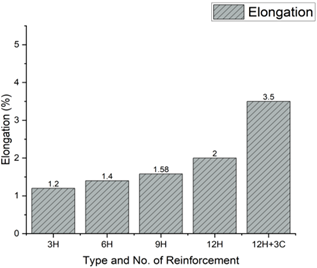
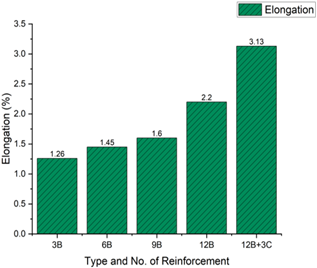
In this research, the elongation results indicate that sisal fiber composite gives the highest elongation at break within the investigated natural fiber, followed by bamboo. Hemp composites give the lowest elongation values. The higher percentage of elongation obtained in sisal-based laminates can be due to the relatively weaker fiber-matrix interfacial bonding, which promotes greater fiber pull-out and slippage throughout tensile loading. This behaviour delays final fracture and gives higher overall deformation before failure.
Bamboo composites give moderate elongation values, reflecting a more balanced behavior between fiber stiffness and matrix deformation. The vascular and heterogeneous structure of bamboo fibers promotes some degree of matrix-dominated deformation; however, the interfacial bonding is stronger than in sisal composites, limiting extreme fiber pull-out and thus lowering elongation compared to sisal.
On the other hand, hemp composites show the lowest elongation, indicating a stiffer and more load-efficient structure resulting in efficient load transfer and higher resistance to deformation. This behavior indicates controlled deformation instead of experiencing premature brittle failure, which is favorable in prosthetic components exposed to repeated and high loads [39]. Figures 14-16 show the elongation results.
Figure 14. Elongation (%) of the laminated composite materials reinforced with hemp fibers
Figure 15. Elongation (%) of the laminated composite materials reinforced with bamboo fibers
Figure 16. Elongation (%) of the laminated composite materials reinforced with sisal fibers
3.2 Flexural test results
The experimental results indicate that flexural strength is strongly affected by fiber type, laminate configuration, and the existence of carbon fiber reinforcement.
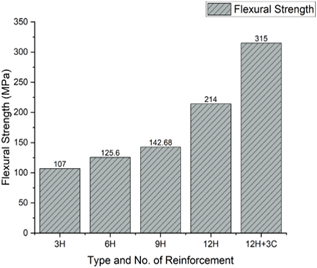
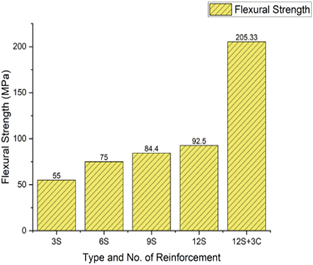
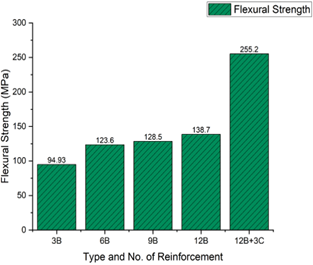
Hemp-based laminates exhibited the most stable and reliable flexural behavior among the investigated natural fibers, indicating effective resistance to bending-induced tensile and compressive stresses. Bamboo composites gave moderate flexural performance in their natural form and sisal laminates generally exhibited lower flexural strength, which can be associated with weaker interfacial bonding and reduced load-carrying efficiency under bending loading conditions. Flexural strength showed the most pronounced improvement after carbon fiber hybridization. The flexural strength of hemp laminates increased from 107 MPa for 3H to 214 MPa for 12H, while the hybrid 12H+3C laminate achieved the highest value of 315 MPa, corresponding to a 47.2% increase compared with 12H. Similar trends were observed for bamboo and sisal composites, where hybridization increased flexural strength from 138.7 to 255.2 MPa and from 92.5 to 205.33 MPa, respectively.
These findings suggest that hybrid configurations are essential for achieving the flexural performance required for prosthetic feet utilized in athletic activities [6]. Figures 17-19 show the flexural test results.
Figure 17. Flexural strength of the laminated composite materials reinforced with hemp fibers
Figure 18. Flexural strength of the laminated composite materials reinforced with sisal fibers
Figure 19. Flexural strength of the laminated composite materials reinforced with bamboo fibers
3.3 Maximum shear test results
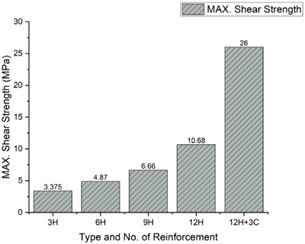
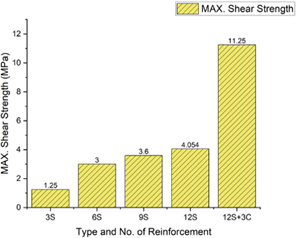
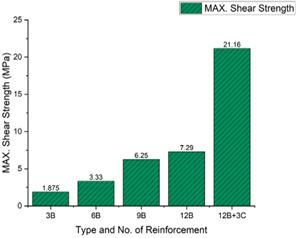
The experimental results given in this study display that hemp fiber-reinforced laminates show the highest shear stress resistance among the investigated natural fibers. This performance may be attributed to the dense fiber structure of hemp and its efficient bonding with the epoxy, which enhanced stress transfer between neighboring layers and delayed interlaminar failure. Low shear stress values were obtained in sisal and bamboo composites, which can be likely due to their more porous internal structures that promote localized shear deformation among plies.
A gradual increase in interlaminar shear strength was observed when increasing the number of reinforcement layers, which can be explained by the fact that those thicker laminates distribute shear stresses over a larger volume and minimize stress concentration at individual interfaces. Also, a significant enhancement in shear behavior was obtained by the addition of carbon fiber layers. Hemp laminates exhibited the highest interlaminar shear strength (ILSS), increasing from 3.38 MPa for 3H to 10.68 MPa for 12H, while the hybrid 12H+3C laminate reached 26 MPa. This value was approximately 143% higher than the corresponding non-hybrid laminate, indicating improved load transfer and interfacial bonding. This improvement is particularly important for the safety and durability of athletic prosthetic feet [40]. Figures 20-22 show the maximum shear test results.
Figure 20. Maximum shear stress of the laminated composite materials reinforced with hemp fibers
Figure 21. Maximum shear stress of the laminated composite materials reinforced with sisal fibers
Figure 22. Maximum shear stress of the laminated composite materials reinforced with bamboo fibers
3.4 Impact test results
The impact test results showed that the fiber type and laminate configuration clearly affect the test results.
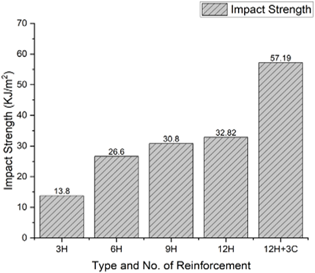
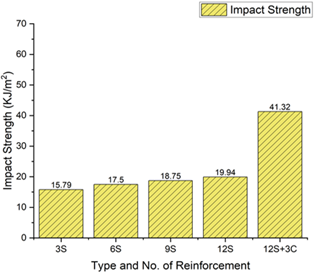
Hemp‑based laminates exhibited the highest impact resistance among the natural fiber systems, demonstrating excellent capability to absorb impact energy without catastrophic failure due to their dense microstructure and good interfacial bonding. Sisal laminates showed moderate impact performance, while bamboo laminates displayed comparatively lower resistance, which can be attributed to their higher porosity and limited resistance to crack initiation under sudden loading.
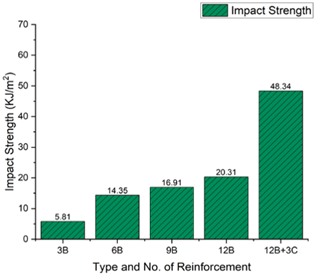
The addition of carbon fiber layers significantly improved the impact resistance in all fiber types, as carbon fibers enhance energy dissipation and limit crack propagation. From the obtained impact performance, the results indicate that hemp carbon hybrid laminates provided the best combination of impact resistance and structural stability for athletic prosthetic foot use; the highest impact resistance was achieved by the 12H+3C laminate (57.19 kJ/m²), which was approximately 74.2% higher than the corresponding non-hybrid laminate (32.82 kJ/m²). Bamboo and sisal hybrid laminates also demonstrated substantial improvements, reaching 48.34 and 41.32 kJ/m², respectively [41]. Figures 23-25 show the impact test results.
Figure 23. Impact strength of the laminated composite materials reinforced with hemp fibers
Figure 24. Impact strength of the laminated composite materials reinforced with sisal fibers
Figure 25. Impact strength of the laminated composite materials reinforced with bamboo fibers
3.5 Compression test results
The experiment proves that different kinds of reinforcement fibers can greatly differ from one another in performance when it came to compressive test results.
Hemp fiber showed the highest resistance to compression. This could be the result of its dense microstructure and reduced susceptibility to fiber buckling under compressive loading. More variable behavior was obtained in bamboo fiber, likely due to its hollow fiber morphology and internal voids, which can induce localized instability when subjected to compression. The lowest compressive resistance was seen in sisal fiber, indicating limited suitability for areas subjected to high compressive loads.
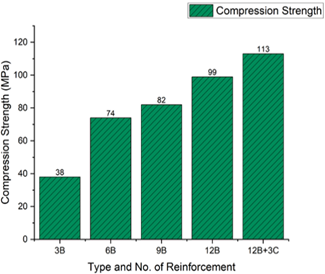
When adding carbon fiber layers, the 12H+3C laminate exhibited the highest compressive strength of 121 MPa compared with 112 MPa for 12H. Bamboo composites increased from 38 MPa (3B) to 113 MPa (12B+3C), whereas sisal composites showed lower values, reaching 62 MPa in the hybrid configuration [42]. Figures 26-28 show the compression test results.
Figure 26. Compression strength of the laminated composite materials reinforced with hemp fibers
Figure 27. Compression strength of the laminated composite materials reinforced with sisal fibers
Figure 28. Compression strength of the laminated composite materials reinforced with bamboo fibers
3.6 Multi-metric assessment
To further evaluate the suitability of the developed laminates for athletic prosthetic foot applications, density-normalized mechanical properties, including specific strength and specific stiffness, were calculated, as presented in Table 3. The highest specific strength was achieved by the bamboo/carbon hybrid laminate (12B+3C), reaching 91.52 MPa·cm³/g, while the highest specific stiffness was recorded for the 12B laminate at 3.43 GPa·cm³/g. These parameters were evaluated together with the measured tensile, flexural, impact, interlaminar shear, and compressive properties to perform a multi-metric assessment of laminate performance. This approach provided a more realistic evaluation for prosthetic foot structures, where both mechanical performance and lightweight design are critical requirements.
Table 3. Density-normalized mechanical properties of natural and hybrid composite laminates
|
Sample |
Density (g/cm³) |
Ultimate Tensile Strength (MPa) |
Tensile Modulus (GPa) |
Specific Strength (MPa·cm³/g) |
Specific Stiffness (GPa·cm³/g) |
Specific Flexural Strength (MPa·cm³/g) |
|
3H |
1.130 |
81.00 |
2.80 |
71.68 |
2.48 |
94.69 |
|
6H |
1.203 |
94.33 |
3.66 |
78.41 |
3.04 |
104.41 |
|
9H |
1.262 |
112.00 |
3.90 |
88.75 |
3.09 |
113.06 |
|
12H |
1.412 |
120.00 |
4.71 |
84.99 |
3.34 |
151.56 |
|
12H+3C |
1.624 |
127.70 |
5.06 |
78.63 |
3.12 |
193.97 |
|
3B |
1.047 |
56.53 |
2.08 |
53.99 |
1.99 |
90.67 |
|
6B |
1.065 |
71.60 |
2.90 |
67.23 |
2.72 |
116.06 |
|
9B |
1.108 |
80.00 |
3.50 |
72.20 |
3.16 |
115.97 |
|
12B |
1.171 |
87.66 |
4.02 |
74.86 |
3.43 |
118.45 |
|
12B+3C |
1.274 |
116.60 |
4.20 |
91.52 |
3.30 |
200.31 |
|
3S |
1.129 |
35.00 |
2.50 |
31.00 |
2.21 |
48.72 |
|
6S |
1.199 |
51.00 |
3.20 |
42.54 |
2.67 |
62.55 |
|
9S |
1.240 |
63.00 |
3.65 |
50.81 |
2.94 |
68.06 |
|
12S |
1.398 |
69.00 |
4.02 |
49.36 |
2.88 |
66.17 |
|
12S+3C |
1.554 |
75.00 |
4.10 |
48.26 |
2.64 |
132.13 |
Based on the multi-metric assessment, the hemp/carbon hybrid laminate (12H+3C) exhibited the highest UTS (127.7 MPa), tensile modulus (5.06 GPa), flexural strength (315 MPa), impact strength (57.19 kJ/m²), interlaminar shear strength (26 MPa), and compressive strength (121 MPa) among all investigated configurations, indicating superior overall mechanical performance and structural durability. In contrast, the bamboo/carbon hybrid laminate (12B+3C) demonstrated the highest specific strength (91.52 MPa·cm³/g) and specific flexural strength (200.31 MPa·cm³/g), reflecting greater mechanical efficiency relative to weight. Therefore, while the bamboo/carbon hybrid laminate offers advantages in weight-sensitive applications, the hemp/carbon hybrid laminate provides the most balanced combination of strength, stiffness, impact resistance, interlaminar integrity, and load-bearing capability required for high-performance athletic prosthetic foot applications.
3.7 Hybridization effect and performance enhancement
The improved performance of the 12H+3C laminate can be attributed to the synergistic interaction between hemp and carbon fibers. The carbon fiber layers, positioned near the outer surfaces of the laminate, carried a substantial portion of the tensile and compressive stresses generated during bending, resulting in significant improvements in flexural and impact performance. In addition to exhibiting the highest absolute mechanical properties, the hybrid laminates demonstrated enhanced specific properties when normalized by density. The 12H+3C laminate maintained the highest absolute stiffness, whereas the 12B laminate exhibited the highest density-normalized stiffness. These results indicate that hybridization not only improves load-carrying capability but also enhances structural efficiency, which is a critical requirement for lightweight athletic prosthetic foot applications.
This study provides a comparative evaluation of natural fiber and carbon-hybrid epoxy laminates for athletic prosthetic foot applications. The findings improve the understanding of how fiber selection and laminate design influence structural performance and demonstrate the potential of hybrid composite systems as lightweight and sustainable alternatives for sports prosthetic feet. The outcomes of this work may support future material selection and design optimization for high-performance prosthetic structures.
(1) The experimental results confirmed that the mechanical performance of the fabricated epoxy-based composite laminates was strongly influenced by both natural fiber type and laminate architecture. Variations in the intrinsic characteristics of hemp, bamboo, and sisal fibers resulted in significant differences in tensile, flexural, impact, interlaminar shear, and compressive properties.
(2) Within the investigated configurations, increasing the number of reinforcement layers generally enhanced the mechanical performance of the laminates. For example, the tensile strength of hemp laminates increased from 81 MPa for 3H to 120 MPa for 12H, while the flexural strength increased from 107 MPa to 214 MPa, demonstrating the beneficial effect of additional reinforcement on load transfer and structural integrity.
(3) Carbon fiber hybridization significantly improved the overall mechanical behavior of all natural fiber systems. Among all investigated laminates, the hemp/carbon hybrid configuration (12H+3C) exhibited the highest tensile strength (127.7 MPa), tensile modulus (5.06 GPa), flexural strength (315 MPa), impact strength (57.19 kJ/m²), interlaminar shear strength (26 MPa), and compressive strength (121 MPa), indicating superior load-bearing capability and damage tolerance.
(4) Density-normalized evaluation revealed that the bamboo/carbon hybrid laminate (12B+3C) achieved the highest specific strength (91.52 MPa·cm³/g) and specific flexural strength (200.31 MPa·cm³/g), demonstrating superior mechanical efficiency relative to weight. This result highlights the importance of considering both absolute mechanical performance and weight efficiency when selecting materials for prosthetic foot applications.
(5) Considering both absolute and specific mechanical properties, the hemp/carbon hybrid laminate was identified as the most suitable configuration for athletic prosthetic foot applications, whereas the bamboo/carbon hybrid laminate may be preferred where lightweight design is the primary requirement.
(6) For athletic prosthetic foot structures, flexural performance, impact resistance, structural durability, and lightweight characteristics are critical design requirements. The present results indicate that improved mechanical performance should be balanced against weight considerations, since optimal prosthetic foot performance depends on an appropriate combination of stiffness, toughness, strength, and weight rather than maximizing a single property.
(7) Overall, the developed natural fiber/carbon hybrid composites fabricated using vacuum-assisted lay-up demonstrate good potential as promising alternatives for athletic prosthetic foot applications. However, further work is recommended to evaluate long-term fatigue performance and energy-return behavior under service-relevant loading conditions.
[1] Abbas, S.M., Chiad, J.S., Takhakh, A.M. (2025). Mechanical properties and numerical modelling for prosthetic foot. Journal of Engineering and Sustainable Development, 29(1): 79-88. https://doi.org/10.31272/jeasd.2112
[2] Castro-Franco, A.D., Siqueiros-Hernández, M., García-Angel, V., Mendoza-Muñoz, I., Vargas-Osuna, L.E., Magaña-Almaguer, H.D. (2024). A review of natural fiber-reinforced composites for lower-limb prosthetic designs. Polymers, 16(9): 1293. https://doi.org/10.3390/polym16091293
[3] Fan, Q., Duan, H., Xing, X. (2024). A review of composite materials for enhancing support, flexibility and strength in exercise. Alexandria Engineering Journal, 94: 90-103. https://doi.org/10.1016/j.aej.2024.03.048
[4] Olanrewaju, O., Oladele, I.O., Adelani, S.O. (2025). Recent advances in natural fiber reinforced metal/ceramic/polymer composites: An overview of the structure-property relationship for engineering applications. Hybrid Advances, 8: 100378. https://doi.org/10.1016/j.hybadv.2025.100378
[5] McKay, I., Vargas, J., Yang, L., Felfel, R.M. (2024). A review of natural fibres and biopolymer composites: Progress, limitations, and enhancement strategies. Materials, 17(19): 4878. https://doi.org/10.3390/ma17194878
[6] Palanisamy, S., Vijayananth, K., Murugesan, T.M., Palaniappan, M., Santulli, C. (2024). The prospects of natural fiber composites: A brief review. International Journal of Lightweight Materials and Manufacture, 7(4): 496-506. https://doi.org/10.1016/j.ijlmm.2024.01.003
[7] Kaufmann, J., Temesgen, A.G., Cebulla, H. (2025). A comprehensive review on natural fiber reinforced hybrid composites processing techniques, material properties and emerging applications. Discover Materials, 5(1): 227. https://doi.org/10.1007/s43939-025-00419-z
[8] Prasad, V., Alliyankal Vijayakumar, A., Jose, T., George, S.C. (2024). A comprehensive review of sustainability in natural-fiber-reinforced polymers. Sustainability, 16(3): 1223. https://doi.org/10.3390/su16031223
[9] Uddin, M.H., Mulla, M.H., Abedin, T., Manap, A., et al. (2025). Advances in natural fiber polymer and PLA composites through artificial intelligence and machine learning integration. Journal of Polymer Research, 32(3): 76. https://doi.org/10.1007/s10965-025-04282-7
[10] Peças, P., Carvalho, H., Salman, H., Leite, M. (2018). Natural fibre composites and their applications: A review. Journal of Composites Science, 2(4): 66. https://doi.org/10.3390/jcs2040066
[11] Shelly, D., Singhal, V., Jaidka, S., Banea, M.D., Lee, S.Y., Park, S.J. (2025). Mechanical performance of bio-based fiber reinforced polymer composites: A review. Polymer Composites, 46: S9-S43. https://doi.org/10.1002/pc.30000
[12] Gurmu, D.N., Gebrelibanos, H.M., Tefera, C.A., Sirahbizu, B. (2024). Experimental investigation the effect of bamboo micro filler on performance of bamboo-sisal-E-glass fiber-reinforced epoxy matrix hybrid composites. Heliyon, 10(22): e40176. https://doi.org/10.1016/j.heliyon.2024.e40176
[13] Shah, D.U., Bourmaud, A., Baley, C. (2026). Multiscale structure, properties, and characterization approaches of plant fibers to be used in biocomposites. In Biocomposites in Manufacturing, pp. 25-53. https://doi.org/10.1016/B978-0-443-24720-0.00010-4
[14] Mohammed, M.M., Rasidi, M., Mohammed, A.M., Rahman, R.B., Osman, A.F., Adam, T., Betar, B.O., Dahham, O.S. (2022). Interfacial bonding mechanisms of natural fibre-matrix composites: An overview. Bioresources, 17(4): 7031-7090. https://doi.org/10.15376/biores.17.4.Mohammed
[15] Kovuru, R., Schuster, J. (2025). Enhancing mechanical properties of hemp and sisal fiber-reinforced composites through alkali and fungal treatments for sustainable applications. Journal of Manufacturing and Materials Processing, 9(6): 191. https://doi.org/10.3390/jmmp9060191
[16] Chahar, M., Kumar, R., Habeeb, A., Kumar Garg, R., Punia, U. (2025). Factors affecting flexural and impact strength of natural fiber reinforced polymer composites: A review. Green Materials, 13(2): 76-91. https://doi.org/10.1680/jgrma.24.00108
[17] Mylsamy, B., Aruchamy, K., Shanmugam, S.K.M., Palanisamy, S., Ayrilmis, N. (2025). Improving performance of composites: Natural and synthetic fibre hybridisation techniques in composite materials–A review. Materials Chemistry and Physics, 334: 130439. https://doi.org/10.1016/j.matchemphys.2025.130439
[18] Mohammed, I., Sultan, M.T.H., Jawaid, M., Ariffin, A.H., Saadon, S. (2018). Mechanical properties of fibre-metal laminates made of natural/synthetic fibre composites. Bioresources, 13(1): 2022-2034. https://doi.org/10.15376/biores.13.1.2022-2034
[19] Das, S.C., Paul, D., Grammatikos, S.A., Siddiquee, M.A., et al. (2021). Effect of stacking sequence on the performance of hybrid natural/synthetic fiber reinforced polymer composite laminates. Composite Structures, 276: 114525. https://doi.org/10.1016/j.compstruct.2021.114525
[20] Mohammed, S.A., Al-Sarraj, G.I. (2024). Hybridization influence on the mechanical properties of hybrid composite laminates: A review. SVU-International Journal of Engineering Sciences and Applications, 5(1): 64-70. https://doi.org/10.21608/svusrc.2023.229393.1145
[21] Sanjay, M.R., Madhu, P., Jawaid, M., Senthamaraikannan, P., Senthil, S., Pradeep, S. (2018). Characterization and properties of natural fiber polymer composites: A comprehensive review. Journal of Cleaner Production, 172: 566-581. https://doi.org/10.1016/j.jclepro.2017.10.101
[22] Abdulrahman, S.A., Hamad, Q.A., Oleiwi, J.K. (2021). Investigation of some properties for laminated composite used for prosthetic socket. Engineering and Technology Journal, 39(11): 1625-1631. http://doi.org/10.30684/etj.v39i11.2050
[23] Fadhil, H.S., Hamad, Q.A., Oleiwi, J.K., Ibrahim, N.F. (2025). Investigations of flexural and impact properties of bio-epoxy-based composites for bone plate application. Engineering and Technology Journal, 43(12): 1084-1095. https://doi.org/10.30684/etj.2025.159004.1936
[24] Kadhim, T.R., Oleiwi, J.K., Hamad, Q.A. (2022). Investigation of compression and hardness for UHMWPE bio-composites as internal bone plate fixation. Engineering and Technology Journal, 40(12): 1783-1794. https://doi.org/10.30684/etj.2022.135083.1258
[25] Raj, M.K.A., Kumar, P.M., Palanisamy, P., Dharmaraju, S., Periyasamy, S., Palaniappan, M., Gebreyohannes, D.T. (2025). Study on the mechanical characteristics of a natural fiber-based hybrid polymer composite. Scientific Reports, 15: 45247. https://doi.org/10.1038/s41598-025-29459-4
[26] Prem Kumar, R., Muthukrishnan, M., Felix Sahayaraj, A. (2023). Effect of hybridization on natural fiber reinforced polymer composite materials–A review. Polymer Composites, 44(8): 4459-4479. https://doi.org/10.1002/pc.27489
[27] Safri, S.N.A., Sultan, M.T.H., Jawaid, M., Jayakrishna, K. (2018). Impact behaviour of hybrid composites for structural applications: A review. Composites Part B: Engineering, 133: 112-121. https://doi.org/10.1016/j.compositesb.2017.09.008
[28] Bourmaud, A., Beaugrand, J., Shah, D.U., Placet, V., Baley, C. (2018). Towards the design of high-performance plant fibre composites. Progress in Materials Science, 97: 347-408. https://doi.org/10.1016/j.pmatsci.2018.05.005
[29] Alvy, M.S.A., Hossain, M.F., Rana, M.S., Rahman, M.M., Ferdous, M.S. (2024). Influence of stacking sequences of woven jute-carbon hybrid composites: Diffusion mechanism and mechanical characterization. Heliyon, 10(17): e36632. https://doi.org/10.1016/j.heliyon.2024.e36632
[30] Del Bianco, G., Giammaria, V., Capretti, M., Boria, S., Lenci, S., Ciardiello, R., Castorani, V. (2024). Low-velocity impact of carbon, flax, and hybrid composites: Performance comparison and numerical modeling. Composite Structures, 344: 118318. https://doi.org/10.1016/j.compstruct.2024.118318
[31] Liu, J.L., Pham, V.N.H., Mencattelli, L., Chew, E., et al. (2024). Improving the impact performance of natural fiber reinforced laminate through hybridization and layup design. Composites Science and Technology, 251: 110585. https://doi.org/10.1016/j.compscitech.2024.110585
[32] ASTM D3039/D3039M-17. (2025). Standard test method for tensile properties of polymer matrix composite materials. ASTM International, West Conshohocken, PA, USA. https://doi.org/10.1520/D3039_D3039M-17R25
[33] Barbero, E.J. (2010). Introduction to Composite Materials Design. CRC Press.
[34] ASTM D790-17. (2017). Standard test methods for flexural properties of unreinforced and reinforced plastics and electrical insulating materials. ASTM International, West Conshohocken, PA, USA. https://doi.org/10.1520/D0790-17
[35] Groover, M.P. (2010). Fundamentals of Modern Manufacturing: Materials, Processes, and Systems. John Wiley & Sons.
[36] ASTM D2344/D2344M-22. (2022). Standard test method for short-beam strength of polymer matrix composite materials and their laminates. ASTM International, West Conshohocken, PA, USA. https://doi.org/10.1520/D2344_D2344M-22
[37] ISO 180:2023. (2023). Plastics—Determination of Izod Impact Strength (Edition 5). International Organization for Standardization (ISO), Geneva, Switzerland. https://www.iso.org/standard/84394.html.
[38] ASTM D695-23. (2023). Standard test method for compressive properties of rigid plastics. ASTM International, West Conshohocken, PA, USA. https://store.astm.org/d0695-23.html.
[39] Abdullah, A.M., Jaber, H., Al-Kaisy, H.A. (2020). Impact strength, flexural modulus and wear rate of PMMA composites reinforced by eggshell powders. Engineering and Technology Journal, 38(7): 960-966. https://doi.org/10.30684/etj.v38i7A.384
[40] Faheed, N.K., Oleiwi, J.K., Hamad, Q.A. (2021). Effect of different fiber reinforcements on some properties of prosthetic socket. Engineering and Technology Journal, 39(11): 1715-1726. http://doi.org/10.30684/etj.v39i11.2267
[41] Mulenga, T.K., Rangappa, S.M., Siengchin, S. (2025). Impact behavior of natural fiber composites: A comprehensive review on theoretical and computational modeling. Next Materials, 8: 100849. https://doi.org/10.1016/j.nxmate.2025.100849
[42] Thiagamani, S.M.K., Krishnasamy, S., Muthukumar, C., Tengsuthiwat, J., Nagarajan, R., Siengchin, S., Ismail, S.O. (2019). Investigation into mechanical, absorption and swelling behaviour of hemp/sisal fibre reinforced bioepoxy hybrid composites: Effects of stacking sequences. International Journal of Biological Macromolecules, 140: 637-646. https://doi.org/10.1016/j.ijbiomac.2019.08.166