Asma Souidi* | Youssef Maaloufa | Malika Atigui | Mina Amazal | Slimane Oubeddou | Soumia Mounir | Ahmed Aharoune
© 2025 The authors. This article is published by IIETA and is licensed under the CC BY 4.0 license (http://creativecommons.org/licenses/by/4.0/).
OPEN ACCESS
The reuse of shell residues in building materials offers an effective strategy for waste recovery and reducing environmental impact. In this work, shell waste is examined as a partial substitute for natural sand in cement mortar formulations. In the parallel, natural coconut fibres were used to study their effect on the mixture incorporating the shell aggregates. The particle size distribution has been adjusted to resemble that of fine sand by removing ultrafine fractions smaller than 0.08 mm. We replaced the natural sand with three different percentages of shell sand (15%, 25% and 45% by mass) and three different percentages of coconut fibre (0%, 8% and 16% by volume). An evaluation of selected properties of the material was carried out, including its mechanical, thermal and capillary behaviour. The results show that replacement with shell sand and coconut fibre improves the mortar's thermal properties. The incorporation of shell waste in cement mortar (CM) to substitute 45% of the sand is anticipated to increase the thermal insulation efficiency of the material of 21.70% and 23.57% for, CM450 and CM4516 respectively. This replacement has a negative effect on mechanical strength, with the reduction in compressive strength ranging from 20.44% for CM450 to 31.49% for CM4516. However, replacing 8% of the coconut fibres gives flexural strength values close to those of the reference mortar. In terms of capillarity, shell aggregates have a tendency to reduce the capillarity coefficient of mortars reaching a rate of 58.33% for CM450, but the fibres react in the opposite way.
mortars, shell sand, fibres, mechanical properties, thermal properties, durability, valorisation
The accumulation of shellfish waste is an urgent environmental issue in most seafood-consuming countries. Challenges include poor biodegradability, the release of toxic gases during the decomposition of organic matter on the surface, and the significant financial burden on public waste management systems. Consequently, the recycling of these or other types of waste is the focus of interest for many researchers around the world. On the other hand, cement mortar is a mix of cement, sand and water, and is an essential composite in construction for masonry work. It is used to join construction elements together and to fill gaps between basic elements. Sand is a granular constituent that plays a structural role in mortar. There are two types: natural sand (from dunes, rivers, ...) and artificial sand, which comes from the disaggregation of rocks. The form and particle size of the sand are very significant for its use in construction. Shapes that are too round or too fine are not recommended, which means that desert sand cannot be used in construction. Due to the high demand for structural aggregates in construction, some countries use sand directly from beaches, the seabed or quarries adjacent to beaches under construction. This often leads to uncontrolled sand extraction, with no regard for the environmental consequences, causing beaches to disappear, deforming landscapes and salinizing groundwater.
Recycling shell waste to produce a partial sand replacement can therefore be a relevant and suitable solution to the two environmental problems mentioned above. Our work focuses on the reuse of this residue in building materials. Seashells are mainly made up of calcium carbonate CaCO3, in very high percentages (over 90% by mass). When calcined at high temperatures, its chemical composition resembles that of limestone CaO [1, 2]. The presence of organic matter in the structure of the shell acts as a matrix that binds the aragonite tablets, forming structured layers with these two constituents. The shell is generally made up of three parts: the inner layer (the nacre), the intermediate layer (the prismatic) and the outer layer (the periostracum) [3].
Furthermore, natural fibres (coconut fibre, date palm fibre, alfa, bamboo, hemp, etc.) are becoming increasingly usable in construction worldwide [4-6]. This is thanks to their intrinsic properties, mechanical properties, low weight and cost. This use is suitable for several products, including lightweight load-bearing walls, insulation materials, floor and wall coverings, and roofing. In general, the fibres have a porous structure that improves the thermal properties of the materials. Coconut fibres have been studied by several authors used in cement mortar [7-11]. It has been found that when fibres are added, the materials become porous which affects the mechanical properties especially the compressive strength. This behavior is mainly due to the hydrophilic nature of the fibres.
Research to date has focused on the recycling of shell waste to formulate concrete [12-17] and mortars, either in the form of fine and coarse aggregates to replace sand and gravel respectively, or in the form of calcined powder [18-22], which can be used as an additive or replacement of cement. For mortars, Safi et al. [23] used size between (0-5 mm) of crushed shells as a replacement sand in the formulation of a self-compacting mortar (SCM) with percentages of 0%, 10%, 20%, 50% and 100% by weight. Ez-Zaki et al. [24] worked with mussel shells and glass powder as a substitution of sand in cement mortar with percentages of 20%, 40% and 60% by mass. They used a granulometry of (0-1 mm) for the shell sand. Martínez-García et al. [25] used a particle size distribution similar to that of natural sand (0-4 mm), by mixing the mass fractions of the two types of shell sand, fine (0-1 mm) and coarse (0-4 mm). They replaced the natural sand with the following percentages 25%, 50% and 75% by volume of shell sand. Merlo et al. [26] investigated the effects of substitute natural sand with Acanthocardia tuberculata shell sand on the physical and mechanical properties of mortars, using the following substitution rates 0%, 5%, 10% and 15% by mass, with a grading (0-3 mm) of shell sand. In general, the physical, mechanical and thermal properties of mortars and concretes are greatly affected by the grain size and shape of the shell aggregates [27].
Shell waste and coconut fibre waste are abundant in our region of Agadir in Morocco. They are discarded either by human activities or by natural phenomena, causing negative impacts on the environment, such as bad smells, attracting insects, water pollution, etc. The recycling of natural waste in the construction materials industry has become a major objective for researchers around the world. This approach aims to promote environmentally friendly construction, also known as eco-construction. It helps to reduce the impact of buildings on the climate and the environment. At the same time, it minimises the construction sector's dependence on increasingly scarce natural resources and recycles natural waste discarded into the environment. To this end, this study has been carried out to examine its feasibility as a building material.
The effect of combining the two types of waste in the same mix comes from a preliminary study in the literature. Several researchers have studied the effect of replacing natural sand with shell sand in mortars and concrete [14, 15, 17, 24]. They have observed that by increasing the replacement rate, porosity increases and mechanical strength is adversely affected, but an improvement in thermal properties is obtained. Moreover, in previous studies, the use of coconut fibres in mortar resulted in a slight increase in mechanical strength, particularly flexural strength [8, 9, 28]. Thanks to the mechanical properties of coconut fibres, which led to the idea of incorporating both types of waste in the same mix. Both materials have intrinsic properties that favour them. Assembling them in the same composite is an innovative idea that can add new results to the literature.
Following this documentary analysis, we observed that most authors use all of the crushed shell sand without extracting the fine fraction. This practice can result in a grain size distribution that is very different from that of natural sand. Natural sand generally contains only a small proportion of fines. In addition, the use of shell aggregates with natural fibres in the same formulation has not been studied in the literature. This choice makes it possible to combine the intrinsic properties of the two materials. For this, we chose an approach to study the effects of replacing natural sand with shell sand and coconut fibres on the properties of the mortar.
Our approach consists of using a grain size of (0.08-2 mm). This particle size was chosen to closely match the dimensional characteristics of the fine natural sand traditionally used in mortars. This choice ensures high compactness and homogeneity of the mixture. It also allows the specific effect of very fine shell particles on the mechanical properties of the mortar to be evaluated. In addition, the fine particles of crushed shell sand must be removed. This reduces the amount of fine organic matter it may contain. A high organic matter content acts as an air entrainment agent, creating more voids within the paste. On the other hand, it also acts as a setting retarder [29]. In parallel, the coconut fibres were used with a length of 4 cm. This length was selected for the coconut fibres because it is sufficient to create crack bridging effects and improve the mortar's resistance to bending and cracking without excessively compromising its homogeneity or workability. Most authors are more interested in the mechanical properties of cement mortars than in their thermal properties, so our study consists in determining the thermal behaviour as well. The thermal aspect is a very important axis that must be treated in order to estimate heat transfers within the building and to try to reduce energy requirements.
The purpose of this study is to evaluate the effect of partially replacing natural sand with shell sand (grain size 0–0.08 mm) and 4 cm of coconut fibres on the mechanical and physical properties of mortars. The goal is to determine whether this combination can offer performance equal to or superior to traditional formulations.
To this end, we have prepared cement mortars by substituting natural sand with shell sand and coconut fibres in percentages of (0%, 15%, 25% and 45%) and (0%, 8% and 16%), respectively, for the two types of incorporation. The study examined the physical properties of mortars in their hardened state, as well as their mechanical, thermal and capillary characteristics. In addition, microstructural analyses were carried out in order to establish a link between structural observations and measured properties.
2.1 Primary materials
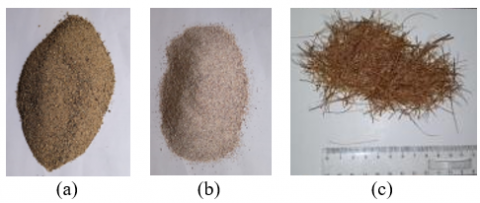
The cement used is a composite portland cement of class CPJ 45 as defined by standard NM 10.1.004 [30]. It is obtained by grinding clinker and gypsum, with the addition of one or more secondary components such as pozzolan, fillers, or fly ash. The natural sand in Figure 1(a) is a river sand with a maximum size of 2 mm. The sand in Figure 1(b) is a shell sand, obtained from mussel waste ''Mytilus galloprovinciallis'' from the Tamri region. A village in the north of Agadir in Morocco. This waste accumulates on the cliffs along the beaches of Tamri, where people collect the mussels by hand in order to sell their flesh to the public. As a result, their waste is thrown into the environment. These wastes undergo a cleaning treatment with bleach in the laboratory to minimize the level of salinity and impurities on their surface. Then are put in the oven to dry at 230℃ for 1 hour to suppress any marks of organic matter [31]. The shells are then crushed in a jaw crusher, then ground in a hammer mill and passed through a 0.08 mm sieve. Figure 1(c) shows coconut fibers, which are prepared and dispersed manually and cut to a width of 4 cm. These fibers are extracted from the outer husk of the coconut and are marketed in the form of compacted rolls.
Figure 1. (a) Natural sand, (b) shell sand, (c) coconut fibres
2.2 Physical and chemical characterisation of materials
Figure 2 shows X-ray diffraction (XRD) analysis of shell powder, using a Bruker D8 Advance-type apparatus. They consist mainly of aragonite (61%) and calcite (30%). The same crystalline phases of CaCO3 in shells have been found by several researchers [32, 33].

Figure 2. Diffractogram of mussel shell powder

Figure 3. Particle size curves
Figure 3 contains the particle size distribution curves for the two kinds of sand. They have a spread particle size (or a varied particle size with Uniformity Coefficient (Cu) greater than 3) and continuous curves. According to Table 1, the Curvature Coefficient (Cc) varies in this range 1 < Cc < 3 and Cu > 4, so the two curves are well graded, show the existence of a diverse range of sand diameters [34].
Table 1. Physical and particle size properties of materials
|
|
Shell Sand |
Natural Sand |
Coconut Fibres |
|
Fineness modulus |
1.933 |
1.352 |
- |
|
Cc |
1.425 |
1.289 |
- |
|
Cu |
4.385 |
4.375 |
- |
|
E.S.V (%) |
95.5 |
96.3 |
- |
|
E.S (%) |
88.2 |
83.5 |
- |
|
VBS |
0.088 |
0.126 |
- |
|
|
1.842 |
2.637 |
- |
|
Apparent density (g/m3) |
1521 .103 |
1565 .103 |
109 .103 |
|
Absolute density (g/m3) |
2856 .103 |
2491 .103 |
770 .103 |
|
P (%) |
46.76 |
37.17 |
85.84 |
|
α (%) |
26.19 |
29.51 |
168 |
E.S.V: Visual sand equivalence
E.S: Sand equivalence
VBS: Soil blue value
$S_S$: Total specific surface areas
P: Intergranular porosity
α: Water absorption rate
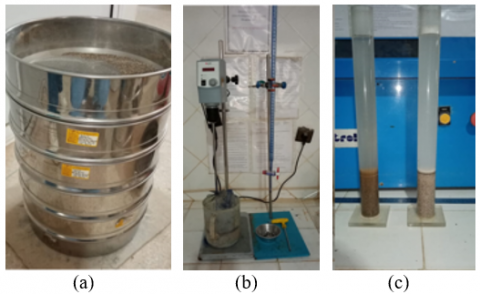
Table 1 shows the different physical and granulometric properties of the materials (using materials in Figure 4). It can be observed that natural sand is slightly rich in fine elements compared with shell sand, which is approved by their fineness modulus, which is equal to 1.933 for shell sand and 1.352 for natural sand. Both types of sand are very clean sands (E.S > 80%), which is explained by the almost total absence of clay fines. The total specific surface areas ($S_S$) are calculated from the methylene blue values using Eq. (1) from El Fgaier [35] using blue values (VB) and a conversion factor (FC).
$S_S=V B \times F C$ (1)
$S_S=\left[\frac{V_{B M}}{M_{s o l}}\right]\left[m_{B M d r y} \frac{A_v}{373.91} A_{B M}\right]\left(\mathrm{m}^2 / \mathrm{g}\right)$ (2)
where, VB is the blue value of the soil which is equal to the ratio between $\left(V_{B M}\right)$ the quantity of methylene blue adsorbed in ml and $\left(M_{s o l}\right)$ which is the dry mass of the test sample in g.
FC is a conversion factor which is given as a function of $\left(m_{B M \text { dry}}\right)$ blue content of the titration solution in g/ml, $\left(A_v\right)$ Avogadro number (6.02.1023 atoms/mol), $\left(A_{B M}\right)$ area covered by one molecule of methylene blue (130 Ǻ2) and the molecular weight of methylene blue (373.91).
Figure 4. (a) Granulometry analysis, (b) methylene blue adsorption test, (c) sand equivalence evaluation
The total specific surface area $S_S$ gives information about the size of the grains, which increases inversely with the smallest particle size, so grains of shell sand are larger than those of natural sand because they have a low specific surface area of 1.842 m2/g according to Table 1.
The water absorption rate $\alpha(\%)$ is determined by drying the sands at 60℃ in the oven until they have a constant mass $\left(m_{d r y}\right)$, then they are immersed in water for 24 hours. The saturated mass $\left(m_{s a t}\right)$ is noted in order to calculate the absorption rate using the following equation:
$\alpha(\%)=\frac{m_{s a t}-m_{d r y}}{m_{d r y}}$ (3)
The sands have varying absorption rates, noting that shell sand has a lower capacity to absorb water (26.19%) than natural sand, which is also confirmed by the specific surface area values.
Figure 5 illustrates the morphology of sands using scanning electron microscopy SEM. The two types of sand have very different shapes, Figure 5(a) shows natural sand, characterised by its rough, nearly rounded shape. The shell sand in Figure 5(b) displays flattened and more elongated, with multiple curve, angles, and varying thicknesses. It can also be seen that the grains of shell sand are larger than those of natural sand, which is approved by the specific surface area $S_S$ in Table 1.

(a)

(b)
Figure 5. SEM Micrographs (Secondary Electrons): (a) natural sand, (b) shell sand
Table 2. Chemical distribution of sands
|
Equation (mass %) |
||||||||
|
|
CaO |
FeO |
SiO2 |
K2O |
Al2O3 |
MgO |
C |
|
|
Natural sand |
5.17 |
12.69 |
51.83 |
9.79 |
18.04 |
2.47 |
- |
|
|
Shell sand |
73.75 |
- |
- |
- |
- |
- |
26.25 |
|

(a)

(b)
Figure 6. Chemical distribution peaks of sands: (a) natural sand, (b) shell sand
Table 2 presents the chemical composition of the two types of sand, achieved by EDS analysis integrated with scanning electron microscopy. The shell sand has a CaO value equal to (73.75%) by mass, while the natural sand has a value of (5.17%), with the majority constituent being quartz SiO2 (51.83%). Figure 6 shows the distribution of peaks of the chemical composition of the sands analysed by EDS.
Figure 7 shows the secondary electron images of the outer face and cross-section respectively of the coconut fibre observed by scanning electron microscopy. The surface appears rough thanks to protruding lines that are parallel to the length of the fibre, but observation of the cross-section shows a porous structure, which justifies the density and water absorption values obtained in Table 1. With regard to the chemical composition, the EDS analysis in Figure 8 shows the presence of carbon and hydrogen atoms with percentages of 44.26% and 55.74%, respectively.

(a)

(b)
Figure 7. SEM Micrographs (Secondary Electrons) of coconut fibres: (a) external face, (b) cross-section

Figure 8. Chemical distribution peaks of coconut fibres
2.3 Samples preparation
We prepared mortars of cement according to NF EN 196-1 [36] using the following dosage 1:3:0.50 by mass, which presents the cement, sand and water/cement ratio respectively; this ratio is kept constant during the experiment. Mass proportions of natural sand are replaced by shell sand, the substitution percentages are respectively 0%, 15%, 25% and 45% by mass, the mixtures are named CM0, CM15, CM25, and CM45, respectively, with CM is cement mortars. For each of these mixtures, we replaced the natural sand with percentages of 0%, 8% and 16% by volume of coconut fibre. which gave us a total of 12 types of mortar. The different samples were manufactured in the laboratory under temperature conditions between 19℃ and 23℃ and relative humidity between 60% and 64%. Two different types of parallelepiped specimens were produced, (10 × 10 × 2.5 cm3) for the thermal test and (4 × 4 × 16 cm3) for the mechanical and capillarity tests. All samples were taken down from the moulds after 24 hours and then stored in a container of water (Figure 9) at 20 ± 2℃ for 28 days.

Figure 9. Mortars placed in a container of water
2.4 Experimental procedures
2.4.1 Thermal test
The samples, measuring 10 × 10 × 2.5 cm³, were analysed to determine their thermal properties using the TPS 1500 hot disc method at an age of 28 days (Figure 10), using a disc-shaped probe between two identical samples, the probe is designed with a plastic base that supports a double-spiral nickel resistance, enabling it to simultaneously generate heat and monitor temperature changes. Measurements are taken after oven-drying the specimens at 60℃ until a constant mass is obtained.

Figure 10. Thermal analysis
2.4.2 Mechanical tests
Flexural and compressive strengths were measured using a Controls Automax5 machine operating with Microdata Autodriver software of the specimens at 28 days of curing. They are measured in compliance with NF EN 196-1 [36], using (4 × 4 × 16 cm3) prisms for the flexural test (Figure 11) and (4 × 4 × 8 cm3) prisms for the compressive test. Each composition was evaluated using three individual specimens.

Figure 11. Mechanical analysis
2.4.3 Capillarity test
The durability of composites is determined by the capillary absorption test. Capillary pores are mainly due to the water part of the hydration that is not chemically or physically bound by the cement, so it settles in the capillary pores (interstitial water), from where it can evaporate later. The capillary structure has a negative impact on the durability of composites, as aggressive substances can easily infiltrate. The capillary coefficient was determined according to the study [37], using prisms measuring (4 × 4 × 8 cm3) at an age of 28 days.
3.1 Physical properties
Figure 12 shows the development of dry and saturated density of cement mortar and its errors determined by the difference between the maximum and average values for each composition. The density in the dry state, is determined by the quotient of the mass of the specimens which has been taken after drying them in an oven at 60℃ ± 5℃ to a constant mass, by the volume it occupies when immersed in water (measured by hydrostatic weighing). The saturated density is calculated after the dry mortars have been immersed in water, it being reached when two successive weighings, carried out 15 minutes apart during immersion, do not differ by more than 0.2% by mass EN 1015-10 [38].

Figure 12. Evolution of saturated and dry densities of cement mortars
Figure 12 shows that the dry density decreased as the rate of substitution of natural sand by shell sand increased, whereas this decrease became more significant as the rate of substitution by coconut fibres increased. On the other hand, there was an opposite trend in saturated density. The rate of reduction in the dry state is 7.78% and 9.31% for CM450 and CM4516, respectively, compared with CM00.
The water physically bound to the cement mortar evaporates completely after drying. As the rate of substitution increases, the cement mortar becomes more fluid and, as a result, the pores appear more intensely after drying (the density decreases). The quantity of water absorbed is considered to be linked to the specific surface area, also to the fineness of the particles, so the effect of shell aggregates on the fluidity of the paste varies according to these first three parameters. For example, Kuo et al. [39] noted that shells do not improve the workability of samples, since they used shell aggregates with a lower fineness modulus than natural aggregates, so shell particles absorb water more than sand. However, Martínez-García et al. [14] have attributed the reduced workability of concrete to the form of the laminated shell granulates, also to the presence of organic substances that increase the viscosity of the paste. The effect of reduced fluidity is also observed by several other authors [40-42]. The increase in fluidity observed during mixing of mortar in our experiment may also be due to the elimination of the fraction below 0.08 mm from the shell sand, which may contain more free fine organic substances and consequently the paste becomes less viscous compared with other studies using sand with this granular fraction (< 0.08 mm). The lower density observed in Figure 12 may also be due to the flaky shapes of the shell aggregates (Figure 5(b)) and their larger sizes (Table 1), which create more pores with the cement mortar. On the other hand, the effect of the reduction in dry density when coconut fibres are substituted is due to the low density of the fibres compared with natural sand (Table 1).
Water-accessible porosity P (%) is calculated using Eq. (4) according to Nguyen et al. [13], with mdry the dry mass of the specimens after drying at 60℃ in the oven, mwat mass of the specimens under water, Vt volume of the specimen by hydrostatic weighing, and ρwater density of the water.
$P(\%)=\left[1-\left(\frac{m_{d r y}-m_{w a t}}{\rho_{w a t e r} \times V_t}\right)\right]$ (4)
Figures 13 and 14 illustrate the variation in water-accessible porosity and water absorption by immersion of the specimens. Porosity increases with the percentage of substitution (of shell sand and coconut fibre), recording a value of 22.80% for CM00 and an increase of 56.58% and 66.93% for CM450 and CM4516, respectively.

Figure 13. Water-accessible porosity of different mortars

Figure 14. Absorption of water by immersion of different mortars
The absorption of water by immersion is determined by the ratio of the difference between the saturated and dry masses to the dry mass of the specimens as a percentage. This variable increases with the rate of substitution by shell sand, ranging from 9.72% for CM00 to 22.53% and 26.09% for CM450 and CM4516, respectively.
Figures 15 and 16 show the correlation between the absorption of water by immersion and the water-accessible porosity on the one side, and the correlation between the water-accessible porosity and the dry density of the specimens on the other side. They are given by the following equations, respectively:
$W(\%)=1.02 P(\%)-13.38$ (5)
$P(\%)=-87.79 \rho_{d r y}+194.47$ (6)
We therefore deduce that the increase in the rate of substitution of natural sand by shell sand or coconut fibres at the same time affects the dry densities of cement mortars and consequently the other physical properties, since they are all linearly proportional to each other. The trend of increasing porosity and water absorption has been found by several authors [23, 25, 27, 39, 42].

Figure 15. Evolution of absorption of water by immersion as influenced by water-accessible porosity of different mortars

Figure 16. Evolution of water-accessible porosity as influenced by dry density of different mortars
3.2 Microstructure
Figure 17 shows the secondary electron images observed by scanning electron microscopy SEM of the fracture faces of CM00, CM250 and CM450 cement mortars for 0%, 25% and 45% substitution, respectively. From these pictures, we can clearly see the increase in pore rates within the volumes of the composites, which justifies the evolution of porosity presented in paragraph 3.1. The porosity is the natural consequence of the quantity of water added in addition to that required for hydration and any voids present in the aggregates. The increase in the rate of substitution of natural sand by shell sand resulted in an excess of mixing water in the mixture, due to low absorption of water capacity of shell sand compared with natural sand (Table 1). This quantity of water, which increases with the rate of replacement, evaporates when drying at 60℃, leaving pores inside the composites.

(a)

(b)

(c)
Figure 17. SEM Micrographs (Secondary Electrons) of the fracture faces of: (a) CM00, (b) CM250, (c) CM450

(a)

(b)

(c)

(d)

(e)
Figure 18. SEM Micrographs (Secondary Electrons) of the fracture faces of mortars incorporated with shell sand

(a)

(b)
Figure 19. SEM Micrographs (Secondary Electrons) of the fracture faces of mortars embedded with coconut fibres
The pores may also be due to the shape of the shell sand aggregates, as shown by the scanning electron microscopy images. We can clearly see in Figure 18(a) the weak adhesion between the smooth inner surface of the shell and the cement mortar due to the void created between the two. On the other side, in Figure 18(b) and (c), the pores may be due to the creation of cavities around the grains of flattened and elongated shell sand or due to the lower specific surface area compared with that of natural sand (Table 1), which results in a poor arrangement of the aggregates. However, there are cases where there is good adhesion between the shell grains and the cement mortar in cases where these grains are almost rounded, especially with the periostracum part Figure 18(d) and (e).
The presence and increasing percentages of coconut fibres contribute to the increase in pores in cement mortars. When the mortar is prepared, the fibres are first immersed in water, which causes them to swell. When the mortar dries, the fibres detach from the cement matrix, leaving cavities in the surrounding area as noted in Figure 19. On the other hand, there are cases where pores are created due to the entanglement of the fibres with natural sand or shell aggregates.
3.3 Thermal properties
The thermal tests were carried out on the dried prisms of dimensions (10 × 10 × 2.5 cm3) under Laboratory conditions. Multiple analyses were carried out for each composite in order to obtain an average value for the thermal properties of each sample.
Table 3 shows the thermal conductivity and diffusivity of mortars. These thermal properties decreased when natural sand was replaced by shell sand and/or coconut fibre. For the first three CM0 mortars this reduction is not very significant, but when replacing with shell sand, it becomes more noticeable.
Table 3. Conductivity and thermal diffusivity of mortars
|
|
Thermal Conductivity (W/m K) |
|
Thermal Diffusivity (mm2/s) |
|
||||||
|
ʎ1 |
ʎ2 |
ʎ3 |
ʎaver |
∆ʎ/ʎ (%) |
α1 |
α2 |
α3 |
αaver |
∆α/α (%) |
|
|
CM00 |
1.415 |
1.392 |
1.381 |
1.396 |
1.361 |
0.949 |
0.884 |
0.883 |
0.905 |
4.795 |
|
CM08 |
1.259 |
1.239 |
1.229 |
1.242 |
1.361 |
0.920 |
0.887 |
0.865 |
0.891 |
3.280 |
|
CM016 |
1.237 |
1.217 |
1.247 |
1.233 |
1.107 |
0.911 |
0.849 |
0.868 |
0.876 |
3.998 |
|
CM150 |
1.239 |
1.252 |
1.242 |
1.244 |
0.649 |
0.857 |
0.844 |
0.832 |
0.844 |
1.513 |
|
CM158 |
1.230 |
1.249 |
1.233 |
1.237 |
0.917 |
0.823 |
0.850 |
0.798 |
0.824 |
3.205 |
|
CM1516 |
1.215 |
1.225 |
1.214 |
1.218 |
0.566 |
0.797 |
0.785 |
0.776 |
0.786 |
1.384 |
|
CM250 |
1.198 |
1.178 |
1.179 |
1.185 |
1.087 |
0.780 |
0.779 |
0.782 |
0.780 |
0.195 |
|
CM258 |
1.164 |
1.158 |
1.155 |
1.159 |
0.399 |
0.764 |
0.774 |
0.780 |
0.773 |
0.970 |
|
CM2516 |
1.120 |
1.137 |
1.132 |
1.129 |
0.656 |
0.769 |
0.758 |
0.751 |
0.759 |
1.273 |
|
CM450 |
1.108 |
1.088 |
1.083 |
1.093 |
1.408 |
0.680 |
0.687 |
0.680 |
0.683 |
0.711 |
|
CM458 |
1.072 |
1.077 |
1.072 |
1.074 |
0.298 |
0.667 |
0.684 |
0.660 |
0.670 |
2.003 |
|
CM4516 |
1.072 |
1.061 |
1.070 |
1.067 |
0.408 |
0.664 |
0.653 |
0.646 |
0.654 |
1.530 |
Thermal conductivity serves as an indicator of a material's insulating capacity. By replacing 45% of the sand with shell waste, it is estimated that the material's thermal insulation improves by 21.70% and 23.57% for CM450 and CM4516 respectively compared to standard cement mortar.
Figure 20 demonstrates the variation in thermal conductivity as a function of dry density for different mortars. Thermal conductivity decreases as the density decreases, a proportionality between the two values is observed, given by the following equation:
$\mathrm{y}=1.70 \mathrm{x}-1.97$ (7)
Figure 21 illustrates how thermal conductivity varies with the porosity of composites. An increase in porosity corresponds to a decrease in thermal conductivity. The proportionality between these two parameters given by the following equation:
$y=-0.02 x+1.77$ (8)
We can conclude that the thermal behaviour observed during substitution can be directly explained by the increase in the porosity rate within the mortar volume, this increase in porosity is demonstrated, on the one side, by the decrease in the density of the composites (Figure 12) and, on the other, by the observation of fracture faces using scanning electron microscopy (Figure 17). The effect of improving thermal properties when shell aggregates are incorporated has been observed in various formulations [24, 31, 43] either in plasters, compressed earth blocks or cement mortars respectively.

Figure 20. Evolution of thermal conductivity as influenced by dry density of different mortars

Figure 21. Evolution of thermal conductivity as influenced by water-accessible porosity of different mortars
3.4 Mechanical properties
Mechanical properties are estimated by compressive and flexural tests after 28 days of specimen curing. Three specimens of each mortar mixture were used to determine the mean value of the multiple analyses. Figures 22 and 23 indicate compressive and flexural strength of different types of mortar and their errors, calculated as the difference between the maximum and average values.

Figure 22. Compressive strength evolution

Figure 23. Flexural strength evolution
Compressive strength decreased slightly with increasing levels of shell sand, but the decrease was greater with the addition of coconut fibres. The rate of reduction ranged from 20.44% for CM450 to 31.49% for CM4516 compared with CM00. Flexural strength is not greatly affected, but it can be seen that the replacement of 8% coconut fibre recorded values very close to the reference mortar, even in the presence of shell sand, especially for CM0, CM15 and CM25. This optimal behaviour can be explained by good fibre dispersion at this incorporation rate, allowing effective bridging of microcracks and better redistribution of stresses within the matrix. On the other hand, higher fibre contents lead to increased porosity and agglomeration phenomena, which reduce the effectiveness of the fibre-matrix interface and limit stress transfer. The reduction in strength observed in this study is less pronounced than that reported in the literature, probably due to the natural roughness of coconut fibres and shell aggregates, which promotes mechanical interlocking and partially compensates for the lower rigidity of shell sand.
These results can be mainly attributed to the porosity of the material, the smooth surface of the shell particles which limits their adhesion to the cement paste, and the irregular stacking of the aggregates resulting from their flattened and elongated shape (Figure 18).
These results are in concordance with those of other authors who have studied the effect of replacing natural sand with shell sand in cement mortars [23, 24, 33, 44, 45]. The rate of reduction in compressive strength for Martínez-García et al. [25] reached values between (60-70%) for 50% of the replacement. However, Woon et al. [44] achieved a rate of 54.88% for 50% replacing natural sand with sand from mussel shells. Ez-zaki et al. [24] estimated a reduction rate of 6.5% and 27% for 40% and 60% of the replacement respectively. These results seemed to be related to the granulometry used for the shell sand, note that Martínez-García et al. [25] used shell aggregates between 0 and 4 mm, while these studies used aggregates with a maximum size of less than 1 mm [24, 44]. Shells are known for their flattened shape, with a less efficient granular arrangement. Crushing minimises the flattening of particles while generating a wide range of granulometric fractions, then crushing plays a very significant role in the mechanical properties of composites, the larger the grains the more the shape of the shells is rather flattened and hollow and generates more pores and therefore the mechanical properties are affected by the study of Nguyen et al. [27]. Also, the elimination of the fraction < 0.08 mm may be one of the reasons why the mechanical properties were not greatly affected in our study, it is possible that this fraction contains fine organic substances.
The coconut fibres did not greatly improve the mechanical properties, but they did contribute in other ways to increasing the porosity of the mortar volume, which had a negative effect on compressive strength. This behaviour has been observed by several researchers, who have used coconut fibres as an additive or as a replacement in cement mortars [10, 11].
3.5 Water absorption through capillary action
Figure 24 shows the capillary water absorption coefficient of the different types of mortar. It can be seen that this coefficient decreases over time as the rate of substitution by shell sand increases, reaching a rate of 58.33% for CM450 compared to CM00. On the other hand, it can be seen that it increased when coconut fibre was substituted, reaching a rate of 30.56% for CM016 compared to CM00 and 40% for CM4516 compared to CM450. These composites can be classified as W0 in accordance with EN 998-1 [46], except for composite CM4516 which is classified W1; its coefficient is less than 0.4 Kg/m2.min0.5.

Figure 24. Capillary absorption coefficient of different mortar mixes
Martínez-García et al. [25] found the same trend when using shell particles as a partial substitution of sand in the formulation of cement mortars, noting that substitution of up to 75% by volume reduces this parameter to a value classified as W1 according to EN 998-1. This type of waste can therefore be used in the formulation of insulating coatings to prevent water rising by capillary action.
Shell aggregates improve the durability of mortars, because of the flattened, smooth and lengthened shapes of the mussel shell grains, which act like a wall against the rising of water by capillary action. However, the presence of coconut fibres contributes to the fluctuation of this coefficient due to its hydrophilic nature.
This study examines the impact of using shell sand and coconut fibre as a partial replacement of natural sand on the physical, thermal and mechanical properties of cement mortars with percentages of 15%, 25%, and 45% by mass and 0%, 8% and 16% by volume respectively. The results demonstrate that incorporating shell waste as fine aggregate, combined with coconut fibres, is technically viable up to certain replacement rates that do not exceed (50% by mass) of shell sand and (8% by volume) coconut fibres. An improvement in thermal insulation properties was observed, while mechanical performance remained acceptable for non-structural applications when appropriate proportions were used.
From an application perspective, these results highlight the potential of shell waste and coconut fibres for the development of environmentally friendly non-structural cement-based materials, particularly insulating renders and lightweight mortars. The proposed approach helps to reduce the consumption of natural sand and promotes the recovery of abundant agricultural and marine waste within the framework of a circular economy.
However, this study is limited to laboratory-scale experiments and short-term performance evaluation. Long-term durability, resistance to harsh environments, and fire behaviour have not been evaluated and must be considered before any practical implementation.
Future research should focus on optimising the proportions of the mixture, assessing long-term durability, and evaluating the scalability of these mortars in real construction conditions. A life cycle analysis and cost analysis would also be useful to further substantiate the environmental and economic benefits of this approach.
The research activities were primarily carried out at the Laboratory of Thermodynamics and Energetics (LTE). Thermal property measurements were conducted at the Laboratory of Materials and Renewable Energies (LMER). Structural analyses, including X-ray diffraction and SEM, were performed at the Scientific Research Centre, Faculty of Sciences, Ibn Zohr University, Agadir, Morocco. Preparation of the mussel shells, including crushing and grinding, took place at the Laboratory of Mechanics, Processes, Energy, and Environment (LMPEE) at the National School of Applied Sciences, Ibn Zohr University, Agadir. Mechanical testing was completed at the Public Laboratory for Tests and Studies (LPEE), Agadir. The authors gratefully acknowledge the technical support provided by the staff of all mentioned laboratories, which was essential to the success of this work.
|
E.S.V |
Visual sand equivalence |
|
E.S |
Sand equivalence |
|
VBS |
Soil blue value |
|
$S_S$ |
Specific surface areas, m2/g |
|
Greek symbols |
|
|
λ |
Thermal conductivity, W/m.K |
|
$\alpha$ |
Thermal diffusivity, mm2/s |
|
ρ |
Masse volumique, g/cm3 |
[1] Tayeh, B.A., Hasaniyah, M.W., Zeyad, A.M., Yusuf, M.O. (2019). Properties of concrete containing recycled seashells as cement partial replacement: A review. Journal of Cleaner Production, 237: 117723. https://doi.org/10.1016/j.jclepro.2019.117723
[2] Eziefula, U.G., Ezeh, J.C., Eziefula, B.I. (2018). Properties of seashell aggregate concrete: A review. Construction and Building Materials, 192: 287-300. https://doi.org/10.1016/j.conbuildmat.2018.10.096
[3] Genio, L., Kiel, S., Cunha, M.R., Grahame, J., Little, C.T. (2012). Shell microstructures of mussels (Bivalvia: Mytilidae: Bathymodiolinae) from deep-sea chemosynthetic sites: Do they have a phylogenetic significance? Deep Sea Research Part I: Oceanographic Research Papers, 64: 86-103. https://doi.org/10.1016/j.dsr.2012.02.002
[4] Amazal, M., Mounir, S., Souidi, A., Atigui, M., Oubeddou, S., Maaloufa, Y., Aharoune, A. (2024). Production and characterization of a composite based on plaster and juncus maritimus plant fibers. Fluid Dynamics & Materials Processing, 20(9): 2059-2076. https://doi.org/10.32604/fdmp.2024.050613
[5] Devarajan, B., Lakshminarasimhan, R., Murugan, A., Rangappa, S.M., Siengchin, S., Marinkovic, D. (2024). Recent developments in natural fiber hybrid composites for ballistic applications: A comprehensive review of mechanisms and failure criteria. Facta Universitatis, Series: Mechanical Engineering, 22(2): 343-383. https://doi.org/10.22190/FUME240216037D
[6] Phiri, R., Rangappa, S.M., Siengchin, S., Marinkovic, D. (2023). Agro-waste natural fiber sample preparation techniques for bio-composites development: Methodological insights. Facta Universitatis, Series: Mechanical Engineering, 21(4): 631-656. https://doi.org/10.22190/FUME230905046P
[7] Pachon-Rodriguez, E.A. (2013). Study of the influence of dissolution under stress on the mechanical properties of solids - Creep of gypsum. University of Claude Bernard. https://tel.archives-ouvertes.fr/tel-00697835v1.
[8] Bui, T.T.H., Boutouil, M., Sebaibi, N., Levacher, D. (2019). Effect of coconut fiber content on the mechanical properties of mortars. Academic Journal of Civil Engineering, 37(2): 300-307. https://doi.org/10.26168/icbbm2019.43
[9] Pérez, S.P.M., Zapata, L.I.V., Muñoz, F.L.T., Sanchez, Y.C.C., Garcia, J., Ramos, C.E.R. (2023). Influence of coconut fiber on mortar properties in masonry walls. Electronic Journal of Structural Engineering, 23(4): 52-58. https://doi.org/10.56748/ejse.23391
[10] Ponse Santos, A., Pereira do Nascimento, M.R., Souza Barboza, C., Ramos Omido, A. (2023). Behavior of cement mortar with the addition of coconut fibers. Revista de Gestão Social e Ambiental, 17(10): 1-19. https://doi.org/10.24857/rgsa.v17n10-049
[11] Zulkarnen, Z.Y., Ismail, N. (2023). The effect of coconut fiber on the cement mortar properties. Recent Trends in Civil Engineering and Built Environment, 4(2): 307-316
[12] Nguyen, D.H., Sebaibi, N., Boutouil, M., Leleyter, L., Baraud, F. (2013). The use of seashell by-products in pervious concrete pavers. International Journal of Civil Science and Engineering, 7: 385-392.
[13] Nguyen, D.H., Boutouil, M., Sebaibi, N., Baraud, F., Leleyter, L. (2017). Durability of pervious concrete using crushed seashells. Construction and Building Materials, 135: 137-150. https://doi.org/10.1016/j.conbuildmat.2016.12.219
[14] Martínez-García, C., González-Fonteboa, B., Martínez-Abella, F., Carro-López, D. (2017). Performance of mussel shell as aggregate in plain concrete. Construction and Building Materials, 139: 570-583. https://doi.org/10.1016/j.conbuildmat.2016.09.091
[15] Poloju, K.K., Anil, V., Al-YahmadI, S.H.N.A., Al Maamari, R.M.N. (2018). Investigating possibilities for using sea shell on compressive strength properties of concrete. International Journal of Engineering and Technology (UAE), 7(1): 241-244. https://doi.org/10.14419/ijet.v7i1.9399
[16] Bamigboye, G.O., Okara, O., Bassey, D.E., Jolayemi, K.J., Ajimalofin, D. (2020). The use of Senilia senilis seashells as a substitute for coarse aggregate in eco-friendly concrete. Journal of Building Engineering, 32: 101811. https://doi.org/10.1016/j.jobe.2020.101811
[17] El Biriane, M., Barbachi, M. (2020). Properties of sustainable concrete with mussel shell waste powder. The Open Civil Engineering Journal, 14(1): 350-364. http://doi.org/10.2174/1874149502014010350
[18] Lertwattanaruk, P., Makul, N., Siripattarapravat, C. (2012). Utilization of ground waste seashells in cement mortars for masonry and plastering. Journal of Environmental Management, 111: 133-141. https://doi.org/10.1016/j.jenvman.2012.06.032
[19] Soltanzadeh, F., Emam-Jomeh, M., Edalat-Behbahani, A., Soltan-Zadeh, Z. (2018). Development and characterization of blended cements containing seashell powder. Construction and Building Materials, 161: 292-304. https://doi.org/10.1016/j.conbuildmat.2017.11.111
[20] Abdelouahed, A., Hebhoub, H., Kherraf, L., Belachia, M. (2019). Effect of cockele shells on mortars performance in extreme conditions. Civil and Environmental Engineering Reports, 29(2): 60-73. https://doi.org/10.2478/ceer-2019-0017
[21] Wang, J., Liu, E. (2020). Upcycling waste seashells with cement: Rheology and early-age properties of Portland cement paste. Resources, Conservation and Recycling, 155: 104680. https://doi.org/10.1016/j.resconrec.2020.104680
[22] Hasnaoui, A., Bourguiba, A., El Mendili, Y., Sebaibi, N., Boutouil, M. (2021). A preliminary investigation of a novel mortar based on alkali-activated seashell waste powder. Powder Technology, 389: 471-481. https://doi.org/10.1016/j.powtec.2021.05.069
[23] Safi, B., Saidi, M., Daoui, A., Bellal, A., Mechekak, A., Toumi, K. (2015). The use of seashells as a fine aggregate (by sand substitution) in self-compacting mortar (SCM). Construction and Building Materials, 78: 430-438.
[24] Ez-Zaki, H., El Gharbi, B., Diouri, A. (2018). Development of eco-friendly mortars incorporating glass and shell powders. Construction and Building Materials, 159: 198-204. https://doi.org/10.1016/j.conbuildmat.2017.10.125
[25] Martínez-García, C., González-Fonteboa, B., Carro-López, D., Martínez-Abella, F. (2019). Design and properties of cement coating with mussel shell fine aggregate. Construction and Building Materials, 215: 494-507. https://doi.org/10.1016/j.conbuildmat.2019.04.211
[26] Merlo, A., Lavagna, L., Suarez-Riera, D., Pavese, M. (2020). Mechanical properties of mortar containing waste plastic (PVC) as aggregate partial replacement. Case Studies in Construction Materials, 13: e00467. https://doi.org/10.1016/j.cscm.2020.e00467
[27] Nguyen, D.H., Boutouil, M., Sebaibi, N., Leleyter, L., Baraud, F. (2013). Valorization of seashell by-products in pervious concrete pavers. Construction and Building Materials, 49: 151-160. https://doi.org/10.1016/j.conbuildmat.2013.08.017
[28] Danso, H., Manu, D. (2020). Influence of coconut fibres and lime on the properties of soil-cement mortar. Case Studies in Construction Materials, 12: e00316. https://doi.org/10.1016/j.cscm.2019.e00316
[29] Li, T., Xin, R., Wang, D., Yuan, L., Wu, D., Wu, X. (2023). Research progress on the applications of seashell adsorption behaviors in cement-based materials. Buildings, 13(5): 1289. https://doi.org/10.3390/buildings13051289
[30] Imanor. (2018). NM 10.1.004, Hydraulic binders cements and constituents of cements. Part I: composition, specifications and compliance criteria.
[31] Souidi, A., Maaloufa, Y., Amazal, M., Atigui, M., et al. (2024). The effect of mussel shell powder on the thermal and mechanical properties of plaster. Construction and Building Materials, 416: 135142. https://doi.org/10.1016/j.conbuildmat.2024.135142
[32] Wang, J., Liu, E., Li, L. (2019). Characterization on the recycling of waste seashells with Portland cement towards sustainable cementitious materials. Journal of Cleaner Production, 220: 235-252. https://doi.org/10.1016/j.jclepro.2019.02.122
[33] Suarez-Riera, D., Merlo, A., Lavagna, L., Nisticò, R., Pavese, M. (2021). Mechanical properties of mortar containing recycled Acanthocardia tuberculata seashells as aggregate partial replacement. Boletín de la Sociedad Española de Cerámica y Vidrio, 60(4): 206-210. https://doi.org/10.1016/j.bsecv.2020.03.011
[34] Thior, M., Sané, T., Sy, O., Descroix, L., et al. (2019). Caractéristiques granulométrique et dynamique sédimentaire entre les différentes unités géomorphologiques du littoral de la Casamance, Sénégal. Ivorian Journal Science Technology, 33: 189-213.
[35] El Fgaier, F. (2013). Design, production and qualification of clay and mud bricks. Doctoral dissertation, PRES Université Lille Nord-de-France. https://tel.archives-ouvertes.fr/tel-01242549/document.
[36] AFNOR. (2016). NF EN 196-1: Methods of testing cement. Part 1: Determination of strength. Association Française de Normalisation (AFNOR).
[37] NBN (2003). NBN EN 1015-18: Methods of testing masonry mortars. Part 18: Determination of the water absorption coefficient by capillarity of hardened mortar.
[38] NBN (2003). NBN EN 1015: Standards specifications for concrete – mortar – granulats. 2018. https://doi.org/10.3403/BSEN1015
[39] Kuo, W.T., Wang, H.Y., Shu, C.Y., Su, D.S. (2013). Engineering properties of controlled low-strength materials containing waste oyster shells. Construction and Building Materials, 46: 128-133. https://doi.org/10.1016/j.conbuildmat.2013.04.020
[40] Muthusamy, K., Sabri, N.A. (2012). Cockle shell: A potential partial coarse aggregate replacement in concrete. International Journal of Science, Environment and Technology, 1(4): 260-267.
[41] Eo, S.H., Yi, S.T. (2015). Effect of oyster shell as an aggregate replacement on the characteristics of concrete. Magazine of Concrete Research, 67(15): 833-842. https://doi.org/10.1680/macr.14.00383
[42] Cuadrado-Rica, H., Sebaibi, N., Boutouil, M., Boudart, B. (2016). Properties of ordinary concretes incorporating crushed queen scallop shells. Materials and structures, 49(5): 1805-1816. https://doi.org/10.1617/s11527-015-0613-7
[43] Khalil, C., Barbachi, M., El Biriane, M. (2023). The effect of mussel shell additions on the mechanical and thermal properties of compressed earth blocks. Revue Des Composites et Des Matériaux Avancés, 33(3): 201. https://doi.org/10.18280/rcma.330308
[44] Woon, C.P., Shek, P.N., Tahir, M.M., Kueh, A.B.H. (2015). Compressive strength of ground waste seashells in cement mortars for masonry and plastering. Applied Mechanics and Materials, 727: 167-170. https://doi.org/10.4028/www.scientific.net/AMM.727-728.167
[45] Martínez-García, C., González-Fonteboa, B., Carro-López, D., Martínez-Abella, F. (2019). Design and properties of cement coating with mussel shell fine aggregate. Construction and Building Materials, 215: 494-507.
[46] AENOR. (2010). UNE-EN 998-1, Specification for mortar for masonry. Part 1: Rendering and plastering mortar.
 (m2/g)