Alaa Ali Salman Al-Taai* | Ahmed H. Daiyr Al-Ibadi | Jawad K. Al-Bayati
© 2025 The authors. This article is published by IIETA and is licensed under the CC BY 4.0 license (http://creativecommons.org/licenses/by/4.0/).
OPEN ACCESS
This paper is an experimental study of structural activity of new nylon fibers in improving the behavior of nonreinforced concrete slabs under static and impact loading. The slab specimens are divided into two identical groups of four specimens in each one. The reference specimen of each group is reinforced concrete slab, while the rest three specimens consist of one plain concrete slab and two fibrous concrete slabs with different nylon fibers content selected to be 0.75 and 1.5% volume fractions and free of conventional reinforcing steel bars. The study results revealed that with nylon fibers, the fibrous concrete slab exhibited a 20% higher ductility index under impact loading compared to static loading, highlighting the enhanced energy absorption capability of nylon fibers. Also, these fibrous slabs can be saved against collapse in cases of absence the conventional reinforcing, but under impact loads, the shear failure is more eventual. However, volume fraction up to 1.5% of nylon fibers cannot substitute the lack of reinforcing steel for strength or stiffness of the concrete slab.
slab, static loading, impact loading, strength, ductility, nylon fibers
Throughout Due to nowadays incrementally ruin of civilian and military structures caused by collisions, projectiles and explosions; The need for high-resistance concrete is becoming increasingly important in applications requiring enhanced durability and impact resistance [1-9] primarily to prevent collapse and then to minimize damages. So, through developing such type of concrete, following criterial advantages can be gained [3, 9]:
Due to the complexity of the dynamic response of concrete structures, the traditional computational methods and design tools may not be of much help to understand the behavior of materials and structural elements under impact loading. This deficiency was paid attention by many researchers in the past few years, and investigations have been carried out to understand the behavior of concrete and concrete-based composites under impact loading.
Schrader [10] worked on the impact resistance of concrete with various steel fiber types and volumes, who discovered that fibrous concrete has a failure strength that is 2–15 times more than non-fibre concrete. The impact resistance of fiber-reinforced concrete (FRC) is almost six times greater than that of non-fiber-reinforced concrete, according to research by Ramakrishnan et al. [11]. Song et al. [12] reported the improved performance of static evaluation of impact resistance for steel fibre-reinforced concrete over non-fibrous concrete. Cement mortar slabs reinforced with four different types of natural fibers (coir, sisal, jute, and Hibiscus cannabinus) were experimentally investigated by Ramakrishna and Sundararajan [13] and subjected to impact loading. The results show that the addition of natural fibres increases the impact resistance by 3–18 times than that of the plain mortar slab. Badr et al. [14] reported statistical variations in impact resistance of polypropylene fibre-reinforced concrete. Dancygier et al. [15] studied the response of high-performance concrete plates to impact of nondeforming projectiles.
Recent studies have explored the role of synthetic fibers in enhancing impact resistance. Earlier work by Al-Rousan et al. [16] confirmed that polypropylene fibers notably improve impact resistance in two-way slabs. Al-Rousan et al. [17] then investigated the influence of macro-synthetic fibers on the flexural behavior of reinforced concrete slabs, showing reduced crack widths and enhanced ductility. More recently, Al-Rousan and Alnemrawi [18] employed nonlinear finite-element analysis on slabs with square openings reinforced by polypropylene fibers, revealing up to a 20% increase in ultimate load capacity. Most recently, Liu et al. [19] combined experimental drop-weight tests and finite-element simulations on corroded polypropylene-fiber-reinforced concrete slabs, demonstrating significant improvements in energy absorption. These findings support the continued interest in polymeric fibers as viable additions in structural applications subjected to dynamic loads. However, the literature review reveals that very little work has been carried out on fibrous concrete slabs under impact loading. Hence, there is need to conduct experimentation to understand the behavior of fibrous slab elements under impact loading.
The fibrous concrete, as a technique used to improve the concrete properties, has gained a lot of success against impact as well static loads [20, 21]. Since the fibers have the ability to bridge the cracks and preserve the concrete integrity, the local damage mechanisms can be mitigated and the global response of the section leads to improve its structural properties involve the strength, ductility and energy absorption [9]. There are different types of fibers used to reinforce concrete can be produced naturally or synthetically from organic and inorganic materials such as steel, polypropylene, glass and polyester fibers [20, 22] and sometimes two types or more of them fibers are then mixed together [23]. By increasing the fibers content, the concrete member properties can be enhanced. So that usually, researchers used fibers content a mostly ranged up to 1.5% volume fraction. However, the volume fraction of fibers can be raised to 12% to achieve excellence performance for the concrete [24].
Improving the impact resistance of concrete, is not required to enhance the strength and serviceability of the concrete structure only. But occasionally, the local damage expected in the conventional concrete member should be generalized and distributed on an entire impact resistant section. That is to say, the whole concrete member has to take apart in global impact resistance in order to attain more potential energy absorption. Though, ductility of the member can be magnified to avoid risks of sudden failure and shattering [25, 26].
The ductility index of concrete member under static loads can be determined depending on deflection from the following formulas [27, 28]:
$\mu=\Delta_u / \Delta_y$ (1)
whereas the energy absorption and thus ductility index of concrete member under impact loads (blows) can be determined from the following formulas [1, 9, 25]:
$\mu=E_u / E_{c r}$ (2)
$E_x=w \cdot h \cdot N_x$ (3)
where:
$\mu$ : ductility index
$\Delta$ : deflection at initial yielding $\left(\Delta_y\right)$ and at failure $\left(\Delta_u\right)$ (mm)
$E_x$ : energy absorption at initial cracking ($E_{c r}$) and at failure ($E_u$) (Joule)
$w$ : impact weight (N)
$h$ : drop height (m)
$N_x$ : blows number at initial cracking $\left(N_{c r}\right)$ and at failure $\left(N_u\right)$
Nylon fibers were selected for this study due to their favorable properties compared to other common fibers. Unlike polypropylene, nylon has a higher melting point (~250℃), offering better thermal stability. It also shows good alkali resistance, ensuring long-term durability within the cementitious matrix. In contrast to steel, nylon does not corrode and adds ductility without significantly increasing structural stiffness. These features make nylon a promising alternative for improving energy absorption and crack control in dynamic loading conditions.
The present study aims to investigate the activity of new type of nylon fibers on the structural behavior of plain concrete slabs relative to reference reinforced concrete slab under static and impact loadings. Since the carrying capacity and manner of failure are very important properties in structural engineering, especially on people life at unexpected conditions, therefore; strength, ductility and failure mode are candidate to be tested experimentally.
2.1 Testing program
To obtain the intended aims, eight concrete slabs were cast and divided to two equal groups of specimens. The first group was tested under static loading while the second was tested under impact loading. Each one of the two group contains four concrete specimens subdivided into one reference reinforced, one plain and two fibrous with different nylon fibers volume fraction. Thereby, the effect of nylon fibers on structural behavior of concrete slabs can be clarified through comparison intra and extra the two groups.
2.2 Specimens details
All the eight slab specimens were cast with normal concrete of 25 MPa nominal compressive strength and dimensions of 450 × 450 × 50 mm. The reference specimens (S) and (I) are reinforced with 4Ø8 mm steel bars in each direction complying with the limitations of ACI 318M-19 [29]. The other six specimens were without conventional steel bars in order to clarify the effect of nylon fibers, purely, on its’ structural behavior. Four slabs are denoted as (S, S1, S2 and S3) for being tested under static loading and the corresponding four slabs are denoted as (I, I1, I2 and I3) for being tested under impact loading. In each group, one specimen is free of fibers, therefore there are two plain slabs, denoted as (S1) and (I1). The rest four specimens are fibrous slabs containing nylon fibers but with two different volume fractions (Vf). So, the slab specimens (S2) and (I2) have 95 gm of nylon fibers that approximately equals 0.75% volume fraction whilst the nylon fibers content of the specimens (S3) and (I3) are 190 gm to be 1.50% volume fraction. Brief description of specimens’ details is arranged in Table 1.
One limitation of this study is the use of a single specimen for each variable group. While efforts were made to maintain uniformity in preparation and testing, the absence of replicates limits the statistical strength of the conclusions. Future work is recommended to include multiple specimens per group to allow for statistical analysis and broader generalization of the results.
Table 1. Details of specimens
|
Slab Symbol |
Loading Type |
Reinforcement Ratio (ρ) % |
Fibers Content (Vf) % |
|
S |
Static |
1.33 |
- |
|
S1 |
Static |
- |
- |
|
S2 |
Static |
- |
0.75 |
|
S3 |
Static |
- |
1.50 |
|
I |
Impact |
1.33 |
- |
|
I1 |
Impact |
- |
- |
|
I2 |
Impact |
- |
0.75 |
|
I3 |
Impact |
- |
1.50 |
Table 2. Materials properties
|
Material |
Diameter (mm) |
Compressive Strength (MPa) |
Yield Strength (MPa) |
Tensile Strength (MPa) |
Elasticity Modulus (GPa) |
|
Concrete |
- |
26.1 |
- |
- |
24.2 |
|
Steel |
8 |
- |
445.3 |
602.4 |
200 |
Figure 1. Details of reinforcing steel used is slab specimens
Table 3. Properties of nylon fibers
|
Color |
White |
|
Concrete Surface |
Not Fuzzy |
|
Fiber Length (mm) |
19 |
|
Filament Diameter (mm) |
0.038 |
|
Specific Gravity |
1.15 |
|
Tensile Strength (MPa) |
300 |
|
Flexural Strength (MPa) |
2800 |
|
Melting Point (℃) |
225 |
|
Water Absorption (Weight) |
3% |
|
Alkali Resistance |
High |
|
Corrosion Resistance |
High |
2.3 Materials properties
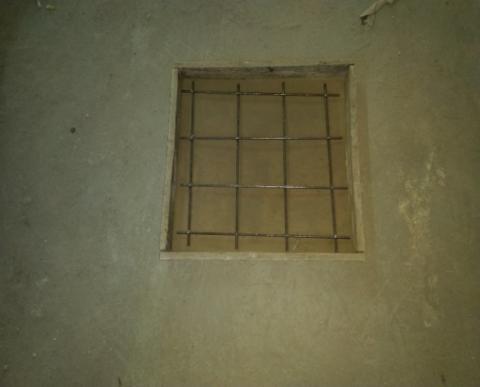
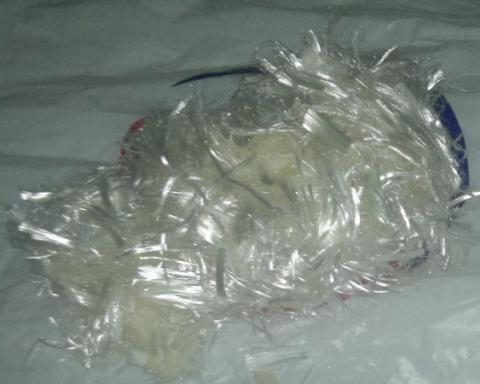
The concrete constituents and reinforcing steel comply with the Iraqi Specifications (IQS) [30-32] were tested according to ASTM Specifications [33-35] in the Construction Materials Lab./ College of Engineering/ Al-Mustansiriyah University. Ordinary Portland cement type (I), natural aggregate and tap water were used in the concrete mix. The fine aggregate is totally passing from sieve No. 4 (4.75 mm) and has 2.71 fineness modulus. However, the coarse aggregate is crushed gravel with maximum size 12.5 mm and bulk specific gravity of 2.65. The reinforcement was deformed small size steel bars shown in Figure 1. The average values of concrete constituents and reinforcing steel properties are shown in Table 2. The used nylon fibers are traditionally named (NYCON) and its physical properties provided by manufacture are listed in Table 3 and its appearance shown in Figure 2.
Figure 2. Package and appearance of nylon fibers used is slab specimens
2.4 Instrumentations and testing
For the static loading specimens, we conducted testing by positioning the slab in rigid steel frame to be simply supported with a square shape of 420 mm clear dimension in each side. The static loads were applied from hydraulic universal testing machine, as shown in Figure 3. A steel column of 40 × 40 mm square section and 60 mm height was used to transfer the loads from machine into the slab. Loading was applied in a rate of 2 kN/min. continued up to failure. During the test stages, deflection was measured by using dial gauge of 0.01 mm divisions was located at the center of the bottom face of slab, as shown in Figure 4.
Figure 3. Static test machine
Figure 4. Specimens under static test
The impact loading, required for the other specimens, we conducted testing by a free-falling drop weight (blow). A steel ball of 1.033 kg mass and 63.2 mm diameter falls from 1500 mm height to strike the slab specimen positioned in a test frame. So that, the test frame is designed to accommodate different thicknesses and impact load capacities slabs.
The test frame, shown in Figure 5, consists of supporting frame and vertical path for the falling mass (steel ball). The supporting frame is a three-dimensional structure fixed to ground and consists of steel members jointed up together so as to attain a horizontal platform to provide simple support for the specimens when place on. The vertical path of free-falling mass is kept in position by a three-dimensional frame of 2560 mm height and of width similar to that of supporting frame. The steel ball is dropped to strike the tested specimen at middle. Thus, striking is repeated up to slab failure. The tested slab was hold in its position under striking, as shown in Figure 6.
Figure 5. Impact test frame
Figure 6. Specimens under impact test
The obtained results from the tests are arranged in Table 4 in order to discuss them under specific topics of strength, ductility and failure mode of the slab specimens.
Table 4. Test results
|
Slab Symbol |
Strength |
Deflection Δu (mm) |
Failure Mode |
|
|
Pu (kN) |
Nu (Blows) |
|||
|
S |
30 |
- |
1.63 |
Global cracking |
|
S1 |
6 |
- |
0.91 |
Collapse |
|
S2 |
10 |
- |
1.71 |
Global cracking |
|
S3 |
13 |
- |
2.15 |
Global cracking |
|
I |
- |
84 |
- |
Local cracking |
|
I1 |
- |
9 |
- |
Collapse |
|
I2 |
- |
20 |
- |
Local cracking |
|
I3 |
- |
27 |
- |
Local cracking |
3.1 Strength
The ultimate strength was indicated when the bottom face cracks extended upward to appear at the top face of the specimen. At this instance, failure load is determined by ultimate load (Pu) under static loading and by blows number (Nu) under impact loading.
By illustrating the variation in Figure 7 which listed in Table 5, it is clear that the fibrous slabs strengths are enhanced under both static and impact loading. This behavior is consent with previous works results where emphasized that increasing the fibers content leads to increase the strength of the specimen. Thus, by comparing to reference reinforced specimens, the strength of the plain concrete slab against impact load (I1) is 53.57% of its strength against static load (S1) while using 0.75% volume fraction of nylon fibers can increase the rate of impact/static (I2/S2) strength of the slab into 71.43% and 74.18% when the fibers volume fraction is 1.5% (I3/S3). So, it is can be remarked that the use of nylon fibers enhances the strength of the slab against impact load by more than 20% of the enhancing against static load. However, although the inclusion of nylon fibers improved the impact resistance and extended the number of blows to failure compared to the plain slab (specimen I1), the absence of conventional steel reinforcement resulted in a significant reduction in flexural capacity. Under impact loading, the steel-reinforced slab specimen (I) exhibited a flexural moment of 2746.8 N·m, while the fiber-reinforced slabs I2 and I3 recorded 654 N·m and 882.9 N·m, respectively. Similarly, under static loading, the steel-reinforced slab specimen (S) achieved a total moment of 4773.50 N·m, whereas the fiber-only specimens (S2 and S3) reached 1591.17 N·m and 2068.53 N·m, respectively. These results clearly show that nylon fibers can enhance ductility and energy absorption but cannot substitute steel reinforcement in terms of flexural strength. Therefore, all the slab specimens are weaker than their references. Also, the fibrous slabs (S2 and S3) exhibited more deflections to be in lower level of stiffness than their reference (S), as shown in Figure 8.
Figure 7. Strength vs. loading type (Effect of fibers content on the slab behavior)
Table 5. Strength of slab specimens
|
Specimen Description |
Specimen Strength |
Reference Strength |
Strength Rate (%) [Specimen/Reference] |
||||
|
Pu (kN) |
Nu (Blows) |
Pu (kN) |
Nu (Blows) |
Static |
Impact |
Impact/Static |
|
|
Plain concrete |
6 |
9 |
30 |
84 |
20.00 |
10.71 |
53.57 |
|
Fibrous (Vf = 0.75%) |
10 |
20 |
33.33 |
23.81 |
71.43 |
||
|
Fibrous (Vf = 1.50%) |
13 |
27 |
43.33 |
32.14 |
74.18 |
||
Figure 8. Load-deflection curve of slabs under static loading
Although direct pull-out tests were not conducted, the observed mechanical performance under both static and impact loads reflects the contribution of fiber bridging and energy absorption, which are indicative of effective fiber-matrix interaction. Previous studies [11, 17] have shown that nylon fibers exhibit moderate mechanical bonding and good frictional resistance with the cementitious matrix.
Although current standards such as ACI 544 [36] recognize the benefits of synthetic fibers in enhancing concrete toughness, they lack specific provisions for nylon fibers or dynamic load applications. The improved performance observed in this study supports the consideration of nylon fiber-reinforced concrete in protective infrastructure, such as blast-resistant walls or industrial floors. These results could inform future updates to fiber-reinforced concrete design guidelines.
3.2 Ductility
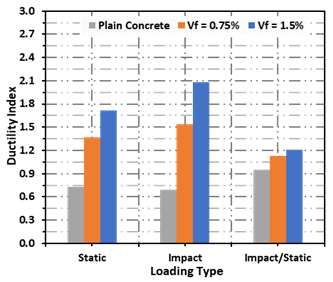
For the first group of specimens where static loading is applied, the ductility index (µ) of the fibrous specimens (S1, S2 and S3) was calculated according to Eq. (1) and depending on the deflection value at yield (Δy) of their reference specimen (S). While the ductility index of the second group specimens (I1, I2 and I3) tested under impact loading was calculated according to Eq. (2) and depending on the energy absorption value at cracking (Ecr) of their reference specimen (I). The deflection at initial yield (Δy = 1.25 mm) of the reference (S) was caught from the load-deflection curve and assumed as the datum yield point for the group rest specimens. In the same manner, the datum energy absorption at cracking (Ecr = 197.54 Joule) of the reference (I) was calculated according to Eq. (3). The ductility values of the specimens are listed in Table 6 and illustrated in Figure 9.
Table 6. Ductility of slab specimens
|
Specimen Description |
Specimen Response |
Reference Response |
Ductility Index [Specimen/Reference] |
||||
|
Δu (mm) |
Eu (Joules) |
Δy (mm) |
Ecr (Joules) |
Static |
Impact |
Impact/Static |
|
|
Plain concrete |
0.91 |
136.76 |
1.25 |
197.54 |
0.73 |
0.69 |
0.95 |
|
Fibrous (Vf = 0.75%) |
1.71 |
303.91 |
1.37 |
1.54 |
1.12 |
||
|
Fibrous (Vf = 1.50%) |
2.15 |
410.28 |
1.72 |
2.08 |
1.21 |
||
Figure 9. Ductility vs. loading type (Effect of fibers content on the slab behavior)
Given the similarity in material properties and the controlled manufacturing process, the reference specimen (Δy) was used for all slabs to simplify the comparison. While slight variations in yielding behavior may exist, they were deemed negligible for the purpose of this study. This approach allows for a consistent evaluation of slab behavior, and any potential differences do not significantly affect the observed trends. This limitation is acknowledged in the discussion section.
The ductility index values of the present paper also emphasized the previous works results concluded that increasing the fibers content leads to increasing the ductility of the structure. Occasionally, the present paper results revealed that the ductility of slab can be improved by increasing the nylon fibers content regardless of the loading type.
Similarly, to the results of the strength of the fibrous slabs, ductility of fibrous slabs tested under impact loading was higher than the corresponding values of fibrous slabs tested under static loading even when the plain concrete is more brittle under impact load. Thereby, the ductility rate of impact/static for (I2/S2) was 112.46% and 120.75% for (I3/S3). Also, the result revealed the activity of nylon fibers in improving the ductility index of the slab against impact load higher than enhancing against static load by more than 20%.
The superior impact performance of nylon fiber-reinforced concrete may be attributed to the strain-rate sensitive behavior of nylon. Under high strain rates, nylon fibers undergo viscoelastic deformation, enhancing their ability to absorb and dissipate energy. This results in delayed crack growth, increased energy absorption, and improved post-crack resistance under impact loading compared to static conditions.
3.3 Failure mode
Regardless of the loading type, the zone at top face of the slab specimen that exposed to the applied load (steel ball or column) was penetrated and crater formed during cracks extending from the bottom face to reach the top face, as shown in Figure 10. Especially for the slabs (S1 and I1), the crater is not existing because they are cast with plain concrete, thus, they collapsed suddenly and spared into four sectors.
(a)
(b)
Figure 10. Crater at top faces of slabs
(a)
(b)
(c)
(d)
Figure 11. Failure of slabs due to static loading
For static loading group, the slab specimens (S2 and S3) succeeded in preserving the flexure mode of failure alike the reference slab (S) which failed by intersective wide cracks at bottom slab face and extended from its four sides as shown in Figure 11. This behavior confirms the activity of nylon fibers on preventing the slab from collapse and spreading at failure in case of absences of less of conventional reinforcement.
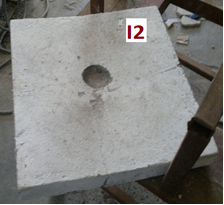
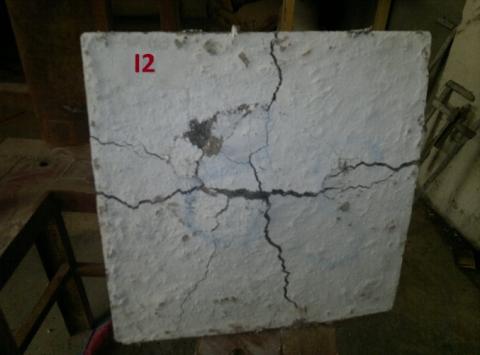
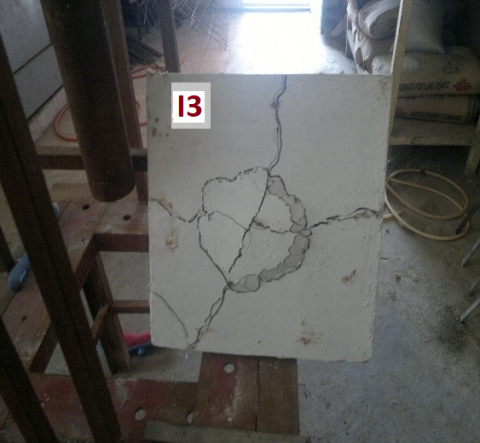
On contrast wise, the fibrous slab specimens (I2 and I3) subjected to impact loading and their reference (I) failed by scabbing represented as local punching shear cracks shown Figure 12. The slabs prone to fail by shear due to impact load [9, 23] even when them are fibrous as well reinforced. However, increasing the fibers content fortify the structure against local failure [9]. It becomes evident that using nylon fibers up to 1.5% volume fraction is not enough to achieve a flexure mode of failure under impact loading.
(a)
(b)
(c)
(d)
Figure 12. Failure of slabs due to impact loading
Failure under impact loading was defined based on visual signs of severe damage (e.g., through cracks, spalling, or penetration) and confirmed by measuring the residual deflection after each drop. The chosen drop height and hammer mass (1 kg from 1.5 m) were selected to simulate moderate impact conditions commonly encountered in real-life structural settings.
The transition from flexural to shear failure under impact can be explained through dynamic fracture mechanics. High strain-rate loading induces steep stress gradients and elevated shear stresses, particularly near load application zones. These conditions promote crack branching and diagonal shear fracture paths, as opposed to tensile flexural cracking seen under static loads. To counteract this, the use of hybrid fibers or supplementary shear reinforcement may be effective strategies to control such brittle failure modes.
Given the limited number of specimens per group in this study, statistical analysis could not be performed. Therefore, the results should be considered preliminary. Future studies with multiple replicates will allow for the use of statistical tests (e.g., t-tests) to validate the observed trends.
From experimental investigation of the present work, results revealed that:
The researcher is glad to express his appreciation and thanks for his colleague (Lecturer Dina Mukheef Hamza) and the structural engineering laboratory staff and the brotherly spirit technician (Akram Hasan Hussein).
[1] Anas, S.M., Alam, M. (2023). Role of shear reinforcements on the punching shear resistance of two-way RC slab subjected to impact loading. Materials Today: Proceedings, 87: 43-54. https://doi.org/10.1016/j.matpr.2022.08.510
[2] Hrynyk, T.D., Vecchio, F.J. (2014). Behavior of steel fiber-reinforced concrete slabs under impact load. Structural Journal, 111(5): 1213-1224. https://doi.org/10.14359/51686923.
[3] Sharma, R., Kasilingam, S. (2024). Performance of thin reinforced concrete slabs against low velocity repeated impact load. European Journal of Environmental and Civil Engineering, 28(6): 1415-1444. https://doi.org/10.1080/19648189.2023.2259956
[4] Hussein, L.F., Al-Taai, A.A.S., Khudhur, I.D. (2020). Sustainability achieved by using voided slab system. AIP Conference Proceedings, 2213(1): 020071. https://doi.org/10.1063/5.0000216
[5] Seydmoradi, A., Tavana, M.H., Habibi, M.R. (2024). Investigation on the response of steel fiber reinforced lightweight aggregate concrete slab under sequential impact loading. Engineering Failure Analysis, 161: 108221. https://doi.org/10.1016/j.engfailanal.2024.108221
[6] Gu, J., Li, L., Huang, X., Chen, H. (2024). Study on shear performance of corroded steel fiber reinforced concrete beams under impact load. Materials, 17(11): 2566. https://doi.org/10.3390/ma17112566
[7] Chen, C., Zhang, X., Hao, H., Sarker, P.K. (2025). Experimental and numerical study of steel fibre reinforced geopolymer concrete slab under impact loading. Engineering Structures, 322: 119096. https://doi.org/10.1016/B978-0-443-23895-6.00020-0
[8] Mazhar, M.A., Alam, P., Kamran, M., Ahmad, S., Junaid, S. (2025). Strength behavior of ferrocement panel under the two-point loading system: A case study. In Recent Developments and Innovations in the Sustainable Production of Concrete, pp. 533-548. Woodhead Publishing. https://doi.org/10.1016/B978-0-443-23895-6.00020-0
[9] Anitha, M., Thenmozhi, R., Shri, R.D. (2012). Behaviour of hybrid ferrocement slabs subjected to impact. International Journal of Emerging Trends in Engineering and Development, 4(2): 465-474.
[10] Schrader, E.K. (1981). Impact resistance and test procedure for concrete. Journal Proceedings, 78(2): 141-146. https://doi.org/10.14359/6932
[11] Ramakrishnan, V., Coyle, W.V., Kulandaisamy, V., Schrader, E.K. (1981). Performance characteristics of fiber reinforced concretes with low fiber contents. Journal Proceedings, 78(5): 388-394. https://doi.org/10.14359/10524
[12] Song, P.S., Hwang, S., Sheu, B.C. (2004). Statistical evaluation for impact resistance of steel-fibre-reinforced concretes. Magazine of Concrete Research, 56(8): 437-442. https://doi.org/10.1680/macr.2004.56.8.437
[13] Ramakrishna, G., Sundararajan, T. (2005). Impact strength of a few natural fibre reinforced cement mortar slabs: A comparative study. Cement and Concrete Composites, 27(5): 547-553. https://doi.org/10.1016/j.cemconcomp.2004.09.006
[14] Badr, A., Ashour, A.F., Platten, A.K. (2006). Statistical variations in impact resistance of polypropylene fibre-reinforced concrete. International Journal of impact engineering, 32(11): 1907-1920. https://doi.org/10.1016/j.ijimpeng.2005.05.003
[15] Dancygier, A.N., Yankelevsky, D.Z., Jaegermann, C. (2007). Response of high performance concrete plates to impact of non-deforming projectiles. International Journal of Impact Engineering, 34(11): 1768-1779. https://doi.org/10.12989/sem.2017.62.3.373
[16] Al-Rousan, R.Z., Alhassan, M.A., Al-Salman, H. (2017). Impact resistance of polypropylene fiber reinforced concrete two-way slabs. Structural Engineering and Mechanics, 62(3): 373-380. https://doi.org/10.12989/sem.2017.62.3.373
[17] Al-Rousan, R.Z. (2022). Influence of macro synthetic fibers on the flexural behavior of reinforced concrete slabs with opening. Civil Engineering Journal, 8(9): 2001-2021. https://doi.org/10.28991/cej-2022-08-09-016
[18] Al-Rousan, R., Alnemrawi, B.A.R. (2024). NLFEA of the behavior of polypropylene-fiber-reinforced concrete slabs with square openings. Buildings, 14(2): 480. https://doi.org/10.3390/buildings14020480
[19] Liu, Q., Song, Y., Wang, X., Zhang, F., Zhang, Y., Wang, D. (2025). Experimental and numerical study on polypropylene fibers reinforced concrete slabs with corroded reinforcement under monotonic loading. Advances in Structural Engineering, 28(3): 553-573. https://doi.org/10.1177/13694332241289167
[20] Saadun, A., Mutalib, A.A., Hamid, R., Mussa, M.H. (2016). Behaviour of polypropylene fiber reinforced concrete under dynamic impact load. Journal of Engineering Science and Technology, 11(5): 684-693.
[21] Mirgozar Langaroudi, M.A., Mohtasham Moein, M., Saradar, A., Karakouzian, M. (2025). Investigation of the mechanical properties and durability of fiber-reinforced geopolymer mortars containing metakaolin and glass powder. Infrastructures, 10(2): 25. https://doi.org/10.3390/infrastructures10020025
[22] Yan, S., Dong, Q., Chen, X., Li, J., Wang, X., Shi, B. (2024). An experimental and numerical study on the hybrid effect of basalt fiber and polypropylene fiber on the impact toughness of fiber reinforced concrete. Construction and Building Materials, 411: 134270. https://doi.org/10.1016/j.conbuildmat.2023.134270
[23] Kadhum, M.M., Al-Dhufairi, W.G.B., Yas, M.H. (2023). The impact of fiber geometry on the mechanical characteristics of SIFCON slabs under static and dynamic loading. Iranian Journal of Science and Technology, Transactions of Civil Engineering, 47(6): 3291-3308. https://doi.org/10.1007/s40996-023-01170-2
[24] Alsheameri, A.M., Rasheed, L.S., Alsaad, A.J. (2023). Enhancement of flexural behavior of hybrid flat slab by using SIFCON. Open Engineering, 13(1): 20220487. https://doi.org/10.1515/eng-2022-0487
[25] Baroutaji, A., Gilchrist, M.D., Olabi, A.G. (2016). Quasi-static, impact and energy absorption of internally nested tubes subjected to lateral loading. Thin-Walled Structures, 98: 337-350. https://doi.org/10.1016/j.tws.2015.10.001
[26] Cetin, E. (2024). Energy absorption of thin-walled multi-cell tubes with DNA-inspired helical ribs under quasi-static axial loading. Journal of the Brazilian Society of Mechanical Sciences and Engineering, 46(10): 607. https://doi.org/10.1007/s40430-024-05181-6
[27] Soni, A., Nateriya, R. (2024). Investigation properties of ultra-high performance concrete incorporating pond ash. Science and Engineering of Composite Materials, 31(1): 20240027. https://doi.org/10.1515/secm-2024-0027
[28] Shrivastava, A., Luhar, H., Sachan, A. (2024). An experimental investigation on shear strength and liquefaction response of pond ash for road embankment construction. Transportation Infrastructure Geotechnology, 11(3): 1231-1248. https://doi.org/10.1007/s40515-023-00324-z
[29] ACI Code 318M-19. (2019). Building Code Requirements for Structural Concrete and Commentary. Farmington Hills, MI, USA.: American Concrete Institute.
[30] Central Organization Standardization & Quality Control. (1984). Iraqi Specification, No. 45, Aggregates from Natural Sources for Concrete and Construction, Baghdad, Iraq.
[31] Central Organization Standardization & Quality Control. (1984). Iraqi Specification, No. 5, Portland Cement. Baghdad, Iraq.
[32] Central Organization Standardization & Quality. (1999). Iraqi Specification, No. 209, Carbon Steel Bars for the Reinforcement of Concrete. Baghdad, Iraq.
[33] ASTM A615/A615M-15a. (2015). Standard Specification for Deformed and Plain Carbon-Steel Bars for Concrete Reinforcement. West Conshohocken, USA.
[34] ASTM C39/C39M-15a. (2015). Standard Test Method for Compressive Strength of Cylindrical Concrete Specimens. West Conshohocken, USA.
[35] ASTM C469/C469M-14. (2014). Standard Test Method for Static Modulus of Elasticity and Poisson’s Ratio of Concrete in Compression. West Conshohocken, USA.
[36] ACI 544.1R-10. (2010). Report on Fiber Reinforced Concrete. Farmington Hills: American Concete Institute.