Winata Nugraha | Ermatita* | Deris Stiawan
© 2026 The authors. This article is published by IIETA and is licensed under the CC BY 4.0 license (http://creativecommons.org/licenses/by/4.0/).
OPEN ACCESS
Efficient monitoring of oil palm health is essential for improving plantation productivity and supporting sustainable agricultural management. Conventional field inspections are often labor-intensive, time-consuming, and limited in spatial coverage, making large-scale monitoring difficult. Recent advances in deep learning and unmanned aerial vehicle (UAV) imagery provide new opportunities for automated crop monitoring. This study proposes a drone-based oil palm health classification approach that integrates YOLOv8 object detection with the lightweight MobileNetV2 convolutional neural network for image classification. Drone video data captured over oil palm plantations were processed through a structured pipeline involving frame extraction, object detection, image cropping, annotation, data augmentation, and normalization to construct a labeled dataset. The YOLOv8 model was first employed to localize oil palm instances within aerial images, after which MobileNetV2 was used to classify the detected objects into three categories: healthy oil palm, unhealthy oil palm, and non-oil-palm. Experimental results demonstrate that the integrated YOLOv8–MobileNetV2 framework provides reliable classification performance for drone-based plantation monitoring. The model achieved a highest validation accuracy of 86.05% with a corresponding loss value of 0.527. Evaluation using precision, recall, and F1-score further confirms the robustness of the proposed approach. The results indicate that integrating object detection with lightweight convolutional classification networks offers an effective solution for large-scale oil palm monitoring and supports the development of intelligent precision agriculture systems.
oil palm health monitoring, drone imagery, deep learning, YOLOv8, MobileNetV2, object detection, precision agriculture
Traditional monitoring of oil palm conditions often requires manual inspections that demand significant time, cost, and human resources [1, 2]. Moreover, such conventional methods are prone to inaccuracies and delays in information delivery, potentially hindering decision-making and early interventions when disruptions or damage occur due to pests, diseases, or environmental factors [3]. In the context of modern agriculture, the need for fast, accurate, and efficient monitoring methods has become crucial to support the sustainability of production and the effectiveness of oil palm plantation management [4, 5].
Artificial intelligence technology, particularly deep learning, has rapidly evolved and offers potential solutions for precision agriculture. Deep learning enables the processing of digital image data, especially aerial imagery captured by drones, to automatically identify and classify plant objects with high accuracy [6-8]. The utilization of drone-based aerial imagery provides a broader and more detailed perspective that cannot be achieved through direct observation, thereby enhancing both the speed and reliability of field‑level crop condition monitoring [9-15].
One of the most popular deep learning methods for object detection is YOLOv8. This method excels in real‑time object detection and localization through a single inference process, making it highly efficient for applications that require high‑speed performance without compromising accuracy [16-21]. However, for more detailed classification of plant conditions, such as distinguishing between healthy and unhealthy states, a more specialized and computationally efficient convolutional neural network (CNN) model such as MobileNetV2 is required [22-29]. MobileNetV2 is well known for its lightweight architecture, efficient computational resource utilization, and strong classification performance [30-32].
The integration of YOLOv8 for detection and MobileNetV2 for classification enables the development of an advanced and automated oil palm monitoring system. Such a system can not only detect the presence of oil palm trees in drone imagery but also accurately classify their conditions into healthy, unhealthy, and non‑oil‑palm categories [33]. This approach is expected to serve as a significant innovation in modern oil palm plantation management, enhancing both efficiency and effectiveness in data‑driven decision‑making [7].
Based on this background, the present study focuses on developing an oil palm plant classification system by integrating YOLOv8 for object detection and MobileNetV2 for plant condition classification using drone imagery. This study aims to address the challenges of rapid, accurate, and efficient monitoring of oil palm plantations through the implementation of an integrated deep learning approach [34-37].
The research methodology comprises several main stages, as illustrated in Figure 1. The study begins with a systematic literature review to establish the theoretical foundation and to understand the development of image classification techniques as well as the application of deep learning algorithms for oil palm detection using drone imagery. Subsequently, data collection is conducted, including image preprocessing, annotation, and labeling of oil palm datasets obtained from drone recordings [23].

Figure 1. Research method
The processed dataset is then used in the model development stage, where a CNN architecture based on MobileNetV2 is constructed. At this stage, architectural modifications are applied, including top-layer adjustment, incorporation of Global Average Pooling, addition of two Dropout layers, and utilization of a Dense (256) layer and an output layer according to classification requirements. The entire training and testing process concludes with the evaluation stage, where model performance is assessed using accuracy, precision, recall, and confusion matrix metrics to ensure that the classification results are optimal and aligned with the research objectives [38, 39].
The diagram above illustrates the main stages of the research methodology, starting from the literature review, data collection and preparation, development of the CNN architecture based on MobileNetV2, to model performance evaluation using accuracy, precision, recall, and confusion matrix metrics. These stages ensure that the classification of oil palm conditions from drone imagery is conducted systematically and achieves optimal performance [33].
The literature study was conducted as the foundation for developing an oil palm image detection and classification system using the YOLOv8 and MobileNetV2 methods. A systematic literature review approach was employed to ensure scientific completeness and validity. Literature searches were carried out through major databases such as IEEE Xplore, SpringerLink, Scopus, and Google Scholar using keywords including YOLOv8 object detection, CNN classification, deep learning aerial imagery, and MobileNetV2 transfer learning.
The retrieved studies were filtered based on topic relevance, applied methodologies, and their contributions to the development of object detection and image classification models. The findings indicate that YOLOv8 is an effective architecture for fast and real-time object detection, while MobileNetV2 is well suited for classification tasks due to its lightweight and computationally efficient network structure. Furthermore, previous research emphasizes the importance of image preprocessing, accurate annotation, and the application of regularization techniques such as dropout and batch normalization to enhance model performance.
Overall, this literature study serves as the basis for selecting deep learning methods and architectures in this research, supporting the integration of YOLOv8 and MobileNetV2 in developing a drone‑based oil palm monitoring system.
In the data collection stage of this research, the dataset was obtained from video recordings captured using a drone flying over an oil palm plantation area of approximately 2 hectares. The video recording lasted for 12 minutes, during which the drone maintained a consistent altitude of around 60 to 80 meters to achieve optimal image coverage and clarity. The drone used for this study was a DJI Phantom 4 Pro, equipped with a 20-megapixel RGB camera and a gimbal stabilization system to ensure steady, high-resolution footage even under mild wind conditions.
The drone followed a pre-defined flight path in a grid pattern to systematically capture overlapping images across the plantation area, ensuring complete spatial coverage without occlusion. Recorded videos served as the primary data source for generating image frames that were then processed using the YOLOv8 object detection framework. Each video was segmented into multiple image frames to extract palm tree instances for subsequent preprocessing steps such as object detection, cropping, labeling, and classification. This approach ensures that the resulting dataset is comprehensive, representative, and suitable for developing an accurate and efficient deep learning model for oil palm health monitoring based on drone imagery.
4.1 Data processing in YOLOv8
The next stage involved video extraction within the YOLOv8 environment to convert drone recordings in MP4 format into a collection of images using the OpenCV library. The video was systematically divided into sequential frames, allowing each frame to represent oil palm trees from different viewing angles and time intervals. This process produced 214 primary frames and a total of 26,249 images with a resolution of 360 pixels, which served as the basis for dataset construction.
All generated images underwent a series of YOLOv8 data processing pipelines, including oil palm object extraction, cropping of relevant areas, image resizing for dimensional uniformity, manual annotation using bounding boxes, data augmentation to enhance dataset variability, and normalization to obtain a final image dimension of 160 × 160 × 3. This standardized format ensured compatibility for subsequent training using the MobileNetV2‑based CNN classification model.
Upon completion of the preprocessing phase, the entire dataset was divided into three subsets: 70% for training, 20% for validation, and 10% for testing. Each subset contained three categories—healthy oil palm, unhealthy oil palm, and non‑oil‑palm objects. This stage ensured that the dataset used for model development was structurally consistent, correctly annotated, and fully optimized for object detection and classification tasks. The output generated from the YOLOv8 extraction process thus provided a high‑quality and well‑labeled dataset ready for integration into the MobileNetV2 classification pipeline.
Figure 2. Ekstrasi YOLOv8
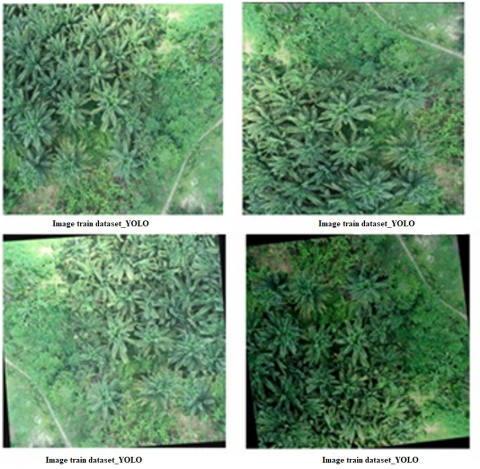
Figure 2 presents the results of image extraction from drone video recordings used to construct the dataset during the data preprocessing stage. Each image panel represents a single frame extracted from the video using the YOLOv8‑based extraction process. The images display top‑down views of oil palm trees captured from various angles and locations, illustrating visual diversity that is expected to enhance model accuracy during training and validation phases.
The labels “train dataset_yolo” and “val dataset_yolo” in each image indicate that the extracted frames have been grouped into training and validation subsets, ensuring balanced data distribution across each category prior to annotation and model training. This systematic organization enables effective utilization of the YOLOv8 and MobileNetV2 deep learning frameworks for accurate object detection and classification of oil palm health conditions.
4.2 Conversion of YOLOv8 dataset to convolutional neural network folder format
The conversion of the YOLOv8 dataset into a CNN folder format aims to restructure the data and labels, which were originally organized in YOLOv8 format (TXT files per image containing bounding box coordinates and class labels), into a format compatible with CNN training pipelines. In this process, each annotated image and its corresponding YOLOv8 label file are read individually and then sorted into designated folders according to the main classification categories (e.g., healthy oil palm, unhealthy oil palm, and non-oil palm).
The dataset directory is organized such that each data group (train, validation, and test) contains subfolders representing the respective classes. This structured arrangement allows image data and labels to be easily accessed by data pipelines, such as the ImageDataGenerator in deep learning frameworks. Consequently, each training batch can directly load images from class‑specific folders, thereby optimizing the processes of data augmentation, model training, and validation within a well‑structured and ready-to-use dataset. The resulting dataset structure provides a clear visual representation of organized class‑based image distribution, ensuring compatibility and efficiency in the CNN training workflow.
Figure 3. Converted images
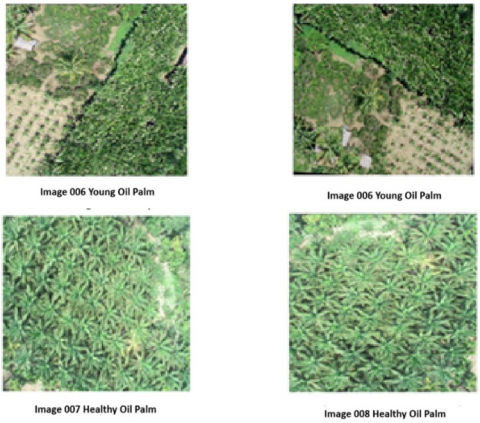
Figure 3 illustrates several examples of converted dataset images organized into the CNN folder structure according to predefined classes. Images 005 and 006 represent the young oil palm class, characterized by plantation areas dominated by juvenile oil palm trees with relatively dense planting distances, smaller tree sizes, and canopies that have not yet fully overlapped. Meanwhile, Images 007 and 008 correspond to the healthy oil palm class, which is identifiable by dense fronds, vivid green coloration, and a neatly arranged, fully covered canopy pattern. This visualization highlights the distinct visual characteristics among different classes while ensuring that the data have been properly classified and structured according to the required labels for CNN‑based drone imagery training and validation.
The CNN architecture based on MobileNetV2 is a CNN model specifically designed to achieve high classification performance with low computational complexity. MobileNetV2 employs the concepts of inverted residual blocks and linear bottlenecks—layer structures that enable efficient feature extraction without compromising accuracy. It utilizes depthwise separable convolutions to accelerate computation and reduce the number of parameters, making it well suited for both resource‑constrained devices and large‑scale image processing tasks such as object classification in drone imagery.
In this study, MobileNetV2 is applied as the primary feature extractor through a transfer learning approach, where the standard top layers are removed and replaced with customized classification layers tailored to the number of target categories. This strategy allows the model to effectively learn visual patterns from the processed oil palm dataset while improving both efficiency and classification accuracy. Ultimately, the CNN model based on MobileNetV2 is capable of identifying complex visual patterns of oil palm images, as illustrated in Figure 4.

Figure 4. Convolutional neural network (CNN) architecture based on MobileNetV2
The CNN architecture based on MobileNetV2 with a transfer learning approach begins by utilizing MobileNetV2 as the primary backbone, pretrained on the large‑scale ImageNet dataset. In this stage, the top layer of the standard MobileNetV2 architecture is removed (include_top=False) to allow the addition of customized classification layers tailored to the requirements of this research. The convolutional feature maps extracted by the backbone are then flattened using a Global Average Pooling 2D layer before passing through two Dropout layers designed to prevent overfitting.
Next, a dense layer containing 256 units is added as an additional classification layer, followed by an output layer with a number of neurons corresponding to the number of target classes and applying a softmax activation function for multi‑class prediction. The model is compiled using the Adam optimizer with a learning rate of 0.0001 and employs categorical cross‑entropy as the loss function. The dataset used for model training is divided into three subsets: 70% for training, 20% for validation, and 10% for testing. This configuration ensures optimal model generalization and performance evaluation for the MobileNetV2‑based CNN classification process.
Table 1. Results of the convolutional neural network (CNN) model based on MobileNetV2
|
Model |
Training (%) |
Validation (%) |
Testing (%) |
|
Convolutional Neural Network MobilNetV2 |
84.67 |
76.91 |
69.88 |
Table 1 presents the performance of the MobileNetV2‑based CNN model across three evaluation phases: training, validation, and testing. During the training stage, the model achieved an accuracy of 84.67%, indicating its capability to effectively learn visual patterns and feature representations from the training dataset. The validation accuracy of 76.91% demonstrates the model’s ability to generalize to unseen data not included during training, although a slight decline compared to training accuracy was observed. This decrease is considered acceptable and reflects natural differences between training and validation sets rather than severe overfitting.
Meanwhile, the testing accuracy reached 69.88%, representing the model’s performance when evaluated on completely unseen test data. This result indicates that the model is still able to perform classification tasks reasonably well, although the higher variability and complexity of the test images may have contributed to the observed accuracy reduction. Overall, the results in Table 1 confirm that the MobileNetV2 architecture demonstrates effective performance for image classification tasks. Nonetheless, further improvements—such as enhancing dataset quality, implementing more diverse data augmentation, or adjusting hyperparameters—can be applied to improve accuracy in both validation and testing phases. The accuracy and loss graphs are illustrated in Figure 5.
The following graphs illustrate the dynamic changes in accuracy and loss values throughout the model training process for both the training and validation datasets. This dual‑panel visualization aims to provide a clear representation of how the MobileNetV2 model learns to recognize oil palm image patterns from the training data, as well as how its performance is evaluated on unseen validation data.
The accuracy graph shown in the left panel demonstrates how effectively the model improves its classification capability as the number of epochs increases. In contrast, the loss graph in the right panel depicts the reduction in error experienced by the model during the optimization process. Together, these graphs serve as key indicators for assessing the stability, convergence, and overall effectiveness of the deep learning training process in classifying oil palm plantation conditions based on drone imagery.

Figure 5. Graphs presented
From Figure 5, it can be observed that the model training process produced a consistent increase in accuracy across epochs, indicating that the model successfully learned the key visual features distinguishing healthy, unhealthy, and non‑oil‑palm categories. The validation accuracy exhibits a stable trend closely aligned with the training accuracy, demonstrating the model’s strong generalization capability on unseen data and a minimal risk of overfitting. In the loss graph, the decreasing error values for both training and validation datasets signify the model’s improved optimization in reducing prediction errors over time.
The highest validation accuracy of 86.05% was achieved at epoch 14, with a corresponding validation loss of 0.527. This result indicates that the model reached an optimal balance between high accuracy and training stability. These findings reaffirm that the integration of the YOLO and MobileNetV2 architectures provides an effective and practical solution for automated, real‑time monitoring of oil palm plantations—aligned with the modern requirements of precision agriculture.
Following the performance evaluation on the test dataset, the classification results for each category were visualized using a confusion matrix. The confusion matrix offers a detailed representation of the correctly and incorrectly predicted samples for each class, enabling a deeper analysis of the model’s accuracy and potential misclassification across oil palm health categories. The confusion matrix results for the MobileNetV2‑based CNN model are presented in Figure 6.
Based on the confusion matrix results illustrated in Figure 6, the model demonstrates a strong capability in identifying the unhealthy oil palm category, with all 18 samples in this class correctly classified. For the healthy oil palm category, most samples were accurately detected (15 correct and 4 misclassified), while the young oil palm class also achieved satisfactory results but still exhibited several misclassifications, primarily being confused with the unhealthy oil palm class.

Figure 6. Hasil confusion matrix convolutional neural network (CNN) berbasis MobilNetV2
Overall, the distribution of predictions across the confusion matrix indicates that the model possesses reliable inter‑class classification capability. However, further improvement is still required to minimize errors in the young oil palm and healthy oil palm categories. Evaluation using the confusion matrix provides an in-depth understanding of the model’s strengths and weaknesses, offering valuable insights for refining classification performance in each oil palm health category.
The evaluation stage was conducted by calculating several classification metrics, including precision, recall, F1‑score, and support for each oil palm category predicted by the model. The following table summarizes the model’s performance for each class, along with the overall average accuracy obtained on the test dataset.
Table 2. Hasil evaluation convolutional neural network (CNN) MobilNetV2
|
Class |
Precision |
Recall |
F1-Score |
Support |
|
Young Palm |
0.67 |
0.67 |
0.67 |
6 |
|
Healthy Palm |
1.00 |
0.79 |
0.88 |
19 |
|
Unhealthy Palm |
0.82 |
1.00 |
0.90 |
18 |
|
Accuracy |
|
|
0.86 |
43 |
|
Macro Average |
0.83 |
0.82 |
0.82 |
43 |
|
Weighted Average |
0.88 |
0.86 |
0.86 |
43 |
Based on the evaluation results presented in Table 2, the healthy oil palm category achieved the highest precision value of 1.00, indicating that all predictions for this class were correct with minimal error. Meanwhile, the unhealthy oil palm category demonstrated excellent recall and F1‑score values of 1.00 and 0.90, respectively, signifying that the model effectively recognized and classified unhealthy plants with high accuracy.
For the young oil palm category, the precision and recall values were relatively lower (0.67), which highlights an opportunity for further optimization of the model in predicting this specific class. The overall accuracy of 0.86 indicates that the integrated YOLO and MobileNetV2‑based system performs effectively in classifying drone‑captured oil palm imagery. These comprehensive evaluation results serve as an important foundation for improving model performance and supporting future deployment in real‑world plantation monitoring applications.
The prediction results of the MobileNetV2-based CNN model on random samples from the validation dataset are presented in Figure 7. Each image displays the detected oil palm category produced by the model, including young oil palm, unhealthy oil palm, and healthy oil palm.

Figure 7. Results of convolutional neural network (CNN) model based on MobileNetV2
As shown in Figure 7, the model is capable of accurately identifying and localizing oil palm objects under various environmental conditions and across different plant growth stages, such as young, healthy, and unhealthy palms. Each green bounding box represents the detected position and boundary of an oil palm tree, along with its predicted class label. This visualization facilitates qualitative validation of detection outcomes and demonstrates the model’s ability to simultaneously detect multiple objects while distinguishing between different oil palm health categories.
This study successfully developed a drone imagery‑based oil palm classification system by integrating the YOLOv8 method for object detection and MobileNetV2 for plant condition classification. The proposed model effectively identified three main categories—young oil palm, healthy oil palm, and unhealthy oil palm—in an automated and efficient manner. Throughout the training process, the model demonstrated consistent accuracy improvement across epochs, achieving the highest validation accuracy of 86.05% at epoch 14 with a corresponding validation loss of 0.527.
Evaluation using the confusion matrix and classification metrics revealed that the model performed exceptionally well in recognizing the unhealthy oil palm category and reliably classified the healthy and young palm tree classes, despite minor misclassifications observed in the latter two categories. The bounding box visualizations from detection results confirmed the model’s capability to distinguish oil palm objects and accurately assign corresponding labels to each image, facilitating visual validation of prediction outcomes.
Based on the obtained results and comprehensive evaluation, the integrated YOLOv8 and MobileNetV2‑based classification system proved to be effective and feasible for monitoring the growth and health conditions of oil palm trees. This approach holds strong potential to enhance the efficiency of precision agriculture management through automated and real‑time plantation monitoring applications in Indonesia.
The authors would like to express their sincere gratitude to Universitas Sriwijaya and the Directorate of Research, Technology, and Community Service, under the Directorate General of Higher Education, Research, and Technology, Ministry of Education, Culture, Research, and Technology of the Republic of Indonesia, for providing financial support through the Doctoral Dissertation Research Grant Contract No. 109/C3/DT.05.00/PL/2025 Cq 0043.006/UN9/SB3. LPPM.PT/2025. Their valuable support and funding have been instrumental in the successful completion of this research.
[1] Ermatita, Budianta, D. (2020). Brute force algorithm implementation on knowledge management system overcoming heavy metal of Pb and Cd in soil at palm oil plantation. International Journal of Latest Trends in Engineering and Technology, 8(2): 297-301. https://doi.org/10.21172/1.82.039
[2] Nasirly, R., Sukendi, S., Lestari, F., Putra, R.M. (2023). A bibliometric review of studies on palm oil industry life cycle assessment research. International Conference on Multidisciplinary Research and Studies in Indonesia (ICMRSI), 1(1): 309-321. https://doi.org/10.31098/icmrsi.v1i.812
[3] Mandasari, M., Al Qohar, B. (2024). Digit and mark recognition using convolutional neural network for voting digitization in Indonesia. Journal of Information System Exploration and Research, 2(2). https://doi.org/10.52465/joiser.v2i2.365
[4] Gustriansyah, R., Ermatita, E., Rini, D.P., Malik, R.F. (2020). Integration of decision-making method and data-mining method as a preliminary study of novel sales forecasting method. International Journal of Advanced Trends in Computer Science and Engineering, 9(4): 22793091. https://doi.org/10.30534/ijatcse/2020/227942020
[5] LeCun, Y., Bengio, Y., Hinton, G. (2015). Deep learning. Nature, 521: 436-444. https://doi.org/10.1038/nature14539
[6] Deng, L., Yu, D. (2014). Deep learning: Methods and applications. Foundations and Trends in Signal Processing, 7(3-4): 197-387. https://doi.org/10.1561/2000000039
[7] Zhao, X., Wang, L.M., Zhang, Y.F., Han, X.M., Deveci, M., Parmar, M. (2024). A review of convolutional neural networks in computer vision. Artificial Intelligence Review, 57(4): 99. https://doi.org/10.1007/s10462-024-10721-6
[8] Krizhevsky, A., Sutskever, I., Hinton, G.E. (2017). ImageNet classification with deep convolutional neural networks. Communications of the ACM, 60(6): 84-90. https://doi.org/10.1145/3065386
[9] Rajamohanan, R., Latha, B.C. (2023). An optimized YOLO v5 model for tomato leaf disease classification with field dataset. European Transactions on Electrical Power, 13(6): 12033-12038. https://doi.org/10.48084/etasr.6377
[10] Waladi, A., Arymurthy, A.M., Wibisono, A., Mursanto, P. (2019). Automatic counting based on scanned election forms using feature match and convolutional neural network. In 2019 International Conference on Advanced Computer Science and Information Systems (ICACSIS), Bali, Indonesia, pp. 193-198. https://doi.org/10.1109/ICACSIS47736.2019.8979691
[11] Megantara, N.A., Utami, E. (2025). Object detection using YOLOv8: A systematic review. Sistemasi: Jurnal Sistem Informasi, 14(3): 1186-1193. https://doi.org/10.32520/stmsi.v14i3.5081
[12] Ramadhani, L.K., Widyaningrum, B.N. (2025). Implementation of YOLO v11 for image-based litter detection and classification in environmental management efforts. Journal of Applied Informatics and Computing, 9(3): 617-624. https://doi.org/10.30871/jaic.v9i3.9213
[13] Ashari, I., Negara, I.S.M., A, A.S.S. (2025). Lightweight YOLO models for real-time multi-vehicle detection. Sinkron: Jurnal Dan Penelitian Teknik Informatika, 9(3): 1795-1810. https://doi.org/10.33395/sinkron.v9i3.15071
[14] Thota, J.R., Padala, A. (2024). Human remains detection in natural disasters using YOLO: A deep learning approach. Engineering, Technology & Applied Science Research, 14(6): 17678-17682. https://doi.org/10.48084/etasr.8483
[15] Hendrawan, N.D., Kolandaisamy, R. (2023). A comparative study of YOLOv8 and YOLO-NAS performance in human detection image. Jurnal Teknologi dan Manajemen Informatika, 9(2): 191-201. https://doi.org/10.1093/ijcs/2023.114
[16] Terven, J., Córdova-Esparza, D.M., Romero-González, J.A. (2023). A comprehensive review of YOLO architectures in computer vision: From YOLOv1 to YOLOv8 and YOLO-NAS. Machine Learning and Knowledge Extraction, 5(4): 1680-1716. https://doi.org/10.3390/make5040083
[17] Santos, C.F.G.D., Papa, J.P. (2022). Avoiding overfitting: A survey on regularization methods for convolutional neural networks. ACM Computing Surveys (CSUR), 54(10s): 1-25. https://doi.org/10.1145/3510413
[18] Szegedy, C., Liu, W., Jia, Y.Q., Sermanet, P., Reed, S., Anguelov, D., Erhan, D., Vanhoucke, V., Rabinovich, A. (2015). Going deeper with convolutions. In 2015 IEEE Conference on Computer Vision and Pattern Recognition (CVPR), Boston, MA, USA, pp. 1-9. https://doi.org/10.1109/CVPR.2015.7298594
[19] Ioffe, S., Szegedy, C. (2015). Batch normalization: Accelerating deep network training by reducing internal covariate shift. In International Conference on Machine Learning, Lille, France, pp. 448-456. https://proceedings.mlr.press/v37/ioffe15.html.
[20] Jiang, J.F., Zhang, X.Y. (2024). Feature selection based on self-information combining double-quantitative class weights and three-order approximation accuracies in neighborhood rough sets. Information Sciences, 657: 119945. https://doi.org/10.1016/j.ins.2023.119945
[21] Yang, M., Lim, M. K., Qu, Y., Li, X., Ni, D. (2023). Deep neural networks with L1 and L2 regularization for high dimensional corporate credit risk prediction. Expert Systems with Applications, 213: 118873. https://doi.org/10.1016/j.eswa.2022.118873
[22] Chollet, F. (2017). Xception: Deep learning with depthwise separable convolutions. arXiv preprint arXiv:1610.02357. https://doi.org/10.48550/arXiv.1610.02357
[23] Tian, Y.J., Zhang, Y.Q. (2022). A comprehensive survey on regularization strategies in machine learning. Information Fusion, 80: 146-166. https://doi.org/10.1016/j.inffus.2021.11.005
[24] Friedman, J.H., Hastie, T., Tibshirani, R. (2010). Regularization paths for generalized linear models via coordinate descent. Journal of Statistical Software, 33(1): 1-22. https://doi.org/10.18637/jss.v033.i01
[25] Bühlmann, P., Van De Geer, S. (2011). Statistics for High-Dimensional Data: Methods, Theory and Applications. Springer Science & Business Media, Germany. https://www.tandfonline.com/doi/full/10.1080/02664763.2012.694258
[26] Ayumi, V., Ermatita, E., Abdiansah, A., Noprisson, H., Jumaryadi, Y., Purba, M., Utami, M., Putra, E.D. (2024). Transfer learning for medicinal plant leaves recognition: A comparison with and without a fine-tuning strategy. Universitas Sriwijaya, Indonesia. https://repository.unsri.ac.id/147695.
[27] Tang, J. (2025). Advances in convolutional neural networks for image classification: Architecture evolution, transformer fusion, and application expansion. In 2025 2nd International Conference on Image Processing, Multimedia Technology and Machine Learning (IPMML), Zhengzhou, China, pp. 285-289. https://doi.org/10.1109/IPMML68499.2025.11407192
[28] O’Shea, K., Nash, R. (2015). An introduction to convolutional neural networks. CS231n: Convolutional Neural Networks for Visual Recognition (Stanford University). https://www.semanticscholar.org/reader/f46714d200d69eb9cb5cce176297b89a3f5e3a2c.
[29] Rakha, M., Sulistiyo, M.D., Nasien, D., Ridha, M. (2024). A combined MobileNetV2 and CBAM model to improve classifying the breast cancer ultrasound images. Journal of Applied Engineering and Technological Science (JAETS), 6(1): 561-578. https://doi.org/10.37385/jaets.v6i1.4836
[30] Sandler, M., Howard, A., Zhu, M.L., Zhmoginov, A., Chen, L.C. (2018). MobileNetV2: Inverted residuals and linear bottlenecks. In Proceedings of the IEEE Conference on Computer Vision and Pattern Recognition, pp. 4510-4520.
[31] Gulzar, Y. (2023). Fruit image classification model based on MobileNetV2 with deep transfer learning technique. Sustainability, 15(3): 1906. https://doi.org/10.3390/su15031906
[32] Aufar, Y. (2022). Robusta coffee leaf diseases detection based on MobileNetV2 Model. International Journal of Agriculture and Biology Engineering, 15(3): 164-172. https://doi.org/10.3965/j.ijabe.20221503.1234
[33] Salehin, I., Kang, D.K. (2023). A review on dropout regularization approaches for deep neural networks within the scholarly domain. Electronics, 12(14): 3106. https://doi.org/10.3390/electronics12143106
[34] Fauzi, D.R. (2025). Comparison of CNN models using EfficientNetB0, MobileNetV2, and ResNet50 for traffic density with transfer learning. Journal of Intelligent Systems Technology and Informatics, 1(1): 22-30. https://doi.org/10.64878/jistics.v1i1.6
[35] Yin, X., Zhang, W., Jing, X. (2023). Static-dynamic collaborative graph convolutional network with meta-learning for node-level traffic flow prediction. Expert Systems with Applications, 227: 120333. https://doi.org/10.1016/j.eswa.2023.120333
[36] Ding, W.P., Alrashdi, I., Hawash, H., Abdel-Basset, M. (2024). DeepSecDrive: An explainable deep learning framework for real-time detection of cyberattack in in-vehicle networks. Information Sciences, 658: 120057. https://doi.org/10.1016/j.ins.2023.120057
[37] Srivastava, N., Hinton, G., Krizhevsky, A., Sutskever, I., Salakhutdinov, R. (2014). Dropout: A simple way to prevent neural networks from overfitting. The Journal of Machine Learning Research, 15(1): 1929-1958. https://dl.acm.org/doi/abs/10.5555/2627435.2670313.
[38] Kingma, D.P. (2014). Adam: A method for stochastic optimization. arXiv preprint arXiv:1412.6980. https://doi.org/10.48550/arXiv.1412.6980
[39] Abadi, M., Agarwal, A., Barham, P., Brevdo, E., et al. (2016). Tensorflow: Large-scale machine learning on heterogeneous distributed systems. arXiv preprint arXiv:1603.04467. https://doi.org/10.48550/arXiv.1603.04467