Britto Martin Paul Naricetti | G. V. Ganesh | G. Vamsi Krishna | Saritha Mahankali | B. Suneetha | Ch. V. Ravi Sankar | N. Bhushana Babu Daram | Lakshmi Narayana Thalluri*
© 2025 The authors. This article is published by IIETA and is licensed under the CC BY 4.0 license (http://creativecommons.org/licenses/by/4.0/).
OPEN ACCESS
This study presents a data-driven framework for enhancing both the prediction and post- deposition structural analysis of gas sensor materials using deep learning and bio-inspired algorithms. A deep learning prediction model is first developed and trained on a comprehensive dataset incorporating key material and process parameters, including thermal conductivity, band gap, base and dopant compositions, substrate temperature, sputtering pressure, power density, and deposition rates. This model achieves a high prediction accuracy of 99.4% in classifying material structures amorphous, crystalline, or polycrystalline based on input conditions, thereby enabling informed decisions in sensor material design prior to deposition. In the post-deposition phase, a 53-layer Convolutional Neural Network (CNN) is employed for structural classification using SEM images, accurately distinguishing between crystalline and polycrystalline forms with an initial accuracy of 92.2%. To further refine performance, bio- inspired optimization techniques such as Particle Swarm Optimization (PSO) and Bee Colony Optimization (BCO) are applied for hyperparameter tuning, improving classification accuracy to 98.6% and 96.25%, respectively.
metal oxide structures, Convolutional Neural Networks, classification accuracy, tuning techniques, parallel CNN, hyperparameter tuning, bio-inspired algorithms
Gas sensors play an integral role in a myriad of applications, ranging from environmental monitoring and industrial safety to medical diagnostics and homeland security [1]. Their ability to detect and quantify various gases with high sensitivity and selectivity is crucial for ensuring air quality, preventing hazardous conditions, and enabling precise medical diagnoses. With the increasing concern over environmental pollution, toxic gas emissions, and the demand for smart, connected devices, the development of advanced gas sensors has become imperative [2]. Future needs will necessitate sensors that are not only highly accurate and reliable but also cost-effective and capable of integration into compact and portable devices. Consequently, the advancement of gas sensor technology is pivotal to addressing these evolving challenges and meeting the stringent requirements of next-generation applications [3]. The design of gas sensors, however, is fraught with complexities that pose significant challenges. One of the primary hurdles is the selection of suitable materials that can provide the desired sensitivity and specificity for various gases [4]. This involves not only choosing the right base and dopant materials but also optimizing their composition and structural properties. Additionally, the deposition parameters, such as substrate temperature, sputtering pressure, and deposition rate must be meticulously controlled to ensure the formation of the desired material structure [5]. Any deviation in these parameters can lead to inconsistencies in sensor performance, making the design process highly intricate. The need to predict and control the crystalline structure of the sensor material further complicates the design, as different structures, crystalline, polycrystalline, or amorphous affect the sensor's electrical and chemical properties differently [6].
Deep learning algorithms offer a transformative approach to overcoming these design challenges by enabling the pre-prediction of gas sensor materials and deposition parameters [7]. These algorithms, trained on extensive datasets, can predict the optimal material characteristics and deposition conditions required to achieve the desired sensor performance. For instance, deep learning models can analyse a range of parameters, including thermal conductivity, band gap, and composition, to forecast the output structure of the gas sensor material [8]. This predictive capability significantly reduces the trial-and-error approach traditionally associated with material selection and deposition parameter optimization, thereby streamlining the sensor design process and enhancing the precision of the predicted outcomes [9].
In addition to material prediction, deep learning plays a crucial role in the post- deposition analysis of the sensor's crystalline structure. Advanced models, such as Convolutional Neural Networks (CNNs), can accurately classify the structure of the deposited material, distinguishing between crystalline, polycrystalline, and amorphous forms. By employing bio-inspired optimization algorithms like Particle Swarm Optimization (PSO), Ant Colony Optimization (ACO) and Bee Colony Optimization (BCO), these models can be further refined to achieve high classification accuracy [10]. This integration of deep learning and bio-inspired optimization not only enhances the reliability of structural analysis but also provides a robust framework for optimizing the sensor design for specific applications [11].
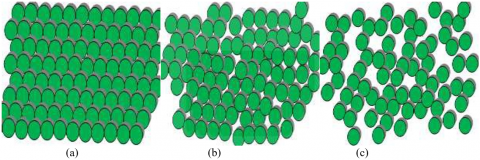
The design of gas sensors presents numerous research challenges, primarily due to the intricate interplay of material properties, deposition conditions, and structural configurations that collectively determine sensor performance [12]. One of the foremost challenges is the accurate prediction of optimal material combinations and their corresponding deposition parameters to achieve the desired sensitivity and selectivity for specific gases [13]. This is complicated by the need to tailor material properties such as thermal conductivity, band gap, and composition to match the sensing requirements. Moreover, the deposition process itself must be precisely controlled to form the appropriate crystalline structure, whether it be crystalline, polycrystalline, or amorphous, as these structures have significant impacts on the sensor’s electrical and chemical behaviour [14]. Variability in deposition parameters like substrate temperature, sputtering pressure, and deposition rate can lead to inconsistencies in the sensor's performance, complicating the design and fabrication processes [15]. Additionally, the post-deposition analysis of the sensor material's structural properties is crucial but challenging, as it requires sophisticated techniques to accurately classify and understand the impact of different structures on sensor functionality [16]. Addressing these challenges requires innovative approaches and advanced technologies, such as deep learning algorithms, to predict and optimize the design parameters, thus pushing the boundaries of gas sensor development in Figure 1.
Figure 1. Structures (a) Single Crystalline (b) Polycrystalline (c) Amorphous
In the realm of structural classification, extensive literature exists, reflecting the interdisciplinary nature of this field. Researchers have focused on elucidating the significance of accurately categorizing structural forms, including amorphous, crystalline, and polycrystalline states, owing to their profound implications in materials science, chemistry, and engineering applications. Benchmark studies such as those by Gulevich et al. [17] and Ochoa-Muñoz et al. [18] have underscored the critical role of structural classification in understanding material properties and designing novel materials with tailored functionalities. These seminal works have established foundational benchmarks for subsequent research endeavours, highlighting the need for robust classification methodologies to address the inherent challenges posed by diverse structural configurations.
Challenges abound in accurately classifying structural states, necessitating innovative approaches and methodologies. Key challenges identified in the literature include the subtle distinctions between crystalline and polycrystalline structures, which often confound conventional classification techniques. Benchmark studies, such as the work by Tabian et al. [19], have elucidated the complexities associated with discriminating between these closely resembling structural forms. Additionally, the scalability and computational efficiency of classification algorithms have been highlighted as critical considerations, particularly in handling large and heterogeneous datasets. Benchmark studies by Thalluri et al. [20] and Simion et al. [21] have shed light on these challenges, setting benchmarks for algorithmic performance and computational resource utilization in structural classification tasks.
Recent advancements in deep learning, particularly CNNs, have spurred significant progress in structural classification research. Benchmark studies by Hu et al. [22] and Kononov et al. [23] have demonstrated the efficacy of CNN-based approaches in surpassing conventional techniques and achieving state-of-the-art classification accuracies. These benchmarks have propelled the adoption of CNNs as the de facto standard for structural classification tasks, owing to their ability to automatically learn discriminative features from raw data. Furthermore, benchmark studies focusing on hyperparameter optimization techniques, such as those by Dennler et al. [24] and García-Rodríguez et al. [25], have highlighted the critical role of parameter tuning in maximizing classification performance. By benchmarking against established methodologies and performance metrics, researchers continue to push the boundaries of structural classification, paving the way for advancements in materials science and related disciplines.
Gas sensor design parameters pre-prediction using deep learning involves a systematic and multifaceted approach that encompasses several critical requirements and process steps. Initially, a comprehensive dataset is essential, encompassing a diverse range of parameters such as base target thermal conductivity, band gap, composition, and deposition duration, along with dopant characteristics, substrate temperature, sputtering pressure, power density, deposition rate, and argon flow rate. The deep learning process begins with the collection and preprocessing of this data to ensure it is clean, normalized, and suitable for training models. Following this, a deep learning architecture, typically a neural network with multiple layers, is selected and configured to handle the complexity of the prediction task. The model is then trained on the dataset, learning to correlate the input parameters with the desired output structures, such as whether the material will be crystalline, polycrystalline, or amorphous. This process enables a robust and reliable prediction of gas sensor design parameters, significantly streamlining the development and optimization of high-performance gas sensors.
3.1 Dataset
A dataset was created with parameters like base target thermal conductivity, band gap, composition, deposition duration, dopant characteristics, substrate temperature, sputtering pressure, power density, deposition rate, and argon flow rate as listed in Table 1.
Table 1. List of dataset parameters [26-39]
|
Dataset Parameter |
Name/Value |
|
Base Target |
SnO₂, Si₃N₄, Cu₂O, TiO₂, SnO₂, CeO₂, Ge, SnO₂, ZnO, WO₃, CeO₂, Si, In₂O₃, Ga₂O₃, Fe₂O₃, Fe₂O₃ |
|
Base Target Thermal Conductivity (W/m•K) |
60 |
|
Base Target Band Gap (eV) |
3.6 |
|
Base Target Composition (wt.%) |
97 |
|
Base Target Deposition Duration (min) |
10 |
|
Dopant Target |
N, Nb, Ga, Sb, Zr, P, Al, Re, Zr, B, Sn, Ti |
|
Dopant Target Density (g/cm³) |
5.0 - 10.0 |
|
Dopant Target Melting Point (℃) |
500 - 2000 |
|
Dopant Target Refractive Index |
1.5 - 2.5 |
|
Dopant Target Thermal Conductivity (W/m•K) |
20 - 50 |
|
Dopant Target Band Gap (eV) |
1.0 - 3.0 |
|
Dopant Target Composition (wt.%) |
1.0 - 10.0 |
|
Dopant Target Deposition Duration (min) |
5 - 15 |
|
Substrate Temperature (℃) |
200 - 500 |
|
Sputtering Pressure (mTorr) |
5 - 15 |
|
Power Density (W/cm²) |
2 - 8 |
|
Deposition Rate (nm/min) |
20 - 50 |
|
Argon Flow Rate (sccm) |
20 - 50 |
|
Output Structure |
Amorphous / Crystalline/ Poly Crystalline |
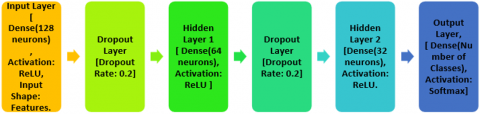
Figure 2. Presented deep learning model
3.2 Deep learning model
The presented deep learning algorithm is a neural network model designed for multi- class classification tasks. It comprises multiple dense layers with rectified linear unit (ReLU) activation functions, which enable the model to learn complex nonlinear relationships within the data. Dropout layers are incorporated to prevent overfitting by randomly deactivating neurons during training, enhancing the model's generalization capabilities. The model is trained using the Adam optimizer and sparse categorical cross-entropy loss function, suitable for handling categorical targets. By iteratively adjusting weights based on observed errors, the model learns to accurately classify input data into different categories. Its significance lies in its ability to automatically extract features from raw data, making it suitable for various applications, including image recognition, natural language processing, and bioinformatics. Additionally, its flexibility and scalability make it well-suited for large-scale datasets and complex problem domains, contributing to advancements in artificial intelligence and machine learning research in Figure 2.
The classification of materials into amorphous, crystalline, and polycrystalline structures is pivotal in various applications, including gas sensing and beyond. In gas sensing, amorphous materials offer high surface areas and chemical reactivity, making them suitable for adsorption and reaction with gas molecules.
Figure 3. Deep learning model accuracy
Crystalline materials provide predictable and reproducible sensing behaviour due to their well- defined crystal structures, which may offer intrinsic properties for specific gas species detection. Polycrystalline materials, comprising multiple grains with random orientation, balance the high surface area of amorphous materials with the defined properties of single crystals, introducing additional active sites for gas adsorption. Beyond gas sensing, this classification guides material selection in electronic devices, optoelectronic devices, catalysis, and energy storage, where each structure type offers distinct advantages based on its properties and applications requirements. The accuracy plot indicates that the model has learned to classify the material structure with high confidence, reaching near-perfect accuracy of 99.4% after 50 epochs. This suggests that the deep learning model is highly effective in identifying complex relationships between material and deposition parameters, such as composition, temperature, pressure, and dopant properties and the resulting structure type amorphous, crystalline, or polycrystalline in Figure 3.
In this study, metal oxides were meticulously selected for gas sensor development using deep learning predictions to identify optimal material combinations and deposition parameters. WO₃ was chosen as the primary metal oxide due to its excellent gas sensing properties, and its performance was further enhanced by incorporating varying proportions of TiO₂, as indicated by the deep learning model in Table 2.
Table 2. Composites considered for deposition
|
Composition |
||
|
Composition-1 |
Composition-2 |
Composition-3 |
|
WO3 |
WO3 + TiO2 |
WO3 + TiO2 |
|
100% |
95% + 5% |
90% + 10% |
The deposition process was tailored to achieve specific topographical, optical, and structural characteristics. The characterization results demonstrate that pure WO₃ forms a coarse-grained surface with 82% transparency at 453.15 K, and exhibits a semi-crystalline structure. In contrast, the addition of 5% TiO₂ to WO₃ resulted in a similar coarse-grained morphology with slightly improved transparency at 83.25% and maintained a semi-crystalline nature. Notably, increasing the TiO₂ content to 10% transformed the surface into a granular texture, significantly enhancing transparency to 86% and achieving a fully crystalline structure. These findings underline the efficacy of deep learning in predicting and optimizing material compositions and deposition conditions, leading to advanced metal oxide sensors with tailored properties for superior performance.
4.1 Polycrystalline structure
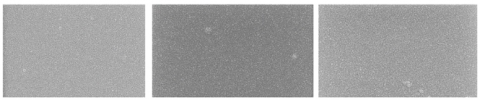
Leveraging deep learning predictions, WO₃-based metal oxides were selected and precisely deposited to develop advanced gas sensors with tailored properties. The deep learning model guided the optimal incorporation of TiO₂ to enhance sensor characteristics. Characterization revealed that pure WO₃ forms a coarse-grained surface with 82% transparency at 453.15 K and a semi-crystalline structure. Adding 5% TiO₂ maintained a coarse texture but increased transparency to 83.25%, while 10% TiO₂ resulted in a granular surface, boosting transparency to 86% and achieving a fully crystalline structure. These results underscore the efficacy of deep learning in predicting and optimizing material compositions and deposition processes, leading to high-performance gas sensors with specific topographical, optical, and structural attributes in Figure 4.
Figure 4. Polycrystalline structures
4.2 Crystalline structure
Composition-3, comprising a combination of WO₃ and TiO₂, exhibits a granular surface morphology, attaining an impressive transparency of 86% at 453.15 K. Structurally, it manifests a crystalline form with 90% WO₃ and 10% TiO₂ composition, indicating a well-defined atomic arrangement. This composition showcases a balanced blend of granular texture, high transparency, and crystalline structure, suggesting its potential suitability for applications requiring robust gas sensor materials with optimized optical and structural properties in Figure 5.
Figure 5. Crystalline structures
Structural analysis employing CNNs presents a powerful methodology for characterizing material structures with high precision and efficiency. By leveraging the hierarchical feature extraction capabilities of CNN architectures, complex patterns within the material's crystalline arrangement can be discerned and classified accurately, enabling comprehensive structural insights crucial for various applications in material science. CNNs play a significant role in the structural classification of metal oxides into crystalline, amorphous, and polycrystalline forms due to their ability to effectively learn and analyse spatial dependencies in data. CNNs excel at automatically learning hierarchical representations of features from raw data such as images or spatially structured data. In the case of metal oxides, structural classification often involves data from imaging techniques like scanning electron microscopy (SEM), where spatial features are crucial for identifying crystal structures.
5.1 Dataset
The dataset used for structural analysis consisted of 106 SEM images, categorized into two classes: 50 crystalline and 56 polycrystalline structures. These images were collected to train and evaluate the performance of the 53-layer CNN model in accurately distinguishing between the two material structures. To ensure effective learning and model generalization, the dataset was split into 80% for training and 20% for testing, resulting in 85 images for training and 21 images for testing. This balanced and well labelled dataset provided a solid foundation for the deep learning model to extract structural features and perform precise classification.
5.2 CNN layer analysis
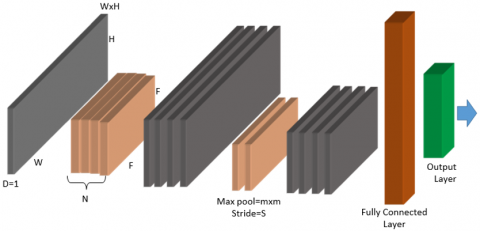
In CNN layer analysis, the architecture's individual layers are scrutinized to understand their roles in extracting and representing structural features from input data. Convolutional layers perform feature detection through convolution operations, while pooling layers downsample feature maps to retain essential information. Understanding the interactions between these layers elucidates how structural information is progressively extracted and synthesized, facilitating optimization of the network architecture for improved performance in structural analysis tasks in Figure 6.
Figure 6. 53-Layer CNN model for structural analysis
The 53-layer CNN model developed for structural analysis is a deep convolutional architecture designed to extract and classify complex features from material surface images, such as those obtained through SEM or other imaging techniques. Comprising multiple convolutional, pooling, and fully connected layers, this model progressively learns hierarchical spatial features critical for distinguishing between amorphous, crystalline, and polycrystalline structures. The depth of the network allows it to capture fine-grained patterns and subtle textural differences in microstructures, leading to high classification accuracy. This architecture enables automated, scalable, and precise structural analysis, significantly enhancing the efficiency of materials characterization and supporting the development of optimized gas sensor materials.
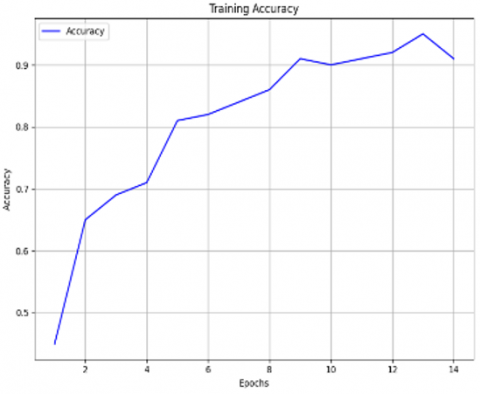
Figure 7. Accuracy of 53-layer CNN for Structural Classification
The accuracy curve shows a consistent and progressive improvement over the epochs, reflecting the model's effective learning behaviour. Beginning at approximately 45%, the accuracy quickly rises to around 68% by the 2nd epoch and continues to improve steadily. By the 9th epoch, it crosses 90%, ultimately reaching an accuracy of 92.2%. This smooth and sustained growth indicates that the model successfully captures the essential features required for classifying crystalline and polycrystalline structures in metal oxide sensors, demonstrating high reliability and robustness in its predictions in Figure 7.
5.3 Hyperparameters optimization
Hyperparameters optimization aims to refine the selection of hyperparameters to improve the overall performance of CNN models in structural analysis tasks. This optimization process is crucial for fine-tuning the model's behavior and achieving superior accuracy and generalization capabilities. Two prominent optimization algorithms employed in this context are PSO and BCO, which iteratively explore the hyperparameter space to discover configurations that yield optimal model performance.
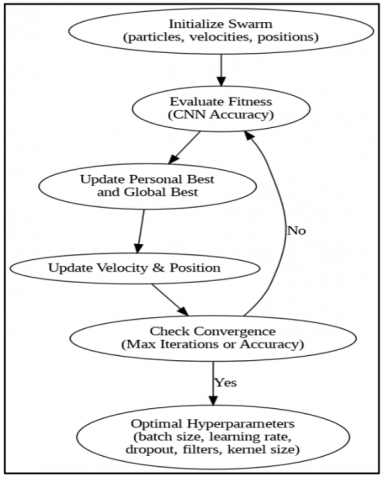
The tuning process begins by initializing a swarm of particles, where each particle represents a unique combination of CNN hyperparameters such as batch size, learning rate, dropout, number of filters, and kernel size. The fitness of each particle is evaluated based on the CNN’s classification accuracy. After evaluation, each particle updates its personal best solution, and the global best among all particles is identified. Using this information, particles adjust their velocities and positions to explore new hyperparameter combinations. This cycle of evaluation and position updating continues iteratively. The process checks for convergence based on either reaching a maximum number of iterations or achieving a target accuracy. Once convergence is met, the best-performing hyperparameter set is selected as the optimal configuration for the CNN model in Figures 8-10.
Figure 8. Hyperparameter tuning process using PSO for CNN model
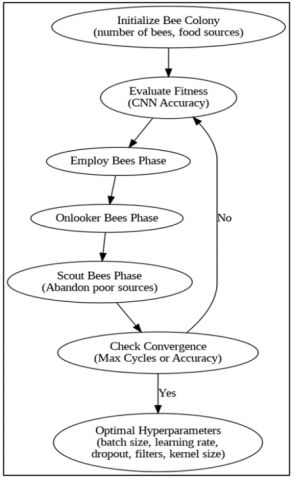
Figure 9. Hyperparameter tuning process using BCO for CNN model
The BCO process for tuning CNN hyperparameters begins with initializing a population of artificial bees, where each bee explores a food source representing a unique set of hyperparameters such as batch size, learning rate, dropout rate, number of filters, and kernel size. In the employed bees phase, each bee evaluates the fitness of its current food source based on the CNN's classification accuracy. The information is then shared with onlooker bees, which probabilistically choose the best-performing sources to exploit further. Poor solutions are discarded during the scout bees phase, where new random sources are explored to maintain diversity in the search space. This iterative process continues, with bees refining their selections through multiple cycles, until a convergence condition is met—typically when the model achieves a specified accuracy or a maximum number of iterations is reached. The outcome is the identification of the most optimal combination of hyperparameters that maximizes CNN performance. Through iterative refinement guided by PSO and BCO, CNN-based structural analysis models can achieve enhanced accuracy and robustness, further advancing their utility in material science research and applications.
Figure 10. Comprehensive analysis on the role of optimizers i.e., PSO and BCO
The hyperparameters considered for tuning in the 53-layer CNN include learning rate, batch size, number of filters in convolutional layers, kernel size, stride length, dropout rate, activation functions, number of neurons in fully connected layers, and weight initialization methods. Optimization of these parameters using bio-inspired algorithms significantly enhanced the model's performance. PSO yielded the highest accuracy of 98.6%, BCO achieved 96.25%. Both optimizers notably improved the baseline CNN accuracy of 92.2%, demonstrating the effectiveness of these strategies in refining the model’s ability to distinguish between crystalline and polycrystalline structures in gas sensor materials.
A comprehensive dataset encompassing diverse design parameters, the developed deep learning model accurately predicts the output structure of gas sensor materials, streamlining the pre-prediction phase with unprecedented precision. Furthermore, the introduction of an advanced 53-layer CNN for post-deposition structural analysis significantly enhances classification accuracy, achieving remarkable differentiation between crystalline and polycrystalline structures. Through the implementation of bio-inspired optimization algorithms such as PSO and BCO, hyperparameters are fine-tuned, resulting in substantial accuracy improvements. With accuracy levels reaching up to 98.6% and 96.25% respectively, these advancements underscore the potential of deep learning and bio-inspired optimization techniques to propel the field of gas sensor technology towards unparalleled levels of efficiency and precision in material prediction and structural analysis.
[1] Schlur, L., Hofer, M., Ahmad, A., Bonnot, K., Holz, M., Spitzer, D. (2018). Cu (OH) 2 and CuO nanorod synthesis on piezoresistive cantilevers for the selective detection of nitrogen dioxide. Sensors, 18(4): 1108. https://doi.org/10.3390/s18041108
[2] Khoramshahi, V., Azarang, M., Nouri, M., Shirmardi, A., Yousefi, R. (2024). Metal oxide/g-C3N4 nanocomposites chemiresistive gas sensors: A review on enhanced performance. Talanta Open, 9: 100290. https://doi.org/10.1016/j.talo.2024.100290
[3] Nami, M., Taheri, M., Deen, I.A., Packirisamy, M., Deen, M.J. (2024). Nanomaterials in chemiresistive and potentiometric gas sensors for intelligent food packaging. TrAC Trends in Analytical Chemistry, 174: 117664. https://doi.org/10.1016/j.trac.2024.117664
[4] Shu, C., He, J., Xue, G., Xie, C. (2022). Grain knowledge graph representation learning: A new paradigm for microstructure-property prediction. Crystals, 12(2): 280. https://doi.org/10.3390/cryst12020280
[5] Sudheep, C.V., Verma, A., Jasrotia, P., Hmar, J.J.L., et al. (2024). Revolutionizing gas sensors: The role of composite materials with conducting polymers and transition metal oxides. Results in Chemistry, 7: 101255. https://doi.org/10.1016/j.rechem.2023.101255
[6] Alam, M.A., Ya, H.H., Azeem, M., Yusuf, M., et al. (2022). Artificial neural network modeling to predict the effect of milling time and TiC content on the crystallite size and lattice strain of Al7075-TiC composites fabricated by powder metallurgy. Crystals, 12(3): 372. https://doi.org/10.3390/cryst12030372
[7] Demko, A.R., Lajoie, J.A., Jimenez-Thomas, A.R., Ramirez, D.J., Sippel, T.R. (2024). Impacts of metal oxide crystalline structure on the decomposition of solid propellants under combustion heating rates. Fuel Communications, 19: 100112. https://doi.org/10.1016/j.jfueco.2024.100112
[8] Ojha, B., Aleksandrova, M., Schwotzer, M., Franzreb, M., Kohler, H. (2023). Thermo-cyclically operated metal oxide gas sensor arrays for analysis of dissolved volatile organic compounds in fermentation processes: Part I–Morphology aspects of the sensing behavior. Sensing and Bio-Sensing Research, 40: 100558. https://doi.org/10.1016/j.sbsr.2023.100558
[9] Miquel-Ibarz, A., Burgués, J., Marco, S. (2022). Global calibration models for temperature-modulated metal oxide gas sensors: A strategy to reduce calibration costs. Sensors and Actuators B: Chemical, 350: 130769. https://doi.org/10.1016/j.snb.2021.130769
[10] Gulevich, D., Rumyantseva, M., Marikutsa, A., Shatalova, T., Konstantinova, E., Gerasimov, E., Gaskov, A. (2019). Nanocomposites SnO2/SiO2: SiO2 impact on the active centers and conductivity mechanism. Materials, 12(21): 3618. https://doi.org/10.3390/ma12213618
[11] Azlouk, M., Kabatas, M.A.B.M., Eker, Y.R., Zor, E., Bingol, H. (2024). Graphene oxide nanocellulose composite as a highly efficient substrate-free room temperature gas sensor. Results in Engineering, 22: 102228. https://doi.org/10.1016/j.rineng.2024.102228
[12] Talens, J.B., Pelegri-Sebastia, J., Canet, M.J. (2021). Low complexity system on chip design to acquire signals from MOS gas sensor applications. Sensors, 21(19): 6552. https://doi.org/10.3390/s21196552
[13] Shinkai, T., Masumoto, K., Iwai, M., Inomata, Y., Kida, T. (2022). Study on sensing mechanism of volatile organic compounds using Pt-loaded ZnO nanocrystals. Sensors, 22(16): 6277. https://doi.org/10.3390/s22166277
[14] Zheng, W., Zhang, G., Zhang, Q., Yu, H., et al. (2023). The Effect of Annealing on the Soft Magnetic Properties and Microstructure of Fe82Si2B13P1C3 Amorphous Iron Cores. Materials, 16(16): 5527. https://doi.org/10.3390/ma16165527
[15] Ponzoni, A., Baratto, C., Cattabiani, N., Falasconi, M., et al. (2017). Metal oxide gas sensors, a survey of selectivity issues addressed at the SENSOR Lab, Brescia (Italy). Sensors, 17(4): 714. https://doi.org/10.3390/s17040714
[16] Weber, I.C., Güntner, A.T. (2022). Catalytic filters for metal oxide gas sensors. Sensors and Actuators B: Chemical, 356: 131346. https://doi.org/10.1016/j.snb.2021.131346
[17] Gulevich, D., Rumyantseva, M., Gerasimov, E., Marikutsa, A., et al. (2019). Nanocomposites SnO2/SiO2 for CO gas sensors: Microstructure and reactivity in the interaction with the gas phase. Materials, 12(7): 1096. https://doi.org/10.3390/ma12071096
[18] Ochoa-Muñoz, Y.H., Mejía de Gutiérrez, R., Rodríguez-Páez, J.E. (2023). Metal oxide gas sensors to study acetone detection considering their potential in the diagnosis of diabetes: A review. Molecules, 28(3): 1150. https://doi.org/10.3390/molecules28031150
[19] Tabian, I., Fu, H., Sharif Khodaei, Z. (2019). A convolutional neural network for impact detection and characterization of complex composite structures. Sensors, 19(22): 4933. https://doi.org/10.3390/s19224933
[20] Thalluri, L.N., Kumar, M.A., Ali, M.S.M., Paul, N.B.M., Rao, K.S., Guha, K., Kiran, S.S. (2023). Jacobian Based Nonlinear Algorithms for Prediction of Optimized RF MEMS Switch Dimensions. Transactions on Electrical and Electronic Materials, 24(5): 447-458. https://doi.org/10.1007/s42341-023-00463-7
[21] Simion, C.E., Ghica, C., Mihalcea, C.G., Ghica, D., et al. (2021). Insights about CO gas-sensing mechanism with NiO-based gas sensors—the influence of humidity. Chemosensors, 9(9): 244. https://doi.org/10.3390/chemosensors9090244
[22] Hu, M., Yang, W., Tan, H., Jin, L., et al. (2020). Template-free synthesis of mesoporous and crystalline transition metal oxide nanoplates with abundant surface defects. Matter, 2(5): 1244-1259. https://doi.org/10.1016/j.matt.2020.02.002
[23] Kononov, A., Ganeev, A., Jahatspanian, I., Chuchina, V., et al. (2023). Accuracy calibration transfer between multi-sensor systems based on metal-oxide gas sensors used for analysis of exhaled air. Results in Chemistry, 6: 101188. https://doi.org/10.1016/j.rechem.2023.101188
[24] Dennler, N., Rastogi, S., Fonollosa, J., Van Schaik, A., Schmuker, M. (2022). Drift in a popular metal oxide sensor dataset reveals limitations for gas classification benchmarks. Sensors and Actuators B: Chemical, 361: 131668. https://doi.org/10.1016/j.snb.2022.131668
[25] García-Rodríguez, M., Cazorla-Amorós, D., Morallon, E. (2024). Enhanced lanthanum-stabilized low crystallinity metal oxide electrocatalysts with superior activity for oxygen reactions. Electrochimica Acta, 479: 143858. https://doi.org/10.1016/j.electacta.2024.143858
[26] Suematsu, K., Uchiyama, A., Watanabe, K., Shimanoe, K. (2022). Highly sensitive carbon monoxide sensor element with wide-range humidity resistance by loading Pd nanoparticles on SnO2 surface. Sensors, 22(8): 2934. https://doi.org/10.3390/s22082934
[27] Thalluri, L.N., Babburu, K., Madam, A.K., Kumar, K.V.V., et al. (2024). Automated face recognition system for smart attendance application using convolutional neural networks. International Journal of Intelligent Robotics and Applications, 8(1): 162-178. https://doi.org/10.1007/s41315-023-00310-1
[28] Yang, S., Lei, G., Xu, H., Lan, Z., Wang, Z., Gu, H. (2021). Metal oxide based heterojunctions for gas sensors: A review. Nanomaterials, 11(4): 1026. https://doi.org/10.3390/nano11041026
[29] Leitherer, A., Yeo, B.C., Liebscher, C.H., Ghiringhelli, L.M. (2023). Automatic identification of crystal structures and interfaces via artificial-intelligence-based electron microscopy. npj Computational Materials, 9(1): 179. https://doi.org/10.1038/s41524-023-01133-1
[30] Peng, Y.K., Tsang, S.C.E. (2022). Probe-assisted NMR: Recent progress on the surface study of crystalline metal oxides with various terminated facets. Magnetic Resonance Letters, 2(1): 9-16. https://doi.org/10.1016/j.mrl.2021.10.002
[31] Cao, Z., Dan, Y., Xiong, Z., Niu, C., Li, X., Qian, S., Hu, J. (2019). Convolutional neural networks for crystal material property prediction using hybrid orbital-field matrix and magpie descriptors. Crystals, 9(4): 191. https://doi.org/10.3390/cryst9040191
[32] Ali Hakami, N., Hosni Mahmoud, H.A. (2022). Deep learning classification of crystal structures utilizing wyckoff positions. Crystals, 12(10): 1460. https://doi.org/10.3390/cryst12101460
[33] Comini, E. (2020). Metal oxides nanowires chemical/gas sensors: Recent advances. Materials Today Advances, 7: 100099. https://doi.org/10.1016/j.mtadv.2020.100099
[34] Chakraborty, U., Kaushik, A., Chaudhary, G.R., Mishra, Y.K. (2024). Emerging nano-enabled gas sensor for environmental monitoring–Perspectives and open challenges. Current Opinion in Environmental Science & Health, 37: 100532. https://doi.org/10.1016/j.coesh.2024.100532
[35] Rasch, F., Postica, V., Schütt, F., Mishra, Y.K., et al. (2020). Highly selective and ultra-low power consumption metal oxide based hydrogen gas sensor employing graphene oxide as molecular sieve. Sensors and Actuators B: Chemical, 320: 128363. https://doi.org/10.1016/j.snb.2020.128363
[36] Mihaila, M. (2014). Correlations phonon spectrum-sensitivity in metal-oxide gas sensors. Procedia Engineering, 87: 1609-1612. https://doi.org/10.1016/j.proeng.2014.11.673
[37] Rademacher, S., Peter, C., Schmitt, K., Wöllenstein, J. (2014). Thermally pulsed metal oxide gas sensor combined with a colorimetric gas sensor for the detection of trace gases. Procedia Engineering, 87: 847-850. https://doi.org/10.1016/j.proeng.2014.11.286
[38] Samotaev, N., Vasiliev, A., Pisliakov, A., Sokolov, A. (2014). Detection of smokeless pyrolysis of organic materials by metal oxide gas sensor. Procedia Engineering, 87: 1322-1325. https://doi.org/10.1016/j.proeng.2014.11.691
[39] Schlenz, H., Sandfeld, S. (2022). Applications of Machine Learning to the Study of Crystalline Materials. Crystals, 12(8): 1070. https://doi.org/10.3390/cryst12081070