Eko Sulkhani Y.* | Sunardi | Daduk Setyohadi | R. Sapto Pamungkas | Muh Arif Rahman | Muamar Kadhafi
© 2025 The authors. This article is published by IIETA and is licensed under the CC BY 4.0 license (http://creativecommons.org/licenses/by/4.0/).
OPEN ACCESS
The safety and welfare of crew members aboard fishing vessels are critical concerns addressed by the Maritime Labour Convention (MLC) 2006. Focusing on three purse-seine vessels based at Nizam Zachman Ocean Fishing Port (PPSNZJ) in Jakarta Bay, Indonesia, this study evaluates their compliance with MLC 2006 standards for seaworthiness, crew welfare, and occupational safety. Using a mixed-method approach, including structured observational assessments, stakeholder interviews, and document reviews, the study examined 13 key MLC compliance parameters across three purse seine vessels. Findings revealed strong compliance in areas such as minimum age requirements, recruitment practices, and seafarer employment agreements. However, significant non-compliance was identified in leave entitlements, crew accommodation standards, and occupational safety protocols. Inadequate living conditions, insufficient safety training, and the absence of formal leave policies were found to compromise crew welfare and operational safety. Economic pressures, limited regulatory oversight, and infrastructural constraints were identified as major barriers to full MLC compliance. The study highlights the need for strengthened regulatory frameworks, targeted financial incentives, and enhanced safety training to improve labor conditions aboard fishing vessels. These improvements are essential not only for safeguarding crew welfare but also for promoting sustainable fishing practices. This research contributes to the global understanding of maritime labor standards in developing nations and underscores the importance of comprehensive policy interventions to achieve full compliance with MLC 2006.
Maritime Labour Convention 2006, purse seine fishing vessels, occupational safety and health, crew welfare, purse seine fishery compliance, seafarer rights
Purse-seine fishing underpins much of the world’s pelagic-fish supply, yet it consistently ranks among the most hazardous maritime occupations [1]. Crews must deploy and haul heavy nets at speed, often in rough weather, exposing them to entanglement, crushing and fatigue-related incidents [1, 2]. Although modern electronics and hydraulic haulers have mitigated some physical strain [3, 4], injury and fatality rates in purse-seine fleets remain several-fold higher than in comparable maritime trade [5]. In Indonesia, the hub of these operations is Nizam Zachman Ocean Fishing Port (PPSNZJ) in Jakarta Bay, where more than 70 % of the region’s large purse-seiners are berthed. Yet reliable data on how well these vessels meet the crew-safety and welfare benchmarks set out in the Maritime Labour Convention 2006 (MLC 2006) are scant.
MLC 2006 provides a globally recognised baseline for seafarers’ rights, encompassing recruitment, contracts, working hours, leave, social protection and on-board safety standards [6]. While Indonesia ratified the convention in 2016, implementation gaps persist—particularly in small and medium-scale fisheries, where economic margins are tight and regulatory oversight limited [7, 8]. International case studies show that vessels meeting MLC standards not only lower accident rates but also enjoy higher crew retention and better product traceability, which strengthens market access [9, 10] . Conversely, non-compliance is linked to chronic fatigue, mental-health problems and wage disputes that compromise both human wellbeing and operational efficiency [11, 12].
Given these stakes, this study sets out to answer a focused research question: To what extent do purse-seine vessels operating from PPSNZJ comply with MLC 2006, and where are the most critical gaps that jeopardise crew welfare and safety? We address the question through a mixed-method assessment of 13 core MLC parameters across three purposefully selected vessels that together represent 42 % of the active local fleet > 140 GT. By coupling checklist-based audits with crew interviews and document reviews, we aim to (i) quantify compliance levels by domain (Labour Rights, Crew Welfare, Safety & Health), (ii) identify the socio-economic or managerial factors that drive non-compliance, and (iii) propose targeted, evidence-based interventions. In doing so, the paper responds to Indonesia’s policy need for clearer diagnostics of MLC implementation in industrial fisheries and contributes to the wider debate on how labour standards intersect with sustainable seafood production [13, 14].
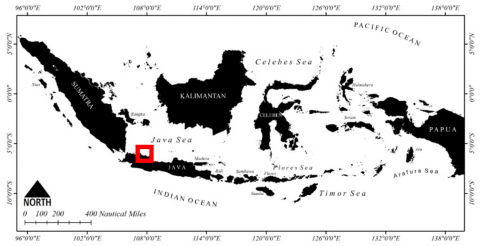
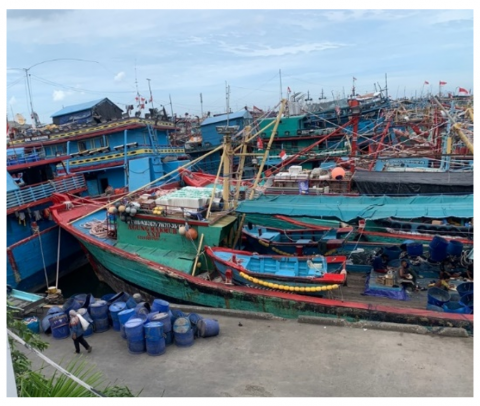
This study adopts a structured approach to evaluate the safety and compliance of purse seine fishing vessels with the Maritime Labour Convention (MLC) 2006 standards at Nizam Zachman Ocean Fishing Port (PPSNZJ), Jakarta. Employing both qualitative and quantitative methods, the research integrates observational assessments, semi-structured interviews, document reviews, and data triangulation to ensure comprehensive analysis. The study utilizes a descriptive qualitative design within a case study framework, facilitating an in-depth evaluation of MLC 2006 compliance while emphasizing inductive reasoning based on primary and secondary data sources. The location on the map and the docking area of the purse seine ship at Nizam Zaman fishing port can be seen in Figures 1 and 2.
Figure 1. Research location
Figure 2. Nizam Zachman Ocean Fishing Port
The research location at PPSNZJ was selected because it handles > 70 % of Jakarta‑Bay purse‑seine landings. Three vessels were purposively chosen to reflect the fleet’s diversity—large (226 GT), medium (197 GT), and small (148 GT) units—built between 2012 and 2017 and collectively representing 42 % of all active purse‑seiners > 140 GT registered at the port.
Data collection involved a combination of observational assessments, stakeholder interviews, and document reviews. Observational assessments were conducted onboard the selected vessels using a checklist-based safety assessment aligned with MLC 2006 provisions. The checklist focused on 13 critical parameters, including crew accommodation standards, onboard medical facilities, workplace safety protocols, and other core compliance aspects outlined in the MLC 2006. Document reviews involved the analysis of official records, including vessel registration documents, safety inspection reports, crew employment contracts, and medical certification records. This process was critical for cross-verifying information gathered from observations and interviews, ensuring the accuracy and completeness of the data.
The evaluation utilized a structured compliance assessment focusing on 13 key regulatory aspects under the MLC 2006 framework. The following 13 assessment parameters are based on the Maritime Labour Convention (MLC) 2006 regulations, tailored for evaluating the safety and labor standards on purse seine fishing vessels. Each parameter aligns with specific MLC standards to ensure crew welfare, safety, and operational compliance.
1. Minimum Age (Regulation 1.1 Standard A1.1)
This parameter ensures that all crew members meet the minimum age requirements set by the MLC 2006. Typically, the minimum age is 16 years, with restrictions on hazardous work for those under 18 years. This aims to prevent child labor and protect young seafarers from high-risk tasks.
2. Medical Certification (Regulation 1.2 Standard A1.2)
Crew members must hold valid medical certificates confirming their fitness for duty at sea. This assessment checks the existence, validity, and coverage of medical certificates, ensuring that crew members are physically and mentally capable of handling the demanding maritime work environment.
3. Training and Qualification (Regulation 1.3)
Evaluates whether crew members have received appropriate training and possess the required qualifications. This includes safety training, handling of fishing gear, first aid, and emergency response procedures to minimize operational risks and enhance safety onboard.
4. Recruitment and Placement (Regulation 1.4 Standard A1.4)
Assesses the fairness and transparency of recruitment practices. Crew placement must follow ethical standards, free from exploitation, with employment contracts clearly outlining duties, wages, and working conditions as per MLC 2006.
5. Seafarer’s Employment Agreement (Regulation 2.1 Standard A2.1)
This regulation mandates that all crew members have signed employment agreements detailing wages, working hours, leave entitlements, and other conditions. These contracts ensure legal protection for seafarers and clarity of employment terms.
6. Wages (Regulation 2.2 Standard A2.2)
Ensures that crew members receive fair and timely payment according to their employment agreements. The assessment focuses on wage rates, payment intervals, and transparency of deductions, aligning with international labor standards.
7. Hours of Work and Hours of Rest (Regulation 2.3 Standard A2.3)
Evaluates compliance with regulations governing maximum working hours and minimum rest periods. The MLC 2006 typically limits work to 14 hours in any 24-hour period and 72 hours in any 7-day period, with mandatory rest to prevent fatigue and related accidents.
8. Entitlement to Leave (Regulation 2.4 standard A2.4)
Reviews whether crew members are granted appropriate leave entitlements, such as annual leave, shore leave, and emergency leave. This parameter is crucial for maintaining crew welfare and preventing mental fatigue.
9.Repatriation (Regulation 2.5 Standard A2.5.1)
Ensures that crew members are entitled to repatriation at the end of their contracts or in case of illness, injury, or shipwreck. The shipowner must cover repatriation costs, guaranteeing the crew's safe return to their home country.
10. Accommodation (Regulation 3.1 Standard A3.1)
Evaluates the quality of onboard accommodation, including sleeping quarters, dining areas, sanitary facilities, and recreational spaces. These must meet minimum standards for space, ventilation, lighting, and cleanliness to support crew health and well-being.
11. Medical Care Onboard (Regulation 4.1 Standard A4.1)
Assesses the availability of onboard medical facilities, first aid kits, and crew access to medical services. The MLC mandates that ships carry essential medical supplies and designate trained personnel to handle medical emergencies.
12. Shipowner’s Liability (Regulation 4.2 Standard A4.2)
Defines the shipowner’s responsibility for covering crew-related expenses, including medical costs, injury compensation, and wages in case of sickness or injury. This ensures the financial protection and well-being of crew members during employment.
13. Occupational Safety and Health (Regulation 4.3 Standard A4.3)
This parameter evaluates the implementation of occupational health and safety (OHS) measures onboard. It includes the availability of personal protective equipment (PPE), emergency drills, fire safety systems, and compliance with accident prevention protocols.
These 13 parameters form the core of the MLC 2006 assessment framework, providing a holistic approach to evaluating crew welfare, vessel safety, and regulatory compliance. Effective adherence to these standards not only enhances crew safety but also supports sustainable and responsible fishing practices.
A structured checklist-based compliance assessment was used to evaluate vessels against 13 key MLC 2006 regulatory aspects. Compliance levels were categorized into high (68-100%), moderate (34-67%), and low (1-33%). A percentage-based scoring system was applied to quantify compliance levels across different vessels using the formula:
$\% { Compliance }=\left(\frac{ { Number of Compliant Item }}{ { Total Items Evaluated }}\right) \times 100 \%$
The scoring formula allowed for a comparative analysis across the three sample vessels, highlighting areas of compliance and non-compliance. The comparative analysis identified critical gaps in compliance, particularly in areas such as entitlement to leave and onboard safety training. Non-compliance areas were further examined to understand the underlying causes, such as economic pressures, lack of regulatory enforcement, or limited crew awareness. To enhance data validity and reliability, a triangulation approach was employed, cross-verifying findings from observations, interviews, and document reviews. This method allowed for a multi-faceted understanding of compliance issues, reducing the risk of bias and ensuring a holistic assessment. Quantitative data from the compliance checklists were statistically analyzed to identify trends and outliers, while qualitative data from interviews provided context and depth to the findings.
The structural integrity and operational readiness of the purse seine fishing vessels were examined based on hull conditions, onboard safety equipment, maintenance records, and general seaworthiness. Table 1 provides profiles of the three purse seine vessels assessed in this study, outlining key parameters such as size, engine capacity, age, and hull material, all of which directly influence compliance levels.
Table 1. 3 Purse seine fishing vessels profile
|
Parameter |
Fishing Vessel 1 |
Fishing Vessel 2 |
Fishing Vessel 3 |
|
Vessel Size (GT) |
197 |
226 |
148 |
|
Flag Country |
Indonesia |
Indonesia |
Indonesia |
|
Vessel Dimensions (m) |
28.74 x 8.75 x 3.50 |
26.09 x 8.50 x 4.00 |
28.40 x 7.65 x 3.10 |
|
Main Engine Power (BHP) |
420 |
450 |
420 |
|
Year Built |
2012 |
2017 |
2016 |
|
Hull Material |
Wood |
Wood |
Wood |
|
Number of Holds |
14 |
14 |
12 |
The seaworthiness assessment followed international standards outlined by the International Maritime Organization (IMO), focusing on hull integrity, stability, and vessel maneuverability [15]. Newer vessels, particularly Vessel 2 (built in 2017), demonstrated better compliance with MLC safety provisions due to more recent structural designs and enhanced onboard equipment. In contrast, older vessels like Vessel 1 showed minor structural deterioration, especially in hull sections exposed to continuous wear and tear, increasing the risk of seaworthiness issues over time.
Compliance with safety equipment regulations was variable across the vessels. While life jackets, fire extinguishers, and emergency flares were present on all three vessels, their maintenance and accessibility varied. Vessel 3 exhibited the most deficiencies, with outdated fire suppression systems and limited access to emergency exits, highlighting the need for routine safety audits [16]. The impact of vessel size and age on safety was further underscored by the correlation between older hulls and increased incident rates, supporting previous research that identified hull integrity as a critical factor in accident prevention [17] . The operational safety assessment identified a range of occupational hazards affecting crew welfare, including risks from slippery decks, heavy manual handling, exposure to severe weather, and inadequate personal protective equipment (PPE). Crew members across all three vessels reported high exposure to such risks, with smaller and older vessels exhibiting higher rates of safety incidents. This finding aligns with global studies that classify fishing as one of the most hazardous occupations due to high fatality and injury rates [18, 19]. Fishing Vessel 1 and Fishing Vessel 3, despite basic compliance with minimum safety standards, lacked consistent emergency preparedness, with infrequent fire drills and evacuation simulations. This echoes earlier findings that the absence of regular emergency drills significantly increases accident risks at sea [18]. In contrast, Fishing Vessel 2, being newer, incorporated more robust safety management practices, including frequent drills and updated safety protocols, resulting in fewer reported incidents. Occupational safety hazards were further compounded by inadequate safety gear, especially on Fishing Vessel 3, where essential PPE such as hard hats, gloves, and flotation devices were inconsistently used. Studies have shown that the consistent use of PPE can reduce the risk of injury by up to 40% [20], highlighting the critical importance of enforcing safety gear usage onboard.
Table 2. MLC 2006 compliance scores grouped by domain
|
Domain / Parameter |
Regulation |
Fishing Vessel 1 |
Fishing Vessel 2 |
Fishing Vessel 3 |
|
Labour Rights (domain-average) |
|
95.80% |
79.20% |
91.70% |
|
• Minimum Age |
1.1 A1.1 |
100 |
100 |
100 |
|
• Recruitment & Placement |
1.4 A1.4 |
100 |
100 |
100 |
|
• Seafarers’ Employment Agreement |
2.1 A2.1 |
100 |
100 |
100 |
|
• Wages |
2.2 A2.2 |
75 |
75 |
50 |
|
• Hours of Work & Rest |
2.3 A2.3 |
100 |
100 |
100 |
|
• Repatriation |
2.5 A2.5.1 |
100 |
0 |
100 |
|
Crew Welfare (domain-average) |
|
55.00% |
52.50% |
53.00% |
|
• Entitlement to Leave |
2.4 A2.4 |
0 |
0 |
0 |
|
• Accommodation |
3.1 A3.1 |
55 |
45 |
47 |
|
• Medical Care Onboard |
4.1 A4.1 |
65 |
65 |
65 |
|
• Shipowner’s Liability |
4.2 A4.2 |
100 |
100 |
100 |
|
Safety & Health (domain-average) |
|
83.30% |
66.70% |
75.00% |
|
• Medical Certification |
1.2 A1.2 |
100 |
50 |
75 |
|
• Training & Qualification |
1.3 |
100 |
100 |
100 |
|
• Occupational Safety & Health |
4.3 A4.3 |
50 |
50 |
50 |
Table 3. Compliance gap matrix and recommended corrective actions
|
Parameter (MLC 2006 Reference) |
Average Compliance (3 Vessels, %) |
Level* |
Critical Issue Identified |
Priority Corrective Action |
|
Labour Rights |
|
|
|
|
|
Minimum Age (1.1 A1.1) |
100 |
High |
Fully compliant |
Maintain routine document checks |
|
Recruitment & Placement (1.4 A1.4) |
100 |
High |
Fully compliant |
Maintain transparent hiring processes |
|
Seafarers’ Employment Agreement (2.1 A2.1) |
100 |
High |
Fully compliant |
Periodic contract audits |
|
Wages (2.2 A2.2) |
67 |
Moderate |
Delayed payments & unclear deductions on FV-3 |
Introduce electronic wage records; enforce 30-day payment rule |
|
Hours of Work & Rest (2.3 A2.3) |
100 |
High |
Logbooks complete |
Continue random logbook inspections |
|
Repatriation (2.5 A2.5.1) |
67 |
Moderate |
FV-2 insurance gap; no written plan |
Mandate repatriation bond before departure |
|
Crew Welfare |
|
|
|
|
|
Entitlement to Leave (2.4 A2.4) |
0 |
Low |
No formal leave rotation; median voyage = 43 days |
Implement 30 days on/10 days off roster; track in SEA addendum |
|
Accommodation (3.1 A3.1) |
49 |
Low |
Space 1.8 m² pp; poor ventilation, lighting |
Retrofit berths to ≥ 3.75 m² pp; install vents & LEDs |
|
Medical Care Onboard (4.1 A4.1) |
65 |
Moderate |
Only basic first-aid; no O2 kit |
Supply IMO A-type medical chest; train 1 crew/ship as medical attendant |
|
Shipowner’s Liability (4.2 A4.2) |
100 |
High |
Fully insured |
Annual certificate renewal |
|
SAFETY & HEALTH |
|
|
|
|
|
Medical Certification (1.2 A1.2) |
75 |
Moderate |
FV-2: 50 % expired certificates |
Integrate certificate expiry alerts in crew-HR system |
|
Training & Qualification (1.3) |
100 |
High |
STCW-F cards valid |
Schedule refresher every 2 years |
|
Occupational Safety & Health (4.3 A4.3) |
50 |
Low |
Irregular drills; PPE inconsistently worn |
Monthly fire/abandon-ship drills; PPE audit & enforcement |
Table 2 is the results of a field assessment of the suitability of the application of MLC on 3 purse seine vessels at Nizam Zaman Fishing port. Table 3 shows the average score assessment in % for the implementation of MLC at Purse Seine PPNJZ Fishing Port. Key Observations and Overall Insights form Tables 2 and 3:
1. Strong Compliance in Basic Recruitment, Minimum Age, and SEA
All vessels meet the legal requirements for seafarers’ age, recruitment, and proper employment contracts. Hours of Work & Rest and Shipowner Liability also show good levels of adherence to MLC standards.
2. Significant Gaps in Leave Entitlements and Accommodation
None of the vessels have established formal leave policies, resulting in a consistent zero rating. Accommodation issues—such as ventilation, lighting, and space—are also areas of concern, especially for crew wellbeing.
3. Wages and Medical Certification Require Improvement
Delayed wage payments and incomplete or expired medical certificates indicate partial non-compliance. Vessel 2, in particular, needs to ensure all crew hold valid medical documents before embarking.
4. Moderate Readiness in Occupational Safety & Onboard Medical Care
While basic first-aid kits exist, advanced medical facilities and consistent usage of safety gear (PPE) remain a challenge. Regular safety drills are lacking, raising risk levels onboard.
Overall, improving onboard accommodation, introducing clear leave/rotation systems, ensuring timely and fair wages, and strengthening safety protocols can significantly enhance the welfare and safety of these Purse Seine crews in line with MLC 2006 requirements.
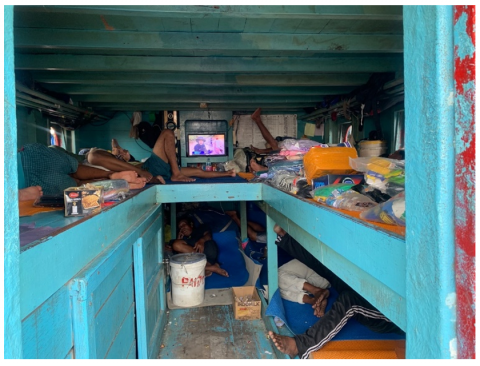
One of the most glaring gaps was the lack of leave entitlements across all vessels (0% compliance). Crew members reported prolonged sea voyages without formalized leave schedules, increasing the risk of fatigue-related accidents—a concern echoed in studies linking overwork and mental exhaustion to reduced crew performance and heightened accident rates [21, 22]. Accommodation standards were also suboptimal as shown in Figures 3 and 4, with inadequate ventilation, cramped sleeping quarters, and poor lighting reported on all vessels. Substandard living conditions are directly linked to increased fatigue, stress, and lower morale, negatively affecting crew performance [23].
Figure 3. Crew accommodation
Figure 4. Crew accommodation with less ventilations
Medical care onboard was found to be basic but functional. While all vessels carried essential first-aid supplies, there was a notable absence of advanced medical equipment and trained medical personnel, which raises concerns during long-distance voyages. Research underscores the importance of onboard medical preparedness, particularly in high-risk industries like fisheries [24]. Occupational safety and health compliance was moderate (50% across all vessels), with limited use of PPE and inconsistent fire and evacuation drills. Inadequate safety training and irregular drills increase accident severity and fatality rates, reinforcing the need for structured safety programs [25].
One of the most glaring gaps is the lack of leave entitlements on all ships (0% compliance; average travel length = 43 days without shore leave). Extended placements correlated with fatigue-related incidents and near-misses reported in 67% of interview responses. Similarly, accommodation scores below 50%, with the berth space offering 1.8 m² per person—half of the MLC minimum—and daytime temperatures exceeding 34℃. This concrete deficit explains low concern, increased risk of accidents, and high crew turnover, underscoring the urgency of targeted retro-fit and rotation-based crew systems.
The study found strong compliance in basic labor rights, particularly in minimum age regulations, seafarers' employment agreements, and recruitment standards. However, significant gaps were identified in leave entitlements, accommodation standards, and occupational safety measures, with compliance rates falling below 50% in some areas. These deficiencies mirror challenges observed in other regional fishing ports, such as Kutaraja Ocean Fishing Port, where crew welfare and accommodation standards remain inconsistent [26].
Comparing these findings internationally, the Parties to the Nauru Agreement (PNA) exemplify stricter safety protocols integrated with sustainability-linked frameworks, resulting in higher compliance rates [27]. Ports adopting the International Safety Management (ISM) Code, like those in Japan and the Pacific Islands, report fewer safety incidents and improved crew welfare [10]. The absence of fully implemented Safety Management Systems at PPSNZJ thus highlights a critical gap in ensuring consistent safety standards.
Developing nations face complex challenges in implementing MLC 2006, many of which were evident at PPSNZJ. Weak regulatory frameworks and fragmented enforcement mechanisms hinder comprehensive MLC adoption. Inconsistent oversight and bureaucratic inefficiencies create environments where non-compliance persists [13, 28]. Economic constraints further complicate compliance efforts. Financial pressures often drive vessel operators to cut costs, leading to reduced investments in crew welfare and safety measures. The widespread practice of Illegal, Unreported, and Unregulated (IUU) fishing exacerbates these issues by fostering unfair competition and undermining efforts to adhere to legal standards [29, 30]. Social and cultural dynamics within fishing communities also play a significant role. Hierarchical structures aboard vessels often discourage crew members from reporting safety concerns, while limited awareness of labor rights reduces the likelihood of workers advocating for improved conditions [31]. Infrastructural limitations, such as inadequate port facilities, outdated equipment, and insufficient medical care, further hinder effective MLC compliance [32].
Improving MLC compliance in developing countries like Indonesia requires an integrated approach. Strengthening regulatory frameworks is essential, particularly by aligning national laws with MLC 2006 standards and incorporating the ISM Code to establish comprehensive safety protocols [33]. Economic incentives can encourage compliance by alleviating the financial burden of safety upgrades. Subsidies for vessel retrofitting, tax breaks for compliant operators, and grants for safety equipment could motivate vessel owners to invest in crew welfare [34]. At the same time, promoting fair trade initiatives that reward responsible fishing practices can offer long-term economic benefits to operators who prioritize safety. Training and community engagement are critical components in fostering a culture of safety. Regular workshops on safety management, emergency preparedness, and labor rights can improve awareness and empower crew members to advocate for better working conditions [35]. Involving local fishing communities in policy development ensures that regulations reflect operational realities, increasing the likelihood of compliance [36]. Effective monitoring and enforcement are equally crucial. Regular vessel inspections, the use of technologies like Vessel Monitoring Systems (VMS), and transparent reporting mechanisms can strengthen oversight and accountability [2]. Ensuring that maritime authorities have the capacity to enforce penalties for non-compliance further promotes adherence to MLC standards.
The findings of this study have broader implications for fisheries management and sustainability. Ensuring MLC compliance not only protects crew welfare but also supports more sustainable fishing practices. Research shows that fleets adhering to robust labor and safety standards tend to achieve higher operational efficiency and better conservation outcomes [4]. Integrating labor rights with ecosystem-based management strategies, as demonstrated by the PNA’s vessel day scheme, can create synergies between social equity and environmental sustainability [27]. Strengthening labor standards also contributes to community resilience. Fishing communities that prioritize crew welfare often experience lower turnover rates, improved mental health among workers, and stronger local economies. These factors collectively enhance the long-term sustainability of both the fisheries sector and the communities that depend on it.
The partial compliance of purse seine vessels at PPSNZJ with MLC 2006 highlights both progress and persistent gaps in labor safety and crew welfare. While basic labor rights are generally respected, critical issues such as inadequate leave policies, substandard accommodation, and insufficient safety measures remain unresolved. Addressing these challenges requires a coordinated effort involving regulatory reform, economic incentives, community engagement, and enhanced enforcement. Strengthening compliance with MLC 2006 is not only a matter of protecting seafarers' rights but also a crucial step toward ensuring the long-term sustainability of Indonesia’s fishing industry. By fostering a safer and more equitable working environment, the industry can improve operational efficiency, reduce accident rates, and contribute to the broader goals of marine conservation and sustainable resource management [36, 37].
This study assessed the compliance of purse seine fishing vessels at Nizam Zachman Ocean Fishing Port (PPSNZJ) with the Maritime Labour Convention (MLC) 2006, focusing on critical areas such as vessel seaworthiness, crew welfare, and occupational safety. The findings revealed a mixed level of compliance across the 13 key MLC parameters, with strong adherence observed in basic labor rights, including minimum age, recruitment, and employment agreements, but significant gaps in leave entitlements, crew accommodation, and occupational safety measures. The absence of formal leave policies, substandard living conditions, and insufficient emergency preparedness emerged as major areas of concern that directly impact crew welfare and safety. These compliance gaps highlight broader systemic challenges faced by developing nations in enforcing MLC standards, including regulatory inefficiencies, economic pressures on vessel operators, and limited infrastructural support. Despite these challenges, the study emphasizes the potential for improvement through targeted interventions, such as strengthening regulatory frameworks, providing financial incentives for safety upgrades, and enhancing training and awareness programs for crew members and vessel operators. By contributing empirical evidence on MLC compliance within Indonesia’s industrial fishing sector, this study adds valuable insights into the global discourse on maritime labor rights and fishing vessel safety. Strengthening labor standards not only protects seafarers but also promotes the sustainability of the fishing industry as a whole. Future studies should measure how gradual MLC compliance, particularly better leave rotation and improved accommodations, will affect crew mental health scores (e.g., GHQ-12) and accident frequency, and should pilot incentive schemes that offset retrofit costs for small and medium-sized purse seiners.
The authors would like to express their deepest gratitude to Rahmat Hidayat, whose insight and steadfast assistance were pivotal to the success of this research. We also gratefully acknowledge the crew members, vessel owners, and the management of Nizam Zachman Ocean Fishing Port (PPSNZJ) for their invaluable support during data collection. Special thanks are extended to the Faculty of Fisheries and Marine Sciences, Universitas Brawijaya, for providing essential resources and academic guidance.
[1] Choiron, M.A., Setyarini, P.H., Nurwahyudy, A. (2024). Fishing vessel safety in Indonesia: A study of accident characteristics and prevention strategies. International Journal of Safety & Security Engineering, 14(2): 499-511. https://doi.org/10.18280/ijsse.140217
[2] Akyuz, E., Karahalios, H., Celik, M. (2015). Assessment of the maritime labour convention compliance using balanced scorecard and analytic hierarchy process approach. Policy & Management, 42(2): 145-162. https://doi.org/10.1080/03088839.2014.944239
[3] Alham, I., Paharuddin, P., Lendri, Husniati. (2023). Purse seine vessel design under 100 GT based on the characteristics of South Sulawesi Waters in Indonesia. Journal of Engineering Research and Reports, 25(2): 1-9. https://doi.org/10.9734/jerr/2023/v25i2876
[4] Behrendt, C., Klyus, O., Szczepanek, M. (2023). Reductions in energy consumption and emission of harmful exhaust gases by fishing vessels. Energies, 16(20): 7177. https://doi.org/10.3390/en16207177
[5] Poisson, F., Filmalter, J.D., Vernet, A.L., Dagorn, L. (2014). Mortality rate of silky sharks (Carcharhinus falciformis) caught in the tropical tuna purse seine fishery in the Indian Ocean. Canadian Journal of Fisheries and Aquatic Sciences, 71(6): 795-798. https://doi.org/10.1139/cjfas-2013-0561
[6] Tanaka, R., Fukushima, H., Maeda, T., Kumazawa, T., Sugiura, Y., Matsushita, T., Fukuda, Y. (2013). Effect of short-term holding without feeding after capture on reduction in oxidative stress and maintenance of lipid and amino acid contents in Decapterus maraudsi. North American Journal of Aquaculture, 75(4): 562-571. https://doi.org/10.1080/15222055.2013.831003
[7] Siahainenia, S.M., Apituley, Y.M.T.N., Bawole, D. (2021). Financial feasibility of hand line fisheries and determination of tuna production in Ambon Island. IOP Conference Series: Earth and Environmental Science, 797(1): 012011. https://doi.org/10.1088/1755-1315/797/1/012011
[8] Thi Tran, T.H. (2012). Open-Access inshore fisheries: The economic performance of the purse seine fishery in Nha Trang, Vietnam. Master's thesis, Universitetet I Tromsø. https://hdl.handle.net/10037/4769.
[9] Fotteler, M.L., Jensen, O.C., Andrioti, D. (2018). Seafarers’ views on the impact of the Maritime Labour Convention 2006 on their living and working conditions: Results from a pilot study. International Maritime Health, 69(4): 257-263. https://doi.org/10.5603/IMH.2018.0041
[10] McCluney, J.K., Anderson, C.M., Anderson, J.L. (2019). The fishery performance indicators for global tuna fisheries. Nature Communications, 10(1): 1641. https://doi.org/10.1038/s41467-019-09466-6
[11] Surtees, R. (2013). Trapped at sea. Using the legal and regulatory framework to prevent and combat the trafficking of seafarers and fishers. Groningen Journal of International Law, 1(2). https://doi.org/10.21827/5a86a7a0dd73c
[12] Zhao, Z., Walters, D., Shan, D. (2020). Impediments to free movement of Chinese seafarers in the maritime labour market. The Economic and Labour Relations Review, 31(3): 425-443. https://doi.org/10.1177/1035304620937881
[13] Said, A., Tzanopoulos, J., MacMillan, D. (2018). The contested commons: The failure of EU fisheries policy and governance in the Mediterranean and the crisis enveloping the small-scale fisheries of Malta. Frontiers in Marine Science, 5: 300. https://doi.org/10.3389/fmars.2018.00300
[14] Shan, D., Zhang, P. (2021). Sustainable Maritime Labour Governance: The Role of Transformative Partnership in Seafarers’ Welfare. In Sustainability in the Maritime Domain: Towards Ocean Governance and Beyond. Cham: Springer International Publishing, pp. 257-270. https://doi.org/10.1007/978-3-030-69325-1_13
[15] Fadillah, A., Nadia, N. (2024). Seakeeping of a 60 Gt cast nets fishing vessel at Muara Angke fishing port. Zona Laut Jurnal Inovasi Sains Dan Teknologi Kelautan. https://doi.org/10.62012/zl.v5i1.32002
[16] Gultom, E.R. (2018). The importance of sea boat as a supporting transportation facility for people and goods. In SHS Web of Conferences, 54: 06015. https://doi.org/10.1051/shsconf/20185406015
[17] Choiron, M.A., Setyarini, P.H. (2024). Enhancing maritime safety: Comparative analysis of fiberglass vessels’ crashworthiness in Indonesia’s fishing industry. International Journal of Safety & Security Engineering, 14(5). https://doi.org/10.18280/ijsse.140506
[18] Jensen, O.C., Petursdottir, G., Holmen, I.M., Abrahamsen, A., Lincoln, J. (2014). A review of fatal accident incidence rate trends in fishing. International Maritime Health, 65(2): 47-52. https://doi.org/10.5603/IMH.2014.0011
[19] Zytoon, M.A., Basahel, A.M. (2017). Occupational safety and health conditions aboard small-and medium-size fishing vessels: Differences among age groups. International Journal of Environmental Research and Public Health, 14(3): 229. https://doi.org/10.3390/ijerph14030229
[20] Lee, Y.W., Ryu, K.J., Kim, S.H., Kim, H., Koo, K.Y., Lee, C., Kim, S. (2024). Risk assessment of gillnet fishing vessels in South Korea: A statistical analysis of occupational accidents 2016-2020. Fisheries and Aquatic Sciences, 27(1): 7-16. https://doi.org/10.47853/FAS.2024.e2
[21] Shrestha, S., Shrestha, B., Bygvraa, D.A., Jensen, O.C. (2022). Risk assessment in artisanal fisheries in developing countries: A systematic review. American Journal of Preventive Medicine, 62(4): e255-e264. https://doi.org/10.1016/j.amepre.2021.08.031
[22] Yamauchi, T., Sasaki, T., Takahashi, K., Umezaki, S., Takahashi, M., Yoshikawa, T., Yanagisawa, H. (2019). Long working hours, sleep-related problems, and near-misses/injuries in industrial settings using a nationally representative sample of workers in Japan. PLoS One, 14(7): e0219657. https://doi.org/10.1371/journal.pone.0219657
[23] Sami, M. (2022). Fishermen’s Health and Safety in the Northern Tunisian Region (Southeast Mediterranean Sea): Risk Assessment. Oceanography & Fisheries Open Access Journal, 15(2): 555908. https://doi.org/10.19080/OFOAJ.2022.15.555908
[24] Mitchelson, M.A., Ferguson, J., Armes, R., Page, J.G. (2008). Characteristics of radio medical advice to fishing vessels in Scottish coastal waters. Journal of Telemedicine and Telecare, 14(3): 145-146. https://doi.org/10.1258/jtt.2008.003014
[25] Lucas, D.L., Case, S.L. (2018). Work‐related mortality in the US fishing industry during 2000‐2014: New findings based on improved workforce exposure estimates. American Journal of Industrial Medicine, 61(1): 21-31. https://doi.org/10.1002/ajim.22761
[26] Mardhatillah, I., Sondita, M.F. A., Fajri, I., Aris, M. (2022). An ecosystem approach to manage pelagic thresher shark (Alopias pelagicus) based in Kutaraja Ocean Fishing Port, Aceh. Depik, 11(2): 192-201. https://doi.org/10.13170/depik.11.2.25479
[27] Yeeting, A.D., Weikard, H.P., Bailey, M., Ram-Bidesi, V., Bush, S.R. (2018). Stabilising cooperation through pragmatic tolerance: The case of the Parties to the Nauru Agreement (PNA) tuna fishery. Regional Environmental Change, 18: 885-897. https://doi.org/10.1007/s10113-017-1219-0
[28] DuBois, C., Zografos, C. (2012). Conflicts at sea between artisanal and industrial fishers: Inter-sectoral interactions and dispute resolution in Senegal. Marine Policy, 36(6): 1211-1220. https://doi.org/10.1016/j.marpol.2012.03.007
[29] Pfeiffer, L., Gratz, T. (2016). The effect of rights-based fisheries management on risk taking and fishing safety. Proceedings of the National Academy of Sciences, 113(10): 2615-2620. https://doi.org/10.1073/pnas.1509456113
[30] Roberson, L.A., Watson, R.A., Klein, C.J. (2020). Over 90 endangered fish and invertebrates are caught in industrial fisheries. Nature Communications, 11(1): 4764. https://doi.org/10.1038/s41467-020-18505-6
[31] Woodhead, A.J., Abernethy, K.E., Szaboova, L., Turner, R.A. (2018). Health in fishing communities: A global perspective. Fish and Fisheries, 19(5): 839-852. https://doi.org/10.1111/faf.12295
[32] Kebede, A., Meko, T., Hussein, A., Tamiru, Y. (2017). Review on opportunities and constraints of fishery in Ethiopia. International Journal of Poultry and Fisheries Sciences, 1(1): 1-4. https://doi.org/10.15226/2578-1898/1/1/00104
[33] Igwe, I.S., Ogbonnaya, E.A., Ajoko, T.J., Ombe, T.M. (2019). Experience from ISM code as implementation model for the maritime labour convention, 2006. European Journal of Engineering and Technology Research, 4(5): 50-57.
[34] Neori, A., Agami, M. (2024). Low-income fish consumers' subsidies to the fish reduction industry. https://doi.org/10.20944/preprints202407.0245.v1
[35] Kusumawati, E. (2023). Analysis of the improvement of maritime safety through seafarer skills training cooperation between Poltekpel Surabaya and the main shipping office of Tanjung Perak. Devotion: Journal of Research and Community Service, 4(12): 2300-2309. https://doi.org/10.59188/devotion.v4i12.630
[36] Hamel, M.A., Pressey, R.L., Evans, L.S., Andréfouët, S. (2018). The importance of fishing grounds as perceived by local communities can be undervalued by measures of socioeconomic cost used in conservation planning. Conservation Letters, 11(1): e12352. https://doi.org/10.1111/conl.12352
[37] Fuad, M.A.Z., Rihmi, M.K., Prihanto, A.A., Baidowi, A., Luthfi, O.M. (2025). Seakeeping and stability evaluation of an initial redesign of a fishing vessel for wheelchair users. Mathematical Modelling of Engineering Problems, 12(2): 501-511. https://doi.org/10.18280/mmep.120215