Evi Gravitiani | Rochmat Aldy Purnomo | Brilyan Hendrasuryawan | M. Rudianto | Rebecca Cindy Sartika | Arief Budiono*
© 2025 The authors. This article is published by IIETA and is licensed under the CC BY 4.0 license (http://creativecommons.org/licenses/by/4.0/).
OPEN ACCESS
The food security development program aims to support the sustainability of environmentally friendly food resource management and contribute to the circular economy from the national to the regional levels. The cities of Ponorogo and Palangka Raya, Indonesia, are currently facing food security challenges due to land conversion, unpredictable weather and climate patterns, and minimal use of digital technology. These challenges impact not only the food sector but also broader economic resilience and regional competitiveness. For example, platforms such as https://ponorogokab.bps.go.id/id/publication have not been optimally utilized for food management, data collection, or post-harvest waste management. This paper presents the development of a proposed food security information system called SITUPANG. The system is designed to improve food stock monitoring efficiency, enable early detection of potential shortages, and maintain food price stability. SITUPANG is accessible via computers, laptops, and mobile devices with internet access. It offers two types of user access: guest (no login required) and administrator (login required). The system was developed using a hybrid Agile approach combined with Unified Modeling Language (UML) for architectural and functional design. A pilot test demonstrated a 20% improvement in early warning efficiency for food shortages, highlighting the system’s potential to enhance regional food security management.
food security, information system, regional competitiveness, sustainable economy, hybrid methodology, GIS
Food problems in Indonesia are multifaceted, ranging from excess and shortages to the inability of households to access sufficient food. According to Fadhlurrahman [1], food insecurity is influenced by several structural factors, including poverty levels, the existence of food-insecure regions, uneven agricultural production, and underutilized natural resource potential. These problems can be addressed through an integrated approach that involves the availability, distribution, and consumption subsystems, along with institutional reforms.
Indonesia continues to face major challenges in achieving food security. As of 2023, the number of poor people in Indonesia stood at 25.90 million (9.36% of the total population) and around 80 districts/cities are categorized as food-insecure areas. Food security is vital, as agriculture remains the backbone of the national economy and a key driver of employment, contributing approximately 12.40% to GDP in 2022 [2]. However, increasing climate unpredictability, land-use conversion, and limited use of digital technologies in the agricultural sector hamper efforts to strengthen food resilience. At the regional level, food security plays a crucial role in supporting regional competitiveness—the ability of a local economy to sustain growth, improve community welfare, and remain open to both domestic and global markets [3, 4]. Competitive regions are characterized by knowledge-based economies driven by innovation and entrepreneurship [5].
Ponorogo Regency in East Java Province has limited agricultural land, consisting of only 1,432,600 m² of rice fields and 12,348,500 m² of dry fields. The agricultural sector remains dominant in the regional economy, yet food availability is increasingly under pressure due to population growth. In 2024, Ponorogo’s population reached 977,720, with 5.94% living in poverty [6].
Similarly, despite its vast area (28,487,000 m²), Palangka Raya City in Central Kalimantan Province has seen a sharp decline in rice harvest area—from 160,000 m² in 2021 to only 2,200 m² in 2024—due to land conversion to oil palm plantations, housing, and trade sectors. With a 2024 population of 310,180, this decline poses a serious threat to local food security [7]. To address these challenges, this study proposes the development of an integrated digital solution called SITUPANG (An Integrated Information System of Food and Nutrition)—a food security management information system. SITUPANG is designed to improve the accuracy of food stock monitoring, detect potential shortages early, and support evidence-based policy-making by local governments. The system applies a hybrid Agile methodology and Unified Modeling Language (UML) in its development framework [8-10].
The adoption of such systems is expected to contribute to the reduction of food insecurity, improve economic resilience, and promote food sovereignty [11, 12]. Moreover, stronger food systems have broader implications for political and social stability, poverty reduction, and improved community welfare [13, 14]. Although currently at the prototype stage, SITUPANG has the potential to be scaled and replicated in other food-insecure regions, with support from local governments and stakeholders [15, 16]. Ultimately, strengthening the agricultural sector and developing competitive local industries must become national priorities to ensure inclusive economic development and sustainable well-being [17, 18].
In this paper, we present the concept and design of a food security information system with the following features: monitoring management of the administrative work on food stock monitoring, early detection of potential shortages, and maintaining food price stability. The development of this research adopted an agile approach in the waterfall system development method, starting from the analysis stage to the design stage. The hybrid agile methods used in the concept design and development of an application are the result of the methodology research.
This study adopts a hybrid methodology [19] that combines the structured nature of the traditional waterfall model with the flexibility of Agile practices, particularly during the early development phases. The aim of this approach is to ensure rigorous system planning while maintaining adaptability through iterative feedback and stakeholder involvement.
The waterfall model typically follows a linear process comprising five sequential phases:
i. Requirement Analysis and Planning,
ii. System Design,
iii. Implementation,
iv. Verification/Testing, and
v. Maintenance.
In this research, we have integrated Agile principles—such as continuous user engagement, iterative design, and early prototyping—into the Requirement Analysis and System Design phases. This approach allows for early validation of user needs, flexibility in modifying system features, and a clearer understanding of functional requirements before entering the implementation stage.
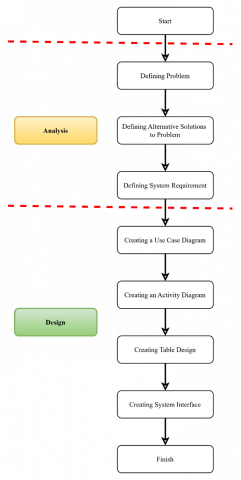
Figure 1 illustrates the Agile-Waterfall Hybrid Model employed in this project. During the analysis stage, user stories and system requirements were collected and refined through feedback loops with key stakeholders from the regional food and agricultural agencies. These were then modelled using Unified Modeling Language (UML) tools.
The following UML diagrams were used to guide the system’s development:
Use Case Diagrams, to identify key actors (e.g., administrators, guests) and their interactions with system functionalities;
Activity Diagrams, to model workflows such as food stock monitoring and early warning mechanisms;
Sequence Diagrams, to visualise system behaviour over time and ensure logical consistency between modules.
This integrated methodology ensured that the SITUPANG system was both technically sound and user-centred, accommodating the practical needs of local government and end users in the context of food security management [8-11]. This process shown at the Figure 1.
Figure 1. The agile hybrid stages in the waterfall development system method
2.1 Stage analysis
The analysis phase comprises three main steps: (1) Defining the problem, (2) Identifying alternative solutions, and (3) Specifying system requirements.
Each process is described as follows:
Defining the problem
The identified issues and needs are as follows. There is currently no integrated system in place for monitoring food stock levels, detecting potential shortages at an early stage, or maintaining stability in food prices. Food supply chain management remains inefficient and data related to food stocks is fragmented and not updated in real time, leading to delays in response to shortages and price fluctuations.
Identifying alternative solutions
The aim and objectives of the proposed solution involve developing a web-based information system, SITUPANG, to enhance the efficiency of food stock monitoring, enable early detection of potential shortages, and help stabilise food prices. The system will be accessible through computers, laptops, and mobile devices, providing timely and accurate information to stakeholders and allowing for informed decision-making regarding food supply management.
Specifying system requirements
The system requirements are as follows:
-Developing a real-time monitoring dashboard for food stock levels across different regions and commodities, operational 24 hours a day.
-Creating a data collection module for food stock data, distribution points, and market prices.
-Building a module for managing alert notifications regarding potential shortages or surpluses.
-Implementing a reporting module to analyse trends in food supply and pricing.
-Designing the system architecture using the UML (Unified Modeling Language) approach.
-Integrating the system with existing government and agricultural databases via MySQL.
-Building the system using HTML and PHP programming languages to ensure compatibility across platforms.
2.2 Stage design
Upon completion of the analysis stage, the process advances to the design phase, where use case diagrams, activity diagrams, table structures, and system interfaces are developed using the sprint approach. An explanation of each step in the process is provided below.
2.2.1 Use case diagram
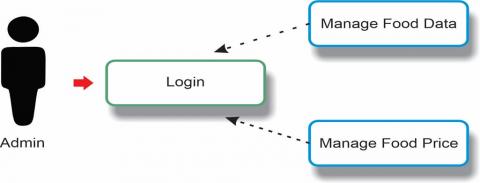
A use case represents a goal that a system user seeks to achieve through interaction with the system. The system features two main use case diagrams: one for the Administrator (Admin) and one for the User, with both roles acting as the primary actors. The admin use case diagram includes activities such as creating and inputting inspections, updating and deleting data, creating and managing food information, adding or removing food locations, reviewing histories, and generating reports. The use case diagram for administrators is illustrated in Figure 2.
Figure 2. An overview of the use case diagram for administrators
Figure 2 illustrates the simplified use case diagram for administrators in the SITUPANG system. After logging in, administrators have access to manage food-related information, including food data and food prices. This reflects the admin's role in updating and maintaining key system content.
The user use case diagram focuses on accessing publicly available food information. Users can interact with the system by visiting the website and viewing essential data. The user use case diagram is displayed in Figure 3.
Figure 3. An overview of the use case diagram for users
Figure 3 presents the use case diagram for the user role. Users can open the website and are allowed to view food data and food price information. These basic features ensure that users can access essential food-related insights without altering system data.
2.2.2 Diagram activity
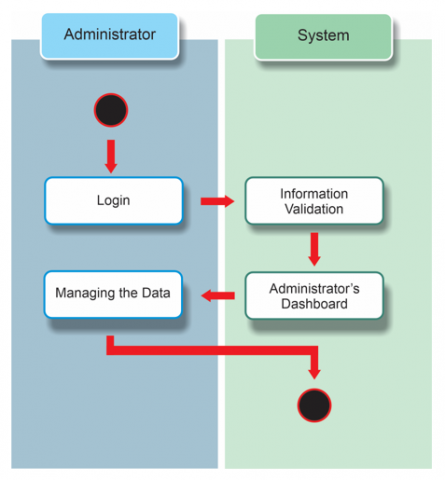
Activity diagrams are used in the SITUPANG system to illustrate the flow of activities performed by different user roles. These diagrams provide a visual representation of the logical sequence of operations and help identify interactions between users and the system components. Figure 4 shows the activity workflow for the administrator role.
Figure 4. The admin activity diagram
Figure 4 illustrates the admin activity diagram, starting with the login process. After successful login, the administrator proceeds to manage data, which involves operations related to food and price information. This action is followed by a system-side process of information validation, leading to the display of the administrator’s dashboard. The diagram clearly shows the sequential steps and interactions between the administrator and the system to ensure secure and effective system operations.
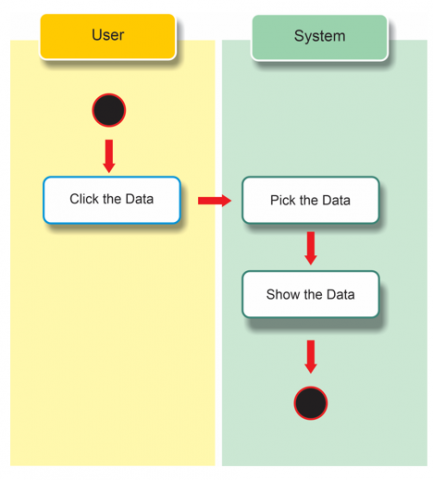
Similar to the administrator activity flow, a separate activity diagram is developed for the user to represent their interactions with the system. This diagram outlines the steps a user follows when accessing food data and price information. Figure 5 depicts this activity flow from the user’s perspective.
Figure 5. The user activity diagram
Figure 5 shows the user activity diagram, beginning with the user initiating the process by clicking to access data. The system then retrieves the requested data and proceeds to display the relevant information to the user. This activity flow highlights the simplicity and clarity of user interaction within the SITUPANG system, ensuring quick and efficient data access for end-users.
2.2.3 System user interface and design
In web design, the user interface (UI) plays a critical role in meeting user expectations and ensuring functional efficiency. A well-designed UI directly impacts the user experience, making it easier for visitors to navigate the website and access the information they need. When designing a website’s interface, it is essential to consider user demands for accessibility, visual appeal, and ease of use when designing a website’s interface. These factors collectively contribute to creating an environment where users can interact intuitively with the site, without unnecessary confusion or delays. By prioritising these aspects, designers can create a more welcoming and efficient digital space that aligns with users' needs.
Achieving an optimal balance between effective visuals and responsiveness is key to ensuring both user satisfaction and usability. A visually appealing design can attract users, while a responsive layout ensures that the website functions seamlessly across different devices and screen sizes. Responsive design allows for the website to adapt to various platforms, from desktop computers to mobile devices, enhancing accessibility and improving user engagement. Therefore, designers must focus not only on the visual components but also on the technical aspects that ensure smooth functionality, even as the user interacts with the website in various contexts.
The websites are developed based on the principles of Information Architecture (IA), which ensures that content is organised logically and consistently. This structure helps users easily navigate through the website and find the information they need without unnecessary steps. Common practices in IA design include the use of navigational elements such as buttons, tabs, and icons that guide users through functions like search and saving data. Visually, designers often incorporate white space in combination with contrasting font colours, enhancing readability and adding to the aesthetic appeal of the site. This careful balance between structure, functionality, and visual design ultimately leads to a more user-friendly and engaging digital experience.
The development programme carries the responsibility of fostering a society that is empowered physically, materially, institutionally, and cooperatively. Within this framework, the food security development programme focuses on promoting the sustainable and environmentally friendly management of food resources while contributing to the circular economy at both national and regional levels. Sustainable food security refers to the fulfilment of food needs through sufficient availability, easy access, safety for consumption, and affordability, while also ensuring the conservation of natural resources and minimising environmental impacts. Currently, the cities of Ponorogo and Palangka Raya are facing food security challenges due to land conversion, unpredictable climate conditions, and limited utilisation of digital technologies. These issues impact not only the food sector but also the broader economic resilience and regional competitiveness. Furthermore, the Ponorogo Regency Government has yet to optimise platforms such as https://statistik.ponorogo.go.id/pl/ for food management, data collection, and post-harvest waste management.
To address these challenges, a proposed food security information system named SITUPANG has been developed. This application is designed to enhance the efficiency of food stock monitoring, enable early detection of potential shortages, and support the stability of food prices. SITUPANG is accessible via computers, laptops, and mobile devices connected to the internet, offering two types of access: guest access (without login) and administrator access (with login). The development of SITUPANG adopted a hybrid agile approach and utilised Unified Modeling Language (UML) for the design of system architecture and functionalities. The actors involved in the system are detailed in Table 1.
Table 1. Table of actors in parking information system
|
Name of Data |
Description |
|
Administrator (Admin) |
An administrator has full access to the website, i.e. entering, monitoring, and deleting food data. |
|
User |
User can access the website only to view data. They cannot edit data. |
Table 1 outlines the two primary actors involved in the SITUPANG food security information system: the Administrator and the User. The Administrator has full access rights, including the ability to input, update, and delete food-related data. Administrators also manage food prices and stock information, ensuring that the system remains accurate and up to date. In contrast, the User role is limited to viewing data only, without any authority to modify the contents. This clear distinction in user roles is essential for maintaining data integrity, system security, and controlled access to critical information.
3.1 Performance testing and key metrics
A pilot test was carried out involving local government officers and agricultural data administrators over a four-week period. The primary objective was to evaluate the system’s efficiency in managing food data and issuing early warnings. The following key metrics were obtained: (1) Early Warning Efficiency: The time required to detect potential food shortages was reduced by 20%, based on comparisons with existing manual practices in both regions. (2) System Uptime: SITUPANG maintained an uptime of 99.2% during the testing period, indicating its reliability across various devices and internet conditions. (3) Response Time: Average page load time was recorded at 1.8 seconds on desktop and 2.3 seconds on mobile devices, well within acceptable thresholds for government information systems. (4) User Satisfaction Rate: A short survey with 25 respondents from local government officials and stakeholders indicated an 88% satisfaction rate, especially with the accessibility and clarity of visualised food data. (5) Data Input Accuracy: Cross-validation with official statistics indicated a 95% accuracy rate in food stock entries by administrators, with errors primarily caused by initial user familiarity issues. These figures demonstrate that SITUPANG not only offers a functional interface but also contributes significantly to enhancing the operational efficiency of local food management systems.
3.2 User interface and design
The login page uses a minimalist design strategy. After successfully completing registration, the user can log in with just their username and password. The super admin must first create users who have not signed up or do not have an account on this application. In order to complete the registration, necessary information is gathered on the registration page, including name, email, mobile number, address, and the creation of a username and password. The Login Page Display as shown in Figure 6 is the first page that the administrator will see.
Figure 6 illustrates the Login Page View of the SITUPANG Food Security Information System. This page serves as the gateway for users with administrator access, who must authenticate themselves before utilising the full features of the system. In contrast, guest users are permitted to explore limited features without the need to log in, ensuring that essential information remains easily accessible to the general public. The login interface is designed to be intuitive and user-friendly across various devices, including computers, laptops, and mobile phones connected to the internet, thus enhancing the system’s accessibility and usability. This is shown on the Figure 6.
On Figure 6 is login page view at SITUPANG and the development of SITUPANG employed a hybrid agile approach combined with the Unified Modeling Language (UML) to meticulously design its architecture and functionalities. This methodology ensured a flexible yet structured development process, allowing the system to adapt to evolving user needs and technological advancements. Through this approach, SITUPANG effectively supports efficient food stock monitoring, enables early detection of potential shortages, and contributes to maintaining food price stability, aligning with broader objectives of strengthening food security.
Figure 6. Login page view
3.3 Admin Main Page
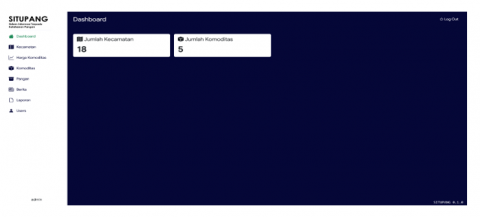
Figure 7 displays the Admin Main Page View of the SITUPANG Food Security Information System. This page is designed exclusively for administrators who have successfully logged into the system, granting them full access to the platform’s comprehensive features and management tools. The Admin Main Page serves as the central hub for administrators, providing an organised layout to facilitate the monitoring and management of food security data. By offering a consolidated view of key system functionalities, it allows administrators to navigate between different sections and perform critical tasks efficiently. This is shown at Figure 7.
Figure 7. Admin Main Page
The page as shown at Figure 7 is equipped with a wide range of tools to support administrators in monitoring food stock levels across various regions. With these tools, administrators can quickly detect early signs of potential shortages or imbalances, enabling them to take proactive measures to address emerging issues. Additionally, the Admin Main Page allows for the efficient management and updating of data, ensuring that food security information remains accurate and up to date. These capabilities are critical in maintaining the system’s overall effectiveness and ensuring that food security remains stable across all areas.
Optimisation for various devices, including computers, laptops, and mobile devices, is a key feature of the Admin Main Page. This ensures that administrators can access and use the system seamlessly, whether they are in the office or on the go. With internet connectivity, administrators are able to perform their duties from anywhere, enhancing flexibility and responsiveness. The user-friendly interface simplifies complex tasks, ensuring that administrators can manage food security data with ease and effectiveness, regardless of their technical expertise or device preferences.
The development of SITUPANG adopted a hybrid agile approach, combined with the use of Unified Modeling Language (UML) for system architecture and function design. This development strategy allowed for flexibility and continuous improvement throughout the process, ensuring the final product meets user needs and operational demands. By providing both guest and administrator access levels, SITUPANG strikes a balance between public information dissemination and secure administrative control, ultimately supporting greater efficiency in food stock monitoring, early warning of potential shortages, and the maintenance of food price stability.
3.4 Commodity price edit and view
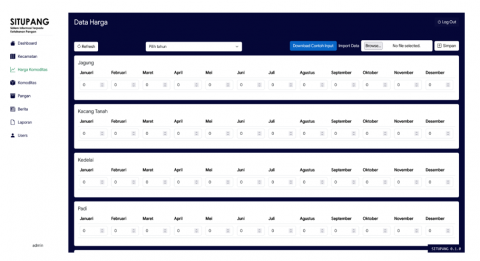
Figure 8 presents the Commodity Price Edit and View Page within the SITUPANG Food Security Information System. This page is exclusively accessible to administrators who have logged into the system, ensuring that only authorised personnel can make changes or updates to critical data. The Commodity Price Edit and View Page allows administrators to access and manage information regarding food commodity prices, which plays a central role in food security management. The ability to edit and view this data in real-time supports effective decision-making and enables the system to maintain the accuracy and reliability of food price information. This is shown in Figure 8.
Figure 8. Commodity price edit and view
The page at Figure 8 commodity price edit and view and designed with accuracy and timeliness in mind, as commodity price information is highly dynamic and can frequently change. By allowing administrators to update prices quickly and easily, SITUPANG ensures that the data remains current and reflective of the actual market conditions. This capability is particularly crucial in regions where price fluctuations can significantly impact food access and affordability. The Commodity Price Edit and View Page enables administrators to respond swiftly to changes, ensuring that food price data is always up-to-date and relevant to users at all levels of the system. In addition to real-time updates, the page also helps foster transparency within the food market. By providing administrators with the tools to efficiently manage and track commodity prices, SITUPANG contributes to a more transparent pricing structure, which in turn enhances public trust. The transparency of food prices is essential for fostering accountability in food security management, as it allows for greater public and governmental scrutiny. This, in turn, helps reduce the likelihood of price manipulation or artificial inflation, ensuring that the food market remains stable and fair for all stakeholders.
The user-friendly interface of the Commodity Price Edit and View Page makes it easy for administrators to navigate and perform necessary tasks with minimal training or technical expertise. The page has been optimised for use on various devices, including computers, laptops, and mobile devices, all of which can be accessed via an internet connection. This accessibility ensures that administrators can update prices on the go, making the system adaptable to different working environments and enhancing its overall efficiency. By supporting multiple platforms, SITUPANG ensures that its tools are available whenever and wherever they are needed.
Ultimately, the Commodity Price Edit and View Page plays a pivotal role in the SITUPANG Food Security Information System by contributing to the maintenance of price stability across regions. With the ability to manage and update commodity prices effectively, administrators can ensure that the system provides reliable, up-to-date information, which is crucial for both public awareness and governmental decision-making. This page supports the overall objective of the system—strengthening food security by enabling timely, accurate, and transparent monitoring of food prices. The page is shown in Figure 9.
Figure 9. Regency Edit and View Page
Figure 9 shows the Regency Edit and View Page within the SITUPANG Food Security Information System. This page plays a crucial role for administrators by allowing them to access, edit, and manage information related to various regencies. Accurate regional data management is fundamental to maintaining a clear picture of food stock levels and distribution across different areas. The Regency Edit and View Page ensures that administrators have the necessary tools to input and update data with precision, thereby supporting a strong foundation for effective food security monitoring.
The page features a clean, intuitive, and responsive interface, making it straightforward for administrators to navigate and perform updates. Whether accessed via computers, laptops, or mobile devices connected to the internet, the platform ensures seamless usability across different devices. This flexibility allows administrators to manage data efficiently even when working remotely or under time-sensitive conditions. The design prioritises user experience, reducing the potential for errors and enhancing the speed and reliability of data management processes.
Maintaining accurate and up-to-date regional information is vital for SITUPANG to support decision-making at various administrative levels. By enabling detailed and regular updates through the Regency Edit and View Page, the system ensures that food stock monitoring reflects real-time conditions on the ground. This, in turn, facilitates timely interventions, effective resource allocation, and better planning strategies to prevent food shortages and maintain stability within the national food supply chain.
3.5 Food security page
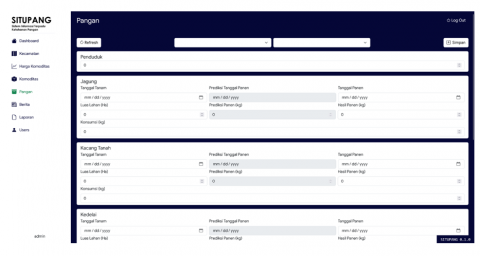
Figure 10 illustrates the Food Security View page within the SITUPANG Food Security Information System. This page serves as a central hub for users, particularly administrators, offering a comprehensive overview of the current food security situation. By integrating data on food stock levels, regional distribution patterns, and commodity prices, the Food Security View equips users with essential insights to monitor and manage food supply chains effectively. Its intuitive layout ensures that critical information is presented in a coherent and easily digestible format.
The Food Security View is specifically designed to facilitate the early identification of potential food shortages. Through real-time access to detailed stock and distribution data, administrators can promptly recognise emerging issues and take preventative measures before shortages escalate. The feature supports the strategic planning of food distribution, enabling authorities to allocate resources efficiently and minimise the risk of regional imbalances that could threaten food security. This view is shown in Figure 10.
Figure 10. Food security view
Figure 10 shown accessibility is a key strength of the Food Security View. As part of the SITUPANG system, it can be accessed via computers, laptops, and mobile devices connected to the internet, ensuring that decision-makers can monitor food security conditions anytime and anywhere. This mobility enhances the responsiveness of food security management efforts, allowing for rapid interventions whenever necessary. The system’s design prioritises both usability and reliability, ensuring that even under pressing circumstances, information remains accessible and up-to-date.
In addition to stock and price data, the Food Security View incorporates regional mapping functionalities. These allow users to visually track food stock distributions across different areas, highlighting regions at risk or areas experiencing surplus. By offering both quantitative data and geographical visualisation, the system provides a multi-dimensional perspective that strengthens strategic analysis and decision-making processes for food security management. Overall, the Food Security View is a critical feature within the SITUPANG platform, supporting proactive food security governance. By delivering timely, accurate, and comprehensive information, it empowers administrators to maintain food availability, stabilise prices, and build resilience against supply chain disruptions. Its user-centric design, combined with robust technological infrastructure, ensures that SITUPANG remains a valuable tool in addressing the dynamic challenges associated with food security. SITUPANG also shown the user view as Figure 11.
Figure 11. The user view
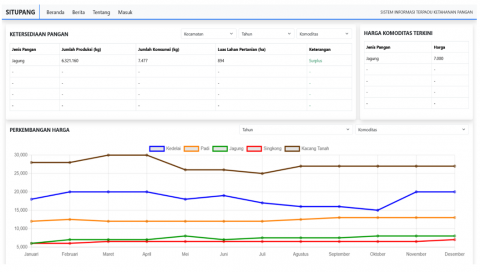
Figure 11 displays the User View page within the SITUPANG Food Security Information System. This page is designed primarily for guest users, allowing them to access crucial food security information without the necessity of logging in. By offering open access, the system ensures that vital data regarding food availability and pricing can reach a broader audience, supporting the principle of transparency and inclusivity in public services. The User View is intended to empower individuals, community groups, and other stakeholders by making relevant information readily available. The interface of the User View page has been developed with user-friendliness as a core priority. It presents information such as commodity prices, food stock availability, and regional distribution in a clear, concise, and easily navigable format. Careful attention has been paid to the design and layout to ensure that users from diverse backgrounds, including those with limited digital literacy, can efficiently interact with the system. Visual elements, intuitive menus, and simple data displays contribute to an accessible user experience, aligning with SITUPANG’s mission to bridge information gaps across different segments of society.
By enabling public access to essential food security information, the User View page plays a significant role in encouraging wider community engagement. It fosters a sense of shared responsibility by involving citizens in monitoring food conditions, thus promoting early awareness of potential shortages or price fluctuations. Furthermore, it supports collaborative efforts between communities and government agencies, as informed citizens are better equipped to participate in discussions and initiatives aimed at enhancing food security resilience.
The development of the SITUPANG Web-Based Food Stock Monitoring System demonstrated a rigorous approach beginning with a comprehensive system requirements analysis. This initial stage ensured that both functional and non-functional needs related to food stock management were thoroughly identified and documented. Such a structured analysis guaranteed that the system was fit for purpose, scalable, and able to address the practical challenges faced by agencies responsible for food security.
Subsequently, the system design utilised Unified Modeling Language (UML) to model the architecture and functionalities clearly and systematically. UML diagrams facilitated effective communication among stakeholders and minimised design errors. The SITUPANG platform itself is built on a robust database framework using HTML and PHP, providing reliability and flexibility for data management and operations.
A key feature of SITUPANG is the integration of Geographic Information System (GIS) capabilities, which enhances the monitoring of food stock distribution across regions in real time. This functionality supports early warning systems for potential shortages and aids in maintaining food price stability by enabling rapid identification of stock locations. Through these features, SITUPANG significantly improves food security management and empowers decision-makers to implement timely and evidence-based interventions.
Policy Recommendations: To ensure sustainable impact, it is vital that SITUPANG’s deployment aligns closely with Indonesia’s National Food Security Law (Law No. 18 of 2012). This includes formal integration of SITUPANG’s data and early warning outputs into regional and national food security frameworks and protocols. We propose establishing protocols for data sharing and coordination between SITUPANG users and government agencies at various levels to strengthen compliance with legal mandates. Furthermore, capacity building and continuous training for local government staff on SITUPANG’s use should be institutionalised to embed the system within existing governance structures. Such integration will enhance not only operational effectiveness but also policy coherence in advancing Indonesia’s national food security goals.
This research is funded by the RKAT of Universitas Sebelas Maret for the Fiscal Year 2025 through the Applied Research Excellent Research Scheme B (PUTB-UNS) under the Research Assignment Agreement Number: 369/UN27.22/PT.01.03/2025.
[1] Fadhlurrahman, I. (2024). Jumlah kendaraan bermotor di kabupaten ponorogo (number of motor vehicles in Ponorogo Regency). Databoks Katadata. https://databoks.katadata.co.id/index.php/transportasi-logistik/statistik/ffc155ae8ec1bd3/jumlah-kendaraan-bermotor-di-kabupaten-ponorogohari-ini.
[2] Putra, I.G.A.B.A. (2016). Studi evaluasi program bus trans sarbagita pemerintah provinsi Bali (evaluation study of the trans sarbagita bus program of the Bali provincial government). Kebijakan dan Manajemen Publik, 4(1): 1-9. https://journal.unair.ac.id/download-fullpapers-kmp1c43603fb3full.pdf.
[3] Ardhana, F. (2012). Rancang bangun aplikasi visualisasi dan administrasi manajemen parkir pada suatu pusat perbelanjaan (Studi kasus: Salah satu mall di Surabaya. https://www.researchgate.net/profile/Teguh-Sutanto/publication/277125502_Rancang_Bangun_Aplikasi_Visualisasi_Dan_Administrasi_Manajemen_Parkir_Pada_Suatu_Pusat_Perbelanjaan/links/56f0c6c108ae70bdd6c954b5/Rancang-Bangun-Aplikasi-Visualisasi-Dan-Administrasi-Manajemen-Parkir-Pada-Suatu-Pusat-Perbelanjaan.pdf.
[4] Bangsawan, M.I., Absori, Budiono, A., Wardiono, K., Sukoco, B., Diarti, D.K. (2023). Abandoned land utilization for food security: A welfare-based policy approach in indonesia. International Journal of Sustainable Development and Planning, 19(3): 1131-1138. https://doi.org/10.18280/ijsdp.190331
[5] Wilhamdika, G.I., Suyadnya, I.M.A., Saputra, K.O. (2019). Rancang bangun sistem reservasi parkir online pada pusat perbelanjaan di kota denpasar berbasis web. Jurnal Spektrum, 6(1): 1-9.
[6] Sanjaya, A.G. (2012). Prototipe sistem informasi kendali parkir tersedia menggunakan tampilan seven segment. S1 - Sarjana thesis, Universitas AMIKOM Yogyakarta. https://eprints.amikom.ac.id/view/creators/Sanjaya=3AAngga_Garniz=3A=3A.default.html.
[7] Istani, I., Absori, Dimyati, K., Wardiono, K., Budiono, A., Achmadi, A. (2025). Food estate management system and policies in Pulang Pisau and Kapuas Regencies, Central Kalimantan Province, Indonesia. WSEAS Transaction of Development and Environment, 21: 19-27. https://doi.org/10.37394/232015.2025.21.2
[8] Mathew, S.S., Atif, Y., Sheng, Q.Z., Maamar, Z. (2014). Building sustainable parking lots with the Web of Things. Personal and Ubiquitous Computing, 18(4): 895-907. https://doi.org/10.1007/s00779-013-0694-7
[9] Wang, W., Song, Y., Zhang, J., Deng, H. (2014). Automatic parking of vehicles: A review of literatures. International Journal of Automotive Technology, 15(6): 967-978. https://doi.org/10.1007/s12239-014-0102-y
[10] Peng, G.C.A., Nunes, M.B., Zheng, L. (2017). Impacts of low citizen awareness and usage in smart city services: The case of London’s smart parking system. Information Systems and e-Business Management, 15(4): 845-876. https://doi.org/10.1007/s10257-016-0333-8
[11] Ma, R., Lam, P.T., Leung, C.K. (2021). Reliability analysis of a smart parking information system: The case of Hong Kong. Wireless Personal Communications, 119: 1681-1701. https://doi.org/10.1007/s11277-021-08301-w
[12] Jemmali, M., Melhim, L.K.B., Alharbi, M.T., Bajahzar, A., Omri, M.N. (2022). Smart-parking management algorithms in smart city. Scientific Reports, 12(1): 6533. https://doi.org/10.1038/s41598-022-10076-4
[13] Chen, X. (2019). The development trend and practical innovation of smart cities under the integration of new technologies. Frontiers of Engineering Management, 6(4): 485-502. https://doi.org/10.1007/s42524-019-0057-9
[14] Gupta, P., Chauhan, S., Jaiswal, M.P. (2019). Classification of smart city research-A descriptive literature review and future research agenda. Information Systems Frontiers, 21(3): 661-685. https://doi.org/10.1007/s10796-019-09911-3
[15] Yu, Y., Yu, J., Pan, X., Stough, R. (2017). Governance and the China innovation economy. Asia-Pacific Journal of Regional Science, 1: 63-84. https://doi.org/10.1007/s41685-017-0013-9
[16] Yuniarti, D., Purwaningsih, Y., Soesilo, A.M., Suryantoro, A. (2022). Food diversification and dynamic food security: Evidence from poor households. Jurnal Ekonomi Pembangunan: Kajian Masalah Ekonomi Dan Pembangunan, 23(1): 43-55. https://doi.org/10.23917/jep.v23i1.16302
[17] Aritenang, A.F. (2021). The importance of agglomeration economies and technological level on local economic growth: The case of Indonesia. Journal of the Knowledge Economy, 12(2): 544-563. https://doi.org/10.1007/s13132-021-00735-8
[18] Alharbi, A., Halikias, G., Yamin, M., Abi Sen, A.A. (2021). Web-based framework for smart parking system. International Journal of Information Technology, 13(4): 1495-1502. https://doi.org/10.1007/s41870-021-00725-8
[19] Wardiono, K. (2019). Prophetic: An epistemological offer for legal studies. Journal of Transcendental Law, 1(1): 17-41. https://doi.org/10.23917/jtl.v1i1.8797