Josué Briones-Bitar | Luis Pacheco-Bautista | Fernando Morante-Carballo | Edgar Berrezueta | Paúl Carrión-Mero*
© 2025 The authors. This article is published by IIETA and is licensed under the CC BY 4.0 license (http://creativecommons.org/licenses/by/4.0/).
OPEN ACCESS
In the construction sector, accidents that harm workers' health are common and are caused by different factors, such as inadequate work area and human factors. Therefore, it is essential to comply with occupational health and safety regulations to avoid accidental falls from different heights and ensure workers' health. This study aimed to analyze the scientific production of Occupational Health and Safety related to fall accidents in the construction sector through a bibliometric analysis and a systematic review focused on identifying current knowledge, research trends, and knowledge gaps. Using databases such as Scopus and Web of Science (WoS), 1,419 documents published between 1968, and October 2024 were collected and analyzed using analytical tools such as Vosviewer and Bibliometrix. In addition, the PRISMA method was applied for a selection analysis of scientific publications using the following exclusion criteria: i) articles not focused on falls (within titles and keywords), ii) articles that are not in English, iii) articles that are not open access, obtaining 59 relevant publications that highlight innovative approaches such as deep learning, virtual reality (VR) and artificial intelligence (AI) in the field of occupational safety. The findings of this work show an increase in research on these topics, highlighting their relevance in the prevention of occupational accidents, and offer a comprehensive view of current trends, application of technologies and knowledge gaps (e.g., lack of safety training integrating advanced technologies such as AI and VR, lack of safety culture, socioeconomic factors in some countries in the application of regulations) laying the foundations for future, more in-depth research in this field.
occupational safety and health, occupational hazards, occupational risk, fall from height, construction, technology adoption, safety culture
Industrial safety had its roots in the Middle Ages when work was carried out manually or with the aid of draft animals. In the 10th century, regulations aimed at protecting workers were established in France, marking the beginning of a formal approach to workplace safety [1]. In the 15th century, Ulrich Ellenbaf wrote a pioneering text on occupational diseases and preventive measures in Germany. Although he probably did not anticipate this, his work was the first documented reference on industrial safety [2]. This historical development underlines how, since ancient times, there has been a search to safeguard workers' health, laying the foundations for modern regulations.
As a result of these developments, governments have begun to establish control measures. In Spain, Charles III 1778 established protection for industrial accidents [2], while in 1802, the English parliament determined the working day and safety and hygiene conditions in factories [3]. Significant accidents were evident in later years, such as the fire in the Triangle Shirtwaist factory in New York in 1911, where 146 workers died [4]. Another disaster occurred in the British mine, Senghenydd, in 1913, with 439 workers dead [5], and an explosion in the Canadian port of Halifax in 1917, with approximately 2,000 dead and 9,000 injured workers [6].
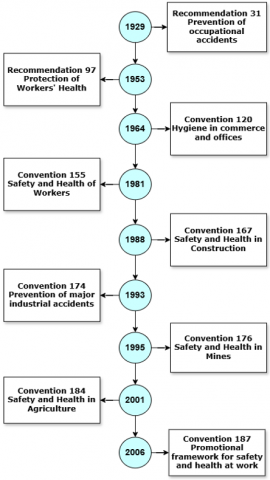
New standards and regulations have been implemented over the years. At the international level, the ISO 45001 standard manages safety, health, and risk prevention at work [7] and is used in organizations worldwide. Occupational Safety and Health Administration (OSHA) standards are implemented in the United States to protect employees from workplace hazards [8]. The European Union's Information Agency for Safety and Health at Work (EU-OSHA) [9]. In South American countries, Uruguay has Decree No. 125/014, which deals with safety and hygiene in the construction sector [10], Peru has Law No. 29,783/2011 on Worker Safety and Health [11], Chile's Supreme Decree No. 47/2016, which deals with the National SST Policy [12], in Argentina there is the Occupational Health and Safety Law of 1972 [13]. Ecuador has Executive Decree No. 2393/1986, regulations on the safety and health of workers, and improvement of the environment. It also has Ministerial Agreement No. 0174/2008, which deals with Safety and Health Regulation for the Construction of Public Works to prevent accidents or occupational risks. Simultaneously, methods are applied to improve health organization processes to increase their productivity and profitability in care [14]. Figure 1 presents a summary of the history of occupational safety and health.
Figure 1. Summary of the most relevant history of occupational health and safety standards
The International Labour Organization (ILO) was created in 1919 because of accidents that occurred in different industries. This organization was designed to establish international standards and conventions for worker protection. It has 191 conventions and approximately 40 standards, focusing on Worker Safety and Health (WSH). One convention, C155, deals with worker safety and health [15], and Convention C167 deals with safety and health in construction [16]. Some standards, such as Convention C174 [17], are dedicated to preventing industrial accidents (Figure 2).
The construction industry has been identified as one of the most dangerous in many parts of the world [16], and falls from heights are one of the leading causes of death in construction operations, according to a study by Chi et al. [18]. Hu et al. [19] stated that falls are the leading cause of serious injuries in all accidents that occur during construction. Falls from heights still consistently have the highest rates among construction accidents when compared to other types of accidents (e.g., vehicle collisions, being struck by moving or falling objects, being caught between stationary and moving objects, and contact with electricity) and when compared to accidents in other industries [20]. Fall prevention has received significant attention from construction safety and health management researchers and practitioners [21].
At the international level, each country has its own institution or entity where a record of work accidents is maintained, depending on the type of the economic sector. In North America, in the United States, the Occupational Safety and Health Administration (OSHA) defined the "Four Construction Focus Hazards": falls, blows, electrocutions, and entrapment, which continue to lead to fatal threats to workers in the construction industry [8, 22]. Falls, slips, and trips accounted for 39.2% (421 deaths) of all construction deaths in 2023 in the United States [23]. In the European Union, 3,286 fatal accidents were recorded at work in 2022, of which 754 corresponded to the construction sector [24]. In Asia, Malaysia's Department of Occupational Safety and Health (DOSH) reported 151 deaths in 2021, of which 37% were construction accidents and 28% were in the manufacturing sector. Fatal falls from heights primarily contribute to this figure [25].
In the South American region of Ecuador, during the period 2019-2024, 1,782 files were registered and classified as work accidents in construction [26]. According to the Chamber of Industries and Production (CIP), 77% of informal employment occurs in the construction sector [27], so there is no verification of the total number of accidents that occur in construction. In Argentina, 55,127 reported cases were recorded according to accident type. In construction, by 2023, 41,132 cases of work accidents were reported (74.61%), and 10,870 cases were due to falls of different levels (19.72%) [28]. In Chile, 19,405 work accidents were recorded in construction, of which 5,132 were accidents involving falls, giving 26.45% of accidents the same [29]. In Peru, in 2023, there were 3,408 accidents in the construction sector, of which 555 were falls, accounting for 16.29% of registered accidents [30].
In the construction sector, various problems must be solved. One of these problems is that workers who carry out activities at different height levels comply with occupational safety regulations. However, despite existing regulations, these types of accidents continue to occur due to a lack of culture, lack of training, and workers' disinterest in using their Personal Protective Equipment (PPE). Therefore, we asked the following research question:
Are occupational health and safety regulations and preventive measures correctly implemented in the construction sector to avoid fall accidents?
How have safety regulations evolved, and what new aspects do they consider?
What aspects of the new regulations currently applied in construction contribute?
This study aimed to analyze the scientific production of Occupational Health and Safety related to accidents due to falls in the construction sector. Bibliometric analysis and systematic review will focus on identifying the current state of knowledge, research trends, and knowledge gaps. This analysis will provide a basis for evaluating the effectiveness of current safety measures and serve as a starting point for future research that delves into strategies to prevent workplace accidents in this sector.
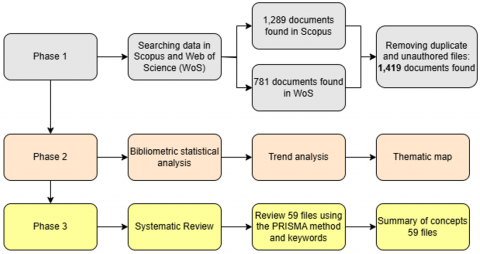
This study used qualitative and quantitative techniques through a combined approach between a bibliometric analysis (Occupational Health and Safety Standards, with the application of VOSviewer and Bibliometrix software) and a systematic review, which summarizes in a matrix the accidents of falls from height in civil works (cause, effect, prevention and standards). The methodology of this study was developed in three phases (Figure 3): I) Search for scientific publications in databases such as Scopus and Web of Science (WoS), II) Statistical-bibliometric analysis for the analysis of trends, III) A systematic review on falls from height in civil works.
Figure 3. Diagram of the methodology used
Phase 1 involved the selection of keywords related to this research topic (Occupational safety and health, fall from height, construction). These keywords were used to search for scientific publications in the Scopus and Web of Sciences (WoS) databases [31].
In the Scopus database, 1,295 documents were obtained (with the extension. bib), while in Web of Sciences (WoS) 781 documents were obtained (with the extension. txt). Once the papers were collected, RStudio software [32] was used to merge the documents (2,076 documents) and to eliminate duplicate files (657 documents), leaving 1,419 documents for analysis in Phase 2.
In Phase 2, a bibliometric analysis was used using the Bibliometrix-RStudio software (version 4.4.2) to determine research trends focused on scientific production in Occupational Health and Safety and falls from height, the most relevant countries in contribution, and the analysis of research trends using a thematic map. Using the VOSviewer software (version 1.6.20), a correlation mapping of the author keywords was obtained.
In Phase 3, a systematic review was conducted following the PRISMA methodology [33, 34]. The selection of scientific publications was based on a focus on falls, considering titles and keywords, and applying language and accessibility filters. Publications written in English were prioritized, as English is the universal language of scientific communication and accounts for approximately 97% of scientific output [35, 36]. Additionally, only open-access publications were considered, in accordance with the Budapest Open Access Initiative (BOAI) [37, 38], to ensure unrestricted, free, and fully online access to the literature. Consequently, the exclusion criteria were applied sequentially as follows: (i) articles not related to falls (1,341 documents eliminated), (ii) publications not written in English (1 document eliminated), and (iii) articles not available in open access (18 documents eliminated). Using the PRISMA method (inclusion/exclusion parameters), 59 documents were obtained for the systematic review.
3.1 Scientific production on occupational health and safety and falls from height
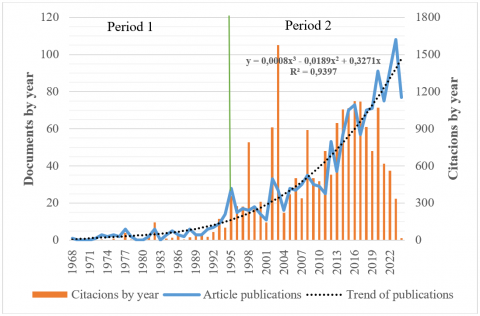
The scientific production on Occupational Safety and Health and falls from height consisted of 1,419 documents developed between 1968 and 2024 (Figure 4). The first contribution in this research field was made in 1968, with the topic “Cause of the accidents due to oxygen deficiency in underground works in Tokyo area” [39], which analyzes the oxygen deficiencies in underground constructions, the cause of accidents and how to avoid them. Within this research topic, there are two marked periods: period 1 (1968-1994) records very few publications, having a linear trend, while period 2 (1995-2024) presents an exponential trend (growing publications). In 1995, an increase in publications was observed due to the review of the sections of the OSHA standard on topics of interest, such as the control of exposure to lead, silica and asbestos [40, 41]; the improvement in the fall protection system (harnesses and anchors) in falls was also implemented [42]. Figure 4 shows that more research is being done each year on the topic (increasing trend), highlighting 2023, where the largest number of publications was recorded (108), and 2024, with a projection to increase this number of publications.
Figure 4 shows the citations recorded by year. In period 1, there is a record of 814 citations in total; 1982 stands out for having 145 citations. The most cited topic in that year (123 citations) deals with respiratory health in a toluene diisocyanate (TDI) manufacturing plant during 5 years of exposure [43]. Also, 1993 stands out with 173 citations, with the topic with the most citations (72) about fatal work injuries in the construction industry in New Jersey from 1983 to 1989 [44]. In period 2, a growth in citations was observed, with 2003 being the highest number of citations recorded (1578). In this period, there were two scientific publications with a large number of citations. The first topic (960 citations) deals with guidelines for controlling environmental infections in health centres, which examined environmental infections found in health centres, focusing on prevention, controls, and the creation of new tools in care [45]. The second topic (243 citations) focused on analyzing accidents due to workers' falls in construction, examining the causes of accidents in construction and how to prevent falls of personnel who perform this type of activities [46].
Figure 4. The trend of publications and citations in the study on Occupational Health and Safety and falls
3.2 Scientific metrics for occupational health and safety and falls from height
3.2.1 Scientific contribution and collaboration by country
Scientific contributions on occupational safety and health and falls from height comprised 76 countries between 1968 and 2024.
Table 1 summarizes the main topics researched by the five countries with the highest contribution. The United States is the country with the highest contribution (601 papers), followed by Malaysia (94 papers), South Korea (51 papers), the United Kingdom (50 papers) and Indonesia (45 papers). These countries have international collaborations on new topics that are emerging as applications of technologies for safety management design in construction.
Table 1. Scientific contributions from the leading countries researching Occupational Safety and Health and falls from height in the construction industry
|
No. |
Countries |
Publications |
Most Relevant Topics |
Country Collaboration |
|
1 |
United States |
601 |
A research study based on OSHA's collection of information on construction accidents involving falls [46]. |
South Korea, Canada, Australia, Iran, United Kingdom |
|
Application of personal protective equipment through deep learning technology and real-time monitoring [47]. |
||||
|
2 |
Malaysia |
94 |
A study focusing on the review of health and safety management in the construction sector in Malaysia for a practical approach to hazard containment [48]. |
Algeria, Australia, China, Indonesia |
|
This research topic uses machine learning to create a prevention model that identifies the causes of fatal accidents due to falls [49]. |
||||
|
3 |
South Korea |
51 |
Study on 4-dimensional planning based on temporal and spatial site safety information for occupational risk prevention [50]. |
Finland, United States |
|
An analysis of occupational health and safety regulations to improve efficiency and innovation in the construction sector [51]. |
||||
|
4 |
United Kingdom |
50 |
A design for organizational capacity with occupational health and safety [52]. |
Australia, Thailand, Nigeria, Ghana |
|
Review the application of new technologies to improve the construction sector's health and safety management [53]. |
||||
|
5 |
Indonesia |
45 |
Studies on factors affecting job stress in construction workers [54]. |
Philippines |
|
Identification, analysis, evaluation, and implementation of health and safety management applied to projects in the construction sector [55]. |
3.2.2 Research trends using author keywords
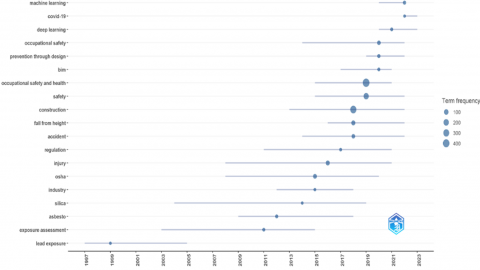
Figure 5 presents the research trends based on the authors’ keywords such as “lead exposure”, “quartz”, and “monitoring” that appear in the period from 1999 to 2007. The most cited topic within this period is “Clinical evaluation and management of construction workers exposed to lead” [56], which focuses on the effects of lead on human health, focusing on the diagnosis, treatment and prevention of diseases. Topics such as “silicosis”, “low back pain”, and “noise exposure” appeared in the period from 2008 to 2015, which are common diseases originating in civil works [57, 58]. The topics of “occupational health and safety” and “fall from height” are topics of high interest in the period 2016-2019 because they are more frequent in research, focusing on occupational risk management for the prevention of accidents, illnesses, and worker protection [22, 59, 60]. Finally, in the period 2020-2024, new topics such as “COVID-19”, “artificial intelligence” and “BIM” emerge. The authors Gan and Koh [61], in “Return to Work in the Construction Sector: Lessons from Singapore”, refer to the prevention of COVID-19 contamination in workers to resume construction activities in Singapore. Another research topic, “REDECA: a new framework to review artificial intelligence and its applications in occupational health and safety”, highlights the application of technology for worker health and safety [50, 62].
Figure 5. Research trends related to keywords
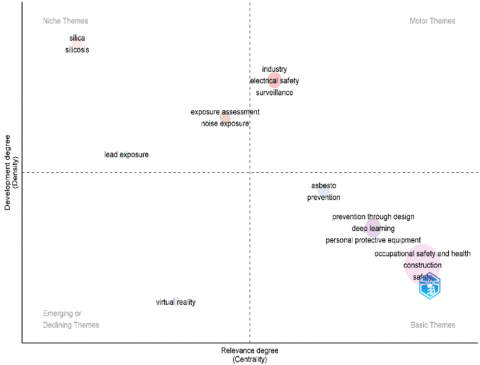
Figure 6 shows a thematic map based on the study topic (Occupational Safety and Health and Falls from Height). The links are presented by comparing the degree of relevance with the degree of development and dividing the graph into four quadrants (essential, driving, niche, emerging). The basic topic illustrates the relationship between “occupational safety and health”, “construction”, and “prevention through design” through “deep learning” of what happens in constructions and the use of “personal protective equipment”. In parallel, the “asbestos prevention” found in constructions is considered. The motor theme shows the relationship between “industry” and “electrical safety” for the evaluation of accidents that may occur through “surveillance”. The niche themes highlight the importance of “noise exposure evaluation” and “lead exposure”, as well as “silica” exposure, which can commonly cause silicosis (a severe disease that affects the lungs). Finally, the emerging theme highlights “virtual reality”, generating high interest in the relationship with occupational safety and health to prevent fall accidents.
Figure 6. Thematic map of the relationships between occupational health and safety study topics and falls
3.2.3 Correlation of author keywords
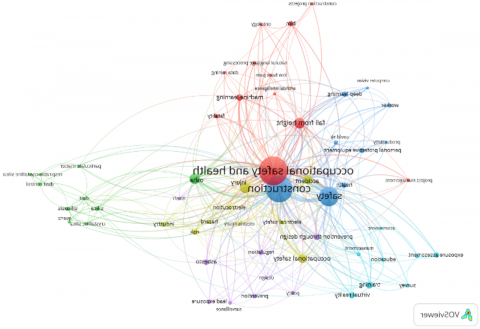
The authors' keyword correlation analysis helped to observe established and emerging research fields. Using VOSviewer software, 2,538 words were processed and repeated once, while only 57 words were repeated five times (Figure 7), showing their interactions grouped into 6 clusters.
Figure 7. Correlation of keywords
Cluster 1, Occupational Health and Safety (378 occurrences, red), studies occupational risks and diseases. Through standards, it regulates and prevents accidents that occur at work. This cluster groups topics that are related to accidents that occur at work, for example, falls from heights [63] that occur in construction and diseases such as low back pain and silicosis [58, 64]. In addition, it shows the relationship between BIM [65] and artificial intelligence [66] which are technologies that are being applied, and their research interest is increasing.
Cluster 2, OSHA (50 occurrences, green), shows related topics such as the risks produced by crystalline silica, asbestos, quartz and dust control [67], which are related to the American OSHA standard that manages, regulates and controls worker safety and health [60].
Cluster 3, Construction (325 occurrences, blue colour), is related to what happens in civil works, deep learning, such as the use of personal protective equipment, and worker productivity. In addition, it raises the study on safety and preventive design of diseases such as COVID-19 [68]; this affected the emotional state and health of all people worldwide, causing great human losses and economic losses in different industries, such as Construction [69].
Cluster 4, Injuries (55 occurrences, yellow colour), studies the issues related to injuries that occur due to accidents, falls, and risks of electrical injuries [70]. Research has also been done on the design and surveillance of how to avoid accidents in Construction [71].
Cluster 5, Prevention through design (20 occurrences, purple): Increasingly, accidents occur due to worker carelessness or an unsafe area, which is why there are studies on implementing designs to prevent these accidents. Likewise, the policies established in regulations such as ISO, OSHA, and NIOSH are complied with to avoid these types of accidents [72].
Cluster 6, Training and Education (21 occurrences, light blue), focuses on issues related to training, education, and evaluation of exposure to occupational risks produced in construction. It also involves virtual reality, which is emerging as a new method to prevent accidents and illnesses among workers [73].
3.3 Systematic review matrix related to preventing falls from height accidents in the construction sector
The systematic review shows the scientific production related to Occupational Health and Safety focused on accidents due to falls from height in the construction sector. It was observed that some authors have carried out studies on factors that cause accidents due to falls and diseases caused by injuries, as well as on the prevention of this type of accident and inspection of standards. The review shows that, since 2018, research has appeared and is growing on the application of new technologies related to the prevention of fall accidents (such as virtual reality, structural equation model (SEM), the application of artificial intelligence and algorithms in real-time detection), since these topics are emerging as new prevention measures. Table 2 shows the issues found in the review, classifying them into four subtopics (such as causes, effects, prevention, revision or modification of standards).
Table 2. The systematic review focused on preventing falls from height accidents in the construction sector, based on 59 documents
|
Subtopics |
Topics in Contribution |
Ref. |
|
Cause of accident due to falls |
Unsafe acts: |
[74]
[22]
[75]
|
|
Not using personal protective equipment. |
||
|
Lack of knowledge of safety regulations. |
||
|
Having a lousy aptitude and attitude at work. |
||
|
El personal se encuentra con estrés psicológico laboral. |
||
|
The staff is experiencing psychological stress at work. |
||
|
Lack of training for the workforce focused on safety and the use of equipment. |
||
|
Loss of balance of the worker under the influence of alcohol and/or drugs. |
||
|
Unsafe condition: |
||
|
Neglect of the work area |
||
|
Implementation of a poor design in safety measures. |
||
|
Equipment in poor condition includes scaffolding, ladders, harnesses, railings, and harness trusses. |
||
|
The height of the work equipment platform. |
||
|
Inadequate lighting methods. |
||
|
Effect of falls accident |
It causes injuries, illnesses and loss of human life. |
[67]
[76]
[77] |
|
Moral demotivation of staff due to the occurrence of accidents. |
||
|
Medical expenses of companies in caring for injured staff. |
||
|
Delays in the delivery of construction projects. |
||
|
Decreased productivity. |
||
|
Conflicts in the workplace due to disorganization. |
||
|
Lack of awareness of safety-related problems. |
||
|
Lack of fall protection system applications. |
||
|
Effects that acrophobia and anxiety can cause when working at height. |
||
|
Prevention of accidents due to falls and the application of new technologies |
Anchoring using wooden trusses for personal fall arrest systems in compliance with OSHA regulations. |
[25]
[65]
[73]
[78]
[62]
[79] |
|
Monitoring workers to determine if they meet the safety standard of the personal fall detection system was established by a real-time arrest algorithm based on a convolutional neural network through AI-based image arrest for fall accident mitigation. |
||
|
The application of wooden railing systems as perimeter prevention to avoid fall accidents is located on the ceilings. |
||
|
Inspecting workplaces can help reduce fall accidents. |
||
|
Virtual training using new technologies such as immersive 360° virtual vision narration allows us to improve hazard recognition and risk perception. |
||
|
The method that semi-automatically identifies the risks of falls in excavations in the construction sector using an algorithm (Matlab) that locates the fall hazards, which is visualized with a BIM model. |
||
|
Implementing and combining technologies to mitigate fall accidents in construction, such as low-cost Bluetooth technologies to monitor safety harnesses, BIM, GPS, and Radio Frequency Identification, would help improve the effectiveness in reducing fall accidents. |
||
|
Virtual reality is used to train and assess how acrophobia and anxiety affect working at heights, thus preventing accidents due to falls. |
||
|
Machine learning is used to create prediction models such as the random forest (Scikit-Random Forest Classifier of Python) that detect the causes or factors that influence fall accidents. |
||
|
Interactive virtual reality systems will be used to train US construction workers in fall risk prevention with a focus on OSHA compliance. |
||
|
Training construction workers with low English proficiency by implementing three-dimensional (3D) visualization to understand fall risk prevention training better. |
||
|
Assess the most common risk factors in construction using a structural equation model (SEM) to compare the influence of risk factors. |
||
|
Standards |
A study evaluated existing construction industry standards and alternative fall protection measures on residential roofs. |
[80]
[66]
[81]
[51] |
|
Occupational health and safety reports were examined, and almost all of them did not comply with the safety standards in force at that time. |
||
|
Real-time monitoring of unsafe behaviour by workers on portable ladders to verify compliance with safety standards. |
||
|
In South Korea, regulatory policies on preventing fall accidents in construction have been improved, taking suggestions from US OSHA standards. |
||
|
Assessments of existing regulations, construction practices, and alternative fall protection measures on residential roofs were conducted. The results were poor compliance with regulations due to a lack of knowledge, competition from construction industries, design difficulties, and worker misbehavior. |
||
|
One study examined the relationship between fall protection standards and injuries in construction workers to determine whether compliance with standards and follow-up at the source of injuries occurred. |
The analysis of scientific production (within the period 1968-2024) shows the development of scientific contributions to occupational safety and health, applied to preventing accidents and registering occupational diseases. Period 1 (1968-1994) registered minimal development in occupational safety and health due to the combination of weak regulations (entities began to promote more demanding standards in the 1990s [17]), poor data availability (companies did not adequately document incidents), lack of financing (investments were mainly directed towards technological advances in materials and construction processes [82, 83]) and low prioritization of safety within the construction industry (globalization and the influence of organizations, such as the ILO and OSHA). In this period 1, there are topics focused on respiratory health within different work environments (lack of oxygen in underground works, exposure in a toluene diisocyanate manufacturing plant, or diseases caused by crystalline silica), in addition to fatal injuries that occur in the construction sector during 1983-1989. Period 2 shows an exponential growth in the trends of scientific contributions, starting in 1995, reflecting a greater interest in occupational safety and health, focusing on advancing and adapting new technologies and methodologies, such as AI, deep learning, and training, and applying virtual reality as new prevention measures. It is also due to an increased global awareness of workplace safety, such as the implementation of stricter regulations (e.g., Directive 92/57/EEC on safety at construction sites came into force in 1995 in the European Union [84]) and recent updates (e.g., OSHA updated its standards for the use of fall protection systems at heights above 1.8 meters, for the use of cranes and lifting equipment, and a comprehensive focus on training and prevention [8].
The scientific analysis of contributions by country shows that there are issues of occupational safety and health and falls, with contributions from 76 countries from 1968 to 2024. The United States leads research on these topics, followed by Malaysia and South Korea. Considering the income levels of each country and the human development index, it is noted that in developed countries, the regulations are well established, strictly applied and periodically reviewed to adapt to technological changes in new prevention measures [85, 86]. In these countries, specialized agencies have the resources for inspection and advanced training systems in compliance with the standards; for example, in the USA with the OSHA standards [8], and in the European Union, there is the EU-OSHA [9]. In developing countries, there are regulations; however, their establishment and inspection are partially limited by their average resources, low safety conduct, and corruption of the system, affecting the occupational safety part, although efforts to improve are noted [85], as examples we have Brazil with its NR-18 and NR-35 standards [87, 88], India which has its Occupational Health and Safety Act 2020 [89].
In developed countries, regulations are implemented effectively; however, implementation is often inconsistent in developing and less developed countries [90]. One of the factors is the corruption of the system, of governments or companies that allocate their resources to other areas and do not focus on the safety and health of workers. According to Transparency International (TI), in 2024, developed countries show a low level of corruption (e.g.: Denmark 90, Singapore 84 and the United States 65), while in developing countries (e.g.: Brazil 34, India 38 and South Africa 41) and less developed countries (e.g., Haiti 16, Afghanistan 17, Somalia 9) high levels of corruption are observed; being classified with the lowest Corruption Perceptions Index (CPI) [91-93]. High levels of informal employment also impact the prevention measures, which do not allow for improvement. Safety in construction, specifically in the prevention of falls, is limited by the level of economic development [94], the institutional capacity of each country and the culture of workers in complying with preventive measures for this type of accident worldwide. International collaborations strengthen research, although greater inclusion of developing and less developed countries is needed. Table 3 compares several aspects, such as regulations, oversight, training, technological innovation and safety culture.
Table 3. Comparison of the aspects classified by developed, developing and least developed countries
|
Aspect |
Developed Countries |
Developing Countries |
Least Developed Countries |
|
Regulations |
Comprehensive and up-to-date standards. Examples: OSHA in the USA, EU-OSHA in the European Union, KOSHA in South Korea, ISO 45001 [8, 9]. |
Existing regulations, although limited in their application. Example: NR-18 and NR-35 in Brazil, the Occupational Health and Safety Act in India, ISO 45001 [7, 88]. |
Existing regulations are very limited in their application Example: Bangladesh, Haiti, Nigeria [90]. |
|
Oversight |
Rigorous and frequent, reviewed by specialized agencies. |
Partially due to low resources and corruption of the system. (in countries like Brazil, India, and South Africa, according to the CPI [91]. |
Limited due to low resources, system corruption (in countries like Haiti and Afghanistan, according to the CPI) [91] and security culture. |
|
Training |
Mandatory and of high quality provided by regulatory organizations [8, 9]. |
Available, although not always accessible or practical [7]. |
Minimal workers are not trained. |
|
Technological Innovation |
Mandatory use of Personal Protective Equipment (PPE), virtual reality, AI, deep learning, BIM, and structural equation modelling (SEM). |
There are varied uses of PPE, more in massive projects but scarce in small ones, BIM, virtual reality studies, and real-time monitoring. |
PPE use is practically low; workers operate in precarious conditions. |
|
Safety Culture |
It is solid, promoting zero tolerance for violations of rules. |
Rudimentary, focusing more on productivity than on workplace safety. |
Almost non-existent, safety is not a priority. |
In the thematic trends, the connections of how the research topics have evolved are contemplated through keywords. The basic topic is occupational health and safety in construction, which is relevant in various areas, such as management in the prevention of accidents and diseases caused by asbestos. The driving topics, such as safety in the different industry types and surveillance, focus more on this domain. The niche topics reveal the importance of exposure in constructions, such as noise, lead, and silica, which cause respiratory diseases. In the emerging or declining topic, the application of new technologies arises, focusing on a design for preventing fall accidents using personal protection equipment and the help of virtual reality. This shows us that more and more technologies are appearing in the prevention of fall accidents, such as the use of artificial intelligence to create 3D scenarios for worker training, creating designs in prevention management through BIM modelling, and real-time monitoring of workers who are exposed to traditional risks (lead, noise, silica). Within the systematic review, carried out using the PRISMA method, it is evident that the leading causes of fall accidents in the construction sector are due to both unsafe acts (deficiencies in supervision and equipment failures (scaffolding or ladders) and poor working conditions (lack of use of personal protective equipment (PPE), ignorance of safety regulations and psychological stress at work). These findings coincide with previous studies [22, 74] that indicate that the absence of a safety culture at work contributes significantly to accidents. Lack of training and non-compliance with regulations are recurring aspects in the construction industry, aggravating the problem and indicating the need to strengthen the safety culture in the construction sector [79].
The systematic review highlights the importance of advancing and adapting new technologies and methodologies in the prevention and mitigation of fall accidents. Technologies such as the use of real-time detection algorithms using neural networks (real-time monitoring of PPE use), the use of virtual reality (training of workers), the creation of virtual scenarios with the help of AI (detecting the factors that cause fall accidents and managing acrophobia and anxiety) are promising solutions that can help combat these accidents [25, 65]. However, despite technological advances, barriers like lack of knowledge of these tools and resistance to change within companies persist. Therefore, it is essential not only to integrate new technologies but also to encourage their adoption through stricter regulatory policies (combination with OSHA or ILO regulations) and continuous training programs (education), thus ensuring a sustained improvement in occupational health and safety in construction [62].
This study recognized that there were few studies on the revision or modification of standards since, in developed countries, they maintain their practical implementation, while in developing and less developed countries, their execution is partially effective. Gaps in inequality in scientific production were found with less contribution from less developed countries, low practical adoption of advanced technologies, and deficiency of safety regulations in many regions due to a lack of resources, research culture and little collaboration with other countries. Fall accidents are the second cause of death worldwide due to trauma or unintentional blows. It is estimated that annually, around 684,000 people die worldwide due to falls, and more than 80% of them are recorded in middle and low-income countries [95].
This bibliometric analysis and systematic review study faces the following limitations: i) the use of a merged database between Scopus and Web of Science (WoS), omitting other similar platforms such as Dimensions, ii) the research period covers from 1968 to October 2024, removing any research progress from the remaining months of 2024 and the first quarter of 2025, iii) documents indexed only in English.
Integrating advanced technologies, such as artificial intelligence and virtual reality, into everyday safety practices is not yet well documented in terms of practical applicability and adoption by industry. This finding suggests the need for detailed case studies to demonstrate their efficacy and feasibility. Furthermore, a comprehensive assessment of the actual impact of current safety policies on reducing accidents and fatalities in construction is lacking, which limits our ability to assess the effectiveness of current and future interventions. Finally, variation in the perception and effectiveness of safety training due to cultural differences also represents an understudied area that, if addressed, could significantly improve the implementation of workplace safety programs tailored to specific cultural contexts.
This study analyzed 1,419 documents in the Scopus and WoS databases over 56 years related to Occupational Health and Safety, focusing on fall accidents in the construction sector. The evolution of the number of publications shows an initial linear trend, which changes exponentially from 1995 onwards. The identified research trends stand out in implementing new technologies focused on accident prevention, such as the application of artificial intelligence, deep machine learning, virtual reality, and BIM modelling. In less-developed countries, regulations exist, although their application is incomplete because of the lack of resources and knowledge of current occupational safety regulations. Meanwhile, in developed countries, consolidated, exhaustive, and updated standards (e.g., OSHA, EU-OSHA, or ISO 45001) allow for adequate oversight, training, and innovation.
From the perspective of bibliometric analysis, it can be seen that regulations on Occupational Health and Safety have been evolving since the creation of the International Labour Organization (ILO) in 1919, which stipulated international conventions to safeguard the health and safety of workers by preventing accidents (as stipulated in its Convention C187-2006). These conventions are applied in each country, taking them as a basis for creating their safety standards and modifying them according to the emergence and application of new technologies in recent years (e.g., OSHA in the USA, EU-OSHA in the European Union, and KOSHA in South Korea). The international standard ISO 45001 is used by multinational organizations/companies and governments of developing and less-developed countries.
This study shows that the enforcement of safety standards for preventing fall accidents in construction is enforced more in developed countries (such as the USA, the European Union, South Korea, and Japan) owing to their economic growth and efficient management of their resources. In developing countries (such as Brazil, Indonesia, and Turkey), enforcement is partially due to limitations in local safety standards and medium resources, and a lack of technological innovation in the country's system. Meanwhile, in less developed countries (such as Nigeria, Bangladesh, and Haiti), enforcement is not fully regulated because of scarce economic resources, lack of training for inspection personnel, poor safety culture, and corruption in the government system.
From the perspective of the systematic review, based on 59 documents, four subtopics were identified (causes, effects, prevention, and standards), to which the authors have contributed their research on the prevention of fall accidents in the construction sector. An unsafe act is caused by a human factor or dangerous condition in the work area (e.g., non-use of PPE, lack of knowledge of regulations, psychological stress, and equipment in poor condition). These causes generate harmful effects detrimental to workers in the short, medium, and long term (e.g., decreased productivity, legal conflicts in the company, increased medical expense bills, and the emergence of disorders). Within prevention, new technologies that are booming in research have been identified, such as artificial intelligence, virtual reality, and machine learning, to create prevention models. It is recommended that this line of future research continues to improve current regulations. Regarding safety regulations, this review identified studies in which reports on occupational safety and health were examined. Defects in worker monitoring and incorrect company inspections are identified, leading to non-compliance with legal regulations. In developed countries (such as South Korea and Japan), regulatory policies for preventing fall accidents in construction are being improved, taking the US OSHA standard as a suggestion.
Since 2018, new technologies have emerged to enhance accident prevention, particularly in the area of fall prevention. Machine learning has been applied to develop predictive models that identify the causes of fall accidents, using tools such as Python’s Scikit-learn Random Forest Classifier. Virtual Reality (VR) is increasingly used in worker training, offering 360° simulations that help recognize hazards and risks, and allowing the assessment of acrophobia and anxiety management when working at heights. Additionally, 3D visualizations are being leveraged to strengthen the understanding of fall prevention strategies. Artificial Intelligence (AI) has also been introduced to monitor workers in real-time, ensuring compliance with safety standards through detection algorithms. These technological advances represent significant contributions to ongoing efforts to improve fall prevention practices. Therefore, conducting further in-depth research in these areas is critical to developing even more effective solutions.
Despite the existence of standards and regulations, non-compliance remains a persistent challenge. It is recommended that low- and middle-income countries reinforce the enforcement of safety standards by adopting strategies modeled after those of developed countries. This approach should include:
i) Conducting regular audits of accident records.
ii) Managing and allocating funds to support worker training initiatives, aligned with ISO 45001, International Labour Organization (ILO) guidelines, and Occupational Safety and Health Administration (OSHA) conventions, with a focus on identifying training needs, designing and implementing tailored programs.
iii) Evaluating training effectiveness by documenting activities, ensuring workers are registered with the national social security system, and monitoring the acquisition of knowledge and reduction of incidents.
iv) Maintaining updated records of training activities and revising programs whenever there are regulatory changes or the adoption of new technologies.
Only through the combined advancement of technology and the rigorous application of safety standards will it be possible to significantly reduce fall-related incidents in the workplace.
To the ESPOL Polytechnic University research project “Management and Evaluation of Scientific Research in Earth Sciences, Economics, Administration and its Links with Society”, with code CIPAT-7-2022. To researcher Ing. Jhon Caicedo Potosí for his help using the R-Studio software and for teaching the bibliometrics course.
[1] Gallegos, W.L.A. (2012). Revisión histórica de la salud ocupacional y la seguridad industrial industrial. Revista Cubana de Salud y Trabajo, 13(3): 45-52.
[2] Heredia Logroño, P.A., Benitez Triviño, A.S., Marcillo Balseca, J. C. (2017). Análisis de la normativa de Seguridad y Salud Ocupacional. Revista Publicando, 4(12 (2)): 1-15.
[3] Ekici, D. (2016). Skin, clothing, and dwelling. Journal of the Society of Architectural Historians, 75(3): 281-298. https://doi.org/10.1525/jsah.2016.75.3.281
[4] Lange, B. (2009). The Triangle Shirtwaist Factory Fire. Infobase Publishing.
[5] Lyddon, D. (2014). Trade unions and the history of health and safety in British mining. Historical Studies in Industrial Relations, (35): 157-179. https://doi.org/10.3828/hsir.2014.35.7
[6] Scanlon, T.J. (1997). Rewriting a living legend: Researching the 1917 Halifax explosion. International Journal of Mass Emergencies & Disasters, 15(1): 147-178. https://doi.org/10.1177/028072709701500109
[7] ISO, ISO 45001:2018, standard. https://www.iso.org/es/contents/data/standard/06/37/63787.html, accessed on Oct. 28, 2024.
[8] U.S. Departament of Labour, Occupational Safety and Health Administration. https://www.osha.gov/.
[9] European Union, European Agency for Safety and Health at Work. https://osha.europa.eu/es.
[10] Ministerio de Trabajo y Seguridad Social, Decreto 125/014 Seguridad e higiene en la industria de la construcción. https://www.gub.uy/ministerio-trabajo-seguridad-social/institucional/normativa?field_tipo_de_norma_target_id=31&year=all&month=all&field_tematica_gubuy=661&field_publico_gubuy=All.
[11] G. p. Autoridad Nacional del Servicio Civil, Normatividad relacionada a la Seguridad y Salud en el Trabajo. https://www.gob.pe/institucion/servir/informes-publicaciones/3572362-normatividad-relacionada-a-la-seguridad-y-salud-en-el-trabajo-sst.
[12] Ministerio del Trabajo y Previsión Social, Política Nacional de Seguridad y Salud en el Trabajo. https://www.suseso.cl/612/w3-article-583498.html, accessed on Oct. 14, 2024.
[13] Argentina.gob.ar, Ley 19587 Poder Ejecutivo Nacional (P.E.N.). https://www.argentina.gob.ar/normativa/nacional/ley-19587-17612.
[14] Buestan, M., Perez, C.C., Rodríguez-Zurita, D. (2025). Lean six sigma for health care: Multiple case studies in Latin America. International Journal of Lean Six Sigma, 16(1): 172-196. https://doi.org/10.1108/IJLSS-10-2023-0169
[15] International Labour Organization, C155 - Convenio sobre seguridad y salud de los trabajadores, 1981 (núm. 155), labour standard. https://normlex.ilo.org/dyn/normlex/es/f?p=NORMLEXPUB:12100:0::NO::P12100_ILO_CODE:C155, accessed on Oct. 10, 2024.
[16] International Labour Organization, C167 - Convenio sobre seguridad y salud en la construcción, 1988 (núm. 167), labour standard. https://normlex.ilo.org/dyn/normlex/es/f?p=NORMLEXPUB:12100:0::NO::P12100_INSTRUMENT_ID:312312, accessed on Oct. 10, 2024.
[17] International Labour Organization, C174 - Convenio sobre la prevención de accidentes industriales mayores, 1993 (núm. 174), labour standard. https://normlex.ilo.org/dyn/normlex/es/f?p=NORMLEXPUB:12100:0::NO::P12100_INSTRUMENT_ID:312319, accessed on Oct. 10, 2024.
[18] Chi, C.F., Chang, T.C., Ting, H.I. (2005). Accident patterns and prevention measures for fatal occupational falls in the construction industry. Applied Ergonomics, 36(4): 391-400. https://doi.org/10.1016/j.apergo.2004.09.011
[19] Hu, K., Rahmandad, H., Smith-Jackson, T., Winchester, W. (2011). Factors influencing the risk of falls in the construction industry: A review of the evidence. Construction Management and Economics, 29(4): 397-416. https://doi.org/10.1080/01446193.2011.558104
[20] Nadhim, E.A., Hon, C., Xia, B., Stewart, I., Fang, D. (2016). Falls from height in the construction industry: A critical review of the scientific literature. International Journal of Environmental Research and Public Health, 13(7): 638. https://doi.org/10.3390/ijerph13070638
[21] Cheung, E., Chan, A.P. (2012). Rapid demountable platform (RDP)—A device for preventing fall from height accidents. Accident Analysis & Prevention, 48: 235-245. https://doi.org/10.1016/j.aap.2011.05.037
[22] Halabi, Y., Xu, H., Long, D., Chen, Y., Yu, Z., Alhaek, F., Alhaddad, W. (2022). Causal factors and risk assessment of fall accidents in the US construction industry: A comprehensive data analysis (2000–2020). Safety Science, 146: 105537. https://doi.org/10.1016/j.ssci.2021.105537
[23] U.S. Bureau of Labor Statistics, Resumen del censo de lesiones laborales mortales, 2023. https://www.bls.gov/news.release/cfoi.nr0.htm.
[24] Eurostat, Estadisticas de accidentes laborales en la UE. https://ec.europa.eu/eurostat/statistics-explained/index.php?title=Accidents_at_work_-_statistics_by_economic_activity.
[25] Zermane, A., Tohir, M.Z.M., Zermane, H., Baharudin, M.R., Yusoff, H.M. (2023). Predicting fatal fall from heights accidents using random forest classification machine learning model. Safety Science, 159: 106023. https://doi.org/10.1016/j.ssci.2022.106023
[26] IESS, Seguro General de Riesgos del Trabajo. https://www.iess.gob.ec/es/web/guest/visor-riesgos.
[27] CIP, El trabajo informal alcanza su cifra más alta desde el IV trimestre de 2020. https://www.cip.org.ec/2023/05/02/el-trabajo-informal-alcanza-su-cifra-mas-alta-desde-el-iv-trimestre-de-2020/#:~:text=Le sigue la Construcción con,sector trabajar en establecimientos informales.
[28] Superintendencia de Riesgos de Trabajo, Informe anual de accidentabilidad laboral. https://www.srt.gob.ar/estadisticas/acc_informe_anual_laboral.php, accessed on Oct. 09, 2024.
[29] Observatorio SST, Accidentes trabajo y trayecto. https://observatoriosst.suseso.cl/bi/72948697-c862-4e02-83a2-a99ef97f88cd/dashboard/Accidentes_trabajo_y_trayecto, accessed on Oct. 07, 2024.
[30] Ministerio de Trabajo y Promoción del Empleo, Estadisticas de notificaciones de accidentes de trabajo por actividad económica. https://www2.trabajo.gob.pe/estadisticas/estadistica-de-accidentes-por-actividad-economica/, accessed on Oct. 08, 2024.
[31] Morante-Carballo, F., Pinto-Ponce, B., Santos-Baquerizo, E., Briones-Bitar, J., Berrezueta, E., Carrión-Mero, P. (2024). Systematic review on seismic hazards in the coastal regions of the pacific ring of fire. International Journal of Safety and Security Engineering, 14(5): 1591-1605. https://doi.org/10.18280/ijsse.140526
[32] Aria, M., Cuccurullo, C. (2017). bibliometrix: An R-tool for comprehensive science mapping analysis. Journal of Informetrics, 11(4): 959-975. https://doi.org/10.1016/j.joi.2017.08.007
[33] Mishra, V., Mishra, M.P. (2023). PRISMA for review of management literature–Method, merits, and limitations–An academic review. Advancing Methodologies of Conducting Literature Review in Management Domain, 125-136. https://doi.org/10.1108/S2754-586520230000002007
[34] Herrera-Franco, G., Pena-Villacreses, G., Bravo-Montero, L. (2025). Women's participation in the research development of a country. International Journal of Educational Research Open, 8: 100413. https://doi.org/10.1016/j.ijedro.2024.100413
[35] Herrera-Franco, G., Montalván-Burbano, N., Carrión-Mero, P., Apolo-Masache, B., Jaya-Montalvo, M. (2020). Research trends in geotourism: A bibliometric analysis using the Scopus database. Geosciences, 10(10): 379. https://doi.org/10.3390/geosciences10100379
[36] Cisneros, L., Ibanescu, M., Keen, C., Lobato-Calleros, O., Niebla-Zatarain, J. (2018). Bibliometric study of family business succession between 1939 and 2017: Mapping and analyzing authors’ networks. Scientometrics, 117: 919-951. https://doi.org/10.1007/s11192-018-2889-1
[37] BOAI, Iniciativa de Acceso Abierto de Budapest. https://www.budapestopenaccessinitiative.org/.
[38] Piwowar, H., Priem, J., Larivière, V., Alperin, J.P., Matthias, L., Norlander, B., Farley, A., West, J., Haustein, S. (2018). The state of OA: A large-scale analysis of the prevalence and impact of open access articles. PeerJ, 6: e4375. https://doi.org/10.7717/peerj.4375
[39] Hayashi, H. (1968). Cause of the accidents due to oxygen deficiency in underground works in Tokyo area. Industrial Health, 6(4): 165-220. https://doi.org/10.2486/indhealth.6.165
[40] Gordon, B.J., Maurer, K.F., Dupuy, C.J. (1995). Coordinating federal and state lead control activities: The Connecticut model for integrated lead exposure enforcement. Applied Occupational and Environmental Hygiene, 10(6): 545-548. https://doi.org/10.1080/1047322X.1995.10389072
[41] Hinze, J., Russell, D.B. (1995). Analysis of fatalities recorded by OSHA. Journal of Construction Engineering and Management, 121(2): 209-214. https://doi.org/10.1061/(ASCE)0733-9364(1995)121:2(209)
[42] Suruda, A., Fosbroke, D., Braddee, R. (1995). Fatal work-related falls from roofs. Journal of Safety Research, 26(1): 1-8. https://doi.org/10.1016/0022-4375(94)00026-3
[43] Diem, J.E., Jones, R.N., Hendrick, D.J., Glindmeyer, H.W., Dharmarajan, V., Butcher, B.T., Salvaggio, J.E., Weill, H. (1982). Five-year longitudinal study of workers employed in a new toluene diisocyanate manufacturing plant. American Review of Respiratory Disease, 126(3): 420-428.
[44] Sorock, G.S., Smith, E.O.H., Goldoft, M. (1993). Fatal occupational injuries in the New Jersey construction industry, 1983 to 1989. Journal of Occupational and Environmental Medicine, 35(9): 916-921. https://doi.org/10.1097/00043764-199309000-00015
[45] Sehulster, L., Chinn, R.Y. (2003). Guidelines for environmental infection control in health-care facilities. Morbidity and Mortality Weekly Report Recommendations and Reports RR, 52(10): 1-42.
[46] Huang, X., Hinze, J. (2003). Analysis of construction worker fall accidents. Journal of Construction Engineering and Management, 129(3): 262-271. https://doi.org/10.1061/(ASCE)0733-9364(2003)129:3(262)
[47] Nath, N.D., Behzadan, A.H., Paal, S.G. (2020). Deep learning for site safety: Real-time detection of personal protective equipment. Automation in Construction, 112: 103085. https://doi.org/10.1016/j.autcon.2020.103085
[48] Jaafar, M.H., Arifin, K., Aiyub, K., Razman, M.R., Ishak, M.I.S., Samsurijan, M.S. (2018). Occupational safety and health management in the construction industry: A review. International Journal of Occupational Safety and Ergonomics, 24(4): 493-506. https://doi.org/10.1080/10803548.2017.1366129
[49] Zermane, H., Zermane, A., Tohir, M.Z.M. (2024). Technical analysis of occupational fatal accidents in malaysia using machine learning techniques. IEEJ Journal of Industry Applications, 13(6): 711-722. https://doi.org/10.1541/ieejjia.24002974
[50] Choe, S., Leite, F. (2017). Construction safety planning: Site-specific temporal and spatial information integration. Automation in Construction, 84: 335-344. https://doi.org/10.1016/j.autcon.2017.09.007
[51] Shin, J., Kim, Y., Kim, C. (2021). The perception of occupational safety and health (OSH) regulation and innovation efficiency in the construction industry: Evidence from South Korea. International Journal of Environmental Research and Public Health, 18(5): 2334. https://doi.org/10.3390/ijerph18052334
[52] Manu, P., Poghosyan, A., Mahamadu, A.M., Mahdjoubi, L., Gibb, A., Behm, M., Akinade, O.O. (2019). Design for occupational safety and health: Key attributes for organisational capability. Engineering, Construction and Architectural Management, 26(11): 2614-2636. https://doi.org/10.1108/ECAM-09-2018-0389
[53] Babalola, A., Manu, P., Cheung, C., Yunusa-Kaltungo, A., Bartolo, P. (2023). A systematic review of the application of immersive technologies for safety and health management in the construction sector. Journal of Safety Research, 85: 66-85. https://doi.org/10.1016/j.jsr.2023.01.007
[54] Putera, T.I.P.A., Martiana, T. (2022). Factors affecting job stress in construction workers. The Indonesian Journal of Occupational Safety and Health, 11(1): 143-151. https://doi.org/10.20473/ijosh.v11i1.2022.143-151
[55] Lendra, L., Tjakra, J., Handayani, F., Sintani, L., Angela, V.F. (2024). Model for implementation of occupational health and safety management policy for enhanced performance of construction workers. Journal of Public Health, 12(2): 294-306. https://doi.org/10.13189/ujph.2024.120214
[56] Levin, S.M., Goldberg, M. (2000). Clinical evaluation and management of lead-exposed construction workers. American Journal of Industrial Medicine, 37(1): 23-43. https://doi.org/10.1002/(SICI)1097-0274(200001)37:1%3C23::AID-AJIM4%3E3.0.CO;2-U
[57] Linch, K.D., Miller, W.E., Althouse, R.B., Groce, D.W., Hale, J.M. (1998). Surveillance of respirable crystalline silica dust using OSHA compliance data (1979–1995). American Journal of Industrial Medicine, 34(6): 547-558. https://doi.org/10.1002/(SICI)1097-0274(199812)34:6%3C547::AID-AJIM2%3E3.0.CO;2-B
[58] Pistolesi, F., Lazzerini, B. (2020). Assessing the risk of low back pain and injury via inertial and barometric sensors. IEEE Transactions on Industrial Informatics, 16(11): 7199-7208. https://doi.org/10.1109/TII.2020.2992984
[59] Kang, Y., Siddiqui, S., Suk, S.J., Chi, S., Kim, C. (2017). Trends of fall accidents in the US construction industry. Journal of Construction Engineering and Management, 143(8): 04017043. https://doi.org/10.1061/(ASCE)CO.1943-7862.0001332
[60] Nelson, N.A., Kaufman, J., Kalat, J., Silverstein, B. (1997). Falls in construction: injury rates for OSHA‐inspected employers before and after citation for violating the Washington State Fall Protection Standard. American Journal of Industrial Medicine, 31(3): 296-302. https://doi.org/10.1002/(SICI)1097-0274(199703)31:3%3C296::AID-AJIM5%3E3.0.CO;2-W
[61] Gan, W.H., Koh, D. (2021). COVID-19 and return-to-work for the construction sector: Lessons from Singapore. Safety and Health at Work, 12(2): 277-281. https://doi.org/10.1016/j.shaw.2021.04.001
[62] Pishgar, M., Issa, S.F., Sietsema, M., Pratap, P., Darabi, H. (2021). REDECA: A novel framework to review artificial intelligence and its applications in occupational safety and health. International Journal of Environmental Research and Public Health, 18(13): 6705. https://doi.org/10.3390/ijerph18136705
[63] Zermane, A., Tohir, M.Z.M., Baharudin, M.R., Yusoff, H.M. (2022). Risk assessment of fatal accidents due to work at heights activities using fault tree analysis: Case study in Malaysia. Safety Science, 151: 105724. https://doi.org/10.1016/j.ssci.2022.105724
[64] Doney, B.C., Miller, W.E., Hale, J.M., Syamlal, G. (2020). Estimation of the number of workers exposed to respirable crystalline silica by industry: Analysis of OSHA compliance data (1979-2015). American Journal of Industrial Medicine, 63(6): 465-477. https://doi.org/10.1002/ajim.23109
[65] Rashidi Nasab, A., Malekitabar, H., Elzarka, H., Nekouvaght Tak, A., Ghorab, K. (2023). Managing safety risks from overlapping construction activities: A BIM approach. Buildings, 13(10): 2647. https://doi.org/10.3390/buildings13102647
[66] Shanti, M.Z., Cho, C.S., Byon, Y.J., Yeun, C.Y., Kim, T.Y., Kim, S.K., Altunaiji, A. (2021). A novel implementation of an AI-based smart construction safety inspection protocol in the UAE. IEEE Access, 9: 166603-166616. https://doi.org/10.1109/ACCESS.2021.3135662
[67] Parks, D.A., King, G.W., Koski, B.D., Bierie, G.S., Sunderman, C.B., Wilson, S.E., Miller, A.L. (2024). Reducing dust and respirable crystalline silica near conveyors using a hybrid dust control system. Mining, Metallurgy & Exploration, 41(6): 2891-2899. https://doi.org/10.1007/s42461-024-01095-y
[68] Bou Hatoum, M., Faisal, A., Nassereddine, H., Sarvari, H. (2021). Analysis of COVID-19 concerns raised by the construction workforce and development of mitigation practices. Frontiers in Built Environment, 7: 688495. https://doi.org/10.3389/fbuil.2021.688495
[69] Merchán-Sanmartín, B., Brocel-Bajaña, M., Pambabay-Calero, J., Bauz-Olvera, S., Montalván-Burbano, N., Aguilar-Aguilar, M., Carrión-Mero, P. (2022). Multivariate analysis on physical activity, emotional and health status of university students caused by COVID-19 confinement. International Journal of Environmental Research and Public Health, 19(17): 11016. https://doi.org/10.3390/ijerph191711016
[70] Brenner, B., Cawley, J.C., Majano, D. (2020). Electrically hazardous jobs in the US. IEEE Transactions on Industry Applications, 56(3): 2190-2195. https://doi.org/10.1109/TIA.2020.2980221
[71] Waller, K., Osorio, A.M., Jones, J. (1994). Lead exposure in a tank demolition crew: Implications for the new OSHA construction lead standard. American Journal of Industrial Medicine, 26(5): 693-702. https://doi.org/10.1002/ajim.4700260511
[72] Jin, Z., Gambatese, J., Karakhan, A., Nnaji, C. (2023). Analysis of prevention through design studies in construction: A subject review. Journal of Safety Research, 84: 138-154. https://doi.org/10.1016/j.jsr.2022.10.015
[73] Alzarrad, A., Miller, M., Durham, L., Chowdhury, S. (2024). Revolutionizing construction safety: Introducing a cutting-edge virtual reality interactive system for training US construction workers to mitigate fall hazards. Frontiers in Built Environment, 10: 1320175. https://doi.org/10.3389/fbuil.2024.1320175
[74] Abd Samad, N., Hasmori, M.F., Abas, N.H., Moayedi, F., Klufallah, M. (2024). A literature-based framework for analysing fall-from-height accidents and safety preventive measures in the construction industry. Journal of Advanced Research in Applied Sciences and Engineering Technology, 45(1): 108-116. https://doi.org/10.37934/araset.45.1.108116
[75] Abd Samad, N., Hasmori, M.F., Ismail, R. (2023). Identification of fall event and classification of the factors causing fall from height accidents in the construction industry. IOP Conference Series: Earth and Environmental Science, 1205(1): 012036. https://doi.org/10.1088/1755-1315/1205/1/012036
[76] Hasmori, M.F., Salleh, M.A.M., Abd Samad, N. (2022). The causes and mitigation measures of fall from height accident in Malaysia. International Journal of Sustainable Construction Engineering and Technology, 13(2): 183-194. https://doi.org/10.30880/ijscet.2022.13.02.016
[77] Zaini, N.Z.M., Salleh, M.A.M., Hasmori, M.F., Abas, N.H. (2020). Effect of accident due to fall from height at construction sites in Malaysia. IOP Conference Series: Earth and Environmental Science, 498(1): 012106. https://doi.org/10.1088/1755-1315/498/1/012106
[78] Lin, K.Y., Lee, W., Azari, R., Migliaccio, G.C. (2018). Training of low-literacy and low-English-proficiency Hispanic workers on construction fall fatality. Journal of Management in Engineering, 34(2): 05017009. https://doi.org/10.1061/(ASCE)ME.1943-5479.0000573
[79] Wang, J., Zhang, S., Teizer, J. (2015). Geotechnical and safety protective equipment planning using range point cloud data and rule checking in building information modeling. Automation in Construction, 49: 250-261. https://doi.org/10.1016/j.autcon.2014.09.002
[80] Lim, J., Son, K., Park, C., Kim, D. (2021). Suggestions for improving South Korea’s fall accidents prevention technology in the construction industry: Focused on analyzing laws and programs of the United States. Sustainability, 13(8): 4254. https://doi.org/10.3390/su13084254
[81] Ohdo, K., Hino, Y., Takahashi, H. (2014). Research on fall prevention and protection from heights in Japan. Industrial Health, 52(5): 399-406. https://doi.org/10.2486/indhealth.2014-0137
[82] Skibniewski, M.J., Chao, L.C. (1992). Evaluation of advanced construction technology with AHP method. Journal of Construction Engineering and Management, 118(3): 577-593. https://doi.org/10.1061/(ASCE)0733-9364(1992)118:3(577)
[83] Tatum, C.B. (1986). Potential mechanisms for construction innovation. Journal of Construction Engineering and Management, 112(2): 178-191. https://doi.org/10.1061/(ASCE)0733-9364(1986)112:2(178)
[84] European Union (EUR-Lex), Directiva 92/57.
[85] The World Bank, The World Bank. https://datahelpdesk.worldbank.org/knowledgebase/articles/906519-world-bank-country-and-lending-groups.
[86] ONU, Indice de Desarrollo Humano. https://hdr.undp.org/data-center/human-development-index?_gl=1*11ut47n*_gcl_au*Mzc5MDk0OTQuMTczODUyMjA5MQ..*_ga*ODgxNTYyMzcuMTczODUyMjA5MQ..*_ga_3W7LPK0WP1*MTczODUyMjA5MS4xLjEuMTczODUyMjM1My42MC4wLjA.#/indicies/HDI.
[87] Ministerio de Trabajo y Empleo, Norma Regulatoria (NR-18) - SEGURIDAD Y SALUD OCUPACIONAL EN LA INDUSTRIA DE LA CONSTRUCCIÓN. https://www.gov.br/trabalho-e-emprego/pt-br/acesso-a-informacao/participacao-social/conselhos-e-orgaos-colegiados/comissao-tripartite-partitaria-permanente/normas-regulamentadora/normas-regulamentadoras-vigentes/norma-regulamentadora-no-18-nr-18.
[88] Ministerio de Trabajo y Empleo, Norma Regulatoria NR-35 - TRABAJOS EN ALTURA. https://www.gov.br/trabalho-e-emprego/pt-br/acesso-a-informacao/participacao-social/conselhos-e-orgaos-colegiados/comissao-tripartite-partitaria-permanente/normas-regulamentadora/normas-regulamentadoras-vigentes/norma-regulamentadora-no-35-nr-35.
[89] Bhardwaj, N. El Código de Seguridad y Salud en el Trabajo, 2020, India Briefing, 2024. https://www.india-briefing.com/news/the-occupational-safety-health-working-conditions-osh-code-2020-a-primer-31265.html/.
[90] Adeyemo, O., Smallwood, J. (2017). Impact of occupational health and safety legislation on performance improvement in the Nigerian construction industry. Procedia Engineering, 196: 785-791. https://doi.org/10.1016/j.proeng.2017.08.008
[91] International, T. Índice de Percepción de la Corrupción. https://www.transparency.org/en/cpi/2024/.
[92] Transparency International, IPC 2023 para Asia Pacífico: Estancamiento regional marcado por el insuficiente cumplimiento de los compromisos anticorrupción. https://www.transparency.org/en/news/cpi-2023-asia-pacific-stagnation-due-to-inadequate-anti-corruption-commitments.
[93] Transparency International, IPC 2024 para las Américas: La corrupción alimenta los delitos ambientales y la impunidad en la región. https://www.transparency.org/en/news/cpi-2024-americas-corruption-fuels-environmental-crime-impunity-across-region.
[94] ONU, Departamento de Asuntos Económicos y Sociales Análisis económico. https://www.un.org/development/desa/dpad/least-developed-country-category/ldcs-at-a-glance.html.
[95] OMS, Caidas. https://www.who.int/es/news-room/fact-sheets/detail/falls.