Anthon Efani* | Asfi Manzilati | Fitri Candra Wardana | Reny Tiarantika
© 2024 The authors. This article is published by IIETA and is licensed under the CC BY 4.0 license (http://creativecommons.org/licenses/by/4.0/).
OPEN ACCESS
This research investigates the prospective variables that can influence the success of agribusiness in the coastal regions of East Java, particularly in terms of how this success contributes to food security. The study explores interrelated dimensions, including environmental, social, economic, institutional, regulatory, and technological aspects. Utilizing MICMAC analysis, the research identifies and analyzes the relationships between variables within a complex system, involving 150 experts in coastal agribusiness. The results highlight several key success variables, including the availability and enforcement of laws related to sustainable fishing practices, technological innovation in marine and coastal resource management, coastal zoning regulations and conservation area management, the adoption rate of sustainable agricultural and fisheries technologies, coastal land utilization, and community awareness of environmental sustainability. This research makes novel contributions to the existing literature by integrating multiple dimensions—environmental, social, economic, institutional, regulatory, and technological—into a comprehensive framework for understanding agribusiness success in coastal areas. The application of MICMAC analysis provides a methodological advancement by emphasizing the dynamic dependencies within the agribusiness ecosystem. Furthermore, the study offers region-specific insights, particularly for East Java’s coastal regions, addressing a research gap in the sustainability of coastal agribusinesses. These findings emphasize the necessity of a holistic approach that accounts for various aspects to enhance the resilience and sustainability of agribusinesses, guiding policymakers and practitioners in strengthening agribusiness sustainability in coastal regions.
agribusiness, security, sustainability, coastal area, prospective
Currently, global food insecurity, particularly in coastal areas, has become one of the most pressing challenges, especially for developing countries with rapidly growing populations [1, 2]. Sustainability and food security have become major global focuses as the need for stable and sustainable food supplies becomes increasingly urgent [3, 4]. However, this issue has become more complex due to various factors such as climate change, market volatility, lack of access to technology, and other factors affecting food production and distribution. Coastal agribusiness is increasingly recognized as a crucial component in achieving sustainable economic development and food security [5].
In East Java, known for its abundant agricultural and marine resources, agribusiness serves as the backbone of local livelihoods. This business not only contributes to the regional economy but also plays a vital role in ensuring food availability at both local and national levels [6]. Coastal areas, like those in East Java, are characterized by their dependence on natural resources, making them highly vulnerable to ecological changes [7, 8]. The fisheries sector in this region is heavily reliant on the health of the surrounding ecosystem. Unsustainable practices, coupled with external pressures such as global market shifts and climate variability, have the potential to jeopardize the long-term viability of these sectors. Therefore, it is increasingly urgent to identify and understand the factors that can enhance the resilience and sustainability of agribusiness in this region.
Despite the recognized importance of agribusiness sustainability, existing research often focuses on broader marine fishing practices without adequately addressing the specific needs and challenges faced by coastal agribusiness [9]. Much of the research tends to generalize findings from various geographical regions, without considering the unique socio-economic and ecological conditions present in coastal areas. This gap in the literature highlights the need for more focused research to develop strategies specifically tailored to the coastal context.
One key area that requires further exploration is the identification of prospective variables that can influence the success of agribusiness in coastal regions. While previous studies have examined factors such as technology adoption, market access, and resource management, there is still limited research on how these variables interact within the specific context of coastal regions [10-12]. Additionally, the role of social capital, community involvement, and local governance in supporting sustainable agribusiness practices has yet to be extensively discussed [13].
The coastal region of East Java offers a unique case study to examine these issues. This area is characterized by diverse agribusiness activities, ranging from small-scale fisheries to larger fishery enterprises, each with its own challenges and opportunities [14]. Understanding the factors that contribute to the success of these businesses is crucial for developing effective policies and interventions to enhance sustainability and food security in the region.
Furthermore, the relationship between agribusiness success and food security in coastal regions is another area that has not been sufficiently addressed in the literature. Although it is generally acknowledged that successful agribusiness can contribute to food security, the specific mechanisms through which this occurs in coastal regions have not been fully understood [15-17]. This research aims to fill this gap by exploring how sustainable agribusiness practices can directly impact food security outcomes in the coastal region of East Java. Therefore, this study aims to identify and analyze key variables that influence the success of agribusiness in the coastal region of East Java. By focusing on these prospective variables, the research will provide insights into how agribusiness can be better positioned to achieve sustainability and contribute to food security. These findings are expected to inform both policy and practice, offering strategies to enhance the resilience of agribusiness in coastal areas and ensure its long-term viability.
Although agribusiness in the coastal regions of East Java has great potential to support the local economy and food security, many challenges hinder its success [14]. One of the main challenges is the high dependence on natural resources that are vulnerable to environmental changes, such as land degradation and water pollution, which can directly affect agricultural and fisheries productivity. Additionally, climate change, with phenomena like rising temperatures and changing rainfall patterns, has disrupted planting schedules and the sustainability of fisheries resources [7].
Dependence on global markets also presents challenges, as fluctuations in commodity prices and international competitive pressures can lead to income instability for farmers and fishermen. Limited access to technology and financial resources further restricts their ability to improve efficiency and implement sustainable practices [2]. This is compounded by the lack of specific and effective policy support in addressing the unique issues faced by agribusiness in coastal regions.
The selection of prospective variables is based on a thorough review of the literature and grounded in a theoretical framework that incorporates multiple dimensions, including environmental, social, economic, institutional, regulatory, and technological aspects. These dimensions are critical because they represent the interconnected factors that influence the success of agribusiness in coastal areas, where the ecological sensitivity and socio-economic conditions differ from inland regions. For example, the environmental dimension highlights the role of natural resource management, such as marine water quality and coastal ecosystem condition, which are essential for maintaining the productivity of fisheries and agriculture. Similarly, the social dimension focuses on community participation and public awareness, which are key to fostering sustainable practices in these regions.
The theoretical framework underpinning this research draws on sustainability theories and the concept of the Blue Economy, which emphasizes the sustainable use of coastal and marine resources for economic growth, improved livelihoods, and environmental health. This approach allows for a comprehensive analysis of how variables such as technology adoption, market access, social capital, and local governance interact to impact the sustainability of agribusiness. Incorporating these elements into the research enables a more detailed understanding of the dynamics at play and provides a robust foundation for exploring the prospective variables.
The research problem focuses on identifying and analyzing prospective variables that influence the success of agribusiness in the coastal regions of East Java. Currently, although some studies have explored factors that support agribusiness success, these studies are often not specific to coastal regions or do not consider the interaction between these factors in the unique coastal context. This creates a significant knowledge gap regarding how factors such as technology adoption, market access, social capital, and local governance play a role in the sustainability of agribusiness in coastal areas.
Moreover, existing research has not extensively examined how successful agribusiness can directly contribute to food security in coastal regions. Although it is known that sustainable agribusiness is essential for food security, the specific mechanisms through which this contribution occurs are not well understood. Therefore, there is an urgent need for more focused research that can elucidate the relationship between agribusiness success and food security in coastal regions.
Based on this elaboration, the research problem to be addressed is: How can prospective variables influence the success of agribusiness in the coastal regions of East Java, and how can this success contribute to food security in these areas? This question underpins an in-depth exploration that is expected to provide new insights that not only contribute to the academic literature but also offer practical guidance for policymakers and other stakeholders in developing sustainable agribusiness strategies.
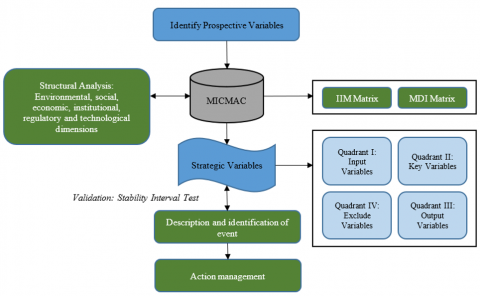
This research is designed to identify and analyze the prospective variables that influence the success of agribusiness in the coastal regions of East Java and to explore how this success can contribute to food security. Research on the success of agribusiness in coastal regions cannot be separated from various interconnected dimensions, such as environmental, social, economic, institutional, regulatory, and technological aspects [18-23]. Each of these dimensions plays a crucial role in determining the effectiveness and sustainability of agribusiness in coastal areas, particularly in East Java (Figure 1).
Figure 1. Agribusiness research design
4.1 Research location
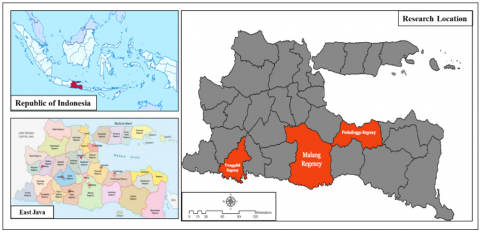
This research was conducted in three key coastal locations in East Java: Malang 2024, Trenggalek, and Probolinggo (Figure 2). These areas were selected due to their distinct coastal ecosystem characteristics and significant agribusiness potential. Each research location has different social, economic, and environmental conditions, which are expected to provide a comprehensive understanding of the variables that influence the success of agribusiness in the coastal regions of East Java.
4.2 Determinations of respondent
Subjects were selected based on specific characteristics relevant to the population under study (purposive sampling) [24]. The research design is based on a mixed-methods approach, combining quantitative and qualitative data collection and analysis. In this study, 150 experts were selected as respondents using purposive sampling to ensure that only individuals with relevant expertise and experience in the field of agribusiness, coastal resource management, and sustainable development were included. The selection criteria for these experts were carefully defined to reflect a broad spectrum of stakeholders, including representatives from local government, community organizations, non-governmental organizations (NGOs), academics, business owners, fishermen, and environmental activists.
The inclusion criteria for the experts were based on their demonstrated knowledge and experience in one or more of the six dimensions of the study: environmental, social, economic, institutional, regulatory, and technological. Experts were required to have at least five years of professional experience in these areas or to have published significant research related to the sustainability of coastal agribusiness or coastal resource management. To ensure the validity of the selection, experts were identified through recommendations from industry associations, academic institutions, and government agencies involved in coastal and agricultural development.
Figure 2. Research location
Moreover, the selection process involved a multi-step verification procedure, which included reviewing the experts' professional backgrounds, their contributions to policy development or community-based initiatives, and their active involvement in relevant agribusiness or environmental sustainability projects. This verification helped to ensure that each expert possessed the necessary level of knowledge and expertise to provide valuable insights into the research.
By adopting this rigorous selection process, the study ensures that the perspectives gathered are not only diverse but also informed by deep professional and academic expertise. This enhances the reliability of the data collected and strengthens the analysis of how the prospective variables influence the success of agribusiness in the coastal regions of East Java.
4.3 Data analysis
MICMAC Analysis (Matrice d'Impacts Croisés Multiplication Appliquée à un Classement) is a method used to identify and analyze the relationships between variables within a complex system [25]. MICMAC is a tool frequently employed in strategic planning, particularly to understand the dynamics among interrelated factors within a system [26]. This method allows researchers to map out key variables and determine how these variables influence one another. MICMAC begins with defining the problem so that both internal and external research variables can be identified.
The process of analyzing relationships between variables is then carried out to evaluate the relationships based on impact and dependency, typically through an evaluation process (questionnaire) conducted by experts or stakeholders via Focus Group Discussions (FGD). Experts or stakeholders directly involved provide assessments or evaluations by filling out a survey tool in the form of a questionnaire presented in an assessment matrix, assigning scores of 0 = none, 1 = weak, 2 = moderate, 3 = strong, P = potential. The matrix representation used is illustrated in Table 1.
Table 1. Illustration of the MICMAC scoring matrix
|
From ↓
To → |
A |
B |
C |
D |
E |
|
A |
|
|
|
|
|
|
B |
|
|
|
|
|
|
C |
|
|
|
|
|
|
D |
|
|
|
|
|
|
E |
|
|
|
|
Table 2. Inter-variable relationships in MICMAC
|
|
Var 1 |
Var 2 |
Var 3 |
Var n |
Influence (Y-Axis) |
|
Var 1 Var 2 Var 3 . . Var n |
0 (V2,1) . . . (Vn,1) |
0 0 |
0 (V2,3) |
(V1, n) |
$\sum_{j-1}^n\left(v a r_1 J\right)$ |
|
Dependence (X - Axis) |
$\sum_{i=1}^n\left(v a r_1 I\right)$ |
|
|
|
|
Note: Influence, dependency, and level of analysis in the Direct Influence Matrix (MDI) and Indirect Influence Matrix (IIM)
After the data has been identified and evaluated, the process proceeds to calculate the influence and dependency among variables, thereby determining the ranking of each variable. To simplify the computational flow of the MICMAC analysis, it can be assumed that the relationships between variables are represented by the following Boolean matrix [25]:
Table 3. Dimensions and research variables
|
No. |
Dimensions |
Variables and Code |
|
|
1. |
Environmental Dimension (LI) |
|
[18-23] |
|
2. |
Social Dimension (SO) |
|
|
|
3. |
Economic Dimension (EK) |
|
|
|
4. |
Institutional Dimension (KE) |
|
|
|
5. |
Regulatory Dimension (RE) |
|
|
|
6. |
Technological Dimension (TE) |
|
$\begin{gathered}\sum \text { Row } \\ A \,B\, C\\ M=\left[\begin{array}{l}A \\ A \\ B\end{array}\right]\left[\begin{array}{lll}0 & 1 & 0 \\ 1 & 0 & 1 \\ 1 & 0 & 0\end{array}\right]\left(\begin{array}{l}1 \\ 2 \\ 1\end{array}\right) \\ \sum \text { Column } 2111 \\ M^2=\left[\begin{array}{l}A \\ B \\ C\end{array}\right]\left[\begin{array}{lll}1 & 0 & 1 \\ 0 & 1 & 0 \\ 0 & 1 & 0\end{array}\right]\left(\begin{array}{l}2 \\ 2 \\ 1\end{array}\right) \\ M^3=\left[\begin{array}{lll}A \\ B \\ C\end{array}\right]\left[\begin{array}{lll}1 & 1 & 0 \\ 1 & 1 & 1 \\ 1 & 0 & 1\end{array}\right] \\ M^4=\left[\begin{array}{lll}A \\ B \\ C\end{array}\right]\left[\begin{array}{lll}1 & 1 & 1 \\ 2 & 1 & 1 \\ 1 & 1 & 0\end{array}\right] M^5=\left[\begin{array}{l}A \\ B \\ C\end{array}\right]\left[\begin{array}{lll}2 & 1 & 1 \\ 2 & 2 & 1 \\ 1 & 1 & 1\end{array}\right]\end{gathered}$ (1)
Table 2 shows that the magnitude of influence can be observed from the number of rows for each variable. To determine the level of dependency, the columns for each variable are summed. Based on these calculations, the level of influence and dependency will be determined. The process of calculating MDI can be simplified with the help of MICMAC software [25].
Strategic variables are determined based on six dimensions: environmental, social, economic, institutional, regulatory, and technological (Table 3). The assessment of each strategic variable is based on direct observations at the research sites or input from experts in coastal agribusiness. The scoring range is from 0 to 3, depending on the state of each variable, defined from no influence to very high influence. A high score indicates a strong influence, while a low score defines variables with weak influence on the pace of agribusiness implementation.
4.4 Research ethics
This research will adhere to strict ethical standards, including informed consent, maintaining data confidentiality, and respecting the rights of respondents [24]. All research participants will be provided with clear information regarding the study's objectives and methods and will be given the freedom to withdraw at any time without any negative consequences.
5.1 Mapping of prospective variables for agribusiness success
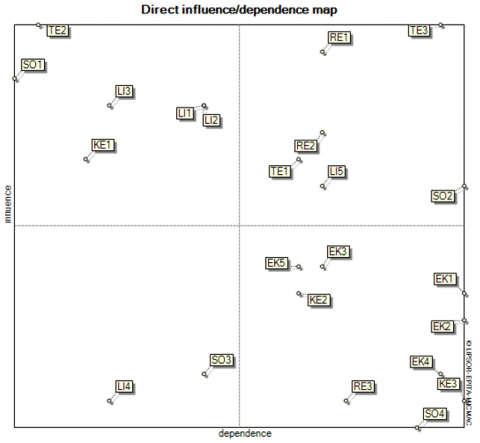
The analysis results presented in Figure 3 indicate that TE2 (Availability of marine fisheries technology infrastructure), SO1 (Level of community participation in resource management), LI3 (Marine biodiversity), KE1 (Local government involvement in resource management), LI1 (Sea water quality), and LI2 (Coastal ecosystem condition) are variables that act as driving factors as they fall within Quadrant I (variable input). These variables influence all prospective variables in agribusiness success in East Java's coastal areas, especially in the context of sustainability and food security.
The availability of adequate technology infrastructure in the fisheries and marine sectors (TE2) enables more efficient natural resource optimization, thus playing a crucial role in enhancing productivity and sustainability of agribusinesses in coastal regions. Advanced technology allows fishermen to utilize and monitor marine resources more effectively, such as through the use of selective and environmentally friendly fishing gear, which can reduce bycatch and help preserve vulnerable species. This also optimizes sustainable natural resources [2]. The level of community participation in resource management (SO1) is key to maintaining ecosystem balance and the sustainability of agribusiness practices; high community involvement can be established as a norm among fishing groups, ensuring the ecosystem balance and marine biodiversity are well-maintained [27].
Figure 3. Mapping of prospective variables
Additionally, active involvement of local governments (KE1) in resource management is crucial for creating policies that support agribusiness sustainability and food security in coastal areas. Local governments play a strategic role in regulating, overseeing, and directing natural resource use to ensure sustainability. With their understanding of local conditions and coastal community needs, local governments can design relevant and targeted policies, ensuring that agribusiness practices do not harm the environment and support long-term community welfare [6]. Marine biodiversity (LI3), sea water quality (LI1), and coastal ecosystem condition (LI2) being well-maintained facilitate fishermen in obtaining optimal catch results, thus becoming key indicators for determining environmental suitability for sustainable agribusiness practices [5].
RE1 (Availability and enforcement of laws related to sustainable fishing), TE3 (Technological innovation in marine and coastal resource management), RE2 (Coastal zoning regulations and conservation area management), TE1 (Level of adoption of sustainable agricultural and fisheries technology), LI5 (Coastal land use), and SO2 (Public awareness of environmental sustainability) fall into Quadrant II, which is the key quadrant. These variables influence and are influenced by prospective variables in agribusiness success in East Java's coastal regions, especially in terms of sustainability and food security. Effective law enforcement (RE1) is crucial for ensuring sustainable fishing practices, as regulatory alignment facilitates community use of natural resources [28]. Innovative technology (TE3) can provide opportunities for sustainability in marine and coastal resource management [29]. Coastal zoning regulations and conservation area management (RE2) determine how marine and coastal resources can be used sustainably. Optimal technology adoption (TE1) can maximize productivity and sustainability improvements. Coastal land use (LI5) must be well-regulated to prevent environmental damage and support sustainability [30]. Public awareness (SO2) is a critical factor in driving sustainability actions. All variables in availability and implementation depend heavily on government policies, public awareness, and technological and infrastructural support, as law enforcement not only regulates but is also influenced by other variables such as technological innovation and public awareness [31].
EK5 (Household income), EK3 (Unemployment rate in agriculture and fisheries sectors), KE2 (Environmental and fisheries policies), EK1 (Fisheries commodity prices), EK2 (Value added of agribusiness products), EK4 (Investment in agribusiness and coastal infrastructure), KE3 (Capacity of community organizations in resource management), SO4 (Level of social-economic inequality), and RE3 (Coastal zoning regulations and conservation area management) fall into Quadrant III, which describes the impact of the existing system and represents output variables sensitive to changes in key or relay variables. Household income (EK5) is often a result of many economic factors [10, 32], including commodity prices, employment rates, and infrastructure investment. Changes in household income can indicate changes in other variables such as commodity prices (EK1) or infrastructure investment (EK4). Unemployment rate in the agriculture and fisheries sectors (EK3) is greatly influenced by stringent environmental policies or low commodity prices, which can reduce job opportunities in these sectors [33]. Environmental and fisheries policies (KE2) are outputs often based on existing economic and social conditions and pressures from various stakeholders.
Policies are influenced by the need to address emerging issues such as social-economic inequality (SO4) or infrastructure needs (EK4). Fisheries commodity prices (EK1) are significantly affected by external factors such as global market conditions, environmental policies, and value added of agribusiness products (EK2). Commodity prices can vary significantly due to changes in policies or market dynamics [34]. The value added of agribusiness products (EK2) often depends on factors such as infrastructure investment (EK4), commodity prices (EK1), and environmental policies (KE2) [35]. As this value added is highly influenced by external factors, it becomes an output variable showing results from various interactions within the system. Investment in agribusiness and coastal infrastructure (EK4) heavily depends on government policies, capital availability, and national development priorities influenced by various factors. Although important, this investment is more a result of existing policies and economic conditions. Community organizations' capacity in resource management (KE3) is often a result of development programs, policy support, and community participation influenced by other factors like investment (EK4) and environmental policies (KE2). Social-economic inequality (SO4) is a result of many social and economic dynamics, including wealth distribution policies, infrastructure investment (EK4), and environmental policies (KE2). As a result of various variables, social-economic inequality is a variable that can be easily influenced by key variables [35]. Coastal zoning regulations and conservation area management (RE3) are often the result of environmental policies (KE2) and existing socio-economic pressures. Zoning regulations are created to manage fishing points to ensure that marine and coastal resources remain sustainable.
However, one unexpected finding is the relatively low influence of the community education access (SO3) variable, which falls into Quadrant IV (Exclude). While education is often hypothesized to be a critical factor in enhancing community capacity, in this case, it appears that the practical experience of fishermen and community norms around resource management have a greater immediate impact on agribusiness success. This suggests that education, although important in the long term, may not directly influence the variables related to current economic or environmental dynamics in coastal agribusiness in East Java. It indicates that policy interventions should focus on technical skill enhancement and community-based participatory approaches rather than formal education systems in the short term.
Similarly, the variable of land degradation (LI4), another factor initially expected to play a significant role, does not appear to have a strong influence on the system as hypothesized. Land degradation, while relevant to terrestrial agriculture, may not directly impact the coastal and marine sectors as strongly as initially assumed, highlighting the need for more specific focus on marine-related environmental factors in future policy recommendations [36, 37].
SO3 (Community education access) and LI4 (Land degradation) are variables with low influence and dependence on the overall system, as they fall into Quadrant IV (Exclude). Community education access (SO3) is an important variable; however, in this analysis context, community education access may not directly influence or be influenced by other key variables in the analyzed system. This could occur if education is not considered a primary supporting factor, as fishermen’s outcomes and income are often more influenced by their experience [15]. Land degradation (LI4), although a significant environmental issue, may not have a strong direct relationship with other variables in this more specific analysis context. Land degradation might be viewed as a problem more focused on agriculture or land management in general, rather than being a primary factor influencing or influenced by fisheries-related economic variables and coastal policies.
5.2 Design of direct interactions between agribusiness success variables
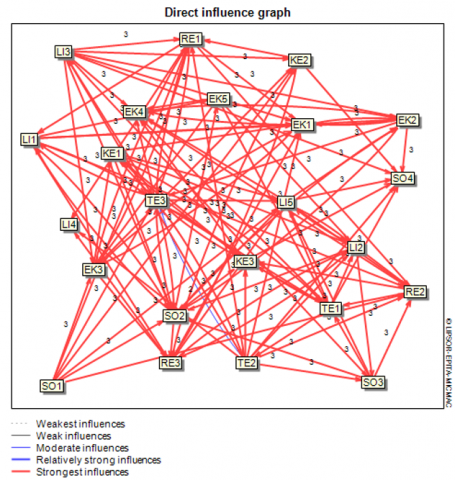
Please use the SI set of units as much as possible. Wherever Figure 4 illustrates that in the direct influence graph, key variables such as RE1, TE3, RE2, TE1, LI5, and SO2 play a central role, affecting and being affected by many other variables due to the numerous connecting lines valued at 3. This direct dependency among these variables highlights the complexity of relationships within the agribusiness and sustainability system in East Java's coastal areas. A comparative analysis with similar studies, such as those by Ramenzoni [38] and Khan et al. [39], suggests that the availability and enforcement of sustainable fishing laws (RE1) are critical in regulating the sustainable use of marine resources. Studies in other coastal areas, like those conducted in Thailand [40], similarly highlight that strengthening law enforcement in sustainable fishing significantly impacts not only regulatory compliance but also encourages the adoption of innovative practices in resource management.
Figure 4. Direct influence graph
RE1 (Availability and enforcement of laws related to sustainable fishing) is a critical variable with numerous direct connections to other variables. This indicates that regulations and law enforcement concerning sustainable fishing significantly impact the dynamics of the [38, 39]. When law enforcement related to sustainable fishing is strengthened, its impact is immediately reflected in changes in other variables, such as technological innovation and coastal resource management.
TE3 (Technological innovation in marine and coastal resource management) is also a key variable with many direct connections to other variables. Likewise, TE3 (Technological innovation in marine and coastal resource management) plays a pivotal role as a driver of change within this system. This is consistent with findings in a study of coastal regions in Chile, which showed that technological advancements in resource management improved both biodiversity conservation and economic outcomes [41]. In the context of East Java, the implementation of such technologies directly influences coastal zoning policies (RE2) and public environmental awareness (SO2), reinforcing sustainable practices in the community. Technological innovation acts as a primary driver in advancing marine and coastal resource management [29] and directly affects variables like coastal zoning and public awareness of environmental sustainability. This suggests that technology is a major factor in reinforcing the system and promoting sustainable practices. The adoption of sustainable agricultural and fisheries technology (TE1) also shows a direct relationship with several key variables, indicating that this adoption is not isolated. A study of coastal agribusiness in India [42], similarly found that the uptake of sustainable technologies is closely tied to existing policies and governmental support, which in turn drives improvements in resource management and conservation efforts.
RE2 (Coastal zoning regulations and conservation area management) has a significant direct influence within the system, particularly in regulating how coastal land is used and protected. These regulations interact directly with other variables, such as technological innovation and public awareness, indicating that coastal zoning is a vital component in supporting conservation and environmental sustainability [30].
TE1 (Level of adoption of sustainable agricultural and fisheries technology) shows a direct relationship with several other key variables, indicating that the adoption of sustainable technology is greatly influenced by existing policies and regulations. Additionally, this technology adoption directly impacts other variables such as coastal resource management and environmental awareness, reinforcing its role in the system [9, 43].
LI5 (Coastal land use) is a variable that directly relates to various policies and regulations within the system. Effective management and utilization of coastal land heavily depend on zoning and existing regulations, as well as on the adoption of technologies that support sustainable practices. This direct influence underscores the importance of planning and regulation in sustainable coastal land management [30].
SO2 (Public awareness of environmental sustainability) is a variable that, despite being influenced by various factors, also has a direct effect on other variables within the system. This public awareness is crucial in supporting policy implementation and the adoption of sustainable technologies. With high public awareness, sustainable policies and practices are more readily accepted and implemented within the community [44]. Additionally, LI5 (Coastal land use) and SO2 (Public awareness of environmental sustainability) exhibit similar dynamics. A comparative analysis of sustainable land use practices in Vietnam’s coastal regions demonstrated that effective land use management depends heavily on the alignment of zoning regulations and technological innovations [45]. In East Java, as in other regions, increased public awareness (SO2) is vital for the successful implementation of these policies. High levels of environmental awareness facilitate community engagement and foster stronger support for sustainability initiatives [30, 44].
5.3 Design of indirect interactions between agribusiness success variables
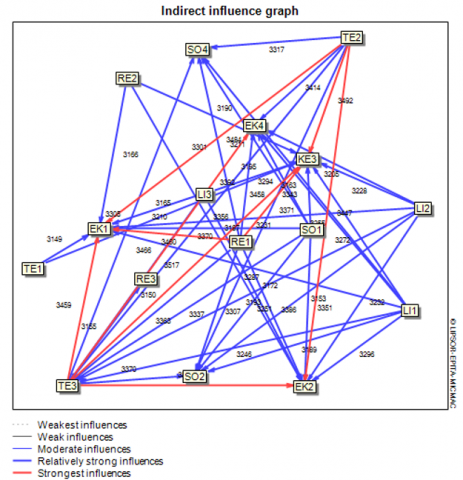
Figure 5 illustrates the indirect influence between variables. RE1 (Availability and enforcement of laws related to sustainable fishing) plays a crucial role as a linking variable in the system. Although its primary focus is on regulations [28], its indirect influence spreads widely through other variables such as public awareness, technology, and coastal zoning. A study in the Philippines [11], found similar dynamics, where strengthened fishing regulations not only directly improved practices but also indirectly boosted technology adoption and environmental awareness. This suggests that regulatory frameworks in coastal areas can trigger broad, system-wide changes when effectively implemented. When regulations related to fishing are strengthened, the impact is not only seen directly in improved fishing practices but also in increased adoption of sustainable technology and greater public awareness of environmental sustainability.
Meanwhile, TE3 (Technological innovation in marine and coastal resource management) acts as a catalyst in the system [14]. This technological innovation has a significant indirect influence on many other variables. Research in Chile [41], highlighted how marine technology innovations also indirectly affected coastal zoning and public awareness, reinforcing the findings in East Java. New technologies implemented in marine and coastal resource management not only affect zoning regulations but also enhance environmental awareness and support the adoption of sustainable practices, thereby strengthening the overall foundation for sustainability.
Figure 5. Indirect influence graph
RE2 (Coastal zoning regulations and conservation area management) is a variable that affects and is affected by other variables through indirect pathways. Coastal zoning regulations not only govern land use but also interact with technological innovation, public awareness, and other legal implementations. A similar trend was observed in Vietnam's coastal regions, where zoning regulations indirectly supported environmental conservation and food security [45]. When zoning is well implemented, it can affect coastal land use patterns and support conservation, which indirectly enhances food security and environmental sustainability.
In this context, TE1 (Level of adoption of sustainable agricultural and fisheries technology) becomes a crucial variable significantly influenced by other variables such as regulations and technological innovation, while also having a significant indirect impact. The level of adoption of sustainable agricultural and fisheries technology not only strengthens productivity but also broadens its impact on environmental regulations and public awareness. Comparative studies in India’s coastal agribusiness also found that technology adoption led to ripple effects throughout the sustainability system [46]. This indicates that increased technology adoption can create positive ripple effects throughout the system [8].
LI5 (Coastal land use) is a variable showing complexity within the agribusiness and sustainability system. The indirect influence on coastal land use involves interactions with zoning, technology, and public awareness. This echoes findings in South Korea, where coastal land use was shaped by both technological innovations and public participation in sustainable practices [47]. Effective land management depends on policies, technological innovations, and public awareness and involvement in sustainable practices. Thus, LI5 serves as an important indicator of how well existing policies and technologies are applied in real practice [48].
Public awareness of environmental sustainability, represented by SO2, plays a crucial role in creating long-term impacts through indirect pathways. Although public awareness may seem like an outcome of various policies and innovations, it also acts as an important driver that strengthens policy implementation and technology adoption. A study on public awareness campaigns in Japan’s coastal areas [49], similarly showed how awareness initiatives indirectly supported policy enforcement and technology uptake. The level of public awareness can influence and be influenced by many other variables in the system, making it a crucial element for achieving sustainability. Overall, each variable in the indirect influence graph has an interconnected role, creating a complex and layered network of influence [50]. Understanding how these variables interact indirectly is essential for designing effective and sustainable policy strategies in East Java's coastal areas.
5.4 Research implications
This study shows that key variables such as the availability and enforcement of laws related to sustainable fishing, technological innovation in marine and coastal resource management, and coastal zoning regulations and conservation area management have significant direct and indirect influences on the success and resilience of agribusinesses in East Java’s coastal regions.
The first implication is the need for stronger and more consistent law enforcement in sustainable fishing practices [38]. Effective regulations will not only reduce overexploitation of marine resources but also promote the adoption of sustainable technologies and increase public awareness of conservation importance. In this context, the government and stakeholders must enhance oversight and law enforcement to ensure compliance with existing regulations and encourage sustainable agribusiness practices.
Second, technological innovation should be prioritized in managing marine and coastal resources. Appropriate technology can help optimize natural resource use, increase productivity, and reduce environmental impacts [33]. The development and adoption of new technologies should be encouraged through investments in research and development, as well as through adequate training programs for local communities. This innovation will not only enhance efficiency but also strengthen food security and economic sustainability in coastal areas. Coastal zoning regulations and conservation area management also play a crucial role in balancing land use with environmental conservation [21, 48]. Clear and well-implemented zoning policies will ensure that coastal areas are used optimally and sustainably. This requires synergy between government, communities, and the private sector to develop and implement policies that support long-term sustainability.
Additionally, the level of adoption of sustainable agricultural and fisheries technologies (TE1) and public awareness of environmental sustainability (SO2) are also important factors to consider. The government and related institutions should focus on increasing the adoption of environmentally friendly technologies and raising public awareness through education programs and environmental awareness campaigns. With increased awareness and adoption of sustainable technologies, it is expected that a more resilient agribusiness system will emerge, capable of facing climate change challenges and economic uncertainties [48, 50]. Overall, this study emphasizes the importance of collaboration among various stakeholders to address key barriers and develop effective strategies for promoting sustainability and food security in East Java’s coastal regions. Policymakers, researchers, and agribusiness practitioners need to work together to create an environment that supports innovation, sustainable resource management, and improved public awareness, thereby achieving a better future for coastal communities.
This study identifies several key variables that play a significant role in the success of agribusinesses in the coastal regions of East Java, with a focus on sustainability prospects and food security. The main variables found to have significant influence include the availability and enforcement of laws related to sustainable fishing, technological innovation in the management of marine and coastal resources, coastal zoning regulations and conservation area management, the level of adoption of sustainable agricultural and fisheries technologies, coastal land utilization, and public awareness of environmental sustainability. The analysis results indicate that these variables reflect a high level of influence on agribusiness sustainability, although there are challenges in implementation or support that still need to be improved.
Policymakers are encouraged to prioritize the development and enforcement of regulations concerning sustainable fishing practices, as these have been shown to be foundational for promoting sustainable coastal resource management. Strengthening these regulations, in collaboration with local communities, can ensure compliance while addressing socioeconomic concerns. Additionally, further investments in technological innovation, particularly in marine and coastal management, should be pursued to enhance productivity and sustainability. Public-private partnerships could accelerate the diffusion of sustainable technologies, ensuring broader access for agribusiness stakeholders.
For practitioners, adopting sustainable agricultural and fisheries technologies should be a top priority. These technologies not only improve productivity but also contribute to long-term environmental sustainability, as evidenced by their influence on coastal resource management and public awareness. Coastal zoning regulations must be diligently implemented to balance land use with conservation efforts. Effective land-use planning, coupled with public awareness campaigns, can foster a culture of sustainability within coastal communities.
The findings highlight the importance of a holistic approach that encompasses environmental, social, economic, institutional, regulatory, and technological aspects to enhance the resilience and sustainability of agribusinesses in the region. Collaborative efforts between government agencies, local communities, and the private sector will be critical in driving the integration of these aspects. However, the study has some limitations, such as the inability to generalize the findings to contexts outside the study area due to differences in social, economic, and environmental conditions elsewhere. Additionally, the study is cross-sectional, which means it cannot capture the dynamics of key variables over time, necessitating further research with a longitudinal approach. Future studies should explore how the interaction between these variables evolves over time, particularly in response to changing environmental and regulatory conditions.
This work is supported by Brawijaya University. We extend our deepest gratitude to the university for its invaluable support and resources, which have significantly contributed to the successful completion of this research.
[1] The Economist Group. (2022). Global food security index (GFSI) 2022. The Economist Intelligence Unit. Available: https://impact.economist.com/sustainability/project/food-security-index/#global-overview.
[2] Mwangi, M., Kariuki, S. (2015). Factors determining adoption of new agricultural technology by smallholder farmers in developing countries. Journal of Economics and Sustainable Development, 6(5): 2222-1700.
[3] Crush, J.S., Frayne, G.B. (2011). Urban food insecurity and the new international food security agenda. Development Southern Africa, 28(4): 527-544. https://doi.org/10.1080/0376835X.2011.605571
[4] Min, S., Zacharia, Z.G., Smith, C.D. (2019). Defining supply chain management: In the past, present, and future. Journal of Business Logistics, 40(1): 44-55. https://doi.org/10.1111/jbl.12201
[5] Nguyen Thanh, B., Le Van Thuy, T., Nguyen Anh, M., Nguyen, M., Nguyen Hieu, T. (2021). Drivers of agricultural transformation in the coastal areas of the Vietnamese Mekong delta. Environmental Science & Policy, 122: 49-58. https://doi.org/10.1016/j.envsci.2021.04.010
[6] Wisnujati, N., Patiung, M. (2020). As the agriculture, forestry and fisheries sector still as a potential in the prosperity of Indonesian society? Agricultural Social Economic Journal, 20(4): 319-326. https://doi.org/10.21776/ub.agrise.2020.20.4.7
[7] Tiarantika, R., Soemarno, Efani, A., Koderi. (2024). Developing a decision support system for sustainable management of community-based ecotourism: A case study of CMC Tiga Warna. International Journal of Sustainable Development and Planning, 19(6): 2205-2219. https://doi.org/10.18280/ijsdp.190620
[8] Tiarantika, R., Soemarno, Efani, A., Koderi. (2024). Exploring the sustainable status of community-based ecotourism in East Java, Indonesia: A comprehensive assessment. Egyptian Journal of Aquatic Biology and Fisheries, 28(3): 585-607. https://doi.org/10.21608/ejabf.2024.358887
[9] Mullon, C., Guillotreau, P., Galbraith, E.D., Fortilus, J., Chaboud, C., et al. (2017). Exploring future scenarios for the global supply chain of tuna. Deep Sea Research Part II: Topical Studies in Oceanography, 140: 251-267. https://doi.org/10.1016/j.dsr2.2016.08.004
[10] Darmansyah, A., Rochana, S.H., Sutardi, A., Zuraida, U. (2014). The new growth centres and strategy for building and accelerating agribusiness development in Cirebon Regency, Indonesia. Procedia - Social and Behavioral Sciences, 115: 296-304. https://doi.org/10.1016/j.sbspro.2014.02.437
[11] Preciados, L., Cagasan, E., Gravoso, R. (2022). Impact evaluation for rehabilitating agribusiness systems in typhoon-prone communities in Leyte, Philippines. International Journal of Disaster Risk Reduction, 82: 103330. https://doi.org/10.1016/j.ijdrr.2022.103330
[12] Neville, W. (1992). Agribusiness in Singapore: A capital-intensive service. Journal of Rural Studies, 8(3): 241-255. https://doi.org/10.1016/0743-0167(92)90002-N
[13] Manzilati, A., Prestianawati, S.A. (2022). Informal financing or debt traps: Are the UN sustainable development goals being met in emerging economies? Review of International Business and Strategy, 32(1): 132-145. https://doi.org/10.1108/RIBS-01-2021-0011
[14] Efani, A., Muntaha, A., Lestariadi, R.A., Tirta, E.Y.W. (2022). Does financing source affect productivity and efficiency in tuna fishing business? In Modeling Economic Growth in Contemporary Indonesia, Emerald Publishing Limited, pp. 237-252. https://doi.org/10.1108/978-1-80262-431-120221015
[15] Fanzo, J., Davis, C., McLaren, R., Choufani, J. (2018). The effect of climate change across food systems: Implications for nutrition outcomes. Global Food Security, 18: 12-19. https://doi.org/10.1016/j.gfs.2018.06.001
[16] Sargani, G.R., Jiang, Y., Joyo, M.A., Liu, Y., Shen, Y., Chandio, A.A. (2023). No farmer no food, assessing farmers climate change mitigation, and adaptation behaviors in farm production. Journal of Rural Studies, 100: 103035. https://doi.org/10.1016/j.jrurstud.2023.103035
[17] Berchin, I.I., Nunes, N.A., de Amorim, W.S., Zimmer, G. A.A., da Silva, F.R., Fornasari, V.H., Sima, M., de Andrade Guerr, J.B.S.O. (2019). The contributions of public policies for strengthening family farming and increasing food security: The case of Brazil. Land use Policy, 82: 573-584. https://doi.org/10.1016/j.landusepol.2018.12.043
[18] Bin, F., Rahman, S., Zaman, S., Santibanez, E.D.R., Bari, A.B.M.M., Lekha, C. (2023). Green technologies and sustainability analysis of the drivers of Agriculture 4.0 implementation in the emerging economies: Implications towards sustainability and food security. Green Technologies and Sustainability, 1(2): 100021. https://doi.org/10.1016/j.grets.2023.100021
[19] Garcia, J., Barbedo, A., Letícia, S. (2023). Proposal for a framework to manage the barriers that hinder the development of agriculture 4.0 in the agricultural production chain. Computers and Electronics in Agriculture, 214: 108281. https://doi.org/10.1016/j.compag.2023.108281
[20] Ebarvia, M.C.M. (2016). Economic assessment of oceans for sustainable blue economy development. Journal of Ocean and Coastal Economics, 2(2): 7. https://doi.org/10.15351/2373-8456.1051
[21] Bethel, B.J., Buravleva, Y., Tang, D. (2021). Blue economy and blue activities: Opportunities, challenges, and recommendations for the Bahamas. Water (Switzerland), 13(10): 1-15. https://doi.org/10.3390/w13101399
[22] Hasbullah, M.A. (2022). Blue concept economy implementation in coastal communities based on the Law Number 11 of 2020 on job creation perspective. Journal of Social Science, 3(1): 115-123. https://doi.org/10.46799/jss.v3i1.283
[23] Setiyowati, H., Nugroho, M., Halik, A. (2022). Developing a blue economy in Depok West Java, Indonesia: Opportunities and challenges of neon tetra fish cultivation. Sustainability, 14(20): 13028. https://doi.org/10.3390/su142013028
[24] Etikan, I. (2016). Comparison of convenience sampling and purposive sampling. American Journal of Theoretical and Applied Statistics, 5(1): 1. https://doi.org/10.11648/j.ajtas.20160501.11
[25] Godet, M. (2000). The art of scenarios and strategic planning: Tools and pitfalls. Technological Forecasting and Social Change, 65(1): 3-22. https://doi.org/10.1016/s0040-1625(99)00120-1
[26] Chen, J.K. (2018). An extension of importance-performance analysis method: Integrated with fuzzy MICMAC. International Journal of Services Operations and Informatics, 9(1): 83-99. https://doi.org/10.1504/IJSOI.2018.088518
[27] Ho, K.L.P., Quang, H.T., Miles, M.P. (2022). Leveraging entrepreneurial marketing processes to ameliorate the liability of poorness: The case of smallholders and SMEs in developing economies. Journal of Innovation and Knowledge, 7(4): 100232. https://doi.org/10.1016/j.jik.2022.100232
[28] Mitchell, D. (2024). Despotic dominion and union organizing: Law, property, and the historical geography of class struggle in California agribusiness. Journal of Historical Geography, 86: 163-174. https://doi.org/10.1016/j.jhg.2024.08.002
[29] Mandić, A., Praničević, G.D. (2019). Progress on the role of ICTs in establishing destination appeal: Implications for smart tourism destination development. Journal of Hospitality and Tourism Technology, 10(4): 791-813. https://doi.org/10.1108/JHTT-06-2018-0047
[30] La Rosa-Velázquez, M.I.D., Espinoza-Tenorio, A., Díaz-Perera, M.Á., Ortega-Argueta, A., Ramos-Reyes, R., Espejel, I. (2017). Development stressors are stronger than protected area management: A case of the Pantanos de Centla Biosphere Reserve, Mexico. Land Use Policy, 67(12): 340-351. https://doi.org/10.1016/j.landusepol.2017.06.009
[31] Prasetyo, D.W., Hidayat, E., Marta, R.F., Kurniawati, L. S.M.W., Chinmi, M. (2020). Patron-client relationship between village heads and their residents during the COVID-19 pandemic. MIMBAR: Jurnal Sosial dan Pembangunan, 36(2): 501-510. https://doi.org/10.29313/mimbar.v36i2.6845
[32] Yang, B., Xu, T., Shi, L. (2017). Analysis on sustainable urban development levels and trends in China’s cities. Journal of Cleaner Production, 141: 868-880. https://doi.org/10.1016/j.jclepro.2016.09.121
[33] Choudhary, P., Khade, M., Savant, S., Musale, A., Chelliah, M.S., Dasgupta, S. (2021). Empowering blue economy: From underrated ecosystem to sustainable industry. Journal of Environmental Management, 291: 112697. https://doi.org/10.1016/j.jenvman.2021.112697
[34] Food and Agriculture Organization. (2021). For sustainable 2021 COFI declaration (1st ed.). Italia: FAO.
[35] Jones, L., Demirkaya, M., Bethmann, E. (2019). Global value chain analysis: Concepts and approaches. Journal of International Commerce and Economics, 1-29. https://www.usitc.gov/journals/jice_home.htm.
[36] Nugraha, W.D., Sarminingsih, A., Alfisya, B. (2020). The study of self-purification capacity based on biological oxygen demand (BOD) and dissolved oxygen (DO) parameters. IOP Conference Series: Earth and Environmental Science, 448(1): 1-10. https://doi.org/10.1088/1755-1315/448/1/012105
[37] Yohannes, H., Soromessa, T., Argaw, M., Dewan, A. (2021). Spatio-temporal changes in habitat quality and linkage with landscape characteristics in the Beressa watershed, Blue Nile basin of Ethiopian highlands. Journal of Environmental Management, 281: 111885. https://doi.org/10.1016/j.jenvman.2020.111885
[38] Ramenzoni, V.C. (2021). Co-governance, transregional maritime conventions, and indigenous customary practices among subsistence fishermen in Ende, Indonesia. Frontiers in Marine Science, 8: 1-16. https://doi.org/10.3389/fmars.2021.668586
[39] Khan, A.M., Jiang, M.G., Yang, X.Q., Apriliani, I.M., Purba, N.P., Wiryawan, B., Pasaribu, B. (2024). Illegal fishing threatens the sustainability of future tuna commodities in Indonesia. Marine Policy, 159: 105936. https://doi.org/10.1016/j.marpol.2023.105936
[40] Dearden, P. (2014). Fishers’ needs in marine protected area zoning: A case study from Thailand. Coastal Management, 34(2): 183-198. https://doi.org/10.1080/08920750600567234
[41] Defeo, O., Castrejón, M., Pérez-Castañeda, R., Castilla, J.C., Gutiérrez, N.L., Essington, T.E., Folke, C. (2016). Co-management in Latin American small-scale shellfisheries: Assessment from long-term case studies. Fish and Fisheries, 17(1): 176-192. https://doi.org/10.1111/faf.12101
[42] Hariharan, A.N., Biswas, A. (2020). A critical review of the Indian knowledge-based industry location policy against its theoretical arguments. Regional Science Policy & Practice, 12(3): 431-454. https://doi.org/10.1111/rsp3.12257
[43] Thorpe, A., Hermansen, O., Pollard, I., Isaksen, J., Failler, P., Touron-Gardic, G. (2022). Unpacking the tuna traceability mosaic - EU SFPAs and the tuna value chain. Marine Policy, 139: 105037. https://doi.org/10.1016/j.marpol.2022.105037
[44] Ng, P.C., Ahmad Ruslan, N.A.S., Chin, L.X., Ahmad, M., Abu Hanifah, S., Abdullah, Z., Khor, S.M. (2022). Recent advances in halal food authentication: Challenges and strategies. Journal of Food Science, 87(1): 8-35. https://doi.org/10.1111/1750-3841.15998
[45] Huynh, P.T.A., Le, N.D., Le, S.T.H., Tran, T.N. (2021). Adaptive livelihood strategies among small-scale fishing households to climate change-related stressors in Central Coast Vietnam. International Journal of Climate Change Strategies and Management, 13(4-5): 492-510. https://doi.org/10.1108/IJCCSM-04-2020-0034
[46] Kumar, V., Kamboj, N., Payum, T., Singh, J., Kumar, P. (Eds.). (2020). Advances in Environmental Pollution Management: Wastewater Impacts and Treatment Technologies. Agro Environ Media, Publication Cell of AESA, Agriculture and Environmental Science Academy. https://doi.org/10.26832/aesa-2020-aepm.
[47] Shin, B.M., Jung, S.H., Kim, M.H., Ryu, J.I. (2020). Did the extended coverage policy contribute to alleviating socioeconomic inequality in untreated dental caries of both children and adolescents in South Korea? BMC Oral Health, 20(1): 1-10. https://doi.org/10.1186/s12903-020-01112-8
[48] Bennett, N.J., Blythe, J., White, C.S., Campero, C. (2021). Blue growth and blue justice: Ten risks and solutions for the ocean economy. Marine Policy, 125: 104387. https://doi.org/10.1016/j.marpol.2020.104387
[49] Wiyanto, D.B., Harahab, N., Rudianto, Sartimbul, A. (2020). Cultural heritage conservation of ‘the United State Army Transport (USAT) Liberty’ shipwreck site as a sustainable scuba diving ecotourism. International Journal of Conservation Science, 11(4): 931-944. https://doi.org/10.931-944/cbl.5327637
[50] Bax, N., Novaglio, C., Maxwell, K.H., Meyers, K., McCann, J., Jennings, S., Frusher, S., Fulton, E.A., Nursey-Bray, M., Fischer, M., Anderson, K., Layton, C., Emad, G.R., Alexander, K.A., Rousseau, Y., Lunn, Z., Carter, C.G. (2022). Ocean resource use: Building the coastal blue economy. Reviews in Fish Biology and Fisheries, 32(1): 189-207. https://doi.org/10.1007/s11160-021-09636-0