Rapheal A. Ojelabi* | Adebayo Oyenubi | Opeyemi Oyeyipo
© 2025 The authors. This article is published by IIETA and is licensed under the CC BY 4.0 license (http://creativecommons.org/licenses/by/4.0/).
OPEN ACCESS
Public-Private Procurement is a system that allows for collaboration between the government and private partners in infrastructure provision. However, researchers argued that the successful implementation of the procurement option rested more on the government's shoulders. Hence, the study aims to identify critical government roles and investigate their importance and performance in PPP projects in Nigeria using a survey approach. The targeted respondents are PPP stakeholders operating in Lagos and Abuja. However, due to the absence of comprehensive lists of the PPP stakeholders involved in PPP projects in Nigeria, a project-based approach was used in attaining the representative samples for the study, including contractors, consultants, concessionaires, government agencies, and financiers. About 384 copies of questionnaires were randomly distributed to the sample representatives, and 274 copies were retrieved. The data generated were analyzed using descriptive and inferential statistical tools. Findings showed that all the roles identified are critical and showed significant interrelationships with each other. However, the government's performance in the highlighted roles is unsatisfactory, and recommendations were made on its shortfall.
construction project, government role, PPP procurement, socio-economic infrastructure, Nigeria
One of the metrics used in assessing city development is the availability of social and economic infrastructure. The approval of social and economic infrastructure as one of the metrics used in determining cities’ status globally is demonstrated by its transformative capacity. The relevance of infrastructural development in cities can be linked to its role in nation-building by providing a platform that enables social interaction and stimulates economic development. Hence, the government's quest to maintain cities' infrastructure standard has led to adopting Public-Private Partnership as a sustainable procurement option [1-5] that can guarantee the continuous delivery of cities’ infrastructural requirements. Among different existing procurement options, the Public-Private Partnership procurement route has been widely adopted by governments due to its collaborative benefits with private investors in public infrastructural provisions [6-10]. As a procurement system, PPP allows for more private investment compared to the public sector in social and economic infrastructure provision [11-15]. Since PPP procurement option adoption, public infrastructure facilities have taken a new dimension beyond the traditional system, which is driven by the government; hence, there is a geometric increase in infrastructural provision globally. 1,121 PPP infrastructure projects were delivered between 1985 and 2004 across Europe, Asia, and the Far East, respectively [16, 17].
Like other advanced economies, the African continent has not relented in its quest to enhance its cities' status through the provision of better social and economic infrastructure. In 2005, the Nigerian government took a bold step in adopting PPP procurement system through the establishment of the Infrastructure Concession Regulatory Commission (ICRC) Acts 2005 in increasing its infrastructural provision. Before the introduction of PPP in the Nigerian infrastructural market, the traditional system of procurement of socio-economic infrastructure has been through the award of contracts through budgetary allocation by the government. The change in the government's public infrastructure provision approach is due to the overwhelming deficit in infrastructure and insufficient funding in the public sector [18]. Hence, the introduction of the ICRC Acts 2005 [19] is aimed at overseeing the engagement of the private parties in PPPs affairs. The private parties’ responsibilities include financing, operation, and maintenance of infrastructural development of the Federal government either through contract or concession arrangements, and it lays down the Commission's capacity to regulate, monitor, and supervise the procurement of infrastructural assets through the PPP procurement route.
However, since the initiation and implementation of the procurement route for infrastructure uplift of all the states in Nigeria, especially the two major cities, Lagos and Abuja, the reports emanating from government interaction with the private investors on PPP projects have not been encouraging. The findings revealed that the concession contract of 105 km Lagos-Ibadan Expressway between Bi-Courtney Concession Company and the Federal Government of Nigeria to develop and manage the Lagos-Ibadan Expressway failed due to the contractual disputes between the private investor and the government [20]. Similarly, PPP contractual agreement between the concessionaire of Muritala Muhammed Airport (MMA) II and the Federal Government failed due to variations in the concession agreement [21]. Similarly, there was a breach in the agreement between the Chinese government and the Nigerian government to construct a rail line from Kano to Lagos, which put the project on hold. Likewise, in other Sub-Saharan African countries, few PPP projects have been successfully implemented and their study identified one of the key PPP projects [22, 23]; the Ghana National Housing Project (GNHP) failed before maturity. No fewer than 555 construction projects were procured with the PPP procurement process between 1990-2015 in Sub-Saharan Africa, but 9.6% failed from governance-related issues which is the highest compared to other continents [24]. Various PPP project failures can be associated with the government's low-level of experience or lack of knowledge in PPP project execution compared to the traditional procurement implementation in public infrastructure delivery. Beyond the African context, some PPP projects that failed across the world due to governance issues are Nya Karolinska Solna (NKS) Hospital in Sweden, Queen Mamohato Memorial Hospital in Lesotho and International Airport of Chinchero—Cuzco in Peru [25]. Therefore, the governance issues that are associated with PPP failure across the world are due to policy failure, poor contract management, lack of government capacity in PPP management, and regulation issues among others [24].
Hence, it is expedient to define the government's roles in PPPs critical to the successful implementation of the procurement process. This is necessary because the successful implementation of the PPP procurement option in infrastructural provision rested more on the shoulders of the government [26]. While several studies have proposed government roles in PPP projects [27-30], there is a dearth of studies focusing on investigating the critical roles under the government jurisdictions and their performance on these roles in public infrastructure provision. The exploration study into the government roles in PPP study is hinged on the New Public Governance Theory and Normative Theory of Government roles in economic development. Government Normative Theory seeks to define what economic function is expected of the government which is essential in formulating policies for economic development [31]. Therefore, this paper identifies the critical roles under the government jurisdictions essential for PPP's successful implementation. The government roles in PPP will be classified under six key groups which include the legal and regulatory provision, policy framework, public sector capacity, project preparation and planning, contractual arrangement, and project procurement. The study also evaluated the government's performance in these roles in a bid to reappraise its duties under a PPP arrangement. Hence, a policy implication is deduced from the study highlighting the critical roles under the government jurisdictions for improved PPP project procurement. The study is essential as it will help governments audit their performance on the critical roles for PPP successful implementation under their control. In addition, the framework developed will assist the government to understand the fundamental functions under its jurisdiction that need to be guaranteed in PPP, in a bid to attract private investors and enhance PPP successful infrastructural delivery globally.
The introduction of Public Private Partnerships in public infrastructure procurement has redefined the government's traditional role and the inclusion of a private party in socio-economic infrastructure delivery [32-36]. The change in private party participation and government role in public infrastructure procurement under the PPP arrangement takes its root from the New Public Governance Theory. New Public Governance Theory advocates for profound change in the government's interactions with civil society and its roles in infrastructure procurement [37]. Hence, the inclusion of a Public-Private Partnership procurement system allows for enhanced interaction between the public sector and civil society compared to the traditional systems in infrastructure provision. However, despite the private engagement under the PPP arrangement, government roles have to be defined. Hence, the core question raised in the study is centered on what the key responsibilities of the government are in interacting with the private actors under the PPP arrangement in socio-economic infrastructure procurement. This question is further grounded in the Normative Theory of Government. The theory underscores the need to define government obligations in economic activities that can enhance urban development [31]. The government's stake in the implementation of PPP in public infrastructure provision has generated mixed feelings among stakeholders. Sambrani [17] viewed the Public-Private Partnership as a medium through which governments are shifting infrastructure provision responsibility to the private sector. In the same vein, Robinson et al. [38] opined that the implementation of PPP in public infrastructure provision has caused sluggishness in the public sector machinery. It can be inferred from the researcher’s view that the government's role in PPP implementation is insignificant. Conversely, despite the integration of private investors under the PPP platform in the public infrastructural provision, the government still retains a significant role [39]. Regardless of the mutual collaboration between the governments and private investors in PPP implementation in infrastructure provision, the position of the government remains highly indispensable [18, 26]. In the same vein, United Nations Economic Commission for Europe [40] asserted that it is the government that birthed PPP, and every necessity required for its function is under its jurisdiction. Also, PPP project management success is highly dependent on the government [41].
For PPP to be successfully implemented in any country across the globe, the government is saddled with the responsibility of establishing a sound legal, social, economic, political, and administrative platform that is capable of engendering partnership with private collaborators [39]. Some of the key roles played by the government in PPP project management, among which are regulatory function which may include control of infrastructure price in the market, private investor’s risks mitigation through the provision of project guarantees, financial support through direct financing and grants and evaluation of project revenue forecast and cost through feasibility report preparation [27]. Public Private Infrastructure Advisory Facility [41] further unveiled that the government played primary and secondary roles in the implementation of the PPP procurement system globally. The primary roles played by the government under a PPP arrangement include managing disputes arising from contract implementation, ensuring effective cooperation with private partners to achieve project objectives, and overseeing PPP project assets. Furthermore, the report identified the secondary roles played by the government in PPPs to include the development and monitoring of policies and legislation supporting PPP project implementation, ensuring proper cooperation of different agencies representing government interest in PPP and properly integrating PPP projects with other public services. Similarly, the government provides guarantees and a conducive political environment for private partners under a PPP arrangement to aid the successful implementation of the procurement system [29, 30]. In the same vein, Ramm [42] also identified some of the roles of the government under the Public-Private Partnership procurement option to include the provision of appropriate framework conditions, responsibility for social protection, capacity building, and more investment in infrastructure. Ibem [43] emphasized the provision of an enabling environment by the government as highly fundamental for the active participation of private players. He further buttressed that an enabling environment encompasses access to finance, removal of restrictive legislation, provision of essential services, and access to land, among others and they need to be managed by the government. Likewise, United Nations Economic and Social Commission for Asia and the Pacific [44] reckoned that technical assistance of the government agencies in PPP implementation is very vital among which are conducting a pre-feasibility study of PPP projects, managing the PPP project preparation facility, participating in the procurement process, and conducting negotiations on PPP contracts. Verhoest et al. [45] underscored that the government functions and objectives in PPP should be structured under three key frameworks, which include legal and regulatory framework, policy framework, and institutional framework for proper implementation of the procurement process. Furthermore, Public Private Infrastructure Advisory Facility [46] acceded that a supporting framework is vital for PPP projects due to the complexity of their management. Wibowo and Alfen [47] identified six PPP enabling framework under the government jurisdictions critical for PPP implementation, and it includes legal and regulatory provisions, policy framework, public sector capacity, project preparation and planning, and contractual arrangement.
2.1 Legal and regulatory provisions
The establishment of legal and regulatory mechanisms is one of the essentials critical to supporting Public-Private Partnership procurement route implementation in any jurisdiction across the globe. Establishing sound legal and regulatory is critical to creating an enabling environment for PPP to thrive [48]. Tafesse [49] further buttressed that the existence of a legal and institutional environment is very crucial before the adoption of a PPP system. Verhoest et al. [45] underscored that legal and regulatory tool implementation in PPP is essential because it helps assert proper implementation of PPP policies. United Nations Economic and Social Commission for Asia and the Pacific [44] revealed that the essence of legal and regulation in PPP affairs is to provide clarity for government actions and also to protect the interests of private investors. On the contrary, Mouraviev and Kakabadse [50] disclosed that despite how instrumental the legal and regulatory framework is to the successful implementation of PPP, if the content of the framework is not properly structured to meet the country-specific conditions, it can also be a barrier. An encompassing PPP legal document must be able to define PPP under the country's scope [46]. Also, it should be able to address the type of government institutions that should enter into PPPs to render public services. It should, in addition, delegate responsibility to achieving the scope of the PPP program, identify how to manage project risk among parties, and state the assistance or support the government can provide. Finally, there should be a clear definition of responsibilities for implementing PPP project development, implementation procedures, and approval requirements.
2.2 Policy framework
The bedrock of building an enabling environment for any business relationship lies in the formulation of a sound policy framework. It is the driving force behind the success and sustainability of business relationships around the globe. The role of policy as a tool used in developing capacity, which aids institutions to achieve expected outcomes [51]. Before the initiation of PPP by the governments, there is a need to create a working platform in which policy development is one of the documents required to achieve the expected outcome [52]. The government's role in establishing a policy framework is critical in sustaining relationships with private partners in infrastructure provision because it helps remove any form of ambiguity and uncertainties in the relationship [44]. The government must develop a policy framework for PPP projects which will help serve as a roadmap for the procurement tool implementation [39]. World Bank [53] also revealed that PPP policy is not just an ordinary support tool for PPP programs; it establishes the political commitment of the governments to the success of PPP endeavors. However, a poorly defined policy can affect the collaboration between parties in PPP procurement implementation [54]. The necessary contents of PPP policy documents to include; legal and regulatory framework, procurements guidelines, PPP model and risk management framework, financial guidelines which include tariffs, payments, and government support, project lifecycle and advisor’s role, technical designs and service standards as well as institutional and approval framework [46]. The policies developed for PPP implementation should be flexible to accommodate changes in case of obvious mistakes in the preparation phase [39].
2.3 Public sector capacity
Capacity building is one of the key requirements for the successful implementation of any procurement option in infrastructure delivery. The PPP procurement route is one of the existing procurement options that necessitates sound skills for proper implementation due to its complexity in the number of participants and the delivery processes. United Nations. Economic Commission for Europe [39] underscored that the public sector capacity is highly critical for the initiation and implementation of PPP procurement option in socio-economic infrastructure delivery. Public Private Infrastructure Advisory Facility [41] revealed that the private sector's commitment to a partnership under a PPP arrangement with the government is dependent on the government representative’s skills in implementing the procurement process. It is evident from the foregoing that deficiency in the capacity of the public sector agencies can affect the initiation of the PPP procurement system for infrastructure provision. European PPP Expertise Centre [55] revealed that the public sector's poor capacity in PPP operation had been identified as one of the major issues contending with PPP's successful adoption in the developing world. Hence, United Nations Economic and Social Commission for Asia and the Pacific [44] advocates for the training of public sector officials to develop the capacity essential for the management of the PPP procurement process in construction project delivery. The report further revealed that the essential skills the government representatives in a PPP deal should attain include project identification and economic evaluation, financial and risk analysis, contract document preparation, and contract negotiation among others.
2.4 Project preparation and planning
One of the key phases to adopting the PPP procurement option in a construction project lies in ensuring adequate preparation and planning. Prioritizing planning of PPP projects is highly essential due to the complexity of the procurement route from the high number of project participants. Inuwa et al. [56] also supported the necessity to ensure a sustainable workable plan for the procurement of PPP projects due to its uniqueness in terms of complexity in people and project factors compared to traditional procurement options. World Economic Forum [57] underscored that the complexity of PPP procurement adoption from the people factor is due to the multiple stakeholders, which include ministries, banks, investors, construction firms, regulators, and users that are essential participants in the operation of the procurement route. Furthermore, Nathan Associates [58] revealed that the complexity of the PPP project factors is due to PPP project identification, risks, and viability among others. Hence, Nathan Associates [55] indicated that for the successful management of the people and project factors in PPP adoption, adequate preparation and planning are highly essential. Therefore, the essential requirements for proper planning of the PPP procurement adoption include defining the PPP project governance structure, identifying and selecting competent PPP expertise from the public sector, developing a detailed project plan and timetable, and conducting a PPP project feasibility study among others [55, 57].
2.5 Project procurement and contractual arrangement
The procurement process is a non-negotiable pathway in infrastructural provisioning. It defines the necessary progressive steps to acquiring infrastructural facilities. Like the traditional procurement method, PPP equally has a defined path to procuring infrastructure under this arrangement. Asian Development Bank [59] opined that the procurement process implementation under a PPP arrangement is one of the core responsibilities of the public sector. The report further identified the roles of the government in the procurement process arrangement to include implementing a competitive bidding process, ensuring a bid evaluation, developing the content of a bid package, drafting the contents of the PPP contract, and engaging in contract negotiation. Wibowo and Alfen [47] also emphasized that a PPP procurement process responsibility of the government should include a predictable and timetabled identification, selection, and contracting of projects, a transparent and competitive tender process, and well-defined criteria for project sponsor selection and sufficient information availability for the tender process. It is evidenced from the preceding that the management of the PPP procurement process is one of the core functions of the government and is very key to the success of the PPP procurement route.
Likewise, the success of PPP projects is dependent on the contractual agreement between the parties. The contractual agreement is very crucial in determining the certainty of delivery of a project under any form of procurement. The contractual arrangement is a mutual agreement between parties in defining the roles and responsibilities of members, and it is enforceable by law [60]. PPP is a type of procurement option that inevitably requires a firm contractual agreement due to the number of parties involved. The collaboration of parties to PPP procurement of public infrastructure towards infrastructure delivery is only attainable under a complete contractual arrangement. However, incomplete contractual obligations between the parties to a PPP arrangement can lead to the termination or failure of a PPP construction project [23]. Hence, a contractual arrangement is a critical function that the government should prioritize in the implementation of the PPP procurement process for public infrastructure provision.
Establishing the varying roles of the government in PPP is not all that matters; rather, the service performance of the government in these roles is critical for improved delivery of socio-economic infrastructure through the procurement route. The evaluation of the government's role in improved performance service is hinged on the theory of public service improvement. Boyne [61] described the theory of public service improvements as the perception of the actual and desired standard of public service. In determining the actual and desired standard of public service performance, the outcome of the two metrics used is the determinant [62]. However, the outcome of the actual and desired standard of public service is expected to fulfill policy goals in one form or the other [63]. In determining the outcome of the actual and desired standard of the roles of government in PPP implementation, the study adopted importance-performance measurement and a hypothesis was proposed to test for the significant difference between the importance and performance of government roles in the implementation of Public-Private Procurement in the delivery of socio-economic infrastructure.
The study aims to assess the importance and performance of the critical roles under government controls that are essential in the successful implementation of PPP procurement for construction project delivery. The study was conducted in the Federal Capital Territory (Abuja) and Lagos State. The city of Lagos has been affirmed as one the fastest growing city in sub-Saharan West Africa and it contributed 32% of Nigeria’s GDP [64] while Abuja is regarded as the most planned and fastest growing city (capital of Nigeria) in the face of development currently going in the country [65]. The Nigerian government’s quest to maintain the country’s capital status of Abuja prompted the development of the city master plan for mass infrastructural expansion across its geographical location. Hence, the study chose Abuja alongside Lagos due to their similarities in infrastructural expansion and gravitation for unequal development when compared with other cities in Nigeria. It is important to note that there are considerable numbers of PPP construction projects either ongoing and/or completed in the two locations at the time of carrying out this study. The targeted respondents are PPP stakeholders with practical experience in PPP projects.
In determining the representative cases, a project-based approach was used. The project-based was used due to a lack of documented lists of PPP stakeholders operating in Nigeria. When PPP is at the formative stage, the organization and participants in PPP projects are increasing; therefore, the population cannot be readily determined [66]. Therefore, the study takes queue after Babatunde et al. [20] in using the project-based method to define the representative sample in the study. Therefore, the study purposely selected not less than 19 PPP projects in Lagos and Abuja. The 19 PPP selected are considered for the research due to their advance stage under the procurement system process compared to others. From the 19 PPP projects, 62 firms which comprised 40 private and 22 public firms were identified from the Infrastructure Concession Regulatory Commission ICRC PPP contract web disclosure portal. The study representative sample attained from the approach was 384 which comprises 108 public sector agents, 36 concessionaires, 18 financiers, 125 contractors, and 97 consultants.
The study adopted a descriptive research method through a questionnaire survey approach in gathering the relevant data for the study [67, 68]. The questionnaire was divided into three sections. The first section addressed the characteristics of the targeted respondents. The second section investigates the importance of the roles under the government jurisdictions and the third section examines the performance of the government. The importance of the roles under the government jurisdictions was measured Likert scale range of “1=Not Important” to “5=Extremely Important”. The performance of the government in the critical roles was measured using the Likert scale range of “1=Poor” to “5=Excellent”. The Statistical Package for Social Science (SPSS) 23.0 was used to analyze the data generated.
4.1 Characteristics of respondents
This section concentrated on the study respondent’s characteristics. The characteristics of the respondents are presented in Table 1. The study consists of both the public and the private stakeholders and the result presented in Table 1 showed that the private sector stakeholders have the highest representation with 65% of the total respondents, while the private sector stakeholders have 35% of the total respondents. The result in Table 1 further identified the position or role of the public and private stakeholders in the study as contractors, consultants, government agents, concessionaires, and financiers. It is evident from the result presented in Table 1 that the contractors have the highest number of respondents with 33.2% of the total participants followed by the consultants with 27.7% of the total participants and then the government agents with 25.2% of the total respondents.
Table 1. Respondent characteristics
|
Characteristics |
Frequency |
Percentage |
|
Respondent Sector |
|
|
|
Public |
96 |
35.0 |
|
Private |
178 |
65.0 |
|
Total |
274 |
100 |
|
Respondent Role |
|
|
|
Contractor |
91 |
33.3 |
|
Consultant |
76 |
27.7 |
|
Government Agent |
70 |
25.5 |
|
Concessionaire |
26 |
9.5 |
|
Financier |
11 |
4.0 |
|
Total |
274 |
100 |
|
PPP Knowledge Base |
|
|
|
Very Good |
38 |
13.9 |
|
Good |
219 |
77.9 |
|
Average |
7 |
6.2 |
|
Total |
274 |
100 |
It is evident from the results presented that 77.9% of the respondents have good knowledge of PPP, 13.9% have very good knowledge, and only 6.2% of the respondents have average knowledge of PPP. It can be inferred from the result presented in Table 1 that the study respondents are well-selected and appropriate for the survey.
4.2 Importance and performance of government roles in PPP procurement implementation
The role of the government is pertinent in the successful implementation of PPP in the delivery of social and economic infrastructures; hence, it is essential to define these roles. However, this has spurred the study to identify the expected roles of the government and its performance in PPP implementation. The study identified twenty-nine (29) roles expected of the government in PPP and the importance and performance of the government on these roles were analyzed using a 5-point Likert scale for ‘important’ measurement with “5=Extremely Important” to “1=Not Important” and ‘performance’ with “5=Excellent to “1=Very Poor”. The twenty-nine roles were categorized under six groups which include a legal and regulatory provision, policy framework, public sector capacity, project preparation and planning, project procurement, and contractual arrangement. The result from the analysis is presented in Table 2.
Table 2. Assessment of the importance of government roles and performance in the adoption of PPP (Cont’d)
|
Government Roles |
Public |
Private |
Overall |
Imp. and Per. Index |
Gap |
||||||||
|
Imp. |
Per. |
Imp. |
Per. |
Imp. |
Perf. |
|
|
||||||
|
Mean |
Remark |
Mean |
Remark |
Mean |
Remark |
Mean |
Remark |
Mean |
Mean |
Imp. Index |
Perf. Index |
(P-I) |
|
|
Legal and Regulatory Provision |
|
|
|
|
|
|
|
|
|
|
|
|
|
|
Sound legal basis. |
4.53 |
Extremely Important |
2.41 |
Poor |
4.47 |
Important |
2.45 |
Poor |
4.55 |
2.43 |
0.91 |
0.49 |
-0.42 |
|
Limited restriction policy on foreign investors. |
4.41 |
Important |
3.85 |
Good |
4.21 |
Important |
3.94 |
Good |
4.31 |
3.90 |
0.86 |
0.78 |
-0.08 |
|
Definite government regulatory authority of government institutions. |
4.59 |
Extremely Important |
2.66 |
Good |
4.44 |
Important |
2.77 |
Good |
4.52 |
2.72 |
0.90 |
0.55 |
-0.35 |
|
Empowering arbitrations. |
4.46 |
Important |
1.82 |
Poor |
4.43 |
Important |
1.64 |
Poor |
4.45 |
1.73 |
0.89 |
0.34 |
-0.55 |
|
Policy Framework |
|
|
|
|
|
|
|
|
|
|
|
|
|
|
Clear allocation of authority and responsibility among government institutions. |
4.45 |
Important |
2.53 |
Good |
4.61 |
Extremely Important |
2.40 |
Poor |
4.53 |
2.47 |
0.91 |
0.49 |
-0.42 |
|
Fair treatment of unsolicited proposals. |
4.29 |
Important |
1.43 |
Very Poor |
4.24 |
Important |
1.63 |
Poor |
4.27 |
1.53 |
0.85 |
0.31 |
-0.54 |
|
Effective competitive regime to limit abuse of monopolistic power. |
4.57 |
Extremely Important |
1.69 |
Poor |
4.44 |
Important |
1.97 |
Poor |
4.51 |
1.83 |
0.90 |
0.37 |
-0.53 |
|
Strong political support. |
4.48 |
Important |
1.95 |
Poor |
4.51 |
Extremely Important |
2.09 |
Poor |
4.49 |
2.02 |
0.90 |
0.41 |
-0.49 |
|
Public Sector Capacity |
|
|
|
|
|
|
|
|
|
|
|
|
|
|
Skilled, autonomous and resourceful regulators. |
4.36 |
Important |
2.27 |
Poor |
4.42 |
Important |
1.97 |
Poor |
4.39 |
2.12 |
0.88 |
0.41 |
-0.47 |
|
Sufficient awareness of legal, practical and monetary aspects of the public sector. |
4.50 |
Extremely Important |
1.60 |
Poor |
4.65 |
Extremely Important |
1.85 |
Poor |
4.58 |
1.73 |
0.92 |
0.35 |
-0.57 |
|
Continuous training program for the public sector. |
4.66 |
Extremely Important |
1.71 |
Poor |
4.55 |
Extremely Important |
1.90 |
Poor |
4.61 |
1.81 |
0.92 |
0.37 |
-0.55 |
|
Project Preparation and Planning |
|
|
|
|
|
|
|
|
|
|
|
|
|
|
Clear defined mechanism to coordinate needs. |
4.79 |
Extremely Important |
2.49 |
Poor |
4.46 |
Important |
2.41 |
Poor |
4.63 |
2.45 |
0.92 |
0.49 |
-0.43 |
|
Effective processes for proposing, identifying and structuring projects. |
4.47 |
Important |
2.25 |
Poor |
4.56 |
Extremely Important |
2.49 |
Poor |
4.52 |
2.37 |
0.91 |
0.48 |
-0.43 |
|
Appropriate project integration with national and local planning process. |
4.15 |
Important |
2.72 |
Good |
4.52 |
Extremely Important |
2.64 |
Good |
4.34 |
2.68 |
0.88 |
0.53 |
-0.35 |
|
All Stakeholder’s participation in project planning and implementation. |
4.44 |
Important |
2.23 |
Poor |
4.52 |
Extremely Important |
2.36 |
Poor |
4.48 |
2.30 |
0.90 |
0.46 |
-0.44 |
|
Robust feasibility studies. |
4.62 |
Extremely Important |
2.39 |
Poor |
4.57 |
Extremely Important |
2.43 |
Poor |
4.60 |
2.41 |
0.92 |
0.49 |
-0.43 |
|
Sufficient provision of resettlement and rehabilitation for disrupted communities. |
4.45 |
Important |
2.11 |
Poor |
4.47 |
Important |
1.88 |
Poor |
4.46 |
2.00 |
0.89 |
0.39 |
-0.50 |
|
Clear-cut criteria for support provisions. |
4.44 |
Important |
2.28 |
Poor |
4.48 |
Important |
2.08 |
Poor |
4.46 |
2.18 |
0.89 |
0.43 |
-0.46 |
|
Integration of government support requirements into budget process. |
4.55 |
Extremely Important |
2.38 |
Poor |
4.63 |
Extremely Important |
2.02 |
Poor |
4.59 |
2.20 |
0.83 |
0.44 |
-0.39 |
|
Project Procurement |
|
|
|
|
|
|
|
|
|
|
|
|
|
|
Predictable and timetabled identification, selection and contracting of projects. |
4.26 |
Important |
1.97 |
Poor |
4.60 |
Extremely Important |
1.98 |
Poor |
4.43 |
1.98 |
0.90 |
0.40 |
-0.50 |
|
Transparent and competitive tender process. |
4.57 |
Extremely Important |
1.94 |
Poor |
4.48 |
Important |
1.81 |
Poor |
4.53 |
1.88 |
0.91 |
0.37 |
-0.54 |
|
Project Procurement |
|
|
|
|
|
|
|
|
|
|
|
|
|
|
Well-defined criteria for project sponsors and selection. |
4.52 |
Extremely Important |
2.13 |
Poor |
4.60 |
Extremely Important |
2.08 |
Poor |
4.56 |
2.11 |
0.91 |
0.42 |
-0.49 |
|
Sufficient information availability on tender processes. |
4.46 |
Important |
2.04 |
Poor |
4.48 |
Important |
1.90 |
Poor |
4.47 |
1.97 |
0.89 |
0.39 |
-0.50 |
|
Contractual Arrangement |
|
|
|
|
|
|
|
|
|
|
|
|
|
|
Fair and controllable risk-sharing arrangement. |
4.40 |
Important |
2.51 |
Good |
4.47 |
Important |
2.48 |
Poor |
4.44 |
2.50 |
0.89 |
0.50 |
-0.39 |
|
Irrevocable contract (except through due process). |
4.29 |
Important |
1.79 |
Poor |
4.45 |
Important |
1.75 |
Poor |
4.37 |
1.77 |
0.88 |
0.35 |
-0.53 |
|
Comprehensive and enforceable penalties for failure to meet contractual obligations. |
4.51 |
Extremely Important |
1.72 |
Poor |
4.50 |
Extremely Important |
1.71 |
Poor |
4.51 |
1.72 |
0.90 |
0.34 |
-0.56 |
|
Clear conflict resolution process. |
4.47 |
Important |
1.82 |
Poor |
4.51 |
Extremely Important |
2.06 |
Poor |
4.49 |
1.94 |
0.90 |
0.39 |
-0.51 |
|
Acknowledgment of international arbitration in resolving disagreement. |
4.49 |
Important |
2.48 |
Poor |
4.49 |
Important |
2.38 |
Poor |
4.49 |
2.43 |
0.90 |
0.48 |
-0.42 |
|
Fair and flexible tariff adjustments. |
4.05 |
Important |
2.36 |
Poor |
4.09 |
Important |
2.38 |
Poor |
4.07 |
2.37 |
0.82 |
0.48 |
-0.34 |
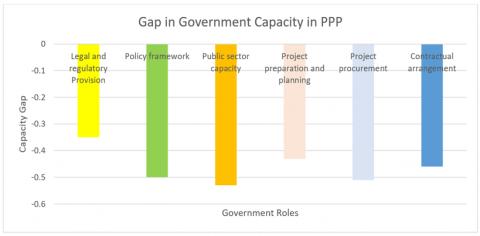
Figure 1 depicts the pictorial representation of the importance and performance of the critical roles under the government jurisdictions. It was evident from the pictorial representation that there is a wide gap between the importance and performance of the government in all the six roles highlighted. The gap in capacity of the government between the importance and performance of the roles under its jurisdictions is further depicted in Figure 2.
Figure 1. Importance and performance of government roles in PPP
Figure 2. Gaps in government capacity
Under the legal and regulatory provision group, findings from the results in Table 2 revealed that the PPP stakeholders rated all roles under the government jurisdictions important with a mean score above 4.0. The roles identified under this group are: “sound legal basis”, “limited restriction policy on foreign investors”, “definite regulatory authority of government institutions” and “empowering arbitrators”. The findings in Indonesia on the necessity of legal and regulatory roles of the government in PPP implementation align with this study as they both highlighted the provision of a sound legal framework [47], zero restrictions on foreign investment, and empowering arbitration among others as highly essential for the successful initiation and implementation of PPP procurement option in infrastructure provisions. However, the government's performance in these roles was rated poor with a mean score value below 2.5, aside from its roles on the definite regulatory authority of government institutions and limited restriction policy on foreign investors which are rated good with mean scores above 2.5. The gap between the importance and performance index of the government function on legal and regulatory is – 0.35 and it indicates poor execution. A similar study conducted by Verhoest et al. [45] on the government support index on legal and regulatory framework implementation for PPPs revealed some European countries which include Estonia, Austria, Switzerland, Netherlands, Sweden, and Denmark with poor support for PPP legal and regulatory framework from the index rating. However, a sound legal and regulatory tool is essential to achieving successful PPP implementation [69]. The researcher’s statement implied that an absolute legal and regulatory framework is not negotiable for the government's effectiveness under a PPP arrangement in infrastructure delivery.
Under the policy framework category, results presented in Table 2 revealed that the overall rating of the four roles identified under the government jurisdictions falls in the important scale with an average mean value of 4.0. The roles identified in this category are “clear allocation of authority and responsibility among government institutions”, “fair treatment of unsolicited proposals”, “effective competitive regime to limit abuse of monopolistic power” and “strong political support”. United Nations Economic and Social Commission for Asia and the Pacific [44] findings on Asian countries which include Malaysia, Indonesia, Singapore and Myanmar adoption of specific policies for PPP implementation affirmed the significance and necessity for Governments to implement a sound policy framework for PPPs implementation as revealed in the study. However, the performance of the government under these roles is all rated poorly with a mean value below 2.5. The importance-performance index gap indicated in Figure 1 showed that the policy framework function of the government is poorly executed at -0.5 rating. Verhoest et al. [45] studied government support for policy framework implementation for PPPs in selected 15 European countries showed that countries like Czech Republic, Estonia, France, Portugal, Serbia, Slovenia, and Sweden Government support poor performance ratings. The researchers indicated that the implication of the poor performance of the government on policy framework implementation in PPP is because its PPP is yet to reach maturity. Alinaitwe and Ayesiga [70] emphasized that a sound policy framework is of uttermost relevance for the successful implementation of the PPP procurement option. Therefore, the study supported the need for the government to develop a policy framework that can encourage private investors in collaborating with it under the PPP arrangement in the management of construction projects.
Under the public sector capacity group, three roles were identified in government control in PPP. These include “skilled, autonomous and resourceful regulators”, “sound knowledge of the legal, practical, and monetary aspects of the public sector” and “continuous training program for the public sector”. Hence, the results presented in Table 2 revealed that all these roles are rated important. The findings agree with Wibowo and Alfen's [47]’s results on the need for the Indonesian Government to develop the capacity of the public sector in PPP procurement implementation. However, the ratings of government performance in all the roles are poor. The importance-performance gap index is – 0.53 indicating the poor capacity of the government in executing the PPP procurement system.
Under the project preparation and planning category, eight roles peculiar to the government in PPP were identified and they include “clearly defined mechanism to coordinate needs”, “effective processes for proposing, identifying, and structuring projects”, “appropriate project integration with national and local planning processes”, “stakeholders participation in project planning and implementation”, robust feasibility studies, “sufficient provision of resettlement and rehabilitation for disrupted communities”, “clear-cut criteria for support provision” and “integration of government support requirements into budget process”. The PPP stakeholders rated all the roles important with a mean score above 4.0. Chan et al. [71] supported the findings from the study as they both emphasized the essence of developing a sound mechanism to coordinate PPP needs and preparing a robust PPP feasibility study for effective PPP projects management. However, the overall performance of the government in these roles was rated poor. The importance-performance gap index showed a negative rating of – 0.43 which connotes poor execution of the factor. The finding implied that the government's preparation and planning for PPP projects are very poor, despite its relevance, thus impacting on PPP procurement process for infrastructure delivery.
Under the project procurement category, four factors measuring the importance of the government's role in PPP were identified. The factors are “predictable and timetabled identification, selection and contracting of projects”, “transparent and competitive tender process”, “well-defined criteria for project sponsor selection” and “sufficient information availability on tender processes”. Hence, the PPP stakeholders rated all the roles important with a mean score value above 4.0. United Nations Economic and Social Commission for Asia and the Pacific [44] also supported the need for the government to develop an efficient procurement system that can be used in soliciting and evaluating PPP project proposals. On the contrary, the performance of the government in these roles is rated poor with mean scores value below 2.5. The importance-performance index of the project procurement function of the government shows a negative rating of – 0.51. Meng et al. [72] stated that government capacity to relate successfully with private investors under the PPP arrangement is dependent on a reliable project procurement system. This system can be created by implementing the essential factors identified under this category for successful PPP implementation.
Under the contract arrangement group, six roles under government control in PPP were identified. The government roles are “fair and controllable risk-sharing arrangement”, irrevocable contract except through due process, “comprehensive and applicable penalties for failure to meet contractual agreements”, clear conflict resolution process, recognition of international arbitration for dispute resolution and fair and flexible tariff adjustments. The public and private stakeholders rated all the roles as important with an average mean score of 4.0. Wibowo and Alfen [47] also attested to the significance of these roles for the government to develop a good contractual arrangement plan critical to managing the PPP contractual process. However, the government's performance on these roles was rated poor with an average mean score below 2.5, aside from the government's role in fair and controllable risk-sharing arrangements, which is rated well with a mean value of 2.5. However, the overall importance-performance index rating is -0.46 which depicts poor execution of the contractual arrangement factor by the government.
4.3 Hypothesis
H01: There is no significant difference between the importance and performance of government roles in the delivery of PPP construction projects.
H1: There is a significant difference between the importance and performance of government roles in the delivery of PPP construction projects
The hypothesis is tested using the Paired Sample t-test and the result of the analysis is presented in Table 3. The decision rule in determining the significant relationship of the variables is lifted from previous study [73]. It states that if the probability (Asymp. Sig) is within the range of 0.000-0.05, the null hypothesis is rejected and the alternative is accepted.
The findings from the results presented in Table 3 revealed the significant value in all six categories of the government roles to be less than 0.05; hence, the alternative hypothesis is accepted and the null rejected in all six categories. It is evident from the foregoing that there is a considerable gap between the importance and performance of government roles in PPP implementation.
Table 3. Paired sample t-test on the significant difference between the importance and performance roles of government in PPP
|
Government Roles |
Paired Differences |
t |
df |
Sig. (2-Tailed) |
|||||
|
Mean |
Std. Deviation |
Std. Error Mean |
95% Confidence Interval of the Difference |
||||||
|
Lower |
Upper |
||||||||
|
Pair 1 |
Legal & Regulatory Provision Legal& Regulatory Provision |
6.92701 |
1.71883 |
.10384 |
6.72258 |
7.13143 |
66.710 |
273 |
.000 |
|
Pair 2 |
Policy Framework Policy Framework |
9.89051 |
2.07965 |
.12564 |
9.64317 |
10.13785 |
78.723 |
273 |
.000 |
|
Pair 3 |
Public Sector Capacity Public Sector Capacity |
7.91606 |
1.51073 |
.09127 |
7.73638 |
8.09573 |
86.736 |
273 |
.000 |
|
Pair 4 |
Project Preparation & Planning Project Preparation & Planning |
17.53285 |
2.68506 |
.16221 |
17.21350 |
17.85219 |
108.087 |
273 |
.000 |
|
Pair 5 |
Project Procurement–Project Procurement |
-.53285 |
2.64797 |
.15997 |
-.84778 |
-.21792 |
-3.331 |
273 |
.001 |
|
Pair 6 |
Contractual Arrangement–Contractual Arrangement |
13.67153 |
3.08276 |
.18624 |
13.30489 |
14.03818 |
73.409 |
273 |
.000 |
The study uncovered the government's critical role in PPP in attracting private investors under the procurement system arrangement. The poor performance of the government despite the significance of the roles indicated under six categories is a pointer to the slow growth of PPP and poor attraction of private investors within the Nigerian construction industry. Private investors’ commitment under a PPP arrangement is dependent on the inclination of the government and the environment business readiness. Hence, a poor legal and regulatory framework and policy framework supporting PPP’s is a negative trigger to private investors’ perception of the environment to accommodate PPPs. Also, the poor public sector capacity, project preparation and planning and contractual arrangement from the study is an indication that the government readiness to attract investors under the PPP procurement system is unsatisfactory. Previous studies stressed that the success of a PPP project collaboration depends on the public sector by ensuring the environment is conducive for private investors’ participation [18, 39, 48].
Therefore, a policy proposition was recommended based on this study's findings to improve government partnerships with the private sector to implement the PPP procurement option for better urban infrastructure development. The policy is applicable in countries where its government is having difficulties in attracting investors under PPP arrangements to increase infrastructure projects and delivery.
The initiation phase of the PPP procurement system is highly tasking due to the technical and managerial skills required. Among the parties to the PPP procurement system, the government or public sector knowledge of PPPs is not negotiable because it occupies a strategic position under the partnership arrangement. Therefore, for the government to enhance its effectiveness under a PPP arrangement, the public sector representing government's interest have to build capacity in managing the procurement process. It is recommended that the government should ensure that the public sector institutions that will be saddled with responsibilities in managing the implementation process of the PPP procurement option are well equipped with the right skills critical to successfully partnering with the private sector. At the initiation phase of the procurement route, the agencies representing the government under a PPP arrangement are expected to have a sound knowledge of PPP project preparation and planning. This includes building skills in preparing proposed PPP project feasibility reports.
Furthermore, the government representatives must know the contractual arrangement of PPP procurement process. This entails the government agency’s ability to effectively manage the expression of interest (EOI) from investors, prequalification evaluation, and tender evaluation for competitive negotiation. During the negotiation phase, the government agencies should be skillful in preparing a contractual document that spells out the relationship between the government and the private sector.
Finally, it is expected that the institutions representing the government under a PPP arrangement have a sound legal and regulatory framework to support the policies formulated for PPP implementation. The legal and regulatory tools will allow for proper implementation of the PPP policy which is aimed at fostering a good relationship between the government and private investors in the procurement of socio-economic infrastructure for urban development.
The study was carried out to unravel government commitments to PPP procurement implementation for public infrastructure procurement and its implications on the growth of the procurement system in Nigeria. Hence, the paper highlighted and discussed the essential roles under government control critical to PPP's successful implementation. It investigates the significance of these roles in PPP, the relationships among these roles, and the government's performance using Nigeria as a case study. The roles were categorized under six groups which include legal and regulatory provision, policy framework, public sector capacity building, project preparation and planning, project procurement, and contractual arrangement. The findings revealed that the roles identified under the six groups were important; however, the performance of the government under these roles was rated poorly. The implication of the findings showed that the government is not yet mature in PPP procurement utilization. Also, the government performance gap is an indication that the existing policy frameworks on PPP implementation have not well defined government responsibilities under a PPP arrangement and likely the regulatory framework is weak. Also, the slow development in PPP implementation in Nigeria can be attributed to the government's inability to attract private investors, due to its poor performance in key roles critical to PPP implementation. The study further carried out a test to determine the difference between the importance and performance of the government's role in PPP. The findings indicated that there is a significant difference between the importance and performance of government roles under the six categories. Hence, the study proposes a policy on government roles that can help boost relationships with partners and project success.
This work was supported by the Covenant University Center for Research, Innovation, and Development.
The authors declare that they have no known competing financial interests or personal relationships which have, or could perceive to have, influenced the work reported in this article.
[1] Ma, H.Y., Zeng, S.X., Lin, H., Zeng, R.C. (2020). Impact of public sector on sustainability of public–private partnership projects. ASCE Journal of Construction Engineering and Management, 146(2): 04019104. https://doi.org/10.1061/(ASCE)CO.1943-7862.0001750
[2] Babatunde, S.O., Ekundayo, D., Udeaja, C. and Abubakar, U.O. (2022). An investigation into the sustainability practices in PPP infrastructure projects: A case of Nigeria. Smart and Sustainable Built Environment, 11(1): 110-125. https://doi.org/10.1108/SASBE-04-2020-0048
[3] Rybnicek, R., Plakolm, J., Baumgartner, L. (2020). Risks in public-private partnerships: A systematic literature review of risk factors, their impact and risk mitigation strategies. Public Performance & Management Review, 43(5): 1174-1208. http://doi.org/10.1080/15309576.2020.1741406
[4] Kopańska, A., Osinski, R., Korbus, B. (2024). Private entities motivations to participate in public-private partnerships. Socio-Economic Planning Sciences, 92: 101841. https://doi.org/10.1016/j.seps.2024.101841
[5] Verweij, S., van Meerkerk, I. (2021). Do public–private partnerships achieve better time and cost performance than regular contracts? Public Money and Management, 41(4): 286-295. http://doi.org/10.1080/09540962.2020.1752011
[6] Edogbanya, V.O., Adekeye, J.A. (2024). Impact of public private partnership on the development of critical infrastructure in Nigeria during the fourth republic. Journal of Applied and Theoretical Social Sciences, 6(3): 233-246. https://doi.org/10.37241/jatss.2024.112
[7] Memari, A., Ogunmakinde, O.E., Skulmoski, G. (2025). Strategies for improving supply chain efficiency in public-private partnership infrastructure projects. Management Decision. https://doi.org/10.1108/MD-05-2024-0975
[8] Xiong, W., Chen, B., Wang, H.M., Zhu, D. (2020). Public-private partnerships as a governance response to sustainable urbanization: Lessons from China. Habitat International, 95: 102095. http://doi.org/10.1016/j.habitatint.2019.102095
[9] Sun, Q., Zhang, S., Ke, Y., Ma, X., Galvin, S. (2021). Comparative analysis on the PPP research in Chinese and international journals: A bibliometric perspective. International Journal of Construction Management, 23(2): 307-318. https://doi.org/10.1080/15623599.2020.1866431
[10] Akomea-Frimpong, I., Jin, X., Osei-Kyei, R. (2025). Sustainable performance assessment of public–private partnership infrastructure projects in Ghana. Engineering, Construction and Architectural Management. https://doi.org/10.1108/ECAM-10-2024-1463
[11] Zhou, Y., Liu, J. (2021). Influence of government credit risk on PPP projects in operation stage. International Journal Strategic Property Management, 25(3): 216-227. https://doi.org/10.3846/ijspm.2021.14552
[12] Zhao, J., Liu, H., Love, P.E.D., Greenwood, D., Sing, M.C.P. (2022). Public private partnerships: A dynamic discrete choice model for road projects. Socio-Economic Planning Sciences, 82(A): 101227. https://doi.org/10.1016/j.seps.2022.101227
[13] Bao, F., Martek, I., Chen, C., Wu, Q., Chan, A.P.C. (2022). Critical risks inherent to the transfer phase of public–private partnership water projects in China. Journal of Management in Engineering, 38(3): 04022006. http://doi.org/10.1061/(ASCE)ME.1943-5479.0001024
[14] Liu, L.X., Clegg, S., Pollack, J. (2023). The effect of public–private partnerships on innovation in infrastructure delivery. Project Management Journal, 55(1): 31-49. https://doi.org/10.1177/87569728231189989
[15] Zhao, J., Thurairajah, N., Greenwood, D., Liu, H., Yuan, J. (2023). Unpacking the context of value for money assessment in global markets: A procurement option framework for public-private partnerships. Engineering, Construction and Architectural Management, 30(8): 3583-3601. https://doi.org/10.1108/ECAM-10-2021-0963
[16] Treasury, H.M. (2013). Public private partnerships–signed project list. http://www.hm-treasury.gov.uk/ppp_pfi_stats.htm, accessed on Jun. 3rd, 2017.
[17] Sambrani, V.N. (2014). PPP from Asia and African perspective towards infrastructure development: A case study of Greenfield Bangalore International Airport, India. Procedia-Social and Behavioral Sciences, 157: 285-295. https://doi.org/10.1016/j.sbspro.2014.11.031
[18] Ojelabi, R.A., Fagbenle, O.I., Amusan, L.M., Afolabi, A.O. (2019). Government roles in public-private partnerships procurement of infrastructures: Theoretical approach. In 10th International Structural Engineering and Construction Conference Chicago, Illionis, United State, pp. 20-25.
[19] Soyeju, O. (2013). Legal framework for public private partnership in Nigeria. De Jure, 46(3): 814-832. http://www.scielo.org.za/scielo.php?script=sci_arttext&pid=S2225-71602013000300010., accessed on Dec. 20th, 2019.
[20] Babatunde, S.O., Perera, S., Zhou, L., Udeaja, C. (2015). Barriers to public private partnership projects in developing countries: A case of Nigeria. Engineering, Construction and Architectural Management, 22(6): 669-691. https://doi.org/10.1108/ECAM-12-2014-0159
[21] Afolabi, E.Q. (2011). Examining public private partnership in Nigeria: Potentials and challenges. Unpublished Project Presented to The Faculty of Law, University of Ilorin, Ilorin, Nigeria. Ilorin Nigeria for The Award of Bachelor of Science.
[22] Osei-Kyei, R., Chan, A.P. (2017). Comparative analysis of the success criteria for public-private partnership projects in Ghana and Hong Kong. Project Management Journal, 48(4): 80-92. https://doi.org/10.1177/875697281704800407
[23] Ahmad, E., Vinella, A., Xiao, K. (2018). Contracting arrangements and public private partnerships for sustainable development. Public Sector Economics, 42(2): 145-169.
[24] Marcelo, D., House, S., Mandri-Perrott, X.C., Schwartz, J. (2017). Do countries learn from experience in infrastructure PPP? PPP practice and contract cancellation. PPP Practice and Contract Cancellation. World Bank Policy Research Working Paper, (8054). World Bank, Washington, DC.
[25] Eurodad (2018). History RePPPeated: How public private partnerships are failing. https://www.right-to-education.org/sites/right-to-education.org/files/resource-attachments/Eurodad_history_repppeated_2018_ENG.pdf., accessed on Aug. 7th, 2024.
[26] Namblard, M. (2000). In favour of pragmatic approach towards public-private partnership. In Financing of Major Infrastructure and Public Service Projects: Public Private Partnership, Presses Points.
[27] Faisal, F. (2016). The role of government and development partner certification in public-private partnership (PPP) infrastructure project financing. (Doctoral Dissertation, Queensland University of Technology). https://eprints.qut.edu.au/98261/1/Fahim_Faisal_Thesis.pdf., accessed on Aug. 15th, 2024.
[28] Rohman, M.A., Doloi, H., Heywood, C. (2015). Government's roles in public private partnership toll road projects. In International Conference on Construction Engineering and Project Management. Korea Institute of Construction Engineering and Management. Paradise Hotel, Busan Korea, pp. 381-385. https://doi.org/10.6106/ICCEPM.2015.0381
[29] Zhang, X. (2005). Paving the way for public–private partnerships in infrastructure development. Journal of Construction Engineering and Management, 131(1): 71-80. https://doi.org/10.1061/(ASCE)0733-9364(2005)131:1(71)
[30] Kumaraswamy, M.M., Zhang, X.Q. (2001). Governmental role in BOT-led infrastructure development. International Journal of Project Management, 19(4): 195-205. https://doi.org/10.1016/S0263-7863(99)00069-1
[31] Cordes, J.J. (1997). Reconciling normative and positive theories of government. The American Economic Review, 87(2): 169-172.
[32] Ojelabi, R., Amusan, L., Adewolu, A., and Olanipekun, O. (2025). Government’s motives and investor’s commitment in public-private partnership procurement system adoption. Organization, Technology and Management in Construction: An International Journal. 17: 110-120. https://doi.org/10.2478/otmcj-2025-0007
[33] Babatunde, S.O., Ekundayo, D., Udeaja, C., Abubakar, U.O. (2020). Stakeholder perceptions of drivers for, and barriers to, the incorporation of sustainability in PPP infrastructure projects in Nigeria. Open House International, 45(4): 373-386. https://doi.org/10.1108/OHI-05-2020-0037
[34] Cheng, Z., Wang, H., Xiong, W., Zhu, D., Cheng, L. (2021). Public–private partnership as a driver of sustainable development: Toward a conceptual framework of sustainability-oriented PPP. Environment, Development and Sustainability, 23(1): 1043-1063. https://doi.org/10.1007/s10668-019-00576-1
[35] Hai, D.T., Toan, N.Q., Van Tam, N. (2022). Critical success factors for implementing PPP infrastructure projects in developing countries: The case of Vietnam. Innovative Infrastructure Solutions, 7(1): 89-101. https://doi.org/10.1007/s41062-021-00688-6
[36] Ma, L., Hu, Y., Zhu, L., Ke, Y. (2023). Are public-private partnerships still an answer for social infrastructure? A systematic literature review. Frontiers of Engineering Management, 10(3): 467-482. http://doi.org/10.1007/s42524-023-0249-1
[37] Kennett, P. (2010). Global perspectives on governance. In The New Public Governance? Emerging Perspectives on the Theory and Practice of Public Governance. Routledge, pp. 19-35.
[38] Robinson, H., Carrillo, P., Anumba, C.J., Patel, M. (2009). Governance and Knowledge Management for Public-Private Partnerships. John Wiley & Sons. UK: Wiley-Blackwell.
[39] United Nations. Economic Commission for Europe. (2008). Guidebook on promoting good governance in public-private partnerships. https://unece.org/economic-cooperation-and-integration/publications/guidebook-promoting-good-governance-public, assessed on Jul. 28th, 2018.
[40] United Nations Economic Commission for Europe. (2012). Can public private partnership improve infrastructure and deliver better public services? https://www.cscollege.gov.sg/Knowledge/Pages/Can-Public-Private-Partnerships-Deliver-Better-Public-Services.aspx, accessed on Apr. 12th, 2016.
[41] Public Private Infrastructure Advisory Facility. (2020). Roles and responsibilities of the government and the private partner within contract management. https://ppp-certification.com/ppp-certification-guide/42-roles-and-responsibilities-government-and-private-partner-within-contract, accessed on Aug. 7th, 2020.
[42] Ramm, G. (2011). Public private partnership: Role of government, success factors and gaps. The Microinsurance Trilogy Newslwtter. Microinsurance Network, 23: 1-3. https://www.microinsurancenetwork.org/sites/default/files/MiN_Newsletter_23_ENtrackPageview_Newsletter_N23_EN.pdf., accessed on Dec. 7th, 2019.
[43] Ibem, E.O. (2010). Assessment of the role of government agencies in Public-Private Partnerships in housing delivery. Journal of Construction in Developing Countries, 15(2): 23-48.
[44] United Nations Economic and Social Commission for Asia and the Pacific. (2007). Public-private partnerships for infrastructure development: An introduction to issues from different perspectives. In The High-level Expert Group Meeting Jointly Organized by UNESCAP and The Ministry of Planning and Budget, Seoul, pp. 2-4.
[45] Verhoest, K., Petersen, O.H., Scherrer, W., Soecipto, R.M. (2015). How do governments support the development of public private partnerships? Measuring and comparing PPP governmental support in 20 European countries. Transport Reviews, 35(2): 118-139. https://doi.org/10.1080/01441647.2014.993746
[46] Public Private Infrastructure Advisory Facility. (2012). Developing a public-private partnership framework: Policies and PPP units. http://webcache.googleusercontent.com/search?q=cache:http://www.sadcpppnetwork.org/wp-content/uploads/2015/01/Developing-a-PPP-Framework.pdf, accessed on Oct. 12th, 2016.
[47] Wibowo, A., Alfen, H.W. (2015). Government-led critical success factors in PPP infrastructure development. Built Environment Project and Asset Management, 5(1): 121-134. https://doi.org/10.1108/BEPAM-03-2014-0016
[48] Guwahati, I.I.T. (2014). Government’s roles in successful PPP projects. http://nptel.ac.in/courses/105103133/6, accessed on Jun. 20th, 2019.
[49] Tafesse, T. (2014). Public private partnership in development: Lessons in devising legal and institutional framework from South Korea. Development, Public Policy and Administration Research, 3(4): 50-57.
[50] Mouraviev, N., Kakabadse, N.K. (2015). Legal and regulatory barriers to effective public-private partnership governance in Kazakhstan. International Journal of Public Sector Management, 28(3): 181-197. https://doi.org/10.1108/IJPSM-09-2014-0116
[51] Georghiou, L., Edler, J., Uyarra, E., Yeow, J. (2014). Policy instruments for public procurement of innovation: Choice, design and assessment. Technological Forecasting and Social Change, 86: 1-12. https://doi.org/10.1016/j.techfore.2013.09.018
[52] Srivastav, H., Shakya, P.L. (2012). Policy framework for public-private partnership (PPP) projects in Nepal. In 3rd Ministerial Meeting on PPP for Infrastructure Development, Tehran, Iran.
[53] World Bank. (2009). Good Governance in Public-Private Partnerships: A resource guide for practitioners. Washington DC. https://openknowledge.worldbank.org/handle/10986/12665, accessed on Jun. 15th, 2017.
[54] van den Hurk, M. (2018). Public–private partnerships: Where do we go from here? A Belgian perspective. Public Works Management & Policy, 23(3): 274-294. https://doi.org/10.1177/1087724X18757534
[55] European PPP Expertise Centre. (2015). PPP motivations and challenges for the public sector. https://www.eib.org/epec/resources/publications/epec_PPP_motivations_and_challenges_en., accessed on Jan. 10th, 2019.
[56] Inuwa, I.I., Wanyona, G., Diang'a, S. (2014). Construction procurement systems: Influencing factors for Nigerian indigenous contractors’ project planning. International Journal of Engineering Research and Technology, 3(4): 1043-1050.
[57] World Economic Forum. (2013). Strategic infrastructure steps to prepare and accelerate Public Private Partnerships. https://www3.weforum.org/docs/AF13/WEF_AF13_Strategic_Infrastructure_Initiative.pdf, accessed on Jun. 12th, 2016.
[58] Nathan Associates. (2017). Public-Private partnerships: A basic introduction for non-specialists. https://assets.publishing.service.gov.uk/media/5977576ee5274a289a000031/Topic_Guide_Public-Private_Partnerships.pdf., accessed on Feb. 4th, 2019.
[59] Asian Development Bank. (2018). Public-private partnerships: Guidance note on procurement. http://doi.org/10.22617/TIM189410-2
[60] Food and Agriculture Organizations. (2001). Governance principles for concession and contracts in Public Forests. http://www.fao.org/3/y1398e/y1398e00.htm., accessed on Jul. 20th, 2020.
[61] Boyne, G.A. (2003). What is public service improvement?. Public Administration, 81(2): 211-227. https://doi.org/10.1111/1467-9299.00343
[62] Boyne, G., Entwistle, T., Ashworth, R. (2010). Theories of public service improvement: An introduction. Public Service Improvement: Theories and Evidence, 1-14.
[63] Amirkhanyan, A.A., Kim, H.J., Lambright, K.T. (2008). Does the public sector outperform the nonprofit and for‐profit sectors? Evidence from a national panel study on nursing home quality and access. Journal of Policy Analysis and Management: The Journal of the Association for Public Policy Analysis and Management, 27(2): 326-353. https://doi.org/10.1002/pam.20327
[64] Filani, M.O. (2012). The changing face of Lagos from vision to reform and transformation. City alliance Brussels. http://www.citiesalliance.org/sites/citiesalliance.org/files/Lagos-reform-report-lowres.pdf., assessed on Jan. 20th, 2020.
[65] Ismaila, R.A. (2014). Abuja city profile. Cities, 41: 81-91. https://doi.org/10.1016/j.cities.2014.05.008
[66] Li, B., Akintoye, A., Edwards, P.J., Hardcastle, C. (2005). Perceptions of positive and negative factors influencing the attractiveness of PPP/PFI procurement for construction projects in the UK: Findings from a questionnaire survey. Engineering, Construction and Architectural Management, 12(2): 125-148. https://doi.org/10.1108/09699980510584485
[67] Afolabi A., Oyeyipo, O., and Ojelabi R. (2020). Business climate factors affecting economic growth of small scale construpreneurs in Nigeria. International Journal of Innovative Technology and Exploring Engineering, 9(4): 1597-1606.
[68] Tunji-Olayeni, P., Kajimo-Shakantu, K., Ayodele, T.O. (2024). Factors influencing the intention to adopt green construction: An application of the theory of planned behaviour. Smart and Sustainable Built Environment, 13(2): 291-308. https://doi.org/10.1108/SASBE-06-2022-0126
[69] Onyemaechi, P., Samy, M., Pollard, D. (2015). An examination of the critical success factors for public private partnership in housing projects in Nigeria. Journal of Sustainable Development in Africa, 17(3): 1-20.
[70] Alinaitwe, H., Ayesiga, R. (2013). Success factors for the implementation of public-private partnerships in the construction industry in Uganda. Journal of Construction in Developing Countries, 18(2): 1-4.
[71] Chan, A.P., Lam, P.T., Chan, D.W., Cheung, E., Ke, Y. (2009). Drivers for adopting public private partnerships-Empirical comparison between China and Hong Kong special administrative region. Journal of Construction Engineering and Management, 135(11): 1115-1124. https://doi.org/10.1061/(ASCE)CO.1943-7862.0000088
[72] Meng, X., Zhao, Q., Shen, Q. (2011). Critical success factors for transfer-operate-transfer urban water supply projects in China. Journal of Management in Engineering, 27(4): 243-251.
[73] Pallant, J. (2010). A Step by Step Guide to Data Analysis Using the SPSS Program, 4th edn. Allen and Unwin Publishers, Australia.