Sofian Al-hakim | Adang Sonjaya | Septian Adityawati | Atika Zahra Rahmayanti | Opik Rozikin*
© 2025 The authors. This article is published by IIETA and is licensed under the CC BY 4.0 license (http://creativecommons.org/licenses/by/4.0/).
OPEN ACCESS
In addition to serving as places of worship, mosques have the potential to act as centres for empowerment within Muslim communities. Numerous studies have been conducted on the economic empowerment ecosystem of the mosque-based community. However, an integrated analysis involving all relevant stakeholders has yet to be undertaken. This research intends to identify key index variables that should be prioritised for the development of mosque-based economies and to propose a comprehensive design for a mosque economic ecosystem. The ultimate goal is to position mosques as centres of worship and hubs of civilisation. The study employs the Analytic Network Process (ANP) method, considered suitable for addressing the research objectives. Data are collected through focus group discussions (FGDs) and interviews, using purposive sampling to select expert informants knowledgeable about the challenges facing mosques in Indonesia. The informants include regulators, practitioners, and academics. Data processing is conducted using the Super Decisions Software. The findings indicate that the digitisation index holds the highest priority, with an approval rate of 34% (0.343), followed by networking (0.299), regulations and policies (0.192), and Da’wah (0.149). Among these aspects, the Da’wah index has the lowest weight in the economic development strategy for mosque-based communities. The establishment of a robust economic ecosystem within mosques has the potential to reduce poverty and foster the economic independence of Muslim communities. This study makes notable managerial and methodological contributions to the field. If mosques are managed optimally, they will become the main instrument in solving these social problems.
Analytic Network Process (ANP), ecosystem, economic empowerment, mosque-based community economy
The mosque-based economy is not a new thing for Muslims because, since the time of the Prophet PBUH, mosques have become the centre of Muslim activities, which have many functions in addition to places of worship as well as places of religious education, economic activities such as buying and selling, political activities such as the formulation of wars and social activities [1, 2]. In addition to their strategic role in fostering Muslim communities, mosques have historically served as vital institutions for protecting, empowering, and uniting Muslims. During the early spread of Islam in Indonesia, the Walisongo utilised mosques as socio-cultural and educational centres, complementing their primary function as a place of ritual worship [3]. Today, the role of the mosque extends even further, with the potential to provide quality empowerment, promote modernity, and foster tolerance within society. Optimising mosque functions could significantly impact Indonesian Muslim communities' social integration, political engagement, and economic development [4, 5].
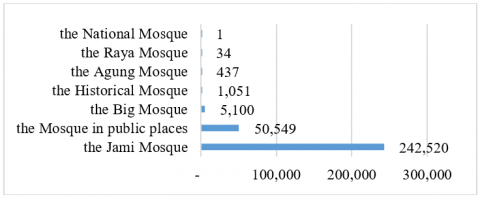
As the country with the largest Muslim population, Indonesia has great potential to optimise its mosques as sacred places of worship and as centres for social and economic activities. This would ensure these magnificent mosques remain vibrant and actively engaged with the community. According to Figure 1, as of 2024, the Ministry of Religion recorded 299,692 Indonesia’s mosques across various classifications. It gives Indonesia the distinction of having the most mosques in the world, providing it with significant potential for optimising its role.
Figure 1. Mosque in Indonesia
Source: DataIndonesia.id by the ministry of religion
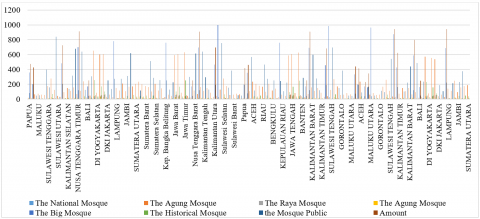
Figure 2. The spread of mosques in Indonesia
Source: DataIndonesia.id by The Ministry of Religion
Java dominates the number of mosques in Indonesia due to demographic factors, history, culture, government support, and community involvement. With a large Muslim population and strong religious traditions, Java will continue to be the centre of religious activity in Indonesia. Bali has the lowest number of mosques due to its small Muslim population (see Figure 2). As a gathering place for Muslims, mosques are an effective place to carry out da'wah, educational, socio-economic, and health activities. However, several mosques have already carried out their management arrangements well, a phenomenon that has arisen, especially in large mosques with adequate infrastructure and facilities. Mosques have shown their function as places of worship, education, economic empowerment and other social activities. Thus, the existence of mosques can provide benefits for their worshippers and the surrounding community [6]. The function of such a mosque can be developed with excellent and orderly management so that the mosque is born with qualified Muslims and a prosperous society.
One of the primary ways mosques can empower communities economically is by effectively managing funds and resources. For instance, the Ummul Mu'minin Mosque has demonstrated that adequately managing mosque funds can lead to substantial community economic empowerment, highlighting the mosque's potential as a problem-solving institution in financial issues [7]. Similarly, the At-Taqwa Grand Mosque in Cirebon has revitalised community empowerment through various education, culture, and economics initiatives, supported by a well-structured organisational framework [8]. These examples illustrate that mosques can effectively mobilise resources and engage community members in economic activities.
Furthermore, integrating Islamic microfinance initiatives within the mosque framework has enhanced economic and social welfare. Research indicates that a focus on human resource development is crucial for maximising the impact of such microfinance programs [9]. Empowering mosque cooperatives, which can manage zakat, infaq, and charity funds, is also essential in creating a sustainable financial model that supports community development [10]. This approach provides financial assistance and fosters a sense of ownership and responsibility among community members.
The mosque’s role in responding to crises, such as the COVID-19 pandemic, further underscores its significance in economic empowerment. For instance, mosques have played a vital role in mitigating the socio-economic impact of the pandemic by organising community support initiatives [11]. This adaptability highlights the mosque’s potential as a resilient institution capable of addressing various community needs.
However, the hope of mosque-based economic empowerment for the welfare of the surrounding community has not been fully realised [12]. This is because community empowerment efforts are not in line with the number of significant mosques; not all mosques built can optimise the potential of the centre of Islamic civilisation and are only used for religious worship; mosques have not been able to help the fundamental problems of the surrounding community such as prostitution, juvenile delinquency, public health, environmental maintenance and assistance for the poor, the basic things where mosques have not been able to synergise and networking in realising the role of because of infrastructure problems and social problems faced [13, 14]. Significant disparities exist between large mosques with adequate infrastructure and smaller mosques requiring assistance. Given these differences, an index is needed to measure the quality of mosques in terms of funding, infrastructure, management, leadership, government support, and their ability to provide social and economic empowerment services to the surrounding community.
Each mosque has the potential for economic empowerment but faces various challenges [6]. Such as the leadership of mosque management, which only regulates worship affairs, and the power coordination structure, which is not neat; therefore, it is necessary to have an agreed mosque development index, namely the mosque economic empowerment ecosystem model. This index is then used as a guideline in building empowerment and measuring how strong the mosque is so that it can be known which mosque needs to be built as a pilot, which mosque needs improvement and development, and what variables must be improved and improved if the problem is in human resources. The mosque's leadership needs to be trained, but if the problem is in the infrastructure, the mosque needs attention to funding, or if it is hit by bureaucracy for mosques under government ownership, rules that support development are needed.
Research related to economic empowerment in mosques has been carried out in various national and international journals [7, 11, 15-18], and research on mosques as places of worship that are an integral part of spiritual, social and cultural life has been carried out [19, 20]. However, the majority of research with the theme of mosque economics is still around social funds, both in the form of zakat, infaq, and ZISWAF sadaqah [21-28]. The most discussed topics in mosque economic research are community empowerment and the economic potential of mosques. However, some are still related to zakat, infaq, and sadaqah [29, 30]. The researchers agree that mosques have great potential to incubate poverty and change the situation of the poor around mosques with business development. However, research on mosque-based economic ecosystem models has not been carried out. This research is the first comprehensive study that compares the variables of the mosque economic ecosystem with the weighting of the ANP method to produce a mosque-based mosque ecosystem empowerment index.
The method used in this research is a combination of qualitative and quantitative methods (mixed method). This method makes it easy to examine data descriptively, complemented by quantitative characteristics in the form of numbers and graphs. The initial stage of this research begins with qualitative data collection in the form of FGDs and literature reviews to determine initial indicators. Then, the indicators that have been collected are selected to determine the most critical indicators to determine the matrix (Figure 3) containing research objectives on how the economic strategy of ummah development can be achieved with four criteria, namely digitalisation, networking, regulation and policy, and da'wah. In addition, each of these criteria has sub-criteria, namely: 1) da'wah programs with four indicators (mosque programs, da'wah education, religiosity improvement, and economic literacy); 2) ICT utilisation with two indicators (digital facilities and services); 3) policy models with three indicators (funding and capital, leadership training, and mosque management); and 4) networking and cooperation with two indicators (inter-regional cooperation, and international cooperation).
Figure 3. Matrix ANP
Source: Authors framework
The empowerment of mosque-based ecosystems is ascertained using ANP method through in-depth interviews with a group of individuals (respondents) who are thought to be knowledgeable about the issue under investigation [31]. This approach frequently creates strategies by combining pre-established rules or policies with various subjective inputs. Eleven people were interviewed in-depth, including academicians, Government officials, mosque managers, nazhirs, and public/community leaders (see Table 1).
Table 1. Focus group discussion (FGDs) groups
|
No. |
Respondents |
Element |
|
1 |
Department of Sharia Economics and Finance, Bank Indonesia |
Government |
|
2 |
Sharia Financial Literacy and Inclusion Group, Financial Services Authority |
Government |
|
3 |
Assistant Deputy for Macroeconomics and Finance, Secretariat of the Vice President |
Government |
|
4 |
Director of Islamic Religious Affairs and Sharia Development, Ministry of Religious Affairs |
Community leaders |
|
5 |
Head of the Center for Macroeconomic and Financial Research, National Research and Innovation Agency |
Academicians |
|
6 |
Council of Economics, Business and Tourism, Muhammadiyah Central Board |
Mosque manages |
|
7 |
Economic Institution, Nahdlatul Ulama Central Board |
Mosque managers |
|
8 |
Tafkir Council, PP Persatuan Islam (PERSIS) |
Mosque managers |
|
9 |
Board, Indonesian Mosque Council |
Nazir |
|
10 |
Indonesian Campus Mosque Association |
Community leaders |
|
11 |
Sharia Economic Commission, Indonesian Muslim Intellectuals Association |
Academicians |
Source: Authors framework
Furthermore, a questionnaire was distributed to 11 FGD participants who are Islamic finance experts or understand mosque empowerment (Figure 4). Criteria and alternatives are compared pairwise for each variable on a scale of 1 to 9.
Table 2. Scales of pairwise comparison
|
Intensity of Interest |
Description |
|
1 |
Both variables are equally important. |
|
3 |
One variable is slightly more important than the others. |
|
5 |
One variable is more important than the others. |
|
7 |
One variable is more absolute than the others. |
|
9 |
One variable is more important than the others. |
|
2,4,6,8 |
Values between two adjacent consideration values |
Source: Authors framework
The questionnaire results were then analyzed using Super Decisions Software to determine each variable's priority score level (see Table 2). This step is carried out to obtain a priority value for each variable.
To assess consistency in response, the ANP assigns a consistency index (CI) ranging from 0 to 0.1 (see Table 3). If a respondent’s CI exceeds this range, their response is unacceptable and requires re-evaluation [30]. Additionally, rater agreement is measured using the Kendall concordance coefficient (W), which indicates the level of agreement or approval of the answer. The coefficient ranges from 0 to 1, with values closer to 1 reflecting more substantial agreement. The equation is as follows:
$\mathrm{W}_{\mathrm{i}}=\frac{\sum_{\mathrm{i}=1}^{\mathrm{n}} \mathrm{a}_{\mathrm{ij}}}{n}$ (1)
Then, calculate the eigenvalue and maximum eigenvalue.
$\operatorname{Lambda} \lambda_1=\sum_{\mathrm{i}=1}^{\mathrm{n}} \mathrm{a}_{\mathrm{ij}} / \mathrm{W}_{\mathrm{i}}$ (2)
$\lambda_{\max }=\sum_{\mathrm{i}=1}^{\mathrm{n}} \frac{\left(\frac{\mathrm{a}_{\mathrm{ij}}}{\mathrm{w}_{\mathrm{i}}}\right)}{n}$ (3)
$\mathrm{CI}=\frac{\lambda_{\max }-\mathrm{n}}{\mathrm{n}-1}$ (4)
where,
Wi = Weighting
aij / n = Line Normalization Matrix
n = Number of Respondents
λ1 = Eigen Value
λmax = Eigen Value Max
CI = Consistency Index
Then, get Kendall's Coefficient of Concordance using the following:
$\mathrm{R}_{\mathrm{i}}=\sum_{\mathrm{i}=1}^{\mathrm{n}} \mathrm{r}_{\mathrm{ij}}$ (5)
$\mathrm{R}=\frac{\mathrm{m}(\mathrm{n}+1)}{2}$ (6)
$\mathrm{S}=\sum_{1=1}^{\mathrm{n}}\left(\mathrm{R}_{\mathrm{i}}-\mathrm{R}\right)^2$ (7)
$\mathrm{W}=\frac{12 \sum_{\mathrm{i}=0}^{\mathrm{n}} \mathrm{d}_{\mathrm{i}}^2}{\mathrm{~m}^2 \mathrm{n}\left(\mathrm{n}^2-1\right)}$ (8)
where,
Ri = The aggregated ranking of criterion i
R = The mean of the Ri values
rij = The rank given to criterion i by the evaluator group j
m = The number of rater groups rating n factors
S = A sum-of-squares statistic deviation over the row sums of ranking Ri
W = Kendall’s Coefficient of Concordance; 0 ≤ W ≤ 1
Table 3. Interpretation of Kendall's Coefficient of Concordance (W) value
|
W |
Interpretation |
|
0 |
No agreement |
|
0.1 |
Weak agreement |
|
0.3 |
Moderate agreement |
|
0.6 |
Strong agreement |
|
1 |
Perfect agreement |
Source: Authors framework
3.1 Mosque-based economic development
The mosque-based economic empowerment index is grouped into four categories, namely digitalization, networking, regulations and policies and da'wah, which are then downgraded to the ICT utilization sub-category with digital facilities and digital services indicators, networks and cooperation with indicators of inter-regional cooperation and international cooperation, policy models with funding and capital indicators, mosque leadership and management training, and da'wah models with literacy indicators economy, increasing religiosity, da'wah education and mosque programs where the highest score of the existing indicators shows the priority that must be done immediately.
Table 4. The result of ANP
|
|
Purpose |
Criteria |
Score |
Sub Criteria |
Indicator |
Score |
|
Purpose |
The Strategy of Economics Development Ummah |
Digitisation |
0.343994 |
|
||
|
Networking |
0.299577273 |
|||||
|
Regulations and Policies |
0.192499091 |
|||||
|
|
|
Da’wah |
0.149417273 |
|||
|
Criteria |
First |
Digitisation |
|
ICT Utilization |
Digital Facilities |
0.631118 |
|
Digital Services |
0.368882 |
|||||
|
Second |
Networking |
|
Networking and Cooperation |
Inter-Regional Cooperation |
0.590507 |
|
|
International Cooperation |
0.409493 |
|||||
|
Third |
Regulations and Policies |
|
Policy Model |
Funding and Capital |
0.427515 |
|
|
Leadership Training |
0.360346 |
|||||
|
Mosque Management |
0.212129 |
|||||
|
Fourth |
Da’wah |
|
Da’wah Model |
Economic Literacy |
0.338375 |
|
|
Increasing Religiosity |
0.250824 |
|||||
|
Da’wah Education |
0.241999 |
|||||
|
Mosque Program |
0.168799 |
|||||
Source: Data processing is conducted using the Super Decisions Software
Using Super Decisions Software 3.2, the ANP network of the people's economic development strategy index has been processed. The ANP analysis provided an overall approval level based on responses from all participants. As shown in Table 4, the approval levels were categorised by policy regulation, networking, digitalisation, and da'wah. Among these, the digitisation index had the highest approval rate at 0.343 (34%), followed by networking at 0.299. Regulations and policies received a value of 0.192, while da'wah had the lowest weighting at 0.149. Of these four aspects, the da'wah index was the least emphasised in the economic development strategy for the ummah. The variation in the approval levels reflects a consensus among experts regarding priority-setting within the strategy index. A higher value indicates greater agreement on the importance of specific criteria in prioritising the index.
Figure 4. The strategy of economics development ummah
Source: Data processing is conducted using the Super Decisions Software
Figure 4 breaks down the criteria. Digitalisation is the top-ranked criterion across all clusters, with a geometric average weight of 0.343994. This ranking emphasises the importance of prioritising digitising facilities and services to facilitate economic activities in mosques. Digital-based mosque management can enhance the quality of services offered to the community [32], making it easier for people to engage in economic activities within mosque settings.
However, many mosques have yet to adopt digitalisation, particularly in data and information management systems, such as mosque activities, congregation records, financial reporting, etc. [33]. Optimising digital tools in mosque activities increases convenience, promotes economic welfare, and reduces reliance on online loans that may contain riba [34].
The four indicators—digitalization, networks, regulations and policies, and da'wah—each play a distinct role in enhancing the economic capacity of communities. Digitalisation focuses on leveraging technology to improve financial management and outreach, increasing operational efficiency and community engagement in mosques [9]. The networks category emphasises the importance of partnerships between mosques, local businesses, and educational institutions, facilitating resource sharing and collaborative initiatives that can lead to sustainable economic development [35]. Regulations and policies involve the legal framework and government support necessary for mosque-led initiatives to thrive, ensuring economic empowerment strategies align with broader socio-economic goals [36].
On the other hand, Da'wah, with the lowest score (0.149), despite being crucial for spiritual cohesion and community building, does not have the same direct impact on economic empowerment as the other categories. This is primarily because Da'wah activities, which focus on religious teachings and moral guidance, do not inherently address the practical financial needs of the community [37]. These activities function as a supportive backdrop that enhances the effectiveness of the other three categories by fostering a sense of unity and shared purpose. Therefore, while Da'wah is essential for maintaining the mosque's role as a community centre, its influence on economic empowerment is less pronounced than the more actionable and measurable impacts of digitalization, networks, regulations and policies.
3.2 Regulation and policy
Regulation and policy with funding and capital indicators: mosque leadership and management training based on the calculation of ANP funding and capital have the highest weight of 0.427, and leadership training gets a score of 0.360. In contrast, mosque management has the lowest value weight of 0.212. This means funding and capital must be prioritised first because they have the highest value weight (Figure 5).
Figure 5. Policy model
Source: Data processing is conducted using the Super Decisions Software
The development of micro, small, and medium enterprises or the economic empowerment of the community around the mosque will positively impact the number of jobs. However, so far, the mosque's cash income, which will be a tool for business funding, still has many obstacles, especially in the capital; the capital scheme can certainly involve local governments, and the government can allocate funds from the APBD to support the economic infrastructure of the mosque. The role of Baznas or Bazda in providing capital through mosques or banks, with professional and competent management.
In addition, the leadership of mosque management involves several essential aspects to ensure that the mosque functions as a centre of worship, education, and practical social activities. The management of the mosque must be carried out based on planning. This includes determining goals and activities and implementing apparatuses to achieve these goals. This planning must be systematic, and the activities to be carried out must be prepared in detail. The management of the mosque must be clean and transparent. Encouraging the participation of the people in the management of mosques can avoid abuse of power. This also ensures that mosque activities run in an orderly and orderly manner.
Mosque management must include physical and social aspects. Physical functions include physical management, such as cleanliness, security, and adequate facilities. Social functions include religious, educational, and social activities that can foster the congregation’s faith, piety, and personality. Thus, the leadership of mosque management must involve good planning, spiritual guidance, mapping, service, transparency, participation, and practical physical and social functions.
3.3 Networking and cooperation
Making the mosque the centre of civilization will require the cooperation of all parties, not only local elements of the community but also international ones. The mosque's function is very strategic in Islamic society. It is not only a place of worship but also able to revive the spirit of the community empowerment movement in the fields of spiritual, religious, economic, social, education, and community, which is supported by an extensive network of cooperation.
Figure 6. Networking and cooperation
Source: Data processing is conducted using the Super Decisions Software
Based on the calculation of the ANP in Figure 6, the cooperation network with the indicators of international cooperation and inter-regional cooperation, where the indicator of collaboration between regions has a value of 0.590 compared to the indicator of international cooperation, which has a value of 0.409. This means cooperation between areas must first be prioritized to support various activities [38], especially in economics.
Islamic Sharia allows alliances, corporations, or business cooperation, which are clean from usury; Islam strongly encourages financing from part of the business capital, which also involves banks in the management process. The distribution of profits and losses in the musharakah financing is done by mutual agreement. One party gets half, a third, a quarter or less than that. In contrast, the rest is for the others. So, each party will get a share if the business is profitable, and both bear the loss if the business suffers a loss [39]. In Islamic religious theology, known as Al-shirkah or musharakah, is a cooperation agreement between two or more parties for a specific business, wherein each party contributes money with the understanding that, after the agreement, the risks and profits will be shared equally.
Mosques play a crucial role in economic empowerment through domestic and international collaborations. These partnerships can enhance community development initiatives and facilitate resource sharing. For instance, mosques often cooperate with universities and local NGOs to implement community service projects that address socio-economic challenges. Such collaborations can create training programs, workshops, and seminars to improve community members' economic literacy and skills [11].
Internationally, mosques can connect with organizations in other countries to share best practices and resources for economic empowerment. This may include partnerships for microfinance initiatives, where funds raised through donations are used to support small businesses and entrepreneurship within the community [7]. The role of waqf in this context is vital, as it allows mosques to manage funds that can be reinvested into community projects, thus promoting sustainable economic development [10].
Additionally, mosques can serve as hubs for philanthropic activities, mobilizing resources for local and global humanitarian efforts. By leveraging their networks, mosques can facilitate aid distribution and support to regional and international communities [40]. This approach addresses immediate economic needs and builds long-term resilience within communities. In short, mosques' collaboration with various stakeholders, both local and global, is essential for enhancing economic empowerment initiatives. By fostering partnerships and effectively utilizing resources, mosques can significantly contribute to the socio-economic development of their communities.
3.4 ICT utilization
Regarding Figure 7, the ICT utilization rate consists of digital facilities and digital services due to ANP data processing, which shows that digital facilities have the highest approval of 0.631. In contrast, digitization services have a value of 0.368. The implication points out that digital facilities must be prioritized to encourage economic activities in mosques, where mosques must have all facilities to support services such as virtual spaces [41]. Because of the use of information technology in the current media era, it is possible to apply it in mosques to facilitate visitor services, where the governance of public services prioritized in non-worship services is the visit of domestic and foreign visitors [42].
Figure 7. ICT utilization
Source: Data processing is conducted using the Super Decisions Software
3.4.1 Implementation of digital donation system
Implementing a digital donation system is one of the most effective ways to increase mosque revenue. So far, mosques have relied on physical charity boxes to collect funds from worshipers. However, collecting funds can be more straightforward, faster, and transparent with a digital donation application or platform [43]. Digital donations allow worshipers to contribute through bank transfers, QR codes, or even e-wallet applications that are widely used by people today.
3.4.2 E-commerce platform for mosque products
Mosques can also use e-commerce platforms to sell various products related to religious and social activities. The mosque's online store can sell products such as prayer tools, spiritual books, Muslim clothing, and food and beverages [44]. The revenue from these sales can be used to support mosque operations and social programs implemented by the mosque.
3.4.3 Digital education and training services
Mosques can expand educational services through digital platforms. For example, they can hold online classes on tafsir, fiqh, or Arabic and skills training such as sewing, cooking, or entrepreneurship. Using videoconferencing technology and online courses [45]. Mosques can reach a wider audience, provide helpful training, help people improve their skills, and open opportunities to strengthen the family economy.
3.4.4 Trans
By utilizing digital technology, mosques can manage finances more transparently and accountable. Digital-based financial management systems allow mosque administrators to monitor the flow of funds in real-time, manage budgets, and provide financial reports that worshipers can access [46]. This can increase worshipers' trust in managing mosque funds and encourage active participation in mosque financial activities.
3.4.5 Utilization of applications for social and economic activities
Mobile applications can facilitate various social and economic activities the mosque organises [47]. For example, applications that allow worshipers to join zakat, infaq, or alms programs, as well as applications to join social activities such as bazaars, blood donations, or free consultation services, can strengthen interactions between worshipers and optimize economic empowerment through active participation in valuable activities.
3.4.6 Collaboration with MSMEs for local economic development
Mosques can collaborate with Micro, Small and Medium Enterprises (MSMEs) actors to develop the local economy [48]. Through digital facilities, mosques can open markets for local products, promote worshipers' work, and provide entrepreneurship training. Such initiatives not only support the economy of the ummah but also strengthen the social relationship between the mosque and the community.
3.5 Da'wah model
The criteria of the da'wah model are based on four indicators, where economic literacy has the most significant assessment weight, with a value of 0.338. In contrast, the indicator of increasing religiosity gets a value weight of 0.250, and da'wah education gets a value weight of 0.241. Meanwhile, the indicator of the mosque program has the least value weight of 0.168 (Figure 8). From the calculation of the ANP, economic literacy must be prioritised in defining a da'wah model for mosque-based economic development. Economic literacy is fundamental to individual financial decisions and modern economic functions because economic literacy can encourage the rationality of economic behaviour [18].
The Da'wah model contributes to economic empowerment in society through various programs and activities. These programs often include educational initiatives, training sessions, seminars, and efforts to enhance religious understanding and financial literacy among community members. The multifaceted role of mosques as centres for social and economic development is increasingly recognised in academic literature.
Figure 8. Da`wah model
Source: Data processing is conducted using the Super Decisions Software
One of the mosques' primary functions is to provide educational programs that foster religious understanding and practical skills. For example, mosques often organise religious studies and formal education for children and adults, which is crucial for developing the community's intellectual capacity [49]. This educational role is complemented by training programs that equip individuals with the skills needed for economic participation, thus enhancing their employability and entrepreneurial abilities [10]. Integrating these educational initiatives promotes individual growth and contributes to the community's financial health.
Furthermore, mosques can serve as venues for seminars and workshops on economic literacy and financial management. Such programs are essential for empowering community members to make informed financial decisions, manage resources effectively, and engage in economic activities that can elevate their socio-economic status [50]. For example, cash waqf has been highlighted as a sustainable financial model supporting various community projects and reducing poverty through effective donation management [50]. This model encourages community members to contribute financially, fostering a culture of giving that strengthens the mosque’s role in economic empowerment.
In addition to educational and training programs, mosques enhance religiosity, which can indirectly influence economic behaviour. Stronger religious beliefs and trust in mosque leadership have been shown to positively impact community members' willingness to donate and participate in economic initiatives [51]. This trust is essential for mobilising resources and ensuring that funds are used effectively for community development projects.
3.6 Mosque-based economic ecosystem
Mosque-based economic empowerment is a concrete step from the practice of worship where the mosque is not only a place to meet the needs of the hereafter but also a place to seek the blessings of the world. The formation of an ecosystem will indirectly change mustahik (zakat recipients) to Muzaki (zakat givers), where the funds managed from ZISWAF are channelled to the surrounding community to be used as business capital with a partnership scheme where the profits from the capital can be informed back to the mosque.
One of the ecosystem developments is the integration of different sectors involved in developing the mosque economy [52]. This ecosystem includes all organisations that contribute to the creation of value and support elements to achieve goals. As a solution, the government needs to strengthen policies related to providing mosque funding [53]. Cooperation between government, universities and industry is needed to develop human resources.
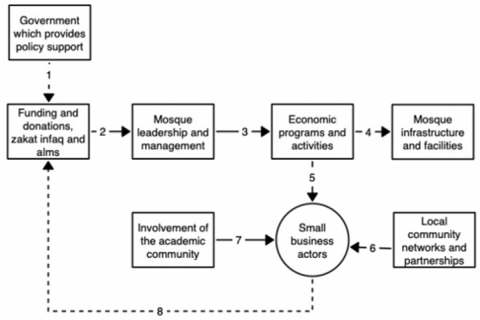
Figure 9. How the mosque's economic ecosystem works
Source: Authors framework
Based on Figure 9, the mosque’s economic ecosystem works by (1) Government support and policies that support mosque-based economic empowerment. (2) Funding comes from mosque finance, sourced from zakat, infaq, and sadaqah donations, which are appropriately managed and planned for economic empowerment around the mosque. (3) Furthermore, funds are managed by mosque administrators with visionary leadership and mosque administrators with a vision of economic empowerment and can lead well. (4) Mosque administrators provide facilities or adequate infrastructure to support the economic activities of the mosque and ease of access for the community to participate in mosque programs. (5) Funding should be distributed for economic programs that are appropriate and relevant to the community’s needs, such as training, cooperatives, and the provision of SME capital around the mosque. (6) Active involvement of the surrounding community and partnerships with social networks in developing fostered SMEs. (7) Active involvement of community leaders, including academics, in fostering mosque economic activities such as training and mentoring for SMEs can significantly enhance local economic development. (8) Small business actors who earn income from their business to return loan funds by paying zakat, infaq, and sadaqah.
Strengthening the economic ecosystem surrounding a mosque by enhancing its various elements can serve as a powerful stimulus for the economic prosperity of the local community. The entrepreneurial ecosystem, which arises from the interplay of diverse cultures, economies, and technologies, is crucial in fostering entrepreneurial growth [54]. This ecosystem is essential for nurturing new entrepreneurs, as collaboration across different industries encourages fresh perspectives and innovative approaches. Such synergy can develop groundbreaking products and services, driving economic progress [55].
One way to do this is to act as a business funder for Micro, Small and Medium Enterprises (MSMEs) and as a coach in developing these businesses. Through this role, the mosque is a place of worship and a driver of sustainable economic progress for the surrounding community [56].
3.6.1 Mosques as funders for MSMEs
As a social institution widely relied upon by the community, the mosque has an advantage regarding trust and closeness to the congregation. One way to improve this is to manage zakat, infaq, and alms funds well and transparently [57]. These funds can be allocated to support the establishment and development of MSMEs. Through a Sharia-based financing system, mosques can provide the business capital needed by small entrepreneurs without burdening them with high interest rates. Such financing can be in the form of start-up capital for new businesses or additional capital for existing businesses that need a faster turnover of funds.
3.6.2 MSME development by mosques
Besides being a funder, mosques can also act as coaches for MSMEs. This coaching is not only limited to financial support but also includes other aspects such as skills training, business management, marketing, and product development. By collaborating with experts in their fields, mosques can organize training or seminars that are beneficial for small entrepreneurs in the neighbourhood [58]. For example, training in financial management, digital marketing, or even improving product quality. This coaching will help MSME players enhance their competitiveness, expand their market, and increase business productivity.
3.6.3 Collaboration with other institutions
To expand their impact, mosques can collaborate with other institutions with the same vision in developing MSMEs. For example, working with local governments to obtain policy support or support facilities, with Islamic financial institutions to provide credit facilities by Sharia principles, or with educational institutions to provide skills training [59].
Through this comprehensive approach, mosques play a role in the economic development of the ummah and in building sustainable local economic resilience. With financial support, coaching, and education, mosques can become centres of MSME development that promote the principles of justice, sustainability, and the welfare of the people.
As such, mosques can play an important role in creating an inclusive economic ecosystem based on Islamic principles, contributing to the reduction of poverty and improving community welfare.
Based on the research results, it can be concluded that in the mosque-based economic development strategy, the digitalisation index is the most important factor, with the highest level of agreement (0.343) or 34%. This shows that the advancement of digital technology and the application of digital solutions are top priorities in supporting economic development in mosque-based communities. Furthermore, networking (0.299) or 29% also plays an important role, reflecting the importance of good relations and collaboration of various parties in strengthening the people's economy. Regulations and policies (0.192), or 19%, are also important supporting factors, although with a lower weight. Finally, da'wah (0.149) or 14%, has the lowest weight, indicating that although da'wah remains important, other factors such as digitalisation, networking, and policies are considered more crucial in mosque-based economic development strategies.
Several practical strategies can be employed to implement digitalisation and improve economic literacy within mosques effectively. First, mosques can build digital platforms, such as mobile apps or websites, to facilitate communication and information sharing among community members. These platforms can provide resources on financial literacy, including budgeting, savings, and investment strategies tailored to the community's needs. In addition, creating a digital library within the mosque can serve as a repository of educational materials, allowing worshipers to access information on various economic topics. Second, mosques can organise workshops and training sessions on digital skills and economic literacy. Collaborating with local universities or NGOs can enhance this initiative, as they can provide expertise and resources for effective program delivery. Such workshops can cover e-commerce, digital marketing, and financial management software, empowering participants to utilize technology for economic activities. In addition, mosques can utilize social media platforms to disseminate information and engage the community. Finally, fostering partnerships with Islamic microfinance institutions can improve the financial literacy of community members. These partnerships can facilitate access to microloans and financial products that support small business development, thus encouraging economic resilience in communities supported by a strong economic ecosystem and collaboration supported by professional managerial leadership in implementing effective zakat fund management strategies, collaboration, and strategy development.
This study has several limitations, including limited empirical data accessible, especially from other countries. In addition, this study focuses on mosque-based economic development in Indonesia, which may not reflect the whole world. Therefore, future research could be extended to more country contexts.
[1] Aliyasak, M.Z.I., Hussin, M.Y.M., Muhammad, F., Razak, A.A. (2019). Mosquepreneur in Perak: Reality or fantasy? Research in World Economy, 10(5): 53. https://doi.org/10.5430/rwe.v10n5p53
[2] Yasoa’, M.R., Ghazali, M.S., Alwi, M.A.M., Rahman, A. H.A., Abdullah, S.S., Abdullah, A.R., Ismail, M., Yaacob, M.R. (2019). Fund management - An exploratory case study of several mosques in Kelantan. Research in World Economy, 10(2): 53. https://doi.org/10.5430/rwe.v10n2p53
[3] Supriyadi, S., Widiyastuti, E., Prameswari, N.S., Swasty, W. (2023). Pragmatic-semantic analysis of the Demak great mosque and acculturation of the surrounding communities. Journal of the International Society for the Study of Vernacular Settlements ISVS e-journal, 10(5): 262-263.
[4] Astari, P. (2014). Mengembalikan fungsi masjid sebagai pusat peradaban masyarakat. Jurnal Ilmu Dakwah dan Pengembangan Komunitas, 9(1): 33-44.
[5] Dewi, R.S. (2019). Pemberdayaan masjid di Indonesia dalam perspektif institutional building. Jurnal Ilmiah Administrasi Publik, 5(1): 7-16.
[6] As-Salafiyah, A., Rusydiana, A.S., Mustafa, M.I. (2022). Maqashid Sharia-based mosque empowerment index. International Journal of Ethics and Systems, 38(2): 173-190. https://doi.org/10.1108/IJOES-06-2021-0122
[7] Utama, R.B.D.R., Fitrandasari, Z., Arifin, M., Muhtadi, R. (2018). Can mosque fund management for community economic empowerment? An exploratory study. International Journal of Islamic Business Ethics, 3(2): 451-457. http://doi.org/10.30659/ijibe.3.2.451-457
[8] Ridwanullah, A.I., Herdiana, D. (2018). Optimizing mosque-based community empowerment. Ilmu Dakwah Academic Journal for Homiletic Studies, 12(1): 82-98. https://doi.org/10.15575/idajhs.v12i1.2396
[9] Fahmi, R.A. (2018). Enhancing the economic role of the mosque through empowerment: A case study in Yogyakarta City. E-Mabis Jurnal Ekonomi Manajemen dan Bisnis, 19(1): 57-70. https://doi.org/10.29103/e-mabis.v19i1.278
[10] Syaikhu, S., Norwili, N., Maimunah, M., Wahyunita, L. (2021). The empowerment of infaq and waqf evaluation in light of Maqasid Al-Sharia perspective in mosques in Palangka Raya, Indonesia. Samarah Jurnal Hukum Keluarga dan Hukum Islam, 5(2): 1003. https://doi.org/10.22373/sjhk.v5i2.8997
[11] Efiyanti, A.Y., Ali, M., Amin, S. (2021). Institutional reinforcement of mosques promotes the social and economic empowerment of small traders in the community. Journal of Socioeconomics and Development, 4(2): 189-197.
[12] Cholil, M. (2016). Revitalization of mosque role and function through development of “Posdaya” in the view of structuration theory. Research on Humanities and Social Sciences, 6(12): 43-51.
[13] Kasri, R.A., Ramli, U.H. (2019). Why do Indonesian Muslims donate through mosques? International Journal of Islamic and Middle Eastern Finance and Management, 12(5): 663-679. https://doi.org/10.1108/IMEFM-11-2018-0399
[14] Muhammad, F., Abdul Razak, A., Hussin, M.Y., Awang, S.A., Saad, R.A.J. (2020). Direct channeling of mosque institution fund in financing waqf projects: Accepted or declined? Journal of Critical Reviews, 7(6): 267-560.
[15] Fahmi, R.A., Suyitno, S., Rochmiatun, E. (2023). Mosque-based economic empowerment in the Malay world: Views of Ibnu Khaldun’s Asabiyah and Malik Bennabi’s civilization theories. Al-Qalam, 29(1): 88-101. https://doi.org/10.31969/alq.v29i1.1208
[16] Mulyandi, M.R., Yumeina, T. (2024). Economic empowerment of mosques as provider for community economic services. Indonesian Journal of Islamic Economics and Business, 9(1): 140-154. http://doi.org/10.30631/ijoieb.v9i1.2300
[17] Muthoifin, M., Rhezaldi, A.Y. (2024). Community economic empowerment through mosque management to improve people’s welfare. Multidisciplinary Reviews, 7(8): 2024134. https://doi.org/10.31893/multirev.2024134
[18] Wulandari, S. (2017). Optimizing fund management of mosque cash for economic empowerment of people. In 1st International Conference Postgraduate School Universitas Airlangga: "Implementation of Climate Change Agreement to Meet Sustainable Development Goals" (ICPSUAS 2017), pp. 258-262. http://doi.org/10.2991/icpsuas-17.2018.54
[19] Amaliah, P. (2024). Pemberdayaan berbasis masjid: Ekplorasi peran remaja masjid desa Kotarih Baru Kecamatan Kotarih Serdang Bedagai. As-Salam: Journal Islamic Social Sciences and Humanities, 2(2): 41-51. https://ejournal.as-salam.org/index.php/assalam/article/view/59.
[20] Sari, T.I.P., Saputra, R., Pratama, B.D., Anugrah, A.D.T., Niswa, N., Kurnia, T.W. (2024). Ibadah yang lebih utama dengan memperhatikan kebersihan diri dan tempat ibadah. Jurnal Intelek dan Cendikiawan Nusantara, 1(3): 3752-3757.
[21] Dewi Anggadini, S., Wahab, D.A., Yunanto, R. (2020). Development of integrated zakat, infaq and shadaqoh information system: Evidence in amil zakat institutions. GATR Journal of Finance and Banking Review, 5(1): 1-11. http://repository.unikom.ac.id/id/eprint/70268.
[22] Holle, M.H., Manilet, A., Asyiah, B.N., Ismail, S. (2024). Utilizing Ziswaf as an instrument for financial inclusion and poverty reduction efforts. FINANSIA: Jurnal Akuntansi dan Perbankan Syariah, 7(1): 67-86. https://doi.org/10.32332/finansia.v7i1.8717
[23] Karmanto, G.D., Mahri, A.J.W., Nurasyiah, A. (2021). Society intention in distribution of zakat, infaq and shadaqah (ZIS) through the use of crowdfunding platform. Falah: Jurnal Ekonomi Syariah, 6(1): 30-44. https://doi.org/10.22219/jes.v6i1.15133
[24] Mayang, S. (2023). Masjid Syuhada Yogyakarta’s development in zakat, infaq, and shadaqah from 2015 to 2019. Ziswaf Asfa Journal, 1(1): 1-15. https://doi.org/10.69948/ziswaf.6
[25] Nugroho, B., Hermawan, A., Surawijaya, C.I. (2023). Digital technology-enhanced ZISWAF management: A case study of UPZ masjid Jami ash Shiyaam. In 2023 International Conference on Computer, Control, Informatics and its Applications (IC3INA), Bandung, Indonesia, pp. 256-261. https://doi.org/10.1109/IC3INA60834.2023.10285740
[26] Sholihah, H., Zaenurrosyid, A. (2020). The implementation of tahfidz Islamic boarding school management based on ZISWAF fundings. In Proceedings of the 1st International Conference on Islamic Civilization, ICIC 2020, Semarang, Indonesia. http://doi.org/10.4108/eai.27-8-2020.2303223
[27] Utomo, I.C., Rokhmah, S., Muslihah, I. (2020). Web-based distribution of zakat, infaq, and shodaqoh (Case study of Surakarta City region). International Journal of Computer and Information System, 1(1): 16-21. https://doi.org/10.29040/ijcis.v1i1.4
[28] Yuningsih, I., Pramono, A.T., Kamaruddin, A.M., Savira, F. (2020). The spiritual dimension of the concept of making mosque prosperity against trust improvement society for ZISWAF. Repository Universitas Mulawarman. http://repository.unmul.ac.id/handle/123456789/32286.
[29] Suryanto, A., Saepulloh, A. (2016). Optimizing the function and potential of mosques: A model of mosque-based community economic empowerment in Tasikmalaya City. Iqtishoduna: Jurnal Ekonomi Islam, 5(2): 150-176. https://ejournal.iaisyarifuddin.ac.id/index.php/iqtishoduna/article/view/143.
[30] Kurnia, T., Munawar, W. (2018). Potential development of the economic role of mosques in Bogor City. Jurnal Iqtisaduna, 4(1): 62-81. https://doi.org/10.24252/iqtisaduna.v4i1.4951
[31] Kheybari, S., Rezaie, F.M., Farazmand, H. (2020). Analytic network process: An overview of applications. Applied Mathematics and Computation, 367: 124780. https://doi.org/10.1016/j.amc.2019.124780
[32] Kirom, C., Cahyadi, I.F., Afandi, J., Adni, R., Cahya, B. T., Muflih, B.K. (2024). Assistance in management and technology-based mosque digitalization to improve the quality of community services. Jurnal Pengabdian UNDIKMA, 5(2): 205-213. https://doi.org/10.33394/jpu.v5i2.10920
[33] Komsiah, S. (2023). Utilization and development of smart mosque applications. Sinkron: Jurnal dan Penelitian Teknik Informatika, 8(1): 119-129. https://doi.org/10.33395/sinkron.v8i1.11911
[34] Sutrisno, N.A., Kamarulzaman, M.H., Ibrahim, S.S. (2022). Digitalisation empowerment in mosque tourism management; A potential and current practice. International Journal of Academic Research in Business and Social Sciences, 12(7): 944-957. https://doi.org/10.6007/IJARBSS/v12-i7/14324
[35] Lestari, F., Azwar, B., Jonnius, N.A., Abduh, M.A. (2022). Partner engagement on university’s community service program in Indonesia. International Journal of Public Sector Performance Management, 10(2/3): 396. https://doi.org/10.1504/ijpspm.2022.126241
[36] Syofya, H.H. (2024). How coffee entrepreneurs in Kerinci impact local economic empowerment and social impact of local communities in terms of financial capital, entrepreneurial orientation, government policy and entrepreneurial ecosystem. International Journal of Entrepreneurship and Business Development, 7(1): 180-197. https://doi.org/10.29138/ijebd.v7i1.2606
[37] Syarifudin, S. (2020). Stress-cultural democracy Da’wah at the mosque. Ilmu Dakwah Academic Journal for Homiletic Studies, 14(1): 55-76. https://doi.org/10.15575/idajhs.v14i1.7967
[38] Hasan, I., Sulaeman, A. (2019). Social empowerment based on mosque. In 6th International Conference on Community Development (ICCD 2019), pp. 656-659. http://doi.org/10.2991/iccd-19.2019.173
[39] Khairan, K. (2018). Strategi membangun jaringan kerjasama bisnis berbasis syariah. Tribakti: Jurnal Pemikiran Keislaman, 29(2): 265-288. https://doi.org/10.33367/tribakti.v29i2.597
[40] Utami, L.D. (2023). Masjid friendly: Mosque based economic empowerment. Pengabdian Jurnal Abdimas, 1(2): 97-106. https://doi.org/10.55849/abdimas.v1i2.186
[41] Bukht, R., Heeks, R. (2017). Defining, conceptualising and measuring the digital economy. Development Informatics Working Paper, 68. http://doi.org/10.2139/ssrn.3431732
[42] Sofyansyah, H., Anom, E. (2023). The role of the website-based public service information system of the Istiqlal Mosque Management Agency. International Journal Software Engineering and Computer Science (IJSECS), 3(1): 1-10. http://doi.org/10.35870/ijsecs.v3i1.884
[43] Analiansyah, A., Furqani, H., Mulia, R., Yulindawati, Y., Afriani, S., Juliansyah, R. (2024). Techno-sociopreneurship in practice by strengthening mosque-based Islamic philanthropy management: A case in Thailand. In Technopreneurship in Small Businesses for Sustainability. IGI Global, pp. 213-231. https://doi.org/10.4018/979-8-3693-3530-7.ch011
[44] Hidayati, S. (2020). Digital business efficiency of micro insurance product and collaboration system (case study of Bungkesmas program). Institutional Repository UIN Syarif Hidayatullah Jakarta. https://repository.uinjkt.ac.id/dspace/handle/123456789/70394.
[45] Thoha, A.F.K., Ibrahim, M.S.S. (2023). Digital transformation of mosque Da’wah: Organizational learning and innovation in the digital age. Al-Balagh: Jurnal Dakwah dan Komunikasi, 8(2): 307-342. https://doi.org/10.22515/albalagh.v8i2.7634
[46] Wiharto, S., Sintarini, F. (2017). Analysis of e-commerce transaction mechanism at Indonesia in Tawhidi String Relation (TSR) perspective. In 13th International Conference on Tawhid and Maqasid Shariah in Mainstream Economics Trade Versus Riba (Interest) for Global Wellbeing, Jakarta, Indonesia, pp. 27-28.
[47] Fandir, A. (2024). Transformation of Islamic education: Implementation of technological innovation in education management. Jurnal Ilmiah Mandala Education, 10(1): 187-196. http://doi.org/10.58258/jime.v10i1.6625
[48] Hulkin, M., Santosa, S. (2023). Integration of information technology in the transformation of religious education: Fostering learning quality in elementary Islamic schools. Sunan Kalijaga International Journal on Islamic Educational Research, 7(1): 13-22. https://doi.org/10.14421/skijier.2023.71.02
[49] As-Salafiyah, A. (2022). Developing Maqashid-based mosque empowerment index. Maqasid Al-Shariah Review, 1(1): 1-12. https://doi.org/10.58968/msr.v1i1.262
[50] Hasan, R., Hassan, M.K., Rashid, M. (2019). Cash waqf investment and poverty alleviation: Case of Tabung Masjids in Malaysia. Journal of Islamic Monetary Economics and Finance, 4(2): 333-346. https://doi.org/10.21098/jimf.v4i2.1006
[51] Kasri, R.A., Ramli, U.H. (2019). Why do Indonesian Muslims donate through mosques? International Journal of Islamic and Middle Eastern Finance and Management, 12(5): 663-679. https://doi.org/10.1108/imefm-11-2018-0399
[52] Sonjaya, A., Salim, Z., Rozikin, O. (2024). Integrating local wisdom into a halal tourism model: The case of Indonesia. International Journal of Economics and Management, 18(2): 229-242.
[53] Rozikin, O., Sonjaya, A., Susilawati, C., bin Hussin, H. (2024). Dynamics of halal supply chain development in Indonesia. International Journal of Islamic Business and Economics (IJIBEC), 8(1): 15-28. http://doi.org/10.28918/ijibec.v8i1.6808
[54] Walsh, J., Winsor, B. (2019). Socio-cultural barriers to developing a regional entrepreneurial ecosystem. Journal of Enterprising Communities: People and Places in the Global Economy, 13(3): 263-282. https://doi.org/10.1108/JEC-11-2018-0088
[55] Wahyudi, K. (2019). Manajemen strategik. Penerbit IAIN Madura Press. http://repository.iainmadura.ac.id/id/eprint/292.
[56] Obaidullah, M., Latiff, H.S.H.A. (2008). Islamic finance for micro and medium enterprises. Islamic Research and Training Institute Islamic Development Bank, Centre for Islamic Banking, Finance and Management Universiti Brunei Darussalam.
[57] Waldan, R., Asma, N., Suhrawardi, S. (2022). Resilience of micro, small and medium enterprises (MSMEs) through Islamic social finance (ISF) after the COVID-19 pandemic. Journal of Multidisciplinary Islamic Studies, 2(1): 20-28. https://doi.org/10.21744/ijbem.v5n2.1886
[58] Santoso, B. (2020). The role of micro, small, and medium enterprises toward sustainable development goals through Islamic financial institutions. In 2nd Social and Humaniora Research Symposium (SoRes 2019), pp. 585-595. https://doi.org/10.2991/assehr.k.200225.127
[59] Ishak, M.S.I., Mohammad Nasir, N.S. (2024). The applicability of Islamic crowdfunding as an alternative funding for micro-entrepreneurs in Malaysia. Qualitative Research in Financial Markets, 16(3): 548-564. https://doi.org/10.1108/QRFM-12-2022-0202