Alexandra Del Aguila | Elizabeth Espinosa | Oscar Tinoco | Yvan Huaricallo*
© 2025 The authors. This article is published by IIETA and is licensed under the CC BY 4.0 license (http://creativecommons.org/licenses/by/4.0/).
OPEN ACCESS
A remediation strategy for tropical soils contaminated with petroleum hydrocarbons was evaluated. The objective of this research was to evaluate the most efficient particle size of the NFU (Disused Neomatic) in the absorption of the remaining crude oil and to determine the decrease in volatiles after a spill in three types of Amazonian soils of different textures; Determine the type of soil where the NFU is most effective in order to propose improvements in the decontamination process. Three soil mixtures M1, M2 and M3 with different proportions of clayey, sandy, silty and peat soil were characterized. Duplicate samples (M1-D, M2-D, M3-D) were worked in parallel to validate the results under replicated conditions, differentiated by their textural content and proportion of peat. A crude oil spill (24°API) was simulated, incorporating 12-mesh NFU particles, and the F1–F3 fractions of total petroleum hydrocarbons were monitored using EPA method 8015. The NFU showed a maximum adsorption capacity of 1.976 g/g after 20 minutes of contact, higher than that of 8-mesh NFU (1.462 g/g). Spectroscopic analysis confirmed a predominant surface adsorption mechanism. Bioassay tests with Petroselinum crispum indicated that parsley germination and growth were higher in NFU-treated soils, especially in M1, with an average growth of 24.5 cm in 5 months. A significant reduction in the F2 fraction of TPH was observed in M3-D soils (from 2236.58 to 862.75 mg/kg), suggesting a combined effect of physical adsorption and favorable soil conditions. NFUs showed potential to reduce hydrocarbon compounds and facilitate plant recovery, thus contributing to environmental remediation.
contaminated soils, hydrocarbons, remediation, NFU, remediation, Peruvian Amazon
Soil contamination by petroleum-based hydrocarbons represents an environmental problem on a global scale, severely affecting biodiversity, agricultural productivity and human health [1, 2]. More than 1.3 million oil spill events are reported annually worldwide, compromising about 0.1% of the earth's surface [3, 4]. The persistence of compounds such as polycyclic aromatic hydrocarbons (PAHs), coupled with their low solubility and high toxicity, makes their removal difficult and generates long-term impacts on affected ecosystems [5, 6]. These effects are aggravated in tropical soils such as those of the Peruvian Amazon, which have high acidity, low fertility, high humidity, predominant clay structure and poor aeration, factors that limit microbiological activity and hinder natural bioremediation processes [7, 8]. In this region, Ultisols are predominant (~65%) and are distinguished by their high clay content, low cation exchange capacity, and acidic pH. There are also Alfisols, which are more fertile; Inceptisols, with young profiles and variable texture; and Entisols, of a sandy nature and low nutrient retention capacity [9]. According to INIA [9], Amazonian soils show considerable textural variations depending on the area, which justifies the formulation of three representative mixtures (M1, M2 and M3), combining different proportions of sand, silt and clay with 50–53% peat. The latter acts as an enhancer of microbial structure, moisture, and activity, as well as contributing to hydrocarbon adsorption [10, 11].
In the Peruvian context, the northern Amazon, particularly in the Loreto region, is highly exposed to oil pollution due to extractive activities and the transport of crude oil through the North Peruvian Pipeline, an infrastructure that runs approximately 600 km from the jungle to the coast [12]. This pipeline has been the subject of multiple questions for operational failures, including accidental spills, leaks, and poor waste disposal [13]. National legislation, through Supreme Decree No. 011-2017-MINAM, establishes environmental quality standards for agricultural soils, setting maximum permissible limits of 200 mg/kg for light fraction hydrocarbons (F1, C6–C10), 1200 mg/kg for the medium fraction (F2, >C10–C28) and 3000 mg/kg for the heavy fraction (F3, >C28–C40) [14]. However, concentrations of the F2 fraction that far exceed the limits have been reported in areas near the pipeline, evidencing the urgent need to implement remediation strategies [15].
Oil pollution compromises not only the mineralization of soil organic matter, but also water retention, nutrient availability, and porous structure, directly affecting agricultural productivity and ecological resilience [16, 17]. In addition, volatile components of hydrocarbons pollute the air and water, expanding the range of environmental impact [18].
While phytoremediation and microbial bioremediation are eco-friendly techniques, their efficacy depends on specific conditions (such as pH, nutrients, and moisture) and typically require months or years to achieve significant decontaminations [19-21]. In contrast, end-of-life tires (NFUs) can act immediately as physical adsorbents, trapping hydrocarbons by direct contact and without relying on the biological environment. Studies show that particles derived from tires retain volatile compounds such as benzene and n-hexane with adsorption capacities in the range of 180–924 mg/kg [22]. Likewise, sulfur tires have demonstrated an adsorption capacity greater than 833 mg/g for dyes and antibiotics, which supports the idea of their high surface affinity [23]. NFUs do not require complex biological conditions, are applied directly in the field, and promote the circular economy by reusing industrial waste, positioning them as an effective, sustainable and fast alternative to traditional methods.
Various techniques for remediating contaminated soils have been studied, including physicochemical processes such as thermal extraction, advanced oxidation, and soil washing, as well as biological methods such as bioremediation and phytoremediation [24-27]. However, these strategies are often costly, technically complex, or slow to implement in tropical areas that are difficult to access [28].
In this scenario, the use of low-cost adsorbent materials, such as lignocellulosic waste [29], natural zeolites [30] and end-of-life tires (NFU) [31], has emerged as a viable alternative. NFUs are materials composed mainly of vulcanized solid hydrocarbons, with very low chemical activity, but with high hydrophobic affinity, which makes them preferential sorbents for hydrocarbons [32, 33]. Recent research has shown that screened NFU particles (e.g., through-mesh 12) can adsorb more than 2 g of oil per gram of sorbent, thanks to their high surface area and microporous structure [34].
Despite its potential, the application of NFU in the remediation of contaminated tropical soils is still limited. Studies focused on Amazonian areas, characterized by soils of low fertility, high humidity and moderate surface salinity, are scarce [35, 36]. In addition, the chemical interaction between NFU and hydrocarbons, analyzed by FTIR spectroscopy, has revealed predominantly surface adsorption mechanisms with minimal chemical modifications, indicating a physical retention process [37, 38].
The objective of this research is to evaluate the efficiency of end-of-life tire particulate matter (NFU) as a sorbent of petroleum hydrocarbons in soils of the northern Amazon of Peru, determining its adsorption capacity, its effects on the physicochemical properties of the soil, and its contribution to plant recovery and the specific objectives are to evaluate which particle size distribution of the NFU is most efficient in absorbing the remaining crude oil; to determine the decrease in volatiles after a spill in three types of Amazonian soils of different texture; and to establish in which type of soil the NFU is most effective in order to propose improvements and standardize its application in decontamination processes.
The present research addresses a significant knowledge gap: the lack of accessible, low-cost technologies adapted to the soil and climatic conditions of the rainforest for the remediation of oil-contaminated soils [39].
This proposal is mainly aligned with Sustainable Development Goal (SDG) 15: Life on Land, promoting the restoration of degraded soils, and with SDG 12: Responsible Production and Consumption, through the recovery of hazardous solid waste such as NFU in environmental remediation processes [40].
Finally, the study proposes a sustainable, replicable and scalable solution, aimed at strengthening the environmental resilience of Amazonian territories to the impacts of the oil industry.
Soil samples were collected in three areas of the Loreto region, Peru, located in the districts of San Juan Bautista (Maynas), Iquitos (urban area) and the banks of the Nanay River (Maynas-Iquitos). At each sampling point, a mechanical pit of up to 3 meters deep was made using a backhoe, following the guidelines of the ASTM D420-18 standard for site characterization and taking representative samples for surface analysis [41]. Subsequently, altered samples were obtained from each soil stratum, collecting at least 2.5 kg per sample, sufficient volume for granulometric and consistency limit tests, in order to obtain representative samples for textural classification under the SUCS system (ASTM D2487), which defines the laboratory procedures, granulometry and plasticity necessary for the assignment of textural groups [42]. Samples were stored in hermetically sealed plastic bags, appropriately labeled, to prevent cross-contamination and moisture loss during transport to the laboratory. The textural characterization of the soils was carried out according to the following methodologies: granulometric analysis by sieving according to ASTM D-422 and Technical Standard NTP 339.128 [43]; SUCS classification of the soil according to ASTM D-2487 [44] with sieves according to NTP 350.001 and was also measured at natural soil moisture, using the gravimetric procedure of drying according to ASTM D-2216 [45].
Table 1. Formulations and texture of soils representative of Amazonian soils
|
Mixture |
Sand (%) |
Slime (%) |
Clay (%) |
Peat (%) |
Predominant Texture |
|
M1 |
29.0 |
12.0 |
11.0 |
50.0 |
Sandy-silty loam |
|
M2 |
23.0 |
5.0 |
22.0 |
50.0 |
Clay loam |
|
M3 |
17.0 |
— |
30.0 |
53.0 |
Clay |
The preparation of contaminated soil mixtures was carried out after the textural characterization of the soils in the Laboratory of the Department of Analytical Chemistry of the Faculty of Chemistry and Chemical Engineering of the Universidad Nacional Mayor de San Marcos., based on the results obtained and on edaphic studies characteristic of the Peruvian Amazon [9], in order to simulate real contamination conditions on a laboratory scale. The mixtures were formulated using 50% black peat as a common substrate, in order to maintain conditions of humidity and organic matter similar to those observed in the field. Three formulations were developed with different proportions of mineral textures, representative of Amazonian soils as shown in Table 1.
Each mixture was duplicated (M1-D, M2-D, M3-D) to validate the reproducibility of the procedure. The mixtures were prepared manually, homogenizing the components until a uniform distribution was obtained.
To simulate the spill, 10 mL of 24°API crude oil was added per 2000 g of soil mixture, distributing it evenly. Next, 50 g of end-of-life tire particles (NFU) screened to 12 mesh were applied, placed on the surface of the contaminated soil to evaluate their surface adsorption capacity. To simulate a spill, crude oil of 24°API (PetroPerú) was used. Aluminium trays containing 2 kg of each soil mixture were contaminated, to which 10 mL of oil was added, distributing it homogeneously.
A Physical-Chemical and Instrumental characterization of the jungle soils was carried out, according to the requirements established in the ECA for soils in Peru, and the analytical procedure EPA 8015, standard for the analysis of total petroleum hydrocarbons (TPH) in aqueous samples by gas chromatography (GC): the light fractions F1 (C6-C10), medium fractions F2, (C10-C28) and heavy fractions F3 (C28-C40) of the TPH present in the soil. Temperature, pH, electrical conductivity and humidity were determined. The monitoring of the experimental units was carried out weekly for a period of ten months for the 3 varieties of soil.
The effective dimension and adsorption capacity of the NFU was evaluated after sieving the material with meshes No. 8 (2.36 mm), No. 10 (2.00 mm) and No. 12 (1.70 mm). To determine the adsorption capacity of crude oil, the procedure of the "Oil Adsorption – Short Test" section of the ASTM F72612 standard was adapted to a reduced scale: 4 g of NFU, contact times of 10, 15 and 20 min with constant agitation were used, and measurements were made in triplicate. This method is designed to evaluate the performance of sorbents against non-water-miscible liquids and has previously been successfully applied to tire rubber to verify its high adsorption capacity of crude oil and similar compounds [46, 47]. Once the most effective mesh was identified, due to its higher adsorption levels, 50 g of 12 mesh (1.7 mm) through-NFU was applied to the surface of each experimental unit in the mixtures M1, M2 and M3 (and their duplicates). The material was evenly distributed, including controls without NFU for comparison. This procedure was specially adapted to simulate direct contact between the NFU and the crude oil, maintaining the rigor of the F726 method and recording reproducible results in each replicate.
Fourier transform spectroscopic analysis was performed with a Perkin Elmer FTIR Spectrum Two spectrophotometer, in absorbance mode and in a spectral range of 4000 to 400 cm⁻¹, with the aim of determining whether the interaction between particulate rubber and petroleum generated structural changes in the functional groups of the material. which would make it possible to establish whether the process corresponds predominantly to surface adsorption or structural absorption. The analysis was carried out at three different times, using four samples: first, the standard NFU (without contact with oil) as a base sample to compare possible structural modifications; second, the NFU after 1 month of contact with oil, compared to the standard NFU to evaluate early changes; third, the NFU after 6 months of contact with oil, again compared with the NFU standard to evaluate long-term changes and finally the original oil vs. the NFU after 6 months of contact with recovered oil, to identify possible alterations in the chemical composition of the NFU. These analyses were represented in three comparative graphs, corresponding to the three key moments mentioned. In this way, the possible modification of the rubber during the interaction process was evaluated.
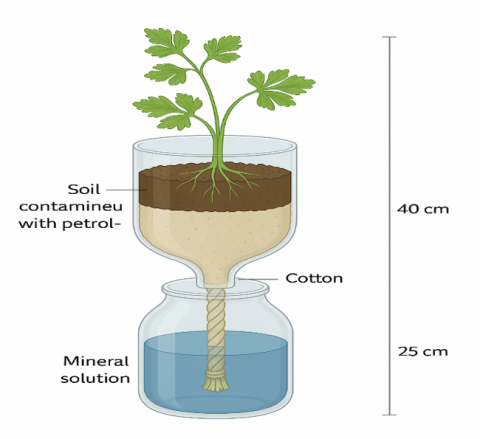
To evaluate the potential for plant recovery of the treated soils, trials were carried out where the growth of Petroselinum crispum (parsley) as a bioindicator plant was evaluated. This species was selected for its sensitivity to soil contaminants, its rapid growth cycle, easy availability, and for having been successfully used in previous studies on phytoremediation under controlled conditions [48-50]. Its physiological behaviour allows early detection of alterations in the quality of the substrate, facilitating the evaluation of the effect of the treatments applied. During the remediation bioassays, two complementary experimental approaches were applied: Leonard jars and cardboard seedbeds.
In the first case, soil mixtures and their duplicates were used: M1, M1-D; M2, M2-D; M3 and M3-D, each treated with NFU, in a system of adapted Leonard jars, In the first case, soil mixtures and their duplicates: M1, M1-D; M2, M2-D; M3 and M3-D, each treated with NFU, in a Leonard pitcher system that allowed for root and shoot monitoring under semi-hydroponic conditions. To ensure homogeneous nutritional conditions in all experimental units, a mineral nutrient solution (SM) was used, which was placed in the lower compartment of each bottle. This solution was absorbed by capillarity through a wick into the upper substrate, composed of the soil mixtures contaminated with oil and treated or not with NFU. MS made it possible to maintain adequate humidity in the system and provide essential macro and micronutrients, preventing plant growth from being limited by nutritional deficiencies. The solution was prepared in a total volume of 5 liters with the following concentrations per liter: NH₄NO₃ (10.0 g), K₂HPO₄ (2.5 g), KH₂PO₄ (2.0 g), MgSO₄ (0.5 g), NaCl (0.1 g), CaCl₂ (0.1 g) and trace amounts of FeSO₄. 1.0 mL/L of a microelement solution containing H₃BO₃ (2.86 g/L), ZnSO₄·7H₂O (0.22 g/L) and MnCl₂·4H₂O (1.81 g/L) was also added. This formulation was adapted from recent studies using Leonard's pitcher system and similar mineral solutions to evaluate phytoremediation in contaminated soils in closed cropping systems [51, 52]. This approach was inspired by the standard solution developed by Hoagland and Arnon, widely used in hydroponic studies to avoid interference from the nutritional properties of the soil [53].
Figure 1. Schematic of the Leonard jar system used in this study
Figure 1 shows a second assay of the germination of parsley seeds in various cardboard seedbeds with the three types of soils previously treated with NFU (M1, M1-D, M2, M2-D, M3 and M3-D) and inorganic fertilizer, to which worm humus was added 10 g for every 30 g of soil. varying the following parameters: Concentration of contaminant (oil mass/soil mass), amount of NFU sorbent/soil mass, germination time. A post-remediation soil characterization was carried out applying appropriate statistical methods to evaluate the absorption efficiency of oil by the NFU, the possible degradation of hydrocarbons, the assimilation of nutrients by each type of soil according to the mixtures used.
Statistical analyses of variance (factorial ANOVA) were applied using Python, evaluating the effect of the factors "soil type" and "time" on the dependent variable "average plant growth". A significance level of p<0.05 was considered.
By the physical characterization of the soils according to the methods ASTM D-422, ASTM D2216 and NTP 339.128, 3 types of soils were classified: 1) Poorly graded sand, average humidity 9.60%, classified as (SP) A-3 (0). 2) Sandy clay of low plasticity, medium humidity 19.9%; reduced percentage of fine particles, classified as (SP) A-4(0). 3) Inorganic silt, moisture 18.38%; appreciable percentage of fine particles, of low plasticity, classified as (ML) A-4.
In Table 2, the pH of the soils is 5.20–5.53 slightly acidic which does not favor degradation processes, this result differs from another study which presents a strongly acidic hydrogen (pH) potential (3.98–4.38) [54, 55]. This difference is due to the fact that 50% of all samples contain black peat which has the characteristic of being more alkaline, which is reflected when comparing these results. Electrical conductivity (EC) values between 1.866–3.479 dS/m according to the references for soils with a low risk of salinity are >2dS/m and those with a moderate risk of salinity are between 2-4 dS/m) [56] and are interpreted as soils with a higher presence of salts, unfavorable for the soil and crops [57]; limitations for microbiological development [58] From the mechanical analysis of soil samples to determine their texture, a certain disadvantage is observed for the passage of water, oxygen and nutrients necessary in the soil [59]. However, these values of clay and sand indicate a higher cation exchange capacity (CEC) [60], which allows us to know the amount of negative charges present on the surfaces of minerals and soil organic elements, which is proportional to the amounts of cations that can be superficially immobilized. About half of the volume of a floor is porous space; The size, number, shape, continuity and distribution of pores largely determine the retention and movement of air and water in the soil [61].
Table 2. Physicochemical parameters recorded in the period: August, 2023 – June, 2024
|
Sample |
% Humidity Range |
pH Range |
Salinity Value (dS/m) |
|
M1 |
2,90 – 3,12 |
5,20 – 5,25 |
3,479 |
|
M1-D* |
2,96 – 3,00 |
5,25 – 5,28 |
2,416 |
|
M2 |
3,32 – 3,52 |
5,40 – 5,43 |
2,029 |
|
M2-D* |
3,30 – 3,51 |
5,40 – 5,45 |
1,866 |
|
M3 |
6,57 – 7,00 |
5,50 – 5,53 |
3,195 |
|
M3-D* |
6,57 – 7,03 |
5,51 – 5,53 |
2,652 |
According to Table 3, all samples exceeded the petroleum hydrocarbon (HP) limit for F2; being within the ECA in F1 and F3. M3 and M3-D* were the soils with the lowest contamination as they had a higher percentage of clay, characterized by having smaller pores and higher humidity that increases plasticity, added to their higher electrical conductivity (EC), would indicate moderate levels of salinity. clay soils: EC may be due to a higher content of soluble salts and nutrients; salinity would act as a barrier to the penetration of non-polar pollutants and higher humidity would favour microbial degradation of oil.
Table 3. TPH analysis results by EPA-8015 method
|
Total Petroleum Hydrocarbons |
M-1 |
M-2 |
M-3 |
M-1D |
M-2D |
M-3D |
|
F-1 (C6-C10) |
44,47 |
10,291 |
3,179 |
2,27 |
24,91 |
<2.01 |
|
F-2 (C6-C10) |
3883,27 |
3422,59 |
2236,58 |
2892,27 |
5965,12 |
862,75 |
|
F-3 (C6-C10) |
301,65 |
276,37 |
231,86 |
276,07 |
862,74 |
91,04 |
The study shows the 24°API petroleum sorbent capacity of the NFU particulate matter classified in three sieves, for three test times and 4.0 ± 0.01 grams of sample; The results are presented in grams of oil per gram of sorbent (g/g).
Table 4 summarizes the results of the test of the oil sorbent capacity in grams of oil of 24°API, per gram of particulate sorbent of NFU (g/g), classified by 3 sieves and test times. It is observed that the larger particle size 8 mesh through-mesh, has a lower oil removal efficiency (1,462 g/g) since smaller particles have a higher surface area-to-volume ratio compared to larger particles [62]. This increased surface area provides more contact points for the oil to adhere to, improving adsorption capacity [63-65], more convenient for the remediation process: which is observed in the 12 mesh through-NFU which favors its interaction with oil due to its large available external surface area, porosity, hydrophobicity and durability [66]. The adsorption capacity (1,976 g/g) for 20 minutes of the NFU through mesh 12 is similar to the value of other studies where the adsorption capacity of tire dust oil (1,962 g/g) was determined, 0.5–2 mm (1,760 g/g) granules, 2.5–3.5 mm (1,604 g/g) granules, and TDF (1,422 g/g) at a fixed dose of 2 g adsorbent for 30 minutes and with stirring [67]. Compared to techniques such as phytoremediation or bioremediation, which require specific soil conditions, specialized microorganisms and long deadlines, NFU adsorption allows for direct, physical and immediate intervention. In addition, it does not depend on limiting biological factors such as temperature or microbial activity, which makes it especially useful in Amazonian environments of difficult access and high humidity [68, 69].
Table 4. NFU capacity for crude oil sorption 24°API
|
Mesh No. |
Mesh Intern8 |
Mesh Intern10 |
Mesh Intern12 |
||||
|
Time (min) |
10 15 20 |
1,372 |
1,455 |
1,497 |
1,592 |
1,972 |
1,960 |
|
1,380 |
1,461 |
1,501 |
1,598 |
1,974 |
1,962 |
||
|
1,386 |
1,462 |
1,502 |
1,600 |
1,976 |
1,963 |
||
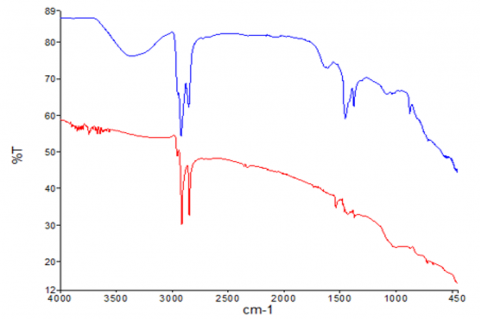
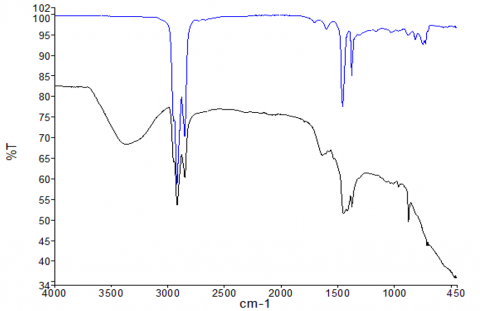
Likewise, the FTIR spectra shown in Figures 2-4 were run. Figure 2 presents a graph after 1 month of the oil-NFU interaction. The gray spectrum of the "NFU pattern" (without petroleum) is characterized by a long, thin band with two peaks around 3000 cm⁻¹ representing the functional groups present in vulcanized rubber, where the stretching vibrations of the C-H bonds predominate. Two small peaks around 1600 cm⁻¹ are identified, which may be related to the deformation vibrations of functional groups present in the polymeric matrix of the NFU that contains functional groups such as carbonyl (C=O), hydroxyl (-OH), and other groups, which enhance oil adsorption through hydrophobic interactions, hydrogen bonds, and electrostatic attractions [70-72]. Adsorption performance is mainly influenced by these groups [73]. The drop in spectrum towards 450 nm indicates minimal absorption in this region, consistent with the basic composition of the NFU. The NFU-oil spectrum in Figure 1 reveals a change in the spectral structure: a small peak is identified around 1600 cm⁻¹, suggesting the presence of characteristic C=C bonds of the aromatic hydrocarbons of petroleum; this spike may indicate the formation of interactions between the petroleum molecules and the surface of the NFU.
Figure 2. FTIR spectra of the NFU standard and NFU/oil at 1 month of interaction
Gray spectrum: NFU; Blue spectrum: NFU with petroleum. Performed on 14 August 2024
Figure 3. FTIR spectra of the NFU standard and NFU/oil at 6 months of interaction
Red spectrum: NFU. Blue spectrum: NFU with petroleum. Performed on 27 January 2025
Figure 4. NFU/oil and oil FTIR spectra at 6 months of interaction
Gray spectrum: NFU with petroleum; Blue spectrum: oil. Held February 05, 2025
Soil functional groups were determined by Fourier transform infrared spectroscopy (FTIR, recording in the range of 450 to 4000 cm −1)
The FTIR spectrum in Figure 4: At 6 months after the oil-NFU interaction, the spectrum of the NFU without oil or "pattern" (red) shows the same characteristics as the gray spectrum "NFU pattern" in Figure 1. In contrast, the NFU-petroleum spectrum (blue) presents a series of modifications that suggest an interaction with hydrocarbon compounds: there is a small convex prominence between 3500 and 3000 cm⁻¹, corresponding to the stretching vibration of O-H [74] indicating the incorporation of polar petroleum compounds or slight surface changes of the rubber after prolonged contact with the hydrocarbon and the environment. Antisymmetric stretch vibrations are observed between 3000-2800 cm⁻¹ from –CH3, which correspond to TPH [75] A key difference is found in the 1500-1300 cm⁻¹ region, where the NFU without oil showed only two small peaks, while the NFU-oil presents a short band with two more defined adsorption peaks, this widening located at the same time as the antisymmetric and symmetric stretch vibrations of COC [76]. The difference in the initial transmittance values between the two spectrums is remarkable: the NFU without oil shows 60% and the NFU-oil 89%; such an increase suggests that the interaction with the oil would have modified the surface of the NFU by reducing the number of exposed active functional groups or generating a surface film of hydrocarbons that alters the way IR radiation is absorbed or reflected, which provides key information to understand the mechanism of interaction between the NFU-oil: Surface adsorption predominant due to the presence of new bands and the change in signal strength in the NFU spectrum with oil. The prominence at 3500-3000 cm⁻¹ could indicate physical interactions with polar compounds in petroleum, although no drastic change is observed, it suggests that there would be no deep chemical absorption; but if it presents surface diffusion as part of its oil adsorption mechanism; since the lower transmittance in the spectrum of NFU with petroleum compared to that of pure petroleum and the persistence of the bands at 1500 cm⁻¹ and 1000 cm⁻¹ suggests that aromatic hydrocarbons and other compounds would have remained within the NFU matrix, due to their natural oil-absorbing and hydrophobic properties [74].
The results in Tables 5 and 6 show that parsley seed germination is significantly affected by the amount of oil in the soil and the mass of NFU used; both germination percentage and leaf growth increase in samples containing 50% peat. However, without the addition of NFU, only a scant germination occurred, (1 out of 5 seeds) indicating that from a contamination with 60 mL of crude oil/kg of soil, the properties of the soil are significantly altered, stimulating the blockage of soil pores, resulting in complications such as reduced bioactivity and degradability from biota to pollutants [77]. The germination of parsley seeds also showed notable differences between the different soil samples: in Table 5, the MT1 and MT2 samples at 5 months in Leonard's jars, presented better average germination rates of 70% and 65%, respectively, while MT1 MT2 and MT3 had an average growth of 22.4; 18.4 and 13.2 cm, for 5 months. The use of parsley (Petroselinum crispum) as a plant bioindicator was intentional due to its recognized sensitivity to hydrocarbons, salinity, and heavy metals, as well as its shallow root system and rapid growth. Previous studies have successfully used it in phytotoxicity tests in oil-contaminated soils, making it a suitable model plant for evaluating remediation processes in a short period. Table 4 shows that at 2 months the samples from the seedbeds, MT1 and MT2 maintained a similar behavior with averages of 60%, while MT3 presented 20% and at one month, they showed a germination of 40% in MT1, 20% in MT2 and 0% in MT3.
Table 5. Germination percentages of parsley (Petroselinum crispum) in petroleum-contaminated soils remediated with NFU in Leonard jars and seedlings
|
|
Leonard Jugs Concentration 5 mL/kg |
Seedlings 2 Months Concentration 60 mL/kg |
Seedlings 1 Month Concentration 60 mL/kg |
|
Sample |
Germination, % |
Germination, % |
Germination, % |
|
M1 |
80,0 |
80,0 |
60,0 |
|
M1-D* |
60,0 |
40,0 |
20,0 |
|
M2 |
60,0 |
60,0 |
20,0 |
|
M2-D* |
70,0 |
60,0 |
20,0 |
|
M3 |
50,0 |
20,0 |
0 |
|
M3-D* |
50,0 |
20,0 |
0 |
Table 6. Average growth of parsley plants in soil MT1, MT2 and MT3 and their duplicates in Leonard jars exposed to the environment for 5 months (March-July 2024)
|
Time, months |
Height in cm |
|||||
|
MT1 |
MT1-D* |
MT2 |
MT2-D* |
MT3 |
MT3-D* |
|
|
1 |
8,4 |
7,6 |
6,2 |
7,4 |
2,5 |
1,0 |
|
2 |
15,2 |
12,9 |
12,9 |
13,0 |
8,1 |
2,3 |
|
3 |
17,3 |
15,7 |
10,2 |
14,2 |
10,4 |
4,2 |
|
4 |
20,1 |
17,8 |
15,2 |
16,0 |
14,1 |
6,4 |
|
5 |
24,5 |
20,3 |
17,3 |
19,5 |
16,1 |
10,2 |
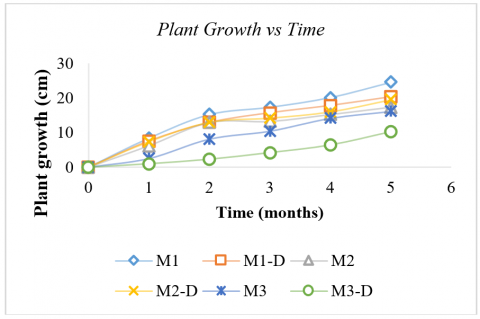
Figure 5 shows plant growth in cm vs time in the 3 soil types and their duplicates. Table 7 shows the results of the Factorial ANOVA using the Python program, in which time and samples are taken as independent factors or variables, and the dependent variable is the average growth of the plants.
Figure 5. Graph of the average growth of parsley plants
The factorial ANOVA (Table 7) shows a statistically significant influence of the factors time and sample on the average height of the plants, suggesting that both factors are crucial for the development of parsley plants. The analysis by minimum significant difference indicates that the average growth in the remediated soil samples is statistically similar throughout the test time. Figure 4 confirms that until the 4th month, all the plants followed a regular growth trend, especially in the remediated ones, but from the 5th month, the plants showed a deviation from the original trend, coinciding with climate change in Lima, as rainfall increased. The very small P-value (1.08 e-07) indicates significant differences in growth between the different samples, suggesting that there are specific factors affecting each sample. The textural composition of the MT1, MT2 and MT3 samples is essential to understand the differences in plant growth: MT1 achieved greater growth due to the balanced proportion of clay, sandy and silty soil, added to 50% peat that provides a good balance of water retention and aeration, creating a favorable environment for plant growth. In MT2 an intermediate growth was observed, it contains more clay soil than MT1 which can limit growth compared to MT1 and the lower proportion of silty and sandy soil, which can slightly affect aeration and drainage; MT3 presented the lowest growth as it has more clay soil, which contributes to greater water retention and smaller particles can lead to a more compact environment that does not favor root growth.
Table 7. Results of the ANOVA factorial
|
Source of Variation |
Sum of Squares |
GL |
Middle Square |
F |
P-Value |
F Critical |
|
Time |
1 286,98 |
5 |
257,40 |
61,40 |
0,0 |
3,85 |
|
Sample |
1 142,32 |
5 |
77,65 |
18,52 |
0,00 |
3,85 |
|
Error |
104,79 |
25 |
4,19 |
|
||
|
Total |
2 534,09 |
35 |
|
|||
The present study demonstrated that the use of end-of-life tire particulate matter (NFU), especially the 12-mesh through-point, constitutes an effective and low-cost alternative for the remediation of tropical soils contaminated with petroleum hydrocarbons. The high adsorption capacity recorded (up to 1.976 g/g) is attributed to the high porosity, specific surface and hydrophobicity of the NFU, favoring the surface retention of light and medium fractions of the oil.
Physicochemical and spectroscopic characterization by FTIR suggests that the mechanism of oil-NFU interaction is predominantly physical, with no evidence of significant chemical transformation, which reinforces its stability and functionality as a reusable sorbent. Likewise, the effect of NFU on soil properties improved soil wettability, a condition that, together with peat content, favored plant development in bioassays with Petroselinum crispum.
It was evidenced that soils with lower clay content (M1 and M2) showed better responses in terms of germination and growth, indicating a relevant influence of soil texture on remediation efficiency. The reduction of F2 fractions in treated soils, particularly in M3-D (in the order of 60%), highlights the potential of this technology to attenuate hydrocarbon pollution in Amazonian conditions.
However, it is necessary to consider that the tests were carried out under controlled laboratory conditions. It is recommended to extend the study in field scenarios, evaluate the possible release of residual compounds from the NFU and analyze its long-term behavior in natural systems. This research represents a significant step towards the design of sustainable, replicable and scalable solutions for the recovery of soils affected by extractive activities, aligning with Sustainable Development Goals 12 and 15.
[1] Wang, L., Gao, H., Wang, M., Xue, J. (2022). Remediation of petroleum-contaminated soil by ball milling and reuse as heavy metal adsorbent. Journal of Hazardous Materials, 424: 127305. https://doi.org/10.1016/j.jhazmat.2021.127305
[2] Li, Y.T., Sui, Q., Li, X., Liu, X.Y., Liu, H., Wang, Y.Q., Du, W.Y. (2024). Remediation of diesel contaminated soil by using activated persulfate with Fe3O4 magnetic nanoparticles: Effect and mechanisms. Environmental Science and Pollution Research, 31(23): 33385-33397. https://doi.org/10.1007/s11356-024-33408-5
[3] Oghoje, S.U., Omoruyi, I.C., Ejeomo, C., Ifijen, I.H., Ukpebor, J.E., Asiagwu, A.K., Ukpebor, E.E., Ikhuoria, E.U. (2024). Enhancing petroleum-contaminated soil remediation using pulverized rice straw. Chemical Papers, 78(8): 4909-4918. https://doi.org/10.1007/s11696-024-03439-w
[4] Atlas, R.M. (1995). Petroleum biodegradation and oil spill bioremediation. Marine Pollution Bulletin, 31(4-12): 178-182. https://doi.org/10.1016/0025-326X(95)00113-2
[5] Balseiro-Romero, M., Monterroso, C., Casares, J.J. (2018). Environmental fate of petroleum hydrocarbons in soil: Review of multiphase transport, mass transfer, and natural attenuation processes. Pedosphere, 28(6): 833-847. https://doi.org/10.1016/s1002-0160(18)60046-3
[6] Abdel-Shafy, H.I., Mansour, M.S. (2016). A review on polycyclic aromatic hydrocarbons: Source, environmental impact, effect on human health and remediation. Egyptian Journal of Petroleum, 25(1): 107-123. https://doi.org/10.1016/j.ejpe.2015.03.011
[7] Mekonnen, B.A., Aragaw, T.A., Genet, M.B. (2024). Bioremediation of petroleum hydrocarbon contaminated soil: A review on principles, degradation mechanisms, and advancements. Frontiers in Environmental Science, 12: 1354422. https://doi.org/10.3389/fenvs.2024.1354422
[8] Gyasi, E.K., Purushotham, S. (2023). Advancements in soil classification: An in-depth analysis of current deep learning techniques and emerging trends. Air, Soil and Water Research, 16: 11786221231214069. https://doi.org/10.1177/11786221231214069
[9] Ascencio-Sanchez, M., Padilla-Castro, C., Riveros-Lizana, C., Hermoza-Espezúa, R.M., Atalluz-Ganoza, D., Solórzano-Acosta, R. (2025). Impacts of land use on soil erosion: RUSLE analysis in a sub-basin of the Peruvian Amazon (2016–2022). Geosciences, 15(1): 15. https://doi.org/10.3390/geosciences15010015
[10] Fyfe, R.M., Coombe, R., Davies, H., Parry, L. (2014). The importance of sub-peat carbon storage as shown by data from Dartmoor, UK. Soil Use and Management, 30(1): 23-31. https://doi.org/10.1111/sum.12091
[11] de Vicente, I. (2021). Biogeochemistry of Mediterranean Wetlands: A review about the effects of water-level fluctuations on phosphorus cycling and greenhouse gas emissions. Water, 13(11): 1510. https://doi.org/10.3390/w13111510
[12] Sui, X., Wang, X., Li, Y., Ji, H. (2021). Remediation of petroleum-contaminated soils with microbial and microbial combined methods: Advances, mechanisms, and challenges. Sustainability, 13(16): 9267. https://doi.org/10.3390/su13169267
[13] Caetano, G., Machado, R.D.M., Correia, M.J.N., Marrucho, I.M. (2024). Remediation of soils contaminated with total petroleum hydrocarbons through soil washing with surfactant solutions. Environmental Technology, 45(15): 2969-2982. https://doi.org/10.1080/09593330.2023.2198733
[14] Ministry of the Environment (MINAM), Supreme Decree No. 011-2017-MINAM, Peru, 2017. https://www.minam.gob.pe/disposiciones/decreto-supremo-n-011-2017-minam/.
[15] Ambaye, T.G., Chebbi, A., Formicola, F., Prasad, S., Gomez, F.H., Franzetti, A., Vaccari, M. (2022). Remediation of soil polluted with petroleum hydrocarbons and its reuse for agriculture: Recent progress, challenges, and perspectives. Chemosphere, 293: 133572. https://doi.org/10.1016/j.chemosphere.2022.133572
[16] Das, B.M. (2018). Principles of Geotechnical Engineering. 9th ed. Cengage Learning. https://www.researchgate.net/publication/31730097_Principles_of_Geotechnical_Engineering_BM_Das.
[17] Sánchez Mata, O., Aguilera Flores, M.M., Ureño García, B.G., Ávila Vázquez, V., Cabañas García, E., Franco Villegas, E.A. (2023). Bioremediation of automotive residual oil-contaminated soils by biostimulation with enzymes, surfactant, and vermicompost. International Journal of Environmental Research and Public Health, 20(16): 6600. https://doi.org/10.3390/ijerph20166600
[18] Li, X., Wu, B., Zhang, Q., Liu, Y., Wang, J., Xu, D., Li, F., Ma, F., Gu, Q. (2020). Effects of soil properties on the remediation of diesel-contaminated soil by Triton X-100-aided washing. Environmental Science and Pollution Research, 27(18): 23323-23330. https://doi.org/10.1007/s11356-020-08781-6
[19] Iheme, C.I., Asika, K.E., Olugbue, R.C., Okwaraejesu, V., Eze, V.C., Obasi, U.K., Ibeh, R.C., Morah, A.C., Elemike, E.E., Chiegboka, N.A., Alisi, C.S. (2025). Environmental remediation of petroleum-hydrocarbon-contaminated Avu mechanic village soil using green-synthesized iron oxide nanoparticles: Advance remediation technology. Journal of Hazardous Materials Advances, 17: 100566. https://doi.org/10.1016/j.hazadv.2024.100566
[20] Shen, X., Dai, M., Yang, J., Sun, L., Tan, X., Peng, C., Ali, I., Naz, I. (2022). A critical review on the phytoremediation of heavy metals from environment: Performance and challenges. Chemosphere, 291: 132979. https://doi.org/10.1016/j.chemosphere.2021.132979
[21] Ma, Y., Zhang, K., Li, D., Guo, M., Zhou, Y., Li, X., Miao, R. (2025). Effects of wheat straw biochar with different proportions on phytoremediation efficiency and microbial communities of PAH-contaminated soils. Journal of Environmental Chemical Engineering, 13(3): 117140. https://doi.org/10.1016/j.jece.2025.117140
[22] Bao, T., Jing, Y., Wang, H., Shan, R., Wang, N. (2023). Using waste tire-derived particles to remove benzene and n-hexane by dynamic and static adsorption. ACS Omega, 8(5): 4899-4905. https://doi.org/10.1021/acsomega.2c07203
[23] Islam, M.T., Saenz-Arana, R., Hernandez, C., Guinto, T., Ahsan, M.A., Bragg, D.T., Wang, H., Alvarado-Tenorio, B., Noveron, J.C. (2018). Conversion of waste tire rubber into a high-capacity adsorbent for the removal of methylene blue, methyl orange, and tetracycline from water. Journal of Environmental Chemical Engineering, 6(2): 3070-3082. https://doi.org/10.1016/j.jece.2018.04.058
[24] Eche, J.J.E., Huaricallo, Y., Choque, Y.C. (2025). Innovation in the management of sludge generated in domestic waste water treatment plants in Perù. Environment and Ecology Research, 13(2): 257-268. https://doi.org/10.13189/eer.2025.130207
[25] Mohan, S.V. (2016). Emerging technologies for sustainable remediation of hydrocarbon-contaminated sites. Environmental Science: Processes & Impacts, 18(3): 325-338. https://doi.org/10.1039/C6EM00020A
[26] Barroso-Solares, S., Pinto, J., Nanni, G., Fragouli, D., Athanassiou, A. (2018). Enhanced oil removal from water in oil stable emulsions using electrospun nanocomposite fiber mats. RSC Advances, 8(14): 7641-7650. https://doi.org/10.1039/C7RA12646H
[27] Iorga, C.M., Georgescu, L.P., Ungureanu, C., Stancu, M.M. (2025). Sustainable remediation of polluted soils from the oil industry using sludge from municipal wastewater treatment plants. Processes, 13(1): 245. https://doi.org/10.3390/pr13010245
[28] Truskewycz, A., Gundry, T.D., Khudur, L.S., Kolobaric, A., Taha, M., Aburto-Medina, A., Ball, A.S., Shahsavari, E. (2019). Petroleum hydrocarbon contamination in terrestrial ecosystems—Fate and microbial responses. Molecules, 24(18): 3400. https://doi.org/10.3390/molecules24183400
[29] Annunciado, T.R., Sydenstricker, T.H.D., Amico, S.C. (2005). Experimental investigation of various vegetable fibers as sorbent materials for oil spills. Marine Pollution Bulletin, 50(11): 1340-1346. https://doi.org/10.1016/j.marpolbul.2005.04.043
[30] Król, A.M., Zaborska, E. (2015). Natural zeolites as effective sorbents for oil spill cleanup. Applied Clay Science, 114: 225-232. https://doi.org/10.1016/j.clay.2015.05.00
[31] Huang, X., Lim, T.T. (2006). Performance and mechanism of a hydrophobic-oleophilic kapok filter for oil/water separation. Desalination, 190(1-3): 295-307. https://doi.org/10.1016/j.desal.2005.09.009
[32] Ma, Y., Mu, B., Yuan, D., Zhang, H., Xu, H. (2017). Design of MnO2/CeO2-MnO2 hierarchical binary oxides for elemental mercury removal from coal-fired flue gas. Journal of Hazardous Materials, 333: 186-193. https://doi.org/10.1016/j.jhazmat.2017.03.032
[33] Soffian, M.S., Halim, F.Z.A., Aziz, F., Rahman, M.A., Amin, M.A.M., Chee, D.N.A. (2022). Carbon-based material derived from biomass waste for wastewater treatment. Environmental Advances, 9: 100259. https://doi.org/10.1016/j.envadv.2022.100259
[34] Barroso-Solares, S., Zahedi, M.G., Pinto, J., Nanni, G., Fragouli, D., Athanassiou, A. (2024). Oil removal from water oil emulsions using magnetic nanocomposite fibrous mats. arXiv preprint arXiv:2402.04966. https://doi.org/10.48550/arXiv.2402.04966
[35] Zhang, Y., Guo, Z., Peng, C., Zhang, C., Shen, M., Li, J. (2025). An integrated framework for identifying primary risk contributors and risk zones of combined soil pollution in an industrial city. Journal of Environmental Chemical Engineering, 13(2): 115607. https://doi.org/10.1016/j.jece.2025.115607
[36] van Noordwijk, M., Cerri, C., Woomer, P. L., Nugroho, K., Bernoux, M. (1997). Soil carbon dynamics in the humid tropical forest zone. Geoderma, 79(1-4): 187-225, https://doi.org/10.1016/s0016-7061(97)00042-6
[37] Juraij, K., Sagitha, P., Sujith, A., Chinglenthoiba, C. (2025). Electrospun nanofibrous membranes based sorbents for oil/water separation: Blends, composites, functionalized, and smart membranes–A mini review. Journal of Environmental Chemical Engineering, 13(3): 116262. https://doi.org/10.1016/j.jece.2025.116262
[38] Chen, Y., He, X., Gao, J., Wang, F., Hou, Y., Cai, Q., Liu, Q. (2024). Biochar assisted bioremediation of soils with combined contamination of petroleum hydrocarbons and heavy metals: A review. Applied Soil Ecology, 204: 105720. https://doi.org/10.1016/j.apsoil.2024.105720
[39] Hidalgo-Lasso, D., García-Villacís, K., Urvina Ulloa, J., Marín Tapia, D., Gómez Ortega, P., Coulon, F. (2024). Updating risk remediation-endpoints for petroleum-contaminated soils? A case study in the Ecuadorian Amazon region. Heliyon, 10(9): e30395. https://doi.org/10.1016/j.heliyon.2024.e30395
[40] Ahmad, J., Marsidi, N., Abdullah, S.R.S., Hasan, H.A., Othman, A.R., Ismail, N.I., Kurniawan, S.B. (2024). Integrating phytoremediation and mycoremediation with biosurfactant-producing fungi for hydrocarbon removal and the potential production of secondary resources. Chemosphere, 349: 140881. https://doi.org/10.1016/j.chemosphere.2023.140881
[41] Peng, M.Q., Qiu, Z.C., Shen, S.L., Li, Y.C., Zhou, J.J., Xu, H. (2024). Geotechnical site characterizations using a Bayesian-optimized multi-output gaussian process. Sustainability, 16(13): 5759. https://doi.org/10.3390/su16135759
[42] Castro, G.M., Park, J., Santamarina, J.C. (2023). Revised soil classification system: Implementation and engineering implications. Journal of Geotechnical and Geoenvironmental Engineering, 149(11): 04023109. https://doi.org/10.1061/JGGEFK.GTENG-10447
[43] Hasan, M.F., Abuel-Naga, H. (2024). An alternative method of obtaining the particle size distribution of soils by electrical conductivity. Minerals, 14(8): 804. https://doi.org/10.3390/min14080804
[44] Afolagboye, L.O., Ilesanmi, B.I., Abdu‑Raheem, Y.A. (2024). An appraisal of the problems related to the application of Casagrande plasticity chart and unified soil classification system in classifying lateritic soils in Nigeria. Discover Geoscience, 2(1): 22. https://doi.org/10.1007/s44288-024-00024-2
[45] Rasti, A., Pineda, M., Razavi, M. (2020). Assessment of soil moisture content measurement methods: Conventional laboratory oven versus halogen moisture analyzer. Journal of Soil and Water Science, 4(1): 151-160. https://doi.org/10.36959/624/440
[46] Wu, B., Zhou, M.H. (2009). Recycling of waste tyre rubber into oil absorbent. Waste Management, 29(1): 355-359. https://doi.org/10.1016/j.wasman.2008.03.002
[47] Lin, C., Hong, Y.J., Hu, A.H. (2010). Using a composite material containing waste tire powder and polypropylene fiber cut end to recover spilled oil. Waste Management, 30(2): 263-267. https://doi.org/10.1016/j.wasman.2009.03.001
[48] Tang, K.H.D. (2024). Phytoremediation of petroleum hydrocarbons: An update of its recent progress. Tropical Environment, Biology, and Technology, 2(2): 106-123. https://doi.org/10.53623/tebt.v2i2.532
[49] Meištininkas, R., Vaškevičienė, I., Dikšaitytė, A., Pedišius, N., Žaltauskaitė, J. (2023). Potential of eight species of legumes for heavy fuel oil-contaminated soil phytoremediation. Sustainability, 15: 4281. https://doi.org/10.3390/su15054281
[50] Kösesakal, T., Ünal, M., Kulen, O., Memon, A., Yüksel, B. (2016). Phytoremediation of petroleum hydrocarbons by using a freshwater fern species Azolla filiculoides Lam. International Journal of Phytoremediation, 18(5): 467-476. https://doi.org/10.1080/15226514.2015.1115958
[51] Zuluaga, M.Y.A., de Oliveira, A.L.M., Valentinuzzi, F., Jayme, N.S., Monterisi, S., Fattorini, R., Cesco, S., Pii, Y. (2023). An insight into the role of the organic acids produced by Enterobacter sp. strain 15S in solubilizing tricalcium phosphate: In situ study on cucumber. BMC Microbiology, 23(1): 184. https://doi.org/10.1186/s12866-023-02918-6
[52] Abdollahinejad, B., Pasalari, H., Jafari, A.J., Esrafili, A., Farzadkia, M. (2020). Bioremediation of diesel and gasoline-contaminated soil by co-vermicomposting amended with activated sludge: Diesel and gasoline degradation and kinetics. Environmental Pollution, 263: 114584. https://doi.org/10.1016/j.envpol.2020.114584
[53] Hewitt, E.J. (1952). Sand and water culture methods used in the study of plant nutrition. Soil Science Society of America Journal, 17(3): 301. https://doi.org/10.2136/sssaj1953.03615995001700030033x
[54] Mego Meléndez, J.L. (2021). Characterization of soils affected by hydrocarbons in an agricultural area of the Imaza district, Amazonas region. Revista Científica UNTRM: Ciencias Naturales E Ingeniería, 4(2): 48-56. https://doi.org/10.25127/ucni.v4i2.727
[55] Singh, C.J., Mukhopadhyay, S., Rengasamy, R.S. (2023). Oil separation from oil in water emulsion by coalescence filtration using kapok fibre. Environmental Technology, 44(3): 381-393. https://doi.org/10.1080/09593330.2021.1972168
[56] Gaur, V.K., Gautam, K., Sharma, P., Gupta, P., et al. (2022). Sustainable strategies for combating hydrocarbon pollution: Special emphasis on mobil oil bioremediation. The Science of the Total Environment, 832: 155083. https://doi.org/10.1016/j.scitotenv.2022.155083
[57] Ajona, M., Vasanthi, P. (2021). Bioremediation of petroleum contaminated soils–A review. Materials Today: Proceedings, 45: 7117-7122. https://doi.org/10.1016/j.matpr.2021.01.949
[58] Imig, A., Szabó, Z., Halytsia, O., Vrachioli, M., Kleinert, V., Rein, A. (2022). A review on risk assessment in managed aquifer recharge. Integrated Environmental Assessment and Management, 18(6): 1513-1529. https://doi.org/10.1002/ieam.4584
[59] Awasthi, M.K. (2022). Engineered biochar: A multifunctional material for energy and environment. Environmental Pollution, 298: 118831. https://doi.org/10.1016/j.envpol.2022.118831
[60] Ali, M., Song, X., Ding, D., Wang, Q., Zhang, Z., Tang, Z. (2022). Bioremediation of PAHs and heavy metals co-contaminated soils: Challenges and enhancement strategies. Environmental Pollution, 295: 118686. https://doi.org/10.1016/j.envpol.2021.118686
[61] Bao, Z., Shi, C., Tu, W., Li, L., Li, Q. (2022). Recent developments in modification of biochar and its application in soil pollution control and ecoregulation. Environmental Pollution, 313: 120184. https://doi.org/10.1016/j.envpol.2022.120184
[62] Kaeomani, P., Danwanichakul, D., Danwanichakul, P. (2015). Kinetic modeling of oil absorption by waste tire granules. In Third International Conference on Advances in Civil, Structural and Environmental Engineering- ACSEE 2015, Zurich, Switzerland, pp. 7-11. https://doi.org/10.15224/978-1-63248-065-1-33
[63] Kutluay, S., Baytar, O., Şahin, Ö. (2019). Adsorption kinetics, equilibrium and thermodynamics of gas-phase toluene onto char produced from almond shells. Research on Engineering Structures and Materials, 5(3): 279-298. https://doi.org/10.17515/resm2019.73en1122
[64] Malhas, R., Al-Ibrahim, Y., Al-Meraj, A., Abdullah, H., Alshatti, A. (2021). Application of magnetic separation for oil spill remediation and recovery in Kuwait sea water. Desalination and Water Treatment, 209: 114-120. https://doi.org/10.5004/dwt.2021.26498
[65] Singh, T., Singh, D.K. (2017). Phytoremediation of organochlorine pesticides: Concept, method, and recent developments. International Journal of Phytoremediation, 19(9): 834-843. https://doi.org/10.1080/15226514.2017.1290579
[66] Zhou, Y., Pan, S. (2023). Simulated phytoremediation by root exudates of Sudan grass of soil organochlorine pesticides: Impact on the rhizosphere microbial community. Environmental Science and Pollution Research, 30(54): 115600-115610. https://doi.org/10.1007/s11356-023-30591-9
[67] Malhas, R., Alamgir, T., Benhusain, A., Alotaibi, N., Alhaddad, N. (2023). Oil content removal from oil water emulsion by super magnetic nanoparticles. Journal of Water Process Engineering, 55: 104246. https://doi.org/10.1016/j.jwpe.2023.104246
[68] Thai, Q.B., Le, D.K., Do, N.H., Le, P.K., Phan-Thien, N., Wee, C.Y., Duong, H.M. (2020). Advanced aerogels from waste tire fibers for oil spill-cleaning applications. Journal of Environmental Chemical Engineering, 8(4): 104016. https://doi.org/10.1016/j.jece.2020.104016
[69] Malhas, R., Salah, S., Alawadhi, M. (2025). Utilizing eco-friendly shredded waste tires for oil spill cleanup: Adsorption isotherm and kinetic studies. Journal of Environmental Chemical Engineering, 13(3): 116133. https://doi.org/10.1016/j.jece.2025.116133
[70] Ahmed, K.Z., Faizan, M. (2024). Comprehensive characterization of waste tire rubber powder. Journal of The Institution of Engineers (India): Series E, 105(1): 11-20. https://doi.org/10.1007/s40034-023-00282-8
[71] Lin, C., Huang, C.L., Shern, C.C. (2008). Recycling waste tire powder for the recovery of oil spills. Resources, Conservation and Recycling, 52(10): 1162-1166. https://doi.org/10.1016/j.resconrec.2008.06.003
[72] Hu, C., Hu, S., Fang, P., Tang, Z., Xiao, X., Wu, H. (2022). Waste-tire-derived activated carbon as efficient adsorbent of P-nitrophenol from wastewater. Journal of Chemistry, 2022(1): 7313899. https://doi.org/10.1155/2022/7313899
[73] Lu, Y., Xie, Q., Tang, L., Yu, J., Wang, J., Yang, Z., Fan, C., Zhang, S. (2021). The reduction of nitrobenzene by extracellular electron transfer facilitated by Fe-bearing biochar derived from sewage sludge. Journal of Hazardous Materials, 403: 123682. https://doi.org/10.1016/j.jhazmat.2020.123682
[74] Li, X., Xu, J., Yang, Z. (2022). Efficient oriented interfacial oxidation of petroleum hydrocarbons by functionalized Fe/N co-doped biochar-mediated heterogeneous Fenton for heavily contaminated soil remediation. Chemical Engineering Journal, 450: 138466. https://doi.org/10.1016/j.cej.2022.138466
[75] Audette, Y., Smith, D.S., Parsons, C.T., Chen, W., Rezanezhad, F., Van Cappellen, P. (2020). Phosphorus binding to soil organic matter via ternary complexes with calcium. Chemosphere, 260: 127624. https://doi.org/10.1016/j.chemosphere.2020.127624
[76] Aisien, F.A., Hymore, F.K., Ebewele, R.O. (2006). Comparative absorption of crude oil from fresh and marine water using recycled rubber. Journal of Environmental Engineering, 132(9): 1078-1081. https://doi.org/10.1061/(ASCE)0733-9372(2006)132:9(1078)
[77] Lominchar, M.A., Lorenzo, D., Romero, A., Santos, A. (2018). Remediation of soil contaminated by PAHs and TPH using alkaline activated persulfate enhanced by surfactant addition at flow conditions. Journal of Chemical Technology & Biotechnology, 93(5): 1270-1278. https://doi.org/10.1002/jctb.5485