Omolayo M. Ikumapayi* | Abiodun Bayode | Temitayo S. Ogedengbe | Tin T. Ting
© 2025 The authors. This article is published by IIETA and is licensed under the CC BY 4.0 license (http://creativecommons.org/licenses/by/4.0/).
OPEN ACCESS
Nigeria's climatic conditions—characterized by high humidity, substantial rainfall (especially in coastal and tropical regions), and prolonged solar exposure—accelerate the corrosion of roofing materials. This undermines the sustainability of infrastructure by reducing service life, leading to structural degradation and heightened vulnerability to leaks. Compromised roofing systems can facilitate water infiltration and mold growth, posing significant risks to human health and general well-being, and emphasizing the need for climate-resilient building solutions. This research was conducted on selected galvanized aluminum roofing sheets obtained from the open market in Nigeria. The samples were cut to a small size (25mm by 25mm) and immersed in Rainwater, Hydrochloric acid solution (HCl), Sodium chloride solution (NaCl) sulfuric acid (H2SO4). The experiment was performed over 1080 hours, and weight loss measurements were carried out for each sample. In a Hydrochloric acid (HCl) solution, weight-loss experiments. It is predicted that the imported roofing sheet 2(IMS2) and sonic roofing sheet (SNL) are more resistant to Rainwater and hydrochloric acid environments, with the lowest corrosive rate of 0.8g, and thus more stable. While in Sulphuric (H2SO4) environments, Sonic roofing sheet is more resistant and more suitable with a lower corrosion rate of 0.9g. In Sodium chloride (NaCl) environments, imported roofing sheet 2 (IMS2) is recommended, with a lower corrosion rate of 0.5g, and thus more suitable and stable.
acid, corrosion, rainwater, resistance, galvanized, aluminum, roofing sheet, resilient building, human health
One of the many natural resources on Earth is water, which is recognized as being the most significant of all of them. There are very few living processes or activities that do not directly or indirectly include the utilization of water. In order to develop crops for food production, farming operations require a lot of water. Additionally, it is utilized for drinking and other home chores, including cooking, cleaning, and bathing [1]. The quality of the water affects the process of galvanic corrosion that occurs between different metals. In Nigeria's industrial and urban areas, emissions from automobiles and factories can increase the acidity of rainwater. Investigating the relationship between acidic rainwater and galvanized aluminum is crucial because water serves not only as a medium but also as a chemical catalyst in corrosion processes. The composition of water directly influences the rate, type, and intensity of corrosion, making it an essential factor in evaluating material durability and choosing suitable roofing materials for environments prone to acid rain [1].
The recent scientific and innovative advancements of humanity have had some unfavorable side effects, with environmental degradation and contamination being two of the worst. Hence the need to study the effects of acidic and rain water on roofing sheet types used for buildings [2]. Roofing sheets are integral parts of any building and hence are essentially important when building any edifice [3]. The use of inappropriate roofing materials for a particular environment to which the roof is exposed has been linked to premature structural roof collapses in the building industry. The use of galvanized aluminum roofing sheet in some selected environment may however prove anti-productive as the observed consequence is a much-discolored roofing sheets with patches that eventually corrode leading to failure and leakages in the roof of the buildings [4-7]. In Nigeria the quality of different brands of roofing sheets differs, thereby making some products more quality than others. These resultant effects, if understood, could be mitigated hence the need for this study. The main aim of this study is to study the effects of acidic and rainwater environments on some selected brands of galvanized aluminum roofing sheets in Nigeria [8]. The use of aluminum roofing sheets especially in developing economies cannot be over emphasized. The major setback to this cost-friendly (economical) material is the corrosion and discoloration rate especially in environments prone to acidic rainfall [9]. The knowledge of the effects of this acidic rain on the characteristics of different brands of the galvanized aluminum roofing sheets will help in further knowledge on roofing brands and which is much more favorable in different environments, mitigating these effects (discoloration and corrosion), and provide for longer lasting and safer roofing sheets for buildings [10-12].
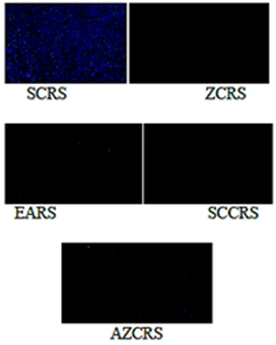
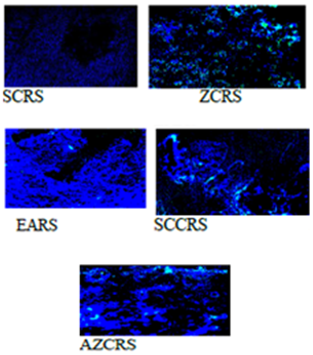
There are different categories of environmental degradation present. One type is physical degradation, which involves mechanical or structural damage caused by environmental factors, without necessarily involving chemical reactions (such as damage from hailstorms, falling branches, and abrasion from debris) [11]. Another type is chemical degradation, which includes reactions between roofing materials and environmental chemicals that lead to material deterioration over time. This can occur due to processes like leaching, corrosion, and oxidation. Grasping the differences between chemical and physical mechanisms of environmental degradation is essential for choosing suitable roofing materials, protective coatings, and maintenance approaches [12]. In regions like Nigeria, where acid rain, intense sunlight, and heavy rainfall are frequent, both forms of degradation must be taken into account to ensure long-lasting durability. Fatukasi et al. [13] simulated the influence of HNO3 acid rain on the vulnerability of roofing sheets to corrosion. Such as Stone Coated roofing sheet (SCRS), Aluminium Zinc roofing sheets (AZCRS and the microstructural analysis of the results are depicted in Figure 1. The study used the concept of change in weight (weights before and after contact with acid solutions). Table 1 shows the percentage weight loss for each of the roofing sheet samples used for the study. From Table 1, Emboss Aluminum Roofing Sheets (EARS) were a standout material as they had the lowest weight reduction index under any given condition.
Table 1. Percentage weight loss for various roofing sheet materials [13]
|
Run |
Factor 1A |
Factor 2B |
Factor 3C |
Response Weight Loss % |
||||
|
|
Conc. ppm |
Time Wk |
pH |
SCRS |
ZCRS |
EARS |
SCCRS |
AZCRS |
|
1 |
350.00 |
2.00 |
5.00 |
0.0496 |
0.0059 |
0.0015 |
0.0025 |
0.0035 |
|
2 |
175.00 |
1.50 |
5.00 |
0.0351 |
0.0054 |
0.0019 |
0.0024 |
0.0031 |
|
3 |
0.00 |
2.00 |
7.00 |
0.000 |
0.000 |
0.000 |
0.000 |
0.000 |
|
4 |
350.00 |
1.50 |
4.00 |
0.0744 |
0.0086 |
0.0031 |
0.0034 |
0.0038 |
|
5 |
175.00 |
1.00 |
6.00 |
0.0296 |
0.0039 |
0.0018 |
0.0017 |
0.0021 |
|
6 |
0.00 |
1.00 |
7.00 |
0.000 |
0.000 |
0.000 |
0.000 |
0.000 |
|
7 |
350.00 |
1.00 |
5.00 |
0.0324 |
0.0045 |
0.0029 |
0.0013 |
0.0024 |
|
8 |
175.00 |
2.00 |
6.00 |
0.0309 |
0.0022 |
0.0005 |
0.0014 |
0.0017 |
|
9 |
175.00 |
1.50 |
5.00 |
0.0355 |
0.0054 |
0.0020 |
0.0027 |
0.0031 |
|
10 |
0.00 |
1.50 |
7.00 |
0.000 |
0.000 |
0.000 |
0.000 |
0.000 |
|
11 |
175.00 |
1.50 |
5.00 |
0.0349 |
0.0055 |
0.0017 |
0.0028 |
0.0032 |
|
12 |
175.00 |
1.00 |
4.00 |
0.0592 |
0.0043 |
0.0022 |
0.0015 |
0.0019 |
|
13 |
175.00 |
1.50 |
5.00 |
0.0344 |
0.0056 |
0.0019 |
0.0026 |
0.0033 |
|
14 |
0.00 |
1.50 |
7.00 |
0.000 |
0.000 |
0.000 |
0.000 |
0.000 |
|
15 |
175.00 |
1.50 |
5.00 |
0.0348 |
0.0055 |
0.0018 |
0.0027 |
0.0033 |
|
16 |
350.00 |
1.50 |
6.00 |
0.0482 |
0.0040 |
0.0019 |
0.0015 |
0.0019 |
|
17 |
175.00 |
2.00 |
4.00 |
0.0574 |
0.0044 |
0.0016 |
0.0028 |
0.0034 |
Figure 1. Microstructure of the roofing sheet samples in acidic medium (HNO3) (a) Pre-immersion (b) Post-immersion [13]
2.1 Materials
Galvanized Aluminum roofing sheets were used in this research; about seven different brands of aluminum roofing sheets were purchased. 29.15 g of Sodium Chloride (NaCl) was obtained for use, and 30ml of Sulphuric acid (H2SO4) was also obtained and used. Finally, 10 litres of stimulated rainwater, 41.5ml of HCL, and a weighing balance were used to conduct the experiment.
2.2 Material preparation
0.5 M Sodium Chloride (NaCl), 0.5 M Hydrogen Chloride (HCL), 0.5 M Sulphuric acid (H2SO4), and Rainwater were prepared each in 1000ml of distilled water used as the corrosion medium. 41.5ml of HCl was poured into a measuring cylinder of 250ml volume for accurate measurement. Also, 41.5ml of HCl was poured into a beaker of 1000ml containing 200ml of distilled water and stirred for a few seconds. Then, up the beaker to 1000ml of distilled water, and stirred for some minutes for even distribution of acid to get 0.5M of HCl. 30ml of H2SO4 was poured into a measuring cylinder of 250ml volume for accurate measurement. 30ml of H2SO4was poured into a beaker of 1000ml, containing 200ml of distilled water, and stirred for a few seconds. And then filled up the beaker to 1000ml of distilled water, and stirred for some minutes for even distribution of acid to get 0.5M of H2SO4. 29.15g of NaCl salt was diluted in a beaker containing 200ml of distilled water and stirred for a few minutes till it was fully diluted. The beaker was then filled up with distilled water. The solution was stirred for some minutes for even distribution of acid to get 0.5M of NaCl.
2.3 Corrosion analysis of galvanized Aluminium roofing sheets
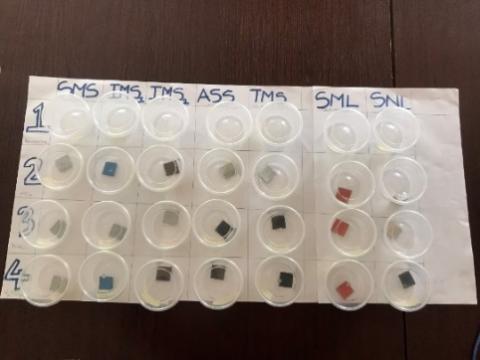
Two and a half dozen small plastic containers were purchased from the local market. 4 specimens were cut out each from a selected brand of galvanized aluminum roofing sheet. Each specimen was weighed on a sensitive weighing balance. A total of 28 specimens were prepared from 7 samples. After recording the weight of each specimen and the weight of its respective containers. Each container was labelled according to the specimen’s name and the particular medium to be poured inside the container. The prepared mediums were used to conduct corrosion tests on the selected galvanized Aluminium roofing sheets by immersion using the weight loss measurement method.
2.4 Method
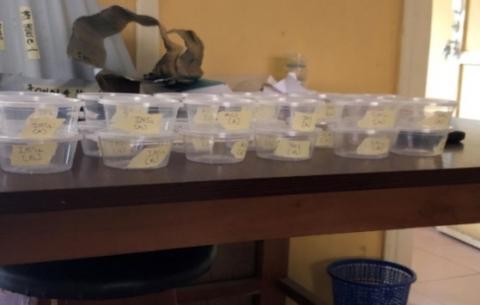
The methodology centered on evaluating corrosion rates and material weight loss, which are critical for understanding material durability. These findings provide valuable insights for construction professionals, inform industry stakeholders on material selection, and guide manufacturers in improving product resilience against acid rain-induced degradation. Two and a half dozen small plastic containers were purchased from the local market. 4 specimens were cut out each from a selected brand of galvanized Aluminium roofing sheet. Each specimen was weighed on a sensitive weighing balance. A total of 28 specimens were prepared from 7 samples as depicted in Figure 2. After recording the weight of each specimen and the weight of its respective containers. Each container was labelled according to the specimen’s name and the particular medium to be poured inside the container, as shown in Table 2.
Figure 2. Corrosion samples inside labelled containers
Table 2. Samples with their labels and weight
|
S/N |
Sample |
Sample Label |
Sample Weight (g) |
Storage Weight (g) |
|
1 |
Sumo Sheet |
SMS[A] SMS[B] SMS[C] SMS[D] |
0.606 0.602 0.602 0.613 |
8.548 8.654 8.638 8.695 |
|
2 |
Imported Sheet 1 |
IMS1[A] IMS1[B] IMS1[C] IMS1[D] |
0.606 0.602 0.602 0.613 |
8.572 8.680 8.644 8.684 |
|
3 |
Imported Sheet 2 |
IMS2[A] IMS2[B] IMS2[C] IMS2[D] |
0.606 0.602 0.602 0.613 |
8.659 8.720 8.623 8.686 |
|
4 |
Animal Skin Sheet |
ASS[A] ASS[B] ASS[C] ASS[D] |
0.556 0.592 0.610 0.552 |
8.720 8.594 8.636 8.636 |
|
5 |
T&M Elephant Sheet |
TMS[A] TMS[B] TMS[C] TMS[D] |
0.474 0.486 0.486 0.481 |
8.587 8.650 8.626 8.638 |
|
6 |
Sumo Long Span |
SML[A] SML[B] SML[C] SML[D] |
0.829 0.773 0.783 0.709 |
8.699 8.778 8.675 8.714 |
|
7 |
Sonic Roofing |
SNL[A] SNL[B] SNL[C] SNL[D] |
0.539 0.562 0.569 0.615 |
8.675 8.732 8.738 8.745 |
|
Medium[A]: Rainwater Medium[B]: HCl Medium[C]: NaCl Medium[D]: H2SO4 |
||||
2.5 Weight loss
2.5.1 Weight loss calculation
Each test medium enclosed in a plastic container was completely soaked in weighed test specimens. To prevent the fluid from evaporating over time, the plastic container was sealed with a lid. The following solutions were used in the experiments: 0.5 M sodium chloride test solution, 0.5 M sulfuric acid test solution, 0.5 M hydrochloric acid solution, and rainwater. At the end of the 45-day period, test specimens were removed from the test medium, dried, and weighed to assess the weight losses over the whole experiment. The corrosion rate was calculated from the formula in Equation [4] concerning the initial and final weights after the required period.
Initial Weight - Final Weight = Weight Loss (1)
Corrosion Rate (mm/yr.) = 87.6 (W DAT) (2)
where, W is Milligrams (mg) of weight loss.
D is the metal density (g/m3).
A is the sample's exposed area in (cm2).
T is the metal sample exposure time in (hours).
3.1 Weight loss
The results of the corrosion experiment carried out on the samples using selected media is presented in Figure 3.
(a)
(b)
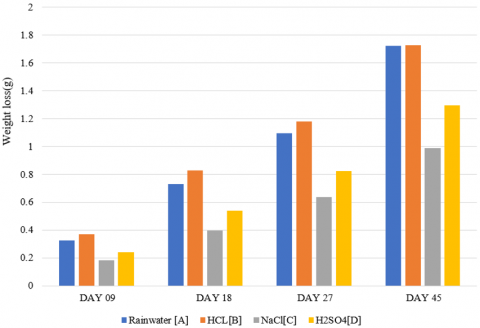
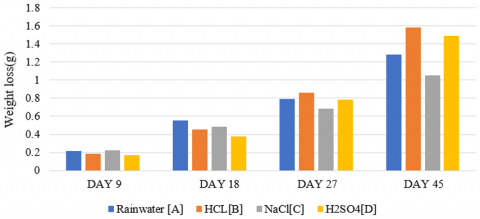
Figure 3. Weight loss (a) Sumo roofing sheet in different mediums (b) Roofing sheet (IMS2) soaked in different medium
Figure 3(a) shows that the least weight loss in the SMS (Sumo Roofing Sheet) was observed in medium C (NaCl), followed by medium D (H2SO4). The weight loss in media A and B (Rainwater and HCl respectively) doubled over 100% every 9 days. The corrosion property of SMS is greatly affected by media A and B over 40 days with approximately 1.7g weight loss in each medium. This is far greater than 1.05g and 1.49g lost in C and D respectively over the same period. From Figure 3(b) it was observed that average of 0.2g was lost by IMS1 (Imported Roofing Sheet 1) sample in all the selected media in the first 9 days. After 18 days, the weight loss increased by 200%, 264%, 353% and 359% in medium C, A, D, and B respectively. IMS1 corrosion rate is highest in medium B and lowest in medium C.
(a)
(b)
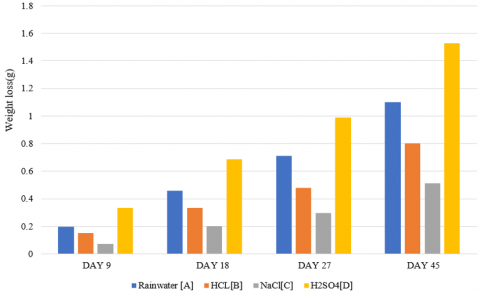
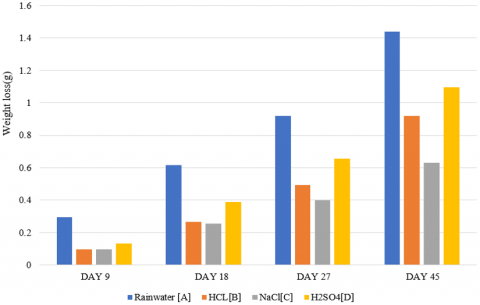
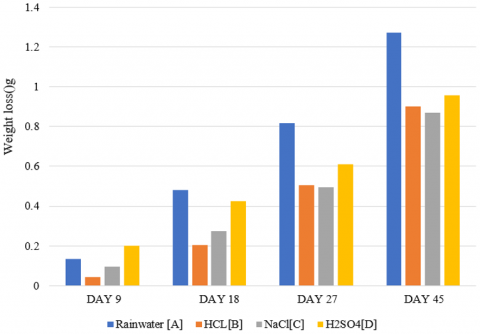
Figure 4. weight loss (a) Imported Roofing Sheet (IMS2) (b) Animal Skin Roofing Sheet (ASS) soaked in different medium
Figure 4(a) shows that 1.5g, 1.1g, and 0.8g of IMS2 (Imported Roofing Sheet 2) were lost in media D, A, and B respectively in 45 days. Within the same period, 0.5g of sample IMS1 was lost in medium C in 45 days. This is 48% less than 1.05g lost by IMS1 during the same period. It was observed in Figure 4(b) that sample ASS is highly prone to corrosion in medium A (rainwater). The weight loss increased by 79% in 25 days (between days 18 and 45). The sample also lost 1.10g of weight in medium D within 45 days which is the second height, followed by 0.92g in medium B and 0.63g in medium C which is the smallest.
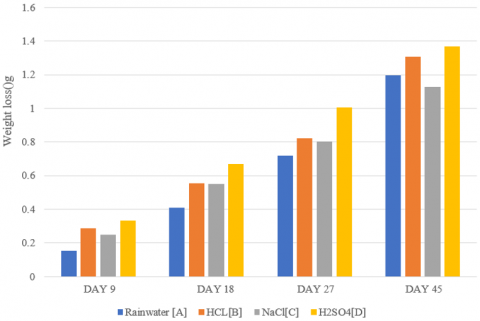
Figure 5(a) shows that the corrosion rate of TM is slowest in NaCl and fastest in medium A (rainwater). The same weight loss was observed in media B and C within 45 days. The sample is highly corrosive in rainwater and has a high corrosion resistance against NaCl. Figure 5(b) shows that SML (Sumo Long Span) has the lowest resistance in media A, B, and C. It was also observed during the experimental period that SLS weight loss in all the corrosion media progresses approximately at the same rate. 1.13g, 1.20g, 1.31g, and 1.37g were lost in C, A, B, and D respectively in 45 days.
(a)
(b)
Figure 5. Weight loss (a) TM Roofing Sheet (TMS) (b) Sumo Long Span Roofing Sheet (SML) soaked in different medium
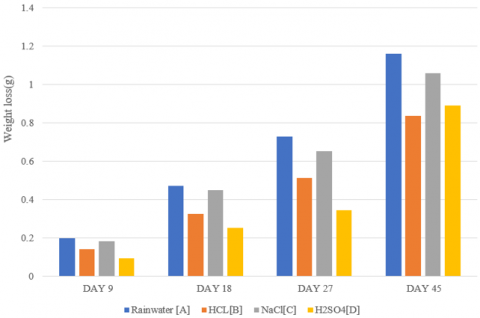
Figure 6. Graph of weight loss by Sonic Roofing Sheet (SNL) soaked in different medium
Figure 6 shows that SNL (Sonic Roofing Sheet) has the lowest resistance in media B, and D. It was also observed during the experimental period that SNL weight loss in all the corrosion media progresses approximately at the same rate. The corrosion rate of SNL is slowest in NaCl and fastest in medium D (H2SO4) respectively in 45 days.
(a)
(b)
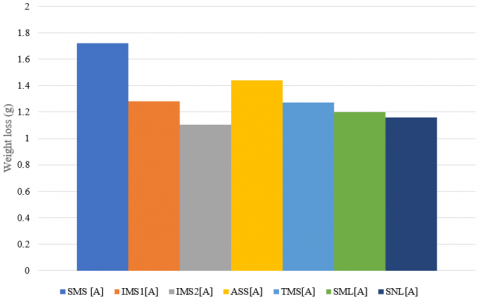
Figure 7. Corrosion behaviour of roofing sheet samples (a) Medium A(rainwater) (b) 0.5M medium B (HCL)
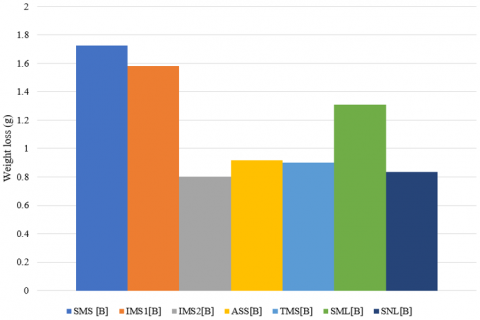
Figure 7(a) shows that IMS2 has the highest corrosion resistance in Rainwater followed by Sample SNL, SML, TMS, IMS1, ASS while SMS has the least corrosion resistance in medium A. Figure 7(b) shows that sample SMS has the least corrosion resistance in HCL followed by Samples IMS1, SML and IMS2 respectively. While ASS and TM has the highest and approximately the same corrosion resistance.
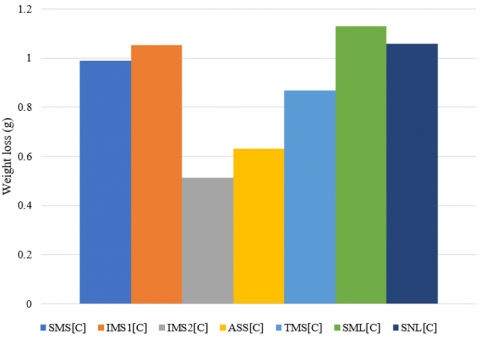
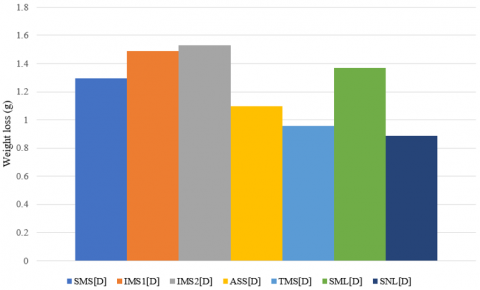
Figure 8(a) shows that sample SML has the least corrosion resistance in NaCL followed by samples SNL and IMS1 with the same corrosion rate. IMs2 has the highest resistance in sample C followed by ASS. Figure 8(b) reviewed that Sample IMS2, has the lowest corrosion resistance in medium D (H2SO4), closely followed by samples IMS1, SML, SMS, and ASS respectively. While TMS and SNL have approximately the same and highest corrosion resistance in medium D.
From the results of the experiments and comprehensive corrosion analysis, the major accomplishment of this research work is establishing the effects of acidic and rain-water environments on the selected galvanized aluminum roofing sheets immersed into 0.5M of HCL, NaCl, H2SO4 and Rainwater for 45 days. The following conclusions were made. The SUMO sheet was the most affected in the rain water weight-loss experiment, with a higher corrosion rate value of 1.89g, imported sheet 2 and Sonic roofing sheets were the least affected with the same corrosion rate of 1.1g. In Hydrochloric acid (HCl) solution weight-loss experiments, the SUMO sheet was the most affected with a higher corrosive rate of 1.79g, imported sheet 2 and sonic roofing sheet were the least affected with approximately the same corrosion rate of 0.8g.
(a)
(b)
Figure 8. Corrosion behaviour of roofing sheet samples (a) 0.5M of medium C (NaCl) (b) 0.5M of medium D (H2SO4)
In Sodium chloride (NaCl) solution weight- loss experiments, the Sonic Roofing sheet was the most affected with a higher corrosive rate of 1.1g, the imported sheet 2 was the least affected in with a lower corrosion rate of 0.5g. In Sulphuric acid (H2SO4) solution weight-loss experiments, imported sheet 2 was the most affected with a corrosive rate of 1.5g, Sonic Roofing sheet was the least affected with a lower corrosion rate of 0.9g.
Utilizing data on the damaging impact of acidic rainwater allows all involved parties to make informed choices that improve the longevity, safety, and affordability of roofing systems [14-15]. This is particularly important in nations such as Nigeria, where industrial emissions and humid conditions lead to acid rain and faster deterioration of materials [14].
3.2 Practical implications of findings
The findings of this study offer critical insights into how roofing materials perform under the prevailing environmental conditions in Nigeria, such as high humidity, intense rainfall, coastal salinity, and prolonged exposure to sunlight. These insights carry significant practical implications for various stakeholders [16-20].
1. For Manufacturers:
Nigerian roofing material manufacturers can use the findings to enhance product formulations, particularly by incorporating corrosion-resistant coatings or improved alloys tailored to the country's diverse climatic zones. This can lead to more durable products that perform better in challenging environments like the Niger Delta or southern coastal regions.
2. For Builders and Construction Professionals:
Builders operating across Nigeria—from the humid South to the drier North—can make informed decisions by selecting roofing materials best suited to the local climate. This helps ensure the longevity of structures, minimizes early deterioration, and reduces maintenance costs.
3. For Homeowners and Facility Managers:
Homeowners in Nigeria can benefit from using this information to choose appropriate roofing materials that withstand specific environmental challenges, thereby avoiding premature damage, water leakage, or mold growth—factors that could affect both structural safety and human health.
4. For Policymakers and Housing Authorities:
The findings can inform national and regional housing policies, especially in developing material standards and guidelines suited for Nigeria’s varied environmental conditions. This would support the development of more resilient and sustainable housing infrastructures.
In summary, these findings contribute toward improving material selection, product development, and building practices in Nigeria, ultimately supporting long-term durability, safety, and economic efficiency in the country’s construction industry.
The effects of rain-water on selected roofing sheet types has been investigated in this study. It can e concluded form the results obtained that imported roofing sheet 1 (IMS2) and sonic roofing sheet (SNL) are more suitable for rainwater and hydrochloric environments with the least corrosion rate. Although in Acidic environments with much concentration of sulphuric acid (H2SO4), sonic roofing sheet (SNL) is more corrosion resistant than imported roofing sheet 2 (IMS2). In Sodium chloride (NaCl) environments, imported sheet 2 (IMS2), is suitable with a lower corrosive rate of 0.5g Further investigation could however be carried out on how to improve the corrosion resistance quality on other brands of roofing sheets.
|
pH |
Measure of acidity/alkalinity |
|
CP |
specific heat, J. kg-1. K-1 |
|
g |
gramme |
| M | Mols |
|
Symbols |
|
|
% |
percentage |
[1] Abdulkarim, B.I., Abdullahi, Y.A., Salam, K.A. (2009). Corrosion resistance of commercial roofing sheets to acid rain water in Eleme, Rivers, Nigeria. International Journal of Chemical Technology Research, 1(4): 802-806.
[2] Oloruntoba, D.T., Oluwole, O.O., Oguntade, E.O. (2009). Comparative study of corrosion behaviour of galvanized steel and coated Al 3103 roofing sheets in carbonate and chloride environments. Materials & Design, 30(4): 1371-1376. https://doi.org/10.1016/j.matdes.2008.06.005
[3] Adeyeye, J.A., Akintan, O.B., Adedokun, T. (2019). Physicochemical characteristics of harvested rainwater under different rooftops in Ikole Local Government Area, Ekiti State, Nigeria. Journal of Applied Sciences and Environmental Management, 23(11): 2003-2008. https://doi.org/10.4314/jasem.v23i11.15
[4] Good, J.F., O'Sullivan, A.D., Wicke, D., Cochrane, T.A. (2012). Contaminant removal and hydraulic conductivity of laboratory rain garden systems for stormwater treatment. Water Science and Technology, 65(12): 2154-2161. https://doi.org/10.2166/wst.2012.135
[5] Omokpariola, D.O., Omokpariola, E.C.O., Okechukwu, V.U. (2021). Simulation studies on corrosion of stone coated roofing sheets sold in Nigeria. Bulletin of the Chemical Society of Ethiopia, 35(2): 461-470. https://doi.org/10.4314/bcse.v35i2.18
[6] Omuku, P.E., Odidika, C.C., Ozukwe, A.E., Iwuozor, K.O. (2022). A comparative evaluation of rain water obtained from corrugated roofing sheets within Awka Metropolis, Anambra State. Iranian (Iranica) Journal of Energy & Environment, 13(2): 134-140. http://repository.unizik.edu.ng/handle/123456789/841
[7] Chukwudi, B.C., Agbobonye, T., Ogunedo, M.B. (2018). Corrosion susceptibility of aluminium step tile roofing sheet. International Journal of Research and Review, 5(12): 135-142.
[8] Eludoyin, A., Eludoyin, O., Martins, T., Oyinloye, M., Eslamian, S. (2021). Water security using rainwater harvesting. Handbook of water harvesting and conservation: Basic Concepts and Fundamentals, 4: 57-67. https://doi.org/10.1002/9781119478911.ch4
[9] He, W., Wallinder, I.O., Leygraf, C. (2001). A laboratory study of copper and zinc runoff during first flush and steady-state conditions. Corrosion Science, 43(1): 127-146. https://doi.org/10.1016/S0010-938X(00)00066-4
[10] Lawal, S.L., Afolalu, S.A., Ogedengbe, T.S. (2023). Application and emerging properties of HSS X65 pipe in the oil and gas industry-review. In 2023 2nd International Conference on Multidisciplinary Engineering and Applied Science (ICMEAS), Abuja, Nigeria, pp. 1-4. https://doi.org/10.1109/ICMEAS58693.2023.10429895
[11] Parulekar, R., Patil, A., Ramaswamy, V., Rajendra, P., Gopal, A., Srivastava, V., Adhikari. S. (2012) Performance evaluation of bare and coated aluminum roofing sheets. In Proceedings of the 16th National Congress on Corrosion Control, Kolkata, pp. 23-25.
[12] Lawal, S.L., Afolalu, S.A., Ogedengbe, T.S. (2023). Overview of corrosion and its consequences in the oil and gas industry. In 2023 2nd International Conference on Multidisciplinary Engineering and Applied Science (ICMEAS), Abuja, Nigeria, pp. 1-4. https://doi.org/10.1109/ICMEAS58693.2023.10429890
[13] Fatukasi, S.O., KA, A., Awotunde, O.W. (2018). Modelingg the effect of acid rain of HNO3 on corrosion susceptibility of roofing sheet. World Journal of Innovative Research (WJIR), 5(6): 23-30. https://www.wjir.org/download_data/WJIR0506026.pdf.
[14] Elewa, R.E., Afolalu, S.A., Fayomi, O.S.I. (2019). Overview production process and properties of galvanized roofing sheets. Journal of Physics: Conference Series, 1378(2): 022069. https://doi.org/10.1088/1742-6596/1378/2/022069
[15] Eswaramoorthi, P., Nandhakumar, P., Karthikeyan, P., Magudeaswaran, P. (2017). Study on improvement in strength properties of corrugated roofing sheets with the addition of various fibres in the Mortar. International Journal of Civil Engineering and Technology, 8(8): 463-471. https://www.researchgate.net/profile/Magudeaswaran-Palanisamy/publication/319255494.
[16] Matejczyk, M., Ofman, P., Juszczuk-Kubiak, E., Świsłocka, R., Shing, W.L., Kesari, K.K., Lewandowski, W. (2024). Biological effects of vanillic acid, iso-vanillic acid, and orto-vanillic acid as environmental pollutants. Ecotoxicology and Environmental Safety, 277: 116383. https://doi.org/10.1016/j.ecoenv.2024.116383
[17] Afolalu, S.A., Ikumapayi, O.M., Ogedengbe, T.S., Kazeem, R.A., Jen, T.C. (2024). Efficacy of composite filter in treating wastewater. Materials Today: Proceedings, 105: 56-61. https://doi.org/10.1016/j.matpr.2023.07.229
[18] Ogundipe, O., Adetunla, A., Igbinosa, O., Ikumapayi, O. (2023). A cost effective ceramic filters for water purification for developing nations. In 2023 International Conference on Science, Engineering and Business for Sustainable Development Goals (SEB-SDG), Omu-Aran, Nigeria, pp. 1-5. https://doi.org/10.1109/SEB-SDG57117.2023.10124576
[19] Afolalu, S.A., Ikumapayi, O.M., Ogundipe, A.T., Okwilagwe, O.O., Oloyede, O.R., Adeoye, A.O. (2022). Development of composite filters from biochars for wastewater treatment. Advances in Materials and Processing Technologies, 8(sup4): 2332-2349. https://doi.org/10.1080/2374068X.2022.2044611
[20] Ikumapayi, O.M., Laseinde, O.T., Akinlabi, E.T. (2024). An overview of sustainable greywater treatment processes. In E3S Web of Conferences, Ahmedabad, India, p. 01047. https://doi.org/10.1051/e3sconf/202455201047