
Ezekiel Onyinyechi Ihemegbulem* | Collins Uchechukwu Anya | Chinenye Elizabeth Okere | Akaikenna Dominic Emejulu
© 2026 The authors. This article is published by IIETA and is licensed under the CC BY 4.0 license (http://creativecommons.org/licenses/by/4.0/).
OPEN ACCESS
This study presents the compressive and flexural strength of lightweight Engineered Timber Product Slab (ETPS) composed of wood adhesive (WA), sawdust (SD), and crack filler (CF). The material properties of SD were characterized by a mean bulk density of 562.3 kg/m³, mean specific gravity of 0.67, mean water absorption of 39.66%, fineness modulus of 2.85, coefficient of curvature (Cc) of 1.2, and uniformity coefficient (Cu) of 2.98. Batching was performed by volume by virtue of the low density of the component materials (SD and CF), and mixing was carried out manually. For the compressive strength test, a total of six cubes of size 150 × 150 × 150 mm were produced, with three cubes prepared for each of the two mix ratios: 0.5:0.5:2 and 0.5:0.75:2 (WA:CF:SD). These mix ratios were selected based on the lightweight nature and high-water absorption capacity of the component materials. Twenty specimens were fabricated in five thicknesses—300 × 300 × 125 mm, 300 × 300 × 150 mm, 300 × 300 × 175 mm, 300 × 300 × 200 mm, and 300 × 300 × 225 mm—to evaluate flexural strength using two mix ratios: 0.5:0.5:2 and 0.5:0.75:2 (WA:CF:SD). For each mix ratio, ten slabs were produced, with two specimens assigned to each thickness. All specimens were air-dried for 90 days at approximately 22 ℃ and 68% relative humidity to achieve long-term mechanical properties, stable moisture content, and adequate durability under environmental conditions. Flexural performance was evaluated using a three-point bending test, with deflections measured by a linear variable differential transformer (LVDT). The mean compressive strength of the ETPS cubes was 14.91 MPa and 15.78 MPa for mix ratios of 0.5:0.5:2 and 0.5:0.75:2, respectively. Also, the mean flexural strength ranged from 5.06 ± 0.007 MPa to 5.52 ± 0.014 MPa for mix ratio 0.5:0.5:2, and from 5.08 ± 0.014 MPa to 5.55 ± 0.014 MPa for mix ratio 0.5:0.75:2. Deflection varied from 28.9 mm to 86.5 mm for both mix ratios. Similarly, the highest flexural strength was recorded at a slab thickness of 150 mm, while the lowest was at 225 mm for both mix ratios. In conclusion, both the compressive and flexural strengths of the ETPS lie within the threshold of lightweight structural elements.
crack filler, sawdust, wood adhesive, flexural strength, Engineered Timber Product Slab
A slab, also referred to as a plate, is a planar structural element commonly used in building structures. Its geometry is characterized by a relatively large surface area compared with its thickness and other structural dimensions [1]. A slab serves as a base element that can be constructed from different civil works construction materials [2]. Most of these materials are very expensive, possess high self-weight, have extremely low flexural strength, cause imminent environmental hazards, and have other associated technical limitations [3]. The various categories of slabs relative to their component civil works materials are composite slabs such as regular steel-reinforced concrete (SRC), steel-deck concrete slab, timber slab, particle board, plywood-plated slab, and bamboo-reinforced slab [4]. Composite elements produced from both wood waste and agricultural products, such as wood dust-palm kernel shell slab and wood dust-sand composite slab, are categorized under Engineered Timber Product Slab (ETPS) [5].
Composite steel–concrete deck slabs have demonstrated high flexural strength; however, their composite action may be associated with relatively low resistance to shear. As observed by Tiberti et al. [6], it was seen that the pitfall in shear resistance of this slab results in both vertical shear separation and horizontal shear slip action that exist within the concrete deck and the interface of the steel plate. As reported by Adekomaya and Adama [7] on non-dynamic characteristics of glass fiber-concrete composite slabs, none of the specimens tested passed the bending tests, but there was a high record for ductility and rigidity and large shear failure. On the other hand, Kropidłowska [8] observed that for fiber-cement composite, the longitudinal placement of the fibers increases the strength of the plywood across (tangential) the direction of the fiber strands but recorded a low flexural strength along (parallel to) the strand of the fiber and coupled with the high cost of pre-stress processes. According to Batool et al. [9], a laminated timber (wood) system has the potential to bear loads more in the short term than in the long term. They found that the timber system allows only uniaxial load-bearing action. Bamboo slab has a low modulus of elasticity value and possesses strength only at its nodes [10, 11].
Currently, the cutting-edge technology in the construction industry has made composite construction systems well known due to their economy and lightweight characteristics [12]. Composite systems are a broadly adopted construction technology where two or more different engineering materials exhibit a joint engineering function [13, 14].
Steel deck concrete slabs pose a high failure risk due to slippage and shear, but also have high compression and bending strength [15]. Economic research has shown that the cost of obtaining a unit meter of the aforementioned slab is five (5) times that of an ETPS [16]. A standalone timber slab exhibits heterogeneous strength distribution along and across its cross-section. Its compressive and bending strengths also vary, decreasing with the duration of loading [17]. On the other hand, the regular SRC slab exhibits high compressive strength and high flexural strength [18]. Despite this, Dayang et al. observed that SRC slabs impose high imposed weight and dead weight on the building columns, which can result in collapse [19].
Also, the cost of its component materials is increasing, as it’s unaffordable for low-wage earners [20]. Thus, based on the aforementioned limitation, the utilization of industrial and agricultural by-products is becoming a trend in research as they seem less expensive, have lower dead weight, and pose little or no environmental hazards [21]. To address these limitations, this study investigates the compressive and flexural strength of a lightweight engineered timber panel slab (ETPS) composed of wood adhesive (WA), sawdust (SD), and crack filler (CF). The proposed composite is intended to address concerns related to cost, shear failure, inadequate flexural strength, and excessive self-weight.
2.1 Materials
The various engineering materials utilized to realize the principal objective of the research include:
(i) WA fell within the standard of BS 3797 [22]. It was a Top Bond brand obtained from the Imo Timber milling market, Nigeria. It contains polyvinyl acetate (PVA) and is modified with urea. The WA is also in conformity with the specifications of BS 812 [23]. The selection of WA used was made based on its urea and PVA percentage, high WA strength and slip tenacity, high fluidity, resistance to dampness, and its workability with light fine materials such as wood dust and CFs [24]. The WA was classified in conformity with its physical and chemical properties as stated in Table 1.
(ii) The filler was from the timber milling market, Aboh, Imo State, Nigeria. It is Sikaflex CF, a polyurethane sealant type. The CF acts as a fine aggregate void filler to reduce porosity, acts as a moisture sealant to eliminate micro-pores, likely improves bonding between SD particles, which are coarse materials when compared with the fillers, improves mechanical performance, improves durability, and reduces water absorption. The CF was classified in conformity with its physical characteristics and chemical properties as stated in Table 1.
Table 1. Basic properties of Top Bond wood adhesive (WA) and Sikaflex crack filler (CF)
|
Chemical Base Type |
Brand |
Density |
Solubility |
Chemical Resistance |
Strength Property |
|
Polyvinyl acetate (PVA) WA Modified with urea content |
Top Bond |
1.05–1.10 g/cm3 |
Insoluble in water after curing. Soluble before curing |
Resistance to water and acid after curing Interior grade D2–D3 water resistant |
Service Temp: -20°C and +70 ℃. Solid Content: 45%–50%. Setting Time: 30 min–1 h before ETPS conditioning. |
|
Basic Properties of Sikaflex Crack Filler (CF) |
|||||
|
Polyurethane (Polyurethane Polymer) |
Sikaflex |
1.2–1.4 g/cm3 |
Insoluble in water (Not water-based) |
Resistance to water and acid |
Temp: -40 ℃ to +70 ℃. Elasticity: 400–600%. Strength: High compressive and tensile strength after curing. |
(iii) SD was gotten from the Timber milling market, Owerri West LGA, Imo State, Nigeria. The SD was classified in conformity with the results of its physical characteristics as derived in the laboratory. SD acts as a coarse particulate material in the element.
2.2 Methods
2.2.1 Particle size analysis
Particle size analysis was conducted on the Engineering materials utilized in this study, such as the SD and CF, in line with the standard procedures of BS 882 [24-26] to derive the gradation sizes of all the materials. The fineness modulus of these engineering materials was determined as shown in Eq. (1).
$\text { Fineness modulus }(\mathrm{FM})=\frac{\begin{array}{c} \text { Total sum of sample mass } \\ \text { retained on standard sieves } \end{array}}{100}$ (1)
2.2.2 Dry bulk density of materials
The bulk density of the aggregate materials was determined using the weight of the density apparatus and the weight of dry samples [25, 26]. The bulk densities were derived using the formula in Eq. (2) and Eq. (3).
$\text { Bulk density, } \rho=\left(W_{P S}-W_p\right) / \mathrm{V}$ (2)
$W_{p s}=\text { weight of apparatus }+ \text { Dry sample }$ (3)
$W_p=\text { Weight of apparatus }$
$\text { V = Volume of apparatus }$
2.2.3 Water absorption rate of materials
The water absorption of the aggregate materials was determined from the difference between the masses of the air-dried and oven-dried materials (SD and CF). This difference was divided by the oven-dried mass and multiplied by 100 [27]. Eq. (4) gives the expression for the rate of water absorption.
$\% \text { water absorption }=\left(W_s-W_d\right) /\left(W_d\right) \times 100$ (4)
where,
Ws = weight of surface dry sample.
Wd = weight of oven-dried sample.
2.2.4 Production of Engineered Timber Product Slab
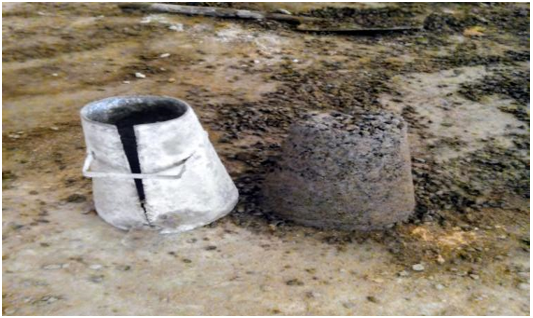
The slabs to be produced were of the sizes: 300 mm × 300 mm ×125 mm, 300 mm × 300 mm × 150 mm, 300 mm × 300 mm × 175 mm, 300 mm × 300 mm × 200 mm and 300 mm × 300 mm × 225mm; having core thicknesses, “h” and overall thickness, “H”, using the mix ratios 0.5:0.5:2 and 0.5:0.75:2 (WA:CF:SD) respectively. The WA-to-CF ratio and mix proportions were selected based on the moisture absorption characteristics, unit weights, workability, and required mechanical performance of the materials for lightweight structural applications. The workability test of the ETPS mix showed a true workability of 120 mm, as shown in Figure 1(a).
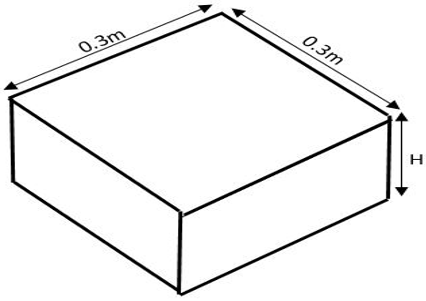
The prototype of the ETPS is shown in Figure 1(b), where “h” is the core depth and “H” is the overall depth of the core and laminates. Prior to casting, wooden square molds of size 300 mm by 300 mm were fabricated.
The inner surfaces of the molds were lined with cut-out polyvinyl tarpaulin, and the materials were mixed manually in batches. The specimens were air-cured for 90 days to allow the development of long-term mechanical properties, stable moisture content, and durability under environmental conditions. Curing was carried out at approximately 22 ℃ and 68% relative humidity.
(a)
(b)
(c)
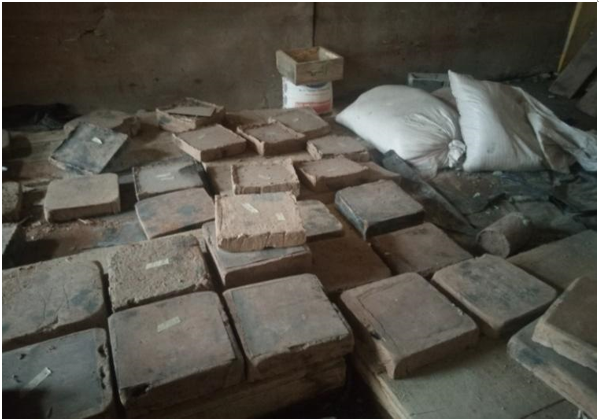
Figure 1. Preparation of Engineered Timber Product Slab (ETPS) specimen: (a) workability test of typical ETPS mix, (b) ETPS prototype, and (c) samples of the ETPS
Twenty specimens were fabricated. The dimensions were 300 mm × 300 mm ×125 mm, 300 mm × 300 mm × 150 mm, 300 mm × 300 mm × 175 mm, 300 mm × 300 mm × 200 mm, and 300 mm × 300 mm × 225 mm, and were produced for the slab flexural strength as shown in Figure 1(c). 10 slabs were fabricated for each mix ratio.
2.2.5 Compressive strength test and dry density determination for the Engineered Timber Product Slab composite cubes
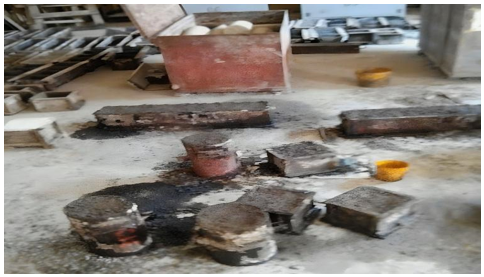
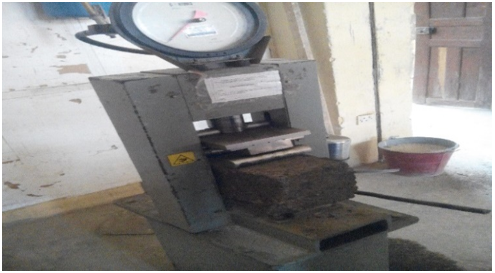
The compressive strength test of the ETPS was implemented to obtain the compressive strength values of the ETPS made with SD, CF, and WA. The cubes were produced using the manual mixing method in a mold measuring 150 × 150 ×150 mm in size. The inner surfaces of the molds were lined with cut-out polyvinyl tarpaulin. The SD was first sieved through a 3.35 mm sieve and pre-wetted with water. The CF, WA, and pre-wetted SD were then mixed according to the specified mix proportions. The SD and CF were subsequently sieved through a 3.35 mm sieve to obtain the required particle sizes. After mixing to the desired workability for lightweight structural elements, the mixture was placed into the molds in three consecutive layers and compacted adequately using a rammer. A total of six (6) cubes were cast, with three cubes cast for each mix ratio of 0.5:0.5:2 and 0.5:0.75:2, respectively, as shown in Figure 2(a). The cubes were air-dried and set for 90 days to achieve long-term mechanical properties, attainment of stable moisture content, and durability under environmental conditions. The conditioning conditions were a temperature of 20 ± 2 ℃ and a relative humidity of 65 ± 5%. After 90 days of dry setting, the cubes were all weighed on a weighing balance to determine their dry densities against their volume. Figure 2(b) clearly shows the compressive strength test being implemented using the Universal testing machine. The compression load at failure was recorded, and compressive strength was derived through Eq. (5) in accordance with the requirements of a previous study [28].
$\text { Compressive strength }=\frac{F_c(\mathrm{~N})}{\mathrm{A}\left(\mathrm{mm}^2\right)}$ (5)
where,
Fc = Compressive load at failure (N).
A = Cross-sectional area (mm2).
(a)
(b)
Figure 2. Compressive strength testing of Engineered Timber Product Slab (ETPS) cubes: (a) samples of engineered timber cubes, and (b) compressive testing of ETPS
2.2.6 Flexural strength test of Engineered Timber Product Slab
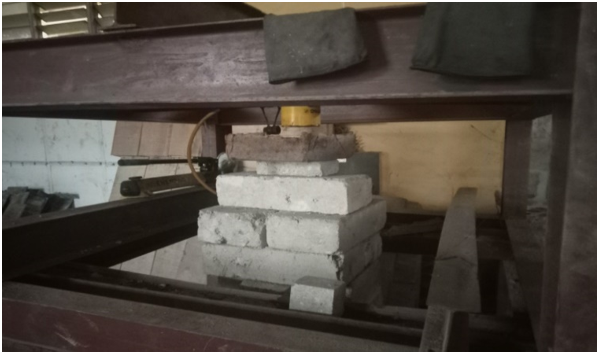
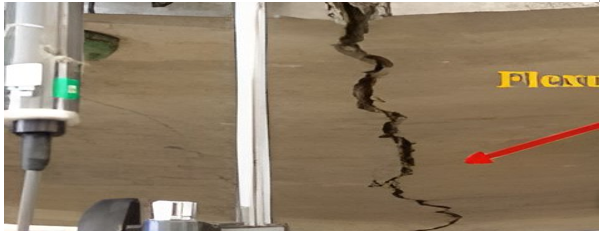
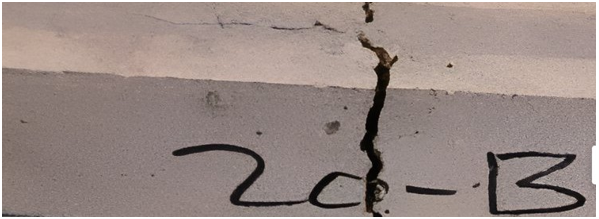
The flexural strength test of the ETPS was implemented to obtain the flexural strength values of the five categories of slabs and the timber slab as shown in Figure 3(a). The loading configuration was a 3-point bending test, and the deflections were obtained using a linear variable differential transformer (LVDT) positioned beneath the specimen during the 3-point bending test. In the course of the bending test, flexural cracks initiated from the bottom surface (tension side), extending to the top until failure occurred for both mixes, as shown in Figure 3(b) and 3(c). The test values were derived through Eq. (6) according to BS 12390: Part 5 (2009) [29].
(a)
(b)
(c)
Figure 3. Flexural strength testing of Engineered Timber Product Slab (ETPS): (a) flexural strength testing of ETPS using the Magnus frame and hydraulic jack, (b) flexural tensile crack failure mode of ETPS under bending stress for 0.5:0.5:2 mix, and (c) flexural tensile crack failure mode of ETPS under bending stress for 0.5: 0.75:2 mix
$\text { Flexural Strength, } \mathrm{F}_{\mathrm{E}}=\frac{\mathrm{F} \times \mathrm{L}}{\mathrm{~b} \times \mathrm{d}_2{ }^2}$ (6)
where,
F = failure load (unit: N).
L = Span-gap of pivotal rollers (in mm).
b = sectional breadth.
d = depth of slab sectional size (in mm).
F is obtained based on the specification of the hydraulic pressure jack installed on the Magnus frame.
3.1 Results
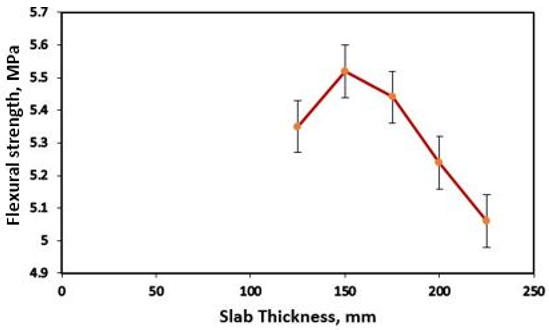
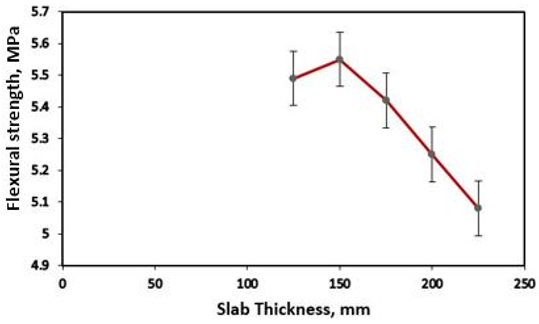
The experimental results are summarized in Tables 2-5 and Figures 4 and 5. Table 2 presents the mix proportions of the ETPS materials. Tables 3 and 4 report the dry density and compressive strength, respectively, with all values expressed as mean ± standard deviation (n = 3). Table 5 presents the flexural strength results (mean ± standard deviation, n = 2), while Figures 4 and 5 illustrate the relationship between slab thickness and flexural strength for the two mix ratios investigated.
The empirical relationship between slab thickness and flexural strength for the 0.5:0.5:2 and 0.5:0.75:2 mix ratios is presented in Figures 4 and 5, respectively.
Table 2. Proportion for blending of Engineered Timber Product Slab (ETPS) materials
|
Slab Tag |
Qty. |
Blend Ratio |
Thickness of Slab Element (mm) |
Geometric Volume of Slab Element (mm3) |
Factored Volume of Materials (mm3) |
||
|
Wood Adhesive (WA) |
Crack Filler (CF) |
Sawdust (SD) |
|||||
|
AA1 |
Duplicated |
0.5:0.5:2 |
125 |
11250000 |
1875000 |
1875000 |
7500000 |
|
AA2 |
0.5:0.5:2 |
150 |
13500000 |
2250000 |
2250000 |
9000000 |
|
|
AA3 |
0.5:0.5:2 |
175 |
15750000 |
2625000 |
2625000 |
10500000 |
|
|
AA4 |
0.5:0.5:2 |
200 |
18000000 |
3000000 |
3000000 |
12000000 |
|
|
AA5 |
0.5:0.5:2 |
225 |
20250000 |
3375000 |
3375000 |
13500000 |
|
|
AB1 |
0.5:0.75:2 |
125 |
11250000 |
1730769 |
2596153 |
6923076 |
|
|
AB2 |
0.5:0.75:2 |
150 |
13500000 |
2076923 |
3115384 |
8307692 |
|
|
AB3 |
0.5:0.75:2 |
175 |
15750000 |
2423077 |
3634615 |
9692307 |
|
|
AB4 |
0.5:0.75:2 |
200 |
18000000 |
2769231 |
4153846 |
11076923 |
|
|
AB5 |
0.5:0.75:2 |
225 |
20250000 |
3115385 |
4673076 |
12461538 |
|
Table 3. Dry density of Engineered Timber Product Slab (ETPS) cubes
|
Blend Ratio (WA:CF:SD) |
Cube Tag |
Volume of Cube (m³) |
Mass of Cube (kg) |
Dry Density (kg/m³) |
Mean ± Standard Deviation of Dry Density (kg/m³) |
|
0.5:0.5:2 |
A |
0.003375 |
4.82 |
1428.15 |
1446.91 ± 19.278 |
|
0.5:0.5:2 |
B |
0.003375 |
4.88 |
1445.93 |
|
|
0.5:0.5:2 |
C |
0.003375 |
4.95 |
1466.67 |
|
|
0.5:0.75:2 |
A |
0.003375 |
5.18 |
1534.81 |
1534.81 ± 8.885 |
|
0.5:0.75:2 |
B |
0.003375 |
5.15 |
1525.93 |
|
|
0.5:0.75:2 |
C |
0.003375 |
5.21 |
1543.70 |
Table 4. Compressive test results of Engineered Timber Product Slab (ETPS)
|
Blend Ratio (WA:CF:SD) |
Cube Tag |
Surface Area of Cube (mm²) |
Mass of Cube (kg) |
Crush Force (KN) |
Compressive Strength (MPa) |
Mean ± Standard Deviation Compressive Strength (MPa) |
|
0.5:0.5:2 |
A |
22500 |
4.82 |
334.3 |
14.86 |
14.91 ± 0.244 |
|
0.5:0.5:2 |
B |
22500 |
4.88 |
341.5 |
15.18 |
|
|
0.5:0.5:2 |
C |
22500 |
4.95 |
330.7 |
14.70 |
|
|
0.5:0.75:2 |
A |
22500 |
5.18 |
349.56 |
15.54 |
15.78 ± 0.302 |
|
0.5:0.75:2 |
B |
22500 |
5.15 |
352.76 |
15.68 |
|
|
0.5:0.75:2 |
C |
22500 |
5.21 |
362.66 |
16.12 |
Table 5. Flexural strength test results of Engineered Timber Product Slab (ETPS)
|
Slab Tag |
Blend Ratio |
Thickness (mm) |
Crushing Load (KN) |
Flexural Strength (MPa) |
Mean ± Standard Deviation Flexural Strength (MPa) |
Deflection (mm) |
Average Deflection (mm) |
|
AA1 |
0.5:0.5:2 |
125 |
125.16 |
5.34 |
5.35 ± 0.007 |
87.2 |
86.5 |
|
125.39 |
5.35 |
85.8 |
|||||
|
AA2 |
0.5:0.5:2 |
150 |
186.64 |
5.53 |
5.52 ± 0.014 |
74.2 |
74.9 |
|
185.96 |
5.51 |
75.6 |
|||||
|
AA3 |
0.5:0.5:2 |
175 |
249.44 |
5.43 |
5.44 ± 0.007 |
51.2 |
50.95 |
|
249.90 |
5.44 |
50.7 |
|||||
|
AA4 |
0.5:0.5:2 |
200 |
313.80 |
5.23 |
5.24 ± 0.014 |
33.4 |
34.0 |
|
315.00 |
5.25 |
34.6 |
|||||
|
AA5 |
0.5:0.5:2 |
225 |
384.24 |
5.06 |
5.06 ± 0.007 |
29.3 |
28.95 |
|
383.48 |
5.05 |
28.6 |
|||||
|
AB1 |
0.5:0.75:2 |
125 |
128.44 |
5.48 |
5.49 ± 0.014 |
30.2 |
30.95 |
|
128.91 |
5.50 |
31.7 |
|||||
|
AB2 |
0.5:0.75:2 |
150 |
186.98 |
5.54 |
5.55 ± 0.014 |
44.6 |
44.15 |
|
187.65 |
5.56 |
43.7 |
|||||
|
AB3 |
0.5:0.75:2 |
175 |
248.52 |
5.41 |
5.42 ± 0.014 |
50.9 |
50.7 |
|
249.44 |
5.43 |
50.5 |
|||||
|
AB4 |
0.5:0.75:2 |
200 |
315.60 |
5.26 |
5.25 ± 0.014 |
39.9 |
40.05 |
|
314.40 |
5.24 |
40.2 |
|||||
|
AB5 |
0.5:0.75:2 |
225 |
386.52 |
5.09 |
5.08 ± 0.014 |
29.6 |
29.85 |
|
385.00 |
5.07 |
30.1 |
3.2 Discussion
From Table 3, the mean density of ETPS was 1446.9 kg/m³ and 1534.8 kg/m³ for mix ratios 0.5:0.5:2 and 0.5:0.75:2, for each. The density of lightweight structural elements should not exceed 1850 kg/m3. Therefore, ETPS is a lightweight element with respect to its unit weight. From Table 4, The mean compression strength of ETPS was 14.9 MPa and 15.8 MPa for mix ratios 0.5:0.5:2 and 0.5:0.75:2 for each according to Table 4. The values derived conform to the moderate strength of 15MPa for lightweight structural elements [30].
From Table 5, the average flexural strength of ETPS ranged from 5.06 ± 0.007 MPa to 5.52 ± 0.014 MPa for mix ratio 0.5:0.5:2 and 5.08 ± 0.014 MPa to 5.55 ± 0.014 MPa for mix ratio 0.5:0.75:2, respectively.
From Figure 4, the peak flexural strength was detected at a 150 mm sectional depth, while the min. flexural strength was detected at a 225 mm sectional depth with a mix ratio of 0.5:0.5:2. From Figure 5, the highest flexural strength was recorded on a 150 mm thick slab, while the lowest flexural strength was recorded on a 225 mm thick slab for mix ratio 0.5: 0.75:2.
The reduction in flexural strength with increasing specimen thickness can be explained by the combined influence of geometric and material factors. Although thicker sections possess greater bending stiffness due to their larger cross-sectional properties, they are also more likely to contain internal discontinuities such as voids, uneven adhesive distribution, or weakly bonded regions. These imperfections can act as crack initiation sites under bending loads, resulting in lower measured flexural strength. In addition, the fracture behaviour of thicker specimens may differ from that of thinner specimens because cracks propagate through a larger material volume, which may influence the measured strength. These findings indicate that the mechanical behavior of ETPS is governed by the combined effects of material composition, density, and its bonding. Also, the observed failure patterns further support this relationship, as specimens with likely stronger bonding exhibited delayed crack propagation and improved structural integrity under loading.
The allowable bending strength for lightweight structural elements ranges from 2.6 MPa to 15 MPa [9]. Therefore, the flexural strength of ETPS lies within the threshold limit of lightweight elements. It should be noted that the current findings are provisional and should be validated by an extensive experimental study involving a larger number of specimens. Scanning electron microscopy (SEM) was not available for this research work; consequently, we acknowledge this as a limitation, as the proposed bonding mechanism between CF and SD is inferred from density and strength test results rather than microstructural observation. Table 6 shows the strength properties of conventional lightweight slab elements [31].
Table 6. Strength properties of conventional lightweight slab elements
|
Slab Material |
Density (kg/m3) |
Flexural Strength (MPa) |
Compressive Strength (MPa) |
|
Bamboo slab |
720 |
12 |
20 |
|
Particle board slab |
680 |
5 |
13 |
|
Timber slab |
600 |
10 |
15 |
|
Plywood-plated slab |
620 |
8 |
14 |
Based on the experimental results, ETPS exhibited a density less than 1850 kg/m³, confirming its classification as a lightweight element. In addition, the mean compressive strength of ETPS cubes averaged 14.91 MPa and 15.78 MPa for mix ratios of 0.5:0.5:2 and 0.5:0.75:2, respectively, which are comparable to the moderate strength level of 15 MPa commonly considered for lightweight structural elements.
The relatively small error bars indicate good agreement between the two replicate specimens tested for each slab thickness. The flexural test results showed that the 150 mm thick specimens achieved the highest flexural strength, whereas the 225 mm thick specimens recorded the lowest values for both mix ratios. The specimens primarily failed through flexural cracking initiated at the tension surface and propagated toward the opposite surface. Overall, the average flexural strength of ETPS for both mix ratios 0.5:0.5:2 and 0.5:0.75:2 lies within the threshold limit of lightweight structural elements. Similarly, the average density and compressive strength of ETPS lie within the threshold limits of lightweight structural elements. With respect to the mix proportions, increasing the CF content may reduce internal voids, thereby resulting in higher density and enhanced mechanical strength. Conversely, lower CF content probably leads to greater porosity, increased voids, and reduced structural strength.
It should be noted that the current findings are provisional and should be validated by extensive experimental studies involving a larger number of specimens. In addition, SEM analysis was not performed in this study; consequently, this is acknowledged as a limitation, as the proposed bonding mechanism between CF and SD was inferred from density and strength test results rather than microstructural observation.
This research received external funding from TETFUND Institution Based Research (IBR) Fund award via Federal University of Technology, Owerri, Nigeria under reference number (OVC/TETF/GEN.8/VOL.1).
[1] Keskisaari, A., Butylina, S., Kärki, T. (2016). Use of construction and demolition wastes as mineral fillers in hybrid wood-polymer composites. Journal of Applied Polymer Science, 133(19): 43412. https://doi.org/10.1002/app.43412
[2] Ezeh, J.C., Ibearugbulem, O.M., and Ihemegbulem, E.O. (2019). Structural characterisation of sawdust-palm kernel shellcrete composite. Civil Engineering, 129: 52971-52976. https://www.elixirpublishers.com/articles/1673256921_201904004.pdf.
[3] Zaidon, A., Kim, G.H., Paridah, M.T., Bakar, E.S., Rushdan I. (2012). Optimisation of the processing variables for high polymer loading in compressed wood using response surface methodology. Journal of Tropical Forest Science, 24(2): 241-248. https://www.jstor.org/stable/23617080.
[4] Norhisham, A.R., Faizah, A., Zaidon A. (2020). Effects of moisture content on the bamboo borer dinoderus minutus. Journal of Tropical Forest Science, 27(3): 334-341. https://www.jstor.org/stable/43490291.
[5] Assiamah, S., Agyeman, S., Adinkrah-Appiah, K., Danso, H. (2022). Utilization of sawdust ash as cement replacement for landcrete interlocking blocks production and mortarless construction. Case Studies in Construction Materials, 16: e00945. https://doi.org/10.1016/j.cscm.2022.e00945
[6] Tiberti, G., Germano, F., Mudadu, A., Plizzari, G.A. (2017). An overview of the flexural post-cracking behavior of steel fiber reinforced concrete. Structural Concrete, 19(3): 695-718. https://doi.org/10.1002/suco.201700068
[7] Adekomaya, O., Adama, K. (2017). Glass-fibre reinforced composites: The effect of fibre loading and orientation on tensile and impact strength. Nigerian Journal of Technology, 36(3): 782-787. https://doi.org/10.4314/njt.v36i3.17
[8] Kropidłowska, O. (2022). Application of sawdust concrete in construction. Civil and Architectural Engineering, 21(3): 005-018. https://doi.org/10.35784/bud-arch.2927
[9] Batool, F., Islam, K., Cakiroglu, C., Shahriar, A. (2021). Effectiveness of wood waste sawdust to produce medium- to low-strength concrete materials. Journal of Building Engineering, 44: 103237. https://doi.org/10.1016/j.jobe.2021.103237
[10] Lv, Q., Wang, W., Liu, Y. (2019). Flexural performance of cross-laminated bamboo (CLB) slabs and CFRP grid composite CLB slabs. Advances in Civil Engineering, 2019: 6980782. https://doi.org/10.1155/2019/6980782
[11] Zhong, H., Shan, Q.F., Zhang, J.L., Zhang, X.C., Li, Y.S. (2020). Flexural properties of steel-bamboo composite slabs in different connection methods. Advances in Civil Engineering, 2020: 6639789. https://doi.org/10.1155/2020/6639789
[12] Alabduljabbar, H., Huseien, G.F., Sam, A.R.M., Alyouef, R., Algaifi, H.A., Alaskar, A. (2020). Engineering properties of waste sawdust-based lightweight alkali-activated concrete: Experimental assessment and numerical prediction. Materials, 13(23): 5490. https://doi.org/10.3390/ma13235490
[13] Väntsi, O., Kärki, T. (2014). Utilization of recycled mineral wool as filler in wood-polypropylene composites. Construction and Building Materials, 55: 220-226. https://doi.org/10.1016/j.conbuildmat.2014.01.050
[14] Fadhlia, F., Paridah, M., Anwar, U., Juliana, A., Zaidon, A. (2017). Enhancing mechanical properties and dimensional stability of phenolic resin-treated plybamboo. Journal of Tropical Forest Science, 29(1): 19-29. https://www.jstor.org/stable/44028271.
[15] Hafidh, S.A., Abdullah, T.A., Hashim, F.G., Mohmoud, B.K. (2021). Effect of adding sawdust to cement on its thermal conductivity and compressive strength. IOP Conference Series: Materials Science and Engineering, 1094: 012047. https://doi.org/10.1088/1757-899X/1094/1/012047
[16] Maier, D. (2023). A review of the environmental benefits of using wood waste and magnesium oxychloride cement as a composite building material. Materials, 16(5): 1944. https://doi.org/10.3390/ma16051944
[17] Robert, U.W., Etuk, S.E., Agbasi, O.E., Ambrose, P.D. (2024). Development of lightweight sawdust-based composite panels for building purposes. International Journal of Lightweight Materials and Manufacture, 7(5): 631-640. https://doi.org/10.1016/j.ijlmm.2024.05.005
[18] Hai, P., Toan, L., Duong, L. (2024). Genetic variation in wood mechanical properties in ten-year-old acacia crassicarpa grown in Vietnam. Journal of Tropical Forest Science, 36(2): 205-214. https://doi.org/10.26525/jtfs2024.36.2.205
[19] Wang, D.Y., Liu, Q., Song, Y.Q., Zhu, Y., Zhang, Y.S. (2024). Experimental and numerical study on seismic behaviors of SRC column-RC slab joints in NPP. Nuclear Engineering and Technology, 57(2): 103176. https://doi.org/10.1016/j.net.2024.08.045
[20] Paridah, M.T., Ong, L.L., Zaidon, A., Rahim, S., Anwar, U.M.K. (2022). Improving the dimensional stability of multilayered strand wood board through resin impregnation. Journal of Tropical Forest Science, 18(3): 166-172. https://www.jstor.org/stable/43594668.
[21] Tavakoli, D., Hashempour, M., Heidari, A. (2018). Use of waste materials in concrete: A review. Pertanika Journal of Science and Technology, 26(2): 499-522.
[22] BS 3797:1990. (1990). Specification for lightweight aggregates for masonry units and structural concrete. British Standards Institution, London, UK.
[23] BS 812-103.1:1985. (1985). Testing aggregates — Method for determination of particle size distribution — Sieve tests. British Standards Institution, London, UK.
[24] BS 882:1992. (1992). Specification for aggregates from natural sources for concrete. British Standards Institution, London, UK. https://doi.org/10.3403/02522741U
[25] BS EN 12390-7:2009. (2009). Testing hardened concrete —Density of hardened concrete. British Standards Institution, London, UK.
[26] Al-Sulayvani, B.J., Al-Talabani, D.N. (2015). Strengthening and repair of circular RC slabs with openings using CFRP strips under repeated loading. Construction and Building Materials, 84: 73-83. https://doi.org/10.1016/j.conbuildmat.2015.03.058
[27] BS 8110-2:1997. (1997). Guideline for structural use of lightweight concrete. British Standards Institution, London, UK.
[28] BS EN 12390-3:2019. (2019). Testing hardened concrete — Part 3: Compressive strength of test specimens. British Standards Institution, London, UK.
[29] BS EN 12390-5:2009. (2009). Testing hardened concrete — Part 5: Flexural strength of test specimens. British Standards Institution, London, UK.
[30] Álvarez Rabanal, F.P., del Coz Díaz, J.J., Alonso-Martínez, M., Martínez-Martínez, J.E. (2019). Thermal and structural optimization of lightweight concrete mixtures to manufacture composite slabs. In International Conference on Mechanical Models in Structural Engineering (CMMoST 2019), Alicante, Spain, pp. 655-667. https://hdl.handle.net/10045/104635.
[31] Sulastiningsih, I.M., Nurwati. (2009). Physical and mechanical properties of laminated bamboo board. Journal of Tropical Forest Science, 21(3): 246-251. https://jtfs.frim.gov.my/jtfs/article/view/815.