Imhade P. Okokpujie* | Louise Tonelli
© 2026 The authors. This article is published by IIETA and is licensed under the CC BY 4.0 license (http://creativecommons.org/licenses/by/4.0/).
OPEN ACCESS
There is greater pressure to find alternative, carbon-cutting solutions to climate issues that are becoming increasingly pressing within industrial organisations. Biomass energy has become an attractive source of renewable energy due to its advantages, including carbon neutrality, waste valorisation, and compatibility with circular economy principles. This literature review investigates biomass adoption and carbon emissions reduction in industrial organisations using an integrated socio-technical approach. The research investigates how employee knowledge, environmental awareness, organisational support, and behavioural intentions affect both the adoption of biomass-based energy technology and its effective use. The study focuses on the importance of biomass application as a tool for reducing carbon emissions, as well as on how employees' environmental attitudes influence the acceptance of biomass-based technologies, pro-environmental workplace practices, and organisational commitment to an emissions-reduction goal. Results indicate that actions such as training and employee involvement, as well as organisational traits (culture, participatory decision-making, and leadership commitment), are important in influencing employee behaviour towards biomass efforts. The study also shows that integrating the biomass provisions with strong environmental standards and incentive structures can drive high levels of compliance behaviour and long-term sustainability results. In general, this study emphasises the role of human behaviour-related factors in determining whether biomass can reduce carbon emissions and underscores that its power efficiency alone is insufficient to justify its use. Incorporating employee-centred strategies into biomass deployment frameworks has the potential to improve environmental performance, promote sustainable industrial activity, and make a viable contribution towards overall carbon reduction efforts.
biomass, carbon emission, emission reduction, sustainable energy, employee attitudes, behavioural factors, climate change mitigation
Biomass is a renewable energy source derived from organic materials, including wood, crop residues, animal waste, and other biological matter. Biomass has significant potential as an energy source, given its abundance and flexibility. It can be transformed into electricity, heat, or biofuels. Kumar and Vyas [1] observed that biomass is beneficial because the CO2 taken up during the growth of the biomass feedstock exceeds the amount emitted during burning or conversion. This property puts biomass in a strong position as an alternative to fossil fuels in the international energy mix. Ahamer [2] further elucidated that carbon emissions, mainly CO2, are driven by the burning of fossil fuels for energy production and transportation, as well as by industrial activities. These emissions are the largest contributors to global warming and environmental degradation [3].
Lim and Ahmad [4] defined emission reduction as any process, technology, or practice that reduces greenhouse gas emissions into the environment. There is substantial potential for biomass to help reduce emissions, as it is a carbon-neutral or even carbon-negative energy source, depending on its production and utilisation. The pursuit of low carbon emissions also enhances the world's shift towards sustainable energy systems. Sustainable energy is the use of energy sources that meet current energy needs without compromising the capacity of future generations to meet their own needs. Biomass can help realise this vision by providing decentralised, renewable energy sources, especially in rural and developing areas. The fact that it can be easily integrated into the current energy infrastructure and can aid in developing energy equity makes it one of the most important contributors to establishing a robust and sustainable energy future. All these are eventually geared towards combating climate change. It implies making carbon impacts less severe and long-term through intelligent policies and clean technologies. Habibzadeh et al. [5] noted that biomass has a cleaner combustion profile and may lead to a reduced net carbon result as compared to coal, oil, or natural gas. Therefore, using biomass to produce fuel will directly reduce carbon emissions into the atmosphere. This reduction leads to a reduction in emissions.
As Popoola et al. [6] observed, biomass helps reduce carbon emissions and provides renewable energy. Biomass is being used in national energy plans and carbon control, underscoring its importance in achieving climate goals. Nigeria relies on oil and gas to generate electricity, power vehicles, and fuel industries. This extensive reliance on fossil fuels is increasing carbon emissions, which pollute the air and contribute to climate change [7]. The biomass resources examined and used include agricultural crops, agricultural crop residues, forestry resources, municipal solid waste (MSW), and animal waste [8]. However, the prospects of achieving net-zero emissions through biomass appear not to be feasible in Nigeria, as most people still rely on traditional biomass use, such as firewood for cooking, which is unsafe and harms the environment. Modern methods of utilising biomass, such as converting it into gas or fuel, are uncommon due to poor infrastructure, lack of government support, and limited public awareness [9].
Furthermore, a major issue in many nations is citizens' ability to accept this technology. The deployment of biomass as a tool for industrial organisations to mitigate CO2 emissions depends not only on whether the technology is technically feasible or economically viable, but also on employees' behaviours and attitudes. Industrial psychology insists that employees are key agents in managing change within the organisational system, particularly in sustainability–oriented plans such as the shift from fossil fuels to biomass energy systems. This paper aims to examine how biomass can effectively reduce carbon emissions and support the nation's move toward clean and sustainable energy, while aligning with citizens' acceptability of adopting the right technology. This literature review study has the following objectives:
•Investigate the various sources of carbon emission and the differences in biomass and fossil fuel combustion processes for a sustainable environment.
•Examine the role of employee attitudes and leadership styles in the adoption and effective utilisation of biomass technology, and in promoting biomass-based carbon emission reduction initiatives.
•Determine how green human resource management (GHRM) promotes the implementation of biomass for carbon reduction.
2.1 Carbon emission and its major sources
Climate change, global warming, is “the largest security threat humankind has ever experienced” [10]. The main driver of global warming is the escalating global carbon emissions. According to the 2007 Fourth Assessment Report (AR4) by the Intergovernmental Panel on Climate Change (IPCC), United Nations, "Most of the observed increase in globally averaged temperatures since the mid-20th century is very likely due to the observed increase in anthropogenic greenhouse gas concentrations." Huisingh et al. [11] have claimed that the atmospheric CO2 level has now been reached; as such, it became the first legally binding document to commit developed nations. This varies from about 280 ppm before the industrial times to 391 ppm by the year 2011. The continuous and increasing production of carbon emissions is, therefore, a matter of global concern. Globally, the rise in carbon emissions comes mostly from industry, transport and energy supply; however, residential and commercial buildings, deforestation and agricultural sectors also contribute major quantities of CO₂, CH₄ and other greenhouse gases [12].
Kohse-Höinghaus [13] defined carbon emissions as the release of CO₂ and other carbon-containing greenhouse gases into the atmosphere when fuels or organic materials are burned or otherwise oxidised. CO₂ is by far the largest anthropogenic greenhouse gas; roughly three-quarters of global emissions come from CO₂, and it is produced whenever carbon-based fuels (coal, oil, natural gas, wood, etc.) are burned. Other carbon-based gases include CH₄ and CO. CH₄, for example, is emitted from natural gas systems, landfills, agriculture and other sources; although it remains in the atmosphere for only a decade or so, it is more potent than CO₂, and accounts for about 16% of human greenhouse gas (GHG) emissions [14]. Fossil fuels are composed of carbon that has been buried underground for millions of years. This carbon originated from ancient plants and organisms, but over time it was locked in coal beds, oil reservoirs or shale [15]. When coal, oil, or gas is burnt, ancient carbon is released and converted into CO₂.
2.2 Biomass combustion and carbon emissions
According to Soeder [16], biomass fuels are composed of carbon recently captured from the atmosphere by plant photosynthesis (typically over the past few years to decades). When these organic materials are combusted, they release CO₂ that had very recently been in the air. In contrast to fossil fuels, no geologic timeframe is involved; the carbon in biomass is part of the modern, fast carbon cycle. Burning biomass likewise combines carbon with oxygen. For example, cellulose in wood (approximate formula (C₆H₁₀O₅)n) burns to form CO₂ and water. Per unit of energy, woody biomass often emits slightly more CO₂ than coal because of its chemical composition (wood contains oxygen and hydrogen in addition to carbon). Indeed, Syrodoy et al. [17] noted “a bit more CO₂ is released per unit energy from biomass than from black coal,” due to that composition. The key distinction between Biomass and fossil fuels is that the CO₂ from biomass was recently drawn from the air. If the biomass source (e.g. a forest) regrows or is sustainably replenished, it will reabsorb CO₂.
Thamarai et al. [18] emphasised that although carbon will eventually be reabsorbed, the delay matters for climate warming because there is a warming effect during the period when biogenic CO₂ remains in the atmosphere. Biomass energy is not ‘global warming neutral’ even though it may become carbon neutral on a mass-exchange basis in practical terms. Woody biomass from mature forests has a long payback time (possibly decades), whereas fast-growing crops or residues have a shorter payback time. Thus, biomass CO₂ is often considered net-zero only under certain conditions (e.g. rapid regrowth or when using waste residues). In greenhouse‐gas inventories, CO₂ from biomass is classified as biogenic CO₂. Batten et al. [19] defined biogenic CO₂ emissions as those related to the natural carbon cycle and those resulting from the production, harvest, combustion, etc., of biologically based materials. Biogenic emissions are distinguished from fossil fuel CO₂ in inventories to reflect their origin in the recent carbon cycle rather than geologic stocks. Biomass carbon is part of the fast cycle; burning it does not create new carbon in the coupled atmosphere–biosphere system, unlike fossil fuels. If regrowth exactly balances harvest, the net change in atmospheric carbon over a full cycle is zero. By contrast, burning fossil fuel increases atmospheric CO₂ over that same period. This is why fossil fuels are said to contribute to the greenhouse effect, whereas biomass is often assumed, in aggregate, to be carbon-neutral.
2.2.1 Policies promoting biomass as renewables
For example, under the EU’s Renewable Energy Directive and similar policies, sustainably sourced bioenergy contributes to renewable energy targets. EU guidance explicitly states that biomass “must be produced, processed and used in a sustainable way to optimise greenhouse gas emissions savings”. In practice, this means that criteria such as reforestation, biodiversity protection, and GHG-saving thresholds are used to qualify biomass as green. Nelson and Grayson [20] defined “carbon neutrality” of biomass as depending on “new growth completely offsetting losses of carbon caused by harvesting”. By definition, biomass is net-zero only if forest carbon stocks are stable or increasing [21]. Kandulu et al. [22] further explained that fossil CO₂ emissions directly contribute to atmospheric GHG burdens, and that climate policies target their reduction (e.g., carbon taxes, emissions caps). Biomass CO₂, when legally counted, can often offset these. However, critics like Chlela [23] pointed out that without proper accounting, an energy system could burn more wood while reporting lower net emissions. This has implications for “net-zero by 2050” strategies: many models rely on bioenergy (often with carbon capture) to offset stubborn fossil emissions, assuming biomass CO₂ is neutral. In reality, if biomass is not replanted or regrowth is slow, those emissions will delay progress on climate.
2.2.2 Key differences and implications between fossil fuel and biomass
These differences drive distinct policy approaches, as fossil fuels are uniformly discouraged in climate strategies because their CO₂ emissions increase atmospheric carbon. Biomass, by contrast, is often promoted as renewable, provided it is used sustainably. Emissions accounting can be complex, as countries must determine how to account for changes in forest carbon alongside bioenergy use. In life-cycle assessments and climate modelling, biomass can only replace fossil emissions if the forest regrowth (or other carbon offset) occurs within the relevant time frame. Table 1 shows the differences between fossil fuels and biomass.
Table 1. The differences between fossil fuels and biomass in terms of carbon emission impact on the environment
|
Author |
Differences |
Fossil Fuel Carbon |
Biomass Carbon |
|
Li et al. [24] |
Age of carbon |
Ancient (millions of years old) |
Recent (years to decades old) |
|
Anastassiadis [25] |
Carbon source |
Comes from the geological reservoir |
Comes from the current biosphere |
|
Choi and Manousiouthakis [26] |
Cycle domain |
Joins the fast carbon cycle only upon combustion |
Circulates within the fast cycle continuously |
|
DeLuca [27] |
Atmospheric impact |
Combustion increases net atmospheric CO₂ |
Has zero net increase over its regrowth cycle |
|
Halis et al. [28] |
Permanence of emissions |
Effectively permanent on human timescales |
Is reabsorbed if the biomass regrows |
|
Christianides et al. [29] |
Accounting treatment |
Fossil CO₂ from energy is fully counted in national GHG inventories and subject to mitigation |
Biogenic CO₂ from energy is often accounted in land-use sectors, leading to the notion of carbon neutrality in the energy sector |
2.2.3 Processes for carbon emission reduction
According to Mohsin and Saqib [30], carbon emissions can be reduced by directly displacing fossil fuel dependency through the harnessing of biomass, solar, wind, hydro, and geothermal power. This also means a reduction in electricity generation emissions as part of the global energy decarbonization effort. Indeed, State-of-the-Art Technologies such as photovoltaics in tandem with offshore wind farms have revolutionized the practicalities of roomy renewable electricity absorbing that is even liberating nations from their coal and natural gas plants. McKenna et al. [31] also highlighted that global power sector emissions could be cut by 70% in 2030 with systemic renewable energy integration if grids are updated and storage options are developed. Energy demand is also reduced when industrial processes, transportation, and buildings are made more efficient, resulting in lower emissions. Cutting-edge technologies such as smart grids, high-efficiency heating, ventilation, and air conditioning (HVAC) systems and lightweight materials for vehicles are also essential to helping reduce waste. Conversely, carbon pricing mechanisms such as carbon taxes and cap-and-trade systems give economic reasons to cut down on emissions.
According to the proposal by Gugler et al. [32], pricing carbon pollution will compel industry and consumers alike to transition to less-polluting alternatives. This carbon-pricing mechanism, implemented for example in Sweden, has been critical to reducing its emissions on the national level while still allowing business and the economy to grow, noting how market-based solutions can balance environmental and financial aims. Chausson et al. [33] also added that emissions reductions can be amplified through ecological restoration, with the most effective activities including reforestation and afforestation that rely on natural carbon sinks. They are thermodynamic sinks because they fix atmospheric CO₂ in photosynthesis. More recent research indicates that enhanced restoration sites can sequester almost a third of global annual emissions if forests are rewilded — and soil health is emphasized. CCS targets emissions from sectors, such as cement and steel production. CCS achieves this by capturing CO₂ at the source and storing it geologically — eliminating emissions that renewables cannot, or are not yet, able to. An analysis by Kabato et al. [34] notes that, if regenerative agriculture approaches were adopted, agricultural emissions could be cut by 20% and food security would be addressed.
2.3 Assessing biomass as a renewable energy source: Sustainability, climate impacts, and integration challenges
Hassan et al. [35] described renewable energy as being fundamental to international climate change mitigation and the avoidance of fossil fuels. While coal, oil, and natural gas are finite resources, renewable energy sources, such as solar, wind, and hydropower, tap into natural processes that replenish themselves over time. For instance, solar energy harnessed through photovoltaic panels or concentrated solar power systems converts sunlight directly into electricity and can be deployed in both urban and remote settings. Wind energy is also generated through the utilization of turbines, which make use of the kinetic energy produced by wind and transform it into electricity. It has been implemented fast in locations where wind patterns are relatively constant, like in offshore wind farms. As it is illustrated by a study conducted by Evro et al. [36], transitioning to renewable energy would be able to reduce world-level CO2 emissions by 70% by the year 2050 in comparison to fossil fuel-fuelled scenarios, which means that it is something that the environment needs. The use of biomass as opposed to fossil fuel also has health benefits. When fossil fuels are burnt, pollutants such as nitrogen oxides and fine particulate matter (PM2.5) that may lead to long-term health conditions such as asthma, lung cancer and heart disease are emitted to the atmosphere. Comparatively, renewable energy systems have virtually no operational air pollutant emissions.
An analysis by Hanssen et al. [37] later revealed that such a replacement of coal with renewables would save almost 3.6 million lives annually all over the world due to the quality of air. Besides that, the infrastructure of renewable energy production is also less likely to consume more water to cool it than coal or nuclear plants, and more freshwater can be utilized to grow crops and feed populations. Solar PV systems also use very little water; thus it works well in dry areas that are experiencing water shortages. This is the twofold advantage of lowering emissions and saving resources, which makes renewables one of the key factors of sustainable development. At the planetary level, renewable energy can reduce the causes of climate change while conserving biodiversity.
In the work by Lv et al. [38], the authors noted that global warming may be limited to 1.5 ℃ with the scaling of renewables and the introduction of energy efficiency and the electrification of industries in the world, including transport and heating. This shift also eases the burden on the ecosystems that have been damaged by the exploration of fossil fuels, like deforestation of the Amazon to drill for oil.
Ullah and Dwivedi [39] in their study revealed that sustainably sourced biomass (e.g., agricultural residues/forestry waste) has the potential to lead to 50–80% fewer emissions compared to coal, but when sourced from poorly managed, unmanaged, or mismanaged systems could also lead to higher net emissions. A second issue is land use competition. The farming of energy crops such as corn that is used to produce ethanol, or palm oil which can be refined to produce biodiesel, can take over land used to produce food or natural habitats, and make the problem of deforestation and loss of biodiversity worse. For instance, in Southeast Asia, palm oil development has led to deforestation, which has endangered species such as orangutans; in addition, it has led to the degradation of peatlands, which contain locked-up carbon. On the one hand, waste materials (crop residues, food scraps, or sawmill byproducts) do not create such conflicts. These waste streams would have decomposed, emitting CH₄, which is a powerful greenhouse gas. Capturing CH₄ by anaerobic digestion (AD) to create biogas not only creates energy but also reduces emissions.
2.3.1 Sustainability of biomass
As stated by Hariram et al. [40], sustainable energy is defined as energy and its systems that serve today’s needs without compromising those of future generations. It is based on a triad of environmental, economic, and social dimensions. From an environmental perspective, this means that sustainable energy must dramatically reduce greenhouse gas emissions and cause minimal ecological disruption. Economically, it needs to be affordable and accessible over the long term, and socially, it needs to be related to equity, health, and community wellbeing. For instance, solar and wind energy are most often claimed to be sustainable because they rely on inexhaustible natural resources, emit very small quantities of emissions in the process of their operation, and are becoming increasingly economically competitive. Yet, no technology is inherently sustainable; this depends on resource management, resource interception, and energy conversion efficiencies, as well as system-wide implications. Sustainability is usually characterized by three criteria or pillars: the maintenance of environmental integrity, economic viability, and social equity. From an environmental perspective, a sustainable energy source should have a low carbon footprint, not consume finite resources, and cause minimal harm to ecosystems. One such framework, proposed by Qazi et al. [41], highlighted the need for “circularity” in energy systems to recycle materials, reduce waste, and utilize resources, thereby fostering resilience. Unless biomass originates from waste feedstocks, such as agricultural residues or forestry byproducts, it does not represent a sustainable resource. These feedstocks recycle biological materials that would otherwise decompose and produce CH₄. However, sustainability is compromised when biomass comes from dedicated energy crops, such as palm oil or soy, which can lead to deforestation and biodiversity loss. Even sustainably harvested wood pellets can incur carbon debt in cases where growth and regrowth cannot keep pace with emissions. Supply chain emissions from processing and transport, often fossil fuel dependent, further undermine sustainability.
2.4 Optimization for the sourcing of biomass
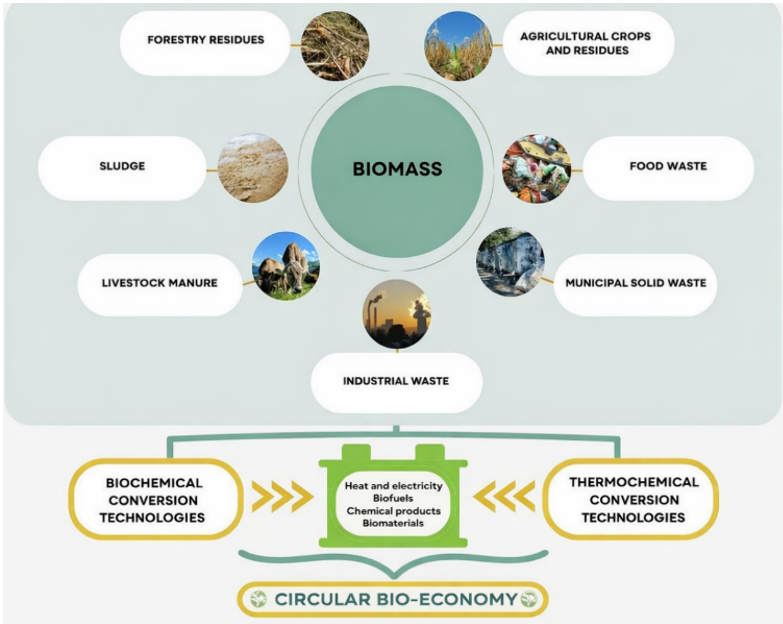
Biomass is defined by Barot [42] as materials that originated as living matter and store energy from photosynthetic reaction, which can be liberated by burning, gasification, or AD processes. The environmental and climate impact varies significantly depending on the biomass type, how it is sourced, and the type of conversion technology used. Sources of biomass and their conversion are provided in Figure 1. To effectively utilize biomass to mitigate CO₂ emissions as proposed by Gupta et al. [43], organic waste and residues should take priority, such as agricultural byproducts like corn stalks or residues from the forest, including sawdust. Using these waste streams for energy displaces emissions from decomposition as well as the use of virgin biomass that may otherwise compete with food crops or natural ecosystems. AD of manure, for example, produces energy in the form of biogas and decreases CH₄ emissions relative to the baseline scenario of untreated waste [44]. Equally essential is ensuring that any virgin biomass, such as wood or energy crops, is sourced sustainably. This involves practices like cutting already dead trees, growing trees, or cultivating fast-growing species like willow on marginal lands unsuitable for food production. Sustainably managed forests, certified by various forestry organizations, ensure that harvested trees are replanted, maintaining carbon sinks and preventing deforestation-driven emissions. However, if forests are overharvested or replaced with monocultures as narrated by Farooq [45], the carbon debt from lost sequestration and soil degradation can outweigh the benefits, as highlighted in analyses of biomass supply chains. Baker et al. [46] suggested localizing supply chains because it further enhances sustainability by reducing emissions from transportation, which can account for 10–30% of biomass’s lifecycle footprint. Regional biogas plants using locally sourced farm waste, for example, minimize diesel use in transport while supporting rural economies. Advanced conversion technologies such as gasification and pyrolysis also play a role, as they produce fewer pollutants and achieve higher energy efficiency than traditional combustion. Gasifier wood pellets, for instance, emit roughly half as much CO₂ per kWh as traditional biomass combustion, along with lower particulate matter emissions, as demonstrated in air quality studies.
Hayat et al. [47] highlighted that combining carbon capture and storage with Bioenergy with Carbon Capture and Storage (BECCS) can turn biomass into a technology with net-negative emissions. Equally crucial is to prevent land-use changes that convert carbon-rich areas such as peatlands or primary forests into biomass plantations, as these changes release stored carbon, negating the emissions reductions. The EU's Renewable Energy Directive (RED II) serves as an example of a policy that strives to prevent this issue by limiting biomass sourcing from high-carbon-stock areas. Additionally, thorough lifecycle assessments (LCAs) are essential to validate the net emissions reductions of biomass systems. These assessments need to consider all phases, including harvesting, processing, transportation, and combustion, to ensure that undisclosed emissions do not compromise climate benefits [48].
Figure 1. Conversion of waste into biofuels [44]
2.4.1 Types of biomass and carbon emission rates
Biomass is a broad category of organic materials, all of which have varying carbon emission profiles that are different based on sourcing and management. Beginning with wood and forestry residues, including logging residues, sawdust, or wood chips, the material emits about 430g CO2/kWh of CO₂ [49]. A more complicated situation arises with energy crops, like switchgrass or fast-growing willow. The biogas (manure or landfill gas) from animal waste has special benefits. AD captures CH₄ emissions that are decomposed from waste and translates them into biogas lowering the net emissions to 50–150 gCO2/kWh [50]. Lastly, algae and aquatic biomass (microalgae or seaweed) demonstrate very variable emissions (100–300 gCO2/kWh) but have the potential of negative emissions when combined with carbon capture. Algae themselves are inherently CO2 absorbents and if the carbon that is captured is utilized in the energy generation process, the entire process yields more carbon that is taken out of the atmosphere than that which is produced. This potential is emphasized by the innovations in algae-based biofuels, but scalability continues to be difficult [51]. The use of biomass in place of coal lowers CO2 emissions since biomass works under a biogenic carbon cycle. It burns to give off CO2 that is taken in during the growth of plants in a closed loop. In comparison, coal emits fossil carbon that was trapped millions of years ago, which releases new CO2 into the atmosphere. In the case of power plants, for example, replacing coal with wood pellets can cut emissions by 50–80%, and forests are also replenished. Also, decomposition of agricultural or forestry waste will not emit CH₄, which will also reduce net GHG contributions.
2.4.2 Environmental impacts of biomass
Recent years have seen a heated debate on the environmental impact of biomass energy, with advocates of this fuel proclaiming it carbon-neutral and critics questioning its volume production. For example, food waste can be decomposed anaerobically to capture CH₄ and produce biogas, a renewable energy source that can be scaled up, with localised components of the system used, such as cheap collection, which is not usually the case in developing nations [52]. However, the carbon neutrality of biomass is being called into question. The result is that CO2 emissions are not curtailed in time, since it takes decades for carbon to be recaptured by regrowth; such delays in sequestration are a significant lapse in climate mitigation schedules.
Also, the leaching of fertiliser from these crops pollutes water with nitrogen, a problem associated with U.S. corn ethanol production, which promotes the growth of hypoxic areas in the Gulf of Mexico [53]. Algae biofuels and gasification of agricultural waste are also promising technological advances, but have limits to their scalability. Likewise, the application of carbon capture and storage (CCS) technologies in bioenergy has not been widely pursued due to technical challenges and insufficient financing. To ensure biomass supports climate goals, experts emphasise the need to focus on low-impact feedstocks.
2.5 Infrastructural requirements for biomass conversion to biofuels
Rial [54] stated that a complete and well-planned infrastructure system is necessary for biomass to become a biofuel, spanning from feedstock collection to fuel delivery. For harvesting, transportation, preprocessing, conversion, and distribution to occur, facilities, equipment, and energy sources are needed. The study will investigate this in greater detail in the following pages. The first step is creating the right biomass harvesting infrastructure. Optimising road networks and logistics is crucial at this stage to reduce costs and pollution [55]. Poor logistics in biomass collection and transport can increase feedstock costs by up to 40%. After that comes the moving and storage of the biomass. Benti et al. [56] stated that raw biomass occupies a large volume and has low energy density; it is not cost-effective to transport over long distances. So, biomass is now gathered at decentralised hubs and compressed into pellets or briquettes to increase its energy density and reduce transport costs. Mobile crushing units, dryers and pelletizers are needed in this step. It is important for storage facilities to be protected from weather events to prevent their contents from becoming damp or damaged by microbes, which can reduce biomass quality. Feedstock uniformity is mainly achieved through the core role of preprocessing infrastructure.
According to Poornima et al. [57], conversion technologies are at the heart of infrastructure and are mainly divided into two categories: thermochemical and biochemical routes. Pyrolysis, gasification, and hydrothermal liquefaction, for example, convert biomass into syngas, bio-oil, or char. These processing technologies require reactors that operate at high temperatures (300–900 ℃), heat exchangers, scrubbers, and gas cleanup systems. Biothermal conversion, in contrast to biochemical processes (e.g., AD, fermentation), uses bioreactors, microbial cultures, pH-control systems, and the final separation of liquid products. These systems are either very simple or very complex, and their prices vary widely. As observed by Vasić et al. [58], enzyme prices and confusion among various processes remain issues in the production of bioethanol from cellulose using lignocellulosic materials. Essentials such as power supply and waste management systems, including treated water, must be included in any plan. Certain systems of converting biomass require high quantities of water, and produce waste (e.g. lignin sludge, ashes or fermentation residues) that must be safely disposed. According to Wang et al. [59], gasification produces tar and fine particles that must be removed before syngas can be used to produce fuels. The transportation systems should also add biofuels to the existing energy supply. These liquid biofuels, such as ethanol and biodiesel, require specialised terminals, storage tanks, and pipelines. Ethanol is hygroscopic, and transporting it through petroleum pipelines is not safe due to the risk of corrosion or contamination. Therefore, the U.S., among others, relies on rail or truck delivery, which makes its logistics more costly.
2.6 Modern technologies for converting biomass into cleaner energy
This includes numerous modern technologies for converting biomass into biofuels such as biogas and biodiesel [60]. Such processes entail integrating engineering and biotechnology to convert biomass into cleaner forms of energy. These methods are described in the following section.
•More sophisticated anaerobic digestion
AD has transcended the traditional biogas production by co-digestion and bioaugmentation. Modern AD systems maximise microbial activity by combining multiple feedstocks, including agricultural waste, food waste, and livestock manure, thereby increasing CH₄ production by 30–50% compared to single-substrate systems. In Nigeria, in its pilot plants, incorporation of rice husks with poultry waste has increased biogas production twofold [61]. Additional innovations, such as temperature-phased AD and microbial electrolysis cells, improve the efficiency of the breakdown process, whereas AI-based sensors can monitor pH and CH₄ concentration in real time, reducing operational expenses. The fertiliser is then reused as organic fertiliser when the rich digestate is repurposed after digestion in agro-industrial systems.
•Synergy and gas upgrading
Sanata et al. [62] observed that biomass is converted to syngas (a mixture of CO, H2, and CH4) via partial combustion at high temperatures (700–1200 ℃). Newer designs, such as dual-fluidised bed gasifiers, offer 80% efficiency by separating the combustion and gasification zones, thereby reducing tar formation, which is a significant challenge in older designs. The presence of catalytic filters and plasma-assisted cleaning has removed 99% of tars and particulates, making syngas capable of driving turbines or fuel cells. Sweden's GoBiGas project thermally gasifies forestry residues to produce biomethane for buses, reducing CO2 emissions by 90% compared with diesel production. Emerging hydrothermal gasification processes use supercritical water to gasify wet biomass (e.g., algae, sewage sludge) without requiring dry cleaning, reducing energy requirements by 40%.
•Pyrolysis and bio-oil upgrading
According to Al Arni [63], fast pyrolysis is a process in which biomass is subjected to very high temperatures of 500 °C in the absence of oxygen for a few seconds, producing bio-oil, biochar, and syngas. More recent developments focus on catalytic fast pyrolysis, in which bio-oil vapours are broken down by zeolites or metal oxides into drop-in biofuels such as renewable diesel. U.S. National Renewable Energy Lab (NREL) has also invented a catalytic reaction which transforms corn stover into air travel fuel with 70 percent reduced lifecycle emissions. Microwave pyrolysis, in which electromagnetic waves are directed, provides uniform heating and higher-quality bio-oil. In the meantime, biochar is emerging as a soil additive to capture carbon and enhance crop yields, with companies such as Charm Industrial beginning to produce biochar to supply carbon markets.
In this paper, a systematic literature review (SLR) methodology is adopted to examine prior research on the role of biomass as a carbon-emission-reduction practice. The review focuses on industrial firms considering human factors such as employees’ attitudes and behaviour towards its adoption and implementation. The approach was developed with the aim of being clear and replicable, and of covering a broad scope of interdisciplinary literature in energy systems, environmental management, and organisational behaviour. This PRISMA analysis framework is intended to ensure reproducibility, rigour in the selection process, and transparency. The guideline approach employed screening, eligibility, with exclusion and inclusion of relevant studies.
3.1 Research design
The study utilised an SLR methodology in accordance with existing review procedures, including PRISMA, and evidence-based review structures. This methodology enabled the study to analyse, evaluate, and synthesise academic research on the technical and human aspects of biomass utilisation in industry.
3.2 Search strategy
All well-known academic literature search databases, including Scopus, Web of Science, ScienceDirect, and Google Scholar, were searched on 15 January 2026. The search was built around three thematic areas: (1) Energy/Biomass, (2) Carbon Emission Reduction and (3) Industrial Psychology Factors. The three domains were linked with the Boolean operator AND, and synonymous terms in each domain were linked with the Boolean operator OR to form the final search strategy.
•Domain 1: Energy/Biomass: such as “biomass” OR “bioenergy” OR “renewable energy”
•Domain 2: Carbon Emission Reduction: such as “carbon” OR “decarbonization” OR “CO2 mitigation”
•Domain 3: Industrial Psychology Factors: “employee attitudes” OR “worker perception” OR “behavioural factors” AND “pro-environmental behaviour” OR “employee behaviour” OR “organisational behaviour” OR “industrial psychology”
The search string was ("biomass" OR "bioenergy" OR "renewable energy") AND ("carbon" OR "decarbonization" OR "decarbonisation" OR "CO2 mitigation") AND ("employee attitudes" OR "worker perception" OR "behavioral factors" OR "behavioural factors") AND ("pro-environmental behavior" OR "pro-environmental behaviour" OR "employee behavior" OR "employee behaviour" OR "organisational behavior" OR "organisational behaviour" OR "industrial psychology"). Research was limited to English-language peer-reviewed publications from 2010 to 2026. Database-specific fields for search were provided for Title, Abstract, and Keywords in Scopus and Web of Science on Topic.
3.3 Database search results and deduplication procedure
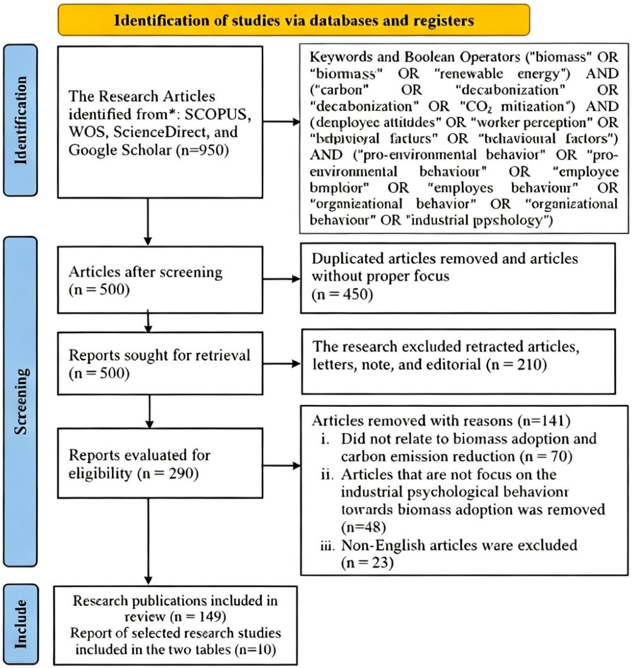
The search results are as follows: Table 2 shows all the records retrieved and exported into and from an Excel profile. The duplicate records are identified through automated matching of article titles, authors' names, publication year, and Digital Object Identifier (DOI). A subsequent manual verification was conducted to check for any remaining duplicates. After the deduplication process, 950 unique title and abstract records were left for screening. The complete study selection process is presented in the PRISMA 2020 flow diagram (Figure 2).
Table 2. The data extraction results from the various databases
|
Database |
Search Field |
Records Retrieved |
|
Scopus |
Title-Abstract-Keywords |
282 |
|
Web of Science |
Topic |
149 |
|
ScienceDirect |
Title-Abstract-Keywords |
211 |
|
Google Scholar |
Title Search |
308 |
|
Total |
|
950 |
Figure 2. The PRISMA flow diagram for the literature review study
3.4 Inclusion and exclusion criteria
This review was based on peer-reviewed journal articles, conference proceedings, review papers and official reports published between 2010 and 2026 to capture the most recent developments in the field. The studies primarily focused on biomass utilisation in industrial applications, with results on carbon mitigation and the underlying socio-psychological (i.e., behavioural/attitudinal) underpinnings that drive sustainability practices. Non-peer-reviewed studies, opinion papers, and papers unrelated to industrial biomass utilisation, as well as those lacking empirical or conceptual relevance to human behaviour, were excluded, as shown in Table 3.
Table 3. The study's inclusion and exclusion criteria
|
Criteria Category |
Description |
Inclusion Criteria |
Exclusion Criteria |
|
Study Focus |
Relevance of study topic to the review objectives |
Studies addressing biomass adoption, carbon emission reduction, employee attitudes, sustainability behaviour, or pro-environmental practices in organisations |
Studies unrelated to biomass, sustainability, organisational behaviour, or industrial applications |
|
Research Domain |
Subject area of the study |
Industrial engineering, environmental management, energy studies, organisational psychology, sustainability, renewable energy |
Medical, agricultural-only, unrelated social sciences, or non-industrial studies |
|
Publication Period |
Timeframe for selecting studies |
Articles published between 2010 and 2026 |
Studies published before 2010 |
|
Publication Type |
Type of academic source considered |
Peer-reviewed journal articles, conference papers, review papers, book chapters |
Editorials, dissertations, newspapers, blogs, unpublished manuscripts |
|
Language |
Language of publication |
English-language studies |
Non-English publications without translation |
|
Research Methodology |
Accepted methodological approaches |
Quantitative, qualitative, mixed-methods, systematic reviews, empirical case studies |
Opinion papers without empirical or theoretical contribution |
|
Industrial Context |
Organisational setting of the research |
Manufacturing industries, energy firms, industrial organisations, and corporate sustainability environments |
An agricultural study that does not relate to biomass |
|
Human Factors |
Employee-related behavioural variables |
Employee attitudes, environmental awareness, green behaviour, organisational commitment, technology acceptance, and sustainability culture |
Studies without human or behavioural dimensions |
|
Technology & Sustainability Focus |
Technological and environmental relevance |
Biomass systems, renewable energy adoption, carbon reduction technologies, and sustainable industrial operations |
Fossil-fuel-only systems or unrelated technologies |
|
Outcome Variables |
Expected study outcomes |
Emission reduction, sustainability performance, employee engagement, organisational efficiency, green innovation |
Studies lacking measurable sustainability or behavioural outcomes |
|
Data Sources |
Databases used for article retrieval |
Scopus, Web of Science, ScienceDirect, SpringerLink, IEEE Xplore, Google Scholar |
Non-academic or unreliable databases |
|
Quality Assessment |
Evaluation standard for selected studies |
High-impact journals, indexed publications (Q1–Q4), clear methodology and findings |
Low-quality studies with unclear methods or insufficient data |
3.5 Screening and quality assessment
Studies that met the inclusion criteria were screened in two phases: a title/abstract review and a full-text review. The quality assessment items were based on methodological rigour, specificity of purpose, relevance to the research theme, and data credibility. Only high-quality studies that satisfied these criteria were included in the synthesis.
3.6 Data extraction and synthesis
Data were systematically extracted using a predetermined, structured template for study purposes, methods, main results, and reported behavioural risk factors. The results were thematically synthesised and categorised into technological, organisational and behavioural groups. This facilitated cross-disciplinary synthesis and the corresponding identification of research gaps. Thus, the impact of image cues on stakeholders in sustainable industrial practices highlights that a well-rounded view recognises the adoption of biomass to reduce carbon as a contributor to sustainability and underscores the importance of employees' attitudes and behaviours towards organisational sustainability campaigns.
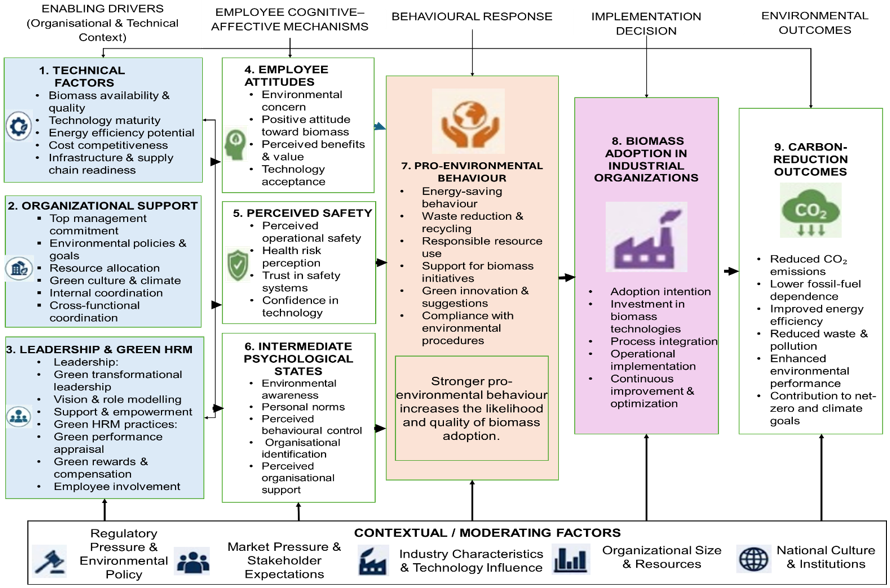
The integrative framework design for this research not only further advances the current understanding of biomass adoption but also proposes that the successful decarbonization of industry requires an integrative approach that considers organisational and behavioural aspects as well as technological and economic aspects, as presented in Figure 3. Existing research has mostly focused on the availability of biomass feedstock, conversion technologies and the environmental impacts of biomass implementation [64]. However, the present framework suggests that employee attitudes, perceived safety, leadership and pro-environmental behaviour are also important factors influencing the effectiveness of biomass implementation strategies. The multidimensional approach can provide a more complete understanding of the sustainable carbon-reduction benefits that industrial organisations can gain from biomass use. It is proposed that technical factors underlie the adoption of biomass. The likelihood of implementing biomass technologies is greater in industrial organisations when biomass resources are readily available, conversion technologies are well developed, operational infrastructure is sufficient, and economic returns outweigh investment costs [65]. Many studies already show that biomass has the potential to help decarbonise energy consumption and boost renewable energy production and circular economy goals. But just because it is technically feasible does not mean it will be successful. There are still multiple organisations with the required technological capacity but facing implementation challenges due to organisational resistance, insufficient staff involvement, and a lack of sustainability integration. This observation reinforces the hypothesis that technological readiness is a prerequisite, but not enough for the successful adoption of biomass.
Figure 3. The framework integration between leadership, Green Human Resource Management (GHRM) and employee behaviours to enhance the industrial biomass acceptance and carbon reduction
In addition to the technical, organisational support is shown to be a key enabler and is perceived as an important factor affecting employees' attitudes and the level of organisational commitment to sustainability programs. Businesses with well-defined environmental policies, adequate investments in renewable energy initiatives, and sustainability goals embedded in their business strategies foster an environment conducive to integrating biomass solutions. The results are consistent with the Organisational Support Theory, which states that if an employee feels a strong commitment to and/or support for their organisation, they will support the organisation's initiatives. Organisational support can boost employees' confidence in implementing biomass, minimise uncertainties about technological shifts, and motivate them to join environmental management initiatives [66].
The framework also highlights leadership and GHRM practices as key components that can catalyse behavioural change in industrial organisations. Green transformational leaders share visions for the environment, motivate staff to embrace sustainability objectives, and promote sustainable actions at work. At the same time, the practices of Green HRM, such as training on environmental issues, green hiring, considering environmental performance as part of employee performance and rewarding employees on green performance, promote the acquisition of the competencies and motivation needed to implement biomass processes [67]. Recent research increasingly shows that companies with strong green leadership and HRM systems have greater employee environmental engagement and better sustainability performance. The result is that leadership and Green HRM as strategic tools that translate national objectives for sustainable development into employee-led work.
One important aspect of this approach is the focus on employee attitudes and perceptions of safety as psychological barriers to biomass adoption. Employees' attitudes toward sustainability affect their willingness to support renewable energy technologies and participate in environmental programs. Positive attitudes towards the environment foster acceptance of organisational change and boost support for sustainability programs. Furthermore, a safety-oriented attitude is especially relevant in an industrial context in which employees may come into direct contact with biomass fuels, buildings, and conversion technologies [68]. When employees feel biomass systems are safe and reliable, they tend to be more open to new technologies and are more involved in implementation. On the other hand, issues such as occupational safety, operational reliability, or technological uncertainty may lead to resistance and slow adoption. These findings indicate that the Theory of Planned Behaviour (TPB) is supported. TPB states that attitudes and perceived control are key determinants of intentions and behaviour.
The framework also suggests that pro-environmental behaviour is an important mediating factor between the organisational factors and the outcomes of biomass adoption. Pro-environmental behaviour includes workplace behaviours such as energy saving, waste reduction, participation in recycling programs, compliance with environmental regulations, and innovation for sustainability [69]. Staff with high pro-environmental behaviours actively contribute to the organisation's sustainability goals and positively support the success of renewable energy projects. The results indicate that organisations that dedicate resources to staff environmental awareness and behavioural development are more likely to achieve successful biomass integration and better environmental performance. This connection entails recognising that workers should not be treated as a “recipient” of sustainability policies but rather as a “player” in reducing carbon emissions associated with industrial decarbonization.
The framework also shows that the adoption of biomass serves as an intermediary between organisational and behavioural factors and the outcomes of carbon emissions reduction. Biomass technologies enable the replacement of fossil fuels, the optimisation of waste valorisation processes, the production of renewable energy, and the optimisation of circular resource use [70]. Therefore, the adoption of biomass systems by industrial entities can lead to tangible reductions in greenhouse gas emissions, carbon footprints, and energy use, as well as improvements in sustainability performance. However, the success of these environmental outcomes relies heavily on employee acceptance, operational compliance, and organisational support systems. Therefore, carbon reduction must be considered the result of a socio-technical system in which technological innovation and human behaviour interact.
Theoretically, the framework is based on the TPB, Social Cognitive Theory, Organisational Support Theory and literature on sustainability management. The combination of these viewpoints complements current biomass research by adding a behavioural dimension, which is typically missing from renewable energy research. The research to date has centred on engineering aspects and environmental outcomes of decarbonisation efforts, but the current framework also highlights the need to consider human aspects of these efforts [71]. Industrial organisations need to go beyond a technical investment approach and develop a comprehensive strategy for leadership development, Green HRM practices, employee engagement programs, and workplace environmental education to maximise the potential carbon-reduction benefits of biomass technologies. The lesson for policy is that workforce readiness and behaviour change also play a critical role in designing renewable energy policies and programs to sustain the industry. Technological interventions can be complemented with investment in employee training, environmental awareness campaigns and organisational support systems, all of which can have significant impacts on biomass adoption outcomes [72]. The integrative context shows that biomass adoption is a complex process of socio-technical change influenced by the interplay among technical readiness levels, organisational support, leadership practices, employee attitudes, perceived safety, and pro-environmental behaviour. The framework offers solid conceptual ground for future empirical research and a comprehensive understanding of how to leverage both technological innovations and human activities to achieve long-term reductions in carbon emissions and promote sustainability. This holistic approach is part of a growing series of publications on renewable energy transitions and offers a useful guideline for advancing solutions that use biomass in industrial decarbonization.
The characteristics of the 25 studies included in the synthesis are summarised in Table A1, and the main results of these studies are described. The studies cover various geographical areas, such as Asia, Europe, North America, and emerging economies, and a variety of industrial application areas, including biorefineries, forestry, agriculture, energy production and manufacturing, and systems in the circular economy. The reviewed research studies employed a range of methods, including surveys, case studies, empirical studies, experimental studies, systematic reviews, and policy assessments.
In the literature surveyed, the use of biomass as a resource was consistently linked to reductions in carbon emissions through the substitution of fossil fuels, the valorisation of biomass waste, the production of renewable energy, and the circular utilisation of biomass resources [73]. Moreover, employee-related factors were shown to be significant determinants of successful biomass adoption and sustainability performance, including environmental awareness, technology acceptance, sustainability commitment, perceived organisational support, and pro-environmental behaviour. These results provide empirical evidence for the integrative framework for biomass adoption proposed in this review and show that both technical and behavioural factors affect biomass adoption outcomes.
This section discusses the challenges in how biomass adoption in industrial organisations is affected by employee behaviour and the Pro-environmental factors that enhance the process of carbon emission reduction.
6.1 Evaluating the challenges preventing the wide use of biomass
6.1.1 Carbon debt and payback time
When biomass is burnt for energy, the carbon is released into the atmosphere instantly, but trying to put it back underground may take many decades or even centuries. Rising CO₂ levels in the atmosphere, called carbon debt, can be observed over 50–200 years, depending on the feedstock and land used for bioenergy. Wilkinson et al. [74] found that carbon debt from burning whole trees from main forests takes 103 years to offset, the longest of all the sample forest types. Decomposing residues at the site would have released carbon slowly, whereas burning them would have released it more quickly. In addition, disrupted forests lose more soil carbon and regenerate more slowly due to changes in local climate. Also, Searchinger et al. [75] pointed out that because climate goals require swift action on carbon emissions, we should preserve existing forests to maintain the existing carbon cycle.
6.1.2 Indirect land-use change
As biomass production scales up, land is used differently. If cropland is converted to energy farming (e.g., producing ethanol from maize), farmers replace the food crops they lose by clearing forests or grasslands elsewhere. The meta-analysis found that biofuels emit from 10–340 g CO₂e/MJ, with numerous cases where these emissions are greater than those of fossil fuels [76]. The biodiesel process from palm oil releases about 200 tons of CO₂ per hectare in just 5 years, which we will never be able to undo. Even systems that require little input, such as switchgrass, can push pastures to areas in the Global South where large amounts of carbon are present. Essentially, indirect land-use change (ILUC) is pervasive and cannot be solved properly by typical certification schemes. Namakka et al. [77] showed that EU energy policies pose challenges for Southeast Asian peatlands, even with sustainability rules in place.
6.1.3 Supply chain emissions and combustion inefficiencies
The extensive use of fossil fuels in the production and transportation of biomass casts doubt on the claimed carbon advantages and warrants examination. Even though producing energy from dedicated crops calls for synthetic nitrogen, the process still leads to many other issues. Pelletizing 1 ton of wood usually requires 1–3 GJ of energy from gas, making it unlikely that pelletized wood will reduce net carbon emissions [78].
Switching to end-use burners introduces even greater issues, including emissions beyond CO₂ and technology-related setbacks that harm climate and health [79]. Because of their design, industrial boilers can be efficient, but biomass burning emits short-lived climate pollutants (SLCPs) that have a much greater impact than CO₂. Black carbon is 460–1,500 times more potent than CO₂ over 20 years, and residential wood stoves emit 0.4–1.7 grams of it per kilogram of fuel [80]. Biomass feedstocks being so variable makes it very difficult to form standard processes for converting them into fuel. There is a wide range of biomass feedstocks, including dry chips, energy crops, agricultural residuals, and manure, so it is nearly impossible to find a single treatment system that fits all feedstocks. Recent studies found in their broad look at biomass gasification modelling that moisture content (typically in the range of 10% to 50%), the chemical make-up of ash and how much volatile matter is present in biomass all impact gas yield, the amount of tar formed and the temperature inside the reactor, causing engineers to either design systems that are over flexible and put up with reactive performance if feedstock characteristics differ from what is ideal.
In most cases, less energy can be recovered through thermochemical or biochemical methods than from fossil fuels, reducing profits for biomass projects. About 70%–85% of the feedstock’s energy is converted into syngas or bio-oil. At the same time, the rest is recovered as char, tar, or heat when using thermochemical approaches such as gasification and pyrolysis.
When high-quality syngas or bio-oil is produced, there is still a lot of work needed to connect these sources to present turbines, boilers or internal‐combustion engines. Gas turbines require syngas that is very pure in energy, has few particles, and has low trace metal levels, which biomass‐generated syngas usually does not meet without additional treatment.
It was shown in Energy that the cost of integrated biomass gasification plants increases by 15%–25% when they include cleanup systems, which eliminate the fuel cost savings biomass is meant to provide. Hou [81] reported that minor variations in syngas composition often destabilised the flame, so they preferred co‐firing with natural gas to reduce biomass use. Technology for monitoring and adjusting biomass conversion processes is very new compared with that used in mature fossil-fuel methods [82]. Up-to-date measuring instruments to check moisture, particle size, tar concentration, and syngas content are either costly or do not withstand the severe conditions in biomass plants. As a result, flame ionisation detectors set up during gasification can measure tar content. Still, they must often be calibrated and struggle to filter out interference from water vapour. Even though IoT for tracking biomass temperature and humidity has worked well in small trials, deploying these systems in large‐scale industry encounters problems related to sensors, data accuracy, and cybersecurity, which causes most commercial companies to stick with periodic sampling rather than reliable continuous monitoring.
6.2 Importance of biomass for carbon reduction
Using biomass in power plants instead of coal or natural gas directly reduces emissions, because biomass generates electricity that replaces electricity produced from fossil fuels. It is found through experiments and studies in the field that replacing 20% of coal with biomass in power plants can reduce their net emissions of CO₂ by roughly 15-19% for every megawatt-hour of electricity made [83]. Beyond its emissions, co-firing biomass adds a reliable power source that helps replace coal and makes the switch to renewables easier. Using agricultural and forest materials as bioenergy supplies renewable power and prevents them from trapping CH₄, which is 20 times more potent than CO₂ as a greenhouse gas. For example, if rice husks are gasified for energy rather than left to rot, they have the same climate-warming effect as 21 times the global CO₂ emissions when gasified [84]. Therefore, turning waste into energy allows us to resolve waste problems and control climate change. When biomass is pyrolysed to produce biochar, its stable carbon may remain stored in the soil for many hundreds of years. By taking up carbon in the soil rather than relying solely on plant regrowth, biochar serves as a long-term sink, separating some sequestration from the active cycles of biomass [85]. In cement and steelmaking, high temperatures above 400 degrees are very common, and it is usually difficult to generate such heat using electricity. Pellets made from torrefied biomass, which involves low-oxygen heat treatment, have similar characteristics to coal for shipping and burning. Research on this subject reveals that switching to torrefied pellets in steel production can reduce CO₂ emissions by up to 80% until green heat sources become more economical.
BECCS utilises processes that both burn or gasify biomass and store CO₂ deep underground. BECCS using sustainable materials can reduce atmospheric carbon by up to 2 tonnes per megawatt-hour of power. Despite requiring significant energy and investment, BECCS can deliver the net negative emissions needed to reach the goals in the IPCC net-zero scenarios. Bringing biomass into the circular economy enhances its environmental benefits, as its resources can be utilised multiple times. An example of this is the cultivation of microalgae in wastewater effluent, which purifies the water, produces biomass for AD to generate biogas, and yields a nutrient-rich byproduct that may replace synthetic fertilisers [86]. When paired, these streams reduce emissions, conserve organic resources, and promote the low-carbon transition across sectors. Using biomass principles, MSW can be managed in an environmentally friendly way. Sorting out the organic fractions of waste at landfills and sending them to AD or waste-to-energy facilities prevents uncontrolled CH₄ emissions.
6.3 Employee attitudes and behavioural factors in the adoption of biomass for carbon emission reduction
Employee attitude: refers to the favourable or unfavourable opinions employees have regarding biomass-based technology and sustainability efforts. These intentions are formed as a function of perceived usefulness, perceived ease of use, self-efficacy, job security and environmental responsibility. When workforce members perceive biomass technologies to be environmentally friendly and conducive to the organisation’s reputation, they are more likely to endorse and participate in their implementation. On the other hand, negative attitudes, which commonly stem from fear of technological complexity, additional administrative or terminal work, and insecurity about long-term employment effects, may lead to opposition to the implementation of biomass [87]. Employees can also see the biomass system as a threat to what they consider traditional work processes. The authors argue that such attitudinal resistance may interfere with organisations’ efforts to reduce carbon emissions, regardless of apparently established technical infrastructure.
6.3.1 Pro-environmental behaviour and sustainability engagement
The behavioural determinants are significant in changing positive intentions into actual behaviour. Pro-environmental behaviour refers to voluntary actions by employees that lead to the realisation of environmental objectives set by an organisation, e.g., minimising energy use through various actions, proper utilisation of biomass materials, or adherence to emission-cutting rules [88]. Employees who have strong environmental values are likely to adopt behaviours which enhance the performance of biomass systems. Such behaviours encompass active participation in the sustainability training programs, reporting inefficiencies, and supporting ongoing improvement projects that entail the utilisation of biomass. Rather, a lack of commitment to the environment may lead to rule breaches, defaults, or poor management of biomass plants, thereby reducing their ability to mitigate carbon emissions.
6.3.2 Resistance to change and behavioural adjustments
Resistance to change is one of the barriers to behavioural change in industrial organisations converting to biomass energy systems. Employees who have worked in traditional hydrocarbon technologies for decades can experience the second-degree impact of being psychologically forced to feel unsafe by the new working beats. This kind of resistance may manifest as cooperation, reduction, distrust, or evasion of new biomass activities [89]. One of the major variables of success in adoption, therefore, is behavioural adaptation. Those institutions that meet resistance directly, in part by enhancing their capacity to communicate effectively, in part by making decisions more participatory, and in part by engaging in continuous training, are best at developing adaptive behaviour. A positive attitude toward the new system is fostered when employees are involved in planning and implementing the biomass projects.
6.3.3 Perceived organisational support and motivation
Organisational support, as perceived, is a significant factor that shapes employees' attitudes and behaviours towards adopting biomass as a carbon-emission-reduction tool. In this way, employees tend to be more motivated because they consider management committed to sustainable practices and feel fully supported in training, incentives, and recognition [90]. Positive environmental efforts, energy-efficiency incentives, and training help encourage employees to support biomass projects. From an industrial psychology perspective, intrinsic motivation (e.g., personal environmental values) and extrinsic motivation (e.g., incentives/performance appraisal systems) would increase employee commitment to carbon management practices.
6.3.4 Safety perception and behavioural compliance and implications for carbon emission reduction
Perception of safety is also an essential predictive behaviour for the adoption of biomass. The processing and handling of biomass can result in occupational hazards, including dust, heat, and mechanical hazards [91]. If employees feel their work environment is unsafe, they may develop negative attitudes, which can lead to behavioural withdrawal or noncompliance with work procedures. To the extent the workforce is more confident, compliance will likely improve. Good safety training, good ergonomic system design and clear safety communication will enhance employee confidence in and knowledge of doing it 'safe'. When perceptions of safety are positive, they also support trust in biomass technologies and help promote uniform, responsible behaviour that is crucial for both environmental and operational sustainability.
Employee attitudes and behaviours contribute significantly to the success of carbon reduction that originates from biomass technologies. Positive attitudes and pro-environmental behaviours significantly influence acceptance, cooperation, and emissions efficiency [92]. Conversely, however, negative perceptions and forms of resistant behaviour by farmers can undermine the effectiveness of biomass systems, leading to less-than-optimal carbon savings even when technology is deployed. Therefore, industrial enterprises intending to leverage biomass to mitigate CO2 emissions will need strategies that include psychological and behavioural innovations, rather than technological solutions. Evaluating employee attitudes through training programs, leadership commitment, and a participatory approach is necessary to ensure that biomass adoption is both technically feasible and behaviourally sustainable.
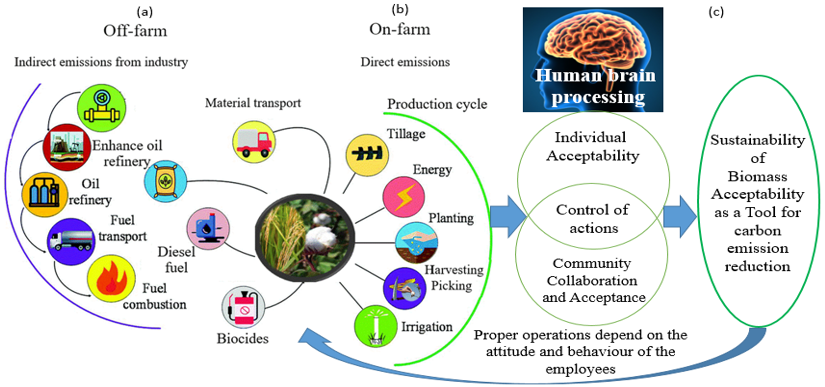
Figure 4 depicts the system-level pathway by which biomass reduces carbon emissions, noting that employee attitudes and behaviour are pivotal to achieving sustainability outcomes. Under section (a) (i.e., off-farm activities), the diagram depicts the indirect emissions related to biomass production, including oil refining, fuel transport and diesel use as well as fuel combustion during on-processing transportation. These processes contribute to the overall carbon footprint before biomass reaches the farm or processing. At section (b) (on farm), a direct emission from the biomass production prepared chain, such as till, plant, irrigate, harvest and applying energy as well as biocides, is shown. These operating considerations are what will directly influence the productivity and sustainability of biomass production. Section (c) adds the human factor, also known as human brain processing. It includes employee cognitive and behavioural aspects, such as:
•Individual acceptability of biomass technology,
•Behaviour control (how practitioners execute procedures), and
•Community collaboration and acceptance.
Figure 4 highlights that good functioning conditions are contingent upon both employees’ attitudes and behaviours; these form a link between technical and sustainability processes. Ultimately, these technical and behavioural aspects contribute to the sustainability of biomass acceptability as a carbon offsetting measure. The diagram thus indicates that the successful uptake of biomass is not only technology-based but also depends on behaviour, whether through positive employee attitudes or organisational opportunities for significant emission reductions.
The following is a summary of the factors through which employees’ attitudes and behaviour affect the acceptance of biomass to reduce carbon emissions in organisations, based on recent studies [93]. It means that staff with high environmental consciousness, positive attitudes toward the benefits of renewable energy, and sufficient knowledge and training are more likely to demonstrate pro-environmental behaviours that support sustainability activities and participate in low-carbon actions.
Table 4 also shows that organisational factors, such as management support, green leadership, organisational culture, and GHRM, are salient. When all these conditions are met, employees are more likely to demonstrate commitment, cooperate, and take the initiative in environmental efforts, such as adopting biomass technology [94]. In conclusion, Table 4 shows that in addition to technological or commercial choice, biomass adaptation decisions are also behavioural. Positive employee attitudes lead to desirable behaviours, including low resistance to change and greater efficiency of carbon emission reduction (CER) strategies for biomass.
Figure 4. Structural framework for the integration of attitude and behavioural influence for the adoption of biomass as a sustainable tool for carbon emission reduction
Table 4. Employee attitudes and behaviours toward the adoption of biomass for carbon emission reduction
|
Authors Details |
Dimension |
Employee Attitude |
Behavioural Response |
Implication for Biomass Adoption |
|
Taghavi and Maharati [95] |
Environmental Awareness |
The belief that biomass reduces greenhouse gas emissions and environmental degradation |
Active support for organisational sustainability initiatives |
High acceptance and advocacy for biomass technologies |
|
Sahar et al. [96] |
Perceived Environmental Benefit |
Positive perception of biomass as a renewable, low-carbon energy source |
Willingness to engage in biomass-related operational changes |
Faster transition to biomass-based energy systems |
|
Oreg et al. [97] |
Job Security Perception |
Confidence that biomass adoption will not threaten employment |
Cooperation with new technologies and work practices |
Reduced resistance to technological change |
|
Daily et al. [98] |
Organisational Commitment |
Pride in working for an environmentally responsible organisation |
Higher engagement in biomass implementation programs |
Sustained organisational sustainability performance |
|
Qamar et al. [99] |
Knowledge and understanding |
Adequate understanding of biomass technology and its benefits |
Correct and efficient operation of biomass systems |
Improved efficiency and reduced operational errors |
|
Saxena [100] |
Health and Safety Perception |
Perception that biomass systems pose minimal health risks |
Compliance with safety and operational standards |
Safe and stable biomass utilization |
|
Marzouk [101] |
Economic Perception |
Belief that biomass lowers energy costs and enhances competitiveness |
Support for cost-saving and energy-efficiency initiatives |
Stronger economic justification for biomass investment |
|
Robertson and Barling [102] |
Management Support Perception |
Trust in leadership’s commitment to sustainability goals |
Alignment with biomass-related organisational policies |
Smooth implementation of biomass projects |
|
Chuunga et al. [103] |
Resistance to Change |
Low fear of technological and procedural change |
Openness to modifying work routines |
Reduced implementation delays |
|
Miao and Nduneseokwu [104] |
Environmental Responsibility |
Strong sense of personal responsibility toward climate mitigation |
Voluntary engagement in emission-reduction behaviours |
Development of pro-environmental workplace culture for biomass utilisation |
|
Foolen-Torgerson et al. [105] |
Social Influence |
Influence of colleagues and organisational norms in biomass technology |
Collective participation in biomass initiatives |
Wider acceptance across the organization |
Producing biofuels from non-food biomass has strong potential to reduce carbon emissions [106]. By using lignocellulosic materials, such as agricultural residues and algae, these advanced biofuels help minimise conflict with food supplies. However, large-scale production suffers from inefficient conversion and requires significant energy; research in this area is making progress each day. Biotechnology advances such as synthetic biology, genetic modification, and improved processing methods are helping to increase the amount of biofuel produced [107]. Scientists are finding new ways to make conversion more efficient by using thermochemical, biochemical and plasma processes. There is much hope that microalgae and cyanobacteria can serve as important feedstocks for producing advanced biofuels. The government’s involvement, such as setting biofuel blend standards and supporting biofuel production, addresses energy shortages and protects the environment.
Bioenergy Carbon Capture and Storage (BECCS) will play a very important role towards our climate change objectives [108]. In essence, BECCS entails burning biomass to produce power and heat, capturing the emitted CO2 and storing it deep underground, an approach that leads to net negative carbon emissions. The potential of this technology is enormous on a global scale, with projections that it may produce 28 EJ of electricity per year and trap emissions equivalent to 2.5 GtCO2 annually over a period of thirty years, whose effects will be more significant in the long run. Nevertheless, BECCS has its own issues, including the large amount of land it requires and the need to implement it urgently. These systems are flexible and may be expanded up to the goals of annual removal of 0.8-1.4 tCO2 per ton of used biomass [109]. Before addressing the various obstacles BECCS faces, it is important to consider its sociological, technical, and environmental effects, as well as the relevant policies. Recent research suggests that biorefineries are playing an increasingly important role in the sustainable circular bioeconomy. They are being adapted to include multi-feedstock and integrated systems for producing biofuels, biochemicals, and bioplastics. Current trends suggest greater use of waste management, renewable energy, and carbon capture technologies to improve the environment and reduce carbon emissions. Both renewable energy efficiency and sustainability are increasing through international innovation in modern methods such as gasification, fermentation, and enzyme conversion [110]. Still, there are problems with scaling these solutions and maintaining affordable prices. The application of biorefineries is also relevant to addressing climate change and reducing fossil fuel use, and it can be achieved efficiently using biomass waste. Overall, the biorefineries will play a major role in the transition towards a sustainable and circular economy.
The bio-supply chain applications of blockchain, IoT, and AI have proven successful in terms of efficiency and environmental favourability, as reported by scholars. Digital tools have enabled more efficient, smarter supply chain operations. Digitalisation of what is uneconomical to retain as residual biomass can create higher-value products, thereby making logistics more efficient and cost-effective [111]. The transparency, sustainability, and resilience of food systems are also improving due to better use of digital technologies, notably during periods such as the COVID-19 pandemic [112]. Also, digital technologies are crucial to implementing the strategy of converting biological resources into a wide range of valuable products across the entire value chain. Such changes are expected to ensure biomass is supplied more efficiently and transparently.
Lately, Waste-to-Energy (WtE) techniques have become a popular way to manage MSW more sustainably. In 2025, the world is estimated to generate more than 2.2 billion tons of MSW each Ramar which will cause many environmental problems. Modern WtE techniques support waste management and facilitate the installation of renewable energy projects [113]. Thermal methods such as incineration, pyrolysis, and gasification, and biochemical methods such as AD, microbial fermentation, and microbial fuel cells, are among the main areas being studied these days [114]. This kind of technology makes it possible to generate heat, electricity and biofuels from waste products [115]. AD appears to be a suitable method for clean, safe, and affordable production of energy from waste [116]. The development of WtE aligns with circular economy principles and will likely become increasingly important for meeting clean energy requirements. People are turning to Hybrid Renewable Energy Systems (HRES) as environmentally friendly ways to generate electricity by integrating multiple renewable sources [117, 118]. Current trends place increased emphasis on Power-to-X systems that convert hydrogen into other energy forms and on less-constrained, more durable systems [119]. Choosing appropriate generation technology, determining each unit's size, and managing energy remain trickier components of power system design. The most widely used software for determining HRES and designing them is called the Hybrid Optimisation Model for Electric Renewable (HOMER). It is believed that future developments will integrate solar thermal power and thermal engines with other generation techniques, resulting in a more efficient overall system [120]. These innovations attempt to support the technical, socio-economic, and environmental dimensions of hybrid power generation systems.
Recent research indicates that biohydrogen produced via biomass gasification and reforming can be an effective, long-term energy source [121]. The applications of steam and supercritical-water biomass gasification at the field scale are encouraging; however, they require greater selectivity and efficiency to be economically viable in industry [122]. Presently, other researchers are investigating combined procedures, in which dark fermentation and photo-fermentation have been coupled as potential future methods of biohydrogen production, and microbial electrolysis and gasification of biowastes have also been paired as potential future methods of biohydrogen production [123]. Bio-hydrogen is initially deemed superior to photo-electrochemical or even thermo-chemical processes because it consumes less electricity and is cheaper to install. Individuals are also becoming interested in utilising bio-methanol to generate hydrogen and simulate a process that is likely to bring zero-carbon energy into reality. As the utilisation of renewables increases, researchers are currently considering including the electrolysis of water, the gasification of biomass, and the reforming of hydrocarbons to produce hydrogen for deployment in energy storage [124].
Technical readiness, organisational support, leadership, GHRM, employee attitudes, perceived safety, and pro-environmental behaviour are interrelated and affect the adoption of biomass and carbon-reduction outcomes. Conceptually and empirically, the use of biomass helps reduce net CO₂ emissions by substituting for fossil fuels, using waste for energy, and pursuing circular-economy principles. However, the decision to adopt biomass is influenced not only by technical efficiency and economic viability but also by human and institutional factors, which serve as significant mediators.
The study findings also suggest a significant positive effect of employees' attitudes, environmental consciousness, and intention on the successful use of biomass technologies in an industrial context. Favourable attitudes of employees toward environmental responsibility, organisational sustainability commitment, and the perception of personal and collective utility are strongly associated with greater attitude intensity towards biomass acceptance and direct agricultural participation. On the other hand, refusal to change, insufficient technological knowledge, fear of losing tasks, and poor communication have been identified as significant behavioural barriers. Hence, another finding from the literature is that organisational culture and leadership dedication also have a significant role in influencing employee behaviour. Businesses that incorporate sustainability into their missions, offer environmental training opportunities, and have employees participating in such efforts seem to adopt bio-based energy systems more readily. Incentive policy, environmental policy, and performance reporting are also conducive to improving behavioural compliance and to long-term support for emissions-reduction measures. Notwithstanding the findings, although the review provides a good understanding of studies that integrate the technical performance of biomass and employees’ behaviour within the same industrial context, it raises an interesting gap.
Therefore, from the findings in this literature review analysis, the following recommendations are suggested:
•Include Human Factors in Biomass Plans of Action: Industrial companies would employ when planning for and commercialising Biomass technologies, rather than solely relying on economic evaluations and technical implementation factors.
•Improve Staff's Environmental Motivation and Training: Formalised training and sensitisation on the benefits of biomass, its safety in use, and their role in achieving the carbon emissions reduction agenda must be accorded priority.
•Enhance Leadership Voice and Organisational Culture: Top management will have to demonstrate a positive pro-environmental culture through explicit policies, resource allocation, and visible support for biomass initiatives.
Incentivise and Encourage Employee Involvement: Employee involvement in the decision-making process and the awarding of rewards related to environmental performance may help enhance acceptance, motivation, and long-term behaviour change.
•Promote the use of Integrated and Empirical Research: The authors recommend that future studies consider interdisciplinary approaches, congruently engineering, environmental science, and organisational behaviour as the empirically important links connecting biomass performance with employee behaviour.
•Policy and institutional support: Government policy should promote the use of biomass in industry, supported by favourable regulations, subsidies, and standards, and should also focus on consumer intervention and market development.
In summary, the literature identifies the potential of biomass as a technology to reduce carbon emissions within industrial organisations and highlights that this long-term potential is primarily contingent upon technologies being embedded within positive employee attitudes, underpinned by supportive behavioural frameworks.
The author appreciates and acknowledges the University of South Africa for creating a comfortable environment for this research.
Table A1. Summary of selected inclusion literature review of the biomass adoption and carbon emission reduction in industrial organisations with integration of the psychological perspective
|
Ref. |
Country / Year |
Industry Sector |
Research Design |
Biomass Type |
Carbon Reduction Outcome |
Employee Attitude Variable |
Pro-Environmental Behaviour Variable |
Key Findings |
|
[125] |
Global Review / 2024 |
Bioeconomy and Agri-food Industry |
Literature review and conceptual framework |
Wood, Agri-residues, plant biomass, and algae |
Sustainable net-zero and GHG reduction through circular models |
Behavioural knowledge, cognitive motivation, and social learning |
Prosumer participation and bio-recycling |
Biomass promotes a circular economy; "prosumers" are key to sustainable loops; digital transformation (AI) aids bio-circularity. |
|
[126] |
- / 2022 |
Energy and Manufacturing |
Desk research and Case studies |
General (used in CHP plant) |
Coke oven gas (COG) produces 3.46x less CO2 than natural gas |
Pro-ecological attitudes and environmental awareness |
CSR implementation, energy saving, and waste segregation |
CO2 emissions can be limited via rational pro-ecological CSR management; COG has a clear ecological advantage over natural gas. |
|
[127] |
China / 2022 |
Construction and Renovation |
Social Cognitive Theory and questionnaire survey |
Sawdust (used for energy/electricity) |
Waste minimisation contributing to carbon neutrality |
Altruistic values and outcome expectations |
PEB towards renovation waste minimisation (RWM) |
Altruism, expectations, and interpersonal influence predict PEB; financial rewards showed a negative link in this context. |
|
[128] |
China / 2025 |
Industrial Agriculture and Rural Waste Management |
Questionnaire survey and PLS-SEM |
Crop straw and livestock manure |
Sustainable, resourceful use of solid waste |
Environmental commitment, attitude, and subjective norms |
PEB towards the rural solid waste (recycling and collection) industry |
Commitment, norms, and attitude are key PEB predictors; environmental knowledge and perceived benefits significantly shape the workers. |
|
[129] |
Global (focus on North America, Europe, China, Australia) / 2025 |
Industrial Energy Application |
Systematic literature review (qualitative and quantitative) |
General biomass |
Biomass is identified as a precondition for carbon reduction; public support has shifted away from fossil fuels |
Focus on smart city and energy generation applications |
Workers and public acceptability (expressed as attitude or behaviour, like protesting) |
Highest acceptability for solar/wind/hydro; moderate for biomass. Acceptability is typically lower for the energy generation industry. |
|
[130] |
Canada (Prince Edward Island) / 2026 |
Energy (Heat) |
Qualitative (Thematic analysis; literature review and survey) |
Wood biomass/ Forestry products |
Respondents cited benefits such as carbon sequestration and reduced dependence on fossil fuels |
Perspectives of industry employees on growth and sustainability needs |
Social perception and willingness to participate in biomass operations |
Support for biomass exists, but is balanced by concerns regarding long-term feedstock sustainability. |
|
[131] |
China / 2023 |
Industrial Agriculture Manufacturing application |
Quantitative (Survey; Structural Equation Model) |
Agricultural/ production waste |
Adoption of low-carbon behaviour demonstrated ecological effects, such as carbon sequestration |
Organisational commitment (Affective, Sustained, and Normative) |
Low carbon and pro-environment behaviour (e.g., waste disposal, green tech adoption) |
Organisational commitment positively impacts pro-environment behaviour, but role models' guidance had an unexpected negative effect. |
|
[132] |
Global (North vs South comparison) / 2024 |
Forestry/ Energy |
Systematic literature review |
Woody biomass (Pellets, fuelwood, charcoal, chips) |
Sustainable biomass use reduces emissions and helps meet climate targets |
Focus on policy and governance for industrial forestry/energy application |
Sustainable uptake of woody biomass energy |
Key drivers include fiscal incentives and strict sustainability criteria; policy focus differs significantly between North and South. |
|
[133] |
Nigeria / 2020 |
Construction Industry |
Review article |
Bamboo |
Bamboo absorbs ~35% CO2 and releases high oxygen |
Policy focused on how the industry transforms bamboo for engineering applications |
Policy focused on the acceptability of the implementation of bamboo for industrial use |
Bamboo is a viable substitute for wood and steel in construction; Nigeria needs regulatory policies to harness a potential $22bn annual economic opportunity. |
|
[134] |
China / 2018 |
Industrial Agriculture Application |
SEM using Theory of Planned Behaviour (TPB); face-to-face survey |
Agricultural biomass waste (crop straw, manure) |
Intended for carbon emission abatement (CEA) |
Workers Attitude (Positive evaluations of behaviour) |
Intention to reuse agricultural biomass waste |
Attitudes and perceived behavioural control significantly determine intentions. |
|
[135] |
Nigeria / 2024 |
Transportation (Internal Combustion Engines) Industry |
Literature review and policy assessment |
Bio-fuel (Ethanol, Biogas) |
Biofuels can move away from fossil fuels, providing cleaner combustion |
Focus on technical/legal frameworks) |
Focus on technical/legal frameworks) |
Hydrogen and biofuels are suitable replacements for fossil fuels; Nigeria requires a robust legal framework for their utilisation and operations. |
|
[136] |
China / 2016 |
Bioenergy / Biomass Power |
Multiple regression analysis; farmer survey |
Crop straw (primarily corn) |
Biomass use mitigates environmental pollution |
Focus on risk perception |
Willingness to participate in straw collection |
Trust factors are the strongest predictors of risk perception; economic losses (personal risks) dominate behavioural choices over environmental concerns in rural China. |
|
[88] |
Indonesia / 2025 |
Power Generation |
Integrated TAM-TPB model using PLS-SEM; purposive sampling |
Agricultural/wood residues (corncob, sawdust) |
Reduction of CO2 emissions by 184,000 tons via co-firing |
Workers and Public Attitude (ATT) (Overall positive/good decision) |
Intention to participate (Supplying/transporting feedstock) |
Perceived Behavioural Control is the most influential factor for participation intention; people are more likely to engage if they can devote the necessary time or resources. |
|
[137] |
Spain / 2020 |
Industrial Residential Heating |
Integrated CADM model (TPB, VBN, NAM, NEP) using PLS |
Domestic biomass heating systems |
Influences overall energy consumption and environmental preservation |
Company and Homeowners' Attitude toward biomass heating |
Intention to adopt biomass technology |
Values, environmental concerns, attitudes, perceived behavioural control, and economic incentives determine the intention to adopt. |
|
[138] |
China / 2025 |
Urban Development / Public Industrial Sector (focus on 81 pilot cities) |
Mixed computational modelling: PLS-SEM, NCA, and fsQCA |
Mentions green landscape plant selection and forest restoration |
Quantified the change rate of total carbon emissions and carbon emission intensity (2020–2022) |
focuses on organisational investment and resource dependency |
Mentions the positive impact of community lifestyles and awareness |
Technological and organisational factors are central drivers; cities follow three distinct paths based on neutrality potential. |
|
[139] |
Global / 2026 |
Construction Industry (CI) |
Ridge Regression (RR) |
Focuses on construction materials |
Waste Management |
focuses on organisational and technical practices |
focuses on the implementation of Circular Economy Practices (CEPs) |
Circular business mode forms a critical "source-process-end" logic chain for decarbonization. Digital practices. |
|
[140] |
USA / 2013 |
Higher Education (Research University) |
Stated-preference conjoint survey |
General (used in cogeneration) |
Examined 15%–23% reduction targets' impact on green reputation |
Altruism and Environmentalism (NEP scale) |
Institutional pro-environmental behaviour and green branding |
Constituents benefit from a green reputation; energy management choices significantly shape perceived reputation. |
|
[141] |
EU, UK, Switzerland, New Zealand, Australia / 2025 |
Agriculture |
Systematic literature review with binomial sign-test |
On-farm renewables and residue management |
Identifying drivers to deliver agricultural contributions to EU climate targets |
Focus on the industrial farming process |
Adoption of GHG mitigation measures/technologies |
Farm size, education, and knowledge are positive predictors; implementation costs are a significant barrier. |
|
[142] |
Nigeria / 2023 |
Agroforestry Inudtry |
Quantitative (Purposive/Simple random sampling; interviews) |
Bamboo (Bambusa vulgaris) |
Bamboo is noted for its potential effectiveness in carbon sequestration |
Focus on the industrial Agroforestry process |
Willingness to adopt bamboo in agroforestry for industrial applications |
Farmers are strongly willing to adopt bamboo (100%); the primary drivers are fuelwood provision and economic gains for the manufacturing industry. |
|
[143] |
USA / 2018 |
Institutional/ Commercial Heating |
Quantitative (Econometric modelling - ZINB model) |
Woody biomass |
Substitution of fossil fuels to reduce greenhouse gas emissions |
Focus on institutional/community acceptance |
Adoption and retention of distributed-scale biomass combustion systems |
Local attitudes in favour of renewable energy are associated with higher adoption and retention of biomass systems. |
|
[144] |
Kenya / 2026 |
Household Energy |
Mixed methods (Survey; experimental stove testing; Machine Learning) |
Firewood and Charcoal |
Improved stoves designed to reduce emissions and optimise fuel combustion |
Focus on household users |
Adoption of improved cookstoves (ICS) |
Improved stove adoption is moderate (33.1%); economic limitations and cultural preferences remain major constraints. |
|
[145] |
Ghana / 2025 |
Household Energy |
Mixed methods (Household survey; key informant interviews) |
Biomass briquettes |
Briquettes emit fewer GHGs and air pollutants than traditional fuelwoods |
Focus on household adoption patterns |
Willingness to purchase and switch to biomass briquettes |
High willingness to purchase (80.4%) but lower willingness to switch (72.1%); long-term transition depends on subsidies and policy awareness. |
|
[146] |
Sweden / 2024 |
Agriculture / Bioenergy |
Semi-structured interviews and online surveys (Motivation-Action model) |
Plant residuals and energy crops (willow, poplar) |
Supports Sweden's goal to be carbon-neutral by 2050 |
Farmers' Personal Factors (Needs, attitudes, values, habits) |
Motivation to cultivate biomass for energy |
Prominent barriers include low profitability and high investment risk; potential from underutilised land may be overestimated due to spatial constraints and soil depletion risks. |
|
[147] |
Spain, Germany, Mexico / 2019 |
Residential Energy |
Cross-cultural study using the Revised NEP scale and questionnaires |
Biomass heating |
Combustion of clean fuels reduces air pollution and global warming |
Consumer Attitude toward Household Installations |
Pro-environmental behaviour (Activism and energy saving) |
Ecocentrism is the predominant view; significant cross-cultural differences exist (e.g., job creation is a key driver in Spain, while investment cost is the main concern in Germany). |
|
[148] |
Romania / 2024 |
Residential Heating / Energy Communities |
Multiple regression and mediation/moderation tests; questionnaire survey |
Agro biomass (agricultural byproducts) |
Decarbonising the heating sector to reach renewable energy targets |
Industry and Residents' Perception of drivers and barriers |
Intention to adopt agro-biomass heating |
Awareness, knowledge, and local drivers are positive predictors of adoption; political barriers moderate the relationship between knowledge and intention to act. |
[1] Kumar, J., Vyas, S. (2025). Comprehensive review of biomass utilization and gasification for sustainable energy production. Environment, Development and Sustainability, 27(3): 5831-5870. https://doi.org/10.1007/s10668-023-04127-7
[2] Ahamer, G. (2024). Carbon cycle models quantify for a green and low-carbon economy. Green and Low-Carbon Economy. https://doi.org/10.47852/bonviewglce42022240
[3] Ahamer, G. (2024). How to compute whether biomass fuels are carbon neutral. C — Journal of Carbon Research, 10(2): 48. https://doi.org/10.3390/c10020048
[4] Lim, C.Z.X., Ahmad, W.N.K.W. (2025). A conceptual framework of green manufacturing strategies for greenhouse gas emissions reduction in Malaysian manufacturing industry. Journal of Technology and Operations Management, 20(1): 58-76. https://doi.org/10.32890/jtom2025.20.1.5
[5] Habibzadeh, S., Astaraei, F.R., Jahangir, M.H. (2025). Sustainability assessment of a petrochemical plant electricity supply based on 4E optimization of various hybrid renewable energy systems scenarios. Energy Conversion and Management, 325: 119357. https://doi.org/10.1016/j.enconman.2024.119357
[6] Popoola, L.T., Nwogbu, C.C., Taura, U., Asmara, Y.P., Nwobodo, L.O., Agbo, A.O. (2025). Future prospects towards attaining zero-emission of greenhouse gases from crude oil refinery plants. Cleaner Waste Systems, 11: 100290. https://doi.org/10.1016/j.clwas.2025.100290
[7] Obada, D.O., Muhammad, M., Tajiri, S.B., et al. (2024). A review of renewable energy resources in Nigeria for climate change mitigation. Case Studies in Chemical and Environmental Engineering, 9: 100669. https://doi.org/10.1016/j.cscee.2024.100669
[8] Sokan-Adeaga, A.A., Ana, G.R. (2015). A comprehensive review of biomass resources and biofuel production in Nigeria: Potential and prospects. Reviews on Environmental Health, 30(3): 143-162. https://doi.org/10.1515/reveh-2015-0015
[9] Mashhadi, A.J., González, M.C.G., Issa-Zadeh, S.B. (2024). The contribution of biomass energy on urban sustainable development: Opportunities and challenges. Environmental Research and Technology, 8(3): 770-783. https://doi.org/10.35208/ert.1563758
[10] Nukusheva, A., Ilyassova, G., Rustembekova, D., Zhamiyeva, R., Arenova, L. (2021). Global warming problem faced by the international community: International legal aspect. International Environmental Agreements: Politics, Law and Economics, 21(2): 219-233. https://doi.org/10.1007/s10784-020-09500-9
[11] Huisingh, D., Zhang, Z., Moore, J.C., Qiao, Q., Li, Q. (2015). Recent advances in carbon emissions reduction: Policies, technologies, monitoring, assessment and modeling. Journal of Cleaner Production, 103: 1-12. https://doi.org/10.1016/j.jclepro.2015.04.098
[12] Ahmed Ali, K., Ahmad, M.I., Yusup, Y. (2020). Issues, impacts, and mitigations of carbon dioxide emissions in the building sector. Sustainability, 12(18): 7427. https://doi.org/10.3390/su12187427
[13] Kohse-Höinghaus, K. (2023). Combustion, chemistry, and carbon neutrality. Chemical Reviews, 123(8): 5139-5219. https://doi.org/10.1021/acs.chemrev.2c00828
[14] Tuschewitzki, W.G., Kaltschmitt, M. (2024). Provision of pure carbon dioxide streams—Possibilities and constraints. In Powerfuels: Status and Prospects, pp. 399-429. https://doi.org/10.1007/978-3-031-62411-7_15
[15] Holloway, S. (2001). Storage of fossil fuel-derived carbon dioxide beneath the surface of the earth. Annual Review of Energy and the Environment, 26(1): 145-166. https://doi.org/10.1146/annurev.energy.26.1.145
[16] Soeder, D.J. (2025). Greenhouse gas and climate change. In Energy Futures: The Story of Fossil Fuel, Greenhouse Gas, and Climate Change, pp. 97-141. https://doi.org/10.1007/978-3-031-83603-9_5
[17] Syrodoy, S.V., Malyshev, D.Y., Nigay, N.A., Purin, M.V. (2024). Influence of the type of woody biomass on energy and environmental characteristics of the thermal preparation processes and ignition of bio-water-coal fuel particles. Process Safety and Environmental Protection, 184: 736-746. https://doi.org/10.1016/j.psep.2024.02.024
[18] Thamarai, P., Deivayanai, V.C., Saravanan, A., Vickram, A.S., Yaashikaa, P.R. (2024). Carbon mitigation in agriculture: Pioneering technologies for a sustainable food system. Trends in Food Science & Technology, 147: 104477. https://doi.org/10.1016/j.tifs.2024.104477
[19] Batten, R., Karanjikar, M., Spatari, S. (2024). A sustainable aviation fuel pathway from biomass: Life cycle environmental and cost evaluation for dimethylcyclooctane jet fuel. Sustainable Energy & Fuels, 8(9): 1924-1935. https://doi.org/10.1039/d3se01470c
[20] Nelson, J., Grayson, D. (2017). World business council for sustainable development (WBCSD). In Corporate Responsibility Coalitions, pp. 300-317.
[21] Allen, M.R., Frame, D.J., Friedlingstein, P., et al. (2025). Geological net zero and the need for disaggregated accounting for carbon sinks. Nature, 638(8050): 343-350. https://doi.org/10.1038/s41586-024-08326-8
[22] Kandulu, J., Wheeler, S., Pham, T.T. (2025). Carbon pricing: Approaches, lessons and recommendations for blue carbon in Vietnam. CIFOR-ICRAF Occasional Paper 48. https://doi.org/10.17528/cifor-icraf/009371
[23] Chlela, S. (2024). Integrated modeling of the global energy system for pathways with carbon dioxide removal. Agence Bibliographique de l’Enseignement Supérieur. https://doi.org/10.70675/0011e3e0zfef2z4273zb84az61559cf7a5c9
[24] Li, X., Bi, C., Wu, J., et al. (2025). Maximum carbon uptake potential through progressive management of plantation forests in Guangdong Province, China. Communications Earth & Environment, 6(1): 9. https://doi.org/10.1038/s43247-024-01977-5
[25] Anastassiadis, S.G. (2016). Carbon sources for biomass, food, fossils, biofuels and biotechnology-review article. World Journal of Biology and Biotechnology, 1(1): 1-32. https://doi.org/10.33865/wjb.001.01.0002
[26] Choi, S.H., Manousiouthakis, V.I. (2020). On the carbon cycle impact of combustion of harvested plant biomass vs. fossil carbon resources. Computers & Chemical Engineering, 140: 106942. https://doi.org/10.1016/j.compchemeng.2020.106942
[27] DeLuca, T.H. (2025). Perspectives—Forests, carbon, and climate change: Why our obsession with monetizing forest carbon may be counterproductive. Forest Ecology and Management, 586: 122691. https://doi.org/10.1016/j.foreco.2025.122691
[28] Halis, R., Ghazali, A., Zakarya, I.A. (2024). Biofuels from forest logging residues. In Handbook of Biorefinery Research and Technology: Production of Biofuels and Biochemicals, pp. 593-623. https://doi.org/10.1007/978-981-97-7586-6_41
[29] Christianides, D., Bagaki, D.A., Timmers, R.A., et al. (2025). Biogenic CO2 emissions in the EU biofuel and bioenergy sector: Mapping sources, regional trends, and pathways for capture and utilisation. Energies, 18(6): 1345. https://doi.org/10.3390/en18061345
[30] Mohsin, M., Saqib, S. (2024). Harnessing renewable energy for a sustainable future. In Energy Crisis and Its Impact on Global Business, pp. 133-148. https://doi.org/10.4018/979-8-3693-0618-5.ch007
[31] McKenna, R., Weinand, J.M., Mulalic, I., et al. (2021). Scenicness assessment of onshore wind sites with geotagged photographs and impacts on approval and cost-efficiency. Nature Energy, 6(6): 663-672. https://doi.org/10.1038/s41560-021-00842-5
[32] Gugler, K., Haxhimusa, A., Liebensteiner, M. (2021). Effectiveness of climate policies: Carbon pricing vs. subsidizing renewables. Journal of Environmental Economics and Management, 106: 102405. https://doi.org/10.1016/j.jeem.2020.102405
[33] Chausson, A., Turner, B., Seddon, D., et al. (2020). Mapping the effectiveness of nature-based solutions for climate change adaptation. Global Change Biology, 26(11): 6134-6155. https://doi.org/10.1111/gcb.15310
[34] Kabato, W., Getnet, G.T., Sinore, T., Nemeth, A., Molnár, Z. (2025). Towards climate-smart agriculture: Strategies for sustainable agricultural production, food security, and greenhouse gas reduction. Agronomy, 15(3): 565. https://doi.org/10.3390/agronomy15030565
[35] Hassan, Q., Viktor, P., Al-Musawi, T.J., et al. (2024). The renewable energy role in the global energy transformations. Renewable Energy Focus, 48: 100545. https://doi.org/10.1016/j.ref.2024.100545
[36] Evro, S., Alamooti, M., Tomomewo, O.S. (2026). Divergent paths: A machine learning analysis of post-pandemic decarbonization trajectories and the global climate policy imperative. Energy Policy, 210: 115049. https://doi.org/10.1016/j.enpol.2025.115049
[37] Hanssen, S.V., Daioglou, V., Steinmann, Z.J.N., Doelman, J.C., Van Vuuren, D.P., Huijbregts, M.A.J. (2020). The climate change mitigation potential of bioenergy with carbon capture and storage. Nature Climate Change, 10(11): 1023-1029. https://doi.org/10.1038/s41558-020-0885-y
[38] Lv, C., Zhong, L., Liu, H., et al. (2021). Selective electrocatalytic synthesis of urea with nitrate and carbon dioxide. Nature Sustainability, 4(10): 868-876. https://doi.org/10.1038/s41893-021-00741-3
[39] Ullah, K.M., Dwivedi, P. (2022). Ascertaining land allocation decisions of farmers about the adoption of carinata as a potential crop for sustainable aviation fuel production in the Southern United States. GCB Bioenergy, 14(7): 824-839. https://doi.org/10.1111/gcbb.12945
[40] Hariram, N.P., Mekha, K.B., Suganthan, V., Sudhakar, K. (2023). Sustainalism: An integrated socio-economic-environmental model to address sustainable development and sustainability. Sustainability, 15(13): 10682. https://doi.org/10.3390/su151310682
[41] Qazi, U., Iqbal, S., Zaheer, H., Ur, R.T. (2020). Prepaid metering: A way forward for sustainable power sector in Pakistan. Energy Strategy Reviews, 31: 100546. https://doi.org/10.1016/j.esr.2020.100546
[42] Barot, S. (2022). Biomass and bioenergy: Resources, conversion and application. In Renewable Energy for Sustainable Growth Assessment, pp. 243-262. https://doi.org/10.1002/9781119785460.ch9
[43] Gupta, N., Mahur, B.K., Izrayeel, A.M.D., Ahuja, A., Rastogi, V.K. (2022). Biomass conversion of agricultural waste residues for different applications: A comprehensive review. Environmental Science and Pollution Research, 29(49): 73622-73647. https://doi.org/10.1007/s11356-022-22802-6
[44] Burg, V., Bowman, G., Haubensak, M., Baier, U., Thees, O. (2018). Valorization of an untapped resource: Energy and greenhouse gas emissions benefits of converting manure to biogas through anaerobic digestion. Resources, Conservation and Recycling, 136: 53-62. https://doi.org/10.1016/j.resconrec.2018.04.004
[45] Farooq, W. (2021). Sustainable production of microalgae biomass for biofuel and chemicals through recycling of water and nutrient within the biorefinery context: A review. GCB Bioenergy, 13(6): 914-940. https://doi.org/10.1111/gcbb.12822
[46] Baker, K.R., Nguyen, T.K.V., Sareen, N., Henderson, B.H. (2020). Meteorological and air quality modeling for Hawaii, Puerto Rico, and Virgin Islands. Atmospheric Environment, 234: 117543. https://doi.org/10.1016/j.atmosenv.2020.117543
[47] Hayat, M.A., Alhadhrami, K., Elshurafa, A.M. (2024). Which bioenergy with carbon capture and storage (BECCS) pathways can provide net-negative emissions? International Journal of Greenhouse Gas Control, 135: 104164. https://doi.org/10.1016/j.ijggc.2024.104164
[48] Medinets, S., White, S., Cowan, N., et al. (2021). Impact of climate change on soil nitric oxide and nitrous oxide emissions from typical land uses in Scotland. Environmental Research Letters, 16(5): 055035. https://doi.org/10.1088/1748-9326/abf06e
[49] Abuelnuor, A.A., Abuelnour, M.A., El-Kawi, O.A. (2024). Comparative analysis of slow pyrolysis of sugarcane bagasse and corn stover for renewable energy production. Discover Energy, 4(1): 30. https://doi.org/10.1007/s43937-024-00058-0
[50] Ankathi, S.K., Chaudhari, U.S., Handler, R.M., Shonnard, D.R. (2024). Sustainability of biogas production from anaerobic digestion of food waste and animal manure. Applied Microbiology, 4(1): 418-438. https://doi.org/10.3390/applmicrobiol4010029
[51] Sarwer, A., Hamed, S.M., Osman, A.I., et al. (2022). Algal biomass valorization for biofuel production and carbon sequestration: A review. Environmental Chemistry Letters, 20(5): 2797-2851. https://doi.org/10.1007/s10311-022-01458-1
[52] Alengebawy, A., Ran, Y., Osman, A.I., Jin, K., Samer, M., Ai, P. (2024). Anaerobic digestion of agricultural waste for biogas production and sustainable bioenergy recovery: A review. Environmental Chemistry Letters, 22(6): 2641-2668. https://doi.org/10.1007/s10311-024-01789-1
[53] World Health Organization. (2024). Ambient (outdoor) air pollution. https://www.who.int/news-room/fact-sheets/detail/ambient-(outdoor)-air-quality-and-health.
[54] Rial, R.C. (2024). Biofuels versus climate change: Exploring potentials and challenges in the energy transition. Renewable and Sustainable Energy Reviews, 196: 114369. https://doi.org/10.1016/j.rser.2024.114369
[55] Policastro, G., Fabbricino, M. (2023). Anaerobic digestion of food waste: New research, challenges and opportunities. Fermentation, 9(5): 473. https://doi.org/10.3390/fermentation9050473
[56] Benti, N.E., Gurmesa, G.S., Argaw, T., et al. (2021). The current status, challenges and prospects of using biomass energy in Ethiopia. Biotechnology for Biofuels, 14(1): 209. https://doi.org/10.1186/s13068-021-02060-3
[57] Poornima, S., Manikandan, S., Prakash, R., et al. (2024). Biofuel and biochemical production through biomass transformation using advanced thermochemical and biochemical processes—A review. Fuel, 372: 132204. https://doi.org/10.1016/j.fuel.2024.132204
[58] Vasić, K., Knez, Ž., Leitgeb, M. (2021). Bioethanol production by enzymatic hydrolysis from different lignocellulosic sources. Molecules, 26(3): 753. https://doi.org/10.3390/molecules26030753
[59] Wang, B., Gupta, R., Bei, L., Wan, Q., Sun, L. (2023). A review on gasification of municipal solid waste (MSW): Syngas production, tar formation, mineral transformation and industrial challenges. International Journal of Hydrogen Energy, 48(69): 26676-26706. https://doi.org/10.1016/j.ijhydene.2023.03.086
[60] Mignogna, D., Szabó, M., Ceci, P., Avino, P. (2024). Biomass energy and biofuels: Perspective, potentials, and challenges in the energy transition. Sustainability, 16(16): 7036. https://doi.org/10.3390/su16167036
[61] Musonye, X.S., Davíðsdóttir, B., Kristjánsson, R., Ásgeirsson, E.I., Stefánsson, H. (2020). Integrated energy systems’ modeling studies for sub-Saharan Africa: A scoping review. Renewable and Sustainable Energy Reviews, 128: 109915. https://doi.org/10.1016/j.rser.2020.109915
[62] Sanata, A., Sholahuddin, I., Nashrullah, M.D., Nanlohy, H.Y., Panithasan, M. (2024). Characteristics of syngas combustion resulting from coffee husk biomass waste gasification process: Overview of automotive fuel alternatives. Mechanical Engineering for Society and Industry, 4(2): 210-222. https://doi.org/10.31603/mesi.12590
[63] Al Arni, S. (2023). Thermal conversion of solid waste via pyrolysis to produce bio-oil, biochar and syngas. In Advanced Technologies for Solid, Liquid, and Gas Waste Treatment, pp. 41-55. https://doi.org/10.1201/9781003260738-3
[64] Oro, C.E.D., Mulinari, J., de Oliveira, C.R.S., et al. (2026). Next-generation biomass conversion: Thermochemical methods for high-quality products. Biofuels, Bioproducts and Biorefining, 20(3): 1310-1332. https://doi.org/10.1002/bbb.70147
[65] Okoduwa, D.A., Georgin, J., Franco, D.S., et al. (2026). Technological solutions for sustainable biochar production in sub-Saharan Africa: Scalability, environmental performance, and socio-economic sustainability. Materials Circular Economy, 8(1): 34. https://doi.org/10.1007/s42824-026-00248-2
[66] Azizah, D., Frimawaty, E., Antriyandarti, E. (2026). Environmental assessment of community readiness for cattle waste management as needs as an energy transition to climate change. Environments, 13(4): 197. https://doi.org/10.3390/environments13040197
[67] Hosain, M.S., Mitu, F., Mustafi, M.A.A. (2026). Green HRM practices and firm environmental performance: Mediating role of employee green behavior. Journal of Advances in Management Research, 23(2): 215-244. https://doi.org/10.1108/JAMR-04-2023-0099
[68] Przybył, G., Bórawski, P. (2026). Competitiveness of stable biomass compared with other renewable energy sources in the opinion of company owners participating in the acquisition and processing of biomass. Sustainability, 18(10): 5027. https://doi.org/10.3390/su18105027
[69] Leow, N.X., Lin, W.L., Yong, J.Y., Chong, S.C., Pek, C.K., Feranita, F. (2026). Optimizing remote work for a sustainable workplace: Strategies to promote employee green behavior. In Employee Green Behavior: Transforming HR for a Sustainable Tomorrow, pp. 97-117. https://doi.org/10.1007/978-981-95-1422-9_6
[70] Xu, W., Zhou, B., Liu, W. (2026). Valorization of waste biomass in the circular bioeconomy: Advances in pretreatment and catalytic conversion technologies in modern biorefineries. Current Opinion in Biotechnology, 99: 103501. https://doi.org/10.1016/j.copbio.2026.103501
[71] Shaba, E.Y., Jiya, M.J., Andrew, A., et al. (2025). Biomass valorisation: A sustainable approach towards carbon neutrality and circular economy. Biomass Valorization, pp. 99-122. https://doi.org/10.1007/978-981-97-8557-5_6
[72] Suryawan, I.W.K., Lee, C.H. (2025). Green transition management: The key role of community participation in developing resilient waste management policies for coastal and inland communities. Environmental Science and Pollution Research, 32(48): 27523-27540. https://doi.org/10.1007/s11356-025-36185-x
[73] Adeleke, A.O., Babatunde, K.A., Kasavan, S., Omar, R.C., Dele-Afolabi, T.T. (2025). Shell-based agricultural wastes biomass valorization for biofuel production: A bibliometric analysis into the circular bioeconomy. Environmental Science and Pollution Research, 32(3): 1095-1119. https://doi.org/10.1007/s11356-024-35766-6
[74] Wilkinson, S.L., Andersen, R., Moore, P.A., Davidson, S.J., Granath, G., Waddington, J.M. (2023). Wildfire and degradation accelerate northern peatland carbon release. Nature Climate Change, 13(5): 456-461. https://doi.org/10.1038/s41558-023-01657-w
[75] Searchinger, T.D., Hamburg, S.P., Melillo, J., et al. (2009). Fixing a critical climate accounting error. Science, 326(5952): 527-528. https://doi.org/10.1126/science.1178797
[76] He, Y., Jaiswal, D., Liang, X.Z., Sun, C., Long, S.P. (2022). Perennial biomass crops on marginal land improve both regional climate and agricultural productivity. GCB Bioenergy, 14(5): 558-571. https://doi.org/10.1111/gcbb.12937
[77] Namakka, M., Rahman, M.R., Bakri, M.K.B. (2026). Waste biomass pellets for green energy production—A sustainable alternative for energy security. Renewable and Sustainable Energy Reviews, 226: 116315. https://doi.org/10.1016/j.rser.2025.116315
[78] Peng, J., Chen, P., Lou, H., Zheng, X. (2009). Catalytic upgrading of bio-oil by HZSM-5 in sub-and super-critical ethanol. Bioresource Technology, 100(13): 3415-3418. https://doi.org/10.1016/j.biortech.2009.02.007
[79] Mori, S., Nishiura, O., Oshiro, K., Fujimori, S. (2024). Synthetic fuels mitigate the risks associated with rapid end-use technology transition in climate mitigation scenarios. Global Environmental Change Advances, 2: 100009. https://doi.org/10.1016/j.gecadv.2024.100009
[80] Pavel, M.R.S., Zaman, S.U., Paul, S., Zaman, P., Salam, A. (2023). Light absorption properties of black carbon and brown carbon emitted from biomass combustion at the typical rural cooking stoves in Bangladesh. Air Quality, Atmosphere & Health, 16(4): 719-732. https://doi.org/10.1007/s11869-023-01302-7
[81] Hou, Y. (2024). A comprehensive review of fuels used in combustion processes. Bachelor’s thesis, LUT University. https://lutpub.lut.fi/handle/10024/167282.
[82] Sliper, N.J. (2024). Energy utilization and conversion in modern biomass conversion technologies. Journal of Computational Intelligence in Materials Science, 2: 1-11. https://doi.org/10.53759/832x/jcims202402001
[83] Makkawi, Y., El Sayed, Y., Salih, M., Nancarrow, P., Banks, S., Bridgwater, T. (2019). Fast pyrolysis of date palm (Phoenix dactylifera) waste in a bubbling fluidized bed reactor. Renewable Energy, 143: 719-730. https://doi.org/10.1016/j.renene.2019.05.028
[84] Sulis, D.B., Lavoine, N., Sederoff, H., et al. (2025). Advances in lignocellulosic feedstocks for bioenergy and bioproducts. Nature Communications, 16(1): 1244. https://doi.org/10.1038/s41467-025-56472-y
[85] Narayanan, M., Ananth, C., Ayyandurai, M., Pugazhendhi, A., Alshehri, M.A., Ma, Y. (2024). Sustainable strategies for enhancing soil carbon sequestration and their beneficial impacts on soil fertility: A comprehensive review. Applied Soil Ecology, 204: 105752. https://doi.org/10.1016/j.apsoil.2024.105752
[86] Onokwai, A.O., Okokpujie, I.P., Ajisegiri, E.S., Nnodim, C.T., Kayode, J.F., Tartibu, L.K. (2024). Application of response surface methodology for the modelling and optimisation of bio-oil yield via intermediate pyrolysis process of sugarcane bagasse. Advances in Materials and Processing Technologies, 10(4): 3028-3046. https://doi.org/10.1080/2374068x.2023.2193310
[87] Song, C., Wei, Y., Sun, J., Song, Y., Li, S., Kitamura, Y. (2020). Biodegradation and metabolic fate of thiamphenicol via Chlorella sp. UTEX1602 and L38. Bioresource Technology, 296: 122320. https://doi.org/10.1016/j.biortech.2019.122320
[88] Triani, M., Nurfanani, A., Aditya, I.A., et al. (2025). Empirical model of public participation intention in biomass project based on integrated TAM-TPB model. Scientific Reports, 15(1): 6602. https://doi.org/10.1038/s41598-025-85903-5
[89] Sertolli, A., Bai, A., Pestisha, A., Balogh, P. (2025). Prospects for biomass heat energy in Kosovo: Environmental considerations and usage limitations. Biomass, 5(1): 14. https://doi.org/10.3390/biomass5010014
[90] Borychowski, M., Czyżewski, B., Sapa, A., Kryszak, Ł. (2025). How do path dependencies in family farming affect behavioural intentions to adopt sustainable practices? Exploring the potential of developing carbon farming by smallholders in Serbia. Sustainable Development, 33(3): 4009-4038. https://doi.org/10.1002/sd.3321
[91] Alcocer-García, H., Sánchez-Ramírez, E., García-García, E., Ramírez-Márquez, C., Ponce-Ortega, J.M. (2025). Unlocking the potential of biomass resources: A review on sustainable process design and intensification. Resources, 14(9): 143. https://doi.org/10.3390/resources14090143
[92] Hussain, A., Kanwel, S., Erum, N., et al. (2025). The role of environmental awareness, renewable energy, and green innovation in shaping climate change perceptions. Scientific Reports, 15(1): 40933. https://doi.org/10.1038/s41598-025-24815-w
[93] Zhang, Z., Luo, T., Guo, S., et al. (2025). Analysis of factors influencing public participation in energy conservation and carbon emission reduction projects in China’s energy industry based on the theory of planned behavior. Energies, 18(10): 2488. https://doi.org/10.3390/en18102488
[94] Karnatak, G., Das, B.K., Parida, P., et al. (2025). Effectiveness of pen aquaculture in enhancing small scale fisheries production and conservation in a wetland of India. Frontiers in Sustainable Food Systems, 8: 1506096. https://doi.org/10.3389/fsufs.2024.1506096
[95] Taghavi, H., Maharati, Y. (2024). A critical review of Ajzen’s theory of planned behavior. Public Management Researches, 16(62): 97-130. https://doi.org/10.22111/jmr.2024.43660.5867
[96] Sahar, N.E., Zawawi, D., Jaharuddin, N.S., Abbasi, M.A. (2025). Responsible leadership and organisational citizenship behaviour for the environment: Mediated by environmental corporate social responsibility. International Journal of Ethics and Systems, 41(2): 353-371. https://doi.org/10.1108/ijoes-04-2023-0090
[97] Oreg, S., Vakola, M., Armenakis, A. (2011). Change recipients’ reactions to organizational change: A 60-year review of quantitative studies. The Journal of Applied Behavioral Science, 47(4): 461-524. https://doi.org/10.1177/0021886310396550
[98] Daily, B.F., Bishop, J.W., Govindarajulu, N. (2009). A conceptual model for organizational citizenship behavior directed toward the environment. Business & Society, 48(2): 243-256. https://doi.org/10.1177/0007650308315439
[99] Qamar, S., Zhang, Q., Ahmad, M., Pinzón, S., Ahmed, N., Işık, C. (2025). Roadmap to green future: Biodigester technology acceptance to upscale rural energy access. Energy, 315: 134437. https://doi.org/10.1016/j.energy.2025.134437
[100] Saxena, V. (2026). Artificial intelligence and optimisation techniques for sustainable biomass energy systems: Pathways for CO₂ emission reduction. Water, Air, & Soil Pollution, 237(20): 1178. https://doi.org/10.1007/s11270-026-09858-7
[101] Marzouk, O. (2025). Summary of the 2023 report of TCEP (tracking clean energy progress) by the International Energy Agency (IEA): And proposed process for computing a single aggregate rating. https://doi.org/10.2139/ssrn.5099325
[102] Robertson, J.L., Barling, J. (2017). Toward a new measure of organizational environmental citizenship behavior. Journal of Business Research, 75: 57-66. https://doi.org/10.1016/j.jbusres.2017.02.007
[103] Chuunga, K., Mpundu, M., Qutieshat, A. (2025). Challenges and opportunities associated with effective technology adoption and utilization, from the perspective of management. International Journal of Advanced Business Studies, 4(4): 1-17. https://doi.org/10.59857/tlnd6380
[104] Miao, Q., Nduneseokwu, C. (2025). Environmental leadership in private organizations. Environmental Leadership in a VUCA Era: An Interdisciplinary Handbook, pp. 317-398. https://doi.org/10.1007/978-981-96-0324-4_8
[105] Foolen-Torgerson, K.L., Sok, J., Dicke, M., Oude Lansink, A.G. (2025). Deciphering arable farmers’ intentions: Attitudes, norms, perceived advantages, and the influential role of group discussions on insect frass adoption. NJAS: Impact in Agricultural and Life Sciences, 97(1): 2501385. https://doi.org/10.1080/27685241.2025.2501385
[106] Cheng, J.J., Timilsina, G.R. (2010). Advanced biofuel technologies: Status and barriers. Policy Research Working Papers, pp. 1-45. https://doi.org/10.1596/1813-9450-5411
[107] Lin, C.Y., Lu, C. (2021). Development perspectives of promising lignocellulose feedstocks for production of advanced generation biofuels: A review. Renewable and Sustainable Energy Reviews, 136: 110445. https://doi.org/10.1016/j.rser.2020.110445
[108] Aro, E.M. (2016). From first generation biofuels to advanced solar biofuels. Ambio, 45(Suppl 1): 24-31. https://doi.org/10.1007/s13280-015-0730-0
[109] Velvizhi, G., Jacqueline, P.J., Shetti, N.P., Mohanakrishna, G., Aminabhavi, T.M. (2023). Emerging trends and advances in valorization of lignocellulosic biomass to biofuels. Journal of Environmental Management, 345: 118527. https://doi.org/10.1016/j.jenvman.2023.118527
[110] Mohan, V. (2016). Combining bioenergy with carbon capture and storage (BECCS)—A review. In Near Surface Geoscience 2016-22nd European Meeting of Environmental and Engineering Geophysics, p. cp-495-00133. https://doi.org/10.3997/2214-4609.201602034
[111] Almena, A., Thornley, P., Chong, K., Röder, M. (2022). Carbon dioxide removal potential from decentralised bioenergy with carbon capture and storage (BECCS) and the relevance of operational choices. Biomass and Bioenergy, 159: 106406. https://doi.org/10.1016/j.biombioe.2022.106406
[112] Kwakye, J.M., Ekechukwu, D.E., Ogundipe, O.B. (2024). Reviewing the role of bioenergy with carbon capture and storage (BECCS) in climate mitigation. Engineering Science & Technology Journal, 5(7): 2323-2333. https://doi.org/10.51594/estj.v5i7.1346
[113] Solarte-Toro, J.C., Cardona Alzate, C.A. (2023). Sustainability of biorefineries: Challenges and perspectives. Energies, 16(9): 3786. https://doi.org/10.3390/en16093786
[114] Ubando, A.T., Felix, C.B., Chen, W.H. (2020). Biorefineries in circular bioeconomy: A comprehensive review. Bioresource Technology, 299: 122585. https://doi.org/10.1016/j.biortech.2019.122585
[115] Lee, Y.Y., Srinivaas, M., Li, I.C., et al. (2024). Enhancing sustainable energy through cutting-edge waste biorefinery technologies. Reactions, 5(4): 1101-1147. https://doi.org/10.3390/reactions5040059
[116] Bigliardi, B., Filippelli, S., Petroni, A., Tagliente, L. (2022). The digitalization of supply chain: A review. Procedia Computer Science, 200: 1806-1815. https://doi.org/10.1016/j.procs.2022.01.381
[117] Bastos, T., Teixeira, L.C., Nunes, L.J. (2024). Forest 4.0: Technologies and digitalization to create the residual biomass supply chain of the future. Journal of Cleaner Production, 467: 143041. https://doi.org/10.1016/j.jclepro.2024.143041
[118] Amentae, T.K., Gebresenbet, G. (2021). Digitalization and future agro-food supply chain management: A literature-based implications. Sustainability, 13(21): 12181. https://doi.org/10.3390/su132112181
[119] Loy, A.C.M., Kong, K.G.H., Lim, J.Y., How, B.S. (2023). Frontier of digitalization in biomass-to-X supply chain: Opportunity or threats? Journal of Bioresources and Bioproducts, 8(2): 101-107. https://doi.org/10.1016/j.jobab.2023.03.001
[120] Bergs, M., Monakhova, Y., Diehl, B.W., et al. (2021). Lignins isolated via catalyst-free organosolv pulping from Miscanthus x giganteus, M. sinensis, M. robustus and M. nagara: A comparative study. Molecules, 26(4): 842. https://doi.org/10.3390/molecules26040842
[121] Kumar, A., Singh, E., Mishra, R., Lo, S.L., Kumar, S. (2023). Global trends in municipal solid waste treatment technologies through the lens of sustainable energy development opportunity. Energy, 275: 127471. https://doi.org/10.1016/j.energy.2023.127471
[122] Lisbona, P., Pascual, S., Pérez, V. (2023). Waste to energy: Trends and perspectives. Chemical Engineering Journal Advances, 14: 100494. https://doi.org/10.1016/j.ceja.2023.100494
[123] Barua, A., Samantra, C., Pradhan, S., Priyadarshini, M., Kumari, K. (2026). Biomass to energy: Eco-efficient renewable energy technology using new bio-based materials. Journal of Materials Engineering and Performance, 1-22. https://doi.org/10.1007/s11665-026-14125-1
[124] Ram, C., Kumar, A., Rani, P. (2021). Municipal solid waste management: A review of waste to energy (WtE) approaches. BioResources, 16(2): 16(2): 4275-4320. https://doi.org/10.15376/biores.16.2.ram
[125] Hsiao, C.J., Hu, J.L. (2024). Biomass and circular economy: Now and the future. Biomass, 4(3): 720-739. https://doi.org/10.3390/biomass4030040
[126] Kuzior, A., Postrzednik-Lotko, K.A., Postrzednik, S. (2022). Limiting of carbon dioxide emissions through rational management of pro-ecological activities in the context of CSR assumptions. Energies, 15(5): 1825. https://doi.org/10.3390/en15051825
[127] Guo, N., Hao, J.L., Zheng, C., Yu, S., Wu, W. (2022). Applying social cognitive theory to the determinants of employees' pro-environmental behaviour towards renovation waste minimization: In pursuit of a circular economy. Waste and Biomass Valorization, 13(9): 3739-3752. https://doi.org/10.1007/s12649-022-01828-4
[128] Jiang, M., Liu, Y., Xia, B., Yu, S. (2025). The role of environmental knowledge and perceived ecological benefits in shaping farmers’ pro-environmental behaviour towards rural solid waste. Sustainability, 17(12): 5258. https://doi.org/10.3390/su17125258
[129] Görsch, R., Perlaviciute, G., Steg, L. (2025). A systematic review of public acceptability and perceived impacts of eleven energy sources and mitigation technologies. Global Environmental Change, 93: 103014. https://doi.org/10.1016/j.gloenvcha.2025.103014
[130] Machipisa, J., Shaw, S. (2026). Biomass-for-energy: Social perceptions, challenges, and opportunities among interested parties on Prince Edward Island, Canada. Environmental Management, 76(4): 118. https://doi.org/10.1007/s00267-026-02412-5
[131] Li, X., Cifuentes-Faura, J., Tan, Y. (2023). Analyzing the low carbon and pro-environment behavior of agricultural enterprises based on organizational commitment and role models’ guidance. Environmental Science and Pollution Research, 1-13. https://doi.org/10.1007/s11356-023-31302-0
[132] Pandey, S., Erbaugh, J.T. (2024). Driving sustainable uptake: A systematic review of global literature on policies governing woody biomass for energy. Discover Sustainability, 5(1): 28. https://doi.org/10.1007/s43621-024-00205-6
[133] Okokpujie, I.P., Akinlabi, E.T., Fayomi, O.O. (2020). Assessing the policy issues relating to the use of bamboo in the construction industry in Nigeria. Heliyon, 6(5): e04042. https://doi.org/10.1016/j.heliyon.2020.e04042
[134] Jiang, L., Zhang, J., Wang, H.H., Zhang, L., He, K. (2018). The impact of psychological factors on farmers’ intentions to reuse agricultural biomass waste for carbon emission abatement. Journal of Cleaner Production, 189: 797-804. https://doi.org/10.1016/j.jclepro.2018.04.040
[135] Okokpujie, I.P. (2024). Assessment of hydrogen and bio-fuel as sustainable alternative fuels for internal combustion engines and their legal structure in Nigeria. Journal of Sustainable Development Law and Policy (The), 15(3): 222-262. https://doi.org/10.4314/jsdlp.v15i3.9
[136] Watanabe, R., Watanabe, T. (2016). Factors affecting farmers' risk perceptions regarding biomass supply: A case study of the national bioenergy industry in northeast China. Journal of Cleaner Production, 139: 517-526. http://doi.org/10.1016/j.jclepro.2016.08.065
[137] García-Maroto, I., Muñoz-Leiva, F., Higueras-Castillo, E., Liébana-Cabanillas, F. (2020). The main determinants of adopting domestic biomass heating systems: An integrating model. Sustainability Accounting, Management and Policy Journal, 11(2): 409-428. https://doi.org/10.1108/SAMPJ-03-2019-0133
[138] Jiang, H., Lu, J., Zhang, R., Xiao, X. (2025). Investigation of diverse urban carbon emission reduction pathways in China: Based on the technology–organization–environment framework for promoting socio-environmental sustainability. Land, 14(2): 260. https://doi.org/10.3390/land14020260
[139] Liu, Q., Terh Jing, K., Ohueri, C.C., et al. (2026). Assessing the carbon emission reduction impact of circular economy practices in construction supply chain: A ridge regression approach. International Journal of Logistics Research and Applications, 1-31. https://doi.org/10.1080/13675567.2026.2623071
[140] Komarek, T.M., Lupi, F., Kaplowitz, M.D., Thorp, L. (2013). Influence of energy alternatives and carbon emissions on an institution's green reputation. Journal of Environmental Management, 128: 335-344. https://doi.org/10.1016/j.jenvman.2013.05.002
[141] Shahabi Ahangarkolaee, S., Breen, J., Buckley, C. (2025). Determinants of GHG mitigation measures adoption among farmers in Europe and selected non-EU countries: A systematic review. Climate Policy, 1-18. https://doi.org/10.1080/14693062.2025.2598522
[142] Okanlawon, F.B., Olaoye, K.O., Badmus, M.O., Ogunbamowo, P.O., Areo, O.S., Adelusi, F.T. (2023). Farmer’s willingness to adopt bamboo (Bambusa vulgaris) in agroforestry along selected areas in Ido Local Government Area, Oyo State, Nigeria. Agro-Science, 22(3): 67-71. https://doi.org/10.4314/as.v22i3.11
[143] Young, J.D., Anderson, N.M., Naughton, H.T. (2018). Influence of policy, air quality, and local attitudes toward renewable energy on the adoption of woody biomass heating systems. Energies, 11(11): 2873. https://doi.org/10.3390/en11112873
[144] Godasiaei, S.H., Ejohwomu, O.A., Oladokun, M., Elghaish, F. (2026). Demographic and emission drivers of household air pollution in biomass using communities. Scientific Reports, 16: 22358. https://doi.org/10.1038/s41598-026-49847-8
[145] Lartey, D.L., Boafo, Y.A., Owusu, E.H., Akrofi, M.M. (2025). Urban and rural households’ awareness and willingness to adopt biomass briquettes in Ghana. Discover Sustainability, 6(1): 1034. https://doi.org/10.1007/s43621-025-01853-y
[146] Ek, H.T., Singh, J., Winberg, J., Brady, M.V., Clough, Y. (2024). Farmers’ motivations to cultivate biomass for energy and implications. Energy Policy, 193: 114295. https://doi.org/10.1016/j.enpol.2024.114295
[147] Higueras-Castillo, E., Muñoz-Leiva, F., Liébana-Cabanillas, F.J. (2019). An examination of attributes and barriers to adopt biomass and solar technology: A cross-cultural approach. Journal of Environmental Management, 236: 639-648. https://doi.org/10.1016/j.jenvman.2019.02.022
[148] Török, I., Mátyus, E., Sebestyén, T.T., Păunescu, C., Havadi-Nagy, K.X. (2024). Exploring acceptance of agro-biomass as innovative solution for heating in rural areas in Romania. Resources, 13(11): 155. https://doi.org/10.3390/resources13110155