Rohmini Indah Lestari* | Adijati Utaminingsih | Dwi Tjahjo Purnomo | Mafut Munajat | Bobby Widyasmara
© 2026 The authors. This article is published by IIETA and is licensed under the CC BY 4.0 license (http://creativecommons.org/licenses/by/4.0/).
OPEN ACCESS
Coastal blue-food micro and small enterprises (MSEs) play a crucial role in supporting food security and sustainable livelihoods, yet their vulnerability to climate-related shocks and financial constraints continues to threaten the sustainability of coastal development. This study aims to examine how inclusive finance (IF) contributes to strengthening the financial resilience (FR) of blue-food MSEs operating in climate-vulnerable coastal areas and to investigate the mechanisms through which financial resources are transformed into resilience outcomes. Employing an explanatory quantitative approach, the study collected primary data from 123 blue-food MSEs located along the northern coast of Central Java, Indonesia. Data were analysed using WarpPLS 8.0 to test the direct, mediating, and moderating relationships among IF, enterprise performance, and FR. The findings reveal that IF exerts a significant positive effect on both blue-food MSE performance and FR. Enterprise performance also positively influences FR and partially mediates the relationship between IF and resilience, indicating that financial resources enhance resilience both directly and indirectly through improvements in productive capabilities. Furthermore, the interaction between IF and blue-food MSE performance is negative and statistically significant, indicating that the relationship between enterprise performance and FR varies with the level of IF. These findings suggest that resilience within climate-sensitive coastal blue-food economies emerges through interconnected pathways linking financial resources, enterprise capabilities, and enabling financial ecosystems. The study contributes to the sustainable coastal development literature by integrating the Resource-Based View and Livelihood Resilience Theory to explain resilience-building processes and by reconceptualising IF not merely as a financing instrument but as an enabling mechanism that enhances adaptive capacity, supports climate resilience, and advances the achievement of Sustainable Development Goals 13 and 14.
blue economy, blue-food, financial resilience, inclusive finance, livelihood resilience, micro and small enterprises, Resource-Based View, sustainable coastal development
Coastal regions and marine ecosystems play a critical role in supporting global food security, livelihoods, and sustainable development. Blue-food systems, which encompass capture fisheries, aquaculture, and associated value chains, provide essential sources of animal protein and employment for millions of people worldwide [1]. Beyond their economic importance, blue-food systems contribute significantly to poverty reduction, nutritional security, and social well-being, making them increasingly important for achieving the Sustainable Development Goals (SDGs), particularly SDG 13 (Climate Action) and SDG 14 (Life Below Water). Consequently, strengthening the sustainability and resilience of coastal livelihoods has become an important priority in sustainable development planning.
Coastal ecosystems are increasingly exposed to multiple environmental pressures arising from climate change, marine pollution, habitat degradation, biodiversity loss, and resource depletion. These pressures undermine ecosystem productivity and threaten the sustainability of livelihoods that depend heavily on marine resources [2]. Climate-related disturbances, including rising sea temperatures, extreme weather events, changes in ocean circulation, and fluctuations in fish stocks, have increased uncertainty across fisheries and aquaculture systems [3]. As a result, coastal communities and blue-food micro and small enterprises (MSEs) face growing challenges in maintaining income stability and sustaining long-term economic viability. Most fishing households depend predominantly on fisheries-based activities for their livelihoods. The lack of income diversification exposes communities to greater vulnerability to external disturbances, consequently limiting their capacity to absorb economic shocks and maintain livelihood resilience [4].
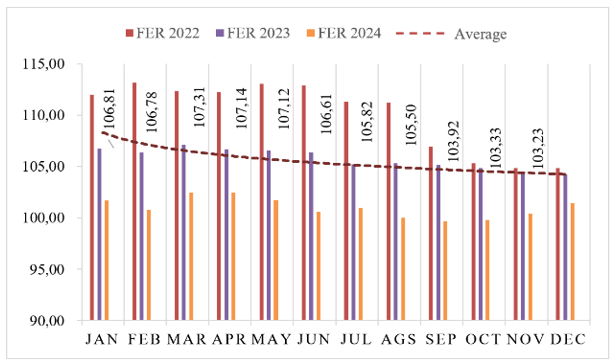
Small-scale fisheries (SSF) represent the backbone of many coastal economies and contribute substantially to employment, poverty alleviation, and food security in developing countries [5, 6]. Their contribution extends beyond economic activities, as they support household resilience and sustain social and cultural systems within coastal communities [7]. However, the increasing frequency of environmental disturbances and climate variability has intensified income volatility among fishers and blue-food MSEs, thereby weakening their adaptive capacity and financial resilience (FR) [8, 9]. In Indonesia, these vulnerabilities are evident in the declining trend of the Fishermen's Exchange Rate (FER) in Central Java during 2022–2024 (Figure 1), indicating that the purchasing power of coastal households has weakened as production costs continue to rise. Such conditions highlight the urgent need to identify mechanisms capable of strengthening resilience and promoting sustainable coastal livelihoods.
Financial vulnerability constitutes one of the most persistent structural challenges faced by SSF and blue-food MSEs. Due to irregular income patterns and high exposure to environmental risks, many coastal households encounter difficulties in accessing formal financial services [3]. Financial institutions frequently perceive fisheries-related businesses as high-risk sectors, and conventional financing mechanisms are often incompatible with seasonal and uncertain income cycles [10]. Consequently, limited access to formal finance forces many fishers and coastal enterprises to rely on informal patron–client relationships involving traders, middlemen, or boat owners, which perpetuate dependency and weaken their bargaining position [11-13]. These conditions constrain productive investment, limit innovation, and ultimately reduce the capacity of coastal enterprises to withstand environmental and economic shocks.
Previous studies have highlighted the importance of inclusive finance (IF) in supporting economic development and improving enterprise performance. Evidence suggests that digital IF facilitates MSEs innovation and alleviates financing constraints [14-16]. At the macro level, IF has been found to promote economic growth and sustainable development [17, 18]. Within fisheries and coastal contexts, research has primarily focused on livelihood vulnerability, climate adaptation, patron–client relationships, and socio-economic characteristics of fishers [19, 20]. Pomeroy et al. [13] conceptually emphasized the role of IF in strengthening economic resilience in SSF, while Amadu et al. [21] demonstrated the importance of livelihood assets in enhancing resilience among fishing communities in Ghana. Recent studies have also highlighted the role of innovative financing and digital financial services in supporting sustainable blue economy initiatives [22]. Nevertheless, empirical evidence explaining how financial resources are transformed into resilience outcomes within blue-food systems remains limited.
Recent literature on sustainable coastal development and blue economy governance has identified several persistent missing links associated with adaptive capacity, resilience mechanisms, and local enabling conditions. Bennett et al. [23] argued that capacity development and resilience remain essential yet underdeveloped components within sustainable blue economy frameworks. Likewise, Evans et al. [24] emphasized that many blue economy initiatives still fail to place coastal communities at the center of sustainable development strategies. Moreover, studies on marine spatial planning and social sustainability indicate that existing approaches continue to prioritize economic growth and environmental management, while paying relatively limited attention to resilience and social dimensions [25]. Consequently, achieving sustainable coastal development requires not only effective governance arrangements but also mechanisms that strengthen the adaptive capacity and resilience of coastal communities.
Furthermore, reviews of social-ecological resilience research suggest that previous studies have concentrated predominantly on governance frameworks and policy formulation rather than empirically examining how resilience is generated and sustained within vulnerable coastal systems [26]. Although adaptive management and resilience-building have become central themes in sustainable coastal development planning, empirical evidence explaining the mechanisms through which enabling factors contribute to resilience outcomes remains scarce [23]. Existing studies generally investigate IF, enterprise performance, and resilience separately, thereby overlooking the interconnected pathways through which financial resources are transformed into adaptive capacities. More importantly, limited attention has been devoted to understanding how IF functions as an enabling mechanism for sustainable coastal development among climate-vulnerable coastal economies. Consequently, there remains a lack of empirical evidence regarding the mechanisms through which IF enhances adaptive capacity and resilience within climate-vulnerable coastal economies, thereby limiting our understanding of how financial interventions can support sustainable coastal development planning.
The novelty of this study lies in three dimensions. First, the study advances the sustainable coastal development discourse by revealing the mechanisms through which resilience is generated in climate-vulnerable blue-food systems, thereby addressing an important gap in the existing literature on coastal sustainability and adaptive capacity. Second, it integrates Resource-Based View and Livelihood Resilience Theory within a moderated mediation framework that explains how IF enhances FR both directly and indirectly through improvements in enterprise performance. Unlike previous studies that have largely examined IF, enterprise development, and resilience separately, this study focuses specifically on coastal blue-food enterprises and reveals the pathways through which financial resources are transformed into adaptive capacities. Third, the study reconceptualizes IF not merely as a financial instrument but as an enabling mechanism for sustainable coastal development planning that strengthens adaptive capacity, supports climate resilience, and contributes to the implementation of SDG 13 and SDG 14.
This study contributes to the literature in several ways. First, it extends existing research on IF and resilience by bridging the gap between financial mechanisms and sustainable coastal development. Second, it enriches theoretical understanding by integrating Resource-Based View and Livelihood Resilience Theory to explain the pathways linking financial resources, enterprise performance, and resilience outcomes. Third, the findings provide practical insights for policymakers and development practitioners regarding the design of climate-responsive financial systems and inclusive blue economy strategies. By demonstrating the role of IF as an enabling mechanism for resilience-building, the study offers important implications for sustainable coastal development planning and contributes to broader efforts aimed at promoting resilient coastal livelihoods and achieving the SDGs.
The remainder of this paper is organized as follows. Section 2 reviews the relevant theoretical and empirical literature and develops the research hypotheses. Section 3 describes the research methodology and econometric procedures employed in the study. Section 4 presents and discusses the empirical findings in the context of sustainable coastal development and resilience-building mechanisms. Finally, Section 5 concludes the study by summarizing the main findings, outlining theoretical and practical implications, acknowledging limitations, and suggesting avenues for future research.
From a theoretical perspective, Resource-Based View (RBV) suggests that access to valuable and strategic resources constitutes an important source of competitive advantage and adaptive capability [27]. In environmentally vulnerable settings, financial resources can be regarded as strategic assets that enable enterprises to improve productive capacity and sustain business continuity. Complementing this perspective, Livelihood Resilience Theory emphasizes the capacity of households and enterprises to absorb, adapt, and transform in response to environmental and economic disturbances [28]. The integration of these perspectives implies that IF may enhance FR not only directly but also indirectly through improvements in enterprise performance. Moreover, the effectiveness of such mechanisms may depend on the broader financial ecosystem that facilitates access to and utilization of financial services.
Against the backdrop of increasing environmental pressures and climate-related risks affecting coastal livelihoods, this study aims to examine how IF contributes to strengthening the FR of blue-food MSEs operating within climate-vulnerable coastal areas in the northern region of Central Java, Indonesia. Specifically, the study pursues three objectives. First, it investigates the direct effects of IF on blue-food MSE performance and FR. Second, it examines the mediating role of enterprise performance in linking IF and FR. Third, it evaluates the moderating role of IF in strengthening the relationship between enterprise performance and FR. Through these objectives, the study seeks to provide empirical evidence regarding the mechanisms through which financial resources enhance adaptive capacity and support sustainable coastal development.
For coastal MSEs exposed to seasonal income fluctuations, extreme weather events, and uncertain fish catches, access to inclusive financial services represents an important means of coping with external shocks and maintaining business continuity. Financial services such as credit, savings, digital payments, and micro-insurance provide liquidity, facilitate productive investment, and reduce dependence on costly informal financing, thereby improving financial stability [18, 29]. Because resilience depends on the ability of households and enterprises to absorb, adapt, and transform in response to environmental and economic disturbances [28], greater access to financial resources and risk-management mechanisms can strengthen the adaptive capacity of coastal enterprises and ultimately enhance their FR. Therefore, IF is expected to positively influence FR.
Hypothesis 1: IF positively influences FR.
Coastal blue-food MSEs frequently encounter capital constraints that limit their ability to improve production efficiency, adopt environmentally friendly technologies, and diversify income sources. Access to financial resources provides a foundation for enterprise competitiveness; however, their value depends on how effectively these resources are mobilized and utilized to create productive capabilities [16, 30]. By expanding access to credit, savings, and digital financial services, IF enables enterprises traditionally excluded from formal financial systems to strengthen productive capacity, improve operational efficiency, enhance supply-chain performance, and respond more effectively to market opportunities [31]. These improvements are expected to translate into superior business performance [32, 33]. Consequently, IF is expected to improve the performance of blue-food MSEs by enhancing their productive capabilities and operational efficiency.
Hypothesis 2: IF positively influences blue-food MSE performance.
Under conditions of environmental uncertainty and market volatility, the sustainability of coastal livelihoods depends not only on the availability of financial resources but also on the ability to maintain productive activities and adapt to external shocks. Strong enterprise performance contributes to this adaptive capacity by generating stable income, facilitating the accumulation of productive assets, promoting income diversification, and improving risk-management capabilities [8]. Enterprises with superior performance are consequently better positioned to maintain liquidity, recover from adverse events, and sustain business continuity under uncertain conditions [34]. Since resilience reflects the capacity to absorb disturbances and adapt to changing circumstances [12], resilient enterprises are better able to respond to shocks while maintaining or restoring their core functions. Consequently, enterprises exhibiting superior performance are better equipped to maintain liquidity, absorb shocks, recover from adverse events, and sustain livelihood continuity under uncertain environmental and market conditions. Therefore, blue-food MSE performance is expected to positively influence FR.
Hypothesis 3: Blue-food MSE performance positively influences FR.
Access to financial services alone does not automatically lead to greater resilience because financial resources must first be converted into productive capabilities that generate sustainable economic benefits. The value of financial resources depends on how effectively enterprises mobilize and leverage them to improve production efficiency, strengthen market participation, and stabilize earnings [35]. For coastal blue-food MSEs, better access to credit, savings, and digital financial services can enhance enterprise performance and facilitate the accumulation of assets and risk-management capabilities [36]. Enterprises with stronger performance are more capable of maintaining livelihood continuity and adapting to environmental and economic disturbances [21]. Accordingly, business performance is expected to serve as the mechanism through which IF contributes to FR. Thus, enterprise performance represents the mechanism through which financial resources are converted into adaptive capacities and resilience outcomes.
Hypothesis 4: The blue-food MSE performance mediates the effect of IF on FR.
The benefits generated by superior enterprise performance are more likely to be transformed into resilience outcomes when firms operate within a more inclusive financial environment. Access to savings facilities, digital payments, credit, and micro-insurance enables enterprises to protect accumulated assets, reinvest productive gains, and respond more effectively to unexpected shocks [37, 38]. Therefore, the positive effect of blue-food MSE performance on FR is expected to be stronger when enterprises have greater access to inclusive financial services.
Hypothesis 5: IF strengthens the effect of blue-food MSE performance on FR.
This study employed an explanatory quantitative design to investigate the relationships among IF, blue-food MSE performance, and FR within coastal blue-food systems. This study was conducted in the northern coastal region of Java, Indonesia, an area characterized by intensive blue-food economic activities and increasing exposure to climate-related and socio-economic risks. The earlier study emphasized the strategic integration of the blue economy and business continuity planning in Southern Java [39], the present research extends the resilience perspective to Northern Java by investigating how IF functions as an enabling mechanism through which productive capabilities and financial ecosystems contribute to resilience outcomes. Taken together, these studies offer complementary insights into resilience-building processes and provide a broader foundation for sustainable coastal development planning across Java's coastal regions. The study population comprised enterprises engaged in capture fisheries, aquaculture, seafood processing, and related value-chain activities. A total of 123 blue-food MSEs were selected using purposive sampling based on three criteria: (i) direct involvement in blue-food livelihood activities, (ii) classification as micro or small enterprises according to Indonesian regulations, and (iii) location within coastal villages. Respondents were also required to have practical experience with financial access constraints to ensure the relevance of the information collected. Purposive sampling was considered appropriate because the target population is geographically dispersed and not adequately represented in conventional sampling frames.The adequacy of the sample size was assessed a priori following Cohen’s [40] power analysis. Assuming a medium effect size (f² = 0.15), a significance level of 0.05, statistical power of 0.80, and three predictors in the most complex structural equation, the minimum required sample size was 77 observations. The final sample of 123 valid observations therefore exceeded the minimum sample size required for the analysis.
Primary data were collected through structured questionnaires administered directly to blue-food MSE owners through face-to-face interviews. Participation was voluntary, and all respondents were informed about the purpose of the study prior to data collection. All constructs were measured using a five-point Likert scale ranging from 1 ("strongly disagree") to 5 ("strongly agree") [41]. The questionnaire included items measuring IF, blue-food MSE performance, and FR. These measurement items were adapted from previously validated scales and subsequently contextualized to reflect the characteristics of climate-sensitive coastal livelihood systems.
Several procedural measures were implemented during data collection to minimise potential common method bias. Respondents were assured of anonymity and confidentiality, predictor and outcome constructs were presented in separate questionnaire sections, and all items were formulated using neutral and non-leading wording. Respondents were not informed of the hypothesised relationships among the constructs, and the order of questionnaire items was randomised to minimise potential order effects.
The operationalization of the constructs was based on established literature and tailored to the context of blue-food enterprises. FR was conceptualized through five dimensions: income stability, welfare improvement, access to financing, business resilience, and social and environmental sustainability [36, 42, 43]. IF was operationalized using indicators that capture the accessibility of financial services, financial inclusion, financial literacy [44], opportunities for digitalisation [45, 46], and risk management capacity [34]. Meanwhile, Blue-food MSE Performance was assessed through indicators reflecting production volume, production efficiency, business productivity, product quality, production sustainability, and technology adoption [47, 48]. The detailed operationalization of the constructs and their corresponding dimensions is presented in Table 1.
Table 1. The operationalization of each construct and corresponding dimensions
|
Variable |
Definition |
Dimensions |
Indicators |
References |
|
Inclusive finance (IF) |
Availability, accessibility, affordability, and effective utilization of formal financial services that are responsive to the needs of coastal blue-food MSEs |
Financial service accessibility |
Ease of accessing formal financial institutions and financial products |
[34, 44-46] |
|
Inclusive finance (IF) |
Availability and use of financial services and products |
|||
|
Financial literacy |
Understanding and capability to utilize financial services effectively |
|||
|
Digitalization of financial services |
Adoption of digital financial services and payment systems |
|||
|
Risk management |
Availability and utilization of financial instruments for managing business risks |
|||
|
Blue-food MSE Performance |
Operational effectiveness and productive capacity of enterprises engaged in blue-food value chains |
Production performance |
Production volume |
[47, 48] |
|
Operational efficiency |
Efficiency of production processes |
|||
|
Business productivity |
Productivity of business activities |
|||
|
Product competitiveness |
Product quality |
|||
|
Sustainable operations |
Sustainability of production processes |
|||
|
Innovation capability |
Adoption of technology |
|||
|
Financial resilience (FR) |
The ability of coastal households and enterprises to withstand, adapt to, and recover from economic and ecological shocks |
Economic stability |
Income stability |
[36, 42, 43] |
|
Household well-being |
Improvement in economic welfare |
|||
|
Enterprise resilience |
Ability to maintain business continuity and recover from shocks |
|||
|
Socio-economic sustainability |
Long-term socio-economic sustainability |
The measurement items were adapted from previously validated scales and contextualized to reflect the characteristics of coastal blue-food MSEs. This adaptation aimed to ensure content validity while preserving the theoretical meaning of each construct.
Data analysis was conducted using WarpPLS 8.0, which accommodates non-linear structural relationships and enables simultaneous testing of mediation and moderation [49]. Three sets of models were estimated:
Direct effects
$M S E=\beta_{Y 1 X 1} \cdot I F+e_1$ (1)
$F R=\beta_{Y 2 X_1} \cdot I F+\beta_{Y 2 X 2} \cdot M S E+e_2$ (2)
Indirect (mediated) effect
$F R=\beta_{Y 2 X 1} \cdot I F+\left(\beta_{Y 1 X 1} \cdot I F \times \beta_{Y 2 X 2} \cdot M S E\right)+e_3$ (3)
Moderated effect
$F R=\beta_{Y 2 X 1} \cdot I F+\beta_{Y 2 X 2} \cdot M S E+(I F \times M S E)+e_4$ (4)
where,
IF = Inclusive Finance
MSE = Blue-food MSE performance
FR = Financial Resilience
β = path coefficients
e = error terms capturing unobserved influences on Y
A total of 132 questionnaires were returned, of which 123 were considered valid and retained for the analysis after applying the predetermined eligibility and data-completeness criteria. Thus, the final analytical sample comprised 123 blue-food MSEs.
As shown in Table 2, this profile reflects a female-driven coastal economy characterised by limited educational attainment, reliance on labour-intensive activities, and dependence on formal and semi-formal financial sources.
Table 2. Demographics of participants
|
|
Characteristics (N = 123) |
Number |
Percentage |
|
Gender |
Male |
23 |
18.70% |
|
Female |
100 |
81.30% |
|
|
Age |
<25 |
7 |
5.69% |
|
25 - 40 |
48 |
39.02% |
|
|
41 - 55 |
53 |
43.09% |
|
|
>55 |
15 |
12.20% |
|
|
Education level |
Junior High School |
64 |
52.03% |
|
Senior High School |
53 |
43.09% |
|
|
Bachelor |
6 |
4.88% |
|
|
Type of business |
Fisherman |
24 |
19.51% |
|
Farmers/cultivators |
26 |
21.14% |
|
|
Marine produce processors |
18 |
14.63% |
|
|
Sellers of seafood products |
23 |
18.70% |
|
|
Enterprise Supporting |
26 |
21.14% |
|
|
Other |
6 |
4.88% |
|
|
Length of business |
6-10 Years |
22 |
17.89% |
|
>10 Years |
34 |
27.64% |
|
|
1-5 Years |
25 |
20.33% |
|
|
<1 Year |
42 |
34.15% |
|
|
Types of business capital sources |
Alone/Family |
21 |
17.07% |
|
Bank Loans |
33 |
26.83% |
|
|
Cooperative Loans |
32 |
26.02% |
|
|
Assistance from Companies |
20 |
16.26% |
|
|
Government Assistance |
15 |
12.20% |
|
|
Loans from ship owners |
2 |
1.63% |
These characteristics suggest constraints in financial literacy and business capability, while the sectoral diversity indicates broad engagement across blue-food value chains. However, the reliance on external financing also highlights underlying financial vulnerability. Overall, the findings underscore the structural fragility of coastal blue-food MSEs and reinforce the critical role of IF in strengthening their FR.
Prior to hypothesis testing, the overall quality and predictive performance of the structural model were assessed using the model fit and quality indices recommended for WarpPLS [49]. The overall model exhibited satisfactory goodness-of-fit and quality indices, indicating that the proposed model was statistically acceptable and possessed adequate predictive capability. The average path coefficient (APC = 0.317, p < 0.001), average R-squared (ARS = 0.334, p < 0.001), and average adjusted R-squared (AARS = 0.326, p < 0.001) were all statistically significant, satisfying the recommended threshold of p < 0.05. The Tenenhaus goodness-of-fit (GoF) value of 0.465 exceeded the cut-off value of 0.36, suggesting a large overall explanatory power of the model. Furthermore, the values of Sympson’s paradox ratio (SPR = 1.000), R-squared contribution ratio (RSCR = 1.000), statistical suppression ratio (SSR = 1.000), and nonlinear bivariate causality direction ratio (NLBCDR = 1.000) all exceeded the recommended thresholds, indicating the absence of suppression effects and supporting the validity of the hypothesized causal directions.
Potential common method bias was assessed using full collinearity variance inflation factors (VIFs). The FCVIF values ranged from 1.286 to 2.034, below the commonly used threshold of 3.3, indicating no evidence of problematic full collinearity. Together with the procedural safeguards implemented during data collection, these results suggest that common method bias is unlikely to materially affect the findings.
Table 3 demonstrates satisfactory reliability and validity of the measurement model. All constructs exhibit satisfactory reliability and validity, as indicated by factor loadings above 0.60, Cronbach’s alpha and composite reliability values exceeding the recommended thresholds, and AVE values above 0.50. These results indicate adequate indicator reliability, internal consistency, and convergent validity. Overall, the measurement model provides an adequate basis for subsequent structural model assessment and hypothesis testing.
Table 3. Reliability and validity test
|
Construct /Code |
Mean |
SD |
LF |
α |
CR |
AVE |
FCVIF |
|
Inclusive financing (IF) |
|
0.858 |
0.891 |
0.509 |
1.286 |
||
|
IF.1 |
3.870 |
1.208 |
0.677 |
|
|
|
|
|
IF.2 |
3.813 |
1.119 |
0.847 |
|
|
|
|
|
IF.3 |
3.081 |
1.121 |
0.694 |
|
|
|
|
|
IF.4 |
3.317 |
1.089 |
0.785 |
|
|
|
|
|
IF.5 |
3.870 |
1.234 |
0.805 |
|
|
|
|
|
IF.6 |
3.634 |
1.182 |
0.695 |
|
|
|
|
|
IF.8 |
3.561 |
1.110 |
0.652 |
|
|
|
|
|
IF.10 |
3.642 |
1.110 |
0.604 |
|
|
|
|
|
Blue-food MSE performance |
0.912 |
0.927 |
0.587 |
1.605 |
|||
|
MSE.2 |
3.643 |
1.066 |
0.761 |
|
|
|
|
|
MSE.3 |
3.740 |
0.948 |
0.777 |
|
|
|
|
|
MSE.4 |
3.561 |
0.907 |
0.783 |
|
|
|
|
|
MSE.5 |
3.228 |
0.895 |
0.718 |
|
|
|
|
|
MSE.6 |
3.626 |
0.927 |
0.822 |
|
|
|
|
|
MSE.8 |
3.951 |
0.957 |
0.742 |
|
|
|
|
|
MSE.9 |
4.236 |
0.976 |
0.760 |
|
|
|
|
|
MSE.11 |
3.691 |
1.095 |
0.717 |
|
|
|
|
|
MSE.12 |
3.821 |
1.033 |
0.810 |
|
|
|
|
|
Financial resilience (FR) |
|
0.906 |
0.921 |
0.593 |
2.034 |
||
|
FR.1 |
4.098 |
0.844 |
0.683 |
|
|
|
|
|
FR.2 |
4.195 |
0.765 |
0.722 |
|
|
|
|
|
FR.4 |
3.585 |
0.983 |
0.702 |
|
|
|
|
|
FR.5 |
3.569 |
0.906 |
0.723 |
|
|
|
|
|
FR.6 |
3.959 |
0.987 |
0.672 |
|
|
|
|
|
FR.7 |
3.602 |
1.038 |
0.664 |
|
|
|
|
|
FR.8 |
4.138 |
0.793 |
0.778 |
|
|
|
|
|
FR.9 |
3.780 |
0.919 |
0.703 |
|
|
|
|
|
FR.10 |
3.870 |
0.949 |
0.751 |
|
|
|
|
|
FR.11 |
3.642 |
0.897 |
0.676 |
|
|
|
|
|
FR.13 |
3.626 |
0.978 |
0.673 |
|
|
|
|
|
FR.14 |
3.935 |
0.875 |
0.670 |
|
|
|
|
Table 4. Significant testing result of the structural model path coefficient
|
|
Path Coefficient |
Effect Size (f2) |
Hypothesis Decision |
|
|
Direct Effect |
||||
|
H1 |
IF → FR |
0.251*** |
0.127 |
Supported |
|
(0.085) |
||||
|
H2 |
IF → MSE |
0.375*** |
0.141 |
Supported |
|
(0.082) |
||||
|
H3 |
MSE → FR |
0.339*** |
0.216 |
Supported |
|
(0.083) |
||||
|
Mediating Effect |
||||
|
H4 |
IF → MSE → FR |
0.127* |
0.064 |
Partial mediation |
|
(0.062) |
||||
|
Moderating Effect |
||||
|
H5 |
IF*MSE to MSE → FR |
-0.288*** |
0.184 |
Not Supported |
|
(0.084) |
||||
|
Determination coefficients (R2) and predictive relevance (Q2) of endogenous |
||||
|
R2 Blue-food MSE performance = 0.140513 |
Q2 Blue-food MSE performance = 0.153674 |
|||
|
R2 Financial Resilience = 0.526703 |
Q2 Financial Resilience = 0.527344 |
|||
Table 4 provides clear evidence supporting all direct hypotheses (H1–H3). IF serves as an enabling resource that improves business performance and, subsequently, FR. Meanwhile, Blue-food MSE performance is positively associated with FR, indicating that stronger productive and operational capabilities are associated with greater capacity to withstand and recover from shocks.
The structural model explains 14.05% of the variance in blue-food MSE performance (R² = 0.140513), indicating that IF accounts for a relatively modest proportion of variation in enterprise performance. The corresponding Q² value of 0.153674 is above zero, indicating predictive relevance for MSE performance. For FR, the model explains 52.67% of the variance (R² = 0.526703), indicating substantially greater explanatory power than for MSE performance. The Q² value of 0.527344 further indicates predictive relevance for FR. These results suggest that the proposed model provides greater explanatory and predictive contribution to FR than to blue-food MSE performance.
As a supplementary diagnostic, the SVS procedure was used to assess potential endogeneity, with FR specified as the potentially endogenous construct. The generated variable was strongly associated with FR (r = 0.998, p < 0.001); however, this result does not establish instrument exogeneity or rule out reverse causality. Accordingly, the SVS results do not provide definitive evidence that potential endogeneity or reverse causality has been eliminated.
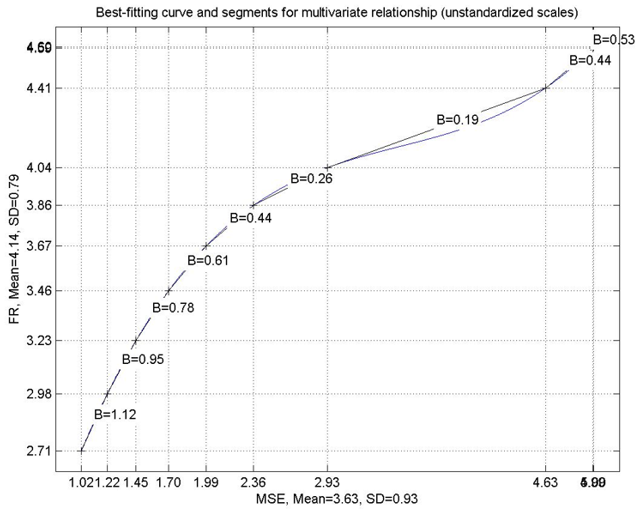
The mediation analysis indicates a statistically significant indirect effect of IF on FR through blue-food MSE performance (β = 0.127, SE = 0.066, p = 0.029, f² = 0.064). The direct effect of IF on FR also remains positive and significant (β = 0.251, p < 0.001), while the total effect is positive and significant (β = 0.378, p < 0.001). The coexistence of significant direct and indirect effects indicates partial mediation, as illustrated in Figure 2, consistent with established mediation approaches [50, 51]. The finding suggests that blue-food MSE performance represents an important transmission mechanism through which IF contributes to FR, while the remaining direct effect indicates that IF also contributes to resilience independently of enterprise performance. Thus, H4 is supported.
Following the PLS-based moderation framework of Henseler and Fassott [52], the interaction term was assessed to determine whether IF conditions the strength of the MSE–FR relationship. A statistically significant negative interaction effect was found (β = −0.288, p < 0.001, f² = 0.184), opposite in sign to the hypothesised positive moderating effect; H5 is therefore not supported.
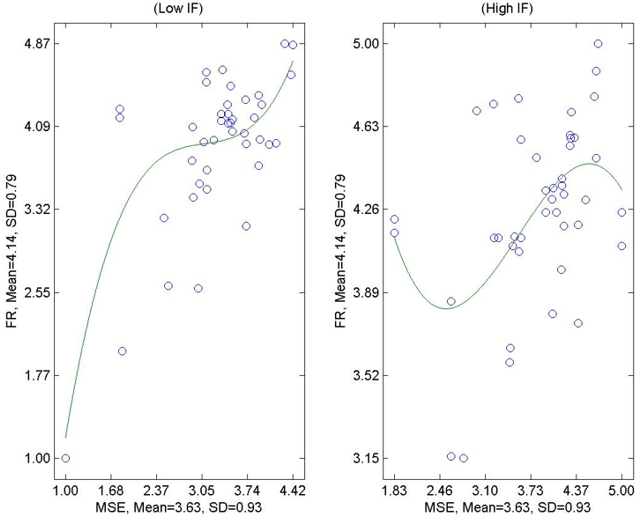
The conditional effect analysis in Figure 3 substantiates this finding at the sub-group level. Under low IF, FR increases steadily and almost linearly with MSE performance, indicating that the operational performance of MSEs alone drives resilience gains in the absence of strong financial inclusion. Under high IF, this dependence flattens markedly on average, yet a localised S-shaped pattern remains, with FR recovering sharply once MSE performance reaches its upper range. This suggests that IF does not uniformly substitute for the role of MSE performance but instead redistributes it — offering limited added resilience benefit to lower-performing enterprises, while a synergistic gain re-emerges among higher-performing MSEs, pointing to a capacity threshold beyond which enterprises are better able to leverage financial inclusion for resilience-building.
Beyond providing empirical support for the proposed hypotheses, the findings shed light on the pathways through which financial resources are transformed into adaptive and resilience outcomes within climate-sensitive blue-food economies. Unlike previous studies that have largely examined IF, enterprise performance, and resilience as separate phenomena, this study demonstrates that resilience emerges through interconnected pathways linking access to financial resources, productive capabilities, and enabling ecosystem conditions. This finding highlights that FR among coastal blue-food enterprises cannot be understood solely from the perspective of resource availability, but rather from the capacity of enterprises to convert financial resources into productive and adaptive capabilities under conditions of environmental uncertainty.
From a theoretical perspective, the findings extend the RBV by showing that financial resources do not generate resilience automatically. In accordance with resource orchestration arguments, the value of financial resources depends on how effectively they are mobilised and transformed into productive capacities. The significant mediating role of blue-food MSE performance indicates that enterprise capabilities constitute the mechanism through which financial resources are translated into resilience outcomes. Consequently, this study broadens the application of RBV beyond its traditional focus on competitive advantage and firm performance by demonstrating its relevance in explaining resilience formation within socially and ecologically vulnerable enterprises.
Furthermore, the results enrich Livelihood Resilience Theory by providing empirical evidence that resilience is not solely determined by households’ ability to absorb and adapt to shocks, but also by the existence of supporting financial ecosystems that facilitate such adaptive processes. The findings suggest that resilience should be viewed as a dynamic outcome emerging from the interaction between resources, enterprise capabilities, and institutional support mechanisms. By integrating RBV and Livelihood Resilience Theory, this study proposes a more comprehensive explanation of resilience-building processes in coastal economies, where productive capabilities act as transmission mechanisms between financial resources and resilience outcomes.
A further contribution of this study lies in clarifying how the relationships among IF, enterprise performance, and FR may vary across financial conditions. The mediation analysis provides supported evidence that enterprise performance represents an important pathway through which IF is associated with FR. By contrast, the moderation analysis does not support the hypothesised positive moderating effect of IF: the interaction between IF and enterprise performance is statistically significant but negative in direction (β = −0.288, p < 0.001). These two findings should therefore be read separately—a supported mediating pathway on one hand, and an unsupported, negatively signed moderation effect on the other—rather than combined into a single moderated mediation conclusion, as this study did not formally test a conditional indirect effect (i.e., index of moderated mediation).
Nonetheless, the conditional effect analysis offers descriptive insight into how this negative interaction manifests across the range of enterprise performance: under high IF, FR remains comparatively flat—and even declines—at low-to-moderate performance levels, before recovering sharply among higher-performing enterprises. This pattern suggests that the performance–resilience relationship may be contingent not only on the level of IF but also on the enterprise's own performance standing within that financial environment, pointing to a possible capacity threshold beyond which enterprises are better positioned to convert IF into resilience gains. Such a contingent, threshold-dependent interpretation should be regarded strictly as a theoretical implication for future inquiry, rather than a confirmed empirical mechanism, and warrants formal testing through moderated mediation analysis (e.g., index of moderated mediation) or alternative research designs in subsequent studies.
More importantly, the findings support the reconceptualisation of IF from a mere financing instrument to an enabling mechanism for sustainable coastal development. Existing literature has generally treated IF as a source of capital or a means of reducing financing constraints. However, the present study shows that IF performs a broader role by facilitating productive investment, strengthening risk-management capacity, reducing dependence on informal credit networks, and enhancing enterprises’ ability to withstand climate-related shocks. Therefore, IF should be viewed as an enabling ecosystem that enhances adaptive capacity and supports long-term resilience among coastal communities.
The finding of partial mediation provides additional theoretical insight. Unlike previous studies that reported full mediation, the present results indicate that IF contributes to resilience through dual pathways. The first pathway operates indirectly through improvements in enterprise performance, while the second pathway operates directly through mechanisms such as liquidity enhancement, risk-sharing arrangements, and reduced vulnerability to informal financial dependence. This dual-pathway mechanism suggests that resilience-building in blue-food systems is multidimensional and cannot be explained solely by productive outcomes. Consequently, policies aimed at strengthening resilience should combine enterprise capacity-building programmes with interventions designed to improve direct access to formal and climate-responsive financial services.
The findings also provide important implications for sustainable coastal development planning. The significant role of IF in strengthening enterprise performance and FR suggests that resilience-building in coastal economies requires an integrated approach that combines financial inclusion, enterprise development, climate adaptation, and blue economy strategies. Rather than functioning solely as a source of capital, IF serves as an enabling mechanism that facilitates productive investment, enhances adaptive capacity, supports livelihood diversification, and reduces vulnerability to climate-related shocks. Therefore, sustainable coastal development planning should promote climate-responsive financial ecosystems, strengthen institutional collaboration among financial providers, governments, and coastal communities, and encourage participatory approaches that integrate economic, social, and environmental objectives. Such an approach can enhance the resilience of blue-food MSEs while simultaneously contributing to the achievement of SDG 13 (Climate Action) and SDG 14 (Life Below Water).
This study demonstrates that IF constitutes an important enabling mechanism for strengthening the FR of blue-food MSEs operating in climate-vulnerable coastal areas. The findings confirm that IF not only directly enhances FR but also improves enterprise performance, which subsequently contributes to resilience outcomes. The significant partial mediation effect indicates that productive capabilities represent a key pathway through which financial resources are transformed into adaptive capacities. The mediation analysis indicates that blue-food MSE performance represents an important pathway linking IF with FR. The interaction analysis, however, does not support the hypothesized positive moderating effect of IF, although the statistically significant negative interaction suggests that the performance–resilience relationship may vary across financial conditions.
These findings advance the sustainable coastal development literature by providing empirical evidence on the mechanisms through which financial resources, enterprise capabilities, and financial ecosystems interact to generate resilience outcomes within blue-food systems. The study also extends the application of Resource-Based View and Livelihood Resilience Theory by demonstrating that resilience formation is a dynamic and contingent process rather than a simple consequence of resource availability. More importantly, the results support the reconceptualization of IF from a mere financing instrument to an enabling mechanism that enhances adaptive capacity and contributes to the implementation of SDG 13 and SDG 14.
Despite these contributions, several limitations should be acknowledged. First, the study relied on cross-sectional data, which limits the ability to capture the dynamic evolution of resilience over time. Second, the sample was restricted to blue-food MSEs located in the northern coastal region of Central Java, thereby limiting the generalizability of the findings to other geographical and institutional contexts. Future studies may employ longitudinal designs and comparative analyses across different coastal regions or countries to provide a deeper understanding of resilience-building processes. Further research may also incorporate additional factors, such as climate adaptation practices, social capital, digital transformation, or governance quality, to develop a more comprehensive explanation of sustainable coastal resilience within the blue economy.
This work was supported by grants from the Directorate of Research, Technology, and Community Service, Ministry of Higher Education, Science, and Technology of the Republic of Indonesia (Decree Number 0070/C3/AL.04/2025; Contract Agreement Number 016/LL6/PL/AL.04/2025). The authors express their sincere appreciation to the Central Java Provincial Environment and Forestry Service for their invaluable support and for providing facilities for the Focus Group Discussion. The authors also gratefully acknowledge Universitas Semarang and Universitas Muhammadiyah Semarang for their support and collaboration throughout this research.
[1] Golden, C.D., Koehn, J.Z., Shepon, A., et al. (2021). Aquatic foods to nourish nations. Nature, 598(7880): 315-320. https://doi.org/10.1038/s41586-021-03917-1
[2] March, A., Failler, P., Bennett, M. (2023). Caribbean fishery and aquaculture financing needs in the blue economy: Identifying opportunities and constraints in Barbados, Grenada, and ST. Vincent and the Grenadines. Journal of Sustainability Research, 5(1): e230004. https://doi.org/10.20900/jsr20230004
[3] Islam, M.M., Sallu, S., Hubacek, K., Paavola, J. (2014). Vulnerability of fishery-based livelihoods to the impacts of climate variability and change: Insights from coastal Bangladesh. Regional Environmental Change, 14(1): 281-294. https://doi.org/10.1007/s10113-013-0487-6
[4] Nava, A.C.B., Hafsi, A., Hernández, J.C.M., Pérez, M.P. (2026). Socioeconomic resilience of fishing communities during the COVID-19 pandemic: A case study in Puerto Vallarta, Mexico. International Journal of Sustainable Development and Planning, 21(4): 1527-1536. https://doi.org/10.18280/ijsdp.210407
[5] Haque, A.M., Nahiduzzaman, M., Saha, S.M. (2022). Can adaptive co-management reduce poverty and inequality in the coastal fishing community? An impact evaluation in the riverine system in Bangladesh. Regional Studies in Marine Science, 56: 102721. https://doi.org/10.1016/j.rsma.2022.102721
[6] N'Souvi, K., Sun, C., Rivero, Y.M.R. (2025). Development of marine small-scale fisheries in Togo: An examination of the efficiency of fishermen at the new fishing port of Lomé and the necessity of fisheries co-management. Aquaculture and Fisheries, 10(2): 344-353. https://doi.org/10.1016/j.aaf.2023.07.009
[7] Weeratunge, N., Snyder, K.A., Sze, C.P. (2010). Gleaner, fisher, trader, processor: Understanding gendered employment in fisheries and aquaculture. Fish and Fisheries, 11(4): 405-420. https://doi.org/10.1111/j.1467-2979.2010.00368.x
[8] Ayisi, C.L., N'souvi, K., Baidoo, K., et al. (2024). Perception of climate change and adoption of climate smart fisheries among artisanal fishers. Sustainable Technology and Entrepreneurship, 3(3): 100072. https://doi.org/10.1016/j.stae.2024.100072
[9] N'Souvi, K., Adjakpenou, A., Sun, C., Ayisi, C.L. (2024). Climate change perceptions, impacts on the catches, and adaptation practices of the small-scale fishermen in Togo's coastal area. Environmental Development, 49: 100957. https://doi.org/10.1016/j.envdev.2023.100957
[10] Okello Candiya Bongomin, G., Semukono, F., Yourougou, P., Balinda, R. (2025). Replicating the suitability rule and economic theory in pursuit of microfinance inclusion of women micro-agribusinesses in rural financial markets. Journal of Agribusiness in Developing and Emerging Economies, 15(4): 643-674. https://doi.org/10.1108/JADEE-07-2023-0162
[11] Miñarro, S., Forero, G.N., Reuter, H., van Putten, I.E. (2016). The role of patron-client relations on the fishing behaviour of artisanal fishermen in the Spermonde Archipelago (Indonesia). Marine Policy, 69: 73-83. https://doi.org/10.1016/j.marpol.2016.04.006
[12] Bassett, H.R., Sharan, S., Suri, S.K., Advani, S., Giordano, C. (2022). A comparative study of small-scale fishery supply chains’ vulnerability and resilience to COVID-19. Maritime Studies, 21(2): 173-192. https://doi.org/10.1007/s40152-021-00231-4
[13] Pomeroy, R., Arango, C., Lomboy, C.G., Box, S. (2020). Financial inclusion to build economic resilience in small-scale fisheries. Marine Policy, 118: 103982. https://doi.org/10.1016/j.marpol.2020.103982
[14] Bu, Y., Du, X., Wang, Y., Liu, S., Tang, M., Li, H. (2024). Digital inclusive finance: A lever for SME financing? International Review of Financial Analysis, 93: 103115. https://doi.org/10.1016/j.irfa.2024.103115
[15] Gu, F., Gao, J., Zhu, X., Ye, J. (2023). The impact of digital inclusive finance on SMEs’ technological innovation activities—Empirical analysis based on the data of new third board enterprises. Plos One, 18(11): e0293500. https://doi.org/10.1371/journal.pone.0293500
[16] Wang, J., Yao, Y., Ge, H., Wang, J. (2025). The impact of digital inclusive finance on SME innovation. Sustainability, 17(8): 3633. https://doi.org/10.3390/su17083633
[17] Azimi, M.N. (2022). New insights into the impact of financial inclusion on economic growth: A global perspective. Plos One, 17(11): e0277730. https://doi.org/10.1371/journal.pone.0277730
[18] Muvunyi, E., Batóg, J. (2025). Financial inclusion and sustainability of economic development: Empirical results from selected EU member states. Sustainability, 17(18): 8237. https://doi.org/10.3390/su17188237
[19] Putri, D., Rahma, F., Kinseng, R.A. (2024). Social structure analysis in management of south Sumatra inland waters. Scientific Journal of Fisheries & Marine/Jurnal Ilmiah Perikanan dan Kelautan, 16(1): 180-195. https://doi.org/10.20473/jipk.v16i1.48081
[20] Roberts, N., Mengge, B., Utina, M.R., et al. (2022). Patron-client relationships shape value chains in an Indonesian island-based fisheries system. Marine Policy, 143: 105142. https://doi.org/10.1016/j.marpol.2022.105142
[21] Amadu, I., Armah, F.A., Aheto, D.W., Adongo, C.A. (2021). A study on livelihood resilience in the small-scale fisheries of Ghana using a structural equation modelling approach. Ocean & Coastal Management, 215: 105952. https://doi.org/10.1016/j.ocecoaman.2021.105952
[22] Favero, F., Hinkel, J. (2024). Key innovations in financing nature-based solutions for coastal adaptation. Climate, 12(4): 53. https://doi.org/10.3390/cli12040053
[23] Bennett, N.J., Blythe, J., White, C.S., Campero, C. (2021). Blue growth and blue justice: Ten risks and solutions for the ocean economy. Marine Policy, 125: 104387. https://doi.org/10.1016/j.marpol.2020.104387
[24] Evans, L.S., Buchan, P.M., Fortnam, M., Honig, M., Heaps, L. (2023). Putting coastal communities at the center of a sustainable blue economy: A review of risks, opportunities, and strategies. Frontiers in Political Science, 4: 1032204. https://doi.org/10.3389/fpos.2022.1032204
[25] Gilek, M., Armoskaite, A., Gee, K., Saunders, F., Tafon, R., Zaucha, J. (2021). In search of social sustainability in marine spatial planning: A review of scientific literature published 2005–2020. Ocean & Coastal Management, 208: 105618. https://doi.org/10.1016/j.ocecoaman.2021.105618
[26] Martínez, M.L., Intralawan, A., Vázquez, G., Pérez-Maqueo, O., Sutton, P., Landgrave, R. (2007). The coasts of our world: Ecological, economic and social importance. Ecological Economics, 63(2-3): 254-272. https://doi.org/10.1016/j.ecolecon.2006.10.022
[27] Barney, J. (1991). Firm resources and sustained competitive advantage. Journal of Management, 17(1): 99-120. https://doi.org/10.1177/014920639101700108
[28] Folke, C., Carpenter, S.R., Walker, B., Scheffer, M., Chapin, T., Rockström, J. (2010). Resilience thinking: Integrating resilience, adaptability and transformability. Ecology and Society, 15(4). http://www.jstor.org/stable/26268226.
[29] Rodrigues, M., Franco, M., Silva, R., Oliveira, C. (2021). Success factors of SMEs: Empirical study guided by dynamic capabilities and resources-based view. Sustainability, 13(21): 12301. https://doi.org/10.3390/su132112301
[30] Sirmon, D.G., Hitt, M.A., Ireland, R.D. (2007). Managing firm resources in dynamic environments to create value: Looking inside the black box. Academy of Management Review, 32(1): 273-292. https://doi.org/10.5465/amr.2007.23466005
[31] Mansouri, M., Malainine, C., Souti, H., Cadimi, I. (2022). Dynamic capabilities, competitiveness and performance of small and medium-sized enterprises: A systematic literature review. International Journal of Accounting, Finance, Auditing, Management and Economics, 3(5): 1-22. https://doi.org/10.5281/zenodo.7121098
[32] Mahato, J., Jha, M.K. (2023). Does financial inclusion promote sustainable livelihood development? Mediating effect of microentrepreneurship. Journal of Financial Economic Policy, 15(4-5): 485-499. https://doi.org/10.1108/JFEP-05-2023-0134
[33] Li, L., Li, B. (2025). Impact of inclusive innovation on firm performance. Finance Research Letters, 82: 107627. https://doi.org/10.1016/j.frl.2025.107627
[34] Ayisi, C.L., Sienso, G., Baidoo, K., Asemah, C. (2025). Navigating destiny: A study of factors determining participation in artisanal fisheries insurance, level of risk and the dynamics of risk management. International Journal of Disaster Risk Reduction, 123: 105434. https://doi.org/10.1016/j.ijdrr.2025.105434
[35] Sirmon, D.G., Hitt, M.A., Ireland, R.D., Gilbert, B.A. (2011). Resource orchestration to create competitive advantage: Breadth, depth, and life cycle effects. Journal of Management, 37(5): 1390-1412. https://doi.org/10.1177/0149206310385695
[36] Mukaila, R. (2024). Microcredit via digital innovation platforms: Its drivers and impact on fish farms' yield and income in Nigeria. Agricultural Finance Review, 84(4-5): 342-365. https://doi.org/10.1108/AFR-01-2024-0001
[37] Liu, Y., Zhu, X. (2022). The inclusive financial effects of unconventional monetary policy: Evidence from micro and small enterprises. Transformations in Business & Economics, 21(3C): 487-508.
[38] Tikadar, K.K., Islam, M.J., Saha, S.M., Alam, M.M., Barman, S.K., Rahman, M.A. (2022). Livelihood status of small-scale fishermen and determinants of their income: Insights from north-eastern floodplains of Bangladesh. Geography and Sustainability, 3(3): 204-213. https://doi.org/10.1016/j.geosus.2022.06.002
[39] Rahmayantis, M.D., Nurmilawati, M., Damayanti, S. (2025). Integration of blue economy and business continuity plan in strengthening the economic resilience of coastal communities in Southern Java, Indonesia. International Journal of Sustainable Development & Planning, 20(10): 4457-4471. https://doi.org/10.18280/ijsdp.201032
[40] Cohen, J. (2013). Statistical Power Analysis for the Behavioral Sciences. Routledge.
[41] Marcano Nieves, L.M., Sosa-Varela, J.C., Ortiz, M., Montalvo, F. (2025). Networking capabilities on organizational networking in entrepreneurial SMEs. Management Research: Journal of the Iberoamerican Academy of Management, 23(4): 361-385. https://doi.org/10.1108/MRJIAM-11-2023-1485
[42] Khan, M. (2024). The mechanism and boundary conditions of farmers’ income increase in financial services: A case study of Yunnan province. Journal of Infrastructure, Policy and Development, 8(9): 7696. https://doi.org/10.24294/jipd.v8i9.7696
[43] Opuni-Frimpong, J., Dzorka, M., Oheneba Akomaning, J. (2025). Assessing bank financial performance in the context of digital financial service policy: Empirical insights. Digital Policy, Regulation and Governance, 27(6): 648-667. https://doi.org/10.1108/DPRG-09-2024-0243
[44] Almuraqab, N., Moonesar, I.A., Braendle, U.C., Rao, A. (2024). How critical is SME financial literacy and digital financial access for financial and economic development in the expanded BRICS block? Frontiers in Big Data, 7: 1448571. https://doi.org/10.3389/fdata.2024.1448571
[45] Naumenkova, S., Mishchenko, S., Dorofeiev, D. (2019). Digital financial inclusion: Evidence from Ukraine. Investment Management and Financial Innovations, 16(3): 194-205. https://doi.org/10.21511/imfi.16(3).2019.18
[46] Sahir, S.H., Tobing, F., Dewi, S., Balbaa, M.E. (2025). Integrating FinTech into sustainable development planning: A systematic review and expert insights on financial inclusion in Indonesia. International Journal of Sustainable Development and Planning, 20(11): 4607-4621. https://doi.org/10.18280/ijsdp.201106
[47] Nguyen, H.L., Kanbach, D.K. (2024). Toward a view of integrating corporate sustainability into strategy: A systematic literature review. Corporate Social Responsibility and Environmental Management, 31(2): 962-976. https://doi.org/10.1002/csr.2611
[48] Rezaee, Z. (2016). Business sustainability research: A theoretical and integrated perspective. Journal of Accounting Literature, 36(1): 48-64. https://doi.org/10.1016/j.acclit.2016.05.003
[49] Kock, N. (2019). Factor-based structural equation modeling with WarpPLS. Australasian Marketing Journal, 27(1): 57-63. https://doi.org/10.1016/j.ausmj.2018.12.002
[50] Baron, R.M., Kenny, D.A. (1986). The moderator–mediator variable distinction in social psychological research: Conceptual, strategic, and statistical considerations. Journal of Personality and Social Psychology, 51(6): 1173-1182. https://doi.org/10.1037/0022-3514.51.6.1173
[51] Preacher, K.J., Rucker, D.D., Hayes, A.F. (2007). Addressing moderated mediation hypotheses: Theory, methods, and prescriptions. Multivariate Behavioral Research, 42(1): 185-227. https://doi.org/10.1080/00273170701341316
[52] Henseler, J., Fassott, G. (2009). Testing moderating effects in PLS path models: An illustration of available procedures. In Handbook of Partial Least Squares: Concepts, Methods and Applications, pp. 713-735. https://doi.org/10.1007/978-3-540-32827-8_31