Rajaa M. Abdullah* | Dalal N. Alhilfi | Numan Sleem Hashim | Hussain A. Badran | Riyadh Ch Abul-Hail
© 2026 The authors. This article is published by IIETA and is licensed under the CC BY 4.0 license (http://creativecommons.org/licenses/by/4.0/).
OPEN ACCESS
Poly(methyl methacrylate) (PMMA) polymeric films doped with methylene blue (MB) dye were sensitized using two concentrations of dye: 0.01 and 0.1 mM. The linear optical and optical power limiting (OPL) characteristics were investigated. The MB/PMMA films were made by dissolving the dye and polymer in dimethylformamide (DMF) using a quick and easy casting method. The wavelength range of 400–750 nm was used to calculate the linear absorption coefficients (αop), linear refractive index (n), extinction coefficients (k), and optical energy gap (Eg). The optical constants change as the dye doping concentrations rise, according to the results. It has been discovered that for these films, both direct and indirect optical transitions are possible due to the optical energy gap. The direct allowed optical band gap energy decreased from 1.831 eV to 1.763 eV when doped with MB. A continuous wave (CW) solid-state laser (SSL) operating at 635 nm was used to investigate the optical limiting features of the composite films with different dye concentrations. The samples show a clear optical limiting effect, according to the results. Wide-ranging applications are possible for the developed MB/PMMA composites.
methylene blue dye, composites, laser applications
Poly(methyl methacrylate) (PMMA) is widely accepted as a superior optical polymer. It offers higher visible-light transmittance of 92%, compared to glass [1]. PMMA is also characterized by its resistance to harsh outdoor conditions and exposure to ultraviolet (UV) radiation [2]. PMMA is widely used in several applications as a popular host polymer because of its non-toxicity [3], good mechanical stability [4], easy processing, brilliant flexibility [5], low cost [6], and excellent film-forming ability [7]. These essential characteristics have made dye-grafted polymers attractive options for cutting-edge photonics and optoelectronic applications. The integration of organic or inorganic functional constituents into a host matrix provides a practical route for tailoring the structural, optical, and electronic properties of thin-film materials [8, 9]. In functional thin-film systems, material composition, processing conditions, surface uniformity, and defect formation jointly determine the resulting optical performance and suitability for device integration [10]. The continuing development of photonic, optoelectronic, and electronic devices therefore requires materials with controllable linear and nonlinear optical properties. These are used in optical networks, optical communications, data storage devices, and optical computing for signal processing. The term “nonlinear optical materials” refers to any class of materials that exhibit effective and efficient nonlinear phenomena. This is necessary to achieve applications dependent on light intensity, such as optical amplification, refractive index changes, optical wavelength conversion, etc. [11]. In particular, methylene blue (MB), an organic cationic thiazine dye [12] with strong absorption in the visible region–at approximately 665 nm–offers promising opportunities for tailoring light–matter interactions when embedded in a polymer matrix [13]. Sukumaran and Ramalingam [14] focused on studying the spectral properties and linear and non-linear optical characteristics of MB with PMMA polymer and n-butyl acetate. Hassan et al. [15] studied diffraction patterns and Z-scan methods and the optical power limiting (OPL) of Iodine film, where it was observed that it has OPL. Parvin and Ahamed [16] applied a technique to the dye, which showed a high value for the nonlinear refractive index (n₂) as well as negative n₂ (self-defocusing) under experimental conditions. Despite considerable investigations on dye-doped polymers, managing and refining their optical response, especially for non-linear optical applications such as optical limiting, remains a substantial issue. The linear absorption coefficients (αop), optical energy gap (Eg), and linear refractive index (n) are particularly sensitive to dye concentration, molecular interactions, and dispersion within the polymer host. Sensitive optical equipment protection has received a lot of attention lately. Most eye protection devices use materials that strongly absorb light at specific wavelengths, which is crucial for protecting the eyes from powerful, direct laser beams [17]. However, a comprehensive understanding of how variable concentrations of MB influence the optical performance of PMMA films, particularly in the context of optical limiting behavior, is still limited. In this study, we focus not only on the preparation of MB/PMMA films doped with varying concentrations of MB, but also on their application as OPL materials, with a systematic comparison of the effects of different doping concentrations. In addition, the influence of low and high concentrations on the Eg, αop, and n was investigated.
2.1 Preparation of methylene blue dye-doped polymer films
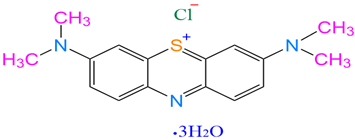
A commercially available cationic thiazine dye, MB, was provided by Stain & Indicator, with the formula C₁₆H₁₈ClN₃S·3H₂O and molecular weight 319.86 g/mol. Figure 1 illustrates its molecular structure. Solutions of MB in dimethylformamide (DMF) were made at 0.01 and 0.1 mM concentrations. Each concentration was produced separately using the following Eq. (1) [18]:
${{C}_{M}}=\frac{{{W}_{g}}\times 1000}{{{M}_{M}}\times {{V}_{M}}}$ (1)
where, ${{W}_{g}}$ represents the mass in g, ${{M}_{M}}$ represents the molecular weight in g/mol, ${{V}_{M}}$ represents the solvent volume (20 mL for each MB mass), and ${{C}_{M}}$ represents the concentration of the MB. The liquid polymer was prepared, according to the source [19], by dissolving 1 g of PMMA in 20 mM of DMF and left on a hot stirrer for 6 h at 50 ℃. Table 1 shows the weights and sizes used to prepare all solutions. Subsequently, the solutions were utilized to prepare polymeric films in a 1:1 ratio. The film thickness was measured using a digital micrometer. The ultraviolet-visible (UV-Vis) spectrometer was used to record the absorption spectra of two films with MB concentrations of 0.01 and 0.1 mM and thicknesses of 2.5 ± 0.1 and 3.7 ± 0.1 μm, respectively.
Table 1. The preparation materials
|
Materials |
Concentration [mM] |
Size [mL] |
Weight [g] |
|
PMMA |
|
|
1 |
|
DMFPMMA |
|
20 |
|
|
MB |
0.01 |
|
0.063 |
|
0.1 |
|
0.639 |
|
|
DMFMB |
|
20 |
|
Note: PMMA = poly(methyl methacrylate), MB = methylene blue, DMF = dimethylformamide.
Figure 1. Methylene blue (MB) dye structure
2.2 Optical microscopy analysis of methylene blue-doped polymer films
A 5 mW laser light beam was generally incident on the films to assess their optical quality. The output laser beam showed no distortion, which attests to the films' excellent optical quality. The surface morphology of the produced films doped with various concentrations is shown in Figure 2(a)-(f), which shows discernible changes in the surface topology and uniformity with increasing concentration. Optical micrographs of the MB/PMMA films prepared with MB concentrations of 0.01 mM and 0.1 mM are shown in Figures 2(a) and 2(b), respectively.
At the lower concentration (0.01 mM), the dye molecules are uniformly distributed throughout the PMMA matrix, which leads to a highly homogeneous film without any visible structural irregularities. For the film with 0.1 mM MB, a similar uniform distribution is observed, but a few dye-rich regions can be seen. Such minor aggregation is usually observed in highly doped polymeric systems and attributed to the enhanced intermolecular interactions between the dye molecules at higher concentration [20]. Further evidence is provided by the surface profile analyses in Figure 2(c) and (d). The surface of the film prepared with 0.01 mM MB (Figure 2(c)) is continuous and free of defects such as cracks, islands, phase separation, and dye agglomeration. In contrast, the film with 0.1 mM MB (Figure 2(d)) shows very few localized depressions, which are attributed to small dye aggregates. These features are well reproduced in the surface roughness profile obtained from the grayscale intensity distribution, confirming the slight modification of the surface topography induced by the higher dye loading. The corresponding 3D reconstructions of the surfaces are shown in Figure 2(e) and (f). The film prepared with 0.01 mM MB shows a moderately rough surface with a well-developed topography, as shown in Figure 2(e). Such controlled roughness is often advantageous in dye-doped polymer systems, as it can improve interfacial interactions and positively impact several optical and photonic properties. Increasing the dye concentration to 0.1 mM results in a significant increase in the surface roughness, as shown in Figure 2(f). Such behavior can be explained by the formation of limited dye-rich domains and stronger intermolecular interactions taking place within the polymer matrix at larger dye concentrations. However, the lack of cracks, phase separation and large-scale agglomeration confirms the good compatibility between MB and the PMMA matrix. This leads to optically homogeneous films with high structural quality for photonic and nonlinear optical applications.
2.3 Ultraviolet-visible spectroscopy of methylene blue-doped polymer films
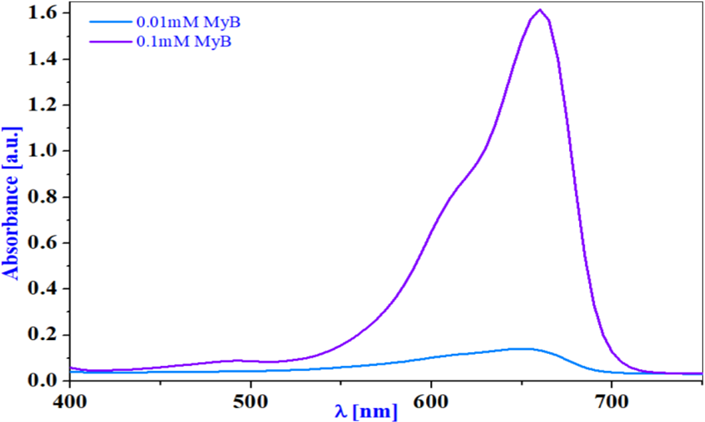
The UV-Vis absorption spectra of MB/PMMA films were recorded using a Cecil Reflected-Scan CE 3055 spectrometer. Figure 3 displays the optical absorbance of MB/PMMA films. It can be seen from the figure that absorption bands between 400 and 700 nm are observed in the MB/PMMA samples. including a dominant band at roughly 650 nm that represents the MB dye's absorption behavior [21]. The distinctive absorption peaks were seen to exist around 658 nm, and these peaks grew as the dye concentration increased. When dye molecules are exposed to light energy, it is known that the observed absorption peak at ~658 nm represents the transitions between the ground state (S0) and the first excited singlet state (S1). Because there are more dye molecules at higher concentrations, the primary absorption peak rises [23].
Figure 3. The absorbance spectra of methylene blue (MB) film at various concentrations
Table 2. Estimated values of some optical constants of the MB/PMMA films
|
Material |
Concentration [mM] |
${{\lambda }_{max~}}\left[ nm \right]$ |
${{\alpha }_{op}}~\left[ c{{m}^{-1}} \right]$ |
${{E}_{dir.g}}~\left[ eV \right]$ |
${{E}_{indir.g}}~\left[ eV \right]$ |
Threshold Irradiance $\times ~{{10}^{3}}~\left[ W/c{{m}^{2}} \right]$ |
|
|
at 2 mm |
at 4 mm |
||||||
|
MB |
0.01 |
655.757 |
1.877 |
1.831 |
1.791 |
5.38 |
6.73 |
|
0.1 |
661.434 |
1.893 |
1.763 |
1.737 |
6.73 |
7.63 |
|
Note: MB = methylene blue, PMMA = poly(methyl methacrylate).
Table 2 shows that the MB/PMMA absorbance rises with rising MB concentration, and the ${{\lambda }_{max}}$ shifts with increased concentration (${{\lambda }_{max}}$= 655−661 nm) [23]. By measuring the spectral width at 50% of the maximum absorbance intensity, the absorbance spectra were used to calculate the full width at half maximum of the absorption band. It was observed that the full width at half maximum for low concentrations is approximately 574.756–678.342 nm, while for higher concentrations it expands to approximately 608.391–681.08 nm [24].
3.1 Linear optical properties of methylene blue-doped polymer films
Beer-Lambert's formula gives the linear absorption coefficient (αop) in the following Eq. (2) [25]:
${{\alpha }_{op}}=\frac{2.303{{A}_{ab}}}{{{D}_{thi}}}$ (2)
where, ${{D}_{thi}}$ is the thickness of MB/PMMA films,$\text{ }\!\!~\!\!\text{ }{{A}_{ab}}$ is the MB/PMMA film’s absorbance.
To determine the linear refractive index (n), the following Eq. (3) was used [26, 27]:
$n={{\left( \frac{4R}{{{\left( 1-R \right)}^{2}}}-{{k}^{2}} \right)}^{1/2}}-\left( \frac{R+1}{R-1} \right)$ (3)
where, R is the reflectance, and k is the extinction coefficient. The following Eq. (4) is given by [28]:
$\kappa =\frac{\lambda {{\alpha }_{op}}}{4\pi }$ (4)
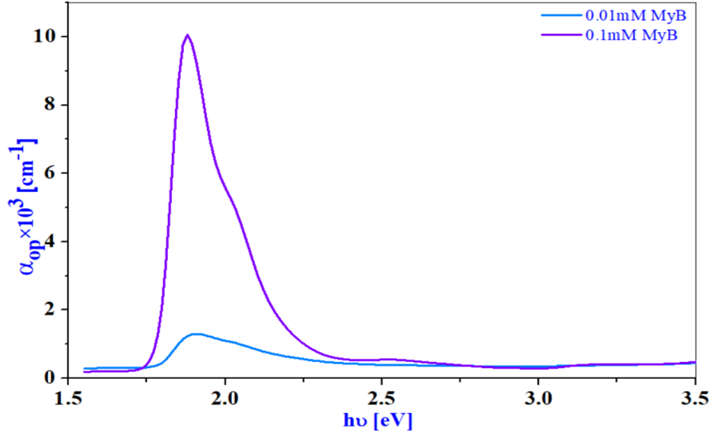
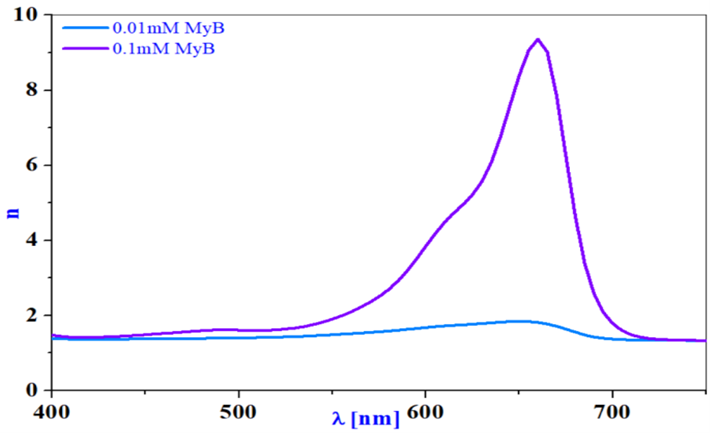
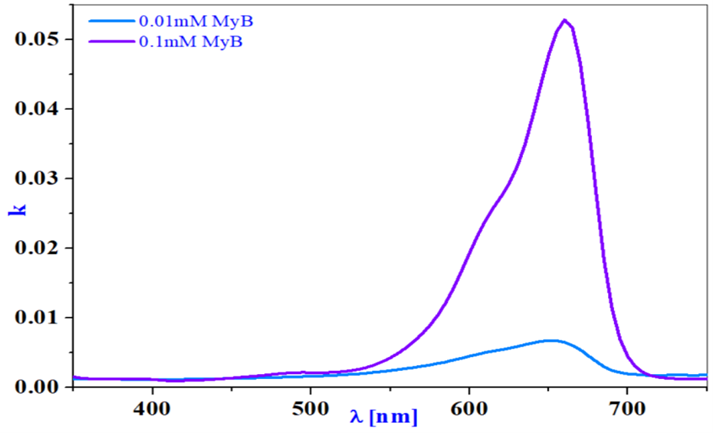
Figure 4 shows that the αop of PMMA films varies with photon energy (hv) between 1.8 and 2.25 eV. As MB-doping increases, there is a discernible rise in the absorption peak values. Because of their link, as shown in Eq. (2), the absorbance spectrum and absorption coefficient behave similarly [29]. Figure 5 shows the refractive index function of the MB/PMMA films as a function of the wavelength. The rise in refractive index values is due to the rise in dye concentration and proper mixing of the contents. Figure 6 shows the MB/PMMA films' extinction coefficient behavior with the wavelength. The rising absorption coefficient, which is connected to the extinction coefficient by Eq. (3), causes the extinction coefficient to grow with MB concentration.
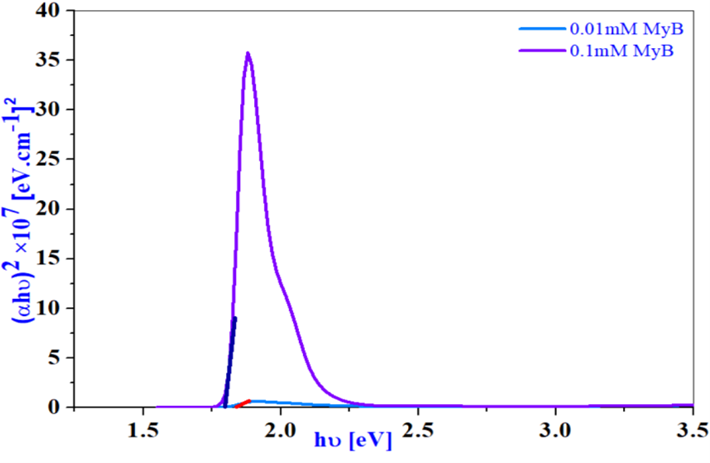
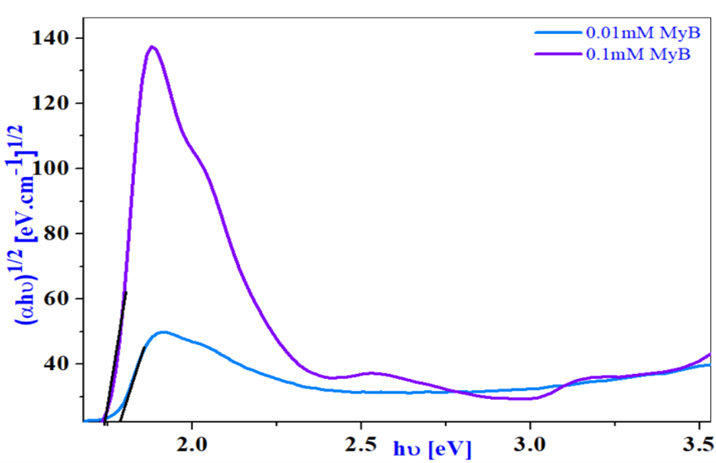
The direct and indirect optical band gaps of the MB/PMMA films were investigated. Figures 7 and 8 demonstrate the dependency of both ${{\left( {{\alpha }_{op}}h\upsilon \right)}^{2}}$ and ${{\left( {{\alpha }_{op}}h\upsilon \right)}^{1/2}}$ on hv for the direct and indirect transitions, respectively. The optical energy band gap for jointly direct and indirect optical transitions for the MB/PMMA films is obtained by extrapolating the straight path segments of the curves to hv = 0. Table 2 lists the band gaps of the materials under study in Figures 7 and 8. According to this work, the MB dye changes both the electronic structure and the structure of the PMMA polymer due to the production of defect levels after doping with the successful dye [30].
3.2 Optical-limiting technique
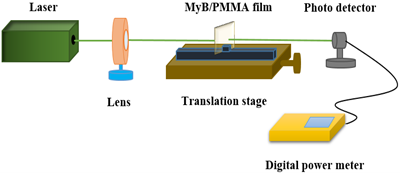
Using a 635 nm continuous wave (CW) solid-state laser (SSL) and the experimental optical limit setup shown in Figure 9, the OPL measurements were executed. To focus the laser beam on the film, a convex lens with a 50 mm focal length was used, and the MB/PMMA film was placed at the focal length of the lens. A power meter coupled with a photodetector picked up the transmitted beam from the MB/PMMA film. The power input was modified and the output power was monitored to obtain optical resolution through the 2 or 4 mm diameter aperture placed in front of the photodetector.
Figure 9. Optical limiting experimental setup
3.3 Optical limiting properties of methylene blue/poly(methyl methacrylate) polymeric films
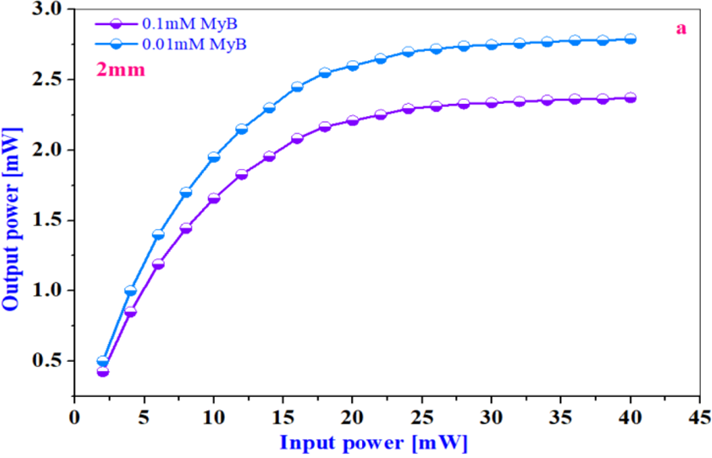
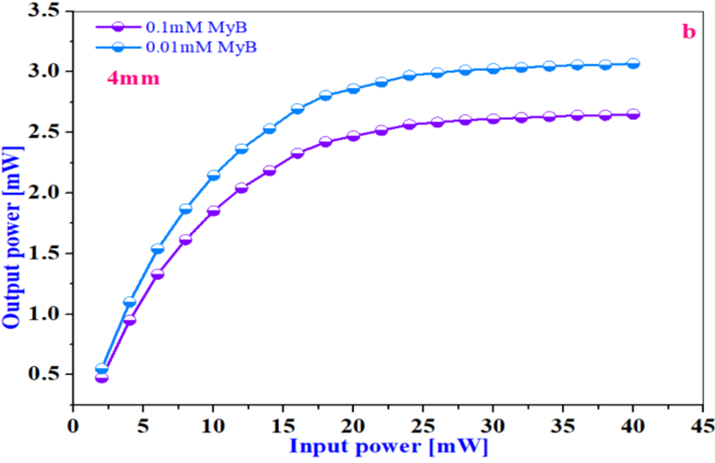
Large nonlinear characterization of the organic material has been demonstrated. It is quite important to look for optical limiting in organic dyes. Optical limiters are devices that let ambient light levels be transmitted while lowering light intensity. The input laser power at which the transmittance drops to half of the linear transmittance value is known as the optical limiting threshold (LTh); i.e., the limiting performance is better when the LTh value is lower [31]. The concentration of the sample and the diameter of the photodetector's aperture are two of the factors that affect the threshold values of optical limiting. We shall investigate how these characteristics affect the optical limiting qualities. The experimental results illustrating the OPL behavior of MB/PMMA films with different concentrations are recorded at photodetector apertures of 2 mm and 4 mm in diameter.
(a) 2 mm
(b) 4 mm
MB/PMMA films exhibit pronounced optical limiting behavior characterized by a nonlinear saturation of output power at higher input intensities. This effect becomes more significant with increasing dye concentration. When the input power is low, the output power changes linearly with the input power, as shown in Figure 10(a) and (b). When the input power is large, the output power begins to deviate from the linear relationship and reflects the limiter's threshold. There should be a mechanism to explain the optical limiting behavior that each sample exhibits. Nonlinear scattering, nonlinear absorption (two-photon absorption and reverse saturable absorption), and nonlinear refraction (thermal effects or electronics) are some of the mechanisms that explain the behavior of the optical limiting. Since the current investigation uses CW laser sources, nonlinearity has a thermal origin. Additionally, reducing the detector aperture diameter strengthens the observed limiting due to increased sensitivity to nonlinear refraction and beam distortion effects.
It was discovered throughout the research that the sample's self-defocusing laser beam is caused by a shift in refractive index. Additionally, reducing the detector aperture diameter strengthens the observed limiting due to increased sensitivity to nonlinear refraction and beam distortion effects [32].
(a) 2 mm
(b) 4 mm
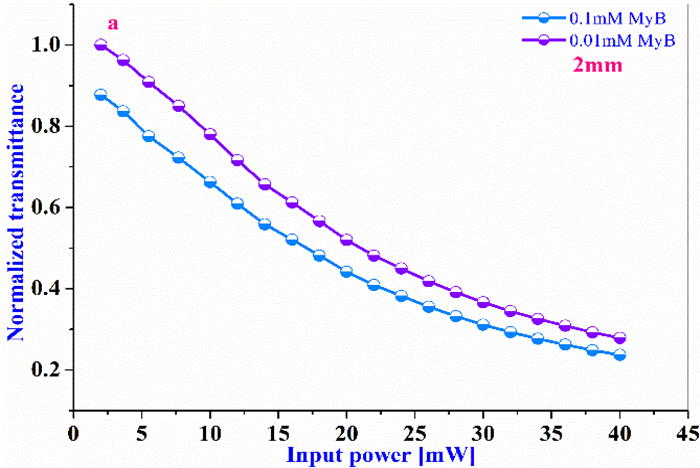
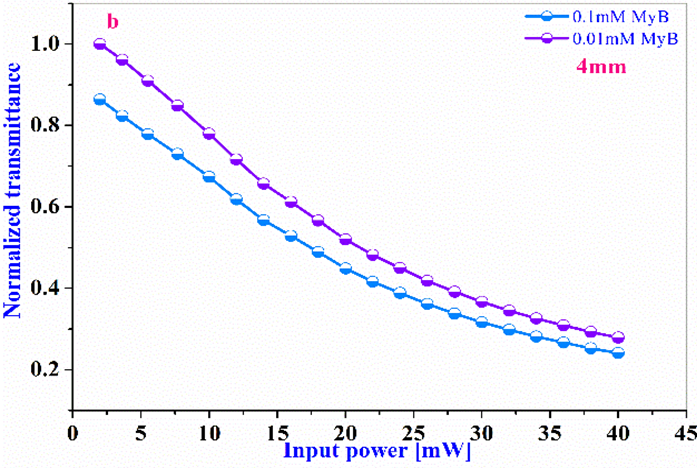
Figure 11. Normalized transmission curves of optical limiting with various concentrations at different aperture diameters
The calibrated transfer curves as a function of input power, shown in Figure 11(a) and (b), illustrate the behavior of the two samples at different aperture diameters (2 and 4 mm). Threshold values, defined as the input power at which transmittance falls to half its linear value, were extracted from these curves and are listed in Table 2. The dye-doped PMMA film exhibits a lower threshold, indicating higher optical limiting efficiency. The results further confirm that the limiting effect is aperture-dependent: as the aperture diameter increases, the threshold rises while the output power remains nearly constant. In contrast, increasing the dye concentration reduces the threshold value, as clearly seen in both figures.
Overall, the high-MB-content PMMA film showed improved linear and nonlinear optical characteristics, which improved its suitability for photonic devices and optical limiting applications. These results verify that dye concentration is a crucial factor in customizing MB/PMMA composites' optical response and enhancing their functionality for cutting-edge optoelectronic applications. The absorption spectra showed an increase in absorbance with increasing MB content, which directly influenced the optical constants. Both n and k exhibited noticeable enhancement at higher dye concentration, indicating increased electronic polarizability and a higher density of localized states within the PMMA matrix. Conversely, Eg was found to decrease with increasing dye concentration. As concentration increased, the optical limiting efficiency considerably improved in terms of nonlinear optical performance. Because of stronger nonlinear absorption processes, especially excited-state absorption, as well as contributions from nonlinear refraction and thermally induced effects, the high-concentration sample showed better limiting behavior than the low-concentration one.
[1] Wu, W., Ouyang, Q., He, L., Huang, Q. (2022). Optical and thermal properties of polymethyl methacrylate (PMMA) bearing phenyl and adamantyl substituents. Colloids and Surfaces A: Physicochemical and Engineering Aspects, 653: 130018. https://doi.org/10.1016/j.colsurfa.2022.130018
[2] Ibraheem, H.A., El-Hiti, G.A., Yousif, E., Ahmed, D.S., Hashim, H., Kariuki, B.M. (2024). Investigation of the impact of chemical modifications on the photostability of polymethyl methacrylate. International Journal of Polymer Science, 2024(1): 3354280. https://doi.org/10.1155/2024/3354280
[3] Burcea, A., Bănățeanu, A.M., Poalelungi, C.V., Forna, N., Cumpătă, C.N. (2024). Enhanced properties and multifaceted applications of polymethyl methacrylate (PMMA) in modern medicine and dentistry. Rom J Oral Rehabil, 16(4): 108-123. https://doi.org/10.62610/RJOR.2024.4.16.11
[4] Ali, U., Karim, K.J.B.A., Buang, N.A. (2015). A review of the properties and applications of poly (methyl methacrylate) (PMMA). Polymer Reviews, 55(4): 678-705. https://doi.org/10.1080/15583724.2015.1031377
[5] Xie, X., Luo, R., Sun, D., et al. (2024). Polymethyl methacrylate substrate-inducing highly ordered regenerated cellulose films toward ultra-high breakdown strength and charge–discharge efficiency. Macromolecules, 57(18): 8889-8904. https://doi.org/10.1021/acs.macromol.4c00416
[6] Zafar, M.S. (2020). Prosthodontic applications of polymethyl methacrylate (PMMA): An update. Polymers, 12(10): 2299. https://doi.org/10.3390/polym12102299
[7] Xu, J.Q., Liu, Y.J., He, J.S., Zhang, R.P., Zuo, B., Wang, X.P. (2014). Surface structures of poly (methyl methacrylate) films influenced by chain entanglement in the corresponding film-formation solution. Soft Matter, 10(44): 8992-9002. https://doi.org/10.1039/c4sm01743a
[8] Weis, M. (2025). Organic semiconducting polymers in photonic devices: From fundamental properties to emerging applications. Applied Sciences, 15(7): 4028. https://doi.org/10.3390/app15074028
[9] Aithal, S., Aithal, P.S. (2016). ABCD analysis of dye doped polymers for photonic applications. IRA-International Journal of Applied Sciences, 4(2): 258-277. https://doi.org/10.5281/zenodo.155103
[10] Vasilyev, V. (2026). Applications of low-temperature flow-able chemically vapor deposited borophosphosilicate glass thin films in integrated and microsystem technologies—An overview of current status. Journal of Complex and Multiphysics Engineering Systems, 1(4): 328–343. https://doi.org/10.56578/jcmes010401
[11] Aithal, S., Aithal, P.S. (2017). Research opportunities for use of organic dyes & dye-doped polymers in optoelectronics and photonics. International Journal of Engineering Research and Modern Education, 2(1): 90-97.
[12] Bollinger, J.C., Lima, E.C., Mouni, L., Salvestrini, S., Tran, H.N. (2025). Molecular properties of methylene blue, a common probe in sorption and degradation studies: A review. Environmental Chemistry Letters, 23(5): 1403-1424. https://doi.org/10.1007/s10311-025-01856-1
[13] Fujisawa, J.I. (2025). The structure and optical properties of methylene blue dimers. Chemical Physics Letters, 883: 142529. https://doi.org/10.1016/j.cplett.2025.142529
[14] Sukumaran, V.S., Ramalingam, A. (2011). Third order optical nonlinearities and spectral characteristics of methylene blue. Journal of Quantum Information Science, 1(2): 69-72. https://doi.org/10.4236/jqis.2011.12010
[15] Hassan, Q.M.A., Emshary, C.A., Sultan, H.A. (2021). Investigating the optical nonlinear properties and optical limiting of eosin methylene blue solution using a CW laser beam. Physica Scripta, 96(9): 095503. https://doi.org/10.1088/1402-4896/ac0868
[16] Parvin, U.M., Ahamed, M.B. (2015). Nonlinear optical properties of methyl blue dye by Z-scan technique. Optik, 126(5): 551-553. https://doi.org/10.1016/j.ijleo.2015.01.001
[17] Zhou, G.J., Wong, W.Y., Ye, C., Lin, Z. (2007). Optical power limiters based on colorless di-, oligo-, and polymetallaynes: Highly transparent materials for eye protection devices. Advanced Functional Materials, 17(6): 963-975. https://doi.org/10.1002/adfm.200600855
[18] Abdullah, R.M., Badran, H.A., Abul-Hail, R.C. (2024). Electrical, thermal lens and optical study of fluorescein film for application as organic photovoltaic devices. Journal of Fluorescence, 34(2): 549-560. https://doi.org/10.1007/s10895-023-03299-9
[19] Hassanien, A.S., Sharma, I., Sharma, P. (2023). Inference of Sn addition on optical properties of the novel thermally evaporated thin a-Ge15Te50S35-xSnx films and some physical properties of their glasses. Materials Chemistry and Physics, 293: 126887. https://doi.org/10.1016/j.matchemphys.2022.126887
[20] Hamdy, M.S., AlFaify, S., Al-Hajry, A., Yahia, I.S. (2016). Optical constants, photostability and photodegradation of MB/PMMA thin films for UV sensors. Optik, 127(12): 4959-4963. https://doi.org/10.1016/j.ijleo.2016.02.027
[21] Yunus, W., Sheng, C. (2004). Photodegradation study of methylene blue (MB) trapped in poly (methyl methacrylate) (PMMA) matrix. Suranaree Journal of Science and Technology, 11(2): 138-142.
[22] Hemdan, S.S. (2023). The shift in the behavior of methylene blue toward the sensitivity of medium: Solvatochromism, solvent parameters, regression analysis and investigation of cosolvent on the acidity constants. Journal of Fluorescence, 33(6): 2489-2502. https://doi.org/10.1007/s10895-023-03234-y
[23] Kostjukova, L.O., Leontieva, S.V., Kostjukov, V.V. (2021). Vibronic absorption spectrum and electronic properties of methylene blue in aqueous solution: TD-DFT study. Journal of Molecular Liquids, 336: 116369. https://doi.org/10.1016/j.molliq.2021.116369
[24] Redasani, V.K., Patel, P.R., Marathe, D.Y., Chaudhari, S.R., Shirkhedkar, A.A., Surana, S.J. (2018). A review on derivative UV-spectrophotometry analysis of drugs in pharmaceutical formulations and biological samples review. Journal of the Chilean Chemical Society, 63(3): 4126-4134. https://doi.org/10.4067/s0717-97072018000304126
[25] Abdullah, R.M., Obeed, M.T., Sweah, Z.J., Badran, H.A., Abul-Hail, R.C., Hamzah, M.Q. (2024). Self-diffraction characterization and optical limiting behavior of the PANi/PVA nanofiber. Polymer Science, Series A, 66(3): 348-362. https://doi.org/10.1134/S0965545X24600960
[26] Mohammed, H.A., Hussein, I.I., Hamasalih, G.H., et al. (2025). Investigation of structural and optoelectronic properties in dye-doped MC biopolymer films. Journal of Science: Advanced Materials and Devices, 10(4): 100968. https://doi.org/10.1016/j.jsamd.2025.100968
[27] Yahia, I.S., Jilani, A., Abutalib, M.M., et al. (2016). A study on linear and non-linear optical constants of Rhodamine B thin film deposited on FTO glass. Physica B: Condensed Matter, 490: 25-30. https://doi.org/10.1016/j.physb.2016.03.003
[28] Hasan, H.A., Hussein Al-Assady, N.A., Badran, H.A., Alfahed, R.K., Ajeel, K.I. (2024). The influence of temperature on structural and third order nonlinear properties of cadmium sulfide nanoparticle films prepared by chemical reaction method. Materials Research Bulletin, 170: 112554. https://doi.org/10.1016/j.materresbull.2023.112554
[29] Alnayli, R.S., Shanon, Z.S., Hadi, A.S. (2019). Study the linear and nonlinear optical properties for laser dye Rhodamine B. Journal of Physics: Conference Series, 1234(1): 012022. https://doi.org/10.1088/1742-6596/1234/1/012022
[30] Nassier, L.F., Shinen, M.H. (2022). Study of the optical properties of poly (methyl methacrylate) (PMMA) by using spin coating method. Materials Today: Proceedings, 60: 1660-1664. https://doi.org/10.1016/j.matpr.2021.12.213
[31] Tong, R., Wu, H.X., Li, B., et al. (2005). Reverse saturable absorption and optical limiting performance of fullerene-functionalized polycarbonates in femtoseond time scale. Physica B: Condensed Matter, 366(1-4): 192-199. https://doi.org/10.1016/j.physb.2005.05.026
[32] Badran, H.A., Al-Hazam, H.A., Alfahed, R.K.F., Ajeel, K.I. (2021). Second-order hyperpolarizability and nonlinear optical properties of novel organic compound- doped poly(O-methoxyaniline) polymer film. Journal of Materials Science: Materials in Electronics, 32: 14623-14641. https://doi.org/10.1007/s10854-021-06021-2