Khaled Almazam | Anthonia Oluwatosin Adediran* | Samuel-Soma M. Ajibade | Faizah Mohammed Bashir | Yakubu Aminu Dodo | Radwa Emam
© 2026 The authors. This article is published by IIETA and is licensed under the CC BY 4.0 license (http://creativecommons.org/licenses/by/4.0/).
OPEN ACCESS
The building sector accounts for a substantial share of global energy consumption, which has prompted interest in materials that improve energy efficiency and thermal performance. Phase change materials (PCMs) have emerged as a promising option for thermal energy storage (TES), which they achieve through the latent heat absorbed and released at a phase transition. This study presents a bibliometric analysis of research on PCMs for building thermal storage (BTS) and energy-efficient construction. A corpus of 1,875 English-language documents indexed in Scopus between 2015 and 2024 was analyzed, and science-mapping techniques implemented in VOSviewer were used to examine publication trends, influential journals, leading authors, institutions and collaborative networks. The results indicated steady growth in PCM-related research over the past decade, together with increasing international collaboration and citation impact. The dominant themes were thermal regulation, energy savings, latent heat storage (LHS), encapsulation and environmental performance. The principal applications were building envelope integration, performance optimization, material characterization, numerical modeling and life cycle assessment (LCA). Research activity was concentrated in regions with strong commitments to sustainable construction, particularly Europe, North America and China. Gaps remain in cost-effectiveness, scalability, long-term durability and experimental validation under real-world conditions. Emerging directions identified through keyword co-occurrence (KCO) analysis include bio-based PCMs, hybrid composite systems and nano-enhanced PCMs. The study maps the intellectual landscape of PCM research for researchers, industry stakeholders and policymakers.
bibliometric analysis, building thermal storage, energy storage, phase change materials, smart building, sustainable energy, thermal energy storage
The building sector remains a major contributor to global energy consumption, and a considerable share of that demand is attributable to the maintenance of indoor thermal comfort. Commercial and residential buildings account for a large proportion of total energy use worldwide, and for a high percentage of electricity consumption in developed countries [1-3]. The sector comprises several building typologies whose operational and physical characteristics differ and therefore influence energy demand in different ways. Classifying buildings as residential or non-residential (commercial) is a necessary step toward understanding these usage patterns [4-6]. Because buildings account for more than 40% of global energy consumption, the search for sustainable solutions and alternative energy sources has become a priority [7-9]. Thermal energy storage (TES) systems and phase change materials (PCMs) have consequently gained prominence as a means of improving building energy efficiency, since they can store and release heat during phase transitions [3, 10-12]. This capability reduces heating and cooling demand and stabilizes indoor temperatures [13-16].
TES is essential for reconciling mismatches between energy supply and demand, and it performs this role in commercial, residential and industrial applications alike. TES is conventionally divided into sensible, latent and thermochemical storage. Latent heat storage (LHS) is the latent-heat subset of TES and is the category to which PCMs belong; it has attracted particular attention because of its high energy storage density and the near-isothermal behavior of the material during phase transition [17-19]. Relative to conventional insulation materials, PCMs increase the thermal inertia of a building and reduce indoor temperature fluctuation, and because they store heat in latent form, they offer a higher storage capacity per unit volume than conventional construction materials [20-22]. In buildings, they are integrated into floors, walls, windows and ceilings, and incorporated into construction materials such as concrete, gypsum boards and composite panels [23-25]. By absorbing and releasing heat at the phase transition, PCMs stabilize indoor temperatures, reduce peak cooling loads and improve occupant comfort [23, 26]. Their incorporation into building construction therefore increases the capacity of the envelope to resist periodic heat flow and lowers energy consumption [27, 28]. The foundational literature on LHS in buildings predates the window analyzed here, and the classification of integration sites used throughout this paper is set out in Section 3.4.2.
Despite the recognized potential of PCMs, several limitations restrict their adoption in buildings, including thermal degradation, low thermal conductivity, high cost and supercooling [29, 30]. Recent work has sought to overcome these limitations through advanced processing techniques, composite PCM formulations and hybrid systems that couple PCMs with renewable energy sources [31-34]. Numerous studies have examined the use of PCMs in buildings, but few have analyzed the field systematically through literature reviews [35-38]. The available reviews concentrate on case studies and on integration strategies, so a comprehensive assessment of the research landscape, academic collaboration and publication trends across building applications is still lacking. Although the application of PCMs to individual building components has been explored, the evidence remains insufficient for several building materials, and the viability of TES systems in commercial property operations is not well established [28, 39, 40]. The selection of appropriate PCMs for specific building requirements has likewise received limited attention [41-43].
This study provides a bibliometric review of recent research on the use of PCMs for TES in buildings. It addresses the gap identified above by applying bibliometric tools, including keyword mapping, co-citation analysis and authorship network analysis, in order to obtain an overview of the field [18, 44]. Given the continuing growth in publication output, an approach of this kind is necessary because it identifies thematic clusters and future research directions that traditional literature reviews do not reveal. The analysis therefore identifies key contributors, research trends and the evolution of PCM applications in buildings. A bibliometric method yields both qualitative and quantitative assessments of the research landscape, highlights the practical applications of PCMs in buildings and addresses the absence of systematic analysis in the existing literature. The findings are intended to advance understanding of PCM-based TES applications and to guide future investigation toward scalable and effective solutions.
The remainder of the paper is organized as follows. Section 2 describes the bibliometric methodology and the data collection procedure. Section 3 presents a quantitative analysis of research trends, covering citation impact, publication growth and research collaboration, together with a discussion of technological advances in PCM applications for buildings and of emerging themes. Sections 4 and 5 set out the conclusions, future research directions, challenges and policy implications. The study is intended to bridge the gap between academic research and practical application, and thereby to support the development of climate-responsive and energy-efficient buildings.
2.1 Data source and search strategy
Bibliographic records were retrieved from the Scopus database (Elsevier). Scopus was selected for its broad and consistent indexing of peer-reviewed engineering, energy and materials literature, for its standardized author and affiliation identifiers, and for its structured export of funding and subject-area metadata. The search was executed on October 9, 2025. Because the database is updated continuously, this date is reported so that the retrieved set can be reproduced.
The query was restricted to the TITLE-ABS-KEY field, which searches article titles, abstracts, and author and indexed keywords. This field was preferred to an unrestricted full-text search because full-text matching returns a large number of records in which PCMs are mentioned only incidentally. The complete search string was as follows:
TITLE-ABS-KEY (("phase change material*" OR "PCM" OR "LHS" OR "latent TES") AND (building* OR "built environment" OR "building envelope" OR wall* OR roof* OR façade* OR ceiling*) AND ("TES" OR "thermal storage" OR "heat storage" OR "thermal performance" OR "energy efficien*")) AND PUBYEAR > 2014 AND PUBYEAR < 2025 AND (LIMIT-TO (LANGUAGE, "English")).
The asterisk denotes truncation, so that building* captures building, buildings and building-integrated, and energy efficien* captures both efficiency and efficient. Quotation marks enforce phrase matching. The three concept blocks, which cover material, application setting and function, were combined with AND so that a record was retrieved only when all three were present. Synonyms within each block were combined with OR in order to maximize recall.
The analysis window was restricted to the ten years from 2015 to 2024 for four reasons. First, the object of this study is the contemporary research landscape rather than the intellectual history of the field; a decade is long enough to establish a trend, yet short enough that the observed structure still describes current practice. Second, the window opens immediately before the 2015 Paris Agreement and the adoption of the Sustainable Development Goals. It therefore captures in full the policy cycle within which national building-energy strategies, and the research funding attached to them, were reframed around decarbonization. Third, the technologies that motivate current work in this area became prominent research themes within this period. These include form-stable composites, nano-enhanced formulations, bio-based PCMs, and the integration of PCMs with photovoltaic (PV) and smart-control systems. A longer window would therefore dilute rather than enrich the thematic mapping. Fourth, the quality of Scopus metadata for author identifiers, affiliation disambiguation and funding-sponsor fields is markedly higher for recent records, which materially affects the reliability of the co-authorship, co-affiliation and funding analyses. This restriction does not imply that the field originated in 2015. The foundational work on LHS in buildings is considerably older and is acknowledged in Section 1; the present study characterizes the most recent decade of that longer trajectory.
2.2 Eligibility criteria and document types
All document types indexed by Scopus were retained. This decision reflects the purpose of a bibliometric study, which is to map the observable output and communication structure of a research field rather than to synthesize validated evidence in the manner of a systematic review of effect sizes. Excluding conference papers would systematically under-represent the thermal-engineering and computational-modeling communities, for which proceedings are an established primary venue. Excluding review articles would distort the co-citation and keyword structures, since reviews are among the most frequently cited documents in this domain. It is nevertheless acknowledged that document types differ in peer-review rigor, and a sensitivity analysis restricted to journal articles and review articles is reported in Section 3.2.4. The eligibility criteria applied at the query and screening stages are summarized in Table 1.
Table 1. Inclusion and exclusion criteria
|
Criterion |
Included |
Excluded |
|
Database |
Scopus (Elsevier) |
Sources not indexed in Scopus |
|
Field |
TITLE-ABS-KEY |
Full-text-only matches |
|
Window |
2015–2024 |
2014 or earlier; 2025 onward |
|
Language |
English |
All other languages |
|
Relevance |
PCM applied to thermal storage in buildings or building components |
PCM as phase-change memory or pulse-code modulation; PCM outside the building sector |
|
Document type |
All indexed types retained |
None excluded on type (see Section 3.2.4) |
|
Metadata |
Retrievable title, abstract, author and source metadata |
Metadata insufficient for author, affiliation or keyword mapping |
Note: Phase change materials (PCMs).
2.3 Screening procedure and record selection
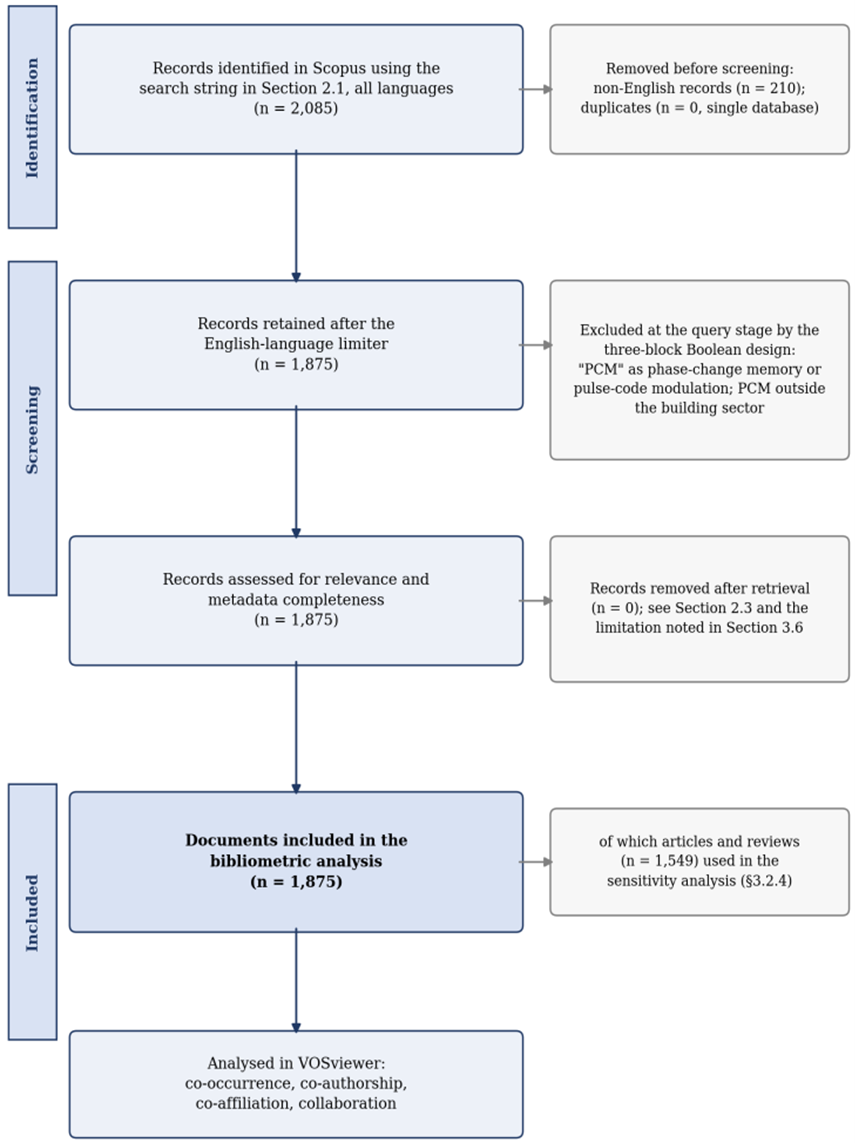
The search string defined in Section 2.1, executed without the language limiter, returned 2,085 records. Applying the English-language limiter removed 210 records and left 1,875 documents analyzed in this study, of which 1,549 are journal articles or review articles. The selection process is summarized in Figure 1 and follows the Preferred Reporting Items for Systematic Reviews and Meta-Analyses (PRISMA) 2020 reporting structure.
Figure 1. PRISMA flow diagram of the identification, screening and inclusion of records on phase change materials for building thermal storage (PCM-BTS) research (2015–2024)
2.4 Analytical tools and parameter settings
Network construction and visualization were performed in VOSviewer. The software was used to map keyword co-occurrence (KCO), co-authorship, co-affiliation and country collaboration networks, to identify thematic clusters within those networks, and to trace the emergence of research themes over time through sub-period comparison and average-publication-year overlays [45-47]. Because cluster assignments in co-occurrence networks are joint products of the data and the parameter settings, all settings are reported in Table 2.
Thematic composition was additionally assessed by intersecting the master query defined in Section 2.1 with controlled term blocks representing each material class, application domain and research focus, and by recording the number of documents returned. Two properties of this procedure require statement. First, the categories are not mutually exclusive, so the shares sum to more than 100% and should be read as coverage rather than as a partition of the corpus. Second, the procedure detects topical mention within the title, abstract and keyword fields rather than depth of treatment, so a study that refers to cost once is counted alongside one that presents a full techno-economic model. Both constraints are restated in Section 3.6.
Because cluster assignments depend on the resolution parameter and the minimum-occurrence threshold as well as on the data, the analysis was repeated at resolution values of 0.75, 1.00 and 1.25. The resulting cluster counts differed only marginally across these values, and the composition of the principal clusters remained stable.
Table 2. VOSviewer parameter settings
|
Parameter |
Setting Used |
|
Software and version |
VOSviewer 1.6.20 |
|
Analyses performed |
Keyword co-occurrence (KCO); co-authorship; co-affiliation; country collaboration |
|
Unit of analysis |
All keywords (author and index); authors; organizations; countries |
|
Counting method |
Full counting |
|
Normalization method |
Association strength |
|
Edge weighting |
Total link strength (co-occurrence frequency) |
|
Clustering resolution |
1.00 (VOSviewer default) |
|
Minimum cluster size |
1 (VOSviewer default) |
|
Thesaurus/term merging |
Thesaurus file applied to merge terminological variants |
3.1 General publication trend analysis
Publication trend analysis provides the context for this review of research on PCMs for building thermal storage (BTS), because it identifies key developments and research gaps within the field. Situating the review within the broader research landscape demonstrates the growing significance of the topic and traces the evolution of PCM research, including its influential authors, leading institutions and principal advances. The analysis also distinguishes areas that have been studied extensively from those that require further attention, and thereby guides future research directions.
3.1.1 Total publication growth
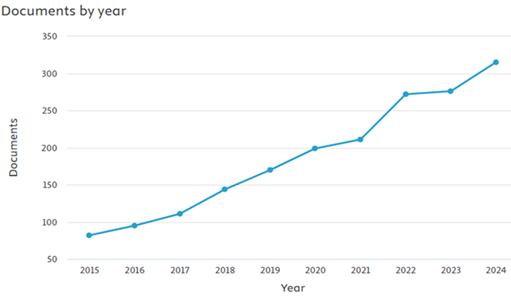
The bibliometric analysis of PCMs for BTS over the period 2015 to 2024 showed a steady rise in research output, from 82 publications in 2015 to 315 in 2024. This growth reflects increasing scholarly interest in PCMs as a solution for building energy efficiency. The most pronounced growth occurred between 2017 and 2018 (+29.7%) and between 2021 and 2022 (+28.9%), and may be attributable to technological advances and policy developments. Figure 2 presents the number of documents published in each year, and Table 3 presents the annual counts, growth rates and contribution shares.
Figure 2. Number of publications by year (2015–2024)
Table 3. Annual publication counts and growth rates for phase change materials for building thermal storage (PCM-BTS) research (2015–2024)
|
Year |
Number of Publications |
% Growth from Previous Year |
% Contribution to Total Publications |
|
2015 |
82 |
- |
4.37% |
|
2016 |
95 |
+15.9% |
5.07% |
|
2017 |
111 |
+16.8% |
5.93% |
|
2018 |
144 |
+29.7% |
7.69% |
|
2019 |
170 |
+18.1% |
9.08% |
|
2020 |
199 |
+17.1% |
10.63% |
|
2021 |
211 |
+6.0% |
11.27% |
|
2022 |
272 |
+28.9% |
14.53% |
|
2023 |
276 |
+1.5% |
14.75% |
|
2024 |
315 |
+14.1% |
16.83% |
Growth slowed in 2023, falling to +1.5%, which indicates a temporary stabilization in the publication rate that may be linked to research consolidation, market saturation, or changes in funding. The year 2024 nevertheless accounted for the largest share of total publications (16.83%), which indicates that PCM research remains an active and expanding field, particularly in relation to building energy efficiency. The overall trend therefore reflects sustained academic and industrial interest that is consistent with global sustainability objectives and with continued demand for innovative thermal storage solutions in buildings.
3.1.2 Source titles
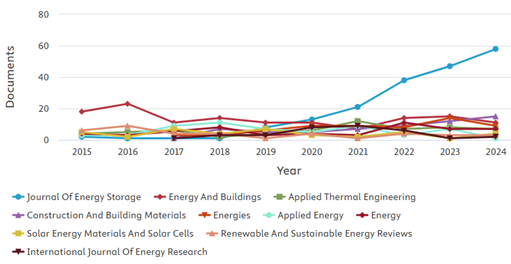
The distribution of publication sources over the period 2015 to 2024 is presented in Figure 3. Research on PCMs for BTS is concentrated in high-impact journals in the fields of thermal engineering, energy and construction. Percentages are calculated within the top 10 journals shown in Figure 3.
Figure 3. Distribution of source titles on phase change materials for building thermal storage (PCM-BTS) research (2015–2024)
The International Journal of Energy Storage led with 189 publications (22.42%), followed by Energy and Buildings (135, 16.04%), Applied Thermal Engineering (61, 7.25%), Construction and Building Materials (60, 7.23%) and Energies (60, 7.21%). Other prominent sources were Applied Energy (58, 6.91%), Energy (50, 5.94%), Solar Energy Materials and Solar Cells (40, 4.73%), Renewable and Sustainable Energy Reviews (39, 4.60%) and the International Journal of Energy Research (33, 3.91%). These ten journals were selected on the basis of publication volume (≥33) and account for most PCM-related studies, which indicates their influence in the field. Their editorial focus on renewable energy, energy efficiency and sustainable construction is consistent with the growing role of PCMs in global energy solutions.
3.2 Stakeholder productivity analysis
3.2.1 Top authors
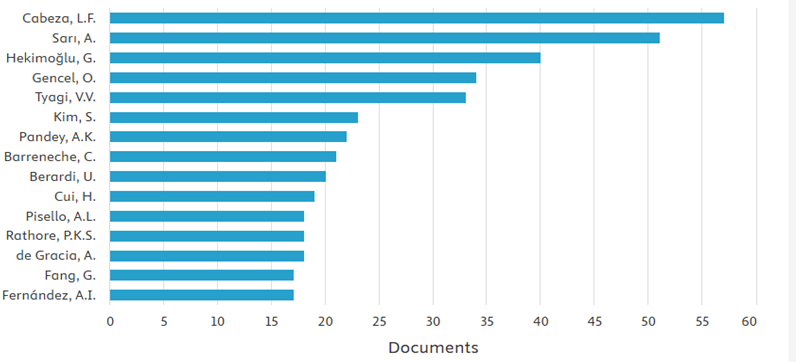
Figure 4 presents the contributions of individual authors to research on PCMs for BTS between 2015 and 2024, restricted to the 15 most prolific researchers in the field.
Figure 4. Top 15 researchers on phase change materials for building thermal storage (PCM-BTS) research (2015–2024)
The leading author was Cabeza, with 57 publications (13.7%), followed by Sari (51, 12.3%), Hekimoglu (40, 9.6%), Gencel (34, 8.2%) and Tyagi (33, 7.9%). Other major contributors were Kim (23, 5.5%), Pandey (22, 5.3%), Barreneche (21, 5.0%), Berardi (20, 4.8%) and Cui (19, 4.6%), followed by Pisello, Rathore and De Gracia (18, 4.3% each) and by Fang and Fernandez (17, 4.1% each). Authors below this threshold were excluded in order to keep the figure legible and to emphasize those who have shaped the knowledge base of the field. The work of these authors spans PCM applications, thermal performance and energy storage innovation. Percentages in this subsection are expressed as a share of the top-ranked subset displayed in Figure 4 rather than of the full corpus of 1,875 documents.
3.2.2 Top affiliations
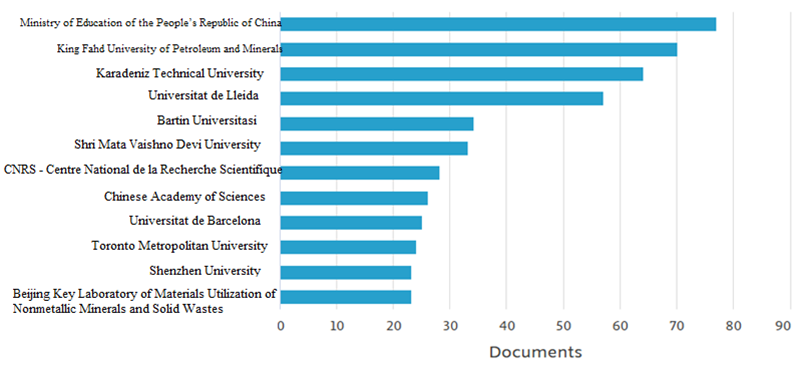
Figure 5 presents the contributions of individual institutions to research on PCMs for BTS between 2015 and 2024, restricted to the 15 most active affiliations.
Figure 5. Top 15 affiliations on phase change materials for building thermal storage (PCM-BTS) research (2015–2024)
The Ministry of Education of the People’s Republic of China led with 77 publications (17.1%), followed by King Fahd University of Petroleum and Minerals (70, 15.5%), Karadeniz Technical University (64, 14.2%) and Universitat de Lleida (57, 12.7%). Other major contributors were Bartin Universitasi (34, 7.6%), Shri Mata Vaishno Devi University (33, 7.3%), CNRS - Centre National de la Recherche Scientifique (28, 6.2%), Chinese Academy of Sciences (26, 5.8%), Universitat de Barcelona (25, 5.6%) and Toronto Metropolitan University (24, 5.3%), followed by Shenzhen University and the Beijing Key Laboratory of Materials Utilization of Nonmetallic Minerals and Solid Wastes (23, 5.1% each). Restricting the analysis to the top 15 affiliations, each with at least 23 publications, isolates the institutions that have contributed most consistently to the field. The prominence of Chinese institutions is consistent with national energy policy, which prioritizes energy efficiency and sustainable construction. King Fahd University of Petroleum and Minerals and Karadeniz Technical University rank highly on the basis of their output in thermal storage and sustainable energy. The European institutions, notably Universitat de Lleida, CNRS and Universitat de Barcelona, are established contributors to renewable energy and smart building technologies. The variation in publication volume between institutions is attributable to differences in research funding, government priorities, access to experimental facilities and international collaboration. Percentages in this subsection are expressed as a share of the top-ranked subset displayed in Figure 5.
3.2.3 Top active countries
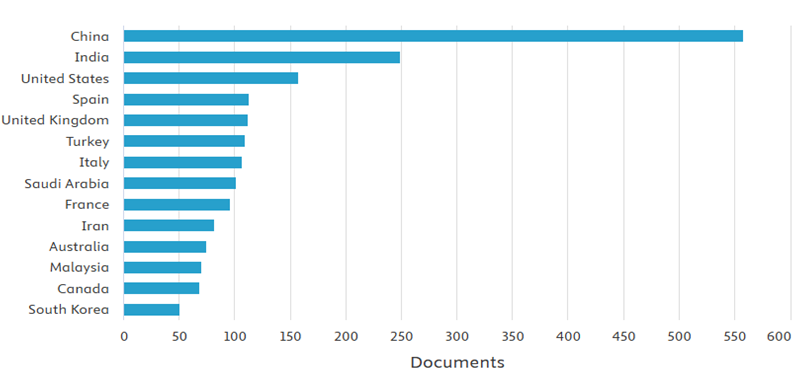
Figure 6 presents the distribution of PCM research publications by country or territory between 2015 and 2024, which reveals substantial geographical variation in research output.
China led with 557 publications (28.5%), followed by India (248, 12.7%), the United States (157, 8.0%), Spain (112, 5.7%) and the United Kingdom (111, 5.7%). Other notable contributors were Turkey (109, 5.6%), Italy (106, 5.4%), Saudi Arabia (101, 5.2%), France (95, 4.9%), Iran (81, 4.1%), Australia (74, 3.8%), Malaysia (69, 3.5%), Canada (68, 3.5%) and South Korea (50, 2.6%). This variation is associated with national energy policies, research funding, industrial priorities and government strategy. The leading position of China coincides with a sequence of identifiable policy instruments. Building energy efficiency was designated a priority area in the 13th and 14th Five-Year Plans, and the dual-carbon targets announced in September 2020, namely carbon peaking by 2030 and neutrality by 2060, were followed by the mandatory national standard GB 55015-2021, which tightened envelope performance requirements for new construction [48]. These instruments are matched by direct research funding: the National Natural Science Foundation of China and the Ministry of Science and Technology together account for 40.1% of the funded records in this corpus (Section 3.2.6). The correspondence should be read as association rather than as demonstrated causation, since the interval between funding award and indexed publication is typically two to four years. The high ranking of India is consistent with the Energy Conservation Building Code and the residential Eco-Niwas Samhita, which extended mandatory envelope requirements to a rapidly expanding building stock [49]. The United States maintains a strong presence through Department of Energy building-technology programs and the ASHRAE 90.1 energy standard, which sets the performance benchmarks against which envelope storage is evaluated. European engagement, in Spain, the United Kingdom, Italy and France, is anchored in the Energy Performance of Buildings Directive, most recently recast as Directive (EU) 2024/1275, and in the European Green Deal and Renovation Wave, which together set binding renovation and near-zero-energy targets and fund the research that addresses them [50-52]. The contribution of Saudi Arabia reflects Vision 2030 and the energy conservation requirements of the Saudi Building Code, which prioritize cooling-load reduction in extreme climates [53], while Iran, Malaysia and South Korea are emerging contributors supported by government programs in energy efficiency research [54, 55]. Percentages in this subsection are expressed as a share of the top-ranked countries displayed in Figure 6.
Figure 6. Top 15 active countries on phase change materials for building thermal storage (PCM-BTS) research (2015–2024)
Country-level output differs from institutional output because a national total aggregates the contributions of many institutions. In some countries, a small number of dominant institutions account for most of the output, whereas in others, such as China and the United States, research effort is distributed across many universities and research centers. International collaboration also influences country rankings, since research in some regions benefits from global partnerships and joint funding programs. The geographical distribution therefore reflects both the global significance of PCM research and the varied motivations behind it, which range from climate adaptation and energy efficiency to government policy and industrial application.
3.2.4 Document types
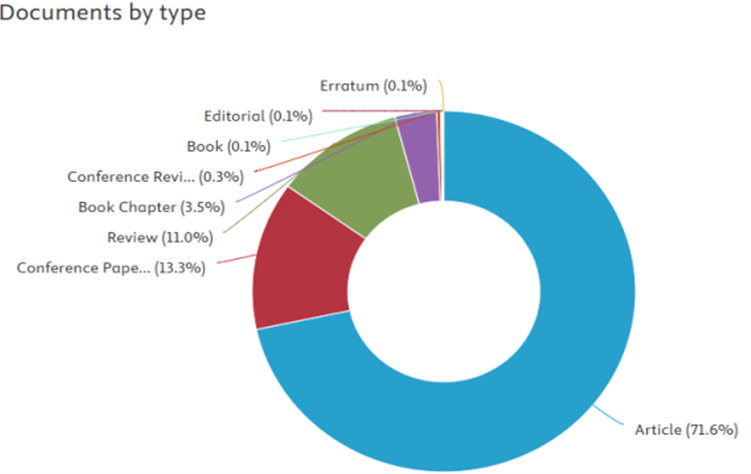
The distribution of document types in research on PCMs for BTS between 2015 and 2024 is presented in Figure 7.
Figure 7. Distribution of document types on phase change materials for building thermal storage (PCM-BTS) research (2015–2024)
The corpus comprises a diverse range of academic contributions. Journal articles dominated the field with 1,343 publications (71.6%), which reflects their peer-review rigor and their standing as the primary vehicle for high-impact research. Conference papers (249, 13.3%) and review articles (206, 11.0%) followed, which indicates the importance of both conference discussion and comprehensive literature synthesis. Book chapters (66, 3.5%), conference reviews (6, 0.3%), books (2, 0.1%), editorials (2, 0.1%) and errata (1, <0.1%) were considerably less frequent, since these formats are less commonly used for primary research dissemination in this field. Retaining all document types ensures a comprehensive bibliometric assessment that accounts for both primary research and secondary discussion.
Because document types differ in peer-review rigor, a sensitivity analysis was performed in which the corpus was restricted to journal articles and review articles (n = 1,549; 82.6% of the full corpus) and the rankings of leading sources, authors, affiliations and countries were recomputed. Percentages in this subsection and in Section 3.2.5 are expressed as a share of the full corpus of 1,875 documents, whereas those in Sections 3.2.1, 3.2.2, 3.2.3 and 3.2.6 are expressed as a share of the top-ranked subset displayed in the corresponding figure.
3.2.5 Subject areas
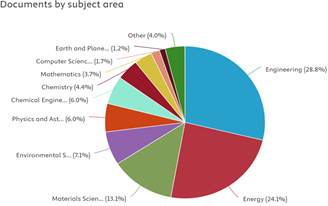
Figure 8 presents the subject areas represented in PCM-BTS research. Engineering led with 1,099 publications (59.1%), which reflects the technical and applied nature of PCM research. Energy followed closely (921, 49.5%), since PCMs are studied primarily for their role in thermal storage and efficiency improvement.
Figure 8. Subject areas on phase change materials for building thermal storage (PCM-BTS) research (2015–2024)
Materials science (499, 26.8%) reflects the importance of material innovation in PCM development, and environmental science (271, 14.6%) reflects the sustainability dimension of PCM applications. Other significant fields were physics and astronomy (230, 12.4%), chemical engineering (228, 12.3%) and chemistry (170, 9.1%), which contribute to the understanding of the thermal, chemical and physical properties of PCMs. Mathematics (140, 7.5%), computer science (66, 3.5%) and earth and planetary sciences (45, 2.4%) played supporting roles in the modeling of PCM behavior, in simulation and in climate-related applications. This distribution is expected, since PCMs are inherently interdisciplinary and require engineering expertise for practical application, materials science for formulation and energy research for efficiency optimization. The smaller contribution of computer science and earth sciences reflects their supporting role, which lies in simulation and environmental impact assessment rather than in direct material development.
3.2.6 Funding sponsors
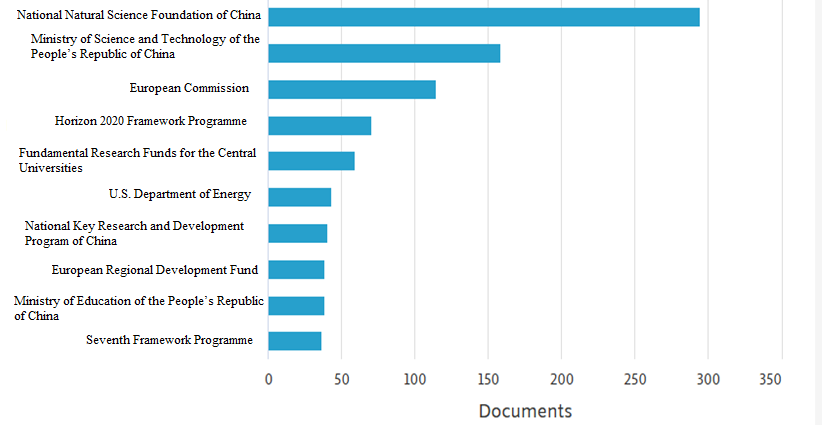
Figure 9 presents the ten funding agencies most frequently acknowledged in research on PCMs for BTS between 2015 and 2024, and illustrates the role of national and international funding bodies in advancing energy-efficient and sustainable building technologies.
The National Natural Science Foundation of China (294 grants, 26.1%) and the Ministry of Science and Technology of the People’s Republic of China (158, 14.0%) were the leading funders, which reflects the strategic investment of China in energy-efficient materials and thermal storage solutions in support of its sustainability and carbon neutrality targets. The European Commission (114, 10.1%) and the Horizon 2020 Framework Programme (70, 6.2%) indicate the commitment of Europe to green energy innovation through large-scale collaborative research programs. The Fundamental Research Funds for the Central Universities (59, 5.2%) support university-led initiatives and thereby maintain the role of academic institutions in technological advancement. In North America, the U.S. Department of Energy (43, 3.8%) prioritizes research on energy-efficient building materials and TES, in line with national policy on sustainability and carbon footprint reduction. Other notable sources were the National Key Research and Development Program of China (40, 3.6%), the European Regional Development Fund (38, 3.4%), the Ministry of Education of the People’s Republic of China (38, 3.4%) and the Seventh Framework Programme (37, 3.3%), which together indicate the multinational character of investment in PCM technology. Percentages in this subsection are expressed as a share of the top-ranked subset displayed in Figure 9.
Figure 9. Top 10 funding organizations engaged in phase change materials for building thermal storage (PCM-BTS) research (2015–2024)
Funding is critical in this field because it enables sustained research and development, supports experimental studies and large-scale testing, and facilitates the commercialization of advanced PCMs. Given the global emphasis on sustainable building solutions, governmental and institutional funding underpins continued progress in energy-efficient construction and thermal management systems.
3.3 Social network analysis
3.3.1 Keyword co-occurrence analysis
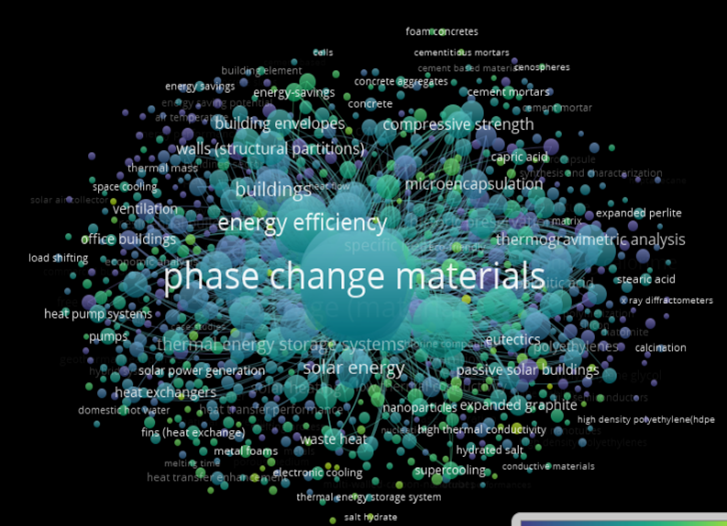
Keyword analysis identifies prevailing trends and emerging areas of focus in PCM research. Figure 10 presents the KCO map for PCM-BTS research. Frequently occurring keywords indicate the dominant research themes, which include TES, latent heat, encapsulation techniques and the integration of PCMs into building applications. The appearance of new keywords over time indicates evolving research priorities, such as nanoparticle-enhanced PCMs, smart thermal storage systems and hybrid energy solutions.
Highly connected keywords correspond to well-established research areas, whereas peripheral keywords correspond to niche or emerging topics. The most frequently occurring keywords were PCMs (1,528), energy efficiency (1,057), thermal storage (939), heat storage (860), storage (851), TES (800), thermal conductivity (462), latent heat (392), materials (386) and energy utilization (368). This distribution indicates a strong concentration on TES, PCMs and energy efficiency. Terms denoting real-world implementation, such as case study and building performance, are markedly less prominent, which is consistent with the limited experimental validation discussed in Section 5.2. The material strategies and application contexts that underlie these terms, and the reasons for their prominence, are examined in Section 3.4.
Figure 10. Keyword co-occurrence (KCO) analysis of phase change materials for building thermal storage (PCM-BTS) research (2015–2024)
3.3.2 Co-authorship analysis
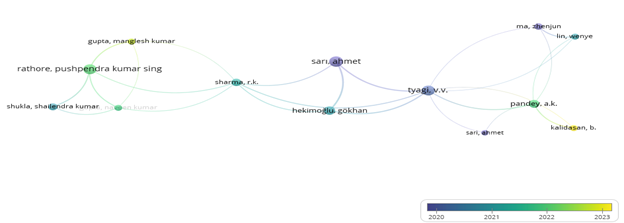
Figure 11 presents the co-authorship network for research on PCMs for BTS, which shows the collaborative structure of the field.
Figure 11. Network visualization map for collaborating authors on phase change materials for building thermal storage (PCM-BTS) research (2015–2024)
The network contains clusters of researchers who work closely together; some form strong local research groups, while others engage in broader international collaboration. Authors occupying central positions in the network generally correspond to the most prolific contributors identified in Section 3.2.1. A high density of co-authorship links indicates established academic partnerships, whereas isolated authors and small clusters indicate independent or emerging research groups. The persistence of such isolated clusters indicates that research effort remains partly fragmented. Strengthening international ties and interdisciplinary cooperation would therefore accelerate both scientific progress and the practical implementation of PCMs in energy-efficient building projects.
3.3.3 Co-affiliation analysis
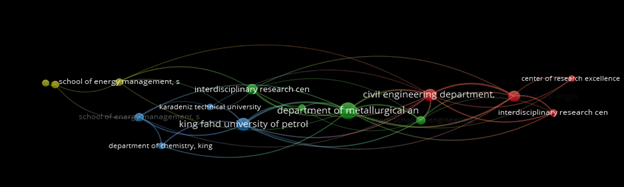
Figure 12 presents the co-affiliation network for PCM-BTS research, which identifies the universities and research centers that collaborate most extensively in the field.
Figure 12. Network visualization map for collaborating affiliations on phase change materials for building thermal storage (PCM-BTS) research (2015–2024)
Institutions with high publication output set much of the research agenda for the field. Some universities concentrate on the fundamental materials science of PCMs, whereas others prioritize practical applications in construction and energy management. The presence of several highly active institutions indicates a competitive and evolving research landscape, whereas concentration in a small number of institutions would indicate centralized expertise and funding advantages. Institutions that collaborate across materials science, engineering and architecture tend to produce more integrated and applicable solutions. Identifying the leading institutions therefore assists in forming strategic partnerships, in securing funding and in accessing current developments in the sector.
3.3.4 Collaborating countries analysis
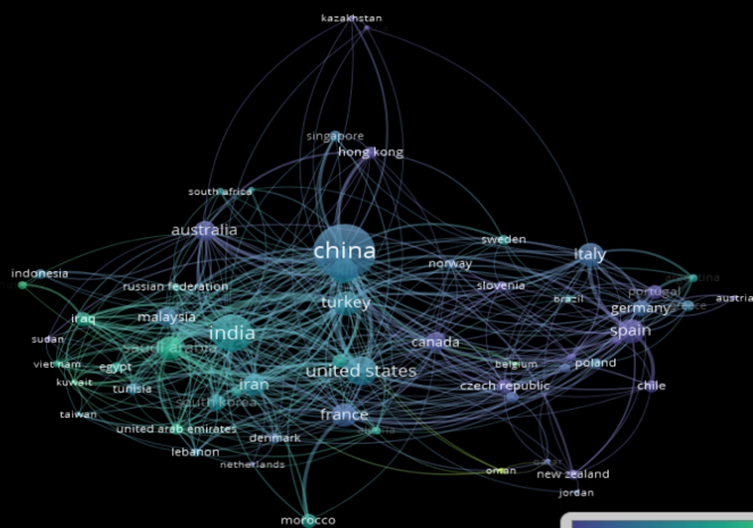
Figure 13 presents the country collaboration network for PCM-BTS research, which shows the geographical distribution of research contributions and the partnerships between them.
Figure 13. Network visualization map for collaborating countries on phase change materials for building thermal storage (PCM-BTS) research (2015–2024)
Countries that lead in research output are supported by government policies for sustainable energy and green building, whereas those that contribute less are constrained by limited funding or research infrastructure. The international links visible in the network indicate a shared global interest in advancing PCM technology, while the sparser regions of the network indicate the persistence of research silos. Countries with high publication volumes are those that have prioritized energy efficiency and climate adaptation in their building sectors. The limited contribution of developing countries indicates a need for technology transfer and collaborative research initiatives that would bridge the knowledge gap and support sustainable development globally.
3.4 Thematic composition of the research field
The analyses reported so far describe who publishes, where and with whom. This section characterizes what the corpus contains. It applies the sub-query procedure described in Section 2.4 in order to quantify the material classes studied, the building applications addressed and the research questions pursued. Because a single document may fall under several headings, the shares reported below describe coverage rather than a partition of the corpus.
3.4.1 Phase change material classes
PCMs reported in the corpus were classified on two independent axes. The first is chemical family, which comprises organic materials, principally paraffins, fatty acids, polyethylene glycols and sugar alcohols; inorganic materials, principally salt hydrates, molten salts and metallic alloys; bio-based materials derived from plant, animal or waste feedstocks; and eutectic mixtures, which combine two or more components in order to tune the transition temperature. The second axis is containment form, which comprises bulk or unsupported material, macroencapsulated material in tubes, panels or spheres, micro- and nanoencapsulated material, and shape-stabilized or form-stable composites in which the active phase is confined within a porous or polymeric support. The two axes are independent, since a composite may have an organic, inorganic or bio-based active phase. It is therefore their intersection, rather than either axis alone, that characterizes current research activity.
The families differ in ways that determine their suitability for building integration. Organic PCMs melt congruently, exhibit little supercooling, remain chemically stable over prolonged cycling and do not corrode common construction metals. They are nevertheless limited by low thermal conductivity, by combustibility and by appreciable volume change at the phase transition. Inorganic salt hydrates offer approximately twice the volumetric latent heat capacity at lower cost and are non-flammable, but they exhibit supercooling and incongruent melting with progressive phase segregation, and they corrode metallic containment. Bio-based materials substitute renewable for petrochemical feedstocks and reduce embodied carbon, but they exhibit wider and less sharply defined melting ranges as a result of feedstock variability, and their oxidative stability over building-service lifetimes is not yet well established. The resulting composition of the corpus is reported in Table 4.
Table 4. Material classification of the corpus (categories are non-exclusive)
|
Axis and Category |
n |
% of Corpus |
|
Chemical family: organic (paraffin, fatty acid, polyethylene glycol, sugar alcohol) |
483 |
25.8% |
|
Chemical family: inorganic (salt hydrate, molten salt, metallic) |
72 |
3.8% |
|
Chemical family: bio-based or waste-derived |
229 |
12.2% |
|
Chemical family: eutectic mixtures |
203 |
10.8% |
|
Containment: macroencapsulated |
103 |
5.5% |
|
Containment: micro- or nanoencapsulated |
260 |
13.9% |
|
Containment: shape-stabilized or form-stable composite |
346 |
18.5% |
|
Containment: nano-enhanced (filler-loaded) |
208 |
11.1% |
3.4.2 Building application domains
Building applications are frequently discussed as a single category, but passive envelope integration and active system integration are not variants of one problem. In passive applications, which cover walls, roofs, floors and glazing, heat transfer occurs by conduction and natural convection, and the driving temperature difference is small and determined by climate. The design variable of first importance is the match between the transition temperature and the local diurnal swing, and the dominant failure mode is incomplete solidification on warm nights, which leads to cumulative saturation across successive days. In active applications, which cover air-handling units, heat exchangers, chilled ceilings, storage tanks and free cooling, heat transfer is forced and the coefficients are one to two orders of magnitude higher. In this group the design variables of first importance are power density and pressure drop. The system is also controllable, so that control strategy becomes a research object in its own right, and the economic case rests on tariff arbitrage rather than on passive comfort improvement.
The domains within the passive group also differ. Roofs experience substantially higher solar gain and peak surface temperatures than walls, and therefore require higher transition temperatures, typically in the range 27–35 ℃ against 21–26 ℃ for walls. Glazing applications add an optical dimension that is absent elsewhere, since translucent PCMs trade daylight transmission against storage capacity and change in appearance at the phase transition. Floors are frequently coupled to active radiant systems and therefore straddle the two groups. Table 5 reports the distribution of the corpus across these domains, together with the governing design parameter and the dominant technical challenge in each case.
Table 5. Building application domains addressed in the corpus
|
Application Domain |
n |
Governing Parameter and Dominant Challenge |
|
Walls, masonry, wallboard |
739 |
Transition temperature matched to comfort band (21–26 ℃); incomplete nocturnal solidification |
|
Roofs and ceilings |
121 |
Higher transition temperature (27–35 ℃) for solar-driven peak; structural and waterproofing interaction |
|
Floors and underfloor systems |
42 |
Coupling to radiant system and off-peak tariff; charge timing and response lag |
|
Glazing and façades |
91 |
Optical transmittance versus storage capacity; translucency retention over cycling |
|
Heating, ventilation and air conditioning (HVAC), and active systems |
362 |
Power density and pressure drop; heat exchanger design and control strategy |
|
PV and solar-integrated |
83 |
Cell temperature reduction; coupled electrical-thermal optimization |
|
Concrete and structural elements |
437 |
Compatibility with cementitious matrix; strength loss and leakage during mixing |
3.4.3 Research focus areas
The prominence of thermal conductivity as a research theme responds to a specific physical constraint rather than to a general preference for improved materials. Organic PCMs, which dominate building applications, have thermal conductivities of approximately 0.2 W·m⁻¹·K⁻¹, and salt hydrates only 0.5–0.6 W·m⁻¹·K⁻¹. Storage capacity is governed by latent heat, whereas the rates of charging and discharging are governed by conduction, so that low conductivity limits power density rather than energy density. In a wall assembly, the melting front may fail to propagate through the full PCM layer within a diurnal cycle. A substantial fraction of the installed latent capacity is then never used, and the material cannot discharge quickly enough to shave a peak cooling load. Thermal conductivity therefore determines whether the nominal storage capacity is realized in service, which explains its centrality in the corpus.
Four strategy families are visible in the literature. The first disperses high-conductivity fillers, such as expanded graphite, graphene nanoplatelets, carbon nanotubes and metallic or metal-oxide nanoparticles, within the PCM. The second impregnates the PCM into a continuous conductive skeleton such as expanded graphite, metal foam or porous carbon, which provides a percolating conduction path at lower loadings than dispersed fillers. The third leaves the material unchanged and extends the heat transfer surface through fins, heat pipes or capsule geometry, which shifts the problem from material to component design. The fourth reduces the characteristic conduction length through micro- or nanoencapsulation, which improves effective heat transfer without raising bulk conductivity. Each strategy imposes a trade-off that the corpus addresses unevenly. Filler addition dilutes the active phase and reduces latent heat per unit mass, and high loadings raise viscosity and can suppress the natural convection that assists melting. Nanoparticle dispersions are liable to agglomeration and sedimentation over repeated cycles, so short-term property measurements may overstate service performance. All of these routes also raise cost. The increasing attention to conductivity enhancement should therefore be read not as evidence of a solved problem but as evidence of an active trade-off frontier.
Thermophysical characterization. The properties that determine building performance are the transition temperature and its range, latent heat, thermal conductivity in both phases, specific heat, density and volume change, the degree of supercooling, and the retention of these properties after extended cycling. Two measurement difficulties recur in the corpus and limit cross-study comparison. Differential scanning calorimetry (DSC), the dominant technique, uses milligram samples and is sensitive to heating rate. Reported transition temperatures and enthalpies for nominally identical materials therefore differ appreciably between studies, and the small sample is unrepresentative of heterogeneous composites. The T-history method accommodates larger and more representative samples but is less widely adopted, and the two techniques are seldom reported together. Uncertainty is frequently omitted altogether. A standard reporting protocol specifying technique, sample mass, heating rate, cycle number and uncertainty would materially improve the comparability of this literature.
Encapsulation technologies. Encapsulation addresses leakage during the liquid phase, chemical compatibility with the surrounding matrix and mechanical containment, and the corpus divides into three approaches at different length scales. Microencapsulation is achieved by in-situ or interfacial polymerization, complex coacervation, or sol-gel deposition of silica or melamine-formaldehyde shells. It produces particles that can be dispersed directly into mortars, plasters and boards, and it increases the surface-area-to-volume ratio so that effective heat transfer improves without any change in bulk conductivity. Macroencapsulation in tubes, panels or spheres is simpler and less costly, but it yields low surface-to-volume ratios and is prone to void formation and localized solidification. Shape stabilization, in which the PCM is impregnated into expanded graphite, diatomite, expanded perlite or a polymer network, avoids a discrete shell entirely and can simultaneously raise thermal conductivity, which explains its increasing prominence. The metrics that determine practical viability, namely encapsulation ratio, leakage rate after repeated cycling, shell mechanical integrity under mixing and compaction, and cost per unit of stored energy, are reported inconsistently. Shell durability under construction-process loading is particularly under-examined.
Microstructural research. Microstructural characterization serves three distinct purposes in this literature. Morphological analysis by scanning electron microscopy (SEM) and transmission electron microscopy establishes shell integrity, particle size distribution and the homogeneity of filler dispersion; the last of these is directly predictive of whether a conductivity enhancement will persist over cycling. Chemical analysis by Fourier-transform infrared spectroscopy (FTIR) and X-ray diffraction (XRD) verifies that the PCM and its support are physically rather than chemically combined, which is the condition for retained latent heat, and it tracks crystallinity, which governs enthalpy. Pore-structure analysis by nitrogen adsorption or mercury intrusion characterizes the support and connects to a mechanism that receives less attention than it warrants: confinement within pores of nanometer scale depresses and broadens the melting transition through the Gibbs-Thomson effect. Pore size distribution is therefore not merely a property of the support but a determinant of the thermal behavior of the composite. Studies that link pore architecture quantitatively to the resulting transition behavior remain uncommon and represent a clear opportunity.
3.5 Overall discussion
The bibliometric analysis identifies the principal trends, challenges and opportunities in research on PCMs for BTS. The steady rise in publications, particularly between 2015 and 2022, indicates growing interest in energy-efficient and sustainable building technologies. The peaks in output during 2017-2018 and 2021-2022 correspond to periods in which advances in PCM formulation, encapsulation techniques and integration into building materials gained momentum. These peaks are attributable to increased global awareness of climate change, stricter energy efficiency regulations and the emphasis on net-zero buildings. The stagnation observed in 2023 indicates a shift from exploratory studies toward refined and application-driven investigations that concentrate on optimization and commercialization rather than on discovery.
Institutional and country-level contributions reveal the global dynamics of PCM research. The dominance of China reflects a national commitment to renewable energy and sustainable construction that is supported by substantial government funding and industrial collaboration. The presence of European institutions among the leading contributors indicates policy-driven research, particularly within the Green Deal and energy transition frameworks of the European Union. The participation of India and the United States indicates a diversified research focus, in which India prioritizes cost-effective and scalable solutions for tropical climates and the United States concentrates on the integration of PCMs with smart and adaptive building technologies. Despite this international engagement, output from developing countries, particularly in Africa and Latin America, remains limited, which indicates barriers such as funding constraints, insufficient infrastructure and limited industry-academia collaboration. Addressing these barriers would extend the global adoption of PCMs, particularly in regions that experience extreme temperature variation and would therefore benefit most from passive thermal storage.
Keyword analysis clarifies the evolving focus areas within PCM research. Established topics such as LHS, thermal performance and building energy efficiency remain dominant, which confirms the fundamental role of PCMs in improving the thermal stability of buildings. Emerging keywords such as nanoparticle-enhanced PCMs, composite PCMs and thermal conductivity enhancement indicate that researchers are addressing the principal limitations of PCMs, in particular low thermal conductivity and phase separation. The increasing emphasis on encapsulation techniques and smart thermal storage indicates a further shift toward materials that are durable, efficient and compatible with next-generation building products. Future work should therefore address techno-economic feasibility, policy integration and long-term performance assessment in order to bridge the gap between research and commercial deployment.
The co-authorship and co-affiliation analyses confirm the importance of collaboration in PCM research. Strong research clusters, particularly among leading universities and government-funded institutions, indicate that knowledge exchange and interdisciplinary partnership are critical to progress in the field. The networks also reveal fragmentation, since some research groups operate in isolation, which limits the wider impact of their findings. Cross-border collaboration, particularly between high-output and low-output regions, would improve knowledge dissemination and support the wider adoption of PCM-based technologies. Industry-academia collaboration requires equal strengthening, because the integration of PCMs into mainstream construction depends not only on theoretical advances but also on practical validation through pilot projects and field testing.
3.6 Limitations of the study
Five categories of limitation qualify these findings. The first concerns database coverage. Records were drawn from Scopus alone, and Web of Science, Dimensions and, most consequentially, the Chinese national database CNKI were not searched. Because China is the largest single contributor to the corpus, and because a substantial body of Chinese-language work on building-integrated thermal storage is indexed only in CNKI, the output attributed to China in Section 3.2.3 should be read as a lower bound. Comparable, if smaller, under-counting applies to the francophone, Hispanophone and Russophone literature. The second limitation concerns language, since the English-language limiter compounds the database effect and biases the sample toward internationally oriented research groups.
The third limitation concerns the temporal boundary. Restricting the window to 2015–2024 excludes the foundational literature of the field, so the intellectual-structure results describe the recent decade rather than the origins of the discipline. Indexing for the most recent year was also incomplete at the time of extraction, so the count for 2024 is likely to be revised upward. Citation counts are inherently biased toward earlier publications, which have had longer to accumulate them. The fourth limitation concerns metadata quality. Author-name disambiguation, institutional name variants arising from mergers and renaming, and incomplete funding-sponsor fields all introduce error into the co-authorship, co-affiliation and funding analyses, and the funding results describe only those records for which sponsor data were reported.
The fifth limitation is methodological. Bibliometric mapping measures the volume, distribution and terminological structure of a literature, but it does not assess the validity, methodological quality or magnitude of the findings reported within it. A frequently occurring keyword indicates attention rather than consensus, and a highly cited paper is not necessarily a correct one. The thematic shares reported in Section 3.4 inherit a related constraint, since they detect topical mention rather than depth of treatment, so that a study referring to cost once is counted alongside one that presents a full techno-economic model. The cluster structures produced by VOSviewer are also sensitive to the resolution parameter and the minimum-occurrence threshold, and alternative settings yield somewhat different partitions; the settings used here are reported in Section 2.4 to permit replication. Finally, topical relevance was enforced by the design of the search string rather than by manual title-and-abstract screening after retrieval, so a small number of off-topic records may remain in the corpus.
This bibliometric analysis of PCMs for BTS characterizes the evolution of the research domain, its key contributors and its emerging trends. The sustained rise in publications over the past decade confirms the growing recognition of PCMs as a means of improving energy efficiency in buildings. The stabilization of output in recent years indicates a transition from foundational studies toward application-oriented investigations that address practical challenges such as material durability, thermal conductivity enhancement and cost-effectiveness. Research contributions are concentrated in China, Europe, India and the United States, where national policy, funding availability and industrial collaboration have driven innovation. The limited output from developing regions, particularly in Africa and parts of Latin America, indicates that funding constraints, insufficient infrastructure and limited industry-academia collaboration continue to impede the wider adoption of PCMs. Targeted funding initiatives, knowledge-sharing platforms and international research partnerships would help to reduce this disparity and extend PCM solutions to the energy-intensive regions that would benefit most from passive thermal storage.
Keyword trends reveal a dual focus on fundamental and applied research. Established themes such as LHS and thermal performance remain central, while emerging topics such as nanoparticle-enhanced PCMs, smart thermal storage and thermal conductivity enhancement indicate a clear industry-driven shift toward solutions that are more efficient, more durable and commercially viable.
5.1 Unresolved technical questions
The mapping presented in Sections 3.3 and 3.4 indicates where research effort has concentrated and, by implication, where it has not. Four technical questions remain inadequately addressed. The first is long-term thermal reliability. Most studies report performance over a few hundred melt-freeze cycles, whereas building envelope components are expected to survive for decades, and little evidence exists on enthalpy retention, phase segregation and leakage beyond several thousand cycles, particularly for bio-based and shape-stabilized composites. The second is the mechanism of supercooling and incongruent melting in salt hydrates, which remains incompletely understood at the level of nucleation kinetics, so that the selection of nucleating agents is still largely empirical; this is a mechanistic gap that further formulation screening alone will not close. The third is fire performance and combustion toxicity. Paraffin-based and other organic PCMs embedded in envelope assemblies are seldom examined in these respects, despite the decisive regulatory barrier that they present in most building codes. The fourth is the thermal-mechanical durability of encapsulation shells under real envelope loading, including differential expansion, freeze-thaw action and substrate movement, which is rarely tested outside idealized laboratory conditions.
Several material classes are correspondingly understudied relative to their potential. Bio-based and waste-derived eutectics, which would address both cost and end-of-life concerns, remain a small share of the literature. Porous-carbon and metal-organic-framework supports for shape stabilization are largely confined to materials-science venues and have seldom been evaluated at component scale. Hybrid systems that combine latent with thermochemical storage have received little attention in a building context, despite their favorable volumetric energy density. The application-domain analysis in Section 3.4.2 identifies two further gaps: the durability and appearance retention of translucent PCM glazing, and control strategies for active PCM systems, in which the availability of model-predictive and Internet of Things (IoT) based control has outpaced the evidence on how such systems should be operated.
5.2 Methodological and evidentiary priorities
Four methodological deficits limit the translation of this literature into practice. First, thermophysical characterization is not standardized. DSC and T-history methods yield systematically different enthalpy and transition-temperature values for the same material, uncertainty is inconsistently reported, and cross-study comparison is consequently unreliable; a reporting protocol specifying method, heating rate, sample mass, cycle number and uncertainty would be of immediate value. Second, numerical work substantially exceeds experimental validation, and whole-building energy models that incorporate PCMs are frequently validated against a single test cell over a short monitoring period rather than against multi-season field data from occupied buildings. Third, techno-economic and life-cycle evidence remains sparse relative to thermal-performance evidence. Fourth, the geographical concentration documented in Section 3.2.3 is itself a research gap, since PCM selection depends on the match between transition temperature and the local diurnal temperature swing. Results obtained for temperate European and Chinese climates therefore do not transfer directly to hot-arid, hot-humid or tropical contexts, and the near-absence of work from sub-Saharan Africa and Latin America leaves the performance of these systems in those climates largely uncharacterized.
Addressing these questions will require closer coupling between materials development, component-scale testing and instrumented field deployment. Such coupling depends in turn on the international research consortia and industry-academia partnerships whose current fragmentation is documented in Sections 3.3.2 and 3.3.3. Policymakers also have a role in incentivizing adoption through regulatory frameworks, financial subsidies and awareness campaigns directed at the construction industry. Addressing these gaps would allow PCM technology to move beyond theoretical promise and become a practical means of improving building energy efficiency, reducing carbon footprints and supporting global sustainability goals.
|
BTS |
building thermal storage |
|
DSC |
differential scanning calorimetry |
|
FTIR |
Fourier-transform infrared spectroscopy |
|
IoT |
Internet of Things |
|
KCO |
keyword co-occurrence |
|
LCA |
life cycle assessment |
|
LHS |
latent heat storage |
|
PCM |
phase change material |
|
PCM-BTS |
phase change materials for building thermal storage |
|
PRISMA |
Preferred Reporting Items for Systematic Reviews and Meta-Analyses |
|
PV |
photovoltaic |
|
SEM |
scanning electron microscopy |
|
TES |
thermal energy storage |
|
XRD |
X-ray diffraction |
[1] González-Torres, M., Pérez-Lombard, L., Clementi, E.L., Coronel, J.F. (2025). Examining the reasons for changes in buildings' energy consumption in the United States, China and the European Union. Energy and Buildings, 332: 115461. https://doi.org/10.1016/j.enbuild.2025.115461
[2] Degirmenci, T., Yavuz, H. (2024). Environmental taxes, R&D expenditures and renewable energy consumption in EU countries: Are fiscal instruments effective in the expansion of clean energy? Energy, 299: 131466. https://doi.org/10.1016/j.energy.2024.131466
[3] Habib, M.A., Rahman, M.M. (2024). Phase change materials for applications in building thermal energy storage (Review). Thermal Engineering, 71: 649-663. https://doi.org/10.1134/S0040601524700174
[4] Kim, H., Lim, J.W. (2024). Predicting the economic feasibility of solar-based net-zero emission buildings (NZEBs) in the United States non-residential sector. Journal of Cleaner Production, 470: 143272. https://doi.org/10.1016/j.jclepro.2024.143272
[5] Forster, P.M., Smith, C., Walsh, T., et al. (2025). Indicators of Global Climate Change 2024: Annual update of key indicators of the state of the climate system and human influence. Earth System Science Data Discussions, 17(6): 2641-2680. https://doi.org/10.5194/essd-17-2641-2025
[6] Iavorschi, E., Milici, L.D., Ifrim, V.C., Ungureanu, C., Bejenar, C. (2025). A literature review on the European legislative framework for energy efficiency, nearly zero-energy buildings (nZEB), and the promotion of renewable electricity generation. Energies, 18(6): 1436. https://doi.org/10.3390/en18061436
[7] Alvur, E., Anaç, M., Cuce, P.M., Cuce, E. (2025). The potential and challenges of BIM in enhancing energy efficiency in existing buildings: A comprehensive review. Sustainable and Clean Buildings, 42-65. https://doi.org/10.37256/scb.1120264988
[8] Ajibade, S.S., Zaidi, A., Al Luhayb, A.S.M., Adediran, A.O., Voumik, L.C., Rabbi, F. (2023). New insights into the emerging trends research of machine and deep learning applications in energy storage: A bibliometric analysis and publication trends. International Journal of Energy Economics and Policy, 13(5): 303-314.
[9] Laaouar, B., Horma, O., El Hammouti, A., El Hassani, S., Moussaoui, M.A., Mezrhab, A. (2025). Evaluating Moroccan soils for sustainable building applications: An experimental and computational analysis. In Digital Technology for an Innovative Energy Transition: Perspectives and Opportunities, pp. 215-225. https://doi.org/10.1007/978-3-031-89657-6_11
[10] Abdullah, M., Obayedullah, M., Musfika, S.A. (2025). Recent advances in phase change energy storage materials: Developments and applications. International Journal of Energy Research, 2025: 6668430. https://doi.org/10.1155/er/6668430
[11] Ali, S.A., Habib, K., Younas, M., et al. (2024). Advancements in thermal energy storage: A review of material innovations and strategic approaches for phase change materials. Energy & Fuels, 38(20): 19336-19392. https://doi.org/10.1021/acs.energyfuels.4c03634
[12] Khazaal, M.A., Daneh-Dezfuli, A., Habeeb, L.J. (2023). Influence of nanoparticle concentrations on heat transfer in nano-enhanced phase change materials. Power Engineering and Engineering Thermophysics, 2(4): 228-237. https://doi.org/10.56578/peet020404
[13] Cabeza, L.F. (2025). Cost-effective latent thermal energy storage for refurbishment and retrofitting of buildings. In Cost-Effective Energy-Efficient Methods for Refurbishment and Retrofitting of Buildings, pp. 23-36. https://doi.org/10.1016/B978-0-443-23974-8.00003-9
[14] Gencel, O., Güler, O., Ustaoğlu, A., et al. (2024). Enhancing sustainability with waste hemp-shive and phase change material: Novel gypsum-based composites with advanced thermal energy storage properties. Journal of Cleaner Production, 451: 142000. https://doi.org/10.1016/j.jclepro.2024.142000
[15] Ajibade, S.S.M., Zaidi, A., Bekun, F.V., Adediran, A.O., Bassey, M.A. (2023). A research landscape bibliometric analysis on climate change for last decades: Evidence from applications of machine learning. Heliyon, 9(10): e20297. https://www.cell.com/heliyon/fulltext/S2405-8440(23)07505-9.
[16] Diab, E., Motawa, I., Elshikh, M. (2025). Improving the performance of phase-change microcapsules for application in single spaces in hot climates. International Journal of Building Pathology and Adaptation, 44(2): 467-482. https://doi.org/10.1108/IJBPA-09-2024-0203
[17] Rahman, M.A., Zairov, R., Akylbekov, N., Zhapparbergenov, R., Hasnain, S.M. (2024). Pioneering heat transfer enhancements in latent thermal energy storage: Passive and active strategies unveiled. Heliyon, 10(19). https://www.cell.com/heliyon/fulltext/S2405-8440(24)14012-1.
[18] Wang, X., Li, W., Luo, Z., Wang, K., Shah, S.P. (2022). A critical review on phase change materials (PCM) for sustainable and energy efficient building: Design, characteristic, performance and application. Energy and Buildings, 260: 111923. https://doi.org/10.1016/j.enbuild.2022.111923
[19] Shahid, M.N., Shahid, M.U., Irfan, M. (2025). Advances in building energy management: A comprehensive review. Buildings, 15(23): 4237. https://doi.org/10.3390/buildings15234237
[20] Nizovtsev, M.I., Sterlyagov, A.N. (2024). Effect of phase change material (PCM) on thermal inertia of walls in lightweight buildings. Journal of Building Engineering, 82: 107912. https://doi.org/10.1016/j.jobe.2023.107912
[21] Sultan, H.S., Ali, M.H., Shafi, J., et al. (2024). Design improvement of latent heat thermal energy storage in wavy channel enclosures using neural networks. Journal of Energy Storage, 79: 110061. https://doi.org/10.1016/j.est.2023.110061
[22] Cabeza, L.F., Zsembinszki, G., Palomba, V., et al. (2026). Increasing the sustainability of buildings by using thermal energy storage. Nature Reviews Clean Technology, 2(1): 54-66. https://doi.org/10.1038/s44359-025-00123-4
[23] Jha, S.K., Sankar, A., Zhou, Y., Ghosh, A. (2024). Incorporation of phase change materials in buildings. Construction Materials, 4(4): 676-703. https://doi.org/10.3390/constrmater4040037
[24] Suresh, K., Mahadela, A.S., Goyal, R. (2025). Thermal energy storage in building envelopes using phase-change materials. In Binding Materials for Sustainable Construction, pp. 705-728. https://doi.org/10.1016/B978-0-443-26566-2.00020-9
[25] Bevilacqua, P., Bruno, R., Arcuri, N. (2025). Performance of dry-assembled wooden walls with bio-PCM. In Advances in Bio-Based Materials for Construction and Energy Efficiency, pp. 539-564. https://doi.org/10.1016/B978-0-443-32800-8.00002-0
[26] Moradinia, S.F., Hussein, A.R., Chan, M., Bagherifam, N., Baghalzadeh Shishehgarkhaneh, M. (2024). Evaluating the impact of phase change materials and double-skin façades on energy performance in office buildings under climate change scenarios: A case study in Iran. Eng, 5(4): 3049-3079. https://doi.org/10.3390/eng5040159
[27] Jiao, K., Lu, L., Zhao, L., Wang, G. (2024). Towards passive building thermal regulation: A state-of-the-art review on recent progress of PCM-integrated building envelopes. Sustainability, 16(15): 6482. https://doi.org/10.3390/su16156482
[28] Sarcinella, A., Cunha, S., Aguiar, I., Aguiar, J., Frigione, M. (2025). Sustainable organic phase change materials for sustainable energy efficiency solutions. Polymers, 17(10): 1343. https://doi.org/10.3390/polym17101343
[29] Pereira, J., Souza, R., Oliveira, J., Moita, A. (2025). Phase change materials in residential buildings: Challenges, opportunities, and performance. Materials, 18(9): 2063. https://doi.org/10.3390/ma18092063
[30] Li, L., Sun, W., Gómez-Zamorano, L.Y., Liu, Z., Zhang, W., Ma, H. (2025). From research trend to performance prediction: Metaheuristic-driven machine learning optimization for cement pastes containing bio-based phase change materials. Polymers, 17(18): 2541. https://doi.org/10.3390/polym17182541
[31] Selvam, D.C., Devarajan, Y., Mohapatra, T.K., et al. (2025). A comprehensive review on hybrid solar-PCM systems for energy-efficient buildings. Sustainable Energy Technologies and Assessments, 82: 104562. https://doi.org/10.1016/j.seta.2025.104562
[32] Ogun, H., Basem, A., Jweeg, M.J., et al. (2025). Development and innovation using PCM in PV cooling systems: Passive and active approaches. Journal of Thermal Analysis and Calorimetry, 150(14): 10725-10760. https://doi.org/10.1007/s10973-025-14388-1
[33] Shehram, M., Hamidi, M.N., Abdul Wahab, A.A., et al. (2025). Comprehensive review of hybrid solar cooling systems for buildings: Integrating PV and thermal energy storage in phase change materials. Journal of Thermal Analysis and Calorimetry, 150(7): 4873-4906. https://doi.org/10.1007/s10973-025-14119-6
[34] Poudhar, A., Ghosh, A. (2025). Phase change materials for energy efficiency in photovoltaic systems and buildings: A review. Journal of Building Engineering, 104: 112360. https://doi.org/10.1016/j.jobe.2025.112360
[35] Nazir, K., Memon, S.A., Saurbayeva, A. (2024). A novel framework for developing a machine learning-based forecasting model using multi-stage sensitivity analysis to predict the energy consumption of PCM-integrated building. Applied Energy, 376: 124180. https://doi.org/10.1016/j.apenergy.2024.124180
[36] Lachheb, M., Younsi, Z., Youssef, N., Bouadila, S. (2024). Enhancing building energy efficiency and thermal performance with PCM-integrated brick walls: A comprehensive review. Building and Environment, 256: 111476. https://doi.org/10.1016/j.buildenv.2024.111476
[37] Kamel, J.A., Elsabbagh, A.M.M., Mina, E.M. (2025). Enhancing building thermal performance using active PCM walls with regenerative water flow. Energy and Buildings, 347: 116334. https://doi.org/10.1016/j.enbuild.2025.116334
[38] Nandi, A., Biswas, N., Datta, A., et al. (2025). A comprehensive review on enhanced phase change materials (PCMs) for high-performance thermal energy storage: Progress, challenges, and future perspectives. Journal of Thermal Analysis and Calorimetry, 150(12): 8933-8976. https://doi.org/10.1007/s10973-025-14301-w
[39] Guermat, Z., Kabar, Y., Kuznik, F., Boukelia, T.E. (2024). Numerical investigation of the integration of new bio-based PCM in building envelopes during the summer in Algerian cities. Journal of Energy Storage, 79: 110111. https://doi.org/10.1016/j.est.2023.110111
[40] El Majd, A., Sair, S., Ait Ousaleh, H., et al. (2024). Advancing PCM research in building efficiency: A comprehensive investigation into PCM selection and critical integration strategies. Journal of Building Engineering, 96: 110485. https://doi.org/10.1016/j.jobe.2024.110485
[41] Juwana, W.E., Racmanto, R.A., Trisnoaji, Y., Prasetyo, S.D., Arifin, Z. (2025). The role of fin-PCM integration in enhancing photovoltaic performance. Green Technologies and Sustainability, 4(2): 100306. https://doi.org/10.1016/j.grets.2025.100306
[42] Rashid, F.L., Alyasari, H.I., Lafta, M.G., et al. (2025). Current developments, utilization, and effects of phase-change materials integrated with solar chimney: A comprehensive review. Journal of Energy Storage, 105: 114684. https://doi.org/10.1016/j.est.2024.114684
[43] Ayalew, B.S., Andrzejczyk, R. (2025). Recent advancements in latent thermal energy storage and their applications for HVAC systems in commercial and residential buildings in Europe: Analysis of different EU countries' scenarios. Energies, 18(15): 4000. https://doi.org/10.3390/en18154000
[44] Faraj, K., Khaled, M., Faraj, J., Hachem, F., Castelain, C. (2021). A review on phase change materials for thermal energy storage in buildings: Heating and hybrid applications. Journal of Energy Storage, 33: 101913. https://doi.org/10.1016/j.est.2020.101913
[45] Togun, H., Sultan, H.S., Mohammed, H.I., et al. (2024). A critical review on phase change materials (PCM) based heat exchanger: Different hybrid techniques for the enhancement. Journal of Energy Storage, 79: 109840. https://doi.org/10.1016/j.est.2023.109840
[46] White, M.A., Kahwaji, S., Noël, J.A. (2024). Recent advances in phase change materials for thermal energy storage. Chemical Communications, 60(13): 1690-1706. https://doi.org/10.1039/D3CC06063B
[47] Ajibade, S.S.M., Bekun, F.V., Adedoyin, F.F., Gyamfi, B.A., Adediran, A.O. (2023). Machine learning applications in renewable energy (MLARE) research: A publication trend and bibliometric analysis study (2012-2021). Clean Technologies, 5(2): 497-517. https://doi.org/10.3390/cleantechnol5020026
[48] MOHURD. (2021). GB 55015-2021: General code for energy efficiency and renewable energy application in buildings. Ministry of Housing and Urban-Rural Development of the People's Republic of China, Beijing. https://www.mohurd.gov.cn/gongkai/zhengce/zhengcefilelib/202110/20211013_762460.html.
[49] European Parliament and Council. (2024). Directive (EU) 2024/1275 of the European Parliament and of the Council of 24 April 2024 on the energy performance of buildings (recast). Official Journal of the European Union, L series 8.5.2024. https://eur-lex.europa.eu/eli/dir/2024/1275/oj/eng.
[50] European Commission. (2019). The European Green Deal. COM(2019) 640 final. Brussels, 11.12.2019. https://eur-lex.europa.eu/legal-content/EN/TXT/?uri=CELEX:52019DC0640.
[51] European Commission (2020). A renovation wave for Europe-greening our buildings, creating jobs, improving lives. https://ec.europa.eu/newsroom/clima/items/690287/.
[52] Bureau of Energy Efficiency (2017). Energy Conservation Building Code 2017. Asia Pacific Energy Portal. https://policy.asiapacificenergy.org/node/3059/portal.
[53] Saudi Building Code National Committee (SBCNC). (2018). Saudi Building Code. Riyadh, Saudi Arabia. https://sbc.gov.sa/.
[54] United States Department of Energy (2024). Building Technologies Office: Programs and Priorities. Office of Energy Efficiency and Renewable Energy, Washington, DC. https://www.energy.gov/cmei/buildings/building-technologies-office.
[55] ANSI/ASHRAE/IES. (2022). Standard 90.1-2022: Energy standard for sites and buildings except low-rise residential buildings. American Society of Heating, Refrigerating and Air-Conditioning Engineers and Illuminating Engineering Society, Atlanta, GA. https://www.ashrae.org/technical-resources/bookstore/standard-90-1.