Mohamad Arif* | Sumarmi | Sugeng Utaya | Ravinesh Rohit Prasad | Novika Adi Wibowo
© 2026 The authors. This article is published by IIETA and is licensed under the CC BY 4.0 license (http://creativecommons.org/licenses/by/4.0/).
OPEN ACCESS
Urban waste management is a major challenge in realizing sustainable environmental development, especially in developing cities with high levels of urbanization. This research aims to develop a Sustainable Environmental Strategy Model through circular economy-based waste management in supporting the realization of a Green City in Malang. This study adopts a quantitative approach through the Partial Least Squares Structural Equation Modeling (PLS-SEM) technique to evaluate the inter-construct interaction of the Sustainable Environmental Model, Circular Waste Management Approach, and Green City. Data were collected through questionnaires and analyzed through the evaluation of measurement models and structural models. The results showed that the developed model had an adequate level of validity and reliability, with most of the indicators having an outer loading value above the recommended limit. The structural model analysis shows that the Sustainable Environmental Model has a strong and significant effect on the Circular Waste Management Approach (β = 0.625) and has a significant direct influence on Green City (β = 0.582). The direct influence of the Circular Waste Management Approach on Green City was relatively weak (β = 0.087), which shows the limited mediating role of these variables. Empirically, waste management practices in Malang are still dominated by a linear approach, although circular economy-based initiatives are starting to develop at the community level. This research contributes to the development of an integrated model that emphasizes the importance of systemic factors, such as governance, infrastructure, and community participation, in improving the effectiveness of circular economy-based waste management. The implications of the study suggest that achieving a Green City requires not only the adoption of the circular economy concept but also the strengthening of comprehensive implementation to improve environmental quality and resource utilization efficiency in urban areas.
circular economy, waste management, sustainable environment, Green City
Urban areas in various parts of the world face increasingly complex environmental pressures along with the increasing rate of urbanization, population growth, and intensification of urban economic activities. The rapid urbanization process not only increases the consumption of natural resources but also contributes to the increase in urban waste generation, which has a significant impact on the quality of the environment and the sustainability of the ecosystem [1, 2]. Global reports show that urban waste production is expected to continue to increase significantly in the coming decades if not balanced with more sustainable and efficient management systems [3]. This condition makes urban waste management one of the main challenges in realizing sustainable urban development and achieving Sustainable Development Goals (SDGs), especially in the aspects of resource management, environmental protection, and the quality of life of urban communities [4].
Waste management systems in many cities are still dominated by a linear approach that focuses on the process of collection, transport, and disposal in landfills. This approach not only causes inefficient resource utilization but also triggers various environmental problems such as soil and water pollution, greenhouse gas emissions from landfills, and increased pressure on landfill capacity [3, 5]. Therefore, the transformation of waste management systems towards a more sustainable approach is an important agenda in urban environmental management. Various studies show that innovative approaches to urban waste management need to integrate environmental, economic, and social aspects simultaneously to support the sustainability of urban systems in the long term [6, 7].
The concept of the circular economy emerged as one of the new paradigms that offered an alternative approach to resource and waste management. The circular economy emphasizes the importance of maintaining the material cycle to remain in the economic system through the process of waste reduction, material reuse, and sustainable recycling [8, 9]. This concept developed in response to the limitations of the linear economic model, which has been dependent on the exploitation of primary natural resources and generates large amounts of waste. In contrast to a linear approach, a circular economy seeks to create a more efficient production and consumption system by maximizing the value of resources through repeated cycles of use [8, 10].
A number of studies show that the implementation of a circular economy can provide various benefits, both in terms of the environment and the economy. This approach is not only able to reduce pressure on natural resources but also has the potential to create new economic opportunities through the development of the recycling industry, innovation in waste treatment technology, and improved efficiency in the use of materials in the production process [11, 12]. In the urban context, the implementation of the circular economy is also believed to be able to encourage the transformation of waste management systems to be more sustainable through strengthening the material value chain and increasing the participation of various stakeholders in resource management [13].
The integration of circular economy principles in urban governance is also one of the important strategies in supporting the development of sustainable cities and green cities. Cities around the world are starting to adopt a circular economy approach as part of urban development policies to improve resource efficiency, reduce waste generation, and improve the quality of the urban environment [14, 15]. Urban waste management is no longer seen as a mere waste disposal activity, but as part of an economic system that allows materials and resources to be productively reused.
The implementation of the circular economy in urban waste management still faces various challenges, especially in developing countries. Studies have shown that limited institutional capacity, lack of waste treatment infrastructure, and low integration between stakeholders are often obstacles to the implementation of a circular economy-based waste management system [5, 7]. In addition, most research on the circular economy still focuses on the context of developed countries, while empirical studies on the implementation of the circular economy in waste management in developing cities are still relatively limited [16].
Medium-sized cities in developing countries have unique characteristics in the context of urban waste management. On the one hand, these cities are experiencing rapid economic growth and urbanization, increasing the volume of waste generation. However, on the other hand, waste management capacity is often still limited in terms of institutional, technological, and financing aspects. Therefore, a more innovative and adaptive waste management approach is needed to be able to answer the challenges of urban environmental sustainability in the region [7, 17].
One of the cities that faces this dynamic is Malang City, which is one of the medium-sized cities in Indonesia with a relatively high rate of economic growth and urbanization. In recent years, the city government and the community have developed various community-based waste management initiatives, such as the development of waste banks, household waste reduction programs, and increased public awareness of environmental management [18]. These initiatives show that there are efforts to integrate circular economy principles in urban waste management as part of the strategy towards more sustainable urban development [19].
Although various waste management programs have been developed in various cities through technological approaches, environmental policies, and community participation, a more comprehensive study is still needed to understand the extent to which the application of circular economy principles is able to support environmental sustainability at the city level systemically. A number of studies show that the application of the circular economy in urban waste management has the potential to improve the efficiency of resource utilization, reduce the generation of waste that ends up in landfills, and minimize pressure on the environment through the optimization of material cycles in production and consumption systems [2, 8]. In addition, this approach is also seen as able to create new economic value through the development of the recycling industry, material reuse, and innovations in more efficient and sustainable resource management [6, 20]. However, the implementation of circular economy strategies in urban waste management systems does not only depend on the technical aspects of waste management but is also influenced by various other factors such as institutional governance, policy integration, infrastructure availability, and the level of community participation in environmental management [21, 22]. Therefore, it is important to analyze in more depth how circular economy strategies can be effectively integrated into urban waste management systems and how the implementation of such strategies can contribute to improving environmental quality, resource utilization efficiency, and overall urban system sustainability, especially in the context of cities in developing countries that have significant social, economic, and institutional dynamics. In contrast to cities in developed countries [23, 24].
Although the City of Malang has developed various community-based waste management programs, such as the Malang Waste Bank, the Reduce-Reuse-Recycle Waste Treatment Site, as well as various waste sorting initiatives at the community level, the effectiveness of the implementation of the circular economy in supporting Green City is still not comprehensively understood. Existing studies generally focus on the description of waste reduction programs or achievements but have not been able to explain empirically how they relate to institutional governance, waste sorting systems from sources, the availability of processing and recycling infrastructure, and circular economy practices in shaping the sustainability of the urban environment. In addition, there has been no research that integrates these factors into an analytical model that is able to explain the direct and indirect relationship between variables in the context of Malang City. This knowledge gap is important considering the characteristics of Malang City as an education, tourism, and service city that produces different waste generation dynamics from other cities in Indonesia. Therefore, this study developed a Sustainable Environmental Strategy Model through the Circular Economy-Based Waste Management approach to analyze the relationship between sustainable environmental systems, circular economy-based waste management, and Green City achievement using the Partial Least Squares Structural Equation Modeling (PLS-SEM) approach. The proposed model is expected not only to fill the empirical gap regarding the implementation of the circular economy at the medium city level in developing countries but also to provide a scientific basis for the preparation of a more integrated waste management strategy in supporting the development of Green Cities in Malang City.
Based on this background, this study aims to analyze the transformation of urban waste management systems through the implementation of circular economy strategies in supporting environmental sustainability. This study uses the city of Malang as an empirical context to examine the relationship between circular economy practices, urban waste management systems, and environmental sustainability achievements. Thus, this research is expected to contribute to enriching the literature on circular economy-based urban waste management in developing cities while providing policy implications for strengthening sustainable urban development strategies.
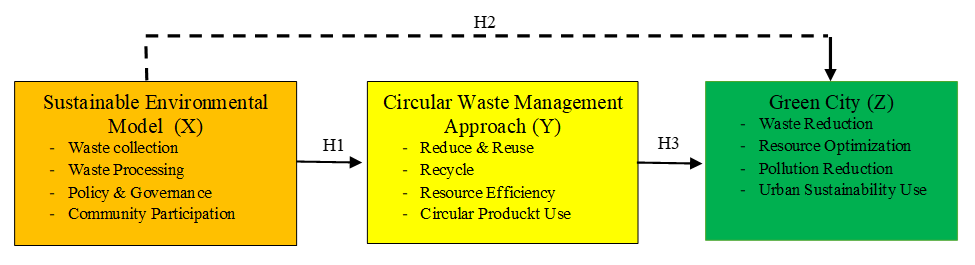
This study uses a quantitative approach with an explanatory research design that aims to analyze the relationship between the application of circular economy principles, urban waste management systems, and environmental sustainability. The explanatory approach was chosen because this study focuses on testing the causal relationship between latent variables that have been formulated in the conceptual model of the study. The research was carried out in Malang City, Indonesia, which was chosen as the research location because it has high urban growth dynamics and faces challenges in urban waste management. The research process took place in the period from March 2025 to March 2026, which included the stages of designing research instruments, collecting data, and analyzing data. The research model examines the influence of the Sustainable Environmental Model as the independent variable, the Circular Waste Management Approach as the mediating variable, and Green City as the dependent variable. The process of analyzing the correlation between variables was carried out through the Structural Equation Modeling technique based on Partial Least Squares, a method that facilitates the testing of the interaction of various latent constructs simultaneously in the model under study, can be seen in Figure 1.
Figure 1. Research model diagram for SmartPLS
2.1 Sampling technique and number of samples
The population in this study includes household groups, waste facility managers, and environmental communities connected to the waste management ecosystem in Malang City. The selection of respondents was carried out using purposive sampling, namely the determination of the sample through special characteristics that support the research objectives [25]. The main requirement is that respondents must have practical insight or experience in managing waste, such as sorting waste, recycling, or being active in environmental initiatives. In determining the minimum threshold of respondents, this research adopts the principle of the 10-times rule on PLS-SEM. The approach requires that the sample count be at least ten times the number of the largest indicators in a construct or ten times the number of the most structural paths in the model [26]. For the results of the PLS-SEM analysis to ensure the reliability and stability of the parameters, this study targets the collection of 150 Respondents taken from 5 sub-districts in Malang City, with a target of households, Waste Entrepreneurs, and environmental community members. Each sub-district has a respondent in accordance with the population. Each region can be seen in Table 1.
Table 1. Proportion of sample
|
No. |
Districts |
Total Population |
Number of Respondents |
|
1 |
Lowokwaru |
171,847 (19.32%) |
29 |
|
2 |
Blimbing |
191,907 (21.58%) |
32 |
|
3 |
Klojen |
100,818 (11.34%) |
21 |
|
4 |
Sukun |
206,910 (23.27%) |
33 |
|
5 |
Kedungkandang |
217,877 (24.50%) |
35 |
2.2 Measurement scale
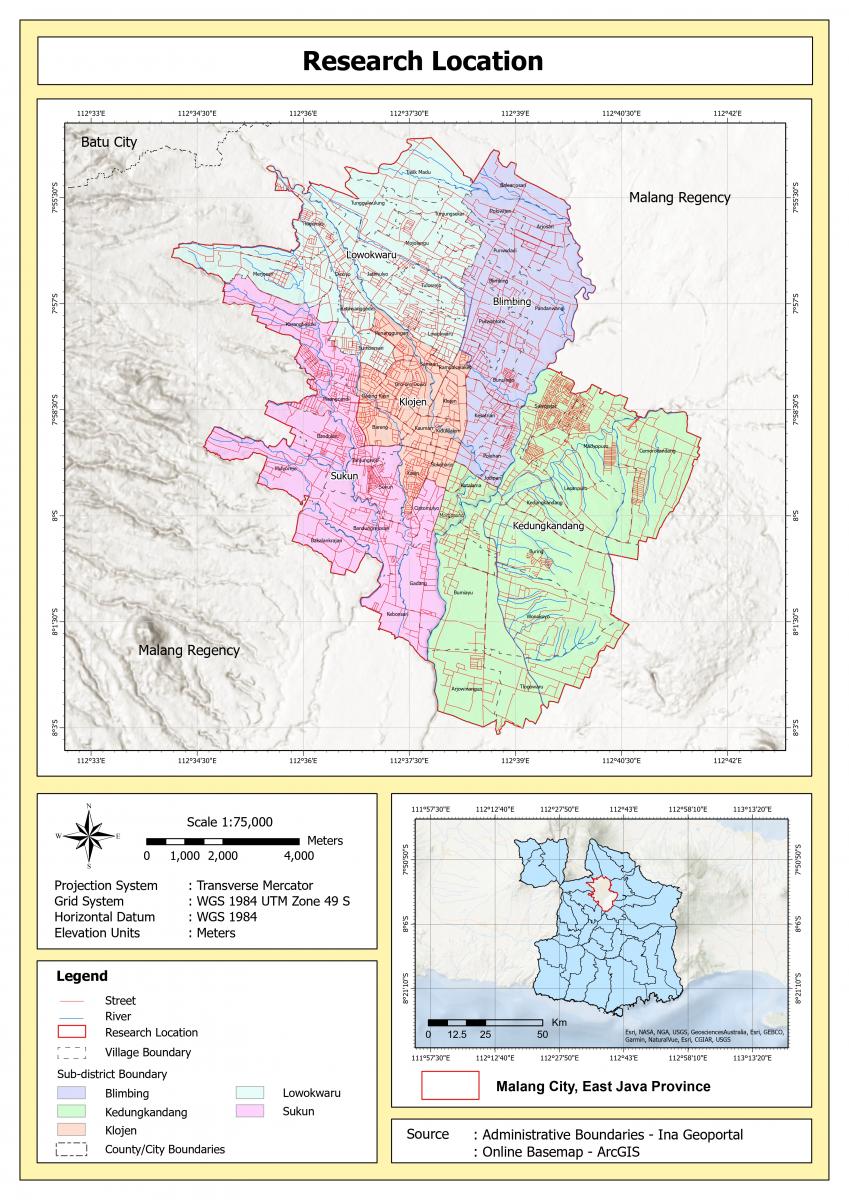
This study utilizes structured questionnaires as the main data collection instrument. The constituent indicators were developed through the adaptation of previous literature on circular economy, municipal waste management, and environmental sustainability. A four-point Likert scale is applied to assess each indicator, with a range of values ranging from 1 (strongly disagree) to 4 (strongly agree) [27, 28]. This scale was implemented because it has proven effective in systematically evaluating participants' perceptions, attitudes, and levels of approval for research variables. Circular economy variables are measured through the indicators of reduce, reuse, recycle, resource use efficiency, and product reuse in the economic cycle [14, 29]. The study was conducted in Malang City, East Java, Indonesia, and the geographical location of the study area is presented in Figure 2. The variables of the urban waste management system are measured through indicators of waste collection, waste sorting and processing, policy and governance support, and community participation in waste management. The operationalization of these constructs into measurable variables and indicators used in the PLS-SEM analysis is presented in Table 2.
Table 2. Constructs and measurement indicators used in the Partial Least Squares Structural Equation Modeling (PLS-SEM) model
|
Variable |
Indicator |
Code |
Indicator Description |
Literature Sources |
|
Sustainable Environmental Model (X) |
Garbage Collection |
X |
Effectiveness of waste collection systems in urban areas |
[3] |
|
Waste Sorting |
X |
Rate of waste sorting from the source |
UNEP, 2019 |
|
|
Processing Infrastructure |
X |
Availability of processing and recycling facilities |
[3] |
|
|
Waste Management Policy |
X |
Government regulatory support in waste management |
OECD, 2018 |
|
|
Community Participation |
X |
Community involvement in waste management |
[3] |
|
|
Circular Waste Management Approach (Y) |
Reduce |
Y |
Efforts to reduce waste generation from the source |
[8] |
|
Reuse |
Y |
Reuse of goods or materials that can still be used |
[6] |
|
|
Recycle |
Y |
Waste recycling activities into new products |
[2] |
|
|
Resource Efficiency |
Y |
Resource use efficiency in waste management systems |
[2] |
|
|
Circular Product Use |
Y |
Reuse of materials in the production cycle |
[20] |
|
|
Green City (Z) |
Reducing Waste Generation |
Z |
Decrease in the volume of waste disposed of in landfills |
[6] |
|
Environmental Quality |
Z |
Improvement of the quality of the urban environment |
[2] |
|
|
Resource Efficiency |
Z |
Optimization of natural resource utilization |
[2] |
|
|
Pollution Reduction |
Z |
Reducing the impact of environmental pollution |
[6] |
|
|
Sustainability of the Municipal System |
Z |
Improved urban environmental sustainability |
[6] |
Figure 2. Map of the research location
2.3 Data analysis procedure
To process the data, this study applied PLS-SEM, operated through SmartPLS software. The selection of PLS-SEM is based on its advantages in processing complex predictive models, albeit with a relatively moderate sample size [30]. The analysis is carried out in two main phases: evaluation of the measurement model (Outer model) and structural models (Inner model). Evaluation of the outer model focuses on testing the validity and reliability of the instrument. Convergent validity is ensured through thresholds: Loading Factor > 0.70 and Average Variance Extracted (AVE) > 0.50. Meanwhile, the reliability of the construct is confirmed if the score of composite reliability or Cronbach's Alpha exceeds 0.70. The next stage is testing the inner model to map latent inter-construct interactions. This process includes the analysis of the determination coefficient (R²) to measure the apparent power of the independent variable against the dependent variable, as well as the testing of the Path Coefficient to assess the magnitude of the influence between variables. Statistical significance tests are then carried out through techniques Bootstrapping, with a significance level of 5% (p < 0.05). Testing also comes with a review of effect size (f²) and predictive relevance (Q²) to comprehensively evaluate the predictive capabilities of the model. In the end, the entire series of analyses is aimed at formulating empirical evidence related to the influence of circular economy implementation and efficiency of urban waste management on the achievement of environmental sustainability in Malang City.
The composition of Squirt Malang City waste in this study was analyzed using secondary data sourced from the National Waste Management Information System, the Ministry of Environment/Environmental Control Agency of the Republic of Indonesia, and the Malang City Environment Agency in 2024. The data is compiled based on the classification of waste types according to the national reporting system, which includes food waste, plastic, wood/twigs, paper/cardboard, metal, glass, fabric, rubber/leather, and other fractions, with percentages calculated based on the proportion of weight of each type to the total Squirt garbage. Characterization of waste composition based on material fractions is a commonly used approach in urban waste management studies to identify potential resource recovery and formulate more sustainable management strategies [5]. The dominance of organic fractions in the composition of waste also shows that most of the Squirt Urban waste comes from Household Activities, which is generally the largest contributor to solid waste in developing countries due to high food consumption, domestic activity, and urban population growth [31]. Therefore, the characteristics of the composition of waste provide an empirical picture of the potential for the implementation of economic-based waste management in Malang City, especially through strengthening waste sorting from sources and processing organic fractions.
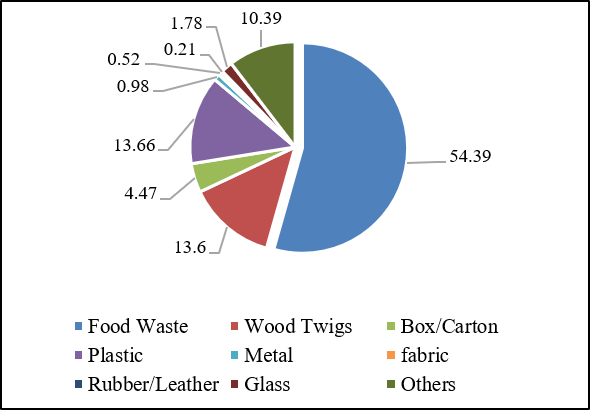
Based on the results of the waste composition analysis carried out in Malang City, it is known that the waste produced by the community is dominated by organic waste, especially food waste and vegetation waste. Research data shows that food waste is the largest component, with a percentage of 54.39% of total waste generation. In addition, other organic components such as wood and twigs account for 13.60% of the total waste produced. The dominance of organic waste shows that most of the urban waste in Malang City comes from household activities, traditional markets, and culinary activities that are quite developed in the region [32].
In addition to organic waste, the component of inorganic waste also has a significant proportion. Plastic waste accounts for 13.66% of total waste generation, which makes it the second-largest component after organic waste. Meanwhile, box and carton waste has a percentage of 4.47%, most of which comes from household, office, and trade sector activities. Other waste components, such as glass 1.78%, metal 0.98%, fabric 0.52%, and rubber or leather 0.21%, have a relatively smaller proportion in the composition structure of urban waste. In addition, there is another category of waste of 10.39%, which generally consists of various types of residual waste that are not included in the main category. The composition of municipal solid waste in Malang City is presented in Figure 3.
Figure 3. Composition of waste based on the type of waste in Malang City, Indonesia
The dominance of organic waste, which reaches more than 60% of the total waste composition in Malang, shows that urban waste management systems have great potential to implement biological-based treatment strategies such as composting or processing organic waste into biomass energy [33]. If organic waste can be separated from the source, the volume of waste sent to landfill can be significantly reduced [34, 35]. This is also in line with the principle of the circular economy, which emphasizes the reuse of resources that still have use value [36].
The proportion of plastic waste, which reached 13.66%, also shows that there are challenges in urban waste management. The high use of single-use plastics from the household, trade, and food and beverage service sectors has led to an increase in the volume of plastic waste produced [37, 38]. Without proper management, plastic waste has the potential to cause various environmental impacts on soil, water, and urban drainage systems [39].
The existence of recyclable materials such as paper, plastic, metal, and glass shows that there is a considerable opportunity to improve recycling practices in the waste management system in Malang City. However, the rate of reuse of these materials is still highly dependent on the informal sector, such as waste pickers and waste bank programs managed by the community [40, 41]. From a circular economy perspective, the structure of waste composition in Malang shows that most of the waste actually still has the potential to be reused through various processing processes. Efforts to increase waste separation from sources, develop organic waste processing facilities, and strengthen recycling systems are strategic steps that can be taken to improve waste management efficiency while supporting the sustainability of the urban environment [8, 16].
3.1 Evaluating the initial results of Partial Least Squares Structural Equation Modeling
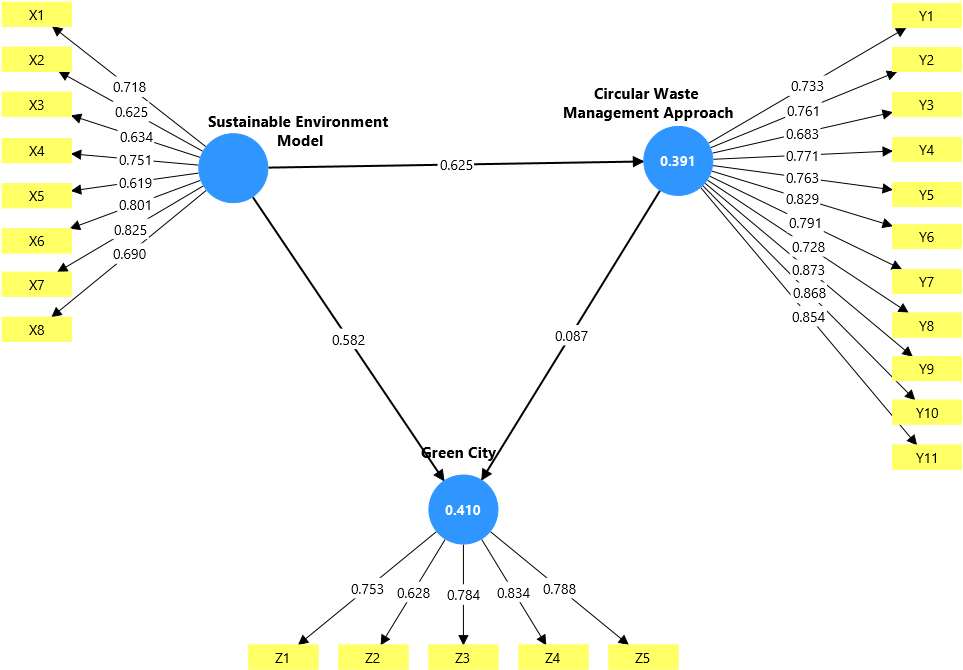
The results of the initial evaluation of the PLS-SEM model show that the Sustainable Environmental Model, Circular Waste Management Approach, and Green City have adequate measurement quality. The outer loading values of most indicators were above the recommended threshold (≥0.708), indicating that the indicators adequately represented their respective latent constructs. Indicators with outer loading values between 0.40 and 0.70 were retained because the Composite Reliability (CR) and Average Variance Extracted (AVE) of the corresponding constructs remained above the recommended thresholds, whereas indicators with outer loading values below 0.40 were removed from the model [26, 42]. Furthermore, the R² values indicate that the Sustainable Environmental Model explains 39.1% of the variance in the Circular Waste Management Approach (R² = 0.391), while the Sustainable Environmental Model together with the Circular Waste Management Approach explains 41.0% of the variance in Green City (R² = 0.410). Both values indicate moderate explanatory power in PLS-SEM [26]. Structurally, the relationship between the Sustainable Environmental Model and the Circular Waste Management Approach is classified as strong (β = 0.625) and has a significant direct influence on Green City (β = 0.582), which indicates that systemic approaches to environmental management have an important role to play in driving urban sustainability [2, 8]. Meanwhile, the influence of the Circular Waste Management Approach on Green City is relatively weak (β = 0.087), which indicates a limitation in the mediation role of these variables and shows that the implementation of the circular economy still requires strengthening operational aspects and system integration [29], as shown in Figure 4.
Figure 4. Loading Partial Least Squares Structural Equation Modeling (PLS-SEM)
These findings show that strengthening systemic aspects such as technology, institutions, and governance in the Sustainable Environmental Model is the main factor in encouraging the sustainability of the urban environment in Malang, in line with the literature that emphasizes the importance of integrating technological innovation and institutional capacity in the sustainability system [6, 43]. However, the weak direct influence of the circular economy approach on Green City indicates that the implementation of circular practices is still not optimal at the operational level, especially in the aspects of reuse, recycling, and waste value chain integration, as also found in various studies that highlight the gap between circular economy concepts and practices [8, 22]. This condition confirms that the transition to a sustainable city is not enough just with the adoption of the circular economy concept at the policy level but requires strengthening a more comprehensive implementation through increased community participation, development of supporting infrastructure, and consistency of policies across sectors so that the impact on environmental quality can be more significant [3, 5].
3.2 Partial Least Squares Structural Equation Modeling model estimation results
The Outer model shows that not all initial indicators in the construction of the Sustainable Environmental Model based on Circular Economy-Based Waste Management meet the Outer Loading ideal. However, according to the PLS-SEM guidelines, indicators with values of 0.40–0.70 can still be maintained if the construct meets internal reliability (Cronbach's alpha ≥ 0.70) and convergent validity (AVE ≥ 0.50) [26]. This reflects a variation in respondents' perception of waste management practices, which is common in the socio-environmental context. The following are the results of the elimination of indicators with an outer loading of <0.4, with adequate internal reliability (Cronbach's alpha ≥ 0.70, as well as the convergent validity achieved (AVE ≥ 0.50).
Table 3. Outer loadings, Cronbach's alphas, composite reliabilities, rho_A, and Average Variance Extracted values
|
Construct |
Indicator |
Description |
Outer Loading |
Cronbach's Alpha |
CR |
Rho_A |
AVE |
|
Sustainable Environment Model |
X1 |
Effectiveness of waste collection systems in urban areas |
0.718 |
0.858 |
0.89 |
0.868 |
0.507 |
|
X2 |
Rate of waste sorting from source |
0.625 |
|||||
|
X3 |
Availability of processing and recycling facilities |
0.634 |
|||||
|
X4 |
Government regulatory support in waste management |
0.751 |
|||||
|
X5 |
Community involvement in waste management |
0.619 |
|||||
|
X6 |
Institutional integration in waste management governance |
0.801 |
|||||
|
X7 |
Utilization of technology in the process of processing and recycling waste |
0.825 |
|||||
|
X8 |
Optimizing the economic value of waste through a circular economy approach |
0.690 |
|||||
|
Circular Waste Management Approach |
Y1 |
Reuse of goods or materials that can still be used |
0.733 |
0.821 |
0.947 |
0.849 |
0.623 |
|
Y2 |
Waste recycling activities into new products |
0.761 |
|||||
|
Y3 |
Resource use efficiency in waste management systems |
0.683 |
|||||
|
Y4 |
Reuse of materials in the production cycle |
0.771 |
|||||
|
Y5 |
Waste segregation at the source to facilitate reuse and recycling |
0.763 |
|||||
|
Y6 |
Reducing waste generation through reduced practices at the household and industrial levels |
0.829 |
|||||
|
Y7 |
Extending the service life of products through reuse and repair activities |
0.791 |
|||||
|
Y8 |
Development of Product Innovation Based on Recycled Materials |
0.728 |
|||||
|
Y9 |
Optimization of the waste value chain through the integration of the formal and informal sectors |
0.873 |
|||||
|
Y10 |
increasing the economic value of waste through upcycling and creative processing activities, and |
0.868 |
|||||
|
Y11 |
Application of the Zero Waste Principle in Production and Consumption Systems |
0.854 |
|||||
|
Green City |
Z1 |
Decrease in the volume of waste disposed of in landfills |
0.753 |
0.939 |
0.873 |
0.944 |
0.581 |
|
Z2 |
Improvement of the quality of the urban environment |
0.628 |
|||||
|
Z3 |
Optimization of natural resource utilization |
0.784 |
|||||
|
Z4 |
Reducing the impact of environmental pollution |
0.834 |
|||||
|
Z5 |
Improved urban environmental sustainability |
0.788 |
Note: AVE = Average Variance Extracted.
Testing the outer model in the PLS-SEM analysis confirmed that the validity and reliability criteria have been met by all constructs in this research. On the variable Sustainable Environmental Model, the results of the analysis reflect internal consistency and solid convergent validity [30]. This is shown by the acquisition of an AVE value of 0.507, a CR of 0.890, a Cronbach's alpha of 0.858, and the value of Outer Loading of the indicators, which vary in the range of 0.619 to 0.825. The highest score was dominated by indicators of technology utilization (0.825) and institutional integration (0.801). This statistical fact confirms the significance of technological innovation combined with collaborative governance as a key pillar for an environmental sustainability system [2, 8].
In the construct of the Circular Waste Management Approach, all indicators show the value of Outer Loading (0.683–0.873), with Cronbach's alpha of 0.821, CR of 0.947, and AVE of 0.623, suggesting that this construct has a good ability to explain latent variables [42]. The indicators with the largest contribution are the optimization of the waste value chain (0.874), the improvement of the economic value of waste (0.869), and the application of the principle of Zero Waste (0.856). These findings show that the implementation of the circular economy focuses not only on waste reduction but also on the creation of added value through the integration of production and consumption systems [44].
Meanwhile, the Green City construct showed excellent model performance with Cronbach's alpha values of 0.939, CR of 0.873, and AVE of 0.581. Outer Loading Values: The highest is found in the indicators of reducing the impact of environmental pollution (0.834) and improving the sustainability of the urban environment (0.788), which shows that waste management based on the circular economy has a significant contribution to the quality of the urban environment [45, 46]. This indicates that the circular economy approach can be a strategic instrument in realizing a sustainable city in Malang.
Substantively, these results confirm that the Sustainable Environmental Model that integrates technical, institutional, and technological aspects has an important role in encouraging the implementation of the Circular Waste Management Approach. The high contribution of technology indicators and institutional integration shows that the success of waste management systems is not only determined by infrastructure but also by coordination between actors and system innovation [5]. The dominance of indicators in the circular economy construct, such as upcycling, zero waste, and waste value chain optimization, shows that waste management in Malang has great potential to transform towards a circular system. However, the relatively moderate value of indicators in terms of waste sorting and community involvement indicates that there are challenges in implementation at the operational level, especially in behavioral changes and public participation [3, 7].
The implications of these findings suggest that the achievement of Green Cities depends not only on the technical effectiveness of waste management but also on the system's ability to create economic value, strengthen governance, and increase community participation. Thus, the integration between the Sustainable Environmental Model and Circular Economy-Based Waste Management is the main key in encouraging the sustainability of the urban environment [2]. The results of this study strengthen the argument that the circular economy is a strategic approach in supporting the transformation of cities towards the concept of Green City, through increasing resource efficiency, reducing waste, and creating added value from materials that were previously considered as residues [8, 20].
Based on the results of the validity test in Table 3, it can be seen that all indicators have an Outer Loading value ≥ 0.40, and indicators with low correlation have been eliminated according to the evaluation criteria of the measurement model in PLS-SEM [26, 42]. Therefore, all indicators in this study can be stated to have met the criteria of convergent validity. After the elimination of the indicator by Outer Loading < 0.40, the quality of the model improves significantly, which is reflected in the stability of the value Loading on the maintained indicators, so that the construct can represent the main dimensions of circular economy-based waste management in supporting Green City in Malang [26]. Indicators with low values that were eliminated indicated that some aspects of implementation, such as waste sorting from sources and community participation, were still not optimal, as was also found in studies that showed that behavioral factors and community involvement are the main challenges in the implementation of circular economy-based waste management in urban areas [3, 8].
Indicators with values loading at high levels, especially in the environmental sustainability variable, indicate that the community's environmental awareness is relatively good. However, this condition has not been fully followed by consistent practices, thus indicating a gap between environmental awareness and behavior [2]. Meanwhile, the results of the structural model indicate that the Circular Waste Management Approach did not make a statistically significant contribution to the relationship between the Sustainable Environmental Model and Green City. This finding suggests that, although circular waste management practices have been implemented, their mediating role in supporting Green City has not yet been empirically confirmed in the context of Malang City. Overall, the results of the evaluation of the measurement model show that the entire construct has met the criteria of convergent validity and reliability, making it feasible to use in the next stage of model evaluation. Before testing the structural relationships between constructs, it is necessary to ensure that the model does not experience collinearity problems between predictive variables through Variance Inflation Factor (VIF) testing, as presented in Table 4.
Table 4. Assess the structural model for collinearity issues using the Variance Inflation Factor (VIF)
|
Structural Path |
VIF |
|
Circular Waste Management Approach -> Green City |
1.658 |
|
Sustainable Environmental Model -> Green City |
1.658 |
|
Sustainable Environmental Model -> Circular Waste Management Approach |
1.000 |
Based on the results of the collinearity test presented in Table 4, all relationships between constructs show a value of VIF in the range of 1.000-1.658, namely, the relationship of the Circular Waste Management Approach to Green City is 1.658, the Sustainable Environmental Model for Green City is 1.658, and the Sustainable Environmental Model for the Circular Waste Management Approach is 1.000. All VIF values are well below the threshold of 5.00 recommended in the PLS-SEM analysis [26], thus showing that the research model does not experience multicollinearity problems between exogenous constructs. These results indicate that each construct has an independent contribution in explaining endogenous variables without excessive correlations between predictor variables, so that the estimated path coefficient can be interpreted more accurately and reliably. Thus, the structural model developed has met the assumptions of collinearity and is feasible to proceed at the stage of discriminant validity evaluation to ensure that each construct has adequate ability to represent different concepts empirically. One of the approaches used to evaluate discriminant validity is the Fornell-Larcker Criterion, which is based on comparing the AVE square root value of each construct against the correlation between constructs, as presented in Table 5 [26].
Based on the results of the Fornell-Larcker Criterion test presented in Table 5, the square root value of AVE in each construct is higher than its correlation value for other constructs. Construct Green City has an AVE square root value of 0.789, higher than its correlation with the Circular Waste Management Approach (0.451) and the Sustainable Environmental Model (0.626). Similarly, the Circular Waste Management Approach construct shows a square root value of AVE of 0.762, which is greater than its correlation with Green City (0.451) and Sustainable Environmental Model (0.630). Meanwhile, the Sustainable Environmental Model construct has an AVE square root value of 0.712, which is also higher than its correlation with the Green City construct (0.626) and the Circular Waste Management Approach (0.630). These results show that all constructs have met the Fornell-Larcker Criterion, so that each construct can distinguish concepts that are empirically measured and have adequate discriminant validity [26]. To reinforce these results, discriminant validity was further evaluated using the Heterotrait-Monotrait Ratio (HTMT), which is a more sensitive approach and recommended in PLS-SEM analysis to identify discriminant validity between constructs [42], as presented in Table 6.
Based on the results of the HTMT test presented in Table 6, all correlation values between constructs were below the threshold of 0.90 recommended in the PLS-SEM analysis [30, 42]. The HTMT value between the Circular Waste Management Approach and Green City is 0.505, between the Sustainable Environmental Model and Green City is 0.690, and between the Sustainable Environmental Model and the Circular Waste Management Approach is 0.700. These results show that each construct has adequate discriminant validity because each construct can represent a different concept empirically without overlapping measurements. Thus, all stages of measurement model evaluation, which include internal reliability, convergent validity, collinearity test, and discriminant validity through the Fornell-Larcker Criterion and HTMT, have met the recommended criteria. Therefore, the measurement model is declared feasible and robust to be continued at the Structural Model Assessment (Inner Model) stage to evaluate the causal relationship between the Sustainable Environmental Model, Circular Waste Management Approach, and Green City.
Table 5. Fornell-Larcker criterion
|
Green City |
Circular Waste Management Approach |
Sustainable Environmental Model |
|
|
Green City |
0.789 |
||
|
Circular Waste Management Approach |
0.451 |
0.762 |
|
|
Sustainable Environmental Model |
0.626 |
0.630 |
0.712 |
Table 6. Heterotrait-Monotrait Ratio (HTMT)
|
Green City |
Circular Waste Management Approach |
Sustainable Environmental Model |
|
|
Green City |
|||
|
Circular Waste Management Approach |
0.505 |
||
|
Sustainable Environmental Model |
0.690 |
0.700 |
Based on results structural model assessment on Table 7, Sustainable Environmental Model have a positive and significant effect on Circular Waste Management Approach (β = 0.630; t = 10.747; p < 0.001; f² = 0.658) and against Green City (β = 0.567; t = 5.229; p < 0.001; f² = 0.321), thus showing that strengthening environmental governance, institutions, policies, and technological support are the main factors in encouraging the implementation of circular economy-based waste management while increasing the achievement of Green City in Malang City. Instead, the Circular Waste Management Approach has no significant effect on Green City (β = 0.094; t = 0.793; p = 0.428; f² = 0.009), as well as indirect influences of the Sustainable Environmental Model on Green City through the Circular Waste Management Approach were also insignificant (β = 0.059; t = 0.770; p = 0.441). These findings indicate that although various circular economy initiatives, such as waste banks, TPS3R, and material reuse, have developed in Malang City, their implementation has not been strong enough to mediate the relationship between sustainable environmental models and Green City. Thus, the achievement of Green City is still more determined by the effectiveness of environmental governance than by the implementation of circular economy practices themselves. These results are in line with research that states that the successful transition to sustainable cities requires institutional support, consistent policies, adequate infrastructure, and multi-stakeholder collaboration for circular economy practices to be able to have significant environmental impacts [2, 8].
Based on the results of the evaluation of the Model's Explanatory Power and Q² presented in Table 8, a value of R² of 0.397 was obtained for the construct Circular Waste Management Approach with an Adjusted R² of 0.391, as well as the value of Q² Predict of 0.365. Meanwhile, the construct Green City also shows the value of R² of 0.397, Adjusted R² of 0.385, and Q² Predict of 0.360. The value of R² shows that the Sustainable Environmental Model can explain about 39.7% of the implementation variations of the Circular Waste Management Approach, while the combination of the Sustainable Environmental Model and Circular Waste Management Approach can explain 39.7% of the variations in Green City, while the rest are influenced by other factors outside the research model. Based on the criteria of this study [26], these values are included in the category moderate, which shows that the model has a good explanation of the phenomenon under study. In addition, the Q² Predict greater than zero in both constructs indicates that the model has predictive relevance, which is good, so that it can predict the relationship between constructs adequately. These findings show that the developed sustainable environmental model has a strong ability to explain the implementation of circular economy-based waste management and the achievement of a Green City in Malang City. However, there are still around 60.3% variations that cannot be explained by the model, which indicates that the success of urban waste management and Green City development is also influenced by various other factors, such as financing capacity, quality of waste treatment infrastructure, community behavior and participation, technological innovation, regional leadership, regulatory enforcement, and collaboration between stakeholders that have not been fully accommodated in this study. Therefore, further research needs to develop a more comprehensive model by including social, economic, institutional, and technological dimensions to be able to increase the explainability of the model while providing a more complete understanding of circular economy-based waste management strategies in supporting the development of a Green City [2, 26].
Table 7. Structural model assessment and hypothesis testing
|
Relationships Between Constructs |
β (Original Sample) |
t-Statistic |
p-Value |
f² |
Verdict |
|
Sustainable Environmental Model → Circular Waste Management Approach |
0.630 |
10.747 |
0.000 |
0.658 |
Accepted |
|
Sustainable Environmental Model → Green City |
0.567 |
5.229 |
0.000 |
0.321 |
Accepted |
|
Circular Waste Management Approach → Green City |
0.094 |
0.793 |
0.428 |
0.009 |
Rejected |
|
Sustainable Environmental Model → Circular Waste Management Approach → Green City (Indirect Effect) |
0.059 |
0.770 |
0.441 |
– |
Rejected |
Note: f² = Effect size.
Table 8. Explanatory and predictive power of the structural model
|
Endogenous Variable |
R² |
Adjusted R² |
Q² Predict |
Interpretation |
|
Circular Waste Management Approach |
0.397 |
0.391 |
0.365 |
Moderate and have Q² |
|
Green City |
0.397 |
0.385 |
0.360 |
Moderate and have Q² |
Note: Q² = Predictive relevance; R² = Determination coefficient.
3.3 Waste management practices in Malang City
The results of the study show that waste management practices in Malang are still dominated by a linear approach: collect-transport-dispose, although circular economy-based initiatives are starting to develop at the community level [43]. Visualization of waste management systems (Figure 5) shows a fundamental difference between linear and circular approaches, where current systems have not fully adopted the principles of Closing Loops in the circular economy [2, 8]. This condition indicates that waste sorting at the source is still low, recycling integration is not optimal, and material reuse has not become a major part of the urban waste management system [5].
Based on the research composition of waste in Malang, it is known that organic waste dominates with a percentage of 54.39%, followed by plastics (13.66%), wood/twigs (13.60%), and other fractions in smaller proportions, which reflects the general characteristics of urban waste in developing countries [40]. This composition shows great potential for circular economy applications, particularly through biological processes such as composting and bioenergy production [46, 47]. However, without an effective sorting system, this potential cannot be optimally utilized, so most of the waste still ends up in the final processing site [5].
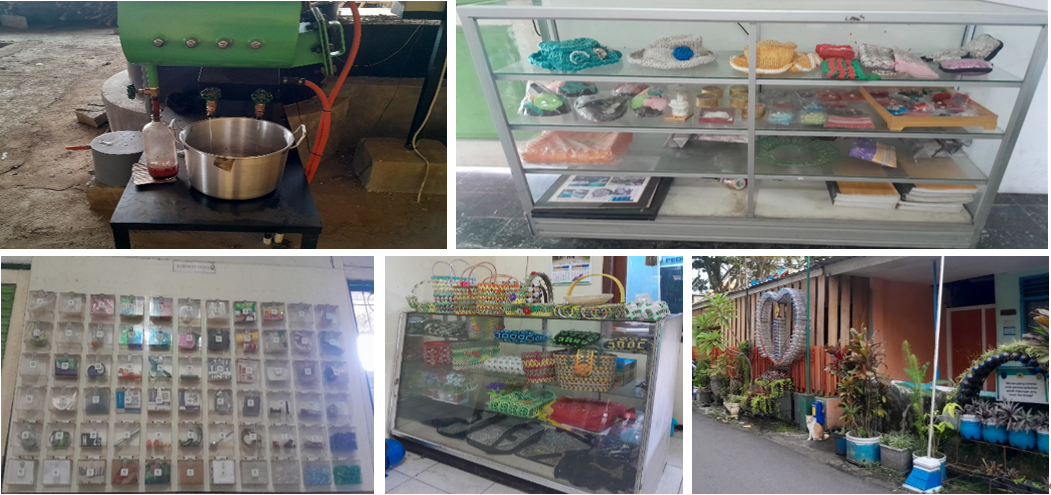
From the social aspect, the role of communities in waste management is beginning to be seen through the existence of waste bank programs and community-based initiatives, as shown in Figure 5, which are important elements in supporting the implementation of the circular economy at the local level [3]. This community participation has been proven to contribute to increasing the rate of sorting and reducing waste, although the implementation is still partial [8, 43]. This shows that increasing environmental awareness and education is still a fundamental need to strengthen the transition to a more sustainable system [2, 10].
The results of the study show that waste management practices in Malang are still dominated by a linear approach: collect-transport-dispose, although circular economy-based initiatives are starting to develop at the community level [43]. Visualization of waste management systems in Figure 3 shows a fundamental difference between linear and circular approaches, where current systems have not fully adopted the principles of Closing Loops in the circular economy [2, 8]. This condition indicates that waste sorting at the source is still low, recycling integration is not optimal, and material reuse has not become a major part of the urban waste management system [5].
From the social aspect, the role of communities in waste management is beginning to be seen through the existence of waste bank programs and community-based initiatives, as shown in Figure 3, which are important elements in supporting the implementation of the circular economy at the local level [3]. This community participation has been proven to contribute to increasing the rate of sorting and reducing waste, although the implementation is still partial [8, 43]. This shows that increasing environmental awareness and education is still a fundamental need to strengthen the transition to a more sustainable system [2, 10].
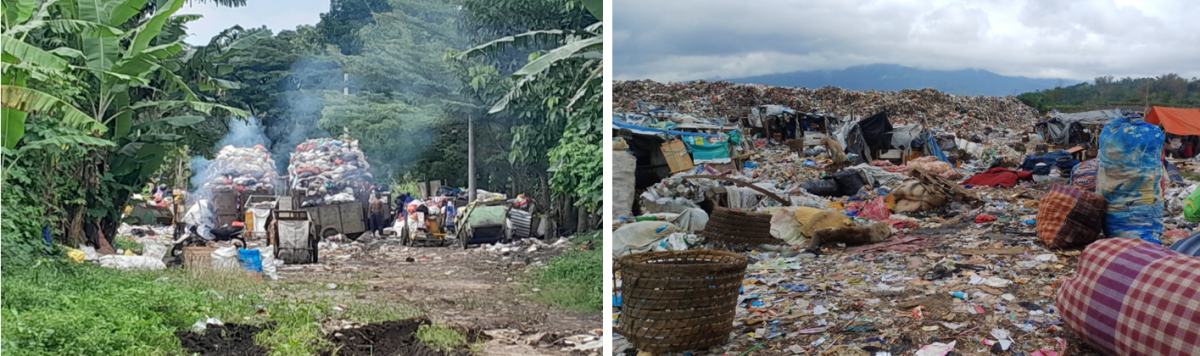
In addition, in terms of infrastructure and technology, the availability of waste treatment facilities such as composting units and recycling facilities is still relatively limited, as illustrated in Figure 5, which has an impact on the low rate of material recovery [46]. These limitations lead to a high dependence on the final disposal system and hinder the widespread implementation of the circular economy at the city level [5, 21]. This condition confirms that strengthening infrastructure is the main prerequisite for improving the performance of circular-based waste management systems [43].
When associated with the results of the PLS-SEM analysis in Figure 4, these empirical findings show that waste management practices have a positive influence on environmental sustainability, but their contribution becomes more significant when integrated with circular economy principles [2, 8]. In the developed model, the circular economy plays a key role as a variable that strengthens the relationship between waste management practices and environmental sustainability, while community and institutional participation factors serve as reinforcing variables [3]. Thus, the results of this study confirm that the transformation towards a sustainable waste management system in Malang requires an approach that not only focuses on technical aspects but also on social, institutional, and innovation integration based on the circular economy as a whole [8, 43].
In addition, in terms of infrastructure and technology, the availability of waste treatment facilities such as composting units and recycling facilities is still relatively limited, as illustrated in Figure 5 and Figure 6, which has an impact on the low rate of material recovery [46]. These limitations lead to a high dependence on the final disposal system and hinder the widespread implementation of the circular economy at the city level [5, 21]. This condition confirms that strengthening infrastructure is the main prerequisite for improving the performance of circular-based waste management systems [43].
Figure 5. Waste banks and waste management products in Malang City
Figure 6. Waste management facilities in Malang City
This study confirms that the Sustainable Environmental Model integrated with Circular Economy-Based Waste Management has a significant role in supporting the achievement of a Green City in Malang. The results of the PLS-SEM analysis show that all constructs have met the criteria of validity and reliability and can explain the strong relationship between technical, institutional, and social aspects in the urban waste management system. Structurally, the Sustainable Environmental Model has been proven to have a positive and significant effect on the Circular Waste Management Approach and Green City, while the Circular Waste Management Approach has not shown a direct influence or significant mediating role on Green City. These findings indicate that strengthening environmental governance is still the main factor in supporting the development of a Green City in Malang City. Key findings show that the dominant factors in the model include technology utilization, institutional integration, and optimization of waste economic value, which directly strengthen the implementation of the circular economy. The aspect of waste sorting at the source and community involvement is still a challenge that needs to be improved to achieve the effectiveness of the system. Conceptually, this research contributes to developing an integrated model that links circular economy-based waste management with the sustainability of the urban environment. The practical implications show that the transformation towards a Green City requires a systemic approach that includes strengthening policies, improving infrastructure, and active community participation. Thus, the integration of technological innovation, collaborative governance, and resource optimization is the main key to realizing a sustainable waste management system and supporting the development of a Green City in Malang City. However, the research model still has explanatory capabilities in the moderate category, so further research is recommended to integrate other variables, such as institutional capacity, environmental financing, technological innovation, and community behavior, to obtain a more comprehensive model in explaining the implementation of the circular economy and the achievement of Green City.
[1] Dewulf, J., Hellweg, S., Pfister, S., et al. (2021). Towards sustainable resource management: Identification and quantification of human actions that compromise the accessibility of metal resources. Resources, Conservation and Recycling, 167: 105403. https://doi.org/10.1016/j.resconrec.2021.105403
[2] Zeng, H., Chen, X., Xiao, X., Zhou, Z. (2017). Institutional pressures, sustainable supply chain management, and circular economy capability: Empirical evidence from Chinese eco-industrial park firms. Journal of Cleaner Production, 155: 54-65. https://doi.org/10.1016/j.jclepro.2016.10.093
[3] Wilson, D.C., Rodic, L., Cowing, M.J., et al. (2015). ‘Wasteaware’ benchmark indicators for integrated sustainable waste management in cities. Waste Management, 35: 329-342. https://doi.org/10.1016/j.wasman.2014.10.006
[4] Sumarmi, S., Sanjaya, E.H., Mizar, M.A., Masruroh, H. (2025). Establishing an integrated waste management center to educate the green entrepreneurs among the campus community to achieve SDG 11. Environment and Ecology Research, 13(5): 735-753. https://doi.org/10.13189/eer.2025.130512
[5] Ferronato, N., Torretta, V. (2019). Waste mismanagement in developing countries: A review of global issues. International Journal of Environmental Research and Public Health, 16(6): 1060. https://doi.org/10.3390/ijerph16061060
[6] Zheng, L., Zhou, Z. (2010, November). The research on enterprise environmental management and resource value flow accounting. In 2010 International Conference on E-Product E-Service and E-Entertainment, Henan, China, pp. 1-4. https://doi.org/10.1109/ICEEE.2010.5660755
[7] Guerrero, L.A., Maas, G., Hogland, W. (2013). Solid waste management challenges for cities in developing countries. Waste Management, 33(1): 220-232. https://doi.org/10.1016/j.wasman.2012.09.008
[8] Kirchherr, J., Reike, D., Hekkert, M. (2017). Conceptualizing the circular economy: An analysis of 114 definitions. Resources, Conservation and Recycling, 127: 221-232. https://doi.org/10.1016/j.resconrec.2017.09.005
[9] Sumarmi, Putra, A.K., Sahrina, A., et al. (2025). Promoting social innovation based on environmental volunteer to develop plastic waste management strategies in the green campus model. International Journal of Environmental Impacts, 8(1): 185-193. https://doi.org/10.18280/ijei.080118
[10] Walder, P., Kantelhardt, J. (2018). The environmental behaviour of farmers–capturing the diversity of perspectives with a Q methodological approach. Ecological Economics, 143: 55-63. https://doi.org/10.1016/j.ecolecon.2017.06.018
[11] Urbinati, A., Chiaroni, D., Chiesa, V. (2017). Towards a new taxonomy of circular economy business models. Journal of Cleaner Production, 168: 487-498. https://doi.org/10.1016/j.jclepro.2017.09.047
[12] Zhou, Y., Huang, G., Zhu, H., Li, Z., Chen, J. (2016). A factorial dual-objective rural environmental management model. Journal of Cleaner Production, 124: 204-216. https://doi.org/10.1016/j.jclepro.2016.02.081
[13] Wu, L., Liu, L., Wang, Z. (2020). Competitive remanufacturing and pricing strategy with contrast effect and assimilation effect. Journal of Cleaner Production, 257: 120333. https://doi.org/10.1016/j.jclepro.2020.120333
[14] Feng, Z., Zhou, W., Ming, Q. (2019). Embodied energy flow patterns of the internal and external industries of manufacturing in China. Sustainability, 11(2): 438. https://doi.org/10.3390/su11020438
[15] You, J., Chen, Y., Wang, W., Shi, C. (2018). Uncertainty, opportunistic behavior, and governance in construction projects: The efficacy of contracts. International Journal of Project Management, 36(5): 795-807. https://doi.org/10.1016/j.ijproman.2018.03.002
[16] Schroeder, P., Anggraeni, K., Weber, U. (2019). The relevance of circular economy practices to the Sustainable Development Goals. Journal of Industrial Ecology, 23(1): 77-95. https://doi.org/10.1111/jiec.12732
[17] Sumarmi, Putra, A.K., Sahrina, A., et al. (2024). Implementing the OBE model in plastic waste management using the 4R EPR pattern for green campus. International Journal of Environmental Impacts, 7(3): 455-473. https://doi.org/10.18280/ijei.070308
[18] Dhokhikah, Y., Trihadiningrum, Y., Sunaryo, S. (2015). Community participation in household solid waste reduction in Surabaya, Indonesia. Resources, Conservation and Recycling, 102: 153-162. https://doi.org/10.1016/j.resconrec.2015.06.013
[19] Wijayanti, D.R., Suryani, S. (2015). Waste bank as community-based environmental governance: A lesson learned from Surabaya. Procedia-Social and Behavioral Sciences, 184: 171-179. https://doi.org/10.1016/j.sbspro.2015.05.077
[20] Bocken, N.M., De Pauw, I., Bakker, C., Van Der Grinten, B. (2016). Product design and business model strategies for a circular economy. Journal of Industrial and Production Engineering, 33(5): 308-320. https://doi.org/10.1080/21681015.2016.1172124
[21] Möslinger, M., Ulpiani, G., Vetters, N. (2023). Circular economy and waste management to empower a climate-neutral urban future. Journal of Cleaner Production, 421: 138454. https://doi.org/10.1016/j.jclepro.2023.138454
[22] Al Sulami, S., Al Sulami, M., Nasr, J., Sharawi, H. (2024). Circular economy analysis as a tool to enhance sustainability of supply chains in Kingdom Saudi Arabia and a means to achieve Saudi vision 2030. Modern Economy, 15(5): 566-586. https://doi.org/10.4236/me.2024.155029
[23] Ivezic, D., Zivkovic, M., Madžarević, A., Grujic, M. (2020). Assessments of effects of implementation of strategic plans for development of Belgrade District heating system. Sustainable Cities and Society, 61: 102304. https://doi.org/10.1016/j.scs.2020.102304
[24] Zuo, S., Dai, S., Ren, Y. (2020). More fragmentized urban form more CO2 emissions? A comprehensive relationship from the combination analysis across different scales. Journal of Cleaner Production, 244: 118659. https://doi.org/10.1016/j.jclepro.2019.118659
[25] Palinkas, L.A., Horwitz, S.M., Green, C.A., Wisdom, J.P., Duan, N., Hoagwood, K. (2015). Purposeful sampling for qualitative data collection and analysis in mixed method implementation research. Administration and Policy in Mental Health and Mental Health Services Research, 42(5): 533-544. https://doi.org/10.1007/s10488-013-0528-y
[26] Hair, J.F., Hult, G.T.M., Ringle, C.M., Sarstedt, M., Danks, N.P., Ray, S. (2021). Partial Least Squares Structural Equation Modeling (PLS-SEM) Using R: A Workbook. Springer International Publishing. https://doi.org/10.1007/978-3-030-80519-7
[27] Chyung, S.Y., Roberts, K., Swanson, I., Hankinson, A. (2017). Evidence-based survey design: The use of a midpoint on the Likert scale. Performance Improvement, 56(10): 15-23. https://doi.org/10.1002/pfi.21727
[28] Nadler, J.T., Weston, R., Voyles, E.C. (2015). Stuck in the middle: The use and interpretation of mid-points in items on questionnaires. The Journal of General Psychology, 142(2): 71-89. https://doi.org/10.1080/00221309.2014.994590
[29] Moraga, G., Huysveld, S., Mathieux, F., et al. (2019). Circular economy indicators: What do they measure? Resources, Conservation and Recycling, 146: 452-461. https://doi.org/10.1016/j.resconrec.2019.03.045
[30] Hair, J.F., Sarstedt, M., Ringle, C.M., Mena, J.A. (2012). An assessment of the use of partial least squares structural equation modeling in marketing research. Journal of the Academy of Marketing Science, 40(3): 414-433. https://doi.org/10.1007/s11747-011-0261-6
[31] Chen, L., Feng, H., Gu, X., et al. (2020). Linkages of flow regime and micro-topography: Prediction for non-native mangrove invasion under sea-level rise. Ecosystem Health and Sustainability, 6(1): 1780159. https://doi.org/10.1080/20964129.2020.1780159
[32] Pilone, V., di Santo, N., Sisto, R. (2023). Factors affecting food waste: A bibliometric review on the household behaviors. Plos One, 18(7): e0289323. https://doi.org/10.1371/journal.pone.0289323
[33] Ddiba, D., Andersson, K., Rosemarin, A., Schulte-Herbrüggen, H., Dickin, S. (2022). The circular economy potential of urban organic waste streams in low-and middle-income countries. Environment, Development and Sustainability, 24(1): 1116-1144. https://doi.org/10.1007/s10668-021-01487-w
[34] Kawai, K., Huong, L.T.M. (2017). Key parameters for behaviour related to source separation of household organic waste: A case study in Hanoi, Vietnam. Waste Management & Research, 35(3): 246-252. https://doi.org/10.1177/0734242X16683441
[35] Yoshida, H., Gable, J.J., Park, J.K. (2012). Evaluation of organic waste diversion alternatives for greenhouse gas reduction. Resources, Conservation and Recycling, 60: 1-9. https://doi.org/10.1016/j.resconrec.2011.11.011
[36] Putri, M.K., Utaya, S., Sumarmi, S., Bachri, S. (2025). Macroplastic waste management strategies in Palembang City. International Journal of Environmental Impacts, 8(3): 435-443. https://doi.org/10.18280/ijei.080302
[37] Garcia, J.M., Robertson, M.L. (2017). The future of plastics recycling. Science, 358(6365): 870-872. https://doi.org/10.1126/science.aaq0324
[38] Lebreton, L., Andrady, A. (2019). Future scenarios of global plastic waste generation and disposal. Palgrave Communications, 5(1): 6. https://doi.org/10.1057/s41599-018-0212-7
[39] Ishak, M.K., Arinta, D., Suprianto, A., et al. (2024). A spatial model of microplastic pollution mitigation as an effort to preserve the Brantas River ecosystem. Environment and Ecology Research 12(6): 567-581. https://doi.org/10.13189/eer.2024.120601
[40] Dias, S.M. (2016). Waste pickers and cities. Environment and Urbanization, 28(2): 375-390. https://doi.org/10.1177/0956247816657302
[41] Khan, S., Swapan, M.S.H. (2013). From blueprint master plans to democratic planning in South Asian cities: Pursuing good governance agenda against prevalent patron–client networks. Habitat International, 38: 183-191. https://doi.org/10.1016/j.habitatint.2012.06.005
[42] Henseler, J., Ringle, C.M., Sarstedt, M. (2015). A new criterion for assessing discriminant validity in variance-based structural equation modeling. Journal of the Academy of Marketing Science, 43(1): 115-135. https://doi.org/10.1007/s11747-014-0403-8
[43] Velenturf, A.P., Purnell, P. (2021). Principles for a sustainable circular economy. Sustainable Production and Consumption, 27: 1437-1457. https://doi.org/10.1016/j.spc.2021.02.018
[44] Pereira, L.M., Sanchez Rodrigues, V., Freires, F.G.M. (2024). Use of partial least squares structural equation modeling (PLS-SEM) to improve plastic waste management. Applied Sciences, 14(2): 628. https://doi.org/10.3390/app14020628
[45] Sewenet, A.D., Boulaksil, Y., Pisano, P. (2026). Circular economy, circularity, and sustainability: A systematic review and conceptual framework. Cleaner Environmental Systems, 20: 100405. https://doi.org/10.1016/j.cesys.2026.100405
[46] Zhang, J., Qin, Q., Li, G., Tseng, C.H., Fang, G. (2023). Assessing the impact of waste separation on system transition and environmental performance through a city-scale life cycle assessment. Ecological Economics, 211: 107886. https://doi.org/10.1016/j.ecolecon.2023.107886
[47] Ren, Y., Fang, C., Li, G. (2020). Spatiotemporal characteristics and influential factors of eco-efficiency in Chinese prefecture-level cities: A spatial panel econometric analysis. Journal of Cleaner Production, 260: 120787. https://doi.org/10.1016/j.jclepro.2020.120787