Usep Suhud | Sunthorn Boonkaew | Doni Sugianto Sihotang | Muaz Azinuddin | Somnuk Aujirapongpan*
© 2025 The authors. This article is published by IIETA and is licensed under the CC BY 4.0 license (http://creativecommons.org/licenses/by/4.0/).
OPEN ACCESS
Citizenship behaviour in tourists (CBT), which includes pro-social and voluntary actions such as sustainability advocacy, norm compliance, and cultural respect and appreciation, has the potential to further enhance sustainability in cultural tourism yet remains largely under-researched in this area. While previous studies examined trust, commitment, and identification as relational constructs connected to loyalty, their influence on tourism citizenship behaviour in community-based tourism has hardly been explored. In response to this gap, the current research analyses the influence of a community’s reputation and Destination Social Responsibility (DSR) on citizenship behaviour and the formation of trust, identification, and commitment. Penglipuran Village, a UNESCO Sustainable Tourism recognised Village in Bali, Indonesia, was chosen for this study. Quantitative data were collected from 222 respondents and analysed utilising Structural Equation Modelling (SEM). The model fit was exceptional (CMIN/DF = 1.005; CFI = 0.999; RMSEA = 0.005) and of the 7 hypotheses analysed, 5 received empirical support. It was found that community reputation has a positive effect on identification and trust, while DSR has a positive effect on trust but not community identification. Trust was the most significant mediator of the model. It positively affected commitment which enhanced citizenship behaviour. Unexpectedly, identification did not influence commitment, which suggests that identification, contrary to theoretical assumptions, was not a factor of relational loyalty. This research demonstrates the potential of trust to influence pathways of relational loyalty and citizenship behaviour in the context of cultural tourism and relationship marketing theory.
consumer behaviour, destination marketing, sustainable tourism, village destination tourism, tourist citizenship behaviour
Sustainable cultural tourism balances cultural heritage conservation with long-term socio-economic, environmental, and social well-being, closely aligned with sustainable development's four pillars: economic feasibility, cultural integrity, environmental conservation, and social justice [1]. It zeroes in on participative approaches where locals assist in designing tourism experiences, preserving authenticity and boosting inclusivity and resistance to universal challenges [1]. Effective branding strategies, such as heritage-based territorial branding, can develop destination identity and visitor interaction as well as preserve cultural and natural heritage [2]. Social media has been a revolutionary element, uplifting cultural voices, prompting responsible conduct among travellers, and influencing tourists' sustainability attitudes [3].
In practice, destinations connecting environmental conservation, cultural narration, and organizing community-based tourism – such as utilizing eco-products, handicrafts, and experiential heritage activities – indicate higher locals' benefit and visitor loyalty [4]. However, sustainability in cultural tourism is only affected if pressure from commercialization is offset alongside cultural conservation, incorporating ethical governance, and adapting strategies according to changing global trends in tourism [5].
Tourist citizenship behaviour (TCB)—selfless, extra-role behaviours among tourists that sustain and enrich cultural heritage sites – has come to the forefront as key to cultural tourism's long-term sustainability. Broadly defined as actions such as respect for customs, contributions toward conservation, and positive advocacy for destinations, TCB reinforces cultural integrity as well as desired visitor impact results [6]. Increasing evidence indicates that rich cultural experiences, those conducive to cognitive, emotional, and cultural identification, significantly enhance environmentally friendly behaviours among heritage tourists [7]. Concurrently, researchers have consolidated and catalogued TCB’s numerous dimensions – such as cooperativeness, empathy, patience, and collective advocacy—underscoring its richly complex nature and destinations' needs for effectiveness [8]. Relational motivators such as trust, identification, and emotional allegiance frequently intervene between significant engagement and civic-oriented visitor conduct [7]. Developing these relational mechanisms—particularly through destination social responsibility and ethical narrative—cultural tourism can convert passive visiting into active stewardship, solidifying heritage sustainability, while aligning visitor values with destination values.
TCB—voluntary, extra-role actions such as compliance with destination norms, active participation in preservation, and positive advocacy—has increasingly underscored its importance in sustaining cultural heritage destinations [6, 8]. Grounded in relationship marketing theory, recent studies highlight trust, commitment, and destination identification as key relational drivers that translate tourists’ positive perceptions into pro-social behaviours [7, 9]. Within this framework, DSR emerges as a strategic antecedent, enhancing ethical appeal, deepening emotional bonds, and strengthening destination reputation [10, 11]. While these constructs have been examined extensively in urban and mass tourism contexts, their interaction remains underexplored in village-based cultural tourism, where community involvement, heritage authenticity, and socio-environmental stewardship are central. Indeed, empirical studies combining DSR, reputation, trust, identification, and commitment to explain TCB in culturally preserved rural settings remain scarce. Addressing this gap, the present study aims to empirically test the factors influencing TCB, focusing on the interrelationships among DSR, destination reputation, trust, destination identification, and commitment, using Penglipuran Village—a UNESCO-recognized traditional Balinese village—as a case study.
Penglipuran Village, Regency of Bangli, Bali, has been internationally credited with cultural conservation and sustainable processes in tourism after being certified as Indonesia's first-ever tourism village in 1995 and as a Sustainable Tourism Village in 2020, reflecting its values for socio-cultural, environmental, and economic sustainability [12]. What makes the village's cultural identity distinct is angkul-angkul gateways, spatial organization around temples, and around 40% area coverage with bamboo governed under adat customary laws to preserve heritage and nature [13]. At the heart of leadership is community-based tourism, where people are actively involved in planning, implementation, and evaluation of tourism policies with fair benefit-sharing and enhancement of cultural capital [14]. Despite cultural tourism at Penglipuran offering economic and social returns, research also indicates increasing concerns such as the commoditization of sacred rites and coping with traditional construction styles, reflecting potential risks of cultural dilution for conservation approaches founded upon society's values [15].
2.1 Destination reputation
Destination reputation is increasingly viewed as a tourism marketing strategic asset, affecting tourists' perceptions, loyalty, and destination competitiveness levels. Recent work emphasizes that reputation is not only built through tangible factors such as natural resources and infrastructure, but also intangible factors such as service quality, cultural storytelling, and virtual image. For example, the development of halal tourism in Indonesia illustrates the value of bespoke offers strengthening reputation across a range of different markets, where inclusive service publicity can build loyalty across different tourist groups, including non-Muslims [16].
Social media platforms, too, have become potent reputation builders for destinations, extending the capability for destinations to share powerful, visually appealing narratives reinforcing eco-tourism appeal, communicating sustainability values, and developing community empowerment [3]. Also, destination reputation is reliant on ensuring consistency across repeated positive experiences, evident from domestic tourism development patterns in Jordan, where push–pull motivations, environmental factors, and costs all contribute towards a significant impact on satisfaction and revisit behaviour from tourists [17]. Yet, crises such as the COVID-19 pandemic have identified the vulnerability of reputation; travel limitations and service disruption across West Nusa Tenggara, Indonesia, resulted in rapid declines in visit levels and revenue, highlighting the necessity for resilience and crisis communication measures to protect long-term image [18]. Individually, these results all emphasize that destination reputation is fluid and needs strategic coordination between marketing, service provision, stakeholder relations, and risk mitigation to maintain competitiveness through the dynamic tourism landscape on a global scale.
2.1.1 Destination reputation and destination identification
Destination reputation is the collective image and credibility of a destination created through cumulative experiences, media representations, and stakeholder messaging. A favourable reputation can significantly impact tourists’ cognitive and emotional judgements, which in turn reinforce destination identification – the psychological link, where visitors view the destination as part of their self-concept. Sobaih et al. [19] demonstrated how a strong destination image and social influence create brand trust, theoretically connected to identification through shared values and emotional relationships. de Almeida and Minasi [20] illustrated how territorial branding reinforces destination positioning by developing feelings of belonging, hence enhancing identification among locals and regular visitors. Guerreiro et al. [21] underscore how enriched experiences impact cognitive destination image, which can control the relationship between reputation and identification. From a branding theory viewpoint, reputation serves as an indication of dependability and distinctiveness, prompting people to internalize the destination’s values.
2.1.2 Destination reputation and trust
Destination reputation—a collective perception of a destination’s reliability, credibility, and quality—plays a vital role in shaping tourists’ trust. A favourable reputation reduces uncertainty, builds positive expectations, and signals that the destination can consistently deliver high-quality experiences. Wibawa et al. [22] found that electronic word-of-mouth significantly strengthens both destination image and trust, emphasizing the impact of online reputation cues. Chen et al. [23] demonstrated that perceived authenticity in cultural heritage tourism enhances visitors’ trust and attachment. Guerreiro et al. [21] highlighted that diverse and memorable tourism experiences improve destination image, which in turn fosters trust. Bae and Kim [24] showed that brand experiences generate trust, which mediates loyalty, providing transferable insights for tourism destinations. Agyeiwaah et al. [25] also stressed that service quality and ethical practices—core components of reputation—are crucial for building sustainable destination trust. Based on the above studies, the following hypotheses were set forth to be tested.
H1: Destination reputation has a significant impact on destination identification.
H2: Destination reputation has a significant impact on trust.
2.2 Destination Social Responsibility (DSR)
DSR has become a significant model for putting concepts of sustainability into practice in managing tourism, emphasizing environmental protection, social equity, and economic sustainability. For instance, Liu et al. [26] described how DSR programs can promote tourists’ green consumption behaviour by instilling a sense of green pressure among social evaluation-aware visitors. Manthé and Bilgihan [27] analysed ski resorts’ check-out donations, exemplifying how even as part of DSR enhancement activities, they can have mixed reactions, including beneficiary unfamiliarity as well as fatigue among donors. In addition, Ateş [28] presented a bibliometric description of CSR in tourism, showing how economically-minded DSR research tends to shift toward customer- and stakeholder-centered DSR research. Hernández Juárez et al. [29] described how DSR-based activities in tourism can strengthen reception area social capital, building reciprocity and level of trust among members. Sobaih et al. [19] also described how social pressure as well as destination image are main drivers in developing brand confidence as well as loyalty, which are foundations for DSR initiatives’ long-term success. Together, these studies show how DSR programs need to be transparent, context-aware, as well as co-designed among stakeholders for DSR initiatives to provide optimal benefit to destinations as well as tourists alike.
2.2.1 Destination social responsibility and destination identification
DSR describes voluntary efforts by destinations to make positive contributions to neighbouring communities, environments, and cultural heritage, going beyond compliance with mandatory practices, laws, and regulations. These efforts can reinforce tourists’ identification with destinations by conforming to personal values and ethical standards. Song and Kang [30] illustrated how DSR in marine sports tourism has a positive impact on destination identification and pro-environmental behaviour, exhibiting emotional relationships fostered through socially conscious practice. Manthé and Bilgihan [27] concluded that involving tourists in DSR activities boosts feelings of moral responsibility, hence enhancing identification. Maki et al. [31] also highlighted how perceived DSR control and steadiness impact satisfaction positively, enhancing identification with destinations. Ahmad, Ahmad et al. [32] illustrated how hospitality-based CSR induces brand advocacy behaviour through emotional involvement, similar to how DSR instils destination identification. Similarly, Tran et al. [33] illustrated how DSR boosts tourist-destination identification, an important mediator in enhancing destination brand loyalty. Overall, these studies affirm that DSR functions as reputational as well as emotional bridging, enhancing tourists’ identification with destinations. After perusing the above works, the following hypotheses are put forth to be tested.
2.2.2 Destination social responsibility and trust
DSR represents voluntary initiatives by tourism destinations aimed at benefiting local communities, protecting the environment, and preserving cultural heritage. Such initiatives often enhance tourists’ trust in a destination by signalling integrity, transparency, and shared values. Liu et al. [26] found that DSR promotes pro-environmental purchasing behaviour, which in turn fosters trust through perceived authenticity; while Wibawa et al. [22] emphasized that credible destination images, supported by e-WOM strategies, significantly improve destination trust—a relationship that can be reinforced by DSR. Juárez et al. [34] highlighted how tourism-driven community development initiatives foster local trust and reciprocity, creating a social environment conducive to long-term relationships between destinations and tourists. Finally, Ateş [28] identified an increasing research trend linking CSR and trust in tourism, indicating that DSR serves as an important driver of trust-building strategies. These findings collectively underscore the role of DSR as a strategic tool for enhancing trust in tourism destinations. After studying the above studies, the following are the hypotheses proposed to be tested.
H3: Destination social responsibility has a significant impact on destination identification.
H4: Destination social responsibility has a significant impact and positive effect on trust.
2.3 Destination identification
Destination identification measures how deeply tourists internalize a destination into their identity, forming stronger loyalty, advocacy, and retention [35]. In cultural and rural tour settings, such identification is heavily reinforced where tourists discover alignment between their values and the destination’s identity, especially through immersion and narration [36]. Immersive experiences in nature- or heritage-dense settings further support place attachment, generating stronger destination identification and behavioural intentions like revisits and word-of-mouth [37]. Additionally, empirical evidence suggests that destination identification serves as an important mediator where favourable perceptions—strong reputation or image, for example—receive direct conversion into actual loyalty and pro-destination behaviours [38]. Overall, these findings elucidate the key role taken by destination identification in transforming tourists from consumers into committed word-of-mouth promoters for culturally genuine and sustainable destinations.
2.3.1 Destination identification and commitment
Destination identification, as defined as the psychological linking of a tourist with a destination (REF), is a significant determinant of long-term commitment within tourism contexts. Robust identification encourages tourists to build relationships with the destination, revisit, and advocate for it. Avcı [39] examined social identity effects on tourism employees’ perceptions within rural destinations and established that identity formation within a destination context tends to strengthen ongoing commitment. Tran et al. [33] illustrated DSR as elevating brand loyalty through destination image and satisfaction enhancement and suggested that identification is a commitment-underlying mechanism. In addition, Martínez-Falcó et al. [40] discovered wine tourism organizational commitment as a mediator between tourism development and competitiveness and therefore proposed that related mechanisms may transpire within tourist–destination relationships. Guerreiro et al. [21] illustrated that immersive tourism experiences build the destination's cognitive image and reinforce identification and commitment. Moritz et al. [41] examined film tourism motivations and established that emotional and experiential attachment toward a film setting builds strong destination attachment and related commitment behaviours. These studies cumulatively offer overall support for the contention that identification is an antecedent of commitment and strengthens emotional and behavioural loyalty. Having examined the above research, what follows next are hypotheses put forth to be investigated.
H5: Destination identification will have a significant impact on commitment.
2.4 Trust
Destination trust is a key predictor of tourist loyalty, impacting revisit intention and word-of-mouth promotion. Martaleni et al. [42] illustrated that in halal tourism, trust stems from perceived service quality and inclusiveness, elevating tourist loyalty considerably irrespective of religiosity. de Oliveira Moreira et al. [43] underlined that enhanced tourism destination image, particularly in Creative Cities of Gastronomy, can reinforce trust together with powerful strategic planning and collaborative relationships with stakeholders. Chiengkul et al. [44] demonstrated that AI technology engagement in tourism develops enriched smart experiences and emotional experiences, respectively leading to destination trust enhancement. Andi and Ran [45] also highlighted tourism environment fit and perceived value effects in developing place attachment—a precursor to trust—via intensified psychological satisfaction. Rahman and Wardana [46] depicted how the Pentahelix model for culture-based tourism develops stakeholders' trust by providing transparency, conservation of culture, as well as shared socio-economic benefits. Together, these studies indicate that destination trust is multifaceted, and determined by service quality, technological interaction, cultural originality, and cooperative relationships in government, respectively leading to sustainable tourism competitiveness.
2.4.1 Trust and commitment
In order to grasp what motivates long-term tourist interest in cultural destinations, it is important to explore the psychological processes that engender sustained visitor loyalty and emotional attachment. Trust lies at the core of building commitment in tourism environments. A number of studies argue that trust serves as an emotional and cognitive precursor to long-term tourism–destination relationships. Inclusive practices and perceived service quality in halal tourism boost trust, which in turn solidifies commitment [42]. de Oliveira Moreira et al. [43] observed that successfully managed tourism destination images create trust through collective stakeholder action and future strategic planning, forming a bedrock for loyalty in the long term. Chiengkul et al. [44] also mentioned that emotionally engaging, AI-mediated smart tourism experiences boost destination trust, which affects affective commitment. Similarly, Andi and Ran [45] mentioned that environmental congruence and perceived value create psychological fulfilment and trust, which stimulates destination attachment and commitment. Lastly, Rahman and Wardana [46] found that mutual benefits and openness in culture-based tourism create stakeholder trust, which parallels long-term destination commitment. Individually, all of these findings attest that trust significantly and positively impacts commitment. Having perused the aforementioned works, the hypothesis that would be tested according to them is as follows.
H6: Trust will have a significant impact on commitment.
2.5 Commitment
Commitment in tourism refers to the psychological membership and intention of stakeholders—tourists, employees, and locals—to have long-term relationships with destinations or tourism activities. Martaleni et al. [42] illustrated how, in halal tourism, loyalty and commitment are consolidated by perceived service quality and hospitality that further strengthen the destination's attraction among diverse segments of visitors. Karim et al. [47] argued that sustainable development in tourism is reinforced by tourists' commitment to sustainable actions, especially if channelled by digital interaction like blockchain technology for clarity in actions. Allan [17] suggested that tourists' experiences and motivations determine lifestyle preference, indirectly reflecting in terms of domestic tourism offerings' commitment. Thuku et al. [48] highlighted that competency in commitment is paramount in small tourism-associated enterprises due to propelling resilience in operational complications. Finally, Chiengkul et al. [44] discovered that emotional associations created through AI-strengthened smart experiences can form affective commitment toward destinations. In total, these findings suggest that commitment in tourism is multifaceted—initiated by quality experiences, trust, novelty, and stakeholders' resilience—and at the centre of developing sustainable and competitively vibrant destinations.
2.5.1. Commitment and tourist citizenship behaviour
Commitment is a key concept within relational tourism studies, describing a tourist's emotional and psychological bonding to a destination. In tourism, this commitment usually manifests as a higher tendency to practice an active form of TCB – voluntary, socially positive actions like cooperation with locals, advocacy, cultural respect, and compliance with sustainability standards. When tourists have an emotional bonding and commitment to a destination, they are more likely to exceed the transactional level of engagement and actively participate in promoting the destination's values.
Several recent studies have provided evidence for the conceptual route from commitment to citizenship behaviour, although in organisational settings that have central relational processes in common with tourism. For example, Bhardwaj et al. [49] reported that employee commitment intervenes between empowerment and organisational citizenship behaviour (OCB) in retail, suggesting that commitment converts positive beliefs to voluntary action. In a similar vein, Das and Mohanty [50] showed that organisational commitment is an important intervening variable connecting perceived justice to OCB, supporting that emotional and moral congruity with an entity activates civic action.
In addition to the above evidence, Fuzi et al. [51] showed in an empirical study that affective, normative, and continuance commitment were strong predictors of OCB, and that trust fortified this relationship – an observation that has direct application to tourism, where relationships based on trust frequently serve as grounds for visitor loyalty. Similarly, Hayati and Rifani [9] also noticed that engagement was mediated in its effect upon OCB by organisational commitment, highlighting the motivational function of affective ties in bringing about citizenship behaviours. After reviewing the studies above, the following are hypothesized to be tested.
H7: Commitment will have a significant impact on tourist citizenship behaviour.
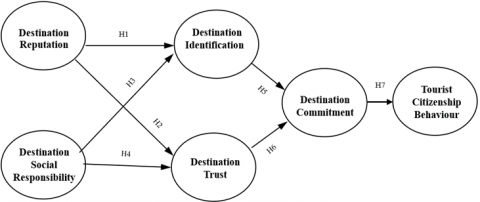
Figure 1. The research model
Figure 1 presents the conceptual research model developed to explore the determinants of TCB in the context of sustainable cultural tourism in Penglipuran Village. The model integrates seven hypotheses, grounded in relationship marketing theory, to explain how perceptions of destination reputation and social responsibility influence relational constructs and ultimately shape civic-minded tourist behaviour.
This model starts from H1, that destination reputation promotes destination identification, implying that a positive collective image promotes tourists' psychological congruity with their destination. H2 argues that destination reputation similarly enhances trust, implying that signals of reputation indicate reliability and credibility. H3 explores DSR's effect on destination identification, arguing that community-centric and moral practices reinforce emotional attachment. On its part, H4 argues that DSR also generates trust through signals of authenticity and integrity. Next, the model examines downstream relational consequences. H5 predicts that destination identification has a positive effect on commitment, reflecting that identification breeds emotional attachment and long-term loyalty. H6 asserts that trust has a positive effect on commitment, emphasizing that trust is an anchor of long-term tourist destination relationships. Lastly, H7 suggests that commitment has a positive effect on tourist citizenship behaviour, reflecting that loyal tourists are likely to participate in voluntary, pro-social activism that promotes sustainability and cultural preservation.
3.1 Sampling
The participants of this research were tourists aged 17 and older who had been to and had not been to Penglipuran Tourism Village and were familiar with Penglipuran as a tourist destination. Convenience sampling was employed to gather the participative informants. Out of 227 informants, 222 were eligible for the inclusion criteria, which was 97.8% of the target sample. For the participants who were interested in the research, the researcher provided a link to the online questionnaire which was made from Microsoft Forms.
3.2 Measures
All study variables were operationalized with indicators borrowed from reputable prior studies to secure content validity and theoretical congruity. Destination reputation was operationalized from Artigas et al. [52], DSR and destination identification from Zhang et al. [7], destination commitment from Curth et al. [53], destination trust from Su and Swanson [54], and tourist citizenship behaviour from Wong and Lin [55]. A six-point Likert-type scale was adopted, ranging from 1 (strongly disagree) to 6 (strongly agree), which removes a mid-point neutrality and compels respondents to provide a more pronounced position. This scaling strategy is suitable for attitudinal studies and increases scale sensitivity and power of discrimination (REF).
3.3 Data analysis
Quantitative data from this study underwent a systematic four-step procedure to determine the validity, reliability, and structural quality of measurement and structural models. The first was to conduct an Exploratory Factor Analysis (EFA) through SPSS version 29 to determine construct validity. Indicators whose factor loading was ≥ 0.40 were retained, in accordance with commonly accepted standards. The second was to determine construct reliability through Cronbach’s alpha, where constructs whose alpha was ≥ 0.70 were considered to be reliable. These preliminary steps were needed to determine confirmation regarding dimensionality and measurement item consistency.
At the third stage, Average Variance Extracted (AVE) was evaluated, and values ≥ 0.50 were considered indicative of adequate convergent validity. Third, hypothesis testing was carried out through Structural Equation Modelling (SEM), using AMOS version 29. Hypotheses were accepted if the Critical Ratio (CR) was ≥ 1.96, which corresponds to statistical significance at 5%. To assess model fit, both EFA and SEM outcomes were evaluated through thresholds specified in Table 1, which correspond to benchmarks proposed in prior literature. More specifically, a model was said to be a good fit if it met the following thresholds: p-value between 0.05 and 1.00 [56], χ²/DF ≤ 2.00 [57], CFI ≥ 0.95 [58], and RMSEA ≤ 0.05 [59]). Such methodological rigor provides robust empirical observations and credible theoretical insights (REF).
Table 1. Profile of participants
|
Profile |
Frequency |
Percent |
|
|
Sex |
Male |
105 |
47.3 |
|
Female |
117 |
52.7 |
|
|
Total |
222 |
100.0 |
|
|
Group of age |
17-20 |
41 |
18.5 |
|
21-24 |
63 |
28.4 |
|
|
25-29 |
85 |
38.3 |
|
|
30-34 |
33 |
14.9 |
|
|
Marital status |
Unmarried |
125 |
56.3 |
|
Separated/divorced |
7 |
3.2 |
|
|
Married |
86 |
38.7 |
|
|
Widowed |
4 |
1.8 |
|
|
Occupational status |
Employed |
128 |
57.7 |
|
Unemployed |
46 |
20.7 |
|
|
Self-employed |
48 |
21.6 |
|
|
Level of education has been completed |
Less than high school |
1 |
0.5 |
|
Diploma |
57 |
25.7 |
|
|
Postgraduate |
3 |
1.4 |
|
|
Undergraduate |
88 |
39.6 |
|
|
High school |
73 |
32.9 |
|
|
Experience visiting Penglipuran Village |
No |
4 |
1.8 |
|
Yes |
218 |
98.2 |
|
4.1 Participants
Table 2 presents the summary of demographic details of the study samples of tourist citizenship behaviour in Penglipuran Village. Out of the 227 questionnaires viewed, 222 usable responses (97.8%) were ready for analysis with the data validity. Gender makeup comprised 47.3% males as well as 52.7% female participants. Age-wise, the highest was the age group of 25–29 (38.3%), followed by the 21–24 (28.4%) as well as the 17–20 (18.5%). Many of the respondents were found to be single (56.3%), as was the scenario for employment, with the majority of the questioners being employed (57.7%). With regards to education, 39.6% had received a bachelor’s degree, the high school diploma following closely at 32.9%, as well as the associate degree/diploma at 25.7%. Worth noting is the issue that 98.2% of the respondents had been in Penglipuran prior, indicating that the high majority of the questioners had personal experience in the research setting.
4.2 Data validity, AVE, and reliability tests
As all destinations display convergence validity for the AVE measure since all destinations report an AVE value higher than the threshold of 0.50 [60] for destination reputation (0.571), DSR (0.551), commitment (0.543), trust (0.546), destination identification (0.693), and TCB (0.545), it comes as no surprise that all the constructs show diagnostically distinct outcomes. This report also documents variation among the indicator's factor loadings, along with the distribution of the loadings which display values between 0.682 and 0.851 which also meet the threshold established [57] to show indicator validity, as the indicator values for all exceed 0.40 which reflects positively on the value of the respective indicator. In contrast, it was noted that some constructs also have a value on Cronbach’s alpha which is lower than the cutoff of 0.70 zone of acceptable values which, for travel destination reputation, gives a range of alpha values which is 0.62, and DSR which is 0.59, and commitment which is 0.578, and Trust which is 0.575.
These values, however, paint a wider picture suggesting that the constructs have a moderate reliability though Hair [60] and Henseler et al. [61] indicate that the cutoff for alphas to be viewed as acceptable during exploratory studies would be 0.60 or above with the expectation of adequate AVE and also of adequate factor loadings as was the case with those values. In addition, the report on the overall model fit indices provided by the study (CFI = 0.999 RMSEA = 0.005) indicates excellent fit of structures which would adjust for low reliability number.
As a result of all of the above, as well as arguing for the internal consistency of the constructs for hypothesis testing which ensures the validity of data [56], it is only reasonable that the values for some of the alpha's constructs would fall below 0.70 however adequate convergent validity with the high indicator loadings along with the model fit confirming their adequate overall validity.
4.3 Hypotheses tests
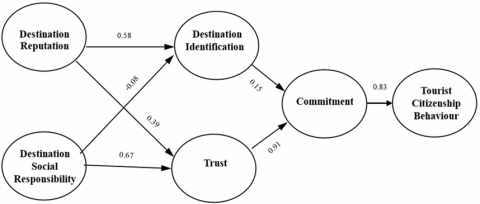
Figure 2 and the results in Table 3 illustrate a structural model that tests the relationships between variables with indicators of model adequacy that are exceptional (p = 0.466; CMIN/DF = 1.005; CFI = 0.999; RMSEA = 0.005), signifying that the model has a completely fit. A significant pathway is evident from Destination Reputation to Destination Identification (0.58) and to Trust (0.36), which supports the role of reputation as an initial trigger in the positive perception and belief formation. DSR has a solid influence on Trust (0.67), which confirms that socially responsible practices enhance the confidence of the travellers. This effect is also the case, although the path to Destination Identification (-0.08) is not significant. Trust subsequently provides the most influence toward Commitment (0.91) in this case, thus positioning trust as a pivotal mediator in the formation of emotional commitment.
Table 2. Result of data validity, AVE, and reliability tests
|
Variables and Indicators |
Factor Loadings |
AVE |
Cronbach's Alpha |
|
Destination Reputation |
|
0.571 |
0.62 |
|
Dr4 People highly respect Penglipuran Village. |
0.782 |
|
|
|
Dr1 Penglipuran Village has an excellent reputation. |
0.777 |
|
|
|
Dr3 I will encourage friends and relatives to support the sustainability of Penglipuran Village. |
0.706 |
|
|
|
Destination Social Responsibility |
|
0.551 |
0.59 |
|
Ds4 I think Penglipuran Village provides a good experience for visitors by connecting with the local people and culture. |
0.753 |
|
|
|
Ds1 I think Penglipuran Village is dedicated to giving back to the local community. |
0.751 |
|
|
|
Ds5 I think Penglipuran West Village actively cares about the environment. |
0.722 |
|
|
|
Commitment |
|
0.543 |
0.578 |
|
Co3 Penglipuran Village has great personal meaning to me. |
0.808 |
|
|
|
Co5 I care about the long-term success of Penglipuran Village. |
0.698 |
|
|
|
Co4 I feel emotionally attached to Penglipuran Village. |
0.698 |
|
|
|
Destination Trust |
|
0.546 |
0.575 |
|
Tr5 I believe there are clear travel management standards in Penglipuran Village. |
0.789 |
|
|
|
Tr2 I hope that Penglipuran Village officials will actively offer assistance when I am in trouble. |
0.742 |
|
|
|
Tr3 I hope that Penglipuran Village facilities are humane. |
0.682 |
|
|
|
Destination Identification |
|
0.693 |
0.772 |
|
Di4 If someone criticizes Penglipuran Village, I will feel embarrassed. |
0.851 |
|
|
|
Di3 When someone praises Penglipuran Village, it feels like a personal compliment. |
0.831 |
|
|
|
Di2 The success of Penglipuran Village is my success. |
0.814 |
|
|
|
TCB |
|
0.545 |
0.791 |
|
Tc10 I am willing to say positive things about Penglipuran Village to others. |
0.779 |
|
|
|
Tc14 I am willing to encourage my friends/relatives to visit Penglipuran Village. |
0.745 |
|
|
|
Tc4 I usually encourage my friends/relatives to visit Penglipuran Village. |
0.739 |
|
|
|
Tc15 I am willing to say positive things about Penglipuran Village to others. |
0.715 |
|
|
|
Tc9 I am willing to encourage my friends/relatives to visit Penglipuran Village. |
0.711 |
|
|
Table 3. Results of the hypothesis tests
|
Hypotheses |
Paths |
C.R. |
P |
Results |
|
H1 |
Destination reputation > Destination identification |
2.897 |
0.004 |
Accepted |
|
H2 |
Destination reputation > Trust |
2.511 |
0.012 |
Accepted |
|
H3 |
Destination social responsibility > Destination identification |
-0.428 |
0.668 |
Rejected |
|
H4 |
Destination social responsibility > Trust |
3.419 |
*** |
Accepted |
|
H5 |
Destination identification > Commitment |
1.664 |
0.096 |
Rejected |
|
H6 |
Trust > Commitment |
5.274 |
*** |
Accepted |
|
H7 |
Commitment > TCB |
5.496 |
*** |
Accepted |
Figure 2. The structural model of the hypothesis tests
Finally, Commitment to TCB (0.83) confirms that commitment energizes behaviours that are voluntary and advocacy in nature, compliant and collaborative. Taken as a whole, these path patterns confirm the chain of influence with Trust as the main linkage, while DSR and Reputation in the chain are the isolated primary drivers and with weak ascription of the role of Identification to Commitment as relational as almost none.
Specifically, H1 (CR = 2.897; p = 0.004) and H2 (CR = 2.511; p = 0.012) confirm that, among other things, the cognitive seat of destination reputation strengthens the trust-relationship pillar, and also the primary identification.
On the other hand, H3 is rejected (CR = -0.428; p = 0.668), so DSR does not directly increase identification; this implies that the ethical/community dimension has not yet been automatically internalized into a psychological bond-self-destination. Meanwhile, H4 is accepted (CR = 3.419; p < 0.001), placing DSR as a strong predictor of trust, that is, faith in the integrity and coherence of the service, and value aligned.
In the end stage, H5 was rejected (CR = 1.664; p = 0.096) so identification was not strong enough to encourage commitment in this context; instead, trust emerged as the foremost gateway, as evidenced by H6, which was significant (CR = 5.274; p < 0.001). Finally, H7 (CR = 5.496; p < 0.001) confirmed that commitment fosters TCB - compliance, advocacy, and voluntary cooperation. These results describe the effective path reputation/DSR → trust → commitment → TCB, with trust as the most critical mediator, while identification has a limited role in the model being tested.
The study finds that H1 is supported, which means destination reputation has a significant effect on destination identification. This finding verifies the theoretical proposition that tourists are more likely to mentally identify with destinations that have a powerful, credible, and culture-congruent reputation. Consistent with Ekinci and Hosany [62], destination reputation acts as a symbolic proxy for the destination's distinctness and value system, leading to a feeling of belonging during visits. Moreover, Andi and Ran [45] contend that environmental congruence and value perceived—two aspects significantly related to destination reputation—are instrumental in generating psychological fulfilment that engenders further emotional attachment.
In Penglipuran Village's specific context, its frequent representation as a clean, traditional, and culture-dense destination seems to increase tourists' personal identification with it. Similarly, Martaleni et al. [42] pointed out that quality perception and inclusiveness, important components of positive reputation, develop emotional affinity and trust. As such, the confirmation of H1 provides support for relationship marketing theory's broader proposition: that a destination's symbolic value, captured in its reputation, engenders internalization processes that give rise to destination identification.
The findings reveal that H2 is accepted, thus establishing that destination reputation largely and positively contributes to trust. This conclusion supports theoretical positions that propose a positive reputation built through reliability, consistency, and quality perceptions acts as an important trust precursor in tourism. As Wibawa et al. [22] contended, electronic word-of-mouth strengthens destination image and trust considerably, suggesting that electronic reputation signals can determine tourists’ cognitive judgments. In a related study, Chen et al. [23] insisted that perceived cultural heritage authenticity fosters trust and emotional attachment, further proving that reputation-based signals determine relational outcomes. Guerreiro et al. [21] further convinced us that variability and memorable experiences heighten cognitive destination image, which in turn fosters trust. Additionally, Bae and Kim [24] showed that brand experiences enhance trust positively, which mediates loyalty—an applicability that can be generalized to tourism environments. Agyeiwaah et al. [25] further contributed that service quality and ethics, two building blocks of reputation, are imperative where sustainable tourist trust building is concerned. Together, all these discoveries establish that destination reputation is not only a brand asset but also a trust generator that informs long-term tourist–destination relationships.
The results of the H3 test indicate that DSR does not have a significant effect on Destination Identification (CR = -0.428; p = 0.668), therefore, this hypothesis is not statistically proven. In this context, DSR should positively impact the strengthening of tourist identification, as socially ethical and pro-community practices are expected to align with tourists' concern values [27, 30, 31]. This finding suggests that to establish a psychological bond with social programmes at the destination, tourists must first have a reputation and experience with the social programmes at the destination based on normative signals. According to the theory explaining that identification requires in-depth interaction experience, it is not merely ethical to build relationships with tourists. In this case, DSR has a positive effect on trust (H4), reinforcing its role as a credibility signal rather than a trigger for identity. DSR that is internalised in social practices at the destination ensures that there is DSR ingrained in the social practices of the destination.
Hypothesis H4 was accepted due to a CR of 3.419 and a p-value < 0.001, which shows there is a positive impact and strong relationship between social responsibility and trust. This corroborates the predictions that include social responsibility in the positive relationship within the tourism sector. Other initiatives, such as voluntary community preservation, community empowerment, and environmental preservation, are integrated into a relational trust. This relationship is also supported by the evidence. Liu et al. [26] stated that DSR promotes trust through authentic behaviour and positive DSR impacts. Wibawa et al. [22] also identified socially responsible practices that improve the positive trust reputation of a destination. Juárez et al. [34] suggested that community trust promotes long-term relationships in the tourism sector and destination. Finally, Ateş [28] identified the emerging attitude of correlating trust within tourism to corporate social responsibility, with DSR as the pillar of most trust-promoting techniques. Parameter H4 received considerable support, accompanied by a high degree of statistical significance, leading us to conclude that DSR is not just a normative, ethical instrument, but also a significant means of engendering trust-based relationships with stakeholders in the field of sustainable tourism.
The hypothesis 5 tests which investigated the relationship between Destination Identification and Commitment have been rejected with CR = 1.664 and p = 0.096 suggesting there is no relationship between the constructs. As the theory describes identification as a psychological association and connection of a tourist with a destination, such factors should promote subsequent commitment through emotions and loyalty [33, 63]. However, the results show that within the constructs of this study, identification as a tourist does not result in commitment. Identification of a destination, as trust and perceived reliability of the destination, are priorities and deciding on the commitment a tourist sustains with a destination. This is evident in the strong trust-commitment relationship (H6). While symbolic associations and immersive experiences are likely to increase identification [21, 41], such factors would not be enough to create a sustained commitment if trust and service quality is not present. Thus, identification has a limited impact on trust which suggests that managerial actions should be centred on efforts to facilitate identity and to build trust to translate psychological attachment to behavioural loyalty.
The outcomes verify that H6 is accepted, confirming that trust significantly and positively predicts commitment in the tourism setting. This result reinforces the conceptual knowledge that trust provides a cognitive evaluation and an emotional certainty that forms long-term tourist–destination relationships. Trust empowers tourists to be comfortable in their expectations of consistency, authenticity, and moral purity from a destination, which in turn generates further commitment. Martaleni et al. [42] showed that inclusive approaches and high service quality in halal tourism reinforce trust, which directly develops into persistent commitment. Similarly, de Oliveira Moreira et al. [43] indicated that trust, which develops through successful destination image development and collaborative stakeholder interaction, is an important foundation for long-term loyalty. Chiengkul et al. [44] elaborated further by revealing that AI-powered smart tourism experiences boost trust and convert to affective commitment. Andi and Ran [45] indicated that environmental congruence and perceived value create psychological fulfilment and trust, which in turn fuel attachment and commitment. Finally, Rahman and Wardana [46] showed that mutual rewards and openness in culture-based tourism create stakeholder trust, which strengthens relational commitment. As a collective, these outcomes verify that trust, far from being an inert disposition, is an important strategic relational resource integral to forming tenacious emotional and behavioural loyalty.
Analysis verifies that H7 is accepted, lending support to the proposition that tourist commitment is a powerful predictor of TCB. The result is consistent with relational theories of tourism, which theorize commitment as an affective and psychological bonding that motivates action extending beyond transactional exchanges. Committed tourists are likely to display TCB—voluntary actions like cultural respect, advocacy, compliance with sustainability, and collaborative involvement with locals. This conceptual line of reasoning is corroborated through parallel evidence from organizational environments. Bhardwaj et al. [49] showed that employee commitment mediates empowerment with organisational citizenship behaviour (OCB), suggesting that commitment converts positive interior states into discretionary, prosocial action. Similarly, Das and Mohanty [50] revealed that organisational commitment converts perceived justice into OCB, demonstrating that conformity with shared moral values propels voluntary action. Fuzi et al. [51] verified that different types of commitment—affective, normative, and continuance—predict OCB powerfully, wherein trust strengthens this effect. These processes are parallel to the tourism environment, whereby commitment based on trust generates affective bonds and stimulates socially positive tourist actions. Hayati and Rifani [9] also corroborated that line of reasoning through revealing that commitment mediates engagement with OCB, highlighting psychological attachment's motivational function within citizenship processes. The acceptance of H7 thus verifies that commitment is not merely an affective state, but an accelerator of voluntary, citizen-oriented tourist actions.
The collective findings of this study provide strong empirical support for the proposition that destination reputation, DSR, destination identification, and trust are interlinked drivers of tourist commitment, which in turn fosters TCB—a behavioural construct closely aligned with the principles of sustainable tourism. A favourable reputation and well-managed DSR initiatives not only enhance trust and identification but also embed ethical, cultural, and environmental values into the tourist–destination relationship. These psychological bonds—manifested as commitment—encourage tourists to engage in pro-social behaviours such as cultural preservation, cooperation with local communities, and adherence to environmental sustainability standards, all of which are core to sustainable tourism practice. By validating the sequential pathways from cognitive and emotional precursors (reputation, DSR, trust, identification) to voluntary, sustainability-oriented behaviours (TCB), this research affirms that relational quality in tourism is not merely a loyalty mechanism but a strategic avenue for embedding sustainability values into tourist conduct. Thus, cultivating trust-based commitment through ethical branding, community engagement, and immersive experiences can be seen as a pivotal strategy for advancing long-term sustainability goals in cultural tourism destinations.
This study analysed the influence of destination reputation and social responsibility on relational constructs to shape TCB, cultural sustainment, and the destination reputation influence on Trust. Trust influences Commitment and sustains active TCB. Result of the study indicates that destination social responsibility influences reputation and reputation influences on Trust. Trust influences Commitment and sustains active TCB. The study also indicates that Destination Identification has no significant effect on Commitment which led to Trust being the strongest mediator. The findings show the importance of Trust and its relationships in DSR. Positive relationships based on social responsibility and ethical branding may influence voluntary and pro-social behaviours in tourists. The study aims to validate relationships in marketing and promote sustainability in tourist behaviour. DSR to boost reputation. Transforming passive visitation into active stewardship is the focus of long-term cultural and environmental sustainability.
The current research extends predictive models of relationship marketing in the particularly specialized area of sustainable cultural tourism by verifying the sequential alignment of certain cognitive and affective variables predictive of pro-social behavioural outcomes in tourists, merging the cognitive domain behaviours with the affective domain of behaviours in predictive modelling. The acceptance of H1 and H2 provides additional confirmatory evidence, building on the theoretical basis of hold destination reputation as a core cognitive anchor that facilitates identification and subsequently, strengthened reputation. This is in alignment with the theoretical premise that reputation is a proxy for reliability and cultural fit. The considerable support of H4 grounds DSR as an ethical dimension that builds trust, thus broadening the scope of the CSR literature to the destination level, confirming that socially responsible behaviours uplift the trust of tourists in the destination. The confirmation of H6 and H7 positions trust and commitment as pivotal relational mediators, translating positive perceptions into sustained loyalty and voluntary citizenship behaviours. The integration of these variables into a comprehensive model of the relational dynamics of trust and the absence of the core principle predictor of identification on loyalty to reputation evidence support for the identification loyalty assumption, thus forming the basis of the challenge to the central theoretical premise of commitment. This theoretical contribution informs the cascading effects of ethical and reputational signals on relational mechanisms that activate TCB, thus broadening the understanding of how these mechanisms operate to embed relational values around sustainability in the relationship between tourists and the destination.
From a managerial perspective, the implications are useful to destination managers aiming to promote sustainable tourist behaviours. The endorsement of H1 and H2 indicates that building and sustaining a strong destination reputation is important for increasing identification and trust. Managers ought to have integrated branding, real cultural narratives, and authentic service provision to communicate trustworthiness and cultural alignment. H4 confirms the importance of trust building for DSR. Initiatives, thus destinations need to implement trust-generating, socially responsive, and transparent programs like cultural preservation and local economic empowerment to strengthen the ethical appeal. The strong effects of trust and commitment (H6 and H7) imply that managers need to focus on relationship marketing based on trust, with appropriate expectations, responsive support for visitors, and ethical behaviour to transform trust into commitment. Sustained commitment results in active citizenship behaviour (advocacy, voluntary compliance, and collaborative constancy with the local community) among tourists. Overall, the reputation and DSR do not serve promotionally, but are core elements for sustained commitment and the transformation of mere visitors into active advocates for cultural and environmental custodianship.
This examination of the phenomena in question has some constraints that need to be described in some detail. Firstly, it has to be recognized that the tourism experience of the respondents has been regarded in only one specific community tourism environment, that is, Penglipuran Village, which would definitely narrow the applicability of the results to other tourism community environments, such as urban, coastal, and adventure tourism. Secondly, the lack of international participants and the focus on the domestic tourists’ sample restricts the ability to analyse other international tourists’ behaviour as well as the associated cross-cultural differences of the relational variables such as trust and commitment. The third limitation concerns the data collection tool. It is accepted that the use of self-reported data tends to lead to social desirability bias, in which participants may exaggerate or fabricate the extent to which they exhibit pro-social behaviours such as TCB. Fourth and last, the results of this study may not include the phenomenon of the research in longitudinal aspects and overlook the adaptability of the respondents over time, which is a core research aim to analyse the dependent and independent relational variables (commitment) and the sustainable behaviours/practices over time (sustainability). In the last part of the study, it is noted that while the model under examination included some of the key relational variable in tourism, it has not included other highly probable main variables such as cultural congruence, emotional attachment, or the awareness of sustainability that could open valuable theoretical tourism relational research.
Moving forward, to improve external validity, future research needs to consider a multi-context strategy to better understand the problem using varied combinations of destination types and cultural contexts. Focusing on cultural differences in the mechanisms of trust and commitment, international travellers would be a valuable audience to study. Researchers should try to implement a longitudinal approach to better understand the behavioural shifts TCB and the resulting changes in destination interventions. Adding multi-group SEM and other advanced methodologies would allow for understanding the moderating effects of some demographic and psychographic variables. Future research should focus on a number of emerging variables, including but not limited to emotional engagement, perceived authenticity, and sustainability literacy. These variables would add depth to the theoretical framework. Finally, some qualitative methods, including ethnography or in-depth interviews, would be a good way to help quantify tourists’ internalization of a destination’s value systems and their resulting pro-social behaviours.
The study was approved by an ethical committee with ID: 1532/UN39.14/PT.01.05/X/2025. Informed consent was obtained from all participants, and their privacy rights were strictly observed.
During the preparation of this work, the authors used ChatGPT in order to assist with improving the readability and language of the manuscript. After using this tool, the authors reviewed and edited the content as needed and take full responsibility for the content of the published article.
This research is funded by the Indonesian Endowment Fund for Education (LPDP) on behalf of the Indonesian Ministry of Higher Education, Science and Technology and managed under the EQUITY Program (Contract No: 4308/B3/DT.03.08/2025 and No: B/284/UN39/HK.07.00/2025).
The authors declare that they have no conflicts of interest to disclose.
The authors are deeply grateful to all the participants who generously shared their time for this research. Their contributions have been instrumental in the success of this study.
Conceptualization, U.S., S.A. and D.S.S.; data curation, U.S. and D.S.S.; methodology, U.S. and S.B.; investigation, U.S., S.B. and S.A.; formal analysis, U.S.; resources, U.S., S.B. and S.A.; software, U.S.; validation, U.S., M.A., and S.A.; Visualization, U.S., M.A., S.B. and S.A.; writing—original draft preparation, U.S., S.B. and D.S.S.; writing— review and editing, S.B. and S.A.; project administration, U.S.; supervision, S.A. All authors have read and agreed to the published version of the manuscript.
[1] Ottaviani, D., Demiröz, M., Szemző, H., De Luca, C. (2023). Adapting methods and tools for participatory heritage-based tourism planning to embrace the four pillars of sustainability. Sustainability, 15(6): 4741. https://doi.org/10.3390/su15064741
[2] Seidualin, D., Mussina, K., Mukanov, A. (2025). Leveraging territorial branding for sustainable development and tourist attraction: Case of Ulytau, Kazakhstan. Geo Journal of Tourism and Geosites, 58(1): 61-77. https://doi.org/10.30892/GTG.58106-1391
[3] Safdar, G., Bibi, M. (2025). Social media as a catalyst for eco-tourism growth: Exploring the perception of social media users in twin metropolitan cities (Rawalpindi & Islamabad), Pakistan. Qlantic Journal of Social Sciences and Humanities, 6(1): 12-19. https://doi.org/10.55737/QJSSH.VI-I.25287
[4] Sumardani, R., Wiramatika, I.G., Sengkey, F., Osin, R.F., Anggayana, I.W.A., Nagara, I.M.W.S. (2024). Modeling marine tourism from the perspective of sustainable tourism in Serangan tourism village. In Proceedings International Conference on Marine Tourism and Hospitality Studies, Makassar, Indonesia, pp. 307-322. https://doi.org/10.33649/iconmths.v1i1.375
[5] Nguyen, L.T., Duc, D.T.V., Dang, T.Q., Nguyen, D.P. (2023). Metaverse banking service: Are we ready to adopt? A deep learning-based dual-stage SEM-ANN analysis. Human Behavior and Emerging Technologies, 2023(1): 6617371. https://doi.org/10.1155/2023/6617371
[6] Torres-Moraga, E., Rodriguez-Sanchez, C., Sancho-Esper, F. (2021). Understanding tourist citizenship behavior at the destination level. Journal of Hospitality and Tourism Management, 49: 592-600. https://doi.org/10.1016/J.JHTM.2021.11.009
[7] Zhang, H., Cheng, Z., Chen, X. (2022). How destination social responsibility affects tourist citizenship behavior at cultural heritage sites? Mediating roles of destination reputation and destination identification. Sustainability, 14(11): 6772. https://doi.org/10.3390/su14116772
[8] Ghaffari, M., Fakhimi, M., Esmaeili Mahyari, M., Moeini, H. (2024). Understanding the dimensions of citizenship behavior of tourists (the case of cultural heritage tours in Iran). International journal of Tourism, Culture & Spirituality, 7(1): 1-16. https://doi.org/10.22133/ijtcs.2024.426430.1147
[9] Hayati, D., Rifani, A. (2024). Employee engagement and leader-member exchange form organizational commitment and organizational citizenship behavior. Can it be achieved for employees who work while studying. Journal Of Ecohumanism Учредители: Transnational Press London, 4(1): 594-605.
[10] Topsakal, Y., İçöz, O. (2025). Ecotourism destination brand development for managing overtourism: A brand proposal for Mugla, Turkey. In Solutions for Managing Overtourism in Popular Destinations, 303-328.
[11] Khatter, A. (2025). Challenges and solutions for corporate social responsibility in the hospitality industry. Challenges, 16(1): 9. https://doi.org/10.3390/challe16010009
[12] Laksmi, G.W., Panjaitan, H., Pandiangan, H.J., Napitupulu, D.R. (2024). Analysis of the role of sustainable tourism village certification in efforts to protect tourism village management reviewed from Law No 10 of 2009 on tourism (case study: Penglipuran village, Bali). Jurnal Kepariwisataan, 23(1): 93-105. https://doi.org/10.52352/jpar.v23i1.1261
[13] Astara, I.W.W., Budiartha, N.P., Wesna, P.A.S., Selamet, I.K., Wijaya, I.K.M. (2023). Penglipuran tourism village, Kubu Village, Bangli District, Bali in maintaining Bali local wisdom values. Journal of Legal and Cultural Analytics (JLCA), 2(3): 175-190. https://doi.org/10.55927/jlca.v2i3.5804
[14] Rachmawati, D., Fitriyani, L.R. (2024). Community participation in developing Penglipuran Village in Bali as tourism village. Humaniora, 15(1): 1-10. https://doi.org/10.21512/HUMANIORA.V15I1.11007
[15] Surata, I.K., Sumartana, I.M., Utama, I.G.B.R. (2024). The impact of cultural tourism on local traditions. Jurnal Penelitian Pendidikan Indonesia, 10(4): 672-683. https://doi.org/10.29210/020244780
[16] Martaleni, M., Hadiyati, E., Pertiwi, Y.I., Kerti Yasa, N.N. (2021). Role of tourist motivation as mediating variable on visitor decisions at Indonesian tourism village. Innovative Marketing, 17(3): 88-98. https://doi.org/10.21511/im.17(3).2021.07
[17] Allan, M. (2025). Tourism experiences, motivations, and travel lifestyles preferences for domestic tourists: A case of Jordan. Geo Journal of Tourism and Geosites, 58(1): 52-60. https://doi.org/10.30892/GTG.58105-1390
[18] Kencana, N. (2025). The effect of coronavirus pandemic on tourism industry in West Nusa Tenggara, case study: Travel bureau. JMET: Journal of Management Entrepreneurship and Tourism, 3(1): 61-72. https://doi.org/10.61277/JMET.V3I1.178
[19] Sobaih, A.E.E., Gharbi, H., Brini, R., Aliane, N. (2025). Exploring the mediation effect of brand trust on the link between tourism destination image, social influence and brand loyalty. Societies, 15(1): 9. https://doi.org/10.3390/SOC15010009
[20] de Almeida, G.G.F., Minasi, S. (2025). Tourism and destination positioning through territorial branding: The case of Brazil. In Cases on Effective Destination Management, pp. 227-254. https://doi.org/10.4018/979-8-3693-1548-4.ch011
[21] Guerreiro, M., Pinto, P., Bagheri, F., deMatos, N. (2025). Broadening tourism experience and destination image: A cross-cultural approach between international and domestic tourists. European Journal of Tourism Research, 39: 3909.
[22] Wibawa, D.P., Yanto, Y., Zulkarnain, A. (2025). How destination image and trust mediate e-WOM's impact on halal tourism intentions. Jurnal Ekonomi & Keuangan Islam, 11(1): 29-46. https://doi.org/10.20885/JEKI.vol11.iss1.art3
[23] Chen, X., Lee, T.J., Hyun, S.S. (2025). Visitors’ self-expansion and perceived brand authenticity in a cultural heritage tourism destination. Journal of Vacation Marketing, 13567667241309122. https://doi.org/10.1177/13567667241309122
[24] Bae, B.R., Kim, S.E. (2023). Effect of brand experiences on brand loyalty mediated by brand love: The moderated mediation role of brand trust. Asia Pacific Journal of Marketing and Logistics, 35(10): 2412-2430. https://doi.org/10.1108/APJML-03-2022-0203
[25] Agyeiwaah, E., McKercher, B., Suntikul, W. (2017). Identifying core indicators of sustainable tourism: A path forward? Tourism Management Perspectives, 24: 26-33. https://doi.org/10.1016/j.tmp.2017.07.005
[26] Liu, D., Fang, H., Huang, M., Jiang, C., Ma, J. (2025). I buy green because I feel green pressure: The effect of destination social responsibility on tourists’ green product purchase behavior. Asia Pacific Journal of Marketing and Logistics, 37(8): 2422-2440. https://doi.org/10.1108/APJML-07-2024-0977
[27] Manthé, E., Bilgihan, A. (2024). The unexpected consequences of engaging tourists in destination social responsibility through check-out-charity: The case of ski resorts in the French alps. Current Issues in Tourism, 27(15): 2482-2498. https://doi.org/10.1080/13683500.2023.2229936
[28] Ateş, A. (2025). A bibliometric analysis on corporate social responsibility in the tourism sector between 2018-2023. Uluslararası Ekonomi Siyaset İnsan ve Toplum Bilimleri Dergisi, 8(1): 1-16. https://doi.org/10.59445/IJEPHSS.1550518
[29] Hernández Juárez, J.L., Cervantes, B.P., Hernández, J.L.G., Díaz, S.V. (2025). Impact of tourism in the strengthening of communityu social capital in Sinaloa: An emprical study. International Journal of Business and Management Studies, 6(1): 57-63. https://doi.org/10.56734/IJBMS.V6N1A6
[30] Song, J., Kang, J. (2023). The relationship between marine sports tourist destinations, social responsibility, and environmentally responsible behavior. Sustainability, 15(10): 7739. https://doi.org/10.3390/SU15107739
[31] Maki, Z.E., Hassan, T.H., Helal, M.Y., Saleh, M.I. (2023). Sustainability of leisure tourism events from a destination social responsibility perspective: Do attribution theory dimensions matter? International Journal of Environmental Research and Public Health, 20(6): 4847. https://doi.org/10.3390/IJERPH20064847
[32] Ahmad, N., Ahmad, A., Siddique, I. (2023). Responsible tourism and hospitality: The intersection of altruistic values, human emotions, and corporate social responsibility. Administrative Sciences, 13(4): 105. https://doi.org/10.3390/ADMSCI13040105
[33] Tran, P.K.T., Nguyen, H.K.T., Nguyen, L.T., Nguyen, H.T., Truong, T.B., Tran, V.T. (2023). Destination social responsibility drives destination brand loyalty: A case study of domestic tourists in Danang City, Vietnam. International Journal of Tourism Cities, 9(1): 302-322. https://doi.org/10.1108/IJTC-03-2022-0069
[34] Juárez, J.L.H., Pérez Cervantes, B., Lic. J., Gastélum Hernández,L., Lic. S. Vázquez Díaz. (2025). Impact of tourism in the strengthening of community social capital in Sinaloa: An empirical study. Journal of Business & Management, 6(1): 57-63. https://doi.org/10.56734/ijbms.v6n1a6
[35] Prayag, G., Hosany, S., Muskat, B., Del Chiappa, G. (2017). Understanding the relationships between tourists’ emotional experiences, perceived overall image, satisfaction, and intention to recommend. Journal of Travel Research, 56(1): 41-54. https://doi.org/10.1177/0047287515620567
[36] Qian, J., Li, X. (2024). Perceived value, place identity, and behavioral intention: An investigation on the influence mechanism of sustainable development in rural tourism. Sustainability, 16(4): 1583. https://doi.org/10.3390/SU16041583
[37] Nguyen-Viet, B., Van Nguyen, S. (2023). Authentic experience, place attachment, and behavioral intention: Vietnamese religious tourism. Sage Open, 13(4): 21582440231216193. https://doi.org/10.1177/21582440231216193
[38] Dai, Q., Peng, S., Guo, Z., Zhang, C., et al. (2023). Place identity as a mediator between motivation and tourist loyalty in ‘red tourism’. Plos One, 18(10): e0284574. https://doi.org/10.1371/journal.pone.0284574
[39] Avcı, C. (2024). Urbanization of consciousness or maintaining rurality: What tourism workers tell from social identity theory perspectives. Tourism and Hospitality Research, 14673584241313349. https://doi.org/10.1177/14673584241313349
[40] Martínez-Falcó, J., Sanchez-Garcia, E., Marco-Lajara, B., Visser, G. (2025). Wine tourism as a catalyst for sustainable competitive advantage: Unveiling the role of employee wellbeing and organizational commitment. British Food Journal, 127(3): 1059-1079. https://doi.org/10.1108/BFJ-06-2024-0622
[41] Moritz, P., Hrivnák, M., Mazúchová, Ľ., Sándorová, Z. (2024). Who takes part in film tourism? The analysis of determinants of visiting film locations. International Journal of Tourism Research, 26(1): e2573. https://doi.org/10.1002/JTR.2573
[42] Martaleni, M., Mulyono, S., Utami, E.S. (2025). The role of religiosity in enhancing tourist loyalty through halal tourism and quality services. Innovative Marketing, 21(1): 50. https://doi.org/10.21511/IM.21(1).2025.05
[43] de Oliveira Moreira, P.H., Fraga, C., Lavandoski, J., Cardoso, L. (2025). Improving the strategic management of UNESCO creative cities of gastronomy: Integrating sensitivity analysis and tourism destination image based on analytic hierarchy process. Sustainability, 17(3): 1008. https://doi.org/10.3390/su17031008
[44] Chiengkul, W., Kumjorn, P., Tantipanichkul, T., Suphan, K. (2025). Engaging with AI in tourism: A key to enhancing smart experiences and emotional bonds. Asia-Pacific Journal of Business Administration, 17(5): 1421-1440. https://doi.org/10.1108/APJBA-09-2024-0488
[45] Andi, A., Ran, Y. (2025). The impact of tourism environment fit on tourists’ psychological recovery: The mediating effect of perceived value on place attachment. International Journal of Social Science and Human Research, 8(1): 382-394.
[46] Rahman, A.F., Wardana, A.A. (2025). Successful model of implementation of the Pentahelix concept in developing cultural-based tourism destinations in Aeng Tong–Tong Village. Jurnal Abdimas Pariwisata, 6(1): 99-107. https://doi.org/10.36276/JAP.V6I1.712
[47] Karim, R., Goh, G., Lee, Y., Zeb, A. (2025). To be digital is to be sustainable—Tourist perceptions and tourism development foster environmental sustainability. Sustainability, 17(3): 1053. https://doi.org/10.3390/su17031053
[48] Thuku, V.M., Senelwa, A., Naikuru, S. (2025). Commitment competency and growth of aquaculture-based small enterprises in Kenya. Journal of Entrepreneurship and Project Management, 10(1): 12-27. https://doi.org/10.47941/JEPM.2474
[49] Bhardwaj, P., Sharma, H., Savita, U. (2025). Linkage between empowerment, commitment and organizational citizenship behavior in Indian retail sector. The Learning Organization, 32(3): 459-478. https://doi.org/10.1108/TLO-06-2023-0104
[50] Das, L., Mohanty, S. (2024). How to develop human capital through organizational justice, organizational citizenship behavior, and organizational commitment. Folia Oeconomica Stetinensia, 24(2): 69-99. https://doi.org/10.2478/FOLI-2024-0017
[51] Fuzi, A.M., Zulkifli, W.F.W., Noor, N.H.M., El Ashfahany, A. (2024). Organizational commitment and organizational citizenship behaviour: The moderating effect of trust among fast food restaurant employees. Journal of Advanced Research in Business and Management Studies, 37(1): 23-38. https://doi.org/10.37934/ARBMS.37.1.2338
[52] Artigas, E.M., Vilches-Montero, S., Yrigoyen, C.C. (2015). Antecedents of tourism destination reputation: The mediating role of familiarity. Journal of Retailing and Consumer Services, 26: 147-152. https://doi.org/10.1016/J.JRETCONSER.2015.06.005
[53] Curth, S., Uhrich, S., Benkenstein, M. (2014). How commitment to fellow customers affects the customer-firm relationship and customer citizenship behavior. Journal of Services Marketing, 28(2): 147-158. https://doi.org/10.1108/JSM-08-2012-0145
[54] Su, L., Swanson, S.R. (2022). The effect of destination social responsibility on tourist environmentally responsible behavior: Compared analysis of first-time and repeat tourists. Tourism Management, 60: 308-321. https://doi.org/10.1016/j.tourman.2016.12.011
[55] Wong, I.A., Lin, Z. (2022). Understanding tourist citizenship behavioral intentions: The role of social interactions and brand perceptions. Journal of China Tourism Research, 18(3): 592-610. https://doi.org/10.1080/19388160.2021.1939829
[56] Schermelleh-Engel, K., Moosbrugger, H., Müller, H. (2003). Evaluating the fit of structural equation models: Tests of significance and descriptive goodness-of-fit measures. Methods of Psychological Research Online, 8(2): 23-74.
[57] Tabachnick, B.G., Fidell, L.S., Ullman, J.B. (2007). Using Multivariate Statistics. Boston, MA: Pearson.
[58] Hu, L.T., Bentler, P.M. (1995). Evaluating model fit. In Structural Equation Modeling: Concepts, Issues and Application, pp. 77-99. https://psycnet.apa.org/record/1995-97753-005.
[59] Browne, M.W., Cudeck, R. (1992). Alternative ways of assessing model fit. Sociological Methods & Research, 21(2): 230-258. https://doi.org/10.1177/0049124192021002005
[60] Hair, J.F. (2014). A Primer on Partial Least Squares Structural Equation Modeling (PLS-SEM). Sage.
[61] Henseler, J., Hubona, G., Ray, P.A. (2016). Using PLS path modeling in new technology research: Updated guidelines. Industrial Management & Data Systems, 116(1): 2-20. https://doi.org/10.1108/IMDS-09-2015-0382
[62] Ekinci, Y., Hosany, S. (2006). Destination personality: An application of brand personality to tourism destinations. Journal of Travel Research, 45(2): 127-139. https://doi.org/10.1177/0047287506291603
[63] Avci, I. (2024). Factors influencing the boycott intentions of Turkish consumers amid the Israel-Palestine conflict. Revista Brasileira de Gestao de Negocios, 26(4): e20240035. https://doi.org/10.7819/rbgn.v26i4.4282