Büşra Yalçın* | Turgay Kerem Koramaz
© 2025 The authors. This article is published by IIETA and is licensed under the CC BY 4.0 license (http://creativecommons.org/licenses/by/4.0/).
OPEN ACCESS
This study addresses the protection of heritage sites and the concept of responsible tourism with an ontological planning approach through the case of Kemaliye, which is included in the UNESCO World Heritage tentative list, with Türkiye’s application. The growth in the volume of tourism at heritage sites threatens sustainability by causing environmental, economic, social, and cultural pressures. The solution to these threats is considered “destination management” in tourism literature and “site protection”, and “managing tourism growth” in urban planning. This study aims to underscore the significance of responsible tourism in the conservation of heritage sites, elucidate the theoretical underpinnings of ontological planning, and engage in a discourse on this subject matter through a practical case study. In the context of the study, a content analysis based on interviews with the stakeholders of tourism sector was conducted. The initial outcomes of the study address a multidisciplinary perspective on the axes of “site conservation”, “tourism-heritage coexistence”, “community” and make recommendations for similar heritage sites.
cultural heritage sites, UNESCO World Heritage Site, sustainability, ontological resilience, responsible tourism, Kemaliye
In recent years, the tourism capacity of heritage sites has grown rapidly, but many urban heritage sites struggle to manage the environmental, economic, social, and cultural pressures associated with this growth. This study focuses on heritage tourism, particularly World Heritage tourism. The concept of World Heritage Sites was introduced in the 1972 “Convention for the Protection of the Natural and Cultural World Heritage” and further refined in the “Guidelines for the Implementation of the World Heritage Convention”. These sites, deemed to have outstanding universal value, include cultural, natural, and mixed heritage categories [1, 2]. Being listed as a World Heritage Site often increases a site's tourism appeal and contributes significantly to local economic regeneration [3]. However, the challenges these sites face, particularly those related to tourism growth, are widely discussed in the literature. Issues such as “site protection” and “managing tourism growth” are frequently examined through a spatial planning perspective, emphasizing the importance of balancing conservation and development [4-6]. Critical challenges in determining the responsibilities for the balance among heritage, nature, urban environments, and the needs of communities, and choosing the best implementation models are critically discussed in the literature. Exploring new approaches to assigning this responsibility can provide valuable insights for developing solutions. Consequently, there is an urgent need for a community-focused, participatory, and strategic approach to the conservation and planning of heritage sites and monuments that go beyond traditional ones. This necessity can also be attributed to the advent of participatory, communicative-collaborative, and dynamic approaches to planning since the 1960s [7, 8].
Tourism-driven economic growth often commodifies and homogenizes cultural experiences, threatening the unique characteristics of micro heritage sites. These sites depend on preserving local traditions, histories, and identities while balancing cultural integrity with economic benefits for local communities. To address this tension, an ontological resilience framework is crucial. This approach protects the inherent meanings and cultural significance of heritage sites, extending beyond physical preservation. By acknowledging growth limits and fostering local awareness, resilience ensures that heritage identities are safeguarded against the pressures of tourism, promoting sustainable and meaningful development for both the sites and their communities [9]. Responsible tourism plays a key role here, as it promotes responsible economic growth, environmental stewardship, and social equity, ensuring that tourism supports both local sustainability and cultural authenticity without sacrificing the heritage site’s intrinsic values. In this context, responsible tourism does not only protect physical assets but also nurtures the existential relationship between the local community and its heritage [10]. Through this synergy, a sustainable balance is struck that avoids over-commercialization while preserving the essence of micro heritage sites for future generations. This approach calls for rethinking tourism development, with an emphasis on ontological sustainability as a foundation for long-term cultural and social resilience.
In this context, the approaches proposed by ontology are worthy of consideration. This perspective also highlights the importance of co-production, design, evaluation, and delivery during the planning process. A review of the ontological planning and resilience literature shows that the integration of planning and ontology is interpreted uniquely in each study [11]. When approaches are evaluated holistically, they are often found to contribute to the continuity and growth of culture, enhance diversity and individuality, support new regulations, and promote conscious participation in ecological processes. These aspects can also provide solutions for this study.
For the planning discipline, which sees research as a problem-solving activity, the consistency and functionality of the ontological framework used is of critical importance. Ontology, which Aristotle called ‘first philosophy’, provides criteria for distinguishing and linking objects and relationships through concepts such as concrete and abstract, dependent and independent. Traditional planning approaches have primarily focussed on balancing physical conservation and economic benefit, but often neglected key elements such as the identity, memory and social ties of local communities [4, 12]. These approaches prioritise physical conservation and economic objectives, while excluding interdisciplinary relationships, collective memory and local participation. The ontological resilience approach overcomes these limitations by considering heritage sites not only as physical spaces but also as dynamic structures shaped by social memory, identity and relationships [13]. While interdisciplinary approaches, which are frequently adopted today, can yield positive practical results, inconsistencies between knowledge developed under different ontological assumptions carry the risk of damaging scientific integrity [12]. As Tekeli [12] emphasises, the primary aim of planning processes is not only to produce explanations but also to identify policy variables and develop concrete, measurable interventions. This study adopts the innovative approach of ‘seeing research as a problem-solving activity’ by combining ontological resilience with responsible tourism. It aims not only to provide a theoretical framework but also to offer concrete, solution-oriented results in the local context.
Tourism presents opportunities for social and economic development but also risks heritage sites. Ontological resilience offers a unique solution, addressing the complexities of heritage conservation in a balanced and integrated way. Defining the theoretical boundaries of responsible tourism within the framework of ontological resilience is essential, as this system has yet to be fully incorporated into current planning approaches. As one of the heritage sites in Türkiye, Kemaliye, which has not yet faced the major challenges of tourism but shows potential, was chosen as an ideal site to analyse the issue's visibility in a heritage-rich environment and to propose recommendations. Then, this study aims to underscore the significance of responsible tourism in the conservation of heritage sites, elucidate the theoretical underpinnings of ontological planning, and engage in a discourse on this subject matter through a practical case study.
The study begins with a conceptual framework section that reviews the literature on the relationship between World Heritage and tourism. In this section, the links and contrasts between heritage sites, tourism and social structure are analysed theoretically and practically, and six key research questions are posed:
-Are heritage sites a vehicle for tourism practices?
-If so, what pressures does tourism exert on them?
-Can indicators of tourism impacts be identified through case studies in identified heritage sites?
-Are these indicators available in Kemaliye, the study area?
-How do stakeholders perceive the impacts of tourism?
-Can the integration of ontological resilience and responsible tourism provide a sustainable solution for heritage sites?
These research questions formed the theoretical basis of the study and led to the methodological design. The methodology section details the methods and data collection processes developed in line with these questions. In particular, the analyses conducted in the specific case of Kemaliye addressed how the tourism impact indicators identified in the literature are visible in the local context and how these indicators are perceived by stakeholders. The final stage, the planning framework, systematically evaluates the findings and emphasises the need to develop strategies that prioritise the environment, people, culture and economy in order to effectively manage the mass nature of tourism in heritage sites [14]. These strategies also aim to ensure the integration of responsible tourism into heritage conservation practices (Figure 1).
Figure 1. Study flow diagram
To achieve the objectives of this research, two distinct bodies of literature have been examined. These bodies provide in-depth insights into three main areas: firstly, the prominent rural character of the natural and cultural heritage site; secondly, the interaction between conservation and heritage tourism expectations associated with its WHS (World Heritage Site) status; and finally, the involvement of the local community.
2.1 Closed heritage sites and macro tourism prospects: Conflicting dynamics
UNESCO [15] emphasized that tourism plays a vital role in promoting weak economies, with the primary goal of revitalizing regional economies. However, the negative impacts of tourism excesses are now a global concern, with environmental, economic, social, and cultural consequences being widely studied [16]. For example, heritage sites experience a rapid increase in capacity, especially if they carry the prestigious title of UNESCO World Heritage Site [17]. As an alternative perspective, Mishan [18] introduced the concept of congestion and overcrowding crises. He discussed the conflict between two groups: those who seek to increase foreign exchange reserves, such as the managerial class and travel agencies, and those who aim to protect the natural world. Essentially, he highlighted the harmful impacts of over-tourism on local communities residing in or benefiting economically from heritage sites. The notion of macro tourism suggests large-scale expectations tied to economic growth, often encouraging commodification and homogenization of unique cultural experiences.
Micro-level and closed heritage sites like Kemaliye face significant challenges in balancing their preservation against the growing macro demands of global tourism. These sites, characterized by their cultural continuity, local identity, and traditional ways of life, operate at odds with the accelerated economic goals of mass tourism. In these regions, "slowness" is not merely about pace but about safeguarding cultural and ecological integrity. Global tourism often seeks rapid economic growth and large tourist volumes, making it difficult for sensitive and closed ecosystems to adapt. Exploring this contradiction in-depth, Klarin et al. [19] argue that the future of tourism is directly related to the ability of these micro-level settlements to maintain their identity. For places like Kemaliye, creating sustainable tourism models that respect local values and avoid mass tourism is essential for social and environmental sustainability. Closed heritage sites, or microsites, are vulnerable ecosystems where natural and cultural values coexist. These sites have been shaped by centuries of traditional knowledge and practices, with limited interaction with the external world. However, globalization and the expansion of tourism networks expose these sites to significant risks. Giddens' concept of time-space compression offers a critical perspective for understanding the challenges that closed heritage sites face in the process of globalization [20]. This commercialization of cultural heritage and unsustainable consumption underscores the urgent need for sustainable and responsible tourism strategies to protect these fragile environments from external pressures. Recent heritage tourism studies underscore the importance of social participation and inclusive decision-making, particularly in areas with a strong local character. Heritage tourism sustainability involves four dimensions: economy, culture, ecology, and institutional structure, with transparency being key. Transparent institutions balance tourism revenues, stakeholder interests, and conservation goals, aiding long-term development and conservation visions for enclosed heritage sites.
2.2 Conservation intrinsic needs of closed heritage sites
Heritage sites require the protection of both tangible and intangible values to be integrated into sustainable tourism effectively. However, concerns remain about the authenticity and sustainability of closed heritage sites, particularly those with rural features newly introduced to tourism, and mechanisms to balance conservation and development are still under discussion. Over 30 years, the tourism-culture-heritage relationship has grown, with heritage tourism products addressing place-specific needs. Scholars have used various methods, including hybrid and multi-criteria approaches, to preserve unique heritage sites, combining assessment, theory, and planning to develop effective strategies [21, 22]. Our approach prioritizes understanding the site and community to develop tourism tailored to local needs, emphasizing responsible tourism. This integrates heritage tourism and planning into a conservation-development policy focused on preservation and growth.
2.3 The planning stage of heritage protection: Ontological resilience
Ontological resilience critically examines how heritage sites sustain their existential meaning under external pressures. It focuses on how places like Kemaliye evolve in response to internal and external forces while preserving their intrinsic identity [13]. Resilience extends beyond preserving physical structures, ensuring Kemaliye cultural practices, social relations, and collective memory endure despite modern tourism’s pressures. In the face of globalization, Kemaliye must adopt resilience strategies that go beyond material conservation to address existential threats to its cultural authenticity. Ontological resilience emphasizes the importance of recognizing growth limits, as unchecked tourism risks eroding the unique identity of such sites. It frames resilience as a safeguard against commodification and exploitation, requiring clear physical and philosophical boundaries against global capitalism and tourism pressures [23]. Therefore, ontological resilience insists on protecting not just the site’s form, but also its substance the environmental powers, and the metaphysical and social narratives that make Kemaliye what it is.
2.4 The synergy between ontological resilience and responsible tourism
Theoretical studies on the synergy between heritage conservation and tourism have evolved from emphasizing heritage preservation to seeking conservation approaches aligned with tourism development. While maintaining authenticity and integrity in cultural assets is essential, some scholars argue that these principles should also apply to natural assets. Scholars recognize that value representation and community development are fundamental for sustainable management, exploring balance through linear heritage conservation and economic-ecosystem harmony. Additionally, theories like human-land relationships in tourism, ecological theory, and experience economy further enrich these studies [24, 25]. In this study, the importance of linking the resilience approach of ontology and responsible tourism to sustain the meanings and identities attached to heritage sites in the face of modern pressures and transformations is highlighted.
The literature reveals that ontology in tourism studies provides a critical theoretical framework for understanding the social, cultural and environmental contexts of tourism. Butowski's historical analysis [26] emphasises that tourism was initially considered as an economic phenomenon, but over time it has transformed into an interdisciplinary structure and the importance of social structures in this transformation. The German anthropogeography school and French geography traditions have developed strong methodological frameworks for understanding human-environment relations in tourism, but these approaches have generally remained at the theoretical level. Another study applied John Searle's social ontology to the tourism context, analysing how tourism acquires a social reality through collective intentionality and status functions [27]. This study has shown that tourist attractions are shaped by social meanings and institutional intentionality rather than only their physical characteristics. In the following studies, tourism geography has been expanded with an interdisciplinary approach, focusing on the ontological foundations of tourism geography. This perspective is important in that it offers an ontological framework for understanding the complex social mechanisms of tourism. The impact of human intentions and collective assumptions on the structural functions of tourism has been analysed in depth, but its dimensions in the implementation process have not been addressed much [28]. Different studies on the subject have examined the social reality and ethical dimensions of tourism from a critical realist perspective, focusing in particular on the impact of ethical norms on individual behaviour and social mechanisms, and showing how tourism is related to social, economic and environmental contexts. Focusing on the resilience mechanisms and sustainability potentials of ontological systems, these studies have often discussed the basis on which tourism practices should be based or how they can be integrated into these resilience mechanisms. These approaches, which combine social justice and environmental sustainability in tourism, have strengthened the theoretical foundations of ethical tourism when evaluated in terms of ontological resilience [28, 29]. There are also studies that provide a strong theoretical basis for the combination of ontological resilience and tourism practice by combining critical realism and holistic theory. For example, one study analysed the processes by which sustainability principles are transformed from individual awareness to behaviour, but did not address the integration of these processes into tourism planning. These studies, which focus on explaining how tourism combines the physical and social worlds and how it is shaped by ontological categories, provide important references at the theoretical level [30-32]. When the studies are evaluated holistically, it can be said that the approaches generally remain at the theoretical level.
In this study, a new perspective is presented by combining this theoretical accumulation in the literature with the environmental and social principles of responsible tourism. In the literature, it is seen that responsible tourism focuses on issues such as sustainability, social solidarity and environmental protection. However, it is clear that these principles should be supported by a planning model that addresses the ontological foundations of tourism in more depth, especially in heritage sites. From this point of view, a more holistic approach is proposed by combining the environmental, social and economic principles of responsible tourism with ontological resilience planning. This is because the integration of theoretical systems into planning processes is very important, especially when the subject is considered from the planning literature. Tekeli [12] argues that theoretical analyses should be transformed into social practices. He also proposed planning as a democratic intervention tool and offered an important methodological perspective on how theoretical frameworks can be combined with implementation processes. In summary, the ideas of ontological resilience and responsible tourism coexistence developed at the theoretical level have been strengthened with a practice model influenced by Tekeli's [12] understanding of the responsibilities of the planner.
Responsible tourism, defined in the 2002 Cape Town Declaration, promotes economic benefits for local communities, enhances well-being, protects natural and cultural heritage, and fosters respectful relationships between tourists and locals, ensuring sustainability [33]. In the “European Charter for Sustainable and Responsible Tourism” published by the European Union in 2012, responsible tourism is described as the awareness, decisions, and actions of all stakeholders involved in the planning and consumption of tourism [34, 35]. Especially, while the term “cooperation” is frequently used in tourism literature, “partnership” is often highlighted in institutional reports concerning urban areas and their implementation [36]. These practices help to mitigate negative tourism impacts and enhance the overall value by moving away from the detrimental aspects of tourism. Introducing a responsible perspective in tourism is also a search for a socio-spatial solution. This has led to new thinking about the use of ontology. Ontology aims to bring together different views, share ambiguous meanings, and involve different process agents with their behaviour. Framing the issue through ontological resilience and responsibility is crucial for translating solutions into an innovative planning approach. Ontological planning integrates spatial planning and decision-making with a knowledge-based perspective, emphasizing “tracing each entity” within the philosophy of being [37]. Ontological resilience refers to sustaining the meanings and identities tied to heritage sites amidst modern pressures and transformations. These sites, such as villages or historic areas, reflect the identity, collective memory, and social relations of local communities. Preserving them requires maintaining cultural practices, rituals, and memories. Alike, responsible heritage tourism rejects commodifying heritage sites for revenue, focusing on preserving local communities and their collective memory while promoting local participation to foster a sense of ownership and resilience [38]. When macro-tourism expectations conflict with micro-heritage preservation, responsible tourism offers a framework that respects carrying capacities and safeguards site identities. Central to ontological resilience is the relationship between communities and heritage sites. Responsible tourism strengthens this bond, providing economic benefits while preserving identity. Excluding local communities from tourism policy risks commercializing heritage sites and undermining their ontological value [10]. Therefore, prioritizing local participation increases the capacity to preserve both the meaning of the heritage and the existential ties of the community. However, ontology has yet to be fully incorporated into planning theory and practice. An ontological planning approach focused on resilience provides a suitable framework to address these challenges.
3.1 Defining the study area boundaries: Kemaliye
Kemaliye (formerly known as Eğin) in Turkey, an Armenian settlement founded circa 3000 BC, is a settlement situated in the Upper Euphrates valley basin between the Munzur Mountains to the east, the Sarıçiçek Mountains to the west, the Malatya and Elazığ regions to the south, and the Erzincan region to the north [39]. The first step of the texture of the sloping land graded from the stream is the vineyards and gardens established in a limited area, and the second step is the urban building texture (Figure 2).
The region has significant structural heritage, including residences, houses, mosques, churches, tombs, fountains, baths, caves, and Roman ruins. Its natural heritage is equally important, characterized by unique flora and fauna, a settlement network shaped by water, narrow and steep roads, dark canyon, and bridges that, despite limiting transportation, contribute to the region's identity [40, 41] (Figure 3).
Figure 2. The geographical structure of Kemaliye
Figure 3. a) Dark Canyon, b) Tourists at the bazaar
The late 1980s marked Kemaliye initial touristic discovery, driven by conservation efforts, village association projects, road and bridge construction, water sports, and media coverage. From the late 1990s to 2010, promotional activities intensified, including the founding of the Kemaliye Culture and Development Foundation. After 2010, tourism grew rapidly. As of 2024, the district hosts 5 hotels, 3 pensions, and 1 teacher's guesthouse, with a total bed capacity of 338. International recognition increased with Kemaliye inclusion on the UNESCO Tentative List in 2021 and its designation as the 21st CittaSlow member city in 2022. Kemaliye current tourism structure prominently features individual day-trippers and mass tourism groups organised by tour companies. Motorcyclists who experience the Stone Road, which is known as a rocky road represent the foreign tourist group of the region. The presence of areas that can trigger nature tourism such as mountaineering, Wing Suit, water sports, hiking routes, endemic plant and animal observation points, and photography is visible in the region. In addition, the fact that the region is on the Silk Road route attracts international tour companies and tourist groups that organise special routes. However, due to the lack of recorded tourism data, the only available quantitative information comes from hotel stays. Although there is no statistical tourism data recorded in Kemaliye, tourism information can be collected through hotels, festival information and local government units.
3.2 Identifying tourism impact indicators through World Heritage Sites
Here we present a systematic impact assessment based on the analysis of 5 sample sites identified to identify and assess the impact of tourism on heritage sites. The issues identified from the literature on these five case study areas were categorized into environmental, social, and economic risk headings and transformed into impact codes (Table 1). These codes guided the preparation, analysis, and evaluation of stakeholder interviews in Kemaliye, shaping the planning approach. World Heritage Sites were selected based on similarities to Kemaliye in scale, transportation, water resources, conservation areas, settlement textures, agricultural traditions, and World Heritage status, narrowing the sample to five sites. In addition, the focus is not on large and tourism-oriented sites, but on heritage sites that are rural in character and at risk of economic, social and environmental vulnerability. In particular, the concern about the loss of authenticity and local identity of these areas is the main motivation of the study. This approach aims to understand the implications of the tourism and heritage dilemma, especially in rural heritage sites, and to contribute to the development of responsible tourism strategies. Cinque Terre is a region of five villages along a rocky coastline in Italy. UNESCO listed it in 1997 as an exceptional example of the harmonious interaction between humans and nature. The region was subsequently transformed into a national park in 1999 [42]. Similarly, Honghe Hani Rice Terraces in Yunnan province, China, exemplify the harmonious relationship between people and the natural environment. The area's distinct natural character is attributed to its lack of integration with the transportation network [43]. Lamu, Kenya's oldest settlement, has retained its historic architectural character. Following its inclusion on the UNESCO World Heritage List in 2001, Lamu experienced an unexpected increase in tourism [22, 44]. Lenggong Valley in northern Malaysia is a rural area that was inscribed as a World Heritage Site in 2012 for its archaeological significance and potential as a tourist destination [45]. Wachau, a 36 km section of the Danube Valley in Lower Austria, was added to the World Heritage List in 2000. This region is characterized by its natural landscape as well as its unique architectural heritage, including medieval villages, castles, and monasteries [46]. Some of the selected examples have well-established literature on the tourism and heritage dilemma, while others are less prominent in this regard. The variation in examples aims to highlight Doxey's tolerance model, which suggests that locals initially welcome tourists with enthusiasm, but as numbers grow, apathy, opposition, and discomfort develop [47]. This approach provides a theoretical foundation for the inferences drawn from the examples and also helps to understand the scale of the issue for Kemaliye. It also provides a strategic framework for Kemaliye to balance both conservation and economic growth in the face of increasing tourism pressures. In particular, the implications for the protection of local identity, ecological structure and cultural integrity will contribute significantly to the systematisation of the scattered information obtained from interviewees in line with the identified codes, the overlap of ontological assumptions with responsible tourism principles and the development of a sustainable tourism model in Kemaliye through this awareness raising process.
Table 1. Tourism impact type and indicators in world heritage examples
|
CASES |
IMPACT INDICATORS |
REFERENCES |
||
|
Environmental |
Socio-Cultural |
Economic |
||
|
Cinque Terre |
Environmental Overload |
Gentrification |
Negative Destination Perception |
[48] |
|
Environmental Pollution |
Overtourism |
Overdependence on Tourism |
[42] |
|
|
Visual Pollution |
Cultural Identity Erosion |
Critical Tourism Strategy |
||
|
Structural Damages |
Local Unrest |
Loss of “Sense of Place” |
||
|
Poor Infrastructure |
Loss of Authenticity |
|||
|
Deterioration of Heritage Site |
||||
|
Honghe Hani Rice Terrace |
Environmental Pollution |
Gentrification |
Negative Destination Perception |
[43] |
|
Visual Pollution |
Cultural Identity Erosion |
Overdependence on Tourism |
[49] |
|
|
Structural Damages |
Loss of Authenticity |
Seasonality in Tourism |
[50] |
|
|
Poor Infrastructure |
Lack of Awareness |
Migration |
|
|
|
Deterioration of Heritage Site |
Economic Hardship and Local |
|||
|
Critical Tourism Strategy |
||||
|
Loss of “Sense of Place” |
||||
|
Lamu |
Poor Infrastructure |
Security Concerns |
Overdependence on Tourism |
[51] |
|
Deterioration of Heritage Site |
Overtourism |
Seasonality in Tourism |
[22] |
|
|
Cultural Identity Erosion |
Economic Hardship and Local |
[52] |
||
|
Lack of Awareness |
Critical Tourism Strategy |
[44] |
||
|
Loss of “Sense of Place” |
||||
|
Lenggong Valley |
Poor Infrastructure |
Overtourism |
Critical Tourism Strategy |
[53] |
|
Deterioration of Heritage Site |
Cultural Identity Erosion |
[45] |
||
|
Loss of Authenticity |
|
|||
|
Lack of Awareness |
||||
|
Wachau |
Poor Infrastructure |
Gentrification |
Negative Destination Perception |
[54] |
|
Deterioration of Heritage Site |
Cultural Identity Erosion |
Seasonality in Tourism |
[46] |
|
|
Loss of Authenticity |
Migration |
|||
|
Lack of Awareness |
Economic Hardship and Local |
|||
|
Critical Tourism Strategy |
||||
|
Loss of “Sense of Place” |
||||
Environmental impact studies show that diverse examples are grouped under similar themes. In Cinque Terre, issues include land abandonment, vegetation damage, and landslide risk [42]. Similarly, Lenggong faces soil erosion and biodiversity loss, while in Hani Rice Terraces, blocked water flow causes damage [50]. These examples highlight “environmental overload”, “environmental pollution”, “visual pollution”, “structural damage”, “poor infrastructure” and “deterioration of heritage sites”. Socio-cultural impacts reveal excessive tourist interference and commercialization of local culture in Cinque Terre. In Hani Rice Terraces, cultural heritage is commodified for tourists [43, 50]. Lamu faces the loss of local traditions and inadequate tourism data [22, 52]. Lenggong highlights tourists’ lack of awareness, while Wachau focuses on the fading of traditional knowledge [46, 54]. Key socio-cultural codes include "gentrification", "over-tourism", "cultural identity erosion", "local unrest" and "loss of authenticity". Economic impacts show tourism's dominant role in Cinque Terre, Hani Rice Terraces, Lamu, and Lenggong, affecting youth expectations and local economies [43, 44, 51-53]. Codes such as “negative destination perception”, “overdependence on tourism”, “seasonality in tourism”, “migration”, “economic hardship” and “loss of sense of place” emerge.
3.3 Identification of stakeholders, design of interview questions and content analysis
By living in Kemaliye for ten days, the researcher established an emotional connection, albeit temporary, with the region. This bond created a relationship between the researcher and the stakeholders interviewed and allowed the interviews to be deepened. The collection of emotion-based primary data in an environment of trusting dialogue enabled the elements of Kemaliye's heritage to be transformed into interpretable data. In addition, this process allowed for preliminary work to be done, such as understanding Kemaliye and reframing the questions, before the actual interviews of the study began. This is because the recent increase in tourism activity in Kemaliye has revealed that there are different perspectives among the stakeholders. These differences observed during the fieldwork showed the need to explore the changing stakeholder views of the complex landscape and to organise planning decisions according to these perspectives.
Freeman [55] defines stakeholders as any group or individual who can affect or is affected by the achievement of an organization's objectives, while Eden and Ackermann [56] refer to stakeholders as people or small groups with the power to respond. In line with these definitions, key stakeholder groups were reached through face-to-face interviews conducted in multiple phases. The first phase focused on creating a random yet representative sample, followed by systematic snowball approach to engage additional stakeholders [57]. In addition to the commonly cited stakeholder groups such as public institutions, businesses, foundations and associations, tourists, and local groups, also identifies independent professionals as a significant group. Moreover, experts whose importance for Kemaliye is emphasized by various stakeholders, and young groups who are central to discussions on economic challenges, have also been recognized as key stakeholder groups in tourism activities. A total of 30 individuals were interviewed, with a minimum of two participants from each stakeholder group (Table 2). Consent was obtained from all interviewees for the recording and publication of the data and they were informed that their names would be kept confidential. Before commencing these processes, the researchers made several visits to Kemaliye. During these visits, field research was conducted to assess the area’s relevance and suitability, and preliminary interviews were held to engage all key stakeholders.
Table 2. Stakeholder interviewees
|
Stakeholder |
Stakeholder Position |
Stakeholder |
Stakeholder Position |
|
Independent Professional |
Foundations and Associations |
||
|
I-1 |
Stonemason |
F-1 |
Cooperative member |
|
I-2 |
Civil servant |
F-2 |
Foundation official |
|
I-3 |
Self-employed / Professional farmer |
|
|
|
Young Groups |
Businesses |
||
|
Y-1 |
Restaurant owner |
B-1 |
Hotel owner |
|
Y-2 |
Local guide |
B-2 |
Hotel owner |
|
Y-3 |
Civil servant |
B-3 |
Hotel owner |
|
Y-4 |
Butcher |
B-4 |
Restaurant owner |
|
Y-5 |
Bout tour operator |
B-5 |
Local tourist guide |
|
Public Institutions |
Experts |
||
|
P-1 |
Local politician |
E-1 |
Local souvenir |
|
P-2 |
Destination management member |
E-2 |
Academician |
|
P-3 |
Local politician |
E-3 |
Academician |
|
P-4 |
Local politician |
||
|
Local Groups |
Tourists |
||
|
L-1 |
Retired teacher |
T-1 |
National tourist |
|
L-2 |
Retired civil servant |
T-2 |
International tourist |
|
L-3 |
Village headman |
T-3 |
National tourist |
|
L-4 |
Farmer |
T-4 |
National tourist |
Table 3. Literature matches and questions for the preparation of interview questions
|
Tourısm Impact Indıcators |
Tourısm Impact Assessment ın Kemaliye |
|
|
Environmental Indicators |
Environmental Overload *Environmental Pollution *Visual Pollution *Structural Damages *Poor Infrastructure *Deterioration of Heritage Site |
Are you concerned about environmental protection in Kemaliye? Are human density issues present? Is maintenance in the area insufficient? Are traditional buildings damaged due to misuse or overcrowding? Is there uncontrolled use of heritage areas? Has tourism caused infrastructure problems? Are there instances of environmental destruction? |
|
Socio-Cultural Indicators |
Gentrification *Overtourism *Cultural Identity Erosion *Local Unrest *Loss of Authenticity *Security Concerns *Lack of Awareness |
Are there changes in Kemaliye's social and cultural structure? Have there been any security issues? What has changed with tourism growth? How aware is the local population of tourism? Are living opportunities for the young population limited? What are the expectations of those in traditional buildings? Is Kemaliye today the same as you remember it? Can you give examples? |
|
Economic Indicators |
*Negative Destination Perception *Overdependence on Tourism *Critical Tourism Strategy *Loss of “Sense of Place” *Seasonality in Tourism *Migration *Economic Hardship and Local |
What are the general problems in terms of economic organisation in Kemaliye? Has the image of the area deteriorated recently? Do you think there has been an over-dependence on tourism recently? Is there a predominance of seasonal users in the region? Has there been or is there migration in the region? What are the local livelihoods in the region? |
|
Topıcs from lıterature |
Herıtage and Tourısm Perceptıon ın Kemalı̇ye |
|
|
*The meaning and possibilities of heritage value *Increasing tourism expectations in line with marketing strategies *Increase in tourism knowledge and expectations *UNESCO, Citta Slow, etc. effect |
What title would Kemaliye have as a tourism center? Has joining UNESCO, Citta Slow, or similar organizations brought changes? What are your thoughts on area and heritage protection in tourism? Do you support tourism expansion, downsizing, or balance? |
In the step of determining the questions, a two-stage research process was initiated as (1) measuring the existence of problems and awareness of the effects of tourism in the heritage area of Kemaliye and (2) measuring the view and awareness of the heritage area and tourism association, and the interview questions were prepared by the researchers based on the literature. Here, a preparation was made in the form of basic questions that reveal the measurement of the visibility of the problem in Kemaliye and the meaningful outputs of the relationship between the current heritage perception and tourism expectations by each stakeholder, and sub-questions that will deepen the common and serious problems related to the issue (Table 3).
The preliminary interviews and time spent in the field were crucial for identifying stakeholder groups that could contribute to the study’s findings. Stakeholders were assessed based on their connections to Kemaliye’s heritage values and tourism dynamics. Independent professionals were valued for their role in preserving traditional practices and supporting the local economy, while younger groups were highlighted for their entrepreneurial potential and importance to the region’s future. Public institutions contributed insights into governance and tourism planning, whereas foundations and associations offered a community-based perspective and promoted social solidarity. Tourism and hospitality businesses played a key role in understanding the region’s economic transformation, and domestic and international tourists provided valuable perceptions of Kemaliye’s heritage and tourism offerings. These diverse stakeholder perspectives form a comprehensive framework, enabling a multidimensional understanding of the interplay between tourism and heritage in Kemaliye. This inclusive approach enhances the study’s depth and relevance.
Content analysis and ethnographic methods were applied to organise and interpret the data obtained from the interviews. In the content analysis technique, content analysis, which is used to analyse local connections, examines complex relationships with a systematic approach based on stakeholder discourses. The study also contributes to a deeper understanding of social reality within an ontological framework. The audio recordings taken during the interviews were transcribed, transcribed and structured through a literature and theory-based coding process. As a result of the coding, relationships were established between certain themes and sub-codes, and frequency analyses of the findings that emerged in this process were prepared. Frequency analyses revealed which issues the stakeholders focused on more and this made both the main problems and solution suggestions more visible. The frequency tables obtained allowed the interview results to be evaluated as a whole and the data to be interpreted from a quantitative perspective. The MAXQDA software used in this phase facilitated this process by providing a structured platform for data storage, organisation, processing and quantitative analysis. In addition, the ethnography method captured the essence of the region through local language and vivid descriptions. In addition, the ethnography method captured the essence of the region through local language and vivid descriptions. This approach allowed the evaluation of theoretical models and concepts by linking general frameworks to local data and photography [58]. This dual analysis approach also enabled the evaluation of the accuracy of theoretical propositions, concepts, models, categories, and hypotheses by moving from general to specific with locally collected data and photography. Thus, the codes obtained in the theoretical part of the study were re-evaluated based on their relevance and frequency in the context of Kemaliye [21]. Thus, it is aimed to address the conservation-tourism coexistence in Kemaliye with a responsibility-based approach and to provide a methodology that can be tested in other cases.
4.1 Findings on the opinions about the impacts of tourism in Kemaliye Heritage Site
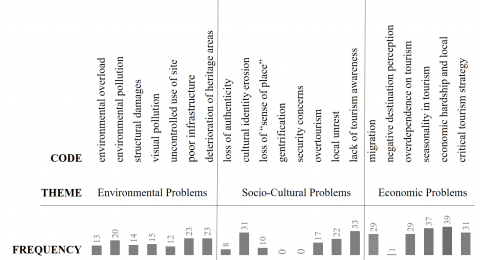
In this section, stakeholders were asked questions based on the problem headings identified in the case studies of heritage sites reviewed in the literature and were also asked to express their views on the impacts of tourism in Kemaliye. Responses were separately evaluated in terms of environmental, socio-cultural, and economic aspects to highlight sensitive issues and identify points of similarity with the case studies (Figure 4). The frequencies in Figure 4 clearly illustrate stakeholders' prioritised concerns and issues. Each code represents a specific issue within the three main categories, and the frequency of the codes indicates how often they were raised by stakeholders. This analysis allows us to understand which issues are most prominent and which perceptions are similar or different among stakeholders. The analysis of frequencies clearly shows that environmental, cultural and economic problems are interconnected and that a balanced, holistic approach is required to solve them.
The economic impact analysis of interviews with key stakeholders, based on the seven economic impact codes from the methodology, revealed four main concerns: economic hardship and local development, seasonality in tourism, critical tourism strategy and overdependence on tourism. A key economic issue in Kemaliye is the local community's struggle to generate sustainable income. Stakeholders noted that relying on summer tourism does not foster long-term growth in any business sector, including tourism. Kemaliye lacks unique products, production techniques, local tourism engagement, and a knowledge base to support sustainable development.
This mirrors challenges in the Wachau region, where agricultural production declines due to aging populations and outmigration, jeopardizing sustainability. Without diversification and innovation, Kemaliye faces similar risks, emphasizing the need for strategies that go beyond seasonal tourism to ensure long-term economic and community resilience [54]. Participants who particularly emphasise the negative outcomes of the issue:
Currently, the local area earns little from tourism, but it may improve over time. Young people are leaving due to limited opportunities in this closed-off area. (L-1)
We travelled to many cities to learn water sports through KEMAV's (Nature and Culture Conservation Foundation) nature club, but couldn’t spread this curiosity widely. This links to the economy. (Y-1)
Financial concerns dominate here. We have a canyon, extreme sports festivals, and the Stone Road attracting global athletes and bikers. But when livelihood is a concern, it’s hard to engage in sports activities unless they generate income (Figure 5). (Y-4)
Young people are the most challenging part. We need to involve them in tourism. I want to hire young people in my hotel and train local guides for authentic tours, but they don’t show interest. (B-4)
We have a Via Ferrata track and trained three young guides. Serious climbs there may one day be like Cappadocia's balloon tours. Kemaliye has many opportunities, and we want young people to take ownership of tourism development. (B-2)
Figure 4. Code frequencies for the problems
Figure 5. Kemaliye Dark Canyon canoe athletes, Via Ferrata climbing festival images. (Images were obtained from KEMAV archive during interviews)
There was a time of intensive training on heritage preservation, learning from scientists in Istanbul and abroad. Now, this is gone. (F-2)
The real danger is mining. Cyanide spreads, fish populations decline, and agriculture is affected. We used to eat fish from the Karasu River—imagine that. My concern is that Kemaliye cannot protect nature, and they won’t. (E-3)
Tourism reliance is growing, hotels are being built, and bed capacity is increasing. Historical mansions are turning into hotels, driven by Cittaslow and UNESCO. But there’s no recorded data. (E-3)
In the form of statements such as Local public authorities rarely addressed common topics raised by others but noted that seasonality negatively impacts the region and fails to sustain business opportunities. This situation:
For example, we have never been able to run an effective home boarding business, although we tried very hard. (P-1)
Kemaliye's economy does not develop by only coming for holiday purposes in summer. We cannot sustain this with local means. (P-3)
We need to show ourselves on national and international platforms. What will ensure this is to attract big projects here? (P-2)
Contrasts with the views of especially young, as shown in their expressions. In addition, solution suggestions for all these problems were encountered during the interviews, and different interviewees expressed their opinions on the subject as follows:
Through the ÇEKÜL Foundation, three young people from Kemaliye could be hosted in local homes, like the Tatuta model. They could engage in activities like mulberry collection or molasses-making, controlled as workshop-style programs (Figure 6). (E-1)
Mulberry, paradise palm (locally known as big berry) and cranberry grow in Kemaliye. I proposed planting big berry from the centre to Toybelen Village. Imagine green leaves in summer, fruit in spring, and a citrus-like look after the leaves fall. This could bring tourism potential and economic gain. For tourism, you need ideas like this. (B-4)
Figure 6. Images reflecting regional products significant for tourism and crop cultivation within the Tatuta Project
The increase in the level of expectation from the tourism economy, which is frequently observed in heritage sites that have begun to interact more with tourism, has been a clear finding in the case of Kemaliye. Responses reveal widespread concern about economic issues and hopes for resolution through tourism development. For example, in the interviews:
There are tourists who love nature and village life. Our daily routine—grazing, milking animals, and boiling milk—feels authentic to them. Tours used to come from Kemaliye; we took them on a tractor to the fountain, served samovar tea, and a local breakfast. They enjoyed the dust and laughed at my local way of speaking, though I don’t do it intentionally. It’s nice meeting people, but while few tourists are manageable, more could be challenging. (L-4)
I am not worried tourism will spoil Kemaliye; it can be managed. UNESCO and public awareness, supported by management plans, will prevent deterioration. Kemaliye deserves labels like UNESCO and Cittaslow, which reflect its true identity. (B-1)
The focus is not on protecting Kemaliye but on promoting and profiting from its houses and structures. It’s more about monetization than solving root problems, and projects reflect this approach. (E-1)
A certain local group started to earn good money from tourism. A certain group earns an average income. The rest have high expectations. (I-2) Expressions were frequently encountered.
In the interviews, it was noted that Kemaliye needs better infrastructure to support tourism growth, linked to low environmental awareness and tourist types. The deterioration of heritage, particularly natural sites, was also highlighted. Regarding these issues:
At the local level, being a member of UNESCO, Cittaslow or the Union of Historic Cities has no equivalent. It is very dangerous for this place to attach a very strong label saying ‘you are listed’ without checking the infrastructure. (E-1)
It is not enough to build hotels; folkloric events, festivals and nature-culture programmes should be organised. Agriculture can also be integrated into tourism. However, these organisations should be professionally planned. (E-2)
We need to attract alternative, paying and interested tourist groups here. There should be special interest groups such as gastronomy or nature lovers, and they should have a certain income level. Mass tourism and especially day-trippers are not beneficial; they pollute, take photos and leave. (F-1)
I think especially nature tourism can be a sector here. Dark Canyon, Stone Road is a great place to attract foreign tourists rather than domestic tourists. (T-1)
For motorcyclists, crossing the Stone Road means pilgrimage. Crossing the Stone Road by motorbike was my priority, I came from France. But today I met someone, he invited me to his house. The house was very nice, he gave me baklava as a gift. Everything was very sincere. (T-2)
It is rumoured that motorcyclists pass through the Stone Road. How Kemaliye will utilise the foreign tourists coming especially for nature sports or motorbike tourism. There should be strategies. (E-2)
In addition, the discourse highlighted environmental problems, particularly emphasizing the need to improve Kemaliye's infrastructure to support tourism-driven growth. This issue is tied to a lack of environmental awareness and the types of tourists visiting the region but remains a concern rather than a crisis. In contrast, severe degradation is evident in places like Cinque Terre and Lenggong Valley. Cinque Terre has exceeded its tourist capacity, with hiking trails suffering from defaced cactuses, ignored no-entry signs, and erosion risks [42, 48]. Similarly, Lenggong Valley faces threats like soil erosion, ecological degradation, and biodiversity loss due to increased visitor activity [45]. While concerns about pollution and degradation in Kemaliye are not yet pronounced, poor infrastructure and natural deterioration are seen as major issues. A tourist interviewed on the subject said:
About environmental damages, the first thing that comes to mind is environmental pollution, of course. In addition, in the second stage, it may cause the tradesmen to work completely tourism-oriented and disrupt the natural structure. I had the impression that this has started slowly. (T-4)
Statement summarises this situation. In addition, large-scale projects, such as mining and tourist bridge construction, could significantly threaten Kemaliye’s heritage sites.
I am against the proposal to build a suspension bridge in the canyon. We are open to tourism to generate income for the people, but increasing the number of tourists would be a disaster for Kemaliye. If there is to be project, there must be protection plan. (F-2)
If there was a sense of responsibility here, there would have been opposition when a hydroelectric power plant was built on the Silk Road. (Y-5)
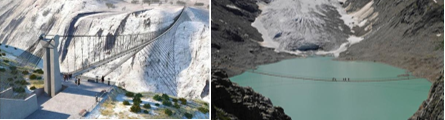
The mine scares me; the trees are sick, the cyanide spreads with the wind, the fish die. Nature is already under threat, but I do not think that the “Sırat on Fırat Bridge” will harm nature. Many canyons in the world have such adrenaline bridges. The canyon is our biggest tourism potential and should be utilised to attract qualified tourists (Figure 7). (I-3)
Day trippers are a completely unconscious group. You can find their rubbish in all natural areas and streets. The most conscious ones are those who are here for nature tourism. (Y-4)
Figure 7. Rendering of the touristic adrenaline bridge considered for the Dark Canyon and the Swiss Trift Bridge given as an example in the interviews
Finally, when socio-cultural problems are analysed, among the impact indicators converted into 8 codes encountered in the literature are the concentration of the elderly in the region, the decrease in the master-apprentice tradition in building repairs and the cultural identity erosion. In particular, when we look at the statements of the local groups regarding the issues raised as a primary source of concern.
When the Keban Dam was built, many bridges and an Armenian village were submerged. Even the church was submerged. Instead of an artificial bridge, it would be more meaningful to follow the traces of these bridges and reveal the Silk Road route. This is the real heritage tourism. (I-3)
Statements such as these have revealed important findings. The problems posed by this title are largely explained by the concept of gentrification in the literature. For instance, in the Honghe Hani region, state-led gentrification, along with high outmigration, threatens the region’s unique character [50]. Although not yet evident in Kemaliye, structural damage and threats to intangible heritage are emerging. Nature conservation efforts are crucial to prevent losses, as current trends risk outcomes similar to those noted in the literature.
4.2 Finding on the heritage site and tourism cooperation in Kemaliye
Figure 8 was prepared to visualise how the codes related to tourism and heritage cooperation were formed and which problems they focused on. The codes were created by analysing the data obtained from stakeholder interviews and represent the dynamics of cooperation between tourism and heritage conservation. Frequencies help us understand the priority needs and sensitivities in the region by showing which issues stakeholders emphasise more. During the coding process, the main themes expressed in the interviews were categorised under two headings: Tourism Approaches and Integration of Heritage Conservation and Tourism Development. The code "infrastructure development" highlights inadequate infrastructure for tourism demands, while "balance between conservation and tourism" emphasizes planning that protects heritage values. This figure provides a framework for aligning regional tourism activities with responsible tourism principles.
Stakeholders were asked about heritage-tourism cooperation in Kemaliye, with infrastructure development emerging as the most mentioned need. While tourism growth is viewed positively, it must prioritize conservation. Stakeholders believe job opportunities for young people should focus on education and local community strengths. Collaborative approaches were also highlighted, emphasizing the importance of stakeholder organization due to the region's strong familiarity and interaction among its participants (Figure 8). When the interview texts revealing these inferences are analysed.
Tourism is hanging by a thread. An epidemic, an earthquake, a war breaks out; tourism is over. We must strengthen our connections. (P-4)
Tourist data should be recorded and awareness should be shaped locally. Increasing number of tourists may cause security problems. A controlled, up-to-date website should be created for extreme sports and athletes should be encouraged to register. (E-3)
With the Culture Ants project, we took secondary school students around Kemaliye with local guides and guidebooks. These children, who are high school students, know the concept of local guidance. The continuation of such projects is important. (I-2)
We have a natural history museum. There you can find many species from the Kemaliye valley according to their species. This museum is the product of a great scientific responsibility. (B-5)
Approaches have emerged. Concerns such as the loss of the sense of place, overdependence on tourism, and neglect of traditional production models due to the focus on tourism-based economic activities are more common in small, inward-looking communities that maintain their rural character and agricultural focus [53].
Case studies from Asia and Africa, including the Honghe Hani Rice Terraces, Lenggong Valley, and Lamu, demonstrate this issue. For instance, Lamu has often ignored both the positive and negative effects of tourism. There is no established a management plan to handle or reduce these negative impacts [51]. A local interviewee expressing his opinion that local knowledge and productions will produce a solution to this situation:
I was not interested in labels such as UNESCO; I focused on quality living and production. We are producing and selling dry cream again, which has not been made for years. We grew black mulberry and produced liqueur. As long as there is production, ideas and development come. I am not interested in labelling, but in discovering these places (L-4) has put forward a point of view in the form of. Looking at the approaches to combining heritage conservation and tourism, it is notable that the emphasis is on leveraging local power, particularly for Kemaliye. There is an expectation to achieve this through its unique local character, rather than external tourism investments. This issue;
We started making rusks. Kemaliye buns are sold as soon as they are baked. We have initiatives to open up to the outside world and get a production permit. (F-1)
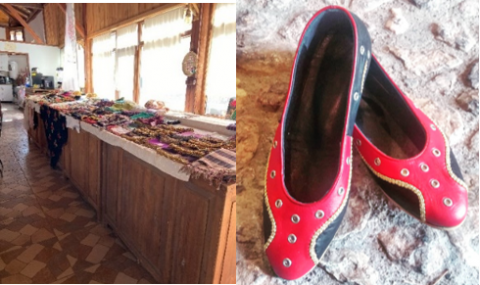
Within the scope of the project, women bought looms and started to produce Gazenne fabric specific to Kemaliye. A workshop was established. These fabrics, which are also important for tourism, are transformed into products such as ties. These trials are very valuable. (E-1)
There are no shoe masters left in Kemaliye; we lost our last master 3-4 years ago. We call these shoes ‘Kalik’. I have them make a sample of each colour and keep them here. (E-2) Discourse is very important (Figure 9).
Figure 8. Code frequencies for the cooperation of tourism and heritage
Figure 9. Visuals of “Gazenne” fabric and “Kalik” narratives preserving intangible heritage and linking it with tourism
This is reinforced by discourses on generating revenue from heritage sites and developing alternative tourism models. However, the absence of documented tourism statistics and a registration system suggests Kemaliye is not prepared for the growing tourism market. Similarly, in Lamu, the lack of tourism records and management plan has become a key focus in the literature [45, 51].
The proposed planning approaches in Kemaliye should prioritize preserving heritage assets while carefully integrating tourism. Responsible tourism principles from the literature were categorized into environment, socio-cultural structure, and economy, tailored to Kemaliye’s challenges. These categories address priority issues and establish a foundation for planning strategies. This approach aims to develop a responsible heritage tourism model that safeguards the heritage area while fostering sustainable growth and addressing specific local needs (Table 4). This theoretical framework, based on ontological resilience planning, emphasizes three approaches. First, it focuses on awareness-raising by interpreting relationships between data, objects, and historical contexts, offering insights into complex structures [59, 60]. Second, it integrates “the whole as part and part of the whole” viewing social relations and places as interconnected networks linking people, events, and discourses. Third, it defines growth limits, recognizing heritage sites' finite capacity, and designs sustainable strategies for community and environmental benefits, ensuring development aligns with an essentialist framework [61].
5.1 Approach 1: Awareness-raising
The ontological resilience planning step of “awareness-raising by questioning consumption” highlights the interconnections between humans and the environment [62]. In Kemaliye, notable awareness and responsibility at various levels concerning the discussed topics. This is supported by indicators such as minimum use of resources and the need for visitor management in the region. In Kemaliye, examples include the damage from mining excavations to water resources, soil quality, agricultural products and aquatic life. Also includes intense tourist pressure on animal habitats, especially in the canyon area.
Table 4. Alignment of findings with responsible tourism impact indicators
|
Analysis Codes |
Responsible Tourism Principles [63] |
f |
Frequency(f) Scale |
|
|
the necessity for the buffer zone large-scale investment initiatives environmental awareness deterioration of heritage sites environmental pollution sustainability visual pollution respect for heritage environmental overload hosting conservation awareness balance between conservation and tourism legal protection procedures tourist capacity assessment coordinating and directing tourist requests documenting tourism statistics poor infrastructure |
ENVIRONMENTAL RESPONSIBILITIES |
biodiversity management |
101 |
|
|
waste management |
102 |
|||
|
slow life |
38 |
|||
|
wildlife conservation |
12 |
|||
|
plant and animal species inventories |
9 |
high level of finding (120>) |
||
|
minimum use of resources |
127 |
|||
|
application for environmental certificates |
22 |
|||
|
participation in environmental campaigns |
44 |
|||
|
sustainable water management |
3 |
|||
|
sustainable transportation models |
12 |
|||
|
visitor management |
123 |
|||
|
noise control |
0 |
|||
|
tourism models focused on environmental |
156 |
|||
|
environmental management networks |
77 |
medium level of findings (61-120) |
||
|
legal protection procedures structural damages sustainability lack of tourism awareness negative destination perception deterioration of heritage sites respect for heritage conservation awareness cultural identity erosion loss of “sense of place” migration alternative tourism routes the influence of local dynamics documenting tourism statistics infrastructure development efforts embracing digital technologies overtourism stakeholder organization coordinating and directing tourist requests acknowledge individual responsibilities |
SOCIO-CULTURAL RESPONSIBILITIES |
heritage site management |
78 |
|
|
preservation of local memory |
107 |
|||
|
cultural exchange opportunities |
67 |
|||
|
diversity of cultural activities |
12 |
|||
|
information/document management |
57 |
|||
|
participation in culture studies |
19 |
|||
|
heritage site presentation |
115 |
|||
|
ethical behaviour toward tourists |
6 |
|||
|
local participation |
108 |
low level findings (31-60) |
||
|
gender equality |
0 |
|||
|
social program collaborations |
36 |
|||
|
information and communication platforms |
21 |
|||
|
high level of place awareness |
61 |
|||
|
respect for different groups |
29 |
|||
|
awareness of disabled individuals |
0 |
|||
|
balance of tourist and local satisfaction |
48 |
|||
|
national/international partnerships |
36 |
|||
|
awareness of responsibilities |
89 |
no findings (<30) |
||
|
sustainability resistance to large-scale investment initiatives economic hardship seasonality in tourism to derive revenue from heritage sites support the development of alternative tourism alternative tourism routes lack of tourism awareness |
ECONOMIC RESPONSIBILITIES |
economic self-sufficiency |
171 |
|
|
local project investments |
103 |
|||
|
skill development opportunities |
94 |
|||
|
qualified job plans |
45 |
|||
|
optimized tourism supply system |
170 |
|||
|
local economy integrated with tourism |
106 |
|||
|
educated local personnel |
40 |
|||
|
consistent income |
67 |
|||
The international recognition and increased tourism demand from Kemaliye's inclusion on the Tentative List of World Heritage Sites are viewed positively by locals, enhancing its tourism potential. However, issues in the literature remain at the “concern” level, indicating the need for greater awareness. The expected tourism growth, including risks from a new bridge, underscores the importance of responsive planning. Kemaliye’s resources, like Dark Canyon and Karasu River, call for sustainable water and environmental management systems. Responsible tourism principles must guide efforts, such as preparing an inventory for endemic species, prioritizing sustainable transportation, and implementing noise controls in sensitive areas. Despite its potential, Kemaliye currently lacks a comprehensive awareness and planning system.
5.2 Approach 2: Being part of a whole
This approach, offered by ontological resilience, facilitates connections between social networks previously considered entirely separate [8]. The need for balanced cohesion should be recognized as a shared social responsibility among all stakeholders [64]. In Kemaliye, the presence of volunteer groups suggests positive outcomes in terms of community participation. However, there is a need for a comprehensive evaluation of views on socio-cultural responsibilities across all areas.
The study's key finding is the residents' unwavering connection to Kemaliye, reflected in their pride in heritage, refusal to sell homes to outsiders, and generational ties. This strong foundation preserves local memory, vital for maintaining Kemaliye's cultural character. Stakeholders widely support efforts to elevate Kemaliye's international profile through initiatives like the Citta Slow movement and UNESCO's provisional list. However, these recognitions are seen as symbolic. Developing a responsible framework can ensure tourists respect local communities and engage in activities that uphold the host community's well-being. This approach balances tourist satisfaction with local welfare [65]. Promoting tourism through social cohesion, rather than top-down hierarchies as seen in large-scale projects, fosters inclusivity and supports the concept of a “responsible society” aligning tourism growth with community values and sustainability.
5.3 Setting the limits to growth
The growth approach should be viewed as one of limited growth, adhering to the principles of constrained consumption [66]. This sensitive proposal may be viewed as the appropriate strategy for Kemaliye, especially since the planned “artificial” and “large-scale” tourist bridge over the Dark Canyon raises concerns about “pushing the limits”. A similar outcome was encountered in North Wales, where a fantasy village designed solely for tourists was built. The basic fact is that it is an artificial village, a themed production of a tourist attraction. However, over time, responsible tourists changed the artificial for the real [67]. If Kemaliye's heritage assets are managed in collaboration with the local community, it can eliminate the need for large-scale tourism projects and align tourist capacity with Kemaliye's scale. Because maintaining the romantic tourist perspective and exceeding physical capacity will undermine the sustainable nature of economic growth [68].
Moreover, cases of over-tourism in destinations such as Venice, Barcelona, Prague, Santorini, Amsterdam, Dubrovnik, and Mallorca exemplify regions where the negative impacts of mass tourism are evident. In these areas, tourism phobia has developed [69], and residents have become increasingly anti-tourist [70], representing the final stage of Doxey’s Irritation Index. Similarly, in Kemaliye, locals initially welcomed tourists but now feel their privacy is infringed upon, showing reluctance to showcase homes or share local products, underscoring the need to respect local boundaries. The alignment of Kemaliye stakeholders' expectations for an advanced tourism supply system with their desire for self-sufficiency in the local economy provides a positive outcome for the establishment of a well-defined responsible economic structure.
This study theoretically and methodologically examines the relationship between heritage sites and tourism, assesses the current situation, and proposes solutions. A multidisciplinary perspective is developed by addressing the concept of responsible tourism put forward by the tourism discipline within the framework of ontological resilience approaches. This approach is an attempt to propose a methodology for heritage site conservation and tourism planning together. The findings from the interviews are significant in terms of providing important clues on the conservation of heritage sites and responsible heritage tourism practices in Kemaliye.
In the intricate dynamics of heritage conservation, especially for enclosed, fragile sites like Kemaliye a settlement recently included in UNESCO’s World Heritage Tentative List there emerges a necessity to reconcile two often competing forces: the pressures of tourism and the safeguarding of local cultural integrity. The introduction of ontological resilience into the discourse around heritage conservation offers a profoundly innovative framework, allowing for the coexistence of preservation with socio-economic development. Combined with responsible heritage tourism, it offers a holistic view of heritage sites as living entities shaped by social memory, collective identity, and community meaning, rather than merely physical spaces.
Today, one of the primary goals of nearly all villages, towns, and cities is to secure support from tourism. At the same time, increasing environmental awareness and local awareness on a global scale make it imperative to be selective in tourism approaches. The advantages of this study include its encouragement of strategic decision-making for the preservation of tangible and intangible heritage, as well as its support for responsible tourism and planning. Furthermore, the ontological planning approach to be established is useful in several ways. The limited number of comprehensive studies on tourism planning and heritage conservation in the region to date will further highlight the place of sensitive tourism in the literature.
This study provides a sensitive framework for how small-scale heritage sites such as Kemaliye can be protected in the face of increasing tourism pressures. However, this delicate balance requires concrete steps that are specific to the needs of the region. Kemaliye's natural sites, such as the Dark Canyon, the Stone Road Valley and the Karasu River, and its strong architectural heritage can only be preserved through a regionally sensitive tourism model. In this context, the limits of growth should be clearly defined, tourism carrying capacity plans should be prepared, and the number of visitors and activities should be regulated so as not to exceed the ecological and social balance of the region. In addition, community participation plans should be developed to ensure the active participation of local people in decision-making processes. In Kemaliye, large-scale tourism projects should be avoided and small and unique tourism experiences that are compatible with the scale of the region should be prioritised. For example, guided nature walks, local cuisine workshops, and cultural events centred on the history of the region will help tourists to connect with the region and increase the participation of the local community. Tourism entrepreneurship training programmes for young people can be offered to prevent the migration of young people from the region and to ensure that this heritage is owned by future users. These programmes can help them create new job opportunities in creative industries inspired by Kemaliye's cultural heritage. International statuses such as UNESCO and Cittaslow should be considered not only as symbolic achievements but as tools to support responsible tourism, leading to concrete projects such as sustainable transport, energy efficiency and environmentally friendly practices. This approach can preserve the natural and cultural balance of the region and make it a model for sustainable development at the international level.
From this perspective, addressing the problem's collaborative nature through ontological planning approaches could increase stakeholders' willingness to learn, become aware, and participate. It may reveal that fragmented data, previously expressed only verbally, actually contain resource-based information, allowing for the development of specific strategies for each. While this study focuses on the specific context of Kemaliye, can be adapted to other heritage sites with distinct characteristics, using different ontological concepts and boundaries. In summary, this study serves as a valuable reference for future research on the intersection of tourism development, heritage site conservation, and urban and regional planning. Future studies can further explore the interest, knowledge, desire, and awareness levels of each stakeholder group, assigning specific tasks and responsibilities accordingly.
[1] UNESCO. (1972). Convention concerning the protection of the world cultural and natural heritage. Paris. https://whc.unesco.org/en/conventiontext/.
[2] UNESCO. World heritage list. https://whc.unesco.org/en/list/.
[3] Zhang, Z., Xiong, K., Huang, D. (2023). Natural world heritage conservation and tourism: A review. Heritage Science, 11(1): 55. https://doi.org/10.1186/s40494-023-00896-6
[4] Manning, R. (2001). Visitor experience and resource protection: A framework for managing the carrying capacity of National Parks. Journal of Park & Recreation Administration, 19(1): 93-108.
[5] Phi, G.T. (2020). Framing overtourism: A critical news media analysis. Current Issues in Tourism, 23(17): 2093-2097. https://doi.org/10.1080/13683500.2019.1618249
[6] Gao, Q. (2023). Archaeological tourism, world heritage and social value: A comparative study in China. Heritage & Society, 16(3): 157-181. https://doi.org/10.1080/2159032X.2023.2226577
[7] Sandercock, L. (2004). The death of radical planning: Radical praxis for a postmodern age. In The City Cultures Reader. New York and London: Routledge, pp. 423-439.
[8] Boelens, L. (2021). A flat ontology in spatial planning: Opening up a new landscape or just a dead end? disP-The Planning Review, 57(2): 4-15. https://doi.org/10.1080/02513625.2021.1981006
[9] Harvey, D. (2020). The condition of postmodernity. In The New Social Theory Reader. Sage, pp. 235-242.
[10] Bianchi, R.V. (2004). Tourism restructuring and the politics of sustainability: A critical view from the European periphery (The Canary Islands). Journal of Sustainable Tourism, 12(6): 495-529. https://doi.org/10.1080/09669580408667251
[11] Pinto, A., Cardinale, Y., Dongo, I., Ticona-Herrera, R. (2022). An ontology for modeling cultural heritage knowledge in urban tourism. IEEE Access, 10: 61820-61842. https://doi.org/10.1109/ACCESS.2022.3179664
[12] Tekeli, I. (2008). Bir Plancı / Araştırmacının Yöntem ve Ötesine İlişkin Arayışları. FLSF Felsefe ve Sosyal Bilimler Dergisi, 6: 1-25.
[13] Harrison, R. (2015). Beyond “natural” and “cultural” heritage: Toward an ontological politics of heritage in the age of Anthropocene. Heritage & Society, 8(1): 24-42. https://doi.org/10.1179/2159032X15Z.00000000036
[14] Knox, P., Ozolins, P. (1998). The design profession and the built environment in a postmodern epoch. In The Design Profession and the Built Environment. Routledge, 1-11.
[15] United Nations Educational, Scientific, UNESCO. (1976). The effects of tourism on socio-cultural values. Annals of Tourism Research, 4(2): 74-105. https://doi.org/10.1016/0160-7383(76)90100-6
[16] Berg, F. (2018). Wear and tear of world heritage: Preventive conservation and tourism in Norway’s stave churches. Studies in Conservation, 63: 320-322. https://doi.org/10.1080/00393630.2018.1495459
[17] du Cros, H. (2016). Heritage tourism destinations. Preservation, communication and development. Heritage & Society, 9(2): 199-201. https://doi.org/10.1080/2159032X.2017.1312913
[18] Mishan, E.J. (1969). Rent and producer’s surplus: Reply. The American Economic Review, 59(4): 635-637. https://www.jstor.org/stable/1813233.
[19] Klarin, A., Park, E., Xiao, Q., Kim, S. (2023). Time to transform the way we travel?: A conceptual framework for slow tourism and travel research. Tourism Management Perspectives, 46: 101100. https://doi.org/10.1016/j.tmp.2023.101100
[20] Urry, J. (2014). Time and space in Giddens’ social theory. In Giddens’ Theory of Structuration. Routledge, pp. 160-175.
[21] Katelieva, M., Muhar, A. (2022). Heritage tourism products based on traditional nature-related knowledge: Assessment of cultural, social, and environmental factors in cases from rural Austria. Journal of Heritage Tourism, 17(6): 631-647. https://doi.org/10.1080/1743873X.2022.2098040
[22] Timothy, D.J. (2014). Contemporary cultural heritage and tourism: Development issues and emerging trends. Public Archaeology, 13(1-3): 30-47. https://doi.org/10.1179/1465518714Z.00000000052
[23] Bodhi, S.R., Ziipao, R.R. (2019). Land, Words and Resilient Culture. The Ontological Basis of Tribal Identity. Tribal Intellectual Collective, India.
[24] Huang, Z.F., Huang, R. (2015). The theoretical perspective and academic innovation of tourism geography based on human-environment interactions. Geographical Research, 34(1): 15-26. https://doi.org/10.11821/dlyj201501002
[25] Rasoolimanesh, S.M., Jaafar, M., Ahmad, A.G., Barghi, R. (2017). Community participation in world heritage site conservation and tourism development. Tourism Management, 58: 142-153. https://doi.org/10.1016/j.tourman.2016.10.016
[26] Butowski, L. (2020). The origins of academic work on tourism: An European perspective. Turyzm, 30(2): 13-25. https://doi.org/10.18778/0867-5856.30.2.17
[27] Butowski, L., Butowski, S. (2023). Exploring ontology of tourism: A new-realist approach. Journal of Travel Research, 62(4): 719-733. https://doi.org/10.1177/00472875221119966
[28] Butowski, L. (2023). The ontological and epistemological foundations of tourism geography: Chosen aspects of its empirical field of research. Geographia Polonica, 96(3): 303-320. http://doi.org/10.7163/GPol.0257
[29] Sorrell, S. (2018). Explaining sociotechnical transitions: A critical realist perspective. Research Policy, 47(7): 1267-1282. https://doi.org/10.1016/j.respol.2018.04.008
[30] Li, L. (2022). Critical realist approach: A solution to tourism’s most pressing matter. Current Issues in Tourism, 25(10): 1541-1556. https://doi.org/10.1080/13683500.2021.1944994
[31] Hedlund-de Witt, N.H. (2013). Towards a critical reaslist integal theory. https://www.academia.edu/4661222/Towards_a_Critical_Realist_Integral_Theory_Ontological_and_Epistemic_Considerations_for_Integral_Philosophy.
[32] Renon, M., Peysson, J. (2020). Sustainable tourism: A quantitative study on awareness, attitudes and behaviors of young adults. https://www.diva-portal.org/smash/get/diva2:1443716/FULLTEXT01.pdf.
[33] Mihalic, T., Mohamadi, S., Abbasi, A., Dávid, L.D. (2021). Mapping a sustainable and responsible tourism paradigm: A bibliometric and citation network analysis. Sustainability, 13(2): 853. https://doi.org/10.3390/su13020853
[34] Moreno Mendoza, H., Santana Talavera, A., León, C.J. (2018). The role of stakeholder involvement in the governance of tourist museums: Evidence of management models in the Canary Islands. Heritage & Society, 11(3): 229-248. https://doi.org/10.1080/2159032X.2019.1693862
[35] European Commission. (2012). European Charter for Sustainable and Responsible Tourism. Brussels.
[36] Becken, S., Simmons, D.G. (2019). Stakeholder management: Different interests and different actions. Overtourism, 234. https://doi.org/10.1515/9783110607369
[37] Lai, S., Zoppi, C. (2014). An ontology of implementation plans of historic centers: A case study concerning Sardinia, Italy. In Eighth International Conference INPUT Smart City - Planning for Energy, Transportation and Sustainability of the Urban System, pp. 567-579. https://doi.org/10.6092/1970-9870/2508
[38] Swarbrooke, J. (1999). Sustainable Tourism Management. CAB International.
[39] Özalp, E. (2022). “Eğin dedikleri”: Soykırım kavsağında küçük bir şehir. Arkadaş. https://arkadas.ch/egin-dedikleri-soykirim-kavsaginda-kucuk-bir-sehir/.
[40] Torbaoğlu, E., Demir, Y. (2016). A research on the continuity of the original settlements: A case study on Kemaliye/Erzincan. A| Z ITU Journal of the Faculty of Architecture, 13(1): 43-56. https://doi.org/10.5505/itujfa.2016.14633
[41] Akdemir, M.Z., Akbulut, D.E. (2015). Taş DUVAR örgü dili bağlaminda kemaliye (eğin) ve koruma olgusu. Mimarlık, 383: 64-70.
[42] Candia, S., Pirlone, F., Spadaro, I. (2018). Sustainable development and the plan for tourism in Mediterranean coastal areas: Case study of the region of Liguria, Italy. WIT Transactions on Ecology and the Environment, 217: 523-534. https://doi.org/10.2495/SDP180461
[43] Jiao, Y., Li, X. (2011). Ethnic culture and nature: Interactions in the Hani terrace landscape. In Landscape Ecology in Asian Cultures. Springer, Tokyo, pp. 29-40. https://doi.org/10.1007/978-4-431-87799-8_3
[44] Okech, R.N. (2011). Promoting sustainable festival events tourism: A case study of Lamu Kenya. Worldwide Hospitality and Tourism Themes, 3(3): 193-202. https://doi.org/10.1108/17554211111142158
[45] Vithya Ganesan, V.G., Ramli Mohamed, R.M., Lim KhorYoke, L.K., Shuhaida Md Noor, S.M.N. (2013). Enhancing the tourism industry in the Lenggong Valley via a mindfulness approach. In Proceedings of International Conference on Tourism Development, pp. 428-446.
[46] Schimek, M. (2021). Flood protection provisions in the world heritage cultural landscape Wachau, following the flood of 2002. ICOMOS-ICCROM Project Report. https://www.iccrom.org/sites/default/files/publications/2021-03/vol3_01_icomos-iccrom_report_1.pdf.
[47] Pavlić, I., Portolan, A. (2015). Irritation index, tourism. In Encyclopedia of Tourism (2nd edition). Springe, pp. 1-2.
[48] Brandolini, P., Cevasco, A., Capolongo, D., Pepe, G., Lovergine, F., Del Monte, M. (2018). Response of terraced slopes to a very intense rainfall event and relationships with land abandonment: A case study from Cinque Terre (Italy). Land Degradation & Development, 29(3): 630-642. https://doi.org/10.1002/ldr.2672
[49] Yang, L., Wall, G. (2008). Ethnic tourism and entrepreneurship: Xishuangbanna, Yunnan, China. Tourism Geographies, 10(4): 522-544. https://doi.org/10.1080/14616680802434130
[50] Chan, J.H., Iankova, K., Zhang, Y., McDonald, T., Qi, X. (2016). The role of self-gentrification in sustainable tourism: Indigenous entrepreneurship at Honghe Hani rice terraces world heritage site, China. Journal of Sustainable Tourism, 24(8-9): 1262-1279. https://doi.org/10.1080/09669582.2016.1189923
[51] Kabiru, A. (2009). Lamu: Is sustainable cultural tourism possible? Kenya Past and Present, 38(1): 43-49. https://africabib.org/rec.php?RID=K00002763&DB=k.
[52] Halling, S.I. (2011). Tourism as interaction of landscapes: Opportunities and obstacles on the way to sustainable development in Lamu Island, Kenya. Doctoral dissertation, Kulturgeografiska Institutionen. https://repositorio.iscte-iul.pt/handle/10071/7547.
[53] Kwong, A.M., Mohamed, B. (2017). A review of Lenggong valley as tourism destination from policy and organizational perspective. Journal of Tourism Research and Hospitality, 6(4): 1-12. https://doi.org/10.4172/2324-8807.1000196
[54] Bender, O., Schumacher, K.P., Stein, D. (2007). Landscape, seasonality, and tourism: A survey with examples from central Europe. In Seasonal Landscapes. Landscape Series. Springer, Dordrecht. https://doi.org/10.1007/1-4020-4990-0_8
[55] Freeman, R.E. (1984). Strategic Management: A Stakeholder Theory. Pitman, Boston.
[56] Eden, C., Ackermann, F. (2013). Making Strategy: The Journey of Strategic Management. Sage.
[57] Sánchez-Aguirre, D.P., Alvarado-Sizzo, I., Moury-Fernandes, B.G. (2024). Intangible cultural heritage versus tourism: Residents’ reactions to temporal overtourism during the Day of the Dead in Mixquic, Mexico. Journal of Heritage Tourism, 1-25. https://doi.org/10.1080/1743873x.2024.2415334
[58] Schultz, E.A., Lavenda, R.H. (2005). Cultural Anthropology: A Perspective on the Human Condition. Oxford University Press.
[59] Casillo, M., De Santo, M., Mosca, R., Santaniello, D. (2023). Sharing the knowledge: Exploring cultural heritage through an ontology-based platform. Journal of Ambient Intelligence and Humanized Computing, 14(9): 12317-12327. https://doi.org/10.1007/s12652-023-04652-3
[60] Ranjgar, B., Sadeghi-Niaraki, A., Shakeri, M., Choi, S. M. (2022). An ontological data model for points of interest (POI) in a cultural heritage site. Heritage Science, 10(1): 13. https://doi.org/10.1186/s40494-021-00635-9
[61] Telleria, J. (2024). Essentialist approaches to global issues: The ontological limitations of development studies. In Challenging Global Development. Palgrave Macmillan, Cham. https://doi.org/10.1007/978-3-031-30308-1_2
[62] Alkan, A. (2022). Kentsel Planlamada Yeni Arayışlar Ontoloji ve Planlama. Yem. https://www.dr.com.tr/kitap/ontoloji-ve-planlama-kentsel-planlamada-yeni-arayislar/arastirma-tarih/sosyoloji/urunno=0002007576001.
[63] Cape Town Declaration. (2022). Cape town declaration on responsible tourism’, responsible tourism partnership and western cape tourism. https://responsibletourismpartnership.org/cape-town-declaration-on-responsible-tourism/.
[64] Elizabeth Ruth Rapoport. (2014). Mobilizing sustainable urbanism: International consultants and the assembling of a planning model. https://discovery.ucl.ac.uk/id/eprint/1449528/1/Rapoport_Mobilizing%20Sustainable%20urbanism%20final.pdf.
[65] Manente, M., Minghetti, V., Mingotto, E. (2014). Corporate social responsibility in the tourism industry: How to improve CSR through reporting systems. In Tourism and Leisure. Springer Gabler, Wiesbaden. https://doi.org/10.1007/978-3-658-06660-4_19
[66] Porritt, J. (1997). Environmental politics: The old and the new. The Political Quarterly, 68(B): 62-73. https://doi.org/10.1111/1467-923X.00116
[67] Urry, J. (2008). Globalising the tourist gaze. Lancaster University. http://www.comp.lancs.ac.uk/sociology/papers/Urry-Globalising-the-Tourist-Gaze.pdf.
[68] Walter, J.A. (1982). Social limits to tourism. Leisure Studies, 1(3): 295-304. https://doi.org/10.1080/02614368200390241
[69] Almeida-García, F., Cortés-Macías, R., Parzych, K. (2021). Tourism impacts, tourism-phobia and gentrification in historic centers: The cases of Málaga (Spain) and Gdansk (Poland). Sustainability, 13(1): 408. https://doi.org/10.3390/su13010408
[70] Topić, A. (2018). The correlation between cruise tourism and overcrowding in Dubrovnik Old City. RIT Croatia. https://zir.nsk.hr/islandora/object/acmt%3A53/datastream/PDF/view.