Sai Goutham Golive* | B Paramasivam | J Ravindra
© 2024 The authors. This article is published by IIETA and is licensed under the CC BY 4.0 license (http://creativecommons.org/licenses/by/4.0/).
OPEN ACCESS
Currently, the limited availability of fossil fuels and environmental apprehensions regarding greenhouse gas emissions are directly influencing the transition from traditional combustion vehicles to Electric Vehicles (EVs). The expanding adoption of EVs in conjunction with the power grid is anticipated to be significantly influenced by the increasing network of charging stations. However, the substantial increase in electric load penetration has introduced several challenges, such as a disparity between generation and demand, an increase in active power loss within the network, with low voltage profile issues, and a reduction in voltage stability margin. It is imperative to ensure that Electric Vehicle Charging Stations (EVCS) are strategically installed to address these issues effectively. Integration of Distributed Generator (DG) sources into EV charging infrastructure aims to mitigate the load demand caused by EV charging.The major objective of this article is to provide an overview of the findings of the research with an extensive and current examination of the control structures employed in EVCS and DGs. Additionally, it aims to explore the goals of EV management within power systems and the various optimization methodologies utilized for managing the charging and discharging of EVs within energy systems. It also provides the research and advancements pertaining to the EV charging station infrastructure. It focuses on critically reviewing the existing literature, highlighting the associated challenges, and examining the ongoing efforts towards standardization. The objective is to provide valuable insights to researchers, enabling them to effectively tackle the identified issues.
Electric Vehicle Charging Station, Distributed Generation, EV charging infrastructure, Electricity Distribution System
The current situation's top threats to the environment and human existence on earth are global warming and climate change. In recent years, particularly in major cities, the air pollution and greenhouse gas emissions caused by the segment of the transportation industry that relies on fossil fuels have attracted unprecedented attention [1]. The convergence of environmental concerns, technological advancements, and evolving consumer preferences has led to a significant transformation in the global transportation sector. One of the most promising outcomes of this transformation is the accelerated adoption of EVs, can provide an alternative to conventional automobiles powered by internal combustion engines that is less polluting and more environmentally friendly [2]. As the adoption of EVs continues to grow, there is a growing need to establish a robust charging infrastructure that can support the increasing demand for these vehicles. Simultaneously, the energy landscape is undergoing a parallel transformation owing to the widespread use of DGs and the growing use of renewable energy sources. DGs refer to the production of electricity from multiple small-scale, localized sources, often incorporating renewable resources such as solar photovoltaics, wind turbines, and even small-scale hydroelectric systems [3]. This departure from centralized, fossil fuel-based power generation has the potential to revolutionize the energy sector by enhancing grid resilience, reducing greenhouse gas emissions, and promoting energy self-sufficiency.
The integration of the EV revolution and the DGs paradigm presents both challenges and opportunities. The establishment of EVCS and the integration of DG sources into the grid are two crucial components of this transformative process. This review paper aims to comprehensively explore and analyze the impact of EVCS and DGs on various aspects of the energy ecosystem, ranging from environmental sustainability and energy security to grid stability and economic implications. The success of electric vehicles heavily relies on the availability, accessibility, and efficiency of charging stations. To ensure the seamless integration of EVs into the transportation network, it is imperative to strategically plan and deploy charging stations at optimal locations [4]. This research aims to explore and identify the key factors that influence the optimal location of EVCS, ultimately providing valuable insights for policymakers, city planners, and private enterprises to make informed decisions.
1.1 Sales penetration of electric vehicles
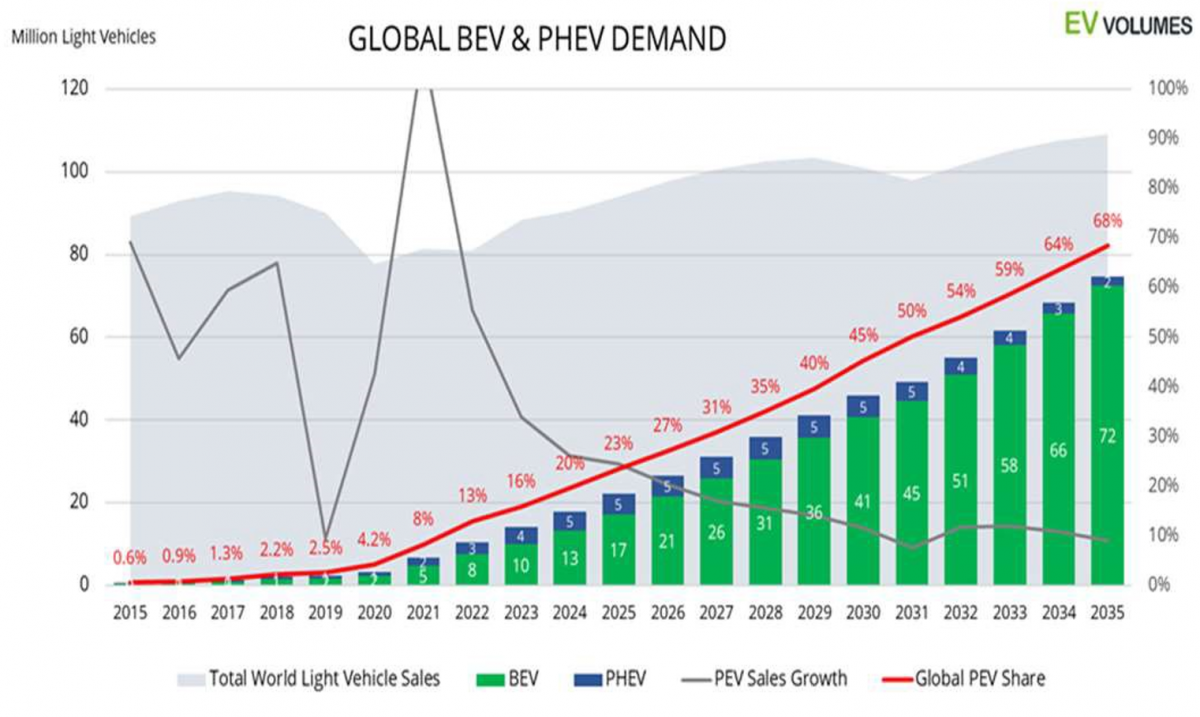
This may be attributed to the transportation industry for a substantial portion of global carbon emissions, contributing to the deterioration of air quality and exacerbating climate change. In response to these challenges, governments, automakers, and consumers are increasingly embracing electric vehicles as a cleaner and sustainable alternative to conventional IC engine vehicles. The soaring popularity of EVs is evident in the expanding range of electric vehicle models, declining battery costs, and rising public interest in reducing their carbon footprint. Sales of electric vehicles throughout the world have been high. With a +55% increase from 2021, a total of 10.5 million new BEVs and PHEVs were delivered in 2022 [5]. The pattern of regional development, however, is changing. The sales of EVs and plug-in hybrids (PHEVs) are also depends upon government subsidies, any reduction in these subsidies directly impacts their sales [46].The growth rate of EV sales in globally it was rised to 16% in 2023 compared to year 2022 and it will be 68.4% by 2035, shown in Figure 1.
Figure 1. Global EV sales penetration [46]
The global shift towards sustainable and environmentally- friendly transportation has caused an enormous increase in the adoption of EVs in recent years. These vehicles offer a potentially effective method to lower emissions of greenhouse gases and to protect towards climate change and making them a critical component of the future of transportation. As the EV market continues to expand, the development of a robust electric vehicle charging infrastructure (EVCI) becomes crucial to support and encourage the adoption of EVs on a large scale.
The increasing adoption of EVs presents a significant and emerging challenge for power grids. However, it should be emphasized that the current architectures of transmission and distribution grids continue to prioritize conventional design principles and operational regulations. Therefore, it is imperative to anticipate the appropriate measures to address the challenges that will arise in the electrical and production grids due to the progressive integration of EVs. Additionally, it is crucial to analyse the impact of this integration on the commercial operation of these grids.
Leonardo Bitencourt et al., presents a novel approach of finding out the most suitable placement of EV semi-fast charging stations (CS) within a neighbourhood. The proposed approach employs a multi-objective framework to optimize the location selection process. The proposed approach utilizes a hierarchical clustering algorithm to identify customer service zones, taking into account both technical and mobility factors [6]. In addition, the model takes into account the various uncertainties associated with the EV load profile in order to accurately ascertain the CS capacity. This is achieved by analysing and incorporating the user's charging behaviour patterns. The utilization of a Pareto Frontier methodology has been implemented in order to make the process of decision- making more accessible and easy to understand pertaining to the optimal location EVCS. This approach takes into account the utility and preferences of EV users, thereby enhancing the overall effectiveness of the decision-making process. Junchao Cheng et al., propose an Improved Whale Optimization Algorithm (IWOA) to address the issue of suboptimal accuracy and instability that commonly arise when optimizing the placement and sizes of nonconvex and nonlinear EVCSs [7]. The algorithm framework incorporates the introduction of the differential evolution operator, the antibody affinity, and the variability index of convergence factor.
Kazemi et al., examines the impact of the term "EV owners' welfare" on the optimal placement and capacity determination of EV parking facilities within the proposed framework. Furthermore, the projected growth rate of EVs in the years ahead is expressed as a probabilistic variable. The present study aims to analyse the various factors that influence the planning of parking lots [8]. Furthermore, a novel methodology has been proposed, leveraging the K-means clustering algorithm, to ascertain the quantity of EVs converging towards a designated parking facility. This innovative approach holds the potential to enhance the precision of forecasting the financial implications associated with the establishment of said parking lot, encompassing both costs and revenues. The approach described in this study was implemented on a radial distribution system consisting of 69 nodes.
In order to identify the best places to locate the EVCS, Jia He et al., suggests bi-level programming model that takes into account the range of EVs. The user's ability to strike a balance between the EV's driving range constraint is also described in this model, with the focusing on optimizing the location of EVCS to increase route flow [9]. We linearize the suggested model and interpret it as a one-level mathematical program in order to construct an efficient heuristic method for finding the best solution of the model.
Liang Chen et al., presented a novel approach for the allocation and sizing of an EVCS on a Distribution System located in Allahabad, India. The proposed method aims to optimise the allocation and sizing of the EVCS in order to enhance its overall performance and efficiency. By considering various factors such as demand patterns, load profiles, and network constraints to determine the optimal allocation and sizing strategy for the EVCS. The primary objective of this study is to enhance the configuration of EVCS by taking into account various performance indices such as measuring the improvement of the voltage profile, the reduction of reactive power losses, and the reduction of real power losses [10]. In this research, a novel metaheuristic approach called the Balanced Mayfly Algorithm (BMA) is introduced as a solution for addressing the nonlinear mixed- integer optimisation problem under study.
Golla, N. K et al., aims to identify the optimal location of EVCS within a radial distribution network. the research investigates the impact of EVCS on active power losses and the system voltage profile. In this study, a heuristic algorithm known as Particle Swarm Optimisation (PSO) and Harris Hawks optimization (HHO) are proposed for the optimisation of the IEEE 33 bus radial distribution system, specifically focusing on the integration of electric vehicle charging stations [11]. This investigation takes into account the real (active) power losses and the voltage levels at the buses of the system. Within the context of the Micro grid installation at Wroclaw University of Science and Technology, Suresh V et al., provides the results of an analysis into the best placement for a proposed EVCS with synchronised charging [12]. The Energy Management System (EMS) of the Micro grid is a meta-heuristic optimisation algorithm based on an extended ant colony, and the research employs a hybrid optimisation algorithm created to combine the speed of MATPOWER with the search capabilities of this method.
Wang D et al., proposes a DC micro grid-powered EV charging station rule-based algorithm for real-time operation. This study takes into account most of the options available to drivers and emphasises the importance of a charging station's power management approach in such a scenario [13]. In order to account for the unpredictable actions of EV drivers, the suggested power management takes the Human Computer Interface (HCI) into account.
Deb et al., presents a solution to the challenge of developing the charging infrastructure for the future smart city of Guwahati, India. Economic variables, power grid features, EV user comfort, and random road traffic were all taken into account while formulating the allocation of charging stations issue within a multi-objective framework [14]. Chicken swarm optimisation (CSO) and the teaching learning-based optimisation (TLBO) were combined to form a hybrid algorithm that used Pareto dominance to solve the placement issue.
The ideal placement of charging stations for EVs across extensive transportation networks is discussed by Henrik Fredriksson et al., in this research as a novel practical technique. Given the short driving range of EVs, it is necessary to provide owners with easy access to charging stations in order to allay their range anxiety [15]. The purpose of the Route Node Coverage (RNC) problem is to identify the minimal set of charging nodes and their positions that cover the maximum number of possible routes in a transportation network, which is examined in the present study.
Globally, The EVCS market also will grow rapidly, by 2028 which will be 21% compare to 2019 [47], the major charging stations are
Tesla Supercharger: Provides DC Fast Charging with power outputs ranging from 72 kW to 250 kW, voltages around 480 volts, and currents varying depending on the vehicle and charging rate.
ChargePoint: Offers Level 2 charging stations with power outputs from 3.6 kW to 19.2 kW, voltages typically at 240 volts, and currents ranging from 16 A to 80 A.
CHAdeMO: A DC Fast Charging standard commonly used in Japan and other regions, delivering power up to 62.5 kW initially, but newer versions support higher power outputs.
Combined Charging System (CCS): Another DC Fast Charging standard used by many automakers, providing power up to 350 kW, with voltages and currents similar to other DC Fast Charging systems.
These are just a few examples, and charging station characteristics may vary widely depending on manufacturer, region, and technology standards.
Table 1. Impacts of EV integration in local grids
| Constraints | Impact of EVs in Distribution System |
| Power loss [16,17] | The notable deployment of EVs to the smart grid can result in substantial real power consumption, consequently causing power losses within the distribution system. These losses can peak at around 40% during periods of low demand, such as off-peak hours. |
| Unbalanced voltage and phase conditions [18] | As a significant portion of EV chargers operates on a single-phase basis, the concurrent charging of numerous EVs while utilizing the same phase can result in the emergence of phase and current imbalances. These imbalances can subsequently give rise to voltage irregularities within the system. |
| Extension of load demand [19] | When EV charging is unregulated and takes place during periods of peak demand, it can result in elevated load levels within the power system. |
| Stability [20-22] | Due to their classification as nonlinear loads and their capacity to rapidly draw substantial power, electric vehicles (EVs) possess the capability to induce instability within the power system. Furthermore, Integration of a large fleet of EVs into the local grid makes the whole system more susceptible to outages and disruptions. |
| Harmonic injection [18, 20, 23-25] | An increase on the grid's incorporation of EVs can result in the introduction of harmonics into the system. If not effectively controlled, these harmonics can lead to a phenomenon known as harmonic pollution. While certain studies have indicated that the overall total harmonic distortion (THD) resulting from EV charging remains below 1%, this value has the potential to escalate as the quantity of chargers concurrently linked to the smart city grid rises. |
| Overloading of distribution network components [23-25] | In the absence of a concurrent enhancement in the distribution network infrastructure, the substantial energy requirements of EVs can result in a decline in the operational lifespan of crucial network components like transformers and cables. This occurs primarily due to the imposition of excessive loads on these components. |
Table 1 summarizes the constraints listed from the litterature review and their impacts on EV integration in local grid or also called distribution system.
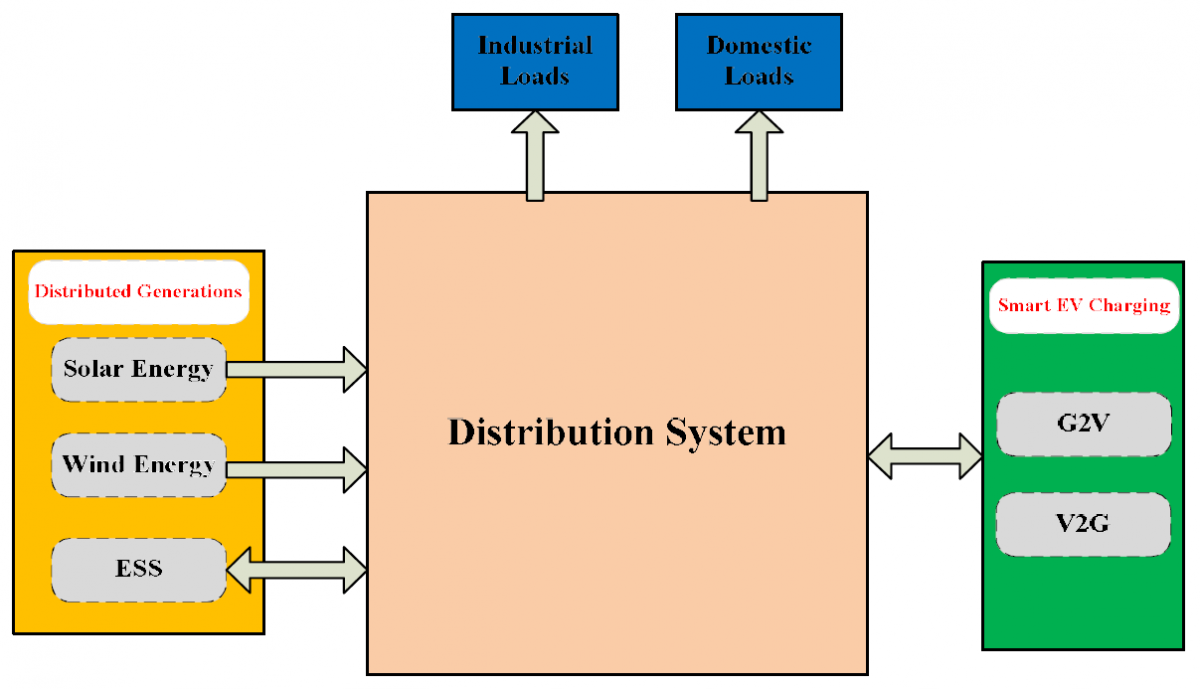
While the proliferation of EVs presents numerous environmental benefits, the success of this green transition hinges on the availability of a robust charging infrastructure. Unlike traditional refuelling for gasoline or diesel vehicles, EV charging demands a different approach, necessitating a network of charging stations distributed strategically across cities, highways, and public spaces [26]. An efficient charging infrastructure alleviates range anxiety, enhances the overall EV ownership experience, and fosters long-term EV adoption. EVCS infrastructure plays a pivotal role in the widespread adoption of EVs and the reduction of carbon emissions from the transportation sector [27] . This essential infrastructure addresses the growing demand for EV charging, enabling convenient and efficient charging options for EV owners.
Figure 2. EV charging infrastructure framework
3.1 Challenges in charging station deployment
The distribution network confronts a wide range of technological and financial constraints which are brought up by the random positioning of EVCS. The deployment of EVCS presents various challenges, both technical and logistical in nature. Identifying suitable locations that cater to the diverse needs of EV users is a complex task. Factors such as charging station capacity, charging speed, geographic coverage, land availability, and electricity grid capacity must be carefully considered to optimize the charging network. Additionally, the interplay between private businesses, utilities, municipalities, and other stakeholders adds further complexity to the decision-making process.
Infrastructure Investment: One of the primary challenges in charging station deployment is the significant upfront investment required for infrastructure development. Installing charging stations involves costs related to equipment, electrical grid upgrades, permits, and site preparation. Finding sources of funding and incentivizing private investment are essential to overcome this hurdle.
Grid Capacity and Load Management: Integrating a large number of EVCS can strain the existing grid infrastructure. Ensuring that the grid can handle the increased load without disruptions requires careful planning and coordination with utility providers. Load management strategies, such as smart charging and peak demand shaving, need to be implemented to distribute charging demand evenly.
Location Selection: Identifying optimal locations for charging stations is crucial. Stations need to be strategically placed in areas with high EV adoption rates, dense urban centres, and along popular travel routes. Conducting thorough feasibility studies and engaging with local communities are essential to address zoning regulations and ensure convenient access for users.
Charging Cost vs Country Electricity
The charging cost for EVs in different countries with their average electricity prices are not same, the multiple factors which effects the charging cost are the charging time, type of charging station, and local regulations, it also depends on the location, time of day, and specific electricity provider rates. Additionally, charging costs may differ based on the type of charging station (e.g., home charging, public Level 2 charging, DC fast charging) [48].
Table 2. Charging cost of EVs in different countries
| Country | Charging Cost (USD/kWh) |
|
United States |
0.13 - 0.20 |
|
Canada |
0.10 - 0.15 |
|
United Kingdom |
0.15 - 0.25 |
|
Germany |
0.30 - 0.35 |
|
France |
0.18 - 0.22 |
|
Japan |
0.20 - 0.25 |
|
Australia |
0.10 - 0.30 |
|
China |
0.08 - 0.15 |
|
Norway |
0.20 - 0.25 |
|
Sweden |
0.15 - 0.20 |
Standardization and Interoperability: Lack of standardized charging connectors, protocols, and payment systems can create confusion and inconvenience for EV users. Establishing uniform standards for charging equipment and ensuring interoperability between different charging networks are essential to promote EV adoption and enhance user experience.
Range Anxiety: The anxiety caused by the prospect of running out of power while driving is known as range anxiety, is a psychological barrier to EV adoption. Deploying fast- charging stations along highways and in strategic locations can help alleviate this concern and encourage more people to switch to EVs.
Regulatory and Policy Hurdles: Inconsistent regulations, permitting processes, and local policies can hinder the swift deployment of charging stations. Collaborating with governments at various levels to streamline permitting, provide incentives, and establish supportive policies can accelerate charging infrastructure development.
User Awareness and Education: It's probable that a lot of individuals are unaware of the benefits and convenience of EVs. Launching comprehensive awareness campaigns and educational initiatives can dispel misconceptions, inform users about charging options, and promote the overall benefits of EV adoption.
Urban and Public Space Constraints: In densely populated urban areas, finding suitable space for charging stations can be challenging. Overcoming space constraints requires creative solutions, such as integrating charging facilities into existing infrastructure like parking lots, street lamps, and public buildings.
Business Models and Revenue Generation: Developing sustainable business models for charging station operators is essential for their long-term viability. Balancing pricing strategies, subscription models, and revenue streams while keeping charging costs competitive is a complex task that requires careful consideration.
Technological Advancements: The EV charging industry is rapidly evolving with advancements in battery technology, charging speeds, and energy management systems. Staying updated with these technological developments is crucial to ensure that deployed charging stations remain relevant and efficient.
Charging network easy to use by the public:
Deploying a charging network that is user-friendly presents several challenges:
a. Accessibility: Ensuring that charging stations are conveniently located and easily accessible to the public, particularly in urban areas, highways, and residential neighborhoods, requires careful planning and coordination with property owners and local authorities.
b. Interoperability: Achieving seamless interoperability between different charging networks and EV models is crucial for user convenience. Standardizing charging protocols and payment methods can help streamline the user experience and prevent compatibility issues.
c. Reliability: Maintaining reliable operation of charging stations is essential to prevent downtime and inconvenience for EV drivers. Regular maintenance, remote monitoring, and backup power solutions are necessary to ensure uninterrupted service.
d. User Experience: Designing intuitive user interfaces and providing clear signage and instructions at charging stations can enhance the overall user experience. Offering real-time information about station availability, charging speed, and pricing also contributes to user satisfaction.
e. Payment Options: Providing flexible and convenient payment options, such as mobile apps, RFID cards, or contactless payment methods, accommodates different user preferences and simplifies the charging process.
f. Safety and Security: Ensuring the safety and security of users and their vehicles at charging stations is paramount. Implementing robust cybersecurity measures, surveillance systems, and emergency protocols helps mitigate risks and instills trust in the charging network.
g. Scalability: As the number of EVs on the road continues to grow, scaling up the charging infrastructure to meet increasing demand poses a significant challenge. Planning for future expansion and upgrading existing infrastructure is essential to accommodate higher charging volumes.
Addressing these challenges requires collaboration between governments, private sector stakeholders, utility companies, and communities to create a robust and accessible charging infrastructure that supports the widespread adoption of EVs.
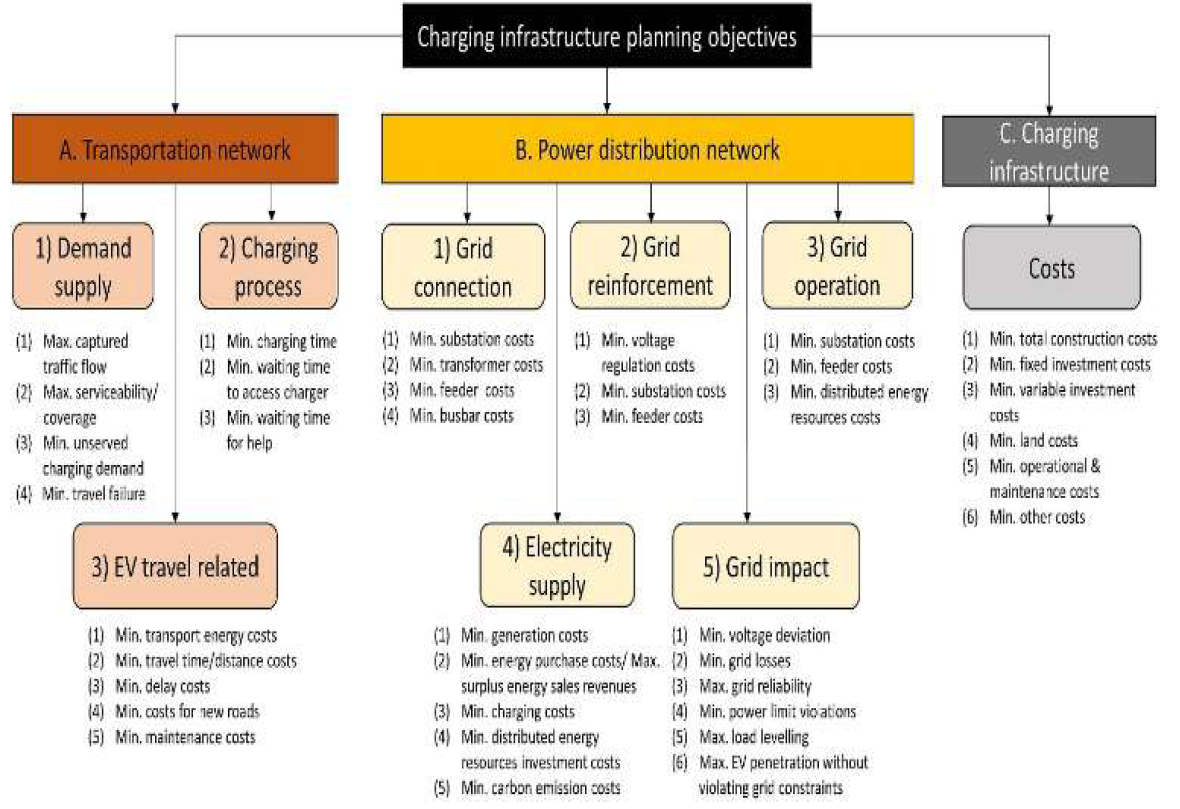
The main objective towards improving Charging Infrastructure within the distribution system, includes the following:
i. Meeting the Need for Electric Vehicle Charging.
ii. By taking into account pertinent key performance metrics related to the charging status, the charging procedure may be optimised.
iii. The challenges for EV drivers related to the consequent travel patterns should be improved more broadly.
Serving many key performance characteristics, such as accessibility to chargers and waiting time reduction, is ideal since it leads to the creation of an appropriate Charging Infrastructure. For sluggish charging, the first is crucial, whilst for quick charging, the second is crucial.
Figure 3. EV charging infrastructure planning objectives
4.1 Demand-supply-related criteria for EV charging
As a first step, the Charging Infrastructure planning method outlined in the vast majority of articles includes EV charging demand-supply related goals [28] , which may be separated down into the following goals. a) Optimal positioning of the Charging Station at a strategic location, b) Controlling the amount of anticipated charging demand, c) EVs that are connected with particular penalty fees due to a violation of certain limits regarding budget, power grid, or queue time [29,30] d) The objective is to highlight the challenges related to the restricted in EV range anxiety through the strategic placement of charging infrastructure along specific routes, thereby ensuring the feasibility of providing charging services [31] e) expenditures associated with a fraudulent increase in battery capacity.
4.2 Objectives in the charging process
The efforts in [32] reduce the overall charging time, which is a result of the unique arrangement of Charging Infrastructure. In the objective function, this is represented as a cost term. The design of the EVCI has a significant influence on the entire charging time for an EV customer, even if the charging time is heavily reliant on capability of the charging station. The possibility that its batteries could perish before it reaches its destination is taken into consideration in the aforementioned study [33]. The goal is to reduce the maintenance service's waiting and billing times as much as possible. As a result, the network system is likewise related to this goal. In a similar manner, the research articles seek to reduce the expenses associated with charging time, but they also take into account the costs associated with waiting at the charging stations.
4.3 Objectives relating to EV travel
To begin, there are a number of studies [34] to reduce the amount of energy that is expended while travelling for reaching the subsequent charging station. A solution for this problem is to increase the cost of power and apply a surcharge to households who have EVs. The reduction of journey time is another topic that has garnered a lot of attention in the most recent research. Two distinct ways of approaching the problem may be recognised. In the studies, the total trip time is included in by assigning a cost premium to each additional minute of travel. The research presented in [35] takes into account both the expenses associated with the amount of time needed to drive to the subsequent charging station as well as the costs associated with the opportunity lost by the taxi passenger in the event that an electric taxi is unable to arrive on time due to the need to reroute for charging. The research presented in [36] takes into consideration, in addition to the total travel time costs, how to minimise the delay costs that are produced due to the increased volume of traffic on the road network. The modelling frameworks described in [37] take into account the expenses associated with travel time as well as the growth of the road network. In addition to achieving their other goals, the primary objectives of both studies are to identify the best possible location for Charging Infrastructure while reducing the amount of money necessary to construct additional lanes and roads.
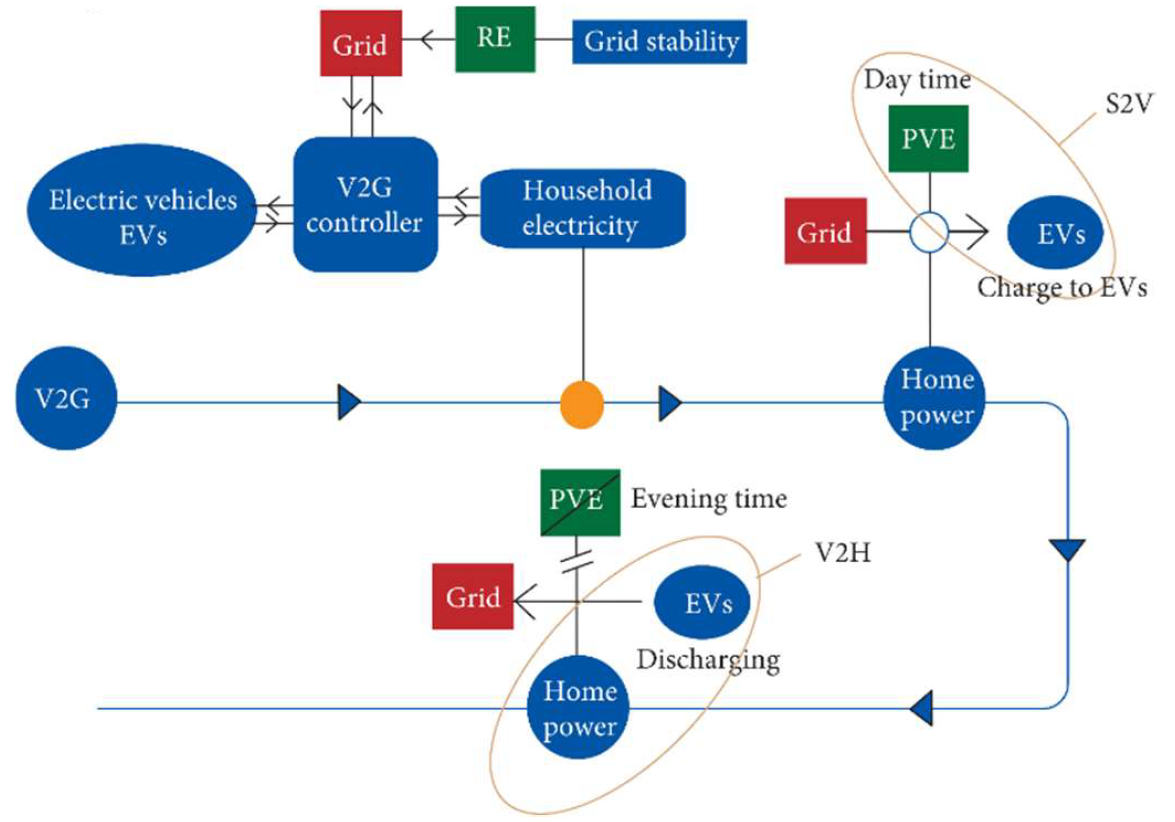
A simple model of the interaction between EVs and the grid with G2V and V2G, V2H, S2V and based on the time of use with solar power generation at domestic house for the stability of the grid.
Figure 4. Model for grid integration of EVs and solar PV [38]
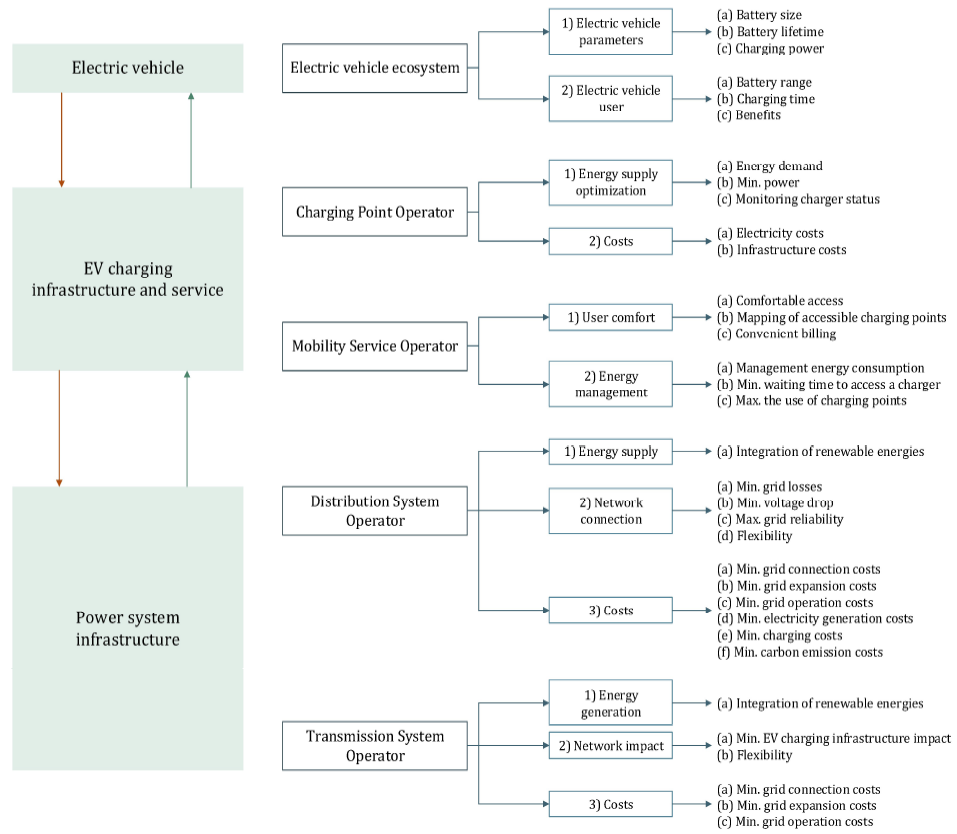
The service provided by the Mobility Service Operator (MSO), namely energy management, is also an integral aspect of the value chain for EV charging infrastructure. Software infrastructure is an essential component of this service, and it's typically built to help people who drive EVs do things like find EVCS on a map using a navigation system, pay for their charges, and keep track of their energy usage through things like EV charger booking services and other apps [39]. The associated business model has high upfront platform development expenses, just like any other software service. The CPO, or Charging Station Operator, can be characterised as an entity that offers electrical services on a medium to large scale, focusing primarily on the installation of charging stations, particularly those designed for fast charging purposes [40]. The CPO is accountable for overseeing the management of the public charging point installation, operation, and maintenance. The study of MSO examines the role of an autonomous agent that engages with two operators, facilitating the exchange of information pertaining to energy management across various charging stations. This information is sourced either from the user, who reports incidents, or from the service provider [41]. Notably, the primary focus of MSO lies in ensuring optimal end-user satisfaction and convenience. As a result, numerous studies have been conducted to examine not only the advantages or disadvantages of its impact on user comfort, but also energy management and EV charging infrastructure might be impacted by this software. The integration of EVs and EV charging infrastructure into the distribution grid poses several challenges that the Distribution System Operator (DSO) must address. EVs have the potential to provide valuable support to DSOs through a range of services. The present discourse additionally elucidates the primary obstacles encountered in the integration of EVs utility services within distribution systems. These barriers incorporate elements both monetary and institutional factors, which impede the successful implementation of such services. In his research, [42] examines the V2G system's potential to help utilities improve power quality by reducing the likelihood of generator overload via increased efficiency in both transmission and distribution. Smart charging or V2G may give greater flexibility for enhancing operations and planning [43], but integrating EVs into distribution networks is challenging due to the additional restrictions that EV charging infrastructure might create. Therefore, EVs may help DSOs in many ways, such as with planning investments, controlling traffic, regulating voltage, and providing backup power as necessary. To determine the monetary worth of EV integration into the power grid, an economic constraint of the energy supply is constructed [44] to analyse cost savings under each of the three different charging operation modes: random charging, regulated charging, and V2G charging.
The optimisation process involves the strategic utilisation of a given situation or resource in order to achieve the highest level of efficiency. It is worth noting that this observation holds true for a subset of the value chain, as various agents within the system will possess distinct objectives when engaging in the optimisation process. The diverse agents involved in the value chain of EV charging infrastructure exhibit varying objective functions, which are contingent upon the specific operational or planning requirements. This paper [45] delineates its objectives into three primary categories: EV, Infrastructure for EV charging, as well as power grid infrastructure. The objectives associated with the car itself, its components, and its specifications, as well as those associated with the consumer, are divided under the category of the EV ecosystem. The primary problems that the end user may have, like range anxiety, as well as the time it takes to charge the vehicle are highlighted by the objectives taken into consideration for the EV user. Both the CPO and service and the MSO fall under the infrastructure category of EV charging infrastructure and service. Despite the fact that they have distinct goals, both are active in administering EV charging stations. On the CPO side, the goals examined may change according to the main objective, which is optimising energy supply or prices. The MSO's goals in operating the recharging stations relate to managing data that is obtained by the end- user via software, such as an app, as well as from the CPO or DSO.
Figure 5. Impact of DSO & TSO on various constraints [45]
The rapid exhaustion of fossil fuels as a resource and the growing concern for the environment are both playing a significant part in the promotion of innovations in the area of EVs and the infrastructure for charging them. According to the findings of the current research, recent trends in research are increasingly concentrating their efforts on the the creation of new and rapid EVCI that can reduce the charging time for EVs These trends also include: the challenges in charging station deployment, the optimisation of the use by readily available renewable energies for EV charging, the reduction of EV charging's dependence on the grid and the determination of the optimal location for charging stations, which is primarily concerned with the planning of a new location network. In order to maintain the power grid's energy balance and make the most of renewable sources, EV charging stations should use modern technologies such as vehicle to grid (V2G), Smart Grid, Smart charging method, etc. It will also aid in achieving profitable billing rates and happy customers. The key to the effective functioning of EVCI is the establishment of an efficient communication network for information sharing, an optimisation unit to minimise charging time, and a prediction unit to assist in the best possible optimisation. It is extremely suggested to take into consideration the impact on the environment and the potential for global warming caused by these innovations.
Advanced energy management and charging infrastructure development should be at the forefront of future study on the opportunities as well as the concerns that come with EVs being integrated by smart cities. These initiatives will work to maximise power grid efficiency by optimising charging station density and introducing smart charging algorithms and V2G features. Energy management strategies that are capable of effectively balancing EV energy demand and supply, taking into consideration grid constraints as well as the generation of renewable energy, are an additional area that needs attention in future study. Research in the future should focus on these areas so that EVs may be more easily integrated into smart cities, therefore promoting environmentally friendly modes of transportation and improving citywide productivity. Smart cities may contribute to global efforts to mitigate climate change by achieving the full potential of electric mobility via strategic planning, effective management, and involvement from the public.
[1] Emma Delmonte, Neale Kinnear, Becca Jenkins, Stephen Skippon, what do consumers think of smart charging? Perceptions among actual and potential plug-in electric vehicle adopters in the United Kingdom, Energy Research & Social Science, Volume 60, 2020, 101318, ISSN 2214-6296, https://doi.org/10.1016/j.erss.2019.101318.
[2] Z. Liu, F. Wen, and G. Ledwich, “Optimal Planning of ElectricVehicle Charging Stations in Distribution Systems,” IEEE Trans. Power Deliv., vol. 28, no. 1, pp. 102–110, Jan. 2013, doi: 10.1109/TPWRD.2012.2223489.
[3] H.R. Galiveeti, A.K. Goswami, and N. B. Dev Choudhury, “Impact of plug-in electric vehicles and distributed generation on reliability of distribution systems,” Eng. Sci. Technol. an Int. J., vol. 21, no. 1, pp. 50–59, Feb. 2018, doi: 10.1016/j.jestch.2018.01.005.
[4] A. Selim, S. Kamel, A.S. Alghamdi, and F. Jurado, “Optimal Placement of DGs in Distribution System Using an Improved Harris Hawks Optimizer Based on Single- and Multi-Objective Approaches,” IEEE Access, vol. 8, pp. 52815–52829, 2020, doi: 10.1109/ACCESS.2020.2980245.
[5] International Energy Agency (IEA). Global EV Outlook 2022—Towards Cross-Modal Electrification. 2018 evreporter.com/india-ev-sales-for-fy-2022-23-april-2022-march-2023.
[6] Leonardo Bitencourt, Tiago P. Abud, Bruno H. Dias, Bruno S.M.C. Borba, Renan S. Maciel, Jairo Quirós- Tortós, Optimal location of EV charging stations in a neighborhood considering a multi-objective approach, Electric Power Systems Research, Volume 199, 2021, 107391, ISSN 0378-7796, https://doi.org/10.1016/j.epsr.2021.107391.
[7] Junchao Cheng, Jindi Xu, Wentao Chen, Beibei Song, Locating and sizing method of electric vehicle charging station based on Improved Whale Optimization Algorithm, Energy Reports, Volume 8,2022, Pages 4386- 4400, ISSN 2352-4847, https://doi.org/10.1016/j.egyr.2022.03.077.
[8] Mohammad Amin Kazemi, Mostafa Sedighizadeh, Mohammad Javad Mirzaei, Omid Homaee, Optimal siting and sizing of distribution system operator owned EV parking lots, Applied Energy, Volume 179, 2016, Pages 1176-1184, ISSN 0306-2619, https://doi.org/10.1016/j.apenergy.2016.06.125.
[9] Jia He, Hai Yang, Tie-Qiao Tang, Hai-Jun Huang, An optimal charging station location model with the consideration of electric vehicle’s driving range, Transportation Research Part C: Emerging Technologies, Volume 86, 2018, Pages 641-654, ISSN 0968-090X, https://doi.org/10.1016/j.trc.2017.11.026.
[10] Liang Chen, Chunxiang Xu, Heqing Song, Kittisak Jermsittiparsert, Optimal sizing and sitting of EVCS in the distribution system using metaheuristics: A case study, Energy Reports, Volume 7,2021, Pages 208-217, ISSN 2352-4847, https://doi.org/10.1016/j.egyr.2020.12.032.
[11] Golla, N. K., Sudabattula, S. K., & Suresh, V. (2022). Optimal Placement of Electric Vehicle Charging Station in Distribution System Using Meta-Heuristic Techniques. Mathematical Modelling of Engineering Problems, 9(1).
[12] Suresh, V., Bazmohammadi, N., Janik, P., Guerrero, J. M., Kaczorowska, D., Rezmer, J., ... & Leonowicz, Z. (2021). Optimal location of an electrical vehicle charging station in a local microgrid using an embedded hybrid optimizer. International Journal of Electrical Power & Energy Systems, 131, 106979.
[13] Wang D, Locment F, Sechilariu M. Modelling, Simulation, and Management Strategy of an Electric Vehicle Charging Station Based on a DC Microgrid. Applied Sciences. 2020; 10(6):2053. https://doi.org/10.3390/app10062053.
[14] S. Deb, K. Tammi, K. Kalita and P. Mahanta, "Charging Station Placement for Electric Vehicles: A Case Study of Guwahati City, India," in IEEE Access, vol. 7, pp. 100270-100282, 2019, doi: 10.1109/ACCESS.2019.2931055.
[15] Henrik Fredriksson, Mattias Dahl, Johan Holmgren, Optimal placement of Charging Stations for Electric Vehicles in large-scale Transportation Networks, Procedia Computer Science, Volume 160, 2019, Pages 77-84, ISSN 1877-0509, https://doi.org/10.1016/j.procs.2019.09.446.
[16] L. Pieltain Fernández, T. Gomez San Roman, R. Cossent, C. Mateo Domingo and P. Frías, "Assessment of the Impact of Plug-in Electric Vehicles on Distribution Networks," in IEEE Transactions on Power Systems, vol. 26, no. 1, pp. 206-213, Feb. 2011, doi: 10.1109/TPWRS.2010.2049133.
[17] K. Clement-Nyns, E. Haesen and J. Driesen, "The Impact of Charging Plug-In Hybrid Electric Vehicles on a Residential Distribution Grid," in IEEE Transactions on Power Systems, vol. 25, no. 1, pp. 371-380, Feb. 2010, doi: 10.1109/TPWRS.2009.2036481.
[18] Yong, J.Y.; Ramachandaramurthy, V.K.; Tan, K.M.; Mithulananthan, N. A review on the state-of-the-art technologies of electric vehicle, its impacts and prospects. Renew. Sustain. Energy Rev. 2015, 49, 365– 385.
[19] Wang, Z.; Paranjape, R. An evaluation of electric vehicle penetration under demand response in a multi-agent based simulation. In Proceedings of the 2014 IEEE Electrical Power and Energy Conference, Calgary, AB, Canada, 12– 14 November 2014; IEEE: Piscataway, NJ, USA, 2014; pp. 220–225.
[20] Wu, D.; Chau, K.T.; Liu, C.; Gao, S.; Li, F. Transient stability analysis of SMES for smart grid with vehicle-to- grid operation. IEEE Trans. Appl. Supercond. 2011, 22, 5701105.
[21] Nguyen, V.L.; Tran-Quoc, T.; Bacha, S. Harmonic distortion mitigation for electric vehicle fast charging systems. In Proceedings of the 2013 IEEE Grenoble Conference, Grenoble, France, 16–20 June 2013; IEEE: Piscataway, NJ, USA, 2013; pp. 1–6.
[22] Shareef, H.; Islam, M.M.; Mohamed, A. A review of the stage-of-the-art charging technologies, placement methodologies, and impacts of electric vehicles. Renew. Sustain. Energy Rev. 2016, 64, 403–420.
[23] Hilshey, A.D.; Rezaei, P.; Hines, P.D.; Frolik, J. Electric vehicle charging: Transformer impacts and smart, decentralized solutions. In Proceedings of the 2012 IEEE Power and Energy Society General Meeting 2012, San Diego, CA, USA, 22–26 July 2012; IEEE: Piscataway, NJ, USA, 2012; pp. 1–8.
[24] Gray, M.K.; Morsi, W.G. Power quality assessment in distribution systems embedded with plug-in hybrid and battery electric vehicles. IEEE Trans. Power Syst. 2014, 30, 663–671
[25] Nour, M.; Chaves-Ávila, J.P.; Magdy, G.; Sánchez- Miralles, Á. Review of positive and negative impacts of electric vehicles charging on electric power systems. Energies 2020, 13, 4675.
[26] Singh, P.P.; Wen, F.; Palu, I.; Sachan, S.; Deb, S. Electric Vehicles Charging Infrastructure Demand and Deployment: Challenges and Solutions. Energies 2023, 16, 7. https://doi.org/10.3390/en16010007.
[27] Raphaela Pagany, Luis Ramirez Camargo, Wolfgang Dorner, A review of spatial localization methodologies for the electric vehicle charging infrastructure, International Journal of Sustainable Transportation, Volume 13, Issue 6, 2019, Pages 433-449, ISSN 1556- 8318, https://doi.org/10.1080/15568318.2018.1481243.
[28] Shukla, A., Verma, K., & Kumar, R. (2019). Multi‐ objective synergistic planning of ev fast‐charging stations in the distribution system coupled with the transportation network. IET Generation, Transmission &Amp; Distribution, 13(15), 3421-3432. https://doi.org/10.1049/iet-gtd.2019.0486.
[29] B. Zhou, G. Chen, T. Huang, Q. Song and Y. Yuan, "Planning PEV Fast-Charging Stations Using Data- Driven Distributionally Robust Optimization Approach Based on ϕ-Divergence," in IEEE Transactions on Transportation Electrification, vol. 6, no. 1, pp. 170-180, March 2020, doi: 10.1109/TTE.2020.2971825.
[30] Bo Zhou, Guo Chen, Qiankun Song, Zhao Yang Dong, Robust chance-constrained programming approach for the planning of fast-charging stations in electrified transportation networks, Applied Energy, Volume 262, 2020, 114480, ISSN 0306-2619, https://doi.org/10.1016/j.apenergy.2019.114480.
[31] Zhang, X., Li, P., Hu, J., Liu, M., Wang, G., Qiu, J., & Chan, K. W. (2019). Yen’s algorithm-based charging facility planning considering congestion in coupled transportation and power systems. IEEE Transactions on Transportation Electrification, 5(4), 1134-1144.
[32] Zhixiong Luo, Fang He, Xi Lin, Jianjun Wu, Meng Li, Joint deployment of charging stations and photovoltaic power plants for electric vehicles, Transportation Research Part D: Transport and Environment, Volume 79, 2020, 102247, ISSN 1361-9209, https://doi.org/10.1016/j.trd.2020.102247.
[33] Xiang, Y., Meng, J., Huo, D., Xu, L., Mu, Y., Gu, C., Hou, K. and Teng, F. (2020), Reliability-oriented optimal planning of charging stations in electricity–transportation coupled networks. IET Renew. Power Gener., 14: 3690- 3698. https://doi.org/10.1049/iet-rpg.2020.0005.
[34] Yuping Lin, Kai Zhang, Zuo-Jun Max Shen, Bin Ye, Lixin Miao, Multistage large-scale charging station planning for electric buses considering transportation network and power grid, Transportation Research Part C: Emerging Technologies, Volume 107, 2019, Pages 423- 443, ISSN 0968-090X, https://doi.org/10.1016/j.trc.2019.08.009.
[35] X. Wang, M. Shahidehpour, C. Jiang and Z. Li, "Coordinated Planning Strategy for Electric Vehicle Charging Stations and Coupled Traffic-Electric Networks," in IEEE Transactions on Power Systems, vol. 34, no. 1, pp. 268-279, Jan. 2019, doi: 10.1109/TPWRS.2018.2867176.
[36] S. N. Hashemian, M. A. Latify and G. R. Yousefi, "PEV Fast-Charging Station Sizing and Placement in Coupled Transportation-Distribution Networks Considering Power Line Conditioning Capability," in IEEE Transactions on Smart Grid, vol. 11, no. 6, pp. 4773-4783, Nov. 2020, doi: 10.1109/TSG.2020.3000113.
[37] D. Mao, J. Tan and J. Wang, "Location Planning of PEV Fast Charging Station: An Integrated Approach Under Traffic and Power Grid Requirements," in IEEE Transactions on Intelligent Transportation Systems, vol. 22, no. 1, pp. 483-492, Jan. 2021, doi: 10.1109/TITS.2020.3001086.
[38] Hossain, M.S.; Kumar, L.; Islam, M.M.; Selvaraj, J. A comprehensive review on the integration of electric vehicles for sustainable development. J. Adv. Transp. 2022, 2022, 3868388, https://doi.org/10.1155/2022/3868388.
[39] Danese A, Garau M, Sumper A, Torsæter BN. Electrical Infrastructure Design Methodology of Dynamic and Static Charging for Heavy and Light Duty Electric Vehicles. Energies. 2021; 14(12):3362. https://doi.org/10.3390/en14123362.
[40] Z. Zhao, M. Xu and C. K. M. Lee, "Capacity Planning for an Electric Vehicle Charging Station Considering Fuzzy Quality of Service and Multiple Charging Options," in IEEE Transactions on Vehicular Technology, vol. 70, no. 12, pp. 12529-12541, Dec. 2021, doi: 10.1109/TVT.2021.3121440.
[41] E. Haugen, K. Berg, B. N. Torsæter and M. Korpås, "Optimisation model with degradation for a battery energy storage system at an EV fast charging station," 2021 IEEE Madrid PowerTech, Madrid, Spain, 2021, pp. 1-6, doi: 10.1109/PowerTech46648.2021.9494979.
[42] Ubaid ur Rehman, A robust vehicle to grid aggregation framework for electric vehicles charging cost minimization and for smart grid regulation, International Journal of Electrical Power & Energy Systems, Volume 140, 2022, 108090, ISSN 0142-0615, https://doi.org/10.1016/j.ijepes.2022.108090.
[43] G. Guidi, S. D’Arco, K. Nishikawa and J. A. Suul, "Load Balancing of a Modular Multilevel Grid-Interface Converter for Transformer-Less Large-Scale Wireless Electric Vehicle Charging Infrastructure," in IEEE Journal of Emerging and Selected Topics in Power Electronics, vol. 9, no. 4, pp. 4587-4605, Aug. 2021, doi: 10.1109/JESTPE.2020.3043211.
[44] Wei Wu, Boqiang Lin, Benefits of electric vehicles integrating into power grid, Energy, Volume 224,2021,120108,ISSN 0360-5442,https://doi.org/10.1016/j.energy.2021.120108.
[45] Verónica Anadón Martínez & Andreas Sumper, 2023. "Planning and Operation Objectives of Public Electric Vehicle Charging Infrastructures: A Review," Energies, MDPI, vol. 16(14), pages 1-41, July.
[46] Online, Neil King, “EV world sales database”, November 21, 2023. https://www.ev-volumes.com/
[47] Online, Tanmay Halaye, “commercial electric vehicle charging stations” Mar. 2022. https://exactitudeconsultancy.com/reports/1830/electric- vehicle-charging-stations-market/
[48] Lanz, L., Noll, B., Schmidt, T.S. et al. Comparing the levelized cost of electric vehicle charging options in Europe. Nat Commun 13, 5277 (2022). https://doi.org/10.1038/s41467-022-32835-7