Mohamed A. Abdullah | Wissam D. Salman* | Amna N. Abd | Ahmed S. Hakeem
© 2026 The authors. This article is published by IIETA and is licensed under the CC BY 4.0 license (http://creativecommons.org/licenses/by/4.0/).
OPEN ACCESS
This study investigated the axial (compressive) loading behavior of circular hollow steel columns filled with eco-friendly geopolymer concrete, aiming to address the significant carbon footprint associated with conventional cement. The main objective was to assess the structural feasibility of using recycled concrete aggregate (RCA) instead of natural gravel in these composite elements. Nine steel tube cylinder column specimens with a 100 mm diameter were cast and tested. The experimental variables involved RCA replacement ratios of 0%, 25%, 50%, 75%, and 100%, and column heights of 350, 400, 450, 500, and 550 mm. All samples were subjected to monotonic axial compression to assess their ultimate load–carrying capacity and failure modes. The test results showed that decreasing the column height led to an enhancement in ultimate load capacity of 3.5-17.2% compared with the control column. Additionally, the use of RCA instead of natural aggregate resulted in a slight reduction in ultimate load capacity of 5.3-14.0% compared with the control column. The three-dimensional configuration provided by the outer steel tube significantly delayed the geopolymer concrete crushing failure and prevented premature column buckling. This remarkable, complex effect demonstrates that geopolymer-filled steel tubes incorporating recycled concrete are highly effective, offering a sustainable option for heavy-duty construction while conserving natural aggregate resources.
geopolymer concrete, steel tube, columns, recycled aggregate
The Portland cement production process is known to use a considerable amount of energy and is responsible for (6-8%) of global warming, as 68% of the byproducts are carbon dioxide (CO2). Thus, using concrete in construction raises environmental concerns; therefore, finding alternative, sustainable, and environmentally friendly materials becomes important [1-3]. Geopolymer is an environmentally friendly material that has high mechanical characteristics, which used fly ash as a binding material (a fine trash that is assembled from emissions released by power stations that used coal), which activated by using alkaline solution, can reduce footprint of carbon by 80% of ordinary Portland cement (OPC) concrete, so using geopolymer concrete as alternative to ordinary concrete is a successful solution to reduce the global warming [4-8]. In addition, when recycled concrete is used as a replacement for coarse aggregate, it is considered a sustainable material because it helps preserve natural resources for the future. The use of recycled concrete as coarse aggregate in concrete has been extensively studied and approved, but using recycled concrete as coarse aggregate in geopolymer concrete has been less studied and is the focus of our research. In such material, recycled concrete aggregate (RCA) is used as a partial or total replacement for natural coarse aggregate (NCA), and cement is fully replaced by fly ash and an alkaline solution. Therefore, CO2 emissions decrease due to the removal of cement, in addition to the CO2-absorbing effect of RCA [9, 10].
Over the past few decades, many modern structures have been built using composite members. Concrete-filled steel tubular (CFST) is one of these composite members and is extensively used in structural engineering, such as piers in bridges and columns in high-rise buildings. Compared to reinforced concrete columns, concrete-steel tubular columns are considered advantageous because they confine the concrete by the external steel tube [11-13]. In 2006, Baig et al. [14] provided an experimental study on the strength of steel tubular columns filled with concrete. A total of twenty-eight specimens were adopted in this study. Variables included: column section shape, column filling, diameter-to-thickness ratio, and column length-to-diameter (L/D) ratio. The test results showed that the circular columns increased strength by 60%, and a ductile manner was observed for all columns that were filled with concrete. In 2025, Fahmy et al. [15] provided an experimental and analytical comparative study of steel tube columns filled with concrete under axial loading; a total of eighteen specimens were adopted in this study, variables included height of specimens (500, 1000, and 1500 mm), steel tube (hollow or concrete filled), and concrete grade (M20 and M40). All specimens have a (145 mm × 82 mm × 4.8 mm) section. The experimental test results showed that the steel tube filled with concrete increased the carrying load capacity by 22.5% and 48.9% for M20 and M40, respectively; the ultimate load compressive strength decreased with increasing column height, and the failure of steel tubes that have a 0.5 m length which filled with concrete occurred near the mid-column height due to local buckling, compared with steel tube hollow sections, which filled near the ends due to local buckling.
In 2022, He et al. [16] provided an experimental study on the compressive strength of the steel tubular columns filled with rammed earth. A total of 15 specimens were used in this study. Variables included the percentage of rammed earth infill material and the amount of cement relative to the total amount of earth fill material. The test results showed that the increased cement content led to higher initial stiffness and compressive strength. In 2023, Al-Abbas et al. [17] provided an experimental study on the strength of steel tubular columns filled with concrete reactive powder. A total of nineteen specimens were used in this study; variables included column section shape, column filling, L/D ratio, and reactive powder concrete compressive strength. The test results showed that an increase in compressive strength due to the use of reactive concrete powder led to stiffer column behavior in the load–vertical displacement response. In 2024, Adeleke et al. [18] conducted an experimental study on the mechanical and microstructural effects of geopolymer and ordinary concrete when using recycled plastic waste as a replacement for NCA. Variables included the replacement ratio of recycled plastic waste (30 and 70%). The test results showed that the workability and compressive strength of both concrete decreased as the recycled plastic waste replacement ratio increased. The results indicate that geopolymer concrete outperformed conventional concrete in compressive strength, recording 58.3 MPa after 28 days of curing. The researchers explained that the geopolymer concrete formed a sodium-rich geopolymer gel (a Na-bearing aluminosilicate gel) with greater durability than conventional cement paste. The study noted that this gel improved the interfacial transition zone (ITZ) between the matrix and the natural and recycled plastic aggregates. Consequently, the study concluded that using recycled plastic waste as a substitute for natural aggregate in geopolymer concrete is a successful and sustainable option, offering enhanced performance while reducing environmental impact. In 2025, Hui et al. [19] conducted an experimental and finite element analysis study on Geopolymer Concrete that filled steel Tubular (GCFST) columns under repeated axial loading. A total of 8 GCFST short columns were adopted in this study. Variables included steel tube wall thickness (2.75 and 4 mm), geopolymer concrete compressive strength (29.9 and 42.3 MPa), and ratio of length to diameter (2.7 and 3.6). The test results showed that all columns failed in shear, with local buckling at the steel tube column ends. Most importantly, the structural elements demonstrated excellent energy dissipation capacity and high ductility, with displacement ductility factors ranging from 4.63 to 10.77. A lower L/D ratio enhances the structural performance of columns by improving lateral confinement, achieving a more uniform distribution of confining stresses along the perimeter, increasing the ultimate load-bearing capacity, and enhancing the initial stiffness of the column. Consequently, shorter columns or those with larger diameters—assuming other factors remain constant—exhibit superior strength and stiffness compared to columns with higher L/D ratios. In 2015, Shi et al. [20] provided an experimental search to study the steel tubular columns that filled with geopolymer concrete under the axial loading, totally twelve specimens were adopted in this investigation, variables included: section dimension, recycled aggregate concrete (RAC), and geopolymer recycled concrete (GRC) with (0%, 50%, and 100%) ratios of replacement recycled aggregate. The test results showed that a high RCA replacement ratio decreases the ultimate load capacity and increases the peak strain.
Despite the notable increase in interest in CFST columns, a significant research gap remains in understanding the mechanical interactions—under axial compression—when using eco-friendly binders, such as geopolymer, combined with RCA. Published research often addresses these physical aspects in isolation. This paper bridges that gap by analyzing the structural feasibility and performance limits of steel tubes filled with geopolymer concrete incorporating RCA. Specifically, this work explores how the triaxial confinement provided by the steel casing can compensate for the strength reductions often associated with high levels of replacement with RCA. By examining these complex interactions across various column slenderness ratios, this study offers significant new insights into balancing environmental circularity with structural load-bearing capacity. No previous studies have used geopolymer concrete with recycled aggregate as the filling material in steel tubular columns, except for Shi et al [20]. This study considers only the (0%, 50%, and 100%) replacement ratios of RCA by NCA and does not account for the effect of column height in the study.
In this study, an experimental investigation was conducted on the compressive behavior of geopolymer concrete with recycled aggregate used to fill concrete steel tube columns. The study variables were column height (350, 400, 450, 500, and 550 mm) and replacement of coarse aggregate with RCA (0%, 25%, 50%, 75%, and 100%). A total of 9 column steel tubular concrete structures were constructed and tested. The ultimate compressive capacity and load–displacement behavior are the outcomes of this study.
2.1 Materials
2.1.1 Aggregate
Natural river sand was used as fine aggregate, and NCA (crushed gravel) and RCA were used as coarse aggregate. To ensure a precise, high-quality source of structural RCA, laboratory-based casting trials were conducted using long-term specimens measuring 0.4 × 0.1 × 4 meters. The baseline concrete mix was designed using NCA to achieve a 28-day compressive strength of 30 MPa. After undergoing a standard 28-day water-curing process, the structural elements were mechanically broken down into smaller pieces and then processed in a jaw crusher to obtain the desired recycled aggregate fractions. Subsequently, the RCA was carefully washed with tap water to remove fine dust and adhering loose particles, then left to air-dry under sunlight for 24 h at ambient temperature; finally, it was packed and stored in airtight containers under controlled laboratory conditions until the mixing stage. In this study, a maximum size of 10 mm was used for coarse aggregate (natural and RCA). Table 1 shows the physical properties of coarse aggregate.
Table 1. Physical properties of coarse aggregate
|
Natural Coarse Aggregate (NCA) |
|
|
Specific gravity |
2.60 |
|
Sulfate content |
0.08% |
|
Absorption |
0.70% |
|
Clay content |
0.40% |
|
Recycled Concrete Aggregate (RCA) |
|
|
Specific gravity (SSD condition) |
2.47 |
|
Dry specific gravity |
2.40 |
|
Absorption |
3.50% |
|
Loss density, kg/m3 |
1360 |
|
Compact density, kg/m3 |
1580 |
2.1.2 Fly ash
Class F fly ash was used in this study as a sustainable binder for geopolymer concrete, due to its ability to reduce the carbon footprint compared with ordinary concrete. This type of fly ash comes from bituminous coals and anthracite and consists mainly of silica and alumina, with a higher loss on ignition than that of fly ash class C. In geopolymer concrete, fly ash is considered an inert material unless activated with an activator solution through a process called polymerization. The result of the polymerization process is a strong aluminosilicate network (paste) that hardens and sets within a short period of time. This paste is considered to have the major strength of geopolymer concrete [21-23].
2.1.3 Activator solution
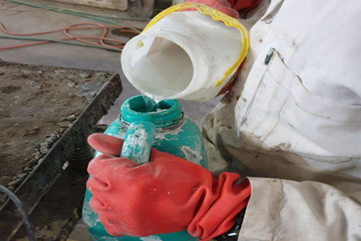
An alkaline activator solution consisting of a sodium hydroxide (NaOH) and sodium silicate (Na2SiO3) mixture was used to activate fly ash in geopolymer concrete. A 14 M NaOH solution was prepared by dissolving high-purity NaOH flakes in water. Due to the highly exothermic nature of this reaction, the solution was allowed to cool and equilibrate at room temperature for 24 h before use. Subsequently, a liquid Na2SiO3 solution—with a density of 1370 kg/m³ and a silica modulus (Ms = SiO2/Na2O) of approximately 2.0—was thoroughly mixed with a NaOH solution. Throughout the mixing process, the mass ratio of Na2SiO3 to NaOH was maintained at 2.0, and the liquid activator-to-binder (A/B) ratio was kept at 0.40. The mix design incorporated an alkaline activator solution of 162 kg/m³. To maintain the workability and compactability required for pumping geopolymer concrete into the steel pipes, a fixed dosage of superplasticizer (SP) at 6.6 kg/m³ was added, along with 40 kg/m³ of "additional water" during the final mixing stage. The total water content in the system was precisely calculated by summing the water from the NaOH solution, the water contained in the Na2SiO3 solution, and the added water. Figure 1 shows the preparation of the activator solution.
Figure 1. Preparation of activator solution
2.1.4 Steel tube
Steel tubes with a hollow cylindrical section measuring 100 mm × 2 mm were adopted in this study. The hollow tube is to be filled with geopolymer concrete to achieve composite action between the compressive strength of the geopolymer concrete and the tensile strength of the steel tube, thereby confining the geopolymer concrete, delaying its crushing, and preventing column buckling. This type of steel tube is also used in the construction of high-rise buildings. These structures are subject to seismic and bridge loading. The reason for this is that when steel tube columns are filled with geopolymer concrete, a composite action between the steel tube and the geopolymer concrete occurs, as discussed above, which is cheaper than traditional concrete, lighter, and allows the column size to be reduced.
2.1.5 Superplasticizer
High-range water-reducing (superplasticizing) admixtures were used in geopolymer concrete to improve workability. SP is the chemical admixture used primarily in this study to reduce water content and improve workability, as lower water content increases compressive strength. The addition of SP is usually expressed as a percentage of the binder weight; in this study, the percentage is 1.63% of the fly ash weight.
2.1.6 Geopolymer concrete mix proportion
The material proportions of the geopolymer concrete mix are shown in Table 2. Three cubes (150 mm × 150 mm × 150 mm) were cast and cured in an electrical drying oven (200 ℃ max. temp.) set at 90 ℃ for two consecutive days (48 h), which are the same processing conditions that were used for all steel tubular columns; then the cubes were tested to obtain the compressive strength, which equaled 25 MPa (mean of three cubes). For the mix, the fly ash, sand, and gravel were dry-mixed together for 5 min. The activator solution (Alkaline liquid) was added to the mixture, and the mixture was mixed for another 5 min. The SP and the required amount of water were also added to the mixture. All specimens were prepared by casting geopolymer concrete in the hollow of a steel tube in three stages. After each stage, the specimens were placed on a vibrator to compact the Geopolymer Concrete (GC) for 30 sec. After casting, the top surface of the specimens was leveled and then covered to prevent water from evaporating from the GC surface. All specimens were placed in an electrical drying oven at 90 ℃ for 2 consecutive days before testing.
Table 2. Mix design of geopolymer concrete
|
Fly ash (kg/m3) |
Sand (kg/m3) |
Gravel (kg/m3) |
Activator Solution (kg/m3) |
Extra Water (kg/m3) |
Superplasticizer (SP) (kg/m3) |
|
405.0 |
640.0 |
1190.0 |
162.0 |
40.0 |
6.6 |
2.2 Experimental procedure
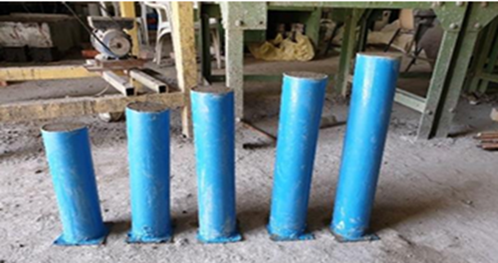
Nine steel tubular columns were adopted and tested in this study. Column models were designed to simulate the behavior of short members subjected to concentric axial loading. This approach accounts for second-order global buckling effects in a simplified manner by controlling the slenderness ratio KLu/r < 24. This design choice aligns with the analytical threshold of 22 specified in ACI 318-25 [24]. Short compression columns in non-sway frames (frames not subject to lateral displacement) are subjected to single curvature, consistent with the empirical limits documented in scientific literature for short composite CFST columns [25], as shown in Table 3. The first group consists of five columns filled with geopolymer concrete using natural aggregate as coarse aggregate; these columns have different heights (550, 500, 450, 400, and 350 mm). The second group consists of five columns with a height of 500 mm, filled with geopolymer concrete and with different percentages (0%, 25%, 50%, 75%, and 100%) of NCA replaced by the same percentages of RCA. The Specimen name CH550 means: C: Column, H550: Height of the column is 550 mm. While the specimen CRA25 means: C: Column, RA25: the coarse aggregate in this specimen consists of 75% NCA and 25% RCA. Figure 2. Shows columns after being filled with geopolymer concrete. Although each specimen is evaluated using a single composite sample due to experimental constraints, the triaxial structure provided by the steel tube significantly influences the structural response, thereby mitigating the impact of variations in the internal material properties. Nevertheless, the findings of this study indicate behavioral trends; further, comprehensive, statistically based replicate testing is recommended to support the future development of design codes.
Table 3. Steel tubular column details
|
|
Name of Specimens |
Height (mm) |
Percentage of NCA in Geopolymer Concrete (%) |
Percentage of RCA in Geopolymer Concrete (%) |
|
Group one |
CH350 |
350 |
100 |
0 |
|
CH400 |
400 |
100 |
0 |
|
|
CH450 |
450 |
100 |
0 |
|
|
CH500 |
500 |
100 |
0 |
|
|
CH550 |
550 |
100 |
0 |
|
|
Group two |
CRA0 |
500 |
100 |
0 |
|
CRA25 |
500 |
75 |
25 |
|
|
CRA50 |
500 |
50 |
50 |
|
|
CRA75 |
500 |
25 |
75 |
|
|
CRA100 |
500 |
0 |
100 |
Note: * Crucially, the specimen with 500 mm height and 0% RCA is shared between both groups. Therefore, while Table 3 displays 10 rows to maintain a clear visual comparison across parametric groups, only 9 unique physical columns were cast and tested: recycled concrete aggregate (RCA) and natural coarse aggregate (NCA).
Figure 2. Columns after being filled with geopolymer concrete
2.3 Columns testing procedure
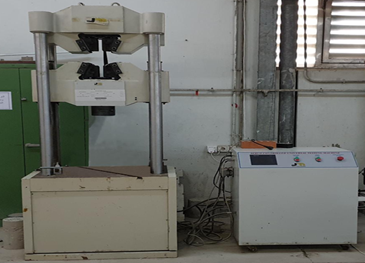
After the curing time (two days) is complete, all columns are removed from the electric oven and left to cool. A tensile testing machine with a capacity of 1000 KN which used as a compression testing machine for testing our specimens. The machine is first connected to the computer to help draw the curve between the recorded loads and axial displacements. The load is applied in successive increments until the specimen fails. The loading rate for this case was 0.11 KN/sec. To ensure high measurement accuracy and consistent experimental results, formal inspection and calibration of all laboratory testing equipment—such as digital load cells and Linear Variable Differential Transformers (LVDTs)—are conducted annually by the Central Organization for Standardization and Quality Control (COSQC) under the Iraqi Ministry of Planning. Figure 3 shows the testing machine for steel tubular columns.
Figure 3. Testing machine for steel tubular columns
3.1 Ultimate load capacity
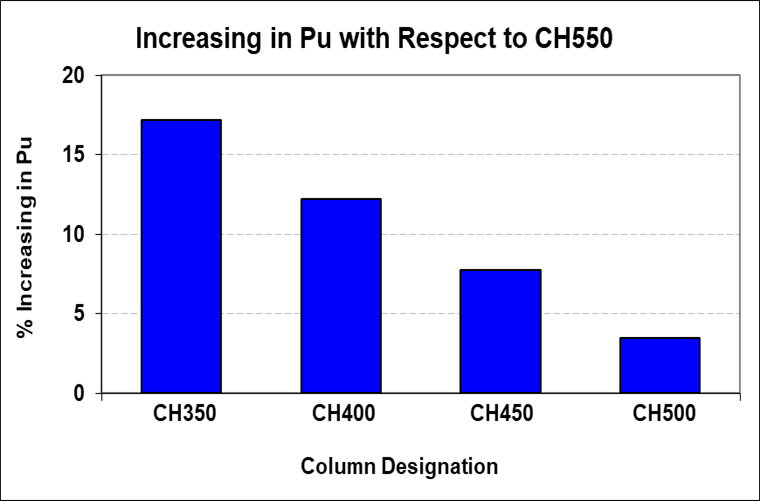
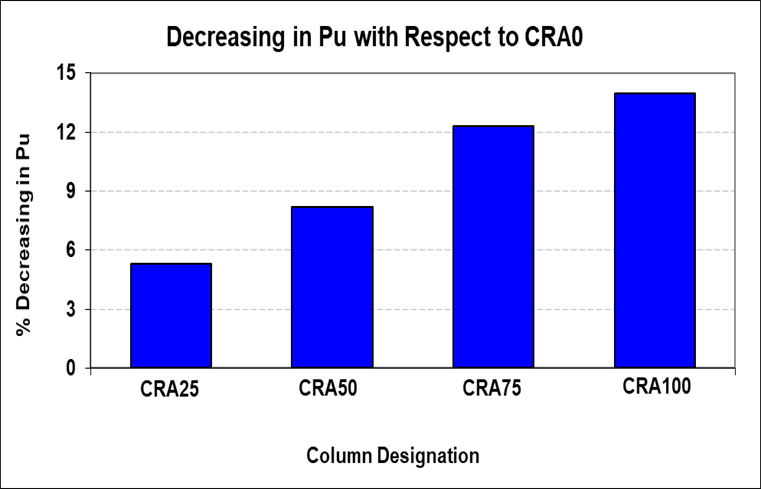
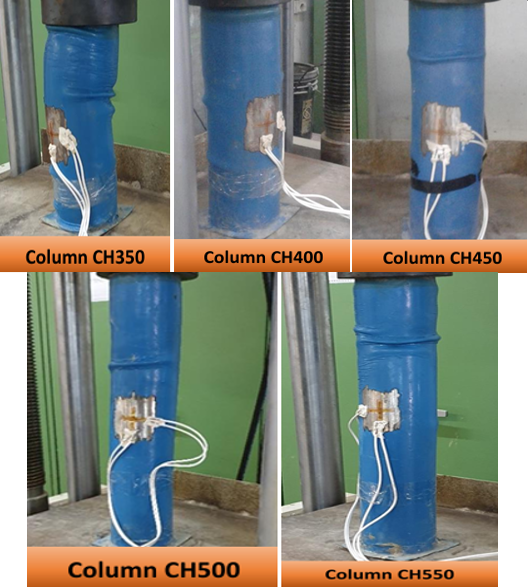
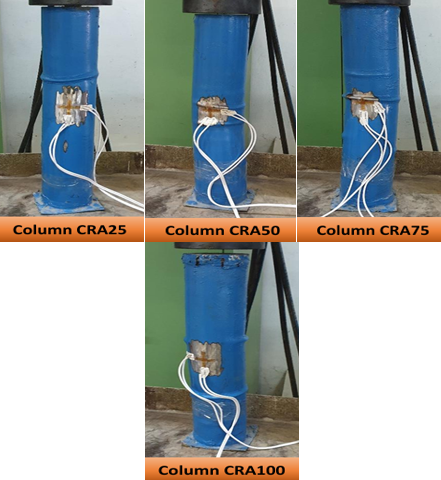
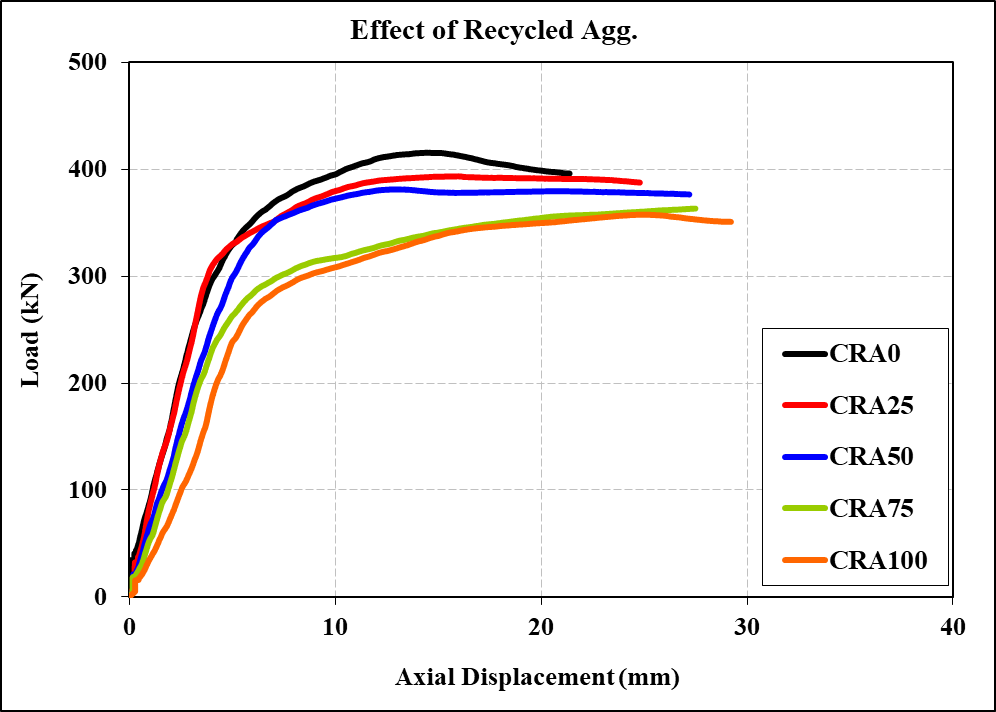
The principal purpose of this research is to examine the ultimate load capacity of steel tubular columns filled with geopolymer concrete. Table 4 and Figure 4 show the ultimate load capacity of steel tubular columns. Results from using different column heights (CH350, CH400, CH450, and CH500) showed ultimate load capacities of 17.2%, 12.2%, 7.7%, and 3.5%, respectively, compared with the control column (CH550). These results are consistent with a previous study by Fahmy et al. [15], which concluded that the ultimate compressive load capacity decreases with increasing column height. The results were due to the shorter columns having higher ultimate loads because of reduced buckling potential and more effective confinement in the tubes. While the results obtained from using different percentages of replacement of NCA by RCA (CRA25, CRA50, CRA75, and CRA100) showed a decrease in ultimate load capacity of (5.3, 8.2, 12.3, and 14%), respectively, over the control column CRA0. These results are consistent with a previous study by Shi et al. [20], which concluded that the ultimate compressive load capacity decreases with increasing replacement of NCA by RCA. The results of this study showed that RCA contains more cracks and old mortar, which led to weaker geopolymer concrete and lower stiffness, resulting in a decrease in the ultimate load capacity of steel tubular columns filled with it compared to those filled with NCA. Figure 5 shows the failure modes of steel tubular columns.
Table 4. Ultimate load of steel tubular columns
|
|
Name of Specimens |
Height (mm) |
Percentage of Recycled Concrete Aggregate (RCA) in Geopolymer Concrete (%) |
Pu (KN) |
Percentage of Increase in Ultimate Load (%) |
|
Group one |
CH350 |
350 |
0 |
470.0 |
17.2 |
|
CH400 |
400 |
0 |
450.0 |
12.2 |
|
|
CH450 |
450 |
0 |
432.0 |
7.7 |
|
|
CH500 |
500 |
0 |
415.0 |
3.5 |
|
|
CH550 |
550 |
0 |
401.0 |
Reference |
|
|
|
Name of Specimens |
Height (mm) |
Percentage of (RCA) in Geopolymer Concrete (%) |
Pu (KN) |
Percentage of Decrease in Ultimate Load (%) |
|
Group two |
CRA0 |
500 |
0 |
415.0 |
Reference |
|
CRA25 |
500 |
25 |
393.0 |
5.3 |
|
|
CRA50 |
500 |
50 |
381.0 |
8.2 |
|
|
CRA75 |
500 |
75 |
364.0 |
12.3 |
|
|
CRA100 |
500 |
100 |
357.0 |
14.0 |
Figure 4. Ultimate load capacity of steel tubular columns
Figure 5. Failure modes of steel tubular columns
The American Institute of Steel Construction (AISC) [26] suggested that the predicted steel tubular compressive strength capacity can be obtained using the following equation:
PAISC = FyAs + FysrAsr + 0.85 fc' Ac
where,
As: Area of steel section (mm2).
Fy: Steel section yield stress (355MPa in this search).
Asr: Reinforcing bar area (mm2).
Fyr: Reinforcing bars yield stress (MPa).
Ac: Concrete area (mm2).
f'c: Concrete compressive strength (25 MPa in this study).
And if we apply our search results, the predicted strength is a constant value for all specimens and equal to (PAISC = 394.41 KN). Since standard AISC equations do not specifically account for RCA replacement rates or slight variations in the slenderness ratio, and assume the use of conventional concrete rather than geopolymer concrete, estimates based on the standard code remain identical for all tested configurations. To bridge this gap—specifically regarding the evaluated dataset—and without defining a general design equation, a study-specific adjustment factor (K) was employed to calibrate the basic AISC equation, resulting in the proposed equation:
Pproposed = K * PAISC
where,
K = 1.5 – 0.0009H – 0.153 (RCA).
H: Height of column steel tubular (mm).
RCA: Recycled concrete aggregate (for 25%, equal to 0.25 and so on).
Table 5 explains the experimental, AISC, and proposed ultimate loads of all specimens.
Table 5. Experimental, American Institute of Steel Construction (AISC), proposed ultimate load
|
Name of Specimens |
PAISC (KN) |
K |
Pproposed (KN) |
Pexp (KN) |
(Pexp / Pproposed) |
|
CH350 |
394.41 |
1.19 |
469 |
470 |
1.00 |
|
CH400 |
394.41 |
1.14 |
450 |
450 |
1.00 |
|
CH450 |
394.41 |
1.10 |
434 |
432 |
1.00 |
|
CH500 |
394.41 |
1.05 |
414 |
415 |
1.00 |
|
CH550 |
394.41 |
1.01 |
398 |
401 |
1.01 |
|
CRA0 |
394.41 |
1.05 |
414 |
415 |
1.00 |
|
CRA25 |
394.41 |
1.01 |
398 |
393 |
0.99 |
|
CRA50 |
394.41 |
0.97 |
383 |
381 |
0.99 |
|
CRA75 |
394.41 |
0.94 |
371 |
364 |
0.98 |
|
CRA100 |
394.41 |
0.90 |
355 |
357 |
1.01 |
3.2 Load–displacement behavior
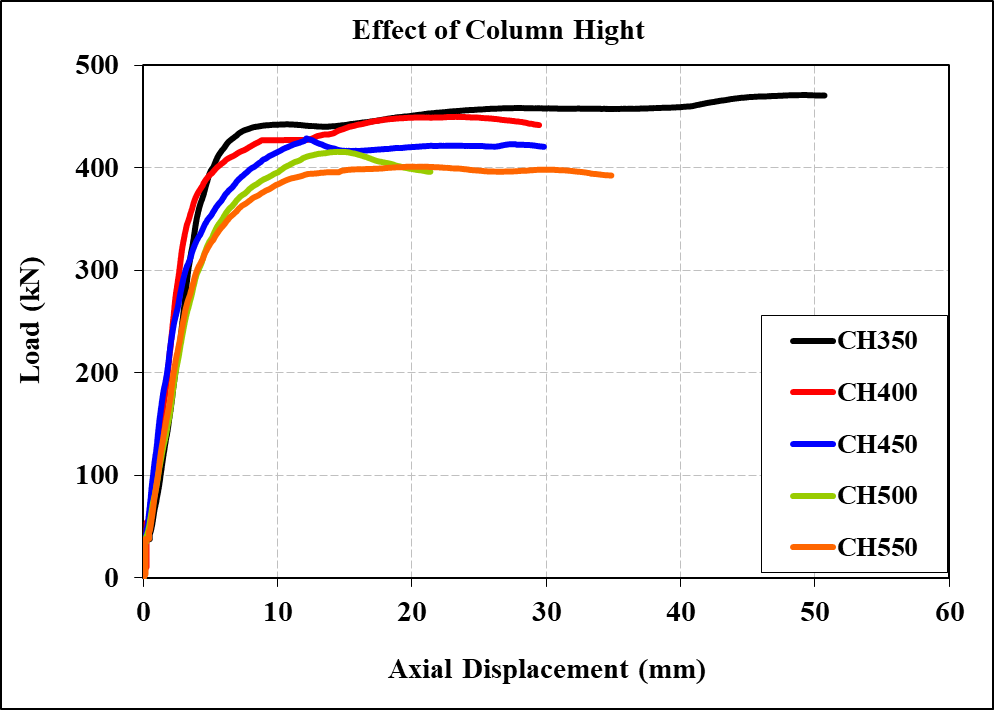
Strain gauges were placed in the parallel direction to the compression load at the mid-height of the columns to measure the column axial displacement. Figure 6 shows the load–axial displacement. For specimens with different height the test results showed typically four load–displacement characteristics: the first is the initial linear region at which the high initial stiffness where showed for the short columns and low with increased columns heights, the second is the transition or yielding region at which yield of steel and expand of geopolymer concrete starts, the third is the ultimate load region at which the ultimate load of short columns is height and decrease when increase the columns height, and fourth is the failure region at which the short columns failure due to local buckling and crushing and when the column height increase the failure tends to global buckling. For specimens with different percentage of RCA by NCA the test results showed typically four load – displacement characteristics: the first is the initial linear region at which the high initial stiffness of columns where showed when used low percentage of replacement NCA by RCA and reduced with increased the replacement percentage, the second is the transition or yielding region at which yield of steel and expand of geopolymer concrete starts, the third is the ultimate load region at which the ultimate load of columns is height when used low percentage of replacement NCA by RCA and decrease when increase the replacement percentage, and fourth is the failure region of columns which considered ductile failure when using low percentage of replacement NCA by RCA and tends to brittle or instability failure when increase the replacement percentage.
Figure 6. Load–axial displacement behavior of steel tubular columns
3.3 Environmental limits and the scope of sustainability
Although aggregate-based geopolymer concrete is a promising option for sustainable construction, a realistic assessment of its sustainability requires examining the environmental impacts of its constituent materials. The production of Na2SiO3 and NaOH solutions is an energy-intensive process and a primary source of greenhouse gas emissions during geopolymer production. Furthermore, the heat-curing process (at 90 ℃ for 48 h) requires additional energy—whether electrical or thermal—which affects the net CO₂ savings compared to conventional concrete cured at ambient temperatures. However, life-cycle research in the scientific literature indicates that relying on industrial by-products (as is the case with geopolymer binders) can reduce total CO2 emissions compared to OPC mixtures, provided that curing efficiency is enhanced and activator concentrations are increased. Future research should involve a rigorous life-cycle assessment—from the start of production to the point of delivery—which is vital for accurately identifying these environmental trade-offs.
This search provided an experimental study on the use of environmentally friendly geopolymer concrete with RCA as an alternative to conventional concrete in filled steel tubular columns. The variables in this study include the different column heights and the percentage of NCA values replaced by RCA. From the test results, the following conclusions can be listed:
1. Geopolymer concrete is considered an environmentally friendly material due to reducing the carbon footprint by using sustainable materials like fly ash compared with ordinary concrete.
2. At higher temperatures, the process of polymerization will be complete, which leads to high compressive strength of geopolymer concrete.
3. The filling of a steel tube with geopolymer concrete creates composite action between the compressive strength of geopolymer concrete and the tensile strength of the steel tube, which leads to confining the geopolymer concrete, delaying its crushing and preventing column buckling.
4. The ultimate load capacity of steel tubular columns filled with geopolymer concrete gradually increases as the columns become shorter.
5. The ultimate load capacity of steel tubular columns filled with geopolymer concrete decreased by a reasonable amount when using a higher percentage of RCA.
6. The percentage increase in ultimate load capacity of steel tubular columns ranged from 3.5 to 17.2% when decreasing the column height in comparison with the control column.
7. The percentage decrease in ultimate load capacity of steel tubular columns ranged from 5.3 to 14.0% when increasing the percentage of RCA in comparison with the control column.
8. Due to the practical constraints of testing only a single sample for each parameter, the results of this study should be understood as indicators of behavioral trends; Therefore, it is highly recommended to conduct extensive statistical research and establish broader databases in future studies to facilitate the development of accurate empirical equations and validate them for use in practical design codes.
We extend our thanks and appreciation to all the staff of the Structural Laboratory at Diyala University, College of Engineering.
|
RCA |
Recycled concrete aggregate |
|
NCA |
Natural coarse aggregate |
|
CFST |
Concrete-filled steel tubular |
|
FRP |
Fiber-reinforced polymer |
|
GRC |
Geopolymer recycled concrete |
|
Na2SiO3 |
Sodium silicate |
|
NaOH |
Sodium hydroxide |
|
SP |
Superplasticizer |
[1] Turner, L.K., Collins, F.G. (2013). Carbon dioxide equivalent (CO2-e) emissions: A comparison between geopolymer and OPC cement concrete. Construction and Building Materials, 43: 125-130. https://doi.org/10.1016/j.conbuildmat.2013.01.023
[2] Salman, W.D., Mansor, A.A. (2021). Fibrous geopolymer paste composites for near-surface-mounted strengthening of reinforced concrete beams in flexure. Case Studies in Construction Materials, 14: e00529. https://doi.org/10.1016/j.cscm.2021.e00529
[3] Mohammed Ali, A.A., Al-Darzi, S.Y. (2026). Sustainable behavior of GFRP-reinforced bubble deck slabs under static and repeated loading: An experimental approach. Asian Journal of Civil Engineering, 27(5): 2301-2314. https://doi.org/10.1007/s42107-025-01616-0
[4] Xu, Z., Yu, H., Sun, X., Zhao, M., Hui, D. (2024). Research on mechanical properties and microscopic mechanism of multi-based geopolymer concrete under combined action of pre-curing and nano-silica. Journal of Building Engineering, 97: 110930. https://doi.org/10.1016/j.jobe.2024.110930
[5] Abd, A.N., Salman, W.D., Abdullah, M.A. (2026). Behavior of ferro-geopolymer one way slab panel: Experimental study. IOP Conference Series: Earth and Environmental Science, 1644: 012030. https://doi.org/10.1088/1755-1315/1644/1/012030
[6] Shdeifat, H., Kalfat, R., Al Mihaidi, R. (2024). Fly ash geopolymer paste for NSM CFRP application under elevated temperatures: Material development. Procedia Structural Integrity, 64: 1360-1368. https://doi.org/10.1016/j.prostr.2024.09.372
[7] Batran, T.Z., Ismail, M.K., Serag, M.I., Ragab, A.M. (2024). Cement-free geopolymer paste: An eco-friendly adhesive agent for concrete and masonry repairs. Buildings, 14(11): 3426. https://doi.org/10.3390/buildings14113426
[8] Shah, Q., Khoso, W.A., Umali, M. (2026). Machine learning based prediction and analysis of bond strength between steel reinforcement and geopolymer concrete under cyclic loading for seismic applications: A review. Journal of Infrastructure Preservation and Resilience. https://doi.org/10.1186/s43065-026-00208-9
[9] Collins, F. (2010). Inclusion of carbonation during the life cycle of built and recycled concrete: Influence on their carbon footprint. The International Journal of Life Cycle Assessment, 15(6): 549-556. https://doi.org/10.1007/s11367-010-0191-4
[10] Akbulut, Z.F., Tawfik, T.A., Smarzewski, P., Guler, S. (2025). Advancing hybrid fiber-reinforced concrete: Performance, crack resistance mechanism, and future innovations. Buildings, 15(8): 1247. https://doi.org/10.3390/buildings15081247
[11] Ebrahimzadeh, M., Bazli, M., Azimi, Z., Shakiba, M., Siavoshi, A., Dalivand, A.J. (2026). Postheating compressive behavior of carbon fiber-wrapped, geopolymer concrete-filled GFRP composite tubes after elevated-temperature exposure. Journal of Composites for Construction, 30(3): 04026015. https://doi.org/10.1061/JCCOF2.CCENG-5449
[12] Ren, W., Zhao, O., Wang, Y.H., Deng, R. (2026). Bending-shear interaction in tapered concrete-filled double-skin steel tubular columns with large void ratios. Engineering Structures, 346: 121607. https://doi.org/10.1016/j.engstruct.2025.121607
[13] Salman, W.D., Mansor, A.A. (2020). Confinement of concrete in double skin tubular members under axial compression loads. Asian Journal of Civil Engineering, 22(3): 431-442. https://doi.org/10.1007/s42107-020-00323-2
[14] Baig, M.N., Fan, J., Nie, J. (2006). Strength of concrete filled steel tubular columns. Tsinghua Science and Technology, 11(6): 657-666. https://doi.org/10.1016/S1007-0214(06)70248-6
[15] Fahmy, M.F.M., Abdelwahed, I., Abdelshafy, Z.I. (2025). Comparative study on concrete-filled steel tube, FRP tube, and hybrid FRP-steel tube under the effect of eccentric loadings. Advances in Structural Engineering, 28(13): 2557-2577. https://doi.org/10.1177/13694332251334827
[16] He, L., Khadka, B., Sun, X., Li, M., Jiang, J. (2022). Compressive strength of rammed earth filled steel tubular stub columns. Case Studies in Construction Materials, 17: e01379. https://doi.org/10.1016/j.cscm.2022.e01379
[17] Al-Abbas, B., Rasoul, Z.M.A., Hasan, D., Rasheed, S.E. (2023). Experimental study on ultimate strength of steel tube column filled with reactive powder concrete. Civil Engineering Journal, 9(6): 1344-1355. https://doi.org/10.28991/cej-2023-09-06-04
[18] Adeleke, B.O., Kinuthia, J.M., Oti, J., Pirrie, D., Power, M. (2024). Mechanical and microstructural investigation of geopolymer concrete incorporating recycled waste plastic aggregate. Materials, 17(6): 1340. https://doi.org/10.3390/ma17061340
[19] Hui, C., Zhang, J., Cao, Y., Chen, X., Hai, R. (2025). Repeated axial compressive performance of GCFST columns: Test investigation and numerical analysis. Scientific Reports, 15(1): 1-12. https://doi.org/10.1038/s41598-025-86516-8
[20] Shi, X., Wang, Q., Zhao, X., Collins, F.G. (2015). Structural behaviour of geopolymeric recycled concrete filled steel tubular columns under axial loading. Construction and Building Materials, 81: 187-197. https://doi.org/10.1016/j.conbuildmat.2015.02.035
[21] Mohammed, T.J., Saeed, I.A. (2018). Production of geopolymer concrete from local materials. Kufa Journal of Engineering, 9(4): 174-186. https://doi.org/10.30572/2018/kje/090412
[22] Li, Z., Sheikh, M.N., Feng, H., Hadi, M.N. (2023). Mechanical properties of ambient cured fly ash-slag-based engineered geopolymer composites with different types of fibers. Structural Concrete, 24(2): 2363-2383. https://doi.org/10.1002/suco.202200871
[23] Mahmood, M., Salman, W.D., Mubarak, H.M. (2023). Effectiveness of geopolymer in the strengthening of RC beams using bottom NSM reinforcements. Asian Journal of Civil Engineering, 24(7): 2451-2465. https://doi.org/10.1007/s42107-023-00654-w
[24] American Concrete Institute. (2025). Building Code Requirements for Structural Concrete (ACI 318-25) and Commentary. American Concrete Institute, Farmington Hills, MI.
[25] Portolés, J., Romero, M., Bonet, J., Filippou, F. (2011). Experimental study of high strength concrete-filled circular tubular columns under eccentric loading. Journal of Constructional Steel Research, 67(4): 623-633. https://doi.org/10.1016/j.jcsr.2010.11.017
[26] American Institute of Steel Construction. (2010). Steel Construction Manual. American Institute of Steel Construction, Chicago, IL.