Haneen J. Kadhim* | Ammar A. Muttar
© 2026 The authors. This article is published by IIETA and is licensed under the CC BY 4.0 license (http://creativecommons.org/licenses/by/4.0/).
OPEN ACCESS
Sulfate and chloride environments have a deteriorating influence on concrete, as ions infiltrate concrete capillaries and microcracks, reducing its durability. This research assesses the durability of concrete with partial cement replacement by green glass powder at 10, 20, and 30% and 1% high-range water-reducing admixture, exposed to chloride and sulfate ions, with a focus on exposure age. Specimens were water-cured for 28 days, partially immersed in aggressive ion solutions, and tested at immersion ages up to 90 days to better represent service conditions. Performance is a function of age of exposure and replacement percentage. The optimum mix containing 20% green glass powder showed a consistent improvement over the reference mix, such as the compressive strength at 90 days of maturation was 66.8 MPa, which is 31.45% higher than the 50.8 MPa for the reference mix, and the splitting tensile strength was 6.41 MPa, which is 79% greater than the 3.58 MPa for the reference mix. These improvements in durability characteristics were also significant, as water absorption dropped from 0.6 to 0.13%, while initial surface absorption at 60 min decreased from 18 ml/m²·s ×10⁻² to 1.0 ml/m²·s ×10⁻², and permeability decreased from 31.5 mm to 22 mm. X-ray diffraction (XRD) and scanning electron microscopy (SEM) demonstrate that the improvements mentioned above are due to the pozzolanic properties of the finely ground green glass powder, which led to pore effects and reduced pore connectivity. The results show that the most effective compromise in terms of durability improvement, sustainable reduction of cement under aggressive chloride–sulfate exposure, is obtained when the replacement ratio is set at 20%.
durability, glass powder, sulfate attack, chloride attack, sustainable concrete
The environments surrounding concrete contain various aggressive ions that affect its properties and durability throughout the structure's life cycle [1]. Under harsh conditions, concrete faces numerous challenges due to expansion and the deterioration of reinforcing steel caused by salt penetration [2]. Expansion is considered the most dangerous type of damage, especially in the presence of sulfates, where etherification occurs, generating additional stresses within the concrete. These ions are found in saline soils, groundwater, and seawater, where they can penetrate the fine pores of the concrete matrix, leading to a gradual deterioration of important concrete properties [3]. The most significant aggressive salts are sodium chloride (NaCl), calcium chloride dihydrate (CaCl₂·2H₂O), and magnesium sulfate hepta-hydrate (MgSO₄·7H₂O), each affecting concrete properties differently, particularly conventional concrete [4]. Moreover, continuous exposure to these harmful ions enables them to penetrate the concrete matrix, affecting the compressive strength of the concrete as well as other mechanical properties [5]. Structural concrete elements located in the splash zone may be exposed to severe deterioration [6]. The parts of the structure that remain fully submerged are rarely subject to steel corrosion, but may be susceptible to chemical attack. The atmospheric zone will dry out, thus encouraging the upward movement of salt-laden moisture from the saturated portion by capillary action [7]. Therefore, modified concrete must be adopted for this purpose and meet sustainable concrete requirements. Sustainable concrete is used to reduce environmental impact by minimizing the consumption of natural resources and harmful carbon emissions, while maintaining the strength and durability of the concrete structure throughout its life cycle [8]. The cement industry consumes a large amount of energy and is responsible for approximately 5-8% of global CO2 emissions [9, 10].
One of the primary objectives of sustainable concrete is to reduce the use of raw materials and decrease the amount of cement used in various types of concrete by using alternative raw materials with high-range water reducing admixture (HRWRA), while simultaneously improving the overall performance of the concrete and reducing maintenance requirements [11, 12]. In recent years, it has been found that one of the most important methods for producing sustainable concrete is the partial replacement of cement or aggregates with locally sourced waste, thus supporting environmental and economic sustainability goals [13, 14]. One of the most prominent materials that has received widespread attention is waste glass, due to its large quantities and high silica content, which offers promising benefits when combined with concrete components [15, 16]. In most countries, glass waste presents a significant challenge due to the large quantities used in various applications, generating thousands of tons of waste annually that remains in landfills and is non-biodegradable due to its chemical composition [17, 18]. Glass waste has been used as a powder in concrete mixes to meet both environmental and economic requirements [4]. In addition, the high percentage of amorphous silica, calcium oxide, and several kinds of iron oxides are the most important chemical components of glass in general, making glass powder effective in pozzolanic reactions during the hydration process of concrete mixes [19, 20]. To achieve the pozzolanic activity, glass powder must have a particle size of less than 150 µm in order to exhibit pozzolanic activity, unlike larger particles that are considered filler material and may be affected in the long term by external conditions [21].
Previous studies have investigated the possibility of developing environmentally friendly concrete with good sulfate resistance. Alsadey and Omran [22] assessed the impact of adding different ratios of HRWRA on the mechanical properties of sustainable concrete containing recycled coarse aggregate. The experimental work involved four concrete mixes with HRWRA concrete of 0, 0.8, 1, and 1.2% by weight of cement. The findings showed that the optimal concrete mix with 0.8% HRWRA ensures balanced performance and achieves the highest compressive strength of 44.7 MPa. Moreover, Omer et al. [23] studied the effect of adding HRWRA at different waste glass powder ratios, up to 2% by weight of binder, on the mechanical properties of normal concrete. The experimental test included the flowability, density, and compressive strength over 28, 56, 90, and 365 days. The results showed that the optimal ratio for HRWRA was 1% to get the highest behavior for concrete specimens at 28 and 56 days, whereas the results at 90 and 365 days showed better behavior with HRWRA of 2%. Finally, the study recommended adopting HRWRA to develop the strength and durability of concrete. Furthermore, Khalil et al. [24] investigated the properties of concrete with partial replacement of white recycled glass powder with ratios of 10, 15, 20, 25, and 30% by weight of cement. The experimental tests were compressive strength, flexural strength, splitting tensile strength, and modulus of elasticity. The results showed that a glass powder content of 15% achieved optimal values of 13, 34, 36, and 8%, compared with the reference concrete. Additionally, Su and Xu [25] studied the impact of replacing 20% of the cement with white glass powder (40 µm) on the properties of concrete. The experimental results showed that the workability increased while the absorption decreased for the glass powder concrete. An improvement in compressive strength of about 25% was observed for glass powder concrete compared with the reference concrete. In conclusion, the study recommended glass powder as a sustainable replacement for cement to achieve eco-friendly concrete. Furthermore, Rajendran et al. [26] partially replaced cement with glass powder at 5, 10, 15, 20, and 25%. The experimental tests were compressive strength, splitting tensile strength, and flexural strength at ages of 7 and 28 days. The outcomes showed that a 20% glass powder content was the ideal ratio to achieve the highest compressive strength of 22 MPa, flexural strength of 3.23 MPa, and splitting strength of 4.22 MPa at 28 days. Mathu and Chhipa [27] evaluated the effect of replacing glass powder with cement, then exposed the concrete specimens to sulfate attack at different ages up to 90 days. The study aims to calculate the compressive strength of concrete at glass powder ratios of 0.2, 0.4, 0.6, 0.8, and 1%. The experimental results indicate that adding glass powder reduces the effect of sulfate on the properties of sustainable glass concrete. Kadhum et al. [1] studied the impact of adding pozzolanic materials on the mechanical properties and durability of concrete, as well as the resistance of green concrete to various aggressive ions. Silica fume was used in this study with ratios of 3, 5, and 7% as a replacement for cement to investigate the strength of concrete, porosity, and total absorption. The specimens were cured for 28 days and then exposed to 5% NaCl with 2% calcium chloride, 5% sodium sulfate, and 5% NaCl with both 2% calcium chloride and 5% sodium sulfate. The compressive strength results at 28 days were improved by ratios of 14, 32, and 31% when compared with the reference mixture. For 90 days and 180 days, the specimens were exposed to aggressive conditions; the compressive strength improvement results were 8, 24, and 21% and 15, 31, and 24%, respectively, compared with the reference mixture. Also, it was observed that the other properties followed the same trends of improvement, and the ideal ratio for pozzolanic replacement was 5%. On the other hand, experimental results showed that the chloride solution had a lesser impact than the sulfate solution on the properties of green concrete. Therefore, the study recommended adding pozzolanic materials into concrete mixtures to resist sulfate attack and maintain acceptable properties of concrete. Moreover, Wang et al. [28] evaluated the behavior of waste glass powder concrete under aggressive ions (3.5% NaCl combined with accelerated carbonation). Concrete specimens with varying glass powder ratios were tested to evaluate the compressive strength, permeability, and microstructure. The outcomes proved that using waste glass led to an enhanced long-term strength of approximately 15% compared with specimens without waste glass, as well as an interfacial transition zone within the concrete matrix. A comprehensive experimental study of the durability of concrete with glass powder in an aggressive environment, including chloride penetration and exposure to sulfates, was carried out by Zidol et al. [29]. Mixtures with varying water-to-binder ratios and partial cement substitution with glass powder were assessed in the study. The findings showed a remarkable decrease in chloride ion permeability in mixes characterized by an approximate proportion of 20% glass powder, with a reduction of up to 25% in chloride migration relative to the reference mix.
Moreover, sulfate resistance was significantly enhanced, as expansion values were lower and mass loss was reduced after long exposure to the sulfate solutions. The authors noted that the addition of glass powder further refined the pore structure and decreased capillary porosity, thereby restricting the uptake of aggressive ions. Furthermore, the glass powder mixes were found to be as durable as, or more durable than, traditional supplementary cementitious materials, even at higher water-binder ratios, indicating their efficiency as a sustainable substitute. Similarly, Barbhuiya et al. [30] examined the effect of the finely ground waste glass powder on the durability properties of concrete in aggressive environments, such as chloride and sulfate attack. The experiment showed that the amount of glass powder incorporated in the experiment had a significant effect in lowering water permeability and chloride ion penetration, with the reported decreases in chloride ingress of about 20–30% at optimal replacement levels. Also, concrete specimens placed in a sulfate solution demonstrated high resistance to sulfate-induced expansion and surface degradation, which suggested greater chemical stability. Microstructural examination revealed a more compact cementitious network with lower porosity and enhanced packing density, attributed to the pozzolanic reaction of glass powder, which caused the creation of more calcium silicate hydrate (C-S-H) gel and decreased calcium hydroxide. These advancements led to improved long-term stability and resistance to aggressive ion transport, which validates the appropriateness of glass powder for long-lasting and sustainable concrete applications.
This study provides a methodical assessment of the durability of the concrete containing green glass powder as a partial cement substitute in combined chloride and sulfate attack. Concrete mixes that were prepared were five: a reference mix, a mix that contained HRWRA, and three mixes with 10, 20 and 30% of glass powder. The specimens were air-dried after 28 days of water curing and, to some extent, half-immersed in aggressive salt solutions to a half-depth exposure environment. Durability performance was evaluated at various ages, 3, 7, 28, 60 and 90 days, using compressive strength, splitting tensile strength, permeability, water absorption, and the initial surface absorption test. This study is important since it will assess the overall impact of multi-ion exposure on concrete durability and determine the contribution of green glass powder in enhancing chloride and sulfate ingress resistance, pore structure, and mechanical integrity, and thus lead to the development of sustainable and durable concrete in aggressive environments. Although there has been a significant amount of research on glass powder concrete, most previous studies have focused on either mechanical properties under normal cure or exposure to only one type of aggressive agent. The combined influences of chloride and sulfate ions on the durability of green glass powder-incorporated concrete remain underexplored. Very few studies have investigated the combined effect of chloride and sulfate ions on the durability of green glass powder-incorporated concrete under partial immersion conditions, similar to realistic field exposure. In view of this, the purpose of this study is to address this gap by considering the mechanical and durability properties of green glass powder concrete under combined chloride-sulfate attack at various exposure ages.
3.1 Raw materials
Sustainable concrete produced from a mixture of ordinary Portland cement type Ⅰ meeting the IQS No.5 [31] for chemical and physical properties, AL-Ekadir Iraqi natural sand used as a fine aggregate with a maximum size of 4.75 mm according to IQS No.45 [32], coarse aggregate with a maximum size of 12.5 mm according to IQS NO.45 [32], water conforming to IQS 1703 [33], HRWRA or high-range water reducing admixture used in this study from the Sika company Viscorete-180 GS, according to ASTM C494 [34].
3.2 Green glass waste powder
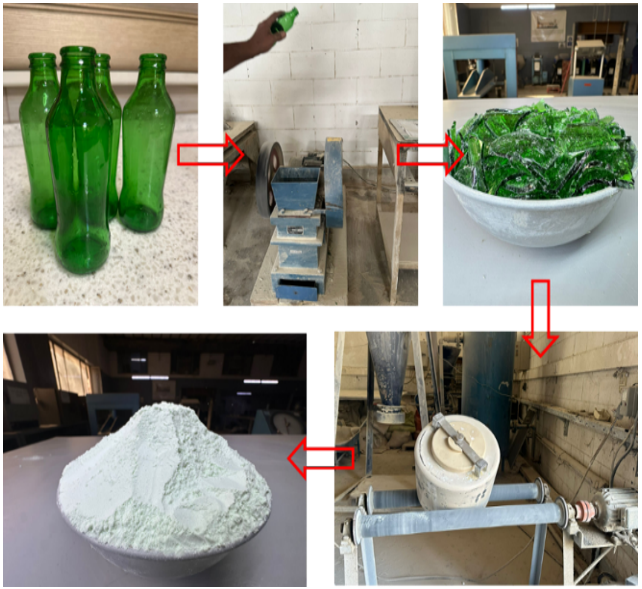
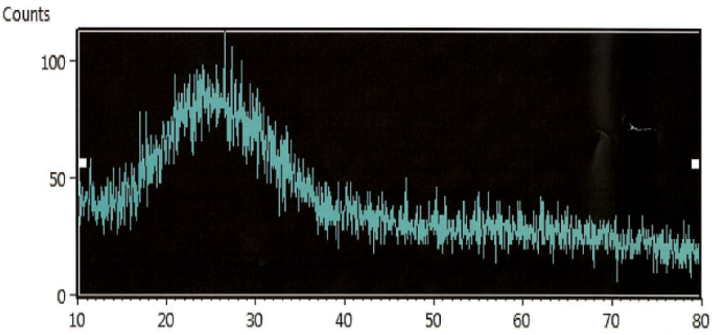
Waste green glass powder was collected from juice glass bottles. It was prepared to function as a supplementary cementitious material due to the high silica content and potential pozzolanic reactivity. The waste glass was cleaned to remove impurities, labels, and organic residues before crushing and grinding. The glass powder was ground until the particles passed a 45 µm sieve and achieved a pozzolanic activity index according to the specification of ASTM C311 [35], leading to potential improvement in the mechanical and durability properties. The chemical and physical properties of glass powder are presented in Tables 1 and 2. Figures 1 and 2 present the process for green glass powder and X-ray diffraction (XRD) analysis of green glass waste powder.
Table 1. The chemical properties of waste green glass powder
|
Oxide Composition |
Oxide Content, % |
Limit of ASTM C618 2023 [36] |
|
SiO2 |
72.00 |
- |
|
AL2O3 |
5.01 |
- |
|
Fe2O3 |
0.58 |
- |
|
SO3 |
0.90 |
≤4% |
|
CaO |
13.79 |
- |
|
MgO |
1.51 |
- |
|
L.O.I |
1.30 |
≤10% |
Table 2. The physical properties of waste green glass powder
|
Physical Properties |
Test Result |
Limit of ASTM C618 2023 [36] |
|
Specific Gravity |
2.5 |
2.2–2.8 |
|
Fineness (Blaine Method) |
3416 cm2/gm |
≥3000 cm2/gm |
|
Bulk Density |
985 kg/m3 |
800–1200 kg/m3 |
Figure 1. The process of producing green glass powder
Figure 2. X-ray diffraction (XRD) analysis for green glass waste powder
3.3 Mix proportion
The concrete mixtures were designed using the Building Research Establishment method. A compressive strength of 40 MPa was the target for all mixes at 28 days. All mixtures were cured in water at a temperature of 23 ± 2 ℃ and a relative humidity of approximately 95%. The W/C ratio of the reference concrete mix to achieve 100 ± 5 is 0.4; then adjustments are made in the other mixtures by using an HRWRA (%) process to keep the acceptable slump for all mixes within 95–105. The other mixes have an HRWRA of 1% by weight of binder and green glass powder with ratios of (0, 10, 20, and 30%) as a replacement for cement. The proportions of concrete mixtures are presented in Table 3. Cement and waste glass powder were mixed, then remixed with sand and aggregate for 1.5 minutes. Water and HRWRA were added to the mixture, then mixed for 2 minutes to ensure the mixture achieves homogeneity. The operation was continued up to 5 minutes to ensure that the pozzolanic material was thoroughly dispersed between cement particles.
Table 3. Proportions of concrete mixtures
|
Mix No. |
Code |
Cement, kg/m3 |
Sand, kg/m3 |
Gravel, kg/m3 |
Glass Powder, wt% of Cement |
HRWRA, wt% of Cement |
Water Reduction, % |
Water-to-Binder Ratio )100 ± 5 mm Slump( |
W, kg/m3 |
Slump, mm |
|
1 |
R |
550 |
610 |
951 |
0 |
- |
- |
0.40 |
219.0 |
95 |
|
2 |
HRWRA |
550 |
610 |
951 |
0 |
1 |
20.0 |
0.32 |
176.0 |
103 |
|
3 |
G10%-HRWRA |
495 |
610 |
951 |
10 |
1 |
12.5 |
0.35 |
173.2 |
100 |
|
4 |
G20%-HRWRA |
440 |
610 |
951 |
20 |
1 |
25.0 |
0.30 |
132.0 |
102 |
|
5 |
G30%-HRWRA |
385 |
610 |
951 |
30 |
1 |
25.0 |
0.30 |
115.5 |
100 |
3.4 Concrete specimens submerged in ion solution
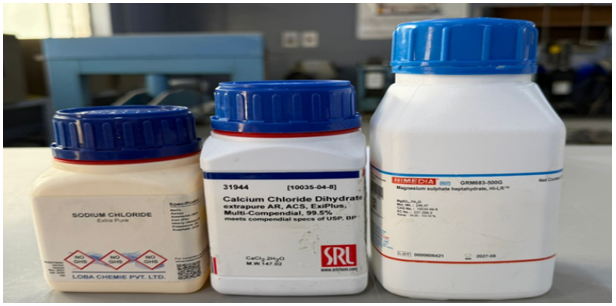
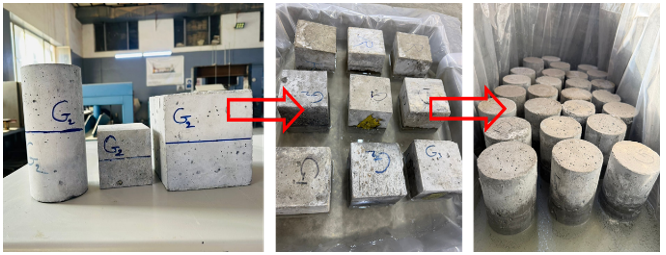
To simulate aggressive ions in the experimental study, specific chemical salts were selected and used as constituents for solution preparation. They were selected for use after referring to the deterioration agents that cause deterioration in concrete durability, and as shown in Figure 3, they are NaCl, CaCl₂·2H₂O and MgSO₄·7H₂O. All the salts used were of laboratory grade and carefully measured before being dissolved in tap water to ensure uniform and reliable solutions. The specimens were cured for 28 days in tap water followed by 3 days for drying; after that, the specimens were continuously exposed to mixed chloride–sulfate solution for 90 days by half immersion as indicated in Figure 4. Testing was performed at approximately 23 ± 2 ℃ in the lab and the pH was not tracked throughout the testing period. The solution was not renewed or replaced during exposure; however, any small loss that may occur as a result of evaporation was made up for by adding water to maintain a constant immersion level. It may have been a slight variation in ion concentration in the long-term exposure procedure, which should be taken into account as a limitation of the present work. The analysis of groundwater reported by the National Center for Geological Surveying and Mines in the southern parts of Iraq reveals that the level of chloride ions exceeds 20,000 ppm and the level of sulfate exceeds 5,000 ppm. The cation concentrations were 10,000–20,000 ppm for sodium, 1,500–2,000 ppm for magnesium, and 1,000–1,500 ppm for calcium, as presented in Table 4.
Figure 3. Salts and ions used in the experimental work
Figure 4. Partially submerged specimens at half depth
Table 4. Type and concentration of salts and ions used in the curing solution
|
Type of Salt |
Concentration |
Salt Content% by Weight of Curing Solution |
Cl⁻ + SO₄²⁻ Solution |
||||
|
ppm |
gm/L |
Anions |
Cations |
||||
|
Type |
Concentration, ppm |
Type |
Concentration, ppm |
||||
|
NaCl |
50839.50 |
50.84 |
5.10 |
Cl⁻ |
33495.8 |
Na ++ |
20000 |
|
CaCl₂·2H₂O |
5501.42 |
5.50 |
0.55 |
SO₄²⁻ |
6912.0 |
Ca ++ |
1500 |
|
MgSO₄·7H₂O |
17734.66 |
17.74 |
1.77 |
- |
- |
Mg ++ |
1750 |
The results of the experiments are presented in this section. The values are the average of three specimens for each concrete mix, for each exposure age.
4.1 Compressive strength
The compressive strength data in Table 5 and Figure 5 demonstrate the durability of the investigated cubic concrete samples with dimensions of 100 × 100 × 100 mm in aggressive chloride-sulfate environments, according to BS EN 12390 [37]. The specimens were cured for 28 days in water, then half immersed in salt solution and tested at various exposure ages (3, 7, 28, 60, and 90) days to mimic actual exposure conditions. Over time, they can gradually penetrate the cement matrix, causing deterioration, swelling, and loss of mechanical properties. But the findings suggest the presence of green glass powder helped to minimise these effects and the loss of compressive strength.
The compressive strength of the reference mix at 28 days (water curing) was 44.5 MPa. The HRWRA, G10%-HRWRA, G20%-HRWRA, and G30%-HRWRA mixes showed increases of 12.36%, 24.49%, 30.34%, and −10.11%, respectively, compared to the reference mix; this is in agreement with the findings of Baikerikar et al. [38]. The better performance of HRWRA and GGP-based mixes can be explained by the improved microstructure, which reduces the pathways for ion transport. The small size of glass powder particles creates a micro-filler effect, improving the particle packing density and reducing the capillary pores.

Table 5. Compressive strength results of concrete mixtures
|
Code |
Compressive Strength before Exposure to the Ion Solution, MPa |
Compressive Strength after Exposure to the Ion Solution, MPa |
||||
|
28 Days |
3 Days |
7 Days |
28 Days |
60 Days |
90 Days |
|
|
R |
44.5 |
46.1 |
47 |
49.5 |
50.1 |
50.8 ± 2.52 |
|
HRWRA |
50 |
53.6 |
55 |
58.1 |
58.9 |
60.1 ± 1.7 |
|
G10%-HRWRA |
55.4 |
56.4 |
58.5 |
60.1 |
60.9 |
61.4 ± 1.9 |
|
G20%-HRWRA |
58 |
59.6 |
62.5 |
65.6 |
66.3 |
66.8 ± 2.13 |
|
G30%-HRWRA |
40 |
47.5 |
49.5 |
51 |
51.7 |
52.1 ± 2.17 |
The compressive strength of the reference mix at 90 days was 50.8 MPa. The HRWRA, G10%-HRWRA, G20%-HRWRA, and G30%-HRWRA mixes achieved increases of 18.31%, 20.87%, 31.49%, and 2.56%, respectively, compared to the reference mix. Moreover, the pozzolanic reaction between the amorphous silica phase in glass powder and calcium hydroxide results in the formation of extra C-S-H gel, which further complicates the pore structure and limits porosity; this is in line with the findings of Ghadban et al. [39]. This reduces the ingress of aggressive ions and the consequent damage, ensuring retention of strength. The better performance of the G20%-HRWRA mix demonstrates that 20% replacement with 1% of HRWRA offers the right balance between decreased permeability and adequate cementitious material for strength development.
This ensures that the matrix is compact enough to impede ion transport and yet sufficient hydration products are formed for strength gain. Conversely, the G30%-HRWRA mix, while improving slightly after exposure, did not perform as well due to the dominant effect of dilution, which decreases the total amount of active binder. In summary, the results indicate that using green glass powder in concrete greatly improves durability by limiting the penetration of chloride and sulfate ions, and maintaining compressive strength even after 90 days of exposure to corrosive conditions. This suggests that green glass powder can be an effective, sustainable material for enhancing concrete durability in severe environments. The experimental result of the improvement in compressive strength is consistent with the previous studies on glass powder concrete. Khalil et al. [24] and Rajendran et al. [26] found that the optimum replacement percentages of 15%–20% gave maximum strength development due to the synergistic combination of the pozzolanic activity of finely ground glass powder. The best performance found for the G20%-HRWRA mixture in the present study agrees with those results.
4.2 Splitting tensile strength
The splitting tensile strength results, which were obtained on cylindrical concrete samples with dimensions of (100 × 200) mm according to ASTM C496 [40], are presented in Table 6 and Figure 6, which show the behavior of concrete mixes with a harsh chloride-sulfate environment under various soaking durations: 3, 7, 28, 60 and 90 days. The experimental findings reveal that the reference mixture showed a modest increase from 3.024 MPa to 3.58 MPa after 90 days of salt treatment, suggesting low resistance to ion ingress and crack development.
Table 6. Splitting tensile strength results of concrete mixtures
|
Code |
Splitting Tensile Strength before Exposure to the Ion Solution, MPa |
Splitting Tensile Strength after Exposure to the Ion Solution, MPa |
||||
|
28 Days |
3 Days |
7 Days |
28 Days |
60 Days |
90 Days |
|
|
R |
3.024 |
3.1 |
3.26 |
3.41 |
3.53 |
3.58 ± 0.38 |
|
HRWRA |
4.203 |
4.25 |
4.41 |
4.46 |
4.53 |
4.6 ± 0.36 |
|
G10%-HRWRA |
4.78 |
4.81 |
4.91 |
4.95 |
4.98 |
5.1 ± 0.3 |
|
G20%-HRWRA |
5.05 |
5.2 |
5.62 |
5.93 |
6.1 |
6.41 ± 0.42 |
|
G30%-HRWRA |
3.8 |
3.89 |
3.91 |
3.99 |
4.1 |
4.51 ± 0.32 |

The splitting tensile strength of the reference mix at 28 days was 3.024 MPa. The HRWRA, G10%-HRWRA, G20%-HRWRA, and G30%-HRWRA mixes showed increases of 38.99%, 58.07%, 67.00%, and 25.66%, respectively, compared to the reference mix; this is in line with the findings of Khalil and Al-Obeidy [41]. Typically, splitting tensile strength is more dependent on microstructural alteration and crack formation than compressive strength, and is a key performance index for durability under aggressive exposure conditions. Chloride and sulfate ion penetration induce stresses and microcracks, resulting in a continuous decrease in tensile strength. On the other hand, the mixes with HRWRA and green glass powder showed a greater resistance to such degradation processes. The mix G20%-HRWRA showed the highest tensile strength at every age of exposure, growing from 5.05 MPa (at time 0) to 6.41 MPa at 90 days. This performance improvement under aggressive conditions demonstrates the capability of this mix to prevent crack initiation and growth, even in the presence of detrimental ions. The improvement in the tensile strength is related to the microstructure of the composite cementitious material when green glass powder is incorporated. The small glass particles act as a micro-filler, enhancing the packing of particles and eliminating porosity, while their pozzolanic activity leads to the consumption of calcium hydroxide and the formation of C-S-H.
The splitting tensile strength of the reference mix at 90 days was 3.58 MPa. The HRWRA, G10%-HRWRA, G20%-HRWRA, and G30%-HRWRA mixes showed increases of 28.49%, 42.46%, 79.05%, and 25.98%, respectively, compared to the reference mix. This results in a more compact and uniform matrix with reduced voids, such as in the interfacial transition zone. This, in turn, reduces the spaces for ion diffusion, reducing the likelihood of microcracks and enhancing the tensile strength. G30%-HRWRA mix demonstrated an improvement over the reference mix; the improvement was less than that achieved for G20%, due to the dilution effect resulting from a high level of cement replacement, which reduces the amount of available binder and the matrix continuity; this is in agreement with the findings of Abbas [42]. Therefore, the findings demonstrate that the use of 20% of green glass powder leads to a remarkable improvement in the concrete durability as a result of the reduced penetration of chlorides and sulfates, as well as fewer microcracks and lower reduction in the tensile strength after 90 days' exposure to aggressive environments. Moreover, other researchers, such as Khalil et al. [24], have also found an improvement in splitting tensile strength when recycled glass powder was added. Results obtained during the present study also confirm the effectiveness of the moderate replacement levels of glass powder for increasing the tensile performance of concrete.
4.3 Absorption
Table 7 and Figure 7 show the water absorption results, which were obtained on cubic concrete samples with dimensions of (100 × 100 × 100) mm according to ASTM C642 [43], which reflect the performance of concrete mixes exposed to severe chloride-sulfate environments at various ages (7, 28, 60 and 90 days). It is an important durability index that reflects the arrangement or orientation and number of capillaries, which govern the ingress of damaging ions into the concrete matrix. The reference mix showed the highest absorption values, ranging from 0.71% at 7 days to 0.60% at 90 days. The high absorption suggests that the microstructure is more porous and has more interconnected capillary structures that allow ingress of chloride and sulfate ions.
The water absorption of the reference mix at 90 days was 0.6%. The HRWRA, G10%-HRWRA, G20%-HRWRA, and G30%-HRWRA mixes showed reductions of 53.33%, 65%, 78.33%, and 50%, respectively, compared to the reference mix; this is in agreement with the findings of Aliabdo et al. [44]. This promotes internal deterioration processes such as microcrack formation and weakening of the cement matrix. By contrast, all modified mixes exhibited reduced water absorption, especially mixes containing green glass powder. The G20%-HRWRA mix showed the lowest values, ranging from 0.22% to 0.13% after 7 and 90 days, respectively. This significant improvement (nearly 78% below the reference mix at 90 days) demonstrates the enhanced resistance of this mix to water and fluid ingress under severe exposure. This improved resistance is related to a combination of the pozzolanic action of the glass powder. The pozzolanic reaction involves the reaction between calcium hydroxide and the formation of C-S-H gel, filling the interior pores and pore refinement.
Table 7. Absorption results of concrete mixtures
|
Code |
Absorption, % |
|||
|
7 Days |
28 Days |
60 Days |
90 Days |
|
|
R |
0.71 |
0.65 |
0.6 |
0.6 ± 0.12 |
|
HRWRA |
0.42 |
0.41 |
0.31 |
0.28 ± 0.06 |
|
G10%-HRWRA |
0.35 |
0.31 |
0.29 |
0.21 ± 0.07 |
|
G20%-HRWRA |
0.22 |
0.2 |
0.19 |
0.13 ± 0.04 |
|
G30%-HRWRA |
0.44 |
0.41 |
0.35 |
0.3 ± 0.05 |

Meanwhile, the glass powder and HRWRA enhance particle packing, leading to a reduction in capillary porosity and pore connectivity. This reduces the flow of ions, and thus the ingress of harmful salts. Also, HRWRA enhances flowability and particle dispersion, leading to improved compaction and fewer air pockets. This results in better dispersion and a denser matrix, especially in the interface transition zone, which is the most vulnerable zone for fluid transport. While the mix containing 30% green glass powder and HRWRA showed a slight decrease in absorption compared to the reference mix, it was still lower than G20%-HRWRA, which is mainly attributed to the dilution effect from excessive cement replacement, which decreases the total binder content and leads to fewer hydration products being formed to densify the matrix. In conclusion, the findings demonstrate that 20% green glass powder is a very promising option in increasing the durability of concrete; this is consistent with the findings of Burgos Cotrina et al. [45], who have reported that the water absorption of glass powder concrete is lower.
4.4 Initial surface absorption
The initial surface absorption test results, which were obtained on cubic concrete samples with dimensions of (100 × 100 × 100) mm, are shown in Table 8 as well as Figures 8-10, as measured at 10, 30 and 60 minutes, offer a holistic assessment of the surface permeability of concrete exposed to chloride-sulfate solutions at various ages (7, 28, 60 and 90) days. The initial surface absorption test measures the rate of water flow per unit area into concrete under constant hydraulic head and over a specific period, and serves as a global measure of the near-surface pore structure and its vulnerability to water ingress. The test was performed according to BS 1881-208 [46], where concrete cube specimens were initially dried in an oven at 105 ± 5 ℃ to a constant weight and then cooled in an airtight container. The water flow across the specimens' surface, through a sealed cap system which was connected to a reservoir and a capillary tube, was measured with precision at varying times. The values are the average of three specimens per mix and exposure duration. The findings show that initial surface absorption values decline over 10–60 minutes, which is related to pore saturation on the surface. Crucially, a steady decrease in initial surface absorption values with exposure age was found for all mixes, implying that the surface microstructural refinement and improvement occur over time under curing and exposure conditions.
Table 8. Initial surface absorption results of concrete mixtures
|
Code |
Initial Surface Absorption (ml/m²·s ×10⁻²) |
|||||||||||
|
7 Days |
28 Days |
60 Days |
90 Days |
|||||||||
|
10 min |
30 min |
60 min |
10 min |
30 min |
60 min |
10 min |
30 min |
60 min |
10 min |
30 min |
60 min |
|
|
R |
49 |
25 |
21 |
45 |
22.9 |
20 |
42 |
21.5 |
18.5 |
38 ± 1.15 |
20.6 ± 1.05 |
18 ± 0.6 |
|
HRWRA |
21 |
14 |
10 |
21 |
12 |
9 |
11 |
10 |
8.2 |
16 ± 0.95 |
8.5 ± 0.5 |
7.1 ± 0.56 |
|
G10%-HRWRA |
12 |
6 |
5 |
10 |
5 |
3.3 |
7.5 |
4.2 |
3 |
6.9 ± 0.6 |
3.1 ± 0.3 |
2.5 ± 0.3 |
|
G20%-HRWRA |
7.1 |
4.4 |
2.1 |
3.5 |
2.8 |
1.5 |
2.9 |
2.2 |
1.1 |
2.3 ± 0.3 |
2 ± 0.2 |
1 ± 0.2 |
|
G30%-HRWRA |
30 |
19 |
17 |
25 |
17.1 |
15.5 |
21 |
14.5 |
13.5 |
19 ± 0.8 |
13.1 ± 0.4 |
13 ± 0.82 |


The initial surface absorption of the reference mix at 7 days (10 min) was 49. The HRWRA, G10%-HRWRA, G20%-HRWRA, and G30%-HRWRA mixes showed reductions of 57.14%, 75.51%, 85.51%, and 38.78%, respectively, compared to the reference mix; this is in line with the findings of Yan et al. [47]. Overall, the G20%-HRWRA mix had the lowest initial surface absorption values at all ages and periods. At 10 minutes, a significant decrease in values was observed from early exposure ages to almost nil values at 90 days; similar trends were observed at 30 and 60 minutes. This confirms the enhanced ability of the mix to resist the entry of surface water and, therefore, harmful ions. The superior performance of G20%-HRWRA may be mainly explained by the densification of the surface layer due to its combination of pozzolanic effects. The glass powder and HRWRA, in the presence of calcium hydroxide, form more C-S-H gel and microfill the voids, thus resulting in a finer-grained and, hence, less connected pore structure. This reduces the fluid and ion transport channels. Moreover, the addition of HRWRA allows for better dispersion and packing of particles, producing a uniformly dense surface, free of flaws, such as in the interfacial transition zone. In contrast, relatively higher initial surface absorption values were observed for the G30%-HRWRA combination, particularly at early ages, reflecting the negative dilution effect of excessive cement replacement caused by reduced available cement for producing a sufficient volume of hydration products for pore refinement.
In summary, the initial surface absorption results clearly show that the use of 20% green glass powder and 1% HRWRA considerably improves the resistance of concrete to surface water absorption in hostile chloride–sulfate environments; this is in agreement with the findings of Nahi et al. [19]. This enhancement in surface impermeability is essential in reducing ion penetration and ultimately enhancing concrete durability and service life.
4.5 Permeability
Water permeability at 90 days of exposure to chloride-sulfate solutions is shown in Figure 11, which was obtained on cubic concrete samples with dimensions of (150 × 150 × 150) mm, indicating the degree of water penetration and thus the resistance of concrete to water and ions. The permeability of the reference mix was 31.5 mm. The HRWRA, G10%-HRWRA, G20%-HRWRA, and G30%-HRWRA mixes showed reductions of 20.63%, 25.08%, 30.16%, and 15.87%, respectively, compared to the reference mix; this is in line with the findings of Islam et al. [48]. All the modified mixes exhibited decreased permeability. The HRWRA mix had a penetration depth of 25 mm, due to increased compaction and reduced void structure. The mixes containing green glass powder, G10%-HRWRA and G20%-HRWRA were 23.6 mm and 22 mm, respectively.
The G20%-HRWRA mix exhibited the lowest permeability, corresponding to a 30.16% reduction relative to the reference mix. This improvement can be attributed to the refinement of the pore structure and reduction in connectivity of the capillaries, thereby reducing the space available for water and ion migration; this is consistent with the results of Siddique et al. [49]. The penetration of chloride and sulfate ions is thus limited, leading to increased resistance to aggressive exposure environments. This becomes more pronounced with a 20% glass powder replacement and 1% of HRWRA, which offers a combination of pore refinement and effective binding. On the other hand, the G30%-HRWRA had a greater water absorption depth of 26.5 mm than G20%-HRWRA, suggesting that excessive cement replacement led to decreased performance. This may indicate that, above 20%, excessive cement replacement could compromise the effectiveness of the binding system. In conclusion, the findings demonstrate that the use of 20% green glass powder and 1% HRWRA effectively reduces water penetration and increases resistance to the penetration of chloride and sulfate ions, thus increasing the durability of concrete. In addition, the permeability values obtained are in line with the results reported by Zidol et al. [29], who showed that chloride transport decreased and concrete durability increased when glass powder was used. The results were reported as the mean of three specimens with standard deviation not exceeding ±1.37 mm. Therefore, it may be inferred that the permeability of the concrete has been reduced compared to the reference concrete, which means that the concrete has become more resistant to aggressive ion ingress.

4.6 X-ray diffraction analysis
The XRD patterns of the reference concrete mixture and the G20%-HRWRA mixture at 90 days are displayed in Figure 12 and Figure 13, respectively. The XRD of the reference mixture exhibits a limited number of crystalline peaks, which correspond to the hydration products and partly amorphous phases of the cementitious matrix.

Figure 12. X-ray diffraction pattern of the reference mixture at 90 days

The G20%-HRWRA mixture, however, presented sharper and more intense peaks, indicating increased microstructural development and the formation of additional hydration products after 90 days. The pozzolanic reaction between the finely ground green glass powder and 1% of HRWRA is responsible for the improvement observed in the G20%-HRWRA mixture. The calcium hydroxide generated from the hydration of the cement reacted with the amorphous silica in the glass powder to form more C-S-H gel. This was secondary C-S-H, which helped to refine the pores, densify the matrix and decrease connectivity across the capillaries. These XRD observations are consistent with mechanical and durability data collected at 90 days. The G20%-HRWRA mixture was found to be stronger and exhibit lower absorption, initial surface absorption, and permeability than the reference mixture. Based on the XRD results, replacing 20% of the cement with green glass powder led to significant improvements in the microstructural stability of concrete after 90 days, and also in resistance to chloride-sulfate attack.
4.7 Scanning electron microscopy
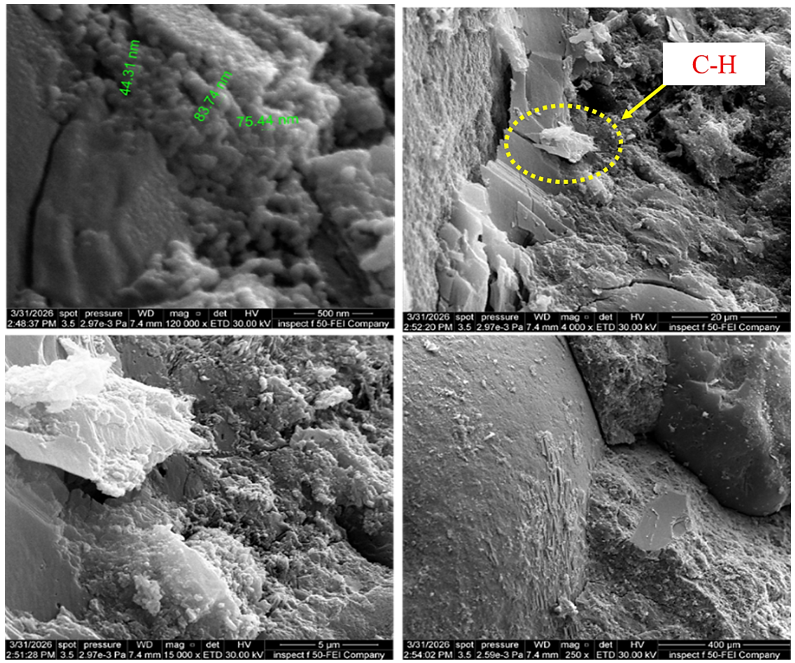
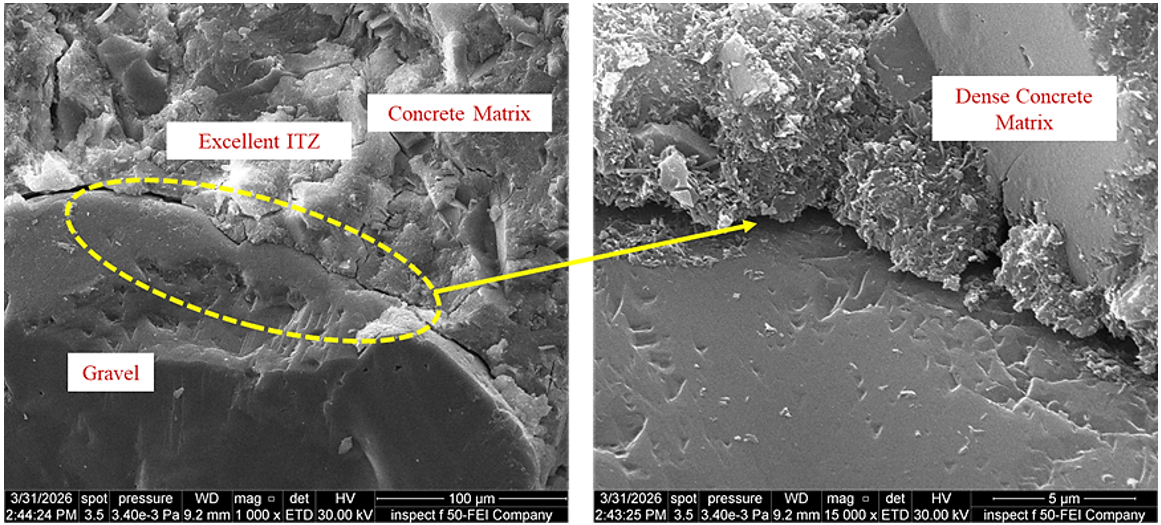
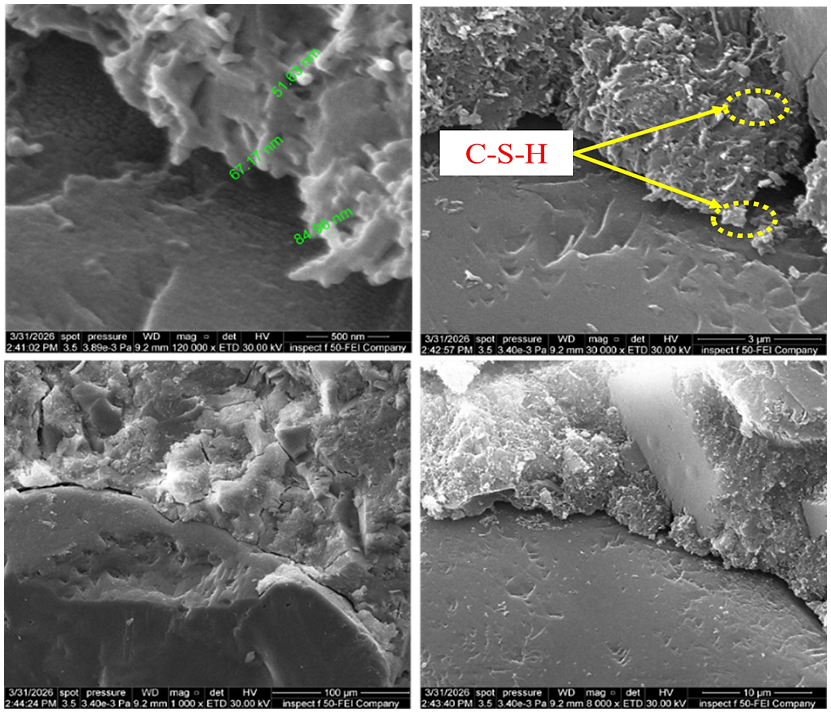
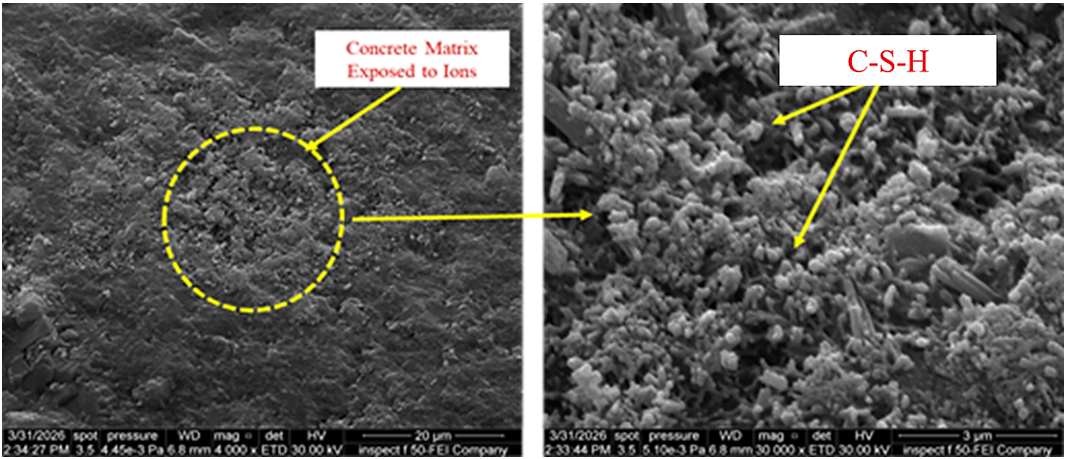
Representative scanning electron microscopy (SEM) micrographs of the reference mixture and G20%-HRWRA mixture at 28 and 90 day intervals are shown in Figures 14-17. The microstructure of the reference mixture after 28 days was rather heterogeneous, characterized by large pores and an uneven distribution of hydration products and plate-shaped crystals, typical of calcium hydroxide formation. In contrast, the G20%-HRWRA mixture exhibited a denser matrix, a more uniform distribution of hydration products, and no visible voids.
Such observations are possible because of HRWRA and the finely ground green glass powder's pozzolanic reactivity and fineness, which provide a filler effect that can affect the continuity of the matrix. After 90 days of exposure to the combined chloride–sulfate solution, the reference mixture became less homogeneous and more discontinuous, with increased pore connectivity—features that facilitate the ingress of water and aggressive ions. The G20%-HRWRA mixture showed a relatively dense structure, and defects were not observed and the hydration products were distributed in a more continuous form in it. This observation indicates a greater ability to maintain microstructural refinement and densification (MRD) upon very corrosive exposure. The experimental durability results are consistent with the SEM observations. The G20%-HRWRA mixture had lower absorption, lower initial surface absorption, lower permeability and higher mechanical strength than the reference mixture.
Figure 14. Scanning electron microscopy (SEM) images for reference mixture cured in water for 28 days
Thus, the enhanced performance is probably due to changes in microstructure resulting from the introduction of green glass powder. It should be noted, however, that the SEM observations presented in this study are qualitative in nature. As such, it should be understood that the proposed mechanisms are shown as indications and further quantitative analysis methods like mercury intrusion porosimetry (MIP) or porosity could be used to confirm the refinement of pores and transport properties directly.
•The compressive strength was 66.8 MPa for the (G20%-HRWRA) mix and 50.8 MPa for the (R) mix at 90 days, and shows an increase of about 31%, suggesting it has high resistance to degradation in the compressive strength in a chloride-sulfate environment.
•For the mix with 20% glass powder, the splitting tensile strength was 6.41 MPa and 3.58 MPa for the reference mix, with almost a 79% increase, showing improved crack resistance in an aggressive environment.
•The absorption was 0.6% for the reference mix and 0.13% for the G20%-HRWRA mix, almost a 78% reduction, indicating a dense or low-porosity structure and low ion penetration.
•The initial surface absorption dropped from 18 for the reference mix to about 1 for the G20%-HRWRA mix in 60 minutes, representing a 94% reduction, which indicates resistance to water absorption.
•The penetration depth reduced from 31.5 mm for the reference mix to 22 mm for the G20%-HRWRA by 30%, indicating good resistance to fluid and ion penetration.
•The use of 20% cement replacement with green glass powder and 1% HRWRA leads to strong, durable concrete with resistance to chloride and sulfate; it showed good mechanical strength and low permeability, thus offering a sustainable solution for concrete structures.
The results of this study are valid for the materials and mixture proportions tested and for exposure conditions where the combined chloride/sulfate attack has not exceeded the maximum exposure period of 90 days. The mechanical, durability, and SEM results revealed that incorporation of green glass powder and HRWRA had beneficial effects. However, this does not exclude results that benefit from the incorporation of green glass powder under other exposure times and environmental conditions. Future research should focus on evaluating the long-term durability of concrete containing green glass powder and HRWRA, as well as assessing the potential alkali–silica reaction (ASR). Furthermore, life-cycle assessment and economic analyses are recommended to determine the sustainability and practical applicability of these materials in large-scale construction projects.
[1] Kadhum, A.O., AL-Ameeri, A.S., Edrees, S.J. (2025). Investigation of the properties of green concrete exposed to different aggressive environments. Journal of Building Pathology and Rehabilitation, 10: 93. https://doi.org/10.1007/s41024-025-00601-z
[2] Kurpinska, M., Haustein, E., Kurpinski, F. (2022). Study of the resistance to influence of aggressive liquids on concrete with lightweight aggregate. In Recent Trends in Chemical and Material Sciences 9: 29-49. https://doi.org/10.9734/bpi/rtcams/v9/6163F
[3] Zhang, M.H., Yao, Z.Q., Gao, M., Wang, H.L. (2025). The effect of chloride ions morphology on the properties of concrete under dry and wet conditions. Sustainability, 17(7): 2884. https://doi.org/10.3390/su17072884
[4] Sivasuriyan, A., Koda, E. (2025). Incorporation of waste glass powder in the sustainable development of concrete. Materials, 18(14): 3223. https://doi.org/10.3390/ma18143223
[5] Salman, M.M., Jarallah, H.K. Al-Bayati, S. (2017). Effect of external sulfate attack on mechanical properties and modeling of hybrid fiber reactive powder concrete. Diyala Journal of Engineering Sciences, 10(3): 121-140. https://doi.org/10.24237/djes.2017.10311
[6] Pushpakumara, B.H.J., Fernando, M.S.G.M. (2023). Deterioration assessment model for splash zone of marine concrete structures. Case Studies in Construction Materials, 18: e01731. https://doi.org/10.1016/j.cscm.2022.e01731
[7] Walsh, M.T., Sagüés, A.A. (2016). Steel corrosion in submerged concrete structures—Part 1: Field observations and corrosion distribution modeling. Corrosion, 72(4): 518-533. https://doi.org/10.5006/1945
[8] Gebremichael, N.N., Jadidi, K., Karakouzian, M. (2023). Waste glass recycling: The combined effect of particle size and proportion in concrete manufactured with waste recycled glass. Construction and Building Materials, 392: 132044. https://doi.org/10.1016/j.conbuildmat.2023.132044
[9] Jin, Z.H., Cui, C.J., Wan, Z.H., Su, Y., He, X.Y., Ma, B.G., Zhi, Z.Z., Chen, S., Wang, B. (2023). Preparation of eco-friendly functional lightweight gypsum: Effect of three different lightweight aggregates. Construction and Building Materials, 400: 132875. https://doi.org/10.1016/j.conbuildmat.2023.132875
[10] Khalaf, H.K., Abdulhussein, S.S., Moyet, A.A., Abbas, I.M., Keblawi, A.Z. (2026). Synergistic effects of fly ash and silica fume on the mechanical and durability performance of metakaolin-based geopolymer concrete. Revue des Composites et des Matériaux Avancés, 36(1): 175-182. https://doi.org/10.18280/rcma.360117
[11] Danish, A., Ozbakkaloglu, T., Mosaberpanah, M.A., Salim, M.U., Bayram, M., Yeon, J.H., Jafar, K. (2022). Sustainability benefits and commercialization challenges and strategies of geopolymer concrete: A review. Journal of Building Engineering, 58: 105005. https://doi.org/10.1016/j.jobe.2022.105005
[12] Abdulhussein, S., Mohd Zahid, M.Z.A., Johari, I.B., Fawzi, N.M. (2025). Characteristics of novel lightweight concrete strengthened by waste copper fiber and steel fiber. Journal of Engineering and Sustainable Development, 29(6): 725-735. https://doi.org/10.31272/jeasd.2969
[13] Amin, M., Elsakhawy, Y., Abu El-Hassan, K., Frahat, N.B. (2025). Optimizing ceramic waste powder ratios for cost and CO2 emission reduction in high-strength concrete to enhance efficiency and sustainability. Sustainable Structures, 5(3): 000081. https://doi.org/10.54113/j.sust.2025.000081
[14] Abdulrehman, M.A., Razak, K.A., Kasim, S.R., Eweed, K.M. (2026). Properties of rice husk ash-based geopolymer slurry-infiltrated fiber concrete with various steel fiber types and contents. Journal of the Australian Ceramic Society. https://doi.org/10.1007/s41779-026-01359-4
[15] Pashtoon, M.I., Miakhil, S., Behsoodi, M.M. (2022). Waste glass powder “an alternative of cement in concrete”: A review. International Journal of Current Science Research and Review, 5(7): 2541-2549. https://doi.org/10.47191/ijcsrr/V5-i7-39
[16] Qayyum, A., Javed, M.F., Asghar, R., Iqtidar, A., Alabduljabbar, H., Khan, M.A., Ali, M. (2024). Promoting the sustainable construction: A scientometric review on the utilization of waste glass in concrete. Reviews on Advanced Materials Science, 63(1): 20240036. https://doi.org/10.1515/rams-2024-0036
[17] Hassani, M.S., Matos, J.C., Zhang, Y.X., Teixeira, E.R. (2023). Green concrete with glass powder—A literature review. Sustainability, 15(20): 14864. https://doi.org/10.3390/su152014864
[18] Soliman, N.A., Tagnit-Hamou, A. (2016). Development of ultra-high-performance concrete using glass powder-Towards ecofriendly concrete. Construction and Building Materials, 125: 600-612. https://doi.org/10.1016/j.conbuildmat.2016.08.073
[19] Nahi, S., Leklou, N., Khelidj, A., Oudjit, M.N., Zenati, A. (2020). Properties of cement pastes and mortars containing recycled green glass powder. Construction and Building Materials, 262: 120875. https://doi.org/10.1016/j.conbuildmat.2020.120875
[20] Abdulhusein, S.S., Johari, I., Fawzi, N.M. (2025). Mechanical properties of sustainable structural aerated-polystyrene concrete. World Journal of Engineering, 22(5): 1018-1028. https://doi.org/10.1108/WJE-01-2024-0047
[21] Bayrak, Ş. (2023). Production and characterization of carbon nanomaterials through microwave treatment of hazelnut shells. Master’s thesis, Dokuz Eylül University.
[22] Alsadey, S., Omran, A. (2022). Effect of superplasticizers to enhance the properties of concrete. Design, Construction, Maintenance, 2: 84-91. https://doi.org/10.37394/232022.2022.2.13
[23] Omer, B., Saeed, N.M., Dheyaaldin, M.H., Jamal, A.S., Kurda, R. (2025). Evaluating the long-term strength of GGBFS-blended cement across various water-to-binder and superplasticizer ratios under heating/cooling cycles. PLoS One, 20(11): e0319923. https://doi.org/10.1371/journal.pone.0319923
[24] Khalil, W., Ahmed, H., Hussein, Z. (2018). Behavior of high performance artificial lightweight aggregate concrete reinforced with hybrid fibers. In MATEC Web of Conferences, EDP Sciences, 162: 02001. https://doi.org/10.1051/matecconf/201816202001
[25] Su, Q., Xu, J.M. (2024). Mechanical properties of rice husk ash and glass powder concrete: Experimental and mesoscopic studies. Journal of Building Engineering, 95: 110278. https://doi.org/10.1016/j.jobe.2024.110278
[26] Rajendran, R., Sathishkumar, A., Perumal, K., Pannirselvam, N., Lingeshwaran, N., Babu Madavarapu, S. (2021). An experiment on concrete replacing binding material as waste glass powder. Materials Today: Proceedings, 47: 5447-5450. https://doi.org/10.1016/j.matpr.2021.06.431
[27] Mathur, M, Chhipa, R.C. (2023). Experimental study on durability of glass modified concrete: Resistance to acid and sulphate attack. International Journal of Advanced Technology and Engineering Exploration, 10(107): 1353-1367. https://doi.org/10.19101/IJATEE.2023.10101037
[28] Wang, H.Z., Wen, B., Xu, P., Zhang, L., Niu, D.T., Berardi, M. (2025). Study on chloride ion diffusion behavior of waste glass concrete under carbonation and chloride corrosion. Case Studies in Construction Materials, 23: e05309. https://doi.org/10.1016/j.cscm.2025.e05309
[29] Zidol, A., Tognonvi, M.T., Tagnit-Hamou, A. (2021). Concrete incorporating glass powder in aggressive environments. American Concrete Institute Materials Journal, 118(2): 43-51. https://doi.org/10.14359/51729326
[30] Barbhuiya, S., Kanavaris, F., Ashish, D.K., Tu, W.L., Das, B.B., Adak, D. (2025). Ground waste glass as a supplementary cementitious material for concrete: Sustainable utilization, material performance and environmental considerations. Journal of Sustainable Cement-Based Materials, 14(7): 1221-1249. https://doi.org/10.1080/21650373.2025.2493719
[31] IQS No.5. (2019). Iraqi specification No. 5. Portland Cement, Ministry of Planning, Central Organization for Standardization and Quality Control.
[32] IQS No.45. (2021). Aggregate for concrete and building. Central Agency for Standardization and Quality Control.
[33] IQS 1703. (2018). Iraqi standard specification for water used for curing concrete and mortar. Central Agency for Standardization and Quality Control.
[34] ASTM C494/C494M-24. (2024). Standard specification for chemical admixtures for concrete. West Conshohocken, PA: ASTM International. https://doi.org/10.1520/C0494_C0494M-24
[35] ASTM C311-16. (2016). Standard practice for sampling and testing fly ash or natural pozzolans for use in portland-cement concrete. West Conshohocken, PA: ASTM International. https://www.astm.org/c0311-16.html.
[36] ASTM C618-23. (2023). Standard specification for coal fly ash and raw or calcined natural pozzolan for use in concrete. West Conshohocken, PA: ASTM International. https://doi.org/10.1520/C0618-23
[37] BS EN 12390-3:2019. (2019). Testing hardened concrete – Compressive strength of test specimens. London, UK: British Standards Institution. Available at: https://knowledge.bsigroup.com/products/testing-hardened-concrete-compressive-strength-of-test-specimens-1.
[38] Baikerikar, A., Mudalgi, S., Ram, V.V. (2023). Utilization of waste glass powder and waste glass sand in the production of eco-friendly concrete. Construction and Building Materials, 377: 131078. https://doi.org/10.1016/j.conbuildmat.2023.131078
[39] Ghadban, R., Kamil, L., Abdulhussein, S., Abdulrehman, M., Flayyih, A. (2026). Sustainable translucent geopolymer concrete based on metakaolin and recycled glass. AIMS Materials Science, 13(1): 80-98. https://doi.org/10.3934/matersci.2026005
[40] ASTM C496/C496M. (2017). Standard test method for splitting tensile strength of cylindrical concrete specimens. ASTM International, West Conshohocken, PA. https://doi.org/10.1520/C0496_C0496M-17
[41] Khalil, W.I., Al-Obeidy, N.F. (2018). Some properties of high strength sustainable concrete containing glass powder waste. Diyala Journal of Engineering Sciences, 11(2): 32-42. https://doi.org/10.24237/djes.2018.11203
[42] Abbas, Y. (2015). In situ measurement of chloride ion concentration in concrete: Integral solution for sustainable construction. University of Twente, Enschede, The Netherlands. https://doi.org/10.3990/1.9789036539913
[43] ASTM C642-21. (2021). Standard test method for density, absorption, and voids in hardened concrete. ASTM International, West Conshohocken, PA. https://store.astm.org/c0642-21.html.
[44] Aliabdo, A.A., Abd Elmoaty, A.E.M., Aboshama, A.Y. (2016). Utilization of waste glass powder in the production of cement and concrete. Construction and Building Materials, 124: 866-877. https://doi.org/10.1016/j.conbuildmat.2016.08.016
[45] Burgos Cotrina, J.A., Cubas Benavides, E.A., García Chumacero, J.M. (2025). Analysis of the combination of glass and polypropylene fibers on the mechanical properties of mortar. Journal of Building Pathology and Rehabilitation, 10(1): 22. https://doi.org/10.1007/s41024-024-00532-1
[46] BS 1881-208:1996. (1996). Testing concrete: Recommendations for the determination of the initial surface absorption of concrete. British Standards Institution.
[47] Yan, P., Chen, B., Afgan, S., Aminul Haque, M., Wu, M., Han, J.X. (2021). Experimental research on ductility enhancement of ultra-high performance concrete incorporation with basalt fibre, polypropylene fibre and glass fibre. Construction and Building Materials, 279: 122489. https://doi.org/10.1016/j.conbuildmat.2021.122489
[48] Islam, G.M.S., Rahman, M.H., Kazi, N. (2017). Waste glass powder as partial replacement of cement for sustainable concrete practice. International Journal of Sustainable Built Environment, 6(1): 37-44. https://doi.org/10.1016/j.ijsbe.2016.10.005
[49] Siddique, R., Kaur, G., Kunal. (2016). Strength and permeation properties of self-compacting concrete containing fly ash and hooked steel fibres. Construction and Building Materials, 103: 15-22. https://doi.org/10.1016/j.conbuildmat.2015.11.044