Yahya Ali Jasim* | Asra Ali Hussein
© 2026 The authors. This article is published by IIETA and is licensed under the CC BY 4.0 license (http://creativecommons.org/licenses/by/4.0/).
OPEN ACCESS
Ultra-high molecular weight polyethylene (UHMWPE) is the dominant bearing material used in total hip arthroplasty. However, its low stiffness and susceptibility to long-term deformation under cyclic loading limit its structural reliability for load-bearing applications. In this study, self-reinforced UHMWPE composites were fabricated by incorporating UHMWPE fibers into a UHMWPE matrix at fiber loadings of 0–40 wt.% using thermo-compression moulding. A systematic assessment was conducted of the effects of fiber loading on the prepared composites, following composite preparation, by examining microstructure, mechanical properties, and tribological performance. Differential scanning calorimetry (DSC) indicated that the addition of moderate levels of 10 wt.% fiber increased the level of crystallinity within the UHMWPE matrix. In contrast, at higher levels, the fiber loading resulted in restricted molecular chain movement, adversely affecting crystalline development. The tensile strength of the composite increased from 33 MPa for the neat UHMWPE to 121 MPa when incorporating 40 wt.% fiber, and likewise, the elastic modulus improved from 0.32 to 2.47 GPa. Similar improvements due to fiber reinforcement were observed for both flexural modulus and impact resistance testing. Conversely, the elongation of the composites decreased with increasing fiber concentration, indicating a transition from matrix-dominated ductility to fiber-dominated stiffness. Tribological performance under dry sliding conditions (40 N, 360 m) was optimal when tested with 20 wt.% fiber, which provided both the lowest wear coefficient (2.67 × 10⁻⁶ mm³/N·m) and the lowest friction coefficient (0.168). These results indicate that the maximum structural reinforcement of the fiber composites occurs at 40 wt.% fiber, although optimal tribological stability occurs at 20 wt.% fiber, indicating the potential for tailoring the fiber loading to match the functional aspects of a specific orthopedic application.
orthopedic composites, hip joint prosthesis, self-reinforced polymer, tribological performance, ultra-high molecular weight polyethylene, acetabular cup
Ultra-high molecular weight polyethylene (UHMWPE) is widely used in orthopedic and engineering applications due to its superior wear resistance, chemical stability, low coefficient of friction (COF), and established biocompatibility [1]. In hip replacement surgeries, UHMWPE has been primarily used for the acetabular cup component of hip implants due to its tribological advantages [2]. However, the low stiffness and tendency of this material to undergo long-term deformation under cyclic physiological loading are major drawbacks for load-bearing applications in orthopedic devices [3]. To overcome the aforementioned limitations, various reinforcement techniques, such as incorporating carbon, glass, and ceramic materials, have been investigated to enhance the stiffness and hardness of UHMWPE [4]. However, the addition of other materials to the polymer matrix can lead to interfacial incompatibility and structural heterogeneity, which are undesirable for biocompatible materials, where long-term material homogeneity and compatibility are vital [5]. Recently, self-reinforced UHMWPE composites, in which the material serves as both the matrix and the fiber, have been developed by embedding UHMWPE fibers in a UHMWPE matrix. Such composites are expected to overcome these limitations of UHMWPE while maintaining material homogeneity [6]. Several studies have demonstrated the potential of self-reinforced UHMWPE composites to enhance selected mechanical properties [7]. However, systematic correlations between microstructure and combined tribological–mechanical performance across a broad range of fiber contents remain limited in the available literature [8].
Many of the previously conducted research studies (on mechanical improvement) have placed significant emphasis on either investigating the isolated improvement of mechanical properties and/or looking at basic microstructural characteristics. As such, no one has attempted to develop an overall framework for evaluating thermal, mechanical, and tribological behaviour concurrently across a systematically varied range of fiber contents. In addition, limited attention has been paid to developing a property-dependent optimization strategy that distinguishes between structural load-bearing enhancement and wear-resistance requirements for orthopedic applications. Therefore, a clear structure–property–performance relationship tailored to hip joint components remains insufficiently defined in the existing literature. With this background, the present work aims to develop self-reinforced composites of UHMWPE with fiber content ranging from 0 to 40 wt.% and to characterize the composites with respect to their microstructural, tribological, and mechanical properties.
UHMWPE powder was used as the matrix, while UHMWPE fibers of the same material served as reinforcement. The fiber content was adjusted to 0, 10, 20, 30, and 40 wt.% to examine how the reinforcement fraction influences the structural, mechanical, and tribological behavior of the resulting composites. For each composition and test, three specimens were evaluated (n = 3), and the reported values represent average measurements.
2.1 Fabrication method
The composites were produced using thermo-compression molding. A steel mold (160 × 100 × 4 mm) was cleaned with acetone before each fabrication cycle. To facilitate demolding, a thin release film was applied to the inner mold surfaces. For the neat material, UHMWPE powder was simply poured into the mold cavity. In the case of fiber-reinforced specimens, a layered arrangement was used. A uniform layer of powder was first spread at the base of the mold, after which the UHMWPE fibers were carefully positioned. A second powder layer was then added to ensure adequate matrix penetration during consolidation. The filled mold was placed in a hot press and consolidated at 145 ℃ under a pressure of 10 MPa for 1 h. At this temperature, the powder softened sufficiently to bond around the fibers and form a compact structure. After pressing, the mold was left to cool naturally to room temperature before the plates were removed. The flow diagram of the fabrication process is shown in Figure 1.
Figure 1. Schematic flow diagram of the fabrication process of self-reinforced ultra-high molecular weight polyethylene (UHMWPE) composites using thermo-compression molding
2.2 Thermal analysis
Melting behavior was evaluated using differential scanning calorimetry (DSC). Approximately 5 mg of each specimen was heated to 300 ℃ at a rate of 10 ℃/min in sealed aluminum pans.
2.3 Chemical and morphological characterization
Fourier transform infrared (FTIR) spectroscopy was used to examine possible chemical changes in the matrix and composites. Surface morphology was observed using field-emission scanning electron microscopy (FESEM).
2.4 Mechanical and tribological testing
Density was measured according to ASTM D792 [9] using Archimedes’ method. Hardness was determined using a Shore D durometer [10]. Tensile and flexural properties were evaluated in accordance with ASTM D638 [11] and ASTM D790 [12], respectively, while impact resistance was evaluated using standard methods for polymer composite testing [13]. Tribological performance was assessed under dry sliding conditions according to ASTM G133 [14], using a 5 mm ceramic counterbody under a 40 N load. Sliding was performed at a 0.10 m/s over a total distance of 360 m. The COF was continuously recorded, and wear volume as well as specific wear rate were calculated.
Research data demonstrate that the inclusion of fiber in self-reinforced UHMWPE composites has profound effects on various composite properties, including thermal, structural, mechanical, and tribological behavior, and how these properties respond to variations in the amount of fiber in the composite. While each mechanical property improved as fiber concentration increased, it did so along distinct paths and reached its optimal level at different levels of reinforcement/fiber content. In addition, fiber additions at low to moderate levels increase crystallinity and wear resistance, whereas at high levels, there is greater improvement in modulus of elasticity, ultimate tensile strength, and impact resistance. These trends indicate that, relative to mechanical performance, tribological performance is primarily dominated by fibers at greater-than-average reinforcement levels, whereas tribological performance is optimized at intermediate fiber levels. These results emphasize the need to select an appropriate fiber content based on the performance requirements of the orthopedic component.
3.1 Differential scanning calorimetry analysis of ultra-high molecular weight polyethylene composites
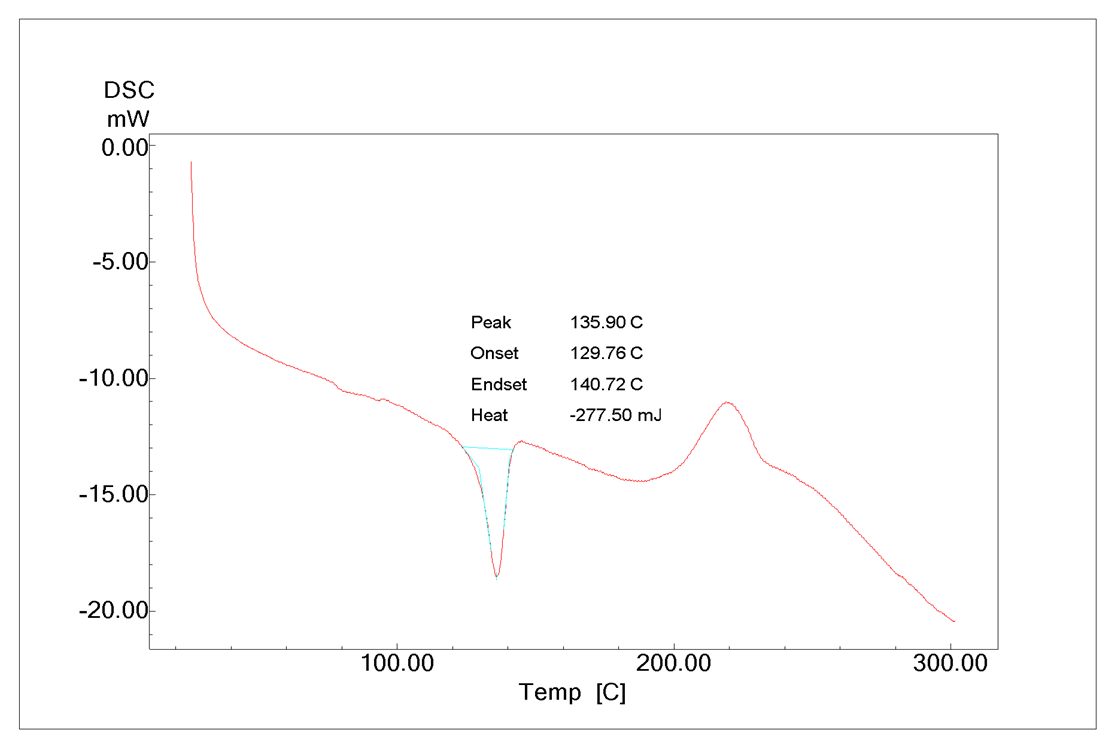
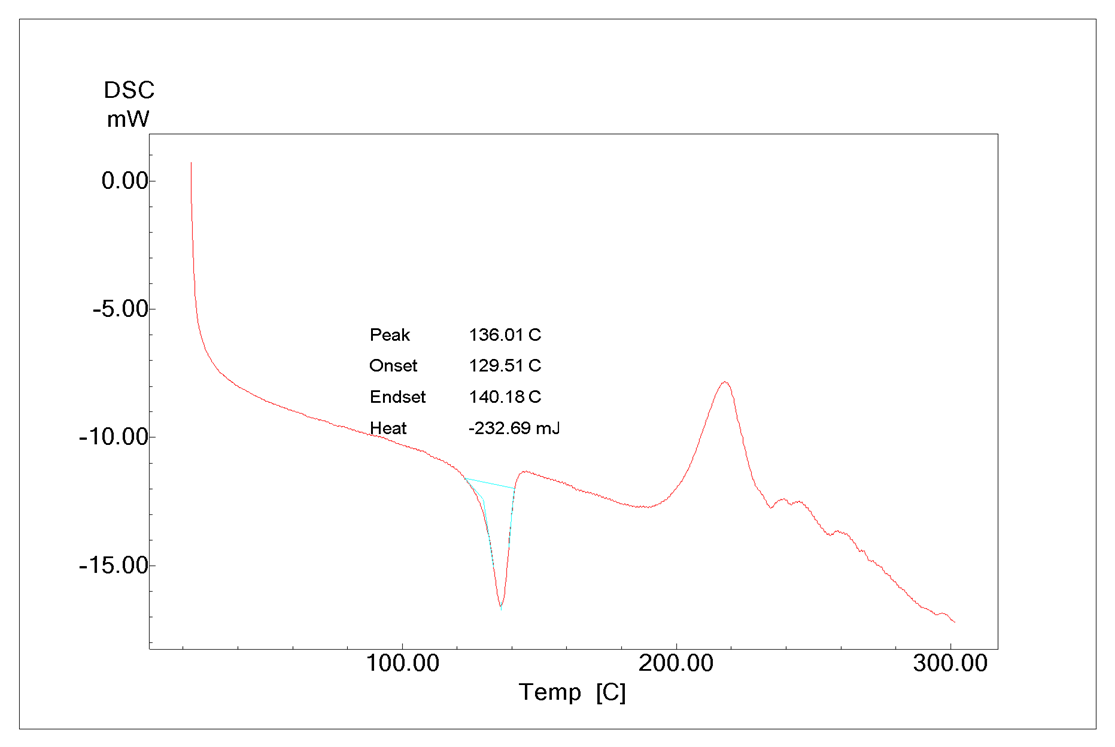
Table 1 summarizes the DSC data obtained for neat UHMWPE and the fiber-reinforced compositions. The pure material exhibits a melting temperature of 143.64 ℃ and a crystallinity of 29.13%, which falls within the expected range for UHMWPE [15]. After adding 10 wt.% fiber, the enthalpy of fusion increases to 117.42 J/g, and the calculated crystallinity rises to 40.08%. This change suggests that a small amount of fiber influences the polymer's solidification. One possible explanation is that the oriented fibers act as physical sites that assist the surrounding chains in forming crystalline regions during cooling [16]. Similar observations have been reported in earlier studies on the self-reinforced UHMWPE system [7]. When the fiber fraction exceeds 20 wt.%, the trend changes. At 30 wt.% and 40 wt.%, the crystallinity decreases to 19.33% and 16.89%, respectively. In these compositions, the higher amount of reinforcement appears to limit chain mobility inside the matrix. With less freedom to rearrange during cooling, the polymer chains cannot form crystals as efficiently. A reduction in crystallinity at high reinforcement levels has also been reported in other studies of thermoplastic composites [17]. The DSC thermograms are presented in Figure 2.
Table 1. DSC results of UHMWPE composites
|
Composite Material |
Tm (℃) |
Hm (J/g) |
Xc (%) |
|
Pure UHMWPE |
143.64 |
85.33 |
29.13 |
|
UHMWPE + 10% fiber |
134.91 |
117.42 |
40.08 |
|
UHMWPE + 20% fiber |
138.38 |
102.07 |
34.84 |
|
UHMWPE + 30% fiber |
135.90 |
56.63 |
19.33 |
|
UHMWPE + 40% fiber |
136.01 |
49.50 |
16.89 |
Note: DSC = differential scanning calorimetry, UHMWPE = ultra-high molecular weight polyethylene, Tm = melting temperature, Hm = enthalpy of fusion, Xc = degree of crystallinity.
(a) DSC of neat UHMWPE
(b) DSC of composite containing 10 wt.% fiber
(c) DSC of composite containing 20 wt.% fiber
(d) DSC of composite containing 30 wt.% fiber
(e) DSC of composite containing 40 wt.% fiber
3.2 Fourier transform infrared analysis of ultra-high molecular weight polyethylene composites
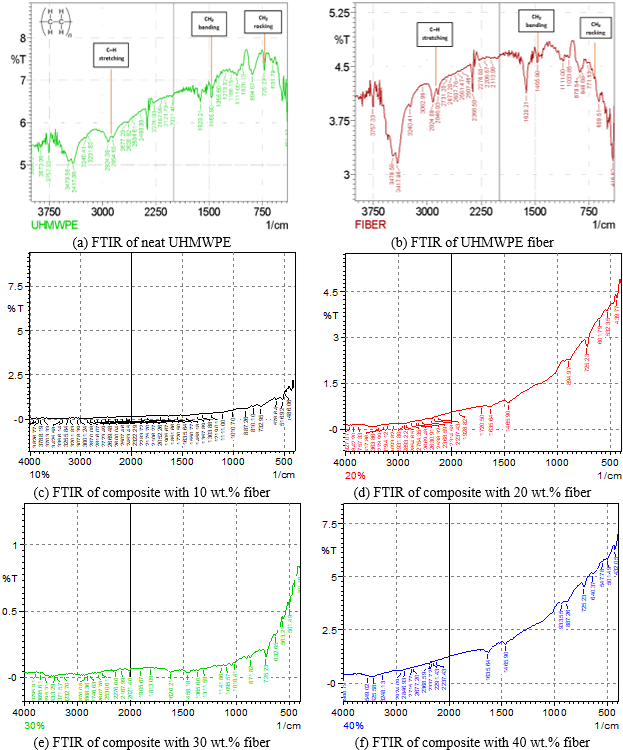
The consistent spectral characteristics suggestive of polyethylene are observed with pure UHMWPE, UHMWPE fiber, and composites with 10%, 20%, 30%, and 40% fiber concentrations. The FTIR spectra are presented in Figure 3. All spectra in the range associated with C–H stretching vibrations show strong absorption peaks: the symmetric stretching of –CH₂– occurs near 2850 cm⁻¹ and the asymmetric stretching near 2920 cm⁻¹. These peaks indicate the presence of methylene groups, which are the most prevalent in the material composition and support long aliphatic chains. Although CH₂ rocking motions generate a sharp peak at around 720 cm⁻¹, CH₂ bending (scissorsing) vibrations cause a medium-intensity peak often seen at about 1460 cm⁻¹. These spectral fingerprints persist across all mixed samples, therefore supporting the theory that, even with fiber augmentation, the UHMWPE structural integrity is maintained [18]. Similar CH₂-related peaks observed in the spectrum of the fiber only indicate that the strengthening fibers share the same chemical composition as the UHMWPE matrix [8]. In fibers and composites with a lot of fiber, however, there are occasionally weak and broad absorptions at about 3300 cm⁻¹, and there might be shoulders close to 1620 cm⁻¹. Under typical preparation conditions, UHMWPE is not expected to show O–H or C=O peaks. Thus, they are probably caused by tiny surface oxidation or moisture absorption rather than actual alterations in functional groups. As the fiber content grows from 10% to 40%, a slight decrease in the relative intensity of CH₂ peaks suggests the reduced polyethylene mass fraction in the composite composition. The lack of new functional groups or odd absorption bands in any of the specimens confirms that the composite formation is just physical. The molecular structure of UHMWPE stays unchanged, and the fiber incorporation causes only minor alterations to its chemistry [19].
3.3 Morphological analysis
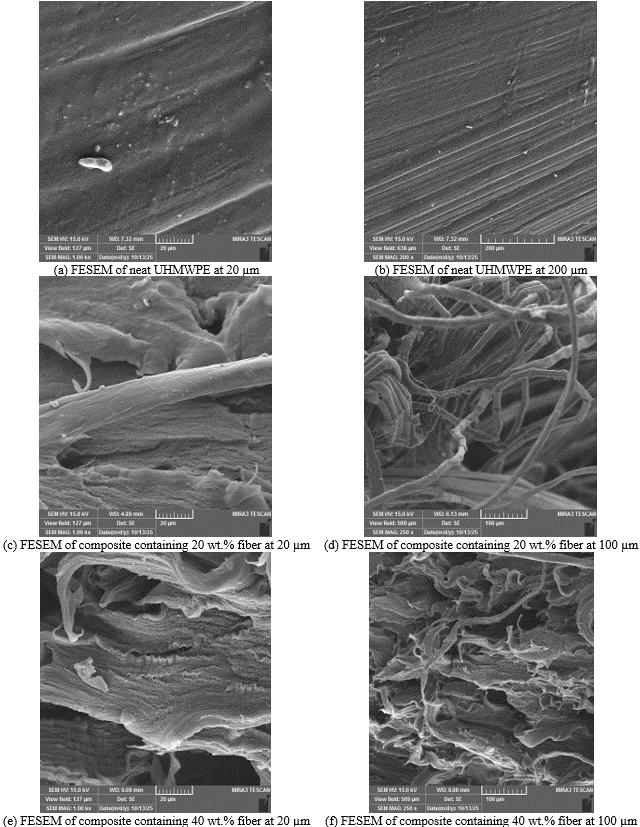
The FESEM micrographs in Figure 4 reveal clear differences between neat UHMWPE and the fiber-reinforced composites. In the case of neat UHMWPE, the fracture surface appears relatively smooth and continuous at both magnifications. The surface morphology is typical of semicrystalline polyethylene, in which plastic deformation dominates fracture behavior [3]. No secondary phase or structural discontinuity is observed in the pure polymer sample.
When 20 wt.% UHMWPE fibers are introduced into the matrix, the fracture surface changes noticeably. The fibers are visible within the matrix and appear to be reasonably dispersed. The surface becomes rougher than that of neat UHMWPE, as expected due to the presence of reinforcement. In several areas, fibers remain embedded within the matrix, whereas in other regions, limited fiber pull-out is observed. This behavior indicates that load transfer between the matrix and the fibers occurs, although complete interfacial bonding is not achieved in every localized region [7]. At 40 wt.% fiber content, the density of reinforcing elements increases significantly. The microstructure becomes more complex, and the fracture surface is dominated by fiber-related features. In some areas, small interfacial gaps and partial debonding are observed. Such features are commonly reported in short-fiber-reinforced polymer systems at higher reinforcement ratios, where local stress concentrations may develop [20]. Nevertheless, most fibers remain integrated within the matrix.
Overall, the progressive transition from a smooth polymer surface to a fiber-controlled fracture morphology provides structural support for the observed improvement in stiffness and strength with increasing fiber content. Similar morphological trends have been reported for polyethylene-based composite systems reinforced with fibers [7].
3.4 Density of ultra-high molecular weight polyethylene composites
The density values vary with fiber content. Neat UHMWPE shows a density of 0.937 g/cm³, which falls within the normal range reported for this material [15]. After adding 10 wt.% fiber, the density decreases to 0.9034 g/cm³. This reduction may be related to incomplete packing between the powder and the fibers during consolidation. At this level, the fiber amount may not be sufficient to form a continuous structure inside the matrix [21]. When the fiber content increases to 20 wt.% and 30 wt.%, the density slightly increases to 0.9087 g/cm³ and 0.9129 g/cm³. This suggests that the internal structure becomes more compact as the reinforcement level rises. At 40 wt.% fiber, the density reaches 0.9496 g/cm³, which is higher than that of neat UHMWPE. The density values are shown in Figure 5.
Figure 5. Density of composite material as a function of ultra-high molecular weight polyethylene (UHMWPE) fiber (wt.%)
This result indicates improved consolidation and reduced internal voids at higher fiber content [22]. However, density alone cannot fully explain the mechanical behavior and should be considered together with other structural observations [20].
3.5 Hardness of ultra-high molecular weight polyethylene composites
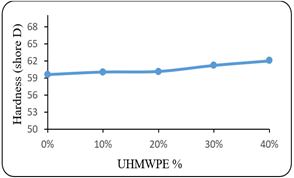
The neat UHMWPE sample has a hardness of 59.56 Shore D, which is consistent with typical values reported for this polymer [2]. The hardness values are shown in Figure 6.
Figure 6. Hardness of composite material as a function of ultra-high molecular weight polyethylene (UHMWPE) fiber (wt.%)
When 10 wt.% fiber is added, the hardness rises slightly to 60.02. The increase continues at 20 wt.% and 30 wt.%, reaching 60.12 and 61.2, respectively. At 40 wt.% fiber content, hardness reaches its maximum, approximately 62 Shore D.The increase is gradual rather than sharp. This indicates that the fibers increase indentation resistance, but the effect is modest. As fiber content increases, the material becomes slightly stiffer at the surface. This may be because the reinforcing phase reduces local deformation under the indenter [23]. Although the change in hardness is small, the trend is consistent. The results suggest that increasing fiber content improves surface resistance, but hardness alone is insufficient to assess overall performance [24]. Other properties, such as wear and tensile behavior, should also be considered.
3.6 Tensile properties of ultra-high molecular weight polyethylene composites
3.6.1 Stress-strain curves
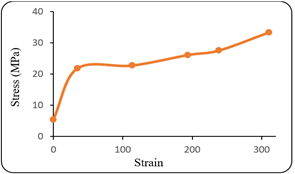
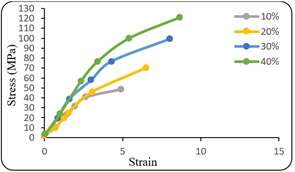
The stress-strain curves of neat UHMWPE and the fiber-reinforced composites are shown in Figures 7 and 8. The neat UHMWPE specimen exhibits typical ductile polymer behavior [4], characterized by a distinct yield region followed by extensive plastic deformation before fracture. After incorporating UHMWPE fibers, the overall shape of the curves changes progressively. At 10 wt.% fiber, the slope of the initial elastic region increases noticeably, indicating higher stiffness compared to the neat matrix. As the fiber content increases to 20 wt.% and above, the curves become increasingly linear and less elongated, particularly at 30 wt.% and 40 wt.% fiber. At higher reinforcement levels, the plastic deformation region becomes shorter, and fracture occurs at lower strain values. This behavior suggests that the reinforcing fibers limit molecular chain mobility and thereby enhance stress transfer within the composite structure [7].
Figure 7. Stress-strain of pure ultra-high molecular weight polyethylene (UHMWPE)
Figure 8. Stress-strain of composite material as a function of ultra-high molecular weight polyethylene (UHMWPE) fiber (wt.%)
3.6.2 Tensile strength and elastic modulus of ultra-high molecular weight polyethylene composites
As shown in Figures 9 and 10, the addition of fiber increases the tensile strength and elastic modulus until a peak is reached. The tensile strength of a pure UHMWPE polymer is approximately 33 MPa, and its elastic modulus is 0.32 GPa, typical for UHMWPE matrices [15]. When a 10 wt.% fiber loading is introduced, the resulting tensile strength is 49 MPa, an increase of nearly 48% over the pure polymer matrix. At the same time, the elastic modulus increases to 1.48 GPa, indicating a significant increase in stiffness at lower fiber loading levels. As additional fiber is incorporated into the system, the mechanical properties continue to improve. At the 40 wt.% fiber loading level, the tensile strength reaches 121 MPa, and the elastic modulus reaches 2.47 GPa. The resultant enhancement represents an increase of more than three times the tensile strength of the pure UHMWPE polymer.
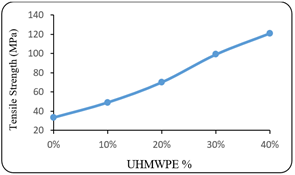
Figure 9. Tensile strength of composite material as a function of ultra-high molecular weight polyethylene (UHMWPE) fiber (wt.%)
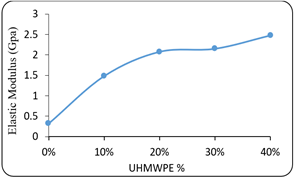
Figure 10. Elastic modulus of composite material as a function of ultra-high molecular weight polyethylene (UHMWPE) fiber (wt.%)
Thus, the improvement in mechanical properties can be attributed to the more effective load transfer from the polymer matrix to the fiber reinforcement, which will serve to support more of the load as the level of fiber loading is increased.
3.6.3 Elongation of ultra-high molecular weight polyethylene composites
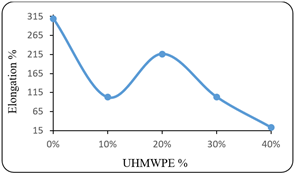
Elongation to failure is not linearly proportional to fiber content, as shown in Figure 11. The UHMWPE in the neat form exhibits very high ductility, with an elongation to break of approximately 310% [2]. However, once 10 wt.% fiber is added to the composite, there is a large decrease in elongation to approximately 103%, which indicates that the plastic deformation of the material has been highly restricted. When the fiber content is increased to 20 wt.%, there is a substantial increase in elongation back to about 217%. This indicates a partial recovery of the ductility of the composite, suggesting that the matrix is still being effectively engaged in the deformation process, leading up to failure at an intermediate fiber reinforcement level. Additionally, because the fiber is more uniformly distributed throughout the composition, there may be fewer opportunities for stress concentrations to develop within the composite before failure, allowing greater strain to develop [25].
Figure 11. Elongation of composite material as a function of ultra-high molecular weight polyethylene (UHMWPE) fiber (wt.%)
As further increments of fiber are added to the composite, elongation again decreases to approximately 104% at 30 wt.% fiber content and subsequently to a minimum of approximately 24% at 40 wt.% fiber content. At these high levels of fiber reinforcement, deformation is primarily governed by the stiffness of the fiber network rather than by the matrix's plastic flow. The nonlinear trends in elongation to failure are consistent with similar reports on fiber-reinforced thermoplastic composites, in which the overall ductility of a composite depends on maintaining matrix continuity and on the balance of matrix and reinforcement dominance [26].
The overall ductility of the composite will be reduced with increasing fiber reinforcement; however, the composite will not exhibit an abrupt transition to brittle fracture [24]. Thus, it is likely that a mechanical transition to a much stiffer, but still mechanically stable, composite will occur during this process of fracture.
3.7 Flexural properties of ultra-high molecular weight polyethylene composites
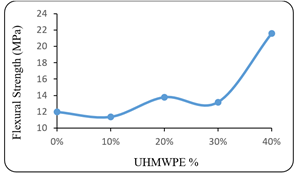
Flexural strength varies with fiber content in a non-linear manner, as illustrated in Figure 12. Neat UHMWPE shows a flexural strength of approximately 12 MPa. With 10 wt.% fiber, the value decreases slightly to approximately 11.3 MPa, which may be attributable to localized stress concentration at low reinforcement levels [27].
Figure 12. Flexural strength of composite material as a function of ultra-high molecular weight polyethylene (UHMWPE) fiber (wt.%)
At 20 wt.% fiber content, the flexural strength increases to about 13.8 MPa, indicating improved stress distribution within the composite.
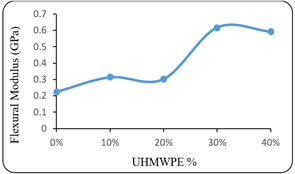
A minor fluctuation appears at 30 wt.% (13 MPa), while a marked increase is observed at 40 wt.% fiber, where the strength reaches nearly 21.7 MPa. This noticeable improvement at higher fiber loading suggests that the reinforcing phase becomes more effective at carrying bending stresses as its continuity within the matrix increases, a trend commonly observed in fiber-reinforced thermoplastic systems [28]. Flexural modulus increases with fiber addition, as shown in Figure 13. Neat UHMWPE exhibits a modulus of approximately 0.22 GPa. With 10 wt.% fiber, the modulus increases to approximately 0.31 GPa, whereas at 20 wt.%, it remains close to 0.30 GPa. A more pronounced increase appears at 30 wt.% fiber, where the modulus reaches nearly 0.62 GPa. At 40 wt.% fiber, the value decreases slightly to approximately 0.59 GPa, yet it remains significantly higher than that of the neat matrix. The overall increase reflects the higher stiffness of the reinforcing phase and its growing contribution to resisting bending deformation [29]. As discussed in studies on thermoplastic composites, flexural stiffness is strongly affected by reinforcement continuity and effective stress transfer across the interface.
Figure 13. Flexural modulus of composite material as a function of ultra-high molecular weight polyethylene (UHMWPE) fibers (wt.%)
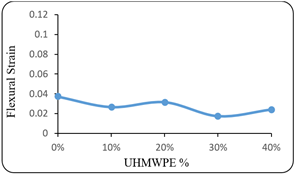
With increasing fiber content, flexural strain decreases, as shown in Figure 14. The strain value for neat UHMWPE is approximately equal to 0.038. With the addition of 10 wt.% fibers, the strain decreases to approximately 0.026. At 20 wt.% fiber content, the strain increases slightly to approximately 0.031. There is still a large contribution towards the deformation from the polymer matrix. When 30 wt.% fibers are added, the strain is at its minimum, approximately 0.017. At 40 wt.% fiber content, this results in an approximate strain of 0.024; thus, the addition of fibers has a direct effect on the strain behaviour of the composite. Overall, the decreasing strain behaviour of a composite is a result of the increasing molecular chain mobility constraint and the associated increase in structural constraint as the fiber network becomes a larger percentage of the overall composite system [24].
Figure 14. Flexural strain of composite material as a function of fibers (wt.%)
Figure 15. Maximum shear stress of composite material as a function of fiber (wt.%)
Maximum shear stress exhibits a gradual increasing tendency with fiber loading (Figure 15). Neat UHMWPE shows a value of approximately 0.38 MPa. At 10 wt.% fiber, the value is 0.36 MPa; at 20 wt.% fiber, it increases to approximately 0.43 MPa. A small fluctuation appears at 30 wt.% (~0.41 MPa), followed by a marked rise at 40 wt.% fiber, where the shear stress reaches approximately 0.67 MPa.
The increase at higher reinforcement levels suggests improved resistance to shear deformation during bending [30]. Enhanced interfacial interaction between fibers and matrix likely contributes to better load transfer under combined tensile and shear stresses.
3.8 Impact strength and fracture toughness of ultra-high molecular weight polyethylene composites
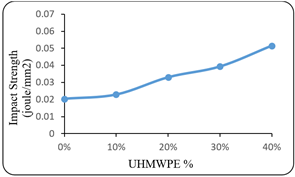
The material's impact resistance increases with the rate of fiber inclusion, as shown in Figure 16. The impact resistance of the non-reinforced UHMWPE is approximately 0.020 J/mm²; at a fiber content of 10 wt.%, this increases to about 0.022 J/mm². At 20 wt.%, this increases to approximately 0.033 J/mm², and again at 30 wt.% to approximately 0.039 J/mm². The maximum impact resistance at 40 wt.% is just over 0.052 J/mm², indicating that the impact resistance of the reinforced composite is more than twice that of the non-reinforced matrix.
Figure 16. Impact strength of composite material as a function of UHMWPE fibers (wt.%)
This gradual increase in the impact resistance of the composite indicates that, as the amount of fiber in the structure increases, the ability to resist sudden fracture from impact loading increases also, this improvement in the impact resistance can be attributed to mechanisms by which the fibers enhance the matrix's resistance to dynamic loading-induced fracture such as crack deflection and energy dissipation at the fiber/matrix interface [31].
3.9 Coefficient of friction, wear volume, and wear coefficient of ultra-high molecular weight polyethylene fiber composites
3.9.1 Coefficient of friction
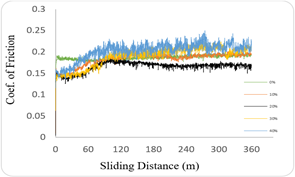
Figure 17 presents the evolution of the COF under a normal load of 40 N and a total sliding distance of 360 m. All compositions exhibit an initial running-in stage followed by a relatively stable steady-state regime, typical of UHMWPE-based systems under dry sliding conditions [32].
Figure 17. Coefficient of friction (COF) for composite material as a function of ultra-high molecular weight polyethylene (UHMWPE) (wt.%)
At 360 m, the COF values were:
The lowest friction coefficient is observed for the 20 wt.% composite. Similar reductions at intermediate reinforcement levels have been reported in UHMWPE composites, in which fiber addition promotes load sharing and stabilization of the transfer film at the contact interface [33].
At higher fiber contents (30–40 wt.%), COF increases again, which may be associated with localized stress concentration or partial disruption of the contact layer. Such behaviour has also been discussed for reinforced UHMWPE systems subjected to dry sliding [32].
3.9.2 Wear volume
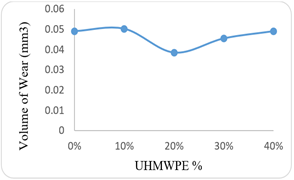
The wear volume after 360 m sliding distance is:
The 20 wt.% composite exhibits the lowest wear volume, comparable to that of neat UHMWPE. The wear volume values are shown in Figure 18. The improvement at intermediate fiber content suggests more efficient stress distribution and suppression of surface micro-cutting mechanisms, which are commonly responsible for wear in UHMWPE materials [32].
Figure 18. Volume of wear for composite material as a function of ultra-high molecular weight polyethylene (UHMWPE) (wt.%)
At higher fiber fractions, the wear volume increases slightly, approaching that of the neat matrix. This trend is consistent with observations in reinforced polymer systems, where excessive reinforcement can lead to microstructural heterogeneity that affects surface stability [33].
3.9.3 Wear coefficient
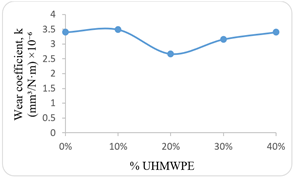
The wear coefficient was calculated using Archard’s equation:
$k=V/\left( F~L \right)$
where, F = 40 N and L = 360 m.
The calculated values are:
The minimum wear coefficient is obtained at 20 wt.% fiber. The wear coefficient values are shown in Figure 19.
Figure 19. Coefficient of wear for composite material as a function of ultra-high molecular weight polyethylene (UHMWPE) (wt.%)
The magnitudes of these values fall within the typical range reported for UHMWPE under dry sliding conditions [32], thereby confirming the reliability of the present results.
While 40 wt.% maximizes structural performance, 20 wt.% provides optimal tribological stability, indicating that fiber fraction can be tailored to meet the functional requirements of the orthopedic component.
It should be noted that the present investigation was conducted under controlled laboratory conditions and limited to dry sliding tribological testing. Long-term biological exposure, fatigue behavior under physiological loading cycles, and in-vitro biocompatibility assessments were not within the scope of this study. Therefore, further investigations are required to evaluate the long-term clinical applicability of the developed composites under simulated body conditions.
Self-reinforced composites comprising UHMWPE fibers and UHMWPE powders were fabricated via thermo-compression molding. The introduction of fibers into the material has a major effect on its thermal, mechanical, and tribological properties. DSC results indicate that the degree of crystallinity of the matrix will be affected by the amount of fiber added, reaching its highest level (40.08%) at the 10 wt.% fiber level. Further increases in fiber content reduce crystallinity. The melting temperatures of the composites are similar and indicate that the polymer does not undergo thermal degradation during fabrication. The mechanical test results indicate a continuous increase in both tensile strength and elastic modulus with increasing fiber content. For instance, tensile strength increases from 33 MPa for neat UHMWPE to 121 MPa for 40 wt.% fiber, whereas the elastic modulus increases from 0.32 GPa to 2.47 GPa. Likewise, flexural strength and flexural modulus showed substantial improvements with increasing reinforcement content. Elongation at break decreased from approximately 310% for neat UHMWPE to 24% for 40 wt.% fiber; the material can still deform without serious brittle failure. The tribological testing identified a different optimal composition than that found in the mechanical testing. Specifically, this testing identified a COF of 0.168 and a wear coefficient of 2.67 × 10⁻⁶ mm³/N·m for the 20 wt.% fiber composites. The wear volume for this composition was 0.0385 mm³, indicating a more stable surface under dry-sliding conditions.
Ultimately, this research demonstrates that increasing fiber content (40 wt.%) improves composite stiffness and durability, thereby enabling a wider range of applications, including components where wear resistance is critical.
[1] Bistolfi, A., Giustra, F., Bosco, F., Sabatini, L., Aprato, A., Bracco, P., Bellare, A. (2021). Ultra-high molecular weight polyethylene (UHMWPE) for hip and knee arthroplasty: The present and the future. Journal of Orthopaedics, 25: 98-106. https://doi.org/10.1016/j.jor.2021.04.004
[2] Hasegawa, M., Tone, S., Naito, Y., Sudo, A. (2023). Ultra-high-molecular-weight polyethylene in hip and knee arthroplasties. Materials, 16(6): 2140. https://doi.org/10.3390/ma16062140
[3] Bracco, P., Bellare, A., Bistolfi, A., Affatato, S. (2017). Ultra-high molecular weight polyethylene: Influence of the chemical, physical and mechanical properties on the wear behavior. A review. Materials, 10(7): 791. https://doi.org/10.3390/ma10070791
[4] Shelly, D., Lee, S.Y., Park, S.J. (2024). Compatibilization of ultra-high molecular weight polyethylene (UHMWPE) fibers and their composites for superior mechanical performance: A concise review. Composites Part B: Engineering, 275: 111294. https://doi.org/10.1016/j.compositesb.2024.111294
[5] Thomason, J.L. (2002). Interfacial strength in thermoplastic composites-at last an industry friendly measurement method? Composites Part A: Applied Science and Manufacturing, 33(10): 1283-1288. https://doi.org/10.1016/S1359-835X(02)00150-1
[6] Zherebtsov, D., Chukov, D., Royaud, I., Ponçot, M., et al. (2021). On the structural peculiarities of self-reinforced composite materials based on UHMWPE fibers. Polymers, 13(9): 1408. https://doi.org/10.3390/polym13091408
[7] Chukov, D.I., Kharitonov, A.P., Tcherdyntsev, V.V., Zherebtsov, D.D., Maksimkin, A.V. (2018). Structure and mechanical properties of self-reinforced ultra-high molecular weight polyethylene. Journal of Composite Materials, 52(12): 1689-1698. https://doi.org/10.1177/0021998317728781
[8] Statnik, E., Zherebtsov, D.D., Chukov, D.I., Larin, I.I., et al. (2025). Parameters optimization for manufacturing advanced self-reinforced composites based on ultra-high molecular weight polyethylene. Fracture and Structural Integrity, 19(74): 152-164. https://doi.org/10.3221/IGF-ESIS.74.10
[9] ASTM D792-20. (2020). Standard Test Methods for Density and Specific Gravity (Relative Density) of Plastics by Displacement. ASTM International, West Conshohocken, PA. https://doi.org/10.1520/D0792-20
[10] ASTM D2240-15. (2020). Standard Test Method for Rubber Property—Durometer Hardness. ASTM International, West Conshohocken, PA. https://doi.org/10.1520/D2240-15R21
[11] ASTM D638-14. (2014). Standard Test Method for Tensile Properties of Plastics. ASTM International, West Conshohocken, PA. https://doi.org/10.1520/D0638-14
[12] ASTM D790-17. (2017). Standard Test Methods for Flexural Properties of Unreinforced and Reinforced Plastics and Electrical Insulating Materials. ASTM International, West Conshohocken, PA. https://doi.org/10.1520/D0790-17
[13] Shanmugam, L., Kazemi, M. E., Li, Z., Luo, W., Xiang, Y., Yang, L., Yang, J. (2020). Low-velocity impact behavior of UHMWPE fabric/thermoplastic laminates with combined surface treatments of polydopamine and functionalized carbon nanotubes. Composites Communications, 22: 100527. https://doi.org/10.1016/j.coco.2020.100527
[14] ASTM G133-22. (2016). Standard Test Method for Linearly Reciprocating Ball-on-Flat Sliding Wear. ASTM International, West Conshohocken, PA. https://doi.org/10.1520/G0133-22
[15] Kurtz, S.M. (2015). UHMWPE Biomaterials Handbook: Ultra High Molecular Weight Polyethylene in Total Joint Replacement and Medical Devices (3rd ed.). Elsevier.
[16] Miao, W.J., Zhu, H., Duan, T.C., Chen, H.B., Wu, F., Jiang, L.B., Wang, Z.B. (2018). High-density polyethylene crystals with double melting peaks induced by ultra-high-molecular-weight polyethylene fibre. Royal Society Open Science, 5(7): 180394. https://doi.org/10.1098/rsos.180394
[17] Fu, S.Y., Lauke, B. (1996). Effects of fiber length and fiber orientation distributions on the tensile strength of short-fiber-reinforced polymers. Composites Science and Technology, 56(10): 1179-1190. https://doi.org/10.1016/S0266-3538(96)00072-3
[18] Silverstein, R.M., Bassler, G.C., Morrill, T.C. (1991). Infrared spectrometry. In Spectrometric Identification of Organic Compounds (5th ed.), pp. 91-164.
[19] Hussain, M., Naqvi, R.A., Abbas, N., Khan, S.M., Nawaz, S., Hussain, A., Zahra, N., Khalid, M.W. (2020). Ultra-high-molecular-weight-polyethylene (UHMWPE) as a promising polymer material for biomedical applications: A concise review. Polymers, 12(2): 323. https://doi.org/10.3390/polym12020323
[20] Panin, S.V., Buslovich, D.G., Dontsov, Y.V., Bochkareva, S.A., Kornienko, L.A., Berto, F. (2021). UHMWPE-based glass-fiber composites fabricated by FDM. Multiscaling aspects of design, manufacturing and performance. Materials, 14(6): 1515. https://doi.org/10.3390/ma14061515
[21] Slouf, M., Gajdosova, V., Dybal, J., Sticha, R., et al. (2023). European database of explanted UHMWPE liners from total joint replacements: Correlations among polymer modifications, structure, oxidation, mechanical properties and lifetime in vivo. Polymers, 15(3): 568. https://doi.org/10.3390/polym15030568
[22] Afxentiou, K., Preidl, R.H.M., Kesting, M.R., Aksu, A., von Bomhard, A., Pippich, K., Wilhelm, S., Lutz, R. (2025). Evaluation of ultra-high molecular weight polyethylene (UHMWPE) implants in orbital fracture reconstruction: A multicenter cohort study. Journal of Maxillofacial and Oral Surgery, 24(4): 1137-1143. https://doi.org/10.1007/s12663-025-02618-w
[23] Fu, S.Y., Lauke, B., Mäder, E., Yue, C.Y., Hu, X. (2000). Tensile properties of short-glass-fiber- and short-carbon-fiber-reinforced polypropylene composites. Composites Part A: Applied Science and Manufacturing, 31(10): 1117-1125. https://doi.org/10.1016/S1359-835X(00)00068-3
[24] Ratner, B.D., Hoffman, A.S., Schoen, F.J., Lemons, J.E. (2012). Biomaterials Science: An Introduction to Materials in Medicine (3rd ed.). Elsevier.
[25] Shanmugam, L., Kazemi, M.E., Rao, Z.Q., Lu, D., Wang, X.G., Wang, B.W., Yang, L., Yang, J.L. (2019). Enhanced mode I fracture toughness of UHMWPE fabric/thermoplastic laminates with combined surface treatments of polydopamine and functionalized carbon nanotubes. Composites Part B: Engineering, 178: 107450. https://doi.org/10.1016/j.compositesb.2019.107450
[26] Liu, Y.L., Han, Y.X., Yuan, L., Zhen, J.M., Jia, Z.F., Zhang, R. (2024). Synergistic enhancement of the friction and wear performance for UHMWPE composites under different aging times. Polymers, 16(14): 2059. https://doi.org/10.3390/polym16142059
[27] Zhou, S.F., Zhang, Q.X., Wu, C.Q., Huang, J. (2013). Effect of carbon fiber reinforcement on the mechanical and tribological properties of polyamide6/polyphenylene sulfide composites. Materials & Design (1980-2015), 44: 493-499. https://doi.org/10.1016/j.matdes.2012.08.029
[28] Xiong, D.S. (2005). Friction and wear properties of UHMWPE composites reinforced with carbon fiber. Materials Letters, 59(2-3): 175-179. https://doi.org/10.1016/j.matlet.2004.09.011
[29] Panin, S.V., Huang, Q., Alexenko, V.O., Buslovich, D.G., et al. (2020). Design of wear-resistant UHMWPE-based composites loaded with wollastonite microfibers treated with various silane coupling agents. Applied Sciences, 10(13): 4511. https://doi.org/10.3390/app10134511
[30] Guo, Z.W., Feng, R.Q., He, Y., Yuan, C.Q. (2023). Effect of fiber material on tribological properties of UHMWPE water-lubricated bearing composites. Tribology, 44(5): 597-608. https://doi.org/10.16078/j.tribology.2023037
[31] Plumlee, K., Schwartz, C.J. (2009). Improved wear resistance of orthopaedic UHMWPE by reinforcement with zirconium particles. Wear, 267(5-8): 710-717. https://doi.org/10.1016/j.wear.2008.11.028
[32] Baena, J.C., Wu, J., Peng, Z. (2015). Wear performance of UHMWPE and reinforced UHMWPE composites in arthroplasty applications: A review. Lubricants, 3(2): 413-436. https://doi.org/10.3390/lubricants3020413
[33] Li, Z., Xiang, S., Wu, C.J., Wang, Y.Z., Weng, X.S. (2021). Vitamin E highly cross-linked polyethylene reduces mid-term wear in primary total hip replacement: A meta-analysis and systematic review of randomized clinical trials using radiostereometric analysis. EFORT Open Reviews, 6(9): 759-770. https://doi.org/10.1302/2058-5241.6.200072