Mohammed J. Kadhim* | Hamza M. Kamal | Fayq H. Jabbar
© 2025 The authors. This article is published by IIETA and is licensed under the CC BY 4.0 license (http://creativecommons.org/licenses/by/4.0/).
OPEN ACCESS
There are several drivers for the continuous development of concrete technology, among them concerns about greenhouse gas emissions and the depletion of natural resources resulting from the high production of Portland cement. One sustainable solution is to use fly ash as an additional cementitious material to partially replace cement on a different scale, which has shown beneficial effects on the performance of cement-based composites. The present study investigates and compares the influence of fly ash (FA) and nano-fly ash (NFA) on the mechanical and physical properties of cement mixtures. The cement mortar mixtures were prepared by replacing 1–6% NFA or 15% fly ash (FA). All mixtures were designed with a fixed binder content of 900 Kg/m³ and a constant water-to-binder ratio of 0.30. The workability, apparent density, water absorption, compressive strength, and flexural strength of all mortar mixes were evaluated and compared with the control mixture containing no mineral admixtures. The indication of FA incorporation improved the performance of mortar, whereas NFA exhibited significantly greater enhancements in both physical and mechanical properties. The observed enhancement may be attributed to pore refinement, the micro-filling effect, and the high reactivity of NFA. The optimum NFA level was observed to be 4% resulting in an 83.4% and 58.6% increase in mechanical properties, compressive strength and modulus of rupture, respectively, over the reference mixture at 4 weeks.
nano-fly ash (NFA), fly ash (FA), G-sand, polycarboxylate, compressive strength
Nanoscience has become a central field in engineering and materials science. Nanotechnology innovations have allowed a controlled introduction of nanoparticles into concrete mixtures to fine-tune their physical and mechanical properties [1]. The behaviour of fly ash concrete in both its fresh and hardened states is examined, including its mechanical performance, durability aspects, and microstructural features. In addition, practical examples of how fly ash concrete has been used are reviewed based on case studies reported by [2]. Recent work has shown that the limited early strength of high-volume FA composite steam-cured can be significantly improved by using ultrafine fly ash produced through wet grinding. When the FA fineness was increased to a median particle size of about 2.3 μm, both early- and late-age compressive strengths increased, even at replacement levels up to 50%, surpassing those of plain cement. The refined UFA also enhanced microstructural densification, reduced CH content after steam curing, and improved the chain length and Al/Si ratio of C–S–H gels. These findings indicate that higher curing temperatures are more effective than extended curing durations in promoting the interaction of fly ash alumina with the hydration products [3].
A previous study examined the durability and strength properties of the cementitious mixture incorporating different proportions of nano-silica and fly ash (FA). To determine the combined effect of nano-silica and FA on mortar performance, cement was replaced by Fly ash at 0, 10, 20, and 30%, and then nano-silica (1-3%) was added, with FA remaining at 20% [4]. Equally, calcium silicate hydrate (C–S–H) is the main strength-giving phase in the hydration of Portland cement, other than calcium hydroxide (CH). Similar to other auxiliary cementitious materials, FA reacts with cement hydration to produce Ca(OH)₂ and the rest of the (C-S-H) gel is produced. Since this is a slower pozzolanic reaction, FA-modified concrete does not have high early-age strength compared to ordinary Portland cement concrete. Nevertheless, its mechanical behaviour tends to be more successful at later ages than that of conventional concrete [5]. The present study is part of ongoing research on the development of sustainable construction materials that investigates the dosage of NFA as an efficient cement substitute. Although fly ash has gained much popularity as a reactive pozzolanic material, little has been done on the comparative analysis of its nanoscale counterpart in cement mortar. This study, by evaluating the impacts of FA and NFA on physical and mechanical characteristics, sheds more light on the optimisation of cement mortar mixes. Its results are set to contribute to the conservation of resources, the reduction of CO₂ emissions during cement production, and the improvement of mortar durability and performance in real practice. In addition, the work is the first to compare the synergistic effect of Iraqi fly ash of local origin with that of NFA in cement mortar.
2.1 Materials
2.1.1 The ordinary portland cement
The cement (type I) used in this research was produced in Iraq and called Almass. The chemical content and physical properties of the cement were within the ASTM C150-04 specifications [6].
2.1.2 G-sand
In this study, G-sand passing through a 2.36 mm sieve was employed due to its suitability for fine aggregate applications. The selected sand conforms to Zone (2) graduation requirements as specified in ASTM C33-03 [7], ensuring consistency with international standards and reliability in concrete/mortar mix performance.
2.1.3 NFA product
In this study, NFA, obtained as a secondary by-product from the Al-Doura power plant, was milled using a Planetary Ball Mill (PBM) to achieve particle sizes of 20–50 nm with ~98.9% purity. The milling speed was 300 rpm for four hours in a PBM. The nanoscale characteristics, confirmed via scanning electron microscopy (SEM), make NFA a highly reactive pozzolanic additive capable of enhancing most properties (physical and mechanical) of cementitious materials composites. Table 1 summarises its physical properties [8, 9].
Table 1. The main characterization of NFA
|
Name |
Details |
|
Product name |
NFA |
|
Color |
Grayish whit |
|
Purity |
96.3% |
|
Particle Size |
20-50nm |
|
SSA (m2/g) |
50-150 |
|
Bulk Density (g/m3) |
4.86 |
2.1.4 Fly ash (FA)
One of the Power plants in Iraq that uses oil to generate electricity is AL Doura. According to reports, the AL Doura power station produces roughly thousands of tons of fly ash annually. The enormous amount of fly ash will pose a significant disposal challenge due to the increased need for ash storage space resulting from the large volume of waste material. The fly ash used in this study has a specific gravity of 2.61 and a surface area of 2200 m2/Kg, indicating its potential as a pozzolanic material capable of enhancing cementitious matrix performance. Its chemical composition, as compiled in Table 2, meets ASTM C618 specifications [10]. At the same time, it is pozzolanic and, based on the ASTM C311-05 index of strength activation [11], can be used to improve the properties necessary in both concrete and mortar.
Table 2. Main components of source fly ash*
|
Component |
Content (%) |
|
SiO2 |
60.46 |
|
Al2O3 |
33.26 |
|
Fe2O3 |
2.82 |
|
MgO |
0.42 |
|
CaO |
0.33 |
|
SiO3 |
0.06 |
|
K2O |
0.75 |
|
Na2O |
0.5 |
|
Loss of Ignition
|
0.61
|
2.1.5 Superplasticizer
Polycarboxylate (VISCO CRETE-180 GS) was employed as a high-performance superplasticizer for mortars and concrete, offering efficient water reduction, extended setting time, shrinkage control, and enhanced workability. Its compliance with ASTM C494 [12] ensures consistent quality and reliability, contributing to improved mechanical performance and durability of cementitious composites. Detailed specifications are yield by Table 3.
Table 3. The specifications of polycarboxylate super plasticizer
|
Composition |
Modified Polycarboxylates in Aqueous Solution |
|
Packaging |
Deliveries in Bulk: 1000 LTRs IBC 20 Kg Pail |
|
Colour |
Light brownish coloured liquid |
|
Curing and storage conditions |
Stored dry at 5–35℃, protected from sunlight; recirculated for extended storage |
|
Specific Gravity (g/cm³) |
1.080 ± 0.005 |
|
PH |
4-6 |
|
Chloride percentage |
Not detected |
2.2 Specimens preparation
2.2.1 Mix design
In this case, many mortar mixtures were prepared, all maintaining a constant water-to-binder ratio of 0.3 and a fixed cement-to-fine aggregate weight ratio of 1:2. According to Table 4, the total binder content across all created combinations was 900 Kg/m3. To reach the desired flow rate of 100% ± 5 with a constant w/b ratio of 0.3, the reference mix (CM) was prepared with a superplasticiser (1.5%) by weight of cement. The second mixture (FM), on the other hand, was made from the reference mix by substituting 15% fly ash for some of the cement. The workability of new mortar is significantly reduced when FM is used, and a higher quantity of superplasticiser is incorporated. The entire mixture, represented by four mixes (NFM1, NFM2, NFM4, and NFM6), was prepared by substituting a certain percentage of NFA for cement. All mixes' flow values are maintained within the range of 100 ± 5, which controls the superplasticiser dosage. The resulting specimens were water-cured for 7 and 28 days in a typical curing tank. Table 3 displays the material quantities utilised in the manufacturing of mixes.
Table 4. Mix proportions of mortar samples
|
Mix Symbol |
Cement* |
Sand* |
FA* |
NFA* |
w/b |
SP (%) |
|
CM |
900 |
1400 |
- |
- |
0.3 |
1.5 |
|
FM |
675 |
1400 |
135 |
- |
0.3 |
2.6 |
|
NFM1 |
691 |
1400 |
- |
9 |
0.3 |
2.8 |
|
NFM2 |
882 |
1400 |
- |
18 |
0.3 |
3.1 |
|
NFM4 |
864 |
1400 |
- |
36 |
0.3 |
3.2 |
|
NFM6
|
846
|
1400
|
-
|
54
|
0.3
|
3.5
|
3.1 Workability test
The workability of cement mortar under repeated dynamic impacts was assessed using the flow test, in accordance with ASTM C1437-07 [13]. The test involved measuring the spread into perpendicular directions of cement mortar, with the overall average diameter representing the flow value. This parameter provides an important indication of the mortar’s consistency, workability, and ability to fill molds or formwork effectively.
3.2 Apparent density
In accordance with ASTM C642-97 [14], this test was conducted on 100 mm cubes after 28 days of curing. For each measurement, the reported density represents the average of three specimens tested.
3.3 Water absorption
For this test, 100 mm cubic specimens aged 28 days were used. The procedure was performed in accordance with ASTM C642 [14], and the reported values represent the average of three samples. The following formula was used to determine the water absorption:
(A-B)/A (1)
Then,
A: The weight of sample in dry state in grams.
B: The weight of saturated sample in grams.
3.4 The compressive strength
According to ASTM C109/C109M-05 [15]. The compressive strength test was applied on a 50 × 50 × 50 mm cubic sample cement mortar at ages of 7 and 28 days in accordance with ASTM. Each mix's stated strength is based on the average of three samples.
3.5 Flexural strength (modules rapture)
In accordance with ASTM C293-02 [16], the flexural strength of mortar was evaluated using prisms measuring 40 × 40 × 160 mm. Three specimens at the selection of curing time (7 and 28 days) were tested under a simple support loading setup, and the reported flexural strength represents the average of these measurements. The experimental tests were carried out using a universal machine with a capacity of 10 KN. The following formula calculates the magnitude of flexural strength:
σf = 1.5 FL/bh2 (2)
where,
σf: is the rupture's modulus in MPa.
F: The applied load in the mid span in (KN).
L: Span length in millimeters.
B: Span width in millimeters.
d: Span depth in millimeters.
4.1 Workability test
The flow test was employed to assess the workability of the mixes. According to Table 3, a superplasticiser must be added to the reference mix (CM) to achieve homogeneous consistency with a flow value of 100 ± 5 parentage, with a constant w/b ratio of 0.3. Experimental results indicate that incorporating 15% FA as a partial replacement in the mature mixture reduces workability because fly ash particles have a larger surface area than cement, necessitating an increased superplasticiser dosage to attain comparable flow [17, 18]. Furthermore, to achieve a flow within 100 ± 5% and a constant w/b ratio of 0.3, mixes containing 1, 2, 4, and 6% NFA as cement replacement required notably higher water content and superplasticiser dosages than the FM mix. Table 3 demonstrates that the required superplasticiser dosage increases with higher NFA replacement levels, reflecting the greater fineness of NFA relative to conventional fly ash.
4.2 Apparent density
The apparent density measurement results at 28 days for total samples preparation with and without 15% of fly ash and 1%, 2%, 4%, and 6% NFA are displayed in Figure 1. The density of the FM mix containing 15% fly ash is 2336.5 Kg/m3, which is 1.586% higher than the reference mix (CM), indicating that the density ranges from 2200 to 2360.6 Kg/m3.
Figure 1. The impact of replacing FM and NFM on mortar mixes' apparent densities
Because fly ash nanoparticles are added, the density values of mixes containing NFA improve to 2324.6, 2338.4, 2352.8, and 2340.3 Kg/m3 for mixes. At 28 days, the density of NFM1, NFM2, NFM4, and NFM6 mixes increases by approximately 3.8%, 5.2%, 6.3%, and 7.3%, respectively, compared to the mix (CM). The inclusion of NFA increased the apparent density because the cement microstructure became denser, with NFA ultrafine particles filling the cement voids [17].
4.3 Water absorption
After 4 weeks of curing, Figure 2 presents the water absorption data for all mortar mixes. The incorporation of 15% FA led to a notable reduction in absorption, reaching about 26.9% related to the reference sample (CM), which is associated with the denser microstructure formed. Furthermore, the mixes containing nano-fly ash (NFM1, NFM2, NFM4, and NFM6) exhibited additional reductions in absorption of 20.3%, 23.4%, 34.8%, 39.5%, and 35.6%, respectively, relative to the control mixture. This progressive decrease with increasing NFA dosage (1–6%) is primarily due to nanoparticles’ dependence on the largest surface area and enhanced reactivity, which accelerate hydration and produce more CSH gel, thereby decreasing permeability and improving pore structure. These observations are in good agreement with findings reported in the study [18].
Figure 2. Water absorption of mortar mixtures with FM and NFM replacements
4.4 Compressive strength result
The behaviour of samples in the all-mixing design and at curing times (7 and 28 days) is illustrated in Figure 3. Incorporation of 15% fly ash (FA) replacement enhanced the compressive strength at 28 days by 12.4% compared to the reference mix (CM).
Figure 3. Compressive strength of mortar mixtures with FM and NFM replacements
This enhancement is due to fly ash's pozzolanic activity and its fine particles, which refine the pore structure and function as micro-fillers. A more pronounced enhancement was achieved with NFA. Mixtures containing 1, 2, 4, and 6% NFA substitution (NFM1, NFM2, NFM4, and NFM6) exhibited strength increases of 44.9%, 55.4%, 75%, and 82.6%, respectively, relative to CM at 28 days. Additionally, the mix containing 6% NFA improved the compressive strengths by around 85% and 82.6%, respectively, reaching 38.2 and 57.7 MPa at 7 and 28 days, respectively.
This an essential enhancement in strength can be ascribed to two synergistic mechanisms: (i) the accelerated the activity of pozzolanic interaction of NFA with calcium hydroxide liberated through the hyderation reaction, which improved by extra gel of (CSH) and refines the microstructure; and (ii) the filler effect of the nanoparticles, whose ultrafine size and large surface area contribute to densification in the cement matrix. These results are consistent with previous results. [19], which highlighted that the filler effect of NFA promotes early-age strength development, while its pozzolanic reactivity becomes more evident at later ages.
4.5 Flexural strength
Figure 4 shows the behaviour of all mortar mixtures. It has been determined that flexural strength increases with 15% fly ash (FM) as a partial cement replacement is observed in all the curing times (7 and 28 days) compared to the reference samples (CM). FM mixture showed a growth of approximately 19% of CM at 28 days in line with the positive influence of FA on the microstructure and as a part of secondary pozzolanic interaction.
Figure 4. Flexural strength of mortar mixtures with FM and NFM replacements
It was found that larger enhancements were achieved in the use of NFA. The flexural strengths were 5.4, 5.6, 6.1, and 5.9 MPa at 28 days for NFM1, NFM2, NFM4, and NFM6, respectively, and the control mix (CM) was only 4.2 MPa. These figures are equivalent to percentage changes of 38.1%, 45.2%, 54.8% and 59.5% compared to CM. The data indicate a gradual increase in flexural performance with increasing NFA dosage to 4%, after which there is a slight decrease to 6% replacement, implying that the optimum content is in the range of 4% to 6%.
The two important mechanisms can be attributed to the significant gains in flexural strength. To begin with, NFA particles influence packing and filler impact by reducing pore volume and refining the interfacial transition zone, thereby raising the density and stiffness of the cement matrix. This increased density increases crack-initiation and crack-propagation resistance to bending loads. Second, the pozzolanic reactivity of the fine, amorphous NFM particles swallows the calcium hydroxide that is set free on the hydration of cement, giving rise to more (C-S-H) gel. The step results in a stronger bond, not only between the hydration products, but also in high structural integrity due to the increased solid volume [20].
It also showed improved flexural strength, up to 59.5% higher than that of the reference mix, proving that NFA is much more effective than regular fly ash in improving mechanical performance. Moreover, the gains at early ages (7 days) demonstrated that NFM is characterised by a high surface area and accelerated reactivity, with the result that it gains strength very rapidly. In the meantime, the findings of later ages confirm the further input of pozzolanic action. These data are consistent with earlier research [21], which also revealed that NFA enhances flexural strength, likely due to a synergistic effect of filler and pozzolanic effects. Finally, the general trend of flexural strength with increasing NFM content also supports the perception that flexural strength may perform exceptionally well as a supplementary cementitious material.
The highest enhancement was at a 4% replacement level (about 59.5% improvement), highlighting the harshness of using NFM to optimise the microstructure and the mechanical response of the mortar under flexural loading.
4.6 Characterization Measurement
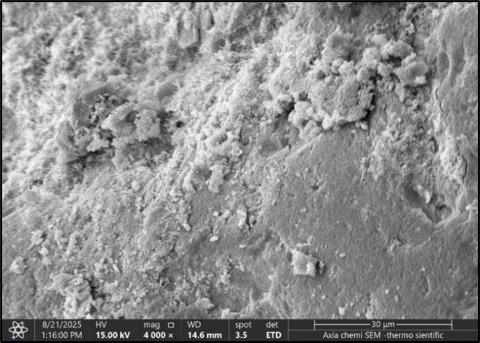
The microstructure of the control sample, which was prepared without additives, is shown in Figure 5. There was a high incidence of microcracks and voids in the cement matrix of the reference specimen. The absence of an additive led to a weaker interfacial transition zone between the cement paste and the aggregate, resulting in lower tensile and flexural strengths. In addition, there was no reinforcement with nanoparticles or fibres, which enhanced porosity. It retarded microstructural densification and structural integrity, and the mechanical performance of the reinforced specimen was lower than that of specimens containing fibre or nano-sized additives. The results of those studies highlight the importance of fibres and nanoparticles in improving the microstructural cohesion and the general ability of cementitious materials to resist.
Figure 5. The SEM of the microstructure surface of the control sample
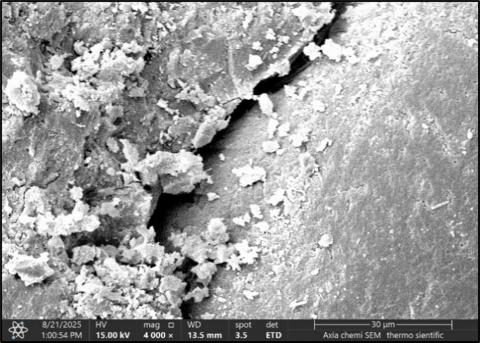
Figure 6 shows that the pozzolanic reaction of micro and NFA have a considerable impact on the physical and mechanical properties of cement paste. Micro fly ash (MFA) has pozzolanic reactivity. It thus reacts with Ca(OH)2 and the calcium silicate hydrate (C-S-H) produced during cement hydration to produce more C-S-H, which is known to increase microstructural densification and modulate compressive and flexural strengths. Its comparatively high particle size contributes to a micro-filling phenomenon that fills the spaces between cement grains, decreases porosity, and enhances the workability and homogeneity of the paste [22].
Figure 6. The SEM of the microstructure surface of the MSF sample
Figure 7. The SEM of the microstructure surface of the NSF sample
Figure 7, on the other hand, shows the influence of NFA, with a mean particle size of less than 100 nm, which has significantly more vigorous pozzolanic activity, producing more Calcium Silicate Hydration and a more densely loaded microstructure at both the micro- and nanoscales. The nanoscale filling of voids is successful in reducing porosity and microcrack formation, and in enhancing hydration kinetics. Therefore, NFA has a significant positive effect on the strength performance of cementitious paste, tensile, compressive, and rupture strengths of the sample, and long-term durability despite being used at low replacement levels (1-6%), which is higher in comparison with the control group and the sample used in MFA.
In general, MFA and NFA have similar effects on cement paste properties. However, the nano-sized additive exhibits more pronounced effects due to its high pozzolanic reactivity, preserved microstructure, and efficient reduction in porosity and microcracks, emphasising the importance of particle size and surface area in the optimisation of cementitious composites [23].
The results from the experiment facilitate the following deductions to be made:
This work is supported by Al-Mustansiriyah University (www.uomustansiriyah.edu.iq), College of Engineering, Department of Materials, Baghdad, Iraq.
[1] Naji, Z.H., Mubarak, H.M., Ibrahim, A.M. (2025). The effect of height replacement fly ash on properties of mortar. Annales de Chimie - Science des Matériaux, 49(1): 43-48. https://doi.org/10.18280/acsm.490106
[2] Nayak, D.K., Abhilash, P.P., Singh, R., Kumar, R., Kumar, V. (2022). Fly ash for sustainable construction: A review of fly ash concrete and its beneficial use case studies. Cleaner Materials, 6: 100143. https://doi.org/10.1016/j.clema.2022.100143
[3] Yang, J., Hu, H.C., He, X.Y., Su, Y., Wang, Y.B., Tan, H.B., Pan, H. (2021). Effect of steam curing on compressive strength and microstructure of high-volume ultrafine fly ash cement mortar. Construction and Building Materials, 266(Part A): 120894. https://doi.org/10.1016/j.conbuildmat.2020.120894
[4] Phan, V.T.A., Tran, H.B., Vo, V.T. (2025). Potential usage of fly ash and nano silica in cement mortar for a sustainable construction. Transportation Research Procedia, 85: 135-142. https://doi.org/10.1016/j.trpro.2025.03.143
[5] Giergiczny, Z. (2019). Fly ash and slag. Cement and Concrete Research, 124: 105826. https://doi.org/10.1016/j.cemconres.2019.105826
[6] ASTM International. (2004). ASTM C150-04: Standard specification for portland cement. ASTM International, 2004.
[7] ASTM International. (2003). ASTM C33-03: Standard specification for concrete aggregates. ASTM International, 2003.
[8] Kadhim, M.J., Hasan, L.M., Kamal, H M. (2023). Investigating the effects of nano-blast furnace slag powder on the behaviour of composite cement materials. Journal of Achievements in Materials and Manufacturing Engineering, 116(1): 5-10. https://doi.org/10.5604/01.3001.0016.3392
[9] Ahmed, A.D., Hammadi, A.A., Mohammed, A.M., Jalal, A.D. (2023). Response of fly ash based quarry dust cement mortar to magnesium sulphate attack. Annales de Chimie - Science des Matériaux, 47(2): 67-73. https://doi.org/10.18280/acsm.470202
[10] ASTM International. (2002). ASTM C618-02: Standard specification for coal fly ash and raw or calcined natural pozzolan for use in concrete. ASTM International, 2002.
[11] ASTM International. (2005). ASTM C311-05: Standard test methods for sampling and testing fly ash or natural pozzolans for use in portland-cement concrete. ASTM International, 2005.
[12] ASTM International. (2005). ASTM C494-05: Standard specification for chemical admixtures for concrete. ASTM International, 2005.
[13] ASTM International. (2007). ASTM C1437-07: Standard test method for flow of hydraulic cement Mortar. ASTM International, 2007.
[14] ASTM International. (1997). ASTM C642-97: Standard test method for density, absorption, and voids in hardened concrete. ASTM International, 1997.
[15] ASTM International. (2005). ASTM C109/C109M-05: Standard test method for compressive strength of hydraulic cement mortars (using 50-mm cube specimens). ASTM International, 2005.
[16] ASTM International. (2002). ASTM C293-02: Standard test method for flexural strength of concrete (using simple beam with center-point loading). ASTM International, 2002.
[17] Zhao, J.L., Wang, Z.K., Li, G.Y., Lu, S.L. (2025). Optimizing high-volume fly ash mortar with Nano-SiO2 and PVA fibers: Performance and microstructure. Nanomaterials, 15(11): 837. https://doi.org/10.3390/nano15110837
[18] Golewski, G.L. (2023). Mechanical properties and brittleness of concrete made by combined fly ash, silica fume and nano-silica with ordinary portland cement. AIMS Materials Science, 10(3): 390-404. https://doi.org/10.3934/matersci.2023021
[19] Li, Q., Fan, Y., Dai Pang, S., Zhou, X., Shah, S.P. (2025). The fracture performance of cement mortar with fly ash and nano-metakaolin exposed to atmospheric acid deposits. Construction and Building Materials, 484: 141889. https://doi.org/10.1016/j.conbuildmat.2025.141889
[20] Roychand, R., De Silva, S., Law, D., Setunge, S. (2016). High volume fly ash cement composite modified with nano silica, hydrated lime and set accelerator. Materials and Structures, 49(5): 1997-2008. http://link.springer.com/article/10.1617/s11527-015-0629-z
[21] Kim, H.S., Lee, S.H., Moon, H.Y. (2007). Strength properties and durability aspects of high strength concrete using Korean metakaolin. Construction and Building Materials, 21(6): 1229-1237. https://doi.org/10.1016/j.conbuildmat.2006.05.007
[22] Harihanandh, M., Karuppanan, K., Viswanathan, K.E., Krishnaraja, A.R. (2023). Characterization of nano-fly ash and study on durability properties of nano-fly ash embedded concrete. Matéria (Rio de Janeiro. Online), 28(4): 12. https://www.scielo.br/j/rmat/a/GSSh88QbV5qJRNy7dMWmZ8s/?format=pdf&lang=en.
[23] Harihanandh, M., Karuppanan, K., Viswanathan, K.E., Krishnaraja, A.R. (2023). Characterization of nano-fly ash and study on durability properties of nano-fly ash embedded concrete. Matéria (Rio de Janeiro), 28(4): e20230281. https://doi.org/10.1590/1517-7076-RMAT-2023-0281