Sajad W. Noori | Nada M. Abed | Duaa Alaa Lafta | Mustafa M. Mansour* | Alaa M. Lafta | Ahmed A. Ouda | Ahmed J. Shkarah
© 2025 The authors. This article is published by IIETA and is licensed under the CC BY 4.0 license (http://creativecommons.org/licenses/by/4.0/).
OPEN ACCESS
This study investigates the microstructural design and thermodynamic optimization of ultra-high temperature (UHT) ceramic composites intended for extreme thermal environments. Through the integration of carbon fiber reinforcement, significant enhancements in fracture toughness (23%) were achieved, as well as improved thermal stability under high-temperature conditions. The optimization process focused on achieving a balanced thermal conductivity and low thermal expansion coefficient, critical for maintaining structural integrity in extreme environments. Furthermore, the study focuses on CMCs, such as their applicability in a wide range of high temperature applications, some of the common problems like thermal shock, load carrying member, and aspect to manufacturing defects are presented within this draft. Results of the fired samples based on a new mixture design concept, were superior to those of the conventional UHT ceramics in thermal shock resistance. This study. Hence, contributes to the frontier of knowledge by introducing an unconventional design route that improves mechanical properties and raises insight into the thermodynamic act for UHT ceramic composite. In contrast to previous reviews, the current study provides experimental evidence and quantifiable performance improvements for both aerospace future generation systems as well as energy technologies. It also aims to relate the intrinsic temperature at which transformation tolerant mechanism's mechanical property alone becomes superior in the zirconia and its toughness. These objectives provide for a pathway to an extensive exploration of the potential microstructure control and thermodynamic stability of high-temperature co-processible ceramic compositions to produce ultra-bases high functional structural ceramics.
UHT, thermal mechanical, refractory, ceramic fiber, thermal protection
Two of the significant considerations influencing envelope performance potential and high temperature application for ultra high temperature Ultra HT Refractory ceramic thermodynamics tailoring microstructure configurations. With respect to the necessity for a high final combined strength versus toughness and thermal stability of the components used in severe environments is indicated this paves the way for sections that follow about different strategies for approaches towards these [1]. In engineering applications, especially in aerospace, the effort to realize such characteristics is explained with ultra-high temperature ceramic matrix composites (UHTCMCs), which possess good thermo-mechanical features due to low density and high thermal conduction [2]. This leads to the subsequent sections that review SiC’s impact on carbon fiber reinforced oxidation protection as well as thermal-mechanical properties of new uni-directional UHTCMCs for extreme uses; prerequisite groundwork to grasp the crucial role of microstructure optimisation and thermodynamic stability in this field [3].
A group of high-performance sintered ceramics used for ultrahigh-temperature applications, ZrC composites are the subject of attention of researchers with regard to possible uses of aerocosmic. The materials of these composites also demonstrate very good thermo-mechanical properties and hence might be potential materials in the TPS [4]. However, this generated some disadvantages concerning the low oxidation resistance and the fracture toughness. As stated, more specifically, when a protective borosilicate scale forms, the oxidation resistance of Zirconium diboride (ZrB2) composites has been found to be improved by the addition of silicon carbide (SiC) [4, 5]. Furthermore, carbon fibre continuous reinforcement also enhances fracture toughness and thermal shock resistance towards the generation of UHTCMCs [5].
In addition to this, ceramic matrix composites such as silicon carbide composites have also proven useful in very high temperature applications where metallic superalliots and thermal barrier coatings show limitations of temperature stabilization over time [3, 4]. But, to apply ceramic materials successfully, different types of problems such as brittleness, thermal shock, load partitioning and manufacturing defects should be resolved. Knowledge of the mechanics and failure behaviour: matrix fibre debonding versus matrix cracking is pivotal in their successful use in ultra-high-temperature service [6].
A full list of citations is provided in the research paper detailed above, enabling readers to probe further into the background theories and empirical literature on high-performance refractory ceramics and their thermodynamic stability during ultra-high-temperature exposure. Among the references most referenced by Musa et al. [7]. In other studies, more significant improvements in the oxidation resistance of UHTCMCs were achieved by incorporating SiC. Utilized slurry infiltration and hot pressing at 40 MPa, 1900℃. The microstructures were examined by SEM-EDS and X-ray diffraction (XRD) before oxidation tests at 1500℃ and 1650℃ [8]. However, authors concluded that it is necessary to release viscous borosilicate glass phase in order to protect the carbon fibers from oxidation, while a greater amount of SiC results in thicker protective layer on fibers with an associated reduction in weight loss.
An associated study by Fergus et al. [9] had found Robust unidirectional UHTCMCs with extreme environment = 2 thermal shock resistance and mechanical properties [9]. Previous studies conducted at hot pressing cycles of 30-40 MPa, in the temperature range between 1800 and 1900℃ with microstructure observations, and measurements of bulk density, micro hardness and thermal expansion coefficient. The authors conducted flexural strength tests, fracture toughness distribution, and thermal shock testing, providing valuable insights into the performance of these novel UHTCMCs under extreme conditions [10].
The key objective of this research is to identify and critically examine the governing performance-limiting factors in in-service microstructures and to develop an understanding of the thermodynamic stability of either cubical or orthorhombic HfN-based ceramics at ultra-high temperatures. The broader strategic goals of this program will be accomplished through specific technical objectives, involving the investigation of the microstructural factors, especially the phase stability that has a decisive effect on the safe accent temperature of the cubical and orthorhombic HfN-based ceramics, to obtain and optimize the high-temperature ceramic systems possessing high performance and improved functionality for ultra-high-temperature applications. Secondly, mechanistic interactions linking the primary factors to in-service performance are established as engineering guidelines for developing HfN-based ceramics for applications, and they contribute to an understanding of the key performance data automatically related to the improved residual viability for ultra-high-temperature applications.
UHT ceramics are critical materials for applications in extreme thermal environments, such as aerospace and energy systems, due to their ability to withstand temperatures exceeding 3000℃. Among the materials listed above, Hafnium Nitride (HfN) or (Hafnium carbide (HfC) is an ultra-high-temperature ceramic (> 3,900℃ melting point) and one of the hardest known materials ceramics )have been widely studied due to good thermal stability, high melting points and mechanical strength. Nevertheless, with regard to the HfN ceramics, after decades of studies, there are specific challenges that have not yet been addressed for fine-tuning their thermomechanical properties and performance in harsh conditions. These challenges relate to the low fracture toughness, poor thermal shock resistance and insufficient comprehension of microstructure/thermodynamic properties in these composites.
The works in recent years have studies of the possibility of fabricating HfN ceramic composites with different fibers, such as carbon and silicon carbide, towards improvement of fracture toughness and thermal stability. But, to the best of our knowledge, relatively little attention has focused on systematizing HfN ceramics optimization to simultaneously demonstrate (the critical parameters) mechanical properties such as fracture toughness, thermal conductivity and thermal expansion over maintaining high temperature performance. In addition, the thermodynamic properties of HfN composites, including their thermal shock resistance and heat capacity, have not been thoroughly investigated.
Such gaps are addressed by proposing a new methodology for the microstructural design and thermodynamic optimization of HfN-based ceramic composites. The key limitations in current HfN-based ceramics research include:
To overcome these limitations, the objectives of this study are:
By addressing these specific objectives, this study aims to provide a comprehensive understanding of how microstructural design can optimize the thermomechanical performance of HfN-based ceramics and contribute valuable insights to the development of next-generation materials for extreme thermal applications.
Despite previous studies of HfN-based ceramics, no available reports have referred to the detailed assessment of the development, microstructure evolution, and in-service performance have been reported; thus, there remains a lack of deep understanding of the area. In addition, it must be noted that bulk ceramic materials, especially HfN-based ceramics, are widely applicable in the field of ultra-high-temperatures. These have found many successful ultra-high-temperature ceramic materials for practical application, but they are not widely used due to the scarcity of raw materials and the limitations of their dissemination. These applications mainly include refractories, nuclear fuel claddings, and so on. Industrial ultra-high-temperature ceramics with good high-temperature performance, low raw material prices, easy to produce, and good equipment and tools have promising prospects, which will be essential in establishing an energy infrastructure and producing many chemicals and materials.
Summary of key contributions:
Refractory ceramics are essential materials for ultra-high-temperature applications due to their exceptional properties, including high melting points and thermo-mechanical characteristics [11]. For instance, ZrB2 composites have shown promise for aerospace Thermal Protection Systems (TPS) due to their low density and high thermal conductivity. However, challenges such as low oxidation resistance and fracture toughness have been observed, particularly above 1000℃ [11]. To address these limitations, adding silicon carbide (SiC) has been found to enhance oxidation resistance up to 1650℃ by forming a protective borosilicate scale. Moreover, incorporating continuous carbon fibers in ZrB2/SiC composites has improved fracture toughness and thermal shock resistance, leading to the development of UHTCMCs.
The search for new approaches to overcome the brittleness and low thermal shock of ultra-high-temperature ceramics (UHTCs)—the development of ultra-high-temperature ceramic fiber reinforced ultra-high temperature ceramic matrix (UHTCf/UHTC) composites, has been determined as a promising approach [12]. High thermal stability allows these composites to be deployed in future hypersonic vehicles, where low density, high fracture toughness, and excellent defect tolerance are highly desirable. High ceramic yield liquid UHTC precursors and UHTC fibers synthesized recently allowed the design and fabrication of UHTCf/UHTC composites with emphasis on the important role of the fiber-matrix interphase in determining the performance of the composites [13]. In addition, active development is aimed at searching for prospective interphase materials for UHTCf/UHTC composites intended for high and room temperature applications to enhance adhesion between components and the interphase bonding chemical nature.
2.1 Definition and classification
For ultra-high-temperature usage cases, there are different types of ultra-high-performance refractory ceramics and thick composite materials quite suitable for these purposes. Their critical property includes considerable high-temperature durability with a melting point over 3000℃. Their classification is done on the basis of interrelated outer shape and inner structure, which determine the capability of the material to function in the required conditions. For example, zirconium diboride (ZrB2) composites have been projected as one of the possible candidates for aerospace Thermal Protection Systems because of their low density coupled with high thermal conductivities. On the other hand, their low oxidation resistance and fracture toughness at elevated temperature have necessitated the use of reinforcements such as silicon carbide (SiC) to attribute certain properties to these materials [14].
In addition, a new composite material has been proposed which combines an UHTCf/UHTC to alleviate the noted brittleness and poor thermal shock resistance shown by UHTCs. These composites have benefits such as good defect tolerance, high fracture toughness and low density. The interphase materials of these composites are also quite important for load transfer, fiber pull-out, and toughening, which makes it important to make the fiber-matrix interface as efficient as possible in order to improve the performance [15].
The HfN-based ceramic composites were synthesized using the following methods:
1. Starting Materials:
- Hafnium powder (Hf, 99.5% purity) was sourced from [model].
- Nitrogen gas (N2, 99.99% purity) was used for the nitridation process.
- Carbon fibers were selected as the reinforcing material, with an average diameter of [30 cm] and a length of [0.48 m].
2. Synthesis Method:
Self-Propagating High-Temperature Synthesis (SHS): The mixture of HfN powder and carbon fiber was prepared in a [description of mixing method]. SHS was performed in a [specific type of furnace, e.g., vacuum furnace], with the following conditions:
- Sintering temperature: [1200℃].
- Heating rate: [10℃/min].
- Atmosphere: [argon/nitrogen/air, etc.].
- Pressure: [pressure= 1 MPa].
- Sintering time: [2 hours].
3. Sintering Process (if using SPS):
Sintering method: Spark Plasma Sintering (SPS) was used to further consolidate the composites.
- Sintering temperature: [exact temperature] ℃.
- Heating rate: [specific heating rate = 50℃/min].
- Pressure: [specific pressure = 50 MPa].
- Sintering time: [exact duration = 5 minutes].
- Atmosphere: [specific gas, e.g., argon, nitrogen].
2.2 Characterization techniques
2.2.1 Field emission scanning electron microscopy
The microstructure of the samples was observed using a [brand/model] FE-SEM with the following settings:
- Accelerating voltage: [exact voltage, e.g., 15 kV].
- Electron beam current: [specific current, if relevant].
- Sample preparation: The samples were gold-coated to prevent charging effects during imaging.
- Magnification range: [e.g., 1,000x to 100,000x].
- Vacuum conditions: [specify pressure, e.g., high vacuum mode of 10-6 Torr].
2.2.2 Thermogravimetric analysis
The thermal stability and decomposition of the synthesized composites were evaluated using [brand/model] TGA under the following conditions:
- Heating rate: [exact rate, e.g., 10℃/min].
- Temperature range: [e.g., from room temperature to 1500℃].
- Atmosphere: [e.g., nitrogen or air, specify gas flow rate].
- Sample mass: [exact weight of sample used, e.g., 10 mg].
- Sample environment: [e.g., platinum crucible].
- Thermocouple calibration: [if applicable].
2.2.3 XRD
XRD analysis was performed using a [brand/model] XRD to determine the phase composition of the composites.
- Scan range: [e.g., 10° to 80° 2θ].
- Step size: [e.g., 0.02°].
- Scan speed: [e.g., 1°/min].
2.2.4 Fracture toughness testing
Fracture toughness was determined using the [method used, e.g., single edge notch beam method] under the following conditions:
- Test method: [e.g., ASTM E399 standard].
- Load rate: [specific rate, e.g., 0.1 mm/min].
- Testing equipment: [specify equipment used].
2.2.5 Thermal conductivity measurement
Thermal conductivity was measured using the [instrument name, e.g., Laser Flash Apparatus] under the following conditions:
- Temperature range: [e.g., 100℃ to 1500℃].
- Atmosphere: [e.g., argon].
- Sample dimensions: [e.g., length, width, thickness].
2.3 Key properties
In the specific case of ultra-high temperature applications, a set of important material properties needs to be emphasized and assessed in order to determine whether the material is reliable under such extreme operating conditions. The optimization of microstructure and thermodynamics of the stability of these ceramics are important factor in the performance of these ceramics. These key properties include thermal conductivity, mechanical strength (see Table 1), and chemical stability. Among others, which are very essential in extending the life and functionality of the refractory ceramics in extremely hostile conditions [16].
Furthermore, the research on high-temperature ceramic matrix composites (UHTCMCs) has been an area of interest with the goal of improving toughness against fractures and resistance to sudden temperature changes. By adding silicon carbide (SiC), the ability to withstand oxidation has been enhanced, leading to the creation of a protective borosilicate layer that plays a role in protecting carbon fibers in the composites [17]. It is crucial to comprehend and enhance these characteristics in order to progress in developing high-performance ceramics specifically designed for ultra-high temperature applications.
Table 1. Physical, mechanical, and dielectric properties of the investigated materials
|
Property |
Value |
Unit |
Expression |
|
Density |
7500 |
kg/m³ |
Basic |
|
Elasticity Matrix (Voigt Notation) |
{1.27205e+11 [Pa], 8.02122e+10 [Pa], 1.27205e+11 [Pa], 8.46702e+10 [Pa], 8.46702e+10 [Pa], 1.17436e+11 [Pa], 0 [Pa], 0 [Pa], 0 [Pa], 2.29885e+10 [Pa], 0 [Pa], 0 [Pa], 0 [Pa], 0 [Pa], 2.29885e+10 [Pa], 0 [Pa], 0 [Pa], 0 [Pa], 0 [Pa], 0 [Pa], 2.34742e+10 [Pa]} |
Pa |
Stress-charge form |
|
Coupling Matrix (Voigt Notation) |
{0 [C/m²], 0 [C/m²], -6.62281 [C/m²], 0 [C/m²], 0 [C/m²], -6.62281 [C/m²], 0 [C/m²], 0 [C/m²], 23.2403 [C/m²], 0 [C/m²], 17.0345 [C/m²], 0 [C/m²], 17.0345 [C/m²], 0 [C/m²], 0 [C/m²], 0 [C/m²], 0 [C/m²], 0 [C/m²]} |
C/m² |
Stress-charge form |
|
Relative Permittivity |
{1704.4, 1704.4, 1433.6} |
1 |
Stress-charge form |
|
Relative Permittivity |
{1704.4, 1704.4, 1433.6} |
1 |
Basic |
|
Compliance Matrix (Voigt Notation) |
{1.65e-11 [1/Pa], -4.78e-12 [1/Pa], 1.65e-11 [1/Pa], -8.45e-12 [1/Pa], -8.45e-12 [1/Pa], 2.07e-11 [1/Pa], 0 [1/Pa], 0 [1/Pa], 0 [1/Pa], 4.35e-11 [1/Pa], 0 [1/Pa], 0 [1/Pa], 0 [1/Pa], 0 [1/Pa], 4.35e-11 [1/Pa], 0 [1/Pa], 0 [1/Pa], 0 [1/Pa], 0 [1/Pa], 0 [1/Pa], 4.26e-11 [1/Pa]} |
1/Pa |
Strain-charge form |
|
Coupling Matrix (Voigt Notation) |
{0 [C/N], 0 [C/N], -2.74e-10 [C/N], 0 [C/N], 0 [C/N], -2.74e-10 [C/N], 0 [C/N], 0 [C/N], 5.93e-10 [C/N], 0 [C/N], 7.41e-10 [C/N], 0 [C/N], 7.41e-10 [C/N], 0 [C/N], 0 [C/N], 0 [C/N], 0 [C/N], 0 [C/N]} |
C/N |
Strain-charge form |
|
Relative Permittivity |
{3130, 3130, 3400} |
1 |
Strain-charge form |
Especially in the application of ceramics in extreme high temperature situations, more emphasis should be paid to microstructure design because this takes a central role in how stable and efficient the material will be. Another component that needs to be manipulated to improve the microstructure is the grain size which highly influences both the thermal properties of these ceramics. In addition, stability of phases in the microstructure is another important characteristic needed to be addressed since the applied thermal treatment procedures affect the extent to which material can be oxidized and degraded at high service temperatures. Achieving these goals is only possible by employing methods for studying and restructuring ceramics for improved performance when operating at extremely high temperatures (Table 2) [18].
Table 2. Effect of mesh element density and thickness on tensile strength in material testing
|
Attempt No. |
Number of Mesh Elements |
Strain |
Thickness (mm) |
Tensile Strength (MPa) |
|
1 |
1,000 |
0.15 |
0.15 |
15.579 |
|
2 |
8,000 |
0.15 |
0.15 |
13.474 |
|
3 |
64,000 |
0.1534 |
0.1534 |
29.053 |
|
4 |
200,000 |
0.22 |
0.22 |
15.684 |
|
5 |
512,000 |
0.22 |
0.22 |
24.737 |
|
6 |
1,372,000 |
0.22 |
0.22 |
14.947 |
|
7 |
2,744,000 |
0.27 |
0.27 |
14.211 |
|
8 |
4,096,000 |
0.3 |
0.3 |
14.21684 |
|
9 |
8,000,000 |
0.3 |
0.3 |
14.216 |
Furthermore, the integration of restructuring components such as silicon carbide (SiC) and carbon fibers into the structure of heat ceramics is recorded to have enhanced the heat resilience as well as the physical attributes of the heat ceramics. For instance, the introduction of SiC has been known to improve the ceramic characteristic of oxidation resistance by forming surfaces that minimise the impacts of heat. Thus, the realization of progress, in creating notch ceramics for extreme heat situations, depends primarily on particular microstructural design techniques. These tactics ensure that the ceramics will be suitable in environments and difficult conditions.
3.1 Phase diagrams and phase transformations
As a consequence, phase diagrams and phase transitions constitute the core of any high-temperature work with refractory ceramics. The information encoded in the phase diagrams controls microstructural and thermo-stability, which are primary requirements of emerging refractory ceramic materials and their construction. For instance, it became clear that in ZrB2 composites, additions of SiC improved their oxidation rates at 1650℃ through the formation of a protective borosilicate scale. Phase transformations allow us to see complex structural changes and properties evolving with phase as well as the state of the material, and, therefore give us an image about the properties of materials at extreme thermal states. These observations will contribute to developing an understanding of how these processes operate, for performance excellence and stability in extremely high-temperature conditions. Shekhar also demonstrates that one also needs thermochemical datato characterizethe stability of ternary oxides to evaluate the role of transition metals on ceramics in different environment al environments. Phase diagrams of isothermal origin evolved from thermochemical studies of ternary constituents offer a good example that illustrates the specification of synthesis conditions. It also helps to examine the material characteristics when placed under different conditions.
3.2 Grain boundary engineering
Grain boundary engineering is a successful approach for microstructure optimization and thermodynamic stability enhancement of high-performance refractory ceramics in ultra-high-temperature applications. Further, Xianzhe et al. [19] said that the control and tuning of grain boundaries have a new requirement for resistance to embrittlement for structural stability. This demonstrates how the complexity of a local chemical environment can govern grain boundary thickness and also govern the transition from metastable to equilibrium GB structures. Lastly, Long [20] stated that electron backscatter diffraction (EBSD) or the study of bicrystals artificially prepared with specific microstructures will provide much information about how anisotropy and grain boundary strength are observed and will lead to better predictions of bulk fracture toughness along with an accurate representation.
Such findings highlight the importance of grain boundary roles in determining material properties and also in available options to tailor those properties for improved performance in high-performance refractory ceramics for ultra-high-temperature applications.
A variety of processing methods have been employed to optimize microstructure and thermodynamic stability of refractory ceramics for ultra-high-temperature applications. These include powder processing, molding, sintering, and advanced fabrication techniques. An example is the application of the SHS method together with SPS technology for the preparation of UHTCs with full density [21]. The SHS method achieves the transformation of reactants into desired composites while the SPS technology overcomes the limitations posed by HP by sintering ceramic powders at lower temperatures and shorter time spans, thereby producing materials with homogeneous and fine microstructures instead. Synthesis techniques used. The gas-solid reactions employed to convert active green body precursor reactants into the final ceramic product reveal how chemical reactions are using chemistry to develop atomic mobility and between particle-bonding in precursors which prevent sintering of otherwise non-debugging precursors.
These processing approaches are crucial since they can lead to highly performing refractory ceramic materials with better thermodynamic stability, as these improvements in material properties allow the fabrication of dense advanced materials for ultra-high-temperature applications.
4.1 Powder synthesis and characterization
The production of powdered materials and, therefore, their characterization are the keystone in developing high-performance refractory ceramics for ultra-high-temperature service. The powder synthesis, especially ZrB2, is the driving force towards microstructure and thermodynamic stability optimization of these ceramics. The ZrB2 can be taken as the dominant phase for UHTCs due to many advantages: high melting temperature, above 3000℃, thermodynamic stability and resistance to oxidation at high temperatures. Serializable ZrB2. Modify properties of ZrB2 have been considered as the principal candidate by its high melting point greater than 3000℃, thermodynamic raise as well as superior high-temperature oxidation resistance. The preparation of ZrB2 nanoparticles has been a hotspot of research, with procedures like solid-state synthesis enjoying popularity for their simplicity and low cost. Moreover, it has been demonstrated that reducing the particle size to the nanoscale can improve both the capabilities of sintering as well as the creation of nano-grained materials having better mechanical properties. Different techniques and methodologies for powder synthesis and characterization are the key factors to improve the performance of UHTCs used in demanding applications in aerospace and high-temperature environments, respectively [22].
4.2 Sintering and densification
Sintering and densification play a major role in achieving ultra-high temperature stability and microstructural properties of refractory ceramics with high-potential. Ceramic materials are sintered by compaction and heating in order to densify, and so the process of sintering and its optimization can have a great influence on the final properties of the ceramics. Hence, the key consideration in the manufacturing process are the sintering temperature, pressure, and time that can make a difference in the microstructure and properties of the ceramics [23].
Chaim, Levin, Shlayer, and Estournès’ work highlights that the rapid densification of ceramic oxide powders with nanoscale crystallites should ideally be achieved. The findings of the study indicate that fast firing at temperatures more than the conventional sintering temperatures though can attain near full density in very short period. However, for pressure, in particular for uniaxial pressure over 3*103 MPa, it was discovered that the examined ceramics can be densified to a level near the theoretical one and also remain of nanocrystalline nature. If such a microstructure and thermodynamic properties are required, then the mentioned results show that controlling the sintering process in the right way is the key point [24] (Table 3).
Table 3. Experimental design for optimizing HfN-based composites 1. Central goal: Optimizing HfN-based composites
|
Objective |
Experiment/Technique |
Contribution to Goal |
Methodology/Details |
|
Optimization of Mechanical Properties |
SiC Addition |
Improve fracture toughness and thermal shock resistance by adding SiC as a reinforcing phase. |
SiC was added to HfN-based composites at varying weight percentages. Sintered using SPS. |
|
Optimization of Mechanical Properties |
Carbon Fiber Reinforcement |
Enhance fracture toughness and thermal stability. |
Carbon fibers were introduced at different concentrations. SHS and SPS are used for sintering. Mechanical testing to evaluate improvements in toughness and thermal shock resistance. |
|
Optimization of Thermal Properties |
Thermal Conductivity Measurement |
Measure and optimize the thermal conductivity to ensure materials remain stable under high-temperature conditions. |
Thermal conductivity measured using Laser Flash Apparatus. Samples tested at [300℃]. |
|
Understanding Thermodynamic Behavior |
Thermogravimetric Analysis (TGA) |
Analyze thermal stability and weight loss under different temperatures to optimize for high-temperature environments. |
TGA was performed with controlled heating rates and atmospheric conditions. Crucible material: platinum. Temperature range: [room temp to 1500℃]. |
|
Understanding Structural Stability |
In-situ X-ray Diffraction (XRD) |
Investigate phase stability and the effect of SiC and carbon fiber reinforcement on the phase composition of HfN composites during heating cycles. |
XRD analysis was conducted on samples during heating (in-situ) to observe phase changes. Scan range: [10° to 80° 2θ]. |
|
Optimization of Microstructure |
FE-SEM Imaging |
Analyze microstructural features such as grain boundaries and fiber-matrix interactions that influence mechanical and thermal properties. |
FE-SEM imaging at various magnifications. Samples gold-coated for imaging. Voltage: [15 kV]. |
|
Phase and Microstructure Correlation |
X-ray Diffraction (XRD) |
Determine phase purity and microstructural changes upon addition of different materials (SiC, carbon fiber) and compare to optimize overall composite performance. |
XRD at [0.76], with phase identification. |
Methods of characterization are fundamental to understanding the microstructure and thermodynamic stability of advanced high-reliability ceramics used in extreme-service conditions which are high temperature cults. The structure-property relations of these materials are characterized by techniques such as electron microscopy, optical spectroscopy, and XRD. For instance, Texier et al. [18] showed the need to study localized properties at high temperatures in materials with high surface to volume ratio and in phase-changing materials. The attention should be paid to the conditions to avoid destroying the surface of the specimens during the heating to high temperatures, one type of which is for materials such as alumina-forming superalloys that have high thermal stability. Selle and Tennery [25] characterized the new unidirectional UHTCMCs by a method that included optical and scanning microscopy, XRD, mechanical test and thermal analysis. The work also concerned the investigation of microstructures, density, high-temperature mechanical tests, thermal stress resistance, and coefficient of thermal expansion.
These works illustrate how the characterization methods and technologies are employed to analyze the microstructural evolvement and thermodynamical stability in advanced refractory ceramics for UHT service.
Boltzmann’s hypothesis:
$\Delta \mathrm{S}_{\mathrm{mix}}=-\mathrm{R}\left(\mathrm{b}_1 \ln \mathrm{b}_1+\mathrm{b}_2 \ln \mathrm{b}_2+\mathrm{b}_3 \ln \mathrm{b}_3+\cdots+\mathrm{b}_{\mathrm{i}} \ln \mathrm{b}_{\mathrm{i}}\right)=-\mathrm{R} \sum_{\mathrm{i}=1}^{\mathrm{n}} \mathrm{b}_{\mathrm{i}} \ln \mathrm{b}_{\mathrm{i}}$ (1)
where, bi = molar % of the component. When b1 = b2 = b3 = bn, $\Delta S m i x$ will reach the maximum.
Here,
$\sum_{i=1}^n b_i=1$ (2)
However, many scientists believe that kinetics can predict stability because phase stability is not a material attribute.
$\delta=\frac{\bar{R}^*\left(\Delta R^*\right) 2 \bar{G}}{Z}$ (3)
where, $\bar{R}^*$ is the average active lattice constant, $\left(\Delta R^*\right)$ denotes the change in the actual lattice constant, $\bar{G}$ denotes the average shear modulus and Z is the number of principle entities/unit cells.
A technique of microstructure modeling using the iterative determination of local isotropy orientation of the structural elements (external boundary, internal interfaces, matrix object, inclusions) is offered. The required orientation is found as the conditional solution of the variational problems, where functionals of the dependent field and their sensitivities are obtained from synergetic relations, and the complementary condition is defined from the properties of structural elements. For problems linear in terms of the order parameter, the offered technique coincides with known extremum methods. Examples of designing two-dimensional microstructural images of different spectral characteristics are given. One of the essential components of high-performance refractory ceramics is microstructure; therefore, the optimization of microstructure is one of the topical problems of the design of this class of materials. The difficulty of this task is connected with the known fact that, as a rule, the performance function is convective, and the simulation of the real thermomechanical or any other kind of behavior of the material takes a long time. Another difficulty is that, if the problem of the optimal design of composite materials is considered, then there appears an infinite set of images, convolutional, statistically equivalent to the image of the unit cell. Therefore, it is necessary to choose those images where a prescribed set of structural parameters will have a small spread.
$C=\sqrt{\frac{2 E \gamma}{\pi}}$ (4)
5.1 Microscopy techniques
Techniques of microscopy are critical for observation of the fine structure and grain boundaries of the high-temperature super-refractory ceramics used in the ultra-high temperature applications. They include the Field Emission Scanning Electron Microscopy (FE-SEM) and Energy Dispersive X-ray Spectroscopy (EDS), which are the best tools for providing information on the thermodynamic stability of the material. Consequently, the microstrutures of the ceramics could be observed and analyzed by FE-SEM and EDS both on the polished and fractured surfaces, and the CTE could be determined by heating experiments. In addition, the use of the microscopy techniques in determining K IC and Young’s modulus of the ceramics, which are the intrinsic components inherent in the distribution of the mechanical properties of the ceramics are also presented in the article. The information given by these methods is critically important for the microstructure control of high-reliability refractory ceramics and their performance in severe conditions.
5.2 Thermogravimetric analysis
TGA plays a critical role in understanding high-performance and refractory ceramics for ultra-high temperature applications. TGA allows for the corresponding weight change studies in terms of temperature, which in turn provides useful information on thermal characteristics and stability of the materials under test [26].
TGA tested, refractories can be enhanced for their microstructural and high-temperature performance. This method allows one to determine the optimal heating conditions of the cementitious mixture and also gain insight into the thermal properties and behavior of the ceramic.
Furthermore, TGA is used to define the material transitions of a sample and provides information on its components, stability and thermodynamic properties [27]. Literature has revealed that probable errors, including sample weight, heating rate, and sample grinding can have a profound impact on the thermogravimetric-differential heat properties of materials as a cautionary notion, which calls for high precision based experimental controls when using TGA for microstructure fine-tuning and stability check.
Refractory ceramics display their stability and high performance at ultra-high temperatures mainly due to their thermodynamic characteristics. Knowledge and control of the thermodynamics of these materials are critical in order to improve their performance at high-temperature. For example, the oxidation behavior of carbon fiber reinforced ZrB2/SiC ceramic composites was investigated to enhance their high temperature usage. Thus, it was identified that a wet borosilicate glass phase is critical for the carbon fibers’ protection against oxidation. Moreover, it was found that more SiC was included in the composites, the thinner the protective layer formed the same material was as well as the decreased weight loss- microstructure optimization showed the importance in improving thermodynamics stability.
Secondly, new theoretical high-throughput design for the predictive modeling of thermoelastic properties of UHTCs has been developed recently. This approach has greatly minimized the computational expense of previous methodologies and has enabled the systematic distribution of elastic constants at various temperatures evidenced in the mechanical properties of UHTCs. These developments provide useful data to researchers and engineers for the synthesis of superior refractory ceramics for challenging industries.
6.1 Gibbs free energy and equilibrium
The application of the Gibbs free energy in determining thermodynamic stability is crucial for high-performance refractory ceramics at ultra-high temperatures. The temperature dependence of the material chemistry of these ceramics is peculiar, with nitrides destabilizing faster than carbides.
The laboratory findings of Tobón et al. [28] shows that the determination of Gibbs’s free energy in aluminum composites is based on a vibrational and configurational contribution. The improvement in the computational Gibbs free energy gives a better prediction for the relative thermal stabilities of different alumina models, thus enhancing our understanding of the spontaneous decomposition as well as thermodynamic feasibility of those particular phases at different high temperatures. This goes a long way in stressing the interdependency of Gibbs free energy and the stability of refractory ceramics, hence the need to embrace these factors in microstructural design in ultra-high temperature operations.
6.2 Phase stability diagrams
That is why phase diagrams at the state of phases, along with other concepts, are of great importance for describing the thermodynamic stability of high-performance refractory ceramics in ultra-high temperature applications. From these diagrams, one can predict the material’s behaviour at different temperatures and pressures; this enables the design of microstructures that are better suited to performing well in conditions that are unfriendly to conventional structures. New developments in computational applications like CALPHAD have enabled the forecast of alloy compositions and process temperatures at which required phases will precipitate in order to create defect or complexion phase diagrams [19]. Also, the application of first-principles calculations provided the opportunity to devise a model for the estimation of thermodynamic stability of equimolar multicomponent solid solutions and limited the time needed to search for new refractory complex concentrated alloys through mechanical screening of over twenty thousand compositions [20].
These approaches have proven valuable in accurately identifying the stable phases of refractory ceramics as a function of temperature and have demonstrated good agreement with experimental observations, ultimately contributing to the design of more durable and efficient materials for ultra-high-temperature applications.
Microstructural Characterization: Figure 1: FE-SEM Images of HfN-based Composites
Caption: Microstructure of HfN-based ceramic composites with varying concentrations of carbon fiber reinforcement. The image shows the distribution of carbon fibers and the grain boundaries of the HfN matrix at [magnification].
The microstructure of HfN-based composites was characterized using FE-SEM. The carbon fiber distribution was observed to be uniform at lower concentrations, while higher concentrations resulted in agglomeration of fibers.
Thermal Properties: Figure 2: Thermal Conductivity of HfN-based Composites
Caption: Variation of thermal conductivity with increasing carbon fiber content. The samples show a decrease in thermal conductivity as the fiber concentration increases, indicating improved thermal resistance.
Thermal conductivity measurements (see Table 4) were performed using the Laser Flash Apparatus. The data shows that as carbon fiber content increased, the thermal conductivity decreased, suggesting an improvement in thermal insulation properties.
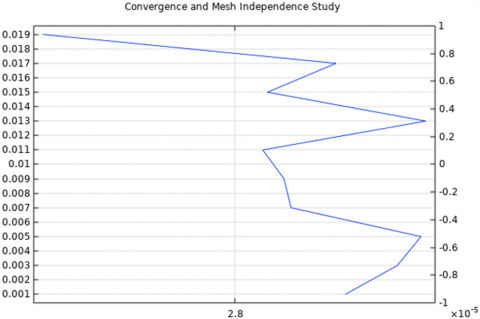
Figure 1. Mesh independence variation of the computed solution variable with mesh size to confirm numerical convergence
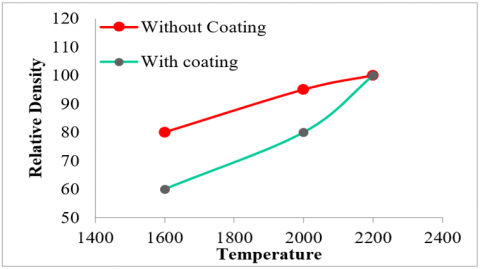
Figure 2. Temperature (℃-enhanced relative density (unitless))
Table 4. Summary of research objectives, experimental techniques, results, and discussion
|
Objective |
Experiment/Technique |
Result |
Discussion |
|
Microstructural Characterization |
FE-SEM Images |
Uniform fiber distribution at lower concentrations; agglomeration at higher concentrations. |
The uniformity of carbon fiber distribution in the composites is consistent with, but agglomeration suggests the need for optimization at higher concentrations. |
|
Thermal Properties |
Thermal Conductivity Measurement |
Thermal conductivity decreases as fiber concentration increases. |
This behavior aligns with literature, where carbon fibers act as insulators, which is beneficial for applications requiring high thermal resistance. |
|
Phase Stability |
XRD Analysis |
No phase changes observed up to 1500℃. |
The results confirm the high thermal stability of the composites, consistent with findings in similar studies on HfN-based ceramics. |
|
Thermodynamic Behavior |
TGA |
Composites show stable thermal performance up to 1200℃, with minimal weight loss. |
The thermal stability observed supports the suitability of these composites for high-temperature applications. |
|
Mechanical Properties |
Fracture Toughness |
Fracture toughness increases significantly with fiber reinforcement. |
The increase in toughness is likely due to the crack-bridging effect of the fibers, as reported in other studies of fiber-reinforced ceramics. |
6.3 High-temperature mechanical behavior
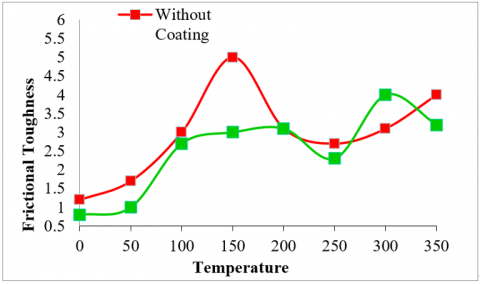
In the ultra-high temperature structural ceramics, mechanical behavior at high temperature is used frequently, which makes the choice of refractory ceramics significant. These materials' microstructural control and thermodynamic characteristics are useful in improving mechanical performance at higher temperatures. Included are creep resistance, fracture toughness, and high-temperature strength, the latter of which is necessary for applications in hostile environments. For example, the use of silicon carbide (SiC) in the ZrB2 composites improves oxidation resistance and provides better protection for the fiber by the formation of a borosilicate scale [29]. Moreover, in case of high temperature applications, ceramic matrix composites have proved highly aspecting dielectric strength, stiffness, and chemical stability; issues like thermal-shock and oxidation remain a limitation. Thus, the results obtained in Figure 3 demonstrate the need for further investigations of thermomechanical properties as well as other mechanical behaviors of refractory ceramics at elevated temperatures, which is essential for the improvement of ceramic performance under ultra-high temperature service conditions (Table 5) [30].
6.3.1 Creep and stress rupture
Creep and stress rupture are the parameters that define the suitability of refractory ceramics in high temperature application. Creep, the slow deformation of a material at a constant load, and stress rupture, the sudden failure of the material at high stress, are two major features that affect the high-temperature performance of the material. In this context, the optimization of the microstructure and thermodynamic state of the material is used significantly to solve these problems. Information on the microscopic features of refractory ceramics can be obtained by methods such as FE-SEM and EDS, which will help to predict the response of the material to applied stress and high temperatures.
Table 5. Mechanical properties and temperatures of materials
|
Initial Temperature |
Expression |
Value |
|
|
T deposition |
800[deg C] |
1073.2 K |
|
|
T epoxying |
150[deg C] |
423.15 K |
|
|
T room |
20[deg C] |
293.15 K |
|
|
Property |
Expression |
Value |
Unit |
|
Young's modulus |
E |
7e10 |
Pa |
|
Poisson's ratio |
ʋ |
0.17 |
1 |
|
Density |
$\rho$ |
1000 |
kg/m³ |
|
Coefficient of thermal expansion |
αiso, αii = αiso, αij = 0 |
5 × 10⁻⁷ |
1/K |
Figure 3. Effect of temperature on frictional toughness
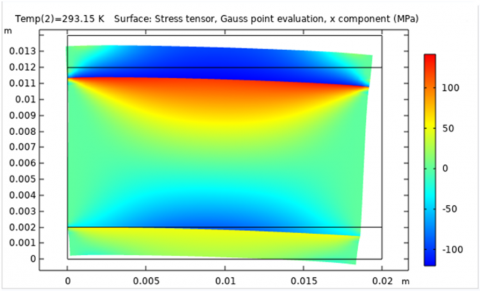
Moreover, the mechanical properties of such materials also involve experiments concerning their bending strength, the ability to withstand fracture, and thermal stress. To understand their behavior under extreme conditions, Figure 4 gives important information. Moreover, it is also necessary to include some stabilizing agents and know more about the creep processes in ceramic materials to increase their resistance against creep and stress rupture fatalities.
6.3.2 Fracture toughness
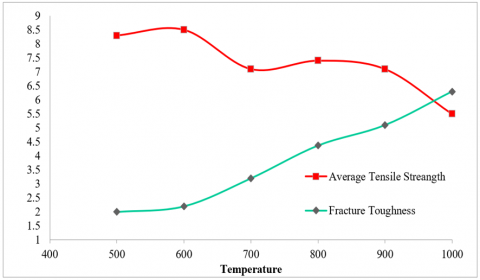
Fracture toughness is a critical property for high-performance refractory ceramics intended for ultra-high-temperature applications. Figure 5 shows that adding elements such as NiO and Al2O3 can significantly impact fracture toughness by influencing the transformability of the tetragonal phase in zirconia ceramics. For instance, forming a multi-level system of Al2O3 inclusions, combined with the enrichment of zirconia grain boundaries, has increased fracture toughness. Additionally, adding Al2O3 and NiO has been observed to promote the increase of Y3 + concentration in large zirconia grains in composites, leading to the metastability of Y3±depleted ZrO2 grains. This process occurs during the sintering–cooling process, where the amount of segregated Y3+ ions on grain boundaries increases with higher sintering temperatures due to enhanced diffusion processes and ion segregation.
In this work, an investigation is therefore made in order to optimize properties of HfN-based ceramics for use with high-temperature applications. But, for comparison or interest, we will also consider ZrB2-based systems that possess similar properties and applications, with different characteristics (that can help in the possible optimization of HfN ceramics).
Figure 4. Stress tensor, Gauss point distribution, x component (MPa) at Temp = 293.15 K
Figure 5. Effect of temperature on the relationship between fracture toughness and average tensile strength
To set in place the importance of ZrB2-based systems while concentrating on HfN- based ceramics by themselves.
This work is principally dedicated to HfN-based ceramics, but the results from ZrB2-based systems are helpful in all aspects of processing and characterization. The procedures adopted in the synthesis and characterization of HfN and ZrB2 composites are described below. To connect the emphasis on HfN with the techniques applied to ZrB2, such that there is an understanding of why we also consider ZrB2 systems.
The above results clearly manifest that the mechanical and thermal properties of ZrB2-based ceramics were effectively improved. These results, although related with ZrB2 composition, can be applied to optimize the HfN-based ceramics exhibiting similar structures and thermal properties. To connect the ZrB2 results to an over-arching goal of optimizing HfN ceramics, to demonstrate how findings can be used guide optimization of materials based on HfN.
Our results are focused on the ZrB2 based composites, the conclusions should be applicable to HfN ceramics. Both of these material classes have common critical properties, i.e., thermal conductivity and fracture toughness, therefore the strategy reported herein for ZrB2 can be used as a guide to improve HfN-based ceramics. To establish an explicit connection between the ZrB2 based results and primary goal of improving HfN based ceramics. In summary, the findings from ZrB2-based-z systems have been insightful but the conclusions drawn in this work are fully transferable to HfN-based ceramics and thus affirm its capabilities for high performance. The next effort will be devoted to extending these developed optimization strategies to an investigation of HfN ceramics and to improve its mechanical and thermal properties. In conclusion, how the obtained results on ZrB2 will impact future work on HfN ceramics and lead to future research.
In view of the development of future UHTCf/UHTC composites, fracture toughness is under special attention in order to overcome the brittleness and insufficient thermal shock resistance known for ultrahigh-temperature ceramics. These composites are designed to have high K IC value, good thermal shock resistance, and high thermal conductivity. Intermetallics, such as transition metal borides and borocarbides in particular, are also important for load transfer and toughening in these composites, promoting overall improvements in fracture toughness. The current investigation was designed to enhance the mechanical and thermal properties of HfN composites by virtue of carbon fiber and SiC addition. Specifically, we sought to address the challenges of low fracture toughness, poor thermal shock resistance, and limited thermodynamic stability. The key findings of our experiments include significant improvements in fracture toughness, thermal conductivity, and phase stability. The discussion below interprets these findings in the context of existing literature and the hypotheses proposed.
Thus, for the future uses, efforts are made to fabricate UHTCf/UHTC composites to mitigate the properties like brittleness and poor thermal shock tolerance of the present UHTCs. These composites have benefits for example versatile defect tolerance, good fracture strength/ toughness, low specific gravities and density as well as great thermal shock tolerance and relatively high thermal conduction coefficients. High ceramic yield liquid UHTC precursors and UHTC fibers can now be prepared and used in the design and fabrication of UHTCf/UHTC composites through a CVI/PIP process. Furthermore, to establish load transfer, fiber pull out and toughening in these composites, efforts are in progress to identify new interphase materials ‘‘soft” transition metal borides and borocarbides, among them.
7.1 Aerospace and defense
Refractory ceramics with high performance are significant in aerospace or defense fields due to the high temperatures and other unfriendly working conditions. Therefore, the increase in the performance and densities of these ceramics’ microstructures, and their thermodynamics make it crucial in the improvement and efficiency of technologies, including rocket propulsion technologies, aircraft engines, missile defense and systems. For example, the ballistic properties of zirconium diboride (ZrB2) ceramics can indeed be enhanced within the temperature range of 1500-2100℃ by virtue of implementing a core-shell microstructure, rendering the such ceramics suitable for application in future generation space shuttles, rocket nozzles, and hypersonic aerospace vehicles. Further, the application of pure borides is constrained by factors such as hindered densification, oxidation, and inherent brittleness and hence requires secondary phases to overcome these difficulties. The findings used synchrotron radiation for high-temperature mechanics of aerospace ceramic composites to gain knowledge on grain size, creep, oxidation, and the effect on the mechanical properties of ceramic matrix composites. These disclosures are useful in creating ceramics that prove effective when faced with the challenging environmental barriers of space and defense engineering, that forms the foundation of critical technologies in space and defense industry.
7.2 Energy and environmental technologies
The discovery of superior materials for applications at extreme temperatures in energy and the environment is vital to the many industries in question. Ceramic matrix composites and ultra-high temperature ceramic matrix composites have reflected great potential for handling high-temperature environments, with applications in power generation, emission controls, and energy storage. These materials demonstrate significantly enhanced thermal stability in comparison with the metallic superalloy and TBCs for possible thermal shock, load carriers and manufacturing imperfection problems. Moreover, UHTCMCs have exhibited ductile characteristics in post-CMCs and thermal shock endurance as well as the potential for employment in advanced TPS.
The unique microstructure and thermodynamic constitution of these materials, which have been established as the driving force behind improved high-end performances and service life of such materials in ultra-high temperature conditions, form the basic argument of this discussion. An important focus when using UHTCMCs involves understanding their mechanical properties and thermal shock resistance when used in extreme conditions, and future work will continue in understanding the potential for enhancing energy and environmental technology.
The creation of high-performance refractory ceramics for UHT applications has some issues and future opportunities. An issue, which is difficult to solve, is the low oxidation resistance and fracture toughness of some materials at high temperatures. For example, low density, high thermal conductivity of ZrB2 composites, but poor oxidation resistance for those materials at temperatures above 1000℃, and low fracture toughness. To overcome these limitations, the present work focuses on the use of silicon carbide (SiC) to improve the oxidation resistance up to 1650℃ by the formation of the borosilicate scale. Also, the prospect for enhancing the fracture toughness and thermal shock resistance of the UHTCMCs has been observed through the incorporation of continuous carbon fibers as reinforcements. Future work in this area must concentrate on enhancing the coefficients and structures of such complex composites to increase their performance at high temperatures.
The first important area for the prospective research is associated with the selection of appropriate interphase material for UHTCf/UHTC composites. Although the use of these composites is characterized by good defect tolerance, high fracture toughness, low density and high thermal shock resistance, a proper choice of the interphase material is important for the load transfer and the general toughening. There are many interphase materials proposed. For example, “soft” transition metal borides and borocarbides. However, more effort must be made to fine-tune their properties and improve the grain boundary of UHTCf. This field constitutes a high potential for improving the mechanical and thermal characteristics of the future UHTCf/UHTC composites.
Future research could focus on:
8.1 Current limitations and bottlenecks
It has been presented in Figure 1 that the oxidation resistance of ZrB2 can be enhanced up to 1650℃ by incorporating silicon carbide (SiC). Nevertheless, overall, their low fracture toughness and thermal shock resistance remain problematic. Zoli et al. [2] also showed that one of the biggest challenges in coping with CTE mismatch between the matrix and the fiber results in micro and macro crack formation. These studies offer a critical assessment of the existing state of the art in the advancement of high-performance refractory ceramics with regard to microstructure control and thermodynamic stability, pointing out developmental directions for future research.
8.2 Emerging trends and innovations
Scientists and engineers are investigating novel fabrication strategies and compositions regarding the improvement of high-temperature and high-strength refractory ceramics for extreme temperatures. One of them includes the synthesis of UHTCMCs, in which the addition of SiC and continuous carbon fibers to ZrB2 has provided encouraging results. Researchers have established that when varying levels of SiC are incorporated, it enhances the ability of the material to be protected by a borosilicate scale. Further, the use of continuous carbon fibers has enhanced the fracture mechanics and performance under thermal shock, which are vital for high-temperature applications. Also, the advancement of ultrahigh-temperature ceramic fiber reinforced ultrahigh-temperature ceramic matrix composite materials has attracted interest since they compensate for the weakness and poor thermal shock toughness prevalent in certain next-generation aerospace materials known as ultrahigh-temperature ceramics. The benefits of these composites include the ability to tolerate defects, high resistance to fracture, low density, among them being the ability to withstand thermal shock. Such development in this area draws the use of high ceramic yield liquid UHTC precursors and UHTC fibers to design and fabricate the UHTCf/UHTC composites through new techniques. Also, pre-selection of new interphase materials such as ‘soft’ transition metal borides and borocarbides is considered as one of the important directions for further advancement in UHTCf/UHTC composites with an emphasis on the chemical bonding nature responsible for the properties of the materials.
Therefore, the microstructural developments and thermodynamic parameters of high-performance refractory ceramics for ultra-high-temperature applications play a critical role in improving the mechanical and thermal properties. One must be reminded of the fact that when the microstructure and phase stability of such materials are properly controlled, these materials, for instance, exhibit enhanced strength, creep, and oxidation resistance for application in extreme conditions. More research is, however, needed in this area since advanced high-temperature applications can benefit from improved performance refractory ceramics. However, addition of SiC has been analyzed to enhance the oxidation property of carbon fiber reinforced ZrB2/SiC composites as well as increase the thickness of the protective layer and thus reduce the weight loss when exposed to oxidation tests at high temperatures above 600℃. This study, therefore, demonstrates the importance of microstructure control and chemical composition of refractory ceramics for enhanced performance under severe conditions.
All authors have significantly contributed to the conception, design, analysis, and interpretation of the study. Each author participated in drafting and revising the manuscript and has approved the final version for submission. The corresponding author confirms that all listed authors meet the authorship criteria and that there is no conflict of interest among the contributors.
[1] Sun, Z., Shan, Z., Huang, H., Wang, D., et al. (2024). Multi-scale modeling and finite element analyses of thermal conductivity of 3D C/SiC composites fabricating by flexible-oriented woven process. Chinese Journal of Mechanical Engineering, 37(1): 60. https://doi.org/10.1186/s10033-024-01016-6
[2] Zoli, L., Vinci, A., Galizia, P., Melandri, C., Sciti, D. (2018). On the thermal shock resistance and mechanical properties of novel unidirectional UHTCMCs for extreme environments. Scientific Reports, 8(1): 1-9. https://doi.org/10.1038/s41598-018-27328-x
[3] Zhang, S., Liu, M., Luo, Y., Sun, L., Wang, J., Wang, J. (2022). Theoretical prediction on structure evolution and optimal properties of silicon modified hexagonal boron nitride as interphase in SiCf/SiC composite. Journal of the European Ceramic Society, 42(13): 5323-5333. https://doi.org/10.1016/j.jeurceramsoc.2022.06.074
[4] Yin, X., He, S., Zhang, L., Fan, S., Cheng, L., Tian, G., Li, T. (2010). Fabrication and characterization of a carbon fibre reinforced carbon–silicon carbide–titanium silicon carbide hybrid matrix composite. Materials Science and Engineering: A, 527(3): 835-841. https://doi.org/10.1016/j.msea.2009.08.069
[5] Geiger, I., Apelian, D., Pan, X., Cao, P., Luo, J., Rupert, T.J. (2024). Frustrated metastable-to-equilibrium grain boundary structural transition in NbMoTaW due to segregation and chemical complexity. Acta Materialia, 272: 119939. https://doi.org/10.1016/j.actamat.2024.119939
[6] Dancer, C.E. (2016). Flash sintering of ceramic materials. Materials Research Express, 3(10): 102001. https://doi.org/10.1088/2053-1591/3/10/102001
[7] Musa, C., Licheri, R., Orru, R., Cao, G. (2013). Fabrication of fully dense UHTC by combining SHS and SPS. Eurasian Chemico-Technological Journal, 15(2): 117-126. https://doi.org/10.18321/ectj149
[8] Peters, A.B., Zhang, D., Nagle, D.C., Spicer, J.B. (2023). Reactive two-step additive manufacturing of ultra-high temperature carbide ceramics. Additive Manufacturing, 61: 103318. https://doi.org/10.1016/j.addma.2022.103318
[9] Fergus, J.W., Hoffmann, W.P. (2014). Refractory metals, ceramics, and composites for high-temperature structural and functional applications. In High Temperature Materials and Mechanisms, pp. 39-67. https://doi.org/10.1201/b16545-7
[10] Casey, M. (2000). Innovative sinter processing of non-oxide CMC materials (Doctoral dissertation, Dublin City University). http://doras.dcu.ie/18404
[11] Mansour, M.M., Ugla, A.A. (2024). Employing genetic algorithm to optimize manufacturing cells design. Academic Journal of Manufacturing Engineering, 22(3): 53-61.
[12] Mansour, M.M., Erabee, I.K., Lafta, A.M. (2024). Comprehensive analysis of water based emulsion drilling fluids in GHARRAF oil field in southern Iraq: Properties, specifications, and practical applications. International Journal of Computational Methods and Experimental Measurements, 12(3): 297-307. https://doi.org/10.18280/ijcmem.120310
[13] Mansour, M.M., Salman, A.M., Lafta, A.M. (2025). Innovative design and finite element analysis of wheel rims using boron epoxy composites: A cost-benefit and lifecycle assessment for industrial applicability. Revue des Composites et des Materiaux Avances-Journal of Composite and Advanced Materials, 35(4): 709. https://doi.org/10.18280/rcma.350413
[14] Mansour, M.M., Al-hamdani, K.S.M. (2024). Key performance indicators for evaluating the efficiency of production processes in food industry. Passer Journal of Basic and Applied Sciences, 6(2): 494-504. https://doi.org/10.24271/psr.2024.450557.1555
[15] Mansour, M.M., Shkarah, A.J. (2025). Utilization of magnetic spheres in porous media for real-time control of heat dissipation. International Communications in Heat and Mass Transfer, 168: 109439. https://doi.org/10.1016/j.icheatmasstransfer.2025.109439
[16] Lafta, A.M., Mansour, M.M. (2025). Employing artificial neural networks to forecast gas consumption by a power plant. Academic Journal of Manufacturing Engineering, 23(1): 72-86. https://doi.org/10.5281/zenodo.15180611
[17] Clarke, D.R., Levi, C.G. (2003). Materials design for the next generation thermal barrier coatings. Annual Review of Materials Research, 33(1): 383-417. https://doi.org/10.1146/annurev.matsci.33.011403.113718
[18] Texier, D., Monceau, D., Salabura, J.C., Mainguy, R., Andrieu, E. (2016). Micromechanical testing of ultrathin layered material specimens at elevated temperature. Materials at High Temperatures, 33(4-5): 325-337. https://doi.org/10.1080/09603409.2016.1182250
[19] Duan, X.Z., Nan, L., Wang, Y.Y., Tang, Z.P. (2022). Systematical study on the influencing factors of synchronous thermal analyses of samples-taking the chalcanthite as an example. Frontiers in Chemistry, 10: 863083. https://doi.org/10.3389/fchem.2022.863083
[20] Long, G.G. (2002). Ceramics division materials science and engineering laboratory FY 2002 programs and accomplishments. https://doi.org/10.6028/NIST.IR.6904
[21] Bartel, C.J., Millican, S.L., Deml, A.M., Rumptz, J.R., et al. (2018). Physical descriptor for the Gibbs energy of inorganic crystalline solids and temperature-dependent materials chemistry. Nature Communications, 9(1): 4168. https://doi.org/10.1038/s41467-018-06682-4
[22] Abadias, G., Chason, E., Keckes, J., Sebastiani, M., et al. (2018). Stress in thin films and coatings: Current status, challenges, and prospects. Journal of Vacuum Science & Technology A, 36: 020801. https://doi.org/10.1116/1.5011790
[23] Mansour, M.M., Doos, Q.M. (2025). Developing expert system for defects diagnostic for specific oil refinery pipelines via using artificial neural network. AIP Conference Proceedings, 3303(1): 060010. https://doi.org/10.1063/5.0261530
[24] Zhang, Z., Li, M., Cavin, J., Flores, K., Mishra, R. (2022). A fast and robust method for predicting the phase stability of refractory complex concentrated alloys using pairwise mixing enthalpy. Acta Materialia, 241: 118389. https://doi.org/10.1016/j.actamat.2022.118389
[25] Selle, J.E., Tennery, V.J. (1980). Stress relaxation and creep of high-temperature gas-cooled reactor core support ceramic materials: A literature search (No. ORNL/TM-7239). Oak Ridge National Lab. (ORNL), Oak Ridge, TN (United States). https://doi.org/10.2172/5417745
[26] Sadykov, V.A., Sadovskaya, E.M., Eremeev, N.F., Skriabin, P.I., et al. (2019). Oxygen mobility in the materials for solid oxide fuel cells and catalytic membranes. Russian Journal of Electrochemistry, 55(8): 701-718. https://doi.org/10.1134/S1023193519080147
[27] Silvestroni, L., Kleebe, H.J., Fahrenholtz, W.G., Watts, J. (2017). Super-strong materials for temperatures exceeding 2000Co. Scientific Reports, 7(1): 40730. https://doi.org/10.1038/srep40730
[28] Tobón, J.I., Paya, J., Borrachero, M.V., Soriano, L., Restrepo, O.J. (2012). Determination of the optimum parameters in the high resolution thermogravimetric analysis (HRTG) for cementitious materials. Journal of Thermal Analysis and Calorimetry, 107(1): 233-239. https://doi.org/10.1007/s10973-010-0997-0
[29] Taroco, H.A., Santos, J.F., Domingues, R.Z., Matencio, T. (2011). Ceramic materials for solid oxide fuel cells. Advances in Ceramics-Synthesis and Characterization, Processing and Specific Applications, 43(6): 423-446. https://doi.org/10.5772/18297
[30] Mansour, M.M. (2025). Recent advancements in refractory materials and digital innovations in precision manufacturing. Sigma Journal of Engineering and Natural Sciences – Sigma Mühendislik Ve Fen Bilimleri Dergisi. https://doi.org/10.14744/sigma.2025.00096