Juan Carlos Muyulema-Allaica* | Roberto Bernardo Usca-Veloz | Franklin Enrique Reyes-Soriano | Paola Martina Pucha-Medina | Jorge Fernando Hidalgo-Hidalgo
© 2025 The authors. This article is published by IIETA and is licensed under the CC BY 4.0 license (http://creativecommons.org/licenses/by/4.0/).
OPEN ACCESS
Demand-Driven Material Requirements Planning (DDMRP) represents a significant advancement in the evolution of Material Requirements Planning (MRP) by addressing the challenges of variability in manufacturing environments. Unlike traditional methods that focus on managing variability, DDMRP proactively optimizes production and inventory management by strategically positioning and sizing inventory buffers within complex Bills of Materials (BOMs). This paper aims to achieve three primary objectives: (i) to identify the theoretical foundations for the application of DDMRP through a systematic literature review; (ii) to develop a comprehensive framework outlining key Manufacturing Planning and Control (MPC) systems essential for DDMRP implementation; and (iii) to provide a detailed analysis of the methodology's core components. The research employs the PRISMA statement to enhance the clarity and transparency of the systematic review process. The analysis categorizes the reviewed literature into five critical themes: strategic inventory positioning, safety stock sizing and management, buffer profiles and level determination, and demand-driven planning. The proposed framework uncovers significant gaps in the current literature and highlights valuable opportunities for further research. Additionally, it serves as a guide for policymakers and supply chain professionals, providing insights into the selection of sustainable strategies for improving operational efficiency and responsiveness in supply chain management.
DDMRP, MRP, planning, management, inventory, manufacturing, PRISMA
Efficient operation systems and supply chain management are critical for companies striving to enhance productivity and competitiveness [1, 2]. Historically, during the 1980s, the primary concern for businesses was the capacity of suppliers to adapt and innovate in response to customer demand [3, 4]. However, inventory management remains a significant challenge, particularly for small and medium-sized enterprises (SMEs), as it requires meticulous planning and control to optimize resources while meeting fluctuating market demands [5-7]. Effective inventory management and pricing strategies are essential for policymakers and business leaders to make informed decisions that enhance supply chain resilience [6-9].
The urgency of sustainable resource utilization and environmental preservation has intensified due to growing environmental concerns. Nevertheless, existing literature scarcely addresses inventory and pricing strategies from a synchronized and sustainability-oriented replenishment perspective [10-12]. To address these gaps, Demand-Driven Material Requirement Planning (DDMRP) has emerged as a consumption-based, pull-driven methodology designed to synchronize supply chain operations with real-time demand [8, 11, 13, 14]. DDMRP fundamentally shifts traditional supply chain management paradigms from a "Push and Promote" model to a "Position and Pull" approach, enabling precise procurement and manufacturing decisions based on a multi-level Bill of Materials (BOM) [14-17].
Despite the advantages of DDMRP, production planning often involves trade-offs between cost-efficiency metrics, such as average available inventory, and service-level indicators, like On-Time Delivery (OTD) [11]. Various production planning philosophies have evolved in response to distinct industrial challenges [6, 18]. However, existing studies on inventory management lack comprehensive frameworks or systematic procedures for sustainable inventory planning, particularly in environments characterized by supply chain disruptions and intermittent demand patterns. Additionally, the prioritization mechanism in DDMRP is inherently one-dimensional, focusing primarily on adherence to predefined stock targets (buffers) [19, 20]. In contrast, real-world supply chain decision-making is inherently multi-dimensional, requiring an integrated approach that considers multiple operational trade-offs [18, 21].
Recent research underscores the potential benefits of integrating inventory and transportation management [22-24]. However, improving inventory management without negatively impacting transportation efficiency remains a challenge, as misalignment between these functions can significantly increase logistics costs [11, 25]. Thus, a dynamic balance between inventory and transportation management is necessary to optimize overall supply chain performance. While prior studies Lahrichi et al. [7], Wesendrup nad Hellingrath [12], Kumar et al. [26] have explored inventory and transportation from various perspectives, there is still a lack of structured frameworks guiding the effective application of economic models in inventory planning.
This study aims to address these research gaps by making the following contributions: (1) identifying the theoretical foundations of DDMRP through a systematic literature review, (2) developing a framework for implementing Manufacturing Planning and Control (MPC) systems under DDMRP principles, and (3) analyzing the core components of the DDMRP methodology to enhance its applicability across different industrial contexts.
2.1 Systematic review
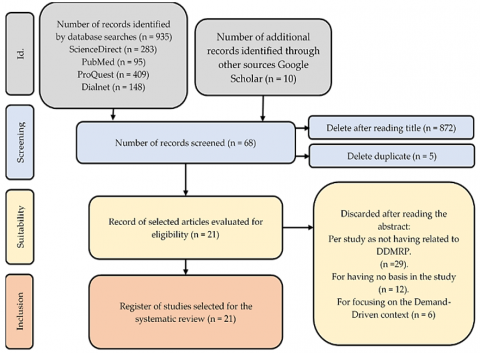
For this study, a systematic review was employed with the aim of analyzing and synthesizing the existing literature on the DDMRP method. Systematic reviews are essential tools for consolidating knowledge in a specific area, as they allow for a comprehensive assessment of advancements, identification of research gaps, and establishment of priorities for future studies [27, 28]. Furthermore, they provide answers to complex questions that cannot be addressed by individual studies and offer a consistent approach for identifying and correcting methodological or conceptual deficiencies in primary research [28, 29]. The review process was rigorously aligned with the guidelines set by the Preferred Reporting Items for Systematic Reviews and Meta-Analyses (PRISMA) protocol, which is widely recognized as a standard for ensuring transparency and consistency in the conduct of systematic reviews. The implementation of PRISMA allowed for a structured approach that facilitated the collection, analysis, and evaluation of the selected studies, ensuring a critical and objective assessment of the available literature (Figure 1).
Figure 1. PRISMA model flow chart
2.1.1 Initial searches
The research was carried out in a database, starting the search in January, with previous data for the review, later the research was expanded in May, with the combinations of a variety of terms of the "Demand-Driven Material Requirement Planning", so a variety of terms were used such as: PubMed, Google Scholar, Dialnet, SciELO, ScienceDirect, ProQuest and Scopus. Subsequently the search was augmented using terminology such as Boolean operator which are: AND and OR depending on if it requires the research, so the following terms are used: "DD-MRP", "Demand-Driven-MRP" and "Demand-Driven Material-Requirement-Planning". For the search that was carried out giving an immense result, so that many were repetitive and also some were not useful for this analysis, with the data collected it was possible to obtain a global criterion in accordance with the thematic of the study, so first a non-systematic review was carried out. In addition, the Scopus and SciELO sources did not provide relevant information, so the search in these two sources was discarded.
2.1.2 Systematic search
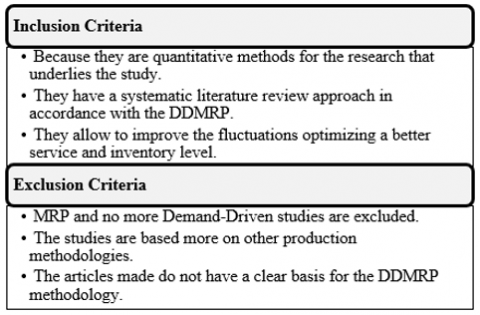
The search process commenced in May 2022, targeting key academic databases such as ScienceDirect, Google Scholar, ProQuest, PubMed, and Dialnet, with a focus on narrowing the scope to relevant scientific papers, while considering studies published in other years. To optimize the search results, combinations of specific search terms were employed, including: (("Demand-Driven MRP") OR ("DDMRP")) OR ("Demand-Driven Material Requirements Planning") AND ((Demand-Driven MRP) OR (DDMRP)) OR (Demand-Driven Material Requirements Planning). This approach yielded the following results: 10 articles from Google Scholar, 283 from ScienceDirect, 95 from PubMed, 148 from Dialnet, and 409 from ProQuest. The inclusion and exclusion criteria for selecting studies were then defined, as outlined in Figure 2.
Figure 2. Inclusion and exclusion criteria
In accordance with the criteria, we began to eliminate four duplicate articles that coincided with the information base, leaving 22 articles. Therefore, we proceeded to read the summary and eliminated 14 articles for not having a clear basis for DDMRP, 29 articles for using production methods, 22 articles for relying on other methodologies, and finally 6 articles that only used Demand-Driven in other areas.
To conclude 21 articles are within the inclusion criteria, so we proceeded to the literature review of these articles, in the same way it was considered in this research, quantitative model for its effectiveness and also for decision making, taking an approach to the DDMRP method, based on the literature review, also runs through simulations to know its impact of the production system, also states that the methodology areas that should be analyzed in the future and finally tries to optimize the process of material flow to meet the deadlines required.
In this study the DDMRP methodology refers to the material flow showing itself as a hybrid model; also, another article deals with the fluctuations, the adjustment of the level concerning the inventory and increases or maintains the level of attention; in another article the process is optimized through simulations; finally, with this database was included for the literature review.
2.1.3 Manual search
We processed to read in order to deepen the inclusion criteria of the research and also made combinations of terms for a thorough search in which 3 articles were obtained in the page ScienceDirect, in ProQuest 4 articles were obtained, in the same way in the page Dialnet 4 articles were obtained, In Google Scholar we obtained 10 articles, in ProQuest we obtained 3 articles, each one of these searched is related to the inclusion criteria where the optimization of the processes in SC stands out, and finally the sources of Scopus, PubMed and SciELO, were discarded for not having results on the study. To conclude, 21 scientists were obtained, which is considered for the literature review (Figure 1).
2.1.4 Search result
According to the research, we proceed to detail as shown in Table 1. The following is an analysis of the work, according to the database that was obtained, to facilitate the interpretation and understanding of each of the articles. Considering that most of the articles highlight the optimization of the SC, the costs, the level of control regarding the production and also the fluctuations in the production process, it is necessary to consider that the most important aspects of the articles are the following.
Table 1. Reviewed articles
|
Ref. No. |
Target |
Technique |
Results |
|
[5] |
Reduce sales and inventory. |
Simulation and validity of the DDMRP model. |
Decreased inventory and minimized out-of-stocks. |
|
[3] |
Address the need and efficiently manage inventory. |
Qualitative and quantitative method of the company transforming from MRP to DDMRP. |
Reduced inventory level by 52.53% and increased material consumption by 8.7%. |
|
[30] |
Increase service level and adjust inventory. |
Systematic literature review of the work. |
Verified process standards for DDMRP implementation. |
|
[31] |
Increase material flow and improve your company's bottom line. |
Performance simulations for DDMRP implementation. |
Reduced inventory level by 24% and increased material consumption by 14%. |
|
[32] |
Address variability by adjusting inventory. |
Study of the taxonomy of published scientific papers on DDMRP. |
Achieved product fluctuation and BOM, maintained, or increased customer service. |
|
[33] |
Improve SCP's. |
The basic principles of DDMRP, comparing other models and case studies. |
Improved SPC, overcoming some identified weaknesses. |
|
[1] |
Debate the taxonomy of the literature and propose the DDMRP model. |
Study of DDMRP contributions. |
Identified new alternative manufacturing SCP. |
|
[34] |
Address its shortcomings and integrate replenishment techniques. |
Winter multiplicative, winter additive, double exponential smoothing and simple moving average method. |
Evaluated DDMRP indicators, evidence of impact and reduction of inventory costs. |
|
[35] |
Determine the level of SS. |
Study of the SS level based on DDMRP. |
Established SS level simulation model. |
|
[36] |
Manage variability in operational, management, supply and demand. |
Study of the impact of variability on distribution flow. |
Verified the procedure to implement it in the industry. |
|
[37] |
Expand the theoretical concept of SC. |
Analysis of SC and demand fluctuation concerning DDMRP system. |
Optimized the individual subsystems, achieving an optimal supply chain. |
|
[38] |
Compare MRP and DDMRP. |
PP approach based on demand instability. |
Simulation shows that DDMRP improves SCP and is more efficient than MRP. |
|
[39] |
Analyze the location of buffers. |
Analysis of customer, market, and manufactured products. |
Evaluated the cost, using CPLEX and its CP Optimize. |
|
[40] |
Investigate their impact on industrial performance. |
Discrete event simulation in relation to customer, supplier, and process. |
Analyzed buffer placement. |
|
[41] |
Satisfy customer demand. |
TOC, Lean and dynamic buffer method. |
DDMRP demonstrated superior criteria based on demand satisfaction. |
|
[13] |
Compare MRP II and DDMRP. |
Discrete event simulation. |
DDMRP achieved superior criteria relative to MRP II. |
|
[42] |
Develop a DDMRP model. |
Hybrid approach for software simulation. |
It reduces the LT to 41% and also the stock level to 18%. |
|
[43] |
Establish criteria for traditional models. |
Systematic review, defining its boundary and understanding. |
Showed the color signals either critical or priority in real time. |
|
[44] |
Measure and evaluate MRP and DDMRP. |
Focus on performance verification. |
Obtained that the DDMRP reached an optimal performance than the MRP. |
|
[10] |
Evaluate performance between DDMRP and MRP. |
Literature review of MRP and DDMRP. |
DDMRP, which controls production inventory, is more effective than MRP. |
|
[45] |
Address and manage the different needs regarding materials management. |
Analysis of the company's inventory management. |
DDMRP increases visibility in relation to SC. |
Notes: This table presents a summary of reviewed articles on the application of DDMRP methodology. Each row represents a different study, its target, research technique, and the results found. Specific abbreviations and terminology are defined in the respective articles.
3.1 Literary gap
In the studies on the implementation of DDMRP methodology by El Marzougui et al. [1], Kortabarria et al. [3], Orue et al. [30], Azzamouri et al. [32], Lee and Rim [35], Erraoui et al. [36], Dimas Mukhlis et al. [45], indicated that the DDMRP framework is still difficult to implement due to its scarcity of information as it is a modern system and encompasses a more dynamic production. For this reason, as a result of this gap, it is required to study a framework and process for the implementation of the design under that facilitates companies to use, so that they can quantify the planning and also for inventory control through the DDMRP design by means of Buffers can control fluctuations. Given the events it is necessary to promote the study in order to establish a beneficial and effective framework for the design of the DDMRP model in the distribution companies.
3.2 Main DDMRP MPC systems
3.2.1 MRP
Butturi et al. [33], interpreted MRP as comprising a series of techniques that are used in the database such as BOM, inventory and master production schedule (MPS) to determine the material requirements, to generate decision making and to release the material replenishment order.
From the development of MRP came a transformation to MRP II and then to Enterprise Resource Planning (ERP) obtaining new components, since it has evolved so much in technology and has also changed the market requirements, this traditional method is the basic engine that is used to promote information systems, which was developed in the 1960s [3]. However, many studies concerning the MRP have identified several problems such as inaccuracy concerning the Master Production Schedule (MPS) forecast, complete execution concerning the BOM, order release for manufacturing, inaccuracies in the LT, among others [1]. In the same way, Kortabarria [3] has studied the MRP concluding that it is not one of the best MPC systems to face such a volatile and variable environment. Therefore, MRP is considered a traditional system and is not a suitable method in such an agile environment as the current ones [1].
3.2.2 Evolution of SC conditions
The SC Management (SCM) that works directly in the planning, inventory control and also the flow of information through suppliers to customers. Given a big step in evolution within the time period from 1999 to 2005, it works on multilevel inventory management, mainly in distribution networks, in relation to operational research [36].
Also the diverse parameters that it generates result with a greater variability within the production system referring to the MRP II so it makes it difficult to determine an accurate forecast, in the same way it is understood that the MRP so it alters the changes in demand, generating a whip effect and in the same way it presents a bimodal level of existence, so it requires this method a reliable network system in non-existence of variables and peaks of demand. The MRP has limits with the current market restrictions, i.e., at present the company is facing the market demand; in order to achieve this requirement, it must comply with greater efficiency in all operations and also using company resources, this causes fluctuations in demand [1]. Under this context, a modern approach such as DDMRP has emerged.
Variability:
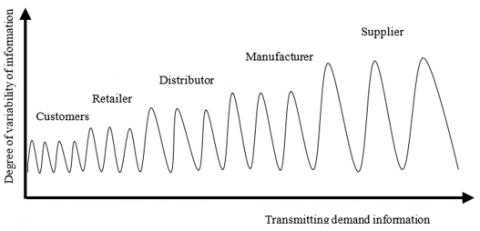
The variability of DDMRP has four main sources that are identified as supply variability, demand variability, operational variability, uptime variability and quality problem management variability (Figure 3) [1]. The last one causes the whiplash effect and also the bimodal distribution according to the SC inventory [45], it should be emphasized that the SCM, both scientists and industrialists noticed the whiplash effect obtaining that the variability process increases as we change from one level to another concerning the SC [36].
Figure 3. Main variabilities
Bullwhip effect:
It is an enlargement progress concerning the variability, within the perspective of the SC crossing from customer to producers. In particular, when the order according to the suppliers, delaying more concerning the buyer's sales (demand distortion), the distortion is amplified as water upstream in such an amplified way (disparity widening). The effect gives start by the lack concerning the SC synchronization as shown in Figure 4 where customer, retailer, distributor, manufacturer and supplier are shown [39], his focuses on the cause concerning the effect and determination to decrease its impact so five main causes are identified as of the whip effect, The use of demand forecasting, supply shortage, delivery time, batch order and price variation are included, thus providing some alternatives to reduce the impact of the whip effect, according to the consolidation of information related to demand.
Figure 4. Diagram of the bullwhip effect
Bimodal distribution:
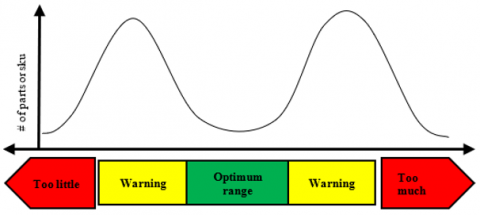
Applying the MPC system, the stock level of a company shows a bimodal distribution that varies between too little and too much inventory, according to Figure 5 we can observe two general points of the inventory (red zones) that identifies too little, where it points to lost sales and lack of stock, and at the other point where it indicates too much, where it points to excess cash [8, 39].
Figure 5. BIMODAL distribution
3.2 DDMRP
In today's volatile and unpredictable manufacturing environment, traditional systems often prove too complex, necessitating the adoption of a demand-driven manufacturing methodology. This approach is designed to shorten lead times while aligning production efforts with market demand, enabling more effective planning, management, and modeling of the supply chain (SC) in a way that protects and enhances material flow. Additionally, it organizes replenishments and operational processes based on demand-driven models [46].
As an evolution of the traditional MRP system, DDMRP offers significant advantages over its predecessors, particularly in terms of reducing uncertainty and mitigating the bullwhip effect within the SC [33]. Furthermore, in response to fluctuations, DDMRP introduces new strategies for lead time compression, effectively aligning production with market demand [3]. Orue et al. [30] analyzed the DDMRP methodology, demonstrating its capacity to optimize inventory management and enhance service levels.
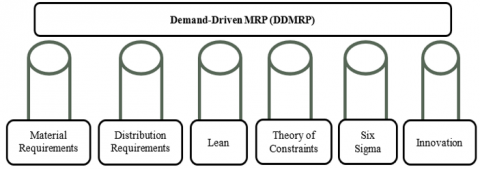
Figure 6 illustrates the fundamental pillars of DDMRP, highlighting its integration across various areas. It effectively manages material flow [31], providing a robust system for inventory control and production planning [10]. As a modern, hybrid model, DDMRP combines the best practices from MRP, DRP, Lean, Six Sigma, and the Theory of Constraints (TOC), incorporating key innovations that foster improved decision-making in the face of current market challenges [8, 45].
Figure 6. DDMRP
This methodology creates its own analysis and has the ability to provide a solution to various problems, in the same way it provides a comprehensive approach to operations management [32]. This method is focused on SC, achieving flow optimization in relation to distribution [36]. In addition, a suitable way is determined in order to give a good decision making [33]. In this way the methodology also incorporates manufacturing control and planning [3]. For this reason, the method involves innovative aspects and also capacity, which aims to give solution to the whip effect in relation to SC [33]. However, the fluctuation manages to analyze the supply, management, demand, and operation, reaching to reduce the costs and also reducing the LT [36]. This model analyzes the fluctuations and manages to adjust the inventory and increase the service [32], achieving a better organization according to inventory management, production, and planning [39, 43].
To obtain a solution to the problem, this new model called DDMRP is generated, it is based on traditional methods such as: MRP; TOC and JIT: MRP; TOC and JIT. In order to obtain a better visibility in the company, the position according to the variability that corresponds to the demand, adjusting the stock levels, while maintaining or increasing the service level [47]. In order to use the DDMRP method, work is done in three areas: distribution, production and purchasing, and the model is carried out with five fundamental steps (Figure 7). To conclude we have defined five primary components as building blocks in DDMRP, which are designed to be introduced and also applied together, while ignoring components that would greatly reduce the value of the solution in most environments, in which we first identify the position, then for both the second and third is to protect, and finally the fourth and fifth is to pull [8, 39].
Figure 7. Five phases
Azzamouri et al. [32] indicate the DDMRP model, which is comprised of five components, namely:
1. Buffer positioning
2. Profiles and buffer levels
3. Configurations and settings
4. Demand-driven planning
5. Visible and collaborative execution
3.3 Analysis framework
In the research related to DDMRP, there are 5 components which will be detailed in the following steps to obtain a better perspective [32].
3.3.1 Strategic inventory positioning
Thus, by placing the inventory in several parts to locate the difficulties, working on the 4 main fluctuations factors, and decreasing the LT, placing the inventory in several parts causes a huge problem in relation to the resource. However, removing the inventory and also the SC causes significant risk [8, 39].
3.3.2 Profiles and protection levels
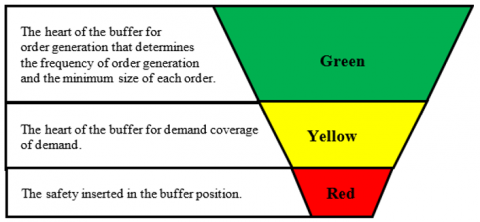
In the second step with respect to the DDMRP, it is to identify the safe amount of the decoupling point [21]. In which it is identified in three damping zones (Figure 8).
Figure 8. Buffer zone
Then the guidelines will be used as set out in Table 2 and 3, where the lead time factor (LTF) and also the variability factor (VF), which is determine at 3 level [35], are identified. Depending on the type in relation to the product and LT.
Table 2. FL factor
|
Waiting Time |
LTF (%) |
Part Purchased (Days) |
|
Long |
20 – 40 |
26 + |
|
Medium |
41 – 60 |
11 – 25 |
|
Short |
61 – 100 |
1 – 10 |
Table 3. VF factor
|
Waiting Time |
VF (%) |
|
Long |
62 – 100 |
|
Medium |
42 – 60 |
|
Short |
21 – 40 |
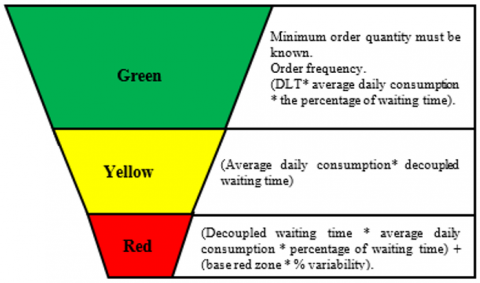
Figure 9 identifies each zone for the purpose of calculating demand and distribution data in relation to the DDMRP [36].
Figure 9. Zones
3.3.3 Dynamic adjustments
Companies and their SCs must be prepared to swiftly adapt to market changes in order to ensure optimal customer service. Achieving this flexibility requires the use of dynamic buffers that can effectively respond to new requirements. In this context, the DDMRP method facilitates dynamic adjustments by incorporating operational parameters, market fluctuations, and the consideration of planned or anticipated future events. This approach ensures that planning systems remain aligned with market fluctuations, optimizing inventory management and enhancing the ability to respond to demand [3].
3.3.4 Demand-driven planning
According to this section, supply orders are generated with the name of production order, purchase order and also movement order related to the inventory. Production planning is concerned with determining the frequency and quantity of these replenishment orders [37]. Therefore, it interprets an immense importance and also an advantage of the sub-element in relation to other traditional models.
Azzamouri et al. [32], works with the original DDMRP planning design. Since it occurs under the supply order taking as reference the net flow position (NFP), when this is located in a zone of replenishments that is achieved to identify as the encoders in this case the yellow zone, if it is by quantity the coding of the green zone. Therefore, the decoupling point concerning the planning process this proceeds to generate explosions decoupling the BOM. Since a series of supply order occurs concerning the higher level, furthermore the decoupling is limited in the explosion in relation to the BOM. The explosion is interrupted because the decoupling point is at the NFP, which is determined independently at that location. The explosion continues only if the NFP at this point is below the yellow threshold (TOY). Figure 10 illustrates a clear example of the uncoupled explosion. While part 101 has an NFP below TOY, the explosion starts and stops once it reaches the decoupling point. In contrast, parts 304P, 301, and 203 will continue to explode regardless of whether their NFP reaches TOY. In conclusion, when the NFP of part 501P reaches TOY, the explosion will proceed indiscriminately [3].
Figure 10. Uncoupling explosion
3.3.5 Execution-visible and collaborative
Finally, this step encompasses both the planning and execution phases. The DDMRP methodology makes a clear distinction between these two stages. The planning phase involves generating a supply order request based on the net flow item and concludes when the proposal is approved and converted into an official supply order. The execution phase, on the other hand, focuses on managing these open supply orders to ensure the protection and facilitation of inventory flow. DDMRP utilizes color-coded alerts to enhance visibility and prioritize orders effectively. These alerts highlight urgent situations that require immediate attention, enabling companies to prioritize orders based on the current status of available stock, rather than relying solely on scheduled delivery dates [30].
This literature review highlights the benefits of the DDMRP method for companies that effectively implement it, as it directly addresses operational deficiencies while optimizing inventory management [32]. Damand et al., [6] emphasize the need for enhanced production control and planning systems tailored to modern industrial paradigms. The methodology enables a direct performance analysis by assessing inventory reduction, lead time (LT) improvements, and overall service level enhancement [44]. Dimas-Mukhlis et al. [45] recommend DDMRP due to its global approach, offering multiple alternatives that align with BOM inventory management, reducing unnecessary costs and fostering operational efficiency.
Miclo et al. [13] demonstrate that DDMRP effectively anticipates both small and large fluctuations in demand, making it particularly useful in managing peak periods. Similarly, Bayard et al. [40] validate the model’s efficiency by showing that buffer placements at different levels result in an OTD rate of 99.5% relative to average capital. Shofa and Widyarto [10] report increased material consumption efficiency, leading to improved inventory levels. Benjumea-Medina et al. [34] find that DDMRP reduces total input and product costs by 74.77% and lowers EOQ by 40.5%, proving its superior efficiency. Furthermore, in an 11-month study analyzing 579 samples, DDMRP led to an 8.7% increase in goods consumption while reducing average inventory by 52.53% [3].
Paredes Rodríguez et al. [5] highlight DDMRP’s role in preventing stockouts and excess inventory, achieving a 41% reduction in LT and an 18% decrease in inventory levels, ultimately improving customer satisfaction. Orue et al. [30] confirm its strong industrial performance across various sectors. However, this literature review reveals a notable gap: the lack of standardized processes for DDMRP implementation.
A comparative analysis between DDMRP and traditional MRP underscores key distinctions. Unlike MRP, which relies on fixed lead times and forecast-driven planning, DDMRP employs a demand-driven approach with dynamic buffer adjustments. This enables better responsiveness to variability and reduces the risk of stockouts or overstocking. Nevertheless, DDMRP is not without limitations it requires significant organizational adaptation and may not be suitable for all production environments, particularly those with highly erratic demand patterns.
To enhance the practical implementation of DDMRP, modern software solutions play a crucial role. Platforms such as Odoo and Replenishment offer integrated tools that facilitate buffer management, real-time inventory tracking, and demand-driven replenishment. These technologies improve data visibility, automate decision-making processes, and enhance supply chain agility. Further research should explore the standardization of DDMRP implementation, as well as its adaptability to diverse industrial contexts, to maximize its long-term impact.
The thorough literature analysis has established the theoretical foundations supporting DDMRP, highlighting its evolution and distinction from traditional MRP approaches. It has been demonstrated that DDMRP is based on key principles such as the integration of real-time demand signals, the use of dynamic buffers, and flexible inventory management. This review has emphasized the advantages of the DDMRP approach in addressing uncertainty in modern supply chains, particularly in environments characterized by highly volatile demand. However, key challenges were identified due to the lack of standardization in its implementation, which limits its universal adoption.
The development of a framework for implementing MPC based on DDMRP has been a significant contribution to understanding how this approach can be operationalized in practice. This framework proposes a flexible structure that adapts to the specific needs of each industry, allowing for an effective transition to a demand-driven planning system. However, the findings revealed that the absence of clear guidelines and standardized procedures is a significant barrier to the successful implementation of DDMRP. It is recommended that future research focus on creating simulation tools and evidence-based implementation guides to help overcome these barriers.
The analysis of the core components of DDMRP revealed that, although this approach holds great promise for improving supply chain performance, its applicability varies depending on the characteristics of each industrial sector. Factors such as supply chain complexity, demand variability, and production responsiveness play a crucial role in determining the effectiveness of DDMRP in different contexts. This study highlights the need to adapt the model to the realities of each industry to maximize its potential. Additionally, the integration with emerging technologies, such as the Internet of Things (IoT) and machine learning, could strengthen DDMRP's ability to manage the complexity and dynamics of modern supply chains, making it a key area for future research.
Although the benefits of DDMRP are evident, implementing this approach faces several challenges, including the lack of formalized standards and resistance to change within organizations. These obstacles point to the urgent need for more robust, evidence-based implementation frameworks, as well as simulation tools that can predict variability in complex production systems. In terms of future research, it is crucial to develop advanced decision-support models that use predictive analytics and simulations to optimize buffer placement and dynamic inventory management. Furthermore, integrating emerging technologies offers a promising path to expand DDMRP's capabilities, enabling scalability and improving operational performance.
We express our sincere gratitude to the institutions whose support and collaboration have made this study possible. This research was conducted collaboratively and interdisciplinarily by researchers from the Peninsula of Santa Elena State University (UPSE), Ecuador; the State University of Bolívar (UEB), Ecuador; the Faculty of Business and Economics at the University of the Pacific (UdP), Ecuador; and the Universidad Nacional Experimental Sur del Lago "Jesús María Semprum" (UNESUR), Venezuela. The synergy among these institutions has been instrumental in advancing this study, fostering an environment conducive to knowledge exchange and the strengthening of academic rigor. Furthermore, we extend our appreciation to all individuals and organizations who, through their expertise, resources, and time, contributed to the progress and successful completion of this project.
[1] El Marzougui, M., Messaoudi, N., Dachry, W., Sarir, H., Bensassi, B. (2020). Demand driven MRP: Literature review and research issues. In 13ème Conférence Internationale de Modélisation, Optimisation et Simulation (MOSIM2020), Agadir, Maroc.
[2] Liu, X.H., Deng, Q.W., Liu, S.B., Gong, G.L., Luo, Q. (2025). Collaboration and sustainability-driven requirement prioritization for cloud platform planning oriented to value chain lifecycle services. Computers & Industrial Engineering, 110973. https://doi.org/10.1016/j.cie.2025.110973
[3] Kortabarria, A., Apaolaza, U., Lizarralde, A., Amorrortu, I. (2018). Material management without forecasting: From MRP to demand driven MRP. Journal of Industrial Engineering and Management, 11(4): 632-650. https://doi.org/10.3926/jiem.2654
[4] Lahrichi, Y., Damand, D., Barth, M., Mornay, S. (2023). A first attempt to enhance Demand-Driven Material Requirements Planning through reinforcement learning. IFAC-PapersOnLine, 56(2): 1797-1802. https://doi.org/10.1016/j.ifacol.2023.10.1892
[5] Paredes Rodríguez, A.M., Jaramillo, K.C., Jaramillo, J.D. (2022). Simulación de una política de inventario basada en la metodología demand driven MRP desde un enfoque de redes de Petri. Ingeniería, 27(1): e18002. https://doi.org/10.14483/23448393.18002
[6] Damand, D., Lahrichi, Y., Barth, M. (2023). Parameterisation of demand-driven material requirements planning: A multi-objective genetic algorithm. International Journal of Production Research, 61(15): 5134-5155. https://doi.org/10.1080/00207543.2022.2098074
[7] Lahrichi, Y., Damand, D., Barth, M. (2022). A first MILP model for the parameterization of Demand-Driven MRP. Computers & Industrial Engineering, 174: 108769. https://doi.org/10.1016/j.cie.2022.108769
[8] Martin, G., Lauras, M., Baptiste, P. (2023). Dynamical multi-parameter sizing of DDMRP buffers in finite capacity flow-shops. Computers & Industrial Engineering, 175: 108858. https://doi.org/10.1016/j.cie.2022.108858
[9] Bayard, S., Grimaud, F., Delorme, X. (2024). Demand driven material requirement planning: Core concepts and analysis of its behavior on a case study. IFAC-PapersOnLine, 58(19): 1054-1059. https://doi.org/https://doi.org/10.1016/j.ifacol.2024.09.134
[10] Shofa, M.J., Widyarto, W.O. (2017). Effective production control in an automotive industry: MRP vs. Demand-Driven MRP. AIP Conference Proceedings, 1855(1): 020004. https://doi.org/10.1063/1.4985449
[11] Younespour, M., Esmaelian, M., Kianfar, K. (2024). Optimizing the strategic and operational levels of Demand-Driven MRP using a hybrid GA-PSO algorithm. Computers & Industrial Engineering, 193: 110306. https://doi.org/10.1016/j.cie.2024.110306
[12] Wesendrup, K., Hellingrath, B. (2023). Post-prognostics demand management, production, spare parts and maintenance planning for a single-machine system using Reinforcement Learning. Computers & Industrial Engineering, 179: 109216. https://doi.org/10.1016/j.cie.2023.109216
[13] Miclo, R., Fontanili, F., Lauras, M., Lamothe, J., Milian, B. (2016). An empirical comparison of MRPII and Demand-Driven MRP. IFAC-PapersOnLine, 49(12): 1725-1730. https://doi.org/10.1016/j.ifacol.2016.07.831
[14] Ma, G., da Silva, E.R., Møller, C. (2024). Digital twin-based demand-driven production planning and scheduling system: A new conceptual framework. Procedia CIRP, 130: 705-710. https://doi.org/https://doi.org/10.1016/j.procir.2024.10.152
[15] Bosse, A., Ulmer, M.W., Manni, E., Mattfeld, D.C. (2023). Dynamic priority rules for combining on-demand passenger transportation and transportation of goods. European Journal of Operational Research, 309(1): 399-408. https://doi.org/10.1016/J.EJOR.2023.01.010
[16] Yan, L., Xu, F., Liu, J., Teo, K.L., Lai, M. (2019). Stability strategies of demand-driven supply networks with transportation delay. Applied Mathematical Modelling, 76: 109-121. https://doi.org/10.1016/J.APM.2019.06.015
[17] Qin, X., Ke, J., Wang, X., Tang, Y., Yang, H. (2022). Demand management for smart transportation: A review. Multimodal Transportation, 1(4): 100038. https://doi.org/10.1016/J.MULTRA.2022.100038
[18] Xue, G., Offodile, O.F., Razavi, R., Kwak, D.H., Benitez, J. (2024). Addressing staffing challenges through improved planning: Demand-driven course schedule planning and instructor assignment in higher education. Decision Support Systems, 187: 114345. https://doi.org/https://doi.org/10.1016/j.dss.2024.114345
[19] Thürer, M., Fernandes, N.O., Stevenson, M. (2022). Production planning and control in multi-stage assembly systems: An assessment of Kanban, MRP, OPT (DBR) and DDMRP by simulation. International Journal of Production Research, 60(3): 1036-1050. https://doi.org/10.1080/00207543.2020.1849847
[20] Franco-Quispe, D., Yauri-Tito, D., Cabel-Pozo, J., Raymundo, C. (2022). Production planning and control model to increase on-time deliveries through Demand-Driven MRP and PDCA in a make-to-order environment of non-primary manufacturing industry. In Human Interaction, Emerging Technologies and Future Systems V: Proceedings of the 5th International Virtual Conference on Human Interaction and Emerging Technologies, France, pp. 1209-1217. https://doi.org/10.1007/978-3-030-85540-6_155
[21] Xu, W., Song, D.P. (2022). Integrated optimisation for production capacity, raw material ordering and production planning under time and quantity uncertainties based on two case studies. Operational Research, 22(3): 2343-2371. https://doi.org/10.1007/s12351-020-00609-y
[22] Pelser, W.A., Marais, J.H., van Laar, J.H., Mathews, E.H. (2022). Development and application of an integrated approach to reduce costs in steel production planning. Process Integration and Optimization for Sustainability, 6(3): 819-836. https://doi.org/10.1007/s41660-022-00237-3
[23] Dessevre, G., Baptiste, P., Lamothe, J., Pellerin, R. (2023). Visual charts produced by simulation to correlate service rate, resource utilization and DDMRP parameters. International Journal of Production Research, 61(3): 741-753. https://doi.org/10.1080/00207543.2021.2015808
[24] Mohammad, F.H., Benali, M., Baptiste, P. (2022). An optimization model for demand-driven distribution resource planning DDDRP. Journal of Industrial Engineering and Management, 15(2): 338-349. https://doi.org/10.3926/jiem.3825
[25] Duhem, L., Benali, M., Martin, G. (2023). Parametrization of a demand-driven operating model using reinforcement learning. Computers in Industry, 147: 103874. https://doi.org/10.1016/j.compind.2023.103874
[26] Kumar, A., Shankar, R., Aljohani, N.R. (2020). A big data driven framework for demand-driven forecasting with effects of marketing-mix variables. Industrial Marketing Management, 90: 493-507. https://doi.org/10.1016/j.indmarman.2019.05.003
[27] Page, M.J., McKenzie, J.E., Bossuyt, P.M., Boutron, I., et al. (2021). Declaración PRISMA 2020: Una guía actualizada para la publicación de revisiones sistemáticas. Revista Española de Cardiología, 74(9): 790-799. https://doi.org/10.1016/j.recesp.2021.06.016
[28] Moher, D., Liberati, A., Tetzlaff, J., Altman, D.G., The PRISMA Group. (2010). Preferred reporting items for systematic reviews and meta-analyses: The PRISMA statement. International Journal of Surgery, 8(5): 336-341. https://doi.org/10.1016/j.ijsu.2010.02.007
[29] Andreo-Martinez, P., Ortiz-Martinez, V.M., Salar-Garcia, M.J., Veiga-del-Bano, J.M., Chica, A., Quesada-Medina, J. (2022). Waste animal fats as feedstock for biodiesel production using non-catalytic supercritical alcohol transesterification: A perspective by the PRISMA methodology. Energy for Sustainable Development, 69: 150-163. https://doi.org/10.1016/j.esd.2022.06.004
[30] Orue, A., Lizarralde, A., Kortabarria, A. (2020). Demand Driven MRP–The need to standardise an implementation process. International Journal of Production Management and Engineering, 8(2): 65-73. https://doi.org/10.4995/ijpme.2020.12737
[31] Kortabarria, A., Apaolaza, U., Lizarralde, A. (2019). Demand driven MRP-Nuevo método para la gestión de la Cadena de Suministro: Un estudio de caso. Dirección y Organización, 67: 22-29. https://doi.org/10.37610/dyo.v0i67.540
[32] Azzamouri, A., Baptiste, P., Dessevre, G., Pellerin, R. (2021). Demand driven material requirements planning (DDMRP): A systematic review and classification. Journal of Industrial Engineering and Management, 14(3): 439-456. https://doi.org/10.3926/JIEM.3331
[33] Butturi, M.A., Balugani, E., Gamberini, R. (2021). Understanding the demand driven material requirements planning scope of application: A critical literature review. In Proceedings of the 32nd DAAAM International Symposium, Vienna, Austria, pp. 462-471. https://doi.org/10.2507/32nd.daaam.proceedings.067
[34] Benjumea Medina, C., Carreño Escobar, M., Consuegra Peñaloza, C.P., Torrenegra Franco, M.C. (2020). Diseño de una herramienta aplicativa basada en la metodología DDMRP y estimación de la demanda para soportar decisiones logísticas en la empresa Colarnicos. Pontificia Universidad Javeriana.
[35] Lee, C.J., Rim, S.C. (2019). A mathematical safety stock model for DDMRP inventory replenishment. Mathematical Problems in Engineering, 2019(1): 6496309. https://doi.org/10.1155/2019/6496309
[36] Erraoui, Y., Charkaoui, A., Echchatbi, A. (2019). Demand driven DRP: assessment of a new approach to distribution. International Journal of Supply and Operations Management, 6(1): 1-10.
[37] Pekarcıková, M., Trebuna, P., Kliment, M., Trojan, J. (2019). Demand driven material requirements planning. Some methodical and practical comments. Management and production engineering review. Management and Production Engineering Review, 10(2): 50-59. https://doi.org/10.24425/mper.2019.129568
[38] Shofa, M.J., Moeis, A.O., Restiana, N. (2018). Effective production planning for purchased part under long lead time and uncertain demand: MRP Vs Demand-Driven MRP. IOP Conference Series: Materials Science and Engineering, 337(1): 012055. https://doi.org/10.1088/1757-899X/337/1/012055
[39] Achergui, A., Allaoui, H., Hsu, T. (2021). Optimisation of the automated buffer positioning model under DDMRP logic. IFAC-PapersOnLine, 54(1): 582-588. https://doi.org/10.1016/j.ifacol.2021.08.067
[40] Bayard, S., Grimaud, F., Delorme, X. (2021). Study of buffer placement impacts on Demand Driven MRP performance. IFAC-PapersOnLine, 54(1): 1005-1010. https://doi.org/10.1016/j.ifacol.2021.08.119
[41] Miclo, R., Lauras, M., Fontanili, F., Lamothe, J., Melnyk, S.A. (2019). Demand driven MRP: Assessment of a new approach to materials management. International Journal of Production Research, 57(1): 166-181. https://doi.org/10.1080/00207543.2018.1464230
[42] Velasco Acosta, A.P., Mascle, C., Baptiste, P. (2020). Applicability of Demand-Driven MRP in a complex manufacturing environment. International Journal of Production Research, 58(14): 4233-4245. https://doi.org/10.1080/00207543.2019.1650978
[43] Bahu, B., Bironneau, L., Hovelaque, V. (2019). Compréhension du DDMRP et de son adoption: Premiers éléments empiriques. Logistique & Management, 27(1): 20-32. https://doi.org/10.1080/12507970.2018.1547130
[44] Favaretto, D., Marin, A. (2018). An empirical comparison study between DDMRP and MRP in material management. Department of Management, Università Ca'Foscari Venezia Working Paper.
[45] Dimas Mukhlis, H.F., IndraEfrialdi, J., Rimawan, E. (2019). Inventory management using demand driven material requirement planning for analysis food industry. International Journal of Innovative Science and Research Technology, 4(7): 495-499.
[46] Ptak, C., Smith, C. (2016). Demand Driven Material Requirements Planning (DDMRP). Industrial Press, Inc.
[47] Guchhait, R., Sarkar, M., Sarkar, B., Yang, L., AlArjani, A., Mandal, B. (2024). Extended material requirement planning (MRP) within a hybrid energy-enabled smart production system. Journal of Industrial Information Integration, 42: 100717. https://doi.org/https://doi.org/10.1016/j.jii.2024.100717