Candrianto | Isra Mouludi | Firdaus Jamsan | Mia Ayu Gusti | Alpon Satrianto*
© 2026 The authors. This article is published by IIETA and is licensed under the CC BY 4.0 license (http://creativecommons.org/licenses/by/4.0/).
OPEN ACCESS
Concerns over the depletion of natural resources and the resulting environmental degradation caused by rapid industrialization continue to intensify. In response, many companies are increasingly pressured to adopt Green Supply Chain Management (GSCM) practices as part of their environmental strategies to enhance green innovation. However, empirical evidence on the actual impact of GSCM practices on green innovation within the palm oil sector in West Sumatra, Indonesia, remains limited. Thus, further research is required to verify the extent to which GSCM implementation can effectively drive green innovation in this sector. Grounded in institutional theory, this study examines how coercive and normative pressures influence the adoption of GSCM as an organizational response to strengthen green innovation. In addition, the study evaluates the mediating role of GSCM in this relationship. Using PLS-SEM and data from 250 palm oil companies in West Sumatra, the results demonstrate that coercive and normative institutional pressures significantly affect both GSCM implementation and green innovation. Furthermore, GSCM positively contributes to green innovation and functions as a mediator in these relationships. These findings provide valuable academic and practical insights by offering a deeper understanding of the drivers of GSCM and their effects on green innovation. The study also supports managerial efforts to enhance operational efficiency and foster sustainability-oriented innovation within the palm oil sector.
coercive pressures, green innovation, Green Supply Chain Management, normative pressures
Palm oil is a strategically important commodity for Indonesia and is used in a wide range of products, including cooking oil, biodiesel, pharmaceuticals, food, and personal care items [1]. This sector significantly contributes to Indonesia’s GDP with CPO exports reaching more than USD 15 billion in 2024 [2]; however, it has also led to extensive deforestation of 16.24 million hectares between 2001 and 2023, resulting in severe biodiversity loss [1]. This situation creates institutional pressure for Indonesian palm oil businesses as they are required to maintain organizational legitimacy and comply with environmental sustainability standards [3]. In the context of organizational legitimacy and social responsibility, institutional pressure underscores the importance of adopting green practices. Numerous scholars agree that such pressure plays a crucial role in motivating firms to implement eco-friendly strategies including green innovation [4].
Currently, many industries including the palm oil sector are adopting green innovation because it is believed to generate competitive advantages, enhance performance, protect the environment, and reduce stakeholder pressure [5-7]. As the benefits of green innovation continue to grow, previous studies have identified several capabilities that support its successful implementation, one of which is the integration of Green Supply Chain Management (GSCM) [5]. The importance of GSCM in supporting green innovation is consistent with institutional theory which emphasizes that regulatory, social, and market pressures drive the adoption of sustainability practices to meet external expectations and enhance organizational legitimacy [6, 8]. The adoption of green innovations including GSCM, reflects a company’s commitment to sustainability and helps strengthen its relationships with the government, local communities, and business partners [9]. This integration supports the effectiveness of green innovation by creating added value both environmentally and economically [10]. With the support of GSCM and institutional theory, green innovation provides a robust framework for companies to maintain competitiveness in the global market and achieve long-term sustainability [6, 8].
A research gap still exists that needs to be addressed. Previous studies have shown that institutional pressures can encourage the adoption of green innovation [4, 11], However, regulatory pressure, social norms, and market expectations have not been sufficient to explain why firms operating under similar conditions still exhibit different environmental responses leading to heterogeneity in green innovation practices. Moreover, managerial commitment plays a critical role in shaping how firms respond to various stakeholders including government, customers, communities, and environmental organizations and in formulating their environmental strategies [12, 13]. Although many studies have examined institutional pressures comprehensively including coercive, normative, and mimetic pressures [9, 14, 15], this approach often overlooks the distinct influence of each type of pressure making it difficult to understand their specific mechanisms [16]. Research that examines these pressures individually remains limited despite the importance of identifying the unique effects associated with each type of pressure [17-19].
To address this gap, the present study specifically highlights the role of coercive and normative pressures in driving green innovation through GSCM practices within the Indonesian palm oil sector which operates in a highly distinctive institutional environment. From a coercive perspective, firms are subject to stringent national sustainability regulations particularly the mandatory Indonesian Sustainable Palm Oil (ISPO) certification for which empirical evidence shows positive effects on the adoption of environmentally friendly practices and improvements in supply chain transparency [1]. Normatively, palm oil companies face intensive scrutiny from international non-governmental organizations (NGOs) which exert pressure related to deforestation, peatland protection, and Indigenous community rights. Such normative pressures have been shown to reinforce firms’ commitment to sustainability practices [14, 15].
In addition, Indonesian palm oil companies are increasingly subject to global market pressures, particularly from the European Union, which enforces stringent sustainability requirements and promotes the adoption of international standards such as the Roundtable on Sustainable Palm Oil (RSPO). Empirical studies have shown that RSPO adoption can accelerate green innovation by encouraging firms to implement more rigorous environmental practices [1, 8]. The institutional uniqueness of this sector is further intensified by the complexity of its multi-tier supply chain, which involves smallholders, cooperatives, intermediaries, mills, and large corporations. More than 40% of Indonesia’s palm oil production is generated by smallholders, who often face substantial constraints in capital, technology, and access to information. These challenges contribute to considerable variation in the implementation of sustainability practices. The dominant role of smallholders also compels larger firms to invest heavily in capacity building initiatives to ensure compliance with ISPO and RSPO standards, thereby producing heterogeneous organizational responses to institutional pressures [3].
Moreover, the industry is closely linked to global environmental issues such as deforestation, carbon emissions, land fires, and agrarian conflicts which expose it to intense and politically charged international scrutiny, more so than most other agricultural commodities [1, 3]. At the same time, land disputes and the involvement of local and Indigenous communities introduce additional legal and social complexities that frequently require third-party mediation. Taken together, the convergence of mandatory regulations, normative NGO pressures, global market demands, and supply chain heterogeneity positions the palm oil sector particularly in West Sumatra, Indonesia, as a highly relevant context for examining the distinct effects of coercive and normative pressures within the framework of institutional theory. Accordingly, this study not only addresses existing theoretical gaps but also offers more comprehensive empirical evidence on how institutional pressures especially coercive and normative pressures shape firms’ environmental responses in a highly regulated and globally scrutinized sector, ultimately serving as key drivers of green innovation through the implementation of GSCM practices.
2.1 Institutional theory
Institutional theory [20] explains that external pressures and influences shape organizational actions [4]. Consequently, organizations tend to become increasingly similar to one another due to institutional isomorphism [15]. The core principles of institutional theory [14] include legitimacy, institutional pillars, and institutional isomorphism.
This study focuses on institutional isomorphism, consistent with Rashid et al. [13], who argued that organizations often imitate the practices of other organizations in response to coercive, normative, and mimetic pressures that compel them to conform to prevailing norms and standards. Institutional isomorphism thus reflects the organizational uniformity that emerges as firms adapt to such pressures, demonstrating how organizations adjust to the dynamics of their social and institutional environments [15].
Coercive pressure originates from external entities on which organizations depend, particularly the government, such as through regulations that mandate the adoption of environmentally friendly technologies [11]. Normative pressure emerges from professional expectations imposed by various stakeholders including NGOs, industry associations, educational institutions, suppliers, and consumers [14, 15]. Meanwhile, mimetic pressure occurs when organizations imitate the strategies of competitors perceived as successful, especially under conditions of market uncertainty [21]. In essence, coercive, normative, and mimetic pressures arise from government mandates, stakeholder expectations, and competitive dynamics. This study focuses on coercive and normative pressures, as both directly influence organizational compliance and regulatory alignment, consistent with Yue et al. [22]. In contrast, mimetic pressure is more contingent on an organization’s discretionary decision to imitate the practices of others.
In summary, institutional theory highlights that external pressures coercive, normative, and mimetic shape organizational behaviors with coercive and normative pressures being particularly relevant for influencing compliance and driving the adoption of environmentally friendly practices. This provides the theoretical basis for examining how organizations especially in regulated sectors respond to external expectations and achieve legitimacy while aligning with industry norms.
2.2 Green innovation
Green innovation builds upon the innovation concept introduced by Thompson [23] and is defined by Fussler and James [24] as the development of novel products and processes that benefit firms and customers while reducing environmental impacts [11]. Green innovation includes product and process improvements that emphasize corporate environmental management, waste recycling, pollution prevention, energy efficiency, and environmentally friendly design [8]. Broadly, green innovation reflects technological or systemic advancements that support eco-friendly products and services, such as energy-efficient computers, electric vehicles, environmentally friendly smart devices, energy management applications, and green product designs [25]. Furthermore, Wen et al. [6] emphasized that green innovation is essential for addressing environmental challenges through new concepts, products, and management systems. By promoting clean technologies and sustainable materials, green innovation contributes to reducing waste, carbon emissions, and resource depletion [25]. Thus, green innovation aims to enhance competitiveness and consumer satisfaction while simultaneously advancing economic, social, and environmental sustainability [26].
In summary, green innovation integrates environmental considerations into products, processes, and management practices, providing both business advantages and societal benefits and forming a critical theoretical foundation for examining how firms respond to environmental pressures in the context of sustainable development.
2.3 GSCM and green innovation
Supply chain management (SCM) has evolved since the 1980s from a focus on material flows to broader concerns related to integration, risk, and environmental sustainability [27, 28]. This evolution led to the emergence of GSCM, which emphasizes sustainability and the mitigation of environmental impacts. GSCM represents a strategic capability for controlling environmental impacts across the supply chain [14]. GSCM integrates environmental considerations into product design, material selection, production processes, distribution, and product use, while also reducing carbon emissions through environmentally responsible procurement and operations [29]. Thus, GSCM seeks to balance ecological responsibility, social equity, and economic performance through environmentally sustainable product life cycles, resource efficiency, and the equitable distribution of benefits among stakeholders [29, 30].
GSCM fosters innovation, while green innovation further strengthens GSCM, making both essential to business sustainability [6]. The combined application of GSCM and green innovation has become increasingly common, as firms now incorporate sustainability-oriented considerations into product development [14]. GSCM also stimulates innovation in eco-friendly materials and efficient packaging during the product design phase [31]. Overall, GSCM and green innovation operate synergistically and reinforce one another [32, 33]. The implementation of both contributes to improved regulatory compliance, enhanced production efficiency, and reduced environmental impacts [34]. In summary, GSCM serves as a strategic approach that integrates sustainability into supply chain operations promotes green innovation and supports firms in achieving both environmental and business performance goals. Thus, the hypothesis of this research is as follows:
H1: GSCM has a significant impact on green innovation
2.4 Coercive pressures, GSCM, and green innovation
Coercive pressure in institutional theory refers to government regulations that promote the adoption of GSCM, as governments are considered the most dominant actors influencing organizational decision-making [35]. Regulatory frameworks play a critical role in encouraging environmental management, particularly in developing countries such as Indonesia [11]. Managers often regard government authorities as the primary drivers of environmental initiatives because non-compliance may result in sanctions [8, 14]. Strict governmental oversight further reinforces organizational compliance with GSCM practices [9].
Coercive pressure has been found to significantly influence the adoption of green innovation [12]. Environmental regulations as external pressures compel firms to minimize their ecological impact by adhering to environmentally friendly policies [11]. Coercive pressure originates from governments or regulatory bodies that require companies to undertake sustainable innovation by developing more environmentally responsible products, processes, or technologies [36]. Overall, coercive pressure plays a critical role in driving firms to implement environmentally responsible practices through regulatory mandates. In the context of this study, regulatory pressure is viewed as the most influential external force shaping firms’ decisions to adopt GSCM and pursue green innovation. Thus, the hypothesis of this research is as follows:
H2: Coercive pressures have a significant impact on GSCM
H3: Coercive pressures have a significant impact on green innovation
2.5 Normative pressures, GSCM, and green innovation
In institutional theory, customer pressure is categorized as a form of normative pressure that stems from values, norms, and social expectations [28]. Customers together with employees, shareholders, and pressure groups encourage organizations to meet sustainability expectations in order to maintain legitimacy and reputation [37]. Firms typically respond to this pressure by innovating, adopting new practices, and improving processes to align with prevailing societal norms [28]. Increasing market demand for sustainability also strengthens normative pressure on producers to adopt GSCM practices, including the use of eco-friendly materials, energy efficiency, and transparency throughout the supply chain [15]. Rising consumer awareness of environmental issues motivates companies to integrate sustainable supply chain practices [9].
Beyond influencing GSCM adoption, normative pressure also plays a significant role in shaping green innovation. Prior studies highlight that normative forces encourage firms to meet societal sustainability expectations by developing eco-friendly products, utilizing recycled or low-impact materials, adopting energy-efficient and low-emission processes, and integrating green technologies into business operations [11]. The realization of green innovation is further supported by stakeholders particularly customers who provide continuous feedback and reinforce sustainability oriented norms [38]. Thus, the hypothesis of this research is as follows:
H4: Normative pressures have a significant impact on GSCM
H5: Normative pressures have a significant impact on green innovation
2.6 GSCM mediating role
Green innovation is considered a key factor in helping companies mitigate negative environmental impacts by complying with government regulations and fulfilling customer expectations through the implementation of GSCM practices [8]. Several studies also highlight that GSCM indirectly encourages firms to adopt green innovation by reducing operational costs and improving financial performance [39]. Building on institutional theory, this study argues that GSCM acts as an organizational response mechanism through which coercive regulatory pressure and normative social expectations are translated into green innovation outcomes [4]. This suggests that firms experiencing external regulatory demands and societal expectations tend to rely on GSCM as a strategic response, which subsequently drives the development of environmentally friendly products and processes. Overall, prior research consistently shows that external institutional pressures shape firms’ sustainability responses, and GSCM plays a critical mediating role in linking these pressures to green innovation. Therefore, the research hypothesis is:
H6: GSCM mediates the relationship between coercive pressure and green innovation
H7: GSCM mediates the relationship between normative pressure and green innovation
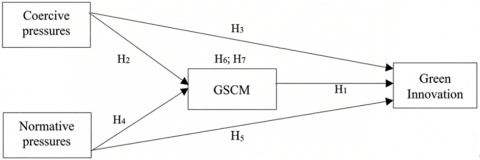
Figure 1 shows the proposed relationship.
Figure 1. Proposed research model
3.1 Development of the questionnaire, data collection, and sampling
A survey questionnaire using a quantitative approach was employed as the primary research strategy. All survey items were adapted from prior studies using modification techniques and a back-translation procedure to ensure suitability for the research context. To evaluate the instrument, the study involved seven senior managers from six plantation companies that matched the characteristics of the target sample. In addition, the questionnaire was pilot-tested with 25 MBA students at the researcher’s institution who work in agribusiness, plantation, processing, and manufacturing companies. Feedback from the MBA respondents significantly improved the readability and clarity of the questionnaire.
In May 2024, the researchers distributed a survey to selected palm oil companies in West Sumatra, Indonesia, following a pilot test. West Sumatra was chosen as the regional context for this study because the province exhibits unique institutional characteristics within Indonesia’s palm oil sector. Approximately 49.45% of the total palm oil plantation area in West Sumatra is managed by smallholder farmers, indicating that the industry is predominantly driven by small-scale producers [2]. In 2024, an estimated 256.3 thousand hectares of palm plantations were managed by smallholders, a substantial portion compared with the province’s total plantation area of 448.82 thousand hectares yielding about 674,000 tons of palm oil [2]. This significant contribution underscores the importance of palm oil to the regional economy and highlights the strategic role of the sector in supporting local economic development. In addition, palm oil companies in West Sumatra have established formal partnerships with smallholders through plasma schemes, covering a total area of 6,347 hectares [2]. This demonstrates that smallholders not only operate independently but also participate in structured collaborative arrangements with large companies.
Given the dominance of smallholders, the multi-tiered structure of the supply chain, and the varying capacities of actors to meet sustainability standards such as ISPO and RSPO, West Sumatra, Indonesia, represents a theoretically relevant and appropriate context for examining the role of institutional pressures. Coercive pressures are reflected in regulatory obligations, mandatory plasma development, and requirements for transparent supply-chain management. Meanwhile, normative pressures arise from social expectations and sustainability demands that require companies to empower and engage smallholders in responsible production practices.
Managers were selected as the unit of analysis because they possess comprehensive knowledge of their organizations’ circumstances and expertise in green innovation, consistent with the study by Huang and Chen [11] which sampled manufacturing managers in Taiwan. The questionnaire was distributed to 330 managers via WhatsApp and email, combining a convenience sampling approach with a non-probability sampling technique. To enhance the response rate, respondents were provided with various conveniences, including direct delivery, follow-up calls, and a second email [40]. A total of 250 questionnaires were completed and returned by managers after a three-month period, resulting in a 76% response rate. With a sample size of 250, the study meets the requirements for hypothesis testing [41]. Detailed information regarding respondent characteristics is presented in Table 1.
Table 1. Characteristics of respondents
|
Characteristics |
Elements |
Frequency |
|
Gender |
Men |
156 |
|
Woman |
94 |
|
|
Age |
21-30 |
25 |
|
31-40 |
130 |
|
|
≥ 41 |
95 |
|
|
Education |
Vocational high school graduate |
23 |
|
Bachelor's degree |
110 |
|
|
Master's degree |
112 |
|
|
Others |
5 |
|
|
Experience |
1-5 Year |
5 |
|
6-10 Year |
68 |
|
|
11-15 Year |
119 |
|
|
≥ 15 Year |
58 |
|
|
Manager Level |
Assistant Manager |
197 |
|
Senior Manager |
48 |
|
|
Deputy Manager |
5 |
|
|
Manager Position |
Department of Estate |
6 |
|
Department of Supply Chain |
10 |
|
|
Department of Research and Development |
2 |
|
|
Department of Operation |
1 |
|
|
Department of Marketing |
116 |
|
|
Department of Accounting |
5 |
|
|
Department of Human Resource |
110 |
3.2 Measurement of constructs
The constructs (variables) in this study were measured using established scales from previous research to ensure validity and reliability, following the guidelines outlined in the literature [8]. Six items developed by Wen et al. [6] were used to assess green innovation, which serves as the endogenous construct in this study. Coercive pressure defined as regulatory pressure and normative pressure defined as customer pressure are the exogenous constructs consisting of five and three items respectively [11]. GSCM serving as a mediating construct, was measured according to the study by Dzikriansyah et al. [42], consisting of six items.
All constructs were adopted and modified from prior studies, with adjustments made to fit the context of the present research (as shown in Appendix Table A1). The constructs are reflective at the first-order level and were assessed using a five-point Likert scale, ranging from strongly disagree (1) to strongly agree (5).
3.3 Assessment of common method bias and data analysis
In survey research, common method bias (CMB) often arises [43], because data for all variables are collected simultaneously from the same respondents. Harman’s single-factor test is one of the most commonly used techniques to detect bias in survey-based research [43], emphasizing the importance of conducting this test to ensure that CMB does not dominate the research data. Common method bias is considered present if a single factor accounts for more than 50% of the total variance, indicating that the variance is primarily due to the data collection method rather than the constructs themselves or the relationships among variables [43].
The results of Harman’s single-factor test conducted using SPSS indicate that a single factor explains 40.31% of the variance, suggesting that the data in this study are not substantially affected by common method bias.
To evaluate research hypotheses and develop the theoretical model, PLS-SEM (Partial Least Squares Structural Equation Modeling) was conducted using SmartPLS version 3.0 following a two-stage procedure comprising the measurement model and the structural model [41]. In the measurement model, construct reliability and validity were assessed using factor loadings, Cronbach’s alpha, Composite Reliability (CR), Average Variance Extracted (AVE), and the HTMT ratio for discriminant validity. In the structural model, the hypothesized relationships among constructs were evaluated through path coefficients, R² values, effect sizes (f²), and predictive relevance (Q²), with significance tested via bootstrapping with 5,000 resamples at a 5% significance level. This two-stage PLS-SEM approach ensures a robust validation of both measurement and structural models, providing a reliable framework for hypothesis testing.
4.1 Measurement model
The measurement model as part of the outer model is presented in Tables 2 and 3. The model demonstrates satisfactory internal reliability [41], with Cronbach's α, rho_A, and composite reliability values exceeding the recommended threshold of 0.70 for all latent constructs (see Table 2). Convergent validity was assessed using factor loadings and AVE. Most items met the established criteria (> 0.70); however, two items measuring coercive pressure (CP2 and CP3) and three items measuring GSCM (GSCM3, GSCM5, and GSCM6) were removed due to factor loadings below 0.70 (Table 2). These results confirm the convergent validity of the measurement model [41].
Table 2. Assessment of the measurement model
|
Construct |
Items |
Loadings |
α |
rho_A |
CR |
AVE |
|
Green innovation (GI) |
GI1 |
0.824 |
0.879 |
0.886 |
0.908 |
0.623 |
|
GI2 |
0.741 |
|||||
|
GI3 |
0.769 |
|||||
|
GI4 |
0.783 |
|||||
|
GI5 |
0.781 |
|||||
|
GI6 |
0.836 |
|||||
|
Green Supply Chain Management (GSCM) |
GSCM1 |
0.859 |
0.798 |
0.806 |
0.881 |
0.711 |
|
GSCM2 |
0.817 |
|||||
|
GSCM4 |
0.854 |
|||||
|
Coercive Pressures (CP) |
CP1 |
0.801 |
0.758 |
0.759 |
0.861 |
0.675 |
|
CP4 |
0.839 |
|
|
|
|
|
|
CP5 |
0.823 |
|
|
|
|
|
|
Normative Pressures (NP) |
NP1 |
0.879 |
0.857 |
0.861 |
0.913 |
0.777 |
|
NP2 |
0.894 |
|||||
|
NP3 |
0.872 |
Table 3. Discriminant validity results based on HTMT
|
Construct |
CP |
GI |
GSCM |
NP |
|
CP |
|
|
|
|
|
GI |
0.832 |
|
|
|
|
GSCM |
0.825 |
0.762 |
|
|
|
NP |
0.818 |
0.715 |
0.676 |
|
The heterotrait-monotrait ratio (HTMT) was used to assess discriminant validity [44]. All HTMT values in this study were below the recommended threshold of 0.85 (Table 3) [44], indicating that the constructs are distinct from one another. Therefore, the results suggest that the developed measurement model is both valid and reliable for capturing the intended concepts.
4.2 Structural model
Before conducting path analysis and hypothesis testing, several preliminary criteria were evaluated. The variance inflation factor (VIF) test indicated no multicollinearity, as all values were below the recommended threshold of 3.3 (see Table 4) [45]. R² values of 0.67, 0.33, and 0.19 correspond to high, moderate, and low predictive power respectively (see Table 4) [41].
Table 4. Inner VIF, R², and Q² results
|
Construct |
Inner VIF GSCM |
Inner VIF GI |
R² |
Q² |
|
CP |
2.009 |
2.453 |
||
|
NP |
2.009 |
2.090 |
||
|
GSCM |
1.792 |
0.437 |
0.145 |
|
|
GI |
0.716 |
0.167 |
The results show that green innovation has an R² value of 71.6%, indicating that coercive pressures, normative pressures, and GSCM exert a strong influence on green innovation. Meanwhile, GSCM as a mediating variable has an R² value of 43.7%, suggesting a moderate contribution from coercive and normative pressures. These findings imply that by incorporating GSCM as a mediator, the proposed model effectively explains the relationship between institutional pressures and green innovation.
The next evaluation pertains to the effect size (f²), f² values of 0.02, 0.15, and 0.35 correspond to small, medium, and large effects, respectively [46]. For instance, the influence of GSCM on green innovation demonstrates a large effect, as presented in Table 5.
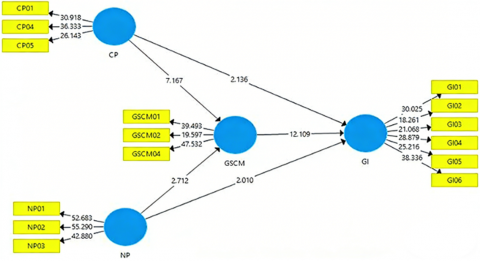
Hypothesis testing was conducted using the PLS bootstrapping approach with 5,000 resamples to analyze the relevant t-statistics and path coefficients [41]. Table 5 summarizes the test results. All hypotheses were found to be positively significant and aligned with the initial predictions. The β, t, and p values obtained from the path analysis were used to evaluate the validity of each hypothesis. For assessing statistical significance, Hair Jr et al. [41] recommend a minimum t-value of 1.96 at a significance level of p ≤ 0.05.
In addition, the mediating role of GSCM in the relationship between institutional pressures and green innovation can be assessed using the Variance Accounted For (VAF). VAF is calculated as the ratio of the indirect effect to the total effect (direct plus indirect effect). A VAF value of 80% or higher indicates full mediation, meaning that the independent variable affects the dependent variable entirely through the mediator [41]. A VAF between 20% and 80% indicates partial mediation, where the independent variable influences the dependent variable both directly and indirectly through the mediator. Conversely, a VAF below 20% suggests that the mediator does not play a significant role. In this study, the role of GSCM as a mediator and the nature of its mediating effect—whether partial or full can be observed in Table 5. The calculated VAF values provide insight into whether institutional pressures affect green innovation directly, indirectly through GSCM, or both. Table 5 and Figure 2 present the path coefficient values along with the statistical significance of the relationships in the structural model.
The predictive ability of the model was subsequently evaluated using PLSpredict, a tool for assessing the predictive power of PLS-SEM models [47]. The Q² values for GSCM (0.145) and green innovation (0.167) exceed zero (see Table 4), indicating the model’s predictive relevance.
In addition, the model fit was evaluated using the standardized root mean square residual (SRMR), which is the only recommended measure for assessing path models in the PLS approach [47]. The model fit was further assessed through the bootstrap approach to obtain additional fit indices, including Geodesic Distance (d_G), Squared Euclidean Distance (d_ULS), Chi-Square, and NFI [44]. As shown in Table 6, these values, including SRMR, indicate that the measurement model exhibits a good fit and is consistent with the data [44].
Table 5. Hypotheses assessment results
|
Hypothesis |
Path |
Coef. |
T Statistics |
P Values |
Supported |
f² and VAF |
Category f² and Mediating Effect |
|
Direct relationships |
|
|
|||||
|
H1 |
GSCM → GI |
0.617 |
12.109 |
0.000 |
Yes |
0.757 |
Large |
|
H2 |
CP → GSCM |
0.497 |
7.167 |
0.000 |
Yes |
0.221 |
Medium |
|
H3 |
CP → GI |
0.172 |
2.136 |
0.033 |
Yes |
0.043 |
Small |
|
H4 |
NP → GSCM |
0.212 |
2.712 |
0.007 |
Yes |
0.040 |
Small |
|
H5 |
NP → GI |
0.157 |
2.010 |
0.045 |
Yes |
0.042 |
Small |
|
Indirect relationships |
|||||||
|
H6 |
CP → GSCM → GI |
0.307 |
6.232 |
0.000 |
Yes |
64.1 |
Partial Mediation |
|
H7 |
NP → GSCM → GI |
0.131 |
2.767 |
0.006 |
Yes |
45.5 |
Partial Mediation |
Figure 2. Hypotheses testing findings
Table 6. Model fit assessment
|
Saturated Model |
Estimation Model |
|
|
SRMR |
0.068 |
0.068 |
|
d_ULS |
0.549 |
0.549 |
|
d_G |
0.316 |
0.316 |
|
Chi-Square |
458.409 |
458.409 |
|
NFI |
0.801 |
0.801 |
In Indonesia, including West Sumatra, both coercive and normative pressures on environmental practices have become increasingly significant, driven by government regulations such as Indonesia’s Environmental Performance Rating Program, emission reduction policies, and mandatory ISPO certification. At the same time, international markets exert additional normative pressure through voluntary standards compliance, such as RSPO. Together, these national and global demands highlight the growing necessity for companies to adopt and consistently implement GSCM practices, ensuring both regulatory compliance and competitiveness in the global market.
The study confirms that GSCM significantly promotes green innovation, supporting H1. By integrating green practices across procurement, production, and distribution, companies enhance process, material, and technological innovations [6, 31-33]. In the palm oil sector, this is reflected in the use of eco-friendly inputs, conversion of Palm Oil Mill Effluent (POME) into biogas, and optimized distribution reinforcing green innovation [1]. Consistent with institutional theory, organizations adopt these practices to respond to external environmental expectations [4], and in Indonesia, export market demands and sustainability standards further encourage the implementation of GSCM.
The implementation of GSCM is significantly influenced by coercive pressures, supporting H2. Institutional theory suggests that these pressures, arising from regulations, environmental monitoring, and mandatory national and international certifications internasional [9, 14], drive companies to improve internal practices across procurement, production, and distribution. Beyond compliance, firms gain strategic advantages such as efficiency, reputation, and competitiveness [35]. In Indonesia, policies like Indonesia’s Environmental Performance Rating Program [11] further reinforce the need for consistent GSCM implementation in the palm oil sector.
Coercive pressures are found to significantly promote the adoption of green innovation, supporting H3. In line with institutional theory [13], regulatory forces compel firms to enhance internal processes, thereby stimulating green innovation. This finding is consistent with prior research indicating that government pressure strengthens firms’ commitment to environmental initiatives [12, 36]. In Indonesia, the Environmental Performance Rating Program, together with environmental regulations and monitoring systems, reinforces these pressures, particularly within the palm oil sector, which is required to adopt cleaner production technologies. As a result, firms exposed to stronger regulatory pressures tend to engage in green innovation both to ensure compliance and to sustain their competitive advantage.
Normative pressures are found to significantly encourage the adoption of GSCM, supporting H4. Consistent with prior research [9, 15], industry norms, professional expectations, and stakeholder demands shape firms’ engagement in green practices. In Indonesia, these pressures have intensified due to rising sustainability requirements from international markets, industry associations, and global buyers, particularly in the palm oil sector. As a result, firms increasingly align their operations and supply chain standards with sustainability best practices, making GSCM essential not only for maintaining reputation but also for securing market access and industry legitimacy.
Similarly, normative pressures arising from consumer expectations encourage the palm oil sector to adopt environmentally friendly innovations, as indicated by H5. Shifts in consumer preferences toward sustainable products create strong social expectations for firms to implement green practices [38]. This aligns with the normative dimension of institutional theory, which posits that social norms and public expectations drive organizations to adjust their operational practices [22]. In Indonesia, the influence of consumer-driven pressure is further reinforced by policies and certification schemes such as ISPO, enabling responsive firms not only to maintain social legitimacy but also to strengthen their competitiveness in global markets [11, 38].
The findings show that GSCM partially mediates the effects of coercive and normative pressures on green innovation in the West Sumatra palm oil sector, supporting H6 and H7. Government regulations and consumer expectations push companies to adopt greener innovations, and GSCM helps channel part of this pressure into concrete environmental practices. Even so, these external pressures continue to influence firms directly. Thus, GSCM reinforces firms’ responses to institutional pressures by channeling them into green innovation, in line with prior studies [8]. Within the institutional theory framework, GSCM serves as a mechanism that enhances organizational alignment with norms and regulations, strengthens legitimacy, and improves competitiveness in Indonesia’s palm oil sector [4, 13].
This research highlights the critical role of environmentally responsible supply chain practices in fostering green innovation within the palm oil sector in West Sumatra, Indonesia, through the lens of institutional theory. First, the findings demonstrate that institutional pressures both coercive and normative significantly motivate firms to adopt GSCM practices. Coercive pressures arising from regulatory mandates emerge as the most influential factor indicating that compliance-driven GSCM implementation is essential for improving supply chain efficiency including reducing waste, lowering carbon emissions, and sourcing raw materials from environmentally responsible suppliers.
Second, the results reveal that the adoption of GSCM practices substantially enhances the development of green innovation. Embracing environmentally friendly practices not only strengthens firms’ innovation capabilities but also serves as a strategic approach for capturing new market opportunities and meeting growing customer expectations for eco-friendly products. Thus, the integration of GSCM and green innovation is fundamental to achieving long-term sustainability and competitiveness in the palm oil sector.
Third, this study confirms that GSCM practices play a significant mediating role in the relationship between institutional pressures and green innovation. Institutional pressures encourage firms to adopt GSCM, which subsequently facilitates the emergence of green innovation by mitigating environmental impacts across the product life cycle. Therefore, GSCM functions as a critical mechanism that translates external institutional demands into organizational efforts to pursue sustainable innovation.
This research provides several important recommendations for managers and organizational leaders. Managers are encouraged to proactively understand and integrate relevant environmental regulations including restrictions on resource consumption, requirements for waste management, and sanctions related to excessive emissions. Adherence to these regulations requires firms to design strategic initiatives and effectively promote environmentally responsible practices throughout the product life cycle. By doing so, companies not only gain legitimacy defined as formal recognition from society, government authorities, and stakeholders that their actions align with prevailing norms, values, and regulations but also strengthen their capacity to develop and implement green innovations as a source of competitive advantage.
Furthermore, government agencies and regulatory bodies should avoid relying solely on mandatory rules and traditional punitive approaches to promote green innovation. Instead, these institutions should complement regulatory enforcement with reward mechanisms and incentive schemes that enhance firms’ motivation to pursue sustainable innovation. The findings suggest that a combination of coercive mechanisms (e.g., strict standards and continuous monitoring) and supportive measures (e.g., incentives and voluntary guidelines) is the most effective approach for encouraging companies to genuinely adopt green innovation practices.
In addition, normative pressures stemming from customer preferences for environmentally friendly products encourage firms to explore sustainable materials and technologies through the implementation of GSCM. To optimize this process, companies are advised to actively learn from customers by establishing various forms of consumer-driven engagement. Examples include creating online discussion forums or virtual communities to directly capture customer expectations regarding eco-friendly product features. Organizing roundtable sessions, workshops, or periodic surveys can also help firms obtain deeper insights into customer knowledge, preferences, and sustainability-related concerns. Such information provides a valuable foundation for designing green innovations that more accurately reflect market demands.
In implementing GSCM, managers are also advised to establish explicit supplier selection criteria that require adherence to sustainable practices. These criteria may include holding certified environmental management systems (e.g., ISO 14001), utilizing certified raw materials, and applying environmentally friendly production processes. Beyond incorporating these requirements into contractual agreements, companies should develop mechanisms to periodically evaluate supplier performance such as conducting annual sustainability audits, field inspections, or requesting regular environmental reporting. These compliance audits are essential to ensure that suppliers not only meet administrative standards but also consistently practice sustainability in their operational activities. Additionally, firms may consider offering incentives to suppliers with outstanding environmental performance, thereby fostering long-term, mutually beneficial partnerships that support overall corporate sustainability objectives.
This study has several limitations. First, the data were collected exclusively from West Sumatra, Indonesia using convenience sampling. The regional focus is justified, as West Sumatra exhibits distinctive institutional characteristics including regulatory pressures, social norms, and market practices making it a natural laboratory for examining how coercive and normative pressures influence GSCM and green innovation. However, the use of convenience sampling and the narrow geographical scope may limit the generalizability of the findings. Since institutional environments vary substantially across provinces, future studies are encouraged to test the proposed model in other regions with different socio-economic conditions, organizational cultures, and regulatory settings to enhance external validity. Second, this study relies solely on quantitative methods which, although effective for identifying relationships among variables, are less capable of capturing deeper contextual meanings and underlying motivations. Therefore, future research is encouraged to employ mixed-method approaches to enable data triangulation, strengthen the validity of findings, and provide richer insights into how institutional pressures influence the adoption of GSCM and the development of green innovation. A mixed-method approach may also enhance understanding of contextual variations across different sectors and regions. Third, although this study identifies key factors influencing the implementation of GSCM, it does not examine potential moderating variables that may alter the strength or direction of these relationships. Accordingly, future studies are encouraged to explore additional factors and moderation effects, including contextual conditions such as environmental uncertainty, to gain a more comprehensive understanding of the circumstances that facilitate the effective implementation of GSCM strategies and green innovation. Fourth, the cross-sectional design adopted in this study limits the ability to evaluate the long-term impacts of green innovation. Given the ongoing challenges of sustainability and the rapid development of new technologies, future research should consider employing longitudinal designs to better capture the dynamic nature of these relationships over time.
Table A1. Questionnaire items adapted and modified
|
Construct |
Adopted Questionnaire Items |
Source |
Modified Questionnaire for Distribution |
|
GI |
GI1: Our firm chooses product materials that have the least amount of pollution for conducting the product design GI2: Our firm uses the fewest amount of materials to comprise the product for conducting the product design GI3: Our firm would carefully consider whether the product is easy to recycle for product design GI4: Our firm’s manufacturing process effectively reduces the emission of hazardous substances GI5: Our firm’s manufacturing process reduces the consumption of nature resources GI6: Our firm’s manufacturing process reduces the use of raw materials |
[6] |
GI1: When designing a product, our company selects materials with the lowest pollution levels GI2: When conducting product design, our company makes the product with the fewest materials feasible GI3: When designing a product, our company would carefully assess if the product is easily recyclable GI4: The production process implemented by our company effectively reduces emissions of harmful substances GI5: The production process that we implement is able to reduce the use of natural resources GI6: The manufacturing process we implement is able to reduce the consumption of raw materials |
|
CP |
CP1: Our firm comply with current government environmental regulations CP2: Our firm take environmentally friendly actions to reduce regulatory inspections and make it easier to get environmental permits CP3: Our firm are better prepared for meeting anticipated environmental regulations CP4: Our firm pre-empt future environmental regulations by voluntarily reducing regulated pollution beyond compliance levels CP5: Our firm pre-empt future environmental regulations by voluntarily reducing unregulated impacts |
[11] |
CP1: Our company complies with the most recent environmental laws CP2: Our company carries out environmentally friendly activities to facilitate obtaining permits and reduce government inspections CP3: Our company is better prepared to face upcoming environmental regulations CP4: Our company deliberately reduces regulated emissions over the compliance level in order to avoid future environmental regulations CP5: Our company reduces unregulated consequences voluntarily in order to avoid future environmental legislation |
|
NP |
NP1: Customer desire for our firm’s environmentally friendly products and services NP2: Customer willingness to pay higher prices for environmentally friendly products and services NP3: Our firm have ability to earn public recognition and customer goodwill with environmentally friendly actions |
[11] |
NP1: Demand from customers for our company's eco-friendly goods and services NP2: Customers' willingness to pay more for ecologically friendly products and services NP3: Our company is able to win over customers and the public by using eco-friendly procedures |
|
GSCM |
GSCM1: Safety of raw materials and products for use GSCM2: Availability of product information GSCM3: The company has efficient use of transportation fuel in the product distribution process GSCM4: Companies use optimal transportation capacity in distributing products GSCM5: The company has the time and number of customer who purchase items GSCM6: Reuse recycled materials (plastic bags, plastic packaging, and cardboard) |
[42] |
GSCM1: Product and raw material safety for usage GSCM2: Product information accessibility GSCM3: The company conserves fuel in the product delivery process GSCM4: The company utilizes transportation capacity efficiently to distribute products GSCM5: The company knows when and how many customers purchase its products GSCM6: The company reuses recycled materials, such as plastic bags, plastic packaging, and cardboard |
[1] Limaho, H., Sugiarto, Pramono, R., Christiawan, R. (2022). The need for global green marketing for the palm oil industry in Indonesia. Sustainability, 14(14): 8621. https://doi.org/10.3390/su14148621
[2] Central Bureau of Statistics. (2024). Environment Statistics Indonesia 2024. https://www.bps.go.id/id/publication/2024/11/29/f24c83748852c605dd2c73cb/statistiklingkungan-hidup-indonesia-2024.html.
[3] Hospes, O. (2014). Marking the success or end of global multi-stakeholder governance? The rise of national sustainability standards in Indonesia and Brazil for palm oil and soy. Agriculture and Human Values, 31(3): 425-437. https://doi.org/10.1007/s10460-014-9511-9
[4] Qi, G., Jia, Y., Zou, H. (2021). Is institutional pressure the mother of green innovation? Examining the moderating effect of absorptive capacity. Journal of Cleaner Production, 278: 123957. https://doi.org/10.1016/j.jclepro.2020.123957
[5] Wong, C.Y., Wong, C.W., Boon-itt, S. (2020). Effects of green supply chain integration and green innovation on environmental and cost performance. International Journal of Production Research, 58(15): 4589-4609. https://doi.org/10.1080/00207543.2020.1756510
[6] Wen, X., Cheah, J.H., Lim, X.J., Ramachandran, S. (2023). Why does “green” matter in supply chain management? Exploring institutional pressures, green practices, green innovation, and economic performance in the Chinese chemical sector. Journal of Cleaner Production, 427: 139182. https://doi.org/10.1016/j.jclepro.2023.139182
[7] Aimon, H., Sentosa, S.U. (2023). The role of knowledge, awareness and environmental attitudes in green product management. Global Journal of Environmental Science & Management (GJESM), 9(1): 400-510. https://doi.org/10.22034/gjesm.2023.01.08
[8] Xu, Y., Chin, W., Liu, Y., He, K. (2023). Do institutional pressures promote green innovation? The effects of cross-functional coopetition in green supply chain management. International Journal of Physical Distribution & Logistics Management, 53(7/8): 743-761. https://doi.org/10.1108/IJPDLM-03-2022-0104
[9] Samad, S., Nilashi, M., Almulihi, A., Alrizq, M., et al. (2021). Green Supply Chain Management practices and impact on firm performance: The moderating effect of collaborative capability. Technology in Society, 67: 101766. https://doi.org/10.1016/j.techsoc.2021.101766
[10] Singh, S.K., Del Giudice, M., Chierici, R., Graziano, D. (2020). Green innovation and environmental performance: The role of green transformational leadership and green human resource management. Technological Forecasting and Social Change, 150: 119762. https://doi.org/10.1016/j.techfore.2019.119762
[11] Huang, Y.C., Chen, C.T. (2023). Institutional pressure, firm's green resources and green product innovation: Evidence from Taiwan's electrical and electronics sector. European Journal of Innovation Management, 26(3): 636-664. https://doi.org/10.1108/EJIM-04-2021-0217
[12] Singh, R.K. (2024). Wheeling towards sustainability: The nexus of external pressures, green innovation and circular supply chain excellence. Business Process Management Journal, 30(4): 1044-1064. https://doi.org/10.1108/BPMJ-10-2023-0772
[13] Rashid, A., Rasheed, R., Altay, N. (2025). Greening manufacturing: The role of institutional pressure and collaboration in operational performance. Journal of Manufacturing Technology Management, 36(2): 455-478. https://doi.org/10.1108/JMTM-04-2024-0194
[14] Zhu, Q., Sarkis, J., Lai, K.H. (2007). Green supply chain management: Pressures, practices and performance within the Chinese automobile industry. Journal of Cleaner Production, 15(11-12): 1041-1052. https://doi.org/10.1016/j.jclepro.2006.05.021
[15] Ahmed, W., Najmi, A., Arif, M., Younus, M. (2019). Exploring firm performance by institutional pressures driven green supply chain management practices. Smart and Sustainable Built Environment, 8(5): 415-437. https://doi.org/10.1108/SASBE-04-2018-0022
[16] Teo, H.H., Wei, K.K., Benbasat, I. (2003). Predicting intention to adopt interorganizational linkages: An institutional perspective. MIS Quarterly, 27(1): 19-49. https://doi.org/10.2307/30036518
[17] Nasrollahi, M., Fathi, M.R., Sanouni, H.R., Sobhani, S.M., Behrooz, A. (2021). Impact of coercive and non-coercive environmental supply chain sustainability drivers on supply chain performance: Mediation role of monitoring and collaboration. International Journal of Sustainable Engineering, 14(2): 98-106. https://doi.org/10.1080/19397038.2020.1853271
[18] Sukoco, B.M., Supriharyanti, E., Sabar, Susanto, E., Nasution, R.A., Daryanto, A. (2022). Organisational change capacity and performance: The moderating effect of coercive pressure. Asia-Pacific Journal of Business Administration, 14(1): 27-49. https://doi.org/10.1108/APJBA-11-2020-0428
[19] Masocha, R., Fatoki, O. (2018). The impact of coercive pressures on sustainability practices of small businesses in South Africa. Sustainability, 10(9): 3032. https://doi.org/10.3390/su10093032
[20] DiMaggio, P.J., Powell, W.W. (1983). The iron cage revisited: Institutional isomorphism and collective rationality in organizational fields. American Sociological Review, 48(2): 147-160. https://doi.org/10.2307/2095101
[21] Liu, J., Liu, Y., Yang, L. (2020). Uncovering the influence mechanism between top management support and green procurement: The effect of green training. Journal of Cleaner Production, 251: 119674. https://doi.org/10.1016/j.jclepro.2019.119674
[22] Yue, X., Huo, B., Ye, Y. (2023). The impact of coercive pressure and ethical responsibility on cross-functional green management and firm performance. Journal of Business & Industrial Marketing, 38(5): 1015-1028. https://doi.org/10.1108/JBIM-09-2021-0446
[23] Thompson, V.A. (1965). Bureaucracy and Innovation. University of Alabama Press, Alabama.
[24] Fussler, C., James, P. (1996). Driving Eco-Innovation: A Breakthrough Discipline for Innovation and Sustainability. Pitman Publishing, London.
[25] Khanra, S., Kaur, P., Joseph, R.P., Malik, A., Dhir, A. (2022). A resource-based view of green innovation as a strategic firm resource: Present status and future directions. Business Strategy and the Environment, 31(4): 1395-1413. https://doi.org/10.1002/bse.2961
[26] Takalo, S.K., Tooranloo, H.S. (2021). Green innovation: A systematic literature review. Journal of Cleaner Production, 279: 122474. https://doi.org/10.1016/j.jclepro.2020.122474
[27] Mukhamedjanova, K.A. (2020). Concept of supply chain management. Journal of Critical Reviews, 7(2): 759-766. https://doi.org/10.31838/jcr.07.02.139
[28] Marculetiu, A., Ataseven, C., Mackelprang, A.W. (2023). A review of how pressures and their sources drive sustainable supply chain management practices. Journal of Business Logistics, 44(2): 257-288. https://doi.org/10.1111/jbl.12332
[29] Rahman, M.S., Gani, M.O., Fatema, B., Takahashi, Y. (2023). B2B firms’ supply chain resilience orientation in achieving sustainable supply chain performance. Sustainable Manufacturing and Service Economics, 2: 100011. https://doi.org/10.1016/j.smse.2023.100011
[30] Singh, R.K., Modgil, S. (2024). Impact of information system flexibility and dynamic capabilities in building net zero supply chains. Journal of Enterprise Information Management, 37(3): 993-1015. https://doi.org/10.1111/jbl.12332
[31] Roh, T., Noh, J., Oh, Y., Park, K.S. (2022). Structural relationships of a firm's green strategies for environmental performance: The roles of green supply chain management and green marketing innovation. Journal of Cleaner Production, 356: 131877. https://doi.org/10.1016/j.jclepro.2022.131877
[32] Seman, N.A.A., Govindan, K., Mardani, A., Zakuan, N., Saman, M.Z.M., Hooker, R.E., Ozkul, S. (2019). The mediating effect of green innovation on the relationship between green supply chain management and environmental performance. Journal of Cleaner Production, 229: 115-127. https://doi.org/10.1016/j.jclepro.2019.03.211
[33] Yang, Z., Sun, J., Zhang, Y., Wang, Y. (2019). Perceived fit between green IS and green SCM: Does it matter?. Information & Management, 56(7): 103154. https://doi.org/10.1016/j.im.2019.02.009
[34] Zhang, L., Dou, Y., Wang, H. (2023). Green supply chain management, risk-taking, and corporate value—Dual regulation effect based on technological innovation capability and supply chain concentration. Frontiers in Environmental Science, 11: 1096349. https://doi.org/10.3389/fenvs.2023.1096349
[35] Sager, F., Gofen, A. (2022). The polity of implementation: Organizational and institutional arrangements in policy implementation. Governance, 35(2): 347-364. https://doi.org/10.1111/gove.12677
[36] Huang, Y.C., Huang, C.H. (2024). Exploring institutional pressure, the top management team's response, green innovation adoption, and firm performance: Evidence from Taiwan's electrical and electronics industry. European Journal of Innovation Management, 27(3): 800-824. https://doi.org/10.1108/EJIM-03-2022-0126
[37] Whittington, R., Yakis-Douglas, B. (2020). The grand challenge of corporate control: Opening strategy to the normative pressures of networked professionals. Organization Theory, 1(4): 2631787720969697. https://doi.org/10.1177/2631787720969697
[38] Albort-Morant, G., Leal-Millán, A., Cepeda-Carrión, G. (2016). The antecedents of green innovation performance: A model of learning and capabilities. Journal of Business Research, 69(11): 4912-4917. https://doi.org/10.1016/j.jbusres.2016.04.052
[39] Silva, G.M., Gomes, P.J., Sarkis, J. (2019). The role of innovation in the implementation of green supply chain management practices. Business Strategy and the Environment, 28(5): 819-832. https://doi.org/10.1002/bse.2283
[40] Satrianto, A., Gusti, M.A., Candrianto, Nurtati. (2023). The role of Islamic work ethics and organizational citizenship behavior in green human resource practices and environmental performance of Indonesian food SMEs. International Journal of Sustainable Development and Planning, 18(8): 2393-2401. https://doi.org/10.18280/ijsdp.180810
[41] Hair Jr, J.F., Howard, M.C., Nitzl, C. (2020). Assessing measurement model quality in PLS-SEM using confirmatory composite analysis. Journal of Business Research, 109: 101-110. https://doi.org/10.1016/j.jbusres.2019.11.069
[42] Dzikriansyah, M.A., Masudin, I., Zulfikarijah, F., Jihadi, M., Jatmiko, R.D. (2023). The role of green supply chain management practices on environmental performance: A case of Indonesian small and medium enterprises. Cleaner Logistics and Supply Chain, 6: 100100. https://doi.org/10.1016/j.clscn.2023.100100
[43] Podsakoff, P.M., MacKenzie, S.B., Lee, J.Y., Podsakoff, N.P. (2003). Common method biases in behavioral research: A critical review of the literature and recommended remedies. Journal of Applied Psychology, 88(5): 879. https://doi.org/10.1037/0021-9010.88.5.879
[44] Henseler, J., Schuberth, F. (2020). Using confirmatory composite analysis to assess emergent variables in business research. Journal of Business Research, 120: 147-156. https://doi.org/10.1016/j.jbusres.2020.07.026
[45] Diamantopoulos, A., Siguaw, J.A. (2006). Formative versus reflective indicators in organizational measure development: A comparison and empirical illustration. British Journal of Management, 17(4): 263-282. https://doi.org/10.1111/j.1467-8551.2006.00500.x
[46] Ringle, C.M., Sarstedt, M., Mitchell, R., Gudergan, S.P. (2020). Partial least squares structural equation modeling in HRM research. The International Journal of Human Resource Management, 31(12): 1617-1643. https://doi.org/10.1080/09585192.2017.1416655
[47] Shmueli, G., Sarstedt, M., Hair, J.F., Cheah, J.H., Ting, H., Vaithilingam, S., Ringle, C.M. (2019). Predictive model assessment in PLS-SEM: Guidelines for using PLSpredict. European Journal of Marketing, 53(11): 2322-2347. https://doi.org/10.1108/EJM-02-2019-0189