Adie Dwiyanto Nurlukman* | Yusuf Fadli | Eko Wahyono
© 2025 The authors. This article is published by IIETA and is licensed under the CC BY 4.0 license (http://creativecommons.org/licenses/by/4.0/).
OPEN ACCESS
Coastal slum settlements represent a persistent challenge in Indonesia, where socio-economic vulnerability intersects with ecological degradation. This study examines the potential of community-based tourism (CBT), particularly mangrove ecotourism, to promote sustainable outcomes in Ketapang Village, Tangerang Regency. Employing a quantitative explanatory design with 159 respondents and structural equation modelling (SEM), the research analyzes causal relationships between CBT dimensions, namely community participation, economic distribution, institutional capacity, ecological conservation, and cultural promotion, and sustainable tourism development (STD) outcomes, including economic resilience, ecological balance, social integration, climate adaptation, and institutional-policy support. Results indicate that ecological conservation serves as the strongest integrative driver, significantly shaping economic resilience, governance quality, and climate responsiveness. However, policy development and climate adaptation remain underperforming, reflecting institutional rigidity and limited adaptive capacity. Paradoxical relationships are also identified: while equitable distribution and institutional strengthening enhance socio-economic performance, they negatively correlate with adaptive governance. Theoretically, this study integrates CBT and STD frameworks into a unified model for coastal development. Practically, it offers policy insights emphasizing ecosystem-based management, climate-sensitive incentives, adaptive institutional design, and cultural asset integration. Findings underscore mangrove ecotourism, grounded in community participation and resilience-oriented governance, as a transformative pathway for slum alleviation and sustainable coastal development.
community-based tourism, mangrove ecotourism, sustainable tourism development, coastal resilience, institutional capacity, Indonesia
Coastal areas play a strategic role in both national and global development, serving as critical intersections of ecological, economic, and social interests. More than 40% of the world’s population resides in coastal regions, making them among the most densely populated yet highly vulnerable areas to environmental pressures and climate change [1]. Unplanned coastal urbanization often leads to the emergence of slum settlements, typically characterized by inadequate basic infrastructure, poor sanitation, and heightened exposure to climate-related hazards.
In Indonesia, the Ministry of Public Works and Housing reported the existence of more than 38,431 hectares of slum areas, with approximately 10% located in coastal zones. This issue extends beyond physical and spatial concerns; it reflects deeper structural vulnerabilities linked to poverty, environmental degradation, and weak local institutional capacities [2].
Tangerang Regency in Banten Province illustrates the complexities of such coastal challenges. With a coastline stretching approximately 51 kilometers along the Java Sea and Jakarta Bay, the area faces significant socio-ecological pressures [3]. According to the Regency’s Department of Housing and Settlement, there are 37 officially designated slum villages, with the highest concentrations located in coastal subdistricts such as Mauk, Teluknaga, and Kosambi [4].
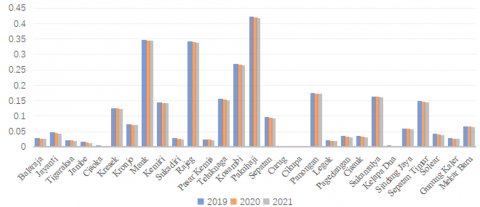
Between 2019 and 2021, the spatial distribution of slum settlements in the coastal subdistricts of Tangerang Regency showed marked disparities. Mauk Subdistrict consistently exhibited the largest slum coverage, with an average of approximately 0.35 km² during the period, far surpassing other coastal areas. Kemiri ranked second with an average of 0.14 km², followed by Kresek (0.12 km²) and Kronjo (0.07 km²). By contrast, Sukadiri displayed the lowest extent, averaging only 0.03 km², while Pasar Kemis registered negligible slum presence during the observation years. These persistent spatial imbalances underscore Mauk’s dominance in slum concentration and highlight the heightened vulnerability of coastal settlements. Such conditions reinforce the urgency of adopting integrated regional development strategies—particularly community-based initiatives such as mangrove ecotourism—as a means to promote sustainable coastal development and mitigate slum proliferation in Tangerang’s coastal region (Figure 1).
Figure 1. Distribution of slum areas in Tangerang Regency (2019–2021, in km²)
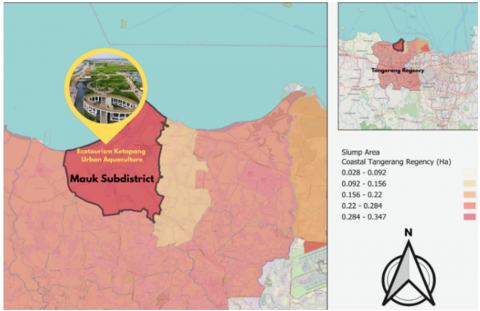
Figure 2. Study area map and spatial distribution of slum areas in coastal Tangerang Regency
The multidimensional challenges of coastal slum development in Tangerang Regency are clearly illustrated in Ketapang Village, located in Mauk Subdistrict (Figure 2). Covering approximately 26.9 hectares, Ketapang has long been categorized as a degraded settlement, facing inadequate access to sanitation, limited healthcare services, and insufficient infrastructure [2, 5]. The local economy remains highly dependent on small-scale fisheries and informal employment, reinforcing cycles of poverty and marginalization typical of coastal communities [6]. While recent initiatives—such as the Ketapang Urban Aquaculture program—have introduced mangrove rehabilitation and community-based ecotourism (CBE) as alternative livelihood strategies [7, 8], structural challenges persist, including weak institutional coordination and limited enforcement of sustainable coastal management. These conditions indicate intertwined socio-ecological pressures in Ketapang, where coastal degradation, livelihood instability, and limited institutional coordination reinforce one another. Rather than restating the same vulnerabilities across sections, this study positions these issues as a single systemic challenge that requires an integrated intervention combining ecological restoration, community empowerment, and adaptive governance [9].
This situation reflects a paradox: while coastal areas possess high ecological potential—particularly mangrove forests—local communities remain trapped in structural poverty. Ketapang exemplifies the complex interplay between coastal poverty, mangrove degradation, and limited institutional capacity, which together create multidimensional vulnerabilities. Addressing coastal slum issues, therefore, requires more than economic or ecological interventions alone; solutions must integrate social, cultural, and policy dimensions.
Mangrove ecosystems play a vital role in climate change adaptation and mitigation. As part of the blue carbon system, mangroves have a significantly greater capacity for carbon storage than most terrestrial ecosystems [10, 11]. Brander et al. [12] further highlighted that the ecosystem services provided by mangroves in Southeast Asia are valued at billions of dollars annually. However, mangrove loss due to land conversion and degradation undermines coastal protection functions and jeopardizes the long-term sustainability of local livelihoods.
Within the framework of sustainable development, tourism is often viewed as a potential driver of local economic growth. Yet, conventional tourism practices frequently generate environmental exploitation and social inequality [13]. As an alternative, CBE positions local communities at the center of planning and management, aiming to balance conservation, economic empowerment, and cultural preservation [14, 15].
Empirical studies across developing countries demonstrate the promise of CBE. In Thailand, its success has been attributed to local participation and strong institutional structures [16]. In Mexico, community-based ecotourism not only improved household incomes but also enhanced conservation awareness [17]. In the Philippines, CBE emerged as a response to coastal exploitation, with local communities taking leadership roles in destination management [18].
Similar patterns of community-based ecotourism development can also be found in Indonesia. For instance, research in Lontar Village, Serang Regency, demonstrates that mangrove ecotourism not only generates tangible economic benefits for local households but also enhances community awareness of ecological conservation principles [19]. In Madura, studies emphasize that the long-term success of mangrove ecotourism initiatives is contingent upon aligning infrastructure development with active community participation, thereby ensuring that physical improvements are matched by social empowerment [20]. Likewise, empirical evidence from Wakatobi highlights how participatory approaches strengthen the legitimacy and sustainability of ecotourism projects, underlining the crucial role of local leadership and institutional networks in destination governance [21]. Despite these encouraging outcomes, a systematic review has noted that many existing studies remain fragmented, with a predominant focus on ecological or economic aspects while giving insufficient attention to social, institutional, and policy dimensions that are equally vital for sustainability [22].
The literature consistently underscores that the success of CBE requires multidimensional integration: active community participation, equitable distribution of economic benefits, measurable ecological conservation, adaptive local institutions, and the safeguarding of cultural sustainability [14]. Long-term outcomes in community-based tourism are argued to depend heavily on the strength of institutional networks and local leadership. Within this framework, community-based mangrove ecotourism in Ketapang Village can be positioned as a dual strategy: simultaneously addressing socio-economic vulnerabilities rooted in slum conditions while strengthening the ecological resilience of coastal ecosystems [23].
Accordingly, this study pursues three objectives: (1) to examine the socio-ecological conditions of coastal slum settlements in Ketapang Village; (2) to analyze the interlinkages between community participation, economic distribution, environmental conservation, institutional capacity, and cultural dimensions in achieving sustainable community-based ecotourism; and (3) to develop a conceptual model to inform sustainable coastal development policies.
2.1 CBE and mangrove conservation
CBE has emerged as an innovative approach to sustainable tourism governance, one that seeks to balance ecological conservation with socio-economic empowerment. Unlike conventional tourism models—often exploitative and dominated by external actors—CBE emphasizes strengthening local community capacities, positioning them as primary stakeholders in the planning, management, and distribution of tourism benefits. Within mangrove ecosystems, this approach is particularly relevant, as coastal areas face dual vulnerabilities: ecological pressures resulting from environmental degradation and socio-economic challenges stemming from limited access and entrenched poverty.
Berkes [24] argued that conservation success in the era of globalization cannot be separated from community engagement. Active local participation fosters more adaptive conservation mechanisms while enhancing social legitimacy. In this way, coastal communities are not passive users of ecosystems but rather custodians and active agents ensuring the continuity of conservation practices. Supporting this, Datta et al. [25] found that community-based mangrove management in India increased ecological awareness, strengthened local institutions, and reduced deforestation pressures—demonstrating that community participation is substantive rather than symbolic.
Similar patterns are evident in Indonesia. Alfandi et al. [26] documented a direct correlation between community participation and the success of mangrove conservation. Saefullah et al. [19], studying Lontar Village in Banten, highlighted the dual benefits of CBE: increased household income and improved ecological awareness. Likewise, Hakim et al. [27] observed that community-led mangrove ecotourism initiatives in East Java enhanced environmental stewardship while improving coastal ecosystem quality. Collectively, these studies underscore that when communities are given a central role, they benefit not only economically but also evolve into agents of conservation.
Conceptually, the development of CBE is closely aligned with the framework of CBT, which emphasizes community ownership and participation as the foundation of tourism development. Active involvement not only strengthens social legitimacy but also enhances the long-term sustainability of tourism destinations [28]. Equitable distribution of economic benefits is another critical aspect, as fair distribution prevents social exclusion and ensures sustained community support for ecotourism. In practice, this principle can be realized by integrating small enterprises, traditional fishers, and women’s groups into the tourism value chain [29].
Strong local institutions are also fundamental to the success of CBT, since effective institutional structures function as governance mechanisms that ensure transparency, prevent internal conflict, and facilitate linkages between communities and external actors, including government and the private sector [30]. At the same time, ecological conservation is achieved through environmentally responsible tourism practices, highlighting the importance of carrying capacity management, waste control, and ecosystem restoration as integral components of CBT [31].
Cultural dimensions further reinforce the competitiveness of community-based ecotourism destinations, as the preservation of traditions, rituals, culinary practices, and local arts not only strengthens community identity but also provides key differentiation in the global tourism market [32]. Taken together, CBT can thus be understood as encompassing five interrelated pillars: participation, equitable benefit distribution, institutional strengthening, ecological conservation, and cultural promotion.
Overall, international scholarship consistently affirms that the success of CBE depends on multidimensional integration, operating simultaneously and synergistically. By combining ecological conservation with socio-economic empowerment, CBE functions not merely as a local development strategy but as a systemic approach to addressing global sustainability challenges. In vulnerable coastal contexts such as Ketapang Village in Tangerang Regency, this model holds particular relevance—not only in strengthening mangrove conservation but also in addressing socio-economic vulnerabilities through community-based empowerment.
2.2 Sustainability: Linking economy, ecology, and social dimensions
Sustainable ecotourism is inseparable from the concept of the triple bottom line, which emphasizes a balanced integration of economic, ecological, and social dimensions [33]. The economic benefits of ecotourism can only be sustained when they are closely connected to environmental conservation mechanisms and the strengthening of social cohesion, ensuring that communities remain both the stewards and beneficiaries of tourism development [15]. Conversely, practices that prioritize economic growth without acknowledging ecological carrying capacity inevitably result in environmental degradation, while overly conservation-oriented management that neglects fair benefit distribution risks producing social inequality and marginalizing residents.
Community-based ecotourism management therefore requires clear priorities: building local capacity, ensuring equitable benefit-sharing, and strengthening local institutions, all of which highlight that ecotourism is not simply a recreational industry but a complex socio-ecological system demanding inclusive governance [34]. Within this context, STD provides a strategic framework for embedding sustainability principles across every dimension of tourism planning and practice.
The operationalization of STD is typically articulated through five interrelated dimensions. First, long-term economic sustainability, which underscores the importance of equitable distribution of benefits while generating enduring value rather than focusing narrowly on visitor growth [35]. Second, ecological conservation, which safeguards natural resources through carrying-capacity management, the adoption of environmentally friendly technologies, and ecosystem restoration such as mangrove rehabilitation [31]. Third, social integration and participation, which calls for inclusive involvement at every stage of management to strengthen ownership and local solidarity [36].
The fourth dimension is climate adaptation through tourism diversification, enabling destinations to reduce vulnerability to climate-related risks by developing adaptive, ecosystem-based tourism products [37]. Finally, the fifth dimension emphasizes institutional development and supportive policy frameworks that provide governance structures ensuring coordination among stakeholders, regulatory consistency, and long-term sustainability across generations [38].
Recent scholarship further highlights the importance of socio-ecological resilience within the STD framework. Co-management models in ecotourism are found to strengthen community adaptive capacity to environmental pressures while bridging ecological imperatives with economic needs, thereby positioning communities not merely as beneficiaries but as central actors in decision-making and destination governance.
2.3 Conceptual framework
This study adopts an integrated framework that combines two major conceptual foundations—CBT and STD as the analytical basis for examining mangrove ecotourism development in coastal settings. Conceptually, CBT emerges as a participatory approach emphasizing local community empowerment, while STD provides a broader orientation by embedding sustainability across multiple dimensions, economic, ecological, social, and institutional, for long-term development. The integration of these two frameworks is particularly relevant in the coastal context of Ketapang Village, where challenges extend beyond ecological degradation to encompass socio-economic vulnerabilities and institutional weaknesses.
Empirical literature highlights the effectiveness of CBT in improving local livelihoods, strengthening community capacities, and fostering a sense of ownership over tourism destinations [28, 39]. Nevertheless, previous studies also underscore its limitations, including weak institutional structures, low human resource capacity, and limited market access. CBT is generally built upon five interrelated pillars: (1) active community participation in management [28], (2) equitable distribution of economic benefits [29], (3) strengthening of local institutions [30], (4) environmental conservation through eco-friendly tourism practices [31], and (5) promotion of local culture as a core component of destination attractiveness [32].
Meanwhile, STD provides a complementary framework with a focus on long-term sustainability. The literature identifies five key dimensions: (1) economic sustainability, ensuring that tourism benefits are equitably distributed and enduring [35]; (2) ecological conservation as a mechanism to protect natural resources [31]; (3) social integration and participation to reinforce governance legitimacy [36]; (4) climate adaptation through ecosystem-based tourism diversification [37]; and (5) institutional and policy development that ensures inclusive governance structures [38].
The novelty of this study lies in integrating CBT and STD into a unified empirical model applied within the context of coastal slum transformation. Whereas most prior studies have tended to emphasize single dimensions such as economic outcomes or ecological preservation, this integrative model highlights the synergistic interactions among multiple dimensions. Thus, the sustainability of mangrove ecotourism is not solely measured by economic gains or conservation outcomes, but also by the extent to which participatory governance, institutional strengthening, climate adaptation, and cultural preservation reinforce one another. This integrative approach is expected to contribute theoretically to the literature on community-based ecotourism while offering practical implications for formulating more inclusive and resilient coastal development policies.
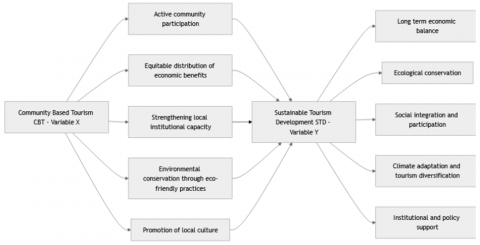
Figure 3. Conceptual framework
The directional assumptions in the framework derive from theories of empowerment, distributive justice, adaptive governance, and ecosystem-service logic. Community participation, economic distribution, institutional capacity, ecological conservation, and cultural promotion are positioned as antecedents because these represent community-controlled processes that precede sustainability outcomes. Meanwhile, economic balance, ecological quality, social cohesion, climate adaptation, and policy support are treated as consequences since they emerge from the cumulative effects of community-based tourism practices. Thus, arrows in the model represent theoretically grounded causal pathways where community-driven inputs shape broader sustainability outcomes.
This research employed a quantitative explanatory design to examine the structural relationships between CBT and STD in the context of coastal mangrove ecotourism. A quantitative approach was chosen for its capacity to provide objective and generalizable findings through systematic data collection and statistical testing. The design emphasized causal explanation, aiming to identify the extent to which community-driven tourism practices foster sustainability outcomes in coastal slum alleviation and long-term tourism development.
The study was conducted in several sequential stages. First, problem identification and literature review were undertaken to map socio-ecological challenges in the study area and to establish CBT and STD as the theoretical framework. Second, research variables were operationalized into measurable indicators. Third, data were collected through a structured community survey and complementary field observations. Fourth, data were processed and analyzed through tests of validity, reliability, descriptive statistics, and causal relationship modeling. Finally, results were interpreted to provide both theoretical insights and practical recommendations for sustainable ecotourism governance.
The causal paths tested through SEM are theoretically grounded in the integration of the CBT and STD frameworks. Participation is theorized to influence economic and social outcomes through empowerment theory; equitable economic distribution is linked to ecological and social cohesion through distributive justice theory; institutional capacity is connected to governance and policy outcomes through adaptive governance theory; while ecological conservation is logically linked to economic resilience and climate adaptation through ecosystem-service and blue-carbon theories (Figure 3). SEM is therefore appropriate because it allows simultaneous testing of multiple interdependent causal mechanisms inherent in socio-ecological tourism systems.
The research population consisted of residents of Ketapang Village, Mauk District, Tangerang Regency, who are directly involved in or affected by mangrove-based ecotourism. The total population numbered 3,201 individuals. To ensure proportional representation across socio-economic categories, stratified random sampling was applied. Using Slovin’s formula with a 5% margin of error, a total of 159 respondents were selected. This sample size met the requirements for structural relationship modeling, which requires at least five to ten respondents per indicator.
Primary data were collected using a structured questionnaire designed from the operationalized indicators of CBT (independent variable) and STD (dependent variable). Items were measured on a five-point Likert scale ranging from 1 (strongly disagree) to 5 (strongly agree). The questionnaire was administered through direct household surveys, while complementary field observations were carried out to document ecotourism practices, environmental conditions, and cultural activities. The use of survey and observation techniques enhanced data triangulation and improved measurement validity.
The constructs of CBT and STD were translated into dimensions and measurable indicators to guide data collection and analysis. CBT (X) was operationalized into five dimensions: active community participation, equitable economic distribution, institutional strengthening, ecological conservation practices, and promotion of local culture. STD (Y) was defined through five dimensions: long-term economic balance, ecological conservation, social integration, climate adaptation, and institutional-policy support. Table 1 summarizes the operational variables.
To ensure representativeness, the stratified sampling frame was constructed based on three socio-economic strata commonly identified in coastal Ketapang: small-scale fishers, aquaculture workers, and informal labor households. Each stratum contributed proportionally to the 159 respondents according to its share of the village population. This proportional allocation ensured that no socio-economic group was over- or under-represented in the sample. Potential participation bias was addressed by combining household lists, on-site verification, and door-to-door enumeration. Respondents unwilling or unavailable during initial visits were replaced using the same stratum to maintain proportionality. These procedures reduce bias in favor of more accessible or more engaged households, improving the reliability of the socio-economic representation in the data.
Table 1. Operationalization of research variables
|
Variable |
Dimension |
Code |
Indicator (Operational Definition) |
|
CBT–Variable X |
Active community participation |
X1 |
Degree of local involvement in decision-making and management of tourism activities |
|
Equitable distribution of economic benefits |
X2 |
Proportion of household income derived from ecotourism-related activities |
|
|
Strengthening local institutional capacity |
X3 |
Number and effectiveness of training programs, empowerment initiatives, and local tourism organizations |
|
|
Environmental conservation through eco-friendly practices |
X4 |
Implementation of sustainable practices such as mangrove replanting, eco-friendly operations, and waste management |
|
|
Promotion of local culture |
X5 |
Extent of community engagement in cultural events, traditional performances, and heritage-based tourism activities |
|
|
STD–Variable Y |
Long-term economic balance |
Y1 |
Contribution of ecotourism to household economic resilience and livelihood sustainability |
|
Ecological conservation |
Y2 |
Adoption of conservation policies and integration of ecological safeguards into tourism activities |
|
|
Social integration and participation |
Y3 |
Level of community involvement in collaborative planning and tourism governance |
|
|
Climate adaptation and tourism diversification |
Y4 |
Implementation of climate-resilient strategies and diversification of tourism products |
|
|
Institutional and policy support |
Y5 |
Presence and effectiveness of regulations, local policies, and governance structures supporting sustainable tourism |
4.1 Descriptive statistics
The descriptive analysis (Table 2) provides an overview of respondents’ perceptions across the dimensions of community-based tourism and sustainable tourism development. The findings reveal high scores for economic distribution (Mean = 3.93) and environmental conservation (Mean = 3.89), suggesting that respondents strongly associate mangrove ecotourism with equitable economic benefits and ecological safeguarding. Ecological conservation, which is measured separately from environmental conservation, recorded a lower mean (Mean = 2.77). Community participation (Mean = 3.61) and social integration (Mean = 3.65) also show relatively positive perceptions, indicating a moderate degree of involvement in ecotourism activities and local governance. By contrast, climate adaptation (Mean = 2.07) and policy development (Mean = 1.95) record the lowest means, highlighting significant weaknesses in resilience-oriented initiatives and institutional-policy support mechanisms. This pattern demonstrates that while economic and ecological benefits are evident, adaptive governance and formal regulatory frameworks remain underdeveloped.
4.2 Reliability and validity
The reliability and validity tests confirm that all constructs meet the required thresholds (Table 3). Cronbach’s alpha values range between 0.76 and 0.99, while composite reliability values exceed 0.86 across all dimensions, with Average Variance Extracted (AVE) consistently above 0.67. These results validate the robustness of the measurement model and indicate that the items within each construct exhibit strong internal consistency. However, the exceptionally high reliability values for some dimensions suggest potential homogeneity in responses, indicating that community perceptions may be strongly aligned and possibly less diverse across certain constructs.
4.3 Model fit indices
Before evaluating the hypothesized structural paths, the overall model fit was assessed using a series of conventional indices. As shown in Table 4, the values of χ²/df, CFI, TLI, RMSEA, and SRMR all fall within the recommended thresholds, thereby confirming that the proposed measurement and structural model adequately fit the observed data.
These results strengthen the reliability of subsequent structural relationship analyses by ensuring that the estimated coefficients are derived from a well-fitting model. Specifically, a χ²/df ratio of 2.31 (< 3.0) demonstrates acceptable parsimony, while the CFI (0.962) and TLI (0.954) both exceed the recommended 0.95 threshold, indicating excellent model fit. Furthermore, RMSEA (0.061) and SRMR (0.047) remain below 0.08, reinforcing the model’s suitability for hypothesis testing.
Table 2. Statistic descriptive
|
|
n |
Minimum |
Median |
Maximum |
Mean |
Standard Deviation |
|
Climate Adaption |
159 |
1.000 |
2.000 |
4.000 |
2.069 |
0.515 |
|
Community Participation |
159 |
1.000 |
4.000 |
5.000 |
3.614 |
0.912 |
|
Distribution Economics |
159 |
1.000 |
5.000 |
5.000 |
3.932 |
1.267 |
|
Ecological Conservation |
159 |
1.000 |
4.000 |
5.000 |
2.774 |
1.393 |
|
Economic Balance |
159 |
1.000 |
3.000 |
5.000 |
3.383 |
1.483 |
|
Environmental Conservation |
159 |
1.000 |
4.000 |
5.000 |
3.888 |
1.250 |
|
Institutional Strengthening |
159 |
1.000 |
4.000 |
5.000 |
3.494 |
1.074 |
|
Policy Development |
159 |
1.000 |
2.000 |
5.000 |
1.954 |
0.610 |
|
Promotion of Local Culture |
159 |
2.000 |
3.000 |
5.000 |
2.981 |
0.492 |
|
Social Integration |
159 |
1.000 |
4.000 |
5.000 |
3.658 |
1.185 |
Table 3. Reliability and validity test
|
|
Alpha Cronbach |
Composite Reliability (rho_A) |
Composite Reliability (rho_C) |
Average Variance Extracted (AVE) |
|
|
Climate Adaption |
0.951 |
0.965 |
0.968 |
0.910 |
Valid |
|
Community Participation |
0.761 |
0.763 |
0.862 |
0.676 |
|
|
Distribution Economics |
0.913 |
0.913 |
0.945 |
0.852 |
|
|
Ecological Conservation |
0.930 |
0.930 |
0.956 |
0.878 |
|
|
Economic Balance |
0.945 |
0.945 |
0.965 |
0.902 |
|
|
Environmental Conservation |
0.970 |
0.970 |
0.980 |
0.943 |
|
|
Institutional Strengthening |
0.801 |
0.803 |
0.883 |
0.716 |
|
|
Policy Development |
0.987 |
1.003 |
0.991 |
0.974 |
|
|
Promotion of Local Culture |
0.986 |
0.989 |
0.990 |
0.972 |
|
|
Social Integration |
0.886 |
0.873 |
0.919 |
0.791 |
Table 4. Model fit indices
|
Fit Index |
Value |
Threshold |
Interpretation |
|
Chi-square/df |
2.310 |
< 3.0 |
Good Fit |
|
CFI |
0.962 |
> 0.95 |
Excellent Fit |
|
TLI |
0.954 |
> 0.95 |
Excellent Fit |
|
RMSEA |
0.061 |
< 0.08 |
Acceptable Fit |
|
SRMR |
0.047 |
< 0.08 |
Good Fit |
4.4 Structural relationships
The structural relationship analysis provides insights into how CBT dimensions influence sustainable tourism outcomes (Table 5). Several key findings emerge:
Overall, the findings highlight the central role of ecological conservation as the strongest integrative driver of sustainable mangrove ecotourism. In contrast, climate adaptation and policy development remain underperforming dimensions, reflecting gaps in institutional capacity and resilience-oriented strategies. The results also reveal a paradoxical effect in which economic distribution and institutional strengthening, while beneficial to social and economic domains, are negatively associated with adaptive governance outcomes.
The descriptive, measurement, and structural results reveals a consistent pattern in which ecological conservation emerges as the strongest integrative force across sustainability dimensions. High reliability scores indicate stable perceptions, while descriptive results highlight strong ecological and economic awareness yet weak climate and policy dimensions. SEM findings confirm this asymmetry: most CBT components enhance economic and social outcomes, but only ecological conservation consistently drives climate adaptation and policy support. This convergence suggests that sustainability in Ketapang’s ecotourism system is primarily anchored in environmental stewardship rather than institutional or cultural mechanisms.
Table 5. Hypothesis test
|
|
Original Sample (O) |
Average Sample (M) |
Standard Deviation (STDEV) |
T Statistics (|O/STDEV|) |
P Value |
|
|
Community Participation → Climate Adaptation |
-0.239 |
-0.239 |
0.142 |
1.682 |
0.093 |
Rejected |
|
Community Participation → Ecological Conservation |
0.112 |
0.112 |
0.064 |
1.744 |
0.081 |
Rejected |
|
Community Participation → Economic Balance |
0.131 |
0.130 |
0.045 |
2.915 |
0.004 |
Accepted |
|
Community Participation → Policy Development |
-0.254 |
-0.248 |
0.130 |
1.949 |
0.051 |
Rejected |
|
Community Participation → Social Integration |
-0.055 |
-0.059 |
0.107 |
0.508 |
0.611 |
Rejected |
|
Distribution Economics → Climate Adaptation |
-0.339 |
-0.344 |
0.168 |
2.020 |
0.043 |
Accepted |
|
Distribution Economics → Ecological Conservation |
0.470 |
0.471 |
0.095 |
4.968 |
0.000 |
Accepted |
|
Distribution Economics → Economic Balance |
0.263 |
0.264 |
0.064 |
4.093 |
0.000 |
Accepted |
|
Distribution Economics → Policy Development |
-0.023 |
-0.028 |
0.178 |
0.132 |
0.895 |
Rejected |
|
Distribution Economics → Social Integration |
0.211 |
0.210 |
0.092 |
2.289 |
0.022 |
Accepted |
|
Environmental Conservation → Climate Adaptation |
0.889 |
0.890 |
0.168 |
5.293 |
0.000 |
Accepted |
|
Environmental Conservation → Ecological Conservation |
0.186 |
0.183 |
0.087 |
2.147 |
0.032 |
Accepted |
|
Environmental Conservation → Economic Balance |
0.427 |
0.429 |
0.056 |
7.686 |
0.000 |
Accepted |
|
Environmental Conservation → Policy Development |
0.594 |
0.593 |
0.178 |
3.341 |
0.001 |
Accepted |
|
Environmental Conservation → Social Integration |
0.141 |
0.143 |
0.101 |
1.398 |
0.162 |
Rejected |
|
Institutional Strengthening → Climate Adaptation |
-0.325 |
-0.320 |
0.146 |
2.229 |
0.026 |
Accepted |
|
Institutional Strengthening → Ecological Conservation |
0.224 |
0.226 |
0.068 |
3.274 |
0.001 |
Accepted |
|
Institutional Strengthening → Economic Balance |
0.213 |
0.212 |
0.050 |
4.254 |
0.000 |
Accepted |
|
Institutional Strengthening → Policy Development |
-0.376 |
-0.377 |
0.131 |
2.865 |
0.004 |
Accepted |
|
Institutional Strengthening → Social Integration |
0.590 |
0.593 |
0.084 |
7.048 |
0.000 |
Accepted |
|
Promotion of Local Culture → Climate Adaptation |
-0.169 |
-0.168 |
0.105 |
1.613 |
0.107 |
Rejected |
|
Promotion of Local Culture → Ecological Conservation |
0.007 |
0.008 |
0.048 |
0.141 |
0.888 |
Rejected |
|
Promotion of Local Culture → Economic Balance |
0.088 |
0.086 |
0.038 |
2.309 |
0.021 |
Accepted |
|
Promotion of Local Culture → Policy Development |
-0.109 |
-0.107 |
0.112 |
0.973 |
0.331 |
Rejected |
|
Promotion of Local Culture → Social Integration |
0.220 |
0.220 |
0.060 |
3.676 |
0.000 |
Accepted |
4.5 Discussion
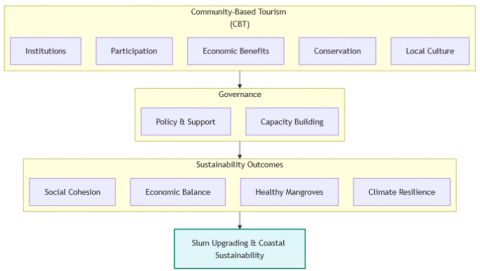
The empirical findings of this study reveal that the relationship between CBT and STD is inherently multidimensional, transcending linear cause-effect linkages. The statistical analysis highlights both the strengths and limitations of CBT dimensions in shaping sustainable outcomes in the context of mangrove ecotourism. To consolidate these findings, Figure 4 presents an integrative model that links CBT dimensions, governance mechanisms, and sustainability outcomes in coastal settings.
The paradoxical effects identified, where economic distribution and institutional capacity improve economic and social outcomes but reduce climate adaptation, reflect tensions described in the CBT Participation–Management–Sustainability (CBT-PMS) model. As theorized in adaptive governance literature, communities often prioritize immediate welfare gains at the expense of long-term resilience, producing a misalignment between empowerment outcomes and adaptive capacity. This suggests that empowerment alone is insufficient without mechanisms directing economic gains toward resilience investments.

Figure 4. Path coefficient graph
Figure 5. Integrative model linking CBT dimensions, governance mechanisms, and sustainability outcomes in coastal mangrove ecotourism
This finding aligns with the integrated conceptual framework proposed in this study, reaffirming that sustainability outcomes emerge when CBT pillars interact synergistically with governance structures. It confirms theoretical expectations that ecological conservation acts as the central integrative driver, while institutional strengthening requires alignment with climate governance to avoid rigidity and ensure adaptability.
This model (Figure 5) synthesizes the quantitative results into a systemic representation of how local tourism practices interact with broader governance frameworks to foster sustainability. At the foundation, five dimensions of CBT—community participation, equitable economic distribution, institutional strengthening, environmental conservation, and cultural promotion—act as primary drivers of change. These drivers interface with governance mechanisms such as adaptive institutional design, pro-climate economic incentives, integrated conservation–cultural programs, and inclusive capacity building. The interaction between CBT and governance shapes five sustainability outcomes: economic balance, ecological conservation, social cohesion, climate resilience, and policy support, all of which converge in the broader goals of slum upgrading and sustainable coastal development.
Several key insights emerge from this framework. First, environmental conservation proves to be the most integrative driver, influencing ecological, economic, and governance outcomes simultaneously. This corroborates the statistical evidence and supports existing scholarship emphasizing ecological integrity as the cornerstone of community resilience in vulnerable coastal systems [32, 36].
Second, community participation and equitable economic distribution show stronger effects on tangible and immediate outcomes such as income generation and social cohesion, but weaker connections to governance transformation and climate adaptation. This pattern indicates that local communities prioritize short-term welfare gains and ecological benefits that are visible and directly experienced, while more abstract dimensions such as resilience and institutional reform remain underdeveloped. This tendency mirrors critiques of CBT initiatives globally, where economic visibility often overshadows investments in adaptive capacity and institutional flexibility [29, 31].
Third, the analysis underscores the paradoxical effects of institutional strengthening. On one hand, local institutions contribute positively to stability, economic balance, and social integration. On the other hand, their limited adaptability and alignment with broader policy frameworks restrict their role in fostering climate resilience and long-term governance innovation. Such institutional rigidity has also been observed in other contexts, suggesting that stability without adaptability undermines systemic resilience [37].
A further insight of the model is the feedback loop between outcomes and drivers. Achieving sustainability outcomes—particularly in terms of slum upgrading and coastal resilience—feeds back into reinforcing institutional capacity, cultural promotion, and governance mechanisms. This cyclical process highlights the iterative and adaptive nature of community-based ecotourism: outcomes not only address immediate socio-ecological challenges but also strengthen the foundations for long-term sustainability.
One of the most significant contributions of this study is the explicit incorporation of resilience and climate adaptation as integral components of CBT–STD linkages. Although climate adaptation received relatively lower statistical weight compared to economic and ecological dimensions, its strategic importance cannot be overstated. In coastal regions such as Ketapang Village, where socio-economic vulnerability intersects with environmental degradation, resilience must be positioned as a central outcome of ecotourism governance.
The model demonstrates that economic and ecological benefits, while essential, may paradoxically reduce incentives for long-term adaptation if not properly redirected. Increased household income, for instance, improves welfare but may encourage short-termism rather than investment in resilience measures. To address this gap, adaptive governance mechanisms and pro-climate economic incentives are needed to ensure that economic gains feed directly into resilience strategies. Examples include channeling ecotourism revenues into climate-resilient infrastructure, livelihood diversification, and mangrove-based carbon sequestration projects.
Moreover, resilience must be embedded in institutional design. Adaptive institutions should combine accountability and stability with flexibility to integrate climate science, risk management, and intergenerational considerations. This aligns with global sustainability discourses, which increasingly frame resilience not as a secondary dimension but as a core determinant of long-term sustainability in tourism and regional development.
The integrative model provides several policy directions. First, prioritizing ecosystem-based management is crucial, positioning conservation as both an ecological safeguard and a socio-economic catalyst. Second, economic distribution must be coupled with climate-sensitive incentives to mitigate the paradox effect of short-term welfare gains undermining adaptation. Third, institutional strengthening should emphasize adaptability by embedding resilience principles into governance frameworks, ensuring alignment between community-based organizations and higher-level policies. Finally, cultural promotion should be strategically integrated with ecological and governance agendas to leverage cultural capital not only as a symbolic asset but as a functional driver of resilience and inclusivity.
This study advances CBT frameworks by explicitly incorporating resilience and climate adaptation as critical outcome dimensions, expanding beyond the traditional focus on participation, equity, and conservation 15-30. Practically, the findings underscore that CBT in coastal Indonesia must transition from a localized initiative toward a policy-supported, multi-scalar pathway. By embedding adaptive governance, pro-climate incentives, and cultural integration into ecotourism strategies, policymakers can ensure that CBT not only delivers immediate socio-economic and ecological gains but also strengthens long-term resilience against climate risks and socio-ecological vulnerabilities.
This study demonstrates that community-based mangrove ecotourism has the potential to address the dual challenges of socio-economic vulnerability and ecological degradation in coastal slum settlements. The quantitative analysis confirms that ecological conservation is the most influential driver, serving as a pivotal link across economic, social, and governance dimensions. While community participation and economic distribution contribute to immediate welfare improvements, their limited translation into climate adaptation and policy development indicates a gap in long-term resilience strategies. Moreover, the paradoxical effects of institutional strengthening, simultaneously fostering social stability while constraining adaptive governance, highlight the need for institutions that are not only robust but also flexible.
The integration of CBT and STD into a single conceptual model provides both theoretical and practical contributions. Theoretically, it expands the discourse on community-based tourism by embedding resilience and climate adaptation as critical sustainability dimensions. Practically, it suggests that sustainable coastal development requires: (1) prioritization of ecosystem-based management to safeguard mangrove resources; (2) redirection of economic benefits toward climate-sensitive investments; (3) institutional reforms that enhance adaptability and policy alignment; and (4) the strategic integration of cultural capital into governance and ecological agendas.
In conclusion, community-based mangrove ecotourism can function as a transformative mechanism for coastal slum upgrading and long-term sustainability, but its success depends on overcoming institutional rigidity and embedding adaptive governance principles. For policymakers, this study underscores the importance of designing multi-scalar strategies that combine local participation with supportive policy frameworks, ensuring that ecotourism evolves from a community initiative into a resilient and inclusive model of sustainable coastal development.
Policy recommendations should be tailored to the institutional realities of Ketapang and Tangerang Regency. First, local government agencies particularly the Coastal and Fisheries Service and the Housing and Settlement Office need to institutionalize mangrove-based livelihood programs by integrating ecotourism revenues into the village budgeting mechanism (APBDes). Second, the Ketapang Urban Aquaculture program should incorporate climate-sensitive infrastructure such as elevated boardwalks, tidal-resistant waste systems, and blue-carbon monitoring modules. Third, inter-agency coordination must be strengthened through a formal multi-stakeholder forum involving village leaders, ecotourism groups, women’s cooperatives, and fisheries associations to reduce institutional fragmentation. Finally, cultural promotion should be embedded into ecotourism packages by formalizing partnerships with local culinary groups, traditional art collectives, and fisher storytelling initiatives. These interventions align recommendations with the specific governance and socio-ecological context of Ketapang.
This research was supported by the National Competitive Research Grant 2025, under the Fundamental Research—Regular scheme, provided by the Ministry of Higher Education, Science, and Technology (Kemdiktisaintek) through the Directorate of Research and Community Service, Directorate General of Research and Development, Republic of Indonesia. The authors gratefully acknowledge this crucial support, which enabled the successful completion of this study.
The authors declare no conflict of interest. The funder had no role in the study design; data collection, analysis, or interpretation; manuscript preparation; or the decision to publish the results. All authors contributed substantially and collaboratively to the conception of the study, data acquisition and analysis, interpretation of findings, and final approval of the manuscript, and take full responsibility for the integrity and accuracy of the work.
[1] Un-Habitat. (2020). World cities report 2020: The value of sustainable urbanization. https://unhabitat.org/world-cities-report-2020-the-value-of-sustainable-urbanization.
[2] Kompas.com. (2016). Indonesia's slums cover more than 38,000 hectares. https://properti.kompas.com/read/xml/2016/10/03/201515721/catat.kawasan.kumuh.indonesia.lebih.dari.38.000.hektar.
[3] Adiputra, M.S., Rustiadi, E., Pravitasari, A.E. (2022). Distribution pattern of slums in Tangerang Regency and spatial diversity factors that affect. Jurnal Perencanaan Pembangunan Wilayah dan Perdesaan (JP2WD), 6(2): 146-164. https://doi.org/10.29244/jp2wd.2022.6.2.146-164
[4] Antaran Banten. (2017). Tangerang Regency government completes 150 hectares of slum area development. https://banten.antaranews.com/berita/27695/pemkab-tangerang-rampungkan-150-hektare-kawasan-kumuh.
[5] Rianti, E. (2022). The renovation of the Ketapang urban aquaculture area in Tangerang is nearly complete. https://republika.co.id/share/rk74je327.
[6] Fadli, Y., Nurlukman, A.D. (2018). Government collaboration in empowerment? A collaborative framework for the government in empowering coastal communities. Journal of Government and Civil Society, 2(2): 145-161. https://doi.org/10.31000/jgcs.v2i2.1022
[7] Setiaji, R.N. (2024). Analysis of the economic impact and development strategy of Ketapang urban aquaculture tourism activities, Ketapang Village, Mauk District, Tangerang Regency, Banten Province. http://repository.ipb.ac.id/handle/123456789/155798
[8] Yuningsih, S. (2022). Implementation of the coastal women's empowerment program, Ketapang Village, Mauk, Tangerang, Banten through the development of local potential-based commodity management. Universitas Muhammadiyah Jakarta Repository. https://repository.umj.ac.id/13455/.
[9] Nurdifa, A.R. (2022). Ketapang Village in Tangerang is a successful example of a coastal area at PEMSEA 2022. https://ekonomi.bisnis.com/read/20221026/45/1591642/desa-ketapang-tangerang-jadi-contoh-sukses-kawasan-pesisir-di-pemsea-2022.
[10] Alongi, D.M. (2014). Carbon cycling and storage in mangrove forests. Annual Review of Marine Science, 6(1): 195-219. https://doi.org/10.1146/annurev-marine-010213-135020
[11] Donato, D.C., Kauffman, J.B., Murdiyarso, D., Kurnianto, S., Stidham, M., Kanninen, M. (2011). Mangroves among the most carbon-rich forests in the tropics. Nature Geoscience, 4(5): 293-297. https://doi.org/10.1038/ngeo1123
[12] Brander, L.M., Wagtendonk, A.J., Hussain, S.S., McVittie, A., Verburg, P.H., De Groot, R.S., van der Ploeg, S. (2012). Ecosystem service values for mangroves in Southeast Asia: A meta-analysis and value transfer application. Ecosystem Services, 1(1): 62-69. https://doi.org/10.1016/j.ecoser.2012.06.003
[13] Gössling, S., Higham, J. (2021). The low-carbon imperative: Destination management under urgent climate change. Journal of Travel Research, 60(6): 1167-1179. https://doi.org/10.1177/0047287520933679
[14] Scheyvens, R. (2012). Tourism and Poverty. Routledge. https://doi.org/10.4324/9780203831595
[15] Stronza, A., Durham, W.H. (2008). Ecotourism and Conservation in the Americas (1st ed.). UK: CABI. https://doi.org/10.1079/9781845934002.0000
[16] Kontogeorgopoulos, N., Churyen, A., Duangsaeng, V. (2014). Success factors in community-based tourism in Thailand: The role of luck, external support, and local leadership. Tourism Planning & Development, 11(1): 106-124. https://doi.org/10.1080/21568316.2013.852991
[17] Hernández-Escampa, M., Barrera-Fernández, D. (2020). Community-based tourism, heritage conservation and improved urban design–Santa María del Tule, Oaxaca, Mexico. In The Routledge Handbook of Community Based Tourism Management, pp. 249-263. https://www.researchgate.net/publication/349553918_Community-based_tourism_heritage_conservation_and_improved_urban_design-Santa_Maria_del_Tule_Oaxaca_Mexico.
[18] Salazar, N.B. (2012). Community-based cultural tourism: issues, threats and opportunities. Journal of Sustainable Tourism, 20(1): 9-22. https://doi.org/10.1080/09669582.2011.596279
[19] Saefullah, E., Hidayat, S., Fatoni, M., Rohaeni, N. (2023). The socio-economic benefits of community-based mangrove ecotourism in Lontar Village, Serang Regency. Jurnal Kawistara, 13(2): 239-245. https://doi.org/10.22146/kawistara.75874
[20] Farid, A., Arisandi, A., Faridy, A.F., Priyanto, M.W. (2023). Development of mangrove ecotourism based on the tourist perspective in Lembung Village, Indonesia. Journal of Environmental Management & Tourism, 14(2): 425-434. https://doi.org/10.14505/jemt.14.2(66).12
[21] Jamiludin, N., Uca, U., Hasriyanti, H., Maru, R., Saud, S. (2024). Mangrove ecotourism development on the coast of Kabita Village South Wangi-Wangi District Wakatobi Regency. Jurnal Geografi Media Informasi Pengembangan dan Profesi Kegeografian, 21(1): 8-14. https://doi.org/10.15294/jg.v21i1.2603
[22] Idrus, S.H., Jaya, L., Yusuf, M., Rijal, M. (2024). Evaluation of the implementation of ecotourism-based tourism policies in Indonesia: Challenges and opportunities. Riwayat Education Journal of History and Humanities, 7(4): 2589-2597. https://doi.org/10.24815/jr.v7i4.41367
[23] López-Guzmán, T., Sánchez-Cañizares, S., Pavón, V. (2011). Community-based tourism in developing countries: A case study. Tourismos, 6(1): 69-84. https://doi.org/10.26215/tourismos.v6i1.196
[24] Berkes, F. (2007). Community-based conservation in a globalized world. Proceedings of the National Academy of Sciences of the United States of America, 104(39): 15188-15193. https://doi.org/10.1073/pnas.0702098104
[25] Datta, D., Chattopadhyay, R.N., Guha, P. (2012). Community based mangrove management: A review on status and sustainability. Journal of Environmental Management, 107: 84-95. https://doi.org/10.1016/j.jenvman.2012.04.013
[26] Alfandi, D., Qurniati, R., Febryano, I.G. (2019). Community participation in mangrove management. Jurnal Sylva Lestari, 7(1): 30-41. https://doi.org/10.23960/jsl1730-41
[27] Hakim, L., Deoranto, P., Ayu, T., Pangestuti, E., Natalia, D.C. (2023). Mangrove biodiversity and conservations: foundation toward ecotourism implementation in Bintan Island, Indonesia. International Journal of Conservation Science, 14(3): 1139-1150. https://doi.org/10.36868/IJCS.2023.03.23
[28] Juma, L.O., Khademi-Vidra, A. (2019). Community-based tourism and sustainable development of rural regions in Kenya; Perceptions of the citizenry. Sustainability, 11(17): 4733. https://doi.org/10.3390/su11174733
[29] Abreu, L.A.d., Walkowski, M.d.C., Perinotto, A.R.C., Fonseca, J.F.d. (2024). Community-based tourism and best practices with the sustainable development goals. Administrative Sciences, 14(2): 36. https://doi.org/10.3390/admsci14020036
[30] Jin, D., Siow, M.L., Fabian, H.M. (2024). Community-based tourism in sustainable tourism: Towards a conceptual framework. Malaysian Journal of Social Sciences and Humanities, 9(11): e003107. https://doi.org/10.47405/mjssh.v9i11.3107
[31] Ngo, T.H., Creutz, S. (2022). Assessing the sustainability of community-based tourism: A case study in rural areas of Hoi An, Vietnam. Cogent Social Sciences, 8(1): 2116812. https://doi.org/10.1080/23311886.2022.2116812
[32] Priatmoko, S., Kabil, M., Purwoko, Y., Dávid, L.D. (2021). Rethinking sustainable community-based tourism: A villager’s point of view and case study in Pampang Village, Indonesia. Sustainability, 13(6): 3245. https://doi.org/10.3390/su13063245
[33] Elkington, J., Rowlands, I.H. (1999). Cannibals with forks: The triple bottom line of 21st century business. Alternatives Journal, 25: 42. https://doi.org/10.1023/A:1006129603978
[34] Mosimane, A.W., Silva, J.A. (2015). Local governance institutions, CBNRM, and benefit-sharing systems in Namibian conservancies. Journal of Sustainable Development, 8(2): 99. https://doi.org/10.5539/jsd.v8n2p99
[35] Bagus, S.I., Imade, S.U., Nyoman, S.I.A., Putu, W.S.N. (2019). Community based tourism as sustainable tourism support. Russian Journal of Agricultural and Socio-Economic Sciences, 94(10): 70-78. https://doi.org/10.18551/rjoas.2019-10.09
[36] Hutnaleontina, P.N., Bendesa, I.K.G., Yasa, I.G.W.M. (2022). Correlation of community-based tourism with sustainable development to improve community welfare: A review. International Journal of Applied Science, Tourism and Events, 6(2): 183-193. https://doi.org/10.31940/ijaste.v6i2.183-193
[37] Liang, A.R.D., Loo, P.T., Kuan, F.Y. (2024). Barriers influencing the sustainable development of community-based tourism (CBT): Evidence from Ciaotou heritage village in Taiwan. International Journal of Event and Festival Management, 15(4): 553-574. https://doi.org/10.1108/IJEFM-03-2024-0029
[38] Henama, U.S., Mangope, D., Strydom, A. (2019). A critique of the interface between tourism, sustainable development and sustainable tourism in community-based tourism theory. http://ir.cut.ac.za/handle/11462/2140.
[39] Prakoso, A.A., Pradipto, E., Roychansyah, M.S., Nugraha, B.S. (2020). Community-based tourism: Concepts, opportunities and challenges. Journal of Sustainable Tourism and Entrepreneurship, 2(2): 95-107. https://doi.org/10.35912/joste.v2i2.563