Duangrat Tandamrong | Jakkawat Laphet | Waraphon Klinsreesuk | Kitichai Sreesuknam | Sukit Amnuaycheewa*
© 2025 The authors. This article is published by IIETA and is licensed under the CC BY 4.0 license (http://creativecommons.org/licenses/by/4.0/).
OPEN ACCESS
Cultural heritage is essential for sustaining and enhancing community-based tourism (CBT), particularly in culturally rich destinations like Bang Saray Village, Chonburi Province, Thailand. Balancing cultural preservation with tourism development is challenging, as limited community involvement can reduce ownership and hinder sustainability. This study tested a structural model linking cultural heritage (CH), cultural learning (CL), cultural value (CV), CBT, and sustainable cultural tourism site development (SCT). Data were collected from 560 residents and stakeholders through purposive and convenience sampling using a structured questionnaire, reviewed by experts for validity. Respondents rated items on a five-point Likert scale, and data were analyzed using Partial Least Squares Structural Equation Modeling (PLS–SEM). Results indicated that CH significantly supports CBT by fostering CL, creating CV, and enhancing community engagement and pride. The model explained substantial variance in endogenous constructs (R² = 0.739-0.773), with all hypothesized paths significant (p < 0.05). The findings advance theoretical understanding of CH as a foundation and catalyst for sustainable tourism. Practically, they guide policymakers, local administrators, and community leaders to integrate cultural preservation, education, and participatory strategies into tourism planning, promoting authenticity, inclusivity, and long-term sustainability.
coastal, cultural tourism, community-based, heritage, cultural value
Coastal cultural tourism has emerged as a critical component of sustainable tourism development, particularly in communities where traditional livelihoods and cultural practices are closely tied to the maritime environment. As global tourism continues to expand, coastal communities face the dual challenge of promoting economic growth while preserving their unique cultural identities and social values [1]. In this context, cultural heritage (CH) tourism has evolved from a niche market to a pivotal strategy for sustainable regional development, offering opportunities to safeguard traditional practices while generating income for local residents. When heritage assets are effectively managed and local residents actively engage in their preservation, CH tourism can enhance economic resilience and foster community cohesion [2]. Community-based tourism (CBT) has gained recognition as a key approach for ensuring that tourism benefits are equitably distributed and that local communities retain control over their cultural and natural resources. Within coastal settings, CH functions not only as a tourism attraction but also as a foundation for local empowerment, learning, and identity formation. In low and middle-income countries, heritage-oriented CBT enables communities to diversify their economies while reinforcing cultural pride and identity [3]. The successful integration of heritage in CBT depends heavily on residents’ perceptions, valuation, and transmission of cultural knowledge to visitors [4].
Despite its potential, translating CH into sustainable tourism products presents significant challenges. Poorly managed heritage tourism initiatives may fail to generate long-term social and cultural benefits, and over-commercialization can undermine authenticity and diminish residents’ sense of ownership [5, 6]. Consequently, coastal communities need to engage in continuous processes of cultural learning (CL) understanding, interpreting, and adapting traditions in ways that preserve authenticity while accommodating tourism dynamics [7]. Integrating CL and cultural value (CV) into tourism management frameworks has been recognized as essential for sustaining CBT. Community-based heritage tourism models suggest that perceptions of cultural meaning, stakeholder engagement, and the use of digital tools can enhance community participation and long-term viability of heritage tourism [8, 9]. Community members’ understanding of cultural significance directly influences their participation in tourism activities, which subsequently affects sustainable tourism outcomes [10].
In Thailand, the government has increasingly promoted CBT under the Bio-Circular Green (BCG) Economy Model, emphasizing local participation and sustainable resource use [11]. Yet, most heritage tourism studies have focused on well-known historical cities or UNESCO-listed sites, leaving coastal villages relatively underexplored. Bang Saray Village in Chonburi Province represents a rich case of coastal CH, encompassing tangible and intangible assets such as traditional fishing practices, culinary traditions, cultural festivals, and social norms deeply embedded in the coastal way of life [12]. These cultural elements provide substantial potential for developing sustainable CBT that balances economic benefits with cultural preservation.
Understanding the mediating role of CH and CV in sustaining coastal tourism is critical. First, it reveals how heritage-based learning processes enhance community readiness and engagement in tourism [13]. Second, it highlights how residents’ perceptions of CV shape sustainable tourism practices [14]. Third, it provides empirical evidence on how incorporating cultural dimensions into tourism planning can improve both local livelihoods and cultural resilience [15]. This interplay aligns with the theoretical constructs of CH, CL, CV, and CBT, forming a comprehensive framework for understanding how heritage supports community-driven coastal tourism development. The significance of this study is threefold [16]. Theoretically, it extends the discourse on heritage-driven CBT by validating the interconnected roles of heritage, learning, and CV in a Thai coastal village context, contributing to global sustainable tourism literature [17]. Practically, it provides guidance for policymakers, local authorities, and tourism planners to implement inclusive strategies that enhance community capacity, foster cultural education, and promote sustainable development. Socially and culturally, it empowers communities to recognize their coastal CH not merely as a tourism resource but as a living legacy to be preserved and transmitted to future generations [18].
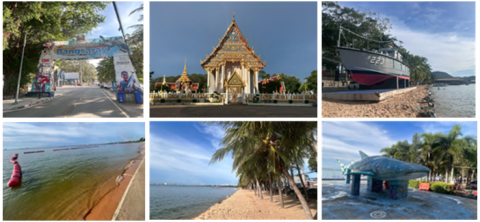
Figure 1. The diverse tourist attractions in Bang Saray from traditional fishing sites and local culinary experiences to cultural festivals
In conclusion, sustaining coastal cultural tourism through community-based approaches is a complex yet transformative process, requiring a balance between preservation and innovation. CH and CV act as pivotal mediators, ensuring that tourism remains authentic while generating tangible socio-economic benefits for local residents. As illustrated in Figure 1, the diverse tourist attractions in Bang Saray from traditional fishing sites and local culinary experiences to cultural festivals embody the village’s tangible and intangible heritage. These sites not only draw visitors but also serve as practical platforms for CL and community engagement. By focusing on Bang Saray Village, this study provides valuable insights into the practical and theoretical mechanisms through which coastal communities can leverage their heritage to achieve inclusive and sustainable tourism development in Thailand.
2.1. Community-based tourism (CBT)
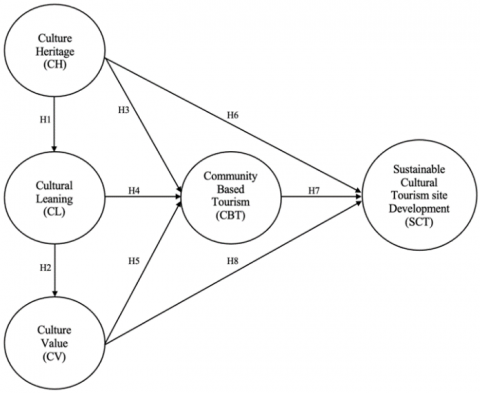
CBT emphasizes local participation, empowerment, and benefit-sharing to ensure that tourism development aligns with community priorities [19]. In heritage rich areas, CBT provides a functional framework for integrating cultural assets into sustainable tourism practices. Effective CBT implementation depends on residents’ understanding of their heritage and their willingness to collectively support tourism initiatives [19]. When managed successfully, CBT enhances local livelihoods, preserves cultural identity, and promotes environmental stewardship. In Bang Saray, CBT has the potential to transform cultural resources into experiential tourism while safeguarding local identity [20]. Accordingly, this study hypothesizes that CBT positively influences CH (H3), sustainable cultural tourism site development (SCT) (H6), and directly contributes as a core mechanism that shapes sustainable tourism outcomes (H8).
2.2 Cultural heritage (CH)
CH encompasses the tangible and intangible expressions of a community’s traditions, beliefs, and values, forming a critical foundation for sustainable tourism [21]. Heritage resources such as architecture, rituals, and oral histories strengthen local identity and enrich tourism authenticity. When communities actively participate in preserving heritage, they improve visitor experiences while reinforcing social cohesion and cultural resilience [22]. In CBT contexts, CH serves as a key input shaping community narratives and tourism products. Heritage preservation also enhances community pride and economic empowerment [23]. Thus, the study assumes that CH positively influences CL (H1), CBT (H3), and SCT (H6).
2.3 Cultural learning (CL)
CL refers to the process by which community members and visitors acquire knowledge, attitudes, and skills relating to local culture and traditions [24]. It supports the transmission of CVs while fostering mutual understanding between hosts and tourists. Through CL, residents reinterpret heritage and strengthen their capacity to participate in tourism. CL helps communities adapt cultural assets into sustainable tourism offerings without losing authenticity [25]. It also contributes to collective knowledge, enhances CV, and reinforces social bonds [26]. Therefore, this study hypothesizes that CL positively affects CV (H2) and CBT (H4), while also being shaped by CH (H1).
2.4 Cultural value (CV)
CV reflects the significance and meaning that individuals or communities assign to their CH [27]. Higher perceived CV leads communities to support conservation and tourism related activities [28]. Enhanced CV motivates responsible tourism behavior and supports the development of culturally grounded tourism products. CV also acts as a mediator between CL and CBT outcomes, transforming cultural awareness into active participation and innovation [29]. In Bang Saray Village, strong CV contributes to community pride and supports long-term tourism success. Consequently, CV is hypothesized to positively influence CBT (H5) and SCT (H7).
2.5 Sustainable cultural tourism site development (SCT)
SCT involves strengthening community capacity, enhancing cultural resources, and ensuring economic and social sustainability [30]. Achieving sustainability requires balancing heritage preservation with innovation in tourism, while ensuring benefits for all stakeholders. When CH is integrated into tourism planning through active community participation, such development can generate empowerment, job creation, and social cohesion [31]. However, in the absence of strong community ownership, cultural commodification may occur [32]. In Bang Saray, SCT is shaped by CH (H6), CV (H7), and CBT (H8), forming a holistic pathway toward culturally rooted and community-driven tourism development.
Figure 2. Conceptual framework
According to the literature review and conceptual framework (Figure 2), the following hypotheses can be articulated.
Research Hypotheses (H1–H8)
H1: CH has a positive influence on CL.
H2: CL has a positive influence on CV.
H3: CH has a positive influence on CBT.
H4: CL has a positive influence on CBT.
H5: CV has a positive influence on CBT.
H6: CH has a positive influence on SCT.
H7: CBT has a positive influence on SCT.
H8: CV has a positive influence on SCT.
3.1 Research design and approach
This study employed a quantitative, cross-sectional survey design to test the hypothesized relationships among the constructs simultaneously. This design is suitable for examining the current perceptions of residents and stakeholders and testing the causal structural model using Partial Least Squares Structural Equation Modeling (PLS–SEM).
3.2 Population and sampling
According to the general rule of thumb for structural equation modeling (SEM), the minimum sample size should be at least ten times the number of observed variables. Since this study includes 28 observed variables, the minimum required sample size is 28 × 20 = 560 participants. The study applies both purposive sampling and convenience sampling methods. Purposive criteria ensured that only residents and stake holders living in Bang Saray Village, Chonburi Province, who had direct experience or involvement in community tourism activities and CH preservation, were included. Given the absence of a comprehensive sampling frame of all relevant stakeholders, convenience sampling was utilized to access participants through local community leaders and tourism networks, ensuring a representative sample of individuals actively involved in the coastal cultural context.
3.3 Data collection and ethics
3.3.1 Instrument development and measurement
The research instrument used in this study is a structured questionnaire consisting of four sections designed to measure the proposed constructs: (1) CBT, (2) CL and CV, (3) CH, and (4) SCT. All measurement items were initially developed from relevant literature and subsequently adapted to ensure contextual accuracy and relevance within the local setting of Bang Saray Village. To establish instrument validity and clarity, the questionnaire was reviewed by three experts in community tourism and cultural studies prior to the final data collection. Respondents were asked to rate all items using a five-point Likert scale, where 1 indicated "Strongly Disagree" and 5 indicated "Strongly Agree."
3.3.2 Data collection procedure
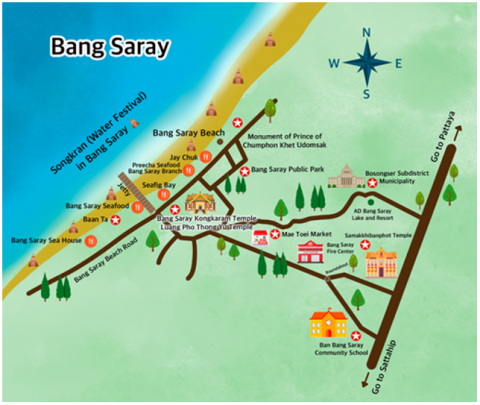
The key cultural and tourism sites of Bang Saray Village (Figure 3), including the designated Songkran festival area, served as the geographical focus for data collection. These areas represent the authentic setting where cultural interactions, learning processes, and tourism practices occur, providing the spatial foundation for interpreting the model’s results. Data were collected from the field by distributing the questionnaire directly to the selected participants who met the purposive sampling criteria (as detailed in Section 3.2).
Figure 3. Tourist attractions and Songkran festival areas in Bang Saray Subdistrict
3.3.3 Ethical compliance
The research protocol, including the data collection methods and participant consent procedures, received formal approval from the Ethics Committee in Human Research, Sripatum University Khonkaen Campus (No. SPUIRB-2025-058) on October 6, 2025. All steps were undertaken in full compliance with recognized international ethical guidelines for human research, including the Declaration of Helsinki, the CIOMS Guidelines, and the Belmont Report, ensuring voluntary participation, anonymity, and confidentiality of all respondent data.
4.1 Demographic information of the respondents
The characteristics of the respondents include gender, age, marital status, education, occupation, and monthly income. The sample consisted of 560 individuals, with the majority being male (332 individuals, or 59.3%), while females accounted for 228 individuals (40.7%). Regarding age, the largest proportion of respondents were aged 20–29 years (247 individuals, or 44.1%), followed by those aged 30–39 years (129 individuals, or 23.0%) and 50–59 years (105 individuals, or 18.8%). In terms of marital status, most respondents were single (294 individuals, or 70.4%), while 163 individuals (29.1%) were married and only 3 individuals (0.5%) were divorced.
With respect to educational attainment, the majority of respondents held an undergraduate degree (361 individuals, or 64.5%), followed by those with below undergraduate education (107 individuals, or 19.1%) and those with a graduate degree (92 individuals, or 16.4%). In terms of occupation, respondents represented a diverse range of community roles. Students constituted 112 individuals (20.0%), followed by government officers or public sector employees (156 individuals, or 27.8%), self-employed individuals or business owners (53 individuals, or 9.5%), private company employees, state enterprise employees, and other community members.
Regarding monthly income, most respondents reported earning below 15,000 baht per month (128 individuals, or 22.8%), followed by those earning between 15,000–25,000 baht (238 individuals, or 42.5%) and those earning 55,000 baht or above (61 individuals, or 10.9%) (Table 1).
Table 1. Demographic information of the respondents
|
Demographic |
Frequency |
Percent |
|
1. Gender |
|
|
|
Male |
332 |
59.3 |
|
Female |
228 |
40.7 |
|
2. Age |
|
|
|
20 – 29 |
247 |
44.1 |
|
30 – 39 |
129 |
23.0 |
|
40 – 49 |
79 |
14.1 |
|
50 – 59 |
105 |
18.8 |
|
3. Marital Status |
|
|
|
Single |
294 |
70.4 |
|
Married |
163 |
29.1 |
|
Divorce |
3 |
0.5 |
|
4. Education |
|
|
|
Below undergraduate |
107 |
19.1 |
|
Undergraduate |
361 |
64.5 |
|
Graduate |
92 |
16.4 |
|
5. Occupation |
|
|
|
Student |
112 |
20.0 |
|
Government Officer / Public Sector Employee |
176 |
31.4 |
|
State Enterprise Employee |
36 |
6.4 |
|
Private Company Employee |
48 |
8.6 |
|
Self-Employed / Business Owner |
98 |
17.5 |
|
Unemployed |
90 |
16.1 |
|
6. Salary |
|
|
|
Lower 15,000 baht |
128 |
22.8 |
|
15,000 – 25,000 baht |
238 |
42.5 |
|
25,001 – 35,000 baht |
76 |
13.6 |
|
35,001 – 45,000 baht |
25 |
4.5 |
|
45,001 – 55,000 baht |
32 |
5.7 |
|
55,000 baht or above |
61 |
10.9 |
|
Total |
560 |
100 |
4.1.1 Measurement model
Model fit indices indicated a good model fit (SRMR = 0.051; NFI = 0.897), meeting the recommended criteria [33]. The saturated model also showed strong absolute fit (SRMR = 0.036; NFI = 0.905). Values of d_ULS and d_G were within acceptable ranges for PLS-SEM, as summarized in Table 2.
Table 2. Model fit indices of the PLS-SEM model
|
Saturated Model |
Estimated Model |
|
|
SRMR |
0.036 |
0.051 |
|
d_ULS |
0.514 |
1.056 |
|
d_G |
0.441 |
0.516 |
|
Chi-square |
1385.055 |
1497.934 |
|
NFI |
0.905 |
0.897 |
Note: SRMR = standardized root mean square residual; d_ULS = unweighted least squares discrepancy; d_G = geodesic discrepancy; NFI = normed fit index. Values of SRMR below .08 indicate good model fit. NFI values approaching .90 or above suggest adequate comparative fit. d_ULS and d_G do not have strict cutoff criteria in PLS-SEM but are reported for completeness. The results indicate that the proposed model demonstrates an acceptable to good fit.
Table 3. The Measurement model
|
Construct |
Loading |
Mean |
SD |
Cronbach’s Alpha |
CR |
AVE |
|
1) Cultural Heritage (CH) |
|
4.382 |
0.715 |
0.908 |
0.931 |
0.731 |
|
CH1: I believe that the cultural heritage of Bang Saray community is important for creating the community’s unique identity, especially during the |
0.823 |
|||||
|
CH2: Bang Saray Water Festival. Preserving cultural heritage helps enhance the value and pride within the community. |
0.869 |
|||||
|
CH3: Cultural heritage should be continuously maintained by both the community and the government sector. |
0.848 |
|||||
|
CH4: Organizing cultural heritage activities helps promote understanding of the community’s traditions. |
0.869 |
|||||
|
CH5: Promoting awareness and understanding of cultural values can enhance tourism development. |
0.865 |
|||||
|
2) Cultural Learning (CL) |
|
4.414 |
0.680 |
0.908 |
0.932 |
0.732 |
|
CL1: Learning about local culture can foster a sense of pride among community members. |
0.827 |
|||||
|
CL2: Cultural learning activities can provide knowledge to the youth in the community. |
0.861 |
|||||
|
CL3: Cultural learning can help enhance understanding of the community’s traditions and culture. |
0.869 |
|||||
|
CL4: Supporting cultural learning activities can promote community-based tourism. |
0.870 |
|||||
|
CL5: Cultural learning should be an integral part of community development. |
0.850 |
|||||
|
3) Cultural Value (CV) |
|
4.425 |
0.704 |
0.921 |
0.940 |
0.759 |
|
CV1: Cultural values can motivate people to visit the community. |
0.856 |
|||||
|
CV2: Cultural values are important for building pride within the community. |
0.886 |
|||||
|
CV3: Preserving cultural values helps strengthen social balance in the community. |
0.884 |
|||||
|
CV4: Cultural values can serve as a bridge between the older and younger generations. |
0.852 |
|||||
|
CV5: Cultural values should be incorporated into sustainable community development planning. |
0.878 |
|||||
|
4) Concept and Theory of Community-Based Tourism (CBT) |
|
4.459 |
0.654 |
0.911 |
0.934 |
0.738 |
|
CBT1. I believe that the cultural heritage of the Bang Saray community is important for creating the community’s unique identity, particularly during traditional festivals such as the Bang Saray Water Festival. |
0.847 |
|||||
|
CBT2. Community-based tourism can promote the preservation of cultural heritage. |
0.843 |
|||||
|
CBT3. The community should play a leading role in planning and implementing tourism activities. |
0.885 |
|||||
|
CBT4. Providing cultural knowledge to tourists can foster understanding and respect for the local culture. |
0.866 |
|||||
|
CBT5. The development of cultural tourism should emphasize sustainability. |
0.855 |
|||||
|
5) Sustainable Cultural Tourism Site Development (SCT) |
|
4.455 |
0.650 |
0.933 |
0.945 |
0.681 |
|
SCT1: I think that the cultural heritage of Bang Saray community plays an important role in attracting tourists. |
0.821 |
|||||
|
SCT2: I believe that promoting cultural heritage can help create a positive image for the Bang Saray community. |
0.806 |
|||||
|
SCT3: I agree that organizing cultural events in the community can increase tourists’ interest. |
0.817 |
|||||
|
SCT4: I think that preserving the community’s cultural heritage can build awareness and pride among local residents. |
0.845 |
|||||
|
SCT5: I believe that cultural heritage can generate income for the community through products such as souvenirs and handicrafts. |
0.843 |
|||||
|
SCT6: I think that linking cultural heritage with tourism can contribute to sustainable community development. |
0.815 |
|||||
|
SCT7: I believe that the community should receive support from both public and private sectors for the preservation and promotion of cultural heritage. |
0.799 |
|||||
|
SCT8: I think that having sufficient information and knowledge about the community’s cultural heritage is essential for effective tourism planning and development. |
0.854 |
The measurement model was assessed through convergent validity, discriminant validity, and reliability criteria. All factor loadings were above 0.5 and statistically significant, ranging from 0.799 to 0.886, confirming that each observed variable effectively represents its latent construct. The Average Variance Extracted (AVE) values, which ranged from 0.681 to 0.759, exceeded the minimum threshold of 0.50, indicating adequate convergent validity. Additionally, Cronbach’s alpha coefficients ranged from 0.908 to 0.933, while Composite Reliability Values ranged from 0.931 to 0.945, both surpassing the recommended benchmark of 0.70 [33]. Overall, these findings confirm that the measurement model demonstrates strong reliability and validity, as summarized in Table 3.
Discriminant validity was assessed using the Average Variance Extracted (AVE) and cross-loading criteria. The results of the Fornell–Larcker criterion demonstrate satisfactory discriminant validity, as the square roots of the AVE for each construct are higher than the corresponding inter-construct correlations (Table 4) [33, 34]. This indicates that each construct shares greater variance with its associated indicators than with other constructs in the model.
Table 4. Fornell-Larker criterion
|
Construct |
CBT |
CH |
CL |
CV |
SCT |
|
CBT |
0.859 |
|
|
|
|
|
CH |
0.812 |
0.855 |
|
|
|
|
CL |
0.828 |
0.809 |
0.855 |
|
|
|
CV |
0.801 |
0.823 |
0.842 |
0.871 |
|
|
SCT |
0.793 |
0.834 |
0.798 |
0.821 |
0.825 |
Table 5. Cross loading
|
Item Codes |
CH |
CBT |
CL |
CV |
SCT |
|
CH1 |
0.847 |
0.696 |
0.727 |
0.711 |
0.725 |
|
CH2 |
0.843 |
0.718 |
0.694 |
0.690 |
0.732 |
|
CH3 |
0.885 |
0.744 |
0.720 |
0.743 |
0.771 |
|
CH4 |
0.866 |
0.721 |
0.717 |
0.720 |
0.779 |
|
CH5 |
0.855 |
0.705 |
0.704 |
0.738 |
0.774 |
|
CBT1 |
0.638 |
0.823 |
0.692 |
0.640 |
0.641 |
|
CBT2 |
0.723 |
0.869 |
0.731 |
0.707 |
0.676 |
|
CBT3 |
0.720 |
0.848 |
0.730 |
0.715 |
0.700 |
|
CBT4 |
0.735 |
0.869 |
0.753 |
0.733 |
0.725 |
|
CBT5 |
0.745 |
0.865 |
0.778 |
0.725 |
0.729 |
|
CL1 |
0.677 |
0.678 |
0.827 |
0.725 |
0.661 |
|
CL2 |
0.700 |
0.751 |
0.861 |
0.751 |
0.701 |
|
CL3 |
0.733 |
0.761 |
0.869 |
0.751 |
0.708 |
|
CL4 |
0.707 |
0.751 |
0.870 |
0.741 |
0.686 |
|
CL5 |
0.726 |
0.746 |
0.850 |
0.773 |
0.714 |
|
CV1 |
0.720 |
0.734 |
0.767 |
0.856 |
0.696 |
|
CV2 |
0.738 |
0.718 |
0.790 |
0.886 |
0.723 |
|
CV3 |
0.733 |
0.738 |
0.765 |
0.884 |
0.731 |
|
CV4 |
0.695 |
0.672 |
0.739 |
0.852 |
0.715 |
|
CV5 |
0.767 |
0.731 |
0.752 |
0.878 |
0.743 |
|
SCT1 |
0.741 |
0.675 |
0.668 |
0.714 |
0.821 |
|
SCT2 |
0.704 |
0.680 |
0.657 |
0.680 |
0.806 |
|
SCT3 |
0.725 |
0.666 |
0.679 |
0.675 |
0.817 |
|
SCT4 |
0.763 |
0.687 |
0.682 |
0.689 |
0.845 |
|
SCT5 |
0.744 |
0.682 |
0.656 |
0.698 |
0.843 |
|
SCT6 |
0.707 |
0.654 |
0.674 |
0.671 |
0.815 |
|
SCT7 |
0.682 |
0.634 |
0.640 |
0.644 |
0.799 |
|
SCT8 |
0.743 |
0.688 |
0.704 |
0.693 |
0.854 |
In addition, all indicator loadings were higher on their respective constructs than on other constructs, as evidenced by the cross-loading analysis presented in Table 5. These findings confirm that each measurement item is more strongly associated with its intended latent variable than with other variables in the model. Consistent with recent PLS-SEM recommendations, the combined evidence from the Fornell–Larcker criterion and cross-loading analysis supports the presence of adequate discriminant validity. Therefore, the measurement model was deemed suitable for subsequent structural model analysis.
The subsequent assessment of discriminant validity examined the cross-loadings, which ranged from 0.799 to 0.886. As shown in Table 5, each indicator demonstrated the highest loading on its corresponding construct. These results confirm the absence of discriminant validity concerns, allowing the study to proceed with further analysis.
The structural model was analyzed using the PLS–SEM approach to examine the causal relationships among CBT, CL, CV, the Concept and CH and SCT in Bang Saray Village.
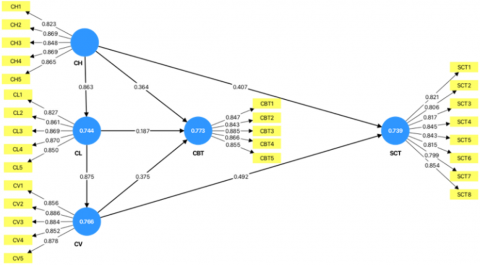
The coefficient of determination (R²) values indicate that the proposed model demonstrates strong explanatory power. As illustrated in the structural model, CL achieved an R² value of 0.744, CL an R² value of 0.766, CBT an R² value of 0.773, and SCT an R² value of 0.739. These results suggest that the antecedent constructs collectively explain a substantial proportion of variance in the endogenous variables, confirming the robustness and predictive capability of the proposed model. Furthermore, the path coefficients among constructs were found to be statistically significant and exceeded the recommended threshold value of 0.2, indicating meaningful relationships among the variables. The results are summarized in Figure 4 and Table 6.
Table 6. Hypothesis testing
|
Hypothesis Testing |
Path Coefficients |
T-Value |
P-Value |
Results |
|
CHàCBT |
0.030 |
6.87 |
0.000 |
Supported |
|
CHàCL |
0.016 |
5.92 |
0.000 |
Supported |
|
CHàSCT |
0.029 |
4.96 |
0.000 |
Supported |
|
CLàCBT |
0.080 |
5.66 |
0.000 |
Supported |
|
CLàCV |
0.015 |
4.21 |
0.000 |
Supported |
|
CLàSCT |
0.050 |
4.87 |
0.000 |
Supported |
|
CVàCBT |
0.065 |
6.87 |
0.000 |
Supported |
|
CVàSCT |
0.057 |
5.92 |
0.000 |
Supported |
Figure 4. Structural model
4.1.2 Hypothesis testing
The hypotheses were tested using the Bootstrapping procedure with 5,000 resamples, following the criteria of p < 0.05 and t-value > 1.96 for statistical significance. The results, shown in Table 6, reveal that all hypothesized paths are statistically significant and supported at the 0.05 level.
The results of the SEM analysis reveal that CH plays a central and foundational role in shaping sustainable cultural tourism development in Bang Saray Village. As shown in Table 6, CH exerts a significant and positive influence on CBT and CL, as well as directly on SCT (p < 0.001). These findings underscore the importance of CH as a primary driver that initiates learning processes and participatory tourism practices within coastal communities [35, 36].
Specifically, the strong and significant paths from CH to CL indicate that when community members recognize and engage with their CH, it enhances collective learning related to local traditions, histories, and everyday cultural practices. This supports previous studies suggesting that heritage functions not merely as a tourism resource but as a catalyst for cultural awareness [37], identity formation, and intergenerational knowledge transmission [38, 39]. Through these learning processes, CH becomes embedded in everyday community practices rather than remaining a static attraction.
The findings further demonstrate that CL significantly influences both CV and CBT, indicating that learning activities such as participation in festivals, cultural storytelling, and the continuation of local traditions play a crucial role in transforming cultural knowledge into shared values and collective community action. Previous studies have shown that engagement in local CL enhances residents’ appreciation of cultural assets and increases their willingness to participate in tourism-related initiatives [37]. Consistent with these findings, empirical research conducted in Thai heritage destinations, including Phuket Old Town, demonstrates that CL experiences—particularly those related to traditional cuisine and everyday cultural practices—strengthen local identity and cultural pride, thereby supporting CBT development [39, 40].
In addition, CV was found to have a significant positive effect on both CBT and SCT, highlighting its mediating role between CL processes and sustainable tourism outcomes. When community members internalize shared CVs through learning experiences, they are more likely to support CBT initiatives and sustainable site development that emphasize authenticity and cultural integrity. This finding aligns with heritage-driven tourism models, which posit that culturally shared values serve as a key mechanism linking learning processes to long-term sustainable development outcomes [41, 42].
The significant effects of CBT on SCT confirm that community participation is a crucial pathway through which CH contributes to sustainable tourism site development. CBT provides an operational platform that translates CL and shared values into concrete tourism practices, such as local management, benefit-sharing, and culturally grounded interpretation. Consistent with previous SEM-based tourism studies, heritage-centered and participatory approaches were found to enhance community resilience, destination sustainability, and local economic outcomes [20, 43-45].
The explanatory power of the model is supported by the high R² values for the endogenous constructs (R² = 0.744–0.773), indicating that CH, CL, CV, and CBT jointly explain a substantial proportion of variance in SCT. Although the standardized path coefficients are relatively modest, the consistently high t-values and strong statistical significance suggest stable and meaningful relationships within the proposed framework [46, 47].
Overall, the results confirm that CH influences sustainable tourism development both directly and indirectly, primarily through its effects on CL and CBT, with CV acting as a downstream mechanism that reinforces sustainability outcomes. This integrated pathway reinforces the theoretical proposition that heritage-driven tourism sustainability is not achieved through economic mechanisms alone, but through socially embedded processes of learning, shared values, and collective participation.
In summary, the findings empirically validate the interconnected roles of CH, CL, CV, and CBT in advancing SCT. The proposed model offers a holistic framework that highlights cultural preservation, community participation, and sustainability as mutually reinforcing dimensions of CBT in coastal contexts.
This study highlights the crucial role of CH in fostering the SCT. through the mediating influences of CL and CV in Bang Saray Village, Chonburi Province. All hypothesized paths linking CH, CL, CV, and CBT were statistically significant, confirming strong interconnections among these constructs. The structural model demonstrated high explanatory power, with R² values ranging from 0.739 to 0.773, indicating that the framework effectively explains the relationships between CH and tourism development.
The findings suggest that CH serves as both a foundation and catalyst for CL, value creation, and active community participation. Coastal residents who understand and appreciate their heritage are more likely to engage in preserving, interpreting, and promoting traditional practices through tourism. Practically, the results emphasize the importance of integrating heritage conservation, cultural education, and community involvement into local tourism policies to achieve sustainable coastal cultural tourism. Overall, this study provides empirical evidence that enhancing CH and learning processes can foster inclusive, community-driven tourism that supports cultural integrity while generating long-term socio-economic benefits.
A key limitation of this study concerns the composition of the sample, particularly the representation of students within the respondent group. Although the proportion of student respondents was reduced and adjusted to better reflect community characteristics, students may not fully represent all active CBT stakeholders, such as tourism entrepreneurs, long-term residents, or local business operators. Their perceptions may differ in terms of direct economic involvement and decision-making authority in tourism development.
Nevertheless, in the context of coastal communities in Thailand, students often remain embedded within local social and cultural systems, participating in cultural festivals, family-based tourism activities, and community learning processes. Therefore, their perspectives still provide meaningful insights into CL and value formation at the community level. However, caution should be exercised when generalizing the findings to all CBT stakeholders. Future research should employ stratified or stakeholder-specific sampling strategies to ensure proportional representation of key CBT actors and to enhance the external validity of the findings.
The authors attached the raw data supporting the finding in the supplementary material.
For research articles with several authors, a short paragraph specifying their individual contributions must be provided. The following statements should be used “Conceptualization, D.T and S.A.; methodology, D.T and S.A.; software, W.K. and K.S.; validation, D.T. and J.L; formal analysis, S.A. and K.S.; investigation, J.L. and W.K.; resources, J.L.; data curation, D.T.; writing—original draft preparation, S.A. and W.K.; writing—review and editing, D.T and J.L.; visualization, D.T.; supervision, S.A. and K.S.; project administration, J.L.; funding acquisition, D.T. All authors have read and agreed to the published version of the manuscript.
This research was approved by the Ethics Committee in Human Research, Sripatum University Khonkaen Campus (No. SPUIRB-2025-058) on October 6, 2025. All procedures performed in this study involving human participants were in accordance with the ethical standards of the institutional research committee and with the Declaration of Helsinki.
Oral informed consent was obtained from all survey participants in October 2025 by the research team. The consent covered study participation, data use, and permission to publish anonymized results. Participants were assured of their anonymity, informed of the study’s purpose, data usage, and notified that no risks were involved.
This research project was financially supported by Mahasarakham Business School, Mahasarakham University, Thailand.
[1] Anheier, H.K. (2020). Cultures, values, and identities: What are the issues? Global Perspectives, 1(1): 11755. https://doi.org/10.1525/001c.11755
[2] Çiftci, G. (2025). The role of niche tourism in social cohesion, justice and peace with a perspective of cross-border tourism. In Niche Tourism and Sustainability: Perspectives, Practices and Prospects, pp. 133-146. https://doi.org/10.1079/9781800626669.0011
[3] Zielinski, S., Jeong, Y., Milanés, C.B. (2020). Factors that influence community-based tourism (CBT) in developing and developed countries. Tourism Geographies, 23(5-6): 1040-1072. https://doi.org/10.1080/14616688.2020.1786156
[4] Gutierrez, E.L.M. (2022). Participation in tourism cases on community-based tourism (CBT) in the Philippines. Ritsumeikan Journal of Asia Pacific Studies, 37(1): 23-36. https://doi.org/10.34409/rjaps.37.1_23
[5] Pai, C.H., Zhang, Y., Wang, Y.L., Li, K., Shang, Y. (2025). Current challenges and opportunities in cultural heritage preservation through sustainable tourism practices. Current Issues in Tourism, 1-19. https://doi.org/10.1080/13683500.2024.2443776
[6] Marbun, S. (2025). The commodification of culture in global tourism: Balancing authenticity, sustainability, and ethical practices amidst disruption. In Proceedings of the International Seminar of Culture and Tourism AKBI, 1(1): 1-24. https://ojs-akbi.org/index.php/proceeding/article/view/1.
[7] Scheyvens, R., van der Watt, H. (2021). Tourism, empowerment and sustainable development: A new framework for analysis. Sustainability, 13(22): 12606. https://doi.org/10.3390/su132212606
[8] Kyriakidis, E. (2020). A Community Empowerment Approach to Heritage Management: From Values Assessment to Local Engagement. Taylor & Francis. https://doi.org/10.4324/9780429429361
[9] Shrestha, R.K., L’Espoir Decosta, J.N.P. (2024). A socio-cognitive approach to multi-stakeholder collaboration for indigenous tourism development: The case of Nepal’s Newars. Journal of Travel Research, 64(8): 1820-1842. https://doi.org/10.1177/00472875241271207
[10] Rise, K. (2025). The transformative impact of cultural tourism from the perspective of local communities: Identity, space, and meaning. Journal of Tourism Theory and Research, 11(2): 56-64. https://doi.org/10.24288/jttr.1700897
[11] Jaroenkietkajorn, U., Gheewala, S.H., Mungkung, R., Jakrawatana, N., et al. (2024). Challenges and opportunities of bio-circular-green economy for agriculture. Circular Economy and Sustainability, 4: 1729-1750. https://doi.org/10.1007/s43615-024-00355-9
[12] Ejikeme, J.N.U., Chijioke Mmadu, E. (2025). Exploring heritage resources for sustainable cultural heritage tourism development in Nanka, Orumba North Local Government Area of Anambra State, Nigeria. Eco-Tourism and Sustainable Development, 1(1): 42-65. https://doi.org/10.63385/etsd.v1i1.157
[13] De Luca, C., López-Murcia, J., Conticelli, E., Santangelo, A., Perello, M., Tondelli, S. (2021). Participatory process for regenerating rural areas through heritage-led plans: The RURITAGE community-based methodology. Sustainability, 13(9): 5212. https://doi.org/10.3390/su13095212
[14] Song, H., Zhu, C., Fong, L.H.N. (2021). Exploring residents’ perceptions and attitudes towards sustainable tourism development in traditional villages: The lens of stakeholder theory. Sustainability, 13(23): 13032. https://doi.org/10.3390/su132313032
[15] Bui, H.T., Jones, T.E., Weaver, D.B., Le, A. (2020). The adaptive resilience of living cultural heritage in a tourism destination. Journal of Sustainable Tourism, 28(7): 1022-1040. https://doi.org/10.1080/09669582.2020.1717503
[16] Chinawat, S. (2024). Community development initiatives and sustainable tourism in rural Thailand: A case study of Chiang Mai. Journal of World Economy, 3(1): 19-24. https://www.pioneerpublisher.com/jwe/article/view/670.
[17] Fayziyev, B. (2025). Preservation and promotion of cultural heritage through tourism. Journal of Management and Economics, 5(3): 6-9. https://inlibrary.uz/index.php/jme/article/view/81860.
[18] Jackson, L.A. (2025). Community-based tourism: A catalyst for achieving the United Nations Sustainable Development Goals 1 and eight. Tourism and Hospitality, 6(1): 29. https://doi.org/10.3390/tourhosp6010029
[19] Suriyankietkaew, S., Krittayaruangroj, K., Thinthan, S., Lumlongrut, S. (2025). Creative tourism as a driver for sustainable development: A model for advancing SDGs through community-based tourism and environmental stewardship. Environmental Sustainability Indicators, 27: 100828. https://doi.org/10.1016/j.indic.2025.100828
[20] Ditta-Apichai, M., Sroypetch, S., Caldicott, R.W. (2024). A critique of community-based tourism development: The comparative case of Betong and Pho Tak Districts, Thailand. Community Development, 55(1): 67-84. https://doi.org/10.1080/15575330.2022.2144921
[21] Wasela, K. (2023). The role of intangible cultural heritage in the development of cultural tourism. International Journal of Eco-Cultural Tourism, Hospitality Planning and Development, 6(2): 15-28. https://doi.org/10.21608/ijecth.2024.297283.1004
[22] Zain El Shandidy, M. (2023). The power of intangible heritage in sustainable development. International Journal of Advanced Studies in World Archaeology, 6(2): 92-97. https://doi.org/10.21608/ijaswa.2024.275163.1043
[23] Nag, A., Rathore, A.S. (2025). Balancing bias and sustainability in heritage tourism. In Destination Branding and Bias in Ecotourism, pp. 217-266. https://doi.org/10.4018/979-8-3693-6700-1.ch009
[24] Katelieva, M., Muhar, A. (2022). Heritage tourism products based on traditional nature-related knowledge: Assessment of cultural, social, and environmental factors in cases from rural Austria. Journal of Heritage Tourism, 17(6): 631-647. https://doi.org/10.1080/1743873X.2022.2098040
[25] Legare, C.H. (2019). The development of cumulative cultural learning. Annual Review of Developmental Psychology, 1: 119-147. https://doi.org/10.1146/annurev-devpsych-121318-084848
[26] Siddiqui, R.N. (2025). Diversity, cultural bonding and social resilience. In Building a Resilient and Responsible World, pp. 87-97. https://doi.org/10.1007/978-981-96-0108-0_5
[27] Azzopardi, E., Kenter, J.O., Young, J., Leakey, C., O’Connor, S., Martino, S., Pita, C. (2023). What are heritage values? Integrating natural and cultural heritage into environmental valuation. People and Nature, 5(2): 368-383. https://doi.org/10.1002/pan3.10386
[28] Sianipar, I.M.J., Lee, C.H., Wang, H.J., Kim, D.C., Suryawan, I. (2024). Unraveling factors influencing local willingness to participate in sustainable Komodo conservation and protected area tourism. Forest and Society, 8(2): 350-371. https://doi.org/10.24259/fs.v8i2.32880
[29] Samaddar, K., Mondal, S., Sharma, S. (2021). Reinforcing responsible tourism through cultural involvement: Empirical evidence from India. Journal of Quality Assurance in Hospitality & Tourism, 23(2): 365-387. https://doi.org/10.1080/1528008X.2020.1867698
[30] Tuyen, Q.D., Phan, C.N., Hieu, N.D., Le Anh, T. (2025). How has community-based tourism evolved over three decades (1995-2025): A bibliometric and systematic literature review on evolution and future research directions. Sustainable Development, 33(6): 8870-8893. https://doi.org/10.1002/sd.70118
[31] Hu, B., He, F., Hu, L. (2022). Community empowerment under powerful government: A sustainable tourism development path for cultural heritage sites. Frontiers in Psychology, 13: 752051. https://doi.org/10.3389/fpsyg.2022.752051
[32] Mbaiwa, J.E. (2011). Cultural commodification and tourism: The Goo-Moremi community, Central Botswana. Tijdschrift voor Economische en Sociale Geografie, 102(3): 290-301. https://doi.org/10.1111/j.1467-9663.2011.00664.x
[33] Henseler, J., Hubona, G.S., Ray, P.A. (2016). Using PLS path modeling in new technology research: Updated guidelines. Industrial Management & Data Systems, 116(1): 2-20. https://doi.org/10.1108/IMDS-09-2015-0382
[34] Fornell, C., Larcker, D.F. (1981). Evaluating structural equation models with unobservable variables and measurement error. Journal of Marketing Research, 18(1): 39-50. https://doi.org/10.2307/3151312
[35] Chumnumwat, S., Chanvichai, K. (2024). The digital content on social media for tourism promotion of Wang Krod community, Phichit. Journal of Business Innovation and Sustainability, 19(4). https://so02.tci-thaijo.org/index.php/BECJournal/article/view/272598.
[36] Xie, T., Xu, A. (2024). Exploring the norm-activation model-based mechanisms influencing the willingness of environmentally friendly behavior of backpackers. Journal of Resources and Ecology, 15(3): 650-662. https://doi.org/10.5814/j.issn.1674-764x.2024.03.012
[37] Wijayanti, A., Putri, E.D.H., Indriyanti, I., Rahayu, E., Asshofi, I.U.A. (2023). Community-based heritage tourism management model: Perception driving participation. African Journal of Hospitality, Tourism and Leisure, 12(4): 1630-1645. https://doi.org/10.46222/ajhtl.19770720.454
[38] Pattaray, A. (2024). Leveraging local wisdom as social capital for sustainable tourism: A case study of the Ponan tradition in Poto Village, Sumbawa, Indonesia. Tourism Spectrum: Diversity and Dynamics, 1(2): 104-114. https://doi.org/10.56578/tsdd010204
[39] Abatabaei, F., Oshriyeh, O., Beldona, S. (2024). Towards sustainability: Exploring community involvement in tourism development. Tourism Planning & Development, 22(4): 498-528. https://doi.org/10.1080/21568316.2024.2392788
[40] Nyamboke, F. (2024). Community engagement in sustainable tourism development: Opportunities and challenges for local residents. Hospitality and Tourism Journal, 1(1): 24. https://forthworthjournals.org/journals/index.php/HTJ/article/view/68.
[41] Olğun, T.N., Akarsu, İ.K. (2025). Examining the open building movement through the adaptive reuse of Toma Church in Turkiye. Open House International, 1-29. https://doi.org/10.1108/OHI-02-2025-0082
[42] Fujita, M., Hamaguchi, N., Kameyama, Y. (2021). Local community as a device for regional innovation. In Spatial Economics for Building Back Better: Economics, Law, and Institutions in Asia Pacific, pp. 135-152. https://doi.org/10.1007/978-981-16-4951-6_8
[43] Saito, H. (2017). The role of intermediaries in community capacity building: Pro-poor tourism perspective. Academica Turistica – Tourism Innovation Journal, 10(1). https://academica.turistica.si/index.php/AT-TIJ/article/view/77.
[44] Lin, X., Shen, Z., Teng, X., Mao, Q. (2024). Cultural routes as cultural tourism products for heritage conservation and regional development: A systematic review. Heritage, 7(5): 2399-2425. https://doi.org/10.3390/heritage7050114
[45] Elshaer, I.A., Azazz, A.M.S., Fayyad, S. (2024). Residents’ environmentally responsible behavior and tourists’ sustainable use of cultural heritage: Mediation of destination identification and self-congruity as a moderator. Heritage, 7(3): 1174-1187. https://doi.org/10.3390/heritage7030056
[46] Laphet, J., Sanvises, D., Tandamrong, D., Tantrabundit, P. (2025). Decoding sustainable air travel choices: An extended TPB of green aviation. Tourism and Hospitality, 6(5): 232. https://doi.org/10.3390/tourhosp6050232
[47] Pásková, M. (2022). Geopark certification as an efficient form of sustainable management of a geotourism destination. In Economics and Management of Geotourism, pp. 65-85. https://doi.org/10.1007/978-3-030-89839-7_4