Le Thi Kim Hoa
© 2025 The author. This article is published by IIETA and is licensed under the CC BY 4.0 license (http://creativecommons.org/licenses/by/4.0/).
OPEN ACCESS
This study investigates the influence of four core components of content marketing—informational value, credibility, entertainment, and interactivity—on Generation Z (Gen Z)’s purchase intention toward vegan cosmetics. It also explores the moderating role of electronic word-of-mouth (e-WOM) within the broader context of digital transformation and sustainable consumption. Vegan cosmetics are an emerging aspect of the circular beauty economy and green consumer behaviour as they promote cruelty-free and environmentally responsible goods. A mixed-method approach was used, utilizing data from an online survey of 563 Gen Z respondents in Ho Chi Minh City, Vietnam, to combine qualitative inquiry and quantitative analysis. SMART PLS 4.0 was used to analyze the data using the PLS-SEM method. The results suggest that all four aspects of content marketing have a favourable impact on purchase intention, with entertainment and credibility having the strongest effect, followed by informational value and interactivity. Moreover, e-WOM significantly moderates the relationships between informational value, credibility, and entertainment with purchase intention, but not between interactivity and purchase intention. These findings demonstrate the critical role e-WOM plays in enhancing the efficacy of content marketing and offer managerial and theoretical guidance to vegan cosmetic companies on creating believable, interesting, and environmentally responsible content strategies that encourage Gen Z consumers to consume sustainably.
content marketing, e-WOM, Gen Z, purchase intention, sustainable consumption, vegan cosmetics
The rapid expansion of the Internet—with 5.52 billion users worldwide in 2024 [1]—has laid the groundwork for the explosive growth of social media platforms such as Facebook, Zalo, and especially TikTok, which is used by over 80% of Gen Z in Vietnam [2]. Currently, Gen Z accounts for more than 50% of the online shopping market share in Vietnam [3], characterized by their intense attraction to creative and inspiring content. This presents a significant opportunity for businesses to leverage content marketing, recognized as one of the top three most effective communication strategies in recent reports. Nearly 90% of businesses have adopted it, with 73% of B2B and 70% of B2C enterprises acknowledging its effectiveness [4].
However, Gen Z exhibits selective and astute consumer behavior rather than being "easily attracted". According to recent research, around 70% of Gen Zers look online for information before making a purchase, and 59% of them trust user evaluations on social media before making a decision [5, 6]. This demonstrates how electronic word-of-mouth, or e-WOM, is becoming increasingly important in influencing online purchase decisions, particularly in the cosmetics industry, which Gen Z finds very interesting and where online purchases require careful thought [7, 8].
Prior research shows that e-WOM has a significant impact on customer behavior and that there is a favorable correlation between purchase intention and content marketing [9, 10]. Studies that examine the moderating influence of e-WOM in this relationship are still few, though, especially in developing nations like Vietnam and in the unique context of vegan cosmetics, which are strongly linked to sustainable consumption.
Accordingly, this study aims to clarify the impact of content marketing on Gen Z's purchase intention toward vegan cosmetics in Ho Chi Minh City, while also examining the moderating role of e-WOM in this relationship. The results are anticipated to make a substantial theoretical contribution by enhancing the body of knowledge on sustainable consumer behavior, as well as a practical one by offering cosmetic brands strategic advice on how to maximize their content strategies and use e-WOM to increase their influence over the younger demographic.
1.1 Research questions
Based on the research gap identified, the current study seeks to answer the following research questions:
i. To what extent do the four core components of content marketing (informational value, credibility, entertainment, and interactivity) influence Gen Z's purchase intention toward vegan cosmetics?
ii. Does electronic word-of-mouth (e-WOM) significantly moderate the relationship between the four core components of content marketing and Gen Z's purchase intention toward vegan cosmetics?
iii. What managerial and theoretical implications can be drawn for cosmetic brands to promote sustainable consumption among Gen Z in Vietnam?
1.2 Research objectives
The main objectives of this empirical study are set as follows:
i. To examine and measure the impact of the four core components of content marketing (informational value, credibility, entertainment, and interactivity) on the purchase intention of Generation Z for vegan cosmetics.
ii. To explore and verify the moderating role of electronic word-of-mouth (e-WOM) in the relationship between content marketing and Gen Z's purchase intention.
iii. To provide theoretical contributions by expanding the understanding of sustainable consumer behavior in the context of digital marketing.
To offer practical guidance and strategic recommendations to vegan cosmetic companies in Vietnam on how to develop effective, environmentally responsible content strategies and leverage e-WOM to foster sustainable consumption among the young demographic.
2.1 Definitions
People born between 1995 and 2010 are referred to as Generation Z (Gen Z), while some sources go as far as 2012. Currently, this group makes up more than 20% of the Vietnamese population and almost 30% of the world's population [11]. Since Gen Z is the first generation to have grown up entirely in a digital world, more than 80% of its members in Vietnam use TikTok, demonstrating their high level of Internet and social media connectivity [12]. Gen Z is often characterized by independent thinking, heightened sensitivity to social, environmental, and sustainability issues, and a consumption style that is smart, selective, and aligned with personal values [13]. In the cosmetics sector, Gen Z tends to favor organic, vegan, and environmentally friendly products, reflecting a strong commitment to sustainable consumption.
Beauty and personal care products that are free of materials produced from animals and that are not subjected to animal testing are referred to as vegan cosmetics. Reputable vegan and animal protection groups frequently certify these items [14]. Unlike organic cosmetics, vegan cosmetics specifically aim to eliminate all animal-based materials, including honey, beeswax, milk, and collagen derived from animals. Due to the rapidly increasing demand for vegan cosmetics worldwide, the market is predicted to reach USD 32.56 billion by 2032 [15]. In addition to choosing vegan cosmetics for health and safety concerns, consumers—especially members of Generation Z—also do so as a sign of their dedication to social responsibility and sustainable consumption [16].
It is also essential to distinguish between “vegan” and “cruelty-free” cosmetics, as these terms are frequently confused by consumers, including Gen Z. Vegan cosmetics exclude all animal-derived ingredients, whereas cruelty-free cosmetics specifically refer to products that are not tested on animals. A product may be vegan but still tested on animals, and conversely, a cruelty-free product may still contain animal-derived components such as beeswax or lanolin. Prior studies show that this misconception can shape young consumers’ perceptions of ethical and sustainable beauty, potentially influencing their purchase decisions. Therefore, clarifying this distinction is important for accurately understanding Gen Z’s motivations and interpreting vegan cosmetics within the broader context of sustainable consumption.
Content marketing is a marketing strategy that focuses on creating and distributing valuable, relevant, and consistent content to attract and retain a clearly defined target audience, ultimately driving purchasing behavior [4]. In contrast to conventional advertising, content marketing places a strong emphasis on providing helpful information, authority, amusement, and interactivity using a variety of media, including podcasts, videos, articles, and social media [9]. According to recent studies, these four factors not only have a direct impact on buying intention. However, they can also be amplified through electronic word-of-mouth (e-WOM), particularly in the context of sustainable consumption [10].
Electronic word-of-mouth (e-WOM) refers to the process by which consumers share information, reviews, opinions, or experiences about products or services through online platforms such as social media, forums, blogs, or e-commerce websites [7]. Unlike traditional word-of-mouth, e-WOM features a broader reach, faster dissemination, and more substantial influence on the perceptions and purchasing behavior of potential customers. Recent studies indicate that the quality, credibility, and volume of e-WOM are key factors that drive purchase intention—particularly among Gen Z, who tend to consult online reviews before making purchase decisions [8].
The degree to which a customer is willing and prepared to purchase a specific good or service in the future is known as purchase intention [17]. It is a crucial behavioral indicator that shows the probability of real purchase activity. According to current research, elements like perceived value, customer happiness, product attitude, content marketing, and electronic word-of-mouth (e-WOM) all have an impact on purchase intention [9, 10]. In the context of sustainable consumption, a consumer's goal to buy vegan or eco-friendly products demonstrates their sense of social and environmental duty in addition to their requirements [16].
2.2 Theoretical background
2.2.1 Theory of Planned Behavior
One of the most popular frameworks for analyzing and forecasting consumer behavior is the Theory of Planned Behavior (TPB) [17]. Theory of Planned Behavior holds that three main factors—attitude toward the behavior, subjective norms, and perceived behavioral control—shape behavioral intention, which in turn shapes human behavior. According to this study, content marketing can affect Gen Z's opinions by offering reliable, engaging, and helpful information. Gen Z's desire to buy may also be impacted by social norms and online community effects, which are heavily reflected in e-WOM. TPB thus offers a solid theoretical framework for clarifying the relationship between e-WOM, content marketing, and Purchase intention for vegan cosmetics in the context of sustainable consumption.
2.2.2 Signaling theory
According to Signaling Theory [18], signals from businesses or clients are crucial for building trust and reducing uncertainty in circumstances when information is asymmetrical. This study claims that content marketing is a signal that a business delivers to its clients that conveys satisfaction, openness, and usefulness. In contrast, e-WOM represents a signal from consumers that can either reinforce or diminish the effectiveness of content marketing efforts. When Gen Z receives positive signals from both the brand and the online community, they are more likely to strengthen their trust and purchase intention. Therefore, Signaling Theory provides a valuable lens for explaining how e-WOM moderates the relationship between content marketing and purchase intention.
2.2.3 Social exchange theory
According to the Social Exchange Theory [19], a perceived balance between costs and benefits is the foundation for the development and maintenance of partnerships. When customers see value—such as helpful information, enjoyable experiences, or constructive interactions—they are more likely to stay engaged with a brand in the context of marketing. Gen Z is not merely passive content consumers but also active participants in e-WOM activities, including sharing reviews, commenting, or recommending products. When the perceived benefits outweigh the associated costs (e.g., time, effort, or trust), Gen Z tends to develop a positive attitude and purchase intention. Thus, this theory provides a foundational explanation for why content value and community engagement are essential to the purchasing behavior of this generation.
2.2.4 Stimulus-Organism-Response (S-O-R) model
The three elements of the Stimulus-Organism-Response (S-O-R) paradigm [20]—stimulus (S), organism (O), and response (R)—are used to explain consumer behavior. In this research: Stimuli (S) include e-WOM and content marketing (content value, credibility, entertainment, and interactivity); Organism (O): Gen Z's reactions to content in terms of cognition, emotion, and attitude; Purchase intention for vegan cosmetics is the response (R); The S-O-R framework clarifies the psychological processes by which e-WOM and content marketing affect purchase intention. Given that Gen Z is a highly receptive consumer demographic to online material and multimedia stimulation, this strategy is especially beneficial.
These four theoretical perspectives provide an integrated foundation for the present research model. The Theory of Planned Behavior (TPB) explains how Gen Z’s attitudes, perceived social norms, and perceived behavioral control form the basis of their purchase intention for vegan cosmetics. Signaling Theory accounts for the role of content credibility and transparency as signals that reduce uncertainty and strengthen trust, clarifying why certain content marketing elements exert strong cognitive influence. Social Exchange Theory highlights the value-based evaluations consumers make when they experience informational, emotional, or interactive benefits from brand-generated content, thereby explaining why engagement-related content affects intention. Finally, the S-O-R framework connects these mechanisms by illustrating how content marketing and e-WOM function as stimuli (S), how Gen Z processes and interprets them cognitively and emotionally (O), and how these internal states translate into behavioral responses such as purchase intention (R).
By synthesizing TPB, Signaling Theory, Social Exchange Theory, and the S-O-R framework, this study achieves a coherent theoretical grounding in which each theory serves a distinct and complementary role. This integrated approach clarifies the pathways through which content marketing and e-WOM influence Gen Z’s sustainable consumption behavior and strengthens the conceptual rigor of the research model.
2.3 Research hypotheses and conceptual model
Content marketing provides customers with valuable information that helps them better understand the features, uses, and benefits of a product. For Gen Z—a tech-savvy generation that frequently seeks online information before making decisions—informational value in marketing content plays a pivotal role in shaping purchase intention. Informational, transparent, and valuable content not only increases trust and encourages deeper interactivity but also increases the likelihood of purchase conversion. Recent studies have shown that informative information increases customer awareness and reduces perceived risks during the purchasing process [21, 22]. This is particularly true in the cosmetics industry, where consumers are prioritizing openness and safety. Therefore, the informational value of content marketing plays a significant role in influencing the purchase intentions of young consumers [10].
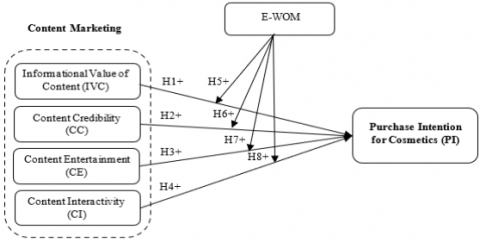
H1: The informational value of content marketing has a positive effect on Gen Z’s purchase intention toward vegan cosmetics.
Credibility in content marketing is reflected through the transparency, accuracy, and authenticity of the information provided. For Gen Z—a generation known for its high level of skepticism and tendency to verify information from multiple sources before making decisions—content credibility is a critical factor in shaping purchase intention. Reputable marketing material raises brand trust, lowers perceived risks, and raises the possibility that an intention will be turned into actual buying activity. Credibility is even more important in the vegan cosmetics industry, as customers are especially concerned about the sustainability, ingredients, and origins of products. According to recent studies, credible content dramatically boosts confidence and purchase intention in e-commerce environments [23, 24]. In a similar vein, Nguyen and Nguyen [25] found a strong connection between Gen Z's tendency to purchase cosmetics and the reliability of the products.
H2: The credibility of content marketing has a positive effect on Gen Z’s purchase intention toward vegan cosmetics.
Entertainment in content marketing reflects the ability to generate excitement, enjoyment, and positive experiences for consumers when engaging with brand messages. For Gen Z—a generation closely associated with TikTok, Instagram Reels, and short-form video platforms—entertainment plays a crucial role in capturing attention and encouraging interactivity. In addition to improving emotional experiences, entertaining content increases brand recall and fortifies purchase intention. When it comes to vegan cosmetics, marketers may communicate sustainable beauty concepts in an accessible, imaginative, and motivating way by integrating entertainment into content marketing. Consumer attitudes and purchase intentions are positively impacted by amusement in online material, according to recent studies [22, 25]. Furthermore, a study conducted in Vietnam by An and Ngo [10] verified that the entertainment value of marketing content significantly influences Gen Z's desire to buy cosmetics.
H3: The content entertainment of content marketing has a positive effect on Gen Z’s purchase intention toward vegan cosmetics.
Interactivity in content marketing reflects the extent to which consumers can engage, respond, or directly communicate with a brand through digital platforms. For Gen Z—a customer segment that highly values two-way communication and desires participation in content creation—this factor is becoming increasingly important. Marketing content that enables users to comment, share, join challenges, or provide direct feedback fosters stronger engagement, builds trust, and motivates purchasing behavior. Recent studies have shown that interactivity in digital content significantly enhances brand experience and boosts purchase intention, particularly in the context of sustainable consumption and vegan cosmetics [26, 27]. Interactivity not only creates a sense of being heard but also encourages Gen Z to actively participate in brand communities, thereby increasing purchasing behavior.
H4: The interactivity of content marketing has a positive effect on Gen Z’s purchase intention toward vegan cosmetics.
A crucial component of content marketing is informational value, which gives customers trustworthy, practical, and understandable product information. However, brand-generated content frequently needs to be validated by other customers in digital contexts. Gen Z consumers frequently look to reviews, comments, and community-shared experiences before making purchases; therefore, electronic word-of-mouth, or e-WOM, is essential to enhancing the impact of informational value. According to recent research, by providing social evidence and boosting the persuasiveness of marketing content, e-WOM can strengthen the impact of informational value [12, 28]. This is particularly relevant in the vegan cosmetics sector, where consumers are often concerned with ethical, environmental, and health-related factors. In such contexts, e-WOM becomes a powerful trust-building channel, thereby strengthening Gen Z’s purchase intention.
H5: Electronic word-of-mouth (e-WOM) positively moderates the relationship between the informational value of content marketing and Gen Z’s purchase intention toward vegan cosmetics.
The degree of correctness, openness, and reliability in the brand's information is reflected in the credibility of content marketing. Gen Z buyers are sensitive to authenticity, particularly when it comes to vegan cosmetics, where moral principles and product openness are important considerations. Brand-generated content by itself may not always be strong enough. Since it enables users to confirm or refute the veracity of the content, electronic word-of-mouth, or e-WOM, is a valuable tool in this situation. Recent studies show that by reducing perceived risk and promoting social trust, e-WOM amplifies the impact of trustworthy material [12, 26]. The relationship between purchase intention and content credibility is expected to increase with e-WOM.
H6: Electronic word-of-mouth (e-WOM) positively moderates the relationship between the credibility of content marketing and Gen Z’s purchase intention toward vegan cosmetics.
The content entertainment of marketing content encapsulates the brand's ability to attract attention, evoke positive emotions, and increase customer interactivity. Because Gen Z frequently consumes short, creative, and captivating content on digital platforms, they are susceptible to this feature. Nevertheless, content entertainment only significantly affects purchase intention when it is spread via social media sharing and electronic word-of-mouth (e-WOM). According to recent research, e-WOM amplifies the impact of enjoyable content since users actively participate, remark, and share it in addition to passively viewing it, generating a powerful social influence [28, 29]. In the vegan cosmetics industry, this dynamic helps to encourage Gen Z's buying intention.
H7: Electronic word-of-mouth (e-WOM) positively moderates the relationship between the content entertainment of content marketing and Gen Z’s purchase intention toward vegan cosmetics.
The ability of the brand to promote customer participation, commentary, and direct contact is reflected in the interactivity of marketing content. Generation Z highly values two-way communication, customization, and prompt feedback. However, electronic word-of-mouth (e-WOM), in which consumers obtain extra confirmation and agreement from online communities, frequently serves to bolster the efficacy of brand-consumer interactivity. According to recent research, interactivity is a significant component, but when e-WOM serves as a trigger, its impact on purchase intention is amplified [12, 25]. Therefore, in the case of vegan cosmetics, it is anticipated that e-WOM will reinforce the association between interactivity and Gen Z's buying intention.
H8: Electronic word-of-mouth (e-WOM) positively moderates the relationship between the interactivity of content marketing and Gen Z’s purchase intention toward vegan cosmetics.
Figure 1 illustrates the conceptual research model and hypothesized relationships among the study variables.
Figure 1. Conceptual research model
3.1 Qualitative research
To guarantee semantic appropriateness within the research context and improve the measuring scales, a qualitative research phase was conducted prior to the main study. In order to review, edit, and add to the observed factors, the authors specifically conferred with seven professionals in the domains of marketing, consumer behavior, and cosmetics. The results of the qualitative study showed that the measuring scales were suitable for the Gen Z consumer environment in Ho Chi Minh City, which gave the quantitative survey phase a solid foundation.
3.2 Quantitative research
The authors used a non-probability sampling strategy in the primary study, combining purposive and convenience sampling approaches, Gen Z residents of Ho Chi Minh City who intended to buy and use vegan cosmetics were the target responders. Data were collected via an online survey distributed through Google Forms. A total of 582 responses were received, of which 563 valid questionnaires were retained for analysis. The research instrument included six constructs with a total of 29 observed variables, measured using a 5-point Likert scale (1 = Strongly Disagree, 5 = Strongly Agree), as follows: Informational Value of Content (IVC): 4 items; Content Credibility (CC): 6 items; Content Entertainment (CE): 5 items; Content Interactivity (CI): 4 items; Electronic Word-of-Mouth (EWOM): 5 items; Purchase Intention for Cosmetics (PI): 5 items. The survey data were initially processed using SPSS 26 for descriptive statistics and preliminary checks. Further analysis was conducted using SMART PLS 4.0 to assess scale reliability, validity, and to test the proposed research model.
Despite having just four variables, the Content Interactivity (CI) construct aligns with earlier research on digital marketing and social media, where interactivity is considered a concise construct that captures responsiveness, perceived engagement, and two-way communication. Since interactivity is usually examined from a perceptual rather than a behavioral multi-dimensional perspective, many validated scales use short item sets. As a result, the four-item scale employed in this study is both empirically and theoretically suitable for gauging Gen Z consumers' opinions of interactive elements in online material.
4.1 Descriptive statistics
The characteristics of the survey sample are presented in Table 1. The results indicate a diverse distribution in terms of gender, age, occupation, income level, and sources of information, reflecting the typical profile of Generation Z in Ho Chi Minh City.
Table 1. Sample characteristics (N = 563)
|
Variable |
Category |
Frequency |
Percentage (%) |
|
Gender |
Male |
170 |
30.2 |
|
Female |
393 |
69.8 |
|
|
Age |
15-19 years |
118 |
21.0 |
|
20-24 years |
217 |
38.5 |
|
|
25-30 years |
228 |
40.5 |
|
|
Occupation |
Student |
45 |
8.0 |
|
Office worker |
193 |
34.3 |
|
|
Freelancer |
199 |
35.3 |
|
|
Housewife |
96 |
17.1 |
|
|
Other |
30 |
5.3 |
|
|
Monthly Income (VND) |
Under 10 million |
53 |
9.4 |
|
10-20 million |
157 |
27.9 |
|
|
Over 20-30 million |
172 |
30.6 |
|
|
Over 30 million |
181 |
32.1 |
|
|
Information Source |
|
128 |
22.7 |
|
Zalo |
123 |
21.8 |
|
|
TikTok |
141 |
25.1 |
|
|
Other |
171 |
30.4 |
|
|
Total |
563 |
100.0 |
|
According to the descriptive data, women make up the bulk of the sample (69.8%), which is consistent with the cosmetics market's normal focus on women. The highest percentage (79%), in terms of age, is in the 20-30 age range, which corresponds to the Gen Z section that is presently enrolled in school, starting their own business, or just starting in their jobs. Additionally, this generation often shows a strong interest in ecological consumption and sustainable beauty products. Office workers and freelancers make up the majority of the sample in terms of occupation, suggesting that these groups have steady or variable incomes that permit them to spend freely on cosmetics. More than 60% of the sample earns more than VND 20 million a month, indicating a diversified income distribution and strong purchasing power. Platforms like Facebook, TikTok, Zalo, and other internet outlets are significant information sources that influence Gen Z customers' purchasing decisions.
It is important to note that the ‘Information Source’ variable in Table 1 was collected as a single-response item, requiring respondents to select only their primary platform. As a result, the percentages sum to 100%, even though Gen Z typically uses multiple social media platforms simultaneously. Therefore, the values reported in the table should be interpreted as respondents’ primary source of information rather than exclusive usage. Future research should adopt a multiple-response or multi-platform measurement approach to more accurately capture Gen Z’s cross-platform digital behavior.
4.2 Reliability and convergent validity
Table 2 presents the results of the reliability and convergent validity assessment of the measurement scales. The values of Cronbach’s Alpha, Composite Reliability (CR), and Average Variance Extracted (AVE) all exceed the recommended thresholds, indicating that the scales used in this study demonstrate satisfactory reliability and convergent validity.
Table 2 shows that every measuring construct satisfies the suggested reliability and convergent validity requirements. Internal consistency is confirmed by the fact that Cronbach's Alpha values for all constructions fall between 0.823 and 0.901, which is higher than the permissible minimum of 0.7. Furthermore, Composite Reliability (CR) values, which vary from 0.855 to 0.906, attest to the reliability of the measurement model. Additionally, the Average Variance Extracted (AVE) values, which range from 0.646 to 0.716 and are all above the suggested limit of 0.5, demonstrate good convergent validity. Only one loading is slightly above 0.71, which is still acceptable, but all indicators have outer loadings above 0.7. These findings support the validity and reliability of the measuring scales, provide a strong basis for structural model analysis and hypothesis testing.
Table 2. Reliability and convergent validity results
|
Construct |
Indicator |
Outer Loading |
Cronbach’s Alpha |
Composite Reliability (CR) |
Average Variance Extracted (AVE) |
|
Informational Value of Content |
IVC1 |
0.771 |
0.823 |
0.865 |
0.646 |
|
IVC2 |
0.793 |
||||
|
IVC3 |
0.805 |
||||
|
IVC4 |
0.847 |
||||
|
Content Credibility |
CC1 |
0.862 |
0.898 |
0.903 |
0.668 |
|
CC2 |
0.833 |
||||
|
CC3 |
0.817 |
||||
|
CC4 |
0.716 |
||||
|
CC5 |
0.868 |
||||
|
CC6 |
0.796 |
||||
|
Content Entertainment |
CE1 |
0.834 |
0.901 |
0.906 |
0.716 |
|
CE2 |
0.819 |
||||
|
CE3 |
0.865 |
||||
|
CE4 |
0.842 |
||||
|
CE5 |
0.881 |
||||
|
Content Interactivity |
CI1 |
0.850 |
0.845 |
0.855 |
0.681 |
|
CI2 |
0.781 |
||||
|
CI3 |
0.822 |
||||
|
CI4 |
0.843 |
||||
|
Electronic Word-of-Mouth |
EWOM1 |
0.779 |
0.883 |
0.886 |
0.682 |
|
EWOM2 |
0.821 |
||||
|
EWOM3 |
0.875 |
||||
|
EWOM4 |
0.823 |
||||
|
EWOM5 |
0.825 |
||||
|
Purchase Intention for Cosmetics |
PI1 |
0.775 |
0.885 |
0.885 |
0.686 |
|
PI2 |
0.815 |
||||
|
PI3 |
0.824 |
||||
|
PI4 |
0.872 |
||||
|
PI5 |
0.862 |
4.3 Discriminant validity assessment
The discriminant validity was assessed using the Fornell-Larcker criterion. The square roots of the Average Variance Extracted (AVE) were placed on the main diagonal and compared with the correlation coefficients among the constructs in the model, as presented in Table 3.
The discriminant validity evaluation using the Fornell-Larcker criterion is shown in Table 3. The related inter-construct correlations are consistently lower than the square roots of AVE, which are displayed on the diagonal in bold. Content Entertainment's square root of AVE (0.846), for instance, is higher than its associations with Purchase Intention (0.394), Informational Value of Content (0.281), and Content Credibility (0.458). Likewise, when compared to its correlations with other constructs like PI (0.516) and IVC (0.223), Electronic Word-of-Mouth (0.825) has stronger discriminant validity. These results corroborate the uniqueness of the variables by confirming that each construct shares more variance with its own measurements than with those of other constructs. The findings show that the measurement model has sufficient discriminant validity overall, guaranteeing that the constructs are empirically separate for structural model analysis.
Table 3. Fornell-Larcker discriminant validity results
|
Construct |
CC |
EWOM |
IVC |
CI |
CE |
PI |
|
CC |
0.817 |
|
|
|
|
|
|
EWOM |
0.215 |
0.825 |
|
|
|
|
|
IVC |
0.352 |
0.223 |
0.804 |
|
|
|
|
CI |
0.285 |
0.211 |
0.269 |
0.825 |
|
|
|
CE |
0.458 |
0.124 |
0.281 |
0.311 |
0.846 |
|
|
PI |
0.482 |
0.516 |
0.405 |
0.298 |
0.394 |
0.828 |
4.4 Structural model assessment
Table 4 presents the results of the structural model evaluation with the indicators VIF, R², f², and Q². These values are employed to assess multicollinearity, explanatory power, effect size, and predictive relevance of the model.
Table 4. Structural model assessment results
|
Construct |
VIF |
R² |
f² |
Q² |
|
PI |
|
0.686 |
|
0.484 |
|
IVC |
1.391 |
|
0.213 |
|
|
CC |
1.553 |
|
0.389 |
|
|
CE |
1.402 |
|
0.342 |
|
|
CI |
1.764 |
|
0.183 |
|
|
EWOM |
1.223 |
|
0.428 |
|
The findings of the structural model assessment are shown in Table 4. All of the predictors' VIF values fall between 1.223 and 1.764, which is far below the 5-point cutoff, suggesting that multicollinearity is not an issue in the model. With an R2 score of 0.686 for Purchase Intention (PI), the independent factors explain 68.6% of the variance in PI, which is noteworthy in behavioral research. According to the f² values, electronic word-of-mouth (0.428) and content credibility (0.389) have significant effects, but informational value (0.213), enjoyment (0.342), and interactivity (0.183) have moderate effects. The predictive relevance of the model is confirmed by the Q² value of 0.484, which is well above zero. Overall, these results validate the robustness and predictive capability of the structural model.
Informational value, credibility, entertainment, and interactivity are the four content marketing characteristics that are evaluated for their direct influence on Gen Z's buy intention toward vegan cosmetics. The findings of the hypothesis testing for H1-H4 are shown in Table 5. The path coefficients and p-values indicate each hypothesis's magnitude and statistical relevance within the study model.
Table 5. Hypothesis testing results: Effects of content marketing on purchase intention
|
Hypothesis |
Path Relationship |
Original Sample (O) |
P Values |
Result |
|
H1 |
IVC -> PI |
0.217 |
0.000 |
Supported |
|
H2 |
CC -> PI |
0.295 |
0.000 |
Supported |
|
H3 |
CE -> PI |
0.267 |
0.000 |
Supported |
|
H4 |
CI -> PI |
0.226 |
0.000 |
Supported |
For H1-H4, which investigates the direct impacts of content marketing characteristics on purchase intention, Table 5 presents the results of the hypothesis testing. Strong statistical significance is shown by p-values < 0.001 for all four hypotheses. Content Credibility (β = 0.295) has the most significant impact among the predictors, highlighting how vital authenticity and transparency are in influencing Gen Z's trust and purchasing decisions. Furthermore, there are notable impacts from content entertainment (β = 0.267) and content interactivity (β = 0.226), highlighting the significance of engaging and interactive content in capturing consumers' attention. Informational Value (β = 0.217), however, is still a substantial factor that lowers perceived risk and increases choice confidence despite being significantly lower. All things considered, the results confirm that Gen Z's intention to buy vegan cosmetics is influenced considerably by content marketing.
The results of examining the moderating effect of electronic word-of-mouth (E-WOM) in the associations between Gen Z's purchase intention for vegan cosmetics and content marketing aspects are shown in Table 6. The strength and statistical significance of these moderating effects are assessed using the path coefficients and p-values.
Table 6. Hypothesis testing results: Moderating effects of E-WOM
|
Hypothesis |
Path Relationship |
Original Sample (O) |
P Values |
Result |
|
H5 |
EWOM x IVC -> PI |
0.037 |
0.000 |
Supported |
|
H6 |
EWOM x CC -> PI |
0.040 |
0.000 |
Supported |
|
H7 |
EWOM x CE -> PI |
0.027 |
0.003 |
Supported |
|
H8 |
EWOM x CI -> PI |
0.019 |
0.210 |
Not Supported |
Table 6 examines the moderating role of electronic word-of-mouth (E-WOM) in the relationship between content marketing dimensions and purchase intention. The results show that H5, H6, and H7 are supported with statistically significant effects (p < 0.01), indicating that E-WOM strengthens the impacts of Informational Value (β = 0.037), Content Credibility (β = 0.040), and Content Entertainment (β = 0.027) on purchase intention. These findings highlight the reinforcing effect of community validation in enhancing the persuasiveness of brand-generated content. However, H8 is not supported (p = 0.210), suggesting that E-WOM does not significantly moderate the relationship between Content Interactivity and purchase intention. Overall, the results emphasize the critical role of E-WOM as a catalyst in amplifying the effectiveness of content marketing, particularly for informational, credible, and entertaining content.
According to the research findings, Gen Z's purchase intention toward vegan cosmetics is positively impacted by all four aspects of content marketing (IVC, CC, CE, and CI). The strongest influences are from Content Credibility (CC, β = 0.295) and Content Entertainment (CE, β = 0.267), followed by Content Interactivity (CI, β = 0.226) and Informational Value (IVC, β = 0.217). Other studies have demonstrated that explicit and informative content reduces perceived risks and raises purchase intention [10, 21, 22], and this result confirms those findings. The results also concur with those of Yu [23], Christine et al. [24], and Nguyen and Nguyen [25], who emphasized the significance of content credibility as a foundation for building brand confidence in the vegan cosmetics sector. Likewise, Wu and Zhang [22] and An and Ngo [10] demonstrated the prominent role of entertainment in creating positive emotions and stimulating Gen Z’s buying behavior, which this study further confirms. Regarding interactivity, the findings also align with Subarkah et al. [26] and La Ragione and Risitano [26], showing that opportunities for two-way engagement with brands enhance consumer involvement and strengthen purchase intention.
This study examined the moderating function of E-WOM in the association between purchase intention and content marketing in addition to the direct effects. According to the findings, E-WOM considerably increases the impact of content credibility (H6, β = 0.040, p < 0.001), informational value (H5, β = 0.037, p < 0.001), and content entertainment (H7, β = 0.027, p = 0.003) on purchase intention. These results are in line with those of To and Nguyen [28], La Ragione and Risitano [26], Nyagadza et al. [12], and Bui et al. [29], who highlight how E-WOM strengthens the persuasiveness of marketing content and offers social evidence. However, E-WOM does not moderate the relationship between content interactivity and purchase intention (H8, β = 0.019, p = 0.210). This unexpected result may differ from earlier studies, such as Christine et al. [24] and Nyagadza et al. [12], which suggested that e-WOM typically strengthens interactive mechanisms. One possible explanation lies in how interactivity was operationalized in this study. The interactivity scale captures general two-way engagement but does not distinguish between passive behaviors (e.g., liking, tapping, viewing) and active participation (e.g., commenting, sharing, co-creating content). Prior research suggests that these forms of engagement have varying effects on consumer responses. Furthermore, Gen Z’s interactivity habits on platforms such as TikTok tend to be fast, algorithm-driven, and entertainment-oriented, which may reduce their reliance on peer-based validation when interacting with branded content. As a result, although interactivity independently enhances purchase intention, e-WOM may not amplify this effect if consumer engagement is primarily passive or superficial. Future research should refine interactivity measurements and incorporate platform-specific engagement patterns to more accurately capture the dynamics of Gen Z’s digital behavior.
It is also important to acknowledge that interactivity in this study was operationalized as a broad, unidimensional construct. The scale did not distinguish between passive engagement behaviours (e.g., viewing, liking, tapping) and active engagement behaviours (e.g., commenting, sharing, co-creating content), despite prior research suggesting that these two forms of interactivity may elicit different levels of cognitive and emotional involvement. This broad operationalization may partially explain why specific interactivity effects—such as the moderating influence of e-WOM—were not observed. Future research should refine the CI construct by incorporating subdimensions that distinguish between passive and active engagement, or by utilising platform-specific behavioral metrics to capture Gen Z’s nuanced interactivity patterns more effectively.
Although the moderating effects of E-WOM (e.g., H5: β = 0.037; H6: β = 0.040; H7: β = 0.027) are statistically significant, their effect sizes are relatively small. This suggests that while E-WOM enhances the influence of content value, credibility, and entertainment, the magnitude of this enhancement in real-world settings is modest. Practically, this means that E-WOM alone cannot dramatically increase purchase intention unless brands already provide strong, high-quality content. Therefore, E-WOM should be viewed as a supportive rather than dominant driver of Gen Z’s purchase intention. These nuances are important for managerial decision-making, as they imply that improvements in E-WOM will yield incremental—not substantial—gains unless accompanied by broader content marketing enhancements.
This study concludes that Gen Z's inclination to purchase vegan cosmetics is significantly influenced by content marketing. While its effects differ depending on the type of information, it also highlights E-WOM as a crucial moderating influence. The results add to the body of knowledge in academia and have real-world applications for companies looking to develop innovative, sustainable, and reliable marketing plans to reach the younger generation of consumers successfully.
This study examined the effects of four dimensions of content marketing—informational value, credibility, entertainment, and interactivity—on Gen Z's purchase intention toward vegan cosmetics, while also analyzing the moderating role of electronic word-of-mouth (E-WOM). The findings show that all aspects positively affect purchase intention, with entertainment and credibility having the most significant effects. Furthermore, it was discovered that E-WOM enhanced the effects of entertainment, credibility, and informational value but not interactivity, indicating variations in Gen Z's reactions to different kinds of content.
From a theoretical perspective, the study provides empirical evidence supporting consumer behavior models in the context of sustainable consumption. It expands the understanding of how E-WOM shapes the relationship between content marketing and purchase intention among younger consumers. Practically speaking, the results indicate that vegan cosmetic companies should put a high priority on creating transparent and trustworthy content, including imaginative entertainment components, and use E-WOM as a powerful communication tool to increase brand awareness, encourage purchase intent, and align their brands with sustainable development trends.
The findings show that the most important element influencing Gen Z's inclination to buy vegan cosmetics is credibility. Transparency, correctness, and authenticity are highly valued by Gen Z. This group is known for its high level of skepticism and propensity to confirm information from several sources before making decisions. As a result, companies should give these qualities top priority in all of their communications. Brands should specifically reveal comprehensive details regarding the origin of ingredients, production procedures, safety certificates, and sustainability features. In addition to creating a solid foundation of trust, working with respectable organizations to earn certifications (such as organic, vegan, and cruelty-free) frames the company as socially conscious and in line with sustainable growth. Given the widespread confusion among consumers between “vegan” and “cruelty-free,” brands should proactively communicate these distinctions in their marketing content. Clearly explaining ingredient origin, production ethics, and certification differences helps reduce misunderstanding and strengthens perceived credibility. For Gen Z, who place high value on ethical and sustainable beauty, such clarification significantly enhances trust and supports informed decision-making.
Additionally, promptly addressing consumer inquiries or communication issues in a transparent manner significantly enhances customer trust. Leveraging credible KOLs and KOCs to deliver authentic, informative content is an effective strategy to amplify the impact of electronic word-of-mouth (E-WOM) and strengthen Gen Z’s brand confidence. In the Vietnamese context—particularly among Gen Z in Ho Chi Minh City—credibility is more often shaped by micro-influencers and platform-specific KOCs than by mainstream celebrities. Influencers such as beauty reviewers on TikTok, Shopee Live streamers, and niche Instagram content creators tend to generate higher trust due to their perceived authenticity, relatability, and experience-based product insights. Accordingly, brands should prioritize partnerships with these locally relevant figures—especially those focused on clean beauty, ingredient transparency, and sustainable consumption—to maximize resonance and build credibility with Vietnamese Gen Z consumers.
The second most important element influencing purchase intention was found to be entertainment, especially for Gen Z, who spend much time on sites like YouTube Shorts, Instagram Reels, and TikTok. Companies could use challenges, memes, short films, and amusing content to communicate their product messages successfully. However, to avoid following fads that lack substance, entertainment should be appropriately incorporated with themes of ethics, safety, and environmental protection. Brands can make a more profound and more enduring impact on Gen Z by producing innovative entertainment content that also communicates sustainability principles. Moreover, firms are encouraged to promote consumer engagement by sharing entertaining content while combining it with user-generated content (UGC) such as reviews and real-life experience videos. This strategy not only enhances content entertainment but also reinforces trust and supports the promotion of sustainable consumption patterns.
Despite having less of an effect than enjoyment and credibility, interactivity nevertheless has a strong positive influence on purchase intention. Businesses should create features that make it simple for customers to leave comments, pose questions, take part in surveys, or join mini-games because Gen Z wants active engagement and customized experiences. Long-term engagement is strengthened, and prompt and tailored responses foster a sense of being heard. The brand's dedication to sustainability can be further emphasized through interactive activities related to themes like environmental responsibility, green lifestyles, or vegan consumer communities. Additionally, businesses can use chatbots or Customer Relationship Management (CRM) systems driven by AI to provide prompt responses, improving customer satisfaction and reducing resource waste. Such initiatives not only improve consumer satisfaction but also reinforce brand credibility in the context of sustainable consumption.
Despite having a relatively minor impact, informational value is nevertheless crucial in promoting purchase intention. Businesses must make sure that marketing content offers clear, understandable, and helpful information because Gen Z regularly looks to the internet for information before making judgments. In addition to reaffirming dedication to safety, ethics, and environmental protection, it is important to highlight the product's functions, ingredients, advantages, and distinctive qualities. The persuasiveness of the content significantly rises when its informational value is backed by scientific proof and further confirmed by encouraging E-WOM from the community. In the end, this fits with the larger trend of sustainable and responsible consumption by lowering perceived risks and reassuring consumers about their product selections.
One important conclusion of this study is that the correlations between purchase intention and the three primary variables (IVC, CC, and CE) are favorably moderated by E-WOM. This demonstrates that companies should not only produce excellent content but also motivate customers to spread the word about their experiences. Brand messages can be amplified through tactics including promoting online reviews, using hashtags for green beauty, holding photo and video competitions to encourage sustainable lifestyles, or working with micro-influencers in communities that support responsible consumption. More significantly, E-WOM calls for proactive management, which entails professionally handling unfavorable remarks while enhancing favorable ones to improve brand recognition. When high-quality content aligned with sustainability messages is further amplified through E-WOM, brands can more effectively persuade Gen Z and position themselves as pioneers in environmentally friendly consumption trends.
Limitations and future research directions:
This study has several inherent limitations. The survey sample consists solely of Gen Z consumers residing in Ho Chi Minh City and was collected using non-probability sampling. This substantially limits the generalizability of the findings, as Gen Z in other regions of Vietnam may differ in socioeconomic backgrounds, digital behaviors, and sustainability perceptions. Consequently, the external validity of the study is constrained. Future research should employ probability-based sampling methods and expand data collection across multiple geographic areas—such as Hanoi, Da Nang, and other provinces—to obtain a more representative dataset. Broader sampling would enhance the ability to generalize the results and allow researchers to identify potential regional variations in sustainable consumption behavior.
[1] Kemp, S. (2024). Digital 2024: Global overview report. https://datareportal.com/reports/digital-2024-global-overview-report.
[2] Nhung, N.P. (2025). Vietnamese Gen Z: A pioneering force driving the transformation of e-commerce and the digital economy. https://tapchicongthuong.vn/gen-z-viet-nam--luc-luong-tien-phong-thuc-day-cach-mang-thuong-mai-dien-tu-va-kinh-te-so-138979.htm.
[3] Vietnam Briefing. (2024). Vietnam’s e-commerce sector outlook in 2024. https://vietnam-briefing.com/news/vietnams-e-commerce-sector-outlook-in-2024.html%0A.
[4] Stahl, S. (2023). B2B content marketing benchmarks, budgets, and trends: Outlook for 2024. https://contentmarketinginstitute.com/b2b-research/b2b-content-marketing-benchmarks-budgets-and-trends-outlook-for-2024-research.
[5] Vo, V.B., Nguyen, G.D., Dao, T.H.T., Ho, T.C.N. (2023). The dual role of online trust: A study of Generation Z through online purchase intentions in Vietnam. Journal for International Business and Entrepreneurship Development, 15(1): 4-28. https://doi.org/10.1504/JIBED.2023.10056252
[6] Watty, F. (2025). Gen Z online shopping behavior - statistics & facts. https://www.statista.com/topics/11087/gen-z-online-shopping-behavior/.
[7] Delafrooz, N., Rahmati, Y., Abdi, M. (2019). The influence of electronic word of mouth on Instagram users: An emphasis on consumer socialization framework. Cogent Business & Management, 6(1): 1606973. https://doi.org/10.1080/23311975.2019.1606973
[8] Ngo, T.T.A., Bui, C.T., Chau, H.K.L., Tran, N.P.N. (2024). Electronic word-of-mouth (eWOM) on social networking sites (SNS): Roles of information credibility in shaping online purchase intention. Heliyon, 10(11): e32168. https://doi.org/10.1016/j.heliyon.2024.e32168
[9] Abed Ghers, M., Benamara, M. (2024). The impact of content marketing on consumer purchasing behaviour and improved marketing performance: A case study of Jumia Algeria customers. European Economic Letters, 14(4): 1171-1192. https://doi.org/10.52783/eel.v14i4.2246
[10] An, G.K., Ngo, T.T.A. (2025). Uncovering the influence of social media marketing activities on Generation Z’s purchase intentions and eWOM for organic cosmetics. PLoS One, 20(6): e0325953. https://doi.org/10.1371/journal.pone.0325953
[11] UNICEF. (2024). The state of the world’s children 2024. https://www.unicef.org/reports/state-of-worlds-children/2024.
[12] Nyagadza, B., Mazuruse, G., Simango, K., Chikazhe, L., Tsokota, T., Macheka, L. (2023). Examining the influence of social media eWOM on consumers’ purchase intentions of commercialised indigenous fruits (IFs) products in FMCGs retailers. Sustainable Technology and Entrepreneurship, 2(3): 100040. https://doi.org/10.1016/j.stae.2023.100040
[13] First Insight. (2024). The state of consumer spending: Gen Z shoppers demand sustainable retail. https://www.firstinsight.com/white-papers-posts/gen-z-shoppers-demand-sustainability.
[14] Precedence Research. (2025). Vegan cosmetics market size, share, and trends 2024-2034. https://www.precedenceresearch.com/vegan-cosmetics-market.
[15] Fortune Business Insights. (2025). Vegan cosmetics market size, share & industry analysis, by type (skin care, hair care, makeup, and others): by gender (male and female): by distribution channel (e-commerce, hypermarkets/supermarkets, departmental stores, specialty stores, and others): and regional forecast, 2025-2032. https://www.fortunebusinessinsights.com/vegan-cosmetics-market-106594.
[16] Hoa, L.T.K. (2025). Determinants of organic cosmetic use in Ho Chi Minh City: A sustainability perspective. European Journal of Sustainable Development Research, 10(1): em0341. https://doi.org/10.29333/ejosdr/17278
[17] Ajzen, I. (1991). The theory of planned behavior. Organizational Behavior and Human Decision Processes, 50(2): 179-211. https://doi.org/10.1016/0749-5978(91)90020-T
[18] Spence, M. (1973). Job market signaling. The Quarterly Journal of Economics, 87(3): 355-374. https://doi.org/10.2307/1882010
[19] Blau, P.M. (1964). Exchange and Power in Social Life. Wiley.
[20] Mehrabian, A., Russell, J.A. (1974). An Approach to Environmental Psychology. MIT Press.
[21] Bui, T.Q.T., Nguyen, C. (2022). Factors of content marketing affecting the purchase intention of Gen Z customers in Ho Chi Minh City. In Proceedings of the 4th Young Scientists Conference (YSC 2022), pp. 273-285. https://www.researchgate.net/publication/366185571.
[22] Wu, Z.Y., Zhang, F.L. (2024). The influences of short video content marketing on the purchase intention: The case of “Haohuanluo” in China. Open Journal of Business and Management, 12(6): 2902-2920. https://doi.org/10.4236/ojbm.2024.126223
[23] Yu, L. (2025). Digital marketing for behavioral change: Encouraging sustainable consumer practices to address environmental issues and support SDGs. Journal of Lifestyle & SDG’s Review, 5(2): e03866. https://doi.org/10.47172/2965-730X.SDGsReview.v5.n02.pe03866
[24] Christine, C., Lubis, A.N., Sembiring, B.K.F. (2025). User-Generated Content and Viral Marketing Effects on Purchase Intention: The Moderating Role of Product Knowledge among Gen Z. Formosa Journal of Multidisciplinary Research, 4(6): 2813-2830. https://doi.org/10.55927/fjmr.v4i6.284
[25] Nguyen, T.B.C., Nguyen, M.C. (2024). The impact of digital content marketing on the purchasing decision of Gen Z through the mediating role of purchase intention: The case of purchasing English language education services. HCMCOUJS - Economics and Business Administration, 19(12): 106-122. https://doi.org/10.46223/HCMCOUJS.econ.vi.19.12.3409.2024
[26] Subarkah, A.I., Komariah, K., Saori, S. (2025). The effect of content marketing on purchase intention through brand trust as a mediating variable in Gen Z skincare users. Dinasti International Journal of Education Management and Social Science, 6(6): 4430-4440. https://doi.org/10.38035/dijemss.v6i6.4848
[27] La Ragione, G., Risitano, M. (2026). Rethinking consumer behaviour in a green digital marketing landscape. Journal of Business Research, 202: 115755. https://doi.org/10.1016/j.jbusres.2025.115755
[28] To, A.T., Nguyen, K.Q.T. (2025). The role of electronic word-of-mouth in shaping brand image and driving purchase intention. Journal of Finance - Marketing Research, 3(1): 1-14. https://doi.org/10.52932/jfm.v3i1e.648
[29] Bui, N.T.A., Tran, T.L.N., Nguyen, L.P.T., Mai, T.H.P., Le, N.P.T., Pham, D.T. (2025). The impact of eWOM on Generation Z’s purchase intention on TikTok. Journal of Finance - Marketing Research, 16(5): 103-116. https://doi.org/10.52932/jfmr.v16i4.678