Fansuri Munawar* | Bambang Widjajanta | Aditya Yudanegara
© 2025 The authors. This article is published by IIETA and is licensed under the CC BY 4.0 license (http://creativecommons.org/licenses/by/4.0/).
OPEN ACCESS
Sustainable gastronomy in hospitality literature is primarily based on studies of large companies in developed economies, but evidence is limited regarding how micro, small, and medium-sized enterprises in evolving markets implement sustainability in the daily operations. Therefore, this study aimed to examine practices, perceptions, barriers, and enabling factors in Indonesian culinary sector and further develop a context-specific framework based on circular economy principles. By using qualitative and exploratory methods, semi-structured interviews were conducted with 24 culinary entrepreneurs across four cities in West Java, as well as with three provincial officials, supplemented by field observations and document reviews from April to August 2025. Data were analyzed thematically through triangulation of interviews, observations, and documents. The results showed that sustainable gastronomy was a multisensory offering combining practical aspects such as local sourcing, waste management, and sustainable packaging with experiential elements including product and recipe innovation, cultural authenticity, and genuine marketing. Six core operational areas evolved, namely local sourcing, waste management, sustainable packaging, product innovation, authentic marketing, and perceived sustainability. Perceived sustainability was a key driver for adopting and implementing sustainability practices. Support systems enhanced activities in this area, while barriers inhibited them. Strengthened practices improved sustainable culinary performance through efficiency gains, reduced waste, and consistent quality, which further increased competitiveness. This study presented a theory-informed and empirically grounded framework for small and medium-sized enterprises in evolving markets, offering practical guidance for policymakers and managers as well as outlining a clear agenda for quantitative validation and longitudinal evaluation in future analysis.
sustainable gastronomy, circular economy, local sourcing, waste management, sustainable packaging, perceived sustainability
Food industry is interconnected across continents and cultures, shaping consumption patterns and the global economy [1]. The economic value of the global agricultural and food supply chain is estimated to reach several trillion US dollars annually [2]. Despite the substantial contributions, the industry faces increasing pressure to address environmental, social, and economic challenges [3]. By 2023, food production accounted for rising greenhouse gas emissions with global food systems contributing approximately 30% of total emissions [4]. Global demographic and consumption trends increase this challenge, as the world's population is projected to reach 9.3 billion by 2050, driving an estimated 50% to 70% increase in food demand, while nearly one-third of all edible food produced for human consumption, about 1.3 billion tonnes, is lost or wasted each year [5]. Addressing these impacts requires adopting sustainable practices, which correlate food industry activities with ecological integrity, social responsibility, and economic viability [6]. Sustainable food production and consumption are central to the United Nations Sustainable Development Goals, particularly Goal 12 on Responsible Consumption and Production and Goal 8 on Decent Work and Economic Growth [7]. In this framework, sustainable gastronomy emphasizes environmental stewardship, enhancing service and product quality, as well as creating positive social, environmental, and economic outcomes while mitigating ecological degradation [8-10].
Previous publications on sustainable gastronomy have primarily focused on the large-scale hospitality sector in developed economies, where institutional support, infrastructure, and market awareness are relatively well established [11-13]. However, qualitative investigations into how culinary businesses implement sustainable gastronomy in practice remain limited [14-17]. Empirical studies developing comprehensive performance models for sustainable gastronomy in the culinary industry are still scarce [18-20]. Although these studies have made important theoretical contributions, a substantial gap remains in understanding how small and medium-sized culinary enterprises in evolving markets conceptualize and implement sustainability, overcome related challenges, and integrate the practices into daily operations [21-23]. Addressing this gap requires an in-depth exploration to identify the core components of sustainable gastronomy and clarify how the elements interact under resource constraints, shifting consumer behaviors, and institutional pressures.
In Indonesia, food waste constitutes the largest component of domestic waste streams. In response, the government has advanced food waste management through the National Strategy Policy Guidelines (Presidential Regulation No. 97/2017), targeting a 30% reduction and a 70 percent improvement in waste handling by 2030 [24, 25]. This commitment has since been expanded under the circular economy roadmap 2025–2045 launched by the Indonesian Ministry of National Development Planning, which emphasizes sustainable production, waste valorization, and resource efficiency in the food and beverage sector. The roadmap explicitly motivates micro and small enterprises to adopt circular practices through green financing schemes and local innovation ecosystems [26]. Plastic and packaging waste volumes are reported to exceed those of paper waste, outlining urgent challenges related to sustainable packaging in the national food sector [25]. Indonesian Ministry of Tourism has identified five priority regions for sustainable gastronomy development, including West Java Province. These regions were selected based on criteria such as the strength of the primary products and attractions, the quality of product and event packaging, service feasibility, environmental viability, business sustainability, and government participation in culinary development [27]. Urban households in large metropolitan areas rely on processed foods and modern distribution systems [25], while traditional urban markets maintain higher biodiversity levels compared to modern retail outlets. Consequently, many communities reflect sustainability principles in the food and beverage procurement practices, sourcing vegetables from diverse channels including home gardens, rice fields, agroforestry systems, and local markets [28].
This study explores the practices, perceptions, barriers, and enabling factors that shape sustainable gastronomy among Indonesian culinary industries, focusing on integrating circular economy principles and local food systems. It examines core practices such as local sourcing, waste management, sustainable packaging, product innovation, and marketing authenticity, along with the perceived correlation with business objectives. The results are synthesized into a context-specific framework that reflects the realities of operating under resource constraints, evolving consumer behavior, and institutional pressures. Guided by four study questions, the analysis made the following:
(1) What sustainable gastronomy practices are implemented by culinary Micro, Small, and Medium Enterprises (MSMEs) in Indonesia?
(2) How do entrepreneurs perceive the value of sustainability?
(3) What barriers and supports influence its adoption?
(4) How do these elements interact to shape sustainable performance?
This study contributes by offering an empirically grounded framework for evolving economies, providing actionable insights for policy and practice, and laying the groundwork for future publications to examine and refine the proposed model.
2.1 Sustainable gastronomy
Sustainable gastronomy represented a multifaceted method to culinary practices that integrated environmental stewardship, social equity, economic viability, and cultural preservation in food systems [29]. Sustainable culinary preparation was an ecology- and identity-based practice that emphasized using natural foods and preserving local identity. This perspective shifted beyond traditional gastronomy’s focus on culinary techniques and cultural food traditions to encompass the entire food system from production to consumption [17]. Sustainable gastronomy included four interrelated dimensions, namely: (1) environmental dimension comprising strategies for reducing carbon and water footprints, minimizing waste, and prioritizing local sourcing [30], (2) social dimension addressing food security, cultural preservation, and community engagement, (3) economic dimension emphasizing cost-effectiveness and local economic development [1], and (4) cultural dimension outlining the preservation of traditional culinary practices alongside promoting innovation [16]. As an integrated paradigm, sustainable gastronomy offered a holistic response to interconnected challenges, including climate change, food security, and environmental degradation, while protecting cultural authenticity and strengthening culinary resilience [31].
Building on this perspective, contemporary studies perceived gastronomy not merely as cooking techniques but as a socio-cultural practice encompassing ingredient selection, recipe creation, and consumption modes that shaped community identity and sustainability narratives. In Indonesia, this was reflected in how culinary MSMEs combine traditional recipes based on local ingredients with innovative, sustainability-oriented menus rooted in local wisdom [32]. In contrast to many Western eco-friendly restaurant models that often emphasize standardized environmental practices, sustainable gastronomy in Indonesia was highly contextual, shaped by values of heritage, local culture, and close ties to the natural environment [33]. Although conventional restaurants typically prioritized efficiency and scale, Indonesian culinary MSMEs outlined local sourcing, circular practices, and community-based hospitality. The quality of chefs and culinary entrepreneurs was measured not by international Michelin standards but by the ability to preserve culinary traditions and innovate for sustainability [34]. In evolving-market contexts such as Indonesia, resource constraints further drove MSMEs to innovate through sustainable packaging, waste management, and authentic marketing narratives that resonated with increasingly environmentally conscious consumers [35].
Therefore, this present study adopted a practice-oriented lens that focused on what MSMEs did to enact sustainability in everyday operations. Rather than imposing standardized checklists detached from local realities, the analysis foregrounds context-specific practices that were culturally embedded, economically sensible, and operationally feasible for small enterprises. This perspective clarified how environmental, social, economic, and cultural considerations intersected in daily decision-making and shaped sustainable performance and competitiveness in Indonesian culinary sector.
2.2 Sustainability in culinary industry
Culinary industry, comprising MSMEs, restaurants, and street food vendors, contributed to global environmental issues, particularly through food waste, excessive energy consumption, single-use plastics, and non-biodegradable packaging [34, 35]. To tackle these challenges, industry players were increasingly expected to adopt ethical and environmentally friendly practices, including circular resource use and waste reduction. This expectation was increased by the rise of younger consumers, specifically Generation Z and millennials, who were more socially and environmentally conscious and preferred restaurants that implemented sustainable practices such as local sourcing, waste management, and sustainable packaging [36, 37].
Although the literature on sustainability in the broader hospitality sector was extensive, publications specifically focused on small-scale restaurants and culinary MSMEs in evolving economies remained limited [33]. Most studies concentrated on hotels or large restaurants in developed countries. Moreover, commonly used terms such as green restaurants or eco-friendly restaurants did not fully reflect the realities of local food systems and circular practices that characterized Indonesian MSMEs. In sustainable gastronomy, two key domains were particularly relevant to MSMEs, namely: (1) sustainable food practices, such as menu innovation and local sourcing, as well as (2) eco-friendly practices, including waste management, sustainable packaging, and circular principles [33, 37]. However, the dominant study method prioritized the consumer perspective, particularly motivations for selecting sustainable restaurants, while giving limited attention to entrepreneurial perspectives and managerial strategies within culinary MSMEs [36].
Recent literature reviews showed that analysis of the sustainable culinary industry lacked sufficient empirical evidence from real-world practices [34]. Therefore, further publication was needed to explore the sustainability practices of MSMEs in evolving markets, particularly Indonesia. Key areas of focus included local sourcing, waste management, sustainable packaging, product and recipe innovation, authentic marketing, and consumer perceptions of sustainability. This study addressed the gaps by proposing a context-specific perspective that mapped the practices and examined the integration into the everyday operations of culinary industries.
Additionally, several aspects of sustainable culinary publication remained to be perceived as underexplored, such as green behaviors among culinary owners and employees, as well as the impacts of environmental management practices on stakeholders, including local communities and consumers. These dimensions were particularly relevant to Indonesia, given the growing need to address waste management, sustainable packaging, and local sourcing in the culinary sector [35, 37]. It was essential to identify the drivers of sustainability, namely the factors that motivated MSMEs to adopt environmentally friendly practices. Studies outlined entrepreneurial motivations for ensuring business continuity through sustainable strategies, the increasing demand from younger consumers for authentic and eco-friendly products, and the use of menu and packaging innovations as differentiation strategies [33, 36].
Many of the global publications on green restaurants continued to focus narrowly on environmental issues such as energy efficiency and waste reduction, as well as food health aspects. In contrast, Indonesian MSMEs context showed that values such as cultural authenticity and locally embedded circular practices were important to sustainability but underexplored in academic studies [34]. Furthermore, typological limitations in global studies presented another challenge, as the literature tended to generalize across diverse restaurant types from fast food to fine dining without adequately accounting for the unique characteristics defining Indonesian gastronomic ecosystem. To address these gaps, the article aimed to comprehensively map how the culinary industry in evolving markets defined and implemented sustainability with particular attention to local sourcing to support the local economy, circular methods to waste and packaging management, product and menu innovation in response to sustainability trends, as well as authentic marketing and perceived sustainability as strategies for consumer engagement [33, 34].
Despite extensive scholarship in hospitality, sustainability in evolving-market culinary MSMEs remained under-theorized and under-evidenced. Dominant consumer-centric methods underplayed the entrepreneurial and operational practices embedded in local food systems, cultural authenticity, and community relationships. Accordingly, this study examined the following: (1) how Indonesian MSMEs defined and enacted sustainable gastronomy in everyday operations, (2) how these choices shape perceived sustainability and performance, and (3) how support systems and barriers enabled or constrained adoption.
2.3 Operational dimensions of sustainable gastronomy practices
According to the literature, sustainable gastronomy could be operationalized across six practice domains that were observable and verifiable in daily operations. These included local sourcing, waste management, sustainable packaging, menu innovation, marketing authenticity, and perceived sustainability. In a qualitative design, these domains served as sensitizing constructs that guided data collection and analysis without imposing rigid a priori categories. The domains also represented immediate points of contact between culinary businesses and consumers, employees, suppliers, and communities, where commitments to sustainability were translated into concrete actions [38, 39].
2.3.1 Local sourcing
Local sourcing minimized transportation distances, reduced carbon footprints, and supported regional food systems, reinforcing proximity, freshness, and traceability [40]. In Indonesia, specifically after the COVID-19 pandemic, interest in farm-to-table methods has increased. However, challenges remained in maintaining consistent quality, managing seasonal availability, and addressing logistical constraints. Proposed strategies included developing food hubs for aggregation, establishing fair-trade contracts to stabilize prices and volumes, and implementing targeted training programs for farmers to enhance post-harvest handling and quality standards [41]. For MSMEs, local sourcing served as both an environmental and relational strategy that strengthened ties with producers, increased community goodwill, and differentiated offerings through culturally resonant ingredients.
2.3.2 Circular economy practices (waste management)
Waste management in circular economy practices focused on reducing, reusing, and recycling resources across both the back and front of house [42]. As a core subdomain of circularity in this study, waste management operationalized circular principles through daily kitchen workflows rather than isolated programs. In hospitality settings, food waste commonly arose during preparation, such as trimming and overproduction, and during service, including plate waste and portion mismatches. Circular methods promoted closed-loop processes, including composting, redistribution, and repurposing edible surplus to minimize waste generation [43]. In Indonesia, national and local programs increasingly supported waste-reduction initiatives, including digital waste tracking, separating organic and non-organic waste, and community-based composting in tourism areas. For MSMEs, initial “quick wins” often included better inventory control, improved demand forecasting, and more precise portion calibration, generating immediate cost savings while reducing environmental burdens.
2.3.3 Circular economy practices (sustainable packaging)
Sustainable packaging emphasized the use of biodegradable or recyclable materials often derived from renewable biomass as eco-friendly alternatives to conventional plastics [44]. As a core subdomain of circular economy practices in this study, adoption typically required rethinking suppliers, updating storage and handling procedures, and ensuring compliance with food safety requirements [45]. Despite growing interest, significant challenges remained, including cost constraints, supply chain adjustments, and the need to maintain product quality and shelf life [46]. Practical strategies for transition included phased substitution starting with high-visibility items, collaborative purchasing for better prices, and targeted consumer education to correlate expectations with sustainable materials [47]. In Indonesia, culturally embedded solutions such as banana leaves and paper-based wraps for traditional dishes showed how packaging indicated authenticity while reducing environmental impact.
2.3.4 Menu innovation
Menu innovation was central to sustainable gastronomy [30]. It comprised recipe development using locally sourced ingredients, plant-based alternatives, and nose-to-tail or root-to-stem methods to reduce waste, along with nutritionally balanced dishes that met evolving consumer expectations [48]. Implementation strategies included chef and staff training, strategic collaborations with local producers, and menu engineering that integrated sustainability objectives without compromising taste or cultural identity [1]. For MSMEs, small but continuous product adjustments, such as seasonal specials, low-waste sides, or heritage-inspired reinterpretations, could maintain novelty, control costs, and reinforce a sustainability narrative that resonated with local patrons and visitors.
2.3.5 Marketing authenticity
Marketing authenticity included transparent and genuine communication of sustainability practices, enhancing brand credibility and helping to avoid greenwashing [49]. It served as a social-sustainability mechanism that increased trust and engagement by showing, rather than merely claiming, sustainable behaviors. In the Indonesian context, storytelling about local sourcing, heritage recipes, and relationships with farmers or markets have proven effective, specifically across social media channels used by MSMEs. However, consistency of message and evidence-based claims remained critical [50, 51]. Clear documentation, such as photos of sourcing trips, waste-reduction metrics, or packaging transitions, could substantiate narratives and differentiate brands in crowded local markets.
2.3.6 Perceived sustainability
Perceived sustainability referred to the cognitive and affective evaluation made by entrepreneurs regarding the value, feasibility, and strategic relevance of sustainability practices for the business [52-54]. This conceptualization was consistent with recent evidence showing that SMEs interpreted sustainability through perceived benefits, operational feasibility, and long-term strategic orientation [55]. In this study, perceived sustainability had a dual character, first, as an operational domain reflected in daily routines, behavior, and communication related to sustainability. Second, it served as a mediating mechanism through which enabling conditions—such as policy support, training, supplier networks, and market incentives—were translated into improved business outcomes, including operational efficiency, performance, and competitiveness [56]. This dual role underpinned the analytical framework used in the study and was applied consistently in the result and discussion.
Perceived sustainability determined the success of sustainable gastronomy practices. Cultural factors, green self-identity, and perceived value shaped the willingness to pay, revisit intentions, and word-of-mouth [46, 53]. In Indonesia, younger demographics, particularly Generation Z and millennials, exhibited higher adoption of sustainable dining, though gaps remained in reaching older consumers. For MSMEs, perceived sustainability could be strengthened by correlating visible practices, such as packaging shifts, menu labels, or waste-sorting stations with credible stories and consistent service experiences. Internally, staff understanding and buy-in are equally important, as daily interactions with customers could either reinforce or undermine the sustainability image.
The six domains offered an operational vocabulary for analyzing how Indonesian MSMEs defined and implemented sustainability in practice. They also provided a clear bridge to the empirical sections that followed, where the study examined how entrepreneurs articulated local sourcing, circular practices, product and recipe innovation, as well as authentic marketing. The analysis also examined how consumers and communities perceived these efforts as well as how supportive conditions and practical barriers shaped adoption and performance. By grounding sustainable gastronomy in observable practices and culturally rooted narratives, the literature review and subsequent analysis illuminated feasible pathways for advancing environmental responsibility, social value, economic viability, and cultural authenticity in Indonesian culinary MSMEs sector. This study used the six domains as sensitizing constructs to guide interview protocols and first-cycle coding, keeping categories open to inductive refinement during analysis and cross-case comparison, and to trace the roles of support systems and barriers in enabling or constraining adoption.
This study used a qualitative exploratory design to provide a deep and comprehensive understanding of how culinary entrepreneurs in Indonesia perceive, adopt, and practice sustainable gastronomy. The qualitative method was selected because it could capture lived experiences, perceptions, and functioning realities that were difficult to quantify in a survey. This study was conducted in West Java Province, which was targeted by the Ministry of Tourism of Indonesia to develop gastronomy on a sustainable basis. West Java was selected because of the rich culinary ecosystem, ranging from traditional to modern food and beverage businesses, a supportive food waste reduction policy environment, and the active role of the urban and suburban interface.
A purposive sampling method was adopted with the following inclusion criteria (1) an enterprise from the culinary industry (food and beverages), (2) operational for a minimum of five years, (3) categorized as a small or medium enterprise, and (4) having an owner or manager directly engaged in decision-making processes and showing sustainability-oriented practices such as local sourcing, waste management, eco-friendly packaging, menu innovation, or authentic marketing. As measured by these dimensions, the study sample comprised 24 MSMEs owners and managers of culinary small and medium enterprises in four cities (Bandung, Sumedang, Tasikmalaya, and Sukabumi), as well as three provincial government officials from West Java Cooperatives and MSMEs Office and Industry Office. Data collection occurred from April to August 2025 using semi-structured interviews that lasted 45–90 minutes, field visits for direct observations, and document reviews. Data saturation was achieved after the twenty-fourth interview, as no new themes or categories evolved. This sample size was also supported as suitable for qualitative and exploratory studies with MSMEs. Respondent diversity was promoted by including companies of different sizes and turnover (from small to medium).
Triangulation of data was conducted in three methods by drawing on (i) semi-structured interviews to satisfy six sensitizing constructs—local sourcing, waste management, sustainable packaging, product and recipe innovation, marketing authenticity, and perceived sustainability, (ii) field observations on the daily operations and routines related to sustainability-based documentary evidence such as notes and visual photographs, and (iii) documents used as source material, including policy documents, promotional materials, business reports, and training records relevant to sustainable food practices. The qualitative data were managed and analyzed using NVivo 14 software to systematize storage, traceability, and transparency. The thematic analysis was carried out using the six stages of analysis outlined by Braun and Clarke [57] including: (1) data familiarization through repeated reading and memoing, (2) initial open coding of meaning units into themes, (3) candidate themes identified by clustering conceptually close codes, (4) reviewing candidates with coded extracts and the entire text corpus for coherence, (5) defining/naming resultant themes, and (6) producing the report by integrating data excerpts and theoretical interpretation . Two publications developed initial codebooks based on six sensitizing constructs, and during this process, the analysis jointly coded about 25% of the transcripts. Any coding differences were discussed, and the consensus decision arrived at was developed to maintain a single code system. After calibration, the first author coded the rest of the transcripts with periodic peer debriefings for checking consistency. This procedure reduced the level of subjectivity and strengthened the reliability of the thematic structure.
Based on the results of the thematic analysis, a focused content analysis was also carried out to understand how MSME practices realized circular-economy principles in relation to sustainable gastronomy. This stage deployed a deductive coding structure based on predefined sustainability elements. To ensure trustworthiness [58], attention was paid to four measures including: (1) credibility, which was established through triangulation of data sources, methods, investigators, and member checks with selected respondents, (2) transferability enhanced by rich descriptions of the context under study and respondent population, (3) dependability achieved through maintaining an audit trail that records all coding and analytic decisions in NVivo, and (4) confirmability reinforced through the author reflexivity and consensus coding.
3.1 Respondent profile
This study included 24 culinary MSMEs owners and managers as well as three provincial authorities. The participative MSMEs were diversified in terms of type and scale in connection with Indonesian MSMEs classification (Law No. 20/2008). Table 1 shows the demographic and business characteristics. Most of the respondents operated micro (46%) and small (38%) businesses, followed by a smaller number of medium-sized companies (16%). The average age of businesses was 7.8 years, ranging from 5 to 20 years. The businesses represented a range of culinary categories including traditional restaurants (8), cafés (6), street-food vendors (4), catering services (3), and specialty beverage outlets (3). Turnover rates differed significantly from less than IDR 300 million a year for micro-enterprises to more than IDR 2.5 billion for medium-sized companies. The difference in the number of male and female owners was rather small (11 women and 13 men). The location of businesses (8 in Bandung, 6 in Sumedang, 5 in Tasikmalaya, and 5 in Sukabumi) created both urban and semi-urban diversity. No new codes evolved among small and medium-sized enterprises or between different culinary categories after the 24th interview.
Table 1. Respondent characteristics
|
Category |
Subcategory |
Frequency (n) |
% |
|
Business size |
Micro |
11 |
45.8 |
|
Small |
9 |
37.5 |
|
|
Medium |
4 |
16.7 |
|
|
Years in operation |
5-7 years |
10 |
41.7 |
|
8-10 years |
8 |
33.3 |
|
|
> 10 years |
6 |
25.0 |
|
|
Business type |
Restaurant |
8 |
33.3 |
|
Café |
6 |
25.0 |
|
|
Street food |
4 |
16.7 |
|
|
Catering |
3 |
12.5 |
|
|
Beverage shop |
3 |
12.5 |
|
|
Gender of owner |
Male |
13 |
54.2 |
|
Female |
11 |
45.8 |
|
|
City |
Bandung |
8 |
33.3 |
|
Sumedang |
6 |
25.0 |
|
|
Tasikmalaya |
5 |
20.8 |
|
|
Sukabumi |
5 |
20.8 |
This study conducted a qualitative content analysis of in-depth interviews with Indonesian culinary MSMEs owners and managers, supplemented by field notes and relevant business documents, to identify the pillars of sustainable gastronomic practice from the entrepreneurs’ perspective. The results showed that sustainable gastronomy was perceived as an experiential offering combining functional concerns, including local sourcing of fresh ingredients, food waste reduction, and the gradual adoption of environmentally friendly packaging with experiential concerns including recipe and product innovation, sensory quality, and the communication of cultural authenticity through transparent and evidence-based marketing. Instead of treating environmental responsibility and customer experience as separate objectives, respondents emphasized that these aspects were mutually reinforcing in daily business operations.
The evolving themes converged into six practice domains that respondents considered the foundation of sustainable culinary offerings at MSMEs level. These included: (1) local sourcing, (2) waste management, (3) sustainable packaging, (4) product and recipe innovation, (5) marketing authenticity, and (6) perceived sustainability. Additionally, two cross-cutting conditions were consistently identified across cases, namely: (1) support systems, including access to training, networks, and financial or policy assistance which facilitated and enhanced adoption, and (2) barriers, such as high input costs, seasonal supply fluctuations, and operational constraints, limited to the scope of implementation.
4.1 Local sourcing
The first pillar showed Indonesian culinary entrepreneurs’ emphasis on locally sourced ingredients as the foundation of sustainable gastronomy and a key driver of business longevity. Owners and managers consistently perceived local sourcing not only as a path to quality and freshness but also as an avenue to strengthen local food systems and provide tangible economic benefits for nearby communities. In practice, sourcing from traditional markets and trusted farmers and breeders was perceived as a competitive advantage and correlated with circular economy principles by reducing transport distances, cutting food miles, and enhancing traceability. Thematic evidence showed that respondents regularly procured produce and animal protein from nearby suppliers who were trusted, emphasizing control over ingredients and close producer–buyer relationships as part of the value proposition to customers. As an owner explained:
“Every day I use ingredients from local farmers and chicken farms. Most of the basic ingredients, such as vegetables and spices, come directly from them.” (Respondent 10, Interview)
Another respondent outlined freshness as the key reason for consistently buying local:
“Almost 98% of my culinary ingredients come from farmers, breeders, and local markets, because freshness is the most important factor.” (Respondent 18, Interview)
Not all businesses could rely solely on local inputs. Some entrepreneurs reported combining local and non-local sources due to seasonality, availability, and price fluctuations, while also outlining plans to gradually increase the reliance on local products as conditions improve.
“At the moment, the use of local ingredients is still limited, around 20–30 percent, mostly vegetables and chicken that are easy to find in the market. But we realize the importance of empowering local farmers and breeders, and we are planning strategies to increase the use of local ingredients in the future.” (Respondent 24, Interview)
A smaller subset mentioned occasional reliance on larger agents or distributors, specifically during harvest peaks or demand surges, citing cost efficiency and logistical practicality when local supply was limited.
“At certain times we buy ingredients from large agents, especially during the harvest season. It is more efficient and practical when demand is high or when local supplies are scarce.” (Respondent 22, Interview)
Although the intention to use local ingredients was strong, practical constraints such as cost, seasonal variability, and supply continuity limited widespread adoption. These challenges underscored the need for systemic support, including aggregation hubs, fair pricing, and quality standardization, to stabilize supply volumes and prices for MSMEs. From a sustainable gastronomy perspective, local sourcing was a core component that reduced transport-related emissions and strengthened local economic sustainability. By expanding local sourcing, culinary MSMEs improved sustainability performance and decreased reliance on costlier, less accessible inputs while preserving freshness, quality, and the cultural authenticity central to the market appeal.
4.2 Circular economy practices (waste management)
A core aspect of sustainable gastronomy among Indonesian MSMEs was the gradual adoption of circular economy practices aimed at minimizing waste and optimizing resource use. Interview evidence suggested that this adoption was in the early stages and varies widely, but many businesses have started to integrate concrete measures into the daily operations. Results suggested that most respondents did not have formal waste-management systems, but were already practicing waste reduction, daily separation of organic and non-organic waste, and repurposing edible or biodegradable leftovers for uses such as compost or animal feed. These actions embodied the foundational reduce–reuse–recycle principles of circularity. As an owner explained:
“We often separate organic food waste such as leftover rice, vegetable peels, bones, and side dishes. In Sumedang, some culinary entrepreneurs also own fish ponds, gardens, and farms, these leftovers can be turned into compost and livestock feed.” (Respondent 1, Interview)
This showed how organic streams were being diverted into short, community-based loops that supported fish ponds, gardens, and livestock, reducing disposal volumes and generating beneficial by-products for local partners. Several respondents also reported more systematic routines that combined daily sorting with collaboration for composting, along with tighter stock planning to minimize over-ordering and spoilage.
“We manage food waste in a fairly systematic way. Leftover ingredients such as vegetable peels and rice are collected to make compost or animal feed in collaboration with local farmers. We also separate organic and inorganic waste every day to facilitate recycling. In addition, we try to minimize waste by implementing strict stock planning so that food ingredients are not wasted.” (Respondent 23, Interview)
These accounts confirmed that, although formal infrastructures were limited, entrepreneurs were incorporating circularity into daily kitchen workflows from stock discipline and portioning to segregating and repurposing waste. The implementation of circular economy practices in Indonesian culinary MSMEs was in the early stages and was gradually progressing. Efficient waste management and the reuse of organic leftovers not only helped reduce carbon footprints but also enhanced operational efficiency and competitiveness through cost savings from tighter inventory control and reduced disposal. Ongoing challenges, such as the cost of alternative materials, limited facilities, and the lack of systemic support continued to hinder wider adoption. These results emphasized the need for enabling policies, practical training, and access to appropriate technologies to lower adoption barriers.
Recent secondary evidence reinforced these observations. National data showed that Indonesia achieved a 25.3% reduction in overall waste generation and a 49.2% improvement in waste-treatment capacity following expanded sorting and composting initiatives [24]. Complementing this, Indonesian packaging sector estimated that the national packaging market would reach 159.2 billion units by 2024, with approximately 44% attributable to food products [59]. The dominance of food-related packaging underscored the significant efficiency gains that MSMEs could achieve by reducing packaging intensity, improving stock control, and diverting organic waste—practices that correlated closely with the informal circular routines identified in this study. In the broader sustainable gastronomy model, stronger waste-management practices evolved as a critical lever for sustainable performance, which further improved culinary competitiveness for MSMEs.
4.3 Circular economy practices (sustainable packaging)
A second visible pathway for Indonesian MSMEs to enact circularity was the transition to sustainable packaging. Entrepreneurs perceived packaging choices as an environmental lever that reduced plastic dependency and disposal burdens, while also signaling to the market the correlation with rising consumer expectations for sustainability and cultural authenticity. Results suggested that many businesses have begun adopting biodegradable or recyclable options, primarily banana leaves, paper or cardboard, and recycled plastics, to accompany both traditional and contemporary menu items. These materials were valued for the lower environmental impact and for reinforcing brand identity. As an owner explained:
“Yes, we use eco-friendly packaging such as recycled paper, cardboard, or biodegradable plastics. The main reason is that we care about the impact of plastic waste on the environment. In addition, using eco-friendly packaging is part of our brand image, which is committed to sustainability.” (Respondent 24, Interview)
Culturally embedded solutions, specifically banana-leaf wraps for heritage dishes were praised for enhancing authenticity while being practical and compostable.
“As part of our sustainability efforts, we use leaf-based packaging, for example, banana leaves for some of our fish dishes, because they decompose easily. Eco-friendly packaging also reinforces the sense of authenticity.” (Respondent 20, Interview)
Cost and availability constraints remained the primary obstacles to broader and more consistent adoption. Several respondents admitted to reverting to cheaper, conventional plastics to meet delivery needs and protect product quality during transport.
“We still use transparent plastic and thin-wall containers for deliveries and to maintain product quality. Eco-friendly materials tend to be more expensive.” (Respondent 18, Interview)
The shift toward sustainable packaging was progressing, but unevenly. MSMEs were experimenting with materials that reduced environmental impact and clearly communicated sustainability to customers. However, the businesses encountered price premiums, supply variability, and performance requirements such as delivery and food safety durability. These challenges outlined the need for systemic enablers, including pooled procurement to lower costs, reliable supplier networks, clear food safety guidance for alternative materials, and policy incentives to motivate widespread adoption. In the broader sustainable gastronomy and circular economy framework, sustainable packaging served as a consumer-facing proof point contributing to waste reduction. It enhanced perceived sustainability and brand authenticity, thereby supporting sustainable performance and increasing the culinary competitiveness of Indonesian MSMEs.
4.4 Product and recipe innovation
A key pillar of sustainable gastronomy among Indonesian MSMEs was product and recipe innovation. Entrepreneurs perceived innovation as developing new flavors and correlating menus with sustainability principles, including the use of local ingredients, reducing waste, and adopting more efficient, low-impact techniques. Most respondents reported continuous recipe modifications to stay in tune with market tastes and trends while keeping offerings fresh for both loyal and new customers. As an owner explained:
“Because my target market is young people whose preferences are diverse, recipe and menu innovation is necessary. At the same time, I try to ensure that the products we offer remain attractive and fresh, both for loyal customers and for new ones.” (Respondent 16, Interview)
Another respondent emphasized the role of customer feedback.
“I always observe current trends and listen to customer feedback to create innovations in my products. This helps satisfy customer expectations and encourages loyalty.” (Respondent 20, Interview)
Beyond flavor development, several owners made intentional adjustments to minimize food waste and incorporate more sustainable inputs. Some adapted heritage recipes by using efficient cooking methods and presentation styles that reduced offcuts and spoilage, while others experimented with platform-driven ideas to refresh menus without straying from the core identity.
“For recipe development, I sometimes follow trends on social media such as TikTok, which can be adapted or modified to create new dishes or different styles of presentation.” (Respondent 15, Interview)
These accounts positioned product and recipe innovation as a dual engine of market relevance and sustainability. Iterative menu updates helped MSMEs meet diverse consumer preferences, specifically among younger segments, while creating opportunities to implement low-waste practices such as tighter yield management, smarter portioning, root-to-stem techniques, cut-reuse strategies, and substituting locally available ingredients when possible. These practices reinforced circular economy principles by preventing waste at the design stage rather than at disposal. It also enhanced perceived sustainability when owners clearly articulated the rationale behind changes, connecting local inputs, lighter techniques, or reduced leftovers to a cohesive narrative. In the study’s conceptual model, product and recipe innovation served as a core lever where it balanced taste, quality, and environmental intent, improved sustainable performance through efficiency and waste prevention, and contributed to culinary competitiveness by keeping offerings distinctive and culturally relevant.
4.5 Marketing authenticity
An additional pillar shaping sustainable gastronomy among Indonesian MSMEs was marketing authenticity. Owners and managers often relied on social media, particularly WhatsApp, Instagram, Facebook, and increasingly TikTok, as cost-effective channels to showcase the offerings and explain how products reflected local ingredients and environmentally conscious practices. As one respondent stated:
“The use of social media is effective for reaching customers. For example, updating status on WhatsApp or posting on Facebook, TikTok, and Instagram, specifically when we feature our signature dishes, usually leads to more orders from customers.” (Respondent 2, Interview)
Beyond basic promotion, many entrepreneurs used cultural storytelling to outline origin narratives, such as heritage recipes, connections to traditional markets, and relationships with local producers, ensuring that sustainability claims were rooted in identity and place.
“I always preserve inherited recipes and share them with customers so they feel authentic. These cannot be modified, and I communicate this through social media using storytelling. The product may be similar, but the story behind it is always different.” (Respondent 21, Interview)
A subset of businesses continued to favor offline, community-based promotion and word-of-mouth to build trust and loyalty, which were effective in tightly knit local markets.
“We maintain quality and always follow up with past buyers to encourage them to return and order our menu again.” (Respondent 23, Interview)
The accounts positioned marketing authenticity as a consumer-facing mechanism that translated operational choices, including local sourcing, waste management, packaging changes, and recipe modifications, into perceived sustainability and brand credibility. Social platforms enabled MSMEs to showcase the practices instead of merely claiming them through short videos of sourcing at traditional markets, photos of daily waste sorting, or explanations of packaging transitions. This visibility reduced the risk of greenwashing by providing consistent proof points. Cultural storytelling strengthened the emotional bond with customers by situating products in heritage and community relationships, while offline reputation-building complemented online reach in trust-dependent local ecosystems.
In the broader sustainable gastronomy model, authentic marketing served three roles. First, it amplified sustainability practices by making them visible and understandable to consumers. Second, authentic marketing reinforced perceived authenticity and trust, which were key factors for loyalty and positive word-of-mouth in MSMEs contexts. Third, correlating messages with verifiable actions contributed to sustainable performance through stronger demand, reduced skepticism, and better retention, enhancing culinary competitiveness. Consistency and transparency were critical as the claims should correlate with what customers observed in product quality, service, and daily operations, or credibility could erode quickly.
4.6 Perceived sustainability
Perceived sustainability was crucial in MSMEs decision-making, particularly regarding how owners adopted sustainable practices. Interviews showed diverse understandings of “sustainability,” but most entrepreneurs perceived it as a long-term business strategy that ensured continuity and enhanced competitiveness during market preference changes. This correlated with the use of perceived sustainability as a practice-proximal construct that informed adoption decisions and daily priorities. Thematic results showed that many respondents perceived sustainability as a combination of social and environmental responsibility and economic durability, rather than a short-term marketing label. As an owner explained:
“Sustainability means focusing on socially and environmentally responsible practices while ensuring long-term economic continuity. That is exactly what I am implementing now.” (Respondent 10, Interview)
Another respondent outlined the multi-dimensional focus beyond profit.
“In my view, sustainability is not only about financial gains but also about actively considering and minimizing negative impacts on the environment, society, and the economy in the long run. This is consistent with how I run my business.” (Respondent 21, Interview)
A subset of entrepreneurs asserted practical frictions that hindered adoption, including higher input and packaging costs, limited local availability, and time or facility constraints that complicated waste routines.
“The main obstacles are cost and availability. Eco-friendly packaging is quite expensive, and sometimes it is difficult to manage food waste because of limited tools and time. Still, I try to minimize waste and use local ingredients as much as possible.” (Respondent 19, Interview)
“When the price of raw materials spikes, it becomes very difficult to maintain both quality and sustainability at normal prices.” (Respondent 22, Interview)
Perceived sustainability served as a decision-making lens through which entrepreneurs assessed trade-offs among cost, feasibility, and market value. When owners believed that local sourcing, waste reduction, and sustainable packaging genuinely enhanced quality, authenticity, and customer trust, these practices were more inclined to be adopted and maintained, even under resource constraints. Conversely, adoption tended to stall or become inconsistent when sustainable options were viewed as cost-increasing without clear benefits, such as delivery durability or supply consistency.
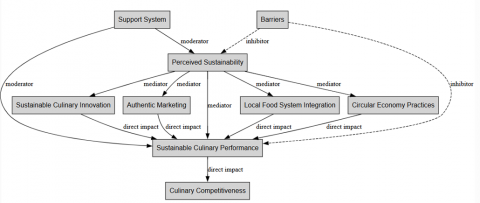
In the model, perceived sustainability acted as a mediating mechanism, translating support systems, including training, networks, policy incentives, and financing into practice adoption and depth of implementation, driving sustainable culinary performance through efficiency gains, reduced waste, and consistent quality. This further enhanced culinary competitiveness through loyalty, positive word-of-mouth, and differentiation. Perceived sustainability was also influenced by barriers, including price premiums, supply volatility, and facility or time constraints, which could diminish perceived net benefits and slow behavioral change.
In addition, perceived sustainability was socially constructed and consumer-facing. It was reinforced when operational choices were visible and credible, such as recognizable local ingredients, observable waste sorting, and culturally relevant packaging, along with authentic marketing that explained the rationale behind those choices. Therefore, strengthening perceived sustainability required a two-way effort, first, making practices operationally real and consistent, and second, communicating them transparently to correlate expectations. This dual method helped MSMEs transform sustainability from a perceived market demand into a strategic asset for long-term viability in Indonesian evolving culinary landscape.
4.7 Synthesis of sustainable gastronomy practice model
The synthesis of empirical results and prior literature showed that sustainable gastronomy in Indonesian MSMEs could be understood through a set of interrelated practice domains, both operationally visible and theoretically grounded. The interviews showed six key dimensions, namely: (1) local sourcing, (2) waste management, (3) sustainable packaging, (4) product and recipe innovation, (5) marketing authenticity, and (6) perceived sustainability. These domains indicated how culinary entrepreneurs translated abstract sustainability principles into daily actions. They also reflected the integration of dynamic capabilities, triple bottom line, and circular economy, emphasizing that sustainability in culinary enterprises was economic, social, environmental, and cultural.
In addition to the practices, this study identified two cross-cutting contextual conditions that influenced the adoption depth and breadth. Support systems, including training opportunities, entrepreneurial networks, financial access, and government policy assistance, enabled MSMEs to overcome resource constraints and strengthened the adoption of sustainable practices. Conversely, barriers such as high input costs, seasonal supply shortages, limited facilities, and time pressures restricted the consistency and scale of implementation. These dual dynamics outlined that sustainable gastronomy practices among MSMEs were not enacted in isolation but were embedded in institutional, financial, and resource environments either facilitating or constraining innovation and change.
Perceived sustainability evolved as a mediating mechanism connecting operational practices with broader outcomes. Entrepreneurs perceived sustainability as an environmental or social responsibility and a long-term business strategy that ensured continuity, strengthened competitiveness, and fostered consumer trust. This perception played a central role in determining whether practices such as local sourcing, waste reduction, sustainable packaging, and authentic marketing were adopted and maintained. Moreover, perceived sustainability channeled the effects of support systems and barriers into the depth and effectiveness of implementation, subsequently driving sustainable culinary performance through efficiency, waste reduction, and product quality. Lastly, sustainable performance enhanced culinary competitiveness by cultivating loyalty, motivating positive word of mouth, and reinforcing differentiation. Based on these insights, the six practice domains, along with support systems, barriers, and perceived sustainability, were synthesized into a context-specific framework of sustainable gastronomy for Indonesian MSMEs, as presented in Table 2.
The integration of thematic results and prior literature enabled the development of a proposed framework for sustainable gastronomy in Indonesian MSMEs. This framework consolidated six practice domains, namely (1) local sourcing, (2) waste management, (3) sustainable packaging, (4) product and recipe innovation, (5) marketing authenticity, and (6) perceived sustainability. These domains represented the operational pathways through which entrepreneurs translated sustainability into daily practice and reflected the principles of sustainable gastronomy embedded in circular economy. Two cross-cutting conditions further influenced adoption. Support systems, including training opportunities, policy incentives, financing, and entrepreneurial networks, acted as enabling mechanisms that strengthened implementation. Conversely, barriers such as high costs, seasonal supply shortages, and limited facilities or time hindered consistency and scalability. Perceived sustainability served as a mediating mechanism that shaped how entrepreneurs interpreted these practices, evaluated trade-offs, and sustained them over time. This framework showed that sustainable culinary performance and competitiveness rose not only from implementing sustainable practices but also from how these practices were perceived, supported, and constrained. By situating the framework in circular economy principles, this study contributed a context-specific model that outlined the realities of Indonesian MSMEs while offering transferable insights for other evolving-market settings, as displayed in Figure 1.
|
Construct |
Key Dimensions |
Barriers |
Support |
|
Local Sourcing |
Procuring local vegetables, spices, and poultry, strengthening ties with farmers and markets |
Seasonal variability, inconsistent quality, higher costs, limited supply |
Food hubs, fair-trade contracts, farmer training, logistical support |
|
Waste Management |
Separation of organic and non-organic waste, composting and reuse, stock planning to reduce spoilage |
Limited tools, time constraints, lack of formal waste infrastructure |
Digital waste tracking, community composting programs, and training on inventory control |
|
Sustainable Packaging |
Biodegradable and recyclable packaging (banana leaves, recycled paper, cardboard, eco-friendly plastics) |
Higher costs, limited supply, durability, and food-safety concerns |
Pooled procurement, policy incentives, reliable suppliers, and consumer education |
|
Product and Recipe Innovation |
Menu updates, plant-based alternatives, low-waste cooking, heritage-based adaptations |
Cost of sustainable materials, balancing tradition with innovation |
Chef training, collaborations with local producers, and creative menu design |
|
Marketing Authenticity |
Transparent communication, storytelling, digital platforms, and offline community engagement |
Risk of inconsistency, lack of evidence-based communication |
Storytelling strategies, visual documentation, and community trust |
|
Perceived Sustainability |
Multi-dimensional view of sustainability (economic durability, social responsibility, environmental stewardship) |
Price premiums, supply volatility, and resource constraints |
Policy incentives, financial support, training, and networks |
|
Sustainable Culinary Performance |
Efficiency, waste reduction, stable quality, customer trust |
Limited resources and capabilities |
Strengthened by systemic enablers and perceived sustainability |
|
Culinary Competitiveness |
Customer loyalty, positive word of mouth, and market differentiation |
Competitive market pressures |
Enhanced through sustainable performance outcomes |
Figure 1. Proposed model
4.8 Discussion
The results outline two critical insights: first, culinary entrepreneurs’ understanding of sustainable gastronomy goes beyond functional concerns such as local sourcing, waste management, and sustainable packaging to include experiential elements, including product innovation, cultural authenticity, and genuine marketing. This broadens prevailing perspectives in hospitality and restaurant studies that often equate sustainable food experiences narrowly with local ingredients and reduced environmental footprints. In MSMEs context of evolving markets, paying more for local ingredients is not automatically seen as sustainable due to cost volatility and availability constraints. In contrast, creative plant-forward menus, deliberate food-waste reduction, and culturally grounded narratives about traditional recipes was perceived more decisive. These practices enhance the emotional and cultural layers of the dining experience, persuading consumers, particularly younger cohorts, to accept sustainable gastronomy while reinforcing satisfaction, trust, and loyalty.
Second, the motivations driving Indonesian culinary entrepreneurs to adopt sustainability reflect both extrinsic and intrinsic factors. Extrinsic motivations relate to market demand, consumer expectations, and policy support, while intrinsic motivations originate from commitments to product quality, long-term business survival, and social responsibility toward local communities. Sustainability further evolves not only as a response to external pressures but also as a strategic orientation embedded in the daily routines of MSMEs. This differs from larger hospitality segments, where sustainability is often articulated through global certifications and formal standards. In contrast, MSMEs connect sustainability more directly to community relations, cultural preservation, and pragmatic survival strategies. This complements prior studies emphasizing macro-level concerns such as planet and people or profit-led motives in non-luxury contexts [54, 55] and correlates with recent publications emphasizing cultural authenticity, social responsibility, and adaptive resource use in developing contexts [33, 34, 36].
Theoretically, these results are best interpreted through the lens of sustainable gastronomy and circular economy. Entrepreneurs adopt circular practices by reducing waste through portion control and composting, reusing materials creatively, and gradually transitioning to recyclable or biodegradable packaging. These short loops show early and concrete steps in embedding circularity, while larger, more capital-intensive changes require phased transitions rather than abrupt shifts. The data also suggest that perceived sustainability mediates the relationship between support systems and practice adoption. Access to training, networks, and policy incentives enhances perceived value, facilitating operational adjustments. Consequently, support systems amplify the benefits of local sourcing, packaging shifts, and authentic communication, moderating the connection between practices and sustainable performance.
Managerially, these results can be translated into a practical roadmap for MSMEs. Local sourcing is further stabilized through micro food hubs, seasonal substitution calendars, and flexible farmer agreements. Waste reduction begins with disciplined separation, portion control, and routine tracking of kitchen leftovers to inform menu redesign. Packaging transitions are most effective when staged, starting with traditional biodegradable materials such as leaves and paper, moving to recyclable items, and eventually incorporating bio-based solutions. Short innovation cycles help teams design and test plant-forward recipes, with decisions to keep, adjust, or discontinue based on performance. Authentic storytelling, grounded in verifiable facts about ingredient origin, supplier relationships, and operational practices, strengthens credibility and reduces the risk of greenwashing. Monitoring can be conducted with lean indicators, such as the share of local ingredients, food waste per 100 portions, packaging cost per order, customer engagement with sustainability content, and repeat-purchase rates.
At the ecosystem level, policy and inter-organizational support can accelerate MSMEs transitions. Graduated incentives for greener packaging, neighborhood-scale infrastructure for organic waste processing, and micro-certifications connecting local producers with MSMEs can all enhance perceived sustainability and reduce adoption frictions. These interventions are critical in evolving markets where unit economics are tight, and coordination relies on informal networks.
For future quantitative validation, support systems can be operationalized through measurable indicators such as the frequency of training participation, access to financial or policy incentives, and the intensity of networking with suppliers and associations. Conversely, barriers can be measured through the cost ratio of sustainable inputs, the frequency of supply shortages, and operational time constraints. These quantifiable indicators will enable empirical testing of how perceived sustainability mediates the relationship between support structures and sustainable performance in subsequent quantitative studies.
Sustainable gastronomy in Indonesian MSMEs is best understood as an interplay between pragmatic constraints and culturally resonant opportunities. Support systems increase perceived sustainability, which drives operational reconfiguration that improves both sustainable performance and competitiveness. By focusing on actionable practices such as local sourcing, circular routines, sustainable packaging, product innovation, and authentic marketing, while incorporating the perceptual layer that binds them, this study bridges discourse and execution. Limitations include a focus on selected regions, reliance on self-reported practices, and a lack of objective environmental and cost metrics. Future publications can extend this framework through quantitative validation, multi-group comparisons between urban and rural MSMEs, experimental studies on incentives and food-hub coordination, and the integration of objective measures such as waste audits and energy consumption.
In conclusion, this study showed that sustainable gastronomy in Indonesian culinary industry was enacted through six interconnected practice domains, namely: (1) local sourcing, (2) waste management, (3) sustainable packaging, (4) product and recipe innovation, (5) marketing authenticity, and (6) perceived sustainability. These practices translated circular economy principles into daily operations and correlated environmental intent with market relevance. Perceived sustainability served as a central mechanism shaping adoption and depth of implementation, while support systems facilitated progress, and barriers hindered it. When practices were visible, credible, and correlated with cultural identity, they enhanced sustainable culinary performance and strengthened culinary competitiveness.
This study contributed a context-specific framework that integrated operational practices with the mediating role of perceived sustainability and the overarching influence of support systems and barriers. The framework clarifies how the culinary industry transitioned from intentions to outcomes through concrete routines, measurable improvements in efficiency and waste reduction, and credible communication that built trust. For managers, the results suggested a practical roadmap that included stabilizing local sourcing, tightening inventory and portion controls, phasing packaging transitions, running short innovation cycles, and documenting practices to mitigate the risk of greenwashing. For policymakers and ecosystem actors, targeted incentives, neighborhood-scale waste infrastructure, pooled procurement, and micro-certification schemes could reduce adoption barriers and enhance perceived value.
Several limitations exist where the study focused on selected regions and relied on self-reported practices, omitting objective environmental and cost indicators. Future publications should validate the proposed framework through quantitative tests such as structural equation modeling or partial least squares, compare urban and rural settings, and conduct field experiments on incentives, food hub coordination, and packaging transitions. Longitudinal designs and objective metrics, including waste audits, energy use, and life cycle indicators, would further test robustness and support policy design.
The authors would like to thank the Directorate of Research, Technology, and Community Service, Directorate General of Higher Education, Research, and Technology, Ministry of Education, Culture, Research, and Technology of the Republic of Indonesia, by Research Contract Number: 005/SP2H/PFR/LP2M-UTAMA/VI/2025.
[1] McDonagh, M., O’Donovan, S., Moran, A., Ryan, L. (2024). An exploration of food sustainability practices in the food industry across Europe. Sustainability, 16(16): 7119. https://doi.org/10.3390/su16167119
[2] Wang, G., Wang, Y., Li, S., Yi, Y., Li, C., Shin, C. (2024). Sustainability in global agri-food supply chains: Insights from a comprehensive literature review and the ABCDE framework. Foods, 13(18): 2914. https://doi.org/10.3390/foods13182914
[3] Binns, C.W., Lee, M.K., Maycock, B., Torheim, L.E., Nanishi, K., Duong, D.T.T. (2020). Climate change, food supply, and dietary guidelines. Annual Review of Public Health, 42: 233-255. https://doi.org/10.1146/annurev-publhealth-012420-105044
[4] Conrad, Z., Drewnowski, A., Belury, M.A., Love, D.C. (2023). Greenhouse gas emissions, cost, and diet quality of specific diet patterns in the United States. American Journal of Clinical Nutrition, 117(6): 1186-1194. https://doi.org/10.1016/j.ajcnut.2023.04.018
[5] FAO. (2020). The State of Food and Agriculture 2020: Overcoming water challenges in agriculture. Food and Agriculture Organization of the United Nations. https://doi.org/10.4060/cb1447en
[6] Hundloe, T. (2021). Sustainability perspectives: Ecological, economic and social. In Environmental Impact Assessment, pp. 49-80. https://doi.org/10.1007/978-3-030-80942-3_3
[7] Gheewala, S.H., Jungbluth, N., Notarnicola, B., Ridoutt, B., van der Werf, H. (2020). No simple menu for sustainable food production and consumption. International Journal of Life Cycle Assessment, 25(7): 1175-1182. https://doi.org/10.1007/s11367-020-01783-z
[8] Mahmood, H., Hassan, M.S., Meraj, G., Furqan, M. (2024). Agriculture’s role in environmental sustainability: A comprehensive review of challenges and solutions. Challenges in Sustainability, 12(3): 178-189. https://doi.org/10.56578/cis120302
[9] Babadağ, G., Ekincek, S. (2022). Eco-gastronomy, sustainability, and art: A design study with the chefs of the future. In Handbook of Research on Sustainable Tourism and Hotel Operations in Global Hypercompetition, pp. 433-450. https://doi.org/10.4018/978-1-6684-4645-4.ch020
[10] Siiger, C. (2023). Social gastronomy initiatives in Copenhagen, Denmark for food security, sustainability and health. European Journal of Public Health, 33(S2). https://doi.org/10.1093/eurpub/ckad160.1094
[11] Kamnik, R. (2025). Assessing the potential of urban orchards, berry bushes, and apiaries for local food production and carbon mitigation in a small European city. Challenges in Sustainability, 13(2): 266-280. https://doi.org/10.56578/cis130208
[12] Gopalakrishna Pillai, S., Arasli, F.K., Haldorai, K., Rahman, I. (2025). Unlocking sustainable performance through circular economy principles. Journal of Hospitality and Tourism Insights, 8(5): 1970-1991. https://doi.org/10.1108/JHTI-07-2024-0680
[13] Batat, W. (2021). A phenomenological exploration into sustainability in the foodservice industry in the MEA region. Journal of Services Marketing, 35(7): 918-932. https://doi.org/10.1108/JSM-06-2020-0243
[14] Madanaguli, A., Dhir, A., Kaur, P., Srivastava, S., Singh, G. (2022). Environmental sustainability in restaurants: A systematic review and future research agenda on restaurant adoption of green practices. Scandinavian Journal of Hospitality and Tourism, 22(4-5): 303-330. https://doi.org/10.1080/15022250.2022.2134203
[15] Martin, S., O'Brien, K., Nicholson, W., Magnani, A., Antonelli, M., Castaldi, S., Kirwan, L.B. (2023). LIFE climate smart chefs: Qualitative insights for a sustainable food service. European Journal of Public Health, 33(S2). https://doi.org/10.1093/eurpub/ckad160.1068
[16] Hamada, I. (2024). The global rise of ‘sustainable sushi’ practices: Restaurant responses and challenges. Food and Foodways, 32(1): 56-78. https://doi.org/10.1080/07409710.2024.2298176
[17] Yong, R.Y.M., Chua, B.L., Fakfare, P., Han, H. (2024). Sustainability à la carte: A systematic review of green restaurant research (2010–2023). Journal of Travel and Tourism Marketing, 41(4): 508-537. https://doi.org/10.1080/10548408.2023.2293014
[18] Sari, R.K., Alfarizi, M., Ab Talib, M.S. (2024). Sustainable strategic planning and management influence on sustainable performance: Findings from halal culinary MSMEs in Southeast Asia. Journal of Modelling in Management, 19(6): 2034-2060. https://doi.org/10.1108/JM2-12-2023-0324
[19] Takacs, B., Borrion, A. (2020). The use of life cycle-based approaches in the food service sector to improve sustainability: A systematic review. Sustainability, 12(9): 3504. https://doi.org/10.3390/su12093504
[20] Kalenjuk Pivarski, B., Grubor, B., Banjac, M., Đerčan, B., Tešanović, D., Šmugović, S., Radivojević, G., Ivanović, V., Vujasinović, V., Stošić, T. (2023). The sustainability of gastronomic heritage and its significance for regional tourism development. Heritage, 6(4): 3402-3417. https://doi.org/10.3390/heritage6040180
[21] Okeke, A. (2024). Evaluating sustainable practices and supply chain management effectiveness in African SMEs. Journal of Sustainability Research, 6(2): e240033. https://doi.org/10.20900/jsr20240033
[22] Jamwal, A., Agrawal, R., Sharma, M. (2023). Challenges and opportunities for manufacturing SMEs in adopting Industry 4.0 technologies for achieving sustainability: Empirical evidence from an emerging economy. Operations Management Research, 18: 718-743. https://doi.org/10.1007/s12063-023-00428-2
[23] Nunes, A.K.S., Morioka, S.N., Bolis, I. (2022). Challenges of business models for sustainability in startups. RAUSP Management Journal, 57(4): 382-400. https://doi.org/10.1108/RAUSP-10-2021-0216
[24] Farahdiba, A.U., Warmadewanthi, I.D.A.A., Fransiscus, Y., Rosyidah, E., Hermana, J., Yuniarto, A. (2023). The present and proposed sustainable food waste treatment technology in Indonesia: A review. Environmental Technology and Innovation, 32: 103256. https://doi.org/10.1016/j.eti.2023.103256
[25] Fatmah, F. (2023). The driving factors behind urban communities’ carbon emissions in selected urban villages of Jakarta, Indonesia. PLoS ONE, 18(11): e0288396. https://doi.org/10.1371/journal.pone.0288396
[26] Pramezwary, A., Lemy, D.M., Juliana, Sitorus, N.B., Masatip, A., Dalimunthe, F.I., Liyushiana, Yanti, D. (2022). Sustainability gastronomy tourism in Medan City. International Journal of Sustainable Development and Planning, 17(3): 875-883. https://doi.org/10.18280/ijsdp.170317
[27] Iskandar, B.S., Irawan, B., Mulyanto, D., Iskandar, J., Afinanda, A., Rajab, B. (2023). Gastronomic ethnobotany of traditional vegetables among the Sundanese in rural West Java, Indonesia. Biodiversitas, 24(7): 3932-3950. https://doi.org/10.13057/biodiv/d240732
[28] Downs, S.M., Ahmed, S., Fanzo, J., Herforth, A. (2020). Food environment typology: Advancing an expanded definition and methodological approach for sustainable diets. Foods, 9(4): 532. https://doi.org/10.3390/foods9040532
[29] Paola Cáceres, R., Claudia Troncoso, P., Rodrigo Buhring, B., Claudia Lataste, Q. (2024). Sustainable food dishes: Selection of indicators for their evaluation and communication in Chilean foodservices. International Journal of Gastronomy and Food Science, 35: 100873. https://doi.org/10.1016/j.ijgfs.2024.100873
[30] Roy, R., Alsaie, A., Malloy, J., Kemper, J.A. (2024). Sustainable culinary skills: Fostering vegetable-centric cooking practices among young adults—A qualitative study. Sustainability, 16(2): 928. https://doi.org/10.3390/su16020928
[31] Carvalho, G.P., Costa-Camilo, E., Duarte, I. (2024). Advancing health and sustainability: A holistic approach to food production and dietary habits. Foods, 13(23): 3829. https://doi.org/10.3390/foods13233829
[32] Balderas-Cejudo, A., Iruretagoyena, M., Alonso, L., Church, M., Izquierdo, L., Hill, I., Larson, K. (2025). Gastronomy and beyond: A collaborative initiative for rethinking food’s role in society, sustainability, and territory. International Journal of Gastronomy and Food Science, 39: 101118. https://doi.org/10.1016/j.ijgfs.2025.101118
[33] Nyberg, M., Ehn Börjesson, S.M., Höijer, K., Olsson, V., Rothenberg, E., Wendin, K. (2022). Circular gastronomy—Exploring a new compound concept at the interface between food, meals and sustainability. International Journal of Gastronomy and Food Science, 30: 100610. https://doi.org/10.1016/j.ijgfs.2022.100610
[34] Renfors, S.M., Wendt, T. (2024). Restaurants without bins: How does a circular restaurant operate? Sustainability, 16(6): 2312. https://doi.org/10.3390/su16062312
[35] Grèzes-Bürcher, S., Grèzes, V. (2024). Designing a sustainable, circular culinary system. Circular Economy and Sustainability, 4(4): 2799-2821. https://doi.org/10.1007/s43615-023-00295-w
[36] Megawati, S., Herdiansyah, H., Machmud, A., Antriyandarti, E., Sudirman, S. (2024). Integrating circular economy, digital economy, and social protection policies to drive green business innovation: Insights from Indonesia’s culinary SMEs. Problems and Perspectives in Management, 22(4): 368-381. https://doi.org/10.21511/ppm.22(4).2024.28
[37] Zambujal-Oliveira, J., Fernandes, C. (2024). The contribution of sustainable packaging to the circular food supply chain. Packaging Technology and Science, 37(5): 443-456. https://doi.org/10.1002/pts.2802
[38] Tomassini, L., Baggio, R., Cavagnaro, E., Farsari, I., Fuchs, M., Sørensen, F. (2024). Circular economy in tourism and hospitality: A micro–meso–macro framework for inter-disciplinary research. Tourism and Hospitality Research, 25(4): 718-725. https://doi.org/10.1177/14673584241257870
[39] Rahmawati, D.M., Novani, S. (2024). Embracing circular economy principles: How Indonesian MSMEs food services drive sustainability through local sourcing. Journal of Economics and Business, 7(2): 176-188. https://doi.org/10.31014/aior.1992.07.02.584
[40] Medina, F.X., Vázquez-Medina, J.A., Covarrubias, M.A., Jiménez-Serna, A. (2023). Gastronomic sustainable tourism and social change in world heritage sites. Sustainability, 15(22): 16078. https://doi.org/10.3390/su152216078
[41] Badurina, J.Đ., Klapan, M., Frleta, D.S. (2023). Stakeholders’ collaboration in the development of an authentic gastronomic offering in rural areas: Ravni Kotari region in Croatia. Sustainability, 15(5): 4649. https://doi.org/10.3390/su15054649
[42] Aldaco, R., Hoehn, D., Laso, J., Margallo, M., et al. (2020). Food waste management during the COVID-19 outbreak: A holistic climate, economic and nutritional approach. Science of the Total Environment, 742: 140524. https://doi.org/10.1016/j.scitotenv.2020.140524
[43] Girotto, F., Alibardi, L., Cossu, R. (2015). Food waste generation and industrial uses: A review. Waste Management, 45: 32-41. https://doi.org/10.1016/j.wasman.2015.06.008
[44] Oliveira, H.M.L., Pasquali, M.B., dos Anjos, A.I., Sarinho, A.M., de Melo, E.D., Andrade, R., Batista, L., Lima, J., Diniz, Y., Barros, A. (2024). Innovative and sustainable food preservation techniques: Enhancing food quality, safety, and environmental sustainability. Sustainability, 16(18): 8223. https://doi.org/10.3390/su16188223
[45] Dagilienė, L., Varaniūtė, V., Šutienė, K. (2025). Impact of organisational capabilities on the implementation of circularity-oriented activities. Business Strategy and the Environment, 34(2): 1607-1624. https://doi.org/10.1002/bse.4044
[46] Mahasuweerachai, P., Suttikun, C. (2022). The effect of green self-identity on perceived image, warm glow and willingness to purchase: A new generation’s perspective towards eco-friendly restaurants. Sustainability, 14(17): 10539. https://doi.org/10.3390/su141710539
[47] Kovacs, I., Keresztes, E.R. (2022). Perceived consumer effectiveness and willingness to pay for credence product attributes of sustainable foods. Sustainability, 14(7): 4338. https://doi.org/10.3390/su14074338
[48] Gonera, A., Milford, A., Prexl, K.M., Romm, J., Berget, I., Varela, P. (2023). Design-led innovation for more plant-based food: An interdisciplinary approach to more consumer-centric product development. International Journal of Food Design, 9(1): 101-128. https://doi.org/10.1386/ijfd_00057_1
[49] Azzaz, A.M.S., Elshaer, I.A., Thani, A.A., Algezawy, M., Mahrous, A.A., Mansour, M.A., Abdel Moneim, A., Fayyad, S. (2024). The influence of green demarketing on brand credibility, green authenticity, and greenwashing in the food industry. Sustainability, 16(21): 9215. https://doi.org/10.3390/su16219215
[50] Crespi-Vallbona, M., Noguer-Juncà, E. (2024). The role of summer markets in promoting authenticity and social sustainability: The case of La Santa market (Catalonia, Spain). International Journal of Gastronomy and Food Science, 36: 100924. https://doi.org/10.1016/j.ijgfs.2024.100924
[51] Nassani, A.A., Yousaf, Z., Grigorescu, A., Popa, A. (2023). Green and environmental marketing strategies and ethical consumption: Evidence from the tourism sector. Sustainability, 15(16): 12199. https://doi.org/10.3390/su151612199
[52] Lizcano-Prada, J., Maestre-Matos, M., Mesias, F.J., Lami, O., Giray, H., Özçiçek Dölekoğlu, C., Abdoulaye Bamoi, A.G., Martínez-Carrasco, F. (2024). Does consumers’ cultural background affect how they perceive and engage in food sustainability? A cross-cultural study. Foods, 13(2): 311. https://doi.org/10.3390/foods13020311
[53] Riva, F., Magrizos, S., Rubel, M.R.B., Rizomyliotis, I. (2022). Green consumerism, green perceived value, and restaurant revisit intention: Millennials’ sustainable consumption with moderating effect of green perceived quality. Business Strategy and the Environment, 31(7): 2807-2819. https://doi.org/10.1002/bse.3048
[54] D’Arpizio, C., Levato, F., Zito, D., De Montgolfier, J. (2014). Luxury Goods Worldwide Market Study. Bain & Company, Inc., p. 33.
[55] Batat, W. (2020). Pillars of sustainable food experiences in the luxury gastronomy sector: A qualitative exploration of Michelin-starred chefs’ motivations. Journal of Retailing and Consumer Services, 57: 102255. https://doi.org/10.1016/j.jretconser.2020.102255
[56] Moursellas, A., Malesios, C., Skouloudis, A., Evangelinos, K., Dey, P.K. (2023). Perceived enablers and barriers impacting sustainability of small‐and‐medium sized enterprises: A quantitative analysis in four European countries. Environmental Quality Mgmt, 33(3): 433-448. https://doi.org/10.1002/tqem.22128
[57] Braun, V., Clarke, V. (2006). Using thematic analysis in psychology. Qualitative Research in Psychology, 3(2): 77-101. https://doi.org/10.1191/1478088706qp063oa
[58] Pratt, M.G., Kaplan, S., Whittington, R. (2019). Editorial essay: The tumult over transparency: Decoupling transparency from replication in establishing trustworthy qualitative research. Administrative Science Quarterly, 65(1): 1-19. https://doi.org/10.1177/0001839219887663
[59] Tseng, M.L., Lin, C.W.R., Sujanto, R.Y., Lim, M.K., Bui, T.D. (2021). Assessing sustainable consumption in packaged food in Indonesia: Corporate communication drives consumer perception and behavior. Sustainability, 13(14): 8021. https://doi.org/10.3390/su13148021