Subki
© 2025 The author. This article is published by IIETA and is licensed under the CC BY 4.0 license (http://creativecommons.org/licenses/by/4.0/).
OPEN ACCESS
The contribution of universities to environmental conservation is realized through sustainable green campus management. Although many studies have investigated this initiative, a comprehensive analysis remains lacking. The lack of publications in journal database portals related to green campus management is evident. This study aims to provide a bibliometric and comprehensive review of the literature on green campus management. The bibliometric method utilizes the Scopus database as a reliable data source, analyzed with the assistance of VOSviewer and Excel. The bibliometric analysis indicates an increasing trend in research documents from 2010 to 2025. Trending keywords in green campus management include "renewable energy", "smart grid," and "sustainable campus." The leading countries in document outputs and citations are the United States, China, and Malaysia. The review of green campus management concepts can be grouped into three main areas: behavioral aspects, educational and learning equipment, and facilities and infrastructure that support the green campus initiative. Each area encompasses activities and programs that contribute to the success of the green campus concept. The findings of this review are intended to serve as a reference for higher education institutions in the implementation and development of a sustainable green campus concept.
green campus, bibliometric approach, campus management, environmental sustainability
Global commitment to environmental conservation is increasing in response to global warming and climate change. Natural phenomena such as erratic weather patterns, extreme heat, intense rainfall, storms, and tornadoes are linked to global warming [1]. Research indicates that atmospheric CO2 levels are rising due to human activities. Environmental issues are becoming increasingly complex and necessitate synergy from all sectors of society, including the academic community [2]. A strong commitment from all stakeholders is necessary to mitigate environmental damage, as evidenced by various eco-friendly initiatives and programs implemented by businesses and educational institutions [3]. A sustainable campus integrates environmental science into policy, management, and scientific activities [4]. Many universities have demonstrated their commitment to this concept, as research indicates that stakeholders experience greater satisfaction and an improved quality of life. The implementation of sustainable campus initiatives also promotes energy conservation and efficiency [5].
To define green campus management, it is essential to recognize its core components, primarily rooted in a commitment to sustainability. This commitment encompasses initiatives in areas such as energy conservation, waste management, green building practices, and sustainable transportation. Fachrudin and Fachrudin [6] emphasize that effective energy conservation is a crucial factor in designing green campuses, reflecting a trend in which universities prioritize environmentally friendly infrastructure and operational strategies. Furthermore, Kamarudin et al. [7] discuss the substantial institutional commitment required to cultivate a green campus culture, indicating a strategic alignment within higher education institutions toward sustainable development. In the context of smart technologies, Shishakly et al. [8] emphasize that the integration of these innovations significantly enhances campus sustainability by promoting awareness and education about sustainable practices among students. Their findings suggest that universities play a crucial role in addressing climate change by embedding sustainability into their curricula and operational policies. Additionally, Boeri et al. [9] identify the role of universities in energy transitions and societal transformation toward sustainability, asserting that education, campus operations, and strategic planning must converge to promote greener practices.
Green campus management is characterized by active stakeholder engagement and effective change management. Aedi emphasizes that the successful implementation of green initiatives necessitates the support and participation of all members of the campus community, making change management integral for fostering a culture of sustainability [10]. Herzanita et al. [11] examine the barriers to implementing green building practices within campus settings, emphasizing that addressing these challenges is crucial for effective management. Moreover, the evolution of the green campus concept highlights its adaptability and responsiveness to contemporary demands for sustainability. Zhao et al. [12] note that this concept has emerged in response to societal pressures and formal regulations aimed at promoting sustainability in education, underscoring the growing importance of integrating sustainability into university management practices. Additionally, Alsharif [13] asserted that the green campus model involves not only environmental education but also the integration of social and economic dimensions of sustainability, thereby creating a holistic approach to campus management.
Researchers have published several recent review papers related to green campuses in 2024 and 2025. Among these, Qiu and Dong [14] conducted a systematic review of the life cycle of campus environments. Luo et al. [15] conducted a comparative review of green campuses using sponge construction concepts and their future challenges. Ding et al. [16] systematically examined the relationship between student health and the green campus environment. Halicioglu and Gurel [17] evaluated occupant satisfaction with green buildings, focusing on quality aspects. Zhu and Liu [18] systematically reviewed the development of sustainable campuses between China and Japan. Li et al. [19] systematically analyzed the influence of campus public spaces on student mental health.
Based on the author's reading and knowledge, there has been no research that combines the concept of green campus management with a bibliometric approach. This absence represents a significant gap in the field. The research objectives are twofold: first, to identify research trends and future directions in the study of sustainable and continuous green campus development using bibliometric analysis, and second, to analyze and evaluate the concept of green campus management from a comprehensive and integrated perspective. The novelty of the Study lies in its pioneering application of a bibliometric approach to the concept of green campus management, offering a unique and data-driven evaluation of the field. By doing so, it provides valuable insights into the evolution, focus areas, and potential future research avenues in green campus studies.
The methodological approach employed in this research analysis is bibliometrics. Bibliometrics utilizes database sources from Scopus and other reputable international databases. A reputable database is recognized and trusted by scientists worldwide. The keywords used in the Scopus search are "Green Campus Management." To conduct a literature search related to the topic of green campus management, a Boolean search strategy was implemented using the following keywords: ("green campus" OR "sustainable campus" OR "eco-campus" OR "green university") AND (management OR implementation OR strategy OR policy OR governance OR initiative). This strategy was designed to capture various terms related to the concept of a sustainable campus and the managerial approaches applied within the scope of higher education institutions.
The inclusion criteria for literature selection are as follows: (1) studies that address managerial aspects, strategies, policies, or implementation related to green campus management; (2) a focus on higher education institutions, such as universities or colleges; (3) scientific publications published from 2010 to 2025; (4) articles written in English or Indonesian; and (5) types of publications that include journal articles, conference proceedings, or academic research reports with a methodological foundation. Conversely, the exclusion criteria are: (1) studies that solely discuss technical aspects, such as renewable energy installations or green building design, without linking them to campus management or policies; (2) articles that focus on non-educational entities, such as companies, industrial areas, or green cities; (3) publications highlighting opinions, editorials, or news that lack a clear scientific research basis; and (4) articles that are duplicates or previous versions of studies that have been updated.
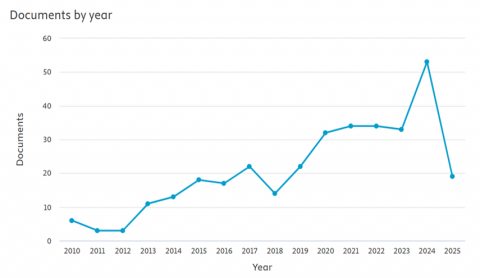
The total number of documents obtained is 364, as illustrated in Figure 1 below. The number of documents published from 2010 to 2025 has increased steadily, indicating a growing interest in research on green campuses. Over the last three years, this trend has continued, with 33 academic articles published in 2023, increasing to 53 research documents in 2024, and 19 research documents in 2025. However, it is still early in the year, and the publication process is ongoing. These data demonstrate that research on green campuses is both promising and beneficial for the future sustainability of campus environments, as illustrated in Figure 1.
Figure 1. Research documents with keywords "green campus management" in 2010-2025
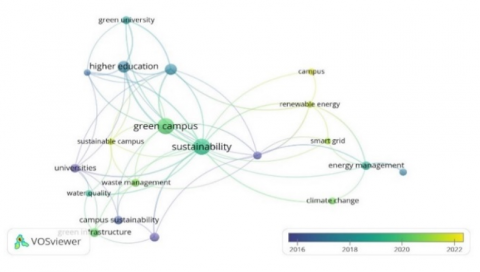
Figure 2 illustrates the network visualization, featuring the keyword "green campus management." The network visualization highlights key themes in bibliometric research on green campus management, with keywords grouped into distinct clusters. Central terms such as "sustainability," "green campus," and "higher education" underscore the focus on integrating environmental practices within academic institutions. Sub-themes such as "waste management," "renewable energy," and "climate change" reflect both operational and technical dimensions, while terms such as "restructure" and "smart grid" indicate emerging or niche areas of interest. The connections among these clusters reveal an interdisciplinary approach that bridges infrastructure, energy, and institutional governance. However, the lack of social or policy-related keywords, such as "community engagement" or "policy frameworks," may indicate gaps in the current research landscape.
The visualization serves as a valuable tool for identifying research trends and opportunities in green campus management. A strong emphasis on energy efficiency and environmental stewardship aligns with global sustainability goals; however, future studies could benefit from exploring behavioral, cultural, and governance dimensions. Temporal or geographical comparisons could further enhance understanding, such as tracking the rise of terms like "smart grid" over time or examining regional variations in priorities. This analysis not only maps existing knowledge but also guides researchers toward underexplored areas, fostering a more holistic approach to sustainable campus development.
Figure 3 shows the keywords that are trending in 2020 and beyond, including the keyword "renewable energy." A primary focus is the shift towards hybrid energy systems (HES) that combine various renewable resources, such as solar, wind, and biomass, along with energy storage solutions. This approach aims to achieve 100% renewable energy autonomy for campuses, effectively replacing traditional fossil fuel-powered generating stations [20, 21]. For instance, a study at UIN Raden Fatah Palembang highlighted the potential of micro-hydro and biomass as impactful renewable sources that could significantly reduce the campus's carbon footprint [22]. Such integrative strategies not only lessen greenhouse gas emissions but also promote long-term sustainability by enhancing energy security [23]. In addition to integrating diverse renewable sources, the role of education and awareness among campus stakeholders is critical. Various studies indicate that a significant barrier to effective energy management is energy illiteracy, where stakeholders lack a comprehensive understanding of energy systems [24, 25]. Effective educational programs and training aimed at raising awareness about energy efficiency and the benefits of renewable systems are thus crucial. Incorporating measurable objectives into campus sustainability frameworks can lead to more informed decision-making and stakeholder engagement [26, 27].
Furthermore, the financial implications of transitioning to renewable energy solutions cannot be overlooked. Investments in renewable energy infrastructure have yielded positive returns, as evidenced by reduced operational costs and the mitigation of climate change impacts [28, 29]. Educational institutions can serve as living laboratories for emerging technologies, showcasing practical applications of sustainability measures while offering valuable learning experiences for students [30]. Several universities have initiated comprehensive renewable energy programs that prioritize energy efficiency and incorporate smart technologies. For example, several campuses are exploring the concept of smart campuses that utilize data analytics and microgrid technologies to optimize energy management [31]. This technological shift allows institutions to adapt energy use dynamically, thereby enhancing their resilience and sustainability.
The second trending keyword from 2020 onward is the “smart grid” keyword, as shown in Figure 3. The concept of a smart grid encompasses the deployment of Information and Communication Technologies (ICT) that enhance the operational efficiency of the traditional electrical grid [32, 33]. Specifically, smart grids facilitate the integration of renewable energy sources such as solar and wind energy into campus infrastructures, thereby enabling autonomous energy management systems capable of accommodating the variable nature of these resources [34]. The enabling technologies within smart grids such as distributed energy storage and intelligent energy dispatching offer the potential to reduce the carbon footprint associated with campus energy consumption [35]. Moreover, the successful implementation of smart grids on green campuses hinges upon effective stakeholder collaboration and the seamless operation of communication systems [36, 37]. Engaging all stakeholders from university administrators to students is paramount to leveraging the full potential of smart grid functionalities [38]. To achieve this, strategic planning and change management practices must cultivate an environmental empowerment that promotes awareness of sustainability and encourages the adoption of green behavioral practices across all campus activities [10].
Figure 2. Network visualization with the keyword “green campus management”
Figure 3. Overlay map with the keyword “green campus management”
Additionally, integrating machine learning and advanced data analytics within the smart grid framework can significantly enhance demand response strategies by optimizing energy consumption based on real-time data [39]. Research indicates that a well-implemented smart grid can lead to substantial reductions in energy use and operational costs while simultaneously enhancing the reliability of energy services [40]. These advancements are essential not only for lowering operational expenses but also for enhancing institutional resilience in the face of natural disasters and disruptions [41]. Although the benefits of integrating smart grids into green campus initiatives are evident, challenges persist in areas such as cybersecurity and infrastructure reliability. Addressing these issues is essential to maintaining the integrity and robustness of smart grid systems [33, 40, 42]. By effectively overcoming these challenges, educational institutions can leverage smart grid technologies to exemplify sustainability leadership, showcasing their commitment to the environment and setting a precedent for other sectors.
The yellow trending keyword in 2020 onward is “sustainable campus” as illustrated in Figure 3. Strategies for sustainable campuses are increasingly viewed as necessary for meeting the evolving expectations of students and stakeholders. A sustainable university must empower students through education that focuses on inter- and multidisciplinary initiatives related to sustainability [43]. The green campus initiative adopted by many institutions, serves as a strategic framework designed to foster environmental awareness and mitigate ecological impacts [44, 45]. Essential to this initiative is the incorporation of green building principles into architectural education, which not only enhances campus infrastructure but also cultivates a dynamic and experiential learning environment for students [46]. This integration of sustainable practices establishes a pedagogical model that supports active learning and facilitates student interaction with sustainability principles in real-world contexts.
Leadership and governance play crucial roles in establishing a sustainable campus. Effective governance frameworks enable institutions to address the complexities of sustainability practices through dedicated oversight and strategic initiatives [47]. The success of these frameworks is contingent on stakeholder engagement: active participation by students, faculty, and administrative bodies ensures that sustainability becomes ingrained in the institutional culture [10]. The push for comprehensive policies and funding models, such as green fees, empowers institutions to develop sustainability projects while fostering a sense of communal responsibility [48]. Moreover, efforts to track sustainability metrics using evaluation tools have become critical for ensuring accountability and transparency in campus operations [49].
The operationalization of sustainability on campuses is further complicated by persistent barriers that hinder effective implementation, which require thorough analysis and systematic change management approaches [50]. Research indicates that involvement from students is pivotal, as engaged students not only contribute to successful sustainability initiatives but also enhance the institutional reputation through advocacy and participation [51]. For instance, specific programs targeting waste management—employing green logistics and recycling principles--have been shown to align with sustainability objectives effectively [52].
Finally, the challenges of achieving a sustainable campus are matched by equally compelling opportunities. With an increasing emphasis on educational experiences that prioritize sustainability, universities are discovering that engagement in these initiatives benefits both the campus environment and the academic community at large [53]. Institutions are also encouraged to adopt innovative approaches, such as smart energy management systems and sustainable dining practices, to further their sustainability goals [4]. Looking ahead, the collaboration between behavioral scientists and environmental specialists will be vital as they work toward addressing the complex dynamics of implementing sustainable practices in higher education.
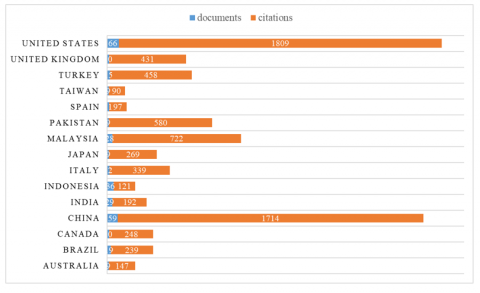
Figure 4 illustrates the number of documents and citations for each country that focuses on green campus research. The bibliometric analysis reveals significant global contributions to green campus management research, with the United States leading in document output (1809 citations), followed by China (1714) and the United Kingdom (431). This leading position reflects strong institutional support, funding priorities, and academic engagement in sustainability research within these nations. Countries such as Malaysia (722), India (192), and Indonesia (121) also demonstrate notable activity, indicating a growing interest in green campus initiatives in developing and rapidly urbanizing regions. Meanwhile, European nations such as Spain (197) and Italy (339) contribute steadily, which aligns with the European Union’s sustainability mandates. The data also highlights a geographic imbalance, with Western and Asian nations driving the majority of research, while regions such as Africa and the Middle East are underrepresented. The citation impact of these publications is likely influenced by levels of research investment and the strength of institutional collaboration networks. The United States and the United Kingdom, with their well-established universities and research ecosystems, tend to attract higher citation counts. In contrast, emerging contributors such as China and India may focus on context-specific challenges that receive fewer citations at the global level.
Figure 4. Number of citations and documents per country
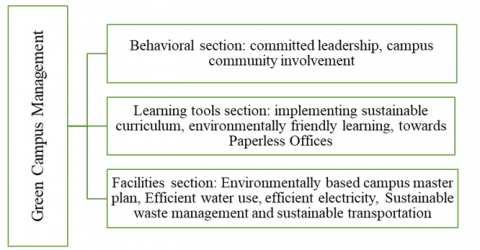
Figure 5 illustrates the concept and strategy framework for developing sustainable green campus management. This development involves three main strategies. The first strategy is behavioral and is driven by institutional leadership. Campus leaders — including the Chancellor, Vice Chancellor, Head of Bureau, Dean, Vice Dean, Head of Study Program, and other officials must demonstrate a strong commitment to building and developing a green campus. Their leadership behavior should serve as a model for the broader academic community, fostering a unified and proactive culture that supports sustainability initiatives. The second strategy focuses on integrating and enhancing educational tools and practices. The strategy involves implementing sustainability-oriented, environmentally friendly learning practices and transitioning toward digital, paperless administrative systems. The third strategy is related to the development of facilities and infrastructure. Key components include an environmentally informed campus master plan, efficient management of water and energy resources, sustainable waste management systems, and promoting eco-friendly transportation.
Figure 5. The concept and strategy framework for developing sustainable green campus management
3.1 Committed leadership and campus community involvement section
The role of leadership is crucial in building and advancing the concept of a green campus. University leaders must continuously strive to explain and motivate all academic communities in building and developing a sustainable green campus through environmentally friendly concept principles [54]. Singh et al. [55] emphasize that leadership has a significant influence on human resource management and drives innovation in green campus initiatives. Other researchers further emphasize that leaders' environmental norms and their pro-environmental behavior play a pivotal role in the implementation and advancement of a green campus strategy. Universities also serve as key agents in advancing sustainability goals, with leadership playing a central role in this transformation. Ribeiro et al. [56] and Fissi et al. [57] explained that universities adopt structured strategies and sustainability initiatives with the full backing of senior leadership, including rectors and vice-rectors. University leaders contribute to the realization of a sustainable green campus by fostering an environmentally conscious culture, initiating impactful programs, and enacting supportive policies [58]. In addition, leaders must be effective change agents in implementing sustainability programs, while the members of the academic community are also expected to model environmentally friendly behavior [59].
The strategic influence of university leadership is essential in steering institutional policy and shaping campus culture toward sustainability [54]. Therefore, cultivating and strengthening a genuine commitment among university leaders to environmental stewardship is fundamental to the success of green campus initiatives. This commitment must be deeply internalized beyond symbolic gestures or ceremonial statements [55]. It should serve as the foundation for all decision-making processes that affect the environment. When leaders demonstrate genuine concern for environmental issues, the academic community is more likely to embrace and support meaningful progress toward sustainability [60].
University leaders must be motivated and empowered to take an active role as both initiators and motivators in implementing green campus programs. They are not only decision-makers but also key agents of change initiating sustainability efforts, mobilizing community participation, and fostering innovation to support environmentally responsible practices [61]. Proactive and visionary leadership facilitates the spread of green values in academic activities, operations, and infrastructure development. This, in turn, creates a campus ecosystem that not only prioritizes sustainability but also sets a benchmark for other institutions [56]. Equally important is the establishment of clear and enforceable environmental policies within higher education institutions. These policies may encompass areas such as energy management, waste reduction, sustainable transportation solutions, and the integration of sustainability principles into academic curricula [55]. A robust and supportive policy framework provides institutional leaders with the necessary guidelines to realize the green campus vision. Consistent and long-term policies serve as a bridge between moral commitment and real action, producing a significant environmental impact [54].
Green campus activities also serve as a strategic platform for staff engagement and institutional alignment with environmental objectives. Pardal et al. [62] asserted that higher education institutions play a crucial role in promoting sustainable green campus management. These activities are part of teaching, research, innovation, and social learning. Martinez-Buján et al. [63] underscore the significance of the social dimension in university-based sustainability. Choi et al. [64] demonstrated that students actively involved in green campus activities tend to possess greater knowledge and awareness of sustainability principles. Azar and Al Ansari [65] highlighted that factors such as demographic characteristics and motivational drivers influence energy conservation strategies. Fachrudin and Fachrudin [59] emphasized that awareness, attitudes, norms, behavioral control, and intentions are critical psychological indicators for the successful implementation of green campus programs.
In the pursuit of a sustainable campus, internalizing environmental consciousness across the academic community represents a foundational step. This step involves integrating environmental values into the curriculum, learning, and campus-wide efforts to foster a collective awareness of the importance of environmental stewardship [59]. The internalization process must be systematic, continuous, and inclusive, ensuring that faculty, students, and administrative staff alike comprehend, embrace, and apply sustainability principles in their daily activities [62]. One effective strategy to strengthen this process is through the organization of environmentally oriented extracurricular programs—such as plastic-free campus campaigns, recycling initiatives, and tree-planting events. These activities offer experiential learning opportunities that foster environmentally responsible behavior through direct, real world experiences [66].
Furthermore, the development of an environmentally friendly campus life must be supported by an effective behavioral control system [67]. This system may include internal regulations, participatory supervision, and incentives for promoting positive environmental behavior. With the right control mechanism in place, it will be easier to instill and maintain environmentally friendly habits [68]. In addition, active participation in sustainable campus ranking programs such as UI GreenMetric represents a strategic step to encourage universities to innovate continuously and engage in competition to achieve a green campus environment [69]. This ranking not only spurs ongoing improvement but also serves as a means of evaluation and a platform for showcasing campus achievements in environmental sustainability aspects [70] as illustrated in Table 1 below.
3.2 Learning tools section
Universities that adopt green campus management concepts consider the use of advanced technology and the readiness of their students. This adoption of technology enhances the feasibility and long-term success of green campus initiatives [71]. Han and Yolcu [72] found that students use the Internet for educational purposes, with a comparable level of technology engagement in three universities. The development of green campus-based e-learning offers high-quality learning through digital tools, applications, and a sustainable development framework. Similarly, Naveh and Shelef [73] identified extensive technological engagement by students. Sustainable e-learning helps higher education institutions to produce innovative graduates while concurrently reducing operational costs through efficient resource use [74]. Technology such as webcast-enabled smart classrooms facilitates interaction between physical and virtual learning [75], while Khlaisang and Songkram [76] assert that digital media supports flexible learning, anytime and anywhere.
Furthermore, the implementation of learning methods that support sustainability-oriented values is an integral part of environmental education [77]. Approaches such as project-based learning, field studies, and cross-disciplinary collaboration encourage critical thinking, creativity, and provide solutions to environmental issues [73]. In addition, the use of environmentally friendly technologies in the learning process, such as digital platforms to reduce paper consumption, should be further developed. Through a holistic and contextually learning-grounded educational approach, higher education institutions can create a generation of graduates who are not only intellectually capable but also deeply committed to sustainable values in their personal and professional spheres [75].
Creating an environmentally friendly curriculum serves as a strategic foundation for advancing green campus management. Menon and Suresh [78] recommend integrating sustainability practices into the teaching and learning process, while Revelli [79] emphasizes that an environmentally friendly curriculum is necessary for implementing green campuses. Students’ learning experiences also play a crucial role in embedding green concepts [80]. Hays and Reinders [81] underscored the importance of ecological literacy and student independence in green campus education. Integrating green campus principles into technical curricula necessitates systemic reform, emphasizing cognitive development and critical thinking skills to facilitate the transition to a low-carbon economy. Gress and Shin [82] examined the implementation of the green curriculum in Korea. Overall, the development and implementation of an environmentally friendly curriculum is key to the strategic vision of sustainable campuses, instilling sustainability values into coursework in the curriculum.
The development and implementation of a green campus-based or environmentally friendly curriculum is one of the key elements in building a sustainable campus [82]. A curriculum designed with sustainability values in mind not only equips students with theoretical knowledge, but also fosters ecological awareness and a sense of responsibility [78]. In this regard, it is essential for each study program to integrate environmental issues into relevant courses, both through core materials and applied case studies [79]. Thus, students from various disciplines can understand their role in promoting sustainable development within their respective fields of science [80].
The academic administration office contributes to the development of a green and sustainable campus by promoting a paperless office [83]. Reducing paper consumption is a well-established environmentally friendly practice, commonly referred to the green office concept [84]. Sboui et al. [85] examined the application of a paperless office for administrative and learning processes. Universities can achieve this by utilizing information and communication technology to manage documents digitally. Other studies have similarly highlighted the application of the green office concept in universities through a paperless system [86]. Ugale et al. [87] described the use of optical character recognition (OCR) for efficient document processing. Indrajit et al. [88] developed a model of the paperless office as a mediator between traditional and digital learning. Genesis and Oluwole [89] explained the automation of administrative functions, such as examination and registration for paperless systems. The importance of ICT in modern university administration. In conclusion, the adoption of environmentally friendly technologies--such as e-books and audio-video learning media--is essential for achieving the vision of a Sustainable Campus.
The green administration program aims to maximize the paperless initiative by facilitating the digital creation and distribution of letters, document forms, bulletins, academic journals, lecturer performance reports, and all other relevant documents [83]. This initiative not only reduces paper usage but also enhances administrative efficiency and information accessibility [84]. Through digitalization, administrative processes become faster and more accessible to all stakeholders, thus supporting a modern, efficient, and environmentally conscious work environment. It contributes to improving data security and integrity, as digital records are easier to archive, retrieve, and maintain [85], as illustrated in Table 1 below.
3.3 Facilities section
Green campus management refers to university policies focused on promoting sustainable ecological development [90]. Effective water reuse and waste management programs are essential to improving water quality within university settings. A study at Jordan University of Science and Technology (JUST) reported a daily per capita water consumption of approximately 56 Liters, one-third of that of college students in the United States [5]. Fahrianto et al. [91] emphasized the importance of providing accessible and safe drinking water to support green campus initiatives. Tianjin University developed a rainwater collection, use, and disposal system as part of green campus planning [92]. Other studies similarly highlighted best practices in campus-based water resource management [93]. Key strategies to support a Sustainable Green Campus include revitalizing water network, measuring the water supply in buildings, reusing wastewater, and properly managing rainwater systems [94].
Physical and spatial planning allows the integration of ecological priorities into the green campus mission. Universities are advised to maintain ecological systems through spatial and strategic planning [95]. Rashid and Darus [96] suggest campus planning involving stakeholder concensus through a comprehensive a master plan. Strategic planning serves as a critical foundation for realizing a Sustainable Green Campus. This concept encompasses green building design, construction costs, and the use of energy-efficient systems aligned with sustainability goals [97, 98]. The campus master plan should also include health-oriented features such as a smoke-free zone [99]. The Sustainable Building Council Indonesia (GBCI) established sustainable building criteria with a focus on energy efficiency and environmental performance [100]. Ongoing evaluation of green campus development helps assess institutional alignment with environmental policy objectives and sustainability outcomes [101]. Universities are encouraged to define a clear environmental vision and mission, design energy-efficient buildings, construct sustainable infrastructure, establish smoke-free zones and green open spaces, and regularly evaluate the effectiveness of their sustainable campus program.
Waste management represents a critical dimension in achieving a Sustainable Green Campus. However, unsustainable practices such as littering and open waste burning remain prevalent. Approximately 49.5% of students express concern about sustainable waste management [80]. Ifegbesan observed that student awareness of waste management varies across gender, age, and academic status [45]. Targeted waste management initiatives have proven effective in increasing awareness and improving practices. For example, a pilot project led to a recycling rate increase from 10% to 12% [102]. Smyth et al. [103] reported effective waste management at Prince George’s campus, with over 70% of waste recycled. Abu Qdais et al. [5] highlighted effective waste management at the Jordan University of Science and Technology. Khandelwal suggested waste management with the 3R concept and biogas production from organic waste. Universities can enhance sustainability efforts through composting centers, institutional waste management policies, and community-based recycling collaborations—all of which are essential for comprehensive green campus development.
The development of sustainable green campus concepts is essential to transform universities into energy-efficient and environmentally friendly communities. Faghihi et al. [104] emphasized the importance of reducing energy consumption through infrastructure efficiency. Tan et al. [105] demonstrated the advancement of energy-efficient campuses in China through the implementation of effective energy management systems and modern technologies. Revelli [79] described the use of renewable energy to save energy in the Lake Park High School District. Suwartha et al. [106] highlighted the challenges of renewable energy development. Campuses can improve energy efficiency by harnessing solar energy. Common strategies include regulating air-conditioning temperatures, replacing outdated electrical appliances with energy-efficient alternatives, and conducting research on renewable technologies such as sustainable solar lighting systems.
Campuses or universities must adopt integrated management approaches to promote environmentally friendly commuter transportation, optimize parking systems, and identify opportunities for transition to a sustainable green campus future [107]. Kaplan [108] found low levels of participation in sustainable transportation, such as cycling activities on campus. Abu Qdais et al. [5] asserted that carbon emissions per capita on the JUST campus were smaller than other universities. Bond and Steiner [109] revealed the University of Florida's collaboration with the local transit system as part of its Sustainable Green Campus development initiatives. Supporting infrastructure is crucial for the success of green transportation systems. When designed effectively, campus transportation management can serve as a model for the broader public [110]. Key strategies for a Sustainable Green Campus include the construction of eco-friendly mass transit systems and establishing collaborative partnerships with relevant institutions, both of which are critical for long-term sustainability [111] as illustrated in Table 1 below.
Table 1. Green campus management: concept, strategies and activities
|
Section |
Strategies |
Activities |
References |
|
Behavior |
Leader Commitment |
Strong commitment of campus leaders in implementing, developing, initiating and motivating environmentally friendly green campus ideas. |
[54, 55, 60, 61] |
|
|
|
Creating policies based on sustainable green campus management. |
[56, 112] |
|
|
Commitment to community or academic community behavior |
Building and developing academic activities, extracurricular programs and daily activities based on environmentally friendly practices in the entire academic community. |
[58, 62, 66, 67] |
|
|
|
Development of environmentally friendly behavior control systems and continuous improvement of campus quality. |
[65, 66, 68-70] |
|
Program learning tools |
Maximizing paperless programs |
Create and distribute letters, document forms, bulletins, journals, lecturer performance documents, and all documents digitally. |
[83-85, 88, 89] |
|
|
Environmentally friendly learning technology program |
Create and develop e-learning applications, Learning Management Systems (LMS), distance learning classes, and online or online-based learning programs. |
[72-76] |
|
|
Continuous curriculum development |
Implementing and developing environmentally friendly and sustainable learning methods, curriculum, and values. |
[78-82] |
|
Facilities and infrastructure |
Sustainable waste management program |
Create and develop a composting center program, reuse until, recycle waste, and sustainable waste self-processing. |
[5, 113-115] |
|
|
Environmentally friendly transportation program |
Developing environmentally friendly mass transportation facilities and infrastructure, collaborating with industry and stakeholders to provide supporting facilities for sustainable transportation. |
[115, 116] |
|
|
Evaluating the green campus master plan |
Formulate and create a vision, mission, strategic plan, and standard design of environmentally friendly buildings. Design infrastructure, green zones, and smoke-free zones. |
[95, 97, 116] |
|
|
Water quality development and its use |
Efficient water use, creating sustainable water networks, improving water quality, water reuse, and the creation of infiltration wells. |
[5, 91-94] |
|
|
Efficient use of electricity |
Regulation of the electricity network, creation of automation for electricity use, replacement of energy-efficient electrical equipment, and use of renewable energy sources as environmentally friendly electricity. |
[78] |
The findings of this study reveal a growing awareness and institutional commitment to environmental protection within campus communities, primarily driven by the global SDGs. Universities have emerged as pivotal actors in advancing sustainability through the implementation of green campus management practices. The bibliometric analysis conducted in this research demonstrates a consistent increase in scholarly publications related to green campus management from 2010 to 2025, indicating a rising academic interest and expanding discourse in the field.
These insights carry important policy implications. University administrators and policymakers should capitalize on this momentum by incorporating sustainability principles into institutional frameworks, including strategic planning, infrastructure development, and the integration of academic curricula. Furthermore, policies that foster interdisciplinary collaboration and support research in underrepresented areas—such as social engagement and governance—can contribute create more inclusive and effective sustainability strategies on campuses.
Looking forward, future research should address key gaps identified in the current literature. Specifically, there is a need for deeper investigation of the behavioral, cultural, and policy-related dimensions of green campus management. Comparative studies across regions and time periods could provide valuable, context-specific insights, while integrating qualitative approaches with bibliometric methods may offer a more comprehensive understanding of sustainability practices. Such an expanded research agenda will support universities in adaptation more holistic and impactful approaches to environmental stewardship.
[1] Luna, R.A. (2020). Green supply chain management e as práticas adotadas pela indústria química. Gestão & Planejamento-G&P, 21. https://doi.org/10.21714/2178-8030gep.v.21.5149
[2] Wee, B., Mason, H., Abdilla, J., Lupardus, R. (2018). Nationwide perceptions of US green school practices: Implications for reform and research. International Research in Geographical and Environmental Education, 27(4): 283-294. https://doi.org/10.1080/10382046.2016.1207995
[3] Zhao, S., Zhou, S., Noonan, D.S. (2019). Environmental justice and green schools-assessing students and communities’ access to green schools. Social Science Quarterly, 100(6): 2223-2239. https://doi.org/10.1111/ssqu.12715
[4] Zhu, B., Zhu, C., Dewancker, B. (2020). A study of development mode in green campus to realize the sustainable development goals. International Journal of Sustainability in Higher Education, 21(4): 799-818. https://doi.org/10.1108/IJSHE-01-2020-0021
[5] Abu Qdais, H., Saadeh, O., Al-Widyan, M., Al-tal, R., Abu-Dalo, M. (2019). Environmental sustainability features in large university campuses: Jordan University of Science and Technology (JUST) as a model of green university. International Journal of Sustainability in Higher Education, 20(2): 214-228. https://doi.org/10.1108/IJSHE-06-2018-0102
[6] Fachrudin, H.T., Fachrudin, K.A. (2021). Factors influencing energy conservation application in green campus design based on green behavior. International Journal of Energy Economics and Policy, 11(4): 511-520. https://doi.org/10.32479/ijeep.11355
[7] Kamarudin, M.K.A., Abd Wahab, N., Sanopaka, E., Yaakub, N., Azinuddin, M., Hassan, M.S.N.A., Pauzi, H.M., Rahayu, M., Noh, N.A. (2023). Assessing progressive green university campus maturity: A framework for sustainable development in Malaysian higher education institutions. Multidisciplinary Reviews, 6: 2023spe006. https://doi.org/10.31893/multirev.2023spe006
[8] Shishakly, R., Almaiah, M.A., Lutfi, A., Alrawad, M. (2024). The influence of using smart technologies for sustainable development in higher education institutions. International Journal of Data & Network Science, 8(1): 77-90. https://doi.org/10.5267/j.ijdns.2023.10.015
[9] Boeri, A., Turillazzi, B., Sabatini, F., Sassenou, L.N., Manella, G. (2024). The threefold role of the university in fostering the energy transition: The case of Bologna and its Cesena campus. Energies, 17(15): 3751. https://doi.org/10.3390/en17153751
[10] Aedi, N. (2024). Strategies and best practices for implementing green campus: A change management reviews. Journal of Ecohumanism, 3(4): 2492-2502. https://doi.org/10.62754/joe.v3i4.3771
[11] Herzanita, A., Lestari, R.T., Dewi, A.P. (2024). Assessing green building implementation and barriers in campus settings. International Journal of Environmental Impacts, 7(3): 593-601. https://doi.org/10.18280/ijei.070320
[12] Zhao, H., Liu, L., Guo, H. (2023). Brief analysis of the construction of green campus in Universities in the New Era. Higher Education Research, 8(3): 92-95. https://doi.org/10.11648/j.her.20230803.15
[13] Alsharif, M.A. (2024). The structural modelling of significant organisational and individual factors for promoting sustainable campus in Saudi Arabia. Frontiers in Sustainability, 5: 1231468. https://doi.org/10.3389/frsus.2024.1231468
[14] Qiu, Y., Dong, Y. (2024). Life cycle assessment of campuses: A systematic review. Energy and Buildings, 319: 114455. https://doi.org/10.1016/j.enbuild.2024.114455
[15] Luo, P., Yan, P., Wang, X., Wu, Y., Lyu, J., He, B., Duan, W., Wang, S., Zha, X. (2024). Historical and comparative overview of sponge campus construction and future challenges. Science of the Total Environment, 907: 167477. https://doi.org/10.1016/j.scitotenv.2023.167477
[16] Ding, Y., Lee, C., Chen, X., Song, Y., Newman, G., Lee, R., Lee, S., Li, D., Sohn, W. (2024). Exploring the association between campus environment of higher education and student health: A systematic review of findings and measures. Urban Forestry & Urban Greening, 91: 128168. https://doi.org/10.1016/j.ufug.2023.128168
[17] Halicioglu, F.H., Gurel, K. (2024). The perceived quality of green buildings: From a review of occupant satisfaction towards a conceptual framework. International Journal of Quality & Reliability Management, 41(3): 757-777. https://doi.org/10.1108/IJQRM-10-2022-0307
[18] Zhu, B., Liu, G. (2025). The development model of sustainable campus based on green buildings: A systematic comparative study between Japan and China. Engineering, Construction and Architectural Management, 32(2): 805-823. https://doi.org/10.1108/ECAM-03-2022-0236
[19] Li, H., Du, J., Chow, D. (2024). Perceived environmental factors and students’ mental wellbeing in outdoor public spaces of university campuses: A systematic scoping review. Building and Environment, 112023. https://doi.org/10.1016/j.buildenv.2024.112023
[20] Akindeji, K.T., Tiako, R., Davidson, I. (2022). Optimization of university campus microgrid for cost reduction: A case study. In Advanced Engineering Forum. Trans Tech Publications Ltd, 45: 77-96. https://doi.org/10.4028/p-13gc8e
[21] Eze, V.H.U., Edozie, E., Wisdom, O., Uche, C.K.A. (2023). A comparative analysis of renewable energy policies and its impact on economic growth: A review. International Journal of Education, Science, Technology, and Engineering (IJESTE), 6(2): 41-46. https://doi.org/10.36079/lamintang.ijeste-0602.555
[22] Khodijah, N., Putro, L.H.S., Hadi, A., Aljabar, J.L., Ichsan, C. (2023). Solar electricity energy: Utilization of renewable energy sources to realize a sustainable campus at UIN Raden Fatah Palembang. Journal of Sustainability Perspectives, 3(2): 209-217. https://doi.org/10.14710/jsp.2023.20577
[23] Umeh, C.A., Nwankwo, A.U., Oluka, P.O., Umeh, C.L., Ogbonnaya, A.L. (2024). The role of renewable energies for sustainable energy governance and environmental policies for the mitigation of climate change in Nigeria. European Journal of Applied Science, Engineering and Technology, 2(2): 71-98. https://doi.org/10.59324/ejaset.2024.2(2).08
[24] Bohvalovs, Ģ., Kalnbaļķīte, A., Pakere, I., Vanaga, R., Kirsanovs, V., Lauka, D., Prodaņuks, T., Laktuka, K., Doļģe, K., Zundāns, Z., Brēmane, I., Blumberga, D., Blumberga, A. (2023). Driving sustainable practices in vocational education infrastructure: A case study from Latvia. Sustainability, 15(14): 10998. https://doi.org/10.3390/su151410998
[25] Gandasari, I., Hotimah, O., Miyarsah, M. (2020). Green campus as a concept in creating sustainable campuses. KnE Social Sciences, 1-9. https://doi.org/10.18502/kss.v4i14.7853
[26] Skrzyzowski, V.D.S., Farinhas, F.N., Teixeira, M.C.F.D.C., Barros, M.V., Salvador, R., Neto, S.C., Lermen, F.H. (2024). Mapping drivers, barriers, and trends in renewable energy sources in Universities: A connection based on the SDGs. Sustainability, 16(15): 6583. https://doi.org/10.3390/su16156583
[27] Drosos, D., Kyriakopoulos, G.L., Ntanos, S., Parissi, A. (2021). School managers perceptions towards energy efficiency and renewable energy sources. International Journal of Renewable Energy Development, 10(3): 573-584. https://doi.org/10.14710/ijred.2021.36704
[28] Castrillón-Mendoza, R., Manrique-Castillo, P.A., Rey-Hernández, J.M., Rey-Martínez, F.J., González-Palomino, G. (2020). PV energy performance in a sustainable campus. Electronics, 9(11): 1874. https://doi.org/10.3390/electronics9111874
[29] Seminario-Córdova, R., Rojas-Ortega, R. (2023). Renewable energy sources and energy production: A bibliometric analysis of the last five years. Sustainability, 15(13): 10499. https://doi.org/10.3390/su151310499
[30] Júnior, S.M., Frandoloso, M.A.L., Brião, V.B. (2022). The role of HEIs to achieve SDG7 goals from Netzero campuses: Case studies and possibilities in Brazil. International Journal of Sustainability in Higher Education, 24(2): 462-480. https://doi.org/10.1108/IJSHE-07-2021-0282
[31] Silva-da-Nóbrega, P.I., Chim-Miki, A.F., Castillo-Palacio, M. (2022). A smart campus framework: Challenges and opportunities for education based on the sustainable development goals. Sustainability, 14(15): 9640. https://doi.org/10.3390/su14159640
[32] Massaoudi, M., Abu-Rub, H., Refaat, S.S., Chihi, I., Oueslati, F.S. (2021). Deep learning in smart grid technology: A review of recent advancements and future prospects. IEEE Access, 9: 54558-54578. https://doi.org/10.1109/ACCESS.2021.3071269
[33] Mashal, I. (2022). Smart grid reliability evaluation and assessment. Kybernetes, 52(9): 3261-3291. https://doi.org/10.1108/K-12-2020-0910
[34] Dorji, S., Stonier, A.A., Peter, G., Kuppusamy, R., Teekaraman, Y. (2023). An extensive critique on smart grid technologies: Recent advancements, key challenges, and future directions. Technologies, 11(3): 81. https://doi.org/10.3390/technologies11030081
[35] Fang, X. (2023). Energy management system technology in Smart Grid. Highlights in Science, Engineering and Technology, 76: 328-336. https://doi.org/10.54097/x5ch4d78
[36] Vakulenko, I., Saher, L., Syhyda, L., Kolosok, S., Yevdokymova, A. (2021). The first step in removing communication and organizational barriers to stakeholders’ interaction in smart grids: A theoretical approach. In E3S Web of Conferences. EDP Sciences, 234: 00020. https://doi.org/10.1051/e3sconf/202123400020
[37] Purna Prakash, K., Venkata Pavan Kumar, Y., Himajyothi, K., Pradeep Reddy, G. (2024). Comprehensive bibliometric analysis on Smart Grids: Key concepts and research trends. Electricity, 5(1): 75-92. https://doi.org/10.3390/electricity5010005
[38] Isa, H.M., Sedhu, D.S., Lop, N.S., Rashid, K., Nor, O.M., Iffahd, M. (2021). Strategies, challenges and solutions towards the implementation of green campus in Uitm Perak. Planning Malaysia, 19(16). https://doi.org/10.21837/pm.v19i16.952
[39] Tiwari, S., Jain, A., Ahmed, N.M.O.S., Charu, Alkwai, L.M., Dafhalla, A.K.Y., Hamad, S.A.S. (2022). Machine learning‐based model for prediction of power consumption in smart grid‐smart way towards smart city. Expert Systems, 39(5): e12832. https://doi.org/10.1111/exsy.12832
[40] Khan, A., Memon, S. (2023). Investigating the impact of cyber security risks and reliability scenarios under the influence of IoT on the Smart Grid environment. World Journal of Advanced Research and Reviews, 18(2): 001-016. https://doi.org/10.30574/wjarr.2023.18.2.0783
[41] Han, J., Wang, J., He, Z., An, Q., Song, Y., Mujeeb, A., Tan, C.W., Gao, F. (2023). Hydrogen‐powered smart grid resilience. Energy Conversion and Economics, 4(2): 89-104. https://doi.org/10.1049/enc2.12083
[42] Nasrallah, M., Ismeil, M. (2022). Smart Grid-reliability, Security, Self-healing standpoint, and state of the art. SVU-International Journal of Engineering Sciences and Applications, 3(2): 87-92. https://doi.org/10.21608/svusrc.2022.149457.1058
[43] Dabija, D.C., Campian, V., Stanca, L., Tiron-Tudor, A. (2023). Generating students’ loyalty towards the sustainable university during the later COVID-19 pandemic. International Journal of Sustainability in Higher Education, 24(8): 1858-1876. https://doi.org/10.1108/IJSHE-11-2022-0372
[44] Amlayasa, A.A.B., Riasning, N.P. (2023). The role of the characteristics of the green campus initiative in understanding and supporting sustainable development activities at Warmadewa. International Journal of Social Science and Human Research, 6(12): 7413-7420. https://doi.org/10.47191/ijsshr/v6-i12-29
[45] da Silva, L.A., de Aguiar Dutra, A.R., de Andrade Guerra, J.B.S.O. (2023). Decarbonization in higher education institutions as a way to achieve a green campus: A literature review. Sustainability, 15(5): 4043. https://doi.org/10.3390/su15054043
[46] Xie, X., Qin, S., Gou, Z., Yi, M. (2021). Incorporating green building into architectural education: What can we learn from the value-belief-norm theory? International Journal of Sustainability in Higher Education, 22(3): 457-476. https://doi.org/10.1108/IJSHE-06-2020-0200
[47] Junior, B.A., Majid, M.A., Romli, A., Anwar, S. (2020). Green campus governance for promoting sustainable development in institutions of higher learning-evidence from a theoretical analysis. World Review of Science, Technology and Sustainable Development, 16(2): 141-168. https://doi.org/10.1504/WRSTSD.2020.109682
[48] González-Ramírez, J., Cheng, H., Arral, S. (2021). Funding campus sustainability through a green fee-estimating students’ willingness to pay. Sustainability, 13(5): 2528. https://doi.org/10.3390/su13052528
[49] Zhao, H., Xu, Y., Hong, W.C., Liang, Y., Zou, D. (2021). Smart evaluation of green campus sustainability considering energy utilization. Sustainability, 13(14): 7653. https://doi.org/10.3390/su13147653
[50] Gholami, H., Bachok, M.F., Saman, M.Z.M., Streimikiene, D., Sharif, S., Zakuan, N. (2020). An ISM approach for the barrier analysis in implementing green campus operations: Towards higher education sustainability. Sustainability, 12(1): 363. https://doi.org/10.3390/su12010363
[51] Al-Dmour, H. (2023). Green-smart university campuses: The mediating role of student engagement in enhancing corporate image. Sage Open, 13(4): 21582440231219591. https://doi.org/10.1177/21582440231219591
[52] Fauzi, M., Hartati, V., Nugraha, S.R., Nursalim, S., Puspani, N.S. (2024). Green logistics dan extended producer responsibility untuk pengelolaan sampah kemasan makanan dan minuman di universitas widyatama: Suatu model untuk green campus. Jurnal Teknologi Lingkungan, 25(1): 038-047. https://doi.org/10.55981/jtl.2024.642
[53] Yoon, B., Lee, J., Lim, H. (2023). Campus dining sustainability: A perspective from college students. Sustainability, 15(3): 2134. https://doi.org/10.3390/su15032134
[54] Robertson, J.L., Barling, J. (2013). Greening organizations through leaders' influence on employees' pro‐environmental behaviors. Journal of Organizational Behavior, 34(2): 176-194. https://doi.org/10.1002/job.1820
[55] Singh, S.K., Del Giudice, M., Chierici, R., Graziano, D. (2020). Green innovation and environmental performance: The role of green transformational leadership and green human resource management. Technological Forecasting and Social Change, 150: 119762. https://doi.org/10.1016/j.techfore.2019.119762
[56] Ribeiro, J.M.P., Barbosa, S.B., Casagrande, J.L., Sehnem, S., Berchin, I.I., da Silva, C.G., da Silveira, A.C.M., Zimmer, G.A.A., Faraco, R.Á., de Andrade Guerra, J.B.S.O. (2017). Promotion of sustainable development at universities: The adoption of green campus strategies at the University of Southern Santa Catarina, Brazil. In Handbook of Theory and Practice of Sustainable Development in Higher Education. World Sustainability Series. Springer, Cham, 1: 471-486. https://doi.org/10.1007/978-3-319-47868-5_29
[57] Fissi, S., Romolini, A., Gori, E., Contri, M. (2021). The path toward a sustainable green university: The case of the University of Florence. Journal of Cleaner Production, 279: 123655. https://doi.org/10.1016/j.jclepro.2020.123655
[58] Too, L., Bajracharya, B., Khanjanasthiti, I. (2013). Developing a sustainable campus through community engagement: An empirical study. Architecture Research, 3(3): 42-50. https://doi.org/10.5923/j.arch.20130303.04
[59] Fachrudin, H.T., Fachrudin, K.A. (2021). The relationship between green behaviour and green campus principles: A literature review. In IOP Conference Series: Materials Science and Engineering, 1122(1): 012028. https://doi.org/10.1088/1757-899X/1122/1/012028
[60] Arsanti, T.A., Sugiarto, A., Pasharibu, Y., Wijayanto, P. (2021). Pro-environment behavior at the workplace: Role of leadership and motivation. Quality-Access to Success, 22(180): 126.
[61] Radhakrishnan, B.D., Viswanathan, S. (2015). National university’s integrated approach towards sustainable-green campus: Leadership, curriculum, and outreach. In Implementing Campus Greening Initiatives: Approaches, Methods and Perspectives. Springer, Cham, pp. 75-91. https://doi.org/10.1007/978-3-319-11961-8_7
[62] Pardal, A., Romeira, T., Durão, A. (2020). Eco green campus: Challenges and opportunities. The study case of Polytechnic Institute of Beja. In E3S Web of Conferences. EDP Sciences, 171: 01010. https://doi.org/10.1051/e3sconf/202017101010
[63] Martinez-Buján, R., Santiago-Gómez, E., Diz, C., Cortes-Vazquez, J.A., Golías, M. (2020). Campus greening from social sciences: Emerging formulas on social responsibility and teaching innovation. International Journal of Sustainability in Higher Education, 21(7): 1545-1561. https://doi.org/10.1108/IJSHE-04-2020-0134
[64] Choi, Y.J., Oh, M., Kang, J., Lutzenhiser, L. (2017). Plans and living practices for the green campus of Portland State University. Sustainability, 9(2): 252. https://doi.org/10.3390/su9020252
[65] Azar, E., Al Ansari, H. (2017). Framework to investigate energy conservation motivation and actions of building occupants: The case of a green campus in Abu Dhabi, UAE. Applied Energy, 190: 563-573. https://doi.org/10.1016/j.apenergy.2016.12.128
[66] Matsumoto, M., Masui, K., Fukushige, S., Kondoh, S. (2017). Sustainability through Innovation in Product Life Cycle Design. Springer Singapore. https://doi.org/10.1007/978-981-10-0471-1
[67] Wimala, M., Akmalah, E., Irawati, I., Sururi, M. (2016). Overcoming the obstacles to green campus implementation in Indonesia. International Journal of Civil, Environmental, Structural, Construction and Architectural Engineering, 10: 1352-1357. waset.org/Publication/10006091
[68] Puertas, R., Marti, L. (2019). Sustainability in universities: DEA-Greenmetric. Sustainability, 11(14): 3766. https://doi.org/10.3390/su11143766
[69] Sisriany, S., Fatimah, I.S. (2017). Green campus study by using 10 UNEP’s Green University toolkit criteria in IPB Dramaga campus. In IOP Conference Series: Earth and Environmental Science, 91(1): 012037. https://doi.org/10.1088/1755-1315/91/1/012037
[70] Busaeri, N., Giriantari, I.A.D., Ariastina, W.G., Swamardika, I.A. (2019). Energy management assessment measurement using three measurement approaches for green campus concept. In 2019 International Conference on Sustainable Engineering and Creative Computing (ICSECC), Bandung, Indonesia, pp. 195-199. https://doi.org/10.1109/ICSECC.2019.8907094
[71] Abdillah, L.A., Rofiq, A.A., Indriani, D.E. (2018). Information technology utilization in environmentally friendly higher education. arXiv Preprint arXiv: 1811.10856. https://doi.org/10.5220/0008908303500355
[72] Han, T., Yolcu, H.H. (2017). An investigation of students’ satisfaction levels regarding campus technologies in Turkish universities. Journal of Higher Education and Science, 7(3): 593-600. http://doi.org/10.5961/jhes.2017.235
[73] Naveh, G., Shelef, A. (2021). Analyzing attitudes of students toward the use of technology for learning: Simplicity is the key to successful implementation in higher education. International Journal of Educational Management, 35(2): 382-393. https://doi.org/10.1108/IJEM-04-2020-0204
[74] Authors, F. (2015). FuReview articles Future proofing education Malaysia focuses on sustainability. Development and Learning in Organizations, 29(2): 22-25. https://doi.org/10.1108/DLO-09-2014-0063
[75] Huda, Y., Rukun, K., Faiza, D., Jaya, P. (2019). Live webcast system design for smart classroom learning in electronic engineering department. Journal of Physics: Conference Series, 1387(1): 012025. https://doi.org/10.1088/1742-6596/1387/1/012025
[76] Khlaisang, J., Songkram, N. (2019). Designing a virtual learning environment system for teaching twenty-first century skills to higher education students in ASEAN. Technology, Knowledge and Learning, 24: 41-63. https://doi.org/10.1007/s10758-017-9310-7
[77] Binti Mohamed Sofiadin, A. (2014). Sustainable development, e-learning and Web 3.0: A descriptive literature review. Journal of Information, Communication and Ethics in Society, 12(3): 157-176. https://doi.org/10.1108/JICES-03-2014-0018
[78] Menon, S., Suresh, M. (2020). Synergizing education, research, campus operations, and community engagements towards sustainability in higher education: A literature review. International Journal of Sustainability in Higher Education, 21(5): 1015-1051. https://doi.org/10.1108/IJSHE-03-2020-0089
[79] Revelli, V. (2017). Solar power to provide clean, renewable energy and save the school district $5.1 million in Energy Costs. Tech Directions, 77(1): 7. https://www.proquest.com/openview/cdc87410b4e1acfc6a7d4563ca49d0bb/1.pdf?pq-origsite=gscholar&cbl=182.
[80] Cleland Donnelly, F.E., Millar, V.F. (2019). Moving green, going green: An interdisciplinary creative dance experience. Journal of Physical Education, Recreation & Dance, 90(8): 20-33. https://doi.org/10.1080/07303084.2019.1637304
[81] Hays, J., Reinders, H. (2020). Sustainable learning and education: A curriculum for the future. International Review of Education, 66(1): 29-52. https://doi.org/10.1007/s11159-020-09820-7
[82] Gress, D.R., Shin, J. (2017). Potential for knowledge in action? An analysis of Korean green energy related K3-12 curriculum and texts. Environmental Education Research, 23(6): 874-885. https://doi.org/10.1080/13504622.2016.1204987
[83] Pasharibu, Y., Sugiarto, A., Ariarsanti, T., Wijayanto, P. (2019). Dimensions of green office evidence from regency/city government offices in Central Java, Indonesia. Business: Theory and Practice, 20: 391-402. https://doi.org/10.3846/btp.2019.37
[84] Adomßent, M., Grahl, A., Spira, F. (2019). Putting sustainable campuses into force: Empowering students, staff and academics by the self-efficacy Green Office Model. International Journal of Sustainability in Higher Education, 20(3): 470-481. https://doi.org/10.1108/IJSHE-02-2019-0072
[85] Sboui, H., You, K.B., Lee, K.H. (2019). Development and installation of novel solutions for implementing paperless office: Focus on Tunisian e-customs systems. Asia Life Sciences, (3): 1591-1602. https://scholarworks.bwise.kr/ssu/handle/2018.sw.ssu/34781
[86] Orantes-Jimenez, S.D., Zavala-Galindo, A., Vazquez-Alvarez, G. (2015). Paperless office: A new proposal for organizations. Systemics, Cybernetics and Informatics, 13(3): 47-55. https://iiisci.org/journal/pdv/sci/pdfs/HA544MP15.pdf
[87] Ugale, M.K., Patil, S.J., Musande, V.B. (2017). Document management system: A notion towards paperless office. In 2017 1st International Conference on Intelligent Systems and Information Management (ICISIM), Aurangabad, India, pp. 217-224. https://doi.org/10.1109/ICISIM.2017.8122176
[88] Indrajit, R.E., Saide, Wahyuningsih, R., Tinaria, L. (2018). Implementation of paperless office in the classroom. In Trends and Advances in Information Systems and Technologies. Springer International Publishing. Springer, Cham, 1(6): 508-517. https://doi.org/10.1007/978-3-319-77703-0_50
[89] Genesis, E.O., Oluwole, O.N. (2018). Towards a “Paperless” higher education system in Nigeria: Concept, challenges and prospects. Journal of Education, Society and Behavioural Science, 24(2): 1-15. https://doi.org/10.9734/jesbs/2018/19913
[90] Wimala, M., Zirads, B., Evelina, R. (2019). Water security in green campus assessment standard. In E3S Web of Conferences. EDP Sciences, 93: 02003. https://doi.org/10.1051/e3sconf/20199302003
[91] Fahrianto, A.S., Supraba, I., Triatmadja, R., Kamulyan, B. (2018). Universitas gadjah Mada Drinking water supply system (UGM-DWSS) potential on supporting green campus program in Universitas gadjah Mada. Applied Mechanics and Materials, 881: 55-63. https://doi.org/10.4028/www.scientific.net/AMM.881.55
[92] Peng, S., Cui, H., Ji, M. (2018). Sustainable rainwater utilization and water circulation model for green campus design at Tianjin University. Journal of Sustainable Water in The Built Environment, 4(1): 04017015. https://doi.org/10.1061/JSWBAY.0000841
[93] Chai, H.X., Wei, Y.H., Xu, H.Y., He, Q. (2011). Water conservation: Construction and operation of management and technology systems for green campus. Environmental Engineering & Management Journal (EEMJ), 10(7). https://doi.org/10.30638/eemj.2011.132.
[94] Amr, A.I., Kamel, S., El Gohary, G., Hamhaber, J. (2016). Water as an ecological factor for a sustainable campus landscape. Procedia-Social and Behavioral Sciences, 216: 181-193. https://doi.org/10.1016/j.sbspro.2015.12.027
[95] Orenstein, D.E., Troupin, D., Segal, E., Holzer, J.M., Hakima-Koniak, G. (2019). Integrating ecological objectives in university campus strategic and spatial planning: A case study. International Journal of Sustainability in Higher Education, 20(2): 190-213. https://doi.org/10.1108/IJSHE-12-2017-0219
[96] Rashid, A.K.A., Darus, Z.M. (2009). The conceptual utilization of rainwater harvesting system for sustainable campus development at the Faculty of Science and Technology, University Kebangsaan Malaysia. In Proceedings of the 3rd WSEAS International Conference on Energy Planning, Energy Saving, Environmental Education, EPESE ’09, Renewable Energy Sources, RES ’09, Waste Management, WWAI ’09. https://www.wseas.us/elibrary/conferences/2009/lalaguna/EPREWA/EPREWA27.pdf.
[97] Wong, N.H., Jusuf, S.K. (2008). GIS-based greenery evaluation on campus master plan. Landscape and Urban Planning, 84(2): 166-182. https://doi.org/10.1016/j.landurbplan.2007.07.005
[98] Petratos, P., Damaskou, E. (2015). Management strategies for sustainability education, planning, design, energy conservation in California higher education. International Journal of Sustainability in Higher Education, 16(4): 576-603. https://doi.org/10.1108/IJSHE-03-2014-0038
[99] Leal Filho, W., Brandli, L.L., Becker, D., Skanavis, C., Kounani, A., Sardi, C., Papaioannidou, D., Paço, A., Azeiteiro, U., de Sousa, L.O., Raath, S., Pretorius, R.W., Shiel, C., Vargas, V., Trencher, G.,Marans, R.W. (2018). Sustainable development policies as indicators and pre-conditions for sustainability efforts at universities: Fact or fiction? International Journal of Sustainability in Higher Education, 19(1): 85-113. https://doi.org/10.1108/IJSHE-01-2017-0002
[100] Da Huba, R.M., Rahmawati, A., Sucipto, T.L.A., Biddinika, M.K., Darmawan, A. (2020). Green building potential of existing dormitory building based on energy efficiency and conservation. In AIP Conference Proceedings. AIP Publishing, 2217(1). https://doi.org/10.1063/5.0000715
[101] Yu, L. (2016). Research on evaluation index of green campus based on AHP method. In 2016 International Conference on Intelligent Transportation, Big Data & Smart City (ICITBS), Changsha, China, pp. 249-252. https://doi.org/10.1109/ICITBS.2016.25
[102] Tangwanichagapong, S., Nitivattananon, V., Mohanty, B., Visvanathan, C. (2017). Greening of a campus through waste management initiatives: Experience from a higher education institution in Thailand. International Journal of Sustainability in Higher Education, 18(2): 203-217. https://doi.org/10.1108/IJSHE-10-2015-0175
[103] Smyth, D.P., Fredeen, A.L., Booth, A.L. (2010). Reducing solid waste in higher education: The first step towards ‘greening’a university campus. Resources, Conservation and Recycling, 54(11): 1007-1016. https://doi.org/10.1016/j.resconrec.2010.02.008
[104] Faghihi, V., Hessami, A.R., Ford, D.N. (2015). Sustainable campus improvement program design using energy efficiency and conservation. Journal of Cleaner Production, 107: 400-409. https://doi.org/10.1016/j.jclepro.2014.12.040
[105] Tan, H., Chen, S., Shi, Q., Wang, L. (2014). Development of green campus in China. Journal of Cleaner Production, 64: 646-653. https://doi.org/10.1016/j.jclepro.2013.10.019
[106] Suwartha, N., Sari, R.F., Widanarko, B., Ilyas, T. (2017). Cultivating green energy at the universitas indonesia towards sustainable campus. In Proceedings of the 3nd International Workshop on UI GreenMetric (IWGM 2017); Istanbul University: Istanbul, Turkey. https://iwgm.ui.ac.id/wpcontent/uploads/11/2017/05/Abstract-Cultivating-Green-Energy-at-the-Universitas-Indonesia-Towards-Sustainable-Campus.pdf.
[107] Cruz, L., Barata, E., Ferreira, J.P., Freire, F. (2017). Greening transportation and parking at University of Coimbra. International Journal of Sustainability in Higher Education, 18(1): 23-38. https://doi.org/10.1108/IJSHE-04-2015-0069
[108] Kaplan, D.H. (2015). Transportation sustainability on a university campus. International Journal of Sustainability in Higher Education, 16(2): 173-186. https://doi.org/10.1108/IJSHE-03-2013-0023
[109] Bond, A., Steiner, R. (2006). Sustainable campus transportation through transit partnership and transportation demand management: A case study from the University of Florida. Berkeley Planning Journal, 19(1). https://doi.org/10.5070/BP319111492
[110] Anis, M., Afiff, A.Z., Kiswanto, G., Suwartha, N., Sari, R.F. (2018). Managing university landscape and infrastructure towards green and sustainable campus. In E3S Web of Conferences. EDP Sciences, 48: 02001. https://doi.org/10.1051/e3sconf/20184802001
[111] Ifegbesan, A.P., Ogunyemi, B., Rampedi, I.T. (2017). Students’ attitudes to solid waste management in a Nigerian university: Implications for campus-based sustainability education. International Journal of Sustainability in Higher Education, 18(7): 1244-1262. https://doi.org/10.1108/IJSHE-03-2016-0057
[112] Shankar Y.S., Khandelwal, R. (2017). Sustainable waste management strategy for a campus: A case study of JUET, Guna. Management of Environmental Quality: An International Journal, 28(5): 610-623. https://doi.org/10.1108/MEQ-01-2016-0008
[113] Tangwanichagapong, S., Nitivattananon, V., Mohanty, B., Visvanathan, C. (2017). Greening of a campus through waste management initiatives: Experience from a higher education institution in Thailand. International Journal of Sustainability in Higher Education, 18(2): 203-217. https://doi.org/10.1108/IJSHE-10-2015-0175
[114] Ribalaygua Batalla, C., García Sánchez, F. (2016). Creating a sustainable learning district by integrating different stakeholders’ needs. methodology and results from the University of Cantabria Campus Master Plan. In Engaging Stakeholders in Education for Sustainable Development at University Level, World Sustainability Series. Springer, Cham, 3-20. https://doi.org/10.1007/978-3-319-26734-0_1
[115] Melo, E.F.R.Q., Frandoloso, M.A.L., Melo, R.H.R.Q. (2019). Green campus and environmental preservation on a Brazilian university. In Sustainability on University Campuses: Learning, Skills Building and Best Practices. World Sustainability Series. Springer, Cham, pp. 191-208. https://doi.org/10.1007/978-3-030-15864-4_12
[116] Bhattacharyya, S. (2020). Green campus initiative: Response from a self-financed educational campus-A case study. In Sustainable Waste Management: Policies and Case Studies: 7th IconSWM-ISWMAW 2017. Springer Singapore, 1: 321-331. https://doi.org/10.1007/978-981-13-7071-7_29