Saptono Waspodo* | Sitti Hilyana | Sadikin Amir | Soraya Gigentika | Rusmin Nuryadin
© 2025 The authors. This article is published by IIETA and is licensed under the CC BY 4.0 license (http://creativecommons.org/licenses/by/4.0/).
OPEN ACCESS
This research examines the sustainability of snapper fisheries in the Alas Strait, West Nusa Tenggara, Indonesia, as part of sustainable fisheries resource management efforts. Utilizing a Multi-Dimensional Scaling (MDS) approach via the Rapid Appraisal for Fisheries (Rapfish) framework, this study evaluated sustainability across five dimensions: ecological, economic, social, institutional, and technological. Primary data were collected through interviews with fishermen, traders, and key stakeholders using structured questionnaires, while secondary data were gathered from relevant government and private institutions. The findings indicate that the overall sustainability index of snapper fisheries in the Alas Strait is 54.21%, categorized as moderately sustainable. The ecological and economic dimensions scored the highest, both at 61.25%, reflecting relatively stable fish stocks and positive economic contributions. Conversely, the institutional and technological dimensions scored the lowest, both below 40%, highlighting significant challenges such as insufficient institutional support, limited access to financial resources, and inadequate adoption of sustainable fishing technologies. Sensitivity analysis identified key attributes influencing sustainability, including fishing gear selectivity, government institutional involvement, and the availability of alternative livelihoods. The results emphasize the importance of addressing these shortcomings through targeted policies and capacity-building programs to enhance the sustainability of the snapper fishery. This study contributes to the understanding of multi-dimensional sustainability and offers actionable recommendations for improving the management of marine resources in Indonesia.
Alas Strait, Rapfish, snapper, sustainability
Indonesia, as an archipelagic country with two-thirds of its territory consisting of oceans, possesses immense fisheries resources. With the second-longest coastline in the world, Indonesia not only has abundant fish resources but also boasts one of the richest marine biodiversity globally [1]. The capture fisheries sector is one of the main pillars of the national economy, significantly contributing 2.80% or IDR 431 trillion to Indonesia's Gross Domestic Product (GDP) in 2022 [2]. Additionally, this sector plays a crucial role in supporting national food security by providing fish as a primary source of protein for the Indonesian population [3, 4]. The fish produced from the capture fisheries sector also serves as a leading export commodity, greatly contributing to the country's foreign exchange earnings [5].
However, despite its significant contribution, Indonesia's capture fisheries sector faces various challenges, particularly related to optimal management and sustainable utilization. As domestic and international market demand increases, overfishing has become a serious threat to the sustainability of fish resources. Overfishing, driven by increased global demand, poses significant threats to biodiversity and ecological balance, necessitating sustainable practices to protect marine resources [6].
To manage fisheries resources effectively, Indonesia has divided its waters into 11 Fisheries Management Areas (Wilayah Pengelolaan Perikanan (WPP)) through the Ministry of Marine Affairs and Fisheries Decree No. 19 of 2022. This division aims to map the resource potential, challenges, and appropriate management strategies for each area so that resources can be utilized efficiently and responsibly (Regulation of the Minister of Marine Affairs and Fisheries, 2014). WPP-based management is also expected to reduce conflicts over resource use and promote the application of sustainable fisheries principles.
One area with significant capture fisheries potential is the Alas Strait, located between Lombok Island and Sumbawa Island in West Nusa Tenggara Province (NTB). This area is located at the border of two WPPs: WPP 713 in the north and WPP 573 in the south, making it a strategic area for fishing activities. The Alas Strait is known for its snapper fisheries, where local fishermen use traditional fishing gear such as nets and handlines [7]. The potential for snapper fisheries in this area is also supported by relatively healthy marine ecosystems, although some areas have been affected by intensive fishing activities. Furthermore, local knowledge and habitat characteristics, such as mangrove areas, significantly influence juvenile snapper populations [8]. Studies indicate that the maximum sustainable yield (MSY) for red snapper in Alas Strait is 205.8 tons/year, while grouper is 259.1 tons/year [7].
National snapper production in 2021 reached 312,945 tons, an increase of 4.32% compared to the previous year (KKP, 2022). In NTB, capture fisheries production reached 223,363 tons in 2022, with the majority of the catch coming from small-scale fishermen operating around the Alas Strait. Fishermen in this region typically use outboard motorboats and follow a one-day fishing trip pattern. Snapper fishing activities generally take place from September to March, with peak catches occurring from the end of the rainy season to the start of the dry season [9].
Despite the area's great potential, fishermen in the Alas Strait face various challenges. These include limitations in vessel size, which affect catch volume, and the uncontrolled increase in the number of fishermen and fishing fleets. These conditions have the potential to lead to overfishing, driven by high market demand for fish, including snapper. Studies indicate that without better management, snapper stocks in this area could experience a sharp decline in the long term.
Science-based management efforts are necessary for the sustainability of this sector. A study of the management of snapper fisheries in the Alas Strait is important in order to provide appropriate recommendations for sustainable management strategies. This study aims to examine the management conditions of snapper fisheries in the Alas Strait, West Nusa Tenggara, and their sustainability status in the context of more sustainable fisheries resource management, namely the sustainability status of the ecological, economic, social, institutional, technological and multi-dimensional aspects of snapper fisheries in the Alas Strait. The results of this study are expected to provide information on the current situation, thereby generating an analysis of what needs to be done regarding the conservation of snapper fishery resources and the welfare of fishermen in the region.
2.1 Study area
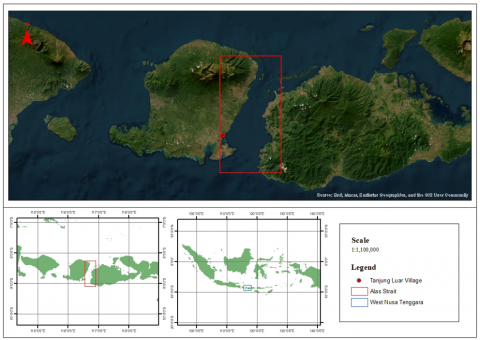
This research was conducted over six months, from January to June 2024. The research took place in the waters of the Alas Strait, including Tanjung Luar Village, West Nusa Tenggara Province (Figure 1), considering the potential of snapper fisheries caught by local fishermen.
Figure 1. Research location map, location of Alas Strait and Tanjung Luar Village
2.2 Data collection
The research was conducted using a survey method aimed at obtaining actual data related to the management conditions of snapper fisheries in the Alas Strait. According to Nazir [10], the survey method aims to gather factual facts regarding the social, economic, and political institutions of a group or region based on observable phenomena. Surveys are designed to assess the current situation regarding specific subjects [11].
The types of data used include primary and secondary data. Primary data collection was carried out through interviews with all stakeholders (fishermen, traders, and collectors) using a questionnaire. The respondent selection method was conducted through purposive sampling, considering that the selected respondents are individuals involved in fishing activities. The data collected consists of fishermen's identity (age, education, number of dependents, experience/years of work, fishing base, fishing ground), fishing effort (number of fishing trips, timing/season of fishing, operating capital for fishing), and catch results (catch per trip, type and size of catch, price of catch commodities). The sample size follows statistical principles, with a minimum of 30 individuals. Meanwhile, secondary data were obtained from various government and private agencies related to this research, including capture fisheries production arrangements in the Alas Strait, as well as the number of fishermen and fishing fleets.
2.3 Data analysis
The analysis of the index and sustainability status (existing condition) of snapper fisheries management in the Alas Strait, West Nusa Tenggara Province, was conducted using the Multi-Dimensional Scaling (MDS) approach with the Rapid Appraisal for Fisheries (Rapfish) software [10, 12, 13]. Rapfish integrates ecological, technological, economic, social, ethical, and institutional dimensions, allowing for a comprehensive assessment of fisheries sustainability [14]. The management attributes of red snapper fisheries include five dimensions: (1) ecological dimension; (2) economic dimension; (3) social dimension; (4) technological dimension; and (5) institutional dimension. The Multi-Dimensional Scaling index scale ranges between ≤25-≥75 (Table 1).
Table 1. Sustainability status categories for each dimension
|
Index Scale |
Category |
|
0 ≤ 25 |
Poor / Unsustainable |
|
25 - 49.9 |
Less Sustainable |
|
50 - 75 |
Fairly Sustainable |
|
> 75 - 100 |
Good / Very Sustainable |
Each dimension is evaluated through a series of attributes or indicators, which are scored to reflect their contribution to sustainability. These indicators are verified through information from existing human resources, including resource owners, users, and experts. Rapfish uses controlled multidimensional ordination (MDS) techniques to visualise sustainability status. Rapfish is a powerful and flexible analysis for sustainability assessment, combining ecological and human dimensions. This method uses various techniques to ensure comprehensive evaluation and validation of sustainability indicators. It is used in different contexts and handles uncertainty, making it a tool for fisheries management and policy-making [15].
Another analysis used in this study is leverage/sensitivity analysis. Leverage analysis identifies which attributes have the most substantial effect on sustainability scores, guiding management decisions [16]. Leverage/sensitivity analysis aims to identify sensitive attributes within each dimension that contribute to the sustainability index of snapper fisheries management. The impact of each attribute is observed through changes in the Root Mean Square (RMS). This means that the larger the RMS value, the more sensitive the attribute is in supporting sustainability. According to Fauzi and Anna [17], Rapfish analysis also allows for leverage analysis (sensitivity of attribute reduction on sustainability scores), where leverage is calculated based on the standard error of the difference between the score with the attribute and the score obtained without the attribute. The basis of the scale is based on the study of Efendi et al. [18].
3.1 Sustainability status of the ecological dimension
The assessment of the ecological dimension’s sustainability was conducted by compiling five attributes/indicators that are expected to have an ecological impact on the snapper fishery in the Alas Strait. These attributes include species composition of the catch, size of fish caught over the past five years, migration range of target fish, range collapse, and growth pattern status (Table 2).
Table 2. The sustainability attributes of the ecological dimension of snapper fisheries
|
No. |
Attribute |
Score |
Scale |
|
1 |
Species Composition of Catch |
0; 1; 2 |
Refers to the types of fish caught: |
|
0 = 1 - 10 species; |
|||
|
1 = >10 - 100 species; |
|||
|
2 = >100; |
|||
|
2 |
Size of Fish Caught in last five years |
0; 1; 2 |
Refers to the result of interviews: |
|
0 = Decreased sharply; |
|||
|
1 = Slight decrease (10-25%); |
|||
|
2 = No decrease; |
|||
|
3 |
Range of Target Fish Migration |
0; 1; 2 |
Refers to the result of interviews: |
|
0 = International; |
|||
|
1 = National; |
|||
|
2 = Regional; |
|||
|
4 |
Range Collapse |
0; 1; 2 |
Refers to the result of interviews: |
|
0 = Fishing ground is very distant; |
|||
|
1 = Fishing ground is distant; |
|||
|
2 = Fishing ground remains relatively constant; |
|||
|
5 |
Growth Pattern Status |
0; 1; 2 |
Refers to analysis results: |
|
0 = Isometric (b=3); |
|||
|
1 = Negative allometric (b<3); |
|||
|
2 = Positive allometric (b>3); |
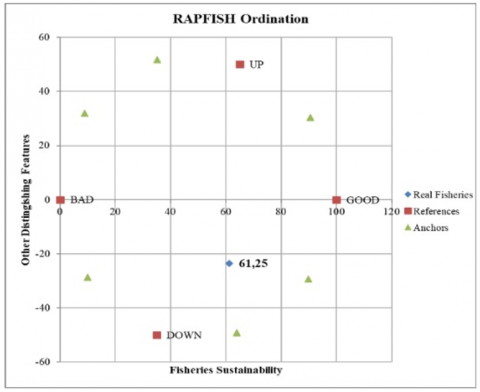
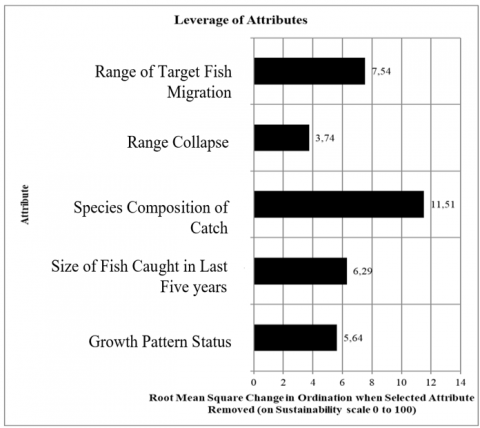
Based on the analysis using the Rapfish tool on the five attributes of ecological sustainability, a sustainability index score of 61.25% was obtained, indicating a moderately sustainable category (Figure 2). This suggests that the attributes compiled for the ecological dimension can provide a brief overview of the snapper fishery management in the Alas Strait. The fishing activities currently carried out by local fishermen show a positive trend; however, in the long term, interventions on sensitive attributes are needed to ensure that fishing activities in the Alas Strait remain in a sustainable condition (Figure 3).
Figure 2. The ecological sustainability index value
Figure 3. The sensitive attributes of the ecological dimension
Various types of fishing gear and vessel sizes can influence the diversity of fishermen’s catch in the Alas Strait. Fishermen in the Alas Strait are categorized as small-scale fishers who use motorized boats with a capacity of less than 5 GT, limiting their operations to the Alas Strait area. Moreover, they don’t only use a single type of fishing gear, even during the snapper fishing season. This catch diversity positively impacts the fishermen because it helps cover operational costs economically when snapper catches are low. Additionally, in aggregate, it can contribute to the sustainability of snapper fisheries in the Alas Strait.
However, if non-target species dominate the catch composition, the fishing gear used may be considered non-selective. According to Pitcher and Preikshot [13], the fishery is still considered in good condition if fewer than 10 species are caught during fishing activities. Conversely, if more than 10 species are caught, it could threaten the sustainability of the existing fish resources.
The migration range of fish affects the economic value generated. The narrower the migration range of snappers, the easier to manage and catch them, reducing operational cost of fishing activities by local fishermen. A limited fish movement pattern indicates that localized management strategies do improve fishing efficiency and sustainability [19, 20]. Over the past five years, there has been no change in the size of snapper catches. This is due to the snapper fishing season does not occur every month but only from September to March, with the peak season in December. Thus, the attribute of fish size caught shows that within a year, snappers are possible to reach maturity before being caught.
3.2 Sustainability status of the economic dimension
The assessment of the sustainability status of the economic dimension was conducted by compiling five attributes/indicators that are expected to have an economic impact on the snapper fishery in the Alas Strait. These attributes are asset ownership, alternative employment, target fish prices, fishing efforts, and markets (Table 3) [18].
Table 3. The sustainability attributes of the ecological dimension of snapper fisheries
|
No. |
Attribute |
Score |
Scale |
|
1 |
Asset Ownership |
0; 1; 2 |
Refers to interview results with respondents: |
|
0 = None; |
|||
|
1 = Few (1 Asset); |
|||
|
2 = Many (>1 Aset); |
|||
|
2 |
Job Alternatives |
0; 1; 2 |
Refers to interview results with respondents: |
|
0 = None; |
|||
|
1 = Few (1 other business; |
|||
|
2 = Many (>1 other businesses); |
|||
|
3 |
Target Fish Price |
0; 1; 2 |
Refers to interview results with respondents: |
|
0 = 15.000 - 25.000 / kg; |
|||
|
1 = > 25.000 - 50.000 / kg; |
|||
|
2 = > 50.000 / kg; |
|||
|
4 |
Fishing Effort |
0; 1; 2 |
Refers to interview results with respondents: |
|
0 = Partial; |
|||
|
1 = Seasonal; |
|||
|
2 = Full time; |
|||
|
5 |
Market |
0; 1; 2 |
Refers to interview results with respondents: |
|
0 = Local; |
|||
|
1 = Regional; |
|||
|
2 = Export; |
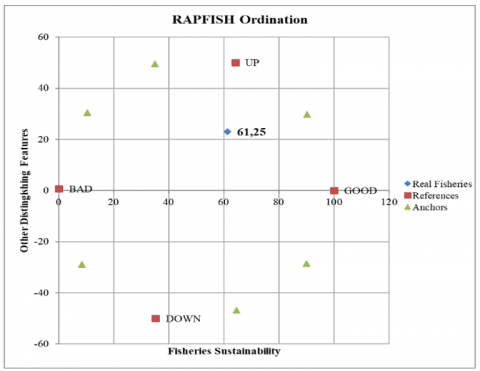
Based on the analysis using the Rapfish tool on the five sustainability attributes of the economic dimension, a sustainability index value of 61.25% was obtained, which falls under the "moderately sustainable" category (Figure 4). It indicates that the attributes compiled in the economic dimension provide a good representation of the economic performance of the community in Tanjung Luar Village. The current capture fisheries activities conducted by the fishing community are economically beneficial; however, in the long term, interventions are needed for sensitive attributes to ensure that capture fisheries activities in the Alas Strait remain sustainable (Figure 5).
Figure 4. The economical sustainability index value
Figure 5. The sensitive attributes of the economic dimension
The sustainability of capture fisheries activities largely depends on the price of the fish caught, as it can motivate the community to engage in fishing efforts. With higher prices, fishermen expert that they can cover the operational costs and earn profits. Capture fisheries are highly dependent on the season and market demand; the higher the demand for fish, the higher the price. Conversely, a decreasing number of demand will result in lower fish prices. The purchase price of snapper landed in Tanjung Luar Village ranges between Rp 45,000 – Rp 50,000/kg. These prices fluctuate based on production levels, affecting fishermen's income. Prices are sensitive to supply and demand; increased demand raises prices, enhancing fishermen's profits [21].
Alternative employment for small-scale fishermen in Tanjung Luar Village is crucial, given that fishing activities rely heavily on seasonal conditions. Extreme weather events such as storms, high waves, and unpredictable weather changes prevent fishermen from fishing, impacting their income. Having alternative employment can reduce pressure on resources, allowing them to recover naturally. According to [22], alternative jobs are supplementary jobs taken up by someone to support their primary occupation, and they can help meet any shortfall in needs. In Tanjung Luar Village, it is rare for people to have other job other than fishing. Since the fishing has been passed down through generations, and it is their high hope for supporting their families lies in the sea. Fishermen are often unwilling or unable to seek other professions due to lacking skills or available job opportunities.
Fishing activities will continue as long as there is a market. The marketing process must first identify consumer preferences, as this process reveals the base price of a commodity or type of fish caught. Marketing of fishery products is closely tied to the raw materials supplied by fishermen, including their quality, quantity, and timely delivery. This is important because fishery products have specific characteristics: they are perishable and seasonal, and their quantity and quality may be. It is particularly important because fish products are perishable and seasonal, requiring efficient strategies to address these challenges [23]. Freshness and preparation methods also play a significant role in consumer choices, with many preferring cut pieces of fish [24]. Fishermen in Tanjung Luar Village sell their snapper catches to local collectors, who then sell the fish to markets in Bali. There is a mutually binding relationship between collectors and fishermen to ensure a continuous supply of fish. The fishermen supply snapper and other species like tuna and mackerel.
3.2 Sustainability status of the social dimension
The social dimension in the analysis of fisheries sustainability is conducted to observe the interactions that occur both individually and within the community regarding the fisheries management process in a particular area, assessing whether it has a positive or negative impact on the lives of the fishing community. The five attributes used to evaluate the social dimension are education level, conflict level, the growth of the number of fishermen in the last five years, fishermen's experience at sea, and the involvement of fishermen in policy-making (Table 4) [18].
Table 4. The sustainability attributes of the social dimension of snapper fisheries
|
No. |
Attribute |
Score |
Scale |
|
1 |
Education Level |
0; 1; 2; 3 |
Refers to interview results with respondents: 0 = Did not finish elementary school and finished elementary school; 1 = Finish junior high school; 2 = Finish high school; 3 = Finish college/university; |
|
2 |
Level of Conflict |
0; 1; 2 |
Refers to interview results with respondents: 0 = High; 1 = Low; 2 = None; |
|
3 |
Growth of Fisherman in the Last Five Years |
0; 1; 2 |
Refers to interview results with respondents: 0 = >20%; 1 = 1-20%; 2 = <20%; |
|
4 |
Fishermen’s Experience |
0; 1; 2; 3 |
Refers to interview results with respondents: 0 = No experience <2 year; 1 = Fairly experienced 2-3 year 2 = Experienced 4-5 year; 3 = Very Experienced >5 year; |
|
5 |
Fishermen’s Involvement in Policy Making |
0; 1; 2 |
Refers to interview results with respondents: 0 = Never; 1 = Low; 2 = High; |
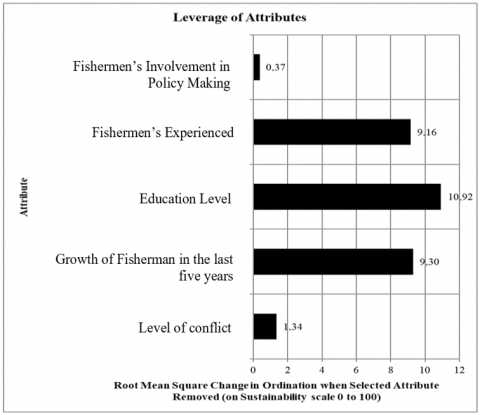
Based on the analysis using the Rapfish tool on the five sustainability attributes of the social dimension, a sustainability index value of 64.55% was obtained, categorized as "moderately sustainable" (Figure 6). Furthermore, the leverage analysis identified three attributes as sensitive to the sustainability index value: (1) education level, (2) involvement of fishermen in policy-making, and (3) conflict level (Figure 7).
The education level attribute is a primary concern for the government regarding the fishing community. This is because education levels in coastal areas, particularly among fishermen, are very low. According to Wahyuni et al. [25], individuals with higher levels of education tend to have broader perspectives and better judgment in evaluating the pros and cons of their decisions. Education enhances fishermen's ability to assess risks and make informed decisions, leading to safer practices and better economic outcomes [26, 27]. Fishermen face various financial risks, including market volatility and regulatory uncertainties. Education can empower them to navigate these challenges effectively [28, 29].
Figure 6. Social dimension sustainability index value
Figure 7. The sensitive attributes of social dimension
The interviews with fishermen, who were respondents in the study, revealed that the average education level of fishermen in Tanjung Luar Village is elementary school graduates. This is concerning, as limited education makes it challenging for fishermen to adopt and apply emerging technologies. The selection of fishing locations is still based solely on intuition or experiences passed down from their ancestors. Fishermen's knowledge and skills are closely linked to the quality of their catch. Currently, the fish caught by fishermen are only sold as raw products with low market value. If fishermen had a better understanding of how to process their catch into raw materials, the economic value of their catch could significantly increase.
3.3 Sustainability status of the institutional dimension
The development of the institutional dimension attributes was carried out by considering their influence on the implementation of policies or regulations related to snapper fishing activities. The assessment of the sustainability status of the institutional dimension was conducted by compiling five attributes/indicators: government institutions, financial institutions, group institutions, maritime security institutions, and quality assurance institutions (Table 5) [18].
Table 5. Sustainability status of the institutional dimension
|
No. |
Attribute |
Score |
Scale |
|
1 |
Government Institution |
0; 1; 2 |
Role in snapper fishery management: 0 = None; 1 = Present, no role; 2 = Present, significant role; |
|
2 |
Capital Institution |
0; 1; 2 |
Refers to the results of interviews with respondents: 0 = None; 1 = Present but ineffective (<25% of fishers receive capital services); 2 = Present and effective (>25% of fishers receive capital service); |
|
3 |
Group Institution |
0; 1; 2 |
Refers to the results of interviews with respondents: 0 = None; 1 = Present but ineffective; 2 = Present and effective; |
|
4 |
Marine Security Institutions |
0; 1; 2 |
Refers to the results of interviews with respondents: 0 = None; 1 = Present (No patrols); 2 = Present (Regular patrols); |
|
5 |
Quality Assurance Institutions |
0; 1; 2 |
Refers to the results of interviews with respondents: 0 = None; 1 = Present but ineffective; 2 = Present and effective; |
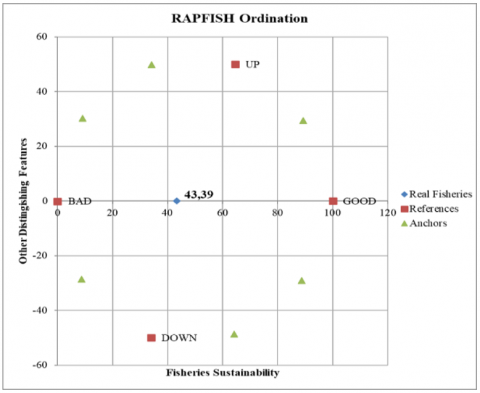
Based on the analysis using the Rapfish tool on the five sustainability attributes of the institutional dimension, a sustainability index value of 43.39% was obtained, falling under the "less sustainable" category (Figure 8). Furthermore, the leverage analysis identified three attributes as sensitive to the sustainability index value: (1) group institutions, (2) maritime security institutions, and (3) financial institutions (Figure 9).
Group institutions are a crucial attribute in snapper fisheries because they play a key role in managing fisheries resources at the local level. In Tanjung Luar Village, small-scale fishermen have not yet fully utilized group institutions, although these organizations can help them access market information, fish prices, and favorable policies. Currently, fishermen only act as fish catchers without bargaining power in the economic chain. An effective group institution should receive government assistance and serve as a source of information, training, and technology transfer to enhance fishermen’s skills and knowledge.
Financial institutions are a sensitive attribute in the capture fisheries sector, particularly for small-scale fishermen, as they are a key factor in improving the welfare and sustainability of fishing activities. Both formal financial institutions, such as banks and credit cooperatives, and informal ones, such as savings and loan groups or microfinance institutions, play a vital role in providing the capital access fishermen need to increase productivity and efficiency. Banks and credit cooperatives offer loans and financial products tailored for fishermen, enabling them to invest in sustainable fishing practices and equipment [30]. Despite these benefits, challenges remain, such as the lack of awareness about available financial mechanisms and the hesitance of institutions to engage with small-scale fishermen due to perceived risks and collateral issues [31]. Addressing these barriers is essential for fostering a more inclusive financial environment in fisheries.
Figure 8. Institutional dimension sustainability index value
Figure 9. The sensitive attributes of the institutional dimension
3.4 Sustainability status of the technological dimension
The assessment of the sustainability status of the technological dimension is conducted by compiling five attributes/indicators that are expected to influence snapper fishing activities in the Alas Strait. These attributes are vessel size, trip duration, selectivity of fishing gear, fish handling on board, and landing sites (Table 6) [18].
Table 6. Sustainability status of the technological dimension
|
No. |
Attribute |
Score |
Scale |
|
1 |
Boat Size |
0; 1; 2 |
Refers to the results of interviews with respondents: 0 = <12 cm; 1 = 12-17 cm; 2 = >17-24 cm; |
|
2 |
Duration of Fishing Trips |
0; 1; 2 |
Refers to the results of interviews with respondents: 0 = Many; 1 = Few; 2 = None; |
|
3 |
Gear Selectivity |
0; 1; 2 |
Refers to the results of interviews with respondents: 0 = Not selective; 1 = Slightly; 2 = None; |
|
4 |
Fish Handling On-board |
0; 1; 2 |
Refers to the results of interviews with respondents: 0 = None; 1 = Salting; 2 = Freezing; |
|
5 |
Landing Site |
0; 1; 2 |
Refers to the results of interviews with respondents: 0 = Scattered; 1 = Sometimes centralized; 2 = Centralized; |
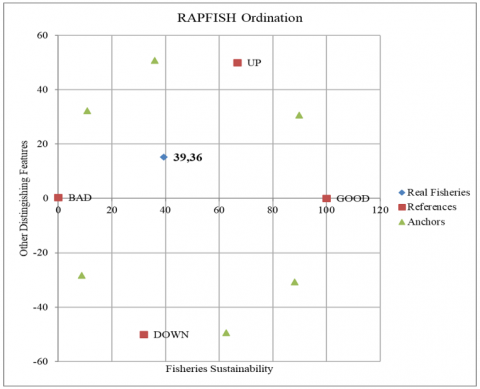
Based on the analysis using the Rapfish tool on the five sustainability attributes of the technological dimension, a sustainability index value of 39.36% was obtained, categorizing it as "less sustainable" (Figure 10). Furthermore, the leverage analysis identified three attributes as sensitive to the sustainability index value: (1) group institutions, (2) maritime security institutions, and (3) financial institutions (Figure 11). These results differ from the study conducted by Chaliluddin et al. [32] on fisheries management in Aceh, where the technological dimension was rated as highly sustainable, influenced by factors such as fishing vessel size and mechanical power.
Figure 10. The technological sustainability index value
Handling fish on board is crucial to ensuring the quality and safety of catches before they are sold or stored. Fishermen in the Alas Strait manage their catches by using ice to guarantee the freshness of the fish. Empowering small-scale fishermen through training and education on proper fish handling techniques aboard is essential to support the economic sustainability and welfare of small-scale fishermen. By utilizing simple yet effective technologies, such as coolers or ice, fishermen can optimize their catch and enhance their product value in the market.
Figure 11. Sensitive attributes of the technological dimension
The importance of selectivity in fishing gear for small-scale fishermen is vital for maintaining the sustainability of marine resources and supporting the welfare of fishing communities. Selective fishing gear can minimize bycatch, which refers to the capture of unwanted or protected species, thereby helping to preserve marine biodiversity and reduce negative impacts on ecosystems. Selective gear reduces the capture of non-target species, which is vital for maintaining biodiversity [33]. Additionally, using selective fishing gear can enhance the operational efficiency of fishermen by reducing the time and energy spent sorting out unwanted catches. This directly impacts improving the quality and quantity of economically valuable catches. Thus, education and adoption of selective fishing gear technology are crucial to ensuring sustainable fishing practices that are profitable for small-scale fishermen in the long term.
The sustainability of fishing technology is influenced by the capacity of the engines and equipment used by fishermen. Small and relatively old fishing vessels are traditionally used, which has an impact on the sustainability of fishing operations. Technological advances in fishing vessels can improve energy efficiency and reduce environmental impacts. The average number of fishing trips can indicate the status of overfishing. Use of selective fishing gear for sustainability. Boat seines are the most sustainable fishing gear due to their selectivity and energy efficiency. The use of selective fishing gear is recommended to optimise fisheries management. Technological advancements aim to reduce bycatch and the environmental impact of bottom trawling on benthic ecosystems. Proper handling of fish on board before landing is a key attribute for sustainability. Efficient post-harvest handling practices contribute to the sustainability status of fishing technologies. Management of landing sites, including the role of community leaders and government policy support.
3.5 The multi-dimensional sustainability of snapper fisheries in Alas Strait
The current multidimensional sustainability status of snapper fisheries in the Alas Strait is at 54.21%, categorizing it as moderately sustainable. This multidimensional sustainability assessment encompasses ecological, economic, social, institutional, and technological aspects. Ecologically, sustainability is generally measured through trends and the composition of catch over the last five years, as well as the negative impacts of fishing activities on the availability of fishery resources. Economically, the evaluation includes the stability of fishermen's incomes, supply chain efficiency, and alternative livelihoods for fishermen. Socially, the assessment is based on the education level and welfare of the fishing community, as well as the involvement of fishermen in government agendas, particularly in policy making. The institutional aspect involves the availability of financing institutions, and organizational groups, as well as collaboration among institutions and active participation of the fishing community in policy formulation to achieve holistic fishery sustainability. Finally, the technological aspect encompasses the use and development of technology that supports environmentally friendly and sustainable fishing practices. This overall status reflects the need for improvements across all dimensions to enhance the sustainability of snapper fisheries in the Alas Strait, ensuring a balanced approach that benefits both the environment and the livelihoods of the local fishing community. Figure 12 shows the sustainability index values of snapper fisheries.
Figure 12. Kite diagram of the sustainability index values of snapper fisheries across five dimensions
The sustainability assessment of snapper fisheries in the Alas Strait revealed a moderately sustainable status with a multidimensional index score of 54.21%. The ecological and economic dimensions performed relatively well, scoring 61.25%, driven by stable fish stocks and positive economic benefits. However, challenges remain in the institutional and technological dimensions, which scored below 40%, highlighting issues such as insufficient institutional support and limited adoption of sustainable fishing technologies. Critical factors influencing these dimensions include fishing gear selectivity, government involvement, and alternative livelihoods, underscoring the need for targeted improvements to support the sustainability of snapper fisheries in the region.
Key recommendations:
The sustainability status of snapper fisheries management in the Alas Strait waters is multidimensionally included in the moderately sustainable category, with two dimensions that need attention for improvement, namely the institutional and technological dimensions, because they are still in the less sustainable category. Improvement efforts certainly do not exclude other dimensions while maintaining current conditions.
The author would like to express gratitude to the Rector of the University of Mataram for providing the necessary research facilities that made this study possible. Special thanks are also extended to the Institute for Research and Community Service (LPPM) of the University of Mataram for funding this research. Additionally, the author sincerely appreciates the fishermen who generously participated as respondents and provided invaluable information for this study.
[1] FAO. (2020). The State of Food and Agriculture: Overcoming Water Challenges in Agriculture. Food and Agricultural Organization of the United Nations. Rome. https://www.fao.org/fsnforum/resources/fao-flagships/state-food-and-agriculture-2020-overcoming-water-challenges-agriculture.
[2] Central Statistic Agency. (2022). Marine and coastal resource statistic. https://www.bps.go.id/id/publication/2022/11/30/d04f692f953694cedbe91909/statistik-sumber-daya-laut-dan-pesisir-2022.html.
[3] Damayanti, Y. (2012). Kontribusi perikanan tangkap terhadap penyediaan pangan ikan dalam mendukung ketahanan pangan di Provinsi Jambi. Buletin PSP, 20(1): 81-87.
[4] Linayati, L., Rizkyansyah, B., Mardiana, T.Y., Yahya, M.Z. (2021). The addition of honey bee to the feed for increase the growth of white snapper seeds (Lates calcarifer). Journal of Aquaculture and Fish Health, 10(3): 380-386. https://doi.org/10.20473/jafh.v10i3.26944
[5] KKP. (2021). Peraturan Menteri Kelautan dan Perikanan Republik Indonesia Nomor 32 Tahun 2021: Tentang Perubahan Atas Peraturan Menteri Kelautan dan Perikanan Nomor 67/Permen-KP/2020 Tentang Organisasi dan Tata Kerja Unit Pelaksana Teknis Perikanan Budidaya. Kementerian Keluatan dan Perikanan Republik Indonesia. https://peraturan.bpk.go.id/Details/190282/permen-kkp-no-32-tahun-2021.
[6] Du, L. (2024). Understanding and enhancing fishing practices for a sustainable future. Highlights in Science, Engineering and Technology, 99: 227-231. https://doi.org/10.54097/bg3zfm15
[7] Santoso, D. (2016). Potensi lestari dan status pemanfaatan ikan kakap merah dan ikan kerapu di selat alas propinsi nusa tenggara barat. Jurnal Biologi Tropis, 16(1): 15-23. https://doi.org/10.29303/jbt.v16i1.211
[8] Idris, M.H., Awang, M.A., Kamal, A.H.M., Arshad, A., Hamli, H., Al-Asif, A., Pursetyo, K.T. Masithah, E.D. (2022). Symbiotically snapper shrimp Anchistus custoides Bruce, 1977 (Decapoda: Palaemonidae) inhabiting the mantle cavity of the Pen shell (Bivalvia: Pinnidae). Journal of Sustainability Science and Management, 17(10): 136-148. http://doi.org/10.46754/jssm.2022.10.010
[9] Rapi, N.L., Djumanto, D., Murwantoko, M. (2023). Dinamika Populasi ikan kakap merah (Lutjanus malabaricus) di perairan Pinrang. Jurnal Penelitian Perikanan Indonesia, 28(4): 177-185. http://doi.org/10.15578/jppi.28.4.2022.177-185
[10] Ningsih, R. (2019). The effect of maltodextrin concentration on the characteristics of snappers’ (Lutjanus sp.) peptone. In IOP Conference Series: Earth and Environmental Science, 236(1): 012127. IOP Publishing. https://doi.org/10.1088/1755-1315/236/1/012127
[11] Rao, A.K.G., Shrivastava, D., Pandey, P. (2024). Use of survey method in research. International Journal for Multidisciplinary Research, 6(4): 1-6. http://doi.org/10.36948/ijfmr.2024.v06i04.24773
[12] Kavanagh, P. (2001). Rapid appraisal of fisheries (rapfish) project. rapfish software description (for microsoft excel). University of British Columbia, Vancouver.
[13] Pitcher, T.J., Preikshot, D. (2001). RAPFISH: A rapid appraisal technique to evaluate the sustainability status of fisheries. Fisheries Research, 49(3): 255-270. https://doi.org/10.1016/S0165-7836(00)00205-8
[14] Pitcher, T.J., Lam, M.E., Ainsworth, C., Martindale, A., Nakamura, K., Perry, R.I., Ward, T. (2013). Improvements to Rapfish: A rapid evaluation technique for fisheries integrating ecological and human dimensionsa. Journal of Fish Biology, 83(4): 865-889. https://doi.org/10.1111/jfb.12122
[15] Adiga, M.S., Ananthan, P.S., Ramasubramanian, V., Kumari, H.D. (2015). Validating Rapfish sustainability indicators: Focus on multi-disciplinary aspects of Indian marine fisheries. Marine Policy, 60: 202-207. https://doi.org/10.1016/j.marpol.2015.06.032
[16] Kim, G., Lee, J.H., Alam, M.J., Lee, S.R., Andriyono, S. (2019). Complete mitochondrial genome of Spanish flag snapper, Lutjanus carponotatus (Perciformes: Lutjanidae). Mitochondrial DNA Part B, 4(1): 568-569. https://doi.org/10.1080/23802359.2018.1558119
[17] Fauzi, A. (2005). Pemodelan Sumber Daya Perikanan dan Kelautan Untuk. Analisis Kebijakan. Jakarta: Gramedia Pustaka Utama.
[18] Efendi, D.S., Adrianto, L., Wardiatno, Y. (2021). An evaluation of grouper and snapper fisheries management policy in Saleh Bay, Indonesia. In IOP Conference Series: Earth and Environmental Science, 744(1): 012013. https://doi.org/10.1088/1755-1315/744/1/012013
[19] Norriss, J.V., Moran, M., Jackson, G. (2012). Tagging studies reveal restricted movement of snapper (Pagrus auratus) within Shark Bay, supporting fine-scale fisheries management. Marine and Freshwater Research, 63(11): 1191-1199. https://doi.org/10.1071/MF12077
[20] Stewart, J., Pidd, A., Fowler, A.M., Sumpton, W. (2019). Latitudinal variation in growth rates and limited movement patterns revealed for east-coast snapper Chrysophrys auratus through long-term cooperative-tagging programs. Marine and Freshwater Research, 71(6): 653-661. https://doi.org/10.1071/mf19138
[21] Sun, C.H., Chiang, F.S., Squires, D., Rogers, A., Jan, M.S. (2019). More landings for higher profit? Inverse demand analysis of the bluefin tuna auction price in Japan and economic incentives in global bluefin tuna fisheries management. PLoS ONE, 14(8): e0221147. https://doi.org/10.1371/journal.pone.0221147
[22] Sulestiani, Aniek, Bintoro, A.C. (2021). Mata pencaharian usaha alternatif nelayan di Sukolilo Baru, Kenjeran, Surabaya. Jurnal Jasintek, 3(1): 15-20. https://doi.org/10.52232/jasintek.v3i1.73
[23] Asogwa, V.C., Asogwa, J.N. (2019). Marketing of fish products. Journal of Aquaculture & Marine Biology, 8(2): 55-61. http://doi.org/10.15406/jamb.2019.08.00243
[24] Kumar, H.R.H., Bindu, H.A., Pavan, V. (2023). A study on consumers’ behavior and factors influencing the consumption of fish in selected districts of North Karnataka, India. Asian Journal of Agricultural Extension, Economics & Sociology, 41(9): 125-132. http://doi.org/10.9734/ajaees/2023/v41i92023
[25] Wahyuni, R., Irfani, H., Syahrina, I.A., Mariana, R. (2019). Pengaruh gaya hidup dan literasi keuangan terhadap perilaku konsumtif berbelanja online pada ibu rumah tangga di kecamatan lubuk begalung kota padang. Benefita, 4(3): 548. http://doi.org/10.22216/jbe.v4i3.4194
[26] Almuzani, N., Purnomo, T. (2022). Education to increase awareness of fishermen’s safety and security through certification in order to increase human development index in Central Java: Literature study. Asian Journal of Aquatic Sciences, 5(1): 42-54.
[27] Saputra, A.R.S.H., Samara, S.H. (2022). Performance analysis of white snapper (Lates calcarifer) nursery at BBPBAP Jepara. In IOP Conference Series: Earth and Environmental Science, 1036(1): 012118. IOP Publishing. https://doi.org/10.1088/1755-1315/1036/1/012118
[28] Kanchan, S.G. Hebbar, C.K. (2024). Risk assessment in financial decision making analysis on fisherman perspective in coastal region: A case study. EPRA International Journal of Research & Development (IJRD), 9(6): 13282. http://doi.org/10.36713/epra17298
[29] Rapi, N.L., Hidayani, M.T., Murwantoko, D., Soegianto, A. (2020). Size structure and gonad maturity of red snapper Lutjanus malabaricus in Pinrang waters, Makassar Strait, South Sulawesi, Indonesia. Ecology, Environment and Conservation, 26: 61-64.
[30] Bennett, M., March, A., Failler, P. (2024). Blue economy financing solutions for the fisheries and aquaculture sectors of Caribbean Island states. Fishes, 9(8): 305. https://doi.org/10.3390/fishes9080305
[31] Wiradana, P.A., Sani, M.D., Mawli, R.E., Ashshoffa, F.N.D., Widhiantara, I.G., Mukti, A.T. (2022). Monitoring the occurrence of Zoea Syndrome (ZS) in pacific white shrimp (Litopenaeus vannamei) larval from several hatcheries in East Java, Indonesia. IOP Conference Series: Earth and Environmental Science, 1036(1): 012003. http://doi.org/10.1088/1755-1315/1036/1/012003.
[32] Chaliluddin, M.A., Anggun, C., Meilinda, J., Rianjuanda, D., Affan, J.M., Nellyana, R., Rivaldi, A. (2024). Strategic approaches to sustainable fisheries management in west aceh district: Integrating the code of conduct for responsible fisheries. Depik Jurnal Ilmu-ilmu Perairan, Pesisir dan Perikanan, 13(2): 289-296.
[33] Sandström, A., Norrgård, J., Axenrot, T., Ragnarsson-Stabo, H., Setzer, M., Jonsson, T. (2024). Collaborative research enhances selectivity in a lake fishery. Fisheries Management and Ecology, 31(6): e12723. https://doi.org/10.1111/fme.12723