Hasriyanti* | Muhammad Ichsan Ali | Abdul Malik | Dermawan | Maisarah Munirah Latief
© 2025 The authors. This article is published by IIETA and is licensed under the CC BY 4.0 license (http://creativecommons.org/licenses/by/4.0/).
OPEN ACCESS
Environmental education fosters students' pro-environmental attitudes and behaviors. This study examines the impact of integrated environmental education on high school students in a semi-rural context in Indonesia, focusing on the cognitive, affective, and behavioral dimensions of environmental attitudes. Using a quantitative survey design, data from 280 students at State Senior High School 5 (SMA Negeri 5) Takalar, were collected and analyzed with t-tests, ANOVA, post hoc comparisons, and regression analysis. Results indicate that integrated environmental education significantly enhances students' environmental attitudes (t = 10.832, p < 0.001), with Grade 12 students showing higher levels of environmental awareness than those in lower grades (F = 4.73, p = 0.009). Regression results revealed that socio-economic status, prior environmental knowledge, and parental support significantly influenced students’ pro-environmental attitudes. However, a gap remains between awareness and pro-environmental behaviors, emphasizing the need for experiential learning and stronger social support. Environmental education should integrate sustainability themes across disciplines and prioritize hands-on, student-centered learning. These findings provide valuable insights for educators and policymakers in designing more effective, inclusive, and context-sensitive environmental education strategies that promote long-term environmental responsibility.
pro-environmental attitudes, integrated environmental education, student behavior, sustainability, high school education
Environmental issues have become some of the most pressing global challenges. Climate change, deforestation, pollution, and biodiversity loss threaten the sustainability of ecosystems and human well-being [1]. Education is vital in fostering environmental awareness and promoting long-term behavioral change. While many studies have evaluated environmental education programs, findings vary significantly depending on context and implementation. For instance, Boermans et al. [2] reported that structured school-based initiatives can raise awareness but often fail to produce sustained behavioral change. This observation aligns with the present study's findings, which indicate that although integrated environmental education enhances students’ environmental attitudes, a gap remains between awareness and actual pro-environmental behaviors.
Promoting pro-environmental attitudes among youth is therefore a growing priority in environmental education. These attitudes comprise cognitive, affective, and behavioral tendencies that drive environmentally responsible actions [2]. Integrating environmental education into formal curricula is essential to fostering sustainability mindsets in students [3, 4]. In Indonesia, policies such as the Adiwiyata Program have sought to embed environmental responsibility in school culture [5, 6], yet their effectiveness remains under examination.
In Indonesia, environmental education has been integrated into school curricula via several national policies, including the Adiwiyata Program, which promotes student environmental responsibility [5, 7]. However, these initiatives face persistent challenges, such as limited infrastructure, disparities between urban and semi-rural schools, and inconsistent local implementation [5]. The country’s environmental problems—from deforestation and plastic waste pollution to illegal logging and marine debris—are compounding these issues and directly affecting local communities and ecosystems [6]. These realities highlight the urgency of strengthening environmental awareness through context-sensitive and adaptable educational approaches.
Moreover, international initiatives like the United Nations' Sustainable Development Goals (SDGs) highlight the importance of quality education (Goal 4) and climate action (Goal 13) [8-10]. These objectives emphasize the significance of incorporating sustainability education to ensure individuals gain the knowledge and skills to foster sustainable development. However, while international frameworks provide guidelines, their practical implementation in local educational settings remains inconsistent. The extent to which these global initiatives influence student attitudes and behaviors, particularly in semi-rural schools, is still underexplored.
An integrated approach to environmental education, where sustainability concepts are embedded across subjects rather than confined to specific environmental science courses, is believed to be more effective in fostering long-term pro-environmental behaviors [11]. Unlike traditional subject-based environmental education, integrated environmental education exposes students to sustainability concepts across various disciplines, reinforcing real-world applications and encouraging cross-curricular learning. However, empirical studies assessing the impact of this integrated approach in Indonesia are still lacking. Understanding how integrated environmental education influences students' cognitive, affective, and behavioral dimensions of pro-environmental attitudes is essential for informing policy improvements and educational strategies. To address this research gap, we hypothesize that implementing integrated environmental education will significantly enhance students' pro-environmental attitudes at SMA Negeri 5 Takalar, Indonesia. Specifically, students exposed to integrated environmental education are expected to demonstrate higher levels of environmental awareness and engagement in pro-environmental behaviors than those who are not.
Although there are increasing worries about environmental sustainability, a significant gap remains in empirical studies assessing the effectiveness of environmental education beyond general awareness. Most research focuses on urban schools, leaving rural and semi-rural educational contexts underexplored. Earlier research has mainly concentrated on general environmental awareness instead of investigating how much this education influences attitudes and behaviors [12]. Additionally, studies on environmental education in Indonesia have primarily focused on urban environments, resulting in a lack of insight into how students in rural and semi-rural regions view and react to environmental education [13-15]. Moreover, although global research emphasizes the advantages of interdisciplinary methods in environmental education, there is limited understanding of how these methods influence Indonesian students' environmental attitudes and long-lasting behavioral modifications [5, 16].
In contrast, research conducted in urban settings, such as the study by Ibrahim et al. [13], emphasizes that urban students often have more access to resources and structured environmental education programs, resulting in higher engagement levels in pro-environmental behaviors than their rural counterparts. This disparity suggests that while environmental education is beneficial, its effectiveness may be limited in semi-rural areas like SMA Negeri 5 Takalar, where resource constraints and varying local environmental policies pose significant challenges [5, 7].
Moreover, the literature indicates that cognitive awareness is a foundation for affective responses, which can subsequently influence behaviors [5]. For example, Yadav [4] found that students who engage in hands-on learning experiences develop stronger emotional connections to environmental issues, increasing their likelihood of participating in pro-environmental behaviors. This finding supports the need for experiential learning in integrated environmental education programs, as highlighted by the current study’s results, emphasizing the importance of integrating sustainability themes across subjects.
However, despite the positive outcomes associated with environmental education, challenges remain. Research by Prayogo et al. [5] points out that knowledge and attitudes alone are often insufficient to instigate behavioral change, as external factors such as social pressures and infrastructure constraints significantly impact students' readiness to engage in pro-environmental behaviors. This aligns with the findings of this study, which show that while students exhibit caring attitudes, their involvement in sustainability initiatives is limited.
SMA Negeri 5 Takalar, situated in South Sulawesi, Indonesia, has implemented integrated environmental education into its curriculum. Nonetheless, a thorough investigation evaluating its influence on students' pro-environmental attitudes has not been performed yet. This study seeks to address this gap by assessing the impact of integrated environmental education on students' environmental attitudes and actions at this school. By focusing on a semi-rural setting, this research offers insights that can inform broader environmental education strategies in similar socio-geographic contexts, contributing to scalable sustainability solutions. The results will add to the broader conversation about environmental education in Indonesia and guide policymakers and educators aiming to improve environmental education practices in schools.
This research seeks to evaluate the impact of integrated environmental education on developing pro-environmental attitudes in students at SMA Negeri 5 Takalar. The specific objectives are: (a) To evaluate students' cognitive, affective, and behavioral aspects of pro-environmental attitudes; (b) To explore the influence of integrated environmental education on these attitudes; (c) To pinpoint challenges and prospects in executing environmental education in Indonesian high schools; and (d) To provide insights into how semi-rural schools can implement scalable environmental education strategies to enhance environmental responsibility.
By tackling these research questions, this study adds to the broader dialogue on environmental education in Indonesia and provides insights into the impact of integrated environmental education in promoting sustainable behaviors among students. Furthermore, the findings can contribute to policy recommendations for strengthening environmental education implementation, particularly in underrepresented educational settings. The results will benefit educators, curriculum makers, and policymakers aiming to enhance environmental education practices.
2.1 Study area
This research was conducted in October 2024 at SMA Negeri 5 Takalar, a state senior high school in Takalar Regency, South Sulawesi, Indonesia. The school actively engages in environmental education through the Adiwiyata Program, a national initiative that promotes sustainability by integrating eco-friendly policies and practices into school activities [5, 7].
The school is in a semi-rural region, approximately 45 kilometers from Makassar City, the capital of South Sulawesi Province. SMA Negeri 5 Takalar serves students from diverse socio-economic backgrounds, blending urban and rural influences. The school encounters environmental problems common to such areas, such as waste disposal difficulties and restricted availability of sustainable facilities. Nevertheless, its proactive stance on environmental education and commitment to fostering students' environmental awareness and responsibility render it an ideal environment for examining the effects of integrated environmental education on students’ pro-environmental attitudes.
The school offers a dynamic learning atmosphere that allows students to explore sustainability ideas outside the classroom via numerous practical initiatives, including waste sorting, tree planting, and energy-saving campaigns.
2.2 Research design
This research used a quantitative descriptive survey design [17] to evaluate students' pro-environmental attitudes. The cross-sectional survey method gathered data simultaneously, enabling an examination of the connections between environmental education and students' attitudes. A structured questionnaire served as the primary tool for data gathering, concentrating on three essential aspects of pro-environmental attitudes: cognitive (awareness and knowledge), affective (emotional ties to the environment), and behavioral (actual environmental actions).
2.3 Data collection
The study population included 946 students from the 10th, 11th, and 12th grades. A proportional stratified random sampling method was utilized to guarantee balanced representation among grade levels. According to Slovin's formula [7], a minimum sample size of 280 students was established to ensure a 95% confidence level and a 5% margin of error.
The survey instrument was modified from established environmental attitude scales [18] and comprised Likert-scale questions (1 = strongly disagree to 5 = strongly agree) assessing environmental knowledge, emotional connection to nature, and self-reported environmental actions [17, 19]. Additionally, the questionnaire included demographic questions to capture students' gender, grade level, and socio-economic status. This information will allow a more nuanced analysis of how these factors influence students' pro-environmental attitudes.
To ensure the validity and reliability of the questionnaire, a pilot study was conducted with a sample of 50 students from a different school. Feedback from this pilot study was used to refine the questionnaire items for clarity and relevance. The final version of the questionnaire underwent a validation process involving expert reviews from educators and environmental scientists, who evaluated the content for its relevance to the study's objectives. A reliability analysis was also performed using Cronbach's alpha, yielding a value of 0.87, indicating high internal consistency among the items. Examples of the questionnaire items include: Cognitive Dimension: "I am aware of the environmental issues affecting my community." Affective Dimension: "I feel a strong emotional connection to nature.", and Behavioral Dimension: "I actively participate in recycling programs at school."
Before data collection, ethical approval was received from the school administration, and informed consent was obtained from every participant—research assistants with training aided in gathering data to guarantee precise and consistent responses.
2.4 Data analysis
The gathered data were analyzed with SPSS 26. Descriptive statistics (mean, standard deviation) encapsulated students' environmental attitudes [20]. A one-sample t-test assessed whether integrated environmental education significantly impacted students' pro-environmental attitudes. An ANOVA test explored possible attitude differences among various grade levels. Reliability assessments were performed to verify the consistency of the questionnaire items, and normality assumptions were examined before inferential analyses.
In conjunction with the t-tests and ANOVA, a regression analysis will examine the causal relationships between integrated environmental education and the cognitive, affective, and behavioral dimensions of pro-environmental attitudes. This analysis will help to identify the extent to which changes in students' attitudes can be attributed to their exposure to integrated environmental education. In addition, subgroup analyses will explore how demographic factors such as gender and socio-economic status influence students' pro-environmental attitudes.
The regression model will include the following variables:
The regression analysis will provide insights into which factors most significantly impact students' attitudes and behaviors, allowing for a more nuanced understanding of the effectiveness of integrated environmental education in fostering pro-environmental behaviors.
3.1 Distribution of students' environmental awareness scores
An analysis of environmental awareness scores for SMA Negeri 5 Takalar students shows that most students demonstrate pro-environmental attitudes. Table 1 presents the distribution of students' environmental awareness scores according to classified attitude categories.
Table 1. Distribution of students' environmental awareness scores (n = 280)
|
No. |
Attitude Category |
Number of Students |
Percentage (%) |
|
1 |
Very Caring |
58 |
20.7 |
|
2 |
Caring |
178 |
63.6 |
|
3 |
Less Caring |
44 |
15.7 |
|
4 |
Apathy/Not Caring |
- |
- |
The findings show that 84.3% of students exhibit a caring disposition towards the environment, with 20.7% identified as very caring and 63.6% labeled as caring. A minor proportion (15.7%) of students displayed diminished caring behavior, yet no students were recognized as entirely indifferent. These results indicate that integrated environmental education has encouraged pro-environmental behavior in students.
3.2 Behavioral component of pro-environmental attitudes
Although the data suggest a strong pro-environmental attitude sentiment, grasping actual student behaviors is essential for assessing the true influence of integrated environmental education. Consequently, a more detailed examination of environmental behaviors was performed by evaluating students' involvement in sustainability programs.
Table 2 shows the documented occurrence of student participation in environmental initiatives, including waste management, tree-planting activities, and engagement in school-related environmental projects.
Table 2. Student participation in environmental activities (n = 280)
|
Activity |
High Participation (%) |
Moderate Participation (%) |
Low Participation (%) |
|
Recycling programs |
68.5 |
22.1 |
9.4 |
|
Tree planting |
56.3 |
30.5 |
13.2 |
|
Energy-saving initiatives |
48.7 |
34.6 |
16.7 |
These findings indicate that although students show favorable attitudes, their actual behavioral participation differs based on the nature of the activity. Integrated environmental education encourages involvement in organized activities such as recycling and tree-planting, yet reduced participation in energy-saving efforts may point to potential areas for enhancement.
3.3 Normality test (Kolmogorov-Smirnov test)
Before performing additional statistical analysis, a Kolmogorov-Smirnov (K-S) normality test was carried out to assess if the data followed a normal distribution.
The normality test yielded a significance value of 0.068, which exceeds the 0.05 threshold, suggesting that the data conforms to a normal distribution (Table 3).
Table 3. Normality test results (Kolmogorov-Smirnov test, n = 280)
|
One-Sample Kolmogorov-Smirnov Test |
Environmental Awareness Score |
|
n |
280 |
|
Mean |
83.42 |
|
Std. Deviation |
7.83 |
|
Absolute Difference |
0.091 |
|
Positive Difference |
0.064 |
|
Negative Difference |
-0.091 |
|
Test Statistic |
0.091 |
|
Asymp. Sig. (2-tailed) |
0.068 |
3.4 One-sample t-test
A one-sample t-test was performed to assess if the environmental awareness scores of students varied significantly from the expected mean score (test value = 75).
The t-test result (t = 10.832, p < 0.001) shows a statistically significant difference between the environmental awareness scores of students and the anticipated test value (75). The average difference of 8.42 indicates that students achieved notably higher scores than expected, further reinforcing that integrated environmental education positively affects pro-environmental attitudes among students (Table 4).
Table 4. One-sample t-test results (n = 280, test value = 75)
|
Test Value = 75 |
t |
df |
Sig. (2-tailed) |
Mean Difference |
95% Confidence Interval of the Difference |
|
Environmental Awareness Score |
10.832 |
279 |
0.000 |
8.42 |
6.98 – 9.86 |
3.5 ANOVA test: Environmental awareness across grade levels
A One-Way ANOVA test was conducted to determine whether there were significant differences in environmental awareness scores among students from different grade levels (Grades 10, 11, and 12).
The findings of the ANOVA test show a significant difference in environmental awareness scores between students from different grade levels (F = 4.73, p = 0.009, p < 0.05) (Table 5).
Table 5. ANOVA test results (n = 280)
|
Source of Variation |
Sum of Squares |
df |
Mean Square |
F |
Sig. |
|
Between Groups |
312.57 |
2 |
156.28 |
4.73 |
0.009 |
|
Within Groups |
9162.85 |
277 |
33.08 |
||
|
Total |
9475.42 |
279 |
3.6 Post hoc test (Tukey HSD) for multiple comparisons
To further examine which specific grade levels had significant differences, a Tukey HSD post hoc test was performed.
The results indicate that students in Grade 12 had significantly higher environmental awareness scores than those in Grade 10 (p = 0.007). However, there were no significant differences between Grades 10 and 11 (p = 0.098) or between Grades 11 and 12 (p = 0.413) (Table 6).
Table 6. Post hoc test (Tukey HSD) results
|
Grade Comparison |
Mean Difference |
Sig. |
|
Grade 10 vs Grade 11 |
-1.94 |
0.098 |
|
Grade 10 vs Grade 12 |
-3.12* |
0.007 |
|
Grade 11 vs Grade 12 |
-1.18 |
0.413 |
Note: * indicates a statistically significant difference at p < 0.05.
3.7 Multiple regression analysis: Predicting pro-environmental attitudes
A multiple regression analysis (Table 7) was conducted to identify which variables significantly influenced students' pro-environmental attitudes. The analysis included exposure to integrated environmental education, gender, socio-economic status, grade level, prior environmental knowledge, and parental influence as predictors.
Table 7. Multiple regression results
|
Predictor Variable |
B |
Std. Error |
Beta |
t |
Sig. |
|
Constant |
42.16 |
2.74 |
— |
15.39 |
0.000 |
|
IEE exposure score |
0.47 |
0.08 |
0.36 |
5.88 |
0.000* |
|
Gener (Male = 1, Female = 0) |
-1.25 |
0.71 |
-0.09 |
-1.76 |
0.079 |
|
Socio-economic status |
0.52 |
0.23 |
0.14 |
2.26 |
0.025* |
|
Grade level |
0.89 |
0.38 |
0.12 |
2.34 |
0.020* |
|
Prior environmental knowledge |
0.31 |
0.11 |
0.15 |
2.82 |
0.005* |
|
Parental influence |
0.44 |
0.13 |
0.18 |
3.38 |
0.001* |
Model Summary: R = 0.62, R² = 0.38, Adjusted R² = 0.36, F (6, 273) = 27.81, p < 0.001.
The model explains 38% of the variance in students' pro-environmental attitudes. The strongest predictor is exposure to integrated environmental education/IEE (β = 0.36, p < 0.001). Socio-economic status, grade level, prior knowledge, and parental influence significantly predict students' attitudes, while gender shows no significant effect.
Subgroup analysis further revealed that while grade level had a clear effect (as supported by the ANOVA results), socio-economic background and prior knowledge were also influential. In contrast, gender differences were not statistically significant.
These findings highlight that integrated environmental education can enhance students' pro-environmental awareness and behavior when supported by enabling background factors.
This study shows that integrated environmental education significantly improves students' pro-environmental attitudes, especially in the cognitive and affective domains. These findings confirm that embedding sustainability across subjects increases environmental awareness and emotional engagement. Furthermore, the analysis revealed that Grade 12 students displayed higher awareness levels than their younger peers, highlighting the cumulative effect of prolonged exposure to environmental education. This supports previous research indicating that sustained engagement fosters deeper understanding and commitment to sustainable behaviors.
In addition to these general findings, the regression analysis uncovered essential insights into the role of demographic factors. Socio-economic status, grade level, prior environmental knowledge, and parental influence were significant predictors of pro-environmental attitudes. Students from higher socio-economic backgrounds and those with previous knowledge or family encouragement were likelier to engage in sustainable behaviors. Interestingly, while gender showed a non-significant influence, the findings still suggest the need for inclusive approaches that accommodate diverse student backgrounds. These results reinforce the importance of tailoring environmental education programs to address the varied needs of different demographic groups.
The one-sample t-test further validated that students' environmental awareness scores were significantly above the benchmark value of 75. This reinforces that SMA Negeri 5 Takalar’s environmental education initiatives, such as those embedded in the Adiwiyata Program, effectively cultivate environmental literacy. These results align with prior studies suggesting that integrating environmental education into school curricula enhances students' environmental knowledge and concern [5, 21, 22]. This study also highlights the interconnected nature of pro-environmental attitudes' cognitive, affective, and behavioral dimensions. Students with higher environmental knowledge (cognitive) often demonstrate stronger emotional bonds with nature (affective), which in turn foster more consistent environmental actions (behavioral). This supports a developmental pathway where cognition influences affect, and both lead to behavior, reinforcing the need for holistic instructional designs that target all three domains.
However, despite strong awareness levels, the behavioral component remains a challenge. While many students participate in organized initiatives like recycling and tree planting, fewer engage in personal sustainability behaviors, such as conserving energy or reducing waste. This disparity reflects similar trends in international programs like Eco-Schools in Europe [23] and Japan's Education for Sustainable Development framework [24], where increased awareness does not always lead to lasting behavioral change.
A significant obstacle lies in students' limited opportunities to practice environmental behaviors outside structured school activities. The absence of real-life applications reduces the likelihood of translating knowledge into action. As behavioral data in this study rely solely on self-report questionnaires, they may be subject to response bias. Future studies should consider supplementing with teacher-reported data or direct observations to provide a more objective and comprehensive view of student behavior. Mansoor and Wijaksana [25] suggested that knowledge and attitudes alone cannot spark behavioral change without addressing social pressures, infrastructure constraints, and personal habits. Future research should adopt mixed-methods approaches that combine multiple data sources to overcome this.
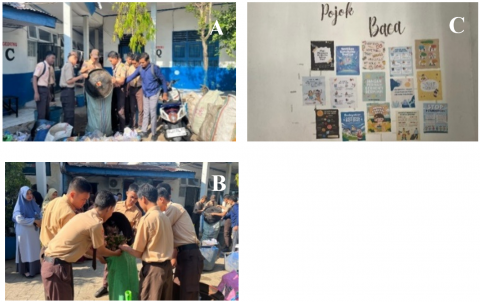
Scaling up environmental education, expanding beyond school walls into community and policy realms. Despite SMA Negeri 5 Takalar's active involvement in the Adiwiyata Program (Figure 1), continuous engagement through experiential learning is critical to making environmental responsibility a lasting habit. The success of environmental education depends not only on curricular inclusion but also on the availability of school infrastructure [26] that supports student participation, such as recycling bins, composting systems, and green spaces.
Figure 1. Students at SMA Negeri 5 Takalar actively engage in the Adiwiyata Program: participate in environmental activities, such as waste management (A and B), and provide a Pojok Baca (Reading Corner, C)
Social and environmental influences also play an essential role in shaping behavior. Support from peers, family, and the broader community can amplify the effects of environmental education. Without such reinforcement, students may struggle to maintain sustainable practices beyond the classroom [27, 28]. Physical infrastructure and policy support are also essential. For instance, a study on green schools in Bali found that including renewable energy systems and sustainable water and waste management facilities strengthened students' environmental engagement [29].
Educational institutions should prioritize experiential learning models to bridge the gap between awareness and action. These include project-based learning, community-led sustainability initiatives, and real-world applications such as mangrove restoration, waste audits, and water conservation workshops [30]. Collaborations with NGOs, local government, and private partners can offer additional resources and mentorship for these efforts. Embedding low-cost solutions like composting, solar panels, and rainwater harvesting into school operations can make environmental education more tangible and sustainable.
Additionally, incorporating environmental education into national curriculum standards is crucial for long-term success. Lessons from countries such as Japan and those in Scandinavia demonstrate that institutionalizing environmental learning across disciplines fosters deeper student engagement and systemic change [31, 32]. Schools should also consider adopting the Eco-Schools framework, which promotes student-led audits and sustainability projects that connect classroom learning with school operations and community involvement [27, 33].
Technology can further enhance engagement. Tools such as gamified learning, virtual simulations, and digital storytelling have increased students' interest and retention of environmental concepts [34, 35]. Schools should integrate these methods to complement traditional instruction and increase interactivity.
Beyond school boundaries, families and communities are crucial in reinforcing sustainability habits. Parental involvement in environmental practices—from household recycling to energy conservation—can influence students’ ecological behaviors at home [36]. Initiatives that involve families and communities not only reinforce learning but also expand the reach of environmental education across social settings.
Although this study offers valuable insights into the effects of integrated environmental education, further research is needed to explore long-term outcomes. Future studies should investigate whether students maintain pro-environmental behaviors into adulthood and how environmental education shapes career choices and lifelong values. Demographic subgroup analyses, such as gender and SES, should be explored more deeply in future studies to identify equity-related gaps and tailor interventions accordingly. Comparative studies between rural and urban schools may also provide a deeper understanding of how geographic and socio-economic contexts affect the implementation and impact of environmental education.
This study highlights the pivotal role of integrated environmental education in shaping students' pro-environmental attitudes and strengthening their environmental awareness. The findings reveal that students at SMA Negeri 5 Takalar exhibit high levels of environmental awareness, with significant improvements observed across grade levels. Notably, Grade 12 students demonstrated significantly higher awareness than those in Grade 10, suggesting that prolonged exposure to integrated environmental education fosters deeper environmental understanding and more substantial commitment to sustainability.
However, the results also indicate a clear gap between environmental awareness and actual pro-environmental behaviors, underscoring that awareness alone does not guarantee behavioral change. Persistent challenges translating concern into sustained actions include limited opportunities for real-life application, uneven school implementation, and insufficient support from peers, families, and communities.
To address these limitations, proactive strategies are needed, including experiential learning, school–community collaborations, and digital platforms to enhance student engagement. At the policy level, integrating sustainability themes into national curricula and adopting holistic frameworks like Eco-Schools can reinforce environmental responsibility across all dimensions of learning.
Future research should explore the long-term impacts of environmental education, particularly its influence on students' lifestyle decisions, civic engagement, and career aspirations in sustainability-related fields. Further investigation into socio-economic and cultural factors is essential to design inclusive, equitable educational strategies. Comparative studies between rural and urban schools are valuable for identifying contextual disparities influencing program effectiveness.
To achieve meaningful transformation, environmental education must move beyond theoretical instruction and empower students through authentic, action-oriented experiences. Schools should cultivate a culture of sustainability, ensure continuous participation, and equip students with the mindset and tools to become active contributors to environmental solutions. By doing so, education can play a transformative role in preparing a new generation of environmentally responsible citizens.
The assistance and input of numerous people and organizations facilitated this study. We thank SMA Negeri 5 Takalar, South Sulawesi, Indonesia, for their collaboration and involvement in this research. The commitment of both the teachers and students in executing environmental education programs offered essential perspectives for our study. We thank Universitas Negeri Makassar (UNM) for funding this research through contract number 902/UN36.11/LP2M/2023. Furthermore, we thank the Research and Community Service Institution (LP2M), the study program of Geography Education, and the Faculty of Mathematics and Natural Sciences for supporting this research.
Hasriyanti: Conceptualization, Data curation, Formal analysis, Funding acquisition, Investigation, Methodology, Project administration, Validation, Visualization, Writing – original draft, and Writing – review & editing. Muhammad Ichsan Ali: Conceptualization, Data curation, Investigation, Validation, Visualization, Writing – original draft, and Writing – review & editing. Abdul Malik: Conceptualization, Data curation, Investigation, Methodology, Validation, Writing – original draft, and Writing – review & editing. Dermawan: Investigation, Software, Visualization, and Writing – review & editing. Maisarah Munirah Latief: Investigation, Project administration, Visualization, and Writing – review & editing.
Ethical approval was granted by the Ethics Committee of the Research and Community Services Institution at Universitas Negeri Makassar (LP2M UNM). Additionally, all participants provided informed consent before taking part in this study.
[1] Edo, G.I., Itoje-akpokiniovo, L.O., Obasohan, P., Ikpekoro, V.O., et al. (2024). Impact of environmental pollution from human activities on water, air quality and climate change. Ecological Frontiers, 44(5): 874-889. https://doi.org/10.1016/j.ecofro.2024.02.014
[2] Boermans, D.D., Jagoda, A., Lemiski, D., Wegener, J., Krzywonos, M. (2024). Environmental awareness and sustainable behavior of respondents in Germany, the Netherlands and Poland: A qualitative focus group study. Journal of Environmental Management, 370: 122515. https://doi.org/10.1016/j.jenvman.2024.122515
[3] Sehar, A., Orangzab, Akbar, M., Poulova, P., Vasudevan, A., Huang, T. (2025). Understanding the drivers of a pro-environmental attitude in higher education institutions: the interplay between knowledge, consciousness, and social influence. Frontiers in Environmental Science, 12: 1458698. https://doi.org/10.3389/fenvs.2024.1458698
[4] Yadav, S. (2023). Cultivating sustainable behavior and critical consciousness towards the environment. In The Impact of Climate Change and Sustainability Standards on the Insurance Market, pp. 333-348. https://doi.org/10.1002/9781394167944.ch21
[5] Prayogo, W., Ratnaningsih, W., Suhardono, S., Suryawan, I.W.K. (2024). Environmental education practices in Indonesia: A review. Journal of Sustainable Infrastructure, 3(1): 27-37. https://doi.org/10.61078/jsi.v3i1.27
[6] Wijaya, D.I., Kokchang, P. (2023). Factors influencing Generation Z’s pro-environmental behavior towards Indonesia’s energy transition. Sustainability, 15(18): 13485. https://doi.org/10.3390/su151813485
[7] Fadhlurrahman, M.A., Nisa, J., Harjawati, T. (2025). The influence of Adiwiyata Program on students’ eco-friendly attitude. IOP Conference Series: Earth and Environmental Science, 1438(1): 012025. https://doi.org/10.1088/1755-1315/1438/1/012025
[8] Garg, A.B., Agarwal, M. (2024). Sustainable innovations for lifestyle, SDGs, and greening education. In IFIP Conference on Human-Computer Interaction. Cham: Springer Nature Switzerland, pp. 359-366. https://doi.org/10.1007/978-3-031-61688-4_35
[9] Mokski, E., Leal Filho, W., Sehnem, S., de Andrade Guerra, J.B.S.O. (2023). Education for sustainable development in higher education institutions: An approach for effective interdisciplinarity. International Journal of Sustainability in Higher Education, 24(1): 96-117. https://doi.org/10.1108/IJSHE-07-2021-0306
[10] Adipat, S., Chotikapanich, R. (2022). Sustainable development goal 4: An education goal to achieve equitable quality education. Academic Journal of Interdisciplinary Studies, 11(6): 174. https://doi.org/10.36941/ajis-2022-0159
[11] Sidiropoulos, E. (2022). The influence of higher education on student learning and agency for sustainability transition. Sustainability, 14(5): 3098. https://doi.org/10.3390/su14053098
[12] Braun, T., Cottrell, R., Dierkes, P. (2018). Fostering changes in attitude, knowledge and behavior: demographic variation in environmental education effects. Environmental Education Research, 24(6): 899-920. https://doi.org/10.1080/13504622.2017.1343279
[13] Ibrahim, M.M., Abas, A., Yahaya, A., Taha, H., Che Ahmad, C.N., Yahaya, R. (2025). Exploring environmental sustainability awareness: Perspectives of rural and urban school students and teachers on green chemistry and strategies for achieving sustainable development goals. Journal of Lifestyle and SDGs Review, 5(3): e04946. https://doi.org/10.47172/2965-730X.SDGsReview.v5.n03.pe04946
[14] Dipalaya, T., Rahim, A., Fatma, F. (2024). The correlation between residential type and ecological awareness of students in higher education. KLASIKAL: Journal of Education, Language Teaching and Science, 6(2): 465-476. https://doi.org/10.52208/klasikal.v6i2.1183
[15] Aliman, M., Budijanto, Sumarmi, Astina, I.K., Arif, M. (2020). Challenges to anticipate climate change: An environmental awareness survey of high school students in Indonesia in waste management. Ecol Environ Conserv, 26(2): 886-892.
[16] Lasino, Rukmana, A.Y., Mokodenseho, S., Aziz, A.M. (2023). Environmental education for sustainable development: A bibliometric review of curriculum design and pedagogical approaches. The Eastasouth Journal of Learning and Educations (ESLE), 1(2): 65-75. https://doi.org/10.58812/esle.v1i02.108
[17] Miñan-Olivos, G.S., Rivera-Ramirez, Y.V., Villota-Paz, J.M., Pulido-Joo, L.A. (2023). Environmental Awareness: A quantitative analysis in engineering university students. In 2023 International Symposium on Accreditation of Engineering and Computing Education (ICACIT), Lima, Peru, pp. 1-6. https://doi.org/10.1109/ICACIT59946.2023.10403670
[18] Mujib, M., Mardiyah, M., Suherman, S. (2023). Development and psychometric properties of an environmental literacy in secondary school. Revisca Fuentes, 25(3): 267-282. https://doi.org/10.12795/revistafuentes.2023.22642
[19] Sasea, L.I., Ibrohim, I., Sueb, S. (2023). The relationship of environmental knowledge and environmental care attitude of students. Inornatus: Biology Education Journal, 3(2): 85-91. https://doi.org/10.30862/inornatus.v3i2.426
[20] Ali, M.I., Malik, A., Rahim, A. (2022). Environmental knowledge and attitude of coastal community in decision making to participate in mangrove rehabilitation in Sinjai District South Sulawesi Indonesia. International Journal of Sustainable Development and Planning, 17(8): 2579-2584. https://doi.org/10.18280/ijsdp.170826
[21] Triyandana, A., Ibrohim, I., Yanuwiyadi, B., Amin, M., Hajar, M.U. (2024). Strategies to enhance eco-friendly culture and environmental awareness by green curriculum integration in Indonesian elementary science classroom. International Electronic Journal of Elementary Education, 17(1): 217-231.
[22] Afroz, N., Ilham, Z. (2020). Assessment of knowledge, attitude and practice of university students towards sustainable development goals (SDGs). The Journal of Indonesia Sustainable Development Planning, 1(1): 31-44. https://doi.org/10.46456/jisdep.v1i1.12
[23] Pauw, J.B.D., Petegem, P.V. (2013). The effect of eco-schools on children’s environmental values and behaviour. Journal of Biological Education, 47(2): 96-103. https://doi.org/10.1080/00219266.2013.764342
[24] Clark, I., Nae, N., Arimoto, M. (2020). Education for sustainable development and the “whole person” curriculum in Japan. In Oxford Research Encyclopedia of Education. Oxford University Press. https://doi.org/10.1093/acrefore/9780190264093.013.935
[25] Mansoor, M., Wijaksana, T.I. (2023). Predictors of pro-environmental behavior: Moderating role of knowledge sharing and mediatory role of perceived environmental responsibility. Journal of Environmental Planning and Management, 66(5): 1089-1107. https://doi.org/10.1080/09640568.2021.2016380
[26] Bouhazzama, M., Mssassi, S. (2021). The impact of experiential learning on Environmental Education during a Moroccan summer university. E3S Web of Conferences, 234: 00031. https://doi.org/10.1051/e3sconf/202123400031
[27] UNESCO. (2020). Education for sustainable development: A roadmap. UNESCO. https://doi.org/10.54675/YFRE1448
[28] Demirtaş, Ş., Karasu, N., Afacan, K., Aykut, Ç., Karahan, M.B., Sert, C. (2024). Integrating pro-environmental behaviors into school-wide positive behavioral interventions and supports for creating green schools. Improving Schools. https://doi.org/10.1177/13654802241281185
[29] Alimin, N.N., Pertiwi, E.G., Purwaningrum, L. (2021). Establishing sustainable habits of students in Green School Bali through green interior design. IOP Conference Series: Earth and Environmental Science, 905(1): 012075. https://doi.org/10.1088/1755-1315/905/1/012075
[30] Bramwell-Lalor, S., Kelly, K., Ferguson, T., Hordatt Gentles, C., Roofe, C. (2020). Project-based learning for environmental sustainability action. Southern African Journal of Environmental Education, 36: 57-61. https://doi.org/10.4314/sajee.v36i1.10
[31] Ichinose, T. (2017). An analysis of transformation of teaching and learning of Japanese schools that significantly addressed education for sustainable development. Journal of Teacher Education for Sustainability, 19(2): 36-50. https://doi.org/10.1515/jtes-2017-0013
[32] Husin, A., Helmi, H., Nengsih, Y.K., Rendana, M. (2025). Environmental education in schools: Sustainability and hope. Discover Sustainability, 6(1): 41. https://doi.org/10.1007/s43621-025-00837-2
[33] Jónsson, Ó.P., Guðmundsson, B., Øyehaug, A.B., Didham, R.J., et al. (2021). Sustainable young people Nordic. https://www.norden.org/en/publication/mapping-education-sustainability-nordic-countries, accessed on Mar. 20, 2025.
[34] Mogren, A., Gericke, N., Scherp, H.Å. (2019). Whole school approaches to education for sustainable development: A model that links to school improvement. Environmental Education Research, 25(4): 508-531. https://doi.org/10.1080/13504622.2018.1455074
[35] Sahabuddin, E.S., Makkasau, A. (2024). Utilization of virtual reality as a learning tool to increase students’ pro-environmental behavior at universities: A maximum likelihood estimation approach. Eurasia Journal of Mathematics, Science and Technology Education, 20(12): em2540. https://doi.org/10.29333/ejmste/15654
[36] Han, J., Lee, J., Kim, S.J. (2021). How does family involvement affect environmental innovation? A socioemotional wealth perspective. Sustainability, 13(23): 13114. https://doi.org/10.3390/su132313114