Rahmat Yuliawan | Dian Ekowati* | Sudarnice | Suwandi S. Sangadji
© 2025 The authors. This article is published by IIETA and is licensed under the CC BY 4.0 license (http://creativecommons.org/licenses/by/4.0/).
OPEN ACCESS
Tourism is one of the largest and fastest-growing industries globally. Despite its significant contributions to economic development, the tourism industry's growth-oriented approach has faced increasing criticism due to its environmental impacts. This study aims to provide a comprehensive quantitative and qualitative overview of existing research on the intersection of entrepreneurship and sustainable tourism by employing a Systematic Literature Review (SLR) methodology. Data were collected from the Scopus database and analyzed using various units of analysis, including variable relationships, authorship patterns, journal sources, citation metrics, countries of origin, and key research findings. The results reveal that community-based tourism plays a pivotal role in linking entrepreneurship with sustainable tourism. It does so by actively involving local communities in decision-making processes, product development, and destination marketing. Such involvement not only delivers economic benefits but also aligns tourism initiatives with local values, enhances community ownership, and supports long-term sustainability. Moreover, community-based tourism fosters innovation through the application of indigenous knowledge and enhances destination appeal by showcasing local culture.
sustainable tourism, entrepreneurship, systematic literature review, VOSviewer
Tourism has emerged as one of the world’s largest and fastest-growing industries, contributing significantly to the economic development of many countries. Over the past few decades, tourism has not only become a crucial sector in terms of revenue generation, but also a driver of employment and infrastructure development. However, this rapid growth and the industry's focus on development and wealth creation have not gone without criticism. A growing body of literature has increasingly highlighted the adverse environmental consequences associated with tourism development, pointing to issues such as ecological degradation, overconsumption of resources, and unsustainable practices [1].
Despite these concerns, tourism continues to be a major contributor to national and local economies. As Trip et al. [2] emphasized, tourism serves as a vital source of income for many destinations, while also generating employment opportunities and stimulating local economic growth. Beyond its economic benefits, tourism has the potential to promote social inclusion, strengthen intercultural understanding, and enhance community well-being. As Andrade-Valbuena et al. [3] noted, tourism can act as a powerful instrument for achieving inclusive and sustainable development, generating positive impacts not only economically but also socially and culturally. Therefore, the growing significance of tourism has encouraged governments to prioritize sustainable development strategies that integrate economic, environmental, and social dimensions.
In response to the mounting criticisms and growing demand for sustainability, scholars and practitioners alike have called for a fundamental shift in how the tourism industry operates. Experts advocate moving away from a purely economic focus towards a more holistic approach that emphasizes the long-term sustainability of tourism destinations [4]. This shift has led to the widespread adoption of sustainable tourism models across various sectors of the industry. One critical aspect of this transformation is the integration of entrepreneurship into sustainable tourism practices. As Álvarez‐García et al. [5] asserted, the involvement of new entrepreneurs who act as agents of change plays a pivotal role in creating social, ecological, and economic value, and in supporting broader sustainable development goals.
Entrepreneurship in the tourism sector is now widely recognized as a key driver of economic development, particularly in regions seeking to diversify their economic base [6]. In many countries, tourism entrepreneurship is increasingly seen as a strategic tool for revitalizing underdeveloped or marginalized areas [7]. This has led to a growing academic interest in the role of tourism entrepreneurs, particularly in their ability to innovate, respond to environmental challenges, and support community-based development. As such, the intersection between entrepreneurship and sustainable tourism has become an important field of inquiry within tourism studies.
The tourism industry, while often heralded as a catalyst for economic growth, has also been associated with numerous negative social and environmental consequences. The literature has documented a range of harmful impacts, including human trafficking, the erosion of cultural heritage, the displacement of traditional livelihoods, environmental degradation, and the overall decline in quality of life for local residents in overexploited destinations [3]. These issues have led to increasing pressure from various stakeholders’ politicians, academics, community groups for a transformation in tourism development paradigms, toward models that are more responsible and sustainable.
In response, an emerging line of research has begun to focus on sustainable entrepreneurship as a model for tourism development. This approach positions entrepreneurs not merely as economic actors, but as change agents capable of integrating economic viability with ecological preservation and social equity. Unlike traditional entrepreneurial practices, which often prioritize profit maximization, sustainable entrepreneurship in tourism emphasizes long-term community welfare, cultural integrity, and environmental stewardship. This dual orientation allows for the creation of tourism products and services that are both economically viable and socially responsible.
The value of synthesizing the growing body of literature in this domain is increasingly apparent. A comprehensive review is necessary to understand how entrepreneurship has been linked to sustainable tourism, what theoretical and methodological frameworks have been employed, which geographical contexts have been studied, and what gaps remain. Such synthesis would benefit multiple stakeholders, including researchers, students, policymakers, and practitioners. It would also serve as a roadmap for future research and practice, enabling a more coordinated and evidence-based approach to sustainable tourism development.
To meet this need, one of the most rigorous and widely accepted methods for organizing and synthesizing existing knowledge is the Systematic Literature Review (SLR). SLR provides a structured approach to identifying, evaluating, and interpreting existing research, thereby ensuring transparency, replicability, and comprehensiveness. It combines both qualitative and quantitative techniques, making it highly suitable for interdisciplinary research, particularly in complex fields such as tourism and sustainability. As noted by Janjua et al. [8], although SLR has been applied to various tourism-related themes, its application to the nexus of sustainability and entrepreneurship, especially in rural and community-based tourism settings remains limited.
The systematic approach adopted in SLR helps in capturing research trends, mapping scientific contributions, and identifying influential studies and scholars. Furthermore, SLR can serve multiple purposes: identifying dominant themes and research gaps, evaluating the productivity and impact of journals and authors, developing bibliometric indicators, and guiding the formulation of future research agendas. Given its robust methodological framework, SLR has become a cornerstone in academic inquiry across disciplines and can make a substantial contribution to advancing tourism research.
Despite its relevance, to the best of our knowledge, no systematic literature review has specifically focused on the interplay between entrepreneurship and sustainable tourism. This study seeks to fill that gap by providing a comprehensive SLR of the literature published between 2013 and 2024. Using the Scopus database as the primary source, this study conducts both performance analysis and scientific mapping. The performance analysis focuses on bibliometric indicators such as publication and citation counts, while scientific mapping visualizes key relationships among authors, journals, themes, and countries using tools like VOSviewer.
Accordingly, the objective of this article is to offer a systematic, evidence-based understanding of how entrepreneurship has contributed to the advancement of sustainable tourism. Through a combination of descriptive and relational bibliometric analyses, this study seeks to organize fragmented knowledge in this domain, highlight emerging trends, and provide actionable insights for academics and decision-makers alike. By doing so, this article contributes to building a more integrated and sustainable future for tourism development.
This study adopts a Systematic Literature Review (SLR) approach to comprehensively examine and synthesize the scholarly literature on entrepreneurship in the context of sustainable tourism. The SLR method was chosen for its rigor and transparency, offering a replicable and structured framework for collecting, evaluating, and analyzing existing studies. This approach is particularly appropriate for interdisciplinary topics such as sustainable tourism, as it integrates both qualitative and quantitative analyses to provide a more holistic understanding of the research landscape [9].
The data for this review were obtained from the Scopus database, which is widely recognized as a leading source for literature retrieval and citation analysis across academic disciplines. Scopus was selected for its extensive coverage of peer-reviewed publications and its robust bibliometric tools, making it an ideal platform for conducting a systematic review in the field of tourism and entrepreneurship. The initial keyword search resulted in 272 documents. These documents were then screened using predefined inclusion and exclusion criteria to ensure their relevance to the research objectives. The criteria included: publication within the time frame of 2013 to 2024, availability of full text, publication in peer-reviewed journals, English-language content, and a clear focus on both entrepreneurship and sustainable tourism. After applying these filters, 162 articles remained. A further round of screening through abstract and full-text analysis reduced this number to 78 articles, which were deemed most relevant for inclusion in the final review.
To ensure the reliability and consistency of the review process, a review protocol was developed that specified the database to be used, the search strategy, and the criteria for literature selection. The search string combined keywords related to sustainable tourism and entrepreneurship, utilizing Boolean operators to capture studies that explicitly address their intersection. The following wording scheme is used to capture studies that explore homestays from a sustainability perspective: TITLE-ABS-KEY ("Sustainable Tourism" AND "Entrepreneurship" OR "Entrepreneurial" OR "Entrepreneur" OR "SMEs") AND PUBYEAR > 2012 AND PUBYEAR < 2025 AND (LIMIT TO (SUBJAREA, "ENVI") OR LIMIT-TO (SUBJAREA, "ECON") OR LIMIT-TO (SUBJAREA, "SOCI") OR LIMIT TO (SUBJAREA, "BUSI")) AND (LIMIT-TO (DOCTYPE, "ar")) AND (LIMIT TO (PUBSTAGE, "final") OR LIMIT-TO (PUBSTAGE, "aip")) AND (LIMIT TO (SRCTYPE, "j")) AND (LIMIT TO (LANGUAGE, "English")). The aim was to retrieve literature that investigates sustainable tourism through an entrepreneurial lens, including studies on community-based tourism, innovation, and sustainability-driven business models.
The SLR methodology in this study involved two main analytical techniques: performance analysis and science mapping. Performance analysis was used to evaluate the productivity and impact of authors, journals, institutions, and countries involved in sustainable tourism and entrepreneurship research. This was measured through indicators such as the number of publications and citation counts, providing insights into the most influential contributors within the field [9]. Science mapping, on the other hand, focused on the intellectual and conceptual structure of the research domain. This was accomplished through co-citation and keyword co-occurrence analyses using the VOSviewer software. Co-citation analysis revealed the key theoretical foundations and influential works, while keyword co-occurrence mapping helped identify emerging themes, research trends, and the relationships among core concepts in the field [10, 11].
The SLR process in this study followed a structured framework, which included defining the research objectives and questions, designing the review protocol, searching for and retrieving relevant studies, screening and selecting articles based on eligibility, and finally extracting and synthesizing the data. This structured process is illustrated in Figure 1, adapted from Liberati et al. [9], which visually outlines the sequential steps taken in conducting the review.
Through this methodological approach, the study aims to deliver a clear, comprehensive, and evidence-based overview of the current state of research on entrepreneurship and sustainable tourism. The combination of performance analysis and conceptual mapping enables the identification of key contributors, dominant themes, and research gaps. Ultimately, this systematic review not only contributes to organizing the existing body of knowledge but also offers valuable insights for academics, policymakers, and practitioners involved in the sustainable development of tourism.
Figure 1. Stages of SLR analysis
This section presents a synthesis of findings from the systematic literature review on the relationship between sustainable tourism and entrepreneurship. The analysis is divided into six core themes: thematic relationships between variables, publication trends over time, sources and journals, geographical distribution of research, citation metrics, and detailed article-level findings.
3.1 Variable relationships in sustainable tourism and entrepreneurship
Interrelationships between key variables identified through the evolution of literature and content analysis in this systematic review reveals a growing scholarly interest in the intersection of sustainable tourism and entrepreneurship, with publications spanning from 2013 to 2024. These studies were published in reputable academic journals, covering a wide range of geographic regions and employing diverse research designs, including different methodologies, study settings, and sample characteristics.
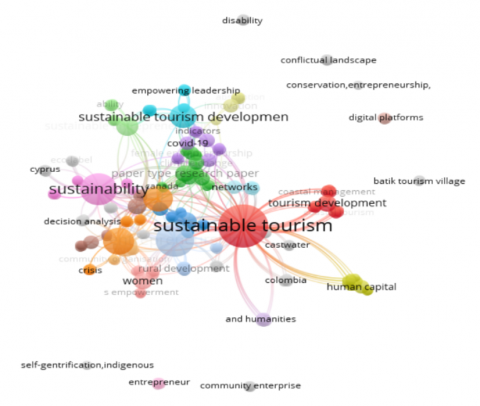
The results of our bibliometric analysis, visualized in Figure 2, highlight the most prominent themes that emerged from the reviewed articles. Using VOSviewer software, we identified that the most frequently occurring and interconnected topic related to sustainable tourism is community-based tourism (CBT). CBT plays a significant role in linking entrepreneurship and sustainable tourism by actively involving local communities in tourism development processes. This approach allows local stakeholders to participate in decision-making, develop tourism products, and market their destinations.
Figure 2. Variable relationships
Through such active engagement, CBT creates economic opportunities for local communities, fosters environmental awareness, and promotes cultural preservation. It becomes a means of inclusive tourism development, aligning economic, social, and ecological goals. Consequently, CBT serves as a sustainable and inclusive model that benefits all stakeholders. Prior studies have consistently highlighted the importance of CBT in bridging entrepreneurship and sustainability in tourism [12] (A136); [13] (A132); [14] (A13); [15] (A30); [16] (A43); [17] (A72); and [18] (A81).
In addition to CBT, other emerging themes have also gained prominence in connecting entrepreneurship and sustainable tourism. These include community-based social enterprises (CBSEs), community-based tourism enterprises, social enterprises, social entrepreneurship, sustainability, and the Sustainable Development Goals (SDGs) [14]. These concepts contribute to the linkage through several key mechanisms: empowering local communities, developing local resources, connecting internal and external resources, and increasing community involvement in tourism activities.
Among these, CBSE has been identified as a major driver in integrating entrepreneurship with sustainable tourism. It enables the utilization of local potential, strengthens community participation, and fosters collaborative networks that enhance sustainability in tourism development. CBSEs not only offer economic solutions but also address social challenges through innovative, community-centered business models. They serve as platforms for co-creating value between local communities and other tourism stakeholders.
Therefore, CBSEs are recommended as a critical focus for future research. They embody a strategic approach to sustainable tourism development by fostering innovation rooted in local contexts, promoting inclusive growth, and supporting the long-term resilience of tourism destinations. CBSEs also align well with the broader objectives of the SDGs, particularly in promoting decent work, reducing inequality, and building sustainable communities.
3.2 Number of publications each year
Figure 3 illustrates the annual distribution of publications related to the intersection of sustainable tourism and entrepreneurship from 2013 to 2024. The trend shows a gradual yet notable increase in scholarly attention to this topic over the years.
Figure 3. Number of publications from 2013 to 2024
The first relevant publication appeared in 2013, marking the initial academic interest in this area. However, the following two years (2014 and 2015) experienced a slight decline in publication activity, reflecting a temporary dip in research output. Beginning in 2016, the number of publications began to rise steadily, signaling growing interest in the field. A significant turning point occurred in 2020, coinciding with the global COVID-19 pandemic. Although 2019 saw a dip in output likely due to the uncertainty and disruptions caused by the pandemic, 2020 experienced a remarkable surge with nine publications. This may indicate a shift in research focus toward sustainable and resilient tourism models in response to the crisis.
The upward trend continued through 2021, which recorded 11 articles. The most substantial growth occurred in 2022 and 2023, with 16 and 17 publications respectively, reflecting heightened global awareness of sustainability issues and a broader recognition of entrepreneurship as a tool for sustainable development in the tourism sector.
3.3 Source of publications
Descriptive statistics regarding the sources of the reviewed studies are presented in Table 1, highlighting the journals that most frequently publish research on sustainable tourism from an entrepreneurial perspective. The analysis reveals that Sustainability (Switzerland) is the leading journal in this domain, with a total of 11 articles, reflecting the journal’s broad scope and strong focus on sustainability-related topics.
Table 1. Journals and number of articles
|
No. |
Source Title |
Number of Articles |
|
1 |
Sustainability (Switzerland) |
11 |
|
2 |
Journal of Sustainable Tourism |
9 |
|
3 |
World Journal of Entrepreneurship, Management and Sustainable Development |
6 |
|
4 |
International Journal of Contemporary Hospitality Management |
4 |
|
5 |
Administrative Sciences |
2 |
|
6 |
Environment, Development and Sustainability |
2 |
|
7 |
Geojournal of Tourism and Geosites |
2 |
|
8 |
Tourism Management Perspectives |
2 |
|
9 |
ABAC Journal; Academica Turistica; African Journal of Hospitality, Tourism and Leisure; Anatolia; Asia Pacific Management Review; Asia-Pacific Journal of Innovation in Hospitality and Tourism; Business Systems Research; Cogent Business and Management; Current Issues in Tourism; e-Review of Tourism Research; Floresta; Geografiska Annaler, Series B: Human Geography; Higher Education, Skills and Work-based Learning; Humanities and Social Sciences Letters; International Journal of Ethics and Systems; International Journal of Professional Business Review; International Journal of Sustainability in Economic, Social, and Cultural Context; International Journal of Sustainable Development and Planning; International Journal of Sustainable Energy Planning and Management; Journal for International Business and Entrepreneurship Development; Journal of Asian Finance, Economics and Business; Journal of Entrepreneurship Education; Journal of Environmental Management and Tourism; Journal of Hospitality and Tourism Management; Journal of Innovation and Knowledge; Journal of Tourism and Cultural Change; Journal of Tourism and Development; Journal of Vacation Marketing; Kurdish Studies; Local Economy; Millennium: Journal of Education, Technologies, and Health; Revista Portuguesa de Estudos Regionais; Social Sciences; Sustainable Development; TEM Journal; Thunderbird International Business Review; Tourism; Tourism Management; Tourism Planning and Development; Tourist Studies |
1 each |
The Journal of Sustainable Tourism ranks second with 9 publications, followed by the World Journal of Entrepreneurship, Management and Sustainable Development, which contributed 6 articles. These three journals account for a significant proportion of the literature and serve as key platforms for disseminating scholarly work on the intersection of entrepreneurship and sustainable tourism. Other notable sources include the International Journal of Contemporary Hospitality Management with 4 articles, and a group of journals such as Administrative Sciences, Environment, Development and Sustainability, Geojournal of Tourism and Geosites, and Tourism Management Perspectives each contributing 2 publications.
Additionally, a wide range of other journals each contributed one article, indicating that while the core of the literature is concentrated in a few key journals, there is also a diverse and interdisciplinary interest in the topic. These journals span various fields including tourism, management, sustainability, hospitality, innovation, geography, and social sciences, illustrating the cross-cutting nature of research on sustainable tourism and entrepreneurship. This distribution suggests that scholars seeking to publish in this area should consider these leading journals while also recognizing the potential for interdisciplinary engagement through a variety of other publication outlets.
3.4 Country
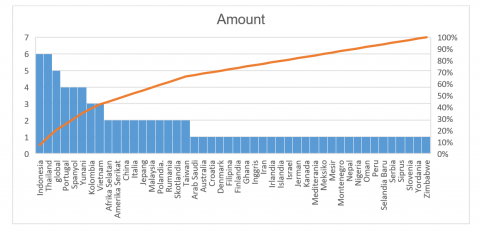
The literature review reveals significant geographic patterns in research on sustainable tourism from an entrepreneurial perspective. Notably, Indonesia and Thailand emerged as the countries with the highest number of studies, highlighting their strong presence in sustainable tourism discourse (Figure 4 and Table 2).
Figure 4. Number of publications per country
Table 2. Summarizes key sustainable tourism practices from the five most frequently studied countries
|
No. |
Country |
Sustainable Tourism Practices |
|
1 |
Indonesia |
|
|
2 |
Thailand |
|
|
3 |
Portugal |
|
|
4 |
Spanish |
|
|
5 |
Yunani |
|
Indonesia was frequently featured due to its vast potential in developing sustainable agro-tourism. The country’s abundance of natural and cultural resources creates an ideal environment for integrating agriculture and tourism in a sustainable manner. Furthermore, the involvement of various local communities in agro-tourism initiatives underscores a collaborative ecosystem that fosters sustainability. These initiatives provide valuable insights into how tourism can empower local communities while preserving the environment and cultural heritage. Key publications focusing on Indonesia include articles A1, A19, A38, A49, A61, and A80.
Similarly, Thailand has a long-standing reputation in advancing community-based tourism (CBT). As one of Southeast Asia’s most visited tourist destinations, Thailand offers a rich mix of cultural, natural, and historical attractions. Its CBT initiatives demonstrate how local communities can actively contribute to sustainable tourism development through environmental education, stakeholder collaboration, and the creation of sustainable infrastructure. Articles A13, A31, A81, A105, A106, and A133 are among the studies centered on Thailand.
Beyond national case studies, several researchers have adopted a global perspective. The systematic literature review identified five studies (A5, A57, A58, A86, and A130) that conduct global reviews of sustainable tourism practices. These works provide broader insights into international trends, opportunities, and challenges in aligning tourism with sustainability and entrepreneurship. Other countries with notable contributions include Portugal, Spain, and Greece, each represented by four articles. These countries have demonstrated various sustainable tourism practices, ranging from environmental conservation to the promotion of cultural heritage and the development of inclusive tourism models.
3.5 Citation analysis
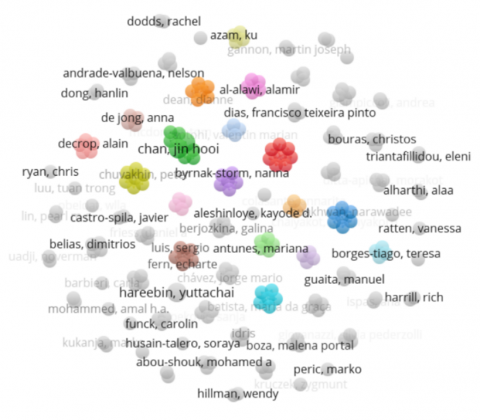
Figure 5 and Table 3 present the most cited authors whose works discuss the relationship between sustainable tourism and entrepreneurship. The data is sorted based on the three highest citation counts.
Figure 5. VOSviewer output from the author
Table 3. Most cited articles on sustainable tourism and entrepreneurship
|
Art. |
Ref. |
Title |
Cited |
|
159 |
[19] |
Assessing the sustainability of agritourism in the US: A comparison between agritourism and other farm entrepreneurial ventures |
151 |
|
150 |
[20] |
Tourism growth and entrepreneurship: Empirical analysis of development of rural highlands |
77 |
|
142 |
[21] |
The role of self-gentrification in sustainable tourism: Indigenous entrepreneurship at Honghe Hani Rice Terraces World Heritage Site, China |
71 |
|
5 |
[22] |
Exploring the antecedents of sustainable tourism development |
67 |
|
9 |
[23] |
Women's empowerment and tourism development: A cross-country study |
61 |
|
13 |
[24] |
Digital sustainability communication in tourism |
58 |
|
16 |
[25] |
Challenging the principles of ecotourism: insights from entrepreneurs on environmental and economic sustainability in Langkawi, Malaysia |
57 |
|
17 |
[26] |
Green creative behavior in the tourism industry: the role of green entrepreneurial orientation and a dual-mediation mechanism |
53 |
|
18 |
[27] |
Increasing sustainable tourism through social entrepreneurship |
52 |
|
19 |
[28] |
Social entrepreneurs: innovating rural tourism through the activism of service science |
37 |
|
20 |
[29] |
Sustainability through the tourism entrepreneurship journey: a gender perspective |
36 |
|
22 |
[30] |
Understanding the entrepreneurs’ behavioural intentions towards sustainable tourism: a case study from Greece |
31 |
|
28 |
[31] |
Constraints and benefits of sustainable development: A case study based on the perceptions of small-hotel entrepreneurs in Greece |
26 |
|
30 |
[32] |
An integrative framework for sustainability evaluation in tourism: Applying the framework to tourism product development in Finnish Lapland |
23 |
|
31 |
[33] |
Community resourcefulness and partnerships in rural tourism |
20 |
|
32 |
[34] |
Going Entrepreneurial: Agro-tourism and Rural Development in Northern Montenegro |
19 |
|
33 |
[35] |
Validity of dynamic capabilities in the operation based on new sustainability narratives on nature tourism SMEs and clusters |
18 |
|
38 |
[36] |
Developing sustainable tourism through public-private partnership to alleviate poverty in Ghana |
17 |
|
42 |
[37] |
Sustainable tourism: A competitiveness strategy perspective in Baja California |
17 |
|
43 |
[38] |
Is eco-label hotel engagement the pathway to sustainability practices via entrepreneurial resilience and orientation in Oman? Findings from PLS-SEM and fsQCA |
16 |
|
44 |
[17] |
Design thinking for social innovation: Secrets to success for tourism social entrepreneurs |
16 |
|
48 |
[39] |
Exploring entrepreneurship, innovation and tourism development from a sustainable perspective: Evidence from Greece |
16 |
|
49 |
[12] |
Organising for community-based tourism: Comparing attitudes of local residents and local tourism entrepreneurs in Ravna Gora, Croatia |
15 |
|
50 |
[40] |
Ecotourism anywhere? The lure of ecotourism and the need to scrutinize the potential competitiveness of ecotourism developments |
14 |
|
51 |
[41] |
Innovative Sustainable Tourism Development and Entrepreneurship through Sports Events |
13 |
|
53 |
[2] |
Entrepreneurship and tourism through the lens of sustainability. Charting the knowledge base through bibliometric analysis |
13 |
|
54 |
[42] |
Social innovation and sustainable tourism lab: an explorative model |
13 |
|
57 |
[43] |
The influence of community factors on local entrepreneurs’ support for tourism |
12 |
|
58 |
[44] |
The identification of values in business models of tourism enterprises in the context of the phenomenon of overtourism |
12 |
|
61 |
[45] |
The social, cultural, economic and political strategies extending women’s territory by encroaching on patriarchal embeddedness in tourism in Nepal |
11 |
|
62 |
[46] |
Sustainable tourism development in rural and marginal areas and opportunities for female entrepreneurship: lessons from an exploratory study |
11 |
|
65 |
[47] |
Operational guidelines for human capital and innovative tourism entrepreneurs in sustainable tourism perspectives: An analysis of tour operators in the Andaman Provinces of Thailand |
11 |
|
66 |
[48] |
Heritage, education and processes of change in Vietnamese rural tourism: A case study from Hội An |
10 |
|
68 |
[49] |
Sustainable energy management: Are tourism SMEs in Poland ready for circular economy solutions? |
10 |
|
69 |
[50] |
Untangling Factors Influencing Women Entrepreneurs’ Involvement in Tourism and Its Impact on Sustainable Tourism Development |
9 |
|
72 |
[51] |
The Rural and Nature Tourism Development Potential in Islands |
8 |
|
73 |
[52] |
Entrepreneurship, sport, sustainability and integration: A business model in the low‐season tourism sector |
8 |
|
74 |
[53] |
Back from the brink: Social transformation and developing tourism in post-conflict Medellin, Colombia |
7 |
|
76 |
[54] |
Local stakeholders' participation in (sustainable) tourism development: The case of the south kynouria municipality, Greece |
7 |
|
80 |
[55] |
Measuring Sustainable Tourism Lifestyle Entrepreneurship Orientation to Improve Tourist Experience |
6 |
|
81 |
[56] |
Rural tourism entrepreneurship success factors for sustainable tourism village: Evidence from Indonesia |
6 |
|
86 |
[57] |
Factors Affecting Human Capital and Innovative Entrepreneurial Capabilities of Tour Operators: Evidence from Andaman Coast, Thailand* |
6 |
|
88 |
[58] |
Integrated approach of the entrepreneurial behaviour in the tourist sector from disadvantaged mountain areas from Romania |
5 |
|
89 |
[59] |
Seaside hotel location and environmental impact: land use dilemmas |
5 |
|
90 |
[60] |
Residents' perceptions of the environmental and social impact of tourism in rural areas |
5 |
|
91 |
[61] |
Changes in traditional activities of inustrial area toward sustainable tourism development |
5 |
|
94 |
[62] |
Rural and traditional cafes and restaurants: a new emerging trend in domestic tourism |
4 |
|
95 |
[3] |
An Overview of Sustainable Entrepreneurship in Tourism, Destination, and Hospitality Research Based on the Web of Science |
4 |
|
98 |
[63] |
SMEs’ Sustainable Development Challenges Post-COVID-19: The Tourism Sector |
4 |
|
99 |
[18] |
Responsibility and Mindset of Tourist and Community-Based Tourism Enterprise to Conserve the Environment and Energy |
4 |
|
100 |
[64] |
Exploring The Role Of Female Empowerment In Sustainable Rural Tourism Development: An Exploratory Sequential Mixed-Method Study |
3 |
|
101 |
[16] |
Community-based tourism and entrepreneurship: towards a model for poverty alleviation and sustainable development |
3 |
|
105 |
[65] |
Developing Forest Coffe Cultural Tourism and Historical Heritage Megalitic Sites in Social Innovation Governance: How Does it Work in a Sustainable Way? |
3 |
|
106 |
[66] |
The Impact of Social Tourism Entrepreneurship on Tourism Sustainability—A Systematic Review |
3 |
|
107 |
[67] |
An online tool on sustainable water management |
3 |
|
109 |
[68] |
The Importance of Eco-Labels Certifications and ICT in the Promotion of Sustainable Tourism – Case Study of a Rural Tourism Unit |
3 |
|
110 |
[69] |
Does interconnectivity matter? An integration model of agro-tourism development |
2 |
|
111 |
[14] |
Unpacking Key Sustainability Drivers for Sustainable Social Enterprises: A Community-Based Tourism Perspective |
2 |
|
113 |
[70] |
Ecolodge Entrepreneurship in Emerging Markets: A New Typology of Entrepreneurs; The Case of IRAN |
2 |
|
124 |
[71] |
Social Culture Impact and Value Changes Of Batik Tourism Village: A Case Study Of Pesindon-Indonesia Batik Tourism Village |
2 |
|
127 |
[72] |
An exploratory study of stakeholder views on the sustainable development of mountain tourism |
1 |
|
128 |
[73] |
Environmental change impacts and inclusive rural tourism development on the livelihoods of native societies: evidence from Musina Municipality, South Africa |
1 |
|
130 |
[74] |
Platform empowerment: Facebook’s role in facilitating female micro-entrepreneurship in tourism |
1 |
|
131 |
[75] |
Social entrepreneurship and sustainable tourism in Colombia: A baseline study in post-conflict regions |
1 |
|
132 |
[76] |
Development of sustainable tourism through entrepreneurship: Economic and educational obstacles |
1 |
|
133 |
[77] |
The development of sustainable tourism indicators in Thailand |
1 |
|
136 |
[78] |
Accommodation management for integrated sustainable tourism management |
1 |
|
139 |
[79] |
Does Better Physical Accessibility Lead to Higher Sales Revenues? The Case of Slovenian Restaurant SMEs |
0 |
|
140 |
[80] |
Gender and climate change: A sustainable tourism perspective |
0 |
|
142 |
[81] |
Tourism Monitoring as a Strategic Tool for Tourism Management: The Perceptions of Entrepreneurs from Centro de Portugal |
0 |
|
143 |
[82] |
Exploring the Motivations, Abilities and Opportunities of Young Entrepreneurs to Engage in Sustainable Tourism Business in the Mountain Area |
0 |
|
144 |
[83] |
The role of local economic development in reducing poverty alleviation: Tourism development activity |
0 |
|
149 |
[84] |
Diagnosing Training Needs in European Tourism SMEs: The TC-NAV Project for Managing and Overcoming Virulent Crises |
0 |
|
150 |
[85] |
Conflicting landscapes–integrating sustainable tourism in nature park developments |
0 |
|
152 |
[15] |
Women’s Role in Africa’s Tourism Industry: Overcoming Gender Disparities, Empowerment, and Entrepreneurship Challenges at a UNESCO World Heritage Site |
0 |
|
158 |
[86] |
Evaluation Of Tourism Management in The Bosque De Pómac Historic Sanctuary, Peru; [Avaliação da gestão do turismo no Santuário Histórico Bosque de Pómac, Peru] |
0 |
|
159 |
[87] |
Community Participation Model for Visitor Management at Sade Traditional Village, Lombok, Indonesia |
0 |
|
161 |
[13] |
Challenges and Opportunities for 'little brothers' in the tourism sector matrix: The case of local communities around Great Zimbabwe National Monument |
0 |
Note: The Art. IDs in this table are cited in-text as A+number (e.g., A136, A132, A13, A30, A43, A72, A81, A1, A19, A38, A49, A61, A80, A31, A105, A106, A133, A5, A57, A58, A86, and A130), referring to specific literature in the References.
The most influential author is Barbieri [19], with 151 citations, recognized for providing critical insights into the sustainability of agritourism in comparison to livestock-based agricultural businesses. This research offers an in-depth understanding of the economic, environmental, and social impacts of agritourism, forming a strong foundation for sustainable policies and practices in the agricultural sector.
The second most cited author is Jaafar and Rasoolimanesh [20], with 77 citations, who explored the characteristics and constraints faced by tourism entrepreneurs. Notably, the study highlights that most entrepreneurs are women with low levels of formal education, encountering challenges in accessing governmental support and community incentives. These findings are particularly valuable for scholars, practitioners, and policymakers concerned with inclusive tourism development. Ranked third is Chan et al. [21], with 71 citations, whose research contributes significantly to understanding the impact of gentrification on sustainable tourism, especially at World Heritage Sites. The study introduces the innovative concept of "self-gentrification," emphasizing how indigenous entrepreneurship can help preserve cultural heritage and sustain local communities.
Furthermore, several other influential studies—despite being relatively recent have already received over 50 citations. For instance, Chan et al. [21] addressed the link between women’s empowerment and tourism development across different countries. Luu [26] contributed to the field by analyzing green creativity and green management in tourism businesses. Tiago et al. [24] focused on digital sustainability communication among small and medium-sized tourism enterprises. These highly cited studies indicate that the most impactful themes in the literature include agritourism sustainability, gender and entrepreneurship, gentrification and local heritage, digital sustainability strategies, and green innovation in tourism businesses.
3.6 Analysis based on research results
The research findings compiled from various articles, as outlined in the appendix, reveal a broad and interconnected landscape of issues, challenges, and opportunities related to the development of sustainable tourism. One of the most consistent and critical themes emerging from the literature is the importance of collaboration among key stakeholders. The successful implementation of sustainable tourism initiatives often hinges on the cooperative engagement of farmers, businesses, governmental bodies [88], and academic institutions. These collaborative efforts are essential not only for ensuring the long-term viability of tourism ventures but also for integrating tourism into broader community and regional development strategies. In several studies, the active participation of local actors has been shown to significantly improve the design and outcomes of sustainable tourism models.
Another important aspect highlighted in the research is the necessity of careful and contextual evaluation before launching ecotourism operations. Ecotourism, while promising in terms of balancing economic development with environmental conservation, requires a thorough assessment of its potential environmental and social impacts. This includes understanding the role of ecolodges and the growing field of ecolodge entrepreneurship, which are central to ecotourism practices. These facilities must not only minimize ecological footprints but also contribute meaningfully to the local economy and cultural preservation [89]. Consequently, researchers stress the need for strong regulatory frameworks and community involvement in ecolodge planning and operation.
The studies also emphasize that perceptions of environmental sustainability vary depending on individual motivations, awareness of climate change, and the degree of community engagement. In some cases, personal or business interests may conflict with sustainability goals, highlighting the importance of aligning individual incentives with collective environmental outcomes. Additionally, the research underscores the role of climate change as both a driver and a challenge for sustainable tourism. As climate-related issues increasingly affect tourism destinations, particularly in rural and coastal areas, adaptive strategies and proactive policies become essential.
Strengthening the tourism value chain by involving local communities emerges as another vital component of sustainable tourism development. This includes integrating small-scale local producers, service providers, and cultural practitioners into the tourism ecosystem. Doing so not only supports local livelihoods but also enriches the visitor experience through authentic cultural exchanges and region-specific attractions. Furthermore, human capital and innovation capabilities are repeatedly identified as key drivers of sustainable regional tourism. Investments in education, skills development, and entrepreneurial support are crucial for enabling communities to initiate and maintain tourism enterprises that are both economically viable and environmentally responsible.
In rural tourism contexts, specific challenges such as limited social interaction, lack of structured visitor experiences, and difficulties in maintaining sustainability over time are frequently noted. These issues often stem from infrastructural limitations, insufficient marketing strategies, or weak institutional support. To address these challenges, researchers suggest tailored interventions that take into account the unique social in the form of a marketing strategy on social media by emphasizing tourist trust [90] and environmental dynamics of rural areas. Effective policy measures, community education, and access to financial resources can significantly enhance the resilience and attractiveness of rural tourism destinations.
An important yet sometimes overlooked dimension in sustainable tourism development is gender. Several articles emphasize the critical role of women in tourism entrepreneurship, particularly in relation to climate change adaptation and policy-making. Women often serve as key agents of change within their communities, and their inclusion in tourism planning and operations can yield broad social and environmental benefits. Their contributions range from managing hospitality services and guiding tours to leading community-based conservation initiatives. However, structural barriers such as limited access to capital, education, and decision-making opportunities must be addressed to fully harness their potential.
This systematic literature review provides a comprehensive examination of the relationship between sustainable tourism and entrepreneurship. While tourism contributes significantly to economic growth, social cohesion, and cultural exchange, it also presents considerable environmental risks. By adopting an entrepreneurial perspective, this study emphasizes the need for a fundamental transformation in tourism practices towards models that balance economic profitability, community well-being, and environmental stewardship to ensure long-term sustainability.
Entrepreneurship is especially vital in promoting economic development in underdeveloped and rural areas, yet the negative impacts of tourism on local cultures and ecosystems have led to increasing demands for change from various stakeholders. In response, sustainable entrepreneurship has emerged as a promising approach that integrates local participation, cultural preservation, and ecological responsibility into the tourism development process. The findings of this review indicate that community-based tourism (CBT) plays a pivotal role in linking entrepreneurship with sustainable tourism outcomes. CBT facilitates the involvement of local communities in key areas such as decision-making, tourism product innovation, and destination marketing, thus fostering local ownership and more equitable benefit distribution.
The review also identifies several key directions for future research. There is a pressing need to explore how communities in resource-limited environments can develop and mobilize local resources to support sustainable tourism. Additionally, understanding stakeholder perceptions related to rural revitalization efforts and how these perceptions shape tourism development is essential. The role of women in tourism entrepreneurship, particularly in advancing environmentally friendly practices and contributing to climate change mitigation, also warrants deeper investigation. Furthermore, micro, small, and medium-sized enterprises (MSMEs) in the tourism sector deserve greater attention regarding their adoption of sustainable practices and the policy support needed to enhance their capacity. Lastly, establishing dedicated institutions or collaborative mechanisms to manage tourism events could strengthen the emotional bond between entrepreneurs and markets, while mitigating the negative effects of tourism through eco-friendly initiatives.
[1] Sørensen, F., Grindsted, T.S. (2021). Sustainability approaches and nature tourism development. Annals of Tourism Research, 91: 103307. https://doi.org/10.1016/j.annals.2021.103307
[2] Trip, D.T., Fagadar, C.F., Badulescu, D., Badulescu, A. (2021). Entrepreneurship and tourism through the lens of sustainability. Charting the knowledge base through bibliometric analysis. Geo Journal of Tourism and Geosites, 34(1): 140-146. https://doi.org/10.30892/gtg.34118-629
[3] Andrade-Valbuena, N., Baier-Fuentes, H., Gaviria-Marin, M. (2022). An overview of sustainable entrepreneurship in tourism, destination, and hospitality research based on the Web of Science. Sustainability, 14(22): 14944. https://doi.org/10.3390/su142214944
[4] Maje-Salazar, F.D., Guerra-Mayhua, C.B., Ramos-Cavero, M.J., Cordova-Buiza, F., Ruiz-Palacios, M.Á. (2025). The relationship between municipal management and sustainable tourism in urban protected areas: A quantitative study. Challenges in Sustainability, 13(2): 146-159. https://doi.org/10.56578/cis130201
[5] Álvarez‐García, J., Hormiga‐Pérez, E., Sarango‐Lalangui, P.O., del Río‐Rama, M.D.L.C. (2022). Leaders' sustainability competences and small and medium‐sized enterprises outcomes: The role of social entrepreneurial orientation. Sustainable Development, 30(5): 927-943. https://doi.org/10.1002/sd.2291
[6] Andrade-Valbuena, N.A., Merigo-Lindahl, J.M., Olavarrieta, S. (2018). Bibliometric analysis of entrepreneurial orientation. World Journal of Entrepreneurship, Management and Sustainable Development, 15(1): 45-69. https://doi.org/10.1108/WJEMSD-08-2017-0048
[7] Solvoll, S., Alsos, G.A., Bulanova, O. (2015). Tourism entrepreneurship–review and future directions. Scandinavian Journal of Hospitality and Tourism, 15(sup1): 120-137. https://doi.org/10.1080/15022250.2015.1065592
[8] Janjua, Z.U.A., Krishnapillai, G., Rahman, M. (2021). A systematic literature review of rural homestays and sustainability in tourism. Sage Open, 11(2): 21582440211007117. https://doi.org/10.1177/21582440211007117
[9] Liberati, A., Altman, D.G., Tetzlaff, J., Mulrow, C., Gøtzsche, P.C., Ioannidis, J.P.A., Clarke, M., Devereaux, P.J., Kleijnen, J., Moher, D. (2009). The PRISMA statement for reporting systematic reviews and meta-analyses of studies that evaluate health care interventions: Explanation and elaboration. Journal of Clinical Epidemiology, 62(10): e1-e34. https://doi.org/10.1016/j.jclinepi.2009.06.006
[10] Johnson, L., Eccleston, R., Murphy-Gregory, H. (2022). Territorial knowledge dynamics and governance of industry networks: A systematic quantitative review of empirical literature. The Review of Regional Studies, 52(3): 344-366. https://doi.org/10.52324/001c.66199
[11] Pickering, C., Byrne, J. (2014). The benefits of publishing systematic quantitative literature reviews for PhD candidates and other early-career researchers. Higher Education Research & Development, 33(3): 534-548. https://doi.org/10.1080/07294360.2013.841651
[12] Đurkin, J., Perić, M. (2017). Organising for community-based tourism: Comparing attitudes of local residents and local tourism entrepreneurs in Ravna Gora, Croatia. Local Economy, 32(7): 678-691. https://doi.org/10.1177/0269094217734811
[13] Mudzengi, B.K., Chapungu, L., Chiutsi, S. (2018). Challenges and opportunities for ‘little brothers’ in the Tourism Sector Matrix: The case of local communities around Great Zimbabwe National Monument. African Journal of Hospitality, Tourism and Leisure, 7(3): 1-12.
[14] Thananusak, T., Suriyankietkaew, S. (2023). Unpacking key sustainability drivers for sustainable social enterprises: A community-based tourism perspective. Sustainability, 15(4): 3401. https://doi.org/10.3390/su15043401
[15] Aleshinloye, K.D. (2024). Women’s role in Africa’s tourism industry: Overcoming gender disparities, empowerment, and entrepreneurship challenges at a UNESCO world heritage site. Tourism Planning & Development, 21(4): 485-502. https://doi.org/10.1080/21568316.2023.2230454
[16] Giampiccoli, A., Mtapuri, O. (2022). Community-based tourism and entrepreneurship: Towards a model for poverty alleviation and sustainable development. Revista Turismo & Desenvolvimento (RT&D)/Journal of Tourism & Development, (39): 439-449. https://doi.org/10.34624/rtd.v39i0.30360
[17] Mahato, S.S., Phi, G.T., Prats, L. (2021). Design thinking for social innovation: Secrets to success for tourism social entrepreneurs. Journal of Hospitality and Tourism Management, 49: 396-406. https://doi.org/10.1016/j.jhtm.2021.10.010
[18] Jirojkul, S., Pongsakornrungsilp, S., Pianroj, N., Chaiyakot, P., Buakhwan, N., Techato, K. (2021). Responsibility and mindset of tourist and community-based tourism enterprise to conserve the environment and energy. TEM Journal, 10(4): 1838-1848. https://doi.org/10.18421/TEM104-47
[19] Barbieri, C. (2013). Assessing the sustainability of agritourism in the US: A comparison between agritourism and other farm entrepreneurial ventures. Journal of Sustainable Tourism, 21(2): 252-270. https://doi.org/10.1080/09669582.2012.685174
[20] Jaafar, M., Rasoolimanesh, S.M. (2015). Tourism growth and entrepreneurship: Empirical analysis of development of rural highlands. Tourism Management Perspectives, 14: 17-24. https://doi.org/10.1016/j.tmp.2015.02.001
[21] Chan, J.H., Iankova, K., Zhang, Y., McDonald, T., Qi, X. (2016). The role of self-gentrification in sustainable tourism: Indigenous entrepreneurship at Honghe Hani Rice Terraces World Heritage Site, China. Journal of Sustainable Tourism, 24(8-9): 1262-1279. https://doi.org/10.1080/09669582.2016.1189923
[22] MacKenzie, N., Gannon, M.J. (2019). Exploring the antecedents of sustainable tourism development. International Journal of Contemporary Hospitality Management, 31(6): 2411-2427. https://doi.org/10.1108/IJCHM-05-2018-0384
[23] Abou-Shouk, M.A., Mannaa, M.T., Elbaz, A.M. (2021). Women's empowerment and tourism development: A cross-country study. Tourism Management Perspectives, 37: 100782. https://doi.org/10.1016/j.tmp.2020.100782
[24] Tiago, F., Gil, A., Stemberger, S., Borges-Tiago, T. (2021). Digital sustainability communication in tourism. Journal of Innovation & Knowledge, 6(1): 27-34. https://doi.org/10.1016/j.jik.2019.12.002
[25] Thompson, B.S., Gillen, J., Friess, D.A. (2018). Challenging the principles of ecotourism: Insights from entrepreneurs on environmental and economic sustainability in Langkawi, Malaysia. Journal of Sustainable Tourism, 26(2): 257-276. https://doi.org/10.1080/09669582.2017.1343338
[26] Luu, T.T. (2021). Green creative behavior in the tourism industry: The role of green entrepreneurial orientation and a dual-mediation mechanism. Journal of Sustainable Tourism, 29(8): 1290-1318. https://doi.org/10.1080/09669582.2020.1834565
[27] De Lange, D., Dodds, R. (2017). Increasing sustainable tourism through social entrepreneurship. International Journal of Contemporary Hospitality Management, 29(7): 1977-2002. https://doi.org/10.1108/IJCHM-02-2016-0096
[28] Peng, K.L., Lin, P.M. (2016). Social entrepreneurs: Innovating rural tourism through the activism of service science. International Journal of Contemporary Hospitality Management, 28(6): 1225-1244. https://doi.org/10.1108/IJCHM-12-2014-0611
[29] Figueroa-Domecq, C., Kimbu, A., de Jong, A., Williams, A.M. (2022). Sustainability through the tourism entrepreneurship journey: A gender perspective. Journal of Sustainable Tourism, 30(7): 1562-1585. https://doi.org/10.1080/09669582.2020.1831001
[30] Sardianou, E., Kostakis, I., Mitoula, R., Gkaragkani, V., Lalioti, E., Theodoropoulou, E. (2016). Understanding the entrepreneurs’ behavioural intentions towards sustainable tourism: A case study from Greece. Environment, Development and Sustainability, 18: 857-879. https://doi.org/10.1007/s10668-015-9681-7
[31] Fotiadis, A.K., Vassiliadis, C.A., Rekleitis, P.D. (2013). Constraints and benefits of sustainable development: A case study based on the perceptions of small-hotel entrepreneurs in Greece. Anatolia, 24(2): 144-161. https://doi.org/10.1080/13032917.2012.741049
[32] García-Rosell, J.C., Mäkinen, J. (2013). An integrative framework for sustainability evaluation in tourism: Applying the framework to tourism product development in Finnish Lapland. Journal of Sustainable Tourism, 21(3): 396-416. https://doi.org/10.1080/09669582.2012.708038
[33] Qu, M., McCormick, A.D., Funck, C. (2022). Community resourcefulness and partnerships in rural tourism. Journal of Sustainable Tourism, 30(10): 2371-2390. https://doi.org/10.1080/09669582.2020.1849233
[34] Stanovčić, T., Peković, S., Vukčević, J., Perović, Đ. (2018). Going entrepreneurial: Agro-tourism and rural development in northern Montenegro. Business Systems Research: International Journal of the Society for Advancing Innovation and Research in Economy, 9(1): 107-117. https://doi.org/10.2478/bsrj-2018-0009
[35] Rodríguez, A.J.G., Barón, N.J., Martínez, J.M.G. (2020). Validity of dynamic capabilities in the operation based on new sustainability narratives on nature tourism SMEs and clusters. Sustainability, 12(3): 1004. https://doi.org/10.3390/su12031004
[36] Geoffrey Deladem, T., Xiao, Z., Siueia, T.T., Doku, S., Tettey, I. (2021). Developing sustainable tourism through public-private partnership to alleviate poverty in Ghana. Tourist Studies, 21(2): 317-343. https://doi.org/10.1177/1468797620955250
[37] Bernal Escoto, B.E., Portal Boza, M., Feito Madrigal, D. (2019). Sustainable tourism: A competitiveness strategy perspective in Baja California. Sustainability, 11(24): 6934. https://doi.org/10.3390/su11246934
[38] Salem, I.E., Elbaz, A.M., Al-Alawi, A., Alkathiri, N.A., Elkhwesky, Z. (2023). Is eco-label hotel engagement the pathway to sustainability practices via entrepreneurial resilience and orientation in Oman? Findings from PLS-SEM and fsQCA. International Journal of Contemporary Hospitality Management, 35(2): 717-742. https://doi.org/10.1108/IJCHM-02-2022-0229
[39] Triantafillidou, E., Tsiaras, S. (2018). Exploring entrepreneurship, innovation and tourism development from a sustainable perspective: Evidence from Greece. Journal for International Business and Entrepreneurship Development, 11(1): 53-64. https://doi.org/10.1504/JIBED.2018.090020
[40] Thompson, B.S. (2022). Ecotourism anywhere? The lure of ecotourism and the need to scrutinize the potential competitiveness of ecotourism developments. Tourism Management, 92: 104568. https://doi.org/10.1016/j.tourman.2022.104568
[41] Tsekouropoulos, G., Gkouna, O., Theocharis, D., Gounas, A. (2022). Innovative sustainable tourism development and entrepreneurship through sports events. Sustainability, 14(8): 4379. https://doi.org/10.3390/su14084379
[42] Castro-Spila, J., Torres, R., Lorenzo, C., Santa, A. (2018). Social innovation and sustainable tourism lab: An explorative model. Higher Education, Skills and Work-Based Learning, 8(3): 274-290. https://doi.org/10.1108/HESWBL-03-2018-0032
[43] Zhang, Y., Chan, J.H., Ji, Z., Sun, L., Lane, B., Qi, X. (2020). The influence of community factors on local entrepreneurs’ support for tourism. Current Issues in Tourism, 23(14): 1758-1772. https://doi.org/10.1080/13683500.2019.1644300
[44] Kruczek, Z., Szromek, A.R. (2020). The identification of values in business models of tourism enterprises in the context of the phenomenon of overtourism. Sustainability, 12(4): 1457. https://doi.org/10.3390/su12041457
[45] Hillman, W., Radel, K. (2022). The social, cultural, economic and political strategies extending women’s territory by encroaching on patriarchal embeddedness in tourism in Nepal. Journal of Sustainable Tourism, 30(7): 1754-1775. https://doi.org/10.1080/09669582.2021.1894159
[46] Martini, U., Malacarne, K., Pederzolli Giovanazzi, S., Buffa, F. (2020). Sustainable tourism development in rural and marginal areas and opportunities for female entrepreneurship: Lessons from an exploratory study. Worldwide Hospitality and Tourism Themes, 12(4): 421-430. https://doi.org/10.1108/WHATT-05-2020-0023
[47] Hareebin, Y. (2020). Operational guidelines for human capital and innovative tourism entrepreneurs in sustainable tourism perspectives: An analysis of tour operators in the Andaman Provinces of Thailand. ABAC Journal, 40(3): 117-139.
[48] Trinh, T.T., Ryan, C., Bui, H.D. (2020). Heritage, education and processes of change in Vietnamese rural tourism: A case study from Hội An. Journal of Vacation Marketing, 26(3): 378-394. https://doi.org/10.1177/1356766720904753
[49] Jaroszewska, M., Chaja, P., Dziadkiewicz, A. (2019). Sustainable energy management: Are tourism SMEs in Poland ready for circular economy solutions. International Journal of Sustainable Energy Planning and Management, 24: 75-84. http://doi.org/10.5278/ijsepm.3342
[50] Samad, S., Alharthi, A. (2022). Untangling factors influencing women entrepreneurs’ involvement in tourism and its impact on sustainable tourism development. Administrative Sciences, 12(2): 52. https://doi.org/10.3390/admsci12020052
[51] Batista, M.D.G., Couto, G., Castanho, R.A., Sousa, Á., Pimentel, P., Carvalho, C. (2022). The rural and nature tourism development potential in islands. Sustainability, 14(9), 5289. https://doi.org/10.3390/su14095289
[52] Reier Forradellas, R., Náñez Alonso, S.L., Jorge-Vázquez, J., Echarte Fernández, M.Á., Vidal Miró, N. (2021). Entrepreneurship, sport, sustainability and integration: A business model in the low-season tourism sector. Social Sciences, 10(4): 117. https://doi.org/10.3390/socsci10040117
[53] Castillo-Palacio, M., Harrill, R., Zuñiga-Collazos, A. (2017). Back from the brink: Social transformation and developing tourism in post-conflict Medellin, Colombia. Worldwide Hospitality and Tourism Themes, 9(3): 300-315. https://doi.org/10.1108/WHATT-02-2017-0012
[54] Zarokosta, H., Koutsouris, A. (2014). Local stakeholders’ participation in (sustainable) tourism development: The case of the South Kynouria municipality, Greece. Revista Portuguesa de Estudos Regionais, (36): 35-42.
[55] Antunes, M., Dias, Á., Gonçalves, F., Sousa, B., Pereira, L. (2023). Measuring sustainable tourism lifestyle entrepreneurship orientation to improve tourist experience. Sustainability, 15(2): 1201. https://doi.org/10.3390/su15021201
[56] Utami, D.D., Dhewanto, W., Lestari, Y.D. (2023). Rural tourism entrepreneurship success factors for sustainable tourism village: Evidence from Indonesia. Cogent Business & Management, 10(1): 2180845. https://doi.org/10.1080/23311975.2023.2180845
[57] Hareebin, Y. (2020). Factors affecting human capital and innovative entrepreneurial capabilities of tour operators: Evidence from Andaman Coast, Thailand. The Journal of Asian Finance, Economics and Business, 7(10): 359-368. https://doi.org/10.13106/jafeb.2020.vol7.no10.359
[58] Cristache, N., Soare, I., Nastase, M., Antohi, V.M. (2022). Integrated approach of the entrepreneurial behaviour in the tourist sector from disadvantaged mountain areas from Romania. Environment, Development and Sustainability, 24: 5514-5530. https://doi.org/10.1007/s10668-021-01669-6
[59] Gelbman, A. (2022). Seaside hotel location and environmental impact: Land use dilemmas. Journal of Tourism and Cultural Change, 20(4): 530-550. https://doi.org/10.1080/14766825.2021.1961797
[60] Liasidou, S., Stylianou, C., Berjozkina, G., Garanti, Z. (2021). Residents' perceptions of the environmental and social impact of tourism in rural areas. Worldwide Hospitality and Tourism Themes, 13(6): 731-743. https://doi.org/10.1108/WHATT-07-2021-0099
[61] Nedeljković Knežević, M., Petrović, M.D., Nedeljković, S., Mijatov, M., Radovanović, M.M., Gajić, M., Škoda, M. (2019). Changes in traditional activities of industrial area toward sustainable tourism development. Sustainability, 11(22): 6189. https://doi.org/10.3390/su11226189
[62] Obeidat, W. (2023). Rural and traditional cafes and restaurants: A new emerging trend in domestic tourism. Worldwide Hospitality and Tourism Themes, 15(1): 74-83. https://doi.org/10.1108/WHATT-08-2022-0098
[63] Mohammed, A.H.A. (2022). SMEs’ sustainable development challenges post-COVID-19: The tourism sector. World Journal of Entrepreneurship, Management and Sustainable Development, 18(3): 407-424.
[64] Dong, H., Khan, M.S. (2023). Exploring the role of female empowerment in sustainable rural tourism development: An exploratory sequential mixed-method study. International Journal of Professional Business Review, 8(4): e01651. https://doi.org/10.26668/businessreview/2023.v8i4.1651
[65] Tresiana, N., Duadji, N. (2022). Developing forest coffe cultural tourism and historical heritage megalitic sites in social innovation governance: How does it work in a sustainable way? Journal of Environmental Management & Tourism, 13(4): 1036-1046. https://doi.org/10.14505/jemt.v13.4(60).10
[66] Belias, D., Malik, S., Rossidis, I., Mantas, C. (2022). The impact of social tourism entrepreneurship on tourism sustainability–a systematic review. World Journal of Entrepreneurship, Management and Sustainable Development, 18(5): 595-615. https://doi.org/10.47556/J.WJEMSD.18.5.2022.3
[67] Bouras, C., Kokkinos, V., Michos, E. (2020). An online tool on sustainable water management. Tourism: An International Interdisciplinary Journal, 68(4): 450-465. https://doi.org/10.37741/t.68.4.6
[68] Pato, L. (2020). The importance of eco-labels certifications and ICT in the promotion of sustainable tourism: Case study of a rural tourism unit. Millenium-Journal of Education, Technologies, and Health, 2(5e): 369-377. https://doi.org/10.29352/mill0205e.37.00242
[69] Susila, I., Dean, D., Harismah, K., Priyono, K.D., Setyawan, A.A., Maulana, H. (2024). Does interconnectivity matter? An integration model of agro-tourism development. Asia Pacific Management Review, 29(1): 104-114. https://doi.org/10.1016/j.apmrv.2023.08.003
[70] Varmazyari, H., Mirhadi, S.H., Joppe, M., Kalantari, K., Decrop, A. (2022). Ecolodge entrepreneurship in emerging markets: A new typology of entrepreneurs; The case of IRAN. Sustainability, 14(14): 8479. https://doi.org/10.3390/su14148479
[71] Kusumawati, D., Setyowati, D.L., Handoyo, E. (2022). Social culture impact and value changes of batik tourism village: A case study of pesindon-Indonesia batik tourism Village. Geo Journal of Tourism and Geosites, 40(1): 89-95. https://doi.org/10.30892/GTG.40110-806
[72] Colasante, A., D'Adamo, I., De Massis, A., Italiano, S. (2024). An exploratory study of stakeholder views on the sustainable development of mountain tourism. Sustainable Development, 32(4): 3722-3735. https://doi.org/10.1002/sd.2878
[73] Ramaano, A.I. (2024). Environmental change impacts and inclusive rural tourism development on the livelihoods of native societies: Evidence from Musina Municipality, South Africa. International Journal of Ethics and Systems, 40(3): 495-525. https://doi.org/10.1108/IJOES-04-2023-0089
[74] Ditta-Apichai, M., Gretzel, U., Kattiyapornpong, U. (2024). Platform empowerment: Facebook’s role in facilitating female micro-entrepreneurship in tourism. Journal of Sustainable Tourism, 32(3): 540-559. https://doi.org/10.1080/09669582.2023.2215479
[75] Cortés, L.D.G., Husain-Talero, S. (2020). Social entrepreneurship and sustainable tourism in Colombia: A baseline study in post-conflict regions. The International Journal of Sustainability in Economic, Social and Cultural Context, 16(2): 65-85. https://doi.org/10.18848/2325-1115/cgp/v16i01/65-85
[76] Chuvakhina, L., Terskaya, G., Chuvakhin, P., Litvinov, S., Myagkova, S. (2018). Development of sustainable tourism through entrepreneurship: Economic and educational obstacles. Journal of Entrepreneurship Education, 21(Special Issue 2): 1-10.
[77] Dulyadaweesid, N., Sirisunhirun, S. (2018). The development of sustainable tourism indicators in Thailand. e-Review of Tourism Research, 15(2/3): 176-191.
[78] Pathumporn, J., Nakapaksin, S. (2016). Accommodation management for integrated sustainable tourism management. International Journal of Sustainable Development and Planning, 11(3): 236-244. https://doi.org/10.2495/SDP-V11-N3-236-244
[79] Kukanja, M., Planinc, S. (2023). Does better physical accessibility lead to higher sales revenues? The case of Slovenian restaurant SMEs. Academica Turistica-Tourism and Innovation Journal, 16(3): 257-275. https://doi.org/10.26493/2335-4194.16.257-275
[80] Ratten, V. (2023). Gender and climate change: A sustainable tourism perspective. Thunderbird International Business Review, 65(6): 553-566. https://doi.org/10.1002/tie.22351
[81] Dias, F.T.P., Góis, S.M.R., Gomes, G.N.D.C.O. (2023). Tourism monitoring as a strategic tool for tourism management: The perceptions of entrepreneurs from Centro de Portugal. Administrative Sciences, 13(9): 205. https://doi.org/10.3390/admsci13090205
[82] Ivasciuc, I.S., Ispas, A. (2023). Exploring the motivations, abilities and opportunities of young entrepreneurs to engage in sustainable tourism business in the mountain area. Sustainability, 15(3): 1956. https://doi.org/10.3390/su15031956
[83] Ruja, I.N., Kurniawan, N.C. (2023). The role of local economic development in reducing poverty alleviation: Tourism development activity. Humanities and Social Sciences Letters, 11(4): 440-450. https://doi.org/10.18488/73.v11i4.3564
[84] Soriano Flores, E., Prola, T., Halldórsdóttir, Í.H.H., Taylor, S. (2023). Diagnosing training needs in European tourism SMEs: The TC-NAV project for managing and overcoming virulent crises. Kurdish Studies, 11(2): 2011-2022.
[85] Grindsted, T.S., Holm, J., Sørensen, F., Nielsen, T.T., Byrnak-Storm, N., Jensen, J.F. (2024). Conflicting landscapes–integrating sustainable tourism in nature park developments. Geografiska Annaler: Series B, Human Geography, 106(4): 460-479. https://doi.org/10.1080/04353684.2023.2280262
[86] Chávez, J.M., Tetto, A.F., Reynel, C.A., Sousa, N.J. (2022). Evaluation of tourism management in the Bosque de Pómac Historic Sanctuary, Peru. Floresta, 52(1): 35-44. https://doi.org/10.5380/RF.V52I1.74039
[87] Rosida, L., Idrus, S., Habibi, P., Martayadi, U., Johairi. (2021). Community participation model for visitor management at Sade Traditional Village, Lombok, Indonesia. Asia-Pacific Journal of Innovation in Hospitality and Tourism, 10(3): 55-71.
[88] Sudarnice, S., Herachwati, N., Udin, U. (2023). Bank financing, government support, and SME performance: The mediating role of entrepreneur competence. International Journal of Sustainable Development and Planning, 18(10): 3243-3251. https://doi.org/10.18280/ijsdp.181024
[89] Lelawatty, P., Sudarman, L., Jejen, L. (2025). Exploring the potential of digital platform-based tourism markets towards international tourism markets to realize the green economy concept. International Journal of Sustainable Development and Planning, 20(4): 1767-1777. https://doi.org/10.18280/ijsdp.200437
[90] Iswanto, D., Premananto, G.C., Sudarnice, S., Sangadji, S.S. (2025). Structural equation modeling of social media influences: How visual appeal and product information shape positive word of mouth. Journal of Applied Data Sciences, 6(2): 921-935. https://doi.org/10.47738/jads.v6i2.584