Yosef Richo Adrianto* | Ellya Zulaikha | Bambang Syairudin
© 2025 The authors. This article is published by IIETA and is licensed under the CC BY 4.0 license (http://creativecommons.org/licenses/by/4.0/).
OPEN ACCESS
This study provides an overview of how the spatial area design of Tropical City Park (TCP) can influence the discomfort of visitors to the point of having an impact on bad behavioral intentions or vandalism. This study pays attention to how the design of the area vegetation spatial and spatial area governance at TCP Surabaya–Indonesia can influence visitors' vandalism intentions, which is an interesting topic of discussion that has not been widely discussed by previous researchers. The micro-macro control analysis method of the park spatial area was carried out with two stages of quantitative descriptive and linear regression was carried out on 515 adult TCP visitors aged >17 years who had been active in the comprehensive Tropical City Park spatial area of Surabaya, Indonesia. The results of the study showed that there was a correlation with the stimulus of individual visitor vandalism intentions with vegetation management factors, temperature, and activity control in the TCP spatial area, but there were differences in the results of group vandalism intentions where the territoriality and access control factors were less significant. This study can provide a more comprehensive picture of the spatial area governance factors of TCP affecting discomfort and disruption to visitor activities which can further stimulate various negative behavioral intentions to vandalism. In-depth studies related to the spatial area of the park can be a concern for park managers in developing better services and policies for their consumers and are also expected to be able to reduce the impact of vandalism.
Tropical City Park, spatial area, vandalism intention
Green Open Space (GOS) in tropical cities is generally in the form of Tropical City Park (TCP) which has various interesting features, such as vegetation diversity [1-3], which functions as a Cooling Zone and supports various public activities [4-6]. The presence of this vegetation also plays an important role in increasing visitor comfort and reducing environmental temperatures by mitigating the Urban Heat Island (UHI) effect [7, 8].
Trends show more people traveling and visiting TCP after the COVID-19 pandemic. Based on www.id.crifasia.com shows an increasing trend in the number of visitors in tropical countries such as Indonesia after the COVID-19 pandemic over the past few years, it is clear that the tourism sector is gradually recovering from the impact of the pandemic. There has been a sharp increase in the number of tourists, with an increase of 250.72% in 2022, followed by a further increase of 113.44% in 2023. Meanwhile, according to www.unwto.org, there is also a global upward trend in tourism which recorded stronger results than forecast for 2022. More than 900 million tourists will travel internationally in 2022, double the number in 2021. International tourism will recover by 63% from pre-pandemic levels.
However, the density of the place GOS due to visitors accompanied by poor environmental governance can trigger increased park damage due to negative waste behavior or vandalism such as littering, damage to facilities and vegetation [9-12]. Vandalism itself is defined as an act that disturbs, damages, harasses, or worsens the park environment [13-17]. This behavior can occur individually or in groups [18] and indicates serious challenges in TCP management [19].
Several previous studies have suggested that poor management of park environmental areas can influence visitors' perceptions and intentions to commit vandalism [20, 21]. However, there is a research gap that has not explored much how poor vegetation conditions and maintenance of TCP spatial areas can also affect perceptions of discomfort and encourage vandalism behavior [22-24]. In addition, Taylor et al. [25] showed that negative visitor behavior can differ depending on vegetation conditions and various spatial characteristics of the park environment.
This study offers novelty in different aspects from previous studies that focused more on general governance aspects and social factors as triggers for vandalism in GOS, this study specifically identifies the influence of vegetation conditions and spatial area maintenance through CPTED on visitors' negative perceptions of the comfort of activities to the intention of vandalism towards the TCP environment by integrating ecological variables and visitor perceptions individually or socially in one conceptual framework, this study broadens the understanding of the causes of vandalism from a macro perspective through the physical environment of TCP. This is a relatively rare approach in vandalism studies at TCP. Therefore, the results of this study are expected to provide new empirical contributions to the development of TCP management strategies based on ecological conditions and visitor behavior perceptions, which are more contextual and adaptive to post-pandemic challenges and increasing GOS tourist visits.
Based on the background and gaps in previous research, it can be assumed that this research has a hypothesis, namely:
H1: The vandalism intentions of individual visitors can be influenced by the lack of governance of the TCP environmental area.
H2: The social vandalism intentions of visitors can be influenced by the lack of governance of the TCP environmental area.
H3: Visitors' vandalism intentions can be influenced by the lack of vegetation management in the TCP environmental area.
2.1 Spatial area TCP
Zhai et al. [26] and Best et al. [27] explained that the TCP spatial area design is an area consisting of a series of types of vegetation that support visitor activities that have certain functions. This area can be identified and classified based on the area of its environment for certain types of visitor activities. Sadeghi and Bin [28] explained that the design of vegetation patterns in spatial areas can be divided into three categories based on visibility, sunlight and activity, the following are types of environmental designs based on vegetation: closed (garden area covered by vegetation), semi-open (park environment area with semi-closed vegetation), and open (park environment area with open conditions).
The active TCP spatial area is an area that can still be used by visitors for Moderate-Vigorous-Physical Activity (MVPA) and can also be used for a wide variety of activities Land Use Mix (LUM) [29, 30]. Mentioning LUM and MVPA in uncontrolled spatial areas tends to have potential problems ranging from bad perceptions to vandalism [31].
Maruthaveeran and Van den Bosh [32] and Esperon-Rodriguez et al. [33] stated that the TCP spatial area covered by vegetation canopy needs attention from park managers because of the many acts of vandalism because vegetation that is too dense and not maintained creates a perception of being unsafe and unsupervised, Richardson and Shackleton [34] further explained the condition of the TCP spatial area can be vandalism and damage especially if the vegetation is not maintained which can disrupt the flow of visitor activities. Sezavar et al. [35] also explained that vegetation design is greatly influenced by the type of spatial area environment around it, vegetation design that is too dense and diverse and not maintained can cause a decrease in visitors' perception of the level of security and comfort in the area.
Huang et al. [23] stated that open spatial areas that are not covered by vegetation and exposed to sunlight can also potentially cause the thermal temperature on the surface to rise rapidly, causing discomfort for visitors to carry out activities. Song and Wei [36] mentioned the need for control management for good temperature regulation for the park's spatial area to create a negative impact on visitors.
2.2 Spatial area activities control design factors against vandalism
In addition to temperature control in spatial areas, Bhati and Pearce [37] also mentioned the need for good governance design in spatial areas of city parks with attributes of intervention features that are connected to visitor activities as a control for bad behavior. A further study showed that Crime Prevention Through Environmental Design (CPTED) can be used as a control in park management that causes bad behavior and vandalism through the governance of spatial areas [38]. In line with Bhati and Pearce [38], investigations into park vandalism can be obtained not only from visitors' opinions but also from management as designers and facility managers who understand park problems can be found in Table 1.
However, Bhati and Pearce [38] stated that CPTED does not focus enough on micro-control, namely on the functional aspects of facilities such as vegetation patterns that can cause stimuli for vandalism, although CPTED can function well as a macro-investigation regarding negative visitor behavior with the security features of the park environment. Van Puyvelde et al. [20] and Portman and Behar [39] are in line with stating that the cause of visitor vandalism can occur because facilities such as vegetation do not support activities [40]. Poor facility management can cause visitors to misunderstand the surrounding area and cause negative perceptions and behavior.
Table 1. TCP spatial area vandalism control
|
Vandalism Control |
Information |
|
Territoriality |
Control of areas within certain boundaries and transition zones marked with clear information. |
|
Surveillance |
Increased supervision of the facility area, especially in dense or congregated areas. |
|
Access control |
Access control in congregated or conflict areas, one way is by using good activity flow in dense areas. |
|
Activity support |
Vandalism control in areas with safe activity support. |
|
Image/Management |
Control vandalism by improving the image in the minds or perceptions of visitors so as to create an impression of safety and comfort. |
|
Target hardening |
Control vandalism by reducing the impact of conflicts with barriers in the surrounding area to be protected or controlling the boundaries of visitor activity spaces that pose a risk of harm. |
|
Temperature control |
Control vandalism by regulating the temperature from excessive heat for the comfort of visitor activities. |
Piroozfar et al. [41] mentioned that the basic principle of CPTED is based on a series of strategic security management features in public open areas as a feature of investigating negative visitor behavior consisting of: territoriality, surveillance, access control, activity support, image management, and target hardening. The basis of the theoretical attributes is based on the six principles of CPTED put forward by Cozens and Love [42]. The concept of CPTED was originally formulated by criminologists to design a safe and comfortable environment in public areas [43].
This study aims to develop an investigation of the factors influencing visitors' vandalism intentions using a micro control approach to the design of vegetation in the spatial area of Tropical City Parks and macro security control of visitor activities.
This study uses a micro and macro analysis stage approach, the stage of investigating micro factors in security design on the influence of vegetation on spatial areas and the stage of macro security factors controlling visitor activity security through CPTED factors in spatial areas that can affect visitor vandalism on TCP. In the micro-macro security strategy to prevent adverse impacts such as visitor vandalism, researchers can do this in order to obtain a broader and more comprehensive view, such as examining macro psycho-socio-cultural factors to in-depth technical aspects of a problem through regression [44], Peng et al. [45] stated that macro research can explain aspects in the form of generalizations while micro can explain detailed and technical aspects, and Pervaz et al. [46] continued that the approach to integrating macro and micro factors in security studies is carried out because of the presence of spatial heterogeneity and random effect factors in the data.
3.1 Research design
This research design uses two stages of descriptive quantitative approach and linear regression with a micro-macro factor approach. In the first stage, descriptive quantitative analysis is used as a research to select and evaluate the best of the conditions through hypothesis testing in this case the impact of vegetation design on the perception and intention of vandalism of visitors. Data collection is done using multiple cross-sectional where the collection.
The data were collected from park visitors in the spatial area of the active park environment at one time for several weeks to answer the research questions according to the hypothesis. The results of this study are descriptive in nature where the study describes the causes of visitor discomfort in activities in the spatial area of the park which can cause bad perceptions of the potential for vandalism.
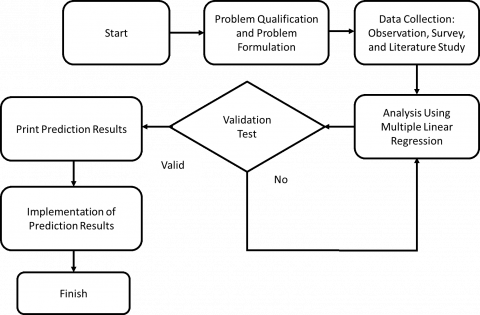
In the second stage, verification was carried out with multiple linear regression analysis used to test the influence of various environmental control factors on individual and group vandalism behavior. The analysis was carried out using Minitab 19 where software can help solid and tested statistical algorithms to calculate regression coefficients, R-squared, standard deviations, and various other accuracy measures, this can also display the results of graphing, checking assumptions, and validating models [47]. The software program to see the influence of each environmental control factor of CPTED such as Territoriality, Surveillance, Access Control, Physical Support, Image Management, Target Hardening, and Temperature on the vandalism intentions of TCP visitors, Respondents use the online form application that has been provided to assess and describe the characteristics of relevant attributes concluded by cross-tabulation data processing. In identifying research data, researchers conduct generalized data analysis and describe it in the form of diagrams. Flowcart can be found in Figure 1.
3.2 Sample and data collection methods
The sampling technique used in this study was nonprobability sampling with a purposive sampling approach. The selection of respondents was carried out based on certain criteria such as having visited and been active in the criteria park before and being an adult of at least 17 years old, physically healthy, and knowing the questions given. Although this approach has limitations in terms of generalization, it is considered appropriate to obtain information relevant to the context of this study. The total respondents were 522. A total of 515 respondents who were the sample of this study had passed the screening stage and 12 did not meet the criteria.
This research is to fill in the criteria for questions on the online form completely. Then the respondents fill in their personal data as validation. Park visitors who were prioritized to be respondents in this study who had been active in the park, were physically and mentally healthy [48], and were active in the park with a minimum level of low to moderate [49]. The survey interview was supplemented with photos related to vandalism conditions and the condition of the park's spatial area to facilitate respondents' understanding [50].
Figure 1. Flowchart of research
3.3 Selection of park types and selection of spatial areas
The type of TCP used is the comprehensive park type [51-53] is a TCP that is rich in content, suitable for all types of outdoor activities, and provides a variety of recreational management and support services. This park is considered to be able to cover the various needs of its users comprehensively compared to other types of parks and this park has a wide range of areas and various facilities. The comprehensive TCP chosen is the Surabaya Zoo (KBS) and Kenjeran Park Surabaya because these parks are popular parks with large areas and various facilities and have unique characteristics, then the park chosen is the paid type because according to Dinda and Ghosh [54], paid parks have more challenges for park managers because visitors expect to get an attractive environment, supportive social, facilities, and provide more benefits than free parks. The maps are shown in Figures 2 and 3.
Figure 2. KBS TCP maps
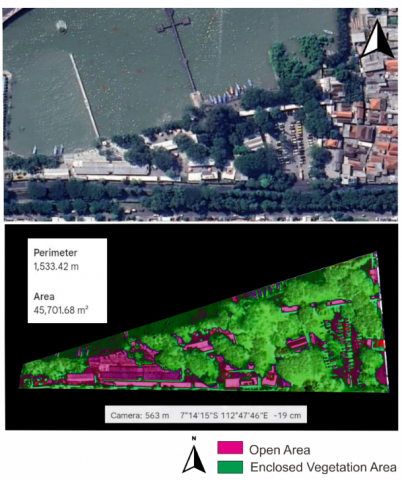
Figure 3. Kenjeran TCP maps
3.4 Selection of park types and selection of spatial areas
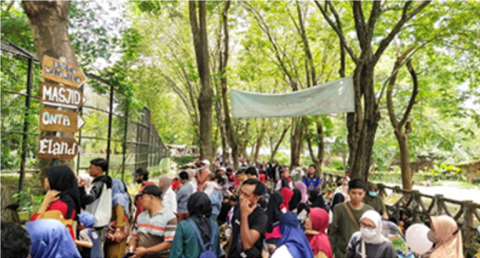
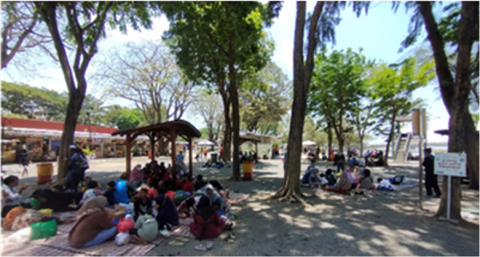
The spatial area selected in this study is a priority with category suitability [22, 55] where the spatial area is active with the density and diversity of visitor activities in it because dense park areas tend to be prone to vandalism and signs of vandalism on facilities [38]. The spatial area is divided based on the development from Sadeghi explaining that the design of vegetation density patterns in the park's spatial area that affects visitor perceptions can be divided into three classifications, namely: enclosed areas or areas where all sides are covered by vegetation canopy, semi-open area or an area partially covered by vegetation canopy and one side open, and open area, namely an area that is open from disturbance by vegetation canopy, the image can be found in Figures 4-9.
Figure 4. Enclosed spatial area of KBS Park
Figure 5. Enclosed spatial area of KBS Park
Figure 6. Semi-Open spatial area of KBS Park
Figure 7. Semi-open spatial area of Kenjeran Park
Figure 8. Open spatial area of KBS Park
Figure 9. Open spatial area of Kenjeran Park
The visitor data above shows in Table 2 that visitors are on average young adults with a range of 27 years and as many as 66% of visitors come to the park socially either with friends or family, while 34% come to the park individually. Furthermore, regarding the frequency of visits, tropical parks still have interest for their visitors with a dominant visit rate of once a month to once a year.
Table 2. Demographics of park respondents
|
Characteristics of the Participants (n = 515) |
|
|
Visitor Origin, n (%) |
|
|
From in the city |
357 (69) |
|
From out of the city |
158 (31) |
|
Age Mean |
27 |
|
Minimum |
18 |
|
Maximum |
60 |
|
Gender, n (%) |
|
|
Woman |
291 (56) |
|
Man |
224 (44) |
|
Status, n (%) |
|
|
Work |
195 (38) |
|
Student |
320 (62) |
|
Usual frequency of park visits, n (%) |
|
|
(High) at least once a month |
373 (72) |
|
(Medium) at least once a year |
78 (15) |
|
(Low) Once every few years |
64 (13) |
|
Arrival status, n (%) |
|
|
Come to the park alone |
177 (34) |
|
Come with others |
338 (66) |
|
Visit time, n (%) |
|
|
Morning (7 am – 10 am) |
280 (54) |
|
Afternoon (10 am – 1 pm) |
65 (13) |
|
Afternoon (1 pm – 4 pm) |
170 (33) |
|
Preferred Spatial Area, n (%) |
|
|
Open |
120 (23) |
|
Semi-Open |
299 (58) |
|
Enclosed |
96 (19) |
In the data on visiting times to the park, the results of respondents show that the dominant visiting times they prefer are when the sunlight is not at its maximum in the morning, namely at 7 AM - 10 AM as many as 54% and in the afternoon at 1 pm. – 4 pm as much as 33%, while during the day 10 am – 1 pm, as much as 13% shows that visitors prefer visiting times when the sun temperature is not high. The results of the respondents showed that the areas preferred by visitors were predominantly semi-open areas at 58%, indicating that visitors also preferred cool areas with low sun temperatures. This is because according to www.bmkg.go.id/, the average temperature of the city of Surabaya-Indonesia during the day is quite high around 31-34℃, while in the morning and evening, it is around 24-31℃.
4.1 Spatial area environmental design factors towards vandalism intentions
In addition to the high temperature factor due to sunlight, the survey results showed in Figure 10 that visitors can feel disturbed by the presence of vegetation that interferes with activities such as plant roots that enter the visitor area 120 (23%), followed by unkempt vegetation such as uncut branches that enter the area and sharp branches 133 (26%), and vegetation that is too dense with leaves blocking sunlight or blocking the view of the area 80 (15%). In addition, there are also other factors that disrupt visitor comfort, namely dirty spatial areas and lots of rubbish 56 (11%) and other factors such as vegetation containing lots of disturbing animals such as insects and ants 127 (25%).
Figure 10. Diagram of levels of visitor vandalism intentions
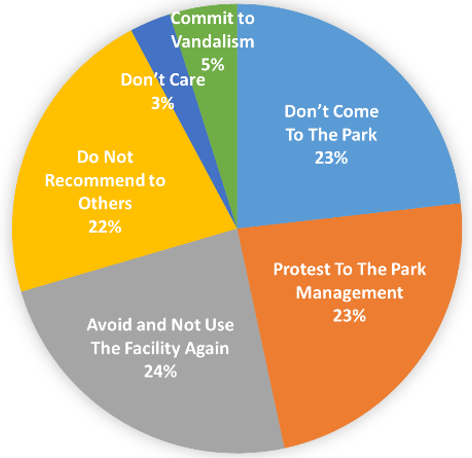
Figure 11. Diagram of the impact of discomfort on the level of vandalism intentions of visitors
The survey results also shows in Figure 11 that discomfort had a negative impact on visitors such as not coming back to the park 110 (23%), not recommending it to others 103 (22%), protesting to management 111 (23%), avoiding facilities and problem areas 113 (24%), committing vandalism 23 (5%) and not caring about the conditions 14 (3%).
4.2 Spatial area governance factors on vandalism intentions
Next is the result of activity control factor 515 Respondents of visitors to spatial areas with attributes on CPTED can influence the intention of vandalism. This has met the minimum number requirements for 7 predictors respondents according to Cohen's Effect Size Cohen, 1988 [56], namely Effect Size (f²): Small = 0.02 Medium = 0.15 Large = 0.35. Statistical power analysis formula: $\mathrm{n}=\left\{\left(\mathrm{L} / \mathrm{f}^2\right)+\mathrm{k}+1\right\}$.
where: $L=(1-\beta+Z 1-\alpha / 2)^2, \mathrm{k}=$ number of predictors, $\mathrm{f}^2=$ effect size, and minimum number of respondents. So, for $\mathrm{k}=7, \mathrm{f}^2=0.15$ (medium effect), power $=0.80, \alpha=0.05, Z=$ value of the normal distribution (z-score), approximately 103 respondents are needed, while for $f^2=0.02$ (small) approximately 481 respondents are needed.
Here is the main information:
1. Independent variables (X): Territoriality, Surveillance, Access Control, Physical Support, Image Management, Target Hardening, and Temperature
2. Dependent variable (Y):
(1) Y1: Damaging facilities individually.
(2) Y2: Destroying facilities in groups.
Regression Model & Results The regression equation for both dependent variables is formulated as:
$\begin{aligned} Y=\beta 0+\beta 1 X 1+\beta 2 X 2+\beta 3 X 3+\beta 4 X 4+\beta 5 X 5+\beta 6 X 6+\beta 7 X 7+\varepsilon \mathrm{Y} \\ = \beta 0+\beta 1 \mathrm{X} 1+\beta 2 \mathrm{X} 2+\beta 3 \mathrm{X} 3+\beta 4 \mathrm{X} 4+\beta 5 \mathrm{X} 5+\beta 6 \mathrm{X} 6+\beta 7 \mathrm{X} 7\end{aligned}$
where,
$Y$: the dependent variable (either Y1 or Y2)
$\beta 0$: the intercept
$\beta 0, \beta 1, \beta 2, \ldots, \beta 7$: the regression coefficients for each independent variable
$\varepsilon$: represents the error term.
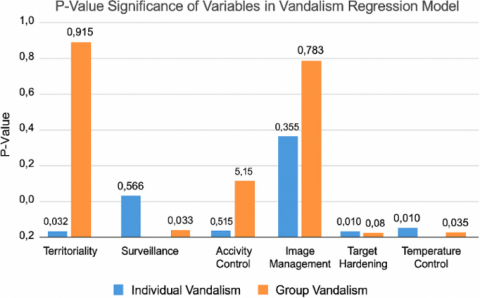
The results of data analysis can be found in Figure 12.
Figure 12. Results of data analysis significance
Next, before conducting a reliability test, it should first assess the internal consistency between items in each construct with Cronbach's Alpha. Results analysis shows that all variables have alpha values above 0.7, which indicates that the instruments used in this study are reliable. Therefore, all items are declared suitable for use in further regression analysis." Then the multicollinearity test is carried out by looking at the Variance Inflation Factor (VIF) value and tolerance for each independent variable. The test results show that all variables have a VIF value <10 and a Tolerance value> 0.1. Thus, it can be concluded that there is no multicollinearity in the regression model, so that all variables can be included in further analysis but multicollinearity as a validity test is not a concern in the description of the results.
4.3 Interpretation of regression coefficients
Table 3 shows the Territoriality (X1, 0.1251), Surveillance (X2, 0.1401), Activity Support (X4, 0.3228), and Temperature Control (X7, 0.1747) were significantly able to increase Individual Vandalism (Y1).
Table 3. Coefficients Y1 (Individual vandalism)
|
Term |
Coef |
SE Coef |
T-Value |
P-Value |
VIF |
|
Constant |
0.356 |
0.180 |
1.97 |
0.049 |
|
|
X1 Territoriality |
0.1251 |
0.0583 |
2.15 |
0.032 |
3.91 |
|
X2 Surveillance |
0.1401 |
0.0563 |
2.49 |
0.013 |
3.86 |
|
X3 Access Control |
-0.0341 |
0.0593 |
-0.57 |
0.566 |
4.00 |
|
X4 Activity Support |
0.3228 |
0.0600 |
5.38 |
0.000 |
4.17 |
|
X5 Image Management |
-0.0260 |
0.0399 |
-0.65 |
0.515 |
1.06 |
|
X6 Target Hardening |
0.0364 |
0.0614 |
0.59 |
0.554 |
4.57 |
|
X7 Temperature Control |
0.1747 |
0.0619 |
2.82 |
0.005 |
4.41 |
Access Control (X3, -0.1010), Image Management (X5, -0.0161), Image Management (X5, -0.0238), and Target Hardening (X6, 0.0364) are less significant in increasing Individual Vandalism (Y1).
Y1=0.356−0.1251X1+0.1401X2-0.0341X3+0.3228X4-0.0260X5+0.0364X6+0.1747X7 (1)
Table 4 shows the Surveillance (X2, 0.2075), Activity Support (X4, 0.2253), and Temperature Control (X7, 0.1552) were significantly able to increase Group Vandalism (Y2).
Table 4. Coefficients Y12 (Vandalism group)
|
Term |
Coef |
SE Coef |
T-Value |
P-Value |
VIF |
|
Constant |
0.647 |
0.214 |
3.03 |
0.003 |
|
|
X1 Territoriality |
0.0074 |
0.0690 |
0.11 |
0.915 |
3.91 |
|
X2 Surveillance |
0.2075 |
0.0667 |
3.11 |
0.002 |
3,86 |
|
X3 Access Control |
-0.1010 |
0.0702 |
-1.44 |
0.150 |
4.00 |
|
X4 Activity Support |
0.2253 |
0.0710 |
3.17 |
0.002 |
4.17 |
|
X5 Image Management |
-0,0161 |
0,0472 |
-0,34 |
0,733 |
1,06 |
|
X6 Target Hardening |
0.1343 |
0.0727 |
1.85 |
0.065 |
4.57 |
|
X7 Temperature Control |
0.1552 |
0.0733 |
2.12 |
0.035 |
4.41 |
Territoriality (X1, 0.0074), Access Control (X3, -0.1010), Image Management (X5, -0.0161), and Target Hardening (X6, 0.1343) were less significant in increasing Group Vandalism (Y2).
Y2=0.647−0.0074X1+0.134X2-0.1010X3+0.2253X4-0.0161X5+0.1343X6+0.1552X7 (2)
The model summary (Table 5) shows that the coefficient of determination (R²) for individual vandalism (Y1) indicates that 51.66% of the variance in individual vandalism can be explained by the independent variables. Similarly, the R² value for group vandalism (Y2) is 34.43% of the variance in group vandalism explained by the predictor variables.
Table 5. Model summary Y1 dan Y2 vandalism
|
Model |
S |
R2 |
R2 (adj) |
R2 (pred) |
|
Y1 (Individual Vandalism) |
0.939958 |
53.38% |
52.73% |
51.66% |
|
Y2 (Vandalism Group) |
1.11297 |
36.55% |
35.67% |
34.43% |
4.4 Overall interpretation
1) Territoriality has a significant effect on individual vandalism, but less effect on group vandalism.
2) Surveillance has a significant effect on individual vandalism and also has an effect on group vandalism.
3) Activity Support has a significant effect on individual vandalism and also has an effect on group vandalism.
4) Access Control has a less significant effect on individual vandalism and also has a less significant effect on group vandalism.
5) Image Management has less significant influence on individual vandalism and also less influence on group vandalism.
6) Target Hardening has less significant effect on individual vandalism and also less effect on group vandalism.
7) Temperature Control has a significant effect on individual vandalism and also has an effect on group vandalism.
The results of the study indicate that the vegetation design and environmental control factors in the TCP spatial area play a significant role in influencing vandalism behavior. In terms of environmental vegetation design, the results show that areas with high temperatures, either too closed or too open, tend to be avoided by visitors because they can increase the discomfort of activities. This is in accordance with the results of Hypothesis 1 which states that the TCP spatial area has a high temperature with an open vegetation pattern and direct exposure to sunlight causes potential discomfort or potential negative behavior for visitors [23, 57].
However, there is an interesting finding that enclosed areas with too dense vegetation also cause discomfort and create high temperatures according to the statement of Maruthaveeran and Van den Bosh [32] which states that areas that are too dense and completely covered by vegetation can increase the potential for vandalism and Richardson and Shackleton [34] stated that visitor discomfort in enclosed areas can lead to vandalism of the vegetation and surrounding facilities. This can be explained according to El-Metwally et al. [58] through prospect refuge theory that park visitors naturally feel comfortable and safe in a space that has prospects (ability to look around open) at once refuge (place for shelter). Lis et al. [59] added that vegetation that is too dense tends to reduce the quality of prospects, blocking the view and creating the impression of a closed space, which can create feelings of isolation and fear of hidden threats.
In addition, Wang et al. [60] explained that defensible space is also relevant, where dense and unkempt vegetation reduces visitors' ability to control and understand the surrounding space, as well as blurring territorial boundaries, contributing to increased anxiety and potential negative behavior.
Next is the conformity of the research results with hypothesis 2 which states that the TCP spatial area with unkempt vegetation can cause potential discomfort and negative behavior for visitors [61], as shown in the results of a descriptive survey which states that there are other factors that cause discomfort in the TCP spatial area. Vegetation factors play an important role in visitor discomfort such as vegetation that interferes with activities 23%, unkempt vegetation 26%, and vegetation that is too dense 15%. Next is the dirty surrounding area and lots of garbage 11% and vegetation with lots of disturbing animals as much as 25% as mentioned [62], although according to Biella et al. [63] good control of animal diversity in the park vegetation area can increase positive perceptions of visitors.
The environmental control factor in the TCP spatial area influences the intention of visitor vandalism. This is in accordance with the opinion of Vasiljević et al. [64] which states that poor environmental control in the park can reduce the value of positive perceptions and motivation of visitors. The findings are in line with previous studies which state that poor surveillance and access control can significantly increase group vandalism [18, 65]. This conformity is in accordance with the results of this study which states that there is a positive relationship to poor TCP governance on individual and social surveillance.
On the other hand, access control is negatively correlated with individual vandalism (Coef = -0.0341, p = 0.566) and groups (Coef = -0.1010, p = 0.150), this indicates that individual or group visitors are not disturbed by access problems in the spatial area, this can be explained by Hobbs et al. [66] which explains that the existence of supporting facilities such as good activity support in the TCP spatial area can improve the quality of visitor access. Furthermore, activity support emerged as the most significant predictor influencing individual vandalism (Coef = 0.3228, p = 0.000) and groups (Coef = -0.2253, p = 0.002), this emphasizes the importance of maintaining facilities and infrastructure in reducing bad perceptions [5] to increasing visitors' vandalism intentions [48].
Furthermore, findings show that image management has less significance on individual vandalism intentions (Coef = -0.260, p = 0.515) or visitor groups (Coef = -0.0161, p = 0.733), this shows that the design of an attractive environmental spatial area can influence positive public perceptions reducing visitor vandalism but monotonous design in the spatial area has no effect on negative behavior, as reported by Badiora et al. [67]. This supports the "broken windows" theory [68], which states that destructive behavior is more influenced by visitor activities with facility products than by the influence of the beauty of environmental design.
The interesting thing is that territoriality can affect individual vandalism intentions (Coef = 0.1251, p = 0.032), this shows that the potential for bad behavior of individual visitors can increase when there is confusion in the spatial area due to unclear information, especially in enclosed and densely vegetated areas [35]. On the other hand, the problem factor in territoriality has less influence on group vandalism intentions (Coef = 0.0074, p = 0.915), this shows that bad visitor behavior due to unclear information in the spatial area can be reduced by the availability of various facilities, attractions, area size, and vegetation in TCP which can be used for family and group activities [69].
Target hardening did not show a significant relationship with individual (Coef = 0.0364, p = 0.554) and group (Coef = 0.1343, p = 0.065) forms of vandalism. This is contrary to several previous studies which stated that environmental design elements, such as guardrails or clear information in spatial areas, can reduce crime rates [13]. An interesting finding is also on temperature control which can affect individual vandalism intentions (Coef = 0.1747, p = 0.005) and visitor groups (Coef = 0.1552, p = 0.035), this proves that high-temperature conditions in spatial areas coupled with visitor density in spatial areas can cause discomfort and negative behavior [36].
These findings provide valuable insights for TCP management and designers in designing safer and more comfortable public space spatial areas. Strengthening access control, supervision, and better maintenance of physical facilities supporting activities can effectively reduce the level of vandalism. Future research needs to explore these variables to understand more clearly the causal relationship and also the results that may differ in subtropical areas. Demographic and cultural factors can also be added to further research that can provide more comprehensive data.
5.1 Strengths and limitations
The main strength of this research is the comprehensive data analysis, namely through micro-macro control, which can answer the results in the form of descriptive to answer the phenomena and results in a verifiable manner. This can provide more comprehensive answers related to vandalism factors in the TCP spatial area from various visitor perspectives. Another strength of this study is that the features observed in vandalism factors are also broader, namely located in environmental design factors through vegetation patterns to macro factors in visitor activity control through CPTED but still concentrated on aspects of the TCP spatial area.
The research that has been conducted is expected to help provide broader insight into how stimuli cause discomfort in visitor behavior in TCP to cause negative impacts of vandalism when interacting in the TCP spatial area. This study provides observations of features related to environmental control which can be input for stakeholders in the renovation and improvement of vegetation management problems to the application of TCP spatial area design.
This study also has advantages by considering the perspective of the assessment of paid TCP, this can provide input to TCP managers to provide better services to environmental design that affects vandalism and differences in the description of the impact that occurs due to visitor dissatisfaction when doing activities in the park. This description provides a deeper level of previous research by also considering the features of the role of vegetation in environmental control governance factors of CPTED.
This study has limitations, first, this study focuses on vandalism in the spatial area and the lack of analysis in the analysis of entire TCP area, then the vandalism control using CPTED which still has many other factor developments that can also add to the results that have not been discussed in this study. This study also has other shortcomings, namely the focus of this study on comprehensive type parks so that there is a lack of approach to other types of park characters that may have different results, the last is this study does not reach depth in the demographic and cultural factors of respondents who can provide insight and results from various perspectives that can be more comprehensive.
5.2 Managerial implications
For suggestions for service improvement projects for TCP visitors in the future, managers should consider the following as recommendations for visitor comfort in carrying out activities in the TCP spatial area. In vegetation planning, TCP planners should consider areas that tend to cause discomfort such as high temperatures and routine vegetation maintenance so as not to interfere with activities to conditions that are too dense, because in this study it can be seen that unkempt vegetation can cause irritation to vandalism among visitors. This factor can be designed by considering several spatial vegetation area designs that have a balance of openness with protection from direct sunlight such as a semi-open spatial area pattern that makes visitors more comfortable.
Next is the maintenance of facilities such as fences as target hardening such as fences that are more resistant to friction and shocks from visitors to protect vegetation or plants from bad visitor behavior. Next are suggestions that can be made by TCP managers to pay attention to environmental control factors such as better area supervision, providing clear and easily understood information boards for visitors and easy-to-see placement to avoid confusion in the spatial area. Next is the design of roads around the large facility area and maintaining cleanliness to avoid visitor discomfort when the situation is crowded and jostling.
Activity Support is a priority because it is the most significant in influencing individual and group vandalism. For that, the design of supporting activity facilities with safety such as pads on facilities that function to support activities and the availability of other supporting facilities such as trash bins to sinks can help visitors' comfort when doing activities in the spatial area besides vegetation factors. Environmental care is also important to avoid a bad image in the area such as cleaning wild plants, cleaning up trash, and providing attractive accessories.
Another additional suggestion is that park managers should also pay attention to other factors that can affect vandalism, this study shows that the influence of hot temperatures influenced by sunlight can affect the discomfort of visitors doing activities, managers can pay more attention at certain times when visitors are more crowded such as in the morning which makes visitors more active and allows collisions to occur. For that, managers can supervise and provide better service at the favorite times for visitors to come to TCP, especially providing easy information and friendly service.
This study provides a more comprehensive picture of previous studies where micro-macro control factors in public open spaces such as TCP can be a synergistic assessment for handling vandalism for environmental spatial areas. Environmental design factors are important in this study because the TCP spatial area is greatly influenced by the role of vegetation in providing visitor comfort from the Urban Heat Island (UHI) and environmental control to improve the safety of visitor activities when in the spatial area. Several influences of CPTED factors have proven to provide significant results on individual and group visitor vandalism, this can be an interesting study for academics and TCP management to understand the influence of public spatial area design in providing visitor comfort and safety.
This research was supported by the Doctor of Technology Management at the Institut Teknologi Sepuluh Nopember (ITS), Universitas Dinamika Surabaya, Surabaya City Environmental Government, and TCP Surabaya. We are grateful to our fellow students of the Doctor of Technology Management at Institut Teknologi Sepuluh Nopember Surabaya and many other colleagues who assisted in the information and sampling of the environment park.
[1] Zong, L. (2020). The path to effective national park conservation and management: Hainan tropical rainforest National Park System Pilot Area. International Journal of Geoheritage and Parks, 8(4): 225-229. https://doi.org/10.1016/j.ijgeop.2020.11.009
[2] Shi, M.Q., Wang, Y.T., Lv, H.Q., Jia, W.X. (2023). Climate gentrification along with parks’ cooling performance in one of China’s tropical industrial cities. Science of The Total Environment, 892: 164603. https://doi.org/10.1016/j.scitotenv.2023.164603
[3] Banerjee, S., Yik, S.K., Dzyuban, Y., Crank, P.J., Yi, R.P.X., Chow, W.T. (2022). Analysing impacts of urban morphological variables and density on outdoor microclimate for tropical cities: A review and a framework proposal for future research directions. Building and Environment, 225: 109646. https://doi.org/10.1016/j.buildenv.2022.109646
[4] Zhang, Y., Ong, G.X., Jin, Z., Seah, C.M., Chua, T.S. (2022). The effects of urban greenway environment on recreational activities in tropical high-density Singapore: A computer vision approach. Urban Forestry & Urban Greening, 75: 127678. https://doi.org/10.1016/j.ufug.2022.127678
[5] Au-Yong, C.P., Gan, X.N., Azmi, N.F., Zainol, R., Radzuan, I.S.M. (2023). Maintenance priority towards the features and facilities in Malaysian public parks: Visitors’ perspective versus actual experience. Ain Shams Engineering Journal, 14(9): 102133. https://doi.org/10.1016/j.asej.2023.102133
[6] Oulmouden, S., El Bat, A.M.S., Rodler, A., Guernouti, S., Bernard, J., Gros, A., Morille, B., Musy, M. (2024). Developing simplified metamodels for assessing urban park cooling effect on the thermal behavior of the residential buildings: A case study in Nantes, France during a heat wave. Building and Environment, 266: 112090. https://doi.org/10.1016/j.buildenv.2024.112090
[7] Al-Saedi, D.F.S., Chamani, A. (2024). Integrating public perception and quantitative metrics for improved urban park planning in Isfahan, Iran. Trees, Forests and People, 18: 100729. https://doi.org/10.1016/j.tfp.2024.100729
[8] Taloor, A.K., Parsad, G., Jabeen, S.F., Sharma, M., Choudhary, R., Kumar, A. (2024). Analytical study of land surface temperature for evaluation of UHI and UHS in the city of Chandigarh India. Remote Sensing Applications: Society and Environment, 35: 101206. https://doi.org/10.1016/j.rsase.2024.101206
[9] Cahyadi, H.S., Newsome, D. (2021). The post COVID-19 tourism dilemma for geoparks in Indonesia. International Journal of Geoheritage and Parks, 9(2): 199-211. https://doi.org/10.1016/j.ijgeop.2021.02.003
[10] Winarni, N.L., Pradana, D.H., Ayujawi, S.A., Zackeisha, N., Anugra, B.G., Wulandari, Y., Syachrudin, D. (2022). Problems in paradise: Mangrove bird communities impacted by litter in Jakarta Bay, Indonesia. Ocean & Coastal Management, 225: 106223. https://doi.org/10.1016/j.ocecoaman.2022.106223
[11] Fenitra, R.M., Laila, N., Premananto, G.C., Abbas, A., Sedera, R.M.H. (2023). Explaining littering prevention among park visitors using the Theory of Planned Behavior and Norm Activation Model. International Journal of Geoheritage and Parks, 11(1): 39-53. https://doi.org/10.1016/j.ijgeop.2022.11.002
[12] Arifin, Z., Falahudin, D., Saito, H., Mintarsih, T.H., Hafizt, M., Suteja, Y. (2023). Indonesian policy and researches toward 70% reduction of marine plastic pollution by 2025. Marine Policy, 155: 105692. https://doi.org/10.1016/j.marpol.2023.105692
[13] Mahrous, A.M., Moustafa, Y.M., Abou El-Ela, M.A. (2018). Physical characteristics and perceived security in urban parks: Investigation in the Egyptian context. Ain Shams Engineering Journal, 9(4): 3055-3066. https://doi.org/10.1016/j.asej.2018.07.003
[14] Bhuiyan, M.A.H., Darda, M.A., Hasan, M.R. (2021). Tourist perception and satisfaction on safari tourism at Bangabandhu Sheikh Mujib Safari Park in Bangladesh. International Journal of Geoheritage and Parks, 9(4): 430-440. https://doi.org/10.1016/j.ijgeop.2021.11.005
[15] Chuang, I.T., Benita, F., Tunçer, B. (2022). Effects of urban park spatial characteristics on visitor density and diversity: A geolocated social media approach. Landscape and Urban Planning, 226: 104514. https://doi.org/10.1016/j.landurbplan.2022.104514
[16] Wu, J.H., Lin, H.W., Liu, W.Y. (2020). Tourists’ environmental vandalism and cognitive dissonance in a National Forest Park. Urban Forestry & Urban Greening, 55: 126845. https://doi.org/10.1016/j.ufug.2020.126845
[17] Gomes, V., Dionisio, A., Pozo-Antonio, J.S. (2017). Conservation strategies against graffiti vandalism on Cultural Heritage stones: Protective coatings and cleaning methods. Progress in Organic Coatings, 113: 90-109. https://doi.org/10.1016/j.porgcoat.2017.08.010
[18] Douglas, J.A., Briones, M.D., Bauer, E.Z., Trujillo, M., Lopez, M., Subica, A.M. (2018). Social and environmental determinants of physical activity in urban parks: Testing a neighborhood disorder model. Preventive Medicine, 109: 119-124. https://doi.org/10.1016/j.ypmed.2018.01.013
[19] Farkas, J.Z., Hoyk, E., de Morais, M.B., Csomós, G. (2023). A systematic review of urban green space research over the last 30 years: A bibliometric analysis. Heliyon, 9(2): e13406. https://doi.org/10.1016/j.heliyon.2023.e13406
[20] Van Puyvelde, A., Deforche, B., Mertens, L., Rivera, E., Van Dyck, D., Veitch, J., Poppe, L. (2023). Park features that encourage park visitation among older adults: A qualitative study. Urban Forestry & Urban Greening, 86: 128026. https://doi.org/10.1016/j.ufug.2023.128026
[21] Do, D.T., Cheng, Y., Shojai, A., Chen, Y. (2019). Public park behaviour in Da Nang: An investigation into how open space is used. Frontiers of Architectural Research, 8(4): 454-470. https://doi.org/10.1016/j.foar.2019.05.006
[22] Taylor, L., Leckey, E.H., Lead, P.J., Hochuli, D.F. (2020). What visitors want from urban parks: Diversity, utility, serendipity. Frontiers in Environmental Science, 8: 595620. https://doi.org/10.3389/fenvs.2020.595620
[23] Huang, X.Z., Yao, R.M., Xu, T.T., Zhang, S.X. (2023). The impact of heatwaves on human perceived thermal comfort and thermal resilience potential in urban public open spaces. Building and Environment, 242: 110586. https://doi.org/10.1016/j.buildenv.2023.110586
[24] Zhang, W., Su, Y. (2024). Perception study of urban green spaces in Singapore urban parks: Spatio-temporal evaluation and the relationship with land cover. Urban Forestry & Urban Greening, 99: 128455. https://doi.org/10.1016/j.ufug.2024.128455
[25] Taylor, R.B., Haberman, C.P., Groff, E.R. (2019). Urban park crime: Neighborhood context and park features. Journal of Criminal Justice, 64: 101622. https://doi.org/10.1016/j.jcrimjus.2019.101622
[26] Zhai, Y.J., Li, D.Y., Wu, C.Z., Wu, H.B. (2021). Urban park facility use and intensity of seniors’ physical activity—An examination combining accelerometer and GPS tracking. Landscape and Urban Planning, 205: 103950. https://doi.org/10.1016/j.landurbplan.2020.103950
[27] Best, L., Schwarz, N., Obergh, D., Teuling, A.J., Van Kanten, R., Willemen, L. (2023). Urban green spaces and variation in cooling in the humid tropics: The case of Paramaribo. Urban Forestry & Urban Greening, 89: 128111. https://doi.org/10.1016/j.ufug.2023.128111
[28] Sadeghi, Z., Bin, M.H. (2023). Enhancing recreational activities through planting design in neighborhood parks. Journal of Outdoor Recreation and Tourism, 42: 100591. https://doi.org/10.1016/j.jort.2022.100591
[29] Boakye, K.A., Amram, O., Schuna Jr, J.M., Duncan, G.E., Hystad, P. (2021). GPS-based built environment measures associated with adult physical activity. Health & Place, 70: 102602. https://doi.org/10.1016/j.healthplace.2021.102602
[30] Kurka, J.M., Adams, M.A., Todd, M., Colburn, T., Sallis, J.F., Cain, K.L., Glanz, K., Frank, L.D., Saelens, B.E. (2015). Patterns of neighborhood environment attributes in relation to children's physical activity. Health & Place, 34: 164-170. https://doi.org/10.1016/j.healthplace.2015.05.006
[31] Huang, J.H., Hipp, J.A., Marquet, O., Alberico, C., Fry, D., Mazak, E., Lovasi, G.S., Robinson, W.R., Floyd, M.F. (2020). Neighborhood characteristics associated with park use and park-based physical activity among children in low-income diverse neighborhoods in New York City. Preventive Medicine, 131: 105948. https://doi.org/10.1016/j.ypmed.2019.105948
[32] Maruthaveeran, S., Van den Bosh, C.K. (2015). Fear of crime in urban parks—What the residents of Kuala Lumpur have to say? Urban Forestry & Urban Greening, 14(3): 702-713. https://doi.org/10.1016/j.ufug.2015.05.012
[33] Esperon-Rodriguez, M., Quintans, D., Rymer, P.D. (2023). Urban tree inventories as a tool to assess tree growth and failure: The case for Australian cities. Landscape and Urban Planning, 233: 104705. https://doi.org/10.1016/j.landurbplan.2023.104705
[34] Richardson, E., Shackleton, C.M. (2014). The extent and perceptions of vandalism as a cause of street tree damage in small towns in the Eastern Cape, South Africa. Urban Forestry & Urban Greening, 13(3): 425-432. https://doi.org/10.1016/j.ufug.2014.04.003
[35] Sezavar, N., Pazhouhanfar, M., Van Dongen, R.P., Grahn, P. (2023). The importance of designing the spatial distribution and density of vegetation in urban parks for increased experience of safety. Journal of cleaner production, 403: 136768. https://doi.org/10.1016/j.jclepro.2023.136768
[36] Song, Y., Wei, Q. (2024). Impact of apparent temperatures on park visitation behavior: A comprehensive analysis using large-scale mobility data. Science of the Total Environment, 940: 173388. https://doi.org/10.1016/j.scitotenv.2024.173388
[37] Bhati, A., Pearce, P. (2016). Vandalism and tourism settings: An integrative review. Tourism Management, 57: 91-105. https://doi.org/10.1016/j.tourman.2016.05.005
[38] Bhati, A., Pearce, P. (2017). Tourist attractions in Bangkok and Singapore; linking vandalism and setting characteristics. Tourism Management, 63: 15-30. https://doi.org/10.1016/j.tourman.2017.05.014
[39] Portman, M.E., Behar, D. (2020). Influencing beach littering behaviors through infrastructure design: An in situ experimentation case study. Marine Pollution Bulletin, 156: 111277. https://doi.org/10.1016/j.marpolbul.2020.111277
[40] Othman El Sayed, R. (2019). Design against vandalism as a newapproach to landscape maintenance in urban open spaces. Journal of Engineering Sciences, 47(2): 218-235. https://doi.org/10.21608/jesaun.2019.115124
[41] Piroozfar, P., Farr, E.R., Aboagye-Nimo, E., Osei-Berchie, J. (2019). Crime prevention in urban spaces through environmental design: A critical UK perspective. Cities, 95: 102411. https://doi.org/10.1016/j.cities.2019.102411
[42] Cozens, P., Love, T. (2015). A review and current status of crime prevention through environmental design (CPTED). Journal of Planning Literature, 30(4): 393-412. https://doi.org/10.1177/0885412215595440
[43] Jeffery, C.R. (1971). Crime prevention through environmental design. American Behavioral Scientist, 14(4): 598-598. https://doi.org/10.1177/000276427101400409
[44] Stoffregen, S.A., Giordano, F.B., Lee, J. (2019). Psycho-socio-cultural factors and global occupational safety: Integrating micro-and macro-systems. Social Science & Medicine, 226: 153-163. https://doi.org/10.1016/j.socscimed.2019.02.046
[45] Peng, J.X., Wei, Z.H., Wang, S.F., Qiu, S. (2023). Toward dynamic regulation of bidirectional automatic fare gates: A macro-to-micro simulation approach. Simulation Modelling Practice and Theory, 124: 102723. https://doi.org/10.1016/j.simpat.2023.102723
[46] Pervaz, S., Bhowmik, T., Eluru, N. (2022). Integrating macro and micro level crash frequency models considering spatial heterogeneity and random effects. Analytic Methods in Accident Research, 36: 100238. https://doi.org/10.1016/j.amar.2022.100238
[47] Ermergen, T., Taylan, F. (2024). Investigation of DOE model analyses for open atmosphere laser polishing of additively manufactured Ti-6Al-4V samples by using ANOVA. Optics & Laser Technology, 168: 109832. https://doi.org/10.1016/j.optlastec.2023.109832
[48] Odufuwa, B., Badiora, A.I., Olaleye, D.O., Akinlotan, P.A., Adebara, T.M. (2019). Perceived personal safety in built environment facilities: A Nigerian case study of urban recreation sites. Journal of Outdoor Recreation and Tourism, 25: 24-35. https://doi.org/10.1016/j.jort.2018.11.002
[49] Zhai, Y.J., Li, D.Y., Wu, C.Z., Wu, H.B. (2023). Spatial distribution, activity zone preference, and activity intensity of senior park users in a metropolitan area. Urban Forestry & Urban Greening, 79: 127761. https://doi.org/10.1016/j.ufug.2022.127761
[50] Van Hecke, L., Ghekiere, A., Van Cauwenberg, J., Veitch, J., De Bourdeaudhuij, I., Van Dyck, D., Clarys, P., De Weghe,, N.V., Deforche, B. (2018). Park characteristics preferred for adolescent park visitation and physical activity: A choice-based conjoint analysis using manipulated photographs. Landscape and Urban Planning, 178: 144-155. https://doi.org/10.1016/j.landurbplan.2018.05.017
[51] Kong, L.Q., Liu, Z.F., Pan, X.H., Wang, Y.H., Guo, X., Wu, J.G. (2022). How do different types and landscape attributes of urban parks affect visitors' positive emotions? Landscape and Urban Planning, 226: 104482. https://doi.org/10.1016/j.landurbplan.2022.104482
[52] Mahmoudi, B., Sorouri, Z., Zenner, E.K., Mafi-Gholami, D. (2022). Development of a new social resilience assessment model for urban forest parks. Environmental Development, 43: 100724. https://doi.org/10.1016/j.envdev.2022.100724
[53] Zhang, S., Zhou, W. (2018). Recreational visits to urban parks and factors affecting park visits: Evidence from geotagged social media data. Landscape and Urban Planning, 180: 27-35. https://doi.org/10.1016/j.landurbplan.2018.08.004
[54] Dinda, S., Ghosh, S. (2021). Perceived benefits, aesthetic preferences and willingness to pay for visiting urban parks: A case study in Kolkata, India. International Journal of Geoheritage and Parks, 9(1): 36-50. https://doi.org/10.1016/j.ijgeop.2020.12.007
[55] Paneerchelvam, P.T., Maruthaveeran, S., Maulan, S., Shukor, S.F.A. (2020). The use and associated constraints of urban greenway from a socioecological perspective: A systematic review. Urban Forestry & Urban Greening, 47: 126508. https://doi.org/10.1016/j.ufug.2019.126508
[56] Correll, J., Mellinger, C., McClelland, G.H., Judd, C.M. (2020). Avoid Cohen’s ‘small’,‘medium’, and ‘large’for power analysis. Trends in Cognitive Sciences, 24(3): 200-207. https://doi.org/10.1016/j.tics.2019.12.009
[57] Anderson, C.C., Sophie, U.J., Schmidt, S. (2024). Visitor motivations and design feature use for thermal comfort on hot days in Bochum City Park, Germany. Urban Forestry & Urban Greening, 102: 128564. https://doi.org/10.1016/j.ufug.2024.128564
[58] El-Metwally, Y., Khalifa, M., Elshater, A. (2021). Quantitative study for applying prospect-refuge theory on perceived safety in Al-Azhar Park, Egypt. Ain Shams Engineering Journal, 12(4): 4247-4260. https://doi.org/10.1016/j.asej.2021.04.016
[59] Lis, A., Zalewska, K., Iwankowski, P., Betkier, K., Bilska, P., Dudar, V., Łągiewka, A. (2024). Evaluation of sense of safety and privacy in parks in relation to the topography, the presence of dense vegetation and other people in the area. Landscape and Urban Planning, 242: 104948. https://doi.org/10.1016/j.landurbplan.2023.104948
[60] Wang, R., Cleland, C.L., Weir, R., McManus, S., Martire, A., Grekousis, G., Bryan, D., Hunter, R.F. (2024). Rethinking the association between green space and crime using spatial quantile regression modelling: Do vegetation type, crime type, and crime rates matter? Urban Forestry and Urban Greening, 101: 128523. https://doi.org/10.1016/j.ufug.2024.128523
[61] Pardela, Ł., Lis, A., Zalewska, K., Iwankowski, P. (2022). How vegetation impacts preference, mystery and danger in fortifications and parks in urban areas. Landscape and Urban Planning, 228: 104558. https://doi.org/10.1016/j.landurbplan.2022.104558
[62] Han, D., Wang, C., Sun, Z., She, J., Yin, L., Bian, Q., Han, W. (2022). Microhabitat preferences of butterflies in urban parks: Both vegetation structure and resources are decisive. Urban Forestry & Urban Greening, 71: 127552. https://doi.org/10.1016/j.ufug.2022.127552
[63] Biella, P., Borghesan, S., Colombo, B., Galimberti, A., Guzzetti, L., Maggioni, D., Pioltelli, E., Ramazzotti, F., Ranalli, R., Tommasi, N., Labra, M. (2025). Lawn management promoting tall herbs, flowering species and urban park attributes enhance insect biodiversity in urban green areas. Urban Forestry & Urban Greening, 104: 128650. https://doi.org/10.1016/j.ufug.2024.128650
[64] Vasiljević, Đ.A., Vujičić, M.D., Stankov, U., Dragović, N. (2023). Visitor motivation and perceived value of periurban parks-Case study of Kamenica park, Serbia. Journal of Outdoor Recreation and Tourism, 42: 100625. https://doi.org/10.1016/j.jort.2023.100625
[65] Zhang, S.Q., Qin, X., Zhen, F., Huang, Y.J., Kong, Y. (2023). Do surveillance cameras improve perceived neighborhood safety? A case study of Nanjing, China. Cities, 140: 104423. https://doi.org/10.1016/j.cities.2023.104423
[66] Hobbs, M., Green, M.A., Griffiths, C., Jordan, H., Saunders, J., Grimmer, H., McKenna, J. (2017). Access and quality of parks and associations with obesity: A cross-sectional study. SSM-Population Health, 3: 722-729. https://doi.org/10.1016/j.ssmph.2017.07.007
[67] Badiora, A.I., Dada, O.T., Adebara, T.M. (2021). Correlates of crime and environmental design in a Nigerian international tourist attraction site. Journal of Outdoor Recreation and Tourism, 35: 100392. https://doi.org/10.1016/j.jort.2021.100392
[68] Liu, J.Y., Wu, J.S., Che, T.T. (2019). Understanding perceived environment quality in affecting tourists’ environmentally responsible behaviours: A broken windows theory perspective. Tourism Management Perspectives, 31: 236-244. https://doi.org/10.1016/j.tmp.2019.05.007
[69] Zhang, D.L., Ma, S.F., Fan, J.H., Xie, D.X., Jiang, H.Y., Wang, G.W. (2023). Assessing spatial equity in urban park accessibility: An improve two-step catchment area method from the perspective of 15-mintue city concept. Sustainable Cities and Society, 98: 104824. https://doi.org/10.1016/j.scs.2023.104824