Cristina Zapien Guerrero* | Vianey Torres-Arguelles | Roberto Romero-López
© 2025 The authors. This article is published by IIETA and is licensed under the CC BY 4.0 license (http://creativecommons.org/licenses/by/4.0/).
OPEN ACCESS
Companies worldwide play a crucial role in economic and sustainable development, particularly Small and Medium Enterprises (SMEs), which drive economic growth, social progress, and environmental responsibility. In Mexico, SMEs must balance profitability with sustainability. This document presents the development and implementation of a new methodology designed to integrate sustainability—economic, social, environmental, and technological—into an electronic components company in the Northern Border Region of Mexico. The proposed methodology follows a five-step approach: analysis, design, development, evaluation, and standardization. This iterative process emphasizes strategy development and performance indicators. Key success factors identified include strong top management support, a dedicated project team, and high employee engagement. However, challenges such as limited resources and time constraints hinder implementation. The results demonstrate a 30% improvement in sustainability evaluation after applying the methodology. These findings provide valuable insights for other SMEs looking to adapt sustainability practices effectively. This study contributes to the scientific discourse on sustainability adaptation, emphasizing best practices and challenges.
case study, industry, SME, sustainability, sustainable manufacturing
Given the emergence of Sustainability on the global agenda [1] their implementation of sustainability in manufacturing companies and industries is an increasingly relevant topic in today’s global context [2-4]. Faced with growing environmental, social, and economic challenges, organizations in these sectors must transform their operations and strategies to align with principles that promote sustainable development mitigate negative environmental impacts but also generates long-term value for all stakeholders, including customers, employees, communities, and shareholders [5-7]. The regulatory framework also plays a fundamental role in promoting sustainability in manufacturing and industries, in many countries, governments have implemented specific laws and regulations to encourage companies to adopt sustainable practices, this includes regulations for managing hazardous waste, energy efficiency requirements in production processes, and carbon emission reduction targets [8]. Furthermore, international organizations like the United Nations have established global initiatives, such as the Sustainable Development Goals (SDGs), which provide a roadmap for industrial companies to contribute to sustainable development [9]. In Mexico, the growing demand for adaptation and its alignment with programs such as the Federal Attorney for Environmental Protection in Mexico. It has motivated companies as well as CEOs around the world to put it into practice and know its definition [10]. Sustainability in manufacturing companies can be defined as “the adoption of business strategies and activities that meet the current needs of the company and its stakeholders, while protecting, maintaining and improving human and natural resources that will be needed in the future”, these manufacturing sectors not only significantly enhance the GDP and create jobs, but they also severely damage the ecological environment [11]. The concept of sustainability in manufacturing and industrial companies is based on integrating three fundamental pillars: environmental, social, and economic. These pillars are interdependent, and their combination is essential to ensure organizations can operate responsibly and profitably over time [12]. The environmental pillar focuses on reducing the ecological footprint of industrial activities by implementing practices such as energy efficiency, proper management of natural resources, and reducing pollutant emissions [13]. Meanwhile, the social pillar seeks to ensure safe and fair working conditions, promote diversity and inclusion in industrial settings, and contribute to the well-being of the communities where these companies operate [14]. Finally, the economic pillar involves ensuring the financial viability of the organization while generating shared benefits [15], and promoting technological innovation [16]. Regardless of the size of the company, adapting sustainability helps reduce resource use, save money and increase benefits for both society and employees [17-19]. Numerous scholars have highlighted the importance of sustainability management in SMEs [20-23]. Incorporating sustainability into business activity improves their competitive position also represents an opportunity for manufacturing companies and industries, as a result if SMEs that demonstrate a genuine commitment to sustainability are more likely to gain business and customer how allows them to adapt to the value chain of large companies.
According to Porter [24], a company is considered profitable if it is able to generate a higher value than the costs incurred in creating the product. A value chain is formed by several generic categories of primary activities; i.e., Inbound and Outbound Logistics, Operations, Marketing, Sales, and Service and also support activities such as Human resources management, technology development, and procurement, which are useful in delivering valuable products or services to the market [25, 26].
SMEs occupy a key place in the Mexican economy, being 99.87% of the companies generating 72% of employment and 52% of GDP [27, 28], in turn, the manufacturing industry is the sector that contributes with a greater percentage to the GDP of Mexico with 20% hence the relevance of implementing said methodology in that sector [29] and in particular an SME in Chihuahua that is part of the Northern Border Region which includes the entities of: Baja California, Baja California Sur, Coahuila de Zaragoza, Chihuahua, Nuevo León, Sinaloa, Sonora and Tamaulipas [30].
There are a lot of methodologies and tools as presented by Vercalsteren et al. [31]: Material Flow Analysis (MFA), Material Input Per Unit of Service (MIPS), Raw Material Consumption (RMC), Material System Analysis (MSA), End of Life Recycling Input Rate (EOL-RIR), Basket of Products (BoP), Product Environmental Footprint (PEF), Life Cycle Assessment (LCA), is an important tool to support the management direction, with this analysis it is possible to verify the environmental, economic and social impacts of a given product, service or process, it also helps in the improvement and advancement of cleaner production and sustainability [32].
The purpose of this article is to develop a methodology to contribute to sustainability from the strategic management process by adding the technology pillar. The first section deals with the proposed stages and the main methods used to introduce the principles of sustainability to the strategic management process, which includes an evaluation tool. The second section shows the main results of the application of the methodology in an SME of the automotive manufacturing sector adapts to a third party or second party located in the border region of Mexico use the GWP (Global Warming Potential) indicator. The third section discusses the main results of the application of the methodology and finally the conclusions of the research are presented [33], but the proposed emissions calculations are based on metrics of the country and are presented in a simpler way.
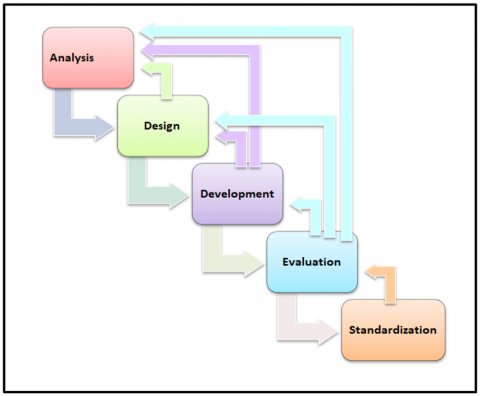
The following theoretical-methodological guide is proposed, the implementation of which firstly raises the Mission, Vision and Objective that consider sustainability (Table 1), and secondly the method Figure 1, which consists of five iterative stages, which must be carried out.
The statement of the mission, vision and objectives with a theoretical consideration is based on the need for a change of thinking since it requires effort and commitment to adopt sustainability in areas such as investment, training and planning to adopt operational and structural changes; in this sense, Broo [34] states that a new way of thinking is needed, that is, a revolution in culture and thinking to adopt sustainability because there are barriers that need to be broken, therefore, the commitment of management is important, and assigning a leading human resource for environmental care; in order to carry out and follow up on the methodology, for which it is necessary to establish a multidisciplinary team made up of all essential areas or departments. The methodological design of the five iterative stages is shown in Figure 1 and is explained below:
Figure 1. Methodological design for the adoption of sustainability focused on SME industries
Table 1. Mission, vision and methodology objective
|
Mission |
Direct the company's activities towards sustainability adaptation. |
|
Vision |
Have a novel and efficient methodology to adopt sustainability in the company. |
|
Objective |
Create an environmental commitment from the company's management and employees. |
|
Goal |
Compliance with the evaluation with measurement instrument developed by Zapien Guerrero [35], at 75% or more, to ensure its implementation. |
• Analysis: Before developing a sustainability management system, it is essential to carry out an analysis based on the measurement instrument proposed by Zapien Guerrero [35]. Without a precise analysis, successful adoption is not possible. For this reason, it is also important to collect information about the company; processes it uses, both productive and administrative, installed equipment, products it generates, raw materials, waste generated in order to understand all operations and their interrelations, consumption of resources such as water and energy [36, 37]. At the end of the analysis, a document will be obtained with practices that are carried out and those that are not, opportunities for improvement, and it will also have a process diagram of the inputs; raw material, water, electricity and gas, among others) and the output scrap, emissions and water waste among others [38, 39]. Likewise, an analysis of its value chain and a design analysis will be generated in order to observe where an eco-design can be implemented, finally, a portfolio or analysis of the implemented technologies will be carried out [40, 41].
• Design: Taking into account the requirements of the environment, which have been extracted from the initial analysis, the design of the actions to be carried out is carried out, generating options and evaluating their technical and economic viability, this can be helped by techniques such as cause and effect diagram, dispersion diagram, FMEA (Failure Mode and Effect Analysis), SWOT (strength, opportunities, weaknesses and threats), Pareto diagram, Decision tree, ROI (return on investment) study as mentioned by some authors [42-45]; by establishing the feasible and most convenient actions due to the impact that could be generated, we proceed to identify the person in charge of the area or department that affects the implementation of the activities in order to have an instructional design with the activities and leaders or managers who will carry out said activity. As a previous step to developing the adaptation of sustainability, training is necessary for all company employees [46], highlighting the importance of adopting sustainability and the balance it achieves between society, the environment and the economy through the minimization of negative impacts on the environment, safe products and processes for employees, communities and consumers, of course considering economic profitability, if necessary, returning to the previous step of analysis to add information.
• Development: The development phase continues, in which the plan is executed. At this stage, the leader or area assignee plays an active role in carrying out the training and corresponding activities. Likewise, the human resource assigned to environmental care must have a Gantt chart to plan and schedule tasks in order to follow up on the practices or actions to be implemented [47], in order to create procedures, generating a sustainable practices management system; this must be prepared for the evaluation phase.
• Evaluation: The evaluation seeks to determine what the flaws are at the analysis, design and development level. From these, we will return to the relevant phases to continue with the process again. When the person responsible for the methodology in the company approves this stage, we will continue with the standardization stage. Heterogeneity among SMEs is obstacles to the comparison of evaluation results [48], but many authors emphasize the importance of the evaluation [49-54]. Specifically in the industries performance criteria are important as mentioned [55]; and the following methodologies provide a structured and standardized tool to measure and optimize sustainable performance in the industry.
• Standardization: The standardization of processes is essential for the success of any business [56]. Cárdenas and Alejandro [57] mention that the activity in small and medium-sized companies is undervalued and that the important thing is to carry it out in a manner appropriate to their needs. Firstly, it is important that all senior employees and those in the company's supervisory area participate in the documentation of the standard method to be followed. Owen [58] states that it is important to understand the attributes of sustainability adaptation initiatives and to identify gaps in research and practice; it is also necessary that they receive and provide their employees with adequate and continuous training [59]; as well as the determination of performance indicators that quantify compliance or level of performance [60, 61]; This quantification can be based on the following indices: GWP (Global Warming Potential), MIPS (material input per service), LCA (Life Cycle Assessment), Ecological Footprint or performance rates. And finally, the action guidelines, which mean stating the guidelines that those involved, must take into account when carrying out the activities to achieve the objective.
The focus of the case study was on a border city in Mexico due to the scientific contribution to the population of SME industries, and the methodological design is more appropriate due to the lack of sustainability adaptation in the industries of this city according to Procuraduria Federal de Proteccion al Ambiente acronym PROFEPA [62] only 17 industries were certified under the Voluntary Clean Industry Program between 2022 and 2023, highlighting the program's limited adoption and the need for stronger regulatory incentives.
The company in the case study is dedicated to the contract manufacturing of electrical, electronic and electromechanical products, harnesses and accessories; it is a company with around one hundred operational employees and twenty administrative employees, the number of employees increases and decreases depending on production, at the time of the study a nine-hour work shift was worked from Monday to Friday. The areas are divided into a pre-assembly or SMT area, which supplies three final assembly areas where more components are assembled and finally, the final products are packaged.
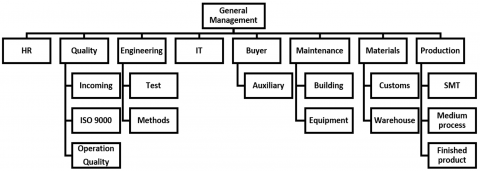
Figure 2 shows the company's organizational chart, which consists of eight departments or executors that serve customers, the relevance of this is because the utilization and optimization of business process human resources is an important aspect of efficiency and success in implementing a new methodology. The process executor is a person or group of people who directly perform the work and tasks related to the business process implementation, they are responsible for executing specific activities, steps and stages of the process, implementing the plan, using the necessary resources, and ensuring that the process goal is achieved. In addition, knowledge the organizational chart structure improvement the communication and feedback between executors and the new methodology for sustainability adaptation, in the next steps are important to address problems, identify gaps and improve the process [40].
Figure 2. Organizational chart of the study company
The company's organizational chart, which consists of eight departments that serve customers, including local companies established with an IMMEX presence (Manufacturing, Maquiladora and Export Services Industry) [63], makes it part of the supply chain of international and large companies.
Due to the type of service and product it offers, the company studied belongs to the value chain of an international company; they are certified in ISO 9001, which is a quality management standard to continue being part of said value chain [64]. Despite the above, none of the clients of the company studied have required an environmental certification. Below is the implementation of the proposed research methodology:
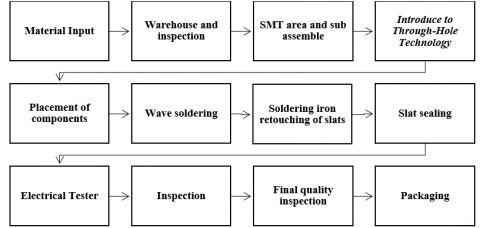
Analysis: The process flow diagram shown in Figure 3 shows on a large scale the general operation and main manufacturing activities of the company studied.
Figure 3. Diagram of basic functions of the company
The diagnosis of the administrative process carried out, focused on environmental protection, is not clearly established, there is no policy or procedures; there is only a folder of studies, opinions and permits that is controlled by the Human Resources department. These requirements have been presented at the request of representatives of the aforementioned dependencies in order to avoid sanctions with inform such as training and authorization for handling hazardous waste, Noise study, land use permit, solid waste and industrial collectors among others for dependence how Ministry of Labor and Social Security, Municipality, Secretary of Urban Development and Ecology and Environment and Natural Resources.
The installed equipment includes productive equipment and equipment used by human resources in general such: SMT (Surface Mount Technology), wave soldering machines, electric soldering irons, ceiling extractors, computer equipment, T8 lamps, washing air, Half-turn valves, in bathroom area, microwaves; refrigerators and coffee makers.
The raw materials are mostly on consignment for the transformation and delivery of the final product to its clients, excluding the solder paste, liquid or in roll form, which in liquid form contains lead. The waste generated by its production process does not even amount to one percent of what is consumed, so it is always within the materials goal.
The raw material components considered as waste are collected in the waste containers and are taken to the warehouse for final disposal by the electronic components recycler, to Ecoservicios del Norte SA de CV. Neither weight nor a detailed count of materials is obtained, because the company does not require it. The waste generated by soldering by soldering iron is entered as raw material for wave soldering machines. Other waste is from material packaging, among which are: wooden, cardboard and plastic pallets, which are stored by the materialists and transported by the recycling company Yonke Fénix SA de CV, with the exception of the foam, which is returned to the supplier for reuse.
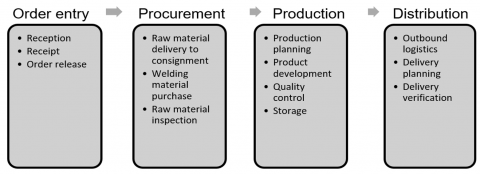
The value chain shown in Figure 4 identifies the critical activities for the operation of the business, and details the critical processes that each of them entails. The general support activities are the administration of human resources and the general administration provided by the plant manager and majority investor.
Figure 4. Value chain analysis diagram
After knowing the operation and functioning of the company, the inputs, consumption, installed equipment and waste generated; the next step is the analysis of sustainable practices, detailed in Table 2, and carried out according to the measurement instrument developed.
Table 2. Company evaluation with measurement instrument
|
1 Monitors electricity use through a report. Not monitored as an environmental resource. Cost/reading record. Power factor controlled. Motor peaks are controlled with capacitors. |
|
2 Monitors gas use through a report. Does not monitor Records gas usage from November to March, winter months. It has a hanging heater and a package heater. |
|
3 Develops energy and gas efficiency practices. Yes, it does practical work assurance studies: • Hermeticity of natural gas lines; • Thermography; • Lighting studies; • Static electricity. Changing the lighting system from T12 to T8, changing ballasts from magnetic to electric. They have an electric freight elevator, which is no longer in use. |
|
4 Monitors drinking water use through a report. They do not monitor. They do record daily readings in a logbook for security personnel, and comments that regulate extraordinary cases. Monthly consumption is recorded. Cost is not recorded. Greater use in the hot season due to garden irrigation. |
|
5 Knows the destination of its residual loads (drainage/causes). Yes, they know, it has a residual load permit, a residual water analysis and a technical opinion (Questionnaire for the application of residual loads). |
|
6 Develops water use practices. Yes, it carries out practices. Leak verification by maintenance. It does not have a fire sprinkler system. |
|
7 Makes use of treated water. No, there is no facility or storage pool. The garden is watered with potable water. |
|
8 Prepares a report on greenhouse gas CO2 emissions. No, there is no consolidated format. EH&S reports annual emissions from heating and emissions of other waste generated by the production process in the general extraction hood. The energy and gas consumed are not transformed into CO2 emissions. |
|
9 Identifies the sources of waste generation. No, there is a cafeteria service, so organic waste is not collected, and inorganic material is not separated for recycling (plastic, cardboard, aluminum, plastic lids) in the cafeteria or dining room. |
|
10 Maintains procedures for segregating organic and inorganic waste. No, there is a cafeteria service, so organic waste is not collected, and inorganic material is not separated for recycling (plastic, cardboard, aluminum, plastic lids) in the cafeteria or dining room. |
|
11 Maintains programs for re-using internal waste generated. No, there is no procedure for reusing material, although the reuse of solder slag generated by soldering irons is carried out without instruction or training on wave soldering machines. Production material is not reused, because it generates very little, but there is the opportunity to recover components from the boards. |
|
12 Maintains a management plan for its solid waste. Yes, if you have several management plans• Non-hazardous waste:• Recyclables• Domestic waste• Hazardous waste• Administrative waste. |
|
13 Monitors the amounts and type of waste generated through a report. Yes, if monitored in monthly meetings by the materials manager, the financial goal is 1%. A digital record is kept by the ISO 9001 department. |
|
14 Monitors what part of the waste (scrap) is recoverable. Yes, if it is done: it is not accounted for or recorded internally, until the external company Ecoservicios reports the quantity. |
|
15 Knows if the process/service generates toxic waste. Yes, if it has risk studies-Safety and hygiene diagnosis-Risk analysis for hazardous substances (cutting and welding). |
|
16 Identify the percentage of returnable packaging used by the total shipments. Yes, if you do it in your packaging called Foam, antistatic separators, which are inside your boxes; these serve to protect the product from static, as well as from displacement. |
|
17 Coordinate with your client to take the product to collection sites when it reaches its useful life. No, there is an integration of that step into your supply chain. |
|
18 Review a budget for investment in sustainable technologies or innovations. No, it is not carried out. The return of non-hazardous waste (cardboard/plastics/pallets) is not specifically budgeted for environmental use. |
|
19 Conduct a return on investment control for each of the sustainable technologies and practices implemented. Yes, a technical evaluation is carried out by maintenance, but it does not consider specific environmental aspects, but rather projects that are carried out in general. |
|
20 Collect and analyze the savings produced by the use of recycled materials, green energy, and recycled water, among other practices. No, there is no record of this. Maintenance keeps a log of events that occur or installations that have been changed, to see changes or impacts on consumption. |
|
21 Control economic inputs for the recovery or transformation of scrap or waste. No, the process is not carried out: The scrap metric is available, it is counted to reach the goal, but it will not be compared with what is recovered. |
|
22 Review technologies to ensure control of emissions or reduction of waste. No, it does not perform a complete technology review. |
|
23 Review technologies to reduce the amount of waste they generate. No, it is not performed Preventive and corrective maintenance is not performed. Yes, if they have a continuous improvement procedure, they do not have a sustainability rating. |
|
24 Review administrative processes that use paper, and could be replaced by an electronic database. Yes, if they have a continuous improvement procedure, they do not have a sustainability rating. |
|
25 Conducts eco-innovation projects in its products. Yes, if they have a continuous improvement procedure to any project. |
|
26 Conducts eco-innovation projects in its processes. Yes, if they have a continuous improvement procedure to any project. |
|
27 Conducts eco-innovation projects in its organization. No, I do not identify eco-innovation projects. |
|
28 Conducts training for company personnel on environmental care, recycling, toxic waste, environmental accidents, among others. No, there is no specific training in environmental care, it is only handled on an annual basis. |
|
29 Communicates the company's environmental behavior to its employees. No, there are no environmental guidelines to be communicated. |
|
30 Knows what percentage of its suppliers have a sustainable certification (clean industry/ISO 14000). No, they don't know it; they are only required to have the certification according to their line of business in some cases if ISO 9001 is required. |
|
31 Knows what percentage of its total products are recycled or reused at the end of their life cycle. No, it is not unknown whether the customer of the final product that makes up the sub-assembly. |
|
32 Has identifications for being a green product (eco labels) if applicable. No, it does not guarantee that the materials used are non-toxic, non-harmful or non-sustainable. |
|
33 Knows what percentage of its customers are interested in having a sustainable certification. No, he does not know this information. |
|
34 Conducts environmental actions in the environment of its company (reforestation, cleaning of parks or vacant lots, among others). Yes, they do a noise study and reforestation of parks. |
|
35 Coordinate with your client to take the product to collection locations when it reaches its useful life. No, because it is a contract manufacturing company. |
A design analysis was not performed, because the company receives the manufacturing requirement based on the design provided by the client. In general, what the engineers design at the plant are the test benches for continuity and voltage, and they also prepare master test tables for calibration or ensuring the operation of the test bench. The limitation of administrative resources, due to the fact that it is a medium-sized company, means that there is no resource dedicated to the sustainable approach; support to activate the next phase will be part of the human resources department.
Then again, in the analysis of the evaluation of sustainable practices, it was found that it does not comply with twenty-two practices presented in the model, identifying that it does not meet the goal of the methodology 75% or more. It was found that there are no energy and material record formats, sustainability improvement formats, it is not known which suppliers or clients are interested in environmental responsibility, it is not known how to improve technology or if there is ecological innovation, among other findings. These will lead to propose practices in the next stage.
Design: The list of suggested sustainability practices to be implemented presented in Table 3 was divided according to the approach, for a better visualization of impact, as well as to present to senior management and investors who can see the impact of sustainable adaptation. Each of these opportunities for implemented practices was directed to the personnel responsible for executing them.
Table 3. Suggested sustainability practices classified by focus
|
Focus |
Practice Proposals |
|
Energy efficiency |
• Analyze energy flows in industrial processes to improve designs and minimize total energy use. |
|
• Design of switches, to divide areas such as; office bathrooms on the second floor. |
|
|
• Intensity flows in the dining area. |
|
|
• Connections with separate switches in the area where microwaves are installed in the dining room. |
|
|
• Benches to avoid peaks generated by installed equipment. |
|
|
• Optimize energy use. |
|
|
• Training and awareness of the use of computer equipment shutdown. |
|
|
• Training and awareness of the use of power switches. |
|
|
• Establish procedures for turning off machinery and equipment such as soldering irons or testing (double verification) |
|
|
• Proposal for a coffee maker area in office areas, to concentrate the installed household appliance equipment (refrigerators, coffee makers, heaters, microwaves). |
|
|
• Proposal for the installation of the Wattis smart thermostat, which can be programmed and controlled through a mobile application, an internet connection is required. |
|
|
• Use of renewable energy. |
|
|
• Evaluation of the use of solar panels for the industrial warehouse space, return on investment and cost benefit. |
|
|
• Evaluate energy costs. |
|
|
• Based on records, monitor which months have higher consumption and what are the potential causes (Ishikawa Diagram). |
|
|
• Invest in cleaner energy technologies. |
|
|
• In case of changing luminaires, which have electric ballasts, see the adaptation and purchase of T5 tubes to eliminate the installed T8s. The benefit in consumption is from 58 watts to 35 watts. |
|
|
• Record and treatment of information. |
|
|
• Record of energy consumption to convert it to CO2 emissions. |
|
|
• Raise awareness in the company based on energy consumption goals and abiotic materials such as water use. |
|
|
Water use |
• Evaluate flow and supply. |
|
• Non-saving toilets installed, reduce the amount of flushing by placing a mass inside it, such as a water bottle, to reduce the amount of liters per flush. |
|
|
• Evaluate costs. |
|
|
• In the consumption record, an increase is detected in summer due to watering the garden of the facilities. |
|
|
• Invest in cleaner technologies focused on reduction. |
|
|
• Washing faucets; half-turn, non-saving, in one minute of open faucet approximately 10 liters can be wasted, the ecological faucets with automatic closing or adjustable pressure from 5 to 13 seconds guarantee a consumption of 1.9 liters per minute. |
|
|
• Use of treated or recycled water. |
|
|
• There is no contact with the purple line that contains recycled water from the city, by the water board. |
|
|
• Contact with JMAS to see the proximity of this and evaluate the long-term benefit based on high consumption generated in summer. |
|
|
• Avoid contamination of soil and residual water. |
|
|
• Ensure that all processes that use water as an input are documented to ensure the disposal of contaminated water. |
|
|
• Record and process information. |
|
|
• Record and communicate this to employees to make them participate in the savings (cost and water consumption). |
|
|
Input/consumption efficiency |
• Evaluate flow and supply. |
|
• Materials; there is control of the highest cost material by priority, and inventories under control. |
|
|
• These practices are excluded because it is a company that manufactures by contract and most of the material is on consignment: Reverse logistics/ Green supply chain/ Biodegradable materials/ Suppliers certified in sustainability standards. |
|
|
• Reduce or eliminate the generation of pollutants at their sources of origin. |
|
|
• Ensure the change from lead to lead-free solder. |
|
|
• 6R methodologies (reduce, reuse, recover, redesign, remanufacture and recycle). |
|
|
• Provide training on this method, ensure its correct use where applicable and that there are people assigned to the rework process. |
|
|
• Establish a material reuse procedure. |
|
|
• Establish a material recycling procedure and place visual aids for containers, as well as their training. |
|
|
• Returnable packaging. |
|
|
• Evaluate returnable packaging with local clients. |
|
|
• Biodegradable packaging, rubber strapping. |
|
|
• Return of profits for discarded materials and sale to recycling companies or symbiotic companies. |
|
|
• Present the economic returns of recycling as a metric or supply to sustainable investments. |
|
|
• Decrease in delivery cost. |
|
|
• Continue with the practice of distributing and optimizing the use of transportation, in case of not having a procedure, standardize. |
|
|
Technologies and innovation |
• Maintenance and safety of machinery and equipment in order to prevent contamination and regulate energy consumption. |
|
• Perform predictive maintenance on installed equipment. |
|
|
• Evaluate energy consumption. |
|
|
• Computerized controls to reduce energy consumption. |
|
|
• Shutdown of computer equipment from the network, IT. |
|
|
Dematerialization or digitalization of documents. |
|
|
• Digitalization of documents, detailed analysis of processes by department, use email with digital files to send information. |
|
|
• Minimization of productive hour-by-hour sheet space reports (put two reports on a single sheet). |
|
|
• Use of whiteboards to communicate sustainability goals. |
|
|
• Contact a sheet recycler to collect and shred sheets that already have confidential information. |
|
|
• Better technologies to improve manufacturing processes without contamination. |
|
|
• Adaptation or installation of extraction hoods. |
|
|
• Ensure the use of filters in soldering iron processes, since no extractor has a fan filter to contain volatile material. |
|
|
• R&D in the organization, products and processes and organization. |
|
|
• Training on what Eco-innovations are (products, processes and organization). |
|
|
• Design for disassembly; in test boards generated or for recycling, or to reduce the use of inputs. |
Formats were developed to evaluate the viability, in the case of practices that require investment, such as changing lights, deposits, saving keys, among others, the use of an Excel database is suggested to calculate the return on investment (ROI) [65], which is adapted to the circumstances of use and which can be presented so that the company's investors approve the implementation.
On the other hand, use SWOT diagram could be developed to support prioritization and decision-making regarding the order of practices that should be implemented; some authors have implemented it in their sustainability model [66, 67].
Development: As part of the development, the human resources department will follow up on the improvement proposals. In order to follow up, a Gantt chart was developed. The proposals include: including a continuous improvement classification in the project registry, providing 6R training [68], standardizing material recovery processes and causes, training on computer equipment shutdown, installing a smart thermostat for switching on and off via Wi-Fi, among others; in turn, a biweekly review was established in the administrative meetings, as a first step, the establishment of environmental procedures was generated as well as training and training for the staff, on sustainability and its application in the company. Two different training sessions were held, one for administrative staff and another for operational staff, focused on the use of resources, recycling, and use of printer paper, use of appliances, computer equipment shutdown, eco-design and eco-innovation among others.
Evaluation: The person responsible for the environment, which is a shared resource with human resources obligations, suggested that the approval of environmental procedures be granted by the Plant Manager, in order to generate the commitment of the company to the transition towards sustainability and re-evaluate after apply the suggested practices with the measurement instrument Table 2, the first round evaluation with measurement instrument found 12 of 35 are developed, after training and follow a practices proposal the measure change to 22 of 34, eliminate the seven point treated water because is not available connection to the facilities, make necessary adjustments is part of the proposed cyclical improvement methodology; they improvement and evaluation must be incorporated intentionally at the different necessary times, the increase in the evaluation was 34% to 64%, although the goal is 75%, the evaluation will continue to be carried out every quarter of the year.
Standardization: The company, knowing the range of sustainable standard metrics, chose to adopt the carbon footprint measurement in Excel based on Greenhouse gas emissions. This metric was selected in order to facilitate the presentation at staff meetings and to measure and report monthly the consumption of environmental resources and their impact on the environment. A sustainability manual was created with the guidelines for continuous training, training for staff in the care of the facilities and a report on improvements created by the Quality department.
One of the behaviors among SMEs, according to Álvarez Jaramillo et al. [69], is that they have fewer resources to be able to make commitments on sustainable development practices in their operation, but if the directors receive different types of pressure from institutions and stakeholders that can condition their commitment to developing environmental business models [70]. This is a case study, which does not have an environmental department or resource and also the director has no commitment or pressure from stakeholders or customers. The activity of this area is assigned to the Human Resources Manager who performs multiple tasks and does not have assistants or technicians who could analyze, design, develop, evaluate and standardize the practices not carried out by the company that are on the list of suggested sustainable practices classified by focus in Table 3. Interaction and cooperation between executors and other participants to execute sustainability practices can contribute to achieving better results and the business process goal. Despite the competitive advantages offered by the application of these sustainable practices, there is a total lack of knowledge among business owners of the productive, financial and organizational benefits of the sustainable management system in general, such is the case of our case study in which the company's CEO and investor were unaware of the concept of sustainability and Industry 5.0, as well as its implications on the organization [71] and the lack of implementation of strategies [72]. Other Mexican authors claim to identify that many companies still do not integrate Industry 4.0 and 5.0 by optimizing resources and reducing waste [73]. They highlight the need for more training and strategies to integrate digitalization with efficient energy use in industries in Ciudad Juárez [74]. An objective of Castillo et al. [75], is to analyze the simulation with a Lean approach in Industry 5.0 and, with this, how they should adapt the knowledge of sustainability in industries, since it has not been implemented in Mexico.
By having the commitment of the entrepreneurs and making them see that sustainability in manufacturing companies must occupy a concentric place within the objectives and mission of the organization; therefore, the productivity, quality and efficiency indicators must not be disconnected from the sustainability variables; thus guaranteeing greater responsibility in each of the links in the production chain and industrial ecology [76-79].
The most important practice that the company developed was sustainability and environmental awareness training, so that the staff knew and committed themselves together with management to transform the company's image and implement awareness and break paradigms, this by listing which actions with their collaboration will help promote environmental protection, ecological productivity, taking into account the profitability of the company and adding a sustainable adaptation model in their organization. Organizations adopting sustainable practices are often perceived as responsible and ethical, which can strengthen their brand image and increase their competitive advantage. The company decided that it was important to create an environmental procedure manual in order to obtain in the medium-term future the clean industry certification granted by the National Environmental Audit Program, to attract new clients by differentiating itself from its competition. To see sustainability as a gain and not a loss, the income from recycling materials will be allocated as a budget in favor of developing other sustainable practices.
Collaboration is also a key element in implementing sustainability in industries. Manufacturing can work together with other actors, such as governments, universities, and non-governmental organizations, to develop innovative solutions and address common challenges. Public-private partnerships, for example, have proven effective in driving renewable energy projects, managing industrial waste, and improving resource efficiency.
The incorporating sustainability considerations presents some challenges, requiring the development and adoption of methods, tools and techniques tailored to address sustainability at the project level it is essential to recognize that sustainability in the manufacturing and industrial sector is not a destination but a continuous process of improvement and adaptation [80, 81]. The sustainability adaptation proposal in this research prioritizes a group of strategies to be developed as well as the metrics that are considered relevant to know the environmental impact. For the moment, to know this impact, the assessment presented after evaluating in the two quarters of the year following the application was used, it was identified that they improved from 12 to 22 points resulting in an increase of 30% which still does not comply with the proposed measure greater than 75%, but it will be measured in the following quarters of the year. Subsequently, as a future plan, measurements are to be carried out to compare the scenario before and after implementing the methodology, to arrive at recommendations on technological and installation changes, taking into account the environment, to provide an environment that mitigates climate change, without leaving aside the traditional search for maximizing benefits as a guiding principle, in the face of this new social, environmental and economic paradigm. Likewise, it is intended that the sustainability evaluation be a cyclical process that has as its central objective the strengthening of the sustainability adaptation manual and the methodology used. Companies must be willing to reevaluate and adjust their strategies as market conditions, consumer expectations, and technological advances evolve [82].
This study also provides empirical evidence that the methodology is having an effect on the adoption of sustainable practices, expanding the existing knowledge on user-friendly structured methodologies, highlighting its simplicity compared to sustainable project management and other methodologies [83]. It also helps contribute to the publication of sustainability reports to demonstrate its commitment to continuous improvement and foster trust among its stakeholders.
Future research efforts will focus on validating the proposed methodology in different types of SME industries, such as medical, metallurgical and others. Therefore, many future research lines are derived from this case study and proposed methodology as well as the proposed practices, this impacts on the KPIs and metrics of the company or also arises the development of a new metric [84], try to adjust to all SMEs, regardless of whether it is industry or not. The transition to a sustainable business model is not only an ethical responsibility but also a strategic necessity to ensure the resilience and long-term success of industrial organizations.
[1] WCED, S.W.S. (1987). World commission on environment and development. Our Common Future, 17(1): 1-91. https://idl-bnc-idrc.dspacedirect.org/server/api/core/bitstreams/a475333a-2123-4655-8e16-108d1dcd477f/content.
[2] Chu, C.H., Pan, J.K. (2024). A systematic review on extended reality applications for sustainable manufacturing across the product lifecycle. International Journal of Precision Engineering and Manufacturing-Green Technology, 11(3): 1017-1028. https://doi.org/10.1007/s40684-023-00567-8
[3] Debnath, B., Taha, M.R., Siraj, M.T., Jahin, M.F., Ovi, S.I., Bari, A.M., Islam, A.R.M.T., Raihan, A. (2024). A grey approach to assess the challenges to adopting sustainable production practices in the apparel manufacturing industry: Implications for sustainability. Results in Engineering, 22: 102006. https://doi.org/10.1016/j.rineng.2024.102006
[4] Malik, A., Sharma, S., Batra, I., Sharma, C., Kaswan, M. S., Garza-Reyes, J.A. (2024). Industrial revolution and environmental sustainability: An analytical interpretation of research constituents in Industry 4.0. International Journal of Lean Six Sigma, 15(1): 22-49. https://doi.org/10.1108/ijlss-02-2023-0030
[5] Abaku, E.A., Odimarha, A.C. (2024). Sustainable supply chain management in the medical industry: A theoretical and practical examination. International Medical Science Research Journal, 4(3): 319-340. https://doi.org/10.51594/imsrj.v4i3.931
[6] Mangla, S.K., Luthra, S., Garza-Reyes, J.A., Jabbour, C.J.C., Brem, A. (2024). Sustainability and Industry 4.0: The role of social, environmental and technological factors in the development of digital manufacturing. Technological Forecasting and Social Change, 201: 123223. https://doi.org/10.1016/j.techfore.2024.123223
[7] Rashid, A., Rasheed, R., Ngah, A.H. (2024). Achieving sustainability through multifaceted green functions in manufacturing. Journal of Global Operations and Strategic Sourcing, 17(2): 402-428. https://doi.org/10.1108/jgoss-06-2023-0054
[8] Singhania, M., Saini, N., Shri, C., Bhatia, S. (2024). Cross-country comparative trend analysis in ESG regulatory framework across developed and developing nations. Management of Environmental Quality: An International Journal, 35(1): 61-100. https://doi.org/10.1108/MEQ-02-2023-0056
[9] Sorooshian, S. (2024). The sustainable development goals of the United Nations: A comparative midterm research review. Journal of Cleaner Production, 453: 142272. https://doi.org/10.1016/j.jclepro.2024.142272
[10] Arvidsson, S. (2023). CEO talk of sustainability in CEO letters: Towards the inclusion of a sustainability embeddedness and value-creation perspective. Sustainability Accounting, Management and Policy Journal, 14(7): 26-61. https://doi.org/10.1108/sampj-07-2021-0260
[11] Asad, M. (2024). Impact of environmental management on sustainable performance of Pakistani entrepreneurial firms: The mediating role of green product innovation and the moderating effect of transformational leadership. Sustainability, 16(24): 10935. https://doi.org/10.3390/su162410935
[12] Kaimovs, M., Skarupins, A. (2024). Integrity of various aspects of sustainability. Economics & Education, 9(2): 6-13. https://doi.org/10.30525/2500-946x/2024-2-1
[13] Nkwati, N.D., Forgha, N.G., Vera, F. (2024). The effect of the environmental pillar on the financial performance of financial institutions in Cameroon. African Social Science and Humanities Journal, 5(1): 41-60.
[14] Lueg, K., Jebsen, S. (2024). Social Sustainability and Good Work in Organizations. Routledge, pp. 1-17.
[15] Nazir, M.I. (2024). Beyond profit: Measuring and maximizing the triple bottom line in business performance. Research Studies of Business, 2(1): 20-28.
[16] Yi, J.Y., Kim, T.K. (2024). Advancing international green technology cooperation: A comprehensive framework approach. Journal of Appropriate Technology, 10(2): 107-123. https://doi.org/10.37675/jat.2024.00535
[17] Aboelata, A. (2021). Assessment of green roof benefits on buildings’ energy-saving by cooling outdoor spaces in different urban densities in arid cities. Energy, 219: 119514. https://doi.org/10.1016/j.energy.2020.119514
[18] Ekins, P., Zenghelis, D. (2021). The costs and benefits of environmental sustainability. Sustainability Science, 16: 949-965. https://doi.org/10.1007/s11625-021-00910-5
[19] Le, T.T., Ikram, M. (2022). Do sustainability innovation and firm competitiveness help improve firm performance? Evidence from the SME sector in Vietnam. Sustainable Production and Consumption, 29: 588-599. https://doi.org/10.1016/j.spc.2021.11.008
[20] Cardoni, A., Zanin, F., Corazza, G., Paradisi, A. (2020). Knowledge management and performance measurement systems for SMEs’ economic sustainability. Sustainability, 12(7): 2594. https://doi.org/10.3390/su12072594
[21] Das, M., Rangarajan, K., Dutta, G. (2020). Corporate sustainability in SMEs: An Asian perspective. Journal of Asia Business Studies, 14(1): 109-138. https://doi.org/10.1108/JABS-10-2017-0176
[22] Journeault, M., Perron, A., Vallières, L. (2021). The collaborative roles of stakeholders in supporting the adoption of sustainability in SMEs. Journal of Environmental Management, 287: 112349. https://doi.org/10.1016/j.jenvman.2021.112349
[23] Küchler, R., Nicolai, B.M., Herzig, C. (2024). A novel sustainability management tool for small and medium-sized food manufacturers–advantages and improvement opportunities. Management Revue, 35(1): 35-65. https://doi.org/10.5771/0935-9915-2024-1-35
[24] Porter, M.E. (1985). Competitive Advantage: Creating and Sustaining Superior Performance. NY: Free Press.
[25] Młody, M., Ratajczak-Mrozek, M., Sajdak, M. (2023). Industry 4.0 technologies and managers’ decision-making across value chain. Evidence from the manufacturing industry. Engineering Management in Production and Services, 15(3): 69-83. https://doi.org/10.2478/emj-2023-0021
[26] Piccarozzi, M., Silvestri, C., Rossi, F., Szopik-Depczyńska, K., Ioppolo, G. (2024). Ten years of Industry 4.0 adoption: External and internal perspective in a systemic model towards Industry 5.0. European Journal of Innovation Management. https://doi.org/10.1108/EJIM-12-2023-1099
[27] IMCO. (2024). Instituto Mexicano Para La Competitividad A.C. Desarrollando las PYMES que Requiere México. https://imco.org.mx/pymes_que_requiere_mexico_/.
[28] Valverde, D. (2024). The Digitalization of Mexican MSMEs: Challenges and Opportunities. Journalist & Industry Analyst. https://mexicobusiness.news/tech/news/digitalization-mexican-msmes-challenges-and-opportunities.
[29] Statista Research Department. (2024). El producto interno bruto de México – Datos estadísticos. https://es.statista.com/temas/7764/pib-de-mexico/#topicOverview.
[30] Fuentes, N.A., Brugués Rodríguez, A., González König, G., Carrillo Viveros, J. (2020). El impacto económico en la industria maquiladora y en la región fronteriza del norte de México debido al alza de 100% del salario mínimo. Región y sociedad, 32: e123. https://doi.org/10.22198/rys2020/32/1230
[31] Vercalsteren A., Christis M., Van Hoof V. (2024). Indicators for a circular economy. Department of Economy Science & Innovation. https://circulareconomy.europa.eu/platform/sites/default/files/summa_-_indicators_for_a_circular_economy.pdf.
[32] Visentin, C., da Silva Trentin, A.W., Braun, A.B., Thomé, A. (2020). Life cycle sustainability assessment: A systematic literature review through the application perspective, indicators, and methodologies. Journal of Cleaner Production, 270: 122509. https://doi.org/10.1016/j.jclepro.2020.122509
[33] Ventura, A. (2023). Conceptual issue of the dynamic GWP indicator and solution. The International Journal of Life Cycle Assessment, 28(7): 788-799. https://doi.org/10.1007/s11367-022-02028-x
[34] Broo, D.G. (2022). Transdisciplinarity and three mindsets for sustainability in the age of cyber-physical systems. Journal of Industrial Information Integration, 27: 100290. https://doi.org/10.1016/j.jii.2021.100290
[35] Zapien Guerrero, C. (2018). Sustainable management in the manufactures SME of Juárez city. In the 6th International Virtual Conference on Advanced Scientific Results, Zilina, Slovakia, pp. 222-225. https://doi.org/10.18638/scieconf.2018.6.1.500
[36] Salieiev, I. (2024). Organization of processes for complex mining and processing of mineral raw materials from coal mines in the context of the concept of sustainable development. Mining of Mineral Deposits, 18(1): 54-66. https://doi.org/10.33271/mining18.01.054
[37] Zhang, J., Ma, L., Yan, Y. (2020). A dynamic comparison sustainability study of standard wastewater treatment system in the straw pulp papermaking process and printing & dyeing papermaking process based on the hybrid neural network and emergy framework. Water, 12(6): 1781. https://doi.org/10.3390/w12061781
[38] Antonopoulos, I., Faraca, G., Tonini, D. (2021). Recycling of post-consumer plastic packaging waste in the EU: Recovery rates, material flows, and barriers. Waste Management, 126: 694-705. https://doi.org/10.1016/j.wasman.2021.04.002
[39] Enyoghasi, C., Badurdeen, F. (2021). Industry 4.0 for sustainable manufacturing: Opportunities at the product, process, and system levels. Resources, conservation and recycling, 166: 105362. https://doi.org/10.1016/j.resconrec.2020.105362
[40] Antonacci, A., Del Pero, F., Baldanzini, N., Delogu, M. (2022). Holistic eco-design tool within automotive field. In IOP Conference Series: Materials Science and Engineering, 1214(1): 12045. https://doi.org/10.1088/1757-899x/1214/1/012045
[41] Negri, M., Cagno, E., Colicchia, C., Sarkis, J. (2021). Integrating sustainability and resilience in the supply chain: A systematic literature review and a research agenda. Business Strategy and the Environment, 30(7): 2858-2886. https://doi.org/10.1002/bse.2776
[42] Murphy, D.J., Raugei, M., Carbajales-Dale, M., Rubio Estrada, B. (2022). Energy return on investment of major energy carriers: Review and harmonization. Sustainability, 14(12): 7098. https://doi.org/10.3390/su14127098
[43] Obiuto, N.C., Ebirim, W., Ninduwezuor-Ehiobu, N., Ani, E.C., Olu-lawal, K.A., Ugwuanyi, E.D. (2024). Integrating sustainability into HVAC project management: Challenges and opportunities. Engineering Science & Technology Journal, 5(3): 873-887. https://doi.org/10.51594/estj.v5i3.943
[44] Patidar, A., Sharma, M., Agrawal, R., Sangwan, K.S., Sarkar, P. (2024). Building supply chain resilience in developing economies: A weighted Ishikawa diagram approach. Operations Management Research, 17(1): 363-386. https://doi.org/10.1007/s12063-023-00433-5
[45] Vardopoulos, I., Tsilika, E., Sarantakou, E., Zorpas, A.A., Salvati, L., Tsartas, P. (2021). An integrated SWOT-PESTLE-AHP model assessing sustainability in adaptive reuse projects. Applied Sciences, 11(15): 7134. https://doi.org/10.3390/app11157134
[46] Bilderback, S. (2024). Integrating training for organizational sustainability: The application of Sustainable Development Goals globally. European Journal of Training and Development, 48(7/8): 730-748. https://doi.org/10.1108/EJTD-01-2023-0005
[47] Alves, C., Putnik, G.D. (2022). Real-time management-based production scheduling for sustainability: An introduction. In Smart and Sustainable Manufacturing Systems for Industry 4.0, (1st ed.). CRC Press, pp. 45-64. https://doi.org/10.1201/9781003123866
[48] Costa Melo, I., Alves Junior, P.N., Queiroz, G.A., Yushimito, W., Pereira, J. (2023). Do we consider sustainability when we measure small and medium enterprises’(SMEs’) performance passing through digital transformation? Sustainability, 15(6): 1-30. https://doi.org/10.3390/su15064917
[49] Asad, M., Asif, M.U., Allam, Z., Sheikh, U.A. (2021). A mediated moderated analysis of psychological safety and employee empowerment between sustainable leadership and sustainable performance of SMEs. In 2021 International Conference on Sustainable Islamic Business and Finance, Sakheer, Bahrain, pp. 33-38. https://doi.org/10.1109/ieeeconf53626.2021.9686340
[50] Galli, D., Torelli, R., Caccialanza, A. (2024). Sustainability performance and sustainability reporting in SMEs: A love affair or a fight? Journal of Management & Organization, 30(3): 574-599. https://doi.org/10.1017/jmo.2023.40
[51] Qiang, F.U. (2022). Emerging issues on innovation and its impact on growth performance of SMES-From performance measurement perspective. Journal of International Management Studies, 22(1): 27-36. https://doi.org/10.18374/jims-22-1.4
[52] Parmitasari, R.D.A. (2023). Sustainability and performance of small and medium business: The role of financial literature. International Journal of Professional Business Review, 8(5): e01048. https://doi.org/10.26668/businessreview/2023.v8i5.1048
[53] Salvador, R., Søberg, P.V., Jørgensen, M.S., Schmidt-Kallesøe, L.L., Larsen, S.B. (2023). Explaining sustainability performance and maturity in SMEs–Learnings from a 100-participant sustainability innovation project. Journal of Cleaner Production, 419: 138248. https://doi.org/10.1016/j.jclepro.2023.138248
[54] Schrank, J., Kijkasiwat, P. (2024). Impacts of green innovation on small and medium enterprises' performance: The role of sustainability readiness and firm size. Business Strategy & Development, 7(3): 407. https://doi.org/10.1002/bsd2.407
[55] Dossou, P.E., Laouénan, G., Didier, J.Y. (2022). Development of a sustainable industry 4.0 approach for increasing the performance of SMEs. Processes, 10(6): 1092. https://doi.org/10.3390/pr10061092
[56] Nilashi, M., Keng Boon, O., Tan, G., Lin, B., Abumalloh, R. (2023). Critical data challenges in measuring the performance of sustainable development goals: Solutions and the role of big-data analytics. Harvard Data Science Review, 5(3): 3-4. https://doi.org/10.1162/99608f92.545db2cf
[57] Cárdenas, P., Alejandro, J. (2021). Estrategias para la producción más limpia del laboratorio de calidad del ingenio Pichichí SA ubicado en el municipio de Guacarí, departamento del Valle del Cauca. Thesis from Colombia.
[58] Owen, G. (2020). What makes climate change adaptation effective? A systematic review of the literature. Global Environmental Change, 62: 102071. https://doi.org/10.1016/j.gloenvcha.2020.102071
[59] Aboramadan, M., Karatepe, O.M. (2021). Green human resource management, perceived green organizational support and their effects on hotel employees’ behavioral outcomes. International Journal of Contemporary Hospitality Management, 33(10): 3199-3222. https://doi.org/10.1108/ijchm-12-2020-1440
[60] Neri, A., Cagno, E., Lepri, M., Trianni, A. (2021). A triple bottom line balanced set of key performance indicators to measure the sustainability performance of industrial supply chains. Sustainable Production and Consumption, 26: 648-691.
[61] Zapién, C., Facio, E.M.V. (2024). Indicators of Sustainability in Manufacturing (No. 11866). EasyChair.
[62] PROFEPA. (2023). Certificados Emitidos por el Programa Nacional de Auditoria Ambiental publicado el 31 de diciembre del 2023. https://www.gob.mx/profepa/acciones-y-programas/resultados-obtenidos.
[63] Mendoza, O.G., Galaviz, J.G. (2018). Análisis del desarrollo histórico de la industria maquiladora de exportación en México: Caso de Ciudad Juárez, Chihuahua. Revista Doxa Digital, 8(15): 135-152. https://doi.org/10.52191/rdojs.2018.74
[64] Sherwani, K.H., Demir, A., Maroof, L. (2024). Way to achieve sustainable benefits of ISO 9001 practices. International Journal of Quality & Reliability Management, 42(4): 1167-1195. https://doi.org/10.1108/IJQRM-01-2023-0023
[65] Joseph, A., Shrivastava, M. (2024). Measuring the return on investment (ROI) of employee retention efforts at SG Pvt Ltd. Educational Administration: Theory and Practice, 30(4): 3451-3457. https://doi.org/10.53555/kuey.v30i4.2055
[66] Thuyen, T.T.N. (2023). AHP-SWOT analysis of strengths, weaknesses, opportunities, and threats of implementing green innovation. Thailand and the World Economy, 41(3): 66-87.
[67] Zhang, Z., Paudel, K.P. (2021). Small-scale forest cooperative management of the grain for green program in Xinjiang, China: A SWOT-ANP analysis. Small-Scale Forestry, 20(2): 221-233. https://doi.org/10.1007/s11842-020-09465-2
[68] Aljamal, D., Hegab, H., Ajaj, R. (2024). Sustainability in manufacturing: A guide to circular economy practices and key performance indicators. In Proceedings of the Institute of Industrial and Systems Engineers (IISE) Annual Conference & Expo 2024, pp. 1-6. https://doi.org/10.21872/2024IISE_6655
[69] Álvarez Jaramillo, J., Zartha Sossa, J.W., Orozco Mendoza, G.L. (2019). Barriers to sustainability for small and medium enterprises in the framework of sustainable development—Literature review. Business Strategy and the Environment, 28(4): 512-524. https://doi.org/10.1002/bse.2261
[70] Madrid-Guijarro, A., Duréndez, A. (2024). Sustainable development barriers and pressures in SMEs: The mediating effect of management commitment to environmental practices. Business Strategy and the Environment, 33(2): 949-967. https://doi.org/10.1002/bse.3537
[71] Lewandowska, A., Berniak-Woźny, J., Ahmad, N. (2023). Competitiveness and innovation of small and medium enter-prises under Industry 4.0 and 5.0 challenges: A comprehensive bibliometric analysis. Equilibrium. Quarterly Journal of Economics and Economic Policy, 18(4): 1045-1074.
[72] Wedari, L.K., Shafadila, G.A. (2022). Factors affecting corporate social responsibility web disclosure: Evidence from the consumer sector in Indonesia. International Journal of Sustainable Development & Planning, 17(8): 2655-2667. https://doi.org/10.18280/ijsdp.170835
[73] Silva, F.A.B., Villalobos, A.G.P., Zúñiga, A.L.S. (2024). Factores de éxito para impulsar la efectividad de la Economía Circular 4.0 del sector industrial en manufactureras de plásticos en Ciudad Juárez. NovaRua, 16(28): 43-60. http://doi.org/10.20983/novarua.2024.28.3
[74] Riosvelasco-Monroy, G.E., Rojas-Ramírez, A., Noriiega-Morales, S. (2023). Sustainable practices for the efficient use of green energy in Ciudad Juárez SMEs. Revista de Ciencias Tecnológicas, 6(4): e265. https://doi.org/10.37636/recit.v6n4e265
[75] Castillo, M.R., Dominguez, L.A.P., López, R.R., Sanchez-Mojica, K.Y., Pereira, Y.D.C.B. (2023). Simulation with a lean approach in Industry 5.0. Advances in Modelling and Analysis B, 66(1-4): 31-34. https://doi.org/10.18280/ama_b.661-405
[76] De Batista, M., Letieri Farías, M.M., Jankovic, V.V., Mancini, C.M. (2022). Evaluación de sustentabilidad para sistemas ganaderos extensivos del sur de la provincia de Santa Fe. Universidad Nacional de Rosario.
[77] Hermundsdottir, F., Aspelund, A. (2021). Sustainability innovations and firm competitiveness: A review. Journal of Cleaner Production, 280: 124715. https://doi.org/10.1016/j.jclepro.2020.124715
[78] Majeed, A., Zhang, Y., Ren, S., Lv, J., Peng, T., Waqar, S., Yin, E. (2021). A big data-driven framework for sustainable and smart additive manufacturing. Robotics and Computer-Integrated Manufacturing, 67: 102026. https://doi.org/10.1016/j.rcim.2020.102026
[79] Tseng, M.L., Tran, T.P.T., Ha, H.M., Bui, T.D., Lim, M.K. (2021). Sustainable industrial and operation engineering trends and challenges toward Industry 4.0: A data driven analysis. Journal of Industrial and Production Engineering, 38(8): 581-598. https://doi.org/10.1080/21681015.2021.1950227
[80] Pasti, R., Politi, A.A., De Castro, L.N. (2024). Dynamics of rapid evolution on the basis of phenotypic adaptation and ecological opportunities. Evolutionary Intelligence, 17: 2843-2863. https://doi.org/10.1007/s12065-024-00915-w
[81] Aichouni, A.B.E., Silva, C., Ferreira, L.M.D. (2024). A systematic literature review of the integration of total quality management and Industry 4.0: Enhancing sustainability performance through dynamic capabilities. Sustainability, 16(20): 9108. https://doi.org/10.3390/su16209108
[82] Ameh, B. (2024). Digital tools and AI: Using technology to monitor carbon emissions and waste at each stage of the supply chain, enabling real-time adjustments for sustainability improvements. International Journal of Science and Research Archive, 13(1): 2741-2754. https://doi.org/10.30574/ijsra.2024.13.1.1995
[83] Contini, G., Peruzzini, M., Bulgarelli, S., Bosi, G. (2023). Developing key performance indicators for monitoring sustainability in the ceramic industry: The role of digitalization and industry 4.0 technologies. Journal of Cleaner Production, 414: 137664. https://doi.org/10.1016/j.jclepro.2023.137664
[84] Soares, I., Fernandes, G., Santos, J.M. (2024). Sustainability in project management practices. Sustainability, 16(10): 4275. https://doi.org/10.3390/su16104275