Vian Dedi Pratama | Citra Satrya Utama Dewi | Sukandar | Pudji Purwanti | Andik Isdianto | Oktiyas Muzakky Lutfi | Sunardi*
© 2025 The authors. This article is published by IIETA and is licensed under the CC BY 4.0 license (http://creativecommons.org/licenses/by/4.0/).
OPEN ACCESS
Sustainable marine tourism development requires a strategic balance between environmental conservation and economic growth. This study assesses the feasibility of marine tourism in South Malang by evaluating 50 coastal sites using a multi-criteria decision analysis (MCDA) framework. The assessment incorporates environmental suitability, infrastructure readiness, market potential, community engagement, and regulatory support to determine the most viable locations for tourism development. Data collection involved field observations, stakeholder interviews, and spatial analysis using Geographic Information Systems (GIS). The results identify key tourism zones, with high-feasibility sites such as Watu Lepek and Pasir Panjang demonstrating strong environmental quality and tourism potential. Conversely, lower-scoring sites like Sipelot and Gatra require conservation prioritization due to ecological sensitivity. Considering South Malang's current early-stage tourism conditions, particularly following improved coastal access via the newly opened South Cross Road, the study proposes a zoning strategy aligned with Butler’s Tourism Area Life Cycle (TALC), specifically the exploration phase and applies the Limits of Acceptable Change (LAC) framework to proactively manage ecological thresholds. The study proposes a zoning strategy that integrates tourism growth with environmental management, ensuring that development aligns with sustainability principles. Additionally, it highlights the importance of infrastructure investment, stakeholder participation, and adaptive conservation policies in maintaining ecological resilience while fostering regional economic benefits. This research contributes to sustainable tourism planning by offering a structured approach to site evaluation and zoning, supporting policymakers in making data-driven decisions that balance tourism expansion with long-term ecological protection.
sustainable marine tourism, feasibility assessment, zoning strategy, community-based tourism (CBT), environmental planning, GIS-based analysis
Sustainable marine tourism plays a crucial role in balancing economic development and environmental conservation, particularly in coastal regions with high biodiversity and tourism potential. Effective tourism planning requires strategic frameworks that integrate ecological resilience, infrastructure readiness, and socio-economic benefits. As coastal tourism continues to expand, unregulated growth often leads to habitat degradation, pollution, and resource depletion, threatening long-term sustainability [1, 2]. The challenge lies in developing tourism that maximizes economic opportunities while ensuring the protection of marine ecosystems through well-planned zoning and conservation strategies. In the context of South Malang, marine tourism remains relatively undeveloped, characterized by low visitor numbers but significant potential for growth, particularly following the recent opening of the South Cross Road (Jalur Lintas Selatan - JLS) that has greatly improved coastal accessibility. Such conditions highlight the region’s early position within Butler’s TALC—specifically the exploration phase—necessitating careful early-stage planning that integrates conservation thresholds based on the LAC framework.
South Malang, Indonesia, is an emerging marine tourism destination with diverse coastal landscapes, ranging from pristine beaches to ecologically sensitive marine habitats. Despite its potential, tourism in the region remains underdeveloped due to infrastructure limitations, accessibility issues, and inadequate environmental management [3]. Without proper planning, increased tourism activities could accelerate environmental degradation and disrupt local livelihoods. Addressing these concerns requires a comprehensive feasibility assessment to determine sustainable tourism zones while prioritizing ecological conservation [4, 5]. Moreover, climate change factors—such as coastal erosion, sea level rise, and increasingly frequent extreme weather events—pose additional risks and must be proactively integrated into tourism planning. Incorporating these considerations aligns with the precautionary stance embedded in the LAC framework and ensures the long-term resilience of coastal ecosystems and tourism infrastructure [6]. By integrating tourism development with environmental management, South Malang can serve as a model for data-driven, sustainable coastal tourism planning.
This study evaluates the feasibility of marine tourism development in South Malang using an MCDA approach combined with GIS for spatial analysis. The assessment incorporates key factors such as environmental suitability, infrastructure readiness, market potential, community engagement, and regulatory support [7, 8]. High-feasibility sites are identified for strategic investment, while conservation-priority areas are designated to protect biodiversity and limit tourism pressures. The findings contribute to sustainable tourism planning by providing a structured approach to site evaluation, ensuring that development aligns with regional conservation goals and economic growth objectives. Specifically, this study addresses three research questions: (1). How can MCDA guide early-stage tourism site selection while respecting LAC conservation thresholds? (2). How does improved accessibility provided by the new JLS influence site feasibility, especially regarding infrastructure readiness? (3). In what ways do stakeholder-driven conservation concerns shape marine tourism development under the TALC framework? These questions guide our analysis, emphasizing a strategic balance between ecological stewardship and tourism growth at the initial stage of tourism development in South Malang.
The study aligns with global sustainable development frameworks by integrating tourism zoning strategies with ecological resilience and policy-driven decision-making [9, 10]. By providing a scalable model applicable to other coastal regions, this research offers valuable insights for policymakers, conservation planners, and tourism stakeholders. The proposed zoning framework supports balanced regional development, ensuring that tourism expansion is both economically viable and environmentally responsible. Through an evidence-based approach, this research strengthens sustainable marine tourism planning, positioning South Malang as a benchmark for responsible coastal tourism management.
The research was conducted along the southern coastline of Malang, Indonesia, an area characterized by diverse coastal ecosystems, scenic beaches, and emerging tourism potential. However, limited infrastructure and environmental sensitivity present both challenges and opportunities for sustainable tourism development. The South Cross Road (Jalur Lintas Selatan - JLS), a newly constructed highway aimed at improving accessibility, plays a crucial role in the study, as it influences tourism feasibility by connecting previously isolated coastal areas, thus facilitating the transition from the exploration to the involvement phases within Butler’s TALC.
2.1 Study area
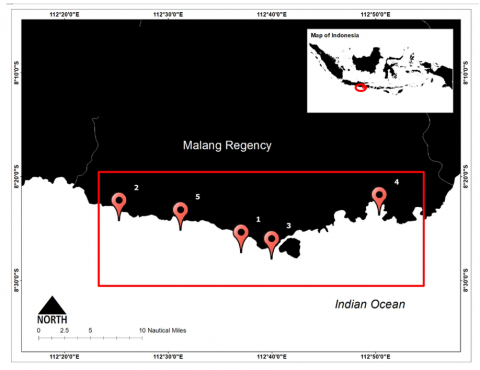
The research was conducted along the southern coast of Malang, encompassing six districts: Ampelgading, Bantur, Donomulyo, Gedangan, Sumbermanjing, and Tirtoyudo. These districts feature diverse coastal environments, including pristine beaches and rich marine biodiversity, making them ideal for sustainable tourism development. The area was selected due to its untapped marine tourism potential, with 50 beaches identified as suitable candidates for evaluation (Figure 1). Considering the anticipated increase in visitor numbers following the completion of the JLS, early integration of the LAC principles into the planning process was prioritized to mitigate potential environmental impacts.
Figure 1. Research location in South Malang’s coastal region
2.2 Data collection methods
Direct observations were conducted to assess the physical conditions, environmental quality, and existing infrastructure at each site. Standardized checklists ensured consistency across all sites, covering key elements such as beach cleanliness, accessibility, and natural attractions. Digital cameras were used to document the conditions, providing visual evidence to support the qualitative assessments. Structured interviews were carried out with local stakeholders, including community leaders, tourism operators, and government officials. The interviews focused on understanding local perspectives on tourism development, environmental concerns, and community involvement. Pre-prepared questionnaires were distributed to gather quantitative data on stakeholder perceptions, which were later integrated into the scoring framework. Participatory workshops were conducted to validate preliminary findings and gather additional qualitative insights. These workshops facilitated discussions on potential tourism strategies, challenges, and opportunities, ensuring that diverse perspectives were considered in the final analysis [5].
2.3 Evaluation criteria
Fifteen evaluation criteria were established based on literature reviews and expert consultations. The criteria were grouped into key categories: (1). Tourist Attraction: Assessing natural beauty, cultural significance, and recreational potential; (2). Market Potential: Evaluating the expected tourist demand and population density; (3). Accessibility: Considering road conditions, proximity to transport hubs, and travel time; (4). Environmental Sustainability: Assessing the ecological sensitivity and environmental management practices; (5). Facilities and Infrastructure: Evaluating the availability of accommodations, clean water, and visitor amenities. These criteria were selected to provide a comprehensive assessment of tourism feasibility and sustainability [2, 11]. The criteria selection and weighting were theoretically justified through recent literature on sustainable tourism zoning, resilience-based tourism, and refined via a Delphi consultation involving experts from tourism management, conservation science, and spatial planning.
2.4 Data analysis
Each evaluation criterion was assigned a score ranging from 1 (poor feasibility) to 5 (excellent feasibility). A weighting system was applied to prioritize critical factors such as accessibility and environmental sustainability. This weighting system was established through stakeholder consultations and expert judgments using the Analytic Hierarchy Process (AHP), ensuring that the prioritization of factors was transparent and aligned with local conservation and development priorities. The overall feasibility score for each beach was calculated by aggregating the weighted scores, yielding a percentage that indicated its suitability for tourism development. Qualitative data from structured interviews and workshops were coded and translated into indicators for inclusion in the scoring framework. This mixed-methods approach enriched the quantitative assessments by incorporating nuanced insights, ensuring a more comprehensive evaluation [12]. Stakeholder feedback was used to validate the findings and refine the scoring process [13]. Additionally, a sensitivity analysis was conducted by adjusting key criterion weights by ±10% to assess the robustness of the feasibility outcomes.
2.5 GIS mapping
GIS tools were utilized to spatially analyze the distribution of beaches, transport routes, and nearby attractions. This analysis allowed for the visualization of accessibility constraints and the identification of strategic locations for infrastructure investments. By mapping ecological and socio-economic data, GIS facilitated informed decision-making regarding the prioritization of tourism sites [10, 13].
2.6 SWOT analysis
A SWOT analysis was performed to evaluate the internal and external factors affecting marine tourism development. The analysis identified strengths, such as natural beauty and cultural heritage; weaknesses, including inadequate infrastructure; opportunities, such as government support and global trends in sustainable tourism; and threats, including environmental degradation and regional competition. This structured framework provided a basis for developing strategic recommendations [14-16].
2.7 Feasibility index calculation and site prioritization
An MCDA framework was employed to assess tourism potential. The feasibility index for each site was calculated by dividing the total weighted score by the maximum possible score, resulting in a percentage value. Beaches with feasibility scores above 65% were considered suitable for immediate or future development, while those scoring below the threshold required significant improvements. The ranked list of beaches informed the prioritization of development efforts, focusing on sites with high potential for sustainable tourism. Table 1 presents the assessment criteria and weight distribution:
Table 1. Weighted criteria for feasibility analysis
|
Criteria |
Weight (%) |
Description |
|
Environmental Suitability |
30% |
Ecosystem health, biodiversity, pollution levels |
|
Infrastructure Readiness |
25% |
Road networks, accommodation, public facilities |
|
Market Potential |
20% |
Visitor demand, travel trends, accessibility |
|
Community Engagement |
15% |
Local involvement, employment opportunities |
|
Regulatory & Policy Support |
10% |
Compliance with government zoning laws |
Each factor was scored on a five-point scale (1–5), weighted according to its significance in sustainable tourism development.
2.8 Data validation
To ensure the reliability and accuracy of the results, validation procedures were implemented through stakeholder feedback sessions. Local communities and tourism operators reviewed the preliminary findings, providing insights that were incorporated into the final analysis. This participatory approach enhanced the credibility of the study and aligned the recommendations with local needs and priorities [17].
The criteria applied in the assessment were weighted according to their relevance to sustainable tourism development. Environmental sustainability was given the highest priority due to the region’s ecological sensitivity and biodiversity. Economic viability was also emphasized, as tourism should provide tangible benefits to local communities without compromising the environment [7, 18]. Social impact and infrastructure availability followed, as both elements are essential for ensuring long-term development and visitor satisfaction [19]. The weighting was determined through expert judgment and stakeholder consultations, reflecting a precautionary approach suitable for the early-stage tourism development conditions outlined in Butler’s TALC and consistent with conservation thresholds of the LAC framework.
The weighting and scoring process followed an MCDA framework, integrating subjective and objective measures. Environmental sustainability criteria included assessments of biodiversity, water quality, and habitat protection measures. Economic viability considered tourism demand and potential financial returns, while social impact evaluated the role of community involvement, cultural preservation, and local stakeholder support. Infrastructure availability focused on road conditions, accessibility to transport hubs, and the presence of public facilities [7, 8]. To validate the robustness of the feasibility scores, a sensitivity analysis was performed, varying key weights by ±10%, confirming stability in the prioritization of tourism sites.
An initial multi-criteria feasibility analysis was conducted on 41 beaches in South Malang using fifteen standardized criteria, covering environmental, infrastructural, and market-related dimensions. Table 2 presents a condensed version of the feasibility scores for the top ten beaches. Although the initial analysis identified multiple “feasible” beaches, further scrutiny revealed that not all of them should be managed primarily for tourism development, due to overlapping geographic distribution or ecological sensitivity. Potential biases arising from stakeholder data collection were addressed through triangulation with secondary sources and field observations, ensuring balanced and credible scoring results.
Table 2. Condensed feasibility scores for the top 10 beaches
|
Beach Name |
Env. Suitability (30%) |
Infra. Readiness (25%) |
Market Potential (20%) |
Community Engagement (15%) |
Policy Support (10%) |
Overall Score (%) |
Comments |
|
Watu Lepek |
13.8 |
10.75 |
8.8 |
6.75 |
4.4 |
90 |
High ecological quality, strong infrastructure synergy |
|
Pasir Panjang |
13.5 |
9.75 |
8.4 |
6.45 |
4.3 |
85 |
Excellent natural appeal, limited lodging |
|
Teluk Asmara |
13.2 |
9.5 |
8.8 |
6.3 |
4.2 |
84 |
Balanced environment & amenities |
|
Modangan |
11.4 |
9.75 |
8 |
6.15 |
4.1 |
79 |
Moderate facilities, eco-tourism potential |
|
Sendiki |
11.7 |
9 |
8 |
5.85 |
3.9 |
77 |
Needs road access improvements |
|
Lenggoksono |
12 |
9.25 |
8.4 |
4.8 |
3.2 |
75 |
Strong local community engagement |
|
Sipelot |
9.3 |
7.75 |
6.4 |
5.1 |
3.4 |
64 |
Environmentally fragile, low feasibility |
|
Banyu Anjlok |
12 |
8 |
8.2 |
5.4 |
3.6 |
74 |
Attractive waterfalls, limited facilities |
|
Gatra |
12.6 |
7.75 |
7 |
5.1 |
3.4 |
72 |
Conservation-focused, moderate tourism |
|
Kondang Merak |
12.6 |
7.5 |
8.2 |
6 |
4 |
77 |
Easily accessible, moderate facilities |
The results highlighted significant variability in the feasibility scores among the 50 beaches. Beaches such as Watu Lepek and Pasir Panjang received high feasibility scores of 90% and 85%, respectively, reflecting their superior environmental conditions, well-maintained infrastructure, and high market potential. These sites exhibit strong environmental sustainability due to the presence of well-preserved marine habitats and biodiversity hotspots, making them attractive for eco-tourism development [20]. Moreover, their accessibility and existing visitor facilities further contributed to their high scores [19]. However, given their ecological sensitivity, tourism activities in these areas must be strictly managed through clear conservation guidelines, visitor limits, and carefully regulated development, consistent with the early-stage development scenario of Butler’s TALC and the LAC principles.
Conversely, beaches like Gatra (72%) and Sipelot (64%) ranked lower in feasibility due to several critical weaknesses, particularly inadequate road access and limited tourist amenities. These deficiencies significantly impacted their infrastructure scores, reducing their overall suitability for immediate development [21]. Despite these lower scores, these sites still possess significant natural assets, indicating potential for future development if infrastructure improvements are implemented. Considering their ecological fragility, initial interventions should emphasize conservation and small-scale ecotourism initiatives, reflecting limited development permissible under the LAC framework, especially given the current exploration phase of tourism according to TALC.
This distribution underscores where and how local authorities, communities, and private investors can prioritize their resources. High-feasibility sites with fragile habitats (Watu Lepek, Teluk Asmara) need rigorous controls and regulated visitor flows; in contrast, beaches with moderate feasibility (Kondang Merak, Lenggoksono) benefit most from capacity-building, infrastructure development, and targeted marketing.
By pairing the visual insight from Figure 2 with the granular details in Table 3, decision-makers can see the interplay between a site’s inherent feasibility and the scale and intensity of interventions needed. This integrated approach ensures that investment is directed where it can yield the greatest net positive effect, aligning with the dual objectives of marine ecosystem conservation and balanced socio-economic growth throughout Malang Regency.
Table 3. Significance factors, risks, success potential, and impacts per beach
|
Beach |
Feasibility Score |
Significant Factor |
Potential Risks |
Likelihood of Program Success |
Impact on Conservation |
Impact on Economy & Local Dev. |
|
Watu Lepek |
90 |
- Ecologically pristine (coral reefs, mangroves) - Existing, albeit limited, infrastructure - High tourist appeal, strong community interest |
- Overcrowding if visitor limits not enforced - Habitat disruption for sensitive species |
High, provided strict conservation rules, eco-certification, and consistent local stakeholder cooperation are in place |
- Strong impetus to protect coral reefs, establish no-take zones - Could serve as a model ecotourism showcase |
- High potential for job creation (eco-guides, homestays) - Prospects for attracting premium ecotourism segments, boosting local revenues |
|
Pasir Panjang |
85 |
- Wide sandy coastline, scenic vantage points - Good road access but limited lodging - Medium to high community involvement |
- Weak marketing visibility - Infrastructure gaps (lodging, restrooms) |
Moderate-High, if lodging investments and marketing synergy are improved |
- Moderately sensitive environment: dunes, coastal vegetation that need regulated building codes - Potential minor erosion if unsupervised expansions occur |
- Could become a day-trip or overnight destination - Additional hospitality sector growth with local entrepreneurs, fueling moderate economic gains |
|
Teluk Asmara |
84 |
- Balanced environment (reef + forest edges) - Already recognized by adventure tourists - High scenic value, potential for snorkeling/dive tours |
- Coral bleaching from unmanaged diving - Weak local capacity in advanced ecotourism |
Moderate, demands capacity-building for local operators and reef protection policies |
- Coral reefs require mooring buoys, fishing restrictions in nearshore waters - Minimizing anchor damage by controlling boat traffic |
- Potentially good for niche adventure tourism - Gains in local business if properly trained dive/snorkel operators are established |
|
Lenggok-sono |
75 |
- Cultural heritage, scenic waterfall + beach combo - Mild logistical challenges (limited -roads) - Strong local sentiment for community-led tourism |
- Infrastructure still subpar (road, water supply) - Risk of short peak-season crowding |
Moderate, reliant on government-led improvements to roads and training for local entrepreneurs |
- River–beach ecosystem must be monitored to avoid water pollution - Habitat fragmentation if new construction is unplanned |
- Opportunity to develop rural enterprises in guiding, transport, and F&B - Reduces outmigration if local youths gain tourism-related jobs |
|
Kondang Merak |
77 |
- Large tract of open beach, easy approach - Ample day-trip potential for local markets - Basic infrastructure in place |
- Limited water/electric utilities for larger crowds - Minimal signage, safety measures |
Moderate, simpler interventions (signs, rest stations, trash management) can quickly enhance visitor comfort |
- Lower immediate risk for critical habitats, but unregulated trash or fishing nearshore can degrade environment over time |
- Ideal for family-friendly excursions - Encourages local micro-business (food stalls, parking) but yields moderate overall revenue compared to high-end sites |
Figure 2. Spatial layout of the five chosen beaches
3.1 Spatial distribution analysis
An essential next step was verifying geographic spacing to avoid clustering. Figure 2 shows a simplified diagrammatic representation of the five selected beaches. Each is separated by 20–30 km of coastline to minimize overcrowding, consistent with the logic that distributing tourism nodes helps mitigate environmental strain and fosters region-wide visitor dispersal.
Areas like Sipelot and Gatra, despite moderate to high feasibility scores, fell outside prime tourism zoning. Sipelot’s limited feasibility score (64) combined with fragile habitats justified an emphasis on conservation rather than tourism. Similarly, Gatra’s high ecological sensitivity guided a recommendation for restricted “ecotourism buffer” usage, as it features mangrove sanctuaries that demand careful protection.
3.2 SWOT analysis for the five selected tourism beaches
To complement the feasibility scores, a SWOT analysis was performed to provide a more strategic perspective. Table 4 illustrates the consolidated SWOT matrix, summarizing recurring themes across the five final beaches. From the SWOT table, it is evident that each beach’s strengths are primarily tied to ecological richness, while weaknesses revolve around infrastructure gaps and limited brand recognition. The synergy of government policy, community engagement, and environmental stewardship is crucial for converting these opportunities into tangible gains.
Table 4. Consolidated SWOT analysis for recommended marine tourism beaches
|
Dimension |
Observations |
|
Strengths |
|
|
|
|
|
|
Weaknesses |
|
|
|
|
|
|
Opportunities |
|
|
|
|
|
|
Threats |
|
|
|
|
3.3 Quantitative data summary: Feasibility scores and policy implications
Environmental sustainability emerged as a primary factor in determining site feasibility, particularly for high-scoring beaches. Sites with well-preserved natural ecosystems, diverse marine biodiversity, and effective environmental management practices tended to score higher. Watu Lepek, for instance, benefits from minimal environmental degradation and an established framework for conservation, which enhances its attractiveness for eco-conscious tourists [22]. Conversely, beaches with visible signs of pollution or ecological stress, such as Licin, received lower scores. These findings highlight the importance of adopting robust environmental management strategies to safeguard marine ecosystems while promoting sustainable tourism [2]. Infrastructure and accessibility were significant determinants of site feasibility, affecting the overall quality of the tourist experience. High-scoring beaches, such as Pasir Panjang, benefited from relatively well-maintained road networks, proximity to transport hubs, and adequate public facilities, including accommodations and sanitary amenities. In contrast, sites like Sipelot suffered from poor road conditions and limited infrastructure, which deterred potential visitors and reduced their feasibility scores [23]. Enhancing transportation networks and visitor facilities is crucial for improving the development prospects of underperforming sites. Market potential and the level of community engagement also played critical roles in determining feasibility scores. Beaches with strong community involvement in tourism-related activities and established market demand scored higher. For example, Pasir Panjang benefits from active local participation in managing tourism services, which enhances its sustainability and economic viability [12]. Conversely, sites with limited community involvement or low market visibility scored lower. Engaging local communities through participatory decision-making and capacity-building programs can enhance their role in tourism development and improve site feasibility [24].
Table 5 consolidates the final feasibility scores alongside recommended policy emphases. This high-level snapshot directs stakeholders to pursue selective upgrades in infrastructure and marketing while imposing environmental safeguards.
Table 5. Final feasibility results and recommendations
|
Beach |
Final Score |
Key Recommendations |
|
Watu Lepek |
90 |
Prioritize ecotourism facilities, enforce strict visitor quotas |
|
Pasir Panjang |
85 |
Improve basic lodging, develop strong marketing and brand identity |
|
Teluk Asmara |
84 |
Introduce local-run accommodations, preserve coral and turtle sites |
|
Lenggoksono |
75 |
Strengthen community engagement, refine road access |
|
Kondang Merak |
77 |
Promote day-trip tourism, enhance safety measures and signage |
3.4 Zoning strategy: Tourism vs. conservation
The study delineates two primary zones for managing coastal tourism in South Malang, ensuring both sustainable development and environmental conservation. The Tourism Development Zone includes Watu Lepek, Pasir Panjang, Teluk Asmara, Lenggoksono, and Kondang Merak, identified as prime locations for tourism investments due to their strong infrastructure, environmental quality, and market potential. These areas will benefit from targeted infrastructure improvements, stringent environmental oversight, and active community engagement to enhance their long-term viability. Meanwhile, the Conservation Priority Zone, consisting of ecologically fragile and less accessible beaches such as Sipelot and Gatra, is recommended for minimal or highly regulated tourism activities to safeguard biodiversity and prevent habitat degradation.
A spatial feasibility analysis further reinforces the strategic allocation of resources, balancing economic potential with ecological resilience. Beaches with higher feasibility scores, such as Watu Lepek, are positioned for both controlled tourism and conservation due to their pristine ecosystems, requiring strict visitor management and sustainable tourism frameworks. Others, such as Pasir Panjang and Teluk Asmara, demonstrate strong tourism viability but necessitate further development in infrastructure and branding while maintaining environmental protections. In contrast, sites like Kondang Merak, while meeting feasibility thresholds, require fundamental improvements in infrastructure and marketing before advancing conservation protocols [25, 26].
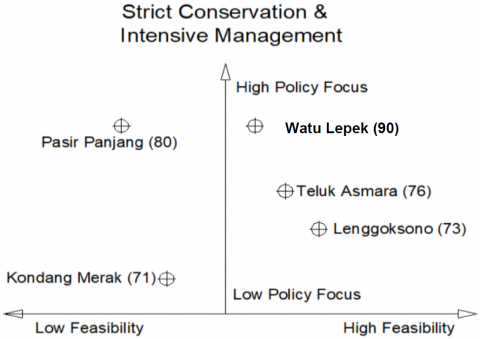
The classification of these sites based on feasibility and policy focus is visually represented in Figure 3. The X-axis in the figure denotes feasibility, with lower feasibility sites positioned on the left and higher feasibility sites on the right. The Y-axis represents policy focus and intervention intensity, moving from lower intervention at the bottom to stricter conservation measures at the top. Watu Lepek, with the highest feasibility score (96), is positioned in the upper-right quadrant, indicating both high development potential and a need for intensive conservation management. Similarly, Teluk Asmara (76) and Lenggoksono (73) also fall within the high feasibility zone but require moderate conservation efforts. Pasir Panjang (80) appears on the left, signifying its high conservation priority despite moderate feasibility, while Kondang Merak (71) is situated in the lower-right quadrant, indicating a need for basic infrastructure improvements before higher conservation measures are implemented.
Figure 3. Spatial classification of beaches based on feasibility and policy focus
This zoning strategy, as illustrated in Figure 1, provides a structured and data-driven approach to coastal tourism, enabling policymakers to make informed decisions that support local economic development while preserving natural ecosystems. The findings emphasize the importance of integrating environmental sustainability, infrastructure readiness, and policy support to create a balanced and resilient tourism model for South Malang’s coastal areas.
This feasibility assessment of sustainable marine tourism in South Malang reveals critical factors for development: transport infrastructure, environmental sustainability through Marine Protected Areas (MPAs), CBT, and eco-friendly marketing. Improved transport infrastructure is vital. Efficient transport, including eco-friendly options, enhances tourist satisfaction and reduces environmental impact, as evidenced by the success of sites with better infrastructure [2, 23, 27]. MPAs are essential for balancing conservation and tourism. Strategic zoning and stakeholder engagement, particularly with local communities, ensure effective management [1, 9, 10, 28-30]. Continuous monitoring and adaptive management are crucial. CBT fosters socio-economic benefits by empowering local communities and diversifying livelihoods [29, 31-33]. Training and participatory decision-making are necessary to expand CBT in underperforming sites. Effective marketing and promotion highlight South Malang's eco-friendly attributes. Digital platforms, influencer collaborations, and compelling storytelling attract environmentally conscious travelers [23, 34-38]. Real-time visitor feedback improves marketing strategies. Given South Malang’s current position in the exploration phase of Butler’s TALC, tourism management must carefully integrate the LAC framework to proactively set visitor limits, define ecological thresholds, and prevent negative impacts as tourism interest increases, particularly after the completion of the JLS. Strategic recommendations include: investing in accessible, eco-friendly transport infrastructure; enhancing MPA management through stakeholder engagement and monitoring; implementing CBT training and promoting inclusive tourism; and leveraging digital platforms and compelling storytelling. These strategies create a holistic approach, balancing environmental, economic, and social objectives for sustainable marine tourism in South Malang. Additionally, exploring sustainable funding mechanisms such as eco-tourism levies, public-private partnerships, and conservation grants is crucial for financing the necessary infrastructure improvements and environmental management initiatives. Further, proactively integrating climate change adaptation—addressing coastal erosion, rising sea levels, and extreme weather events—will be essential to ensure the long-term sustainability of tourism development.
This study evaluates the feasibility of sustainable marine tourism development in South Malang by integrating environmental, economic, and spatial planning considerations. Using an MCDA framework combined with GIS, the study identifies high-potential tourism sites while ensuring that ecologically sensitive areas receive appropriate conservation measures. The findings highlight that well-developed infrastructure, strong environmental resilience, and active community participation are key determinants of successful tourism zoning. High-feasibility sites such as Watu Lepek and Pasir Panjang demonstrate strong potential for sustainable tourism investment, while conservation-priority sites like Sipelot and Gatra require strict environmental management and limited tourism activities to protect biodiversity. The proposed zoning strategy provides a structured approach to balancing tourism development with conservation imperatives. By integrating feasibility assessments with policy-driven decision-making, this research offers practical recommendations for regional planners and policymakers to optimize tourism investments while safeguarding coastal ecosystems. The findings emphasize the need for infrastructure improvements, adaptive conservation policies, and enhanced community engagement to ensure long-term sustainability. This study contributes to sustainable tourism planning by offering an evidence-based zoning model applicable to other coastal regions facing similar challenges. Future research should focus on assessing the long-term ecological impacts of tourism zoning, evaluating the effectiveness of MPAs, and developing climate-adaptive tourism policies to enhance coastal resilience. By bridging environmental planning and economic development, this research strengthens the foundation for responsible marine tourism management in South Malang and beyond.
The authors express their deepest gratitude to the Faculty of Marine and Fisheries, Universitas Brawijaya, for providing invaluable support throughout this research. The authors also acknowledge Universitas Brawijaya for providing access to facilities and resources that were essential to completing this research. This work would not have been possible without their support and dedication.
[1] Hamzah, A., Arifin, A., Abdullah, S., Salim, M.N.H.M., Junaid, I. (2024). Empowerment of coastal communities through marine tourism: A functional approach. Planning Malaysia, 22(34): 329-343. https://doi.org/10.21837/pm.v22i34.1633
[2] Jurkus, E., Taminskas, J., Povilanskas, R., Kontautienė, V., Baltranaitė, E., Dailidė, R., Urbis, A. (2021). Delivering tourism sustainability and competitiveness in seaside and marine resorts with GIS. Journal of Marine Science and Engineering, 9(3): 312. https://doi.org/10.3390/jmse9030312
[3] Novanda, R.R., Wibowo, H.E., Khaliqi, M., Sinaga, F.H., Darmansyah, D., Amiruddin, A., Sari, I.R.M. (2023). Influence of natural resources and infrastructure on travel intention to Tikus Island, Indonesia. IOP Conference Series: Earth and Environmental Science, 1230(1): 012030. https://doi.org/10.1088/1755-1315/1230/1/012030
[4] Nuraini, Satria, A., Wahyuni, E.S., Bengen, D.G. (2021). Strengthening marine ecotourism management's institutional performance in Raja Ampat, Indonesia. Pertanika Journal of Social Sciences and Humanities, 29(3): 1809-1829. https://doi.org/10.47836/pjssh.29.3.18
[5] Fauzi, A., Adrianto, L., Wahyudin, Y. (2024). Developing marine tourism policy pathways: The case of super priority marine tourism destinations in Labuan Bajo, Indonesia. International Journal of Sustainable Development & Planning, 19(10): 3809-3819. https://doi.org/10.18280/ijsdp.191010
[6] Khalwatu, M., Rahman, M.A., Abidin, Z. (2020). Design of automatic eggs hatchery as preservation of turtle in coastal of East Java. E3S Web of Conferences, 153: 01002. https://doi.org/10.1051/e3sconf/202015301002
[7] Huang, W., Chen, C.Y., Fu, Y.K. (2022). The sustainable island tourism evaluation model using the FDM-DEMATEL-ANP method. Sustainability, 14(12): 7244. https://doi.org/10.3390/su14127244
[8] Kyvelou, S.S.I., Ierapetritis, D.G. (2021). Fostering spatial efficiency in the marine space, in a socially sustainable way: Lessons learnt from a soft multi-use assessment in the Mediterranean. Frontiers in Marine Science, 8: 613721. https://doi.org/10.3389/fmars.2021.613721
[9] Umar, I. (2022). Evaluation of the suitability of marine tourism in the Mandeh Archipelago, West Sumatra. Jurnal Pengelolaan Sumberdaya Alam dan Lingkungan (Journal of Natural Resources and Environmental Management), 12(2): 259-267. https://doi.org/10.29244/jpsl.12.2.259-267
[10] Wijayanto, C., Yulianda, F., Imran, Z. (2022). The core zone decisive of marine conservation area in Southeast Sulawesi using marxan. IOP Conference Series: Earth and Environmental Science, 967(1): 012001. https://doi.org/10.1088/1755-1315/967/1/012001
[11] Pagano, M., Fernetti, M., Busetti, M., Ghribi, M., Camerlenghi, A. (2023). Multicriteria GIS-based analysis for the evaluation of the vulnerability of the marine environment in the Gulf of Trieste (north-eastern Adriatic Sea) for sustainable blue economy and maritime spatial planning. People and Nature, 5(6): 2006-2025. https://doi.org/10.1002/pan3.10537
[12] Prasetyo, N., Filep, S., Carr, A. (2023). Towards culturally sustainable scuba diving tourism: An integration of Indigenous knowledge. Tourism Recreation Research, 48(3): 319-332. https://doi.org/10.1080/02508281.2021.1925830
[13] Arkema, K.K., Fisher, D.M., Wyatt, K., Wood, S.A., Payne, H.J. (2021). Advancing sustainable development and protected area management with social media-based tourism data. Sustainability, 13(5): 2427. https://doi.org/10.3390/su13052427
[14] Sukandar, S., Sunardi, Pratama, V.D., Abidin, Z. (2022). The relationship between egg weight of olive ridley sea turtle (Lepidochelys Olivacea) on hatchability using ‘Maticgator’ (Automatic turtle egg incubator). American Journal of Animal and Veterinary Sciences, 17(2): 139-147. https://doi.org/10.3844/ajavsp.2022.139.147
[15] Ayad, T.H. (2021). Dugong based tourism development at the Red Sea: Case of Marsa Abu Dabab. African Journal of Hospitality, Tourism and Leisure, 10(2): 608-622. https://doi.org/10.46222/ajhtl.19770720-121
[16] Muntaha, A., Setyohadi, D., Isdianto, A. (2023). Enhancing safety and security: Facilities for wheelchair users in marine tourism area. International Journal of Safety & Security Engineering, 13(6): 1153-1161. https://doi.org/10.18280/ijsse.130619
[17] Davenport, M.H., Ruchat, S.M., Sobierajski, F., Poitras, V.J., et al. (2019). Impact of prenatal exercise on maternal harms, labour and delivery outcomes: A systematic review and meta-analysis. British Journal of Sports Medicine, 53(2): 99-107. https://doi.org/10.1136/bjsports-2018-099821
[18] Hsiao, C.Y., Kuo, C.M., Tuan, C.L. (2021). Island ecological tourism: Constructing indicators of the tourist service system in the Penghu national scenic area. Frontiers in Ecology and Evolution, 9: 708344. https://doi.org/10.3389/fevo.2021.708344
[19] Niella, Y., Simes, B., Fox, A., Wright, A., Waller, M., Riley, M., Meyer, L., Drew, M., Pederson, H., Huveneers, C. (2022). Short-term response of research activities on white shark behaviour. Wildlife Research, 50(4): 260-271. https://doi.org/10.1071/WR22004
[20] Kamagi, J.W.A., Sitorus, S.R.P., Arifin, H.S., Hardjomidjojo, H. (2022). Management strategy for marine tourism in Bunaken National Park North Sulawesi Province. IOP Conference Series: Earth and Environmental Science, 1109(1): 012048. https://doi.org/10.1088/1755-1315/1109/1/012048
[21] Tulloch, V.J., Adams, M., Finn, R., Bourbonnais, M., Avery-Gomm, S., Penn, B., Martin, T.G. (2024). Predicting regional cumulative effects of future development on coastal ecosystems to support Indigenous governance. Journal of Applied Ecology, 61(7): 1728-1742. https://doi.org/10.1111/1365-2664.14659
[22] Putri, D.L., Harahap, R.G., Pangestu, J., Arifiyanto, M.A., Ridwan, M.W. (2022). Fostering the integrated coastal zone plan for Derawan Island towards after COVID 19 pandemic. IOP Conference Series: Earth and Environmental Science, 1095(1): 012019. https://doi.org/10.1088/1755-1315/1095/1/012019
[23] Cavallini, I., Marzo, D., Scaccia, L., Scipioni, S., Niccolini, F. (2023). Scuba diving tourism and the challenge of sustainability: Evidence from an explorative study in North African-Mediterranean countries. EuroMed Journal of Business, 20(5): 1-26. https://doi.org/10.1108/EMJB-04-2022-0085
[24] Rahman, M.K., Masud, M.M., Akhtar, R., Hossain, M.M. (2022). Impact of community participation on sustainable development of marine protected areas: Assessment of ecotourism development. International Journal of Tourism Research, 24(1): 33-43. https://doi.org/10.1002/jtr.2480
[25] Nahib, I., Widiatmaka, W., Tarigan, S.D., Ambarwulan, W., Ramadhani, F. (2025). Determining conservation priorities in the urban citarum watershed, West Java: An ecosystem services approach. International Journal of Sustainable Development & Planning, 20(1): 195-208. https://doi.org/10.18280/ijsdp.200119
[26] Widodo, S., Surya, B., Nasution, M.A., Manaf, M., Muhibuddin, A., Abduh, N., Salim, A. (2025). Exploring the relationship between industrial zones and integrated ports in promoting regional development sustainability in Sorong Regency, Indonesia. International Journal of Sustainable Development & Planning, 20(1): 67-73. https://doi.org/10.18280/ijsdp.200108
[27] Thahira, A., Daulay, Z., Ferdi, Syofyan, S. (2023). The strategy for the resolution of marine pollution on the northern coast of Bintan Island Indonesia due to sludge oil with the principle of cooperation to realize the sustainable development goals. IOP Conference Series: Earth and Environmental Science, 1148(1): 012031. https://doi.org/10.1088/1755-1315/1148/1/012031
[28] Hermawan, S., Mihardja, E., Pambudi, D.A., Jason, J. (2023). Hydrodynamic model optimization for marine tourism development suitability in Vicinity of Poso Regency Coastal Area, Central Sulawesi, Indonesia. Sustainability, 15(4): 3150. https://doi.org/10.3390/su15043150
[29] Praptiwi, R.A., Maharja, C., Fortnam, M., Chaigneau, T., Evans, L., Garniati, L., Sugardjito, J. (2021). Tourism-based alternative livelihoods for small island communities transitioning towards a blue economy. Sustainability, 13(12): 6655. https://doi.org/10.3390/su13126655
[30] Zheng, Y., Wu, Y. (2023). An investigation of how perceived smart tourism technologies affect tourists’ well-being in marine tourism. PLoS ONE, 18(8): e0290539. https://doi.org/10.1371/journal.pone.0290539
[31] Antriyandarti, E. (2023). Development of the essential ecosystem area of Taman Kili-Kili Beach Trenggalek as a center for turtle conservation and ecotourism activities. IOP Conference Series: Earth and Environmental Science, 1137(1): 012066. https://doi.org/10.1088/1755-1315/1137/1/012066
[32] Gupta, A., Zhu, H., Bhammar, H., Earley, E., Filipski, M., Narain, U., Spencer, P., Whitney, E., Taylor, J.E. (2023). Economic impact of nature-based tourism. PLoS ONE, 18(4): e0282912. https://doi.org/10.1371/journal.pone.0282912
[33] Junaid, I., Widjaja, H.R., Shariffuddin, N.S.M. (2024). Transforming coastal spaces into event destinations: A case study of Sumpang Binangae, Barru Regency-Indonesia. Planning Malaysia, 22(6): 435-451. https://doi.org/10.21837/pm.v22i34.1640
[34] Alfiandri, A., Malik, J.A., Adianto, A. (2024). Innovative governance of blue economy in coastal community empowerment Bintan Regency. BIO Web of Conferences, 134: 03008. https://doi.org/10.1051/bioconf/202413403008
[35] Astari, V., Hakim, L., Putra, F. (2023). The sustainable development strategy of marine-based gastronomy ecotourism at Southern Malang, Malang Regency, East Java. Environmental Research, Engineering and Management, 79(2): 32-49. https://doi.org/10.5755/j01.erem.79.2.33124
[36] Halik, A., Yasin, M., Sumiati, S. (2024). Designing EDGE (Enhanced destination growth and engagement) to Improve the performance of marine tourism in East Java. Edelweiss Applied Science and Technology, 8(6): 8782-8792. https://doi.org/10.55214/25768484.v8i6.3875
[37] Villar-Alises, O., Martinez-Miranda, P., Martinez-Calderon, J. (2023). Prenatal yoga-based interventions may improve mental health during pregnancy: An overview of systematic reviews with meta-analysis. International Journal of Environmental Research and Public Health, 20(2): 1556. https://doi.org/10.3390/ijerph20021556
[38] Villaseñor-Derbez, J.C., Fulton, S., Hernández-Velasco, A., Amador-Castro, I.G. (2023). Biomass accrual benefits of community-based marine protected areas outweigh their operational costs. Frontiers in Marine Science, 10: 1180920. https://doi.org/10.3389/fmars.2023.1180920