Pragati Srivastava* | Kamini Sinha
© 2025 The authors. This article is published by IIETA and is licensed under the CC BY 4.0 license (http://creativecommons.org/licenses/by/4.0/).
OPEN ACCESS
Cultural tourism plays a vital role in global tourism, contributing to economic, social, and artistic development. This study examines key frameworks for managing and promoting sustainable cultural tourism. It analyzes prominent models, including Butler's Tourism Area Life Cycle (TALC), McKercher and du Cros' Cultural Tourism model, Poria, Butler, and Airey's Heritage Tourism model, Richards' Creative Tourism model, and UNESCO's Sustainable Cultural Tourism Theoretical Framework. The research adopts a detailed qualitative approach, incorporating a comprehensive literature review and a SWOT analysis, to achieve three key objectives. Firstly, it examines five distinct frameworks in depth. Secondly, it evaluates these models and frameworks by analyzing their strengths, weaknesses, opportunities, and threats. Lastly, it applies one of the frameworks to a case study for practical assessment and validation. This research aims to explore sustainable tourism initiatives in Varanasi, emphasizing the integration of heritage preservation, community involvement, and responsible tourism practices. It concludes that by prioritizing both environmental and cultural sustainability, Varanasi, along with other ancient cities, can develop a tourism model that safeguards its unique heritage while providing meaningful and enriching experiences for future generations of visitors.
cultural tourism, frameworks, comparative analysis, swot, sustainable tourism, Varanasi
Cultural tourism, a significant subset of the global tourism industry, focuses on engaging travelers with the cultural heritage, traditions, and artistic expressions of a destination. It encompasses experiences such as exploring historical landmarks, participating in cultural festivals, and immersing in local lifestyles. As a bridge between cultural heritage and economic development, this form of tourism holds immense potential for preserving and promoting cultural assets while fostering sustainable practices, community empowerment, and intercultural understanding [1-4].
The social and cultural potential of cultural tourism has been extensively documented by researchers [5] highlighting its dual role in preserving cultural heritage and stimulating local economies, while Timothy [6] underscores its capacity to foster cultural pride and identity within host communities. However, challenges such as commodifying culture, balancing authenticity, and the risk of over-commercialization remain critical issues in the field [7]. Van Der Ark and Richards [8] further categorize cultural tourists based on participation levels and the attractiveness of cultural offerings, reflecting the diverse motivations and behaviors of this demographic.
The study of cultural tourism has been informed by various theoretical frameworks, which offer insights into its dynamics and sustainability. Butler’s Tourism Area Life Cycle (TALC) model examines the evolution and sustainability of tourism destinations [9], while Doxey [10] explores the sociocultural impacts of tourism on host communities [11]. Modern frameworks such as the Ritchie and Crouch Model highlight the integration of cultural resources in enhancing destination competitiveness, shift focus toward creating memorable, experience-based interactions. Add to it, Hager and Sung [12] examine the role of local arts agencies in fostering cultural tourism through strategic partnerships and programming.
1.1 Study area
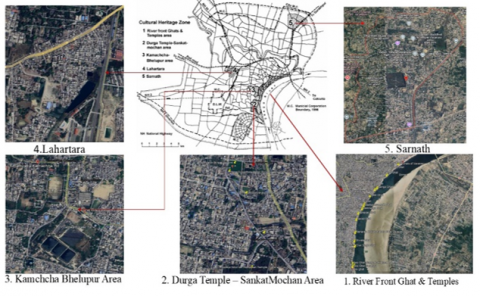
Varanasi is situated in the Gangetic plains of North India and is located in the state of Uttar Pradesh.it is geographically bounded by latitudes 25.32754°N and 25.20652°N, and longitudes 82.87302°E and 83.04623°E. The city is uniquely positioned between the Varana and Assi rivers, which also lend it its name [13]. Varanasi, also known as Banaras or Kashi, boats an unparalleled history spanning over 4,000 years. It holds a significant place in Hindu society as one of its cultural epicenters and is recognized as one of the oldest continuously inhabited cities in the world. Renowned as the spiritual capital of India, Varanasi is the holiest among the seven sacred sites (Saptapuri) in Hinduism and Jainism. The city has also played a pivotal role in the development of Buddhism, attracting pilgrims and spiritual seekers from across the globe [14]. The zoning plan of Varanasi identifies five heritage zones and places emphasis on government and semi-government initiatives to preserve its unique identity [15].
1.2 Introduction of five heritage zones
All five zones have embodied rich cultural and spiritual heritage with sites like the Kashi Vishwanath Temple, Sarnath, and the ghats along the Ganges, all the five zones are described below in sections 1.2.1 to 1.2.5 and the finding from the survey is given in Table 1.
1.2.1 Riverfront ghats (stairways to the riverbank)
The riverfront heritage covers the portion of the city stretching within 200 m from the river bank. Eighty-four riverfront ghats cover a length of 6.8 km along the crescent-shaped bank of the River Ganga, Ganga-Ji (the Ganges in an anglicized way, devotionally called Ganga-Ji), from the confluence of Asi drain in the south to the confluence of the Varana River in the north (Figure 1) [16]. Here the riverfront is overlooked by lofty palatial buildings built mostly by kings and lords from different parts of India between the 18th and 20th centuries, and various shrines and temples dominate the area along the ghats. One of the most impressive buildings is the Darbhanga Palace, presently called ‘Brij Rama Palace’ (now owned by the Clarks’ Hotel Group), which is presently in the process of conversion into a heritage hotel that will consequently result in the loss of heritage and promotion of environmental pollution. The ghats of Varanasi (Figure 2) represent one of the finest ensembles of monumental architecture linked with the everyday activities of the devout people, thus symbolizing the heritage tradition of India. Almost all visitors (tourists and pilgrims) take part in the on-site package scenic tour programs (whether at a luxury or a basic level), of which the Ganga ghats are the most popular. The ghats are the nexus of the major rituals and festivals (the intangible cultural heritage resources) in the holy city, from where all rituals start by taking a sacred bath and conclude by donating to the riverfront priests, like thanksgiving [17].
Figure 1. Varanasi development plan 2011, location of five heritage zones
Source: https://www.researchgate.net/figure/aranasi-Development-Plan-2011_fig2_320003111
Images: Google Earth Pro of five heritage zones.
Table 1. Types and numbers of prominent Heritage features being experienced by visitors in the five heritage zones along with their total frequency in Varanasi city
|
Aspects |
Varanasi Site |
ZONE -1 River Front Ghats & Temples Area |
ZONE -2 Durga Kund - Sankat Mochan Area |
ZONE -3 Kamacha -Bhelupur Area |
ZONE -4 Lahartara |
ZONE -5 Sarnath |
Total (in Varanasi City) |
|
Cultural Heritage Assets |
Ghat |
84 |
0 |
0 |
0 |
0 |
84 |
|
Buddhist Monuments |
0 |
0 |
0 |
0 |
14 |
14 |
|
|
Gurudwara |
0 |
0 |
1 |
1 |
|
2 |
|
|
Jain Temple |
5 |
1 |
2 |
0 |
1 |
11 |
|
|
Mosque |
2 |
0 |
0 |
0 |
0 |
4 |
|
|
Hindu Temples |
14 |
5 |
0 |
0 |
3 |
36 |
|
|
Cultural Symbol |
1 |
0 |
0 |
1 |
1 |
4 |
|
|
Natural Attractions |
1 |
3 |
2 |
0 |
1 |
11 |
|
|
Kund |
3 |
1 |
1 |
1 |
|
11 |
|
|
|
54 |
9 |
5 |
1 |
21 |
126 |
|
|
Functionaries and Life |
Way of Life – Aghoris |
2 |
0 |
0 |
7 |
0 |
2 |
|
Ways of Life – Doms |
2 |
0 |
0 |
0 |
0 |
2 |
|
|
Way of Life – Monk |
0 |
0 |
0 |
0 |
3 |
2 |
|
|
Ways of Life- Pandit |
6 |
0 |
1 |
1 |
0 |
8 |
|
|
Way of Life - Banaras Gharana |
0 |
1 |
1 |
0 |
0 |
3 |
|
|
|
10 |
1 |
2 |
8 |
3 |
25 |
|
|
Performing Arts, Cultural Events and Festivities |
Festivals |
28 |
1 |
6 |
0 |
1 |
44 |
|
Cultural Events |
6 |
2 |
0 |
0 |
0 |
8 |
|
|
|
44 |
4 |
10 |
16 |
7 |
102 |
|
|
Museums or Art Galleries |
Museum |
5 |
1 |
0 |
0 |
1 |
15 |
|
Art Gallery |
5 |
1 |
0 |
1 |
2 |
12 |
|
|
|
10 |
2 |
0 |
1 |
3 |
27 |
Source: Author’s Primary survey
Figure 2. Bar chart of the aspect a) Cultural Heritage Assets b) Functionaries and life c) Performing Arts, Cultural Events and Festivities and d) Museums or Art galleries
1.2.2 Durgakund-Sankatmochan Area
This area contains about twenty temples and shrines and the water pools of Durgakund and Kurukshetra kundas, which are two historic sacred tanks dating from the late 18th century [17]. Every Tuesday, and more frequently in the month of Shravana (July-August) and Ashvina (September-October), especially the nine nights (Navaratri) in the light fortnight, worshippers perform rituals in the Durga temple. This was built on the orthodox model of Hindu temples but without an excessive display of minute carvings and sculptures. Towards the east near the Ganga River is the oldest sacred pond in Varanasi, viz. Lolarka Kund, which was referred to in the Mahabharata (2nd century BCE) and which still attracts a large mass of pilgrims, especially on its annual day of celebration falling on the Bhadrapada (August-September) 6th of the light fortnight. In this area also stand the temples of Tulasi Manas Mandir and Sankatmochan Hanuman Mandir [17].
1.2.3 Kamachcha-Bhelupura Area
Three records of some of the old monasteries, ancient shrines, and an ancient heritage site associated with the Jain Tirthankara Parshvanath, together with many monuments and buildings of the British period (18th-19th centuries). The historically notable temples and shrines in this zone are Kamachha Devi, Krodhan Bhairava, Angareshi Chandi, Vatuka Bhairava, and Vaidyanath Shiva. The Dvarakadhisha (Krishna) temple and the sacred pool of Shankhudhara are other heritage sites [17].
1.2.4 Kabir Math (Lahartara) Area
This site was the birthplace of Kabir, a great saint-poet and social reformer of the 16th century. There are several monasteries in this area related to the life of Kabir. The Kabir Temple Complex is coming up as a great modern heritage and center of solace and learning [17].
1.2.5 Sarnath
This archaeological heritage site was famous for its sanctity, beauty, and natural scenery (Figure 1), qualities that attracted the Buddha to give his first sermon here in 528 BCE [18].
This paper seeks to address three key objectives:
The remaining articles are arranged as follows. Section 2 provides materials and methods, Section 3 discusses the result, and Section 4 discusses and conclusion drawn.
2.1 Methods
This paper employs a qualitative research [4] approach by systematically reviewing existing literature on cultural tourism frameworks and models. The literature review identifies key issues and theoretical contributions from previous research. Academic databases, including Scopus, Web of Science, and Google Scholar, were utilized to ensure comprehensive coverage of relevant studies (50 research papers). These zones contribute to Varanasi's reputation as the cultural capital of India, while the rest of the city comprises residential, commercial, and institutional areas. The findings on cultural heritage were derived from a yearlong primary survey conducted to identify key cultural sites. The survey was systematically designed, focusing on key factors such as cultural heritage, daily life activities, performing arts, and museums, as outlined in Table 1, categorized zone-wise. The study area is illustrated in Figure 1. The research process involved the following steps:
2.2 Data analysis
The selected frameworks and models were critically analyzed using SWOT analysis. This method offers a visual and systematic approach to evaluating the Strengths, Weaknesses, Opportunities, and Threats of each framework. The analysis compared multiple criteria, such as sustainability, community engagement, and cultural preservation, enabling a multidimensional understanding of each framework's performance.
2.3 Materials
The selection of five key frameworks is grounded in their robust theoretical foundations and wide acceptance in cultural tourism research. These models were derived from a detailed review of 50 academic papers, highlighting their prominence in the field. Additionally, many researchers have incorporated these frameworks into their studies, underscoring their relevance and adaptability.
2.4 Frameworks overview
2.4.1 TALC model (Butler)
Introduced by Richard Butler, this seminal model describes the evolutionary stages of a tourism destination-exploration, development, stagnation, and either decline or rejuvenation [9].
2.4.2 Cultural tourism typology (McKercher & du Cros)
Developed by Bob McKercher and Hilary du Cros, this typology categorizes cultural tourists based on their motivations and behaviors [19].
2.4.3 Poria, Butler & Airey heritage tourism framework
This model focuses on the emotional connection between a tourist’s heritage and their choice of destinations [20].
2.4.4 Richards’ creative tourism model
Proposed by Greg Richards, this model emphasizes participatory experiences such as workshops, cooking classes, and local crafts [2].
2.4.5 UNESCO sustainable cultural tourism framework
This framework prioritizes the preservation of cultural heritage while promoting inclusive development through stakeholder engagement [4].
The SWOT analysis, summarized in Table 2, The analysis provides valuable insights into their practical applications and implications for cultural tourism development. This table systematically analyze the frameworks across multiple dimensions, highlighting their core attributes, potential advantages, and challenges, thereby guiding their effective application in cultural tourism planning and management.
Table 2. Description of strengths and weakness of all five frameworks opportunity and threat of all five frameworks
|
Category |
Strengths |
Weaknesses |
Opportunities |
Threats |
|
Butler’s TALC Model |
- Provides a clear structure for understanding destination development phases. |
- Oversimplifies tourism development as a linear process. |
- Useful for long-term planning and sustainable growth management. |
- Over-reliance on the model may neglect local dynamics. |
|
- Widely applicable across different tourism destinations. |
- Does not account for external disruptions (e.g., environmental changes, political instability). |
- Can guide policies for destination rejuvenation or repositioning. |
- External shocks (e.g., economic crises, pandemics) could derail tourism growth plans. |
|
|
- Helps forecast growth and potential stagnation. |
- Lacks a focus on cultural specifics. |
|
|
|
|
McKercher and du Cros Cultural Tourism Model |
- Differentiates cultural tourists by level of engagement. |
- Primarily focuses on tourists, neglecting local community impacts. |
- Can guide the development of customized cultural experiences. |
- May fragment tourism offerings and create inconsistent tourist experiences. |
|
- Supports targeted marketing and experience design. |
- Lacks focus on sustainability and broader cultural consequences. |
- Opportunities to enhance tourist satisfaction through better alignment with tourist motivations. |
- Fails to address long-term impacts on local communities and environments. |
|
|
Poria, Butler, and Airey Heritage Tourism Model |
- Emphasizes personal identity and emotional connections with heritage sites. |
- Narrow focus on identity-based motivations. |
- Opportunities to develop personalized, engaging heritage tourism experiences. |
- Over-focus on personal identity could alienate tourists who don’t share a connection to the site. |
|
- Strong focus on storytelling and interpretation. |
- May exclude tourists without personal connections to the heritage site. |
- Encourages deeper emotional connections between tourists and heritage destinations. |
- Broader cultural, educational, or recreational elements may be overlooked. |
|
|
Richards’ Creative Tourism Model |
- Encourages active participation and co-creation of cultural experiences. |
- Risk of commodifying local culture for tourism. |
- Growing demand for authentic, immersive travel experiences. |
- Over-commercialization may reduce the authenticity of cultural experiences. |
|
- Focuses on authentic, immersive experiences. |
- High resource demand for organizing hands-on cultural activities. |
- Opportunities to foster deeper connections between tourists and local cultures. |
- Cultural exploitation could result if not properly managed, leading to loss of cultural integrity. |
|
|
- Enhances tourist-local interaction. |
- May distort cultural practices for commercial reasons. |
- Supports intangible cultural heritage preservation. |
|
|
|
UNESCO Sustainable Cultural Tourism Framework |
- Promotes balanced tourism that protects cultural heritage. |
- Challenging to implement in regions with limited resources. |
- Can guide sustainable tourism development and preservation of cultural assets. |
- Difficulty in maintaining long-term sustainability amidst growing tourism demand. |
|
- Emphasizes sustainability and stakeholder engagement. |
- Requires balancing competing interests between tourists, locals, and governments. |
- Opportunities to align tourism with global sustainability goals, including the UN SDGs. |
- Economic or political instability may hinder the effectiveness of sustainable tourism policies. |
Source: Authors Secondary data collection findings
In conclusion, Table 2 was prepared after reading 50 research papers some papers talk individual framework or combined. The frameworks and models of cultural tourism discussed in this literature review each contribute valuable insights to the understanding of how cultural tourism can be managed and developed. While Butler's TALC model provides a lifecycle perspective on tourism development, McKercher and du Cros' model offers a detailed understanding of tourist behavior. The Poria, Butler, and Airey model highlights the personal identity connection with heritage, while Richards’ Creative Tourism model introduces a participatory element. UNESCO’s framework ensures that sustainability is at the forefront of cultural tourism management.
It can be concluded that Table 2, prepared after reviewing 50 research papers, includes insights from studies that discuss either individual frameworks or combined frameworks. The frameworks and models of cultural tourism discussed in this literature review each contribute valuable insights to the understanding of how cultural tourism can be managed and developed. While Butler's TALC model provides a lifecycle perspective on tourism development, McKercher and du Cros' model offers a detailed understanding of tourist behavior. The Poria, Butler, and Airey model highlights the personal identity connection with heritage, while Richards’ Creative Tourism model introduces a participatory element. UNESCO’s framework ensures that sustainability is at the forefront of cultural tourism management.
After going through the swot analysis all the five frameworks, The UNESCO Sustainable Cultural Tourism Framework was selected for Varanasi over other frameworks due to its holistic approach.
Varanasi, a city deeply rooted in cultural and spiritual heritage, presents a complex environment where cultural tourism needs to balance with the preservation of its rich traditions. Unlike the TALC Model, which primarily focuses on the lifecycle stages of tourism destinations, the UNESCO Framework emphasizes inclusive stakeholder engagement, making it particularly suited for a culturally and socially intricate city like Varanasi.
While the McKercher & du Cros Typology effectively categorizes tourists based on motivation, it does not fully address the sustainability challenges posed by mass tourism in heritage-rich areas. Similarly, the Poria, Butler & Airey Heritage Tourism Model, which emphasizes personal heritage and emotional connections, falls short of addressing broader community involvement and sustainable resource management, both of which are critical for Varanasi. Although Richards’ Creative Tourism Model promotes participatory cultural experiences, its primary focus on interactive activities may not adequately address the preservation of Varanasi's sacred and historical elements.
The UNESCO Framework’s emphasis on balancing tourism growth with the protection of cultural assets, fostering local community participation, and ensuring equitable economic benefits make it an ideal choice. Its global relevance and adaptability to heritage sites align seamlessly with Varanasi's status as a spiritual and cultural hub, where safeguarding traditions and ensuring sustainable tourism development are paramount.
2.4.6 The programme objectives of UNESCO sustainable cultural tourism framework
Promote quality tourism products and services that encourage responsible behaviour among all stakeholders and foster understanding and appreciation of the concept of Outstanding Universal Value and protection of World Heritage [4].
3.1 Result
The study focuses on five heritage zones described in Figure 1 and Figure 2. The Zone 1 Riverfront Ghats & Temples Area in Varanasi is located along the Ganges River, extending from Assi Ghat in the south to Raj Ghat in the north, featuring historic ghats like Dashashwamedh and Manikarnika, and temples like Kashi Vishwanath, Zone 2 Durga Kund-Sankat Mochan lies near Banaras Hindu University, hosting the Durga Temple and Sankat Mochan Hanuman Temple and zone 3 Kamacha-Bhelupur is a prominent residential and commercial area near the central city are nearby to each other with number of waterbodies. Zone 4 Lahartara is a bustling hub, connecting major roads near the railway station and zone 5 Sarnath, about 10 km northeast of Varanasi, is an ancient Buddhist site, home to the Dhamek Stupa and Ashokan Pillar. Based on the primary survey, the five heritage zones have been identified according to various aspects, with respect to their frequency. The frequency reflects the prominence of these sites across Varanasi, highlighting their cultural, social, and mythological significance. However, certain notable places might fall outside these five heritage zones, which is why the total may vary. The details are presented below in Table 1.
3.2 Primary survey analysis
Each zone contributes uniquely to the cultural identity of Varanasi, with Zone 1 as the nucleus, Zone 5 reflecting its historical legacy, and Zones 2, 3, and 4 enriching the city with localized traditions and lifestyles. The analysis is shown in Figure 2.
The analysis, based on the survey findings is detailed below, along with recommendations for measures to facilitate sustainable tourism and enhance its accessibility:
Zone 1: Riverfront Ghats & Temples Area
Zone 1 is the cultural epicentre of Varanasi, contributing approximately 42.86% of the total tangible cultural heritage assets, with all 31 prominent Ghats and 14 Hindu temples located here. It also accounts for 50% of the city's Jain temples, 50% of its mosques, and 25% of cultural symbols while it has 9.09% of the total prominent natural attractions (scenery). Intangible cultural elements are equally significant, within this zone representing 40% of the total intangible aspects, including the lifestyles of Aghoris (100%), Doms (100%), and Pandits (75%). In performing arts and festivals, Zone 1 leads with 43.14% of activities, hosting 18 prominent festivals and 6 cultural events. It also accounts for 37.04% of the museums and art galleries in Varanasi, cementing its place as the city's cultural nucleus.
Zone 2: Durga Kund - Sankat Mochan Area
Zone 2 contributes 7.14% of the total tangible cultural heritage assets. It houses 13.89% of temples and 9.09% of natural attractions. It also includes 11.11% of Jain temples, emphasizing its role as a hub for localized spirituality. In intangible aspects, it contributes a modest 4%, with a small representation of Pandits and a few cultural events (2 festivals, accounting for 4% of cultural celebrations). Museums and art galleries in this zone contribute 7.41%, reflecting a limited but important role in preserving Varanasi's artistic heritage.
Zone 3: Kamacha - Bhelupur Area
Zone 3 contributes 3.97% to the total tangible cultural heritage assets, including 18.18% of natural attractions (scenery) and 22.22% of Jain temples. It represents 8% of intangible aspects, including the Banaras Gharana (origin of Kathak dance) tradition and some representation of Pandits. Festivals (6%) and cultural events (19.61%) are also part of the zone's cultural vibrancy. This zone focuses more on tradition and religious significance than on tangible preservation.
Zone 4: Lahartara
Zone 4 has the lowest tangible cultural representation, contributing only 0.79% of the total. However, its intangible heritage is much more significant, with 32% of the total contribution. It houses 87.5% of artisans' lifestyles and festivals (16 total) in this area, demonstrating its vibrant cultural traditions. Despite its strong intangible aspects, tangible assets like museums and galleries contribute a mere 3.7%, showcasing that its heritage value relies on intangible heritage rather than tangible.
Zone 5: Sarnath
Zone 5 contributes 16.67% of tangible cultural heritage, marked by 100% of the Buddhist monuments, 11.11% of Jain temples, 9.09% of natural attractions, and 25% of cultural symbols. Its intangible representation is 12%, with lifestyles of monks and some representation of Pandits. Festivals and cultural events are relatively limited, accounting for only 6.86%. However, its share of museums and art galleries (11.11%) highlights its focus on preserving its historical and artistic legacy.
3.3 Analyzing Varanasi using the UNESCO sustainable cultural tourism framework involves assessing the city
3.3.1 Integrate sustainable tourism principles into the mechanisms of the world heritage convention
Integrating sustainable tourism principles into the mechanisms of the World Heritage Convention for Varanasi means aligning the city’s tourism practices with global standards to ensure the conservation of its unique cultural, spiritual, and historical heritage while promoting economic and environmental sustainability. Varanasi, with its rich traditions, iconic ghats, and spiritual significance, has immense potential to benefit from sustainable tourism when effectively linked to UNESCO's World Heritage mechanisms. Here's how this applies to Varanasi:
a. Engaging Local Communities
Local communities in Varanasi play a pivotal role in sustaining the city’s cultural and spiritual essence. Sustainable tourism involves:
Encouraging local artisans, such as Banarasi silk weavers, to showcase and sell their crafts directly to tourists, ensuring fair trade and economic growth.
Training locals as guides or homestay hosts to create more inclusive economic opportunities.
Involving local communities in decision-making for managing tourism, ensuring their cultural practices and traditions are respected.
b. Minimizing Environmental Impact
Varanasi faces challenges like overcrowding, pollution, and waste accumulation, especially along the ghats. Sustainable tourism principles advocate:
Reducing single-use plastics and ensuring proper waste management.
Promoting eco-friendly alternatives like electric boats for Ganga tours to minimize water and air pollution.
Limiting overcrowding during peak events like the Ganga Aarti by using digital ticketing and managing visitor flows.
3.3.2 Policies, strategies, frameworks and tools
Policies, strategies, frameworks and tools that support sustainable tourism as an important vehicle for protecting and managing cultural and natural heritage of Outstanding Universal Value.
The policies are differed for all the zones, as zones 1, 2 and 3 have water bodies, having Policies such as the Clean Ganga Mission and infrastructure projects like the Kashi Vishwanath Corridor align with sustainable tourism objectives by improving access and cleanliness while safeguarding cultural and natural heritage.
Development of infrastructure (roads, waste management systems) that supports tourism while protecting heritage sites.
Transport: Started Erikshaw and porposed Rope ways.
Capacity-building programs for municipal authorities, local businesses, and tour operators to manage tourism sustainably.
Collaborations between government agencies, NGOs, and international organizations can ensure that tourism supports Varanasi’s conservation efforts.
Here, Table 3 is a detailed table summarizing the sustainable projects and policies initiated for Varanasi, including their name, year of commencement, aim, objective, and implementing agencies.
Table 3 organizes the projects and policies for better understanding and highlights the collective efforts of government agencies and other organizations in making Varanasi a model for sustainable urban and tourism development.
3.3.3 Provide World Heritage stakeholders with the capacity and the tools to manage tourism efficiently, responsibly and sustainably based on the local context and needs
1. Training Programs for Stakeholders
a. Training for Local Guides
Objective: To equip guides with in-depth knowledge about Varanasi's history, heritage, and sustainable tourism practices.
Key Components:
Training on storytelling techniques to engage tourists while respecting cultural and religious sensitivities.
Education on the concept of Outstanding Universal Value (OUV) and the importance of heritage conservation.
Table 3. The sustainable projects and policies initiated for Varanasi
|
Project/Policy |
Year Started |
Aim |
Objective |
Implementing Agencies |
|
Namami Gange Programme |
2014 |
Rejuvenate the Ganga River |
Reduce pollution, improve riverfronts, and ensure sustainable river management. |
Ministry of Jal Shakti, National Mission for Clean Ganga (NMCG) |
|
Kashi Vishwanath Corridor Project |
2019 |
Enhance accessibility to the temple |
Redevelop the area surrounding Kashi Vishwanath Temple and improve pilgrim facilities. |
Government of Uttar Pradesh |
|
Smart City Mission |
2015 |
Transform Varanasi into a smart city |
Develop sustainable infrastructure, promote e-governance, and improve urban living conditions. |
Varanasi Smart City Limited, Ministry of Housing and Urban Affairs |
|
Clean Ganga Mission |
2015 |
Promote eco-tourism and cleanliness |
Reduce pollution in the Ganga and improve waste management systems along its banks. |
National Mission for Clean Ganga (NMCG) |
|
Swachh Bharat Abhiyan |
2014 |
Improve sanitation and hygiene |
Promote waste segregation, construct public toilets, and ensure cleanliness in public spaces. |
Ministry of Housing and Urban Affairs, Varanasi Municipal Corporation |
|
Ban on Single-Use Plastic |
2019 |
Reduce plastic pollution |
Enforce a ban on single-use plastics and promote eco-friendly alternatives like cloth and jute bags. |
Government of Uttar Pradesh, Varanasi Municipal Corporation |
|
Heritage Conservation Initiatives |
Ongoing |
Preserve cultural heritage |
Restore ancient buildings, ghats, and temples while promoting cultural tourism. |
Archaeological Survey of India (ASI), INTACH |
|
Solar Energy Initiatives |
2017 |
Promote renewable energy |
Install solar panels on public buildings, temples, and ghats to reduce dependence on non-renewable energy. |
Ministry of New and Renewable Energy |
|
Ganga Pathway Project |
2018 |
Develop sustainable transportation |
Create walkways, green zones, and cycling tracks along the Ganga River for eco-friendly mobility. |
Government of Uttar Pradesh |
|
Eco-Tourism and Sustainable Tourism Initiatives |
Ongoing |
Promote responsible tourism |
Encourage eco-friendly tourism experiences, support local artisans, and educate tourists on sustainability. |
Uttar Pradesh Tourism Department, NGOs like INTACH |
Source: Secondary Data Collection
b. Municipal Authority Training
Objective: Strengthen local governance to manage tourism sustainably.
Key Components: Workshops on waste management, traffic control, and infrastructure planning.
Training on heritage site maintenance, especially for ghats and temples.
Digital tools training to monitor heritage sites.
2. Tools for Responsible Tourism
a. Interpretive Signage
Purpose: Educate visitors about the historical, cultural, and spiritual significance of landmarks while guiding responsible behavior.
Features: Signs in multiple languages (Hindi, English, and other common tourist languages) are shown in Figure 3.
QR codes linking to detailed information, audio guides, or virtual tours.
Practices in Varanasi going on:
Detailed signage at starting of Gadoulia market and ghats explaining their historical relevance and rituals performed there.
Informative boards at Sarnath, highlighting its Buddhist heritage.
b. Mobile Apps
Purpose: Offer interactive and accessible tools for tourists to explore Varanasi responsibly.
Features:
Virtual maps of Varanasi’s heritage sites with navigation and historical descriptions.
Alerts about eco-friendly accommodations and dining options.
A calendar of events like Ganga Aarti, heritage walks, and cultural festivals.
Practices in Varanasi:
An app dedicated to the ghats, showcasing their unique histories and stories.
Integration with the Namami Gange Mission to provide live updates on Ganga’s cleanliness and conservation efforts.
By investing in training programs, interpretive tools, and technology, Varanasi can achieve sustainable tourism that educates visitors, preserves its heritage, and empowers its stakeholders. These initiatives ensure that the city's cultural and spiritual significance remains intact while providing an enriching experience for all (Figure 3).
Figure 3. The description of a) the ghat and b) Gadoulia Market Signage
Source: Author’s and google search
3.3.4 Promote quality tourism products and services that encourage responsible behaviour among all stakeholders and foster understanding and appreciation of the concept of Outstanding Universal Value and protection of World Heritage
Promoting quality tourism products and services in Varanasi involves creating immersive, well-curated experiences that reflect the city’s rich cultural, spiritual, and historical heritage. Here's an elaboration:
1. High-Quality Tourism Experiences
a. Boat Rides on the Ganges during Ganga Aarti
Overview: The Ganga Aarti is a mesmerizing ritual performed every evening at Dashashwamedh Ghat and other prominent ghats. Visitors can witness this spiritual event from the ghats or on boats along the river.
Features: Curated boat tours with comfortable seating and knowledgeable guides explaining the significance of the ritual.
Options for small, eco-friendly, and electric boats to reduce water pollution and noise.
Inclusion of rituals like lighting lamps (diya) and offering prayers, giving tourists an authentic participatory experience.
Impact: Enhances visitor engagement with Varanasi's spiritual heritage.
Supports local boat operators and promotes the use of sustainable practices on the river.
b. Heritage Walks through Ancient Alleys
Overview: Varanasi’s labyrinthine alleys are filled with historical temples, cultural landmarks, and vibrant local life.
Features:
Themed walks focus on specific aspects of the city, such as "Temples and Spirituality," "Ghats and Rituals," or "Culinary Trails."
Small group sizes to minimize environmental and cultural disturbance.
Impact: Deepens visitor appreciation for Varanasi’s history and culture.
Encourages slow, immersive tourism, reducing the strain on major tourist hotspots.
c. Avoiding Wastes
Actions:
Distribution of reusable water bottles and bags to tourists at entry points.
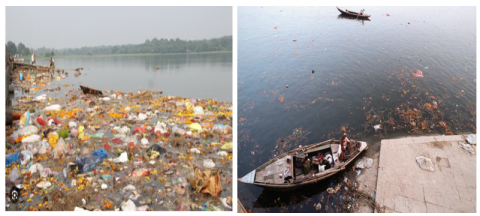
Zone 1 because of ghat, excessive waste genetrate there, the waste like pooja samgri, phoolo ki maala, essence stick, coconut and many more items which are biodegrable, working on that waste to make a clean area of ghanga ghats shown in Figure 4.
Figure 4. Solid waste generated after the tourism
Placement of ample waste segregation bins near ghats and temples.
Highlight the environmental impact of plastic on the Ganges and promote eco-friendly alternatives.
Outcome: Reduction in plastic pollution, improving the cleanliness of Varanasi and the Ganga.
By offering high-quality tourism products like curated boat rides, heritage walks, and silk-weaving workshops, Varanasi can enhance visitor experiences while promoting sustainability. Encouraging responsible behavior among tourists and highlighting the city’s Outstanding Universal Value (OUV) through immersive and educational activities can ensure a deeper appreciation of the city’s heritage. This approach not only protects Varanasi’s cultural and natural treasures but also creates a positive, long-lasting impact on the local community and environment.
The comparative analysis of Varanasi using five cultural tourism frameworks offers insights that can be extended to other cultural tourism destinations in India and globally. By addressing lifecycle stages, visitor segmentation, emotional connections, creative engagement, and sustainability, this study provides a holistic approach to managing and promoting cultural tourism. Below are the potential implications:
Jaipur, recognized as a UNESCO World Heritage City, has a rich architectural and cultural heritage. Its potential for managing tourism growth aligns with TALC model. Research has highlighted the need to balance heritage conservation and tourism development in Jaipur [21]. Understanding the breadth of tourist economics in Maharashtra using Butler's TALC model has important implications for long-term tourism growth and policymaking [22]. Hampi, the UNESCO world heritage convention, gives the profile of cultural and heritage tourists, and explains current trends and future direction us this type of tourism, aligning with the UNESCO Sustainable Tourism Framework [23]. The demand function for international visitors to Japan was estimated by considering the TALC model. To manage its tourism growth and mitigate over-tourism. Research has identified the need for sustainable tourism strategies in Kyoto to balance the influx of tourists with the preservation of its cultural heritage [24, 25]. By incorporating lifecycle management, Kyoto can ensure a harmonious coexistence of tourism and heritage conservation. Istanbul, bridging Europe and Asia, is renowned for its historical significance and architectural marvels such as the Hagia Sophia and Topkapi Palace. The TALC model can assist in managing tourism flows and preventing stagnation in its mature tourism markets. Additionally, studies emphasize the importance of community engagement and the integration of sustainable tourism practices to protect its cultural and historical sites, aligning with the UNESCO Sustainable Tourism Framework [26, 27].
In conclusion, this research highlights the critical need for a UNESCO sustainable tourism framework in Varanasi, a city that is a major religious center. The study emphasizes the integration of heritage preservation, responsible tourism, and community engagement to ensure the long-term sustainability of tourism in the city. The proposed training programs for local guides and municipal authorities are essential in enhancing knowledge about Varanasi’s rich cultural heritage and the principles of sustainable tourism. These programs will equip stakeholders with the necessary tools to manage tourism effectively, ensuring that it respects cultural sensitivities and promotes eco-friendly behaviour.
Moreover, the use of interpretive signage, mobile apps, and guided tours plays a significant role in educating tourists about the historical, cultural, and spiritual significance of Varanasi’s landmarks. These tools not only provide essential information but also encourage responsible tourism practices, such as waste reduction and respect for sacred rituals. The research also stresses the importance of empowering local communities by offering skill development programs in crafts, sustainable farming, and hospitality management. These initiatives will not only help preserve local traditions but also generate economic benefits, ensuring that tourism directly supports the livelihoods of local residents. By fostering stakeholder collaboration and adopting these strategies, Varanasi can build a tourism model that balances the preservation of its heritage with sustainable development. This approach will enable Varanasi and other ancient cities to continue attracting global visitors while maintaining its cultural and environmental integrity for future generations. Sustainable tourism in Varanasi offers a promising path to both economic growth and heritage conservation.
Prof. Dr. Ch Rami Reddy, and Prof. G. Sri Sravante JBR Architecture College, Hyderabad for their guidance.
[1] Sinha, K. (2019). Architectural conservation as a promoter of cultural identity. International Journal of Advanced Research in Engineering and Technology, 10(5): 22-37. http://www.iaeme.com/ijaret/issues.asp?jtype=ijaret&vtype=10&itype=5.
[2] Richards, G. (2018). Cultural tourism: A review of recent research. Tourism Journal, 30(2): 42-52.
[3] Zagade, G.D.S. (2020). A study of cultural tourism and its role & importance in modern tourism era. In Confluence 2020 Maharashtra State Institute of Hotel Management & Catering Technology, Pune, pp. 909-927.
[4] Unesco. (2015). Cultural Heritage and Tourism in a Globalized World. Unesco. https://unesdoc.unesco.org/ark:/48223/pf0000244834.
[5] Richards, G., Wilson, J. (2006). Developing creativity in tourist experiences: A solution to the serial reproduction of culture? Tourism Management, 27(6): 1209-1223. https://doi.org/10.1016/j.tourman.2005.06.002
[6] Timothy, D.J. (2011). Cultural Heritage and Tourism: An Introduction. Channel View Publications.
[7] Carter, R.W., Beeton, R.J.S. (2004). A model of cultural change and tourism. Asia Pacific Journal of Tourism Research, 9(4): 423-442. https://doi.org/10.1080/1094166042000311282
[8] Van Der Ark, L.A., Richards, G. (2005). Attractiveness of cultural activities in European cities: A latent class approach. Tourism Management, 27(6): 1298-1309. https://doi.org/10.1016/j.tourman.2005.12.014
[9] Butler, R.W. (1980). The concept of a tourist area cycle of evolution: Implications for management of resources. Canadian Geographer, 24(1): 5-12. https://doi.org/10.21832/9781845410278-007
[10] Doxey, G.V. (1975). A causation theory of visitor-resident irritants: Methodology and research inferences. In Proceedings of The Travel Research Association, 6th Annual Conference, San Diego, pp. 195-1985.
[11] MacCannell, D. (1976). The tourist: A new theory of the leisure class. In Cultural Tourism: Global and Local Perspectives. Haworth Press.
[12] Hager, M.A., Sung, H. (2012). Local arts agency participation in cultural tourism management. Journal of Heritage Tourism, 7(3): 205-217. https://doi.org/10.1080/1743873X.2012.677140
[13] Dutta, B.K., Bandyopadhyay, S. (2021). Urbanism to riverine planning strategy for climate resilient cosmic sacred city in India-Varanasi. In CITIES 20.50-Creating Habitats for the 3rd Millennium: Smart-Sustainable-Climate Neutral. Proceedings of REAL CORP 2021, 26th International Conference on Urban Development, Regional Planning and Information Society. CORP-Competence Center of Urban and Regional Planning, pp. 1061-1073.
[14] Alariya, A., Adhupiya, A., Yadav, P. (2024). Modern tourism development with a sustainable tourism approach: A case study on Pilgrimage tourism in Varanasi. International Journal of Research in Management, 6(1): 344-352. https://doi.org/10.33545/26648792.2024.v6.i1d.165
[15] Pati, A., Husain, M. (2023). People’s perspectives on heritage conservation and tourism development: A case study of Varanasi. Built Heritage, 7(1): 17. https://doi.org/10.1186/s43238-023-00098-w
[16] Sharma, R., Awasthi, S., Agarwal, K. (2019). Spiritual tourism experience: A study of tourists visiting Allahabad and Varanasi. Adhyayan: A Journal of Management Sciences, 9(1): 70-76. https://smsjournals.com/index.php/Adhyayan/article/view/2088.
[17] Singh, R.P. (2015). Banaras, the cultural capital of India: Visioning cultural heritage and planning. SANDHI, A Journal of Interfacing Science-Heritage and Technology-Tradition of India, 1(1): 100-122.
[18] Shinde, K., Singh, R.P.B. (2023). Still on UNESCO’s “tentative list of world heritage”? Heritage, tourism, and stunted growth in Sarnath (Varanasi), India, Heritage, 6(7): 5051-5065. https://doi.org/10.3390/heritage6070267
[19] Mckercher, B., Du Cros, H. (2002). Cultural Tourism: The Partnership between Tourism and Cultural Heritage Management. Haworth Press.
[20] Poria, Y., Butler, R., Airey, D. (2003). The core of heritage tourism. Annals of Tourism Research, 30(1): 238-254. https://doi.org/10.1016/S0160-7383(02)00064-6
[21] UNESCO. (2019). Jaipur City, Rajasthan, India. https://whc.unesco.org/en/review/106.
[22] Mishra, V., Prasad, K.M. (2023). Evaluating tourism development in Maharashtra through butler’s tourism area life cycle (TALC) model. International Journal of Advanced Multidisciplinary Scientific Research (IJAMSR), 6(3): 79-91. https://doi.org/10.31426/ijamsr.2023.6.3.6118
[23] Ta, B., Kumar, N. (2020). Exigencies of integrated visitor management system in archaeological heritage sites: A study on Hampi group of monuments. Productivity Management, XIV(XI): 210-223.
[24] Asahi, S. (2024). Analysis of the impact of overtourism in Japan: The effects of congestion phenomena. In Econometric Analysis of Regional Economy. Springer, Singapore. https://doi.org/10.1007/978-981-99-8707-8_3
[25] Bouchon, F., Rauscher, M. (2019). Cities and tourism: Between development and sustainable management. Case of Kyoto, Japan. International Journal of Tourism Cities, 5(3): 373-391. https://doi.org/10.1108/IJTC-06-2019-0080
[26] Aksoy, A., Enlil, Z. (2019). Istanbul: Managing urban tourism in a heritage city. Journal of Urban Cultural Studies, 6(2): 245-260.
[27] Kilic, H., Senol, Z. (2021). Sustainable tourism practices in Istanbul: Lessons for managing heritage cities. Journal of Tourism Planning & Development, 18(3): 215-232.