Elvy Basri* | Idris | Joan Marta
© 2025 The authors. This article is published by IIETA and is licensed under the CC BY 4.0 license (http://creativecommons.org/licenses/by/4.0/).
OPEN ACCESS
This study assesses the application of the hexa helix collaboration model to address the challenges of sustainable tourism development on Belibis Island, Solok City. By adapting the hexa helix model to the unique context of small island tourism, this research contributes to the body of knowledge on sustainable tourism. The hexa helix model emphasizes the collaboration among six key stakeholders—academics, entrepreneurs, government entities, local communities, media, and policymakers—in fostering a sustainable tourism environment. Analytical Hierarchy Process (AHP) was employed to rank essential development attributes and evaluate stakeholder surveys. A hierarchical ranking of the items was produced using AHP, based on their relative importance as seen by stakeholders. This method facilitated a comprehensive assessment of the aspects deemed most essential by stakeholders for the sustainable development of tourism on Belibis Island. Stakeholders acknowledge the considerable potential of tourism on Belibis Island due to its unique natural beauty, local products, and the involvement of various cultural groups. However, they also highlight some ongoing problems, such as ambiguous land ownership, constrained financial resources, and insufficient collaboration among stakeholders. These problems underscore the necessity of creating a formal collaborative institution to enhance coordination and communication among stakeholders. The findings from key stakeholders reveal that the economic dimension is critical for future projects, underscoring the need for increased funding and innovation. Furthermore, this study provides practical policy recommendations for decision-makers and tourism managers, highlighting the importance of stakeholder integration and the development of transparent institutional frameworks to overcome challenges and fully realize the tourism potential of Belibis Island.
AHP, Belibis Island, hexa helix model, stakeholder engagement, sustainable tourism, tourism development planning
Tourism is widely recognized as a sector that can drive economic growth and enhance the well-being of the communities managing it [1]. In Indonesia, the tourism sector has made a positive contribution to the national Gross Domestic Product (GDP), increasing from USD 4.26 billion with a GDP contribution of 3.6% in 2022 to USD 5.95 billion with a GDP contribution of 4.1% in 2023 [2]. Regionally, the tourism sector in West Sumatra contributed IDR 6.8 trillion to the Regional GDP in 2022, with a significant portion derived from tourist expenditures [3]. These figures underscore the potential of the tourism sector; however, challenges remain in optimizing its development.
Belibis Island, located in Solok City, West Sumatra, is the region's main tourist attraction. Its appeal lies in its scenic lake, which serves as a habitat for the Belibis Bird, as well as its strategic location near the city center and major transportation routes. However, despite its considerable potential, the tourism performance of Belibis Island remains suboptimal. For instance, the actual revenue from Belibis Island accounted for only 51% of its target in 2019. Subsequent years saw slight improvements, especially during the COVID-19 pandemic when tourist visits declined sharply, significantly impacting revenue. By 2023, despite adjusted targets, revenue realization remained insignificant [4].
The primary challenges identified include underutilized tourism facilities, limited coordination among stakeholders, and the absence of an integrated development strategy. Facilities such as guard posts, mosques, kiosks, and children’s play areas are poorly maintained or non-operational, further diminishing tourist interest. A previous study revealed that out of 87 tourist samples, 62% strongly disagreed, 17% disagreed, 16% agreed, and 5% strongly agreed with the statement that facilities influence visits to tourist destinations [5]. These findings underscore the importance of effective stakeholder collaboration in addressing these issues and achieving sustainable tourism development.
Moreover, it is undeniable that tourist visits serve as a key benchmark in regional tourism management. Findings from several previous studies indicate that domestic tourists’ interest in visiting is consistently linked to information availability, facilities and infrastructure, tourist attractions, and the condition of the local community [6]. This highlights the role of the hexa helix stakeholders. Enhancing the role of hexa helix stakeholders is believed to be a viable solution to address the tourism challenges faced by Belibis Island.
The hexa helix model fosters collaboration among six key stakeholders: academics, entrepreneurs, government institutions, local communities, media, and policymakers [7]. Prior research has primarily concentrated on major tourism locations [1, 5], which typically benefit from superior infrastructure and more developed tourism frameworks. Conversely, small islands like Belibis encounter distinct obstacles, including inadequate infrastructure, dependence on ecosystem sustainability, and the necessity for local community empowerment. Moreover, although tourist development provides substantial economic advantages, promotes environmental sustainability due to the region being an urban forest and habitat for the Belibis Bird, and enriches social and cultural qualities, stakeholders frequently function independently without collaboration or a cohesive strategy. Facilitating sustainable collaboration is essential for realizing enduring economic, social, and cultural advantages for the community.
This study distinguishes itself by applying the hexa helix model to small-island tourism at Belibis Island, which is rarely addressed in literature. Unlike studies focused on large-scale tourism destinations, this study fills the gap by employing the AHP, a widely used tool in multi-criteria decision-making [8]. AHP allows for a systematic and objective approach to evaluating the roles, challenges and strategies of the stakeholders. The study contributes to sustainable tourism literature and provides practical insights into managing tourism on small islands with limited resources and infrastructure.
Additionally, this study aims to identify the roles of each stakeholder, analyze key challenges in tourism management, and design an integrated development strategy that enhances local community welfare, preserves environmental sustainability, and strengthens sociocultural values. By employing the AHP method, the study also seeks to map strategic priorities that can be implemented in managing tourism on small islands like Belibis Island, which face unique challenges related to infrastructure limitations and the need for ecosystem sustainability.
2.1 Tourism
Tourism centers on people traveling to specific regions for leisure, business, or other purposes, involving economic transactions between tourists and host communities [9]. Politically, tourism is safeguarded by policies [10] and serves as a vital industry for both developing and developed nations. According to Indriani [11], tourism positively impacts developers by attracting visitors, creating jobs, and fostering regional development. Its long-term success depends on managing economic, social, and environmental aspects sustainably [12]. Additionally, Detotto et al. [13] emphasize the importance of political policies in attracting international tourists.
2.2 Sustainable tourism
Mathew et al. [14] define sustainable tourism as a concept aimed at generating positive economic, social, and environmental impacts for communities and stakeholders. It emphasizes conserving natural resources, protecting the environment, and preserving local identities, cultures, and agreements [15]. Sustainable tourism supports long-term development and sustainability [16], offering economic benefits, mitigating environmental and social impacts [17], enhancing local well-being through quality jobs, and promoting socio-cultural balance [18]. However, developing countries often fail to optimize their tourism potential and implement sustainable development practices effectively [19].
2.3 Hexa helix and stakeholder mapping
Carayannis et al. [20] describe the helix as stakeholder collaboration within initiatives that evolve with societal changes, fostering development and creativity. The Triple Helix involves academia, industry, and government [21], while the Quadruple Helix expands it by including the public, media, and civil society [22]. The quintuple helix adds the natural environment, offering a more comprehensive innovation model [23]. The Penta Helix, consisting of academia, business, society, government, and media, is recognized as innovative [24]. This evolved into the hexa helix by incorporating rules and regulations, uniting local communities, government, media, businesses, academia, and legislation [25].
The term "stakeholder" refers to individuals or groups, structured or unstructured, with interests and objectives in a particular issue [26]. Stakeholders are also those who influence others to achieve specific goals [27]. According to stakeholder theory, management involves government, non-profits, local communities, and businesses, categorized into key and supporting groups [28]. The stakeholders aim to improve their target areas, but their goals and strategies often differ, such as attracting tourists, boosting the economy, empowering workers, or developing infrastructure in tourism. Bertassini et al. [29] outline four steps: identification, analysis, visualization of influence and power, and prioritization, focusing on relationships and significance.
This mixed-method study integrates quantitative and qualitative approaches, following Weyant [30] and Khoo-Lattimore et al. [31], to address research problems using the hexagonal helix model [32]. It adopts a concurrent embedded strategy, prioritizing the qualitative method while using the quantitative method for support. The qualitative approach explores the essence of hexagonal helix stakeholders, examines sustainable tourism implementation, observes subjects in their natural settings without researcher intervention, and positions the researcher as an active learner to understand the phenomenon from the subjects' perspective. The quantitative approach applies AHP principles to analyze and develop strategies based on the hexagonal helix model.
3.1 Study area
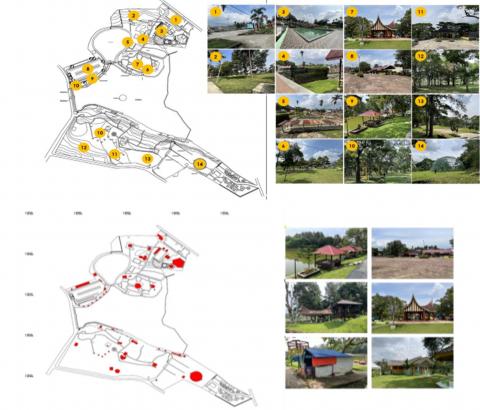
Belibis Island in Solok City is a natural tourist destination known for its serene lake and lush greenery (Figure 1). Named after the extinct Belibis Bird, it provides a tranquil setting ideal for family recreation. Facilities include playgrounds, pedal boats, fishing ponds, flying foxes, rest huts, a health post, and a tourism information center.
Figure 1. Belibis Island
Belibis Island, designated as a tourism destination in Jawa Village under Solok City's Regional Regulation No. 13 of 2012, is managed through a partnership between the Solok City Tourism Office and the local community. The Tourism Office holds primary oversight under a contractual framework, while community members operate kiosks, stalls, and the fishing pond due to limited resources. Since 2017, the Belibis Adventure Tourism Awareness Group has been a key partner in managing the island's attractions.
3.2 Data collection
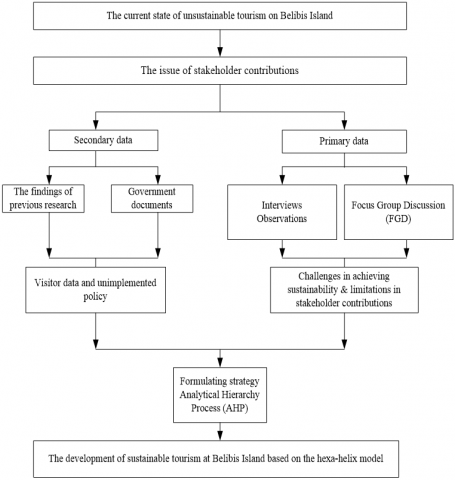
The study was conducted from August 2024 until October 2024 on Belibis Island, Solok City, West Sumatera Province, Indonesia. The framework of this research can be seen in Figure 2.
In relation to the research framework, the primary data sources from the subject/research are collected from informants for qualitative and research respondents for the quantitative data. Both informant and respondent are selected by using purposive sampling, which is intentionally involved because of the criteria selection. The criteria that the researcher used for this study can be seen in Table 1.
Figure 2. Research framework
Table1. The criteria for the informant and respondent
|
No. |
Stakeholders of the Hexagonal Helix |
Criteria |
Number of People |
|
1 |
Academics |
A sustainable tourism expert based at a university in West Sumatera, specializing in Solok City, Indonesia. |
2 |
|
2 |
Entrepreneur |
Tourism entrepreneurs consist of the managers of Hotel Mami, Hotel Taufina, Solok Premier Hotel, and Micro, Small, and Medium Enterprises (MSMEs) in the souvenir business. |
4 |
|
3 |
Government |
The government agency involved in this study is the Solok City regional government, focusing on Belibis Island tourism. Key informants include the Departments of Tourism, Agriculture, Public Works, Transportation, Environment, Housing, Communication, Licensing Services, the Civil Service Police, the Research Agency, and local leaders. State-owned and regional enterprises, such as Bank Indonesia, Bank Nagari, the Regional Water Supply Company, and the State Electricity Company. |
16 |
|
4 |
Local communities and tourist |
Key stakeholders include the Chairmen of Minangkabau Customary Community Institution, Nagari Customary Council, Mother of the People, Youth Organization of Jawa Village, Pokdarwis Kehati Park, and Pokdarwis Belibis Adventure. Other participants are the Sobiscraft Community, Gubuk Kopi Community, Bareh Solok Creative Community Network, tourists from Solok City, other cities/districts in West Sumatera, and those from outside the province. |
13 |
|
5 |
Media |
Stakeholders are grouped into local, West Sumatera, and national levels. |
3 |
|
6 |
Law and regulations |
Legal products related to the development of Belibis Island include: 1) Spatial Planning Regulations (Department of Public Works and Public Housing), 2) Development Planning Regulations (Regional Development Planning Agency), 3) Environmental Regulations (Department of Environment), 4) Tourism Development Master Plan (Department of Tourism), 5) General Investment Plan (Investment and Integrated Licensing Services Agency), and 6) Memorandum of Understanding. |
5 |
For the qualitative method, in-depth interviews are conducted using a semi-structured guide that allows for more flexibility in obtaining as much accurate information from the informants as possible. Additionally, the data is also collected through questionnaires to obtain supporting data from interview results.
3.3 Data analysis
Data analysis in this study combined a descriptive qualitative model with AHP software. The qualitative model organized and synthesized data from interviews, field notes, and documentation for clarity. It involved data reduction (focusing on essential information aligned with research objectives), data presentation (using tables, graphs, and charts to highlight patterns), and data verification (concluding all collected data).
The AHP method supports decision-making by addressing multiple criteria, relying on expert perceptions as input [33]. A primary benefit of AHP is its capacity to manage intricate, multi-criteria decision-making scenarios by organizing them hierarchically, hence facilitating the comparison of alternatives and enabling a methodical assessment of the trade-offs among many elements. The ability to establish hierarchies renders AHP especially advantageous for addressing issues with various objectives and contradictory criteria.
AHP's primary strength lies in its capacity to offer a transparent and logical decision-making framework grounded in expert perspectives, which is especially advantageous in scenarios characterized by incomplete or subjective data [34]. In comparison to other multi-criteria decision-making (MCDM) methods, such as the Technique for Order Preference by Similarity to Ideal Solution (TOPSIS) or the Simple Additive Weighting (SAW) method, the Analytic Hierarchy Process (AHP) provides a more systematic framework, especially regarding the management of inconsistencies in expert evaluations and the capacity to quantify the relative significance of criteria [35]. Although TOPSIS and SAW are more straightforward to implement and do not necessitate pairwise comparisons, they may inadequately address the intricacies of choice problems compared to AHP, particularly where subjective judgment and hierarchical structure are essential in the decision-making process [36].
The AHP process includes: (1) constructing a hierarchy of criteria, (2) evaluating criteria and alternatives through pairwise comparisons, (3) determining priorities by assigning weights and calculating rankings, and (4) measuring consistency through a ratio, which must remain below 10% to ensure reliability.
4.1 The role of hexa helix stakeholders and the challenges at the Belibis Island
To evaluate stakeholder engagement within the hexa helix model, it is crucial to analyze each stakeholder's role in performing their duties and functions. Table 2 summarizes key insights from informants based on field observations.
Table 2. The roles of hexa helix stakeholders
|
No. |
Stakeholder |
Stakeholder Roles |
Key Informant Summary |
|
1 |
Academics |
Education |
Formal and non-formal education activities by academics to enhance the knowledge of business actors and managers remain limited. |
|
Research |
Research on Belibis Island is predominantly conducted by Universitas Negeri Padang (UNP) academics, focusing on tourism attraction development and strategies for community economic development around the area. |
||
|
Community service |
Universities like UNP, Andalas University, and Universitas Mahaputra Muhammad Yamin (UMMY) conduct training and mentoring for MSMEs actors. |
||
|
2 |
Entrepreneur |
Hospitality |
An investor built a hotel near the Belibis Island tourist destination, but construction was halted due to the area's designation as a green zone, prohibiting permits under existing regulations. |
|
Creative economy development |
Creative economic activities are thriving. The Solok Belibis Kreatif organization has been established, supported by a business incubation program for craft, culinary, and performing arts sub-sectors. |
||
|
Tourist attractions |
Attractions at Belibis Island include water rides, horse riding, and cultural performances from local community groups. |
||
|
Development and empowerment |
Several CSR funds from SOEs and regional SOEs have been allocated to support the development of tourism infrastructure at Belibis Island. |
||
|
3 |
Government |
Services |
The Solok City Government, through departments like the Tourism Department, has provided services to tourism business actors and the local community. |
|
Regulation |
The Solok City Government has implemented regulations for managing the Belibis Island tourist site. |
||
|
Development |
The government has developed infrastructure at Belibis Island, including parking areas, souvenir centers, MSME zones, public facilities, swimming pools, bird cages (bird dome), and fishponds. Additionally, there are supporting facilities for water tourism attractions and pedestrian paths. |
||
|
Empowerment |
The government has focused on community economic empowerment in the local area, with a particular emphasis on empowering women to actively contribute to the artistic performances at Belibis Island tourist attractions. |
||
|
Promotion |
Promotional activities have not been carried out optimally or sustainably. |
||
|
4 |
Local Community |
Government partners |
The community, especially photographer communities and Pokdarwis (tourism awareness groups) remains unclear. |
|
Local community activators |
The role of the local community in supporting tourism activities around the area is not yet clearly visible. |
||
|
5 |
Mass Media |
Information dissemination |
Information dissemination and news coverage about the tourism destination in the area by mass media, including radio and print media, has been limited, occurring only during specific events. |
|
Promotion |
Local mass media has not conducted regular promotional activities for Belibis Island. |
||
|
6 |
Law and Regulation |
Local regulation creation |
The available policy products for the area include plans for developing the Belibis Island tourist destination, as well as environmental regulations such as Environmental Impact Assessment (EIA) and Strategic Environmental Assessment (SEA). |
4.1.1 Roles and challenges of academic stakeholders in the development of Belibis Island tourist destination
Academic stakeholders contribute by providing quality human resources through both theoretical and practical education, including internships in local tourism. Additionally, universities research to enhance tourism, focusing on sustainable practices and new tourism concepts for destinations like Belibis Island. This was articulated by an informant from UMMY Solok:
“As academics, we can significantly contribute to the development of tourism on Belibis Island. Lecturers serve not only as educators and instructors but also as researchers and community service providers. By excelling in these roles, academia can have a tangible and positive impact on advancing Belibis Island as a tourist destination.”
This assertion is additionally corroborated by an informant employed as a researcher at the Faculty of Tourism at the University of West Sumatra:
“I believe it is highly feasible for academics to engage in tourism development efforts in Solok City, especially for the advancement of the Belibis Island tourist destination. Academics can conduct developmental and applied research, with outcomes that can be implemented and directly benefit both the government and the community.”
The interview snippets reveal that academics have the potential to contribute to the development of Belibis Island as a tourist destination. However, their contributions, whether through teaching, research, or community service, have not yet significantly impacted the development of the site. This is mainly due to the conceptual nature of the research and the limited, unsustainable community service efforts. As indicated by an informant within the academic community, as illustrated in the subsequent interview excerpt:
“The academic community has constrained financial resources for research and community service initiatives.” These constraints hinder our ability to perform comprehensive research and community service.
The primary challenge faced by scholars in advancing Belibis Island as a tourist destination is the lack of focus on tourism development in Solok City. In addition to economic constraints, there is a shortage of academics dedicated to tourism research and community service, with relevant faculties located outside the city.
4.1.2 Roles and challenges of entrepreneur stakeholders in the development of Belibis Island tourist destination
Tourism industry stakeholders play a crucial role in the hexagonal helix collaboration concept. Therefore, it is important to examine the involvement of corporate stakeholders in Belibis Island. A local insider notes that few entrepreneurs are willing to invest in this destination. Derived from a segment of an interview with this principal informant:
“Most investors are reluctant to invest in the Belibis Island tourist destination due to the land status in the area. Some land is owned by the community, while other parts lack clear ownership, making investors hesitant to operate in the region.”
The interview excerpt highlights that major tourism enterprises are hesitant to invest in Belibis Island. The hotel's development is currently on hold due to regulatory conflicts with the Solok City Council's land use policies in the Regional Spatial Plan. The region's commercial activities mainly focus on creative industries, with batik artisans and local delicacy producers from Solok City operating in the Belibis Island tourist zone. The motivation of creative economic participants in this tourism sector is illustrated by an excerpt from an interview with a batik artisan:
“The batik products we manufacture predominantly showcase a motif of the Belibis bird. This motif has become a defining feature of our batik items. These things are favored by travelers as souvenirs or distinctive mementos from this region”.
Creative economic initiatives in the food sector aim to attract tourists to Belibis Island, but tourism business stakeholders' involvement has had little impact on the destination's development. The region's tourism sustainability depends on commercial operations that enhance its appeal. However, unfavorable investment prospects and complex land ownership discourage major corporations from investing.
4.1.3 Roles and challenges of government stakeholders in the development of Belibis Island tourist destination
The government has contributed to services, regulation, development, and empowerment. This was articulated by an informant from the Solok City Tourism Office, as evidenced in the subsequent interview excerpt:
“The government has played an active role in developing the Belibis Island tourist destination, facilitating its growth and administration. The Solok City administration has carried out development and empowerment functions through relevant regional agencies to advance the Belibis Island tourist destination.”
The government has played a key role in the development of Belibis Island as a tourist attraction and continues to innovate to establish it as a premier destination in Solok City, according to an informant involved in the administration of the Belibis Island resort, as evidenced by the subsequent interview excerpt:
“In my view, the government has made significant contributions to the growth of the Belibis Island tourist destination, including extensive construction of amenities, infrastructure, and tourism attractions. A new addition to the area is a public swimming pool.”
The Solok City Council has implemented regulations to support Belibis Island as a tourist destination and has empowered the local community. However, the Solok City administration faces challenges in advancing the attraction due to limited funding for completing facilities, infrastructure, and visitor amenities, making it difficult to fully maintain and repair damaged facilities, according to an informant from the administration.
“The Solok City administration is encountering financial constraints in the development of the Belibis Island tourist area. The budget constraints have led to insufficient repairs of public facilities, supporting infrastructure, and tourism attractions.”
A further obstacle is the difficulty in locating Belibis birds in the area, attributable to the degradation of their native habitat in the region.
4.1.4 Roles and challenges of local community stakeholders in the development of Belibis Island tourist destination
The researcher conducted interviews with the Niniak-Mamak group, the mother of people, and the photographer community in the Belibis Island Tourist Area to gather data on their functions. An informant from the mother of people tribe mentioned that women's involvement in the development of the tourist area remains limited. As per their assertion:
“The mother of people group has not made significant contributions to the development of the Belibis Island tourist destination due to the lack of direct interaction between tourism operations in the area and their efforts.”
The Niniak-Mamak group is responsible for regulating and managing the tourist attraction to ensure it aligns with the local community's customs and culture. The photographic community, also based in the Belibis Island Tourist Area, supports the development of the tourism destination, as articulated by a representative from the photography community:
“As members of the photography community, we previously organized a photography competition in the Belibis Island region to promote the tourist destination. Many of the participants were from outside Solok City. During the event, we created photographic works aimed at being published and attracting external visitors.”
The community groups face challenges in contributing to the development of the Belibis Island Tourist Destination, as their activities are not consistently aligned with this goal. They view the government as having much greater authority in the development of the area. Additionally, financial constraints hinder their ability to participate in tourism development on Belibis Island.
4.1.5 Roles and challenges of mass media stakeholders in the development of Belibis Island tourist destination
The mass media plays a role in the hexagon collaboration model, helping to introduce and promote the Belibis Island tourist destination. This includes print media, radio, and audiovisual media such as regional and national television. Interviews with media informants in Solok City reveal a lack of consistent promotional publications by print and radio media. However, they do engage in promoting events held at the Belibis Island Tourist Destination during specific occasions, as illustrated in the subsequent interview excerpt:
“The print media we manage primarily focuses on disseminating information that aligns with public interest. We promote the Belibis Island Tourist Destination upon request, but in the absence of such requests, we do not prioritize its promotion.”
Unlike government-managed media, like the Solok City Communication and Information Office, which conducts promotional events for government initiatives primarily targeting residents, the mass media group plays a crucial role in promoting Belibis Island as a tourist destination. However, they face challenges in prioritizing news dissemination within their media and lack targeted demands and adequate funding, limiting their ability to actively contribute to the island's development.
4.1.6 Roles and challenges of law and regulation stakeholders in the development of Belibis Island tourist destination
Policymakers have supported the development of Belibis Island Tourist Destination through various regulations and policy documents, including the EIA, environmental management and monitoring plans, essential ecosystem area documentation, development planning documents, management regulations, and budget allocation policies. This support is confirmed by a source from the Solok City Department of Tourism and the Investment Department, as follows:
“As policymakers and regulators, we have significantly contributed to the development of the Belibis Island Tourist Destination through various policy instruments, including planning, management, and funding, to support its growth.”
Authorities play a crucial role in supporting the growth of Belibis Island as a tourist destination, contributing to Solok City's development goals. Policies provide a framework for developers and stakeholders, with input from multiple departments. The Department of Environment issued an EIA, the Regional Development Planning Agency prepared a planning document, and the Investment and Integrated One-Stop Services Agency developed an Investment Plan. While policymakers face no major challenges in policy formulation, some policies are hindered by unclear land ownership, as parts of the area are owned by local communities. This creates a challenge in compiling the business feasibility study document for investors, as noted by one informant:
“Policy products related to land ownership status have faced challenges in formulating policies for a tourism-oriented privatization model, as most prospective investors require clarity and assurance regarding land ownership.”
Policymakers have supported the development of the Belibis Island Tourist Destination, as evidenced by the existence of policy documents related to its advancement.
4.2 The implementation and the impact of sustainable tourism on Belibis Island
The evaluation of sustainable tourism at Belibis Island is based on Indonesian Ministry of Tourism Regulation No. 14 of 2016, which outlines guidelines for sustainable tourism destinations. This policy follows indicators set by the United Nations World Tourism Organization (UNWTO) and analyzes sustainable tourism from economic, socio-cultural, and environmental perspectives.
4.2.1 The implementation of the sustainable tourism concept from an economic aspect
The information from the interviews with key informants regarding the implementation of the sustainable tourism concept from an economic perspective can be summarized in Table 3, which presents the current condition of its implementation.
Table 3. The condition of the sustainable tourism concept from an economic aspect
|
No. |
Criteria |
Indicator |
Informants' Responses |
Summary of Key Informant Statements |
||
|
Yes |
Doubt |
No |
||||
|
1 |
Economic monitoring |
Availability of monitoring document results |
√ |
Monitoring activities are carried out, but not all are well-documented |
||
|
2 |
Employment opportunities for local communities |
Availability of policy products regulating labor in the Belibis Island area |
√ |
The government has established labor regulation policies |
||
|
3 |
Community participation |
Involvement of the community in destination management planning and decision-making |
√ |
The local community frequently participates in decision-making processes for managing the Belibis Island tourist site |
||
|
4 |
Public opinion |
Availability of documents on community aspirations for managing the Belibis Island tourist site |
√ |
Public opinion has been collected by the government for the development of Belibis Island |
||
|
5 |
Access for local communities |
Opportunities for local communities to access the tourist site are available |
√ |
Local communities are allowed to participate in activities |
||
|
6 |
Educational function for tourism awareness |
Tourism awareness educational programs are available for the local community |
√ |
The government has developed programs and activities to enhance local community awareness and knowledge of tourism |
||
|
7 |
Prevention of exploitation |
Rules are in place to prevent the exploitation of children, adolescents, women, and minorities |
√ |
Exploitation of children, adolescents, women, and minorities is prohibited |
||
|
8 |
Support for the community |
Tourism business actors contribute to the local community in the Belibis Island area |
√ |
Tourism business actors have supported the local economy by fostering mutually beneficial relationships |
||
|
9 |
Supporting local businesses and fair trade |
Programs are available to support the development of local businesses |
√ |
Facilities and infrastructure are available to support the local economy |
||
The table above shows that the economic implementation of sustainable tourism is at a relatively good level. Out of nine criteria, only one was assessed as having low implementation, while five others were rated as moderately implemented. Three criteria—community participation, access for local populations, and prevention of exploitation—were considered highly implemented. As reported by an informant, a proprietor in the Belibis Island tourist resort, as illustrated in the subsequent interview excerpt:
"The economic impact on the local community has become increasingly evident, especially during holidays when visitor numbers surge, leading to substantial earnings for most business proprietors in the region. However, this contrasts with typical days when the visitor count is somewhat lower.”
The government's focus on local economic development is commendable. Most individuals perceive the Belibis Island tourism attraction as beneficial.
4.2.2 The implementation of the sustainable tourism concept from a socio-cultural aspect
The evaluations from the research informants were used to assess the socio-cultural implementation of sustainable tourism. Interviews with several informants provided a summary of key assertions, which are presented in Table 4 below.
Table 4. The condition of the sustainable tourism concept from a socio-cultural aspect
|
No. |
Criteria |
Indicator |
Informants' Responses |
Summary of Key Informant Statements |
||
|
Yes |
Doubt |
No |
||||
|
1 |
Protection of tourist attractions |
Policies and systems are in place to protect and preserve culture and cultural heritage. |
√ |
There are no specific government policies in place to protect tourist attractions |
||
|
2 |
Visitor management |
A system is in place to regulate that visitors preserve and protect natural and cultural assets |
√ |
There is no written system or regulation in place to manage visitors in a way that ensures the preservation and protection of natural and cultural assets |
||
|
3 |
Visitor behavior |
Clear guidelines are available for visitors to behave according to the applicable cultural norms |
√ |
There are no written regulations, but normative community rules are already in place and applied |
||
|
4 |
Protection of cultural heritage |
Legal regulations exist regarding the sale of historical items and the Belibis Bird |
√ |
There are no regulations in place to protect cultural heritage |
||
|
5 |
Site interpretation |
Interactive information about the local culture is available |
√ |
There is no information facility available for visitors regarding the unique norms and culture |
||
|
6 |
Intellectual property protection |
Clear laws and systems exist for the protection of the community's intellectual property rights |
√ |
It is still governed by the general laws applicable in Indonesia |
||
Based on the summary of key statements from the research informants, it appears that the implementation of the sustainable tourism concept from a socio-cultural aspect has not been well achieved. This is reflected in the informants' assessments of the application of all sustainability indicators in the socio-cultural aspect. The status in terms of the socio-cultural aspect is shown in Table 5.
Table 5. The implementation of sustainable tourism from a socio-cultural aspect
|
No. |
Criteria |
Informants' Responses |
||||
|
Very Low |
Low |
Moderate |
High |
Very High |
||
|
1 |
Protection of tourist attractions |
√ |
||||
|
2 |
Visitor management |
√ |
||||
|
3 |
Visitor behavior |
√ |
||||
|
4 |
Protection of cultural heritage |
√ |
||||
|
5 |
Site interpretation |
√ |
||||
|
6 |
Intellectual property protection |
√ |
||||
The data in Table 5 indicates that the implementation of sustainable tourism from a socio-cultural perspective is ranked significantly low. As stated by one of the research participants, as illustrated in the subsequent interview excerpt:
“The socio-cultural aspect in the Belibis Island tourist area is not yet evident." This is due to the few intersections between the tourism activities in Belibis Island and the socio-cultural activities of the local community.
In a similar vein, another informant engaged in tourism activities on Belibis Island conveyed the following:
“In the past, cultural arts attractions were showcased in the Belibis Island tourist region, but they were not sustainable. The cash earned did not align with the expenses necessary to stage art performances in the Belibis Island tourist region.”
The research participants assess the adoption of sustainable tourism from a socio-cultural perspective as exceedingly low.
4.2.3 The implementation of the sustainable tourism concept from an environmental aspect
Through the summary of key statements from the informants below, an overview of the implementation of sustainable tourism activities on Belibis Island from an environmental aspect is provided in Table 6.
The data presented in Table 7 shows that the environmental aspect of sustainable tourism has not been maximally implemented. This indicates that its implementation remains low, as reflected in the summary of the informants' assessments regarding the application of environmental principles in the Belibis Island tourist area. The following table illustrates the application of the environmental aspect in the Belibis Island tourist area.
Table 6. The condition of the sustainable tourism concept from an environmental aspect
|
No. |
Criteria |
Indicator |
Informants' Responses |
Summary of Key Informant Statements |
||
|
Yes |
Doubt |
No |
||||
|
1 |
Environmental risks |
Policies or local wisdom in the form of institutions exist to reduce the negative impact of environmental destruction |
√ |
There is no specific institution yet established to handle environmental risk issues |
||
|
2 |
Protection of sensitive environments |
A system exists to protect the habitat of Belibis Birds |
√ |
No system in place regulates the protection of the Belibis Bird habitat |
||
|
3 |
Wildlife protection (flora and fauna) |
Rules are in place to protect the plants and animals native to the Belibis Island area |
√ |
The rules are available through conservation agencies under the Forestry Department |
||
|
4 |
Water management |
A water management system is operated by companies or business actors in the Belibis Island area |
√ |
This system is more applicable to large companies, while there are no large companies |
||
|
5 |
Water security |
There is no system in place that regulates the balance of water use between business actors and local communities in the Belibis Island tourist area |
√ |
Water usage in the Belibis Island area still relies on the local water supply and well water |
||
|
6 |
Reducing liquid and solid waste |
A system is in place for managing liquid waste and solid waste/trash in the Belibis Island tourist area |
√ |
There is no waste management system in place for liquid and solid waste |
||
Table 7. The implementation of sustainable tourism from an environmental aspect
|
No. |
Criteria |
Informants' Responses |
||||
|
Very Low |
Low |
Moderate |
High |
Very High |
||
|
1 |
Environmental Risks |
√ |
||||
|
2 |
Protection of Sensitive Environments |
√ |
||||
|
3 |
Wildlife Protection (Flora and Fauna) |
√ |
||||
|
4 |
Water Management |
√ |
||||
|
5 |
Water Security |
√ |
||||
|
6 |
Reducing Liquid and Solid Waste |
√ |
||||
The data indicates that the environmental element of the Belibis Island tourist region has been executed at a minimal level. This is due to the insufficient emphasis on environmental sustainability in the management of Belibis Island. Environmental mismanagement is evident from the considerable litter scattered around the lake, which serves as the habitat for the Belibis birds. The solid waste management system has not yet implemented recycling, and the management incinerates most of the garbage. Additionally, the facilities and infrastructure for garbage management remain inadequate.
4.2.4 Strategy for sustainable tourism development based on the hexa helix model at Belibis Island
According to the AHP results, as shown in the graph in Figure 3, the economic factor accounts for the largest percentage at 65.9%. The economic dimension is the primary focus in the development of the Belibis Island tourist destination. The advancement of the socio-cultural dimension is prioritized second, with a percentage of 24.4%. The environmental component is the third factor to be addressed, comprising 9.7%.
Figure 3. AHP results of sustainable dimensions and hexa helix stakeholders
The development of Belibis Island involves several stakeholders, with entrepreneurs leading at 30.9%, followed by the media at 18.8%, and the government at 16.8%. Other stakeholders include the local community (13.2%), legal and regulatory entities (10.8%), and academics (9.5%). The stakeholders can be prioritized as follows: 1) Entrepreneurs, 2) Journalists, 3) Authorities, 4) Local community, 5) Legal and regulatory entities, 6) Scholars.
As seen in Figures 4 and 5, the stakeholders influencing each facet of the Belibis Island development are delineated as follows:
Figure 4. The influence of the stakeholders on Belibis Island tourist development
Figure 5. The influence of the stakeholders on Belibis Island tourist development from economic aspect
In the economic dimension, entrepreneurs are the primary stakeholders, comprising 92%, followed by the media at 45% and the government at 43%. Other stakeholders include the local community (25%), academics (23%), and legal and regulatory entities (22%). In the social dimension, entrepreneurs also lead with 55%, with the media at 50% and the local community at 49%. The government, academia, and legal and regulatory stakeholders follow with 43%, 23%, and 22%, respectively. In the ecological factor, entrepreneurs again lead at 56%, with legal and regulatory parties at 55% and the media at 45%. The government holds 35%, the local community 34%, and academics 25%.
5.1 The role of hexa helix stakeholders and the challenges at the Belibis Island
The research findings identify key stakeholders in developing the Belibis Island tourist destination: academics, entrepreneurs, government, local communities, and legal frameworks, though their roles remain suboptimal for sustainable tourism. Academics guide tourism initiatives through sustainable mentoring [37], research, and community service [38], while students enhance attractions via community service [39]. Entrepreneurs face challenges but contribute economically, such as by building a hotel. Their attitudes are shaped by citizens' perspectives and government policies [40], with roles including fostering understanding, meeting needs, supporting sustainability, and advancing cultural heritage [41].
Governments provide infrastructure, amenities, and support tourism through policies, programs, and activities [42], acting as catalysts, regulators, and facilitators [43]. Local communities support integration, challenge identification, and tourism facilitation [44]. Media facilitate branding through radio, TV, online platforms, and promotional tools, advocating sustainable tourism principles [45].
5.2 The implementation and the impact of sustainable tourism on Belibis Island
This study shows that sustainable tourism at Belibis Island has not been fully realized across economic, socio-cultural, and environmental dimensions, with inadequate implementation of sustainable tourism principles. The island’s ecosystem has not been well-preserved, and while developing tourist attractions can aid sustainability [46], challenges include limited community involvement and ineffective local economic stimulation. Barriers such as insufficient funding, poor infrastructure, lack of skilled professionals, and low investor interest contribute to this issue. Government legislation is essential, alongside the establishment of supporting facilities, to promote sustainability [47]. The government must develop policies, strategies, and regulations that foster economic well-being, social equity, and environmental sustainability while improving infrastructure and community capacity. Community engagement is key in implementing sustainable tourism within the hexal helix framework [48]. In Indonesia, the Community-Based Tourism (CBT) model is widely used, alongside approaches like Local Wisdom Tourism, Village Tourism, and Social Entrepreneurship [48].
5.3 Strategy for sustainable tourism development based on the hexa helix model at Belibis Island
The AHP results highlight the economic dimension (65.9%) as a priority for developing Belibis Island tourism. Entrepreneurs play a key role, working with media and government, while local communities, academics, and regulations offer support. Promoting the creative economy through sectors like culinary arts and fashion fosters growth and supports social, cultural, and environmental dimensions [49]. Strengthening human resources and technology can aid in creating innovative products [50]. To resolve coordination challenges, it is imperative to create a stakeholder coordination entity that guarantees efficient collaboration among all concerned parties. This organization might enable frequent multilateral meetings and workshops to synchronize strategies, manage expectations, and settle disagreements. Platforms for information sharing can be established to facilitate real-time updates and comments, promoting transparency. A clear governance framework can be established to delineate roles and duties, reducing redundancy and ensuring collaborative decision-making based on common objectives. This method resembles the partnership model advocated by Budiono et al. [51], which proposes a Public-Private Partnership (PPP) framework wherein private firms and the government collaborate to achieve shared objectives. Implementing such a strategy on Belibis Island could facilitate efficient resource management, promote stakeholder engagement, and improve tourism development results.
The study concludes that the hexa helix collaboration model is key to sustainable tourism at Belibis Island, but its implementation is hindered by insufficient stakeholder involvement. Strong collaboration among academics, entrepreneurs, government, local communities, media, and policymakers is essential to achieve synergy in tourism policies. The AHP analysis prioritizes the economic dimension, though challenges such as unclear land ownership, limited budgets, and inadequate attractions affect stakeholder engagement. A joint institution for communication and coordination is recommended to improve public-private-community cooperation. To address these issues, policymakers must develop inclusive, targeted policies and enhance community and media involvement through participatory approaches, awareness campaigns, and training.
The study is limited to Belibis Island, making its findings less generalizable to other regions with different socio-economic and cultural contexts. Future research should compare the hexa helix collaboration model across diverse destinations to adapt it to varying conditions. Comparative analyses in alternative small-island tourism scenarios will yield enhanced understanding of the model's scalability and efficacy across diverse environments [52]. Additionally, evaluations of government policies on sustainable tourism should consider factors like tourism system resilience and environmental impacts, as highlighted in the study by Lee et al. [53]. By identifying these factors, future research can better examine the challenges and opportunities in sustainable tourism development will ensure benefits for all stakeholders while preserving ecosystems and supporting local communities.
[1] Liu, A. (2022). Impact of tourism on regional economic growth: A global value chain perspective. Asian Development Bank Economics Working Paper Series. https://doi.org/10.22617/WPS220014-2
[2] Kemenparekraf. (2023). Outlook Pariwisata 2023/2024. https://www.kemenparekraf.go.id/hasil-pencarian/outlook-pariwisata-dan-ekonomi-kreatif-20232024.
[3] Furqon, T. (2022). LPEM FEB UI bersama Dinas Pariwisata Sumbar lakukan kajian profil wisatawan Sumatera Barat 2022. https://www.harianhaluan.com/news/pr-105905912.
[4] Tourism Office of Solok City. (2025). Tourism Office of Solok City. https://dispar.solokkota.go.id/.
[5] Mandić, A., Mrnjavac, Ž., Kordić, L. (2018). Tourism infrastructure, recreational facilities and tourism development. Tourism and Hospitality Management, 24(1): 41-62. https://doi.org/10.20867/thm.24.1.12
[6] Nguyen, Q.H. (2021). Impact of investment in tourism infrastructure development on attracting international visitors: A nonlinear panel ARDL approach using Vietnam’s data. Economies, 9(3): 1-19. https://doi.org/10.3390/economies9030131
[7] Fajarudin, D., Setiana, N., Supriadi, U., Hidayat, M., Nariyah, H. (2024). Collaboration of hexahelix in developing natural tourism potential. Journal Research of Social Science, Economics Management, 4(2): 213-225. https://doi.org/10.59141/jrssem.v4i2.696
[8] Dos Santos, P.H., Neves, S.M., Sant’Anna, D.O., De Oliveira, C.H., Carvalho, H.D. (2019). The analytic hierarchy process supporting decision making for sustainable development: An overview of applications. Journal of Cleaner Production, 212: 119-138. https://doi.org/10.1016/j.jclepro.2018.11.270
[9] Wang, Y., Han, L., Ma, X. (2022). International tourism and economic vulnerability. Annals of Tourism Research, 94: 103388. https://doi.org/10.1016/j.annals.2022.103388
[10] Gkoumas, A. (2019). Evaluating a standard for sustainable tourism through the lenses of local industry. Heliyon, 5(11): e02707. https://doi.org/10.1016/j.heliyon.2019.e02707
[11] Indriani, D. (2022). Tourism and economic growth: Evidence from ASEAN countries. Journal of Indonesian Applied Economics, 10(2): 100-131. https://doi.org/10.21776/ub.jiae.2022.010.02.4
[12] Achmad, W., Yulianah, Y. (2022). Corporate social responsibility of the hospitality industry in realizing sustainable tourism development. Enrichment: Journal of Management, 12(2): 1610-1616. https://doi.org/10.35335/enrichment.v12i2.447
[13] Detotto, C., Giannoni, S., Goavec, C. (2021). Does good governance attract tourists? Tourism Management, 82: 104155. https://doi.org/10.1016/j.tourman.2020.104155
[14] Mathew, P.V., M., N.P. (2022). Sustainable tourism development: Discerning the impact of responsible tourism on community well-being. Journal of Hospitality and Tourism Insights, 5(5): 987-1001. https://doi.org/10.1108/JHTI-02-2021-0052
[15] Khater, M., Ibrahim, O., Sayed, M.N.E., Faik, M. (2024). Legal frameworks for sustainable tourism: Balancing environmental conservation and economic development. Current Issues in Tourism, 1-22. https://doi.org/10.1080/13683500.2024.2404181
[16] Ahmed, M.F., Mokhtar, M.B., Lim, C.K., Hooi, A.W., Lee, K.E. (2021). Leadership roles for sustainable development: The case of a Malaysian green hotel. Sustainability, 13(18): 10260. https://doi.org/10.3390/su131810260
[17] Khan, M.R., Khan, H.U.R., Lim, C.K., Tan, K.L., Ahmed, M.F. (2021). Sustainable tourism policy, destination management and sustainable tourism development: A moderated-mediation model. Sustainability, 13(21): 12156. https://doi.org/10.3390/su132112156
[18] Dwyer, L. (2023). Tourism development and sustainable well-being: A Beyond GDP perspective. Journal of Sustainable Tourism, 31(10): 2399-2416. https://doi.org/10.1080/09669582.2020.1825457
[19] Sanches-Pereira, A., Onguglo, B., Pacini, H., Gómez, M.F., Coelho, S.T., Muwanga, M.K. (2017). Fostering local sustainable development in Tanzania by enhancing linkages between tourism and small-scale agriculture. Journal of Cleaner Production, 162: 1567-1581. https://doi.org/10.1016/j.jclepro.2017.06.164
[20] Carayannis, E.G., Campbell, D.F.J., Grigoroudis, E. (2022). Helix trilogy: The triple, quadruple, and quintuple innovation helices from a theory, policy, and practice set of perspectives. Journal of the Knowledge Economy, 13(3): 2272-2301. https://doi.org/10.1007/s13132-021-00813-x
[21] Noya, S., Taneo, S.Y.M., Melany, M. (2023). Triple helix innovation ecosystem: The role of small and medium enterprises community in enhancing performance. Quality Innovation Prosperity, 27(1): 46-61. https://doi.org/10.12776/qip.v27i1.1759
[22] Cai, Y., Lattu, A. (2022). Triple helix or quadruple helix: Which model of innovation to choose for empirical studies? Minerva, 60(2): 257-280. https://doi.org/10.1007/s11024-021-09453-6
[23] Carayannis, E.G., Campbell, D.F.J. (2021). Democracy of climate and climate for democracy: The evolution of quadruple and quintuple helix innovation systems. Journal of the Knowledge Economy, 12(4): 2050-2082. https://doi.org/10.1007/s13132-021-00778-x
[24] Hazin, M., Yani, M.T., Rosyanafi, R.J., Rahmawati, N.W.D., Ladiqi, S., Nurcholiq, M.J.I.J. (2024). Policy model of thematic village development based Pentahelix in realizing sustainable development goals. International Journal of Religion, 5(9): 153-163. https://doi.org/10.61707/abaqen23
[25] Najiyati, S., Prihadyanti, D., As’adhanayadi, B., Danarti, D., Mardiana, M., Dewi, R.N., Febriyandi, Y.S.F., Muhtar, M. (2024). Social investment through a collaborative village festival: The case of farmers' village festival in Jogjakarta. Sage Open, 14(4): 21582440241288740. https://doi.org/10.1177/21582440241288740
[26] Kujala, J., Sachs, S., Leinonen, H., Heikkinen, A., Laude, D. (2022). Stakeholder engagement: Past, present, and future. Business & Society, 61(5): 1136-1196. https://doi.org/10.1177/00076503221104847
[27] Freeman, R.E. (2023). Stakeholder management: Framework and philosophy. In Edward Freeman’s Selected Works on Stakeholder Theory and Business Ethics. Cham: Springer International Publishing, pp. 61-88. https://doi.org/10.1007/978-3-030-60363-3_5
[28] Corazza, L., Cottafava, D., Torchia, D., Dhir, A. (2024). Interpreting stakeholder ecosystems through relational stakeholder theory: The case of a highly contested megaproject. Business Strategy and the Environment, 33(3): 2384-2412. https://doi.org/10.1002/bse.3037
[29] Bertassini, A.C., Zanon, L.G., Azarias, J.G., Gerolamo, M.C., Ometto, A.R. (2021). Circular business ecosystem innovation: A guide for mapping stakeholders, capturing values, and finding new opportunities. Sustainable Production and Consumption, 27: 436-448. https://doi.org/10.1016/j.spc.2021.01.004
[30] Weyant, E. (2022). Research Design: Qualitative, Quantitative, and Mixed Methods Approaches, 5th Edition. Journal of Electronic Resources in Medical Libraries, 19(1-2): 54-55. https://doi.org/10.1080/15424065.2022.2046231
[31] Khoo-Lattimore, C., Mura, P., Yung, R. (2019). The time has come: A systematic literature review of mixed methods research in tourism. Current Issues in Tourism, 22(13): 1531-1550. https://doi.org/10.1080/13683500.2017.1406900
[32] Cornelisse, M. (2020). Peru case study: Power relations in community-based tourism. Journal of Tourism and Cultural Change, 18(4): 437-454. https://doi.org/10.1080/14766825.2019.1658475
[33] Carter, S., Andersen, C., Stagg, A., Gaunt, L. (2023). An exploratory study: Using adapted interactive research design and contributive research method. The Journal of Academic Librarianship, 49(1): 102620. https://doi.org/10.1016/j.acalib.2022.102620
[34] Tavana, M., Soltanifar, M., Santos-Arteaga, F.J. (2023). Analytical hierarchy process: Revolution and evolution. Annals of Operations Research, 326(2): 879-907. https://doi.org/10.1007/s10479-021-04388-y
[35] Widianta, M.M.D., Rizaldi, T., Setyohadi, D.P.S., Riskiawan, H.Y. (2018). Comparison of multi-criteria decision support methods (AHP, TOPSIS, SAW & PROMENTHEE) for employee placement. Journal of Physics: Conference Series, 953(1): 012116. https://doi.org/10.1088/1742-6596/953/1/012116
[36] Canco, I., Kruja, D., Iancu, T. (2021). AHP, a reliable method for quality decision making: A case study in business. Sustainability, 13(24): 13932. https://doi.org/10.3390/su132413932
[37] Dredge, D. (2022). Regenerative tourism: Transforming mindsets, systems and practices. Journal of Tourism Futures, 8(3): 269-281. https://doi.org/10.1108/JTF-03-2022-0079
[38] Alhadi, Z., Zefnihan, Muchtar, B., Evanita, S. (2023). Developing a community-based tourism model for sustainable tourism in the Mandeh Area, West Sumatra Province, Indonesia. International Journal of Sustainable Development and Planning, 18(11): 3491-3503. https://doi.org/10.18280/ijsdp.181114
[39] Vatavu, S., Dogaru, M., Moldovan, N.C., Lobont, O.R. (2022). The impact of entrepreneurship on economic development through government policies and citizens’ attitudes. Economic Research-Ekonomska Istraživanja, 35(1): 1604-1617. https://doi.org/10.1080/1331677X.2022.2130733
[40] Nguyen, T.Q.T., Johnson, P., Young, T. (2022). Networking, coopetition and sustainability of tourism destinations. Journal of Hospitality and Tourism Management, 50: 400-411. https://doi.org/10.1016/j.jhtm.2022.01.009
[41] Prihantoro, K., Suhirwan, S., Santosa, A.I., Pramono, B., Saputro, G.E., Rianto, R., Prakoso, L.Y. (2021). Tourism village government program, characterized by state defense as the economic foundation of national defense. International Journal of Research and Innovation in Social Science, 5(5): 1-5. https://doi.org/10.47772/IJRISS.2021.5510
[42] Irawan, N.C., Hartoyo, E., Suswadi, Mustaqim. (2022). Environmental management and stakeholder roles in sustainable tourism development: A feasibility study. IOP Conference Series: Earth and Environmental Science, 1108(1): 012068. https://doi.org/10.1088/1755-1315/1108/1/012068
[43] Azharunnisa, A., Gupta, S., Panda, S. (2024). Craft culture revival through a sustainable approach of integrating tourism with craft promotion: Case study of Puri, Odisha. Journal of Cultural Heritage Management and Sustainable Development, 14(3): 397-418. https://doi.org/10.1108/JCHMSD-06-2022-0096
[44] Abbasi, A.Z., Tsiotsou, R.H., Hussain, K., Rather, R.A., Ting, D.H. (2023). Investigating the impact of social media images’ value, consumer engagement, and involvement on eWOM of a tourism destination: A transmittal mediation approach. Journal of Retailing and Consumer Services, 71: 103231. https://doi.org/10.1016/j.jretconser.2023.103231
[45] Font, X., English, R., Gkritzali, A., Tian, W. (2021). Value co-creation in sustainable tourism: A service-dominant logic approach. Tourism Management, 82: 104200. https://doi.org/10.1016/j.tourman.2020.104200
[46] Gasparini, M.L., Mariotti, A. (2023). Sustainable tourism indicators as policy-making tools: Lessons from ETIS implementation at destination level. Journal of Sustainable Tourism, 31(7): 1719-1737. https://doi.org/10.1080/09669582.2022.2156502
[47] Saragih, J.R., Riadi, R., Saragih, R., Purba, T., Sidabukke, S.H., Simarmata, M.M.T., Sinaga, R., Triastuti, Chalik, A.A. (2024). Assessing tourism object management towards sustainable tourism development strategy: A SWOT analysis. International Journal of Sustainable Development and Planning, 19(8): 3235-3245. https://doi.org/10.18280/ijsdp.190835
[48] Andjanie, I.F., Asyifa, N., Pratama, R.K., Furqan, A. (2023). Strengthening community involvement: An in-depth exploration of the community-based tourism (CBT) approach in Lamajang Tourism Village, Bandung Regency. Journal of Tourism and Hospitality Research, 17(2): 182-205. https://doi.org/10.47608/jki.v17i22023.182-205
[49] Manioudis, M., Angelakis, A. (2023). Creative economy and sustainable regional growth: Lessons from the implementation of entrepreneurial discovery process at the regional level. Sustainability, 15(9): 7681. https://doi.org/10.3390/su15097681
[50] Elshaer, A.M., Marzouk, A.M. (2024). Memorable tourist experiences: The role of smart tourism technologies and hotel innovations. Tourism Recreation Research, 49(3): 445-457. https://doi.org/10.1080/02508281.2023.2214078
[51] Budiono, A., Bangsawan, M.I., Hangabei, S.M., Haq, H.S. (2023). Eco-partnership management from a legal perspective: A comparative study in Surakarta, Philippines, and Malaysia. Quality-Access to Success, 24(194): 232-242. https://doi.org/10.47750/QAS/24.194.27
[52] Van Rheenen, D., Naria, O., Melo, R., Sobry, C. (2024). A comparative study of small islands, sport tourism, and sustainable development: A local to global perspective. In Sport Tourism, Island Territories and Sustainable Development: A Comparative Perspective. Cham: Springer Nature Switzerland, pp. 503-543. https://doi.org/10.1007/978-3-031-51705-1_29
[53] Lee, T.H., Jan, F.H., Liu, J.T. (2021). Developing an indicator framework for assessing sustainable tourism: Evidence from a Taiwan ecological resort. Ecological Indicators, 125: 107596. https://doi.org/10.1016/j.ecolind.2021.107596